


 购物车
购物车 个人中心
个人中心

Civil Rights
¥71.94
It is now more than three decades since the historic Supreme Court decision on desegregation, Brown v. Board of Education. Thomas Sowell takes a tough, factual look at what has actually happened over these decades -- as distinguished from the hopes with which they began or the rhetoric with which they continue, Who has gained and who has lostWhich of the assumptions behind the civil rights revolution have stood the test of time and which have proven to be mistaken or even catastrophic to those who were supposed to be helped?

Healing Touch for Dogs
¥71.94
Distinguished veterinarian and animal psychologist Dr. Michael W. Fox shares his pioneering 6-step dog massage technique, which is not only a healing tool and healthcare measure, but also affirms the bond between you and your animal companion. Drawn from more than 30 years of experience, Dr. Fox provides an orientation to basic dog anatomy, physiology, and psychology, and then addresses, through easy-to-read instructions and detailed illustrations and photos: Why dogs need massage How to understand your dog's body language How to develop a massage routine How to diagnose illness with massage How to keep your dog fit and healthy This newly revised and updated volume is an essential guide for helping and healing our animal companions.

Platypus Police Squad: The Frog Who Croaked
¥71.94
Platypus Police Squad: The Frog Who Croaked is the first in a series of zany, action-packed middle-grade mysteries featuring platypus police detectives Rick Zengo and Corey O’Malley.?When a call comes in about a crime down at the docks involving a missing schoolteacher and a duffle bag full of illegal fish, Zengo and O’Malley are going to have to learn to set their differences aside if they want to get to the bottom of this. Especially when the clues all point to Frank Pandini Jr., Kallamazoo’s first son and its most powerful, well-respected businessman.?Fans of Adam Rex, Jon Scieszka, and Jarrett J. Krosoczka’s own Lunch Lady graphic novels will flip for Jarrett’s new series of illustrated middle-grade novels.

The Stepford Wives
¥71.94
The internationally bestselling novel by the author of A Kiss Before Dying, The Boys from Brazil, and Rosemary's BabyWith an Introduction by Peter StraubFor Joanna, her husband, Walter, and their children, the move to beautiful Stepford seems almost too good to be true. It is. For behind the town's idyllic facade lies a terrible secret -- a secret so shattering that no one who encounters it will ever be the same.At once a masterpiece of psychological suspense and a savage commentary on a media-driven society that values the pursuit of youth and beauty at all costs, The Stepford Wives is a novel so frightening in its final implications that the title itself has earned a place in the American lexicon.
Amerika
¥71.78
Amerika

Hidden (Sisters of the Heart, Book 1)
¥71.72
When Anna decides it's time to leave her abusive boyfriend, she doesn't know where to turn. Rob has completely won over her parents, and the entire community, with his good looks and smooth charm. Only Anna has seen his dark side. Desperate, she runs to the only place she's ever felt completely safe—the Amish Brenneman Bed and Breakfast, where Anna met life-long friend Katie Brenneman. The family welcomes her in, and with few questions asked allows her to stay, dressed in Plain clothing, and help around the inn. Katie's older brother Henry is the only one who doesn't take too kindly to the intrusion. He tries to ignore Anna, knowing no good would ever come from caring for an Englisher like her. But as he gets to know Anna, he discovers her good heart and is surprised with her readiness to accept their lifestyle. The more time Anna spends with the Amish, the more she feels she's found a true home. But how can she deny the life she left behindAnd will her chance for happiness be stolen away by the man from her past?

Hot Tamara
¥71.72
Tamara Contreras will never again settle for unmemorable sex. Her long-time boyfriend may look perfect to her traditional Mexican-American parents -- something Tamara has never been -- but at twenty-six she wants more from life than marriage and motherhood. So in front of everyone, Tamara does the unthinkable: She turns down her boyfriend's unexpected marriage proposal and leaves home for L.A.Tamara thinks she's got the single-girl-in-the-city thing down, until she runs into Will Benavides, the former high school bad boy turned firefighter. If Tamara's parents had known how Will lit up her teenage fantasies, she'd have been shipped off to the nuns for sure! Now Will wants to make those fantasies come true permanently.When an unexpected opportunity lands in her lap and Tamara has to choose between the career and the man of her dreams, she wonders if maybe la familia was right after all . . .

365 Easy One Dish Meals
¥71.72
A year's worth of simple, sumptuous recipes that are hassle free--minimizing cooking and clean-up; maximizing variety and appeal. Everything from hearty beef borscht to spicy Thai chicken noodles.
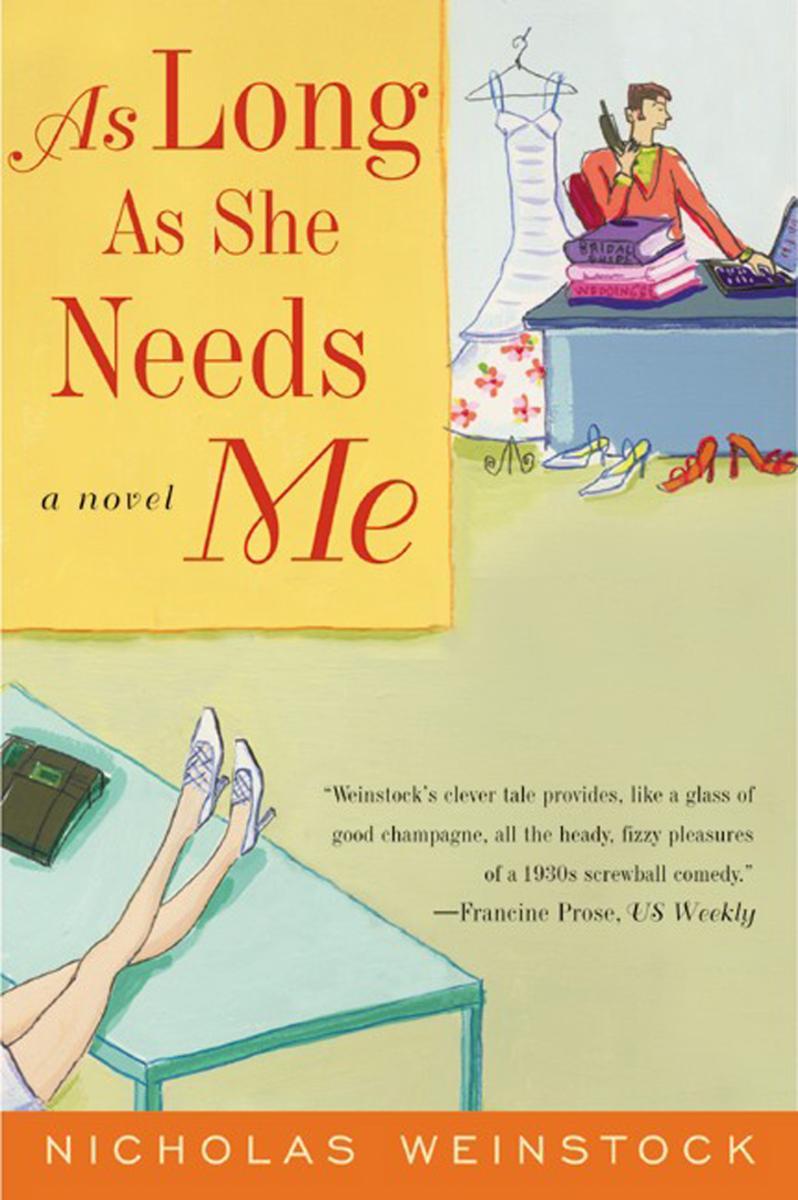
As Long As She Needs Me
¥71.72
For ten long years, Oscar Campbell has done everything from picking up his boss's drycleaning to FedExing her tropical fish. His job as personal assistant to a legendary -- and temperamental -- publisher in New York City has given him more headaches than leg-ups. Yet none of Oscar's experiences has prepared him for his greatest challenge: planning his boss's wedding. Juggling his unappreciated duties as a publishing assistant with those of a pro bono wedding planner, Oscar labors to pull together the event of the year without falling apart in the process. Help arrives in the form of popular wedding columnist Lauren LaRose, with whom Oscar strikes a bargain: his editorial expertise for her nuptial advice. As the two work together to manufacture the romances of others, they will stumble into one of their own.Hilarious and wise, literate and charming, As Long As She Needs Me is a sparkling fable of love and luck in Manhattan.

The Case of the Missing Books
¥71.72
Israel Armstrong is a passionate soul, lured to Ireland by the promise of an exciting new career. Alas, the job that awaits him is not quite what he had in mind. Still, Israel is not one to dwell on disappointment, as he prepares to drive a mobile library around a small, damp Irish town. After all, the scenery is lovely, the people are charming—but where are the booksThe rolling library's 15,000 volumes have mysteriously gone missing, and it's up to Israel to discover who would steal them . . . and why. And perhaps, after that, he will tackle other bizarre and perplexing local mysteries—like, where does one go to find a proper cappuccino and a decent newspaper?

Coronado
¥71.72
Along with completely original material, this new collection is a compilation of the best of Dennis Lehane's previously published short fiction, including "Until Gwen," which was adapted for the stage in 2005 and appears in this book as the play Coronado. By turns suspenseful, surreal, romantic, and tragically comic, these powerful tales journey headlong into the heart of our national myths—and reveal that the truth awaiting us there is not what we would expect.

After All These Years
¥71.72
The day after her lavish wedding anniversary bash, Rosie Meyers gets a big surprise: Her nouveau riche husbandRichie is leaving her for a sultry, sophisticated, size-six MBA. When he's found murdered in their exquisitely appointed kitchen, no one is surprised to find Rosie's prints all over the weapon. The suburban English teacher is the prime suspect. The police's only suspect. And she knows she'll spend the rest of her life in the prison library unless she can unmask the real killer. Going on the lam into Manhattan, Rosie learns more about Richie than she ever wanted to know. And more about herself than she ever dreamed possible.

Assassin's Creed: Alvilág
¥71.69
To the irreverent—and which of us will claim entire exemption from that comfortable classification—there is something very amusing in the attitude of the orthodox criticism toward Bernard Shaw. He so obviously disregards all the canons and unities and other things which every well-bred dramatist is bound to respect that his work is really unworthy of serious criticism (orthodox). Indeed he knows no more about the dramatic art than, according to his own story in "The Man of Destiny," Napoleon at Tavazzano knew of the Art of War. But both men were successes each in his way—the latter won victories and the former gained audiences, in the very teeth of the accepted theories of war and the theatre. Shaw does not know that it is unpardonable sin to have his characters make long speeches at one another, apparently thinking that this embargo applies only to long speeches which consist mainly of bombast and rhetoric. There never was an author who showed less predilection for a specific medium by which to accomplish his results. He recognized, early in his days, many things awry in the world and he assumed the task of mundane reformation with a confident spirit. It seems such a small job at twenty to set the times aright. He began as an Essayist, but who reads essays now-a-days—he then turned novelist with no better success, for no one would read such preposterous stuff as he chose to emit. He only succeeded in proving that absolutely rational men and women—although he has created few of the latter—can be most extremely disagreeable to our conventional way of thinking. As a last resort, he turned to the stage, not that he cared for the dramatic art, for no man seems to care less about "Art for Art's sake," being in this a perfect foil to his brilliant compatriot and contemporary, Wilde. He cast his theories in dramatic forms merely because no other course except silence or physical revolt was open to him. For a long time it seemed as if this resource too was doomed to fail him. But finally he has attained a hearing and now attempts at suppression merely serve to advertise their victim. It will repay those who seek analogies in literature to compare Shaw with Cervantes. After a life of heroic endeavor, disappointment, slavery, and poverty, the author of "Don Quixote" gave the world a serious work which caused to be laughed off the world's stage forever the final vestiges of decadent chivalry. The institution had long been outgrown, but its vernacular continued to be the speech and to express the thought "of the world and among the vulgar," as the quaint, old novelist puts it, just as to-day the novel intended for the consumption of the unenlightened must deal with peers and millionaires and be dressed in stilted language. Marvellously he succeeded, but in a way he least intended. We have not yet, after so many years, determined whether it is a work to laugh or cry over. "It is our joyfullest modern book," says Carlyle, while Landor thinks that "readers who see nothing more than a burlesque in 'Don Quixote' have but shallow appreciation of the work." Shaw in like manner comes upon the scene when many of our social usages are outworn. He sees the fact, announces it, and we burst into guffaws. The continuous laughter which greets Shaw's plays arises from a real contrast in the point of view of the dramatist and his audiences. When Pinero or Jones describes a whimsical situation we never doubt for a moment that the author's point of view is our own and that the abnormal predicament of his characters appeals to him in the same light as to his audience. With Shaw this sense of community of feeling is wholly lacking. He describes things as he sees them, and the house is in a roar. Who is right If we were really using our own senses and not gazing through the glasses of convention and romance and make-believe, should we see things as Shaw does Must it not cause Shaw to doubt his own or the public's sanity to hear audiences laughing boisterously over tragic situations And yet, if they did not come to laugh, they would not come at all. Mockery is the price he must pay for a hearing. Or has he calculated to a nicety the power of reaction Does he seek to drive us to aspiration by the portrayal of sordidness, to disinterestedness by the picture of selfishness, to illusion by disillusionment It is impossible to believe that he is unconscious of the humor of his dramatic situations, yet he stoically gives no sign. He even dares the charge, terrible in proportion to its truth, which the most serious of us shrinks from—the lack of a sense of humor. Men would rather have their integrity impugned. In "Arms and the Man" the subject which occupies the dramatist's attention is that survival of barbarity—militarism—which raises its horrid head from time to time to cast a doubt on the reality of our civilization. No more hoary superstition survives than that the donning of a uniform changes the nature of the wearer. This

Párbajok nélkül
¥71.69
Galántai Zsófi úgy érzi, célba ért. Sikeres a munkájában, és végre ?sszek?lt?zhet a szerelmével. Aztán j?n egy furcsa, szégyenteljes, mégis felejthetetlen éjszaka egy messzir?l j?tt idegennel, és Zsófi jól felépített élete ?sszeomlik. Mindent hátrahagyva elindul a mexikói után, aki titokzatos jeleket hagy számára szerte a világban... Szerelem? Kalandvágy? Zarándoklat? - vajon mi hajtja a magyar lányt egyre egzotikusabb tájak, egyre veszélyesebb kalandok, és ?nmaga számára is ismeretlen énje felé?? Mi ad t?bb muníciót a lelkünknek: ha bátran kilépünk a megszokott és talán unalmas életünkb?l, vállalva a kockázatot, hogy veszítünk - vagy ha vágyainkat elnyomva éljük mindennapjainkat? Merre vezet az utunk? Hol jobb: útk?zben vagy "célba érve"? Fej?s ?va bestsellere most új kiadásban kerülhet az olvasó kezébe. A mexikói krimibe ill? izgalmakat, igazi lélektani drámát és jó szórakozást ígér.

Az ?z
¥71.69
n már elz életemben sem hittem a reinkarnációban, de ennek ellenére azt kívánom, trténeteim olvasása által sikerüljn újjászületned azokban a kapcsolatokban, melyeken változtatni szeretnél, de nem mersz, vagy úgy érzed, nem tudsz lépni igazán. Legyen az párkapcsolati kuszaság, gyermeke(i)ddel való rendezetlenség, akár lelki, akár testi eredet bonyodalom nmagaddal, azaz: nem bírok a tükrbe nézni” szindróma. Természetesen annak is rülk, ha egyszeren csak szerzek néhány gondtalan percet. Ezeket a sztorikat a fantázia diktálta nekem; ha valamelyikben ráismersz valakire, ne hagyd magad megtéveszteni, az csakis és kizárólag a véletlen mve lehet.

Mózes egy, huszonkett?
¥71.69
F?szerepl?nk Kópé, egy erdei manó, aki kirándulók fogságábae sik, majd az erd?b?l egy f?városi lakótelepre kerül. A manó megsz?kik a rabságból, és meghúzódik egy limlommal zsúfolter kélyen. Nem esik kétségbe, hanem kényelmes kuckót alakít ki a kacatok k?z?tt. Kópé az épület el?tt magasodó akácfán k?zlekedik az erkélyek k?z?tt. ?gy talál egy barátot, Dórit, aki egyedül él az anyukájával, és soha nem járt erd?ben. A manó mesélni kezd az otthonáról, az odvas t?lgyrol, a barátairól. A mesékhez Dóri rajzokat készít. A rideg lakótelepen nem ismerik egymást az emberek, és éppen Kópé kalandozása, kíváncsisága hozza ?ket ?szsze. Dóri megismerkedik Olga nénivel, akit?l kertész kedni tanul,virágokat nevel az erkélyen, másoktól cicát kap. A k?nyvben az izgalmas kalandokat, mint például amikor Kópét majdnem elüti egy autó, vagy amikor lepottyan egyik erkélyrol a másikra, mulatságos részek gazdagítják. Az erdei él?világ valóságh? bemutatása keveredik a fantáziavilágbeli lények, tündérek és manók jellemzésével. Megtudhatjuk például, milyen is egy manó esküv?! Ajánlott korosztály: 5 és 10 év k?z?tt.
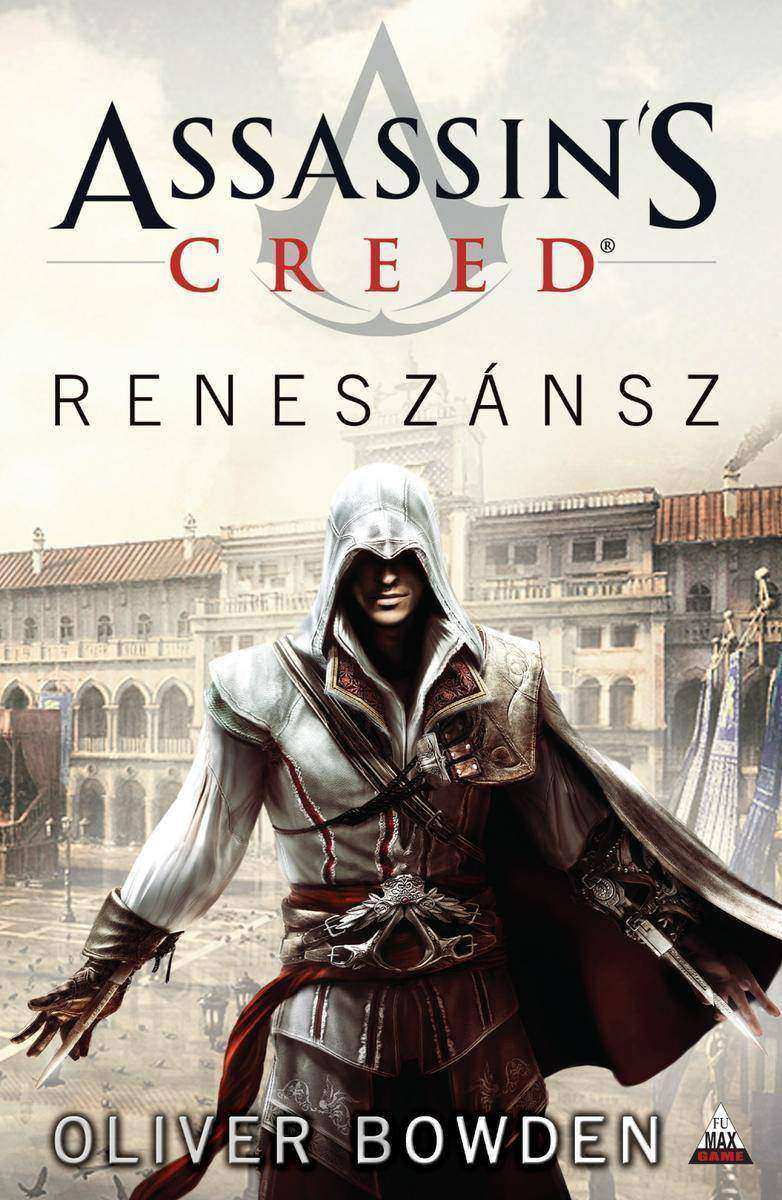
Assassin's Creed: Reneszánsz
¥71.69
The story starts in London on Tuesday, October 1, 1872. Fogg is a rich English gentleman and bachelor living in solitude at Number 7 Savile Row, Burlington Gardens. Despite his wealth, which is ?40,000 (roughly ?3,020,000 today), Fogg, whose countenance is described as "repose in action", lives a modest life with habits carried out with mathematical precision. Very little can be said about his social life other than that he is a member of the Reform Club. Having dismissed his former valet, James Foster, for bringing him shaving water at 84 °F (29 °C) instead of 86 °F (30 °C), Fogg hires a Frenchman by the name of Jean Passepartout, who is about 30 years old, as a replacement. Later on that day, in the Reform Club, Fogg gets involved in an argument over an article in The Daily Telegraph, stating that with the opening of a new railway section in India, it is now possible to travel around the world in 80 days. He accepts a wager for ?20,000 (roughly ?1,510,000 today) from his fellow club members, which he will receive if he makes it around the world in 80 days. Accompanied by Passepartout, he leaves London by train at 8:45 P.M. on Wednesday, October 2, 1872, and thus is due back at the Reform Club at the same time 80 days later, Saturday, December 21, 1872. Mr. Phileas Fogg lived, in 1872, at No. 7, Saville Row, Burlington Gardens, the house in which Sheridan died in 1814. He was one of the most noticeable members of the Reform Club, though he seemed always to avoid attracting attention; an enigmatical personage, about whom little was known, except that he was a polished man of the world. People said that he resembled Byron—at least that his head was Byronic; but he was a bearded, tranquil Byron, who might live on a thousand years without growing old. Certainly an Englishman, it was more doubtful whether Phileas Fogg was a Londoner. He was never seen on 'Change, nor at the Bank, nor in the counting-rooms of the "City"; no ships ever came into London docks of which he was the owner; he had no public employment; he had never been entered at any of the Inns of Court, either at the Temple, or Lincoln's Inn, or Gray's Inn; nor had his voice ever resounded in the Court of Chancery, or in the Exchequer, or the Queen's Bench, or the Ecclesiastical Courts. He certainly was not a manufacturer; nor was he a merchant or a gentleman farmer. His name was strange to the scientific and learned societies, and he never was known to take part in the sage deliberations of the Royal Institution or the London Institution, the Artisan's Association, or the Institution of Arts and Sciences. He belonged, in fact, to none of the numerous societies which swarm in the English capital, from the Harmonic to that of the Entomologists, founded mainly for the purpose of abolishing pernicious insects. Phileas Fogg was a member of the Reform, and that was all. The way in which he got admission to this exclusive club was simple enough. He was recommended by the Barings, with whom he had an open credit. His cheques were regularly paid at sight from his account current, which was always flush. Was Phileas Fogg rich? Undoubtedly. But those who knew him best could not imagine how he had made his fortune, and Mr. Fogg was the last person to whom to apply for the information. He was not lavish, nor, on the contrary, avaricious; for, whenever he knew that money was needed for a noble, useful, or benevolent purpose, he supplied it quietly and sometimes anonymously. He was, in short, the least communicative of men. He talked very little, and seemed all the more mysterious for his taciturn manner. His daily habits were quite open to observation; but whatever he did was so exactly the same thing that he had always done before, that the wits of the curious were fairly puzzled. ABOUT AUTHOR: Jules Gabriel Verne (1828 – 1905) was a French novelist, poet, and playwright best known for his adventure novels and his profound influence on the literary genre of science fiction. Born to bourgeois parents in the seaport of Nantes, Verne was trained to follow in his father's footsteps as a lawyer, but quit the profession early in life to write for magazines and the stage. His collaboration with the publisher Pierre-Jules Hetzel led to the creation of the Voyages Extraordinaires, a widely popular series of scrupulously researched adventure novels including Journey to the Center of the Earth, Twenty Thousand Leagues Under the Sea, and Around the World in Eighty Days.

Depresszió
¥71.69
A Szvetséges sidk óta kztünk jár és építi birodalmát. Nem egy embert kell legyznünk. Hanem egy legendát.” A mindig harcra kész Lyrna királynnek Alltor véres ostroma után ssze kell gyjtenie csapatait, hogy visszafoglalja a fvárost a volári megszállóktól, és kivívja az Egységes Királyság függetlenségét. Céljai érdekében kénytelen a Hetedik Renddel szvetkezni: olyan férfiakkal és nkkel, akiknek szrny ereje a Stétség rémiszt hatalmától ered. Vaelin Al Sorna ismét a legfbb hadúr szerepében találja magát, és felismeri, hogy csak a voláriak titokzatos Szvetségesének leleplezésével fordíthatja meg a háború menetét. Ehhez pedig mélyen be kell hatolnia a jégpáncélba zárt északi fldekre, hogy rátaláljon valakire, akit szinte lehetetlen legyzni, hiszen halhatatlan. Ráadásul mindezt immár a vér énekének segédlete nélkül, amely baljósan hallgat… Ryan mindent hoz,ami csak jó a fantasyben: stét trténet, si mágia, kegyetlen sszeesküvések, kérdéses hség és vér. Patakokban.” – Publishers Weekly

Búvópatakok
¥71.69
Mary Lennox is a sour-faced 10-year-old girl, who is born in India to selfish wealthy British parents who had not wanted her and were too wrapped up in their own lives. She was taken care of primarily by servants, who pacify her as much as possible to keep her out of the way. Spoiled and with a temper, she is unaffectionate, angry, rude and obstinate. Later, there is a cholera epidemic which hits India and kills her mother, father and all the servants. She is discovered alone but alive after the house is empty. She is sent to Yorkshire, England to live with her uncle, Archibald Craven at his home called Misselthwaite Manor.

Napfényvitamin
¥71.69
Az 1889-ben írt A beszél? k?nt?s jellegzetesen mikszáthi t?rténelmi idill. A három részre szakadt ország korát idézi vissza; a helyszín Kecskemét, a ?kül?nleges státusú” város nehezen meg?rz?tt szabadsága miatt szenved hol ett?l, hol attól a félt?l. Bár Mikszáth t?bb helyütt is hivatkozik a t?rténet hitelességére, témája mégsem a t?rténelmi konfliktusokra épül, ?mert a mese benne a f?, a t?rténelmi események csak mint színek bukkannak f?l m?g?tte”. A t?rténet h?se a kecskeméti f?bíró, Lestyák Mihály – akinek már megválasztása is tündéri módon megy végbe – a népmesék ifjú h?seinek furfangjával próbálja megmenteni Kecskemétet a portyázó hadak dúlásától. A csodakaftán f?lfoghatatlan t?r?kszelidít? hatalma meg is hozza a várt eredményt, Kecskemét virágzik, Lestyákot, mint szabadítót ünneplik. Az idill még Mikszáth tündérvilágában sem tarthat sokáig: a kaftánt kicserélik, Lestyák szépséges szerelmét lefejezni viszik a város elárulása miatt, maga Lestyák is elt?nik. A boldog vég mégsem marad el: ha nem is kecskeméti f?bíróként, de boldog lesz Lestyák és mátkája. A romantikus t?rténet fiataloknak és id?sebbeknek egyaránt kedves, kellemes, színvonalasan szórakoztató olvasmánya.

Mira: ?gy váltsd meg a világod!
¥71.69
Vicces, lendületes, habk?nny? szórakozás. Elcserélnéd az életed máséval? Ne kívánd, mert megkapod! Casey és Rachel gyerekkoruk óta legjobb barátn?k, pedig nagyon kül?nb?z?en alakult az életük. Casey munkamániás televíziós. Sikeres pletykam?sorában a legnagyobb sztárokkal beszélget és karrierje egyre magasabbra ível. Esténként viszont üres luxuslakás várja és magánéletét egy remeterák is túl sivárnak tartaná. Rachel háromgyerekes háziasszony. Idejét kit?lti a gyereknevelés és a család egyéb ügyes-bajos dolga. Már nem emlékszik rá, mikor volt utoljára kozmetikusnál, moziban, vagy a férjével kettesben egy étteremben. A húszéves érettségi találkozón vitatkozni kezdenek, kinek az élete sikerült jobban. A vitát azonban nem ?k, hanem egy kéretlen csoda d?nti el: másnap reggel egymás testében ébrednek. Jill Mansell, Lindsey Kelk és Jennifer Weiner rajongóinak!


