The Revolutionary Period in Europe
¥8.09
The Revolutionary Period in Europe
Stories from History
¥8.09
Stories from History
Arabian Society in the Middle Ages
¥8.09
Arabian Society in the Middle Ages
Ancient Mesopotamia
¥8.09
Ancient Mesopotamia
How To Be A Financial Fiasco:A Field Guide
¥8.09
How to Be a Financial Fiasco contains my personal tips and tricks on how to become a complete financial disaster. If you love true stories, dark humor, & sarcasm, you’ll love this foul-mouthed but forthright look at how I got myself $20K in debt. Consider it an instructive guide on how NOT to handle your finances well.
Rebel Private: Memoirs of a Confederate Soldier
¥8.09
Rebel Private: Memoirs of a Confederate Soldier
Dealing With Women: The Lack of Reason
¥8.09
Dealing With Women: The Lack of Reason
The Age of Bismarck
¥8.09
The Age of Bismarck
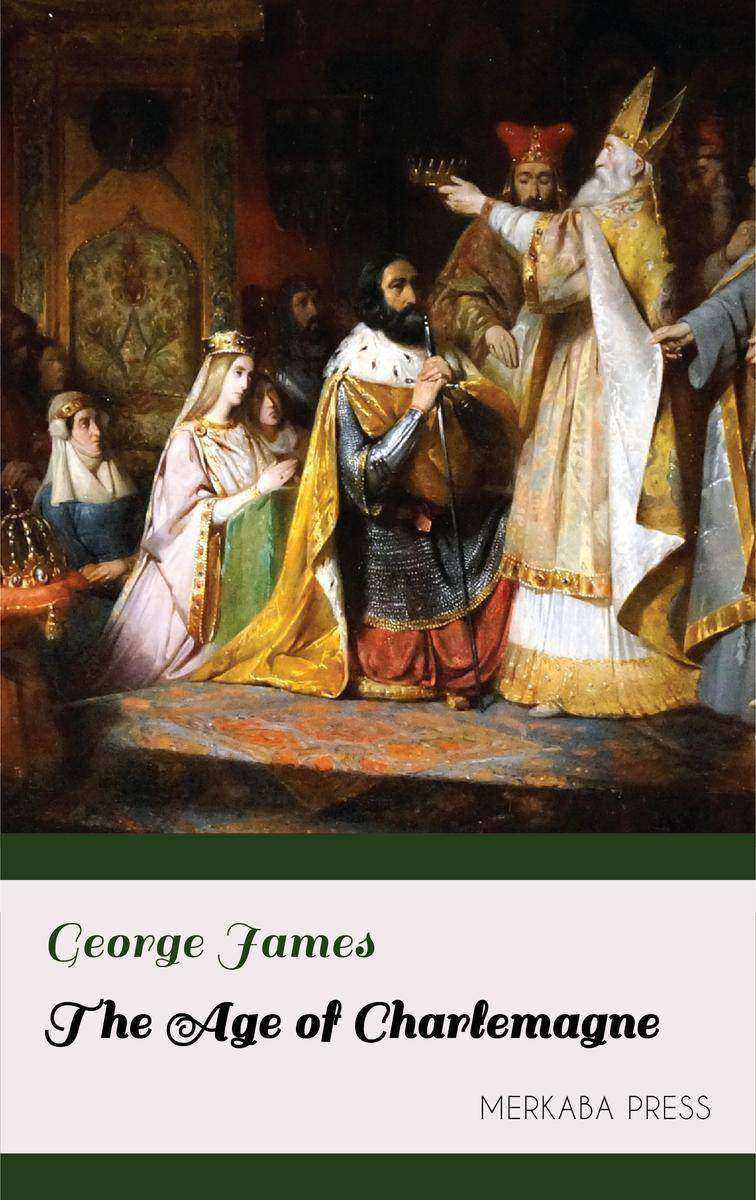
The Age of Charlemagne
¥8.09
The Age of Charlemagne
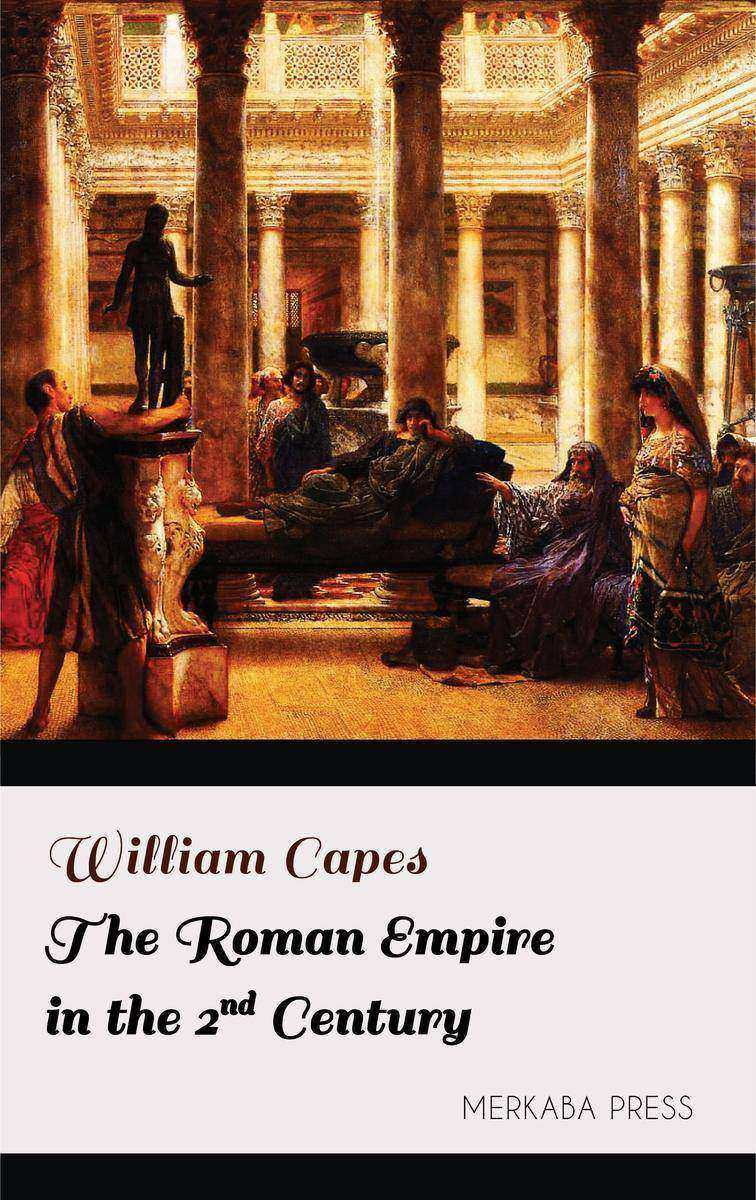
The Lost Tools of Learning
¥8.09
The Lost Tools of Learning
Records of a Family of Engineers
¥8.09
Robert Louis Stevenson's account of his ancestors. According to Wikipedia: "Robert Louis (Balfour) Stevenson ( 1850 - 1894), was a Scottish novelist, poet, and travel writer, and a leading representative of Neo-romanticism in English literature. He was the man who "seemed to pick the right word up on the point of his pen, like a man playing spillikins", as G. K. Chesterton put it. He was also greatly admired by many authors, including Jorge Luis Borges, Ernest Hemingway, Rudyard Kipling, Vladimir Nabokov, and J. M. Barrie. Most modernist writers dismissed him, however, because he was popular and did not write within their definition of modernism. It is only recently that critics have begun to look beyond Stevenson's popularity and allow him a place in the canon."
Moths of the Limberlost
¥8.09
Moths of the Limberlost
Anatomy of Melancholy
¥8.09
According to Wikipedia: "The Anatomy of Melancholy (Full title: The Anatomy of Melancholy, What it is: With all the Kinds, Causes, Symptomes, Prognostickes, and Several Cures of it. In Three Maine Partitions with their several Sections, Members, and Subsections. Philosophically, Medicinally, Historically, Opened and Cut Up) is a book by Robert Burton, first published in 1621. Burton's book consists mostly of a collection of opinions of a multitude of writers, grouped under quaint and old-fashioned divisions; in a solemn tone Burton endeavoured to prove indisputable facts by weighty quotations. The subjects discussed and determined by Burton ranged from the doctrines of religion to military discipline, from inland navigation to the morality of dancing-schools. On its surface, the book is presented as a medical textbook in which Burton applies his vast and varied learning, in the scholastic manner, to the subject of melancholia (which includes what is now termed clinical depression). Though presented as a medical text, The Anatomy of Melancholy is as much a sui generis work of literature as it is a scientific or philosophical text, and Burton addresses far more than his stated subject. In fact, the Anatomy uses melancholy as the lens through which all human emotion and thought may be scrutinized, and virtually the entire contents of a 17th-century library are marshalled into service of this goal. It is encyclopedic in its range and reference. In his satirical preface to the reader, Burton's persona Democritus Junior explains, "I write of melancholy by being busy to avoid melancholy." This is characteristic of the author's style, which often supersedes the book's strengths as a medical text or historical document as its main source of appeal to admirers. Both satirical and serious in tone, the Anatomy is "vitalized by (Burton's) pervading humour",[3] and Burton's digressive and inclusive style, often verging on a stream of consciousness, consistently informs and animates the text."
Morien, an Arthurian Romance
¥8.09
A short Arthurian romance not represented in Malory's "Morte Darthur". A metrical romance rendered into English prose from the Mediaeval Dutch.
Robert Louis Stevenson
¥8.09
Short biographical essay. According to Wikipedia: "Robert Louis (Balfour) Stevenson ( 1850 - 1894), was a Scottish novelist, poet, and travel writer, and a leading representative of Neo-romanticism in English literature. He was the man who "seemed to pick the right word up on the point of his pen, like a man playing spillikins", as G. K. Chesterton put it. He was also greatly admired by many authors, including Jorge Luis Borges, Ernest Hemingway, Rudyard Kipling, Vladimir Nabokov, and J. M. Barrie. Most modernist writers dismissed him, however, because he was popular and did not write within their definition of modernism. It is only recently that critics have begun to look beyond Stevenson's popularity and allow him a place in the canon."
Father Damien
¥8.09
Short essay. According to Wikipedia: "Robert Louis (Balfour) Stevenson ( 1850 - 1894), was a Scottish novelist, poet, and travel writer, and a leading representative of Neo-romanticism in English literature. He was the man who "seemed to pick the right word up on the point of his pen, like a man playing spillikins", as G. K. Chesterton put it. He was also greatly admired by many authors, including Jorge Luis Borges, Ernest Hemingway, Rudyard Kipling, Vladimir Nabokov, and J. M. Barrie. Most modernist writers dismissed him, however, because he was popular and did not write within their definition of modernism. It is only recently that critics have begun to look beyond Stevenson's popularity and allow him a place in the canon."
Peter the Great
¥8.09
According to Wikipedia: "Peter I the Great or Pyotr Alexeyevich Romanov (9 June [O.S. 30 May] 1672 – 8 February 1725) ruled Russia and later the Russian Empire from 7 May 1682 until his death, jointly ruling before 1696 with his weak and sickly half-brother, Ivan V. He carried out a policy of modernization and expansion that transformed the Tsardom of Russia into a 3-billion acre Russian Empire, a major European power."
Richard I
¥8.09
According to Wikipedia: "Richard I (8 September 1157 – 6 April 1199) was King of England from 6 July 1189 until his death. He also ruled as Duke of Normandy, Duke of Aquitaine, Duke of Gascony, Lord of Ireland, Lord of Cyprus, Count of Anjou, Count of Maine, Count of Nantes, and Overlord of Brittany at various times during the same period. He was known as C?ur de Lion, or Richard the Lionheart, even before his accession, because of his reputation as a great military leader and warrior.[1] The Saracens called him Melek-Ric or Malek al-Inkitar - King of England. By age 16, Richard was commanding his own army, putting down rebellions in Poitou against his father, King Henry II.[1] Richard was a central Christian commander during the Third Crusade, effectively leading the campaign after the departure of Philip Augustus and scoring considerable victories against his Muslim counterpart, Saladin, but was unable to reconquer Jerusalem. Although only speaking French and spending very little time in England (he lived in his Duchy of Aquitaine, in the southwest of France, preferring to use his kingdom as a source of revenue to support his armies), he was seen as a pious hero by his subjects. He remains one of the very few Kings of England remembered by his epithet, rather than regnal number, and is an enduring, iconic figure in England."
Is Shakespeare Dead? from My Autobiography
¥8.09
From Chapter 1: "A friend has sent me a new book, from England--The Shakespeare Problem Restated--well restated and closely reasoned; and my fifty years' interest in that matter--asleep for the last three years--is excited once more. It is an interest which was born of Delia Bacon's book--away back in that ancient day--1857, or maybe 1856. About a year later my pilot-master, Bixby, transferred me from his own steamboat to the Pennsylvania, and placed me under the orders and instructions of George Ealer--dead now, these many, many years. I steered for him a good many months--as was the humble duty of the pilot-apprentice: stood a daylight watch and spun the wheel under the severe superintendence and correction of the master. He was a prime chess player and an idolater of Shakespeare. He would play chess with anybody; even with me, and it cost his official dignity something to do that. "
Fables
¥8.09
Short collection of anecdotes. According to Wikipedia: "Robert Louis (Balfour) Stevenson ( 1850 - 1894), was a Scottish novelist, poet, and travel writer, and a leading representative of Neo-romanticism in English literature. He was the man who "seemed to pick the right word up on the point of his pen, like a man playing spillikins", as G. K. Chesterton put it. He was also greatly admired by many authors, including Jorge Luis Borges, Ernest Hemingway, Rudyard Kipling, Vladimir Nabokov, and J. M. Barrie. Most modernist writers dismissed him, however, because he was popular and did not write within their definition of modernism. It is only recently that critics have begun to look beyond Stevenson's popularity and allow him a place in the canon."
The Silverado Squatters
¥8.09
Travelogue/memoir of a stay in a ghost town in northern California on Mount Saint Helena in the 1870s. According to Wikipedia: "Robert Louis (Balfour) Stevenson ( 1850 - 1894), was a Scottish novelist, poet, and travel writer, and a leading representative of Neo-romanticism in English literature. He was the man who "seemed to pick the right word up on the point of his pen, like a man playing spillikins", as G. K. Chesterton put it. He was also greatly admired by many authors, including Jorge Luis Borges, Ernest Hemingway, Rudyard Kipling, Vladimir Nabokov, and J. M. Barrie. Most modernist writers dismissed him, however, because he was popular and did not write within their definition of modernism. It is only recently that critics have begun to look beyond Stevenson's popularity and allow him a place in the canon."

购物车
个人中心