


 购物车
购物车 个人中心
个人中心
Wagner
¥8.09
Short biography. Edition of 1913. According to Wikipedia: "Wilhelm Richard Wagner (22 May 1813, Leipzig, Germany – 13 February 1883, Venice, Italy) was a German composer, conductor, theatre director and essayist, primarily known for his operas (or "music dramas", as they were later called). Unlike most other great opera composers, Wagner wrote both the scenario and libretto for his works." "Franz Liszt (October 22, 1811 – July 31, 1886) was a Hungarian composer, virtuoso pianist and teacher."
Hamlet, Prinz von Dannemark
¥8.09
Die Shakespeare-Trag?die, auf Deutsch übersetzt von Christoph Martin Wieland. Laut Wikipedia: "Die Trag?die von Hamlet, Prinz von D?nemark ist eine Trag?die von William Shakespeare. Im K?nigreich D?nemark dramatisiert das Stück die Rache, die Prinz Hamlet an seinen Onkel Claudius wegen Mordes an K?nig Hamlet, Claudius 'Bruder und Prinz Hamlets Vater richtet Danach tritt er als Thronfolger in Erscheinung und nimmt Gertrude, die Witwe des alten K?nigs und die Mutter von Prinz Hamlet, mit, die den wahren und vorget?uschten Wahnsinn - von überw?ltigender Trauer bis zu brodelndem Zorn - anschaulich darstellt und Themen wie Verrat, Rache, Inzest, und moralische Korruption.
Der Zweyte Theil von K?nig Heinrich dem Vierten
¥8.09
Shakespeare-Geschichte spielen Henry der vierte Teil Zwei, in deutscher ?bersetzung. Nach Wikipedia: "Heinrich IV., Teil 2 ist ein historisches Stück von William Shakespeare, das zwischen 1596 und 1599 geschrieben wurde. Es ist der dritte Teil einer Tetralogie, der Richard II. Und Heinrich IV., Teil 1 vorangingen und Heinrich V. folgte. "
The Love Affairs of Great Musicians
¥8.09
First published in 1903. Biographical chapters cover Liszt, Mozart, Bach, Haydn, Beethoven, Chopin, Purcell, Gluck, Wagner, Tschaikovski, Schumann, and others.
The Eleven Comedies of Aristophanes
¥8.09
All 11 comedies, literally translated. Two volumes in one file. Includes: Knights, Acharnians, Peace, Lysistrata, The Clouds, The Wasps, The Birds, The Frogs, The Thesmophoriazusae, The Ecclesiazusae, and Plutus. According to Wikipedia: "Aristophanes (ca. 446 BCE – ca. 386 BCE), son of Philippus, of the deme Cydathenaus, was a prolific and much acclaimed, comic playwright of ancient Athens. Eleven of his forty plays have come down to us virtually complete. These, as well as fragments of some of his other plays, provide us with the only real example we have of a genre of comic drama known as Old Comedy and they are in fact used to define the genre. Also known as the Father of Comedy and the Prince of Ancient Comedy, Aristophanes has been said to recreate the life of ancient Athens more convincingly than any other author. His powers of ridicule were feared and acknowledged by influential contemporaries - although more than one contemporary, satirical playwright caricatured the philosopher Socrates, his student Plato singled out Aristophanes' play The Clouds as slander contributing to his old mentor's trial and execution."
De Turkey and De Law
¥8.09
According to Wikipedia: "Zora Neale Hurston (January 7, 1891 – January 28, 1960) was an American folklorist and author during the time of the Harlem Renaissance, best known for the 1937 novel Their Eyes Were Watching God. In 2002, scholar Molefi Kete Asante listed Zora Neale Hurston on his list of 100 Greatest African Americans."
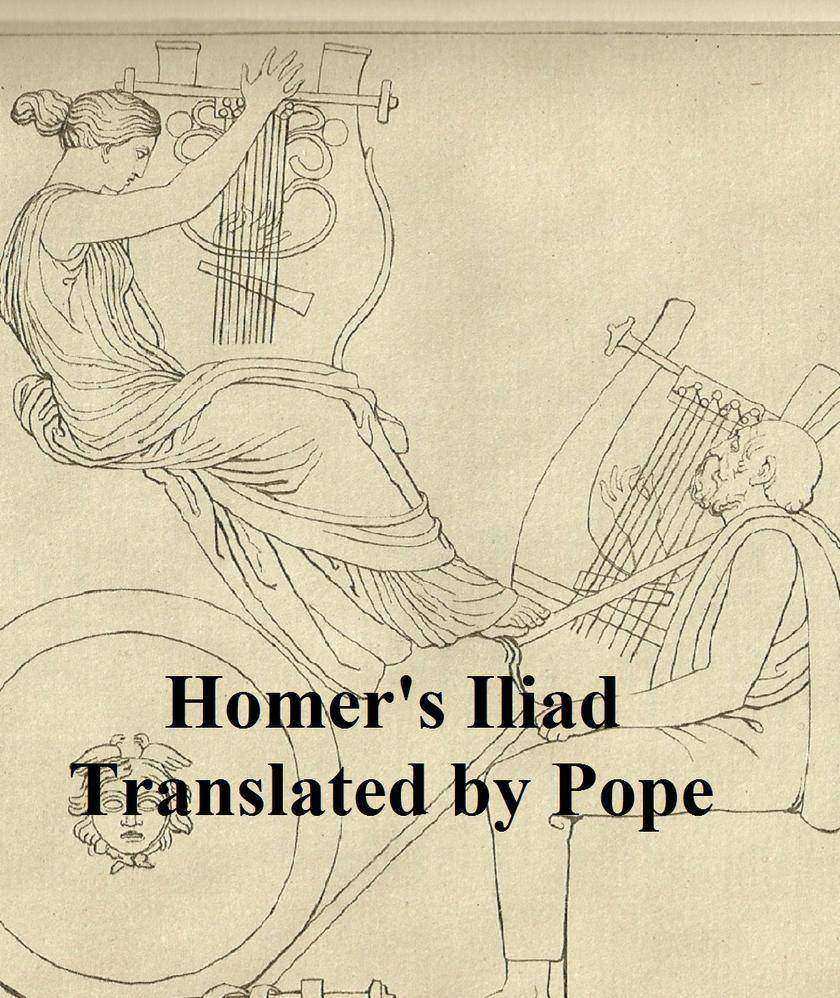
Homer's Iliad
¥8.09
Alexander Pope's verse translation (rhyming couplets). With 28 illustrations by John Flaxman. According to Wikipedia: "Homer is a legendary ancient Greek epic poet, traditionally said to be the author of the epic poems the Iliad and the Odyssey. The ancient Greeks generally believed that Homer was a historical individual, but modern scholars are skeptical: no reliable biographical information has been handed down from classical antiquity, and the poems themselves manifestly represent the culmination of many centuries of oral story-telling and a well-developed "formulaic" system of poetic composition. According to Martin West, "Homer" is "not the name of a historical poet, but a fictitious or constructed name." The poems are now widely regarded as the culmination of a long tradition of orally composed poetry, but the way in which they reached their final written form, and the role that an individual poet, or poets, played in this process is disputed... Alexander Pope (21 May 1688 – 30 May 1744) was an 18th-century English poet, best known for his satirical verse and for his translation of Homer. Famous for his use of the heroic couplet, he is the third-most frequently quoted writer in The Oxford Dictionary of Quotations, after Shakespeare and Tennyson... John Flaxman R.A. (6 July 1755 – 7 December 1826) was a British sculptor and draughtsman, and a leading figure in British and European Neoclassicism. Early in his career he worked as a modeller for Josiah Wedgwood's pottery. He spent several years in Rome, where he produced his first book illustrations. He was a prolific maker of funerary monuments."
Mozart, the Man and the Artist, as Revealed in His Own Words
¥8.09
Biography, first published in1905. According to Wikipedia: "Wolfgang Amadeus Mozart (27 January 1756 – 5 December 1791), was a prolific and influential composer of the Classical era. He composed over 600 works, many acknowledged as pinnacles of symphonic, concertante, chamber, piano, operatic, and choral music. He is among the most enduringly popular of classical composers. Mozart showed prodigious ability from his earliest childhood in Salzburg. Already competent on keyboard and violin, he composed from the age of five and performed before European royalty; at 17 he was engaged as a court musician in Salzburg, but grew restless and traveled in search of a better position, always composing abundantly. While visiting Vienna in 1781, he was dismissed from his Salzburg position. He chose to stay in the capital, where he achieved fame but little financial security. During his final years in Vienna, he composed many of his best-known symphonies, concertos, and operas, and the Requiem. The circumstances of his early death have been much mythologized. He was survived by his wife Constanze and two sons. Mozart learned voraciously from others, and developed a brilliance and maturity of style that encompassed the light and graceful along with the dark and passionate—the whole informed by a vision of humanity "redeemed through art, forgiven, and reconciled with nature and the absolute."[2] His influence on subsequent Western art music is profound. Beethoven wrote his own early compositions in the shadow of Mozart, of whom Joseph Haydn wrote that "posterity will not see such a talent again in 100 years."
Childe Harold's Pilgrimage
¥8.09
Byron's classic narrative poem. According to Wikipedia: "George Gordon Byron, later Noel, 6th Baron Byron FRS (1788 – 1824) was a British poet and a leading figure in Romanticism. Amongst Byron's best-known works are the brief poems When We Two Parted, She Walks in Beauty, and So, we'll go no more a roving, in addition to the narrative poems Childe Harold's Pilgrimage and Don Juan. He is regarded as one of the greatest European poets and remains widely read and influential, both in the English-speaking world and beyond. Byron's fame rests not only on his writings but also on his life, which featured extravagant living, numerous love affairs, debts, separation, and marital exploits. He was famously described by Lady Caroline Lamb as "mad, bad, and dangerous to know". Byron served as a regional leader of Italy's revolutionary organization, the Carbonari, in its struggle against Austria. He later traveled to fight against the Ottoman Empire in the Greek War of Independence, for which Greeks revere him as a national hero. He died from a fever in Messolonghi in Greece."
La Legende des Siecles
¥8.09
Poème de livre classique, publié à l'origine en 1859. Le poème est en fran?ais; la préface est en anglais. Selon Wikipédia: ?La Légende des siècles est un recueil de poèmes de Victor Hugo, con?u comme une immense représentation de l'histoire et de l'évolution de l'humanité, écrite par intermittence entre 1855 et 1876, tandis que Victor Hugo exilé travaillait sur de nombreux autres projets. Des poèmes ont été publiés en trois séries en 1859, 1877 et 1883. Témoin d'un talent poétique inégalé dans lequel tout l'art de Hugo est évident, la Légende des Siècles est souvent considérée comme la seule véritable épopée fran?aise et, selon la formulation de Baudelaire, la seule ?popée moderne possible Le poète rêveur contemple le ?mur des siècles?, indistinct et terrible, sur lequel sont dessinées des scènes du passé, du présent et du futur, et où l'on peut voir toute la longue procession de l'humanité. de ces scènes, fugitivement per?u et entrecoupé de visions terrifiantes.Hugo ne cherchait ni l'exactitude historique ni l'exhaustivité, il se concentrait plut?t sur des figures obscures, habituelles ses propres inventions, qui incarnaient et symbolisaient leurs époques. En se proclamant dans la préface de la première série, ?c'est de l'histoire, espionnée à la porte de la légende?. Les poèmes, tour à tour lyriques, épiques et satiriques, forment une vision de l'expérience humaine, cherchant moins à résumer qu'à illustrer l'histoire de l'humanité, et à témoigner de son long voyage des ténèbres à la lumière. Wikipedia: "Victor-Marie Hugo (26 février 1802 - 22 mai 1885) était un poète, dramaturge, romancier, essayiste, artiste visuel, homme d'?tat, activiste des droits de l'homme et représentant du mouvement romantique en France. En France, la renommée littéraire de Hugo vient d'abord de sa poésie, mais repose aussi sur ses romans et ses réalisations dramatiques. "
Imaginary Invalid
¥8.09
According to Wikipedia: "The Imaginary Invalid (French: Le malade imaginaire) is a 1673 three-act comédie-ballet by the French playwright Molière with dance sequences and musical interludes by Marc-Antoine Charpentier. It was originally choreographed by Pierre Beauchamp. Molière had fallen out with the powerful court composer Jean-Baptiste Lully, with whom he had pioneered the comédie-ballet form a decade earlier, and had opted for the collaboration with Charpentier, Lully's rival and arguably a more gifted composer. Le malade imaginaire would turn out to be his last work. He collapsed during his fourth performance as Argan on 17 February and died soon after. Beyond the obvious irony, given the play's title, it is possible that Molière was poisoned by Lully, or at the jilted collaborator's instigation."
Tartuffe or The Hypocrite
¥8.09
According to Wikipedia: "Jean-Baptiste Poquelin, also known by his stage name Molière, (January 15, 1622 - February 17, 1673) was a French playwright and actor who is considered one of the greatest masters of comedy in Western literature. Among Molière's best-known dramas are Le Misanthrope, (The Misanthrope), L'Ecole des femmes (The School for Wives), Tartuffe ou l'Imposteur, (Tartuffe or the Hypocrite), L'Avare ou l'?cole du mensonge (The Miser), Le Malade imaginaire (The Imaginary Invalid), and Le Bourgeois Gentilhomme (The Bourgeois Gentleman)."
Notes to Shakepeare's Tragedies
¥8.09
From the General Introduction: "Dr. Johnson's reaction to Shakespeare's tragedies is a curious one, compounded as it is of deep emotional involvement in a few scenes in some plays and a strange dispassionateness toward most of the others. I suspect that his emotional involvement took root when he read Shakespeare as a boy--one remembers the terror he experienced in reading of the Ghost in _Hamlet_, and it was probably also as a boy that he suffered that shock of horrified outrage and grief at the death of Cordelia that prevented him from rereading the scene until be came to edit the play. Johnson's deepest feelings and convictions, Professor Clifford has recently reminded us, can be traced back to his childhood and adolescence."
King Lear, with line numbers
¥8.09
The classic tragedy. According to Wikipedia: "King Lear is a tragedy by William Shakespeare, believed to have been written between 1603 and 1606, and is considered one of his greatest works. The play is based on the legend of Leir of Britain, a mythological pre-Roman king. It has been widely adapted for stage and screen, with the part of Lear being played by many of the world's most accomplished actors. There are two distinct versions of the play: The True Chronicle of the History of the Life and Death of King Lear and His Three Daughters, which appeared in quarto in 1608, and The Tragedy of King Lear, which appeared in the First Folio in 1623, a more theatrical version. The two texts are commonly printed in a conflated version, although many modern editors have argued that each version has its individual integrity. After the Restoration the play was often modified by theatre practitioners who disliked its dark and depressing tone. But since the 19th century, it has been regarded as one of Shakespeare's supreme achievements. The tragedy is particularly noted for its probing observations on the nature of human suffering and kinship.
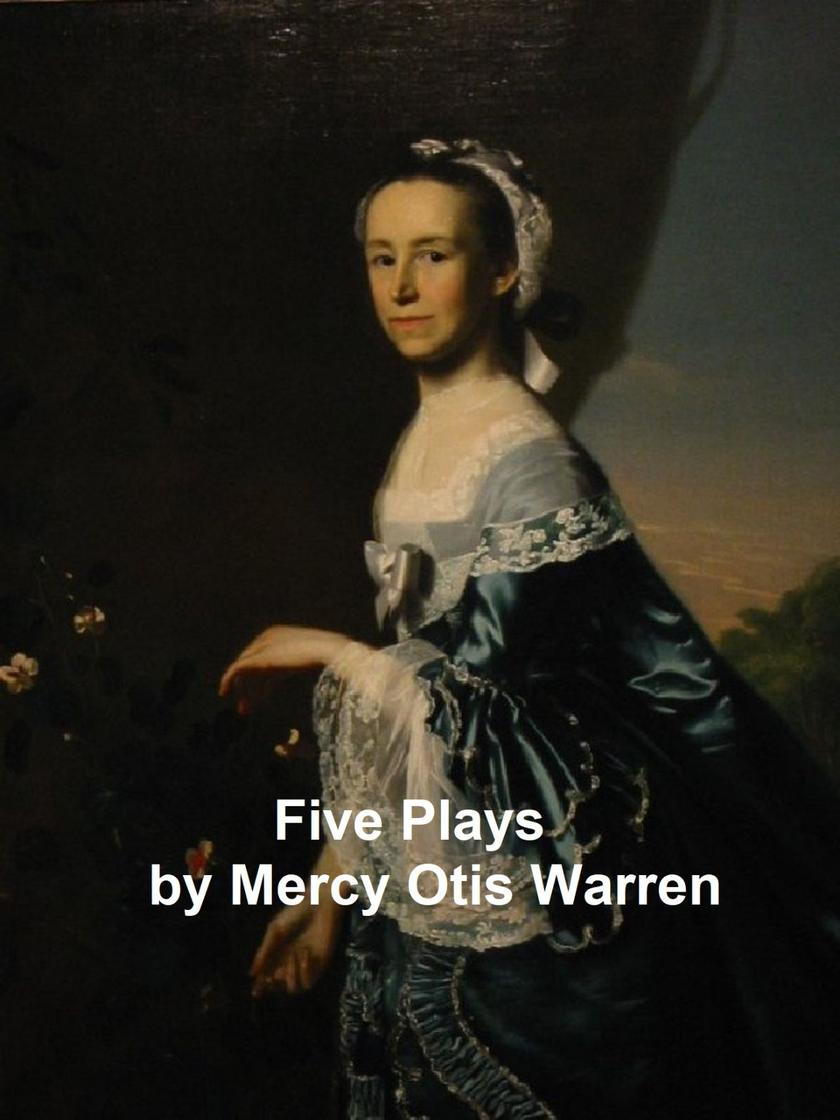
Five Plays
¥8.09
The Adulateur, a five-act play, published in 1773; The Defeat, excerpts from a play, published 1773; The Group, a three-act play, published in 1775; The Blockheads, a three-act play, published in 1776, shortly after the British withdrew from Boston The Motley Assembly, a farce, published in 1779. Mercy Warren (1728-1814) was sister of James Otis and wife of James Warren, both leaders in the early stages of the American Revolution. These plays of hers are of historical, not dramatic interest. Her main work is her history of the American Revolution (The Rise, Progress and Termination of the American Revolution Interspersed with Biographical, Political, and Moral Observations).
The Comedy of Errors, with line numbers
¥8.09
The classic comedy. According to Wikipedia: "The Comedy of Errors is one of William Shakespeare's earliest plays, believed to have been written between 1589 and 1594. It is his shortest and one of his most farcical, with a major part of the humour coming from slapstick and mistaken identity, in addition to puns and wordplay. The Comedy of Errors (along with The Tempest) is one of only two of Shakespeare's plays to observe the classical unities. It has been adapted for opera, stage, screen and musical theatre. The Comedy of Errors tells the story of two sets of identical twins. Antipholus of Syracuse and his servant, Dromio of Syracuse, arrive in Ephesus, which turns out to be the home of their twin brothers, Antipholus of Ephesus and his servant, Dromio of Ephesus. When the Syracusans encounter the friends and families of their twins, a series of wild mishaps based on mistaken identities lead to wrongful beatings, a near-incestuous seduction, the arrest of Antipholus of Ephesus, and accusations of infidelity, theft, madness, and demonic possession."
The Seven Plays of Aeschylus
¥8.09
This file includes: AGAMEMNON, THE LIBATION-BEARERS, THE FURIES, THE SUPPLIANT MAIDENS, THE PERSIANS, THE SEVEN AGAINST THEBES, and THE PROMETHEUS BOUND; all translated by E.D.A. MORSHEAD. According to Wikipedia: "Aeschylus ( c. 525 BC/524 BC – c. 456 BC/455 BC) was an ancient Greek playwright. He is often recognized as the father of tragedy, and is the earliest of the three Greek tragedians whose plays survive, the others being Sophocles and Euripides. According to Aristotle, he expanded the number of characters in plays to allow for conflict among them; previously, characters interacted only with the chorus. Only seven of an estimated seventy to ninety plays by Aeschylus have survived into modern times; one of these plays, Prometheus Bound, is widely thought to be the work of a later author. At least one of Aeschylus' works was influenced by the Persian invasion of Greece, which took place during his lifetime. His play The Persians remains a good primary source of information about this period in Greek history. The war was so important to the Greeks and to Aeschylus himself that, upon his death around 456 BC, his epitaph commemorated his participation in the Greek victory at Marathon rather than to his success as a playwright."
Charmides: And Other Poems
¥8.09
Short poetry collection. According to Wikipedia: "Oscar Fingal O'Flahertie Wills Wilde (1854 - 1900) was an Irish playwright, novelist, poet, and author of short stories. Known for his barbed wit, he was one of the most successful playwrights of late Victorian London, and one of the greatest celebrities of his day. As the result of a famous trial, he suffered a dramatic downfall and was imprisoned for two years of hard labour after being convicted of the offence of 'gross indecency.'"
Timon of Athens, with line numbers
¥8.09
Sometimes classified as tragedy, sometimes as comedy, and sometimes as "problem play." According to Wikipedia: "The Life of Timon of Athens is a play by William Shakespeare about the legendary Athenian misanthrope Timon (and probably influenced by the philosopher of the same name, as well), generally regarded as one of his most obscure and difficult works. Originally grouped with the tragedies, it is generally considered such, but some scholars group it with the problem plays."
The Life and Death of Lord Cromwell
¥8.09
Elizabethan play, sometimes attributed in part to Shakespeare. According to Wikipedia: "William Shakespeare (baptised 26 April 1564 – died 23 April 1616) was an English poet and playwright, widely regarded as the greatest writer in the English language and the world's pre-eminent dramatist. He is often called England's national poet and the "Bard of Avon" (or simply "The Bard"). His surviving works consist of 38 plays, 154 sonnets, two long narrative poems, and several other poems. His plays have been translated into every major living language, and are performed more often than those of any other playwright."
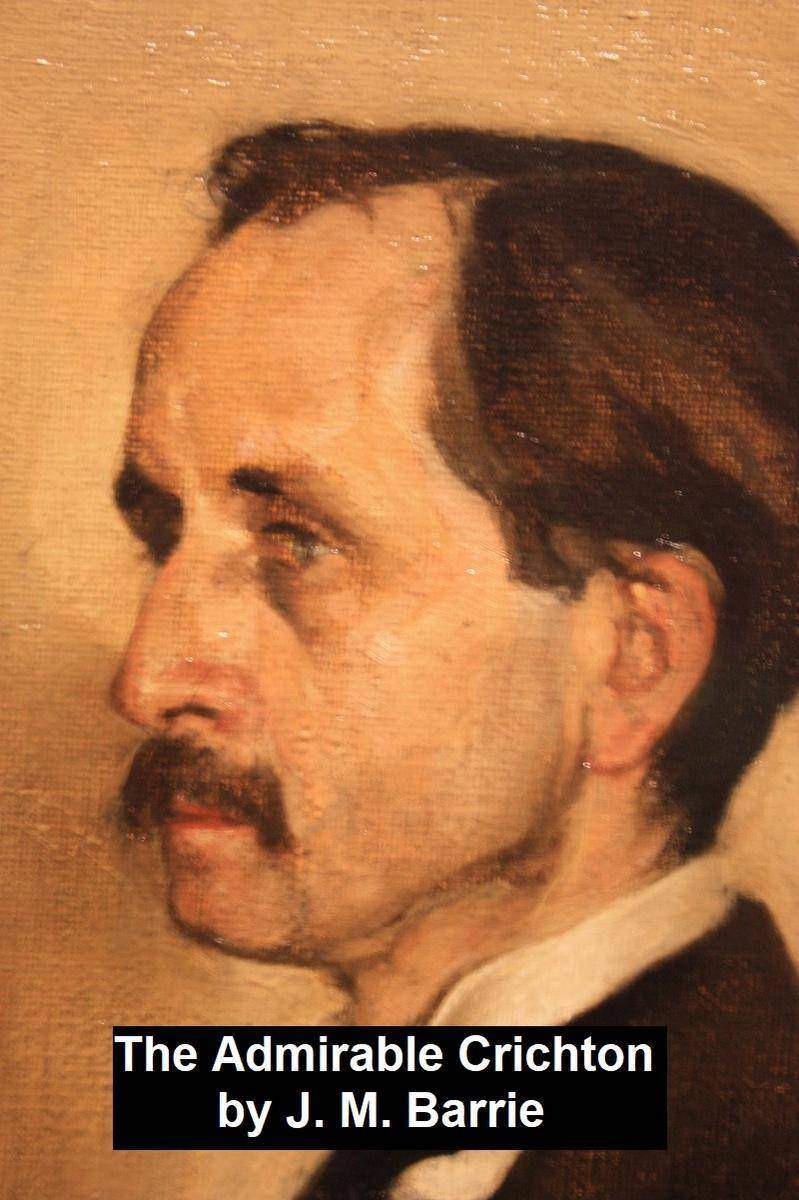
The Admirable Crichton
¥8.09
Four-act play, first published in 1902. According to Wikipedia: "Sir James Matthew Barrie, 1st Baronet, (9 May 1860 – 19 June 1937) was a Scottish author and dramatist, best remembered today as the creator of Peter Pan. The child of a family of small-town weavers, he was educated in Scotland. He moved to London, where he developed a career as a novelist and playwright. There he met the Llewelyn Davies boys who inspired him in writing about a baby boy who has magical adventures in Kensington Gardens (included in The Little White Bird), then to write Peter Pan, or The Boy Who Wouldn't Grow Up, a "fairy play" about this ageless boy and an ordinary girl named Wendy who have adventures in the fantasy setting of Neverland. This play quickly overshadowed his previous work and although he continued to write successfully, it became his best-known work, credited with popularising the name Wendy, which was very uncommon previously.[1] Barrie unofficially adopted the Davies boys following the deaths of their parents. Before his death, he gave the rights to the Peter Pan works to Great Ormond Street Hospital, which continues to benefit from them."


