


 购物车
购物车 个人中心
个人中心

现代中式:传承、融合与创新
¥449.00
《现代中式:传承、融合与创新》列举当下*的传承、融合、创新风格设计案例,展示现代中式风格的三种不同的发展趋势。首先阐述现代中式风格的总体特点——“古典中的创新”,再分别介绍传承、融合、创新风格设计的特点,后再通过精彩的案例来详细展示三种风格具体的设计思路,以供读者学习和研究,实现对现代中式风格的创新与突破。 传承:所谓“合乎自然,传承佛、道、儒家之文化精髓”,常常以佛像、枯枝、考究的中式家具、精美的瓷器与茶具为媒介,营造充满静、空、禅等中式意蕴的精神交流空间。 融合:无论东形西韵还是东韵西形,都追求二者的有机融合,多运用软装与配饰,并将其予以巧妙的结合,使“物与物”的搭配升华为“文化与文化”的融合,营造多元、包容的新体验。 创新:以浓郁的东方文化为基础,运用现代营造手法,在材质、色彩、形状、线条、尺度等方面进行提炼、改进,提倡简约、时尚的泛东方生活方式。
Ecology of Place
¥447.34
Ecologists can spend a lifetime researching a small patch of the earth, studying the interactions between organisms and the environment, and exploring the roles those interactions play in determining distribution, abundance, and evolutionary change. With so few ecologists and so many systems to study, generalizations are essential. But how do you extrapolate knowledge about a well-studied area and apply it elsewhere?Through a range of original essays written by eminent ecologists and naturalists, The Ecology of Place explores how place-focused research yields exportable general knowledge as well as practical local knowledge, and how society can facilitate ecological understanding by investing in field sites, place-centered databases, interdisciplinary collaborations, and field-oriented education programs that emphasize natural history. This unique patchwork of case-study narratives, philosophical musings, and historical analyses is tied together with commentaries from editors Ian Billick and Mary Price that develop and synthesize common threads. The result is a unique volume rich with all-too-rare insights into how science is actually done, as told by scientists themselves.
Southern Stalemate
¥447.34
In 1959, Virginia's Prince Edward County closed its public schools rather than obey a court order to desegregate. For five years, black children were left to fend for themselves while the courts decided if the county could continue to deny its citizens public education. Investigating this remarkable and nearly forgotten story of local, state, and federal political confrontation, Christopher Bonastia recounts the test of wills that pitted resolute African Americans against equally steadfast white segregationists in a battle over the future of public education in America.?Beginning in 1951 when black high school students protested unequal facilities and continuing through the return of whites to public schools in the 1970s and 1980s, Bonastia describes the struggle over education during the civil rights era and the human suffering that came with it, as well as the inspiring determination of black residents to see justice served. Artfully exploring the lessons of the Prince Edward saga, Southern Stalemate unearths new insights about the evolution of modern conservatism and the politics of race in America.
Living Liberalism
¥447.34
In the mid-Victorian era, liberalism was a practical politics: it had a party, it informed legislation, and it had adherents who identified with and expressed it as opinion. It was also the first British political movement to depend more on people than property, and on opinion rather than interest. But how would these subjects of liberal politics actually live liberalism?To answer this question, Elaine Hadley focuses on the key concept of individuation-how it is embodied in politics and daily life and how it is expressed through opinion, discussion and sincerity.These are concerns that have been absent from commentary on the liberal subject. Living Liberalism argues that the properties of liberalism-citizenship, the vote, the candidate, and reform, among others-were developed in response to a chaotic and antagonistic world. In exploring how political liberalism imagined its impact on Victorian society, Hadley reveals an entirely new and unexpected prehistory of our modern liberal politics. A major revisionist account that alters our sense of the trajectory of liberalism, Living Liberalism revises our understanding of the presumption of the liberal subject.
History of Trust in Ancient Greece
¥447.34
An enormous amount of literature exists on Greek law, economics, and political philosophy. Yet no one has written a history of trust, one of the most fundamental aspects of social and economic interaction in the ancient world. In this fresh look at antiquity, Steven Johnstone explores the way democracy and markets flourished in ancient Greece not so much through personal relationships as through trust in abstract systems-including money, standardized measurement, rhetoric, and haggling.Focusing on markets and democratic politics, Johnstone draws on speeches given in Athenian courts, histories of Athenian democracy, comic writings, and laws inscribed on stone to examine how these systems worked. He analyzes their potentials and limitations and how the Greeks understood and critiqued them. In providing the first comprehensive account of these pervasive and crucial systems, A History of Trust in Ancient Greece links Greek political, economic, social, and intellectual history in new ways and challenges contemporary analyses of trust and civil society.
Habeas for the Twenty-First Century
¥447.34
For centuries, the writ of habeas corpus has served as an important safeguard against miscarriages of justice, and today?it remains at the center of some of the most contentious issues of our time-among them terrorism, immigration, crime, and the death penalty.?Yet, in recent decades, habeas has been seriously abused. In this book, Nancy J. King and Joseph L. Hoffmann argue that habeas should be exercised with greater prudence.Through historical, empirical, and legal analysis, as well as illustrative case studies, the authors examine the current use of the writ in the United States and offer sound reform proposals to help ensure its ongoing vitality in today's justice system. Comprehensive and thoroughly grounded in a modern understanding of habeas corpus, this informative book will be an insightful read for legal scholars and anyone interested in the importance of habeas corpus for American government.
Shock of the Ancient
¥447.34
The cultural battle known as the Quarrel of the Ancients and Moderns served as a sly cover for more deeply opposed views about the value of literature and the arts. One of the most public controversies of early modern Europe, the Quarrel has most often been depicted as pitting antiquarian conservatives against the insurgent critics of established authority. The Shock of the Ancient turns the canonical vision of those events on its head by demonstrating how the defenders of Greek literature-rather than clinging to an outmoded tradition-celebrated the radically different practices of the ancient world.At a time when the constraints of decorum and the politics of French absolutism quashed the expression of cultural differences, the ancient world presented a disturbing face of otherness. Larry F. Norman explores how the authoritative status of ancient Greek texts allowed them to justify literary depictions of the scandalous. The Shock of the Ancient surveys the diverse array of aesthetic models presented in these ancient works and considers how they both helped to undermine the rigid codes of neoclassicism and paved the way for the innovative philosophies of the Enlightenment. Broadly appealing to students of European literature, art history, and philosophy, this book is an important contribution to early modern literary and cultural debates.
Lucretian Renaissance
¥447.34
With The Lucretian Renaissance, Gerard Passannante offers a radical rethinking of a familiar narrative: the rise of materialism in early modern Europe. Passannante begins by taking up the ancient philosophical notion that the world is composed of two fundamental opposites: atoms, as the philosopher Epicurus theorized, intrinsically unchangeable and moving about the void; and the void itself, or nothingness. Passannante considers the fact that this strain of ancient Greek philosophy survived and was transmitted to the Renaissance primarily by means of a poem that had seemingly been lost-a poem insisting that the letters of the alphabet are like the atoms that make up the universe.?By tracing this elemental analogy through the fortunes of Lucretius's On the Nature of Things, Passannante argues that, long before it took on its familiar shape during the Scientific Revolution, the philosophy of atoms and the void reemerged in the Renaissance as a story about reading and letters-a story that materialized in texts, in their physical recomposition, and in their scattering.?From the works of Virgil and Macrobius to those of Petrarch, Poliziano, Lambin, Montaigne, Bacon, Spenser, Gassendi, Henry More, and Newton, The Lucretian Renaissance recovers a forgotten history of materialism in humanist thought and scholarly practice and asks us to reconsider one of the most enduring questions of the period: what does it mean for a text, a poem, and philosophy to be "e;reborn"e;?
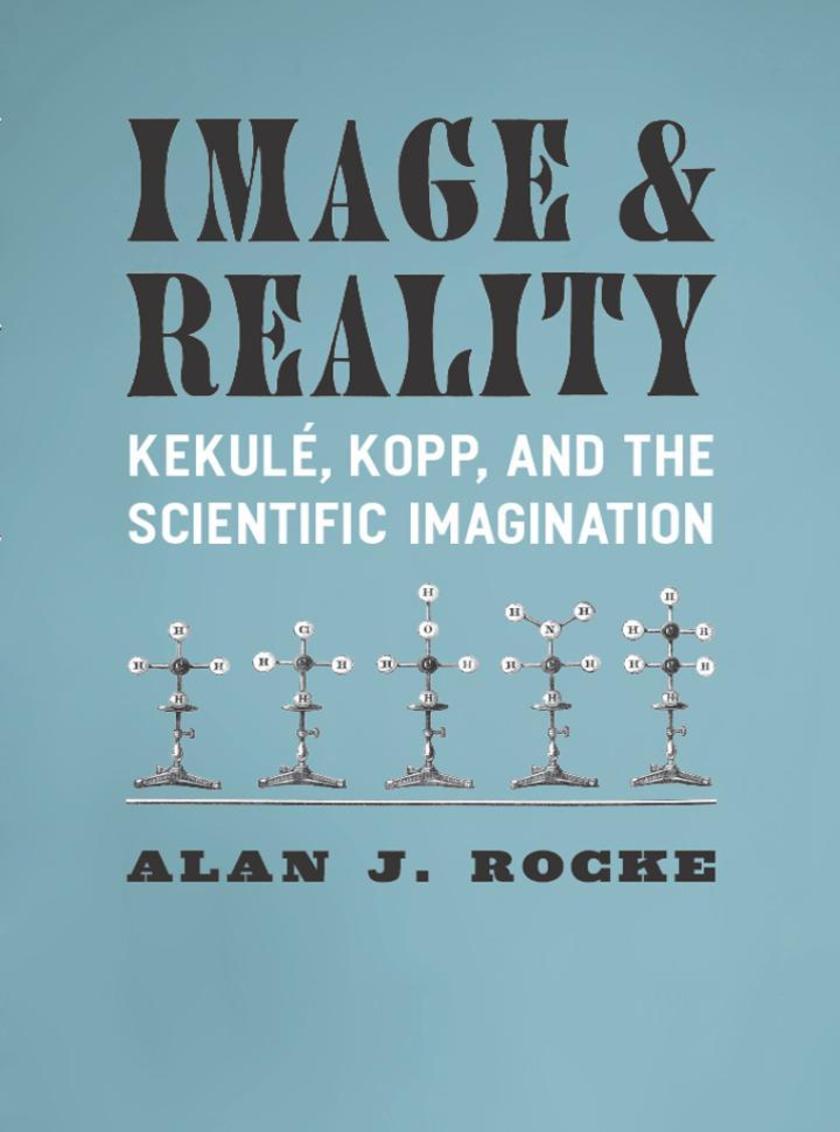
Image and Reality
¥447.34
Nineteenth-century chemists were faced with a particular problem: how to depict the atoms and molecules that are beyond the direct reach of our bodily senses. In visualizing this microworld, these scientists were the first to move beyond high-level philosophical speculations regarding the unseen. In Image and Reality, Alan Rocke focuses on the community of organic chemists in Germany to provide the basis for a fuller understanding of the nature of scientific creativity.?Arguing that visual mental images regularly assisted many of these scientists in thinking through old problems and new possibilities, Rocke uses a variety of sources, including private correspondence, diagrams and illustrations, scientific papers, and public statements, to investigate their ability to not only imagine the invisibly tiny atoms and molecules upon which they operated daily, but to build detailed and empirically based pictures of how all of the atoms in complicated molecules were interconnected. These portrayals of "e;chemical structures,"e; both as mental images and as paper tools, gradually became an accepted part of science during these years and are now regarded as one of the central defining features of chemistry.In telling this fascinating story in a manner accessible to the lay reader, Rocke also suggests that imagistic thinking is often at the heart of creative thinking in all fields.Image and Reality is the first book in the Synthesis series, a series in the history of chemistry, broadly construed, edited by Angela N. H. Creager, John E. Lesch, Stuart W. Leslie, Lawrence M. Principe, Alan Rocke, E.C. Spary, and Audra J. Wolfe, in partnership with the Chemical Heritage Foundation.
Unrepentant Renaissance
¥447.34
Who during the Renaissance could have dissented from the values of reason and restraint, patience and humility, rejection of the worldly and the physicalThese widely articulated values were part of the inherited Christian tradition and were reinforced by key elements in the Renaissance, especially the revival of Stoicism and Platonism. This book is devoted to those who did dissent from them.?Richard Strier reveals that many long-recognized major texts did question the most traditional values and uncovers a Renaissance far more bumptious and affirmative than much recent scholarship has allowed.The Unrepentant Renaissance counters the prevalent view of the period as dominated by the regulation of bodies and passions, aiming to reclaim the Renaissance as an era happily churning with surprising, worldly, and self-assertive energies. Reviving the perspective of Jacob Burckhardt and Nietzsche, Strier provides fresh and uninhibited readings of texts by Petrarch, More, Shakespeare, Ignatius Loyola, Montaigne, Descartes, and Milton. Strier's lively argument will stir debate throughout the field of Renaissance studies.
Seeing Double
¥447.34
The poet Charles Baudelaire (1821-1867) has been labeled the very icon of modernity, the scribe of the modern city, and an observer of an emerging capitalist culture. Seeing Double reconsiders this iconic literary figure and his fraught relationship with the nineteenth-century world by examining the way in which he viewed the increasing dominance of modern life. In doing so, it revises some of our most common assumptions about the unresolved tensions that emerged in Baudelaire's writing during a time of political and social upheaval.Franoise Meltzer argues that Baudelaire did not simply describe the contradictions of modernity; instead, his work embodied and recorded them, leaving them unresolved and often less than comprehensible. Baudelaire's penchant for looking simultaneously backward to an idealized past and forward to an anxious future, while suspending the tension between them, is part of what Meltzer calls his "e;double vision"e;-a way of seeing that produces encounters that are doomed to fail, poems that can't advance, and communications that always seem to falter. In looking again at the poet and his work, Seeing Double helps to us to understand the prodigious transformations at stake in the writing of modern life.

Geographies of Philological Knowledge
¥447.34
Geographies of Philological Knowledge examines the relationship between medievalism and colonialism in the nineteenth-century Hispanic American context through the striking case of the Creole Andres Bello (1781-1865), a Venezuelan grammarian, editor, legal scholar, and politician, and his lifelong philological work on the medieval heroic narrative that would later become Spain's national epic, the Poem of the Cid. Nadia R. Altschul combs Bello's study of the poem and finds throughout it evidence of a "e;coloniality of knowledge."e;?Altschul ?reveals how, during the nineteenth century, the framework for philological scholarship established in and for core European nations-France, England, and especially Germany-was exported to Spain and Hispanic America as the proper way of doing medieval studies. She argues that the global designs of European philological scholarship are conspicuous in the domain of disciplinary historiography, especially when examining the local history of a Creole Hispanic American like Bello, who is neither fully European nor fully alien to European culture. Altschul likewise highlights Hispanic America's intellectual internalization of coloniality and its understanding of itself as an extension of Europe. A timely example of interdisciplinary history, interconnected history, and transnational study, Geographies of Philological Knowledge breaks with previous nationalist and colonialist histories and thus forges a new path for the future of medieval studies.
Authoring the Past
¥447.34
Authoring the Past surveys medieval Catalan historiography, shedding light on the emergence and evolution of historical writing and autobiography in the Middle Ages, on questions of authority and authorship, and on the links between history and politics during the period. Jaume Aurell examines texts from the late twelfth to the late fourteenth century-including the Latin Gesta comitum Barcinonensium and four texts in medieval Catalan: James I's Llibre dels fets, the Crnica of Bernat Desclot, the Crnica of Ramon Muntaner, and the Crnica of Peter the Ceremonious-and outlines the different motivations for the writing of each.?For Aurell, these chronicles are not mere archaeological artifacts but rather documents that speak to their writers' specific contemporary social and political purposes. He argues that these Catalonian counts and Aragonese kings were attempting to use their role as authors to legitimize their monarchical status, their growing political and economic power, and their aggressive expansionist policies in the Mediterranean. By analyzing these texts alongside one another, Aurell demonstrates the shifting contexts in which chronicles were conceived, written, and read throughout the Middle Ages.The first study of its kind to make medieval Catalonian writings available to English-speaking audiences, Authoring the Past will be of interest to scholars of history and comparative literature, students of Hispanic and Romance medieval studies, and medievalists who study the chronicle tradition in other languages.
Intuition in Medicine
¥447.34
Intuition is central to discussions about the nature of scientific and philosophical reasoning and what it means to be human. In this bold and timely book, Hillel D. Braude marshals his dual training as a physician and philosopher to examine the place of intuition in medicine.Rather than defining and using a single concept of intuition-philosophical, practical, or neuroscientific-Braude here examines intuition as it occurs at different levels and in different contexts of clinical reasoning. He argues that not only does intuition provide the bridge between medical reasoning and moral reasoning, but that it also links the epistemological, ontological, and ethical foundations of clinical decision making. In presenting his case, Braude takes readers on a journey through Aristotle's Ethics-highlighting the significance of practical reasoning in relation to theoretical reasoning and the potential bridge between them-then through current debates between regulators and clinicians on evidence-based medicine, and finally applies the philosophical perspectives of Reichenbach, Popper, and Peirce to analyze the intuitive support for clinical equipoise, a key concept in research ethics. Through his phenomenological study of intuition Braude aims to demonstrate that ethical responsibility for the other lies at the heart of clinical judgment.?Braude's original approach advances medical ethics by using philosophical rigor and history to analyze the tacit underpinnings of clinical reasoning and to introduce clear conceptual distinctions that simultaneously affirm and exacerbate the tension between ethical theory and practice. His study will be welcomed not only by philosophers but also by clinicians eager to justify how they use moral intuitions, and anyone interested in medical decision making.
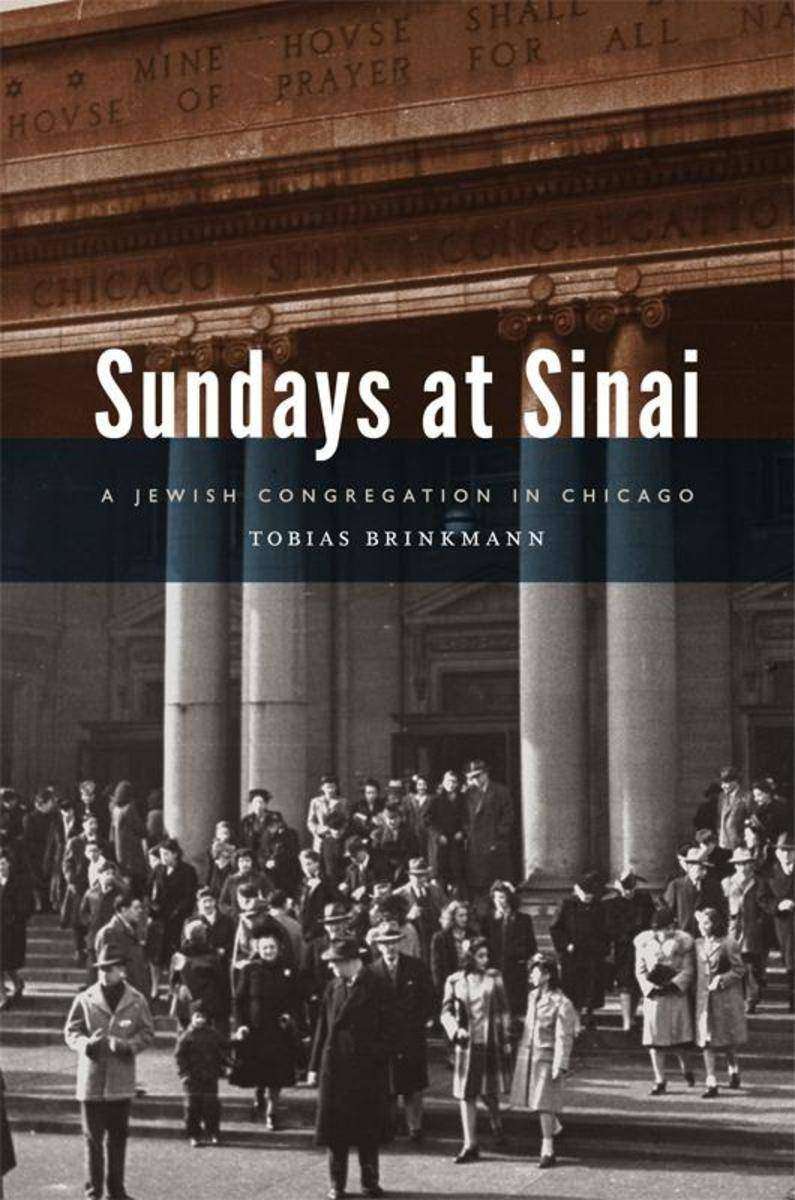
Sundays at Sinai
¥447.34
First established 150 years ago, Chicago Sinai is one of America's oldest Reform Jewish congregations. Its founders were upwardly mobile and civically committed men and women, founders and partners of banks and landmark businesses like Hart Schaffner & Marx, Sears & Roebuck, and the giant meatpacking firm Morris & Co. As explicitly modern Jews, Sinai's members supported and led civic institutions and participated actively in Chicago politics. Perhaps most radically, their Sunday services, introduced in 1874 and still celebrated today, became a hallmark of the congregation.In Sundays at Sinai, Tobias Brinkmann brings modern Jewish history, immigration, urban history, and religious history together to trace the roots of radical Reform Judaism from across the Atlantic to this rapidly growing American metropolis. ?Brinkmann shines a light on the development of an urban reform congregation, illuminating Chicago Sinai's practices and history, and its contribution to Christian-Jewish dialogue in the United States. Chronicling Chicago Sinai's radical beginnings in antebellum Chicago to the present, Sundays at Sinai is the extraordinary story of a leading Jewish Reform congregation in one of America's great cities.
Murder by Accident
¥447.34
Over fifty years ago, it became unfashionable-even forbidden-for students of literature to talk about an author's intentions for a given work. In Murder by Accident, Jody Enders boldly resurrects the long-disgraced concept of intentionality, especially as it relates to the theater.Drawing on four fascinating medieval events in which a theatrical performance precipitated deadly consequences, Enders contends that the marginalization of intention in critical discourse is a mirror for the marginalization-and misunderstanding-of theater. Murder by Accident revisits the legal, moral, ethical, and aesthetic limits of the living arts of the past, pairing them with examples from the present, whether they be reality television, snuff films, the "e;accidental"e; live broadcast of a suicide on a Los Angeles freeway, or an actor who jokingly fired a stage revolver at his temple, causing his eventual death. This book will force scholars and students to rethink their assumptions about theory, intention, and performance, both past and present.
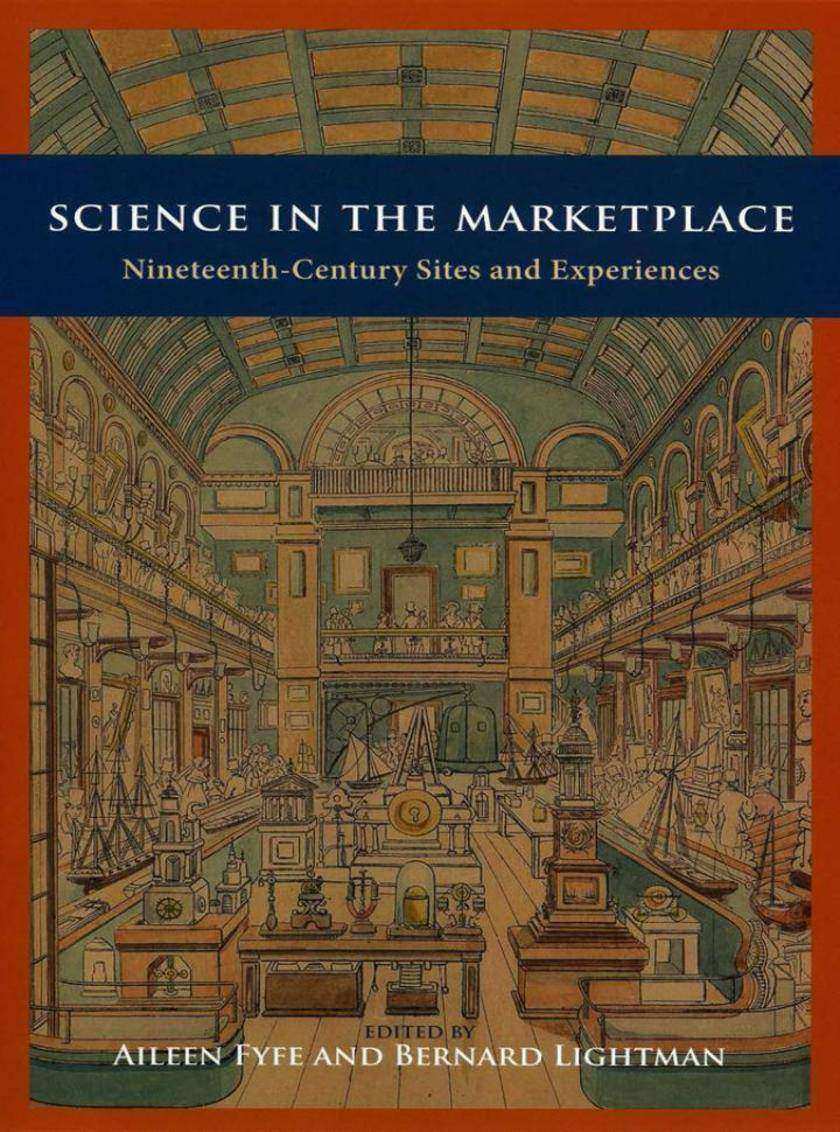
Science in the Marketplace
¥447.34
The nineteenth century was an age of transformation in science, when scientists were rewarded for their startling new discoveries with increased social status and authority.But it was also a time when ordinary people from across the social spectrum were given the opportunity to participate in science, for education, entertainment, or both. In Victorian Britain science could be encountered in myriad forms and in countless locations: in panoramic shows, exhibitions, and galleries; in city museums and country houses; in popular lectures; and even in domestic conversations that revolved around the latest books and periodicals.Science in the Marketplace reveals this other side of Victorian scientific life by placing the sciences in the wider cultural marketplace, ultimately showing that the creation of new sites and audiences was just as crucial to the growing public interest in science as were the scientists themselves. By focusing attention on the scientific audience, as opposed to the scientific community or self-styled popularizers, Science in the Marketplace ably links larger societal changes-in literacy, in industrial technologies, and in leisure-to the evolution of "e;popular science."e;
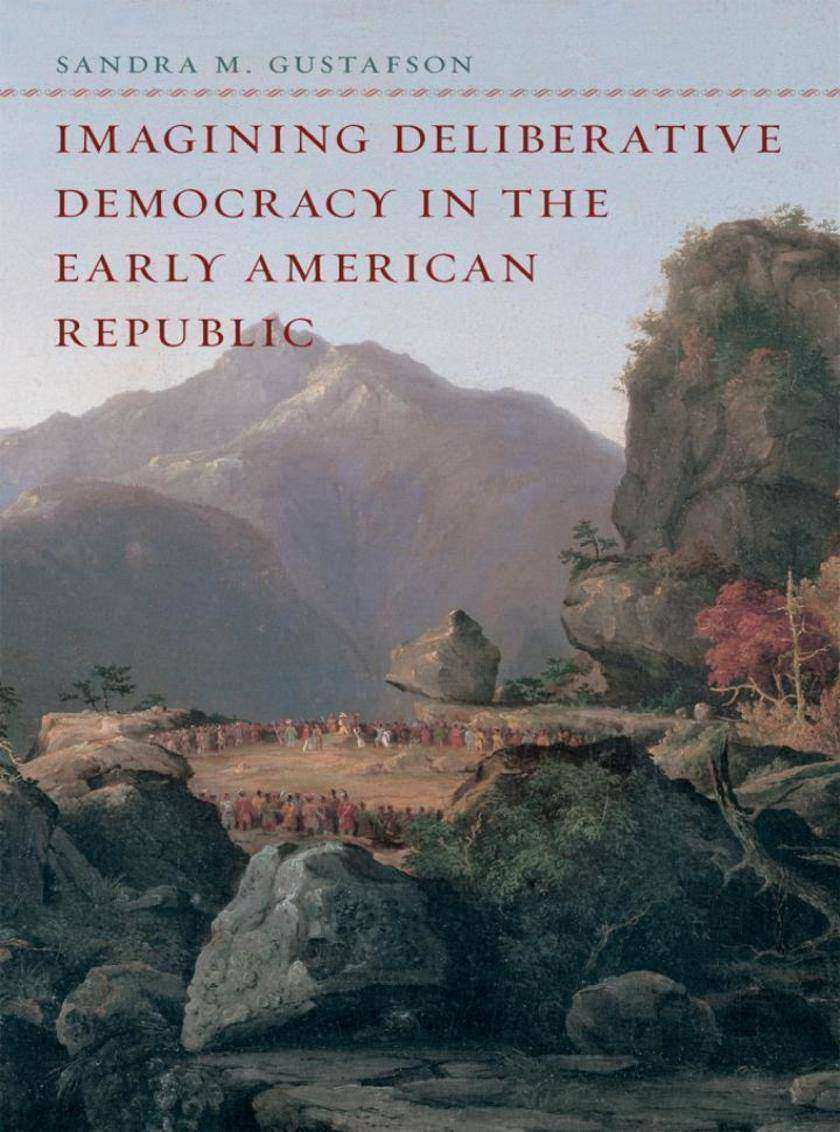
Imagining Deliberative Democracy in the Early American Republic
¥447.34
Deliberation, in recent years, has emerged as a form of civic engagement worth reclaiming. In this persuasive book, Sandra M. Gustafson combines historical literary analysis and political theory in order to demonstrate that current democratic practices of deliberation are rooted in the civic rhetoric that flourished in the early American republic.Though the U.S. Constitution made deliberation central to republican self-governance, the ethical emphasis on group deliberation often conflicted with the rhetorical focus on persuasive speech. From Alexis de Tocqueville's ideas about the deliberative basis of American democracy through the works of Walt Whitman, John Dewey, John F. Kennedy, and Martin Luther King Jr., Gustafson shows how writers and speakers have made the aesthetic and political possibilities of deliberation central to their autobiographies, manifestos, novels, and orations. Examining seven key writers from the early American republic-including James Fenimore Cooper, David Crockett, and Daniel Webster-whose works of deliberative imagination explored the intersections of style and democratic substance, Gustafson offers a mode of historical and textual analysis that displays the wide range of resources imaginative language can contribute to political life.
Mosaic Constitution
¥447.34
It is a common belief that *ure has no place in modern, secular politics. Graham Hammill challenges this notion in The Mosaic Constitution, arguing that Moses's constitution of Israel, which created people bound by the rule of law, was central to early modern writings about government and state.Hammill shows how political writers from Machiavelli to Spinoza drew on Mosaic narrative to imagine constitutional forms of government. At the same time, literary writers like Christopher Marlowe, Michael Drayton, and John Milton turned to Hebrew *ure to probe such fundamental divisions as those between populace and multitude, citizenship and race, and obedience and individual choice. As these writers used biblical narrative to fuse politics with the creative resources of language, Mosaic narrative also gave them a means for exploring divine authority as a product of literary imagination. The first book to place Hebrew *ure at the cutting edge of seventeenth-century literary and political innovation, The Mosaic Constitution offers a fresh perspective on political theology and the relations between literary representation and the founding of political communities.
Acolytes of Nature
¥447.34
Although many of the practical and intellectual traditions that make up modern science date back centuries, the category of "e;science"e; itself is a relative novelty. In the early eighteenth century, the modern German word that would later mean "e;science,"e; naturwissenschaft, was not even included in dictionaries. By 1850, however, the term was in use everywhere. Acolytes of Nature follows the emergence of this important new category within German-speaking Europe, tracing its rise from an insignificant eighteenth-century neologism to a defining rallying cry of modern German culture.Today's notion of a unified natural science has been deemed an invention of the mid-nineteenth century. Yet what Denise Phillips reveals here is that the idea of naturwissenschaft acquired a prominent place in German public life several decades earlier. Phillips uncovers the evolving outlines of the category of natural science and examines why Germans of varied social station and intellectual commitments came to find this label useful. An expanding education system, an increasingly vibrant consumer culture and urban social life, the early stages of industrialization, and the emergence of a liberal political movement all fundamentally altered the world in which educated Germans lived, and also reshaped the way they classified knowledge.
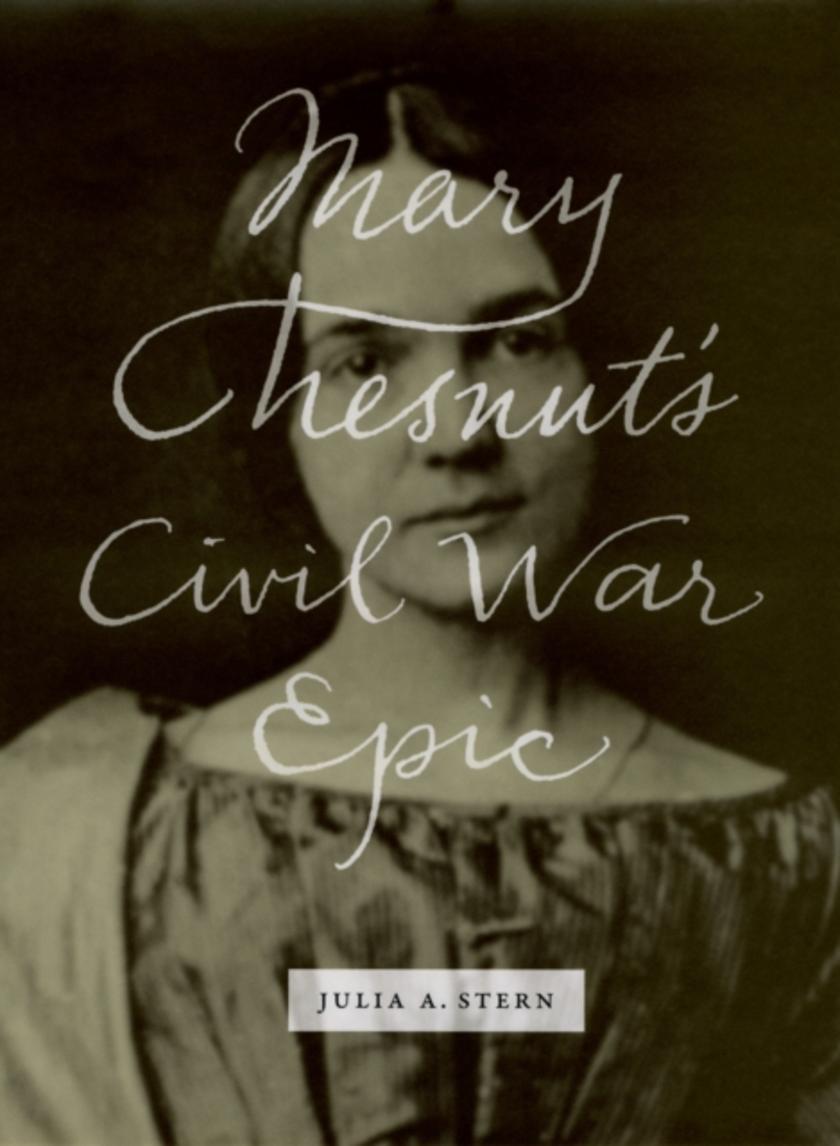
Mary Chesnut's Civil War Epic
¥447.34
A genteel southern intellectual, saloniste, and wife to a prominent colonel in Jefferson Davis's inner circle, Mary Chesnut today is remembered best for her penetrating Civil War diary. Composed between 1861 and 1865 and revised thoroughly from the late 1870s until Chesnut's death in 1886, the diary was published first in 1905, again in 1949, and later, to great acclaim, in 1981. This complicated literary history and the questions that attend it-which edition represents the real ChesnutTo what genre does this text belong?-may explain why the document largely has, until now, been overlooked in literary studies.Julia A. Stern's critical analysis returns Chesnut to her rightful place among American writers. In Mary Chesnut's Civil War Epic, Stern argues that the revised diary offers the most trenchant literary account of race and slavery until the work of Faulkner and that, along with his Yoknapatawpha novels, it constitutes one of the two great Civil War epics of the American canon. By restoring Chesnut's 1880s revision to its complex, multidecade cultural context, Stern argues both for Chesnut's reinsertion into the pantheon of nineteenth-century American letters and for her centrality to the literary history of women's writing as it evolved from sentimental to tragic to realist forms.


