


 购物车
购物车 个人中心
个人中心

中国散文诗一百年大系(全八册)
¥229.99
《中国散文诗一百年大系》(全八册)为套装,八个分册。该书把近一百年来散文诗的精华作品汇编在一起,既有对乡村田野风光的赞美,也有对人间美好情感的颂扬。套书整体上创意新颖,文章精美。是一部了解、学习、借鉴、研究中国近一百年来散文诗兴起、发展概况的比较好的文集。

曾国藩的正面与侧面:全四册
¥229.99
这既是一部曾国藩的个人生活史,也是一部晚清政治史、社会史。通过这本书,不仅能了解一个更*的曾国藩,也能了解中国传统社会政治的运转规律。 套装全4册,围绕晚清名臣曾国藩的人生际遇与处世方法展开,*部讲述曾国藩的为官之路和立身准则,由此探讨曾国藩作为一个典型的封建官员的内心世界和事业成败;第二部主要讲述曾国藩的家风和治家之道,通过分析他与父母、兄弟、子女的相处方式,展现晚清时期典型官绅家庭中的伦理关系;第三部主要讲述曾国藩与同僚、下属之间相互合作又有所冲突的关系,深入分析晚清官场中的人际交往模式和种种离合暗流,更加立体地再现了曾国藩所处的时代环境与社会环境。 第四部通过观察他的经济生活,可窥探这个传统社会*后一个圣人少为人知的一个侧面,他的“真诚”与“虚伪”,在金钱诱惑面前采取的既原则分明又现实圆通的态度,呈现了晚清官场种种微妙而复杂的“规矩”。

东宫
¥229.90
【古言双强+宫斗宅斗+甜宠爽文】骄纵将门贵女x心机腹黑皇子,东宫夫妇携手虐渣,又苏又爽! 她是大将军之女,骄纵矜贵,可随意进出建章宫,从小的愿望就是当公主,养面首。 他是从小被送入敌国的质子,被大将军接回国后,处境尴尬,却声望渐起。 本是井水不犯河水的两人,但一次醉酒误事,她当众亲了他…… “一时冲动,真的是一时冲动。” “不,该是蓄谋已久。姑娘毁了在下声名,要负责任的。” …… 她本不愿嫁入皇家,介入皇权争斗,可心却不受控制走向了他。 那就随心而为,与他携手入主东宫! 翻开本书,看东宫夫妇携手虐渣,又苏又爽!

张山雷医著大成
¥229.60
张寿颐(1872-1934),原名张寿祥。字山雷,一字资生,清末民初著名的中医家、教育家、著作家。张氏注重经典,主张中西汇参,强调诊治以临床实用为准则。张氏在引经据典的同时,常结合西医新知与临床实践,探求中医的生理病理与诊疗机理。在内、外、妇、儿、经络腧穴、文献整理及培养人才方面,均有卓越的贡献。对中风的治疗,推翻前人“外风”论,以“内风”立论,创立治中风八法;疡科方面,注重内病外治,创新了疡科的理法方药;以校勘、训释、笺正、平议等形式,研究整理中医古籍,多有发明;创办学校与杂志,教书育人。代表性著作有《中风斠诠》《疡科纲要》《脉学正义》《本草正义》等。

有种后宫叫德妃(全七册)
¥229.60
宫斗文坛一直在翘首期盼的高格局划时代之作—— 高智商高情商宫斗:有种后宫叫德妃 ★传奇:出身包衣,却统领后宫,泽被三朝 她出生满族包衣,却逆袭成为千古一帝康熙宠爱的妃子;她是九龙夺嫡胜者雍正之母,她堪比孝庄慈禧,传奇一生泽被康乾盛世;她以无上大智慧高情商,征服帝王,领袖后宫,缔造史上独一无二的“德妃后宫”。 ★宫斗:不用你死我活也能当皇太后 你以为的宫斗都是如媚娘甄嬛一路打怪升级撕名牌?高段位的宫斗是不用杀光敌人牺牲朋友埋葬爱情也能升级BOSS!颜值不高却凭忠心护主赢得君心,出身低微却因懂事贴心获孝庄太后言传身教,盛宠不倦却能恪守方寸化解后宫争斗。她是妃子,温良纯正无欲无求让君心长留;她是额娘,大智慧高情商助子成王。 ★大咖:清朝大咖联袂出演 在这里,几乎能看见你所熟知的活跃清朝舞台的大咖们: 和韦小宝智擒鳌拜平定三藩、带着宜妃微服私访的小玄子康熙 教晴川弹琴、和怜儿跳舞、带若曦去哭、与甄嬛纠缠的四爷雍正 与多尔衮爱恨情仇、帮康熙开创盛世的大玉儿孝庄 与纪晓岚、刘锣锅比口才、同小燕子晒父爱的弘历乾隆 人生若只如初见的旷世才子纳兰性德 为晴川疯狂、对若曦痴情的八爷胤禩 四爷*神秘善良的纯元、霸气外漏的融芳华妃、陪康熙微服私访心直口快的宜妃等等 ★六味暖心:甜腻·纯爱·唯美·虐恋·温情·壁咚 1.“健健康康的才好,朕要乌雅岚琪陪着朕一辈子,答应朕。” 2.下辈子咱们不要生在帝王家,朕就和你一生一世一双人。 3.“倘若皇上没走远,瞧见我怎么办,又或我忍不住去看他,我怕看到他……我怕看到他,夜里忍不住想哭” 4. 玄烨的心一点一点沉下来,他怎能奢望岚琪永远是那个,为了留住自己而不惜掀开被子露出身体的小宫女?既然想要她永远留在身边,好好地留在身边,她就必须融入这个世界,沾染后宫的气息,成为一个后宫女人,而自己并非厌恶,只是舍不得,只是心疼。 5.“乌雅岚琪,你胆子可不小,朕这辈子还没尝过背黑锅的滋味!” “您连江山都担得,背一次黑锅算什么。” 她是无欲无求的小宫女,他是霸气倔强的新帝,年龄相仿,心思相同,两个人在美的年华遇到彼此。 他,只许自己欺负她,彻夜教她读书识字,偷偷望着她的背影,为她的笨拙和善良默默心疼。 她,守护他胜过自己的生命和尊严,思念他至夜夜以泪洗面,爱他胜过自己至亲骨肉。 她用一生换他一世,他用一世周全她一生

宫颈癌筛查及临床处理:细胞学、组织学和阴道镜学
¥229.60
本书反映了宫颈癌筛查的*研究展,结合国内妇科临床病理工作的实际需要,以细胞病理专业为基础,由多学科专家从多视角共同完成。以宫颈癌筛查为主线,以细胞病理学为核心,详细地阐述了在宫颈癌筛查中涉及的各方面内容,包括细胞学的诊断标准、质量评估、各种异常细胞学的形态变化特,以及妊娠期的子宫颈细胞学表现和特殊部位肛管的细胞学。本书紧密联系临床,以实际案例剖析如何避免诊断陷阱、正确解决签发病理报告时遇到的问题及相关临床处理共识和指南,适用于病理学医生、妇科医生、流行病工作者、病理学专业的医学生、住院医生和修医生的学习培训。

What Did the Romans Know?
¥229.55
What did the Romans know about their worldQuite a lot, as Daryn Lehoux makes clear in this fascinating and much-needed contribution to the history and philosophy of ancient science. Lehoux contends that even though many of the Romans' views about the natural world have no place in modern science-the umbrella-footed monsters and dog-headed people that roamed the earth and the stars that foretold human destinies-their claims turn out not to be so radically different from our own.?Lehoux draws upon a wide range of sources from what is unquestionably the most prolific period of ancient science, from the first century BC to the second century AD. He begins with Cicero's theologico-philosophical trilogy On the Nature of the Gods, On Divination, and On Fate, illustrating how Cicero's engagement with nature is closely related to his concerns in politics, religion, and law. Lehoux then guides readers through highly technical works by Galen and Ptolemy, as well as the more philosophically oriented physics and cosmologies of Lucretius, Plutarch, and Seneca, all the while exploring the complex interrelationships between the objects of scientific inquiry and the norms, processes, and structures of that inquiry. This includes not only the tools and methods the Romans used to investigate nature, but also the Romans' cultural, intellectual, political, and religious perspectives. Lehoux concludes by sketching a methodology that uses the historical material he has carefully explained to directly engage the philosophical questions of incommensurability, realism, and relativism.?By situating Roman arguments about the natural world in their larger philosophical, political, and rhetorical contexts, What Did the Romans Knowdemonstrates that the Romans had sophisticated and novel approaches to nature, approaches that were empirically rigorous, philosophically rich, and epistemologically complex.
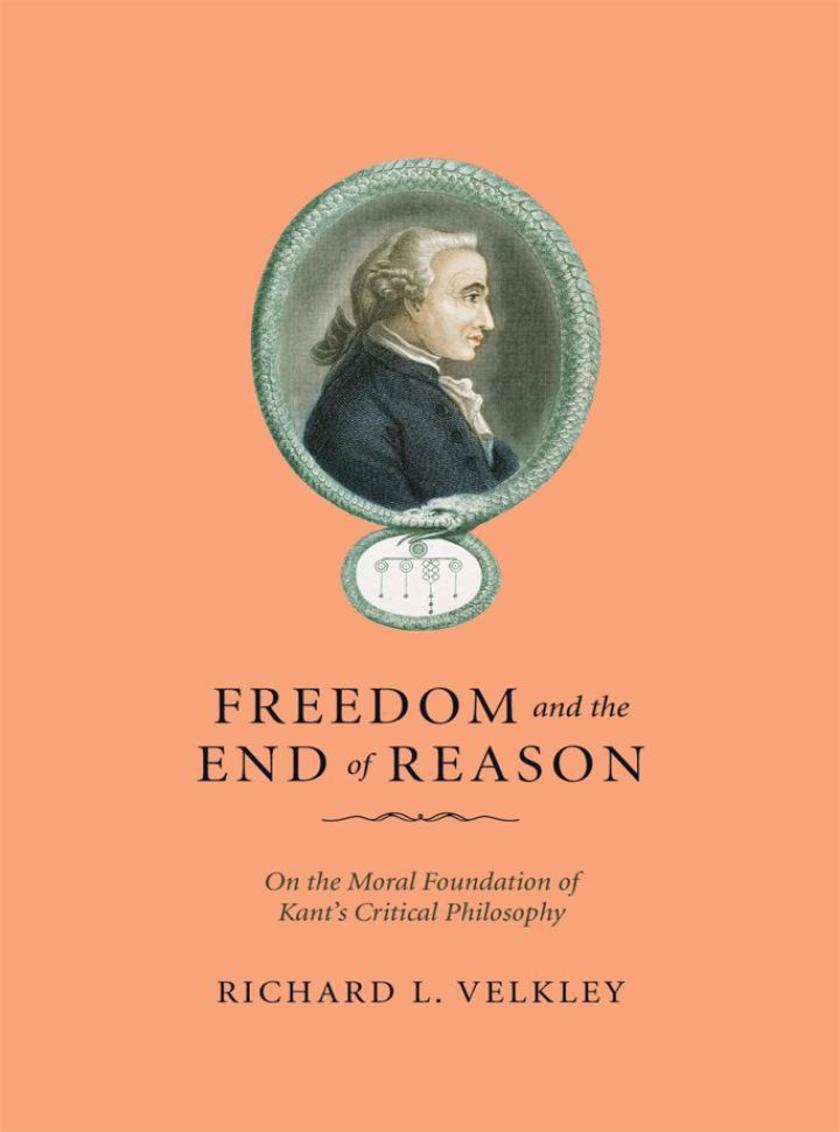
Freedom and the End of Reason
¥229.55
In Freedom and the End of Reason, Richard L. Velkley offers an influential interpretation of the central issue of Kant's philosophy and an evaluation of its position within modern philosophy's larger history. He persuasively argues that the whole of Kantianism-not merely the Second Critique-focuses on a "e;critique of practical reason"e; and is a response to a problem that Kant saw as intrinsic to reason itself: the teleological problem of its goodness. Reconstructing the influence of Rousseau on Kant's thought, Velkley demonstrates that the relationship between speculative philosophy and practical philosophy in Kant is far more intimate than generally has been perceived. By stressing a Rousseau-inspired notion of reason as a provider of practical ends, he is able to offer an unusually complete account of Kant's idea of moral culture.
Little Magazine in Contemporary America
¥229.55
Little magazines have often showcased the best new writing in America. Historically, these idiosyncratic, small-circulation outlets have served the dual functions of representing the avant-garde of literary expression while also helping many emerging writers become established authors. Although changing technology and the increasingly harsh financial realities of publishing over the past three decades would seem to have pushed little magazines to the brink of extinction, their story is far more complicated.In this collection, Ian Morris and Joanne Diaz gather the reflections of twenty-three prominent editors whose little magazines have flourished over the past thirty-five years. Highlighting the creativity and innovation driving this diverse and still vital medium, contributors offer insights into how their publications sometimes succeeded, sometimes reluctantly folded, but mostly how they evolved and persevered. Other topics discussed include the role of little magazines in promoting the work and concerns of minority and women writers, the place of universities in supporting and shaping little magazines, and the online and offline future of these publications.Selected contributorsBetsy Sussler, BOMB; Lee Gutkind, Creative Nonfiction; Bruce Andrews, L=A=N=G=U=A=G=E; Dave Eggers, McSweeney's; Keith Gessen, n+1; Don Share, Poetry; Jane Friedman, VQR; Amy Hoffman, Women's Review of Books; and more.?
Poet's Freedom
¥229.55
Why do we need new artHow free is the artist in makingAnd why is the artist, and particularly the poet, a figure of freedom in Western cultureThe MacArthur Award-winning poet and critic Susan Stewart ponders these questions in The Poet's Freedom. Through a series of evocative essays, she not only argues that freedom is necessary to making and is itself something made, but also shows how artists give rules to their practices and model a self-determination that might serve in other spheres of work.Stewart traces the ideas of freedom and making through insightful readings of an array of Western philosophers and poets-Plato, Homer, Marx, Heidegger, Arendt, Dante, and Coleridge are among her key sources. She begins by considering the theme of making in the Hebrew Scriptures, examining their accountof a god who creates the world and leaves humans free to rearrange and reform the materials of nature. She goes on to follow the force of moods, sounds, rhythms, images, metrical rules, rhetorical traditions, the traps of the passions, and the nature of language in the cycle of making and remaking. Throughout the book she weaves the insight that the freedom to reverse any act of artistic making is as essential as the freedom to create.?A book about the pleasures of making and thinking as means of life, The Poet's Freedom explores and celebrates the freedom of artists who, working under finite conditions, make considered choices and shape surprising consequences. This engaging and beautifully written notebook on making will attract anyone interested in the creation of art and literature.
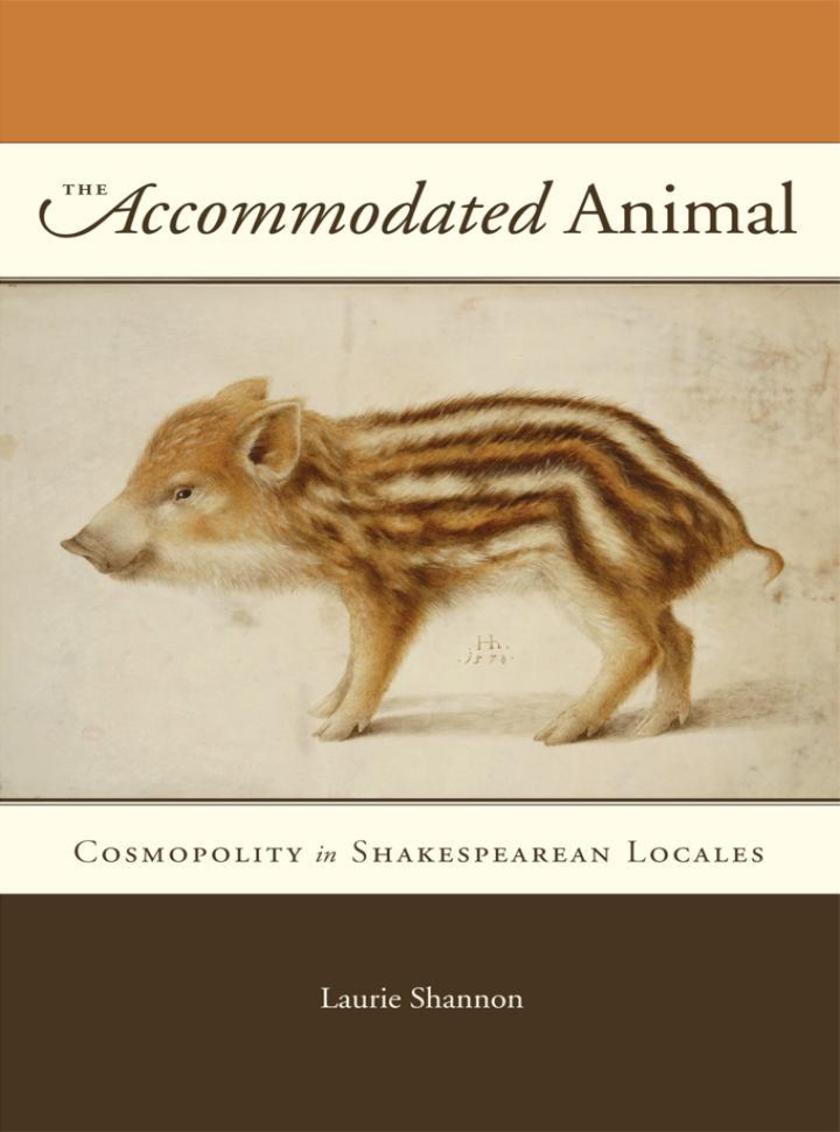
Accommodated Animal
¥229.55
Shakespeare wrote of lions, shrews, horned toads, curs, mastiffs, and hellhounds. But the word "e;animal"e; itself only appears very rarely in his work, which was in keeping with sixteenth-century usage. As Laurie Shannon reveals in The Accommodated Animal, the modern human / animal divide first came strongly into play in the seventeenth century, with Descartes's famous formulation that reason sets humans above other species: "e;I think, therefore I am."e; Before that moment, animals could claim a firmer place alongside humans in a larger vision of belonging, or what she terms cosmopolity.?With Shakespeare as her touchstone, Shannon explores the creaturely dispensation that existed until Descartes. She finds that early modern writers used classical natural history and readings of Genesis to credit animals with various kinds of stakeholdership, prerogative, and entitlement, employing the language of politics in a constitutional vision of cosmic membership. Using this political idiom to frame cross-species relations, Shannon argues, carried with it the notion that animals possess their own investments in the world, a point distinct from the question of whether animals have reason. It also enabled a sharp critique of the tyranny of humankind. By answering "e;the question of the animal"e; historically, The Accommodated Animal makes a brilliant contribution to cross-disciplinary debates engaging animal studies, political theory, intellectual history, and literary studies.
How Life Began
¥229.55
The origin of life is a hotly debated topic. The Christian Bible states that God created the heavens and the Earth, all in about seven days roughly six thousand years ago. This episode in Genesis departs markedly from scientific theories developed over the last two centuries which hold that life appeared on Earth about 3.5 billion years ago in the form of bacteria, followed by unicellular organisms half a millennia later. It is this version of genesis that Alexandre Meinesz explores in this engaging tale of life's origins and evolution.?How Life Began elucidates three origins, or geneses, of life-bacteria, nucleated cells, and multicellular organisms-and shows how evolution has sculpted life to its current biodiversity through four main events-mutation, recombination, natural selection, and geologic cataclysm.?As an ecologist who specializes in algae, the first organisms to colonize Earth, Meinesz brings a refreshingly novel voice to the history of biodiversity and emphasizes here the role of unions in organizing life. For example, the ingestion of some bacteria by other bacteria led to mitochondria that characterize animal and plant cells, and the chloroplasts of plant cells.?As Meinesz charmingly recounts, life's grandeur is a result of an evolutionary tendency toward sociality and solidarity. He suggests that it is our cohesion and collaboration that allows us to solve the environmental problems arising in the decades and centuries to come. Rooted in the science of evolution but enlivened with many illustrations from other disciplines and the arts, How Life Began?intertwines the rise of bacteria and multicellular life with Vermeer's portrait of Antoni van Leeuwenhoek, the story of Genesis and Noah, Meinesz's son's early experiences with Legos, and his own encounters with other scientists. All of this brings a very human and humanistic tone to Meinesz's charismatic narrative of the three origins of life.?

On the Nature of Limbs
¥229.55
The most prominent naturalist in Britain before Charles Darwin, Richard Owen made empirical discoveries and offered theoretical innovations that were crucial to the proof of evolution. Among his many lasting contributions to science was the first clear definition of the term homology-"e;the same organ in different animals under every variety of form and function."e; He also graphically demonstrated that all vertebrate species were built on the same skeletal plan and devised the vertebrate archetype as a representation of the simplest common form of all vertebrates.Just as Darwin's ideas continue to propel the modern study of adaptation, so too will Owen's contributions fuel the new interest in homology, organic form, and evolutionary developmental biology. His theory of the archetype and his views on species origins were first offered to the general public in On the Nature of Limbs, published in 1849. It reemerges here in a facsimile edition with introductory essays by prominent historians, philosophers, and practitioners from the modern evo-devo community.
Until Choice Do Us Part
¥229.55
For centuries, people have been thinking and writing-and fiercely debating-about the meaning of marriage. Just a hundred years ago, Progressive era reformers embraced marriage not as a time-honored repository for conservative values, but as a tool for social change.In Until Choice Do Us Part, Clare Virginia Eby offers a new account of marriage as it appeared in fiction, journalism, legal decisions, scholarly work, and private correspondence at the turn into the twentieth century. She begins with reformers like sexologist Havelock Ellis, anthropologist Elsie Clews Parsons, and feminist Charlotte Perkins Gilman, who argued that spouses should be "e;class equals"e; joined by private affection, not public sanction. ?Then Eby guides us through the stories of three literary couples-Upton and Meta Fuller Sinclair, Theodore and Sara White Dreiser, and Neith Boyce and Hutchins Hapgood-who sought to reform marriage in their lives and in their writings, with mixed results. With this focus on the intimate side of married life, Eby views a historical moment that changed the nature of American marriage-and that continues to shape marital norms today.
Enigma of Diversity
¥229.55
Diversity these days is a hallowed American value, widely shared and honored. That's a remarkable change from the Civil Rights era-but does this public commitment to diversity constitute a civil rights victoryWhat does diversity mean in contemporary America, and what are the effects of efforts to support it?Ellen Berrey digs deep into those questions in The Enigma of Diversity. Drawing on six years of fieldwork and historical sources dating back to the 1950s and making extensive use of three case studies from widely varying arenas-housing redevelopment in Chicago's Rogers Park neighborhood, affirmative action in the University of Michigan's admissions program, and the workings of the human resources department at a Fortune 500 company-Berrey explores the complicated, contradictory, and even troubling meanings and uses of diversity as it is invoked by different groups for different, often symbolic ends. In each case, diversity affirms inclusiveness, especially in the most coveted jobs and colleges, yet it resists fundamental change in the practices and cultures that are the foundation of social inequality. Berrey shows how this has led racial progress itself to be reimagined, transformed from a legal fight for fundamental rights to a celebration of the competitive advantages afforded by cultural differences.Powerfully argued and surprising in its conclusions, The Enigma of Diversity reveals the true cost of the public embrace of diversity: the taming of demands for racial justice.

Conjugations
¥229.55
Bollywood movies have been long known for their colorful song-and-dance numbers and knack for combining drama, comedy, action-adventure, and music. But when India entered the global marketplace in the early 1990s, its film industry transformed radically. Production and distribution of films became regulated, advertising and marketing created a largely middle-class audience, and films began to fit into genres like science fiction and horror. In this bold study of what she names New Bollywood, Sangita Gopal contends that the key to understanding these changes is to analyze films' evolving treatment of romantic relationships.Gopalargues that the form of the conjugal duo in movies reflects other social forces in India's new consumerist and global society. She takes a daring look at recent Hindi films and movie trends-the decline of song-and-dance sequences, the upgraded status of the horror genre, and the rise of the multiplex and multi-plot-to demonstrate how these relationships exemplify different formulas of contemporary living. A provocative account of how cultural artifacts can embody globalization's effects on intimate life, Conjugations will shake up the study of Hindi film.
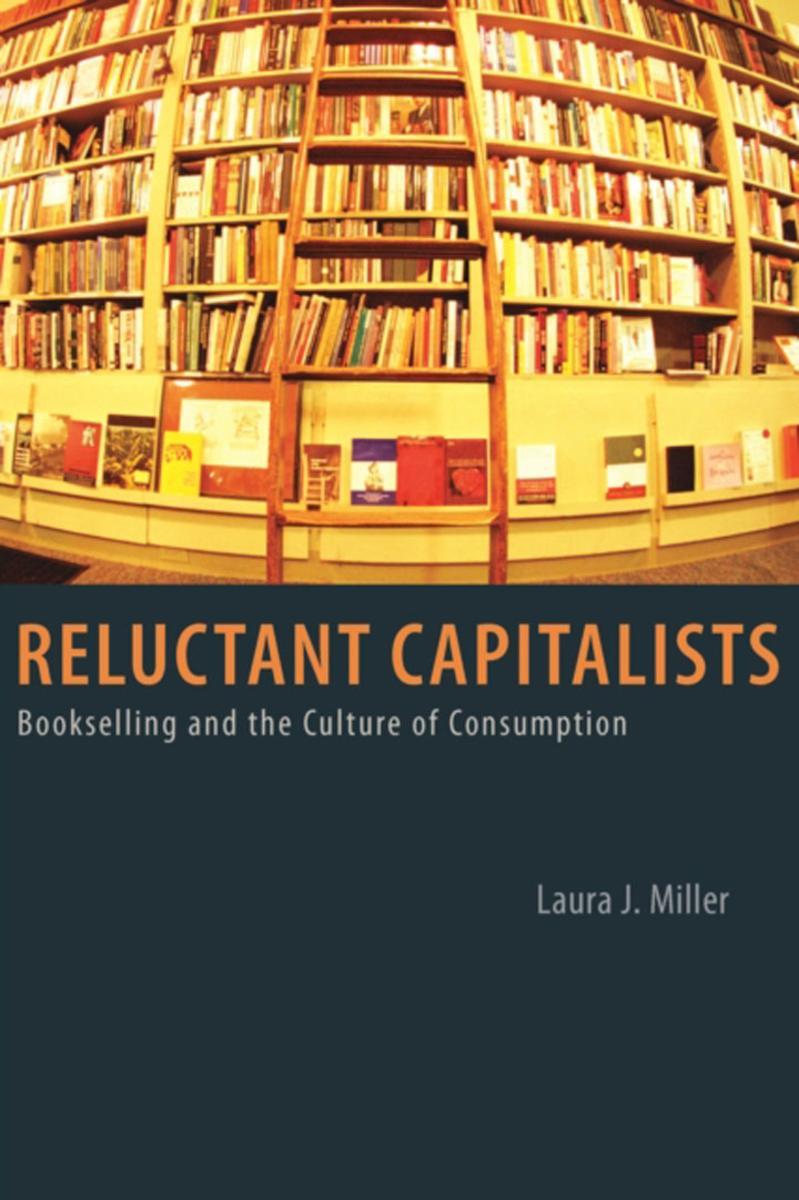
Reluctant Capitalists: Bookselling and the Culture of Consumption
¥229.55
Over the past half-century, bookselling, like many retail industries, has evolved from an arena dominated by independent bookstores to one in which chain stores have significant market share. And as in other areas of retail, this transformation has often been a less-than-smooth process. This has been especially pronounced in bookselling, argues Laura J. Miller, because more than most other consumer goods, books are the focus of passionate debate. What drives that debateAnd why do so many people believe that bookselling should be immune to questions of profit?In Reluctant Capitalists, Miller looks at a century of book retailing, demonstrating that the independent/chain dynamic is not entirely new. It began one hundred years ago when department stores began selling books, continued through the 1960s with the emergence of national chain stores, and exploded with the formation of "e;superstores"e; in the 1990s. The advent of the Internet has further spurred tremendous changes in how booksellers approach their business. All of these changes have met resistance from book professionals and readers who believe that the book business should somehow be "e;above"e; market forces and instead embrace more noble priorities.Miller uses interviews with bookstore customers and members of the book industry to explain why books evoke such distinct and heated reactions. She reveals why customers have such fierce loyalty to certain bookstores and why they identify so strongly with different types of books. In the process, she also teases out the meanings of retailing and consumption in American culture at large, underscoring her point that any type of consumer behavior is inevitably political, with consequences for communities as well as commercial institutions.

Under a Bad Sign
¥229.55
Many people have contributed to the completion of this book.Its inception can be traced to a seminar that Lary May and Paula Rabinowitz asked me to deliver on hip hop's gangsta culture toward the end of my graduate studies in the American studies program at the University of Minnesota.The media hype and moral panic surrounding gangsta culture in the early 1990s bore an uncanny resemblance to the troublesome reception of Hollywood's white ethnic gangsters in the 1930s, the subject of my research at the time.The chance to discuss the gangster/gangsta relation also fueled the development of an undergraduate course on African American popular culture.So I have the American studies faculty and fellow graduates in Scott Hall, as well as the students on the consequent course, to thank for setting me on the road to writing Under a Bad Sign.A particular shout-out has to go to John Wright, who insisted I dig up Claude McKay's Harlem: Negro Metropolis in the rare books section of Wilson Library to see how deep the provenance and complex the relationship was between black denizens of the American city and their gangster culture heroes.
Galileo's Instruments of Credit
¥229.55
In six short years, Galileo Galilei went from being a somewhat obscure mathematics professor running a student boarding house in Padua to a star in the court of Florence to the recipient of dangerous attention from the Inquisition for his support of Copernicanism. In that brief period, Galileo made a series of astronomical discoveries that reshaped the debate over the physical nature of the heavens: he deeply modified the practices and status of astronomy with the introduction of the telescope and pictorial evidence, proposed a radical reconfiguration of the relationship between theology and astronomy, and transformed himself from university mathematician into court philosopher.Galileo's Instruments of Credit proposes radical new interpretations of several key episodes of Galileo's career, including his early telescopic discoveries of 1610, the dispute over sunspots, and the conflict with the Holy Office over the relationship between Copernicanism and Scripture. Galileo's tactics during this time shifted as rapidly as his circumstances, argues Mario Biagioli, and the pace of these changes forced him to respond swiftly to the opportunities and risks posed by unforeseen inventions, further discoveries, and the interventions of his opponents.Focusing on the aspects of Galileo's scientific life that extend beyond the framework of court culture and patronage, Biagioli offers a revisionist account of the different systems of exchanges, communication, and credibility at work in various phases of Galileo's career. Galileo's Instruments of Credit will find grateful readers among scholars of science studies, historical epistemology, visual studies, Galilean science, and late Renaissance astronomy.

Desperately Seeking Certainty
¥229.55
Irreverent, provocative, and engaging, Desperately Seeking Certainty attacks the current legal vogue for grand unified theories of constitutional interpretation. On both the Right and the Left, prominent legal scholars are attempting to build all of constitutional law from a single foundational idea. Dan Farber and Suzanna Sherry find that in the end no single, all-encompassing theory can successfully guide judges or provide definitive or even sensible answers to every constitutional question. Their book brilliantly reveals how problematic foundationalism is and shows how the pragmatic, multifaceted common law methods already used by the Court provide a far better means of reaching sound decisions and controlling judicial discretion than do any of the grand theories.

Top Student, Top School?
¥229.55
Most of us think that valedictorians can write their own ticket. By reaching the top of their class they have proven their merit, so their next logical step should be to attend the nation's very best universities. Yet in Top Student, Top School?, Alexandria Walton Radford, of RTI International, reveals that many valedictorians do not enroll in prestigious institutions. Employing an original five-state study that surveyed nine hundred public high school valedictorians, she sets out to determine when and why valedictorians end up at less selective schools, showing that social class makes all the difference.?Radford traces valedictorians' paths to college and presents damning evidence that high schools do not provide sufficient guidance on crucial factors affecting college selection, such as reputation, financial aid, and even the application process itself. Left in a bewildering environment of seemingly similar options, many students depend on their parents for assistance-and this allows social class to rear its head and have a profound impact on where students attend. Simply put, parents from less affluent backgrounds are far less informed about differences in colleges' quality, the college application process, and financial aid options, which significantly limits their child's chances of attending a competitive school, even when their child has already managed to become valedictorian.?Top Student, Top Schoolpinpoints an overlooked yet critical juncture in the education process, one that stands as a barrier to class mobility. By focusing solely on valedictorians, it shows that students' paths diverge by social class even when they are similarly well-prepared academically, and this divergence is traceable to specific failures by society, failures that we can and should address.Watch an interview of Alexandria Walton Radford discussing her book here:?http://www.youtube.com/watch?v=F81c1D1BpY0


