


 购物车
购物车 个人中心
个人中心
Asynchronous Android Programming - Second Edition
¥90.46
Unlock the power of multi-core mobile devices to build responsive and reactive Android applications About This Book Construct scalable and performant applications to take advantage of multi-thread asynchronous techniques Explore the high-level Android asynchronous constructs available on the Android SDK Choose the most appropriate asynchronous technique to implement your next outstanding feature Who This Book Is For This book is for Android developers who want to learn how to build multithreaded and reliable Android applications using high-level and advanced asynchronous techniques and concepts. No prior knowledge of concurrent and asynchronous programming is required. This book will also be great for Java experts who are new to Android. Whether you are a beginner at Android development or a seasoned Android programmer, this book will guide you through the most basic and advanced asynchronous constructs used in Android programming. What You Will Learn Get familiar with the android process model and low-level concurrent constructs delivered by the Android SDK Use AsyncTask and loader framework to load data in the background, delivering progress results in the meantime Create services that interact with your activity without compromising the UI rendering Learn the working of Android concurrency on the Native Layer Interact with nearby devices over Bluetooth and WiFi communications channels Create and compose tasks with RxJava to execute complex asynchronous work in a predictable way Get accustomed to the use of the Android Loader construct to deliver up-to-date results In Detail Asynchronous programming has acquired immense importance in Android programming, especially when we want to make use of the number of independent processing units (cores) available on the most recent Android devices. With this guide in your hands you’ll be able to bring the power of Asynchronous programming to your own projects, and make your Android apps more powerful than ever before! To start with, we will discuss the details of the Android Process model and the Java Low Level Concurrent Framework, delivered by Android SDK. We will also guide you through the high-level Android-specific constructs available on the SDK: Handler, AsyncTask, and Loader. Next, we will discuss the creation of IntentServices, Bound Services and External Services, which can run in the background even when the user is not interacting with it. You will also discover AlarmManager and JobScheduler APIs, which are used to schedule and defer work without sacrificing the battery life. In a more advanced phase, you will create background tasks that are able to execute CPU-intensive tasks in a native code-making use of the Android NDK. You will be then guided through the process of interacting with remote services asynchronously using the HTTP protocol or Google GCM Platform. Using the EventBus library, we will also show how to use the Publish-Subscribe software pattern to simplify communication between the different Android application components by decoupling the event producer from event consumer. Finally, we will introduce RxJava, a popular asynchronous Java framework used to compose work in a concise and reactive way. Asynchronous Android will help you to build well-behaved applications with smooth responsive user interfaces that delight the users with speedy results and data that’s always fresh. Style and approach This easy-to-follow guide is full of code examples of real-world use cases. Each asynchronous topic is explained sequentially, from the most basic and low-level to the more advanced, using concise and effective language. Some lifecycle flows and concepts feature illustrations to help you understand the complex interactions between Android entities.
Large Scale Machine Learning with Python
¥90.46
Learn to build powerful machine learning models quickly and deploy large-scale predictive applications About This Book Design, engineer and deploy scalable machine learning solutions with the power of Python Take command of Hadoop and Spark with Python for effective machine learning on a map reduce framework Build state-of-the-art models and develop personalized recommendations to perform machine learning at scale Who This Book Is For This book is for anyone who intends to work with large and complex data sets. Familiarity with basic Python and machine learning concepts is recommended. Working knowledge in statistics and computational mathematics would also be helpful. What You Will Learn Apply the most scalable machine learning algorithms Work with modern state-of-the-art large-scale machine learning techniques Increase predictive accuracy with deep learning and scalable data-handling techniques Improve your work by combining the MapReduce framework with Spark Build powerful ensembles at scale Use data streams to train linear and non-linear predictive models from extremely large datasets using a single machine In Detail Large Python machine learning projects involve new problems associated with specialized machine learning architectures and designs that many data scientists have yet to tackle. But finding algorithms and designing and building platforms that deal with large sets of data is a growing need. Data scientists have to manage and maintain increasingly complex data projects, and with the rise of big data comes an increasing demand for computational and algorithmic efficiency. Large Scale Machine Learning with Python uncovers a new wave of machine learning algorithms that meet scalability demands together with a high predictive accuracy. Dive into scalable machine learning and the three forms of scalability. Speed up algorithms that can be used on a desktop computer with tips on parallelization and memory allocation. Get to grips with new algorithms that are specifically designed for large projects and can handle bigger files, and learn about machine learning in big data environments. We will also cover the most effective machine learning techniques on a map reduce framework in Hadoop and Spark in Python. Style and approach This efficient and practical title is stuffed full of the techniques, tips and tools you need to ensure your large scale Python machine learning runs swiftly and seamlessly. Large-scale machine learning tackles a different issue to what is currently on the market. Those working with Hadoop clusters and in data intensive environments can now learn effective ways of building powerful machine learning models from prototype to production. This book is written in a style that programmers from other languages (R, Julia, Java, Matlab) can follow.
Visual Studio 2015 Cookbook - Second Edition
¥90.46
Over 50 new and improved recipes to put Visual Studio 2015 to work in your crucial development projects About This Book Get to grips with all the new Visual Studio 2015 features regardless of your preferred programming language Apply Visual Studio to all areas of development: writing, debugging, and application lifecycle maintenance Straightforward and hands-on advice for building both Windows and Android apps Who This Book Is For If you are a developer excited about the new features introduced in Visual Studio 2015, then no matter what your programming language of choice is, Visual Studio 2015 Cookbook is for you. You should have a good knowledge of working with previous versions of Visual Studio to benefit from the recipes in this book. What You Will Learn Customize the editor's new abilities to fit your development style Create apps for Windows Use Visual Studio to debug parallel and concurrent programs Integrate .NET Framework 4.6 effectively Put TypeScript to work in your web applications Develop modern C++11 with Visual Studio 2015 Protect and manage your source code with Team Foundation Server In Detail Visual Studio 2015 is the premier tool for developers targeting the Microsoft platform. Learning how to effectively use this technology can enhance your productivity while simplifying your most common tasks, allowing you more time to focus on your project. Visual Studio 2015 is packed with improvements that increase productivity, and this book walks you through each one in succession to help you smooth your workflow and get more accomplished. From customization and the interface to code snippets and debugging, the Visual Studio upgrade expands your options — and this book is your fast-track guide to getting on board quickly. Visual Studio 2015 Cookbook will introduce you to all the new areas of Visual Studio and how they can quickly be put to use to improve your everyday development tasks. With this book, you will learn not only what VS2015 offers, but what it takes to put it to work for your projects. Style and approach This book is a practical guide to using Visual Studio 2015 and will help you become familiar with the improvements made in previous versions. Each recipe provides a hands-on approach to the new features with step-by-step instructions on how to increase your productivity.
Android High Performance Programming
¥90.46
Build fast and efficient Android apps that run as reliably as clockwork in a multi-device world About This Book . Wide coverage of various topics that help in developing optimal applications . Explore the concepts of Advanced Native Coding in depth . A must-have for professional-standard Android developers for whom performance failures and the sloppy use of resources are simply unacceptable Who This Book Is For This book is aimed at developers with an advanced knowledge of Android and who want to test their skills and learn new techniques to increase the performance of their applications. We assume they are comfortable working with the entire Android SDK, and have been doing it for a few years. They need to be familiar with frameworks such as NDK to use native code, which is crucial for app performance What You Will Learn . Create Android applications that squeeze the most from the limited resource capacity of devices . Swap code that isn’t performing . Efficient memory management by identifying problems such as leaks . Reap the benefits of multithreaded and asynchronous programming . Maximize the security and encryption mechanisms natively provided by Android . Perform efficient network operations and techniques to retrieve data from servers . Master the NDK to write native code that can perform faster operations In Detail Performant applications are one of the key drivers of success in the mobile world. Users may abandon an app if it runs slowly. Learning how to build applications that balance speed and performance with functionality and UX can be a challenge; however, it's now more important than ever to get that balance right. Android High Performance will start you thinking about how to wring the most from any hardware your app is installed on, so you can increase your reach and engagement. The book begins by providing an introduction to state–of-the-art Android techniques and the importance of performance in an Android application. Then, we will explain the Android SDK tools regularly used to debug and profile Android applications. We will also learn about some advanced topics such as building layouts, multithreading, networking, and security. Battery life is one of the biggest bottlenecks in applications; and this book will show typical examples of code that exhausts battery life, how to prevent this, and how to measure battery consumption from an application in every kind of situation to ensure your apps don’t drain more than they should. This book explains techniques for building optimized and efficient systems that do not drain the battery, cause memory leaks, or slow down with time. Style and approach The book follows a tutorial-based approach to take the reader from the basic fundamentals of debugging to advanced performance-improvement concepts.
Modular Programming with PHP 7
¥90.46
Utilize the power of modular programming to improve code readability, maintainability, and testability About This Book This book demonstrates code reusability and distributed development to get high speed, maintainable, and fast applications It illustrates the development of a complete modular application developed using PHP7 in detail This book provides a high-level overview of the Symfony framework, a set of tools and a development methodology that are needed to build a modular web shop application Who This Book Is For This step-by-step guide is divided into two sections. The first section explores all the fundamentals of modular design technique with respect to PHP 7. The latter section demonstrates the practical development of individual modules of a web shop application. What You Will Learn Discover the new features of PHP 7 that are relevant to modular application development Write manageable code based on the GoF design patterns and SOLID principles Define the application requirements of a working modular application Explore the ins and outs of the Symfony framework Build a set of modules based on the Symfony framework that comprise a simple web shop app Use core modules to set the structure and dependencies for other modules to use Set up entities that are relevant to the module functionality and see how to manage these entities In Detail Modular design techniques help you build readable, manageable, reusable, and more efficient codes. PHP 7, which is a popular open source *ing language, is used to build modular functions for your software. With this book, you will gain a deep insight into the modular programming paradigm and how to achieve modularity in your PHP code. We start with a brief introduction to the new features of PHP 7, some of which open a door to new concepts used in modular development. With design patterns being at the heart of all modular PHP code, you will learn about the GoF design patterns and how to apply them. You will see how to write code that is easy to maintain and extend over time with the help of the SOLID design principles. Throughout the rest of the book, you will build different working modules of a modern web shop application using the Symfony framework, which will give you a deep understanding of modular application development using PHP 7. Style and approach This book is for intermediate-level PHP developers with little to no knowledge of modular programming who want to understand design patterns and principles in order to better utilize the existing frameworks for modular application development.
C++ Windows Programming
¥90.46
Develop real-world applications in Windows. About This Book Create diverse applications featuring the versatility of Small Windows C++ library Learn about object-oriented programming in Windows and how to develop a large object-oriented class library in C++ Understand how to tackle application-specific problems along with acquiring a deep understanding of the workings of Windows architecture Who This Book Is For This book is for application developers who want a head-first approach into Windows programming. It will teach you how to develop an object-oriented class library in C++ and enhanced applications in Windows. Basic knowledge of C++ and the object-oriented framework is assumed to get the most out of this book. What You Will Learn Develop advanced real-world applications in Windows Design and implement a graphical object-oriented class library in C++ Get to grips with the workings of the integral aspects of the Win32 API, such as mouse input, drawing, cut-and-paste, file handling, and drop files Identify general problems when developing graphical applications as well as specific problems regarding drawing, spreadsheet, and word processing applications Implement classes, functions, and macros of the object-oriented class library developed in the book and how we implement its functionality by calling functions and macros in the Win32 API In Detail It is critical that modern developers have the right tools to build practical, user-friendly, and efficient applications in order to compete in today’s market. Through hands-on guidance, this book illustrates and demonstrates C++ best practices and the Small Windows object-oriented class library to ease your development of interactive Windows applications. Begin with a focus on high level application development using Small Windows. Learn how to build four real-world applications which focus on the general problems faced when developing graphical applications. Get essential troubleshooting guidance on drawing, spreadsheet, and word processing applications. Finally finish up with a deep dive into the workings of the Small Windows class library, which will give you all the insights you need to build your own object-oriented class library in C++. Style and approach This book takes a tutorial-style approach that will demonstrate the features of a C++ object-oriented library by developing interactive Windows applications.
Haskell High Performance Programming
¥90.46
Boost the performance of your Haskell applications using optimization, concurrency, and parallel programming About This Book Explore the benefits of lazy evaluation, compiler features, and tools and libraries designed for high performance Write fast programs at extremely high levels of abstraction Work through practical examples that will help you address the challenges of writing efficient code Who This Book Is For To get the most out of this book, you need to have a working knowledge of reading and writing basic Haskell. No knowledge of performance, optimization, or concurrency is required. What You Will Learn Program idiomatic Haskell that's also surprisingly efficient Improve performance of your code with data parallelism, inlining, and strictness annotations Profile your programs to identify space leaks and missed opportunities for optimization Find out how to choose the most efficient data and control structures Optimize the Glasgow Haskell Compiler and runtime system for specific programs See how to smoothly drop to lower abstractions wherever necessary Execute programming for the GPU with Accelerate Implement programming to easily scale to the cloud with Cloud Haskell In Detail Haskell, with its power to optimize the code and its high performance, is a natural candidate for high performance programming. It is especially well suited to stacking abstractions high with a relatively low performance cost. This book addresses the challenges of writing efficient code with lazy evaluation and techniques often used to optimize the performance of Haskell programs. We open with an in-depth look at the evaluation of Haskell expressions and discuss optimization and benchmarking. You will learn to use parallelism and we'll explore the concept of streaming. We’ll demonstrate the benefits of running multithreaded and concurrent applications. Next we’ll guide you through various profiling tools that will help you identify performance issues in your program. We’ll end our journey by looking at GPGPU, Cloud and Functional Reactive Programming in Haskell. At the very end there is a catalogue of robust library recommendations with code samples. By the end of the book, you will be able to boost the performance of any app and prepare it to stand up to real-world punishment. Style and approach This easy-to-follow guide teaches new practices and techniques to optimize your code, and then moves towards more advanced ways to effectively write efficient Haskell code. Small and simple practical examples will help you test the concepts yourself, and you will be able to easily adapt them for any application.
Julia for Data Science
¥90.46
Explore the world of data science from scratch with Julia by your side About This Book An in-depth exploration of Julia's growing ecosystem of packages Work with the most powerful open-source libraries for deep learning, data wrangling, and data visualization Learn about deep learning using Mocha.jl and give speed and high performance to data analysis on large data sets Who This Book Is For This book is aimed at data analysts and aspiring data scientists who have a basic knowledge of Julia or are completely new to it. The book also appeals to those competent in R and Python and wish to adopt Julia to improve their skills set in Data Science. It would be beneficial if the readers have a good background in statistics and computational mathematics. What You Will Learn Apply statistical models in Julia for data-driven decisions Understanding the process of data munging and data preparation using Julia Explore techniques to visualize data using Julia and D3 based packages Using Julia to create self-learning systems using cutting edge machine learning algorithms Create supervised and unsupervised machine learning systems using Julia. Also, explore ensemble models Build a recommendation engine in Julia Dive into Julia’s deep learning framework and build a system using Mocha.jl In Detail Julia is a fast and high performing language that's perfectly suited to data science with a mature package ecosystem and is now feature complete. It is a good tool for a data science practitioner. There was a famous post at Harvard Business Review that Data Scientist is the sexiest job of the 21st century. (https://hbr.org/2012/10/data-scientist-the-sexiest-job-of-the-21st-century). This book will help you get familiarised with Julia's rich ecosystem, which is continuously evolving, allowing you to stay on top of your game. This book contains the essentials of data science and gives a high-level overview of advanced statistics and techniques. You will dive in and will work on generating insights by performing inferential statistics, and will reveal hidden patterns and trends using data mining. This has the practical coverage of statistics and machine learning. You will develop knowledge to build statistical models and machine learning systems in Julia with attractive visualizations. You will then delve into the world of Deep learning in Julia and will understand the framework, Mocha.jl with which you can create artificial neural networks and implement deep learning. This book addresses the challenges of real-world data science problems, including data cleaning, data preparation, inferential statistics, statistical modeling, building high-performance machine learning systems and creating effective visualizations using Julia. Style and approach This practical and easy-to-follow yet comprehensive guide will get you learning about Julia with respect to data science. Each topic is explained thoroughly and placed in context. For the more inquisitive, we dive deeper into the language and its use case. This is the one true guide to working with Julia in data science.
Mobile Forensics – Advanced Investigative Strategies
¥90.46
Master powerful strategies to acquire and analyze evidence from real-life scenarios About This Book A straightforward guide to address the roadblocks face when doing mobile forensics Simplify mobile forensics using the right mix of methods, techniques, and tools Get valuable advice to put you in the mindset of a forensic professional, regardless of your career level or experience Who This Book Is For This book is for forensic analysts and law enforcement and IT security officers who have to deal with digital evidence as part of their daily job. Some basic familiarity with digital forensics is assumed, but no experience with mobile forensics is required. What You Will Learn Understand the challenges of mobile forensics Grasp how to properly deal with digital evidence Explore the types of evidence available on iOS, Android, Windows, and BlackBerry mobile devices Know what forensic outcome to expect under given circumstances Deduce when and how to apply physical, logical, over-the-air, or low-level (advanced) acquisition methods Get in-depth knowledge of the different acquisition methods for all major mobile platforms Discover important mobile acquisition tools and techniques for all of the major platforms In Detail Investigating digital media is impossible without forensic tools. Dealing with complex forensic problems requires the use of dedicated tools, and even more importantly, the right strategies. In this book, you’ll learn strategies and methods to deal with information stored on smartphones and tablets and see how to put the right tools to work. We begin by helping you understand the concept of mobile devices as a source of valuable evidence. Throughout this book, you will explore strategies and "plays" and decide when to use each technique. We cover important techniques such as seizing techniques to shield the device, and acquisition techniques including physical acquisition (via a USB connection), logical acquisition via data backups, over-the-air acquisition. We also explore cloud analysis, evidence discovery and data analysis, tools for mobile forensics, and tools to help you discover and analyze evidence. By the end of the book, you will have a better understanding of the tools and methods used to deal with the challenges of acquiring, preserving, and extracting evidence stored on smartphones, tablets, and the cloud. Style and approach This book takes a unique strategy-based approach, executing them on real-world scenarios. You will be introduced to thinking in terms of "game plans," which are essential to succeeding in analyzing evidence and conducting investigations.
Practical Data Analysis - Second Edition
¥90.46
A practical guide to obtaining, transforming, exploring, and analyzing data using Python, MongoDB, and Apache Spark About This Book Learn to use various data analysis tools and algorithms to classify, cluster, visualize, simulate, and forecast your data Apply Machine Learning algorithms to different kinds of data such as social networks, time series, and images A hands-on guide to understanding the nature of data and how to turn it into insight Who This Book Is For This book is for developers who want to implement data analysis and data-driven algorithms in a practical way. It is also suitable for those without a background in data analysis or data processing. Basic knowledge of Python programming, statistics, and linear algebra is assumed. What You Will Learn Acquire, format, and visualize your data Build an image-similarity search engine Generate meaningful visualizations anyone can understand Get started with analyzing social network graphs Find out how to implement sentiment text analysis Install data analysis tools such as Pandas, MongoDB, and Apache Spark Get to grips with Apache Spark Implement machine learning algorithms such as classification or forecasting In Detail Beyond buzzwords like Big Data or Data Science, there are a great opportunities to innovate in many businesses using data analysis to get data-driven products. Data analysis involves asking many questions about data in order to discover insights and generate value for a product or a service. This book explains the basic data algorithms without the theoretical jargon, and you’ll get hands-on turning data into insights using machine learning techniques. We will perform data-driven innovation processing for several types of data such as text, Images, social network graphs, documents, and time series, showing you how to implement large data processing with MongoDB and Apache Spark. Style and approach This is a hands-on guide to data analysis and data processing. The concrete examples are explained with simple code and accessible data.
Spark for Data Science
¥90.46
Analyze your data and delve deep into the world of machine learning with the latest Spark version, 2.0 About This Book Perform data analysis and build predictive models on huge datasets that leverage Apache Spark Learn to integrate data science algorithms and techniques with the fast and scalable computing features of Spark to address big data challenges Work through practical examples on real-world problems with sample code snippets Who This Book Is For This book is for anyone who wants to leverage Apache Spark for data science and machine learning. If you are a technologist who wants to expand your knowledge to perform data science operations in Spark, or a data scientist who wants to understand how algorithms are implemented in Spark, or a newbie with minimal development experience who wants to learn about Big Data Analytics, this book is for you! What You Will Learn Consolidate, clean, and transform your data acquired from various data sources Perform statistical analysis of data to find hidden insights Explore graphical techniques to see what your data looks like Use machine learning techniques to build predictive models Build scalable data products and solutions Start programming using the RDD, DataFrame and Dataset APIs Become an expert by improving your data analytical skills In Detail This is the era of Big Data. The words ‘Big Data’ implies big innovation and enables a competitive advantage for businesses. Apache Spark was designed to perform Big Data analytics at scale, and so Spark is equipped with the necessary algorithms and supports multiple programming languages. Whether you are a technologist, a data scientist, or a beginner to Big Data analytics, this book will provide you with all the skills necessary to perform statistical data analysis, data visualization, predictive modeling, and build scalable data products or solutions using Python, Scala, and R. With ample case studies and real-world examples, Spark for Data Science will help you ensure the successful execution of your data science projects. Style and approach This book takes a step-by-step approach to statistical analysis and machine learning, and is explained in a conversational and easy-to-follow style. Each topic is explained sequentially with a focus on the fundamentals as well as the advanced concepts of algorithms and techniques. Real-world examples with sample code snippets are also included.
Working with Odoo 10 - Second Edition
¥90.46
Configure, manage, and customize Odoo to build professional-level business applications About This Book Build an Odoo module and integrate it with other platforms through this practical guide This book is the perfect companion to help you customize your Odoo installations for your enterprise requirements Use project management along with analytics for better reporting Who This Book Is For This book is for those who have not used Odoo before, allowing you to learn advanced-level features with Odoo such as creating your own custom modules. You do not need any knowledge of Odoo. What You Will Learn Configure a functioning customer relationship management system Set up a purchasing and receiving system Implement manufacturing operations and processes using real-world examples Discover the capabilities of Odoo's financial accounting and reporting features Integrate powerful human resource applications Utilize Odoo's project management application to organize tasks Customize Odoo without writing a line a code In Detail Odoo is a comprehensive set of open-source enterprise management applications. Now with Odoo 10, you have access to a powerful website builder, integrated e-commerce features, and a fast-growing community to help transform and modernize your business. You will start with how to set up Odoo online and on your own server. You’ll then configure the basic company settings required to quickly getting your first Odoo system up and running. Later you’ll explore Customer Relationship Management in Odoo and and their importance in today's modern business environment. Next we will deep dive into purchasing application with Odoo and learn some of the primary functionalities of ERP systems for manufacturing operations. You will then use analytic accounting to provide better reporting. Finally you will walk through the recent Odoo 10 features with respect to the community and enterprise edition giving you complete understanding of what Odoo can do for you no matter the reason! Style and approach This fast-paced, step-by-step guide will show you everything you need to know about the Odoo module ecosystem through practical and real-world examples.
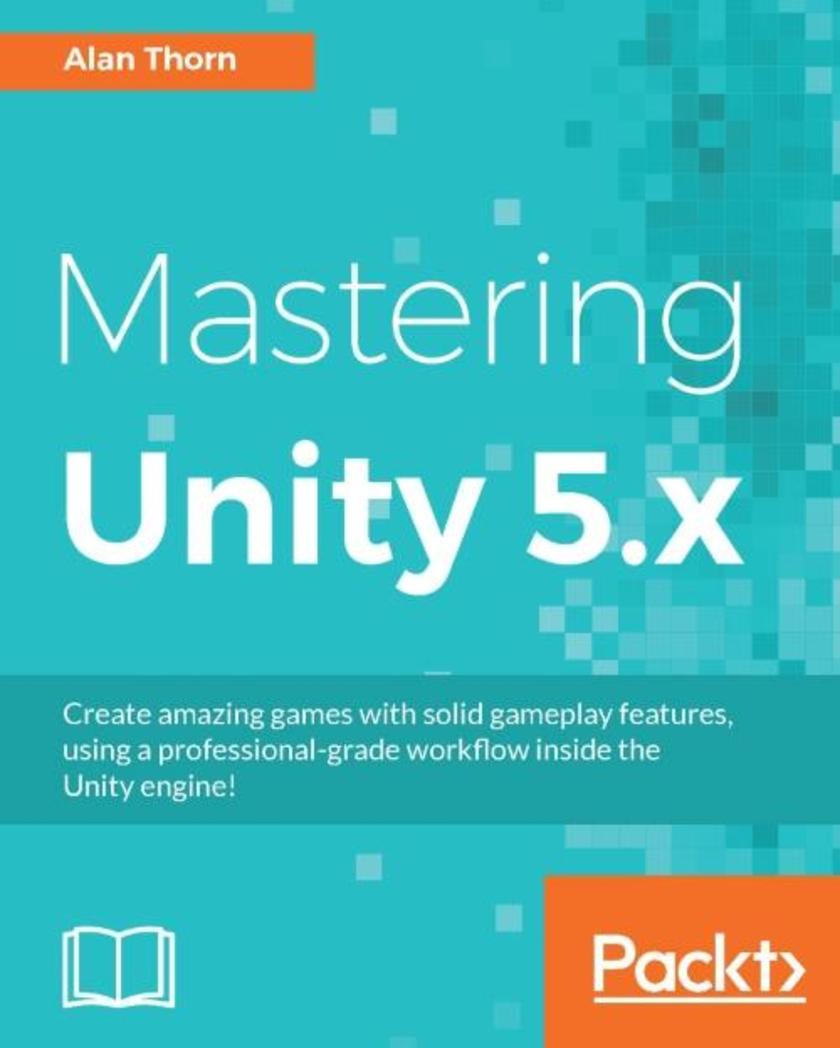
Mastering Unity 5.x
¥90.46
Create amazing games with solid gameplay features, using a professional-grade workflow inside the Unity engine! About This Book Become a Unity master by creating a practical, in-depth game-development project with Unity Use advanced C# *ing to unlock the complete potential of Unity 5 Use Version Control to Effectively Manage and Scale your workflow Who This Book Is For If you are a Unity developer who now wants to develop and deploy interesting games by leveraging the new features of Unity 5.x, then this is the book for you. Basic knowledge of C# programming is assumed. What You Will Learn Explore hands-on tasks and real-world scenarios to make a Unity horror adventure game Create enemy characters that act intelligently and make reasoned decisions Use data files to save and restore game data in a way that is platform-agnostic Get started with VR development Use Navigation Meshes, Occlusion Culling, and the Profiler tools Work confidently with GameObjects, Rotations, and Transformations Understand specific gameplay features such as AI enemies, inventory systems, and level design In Detail Do you want to take the leap from being an everyday Unity developer to being a pro game developerThen look no further! This book is your one stop solution to creating mesmerizing games with lifelike features and amazing gameplay. This book takes an in-depth focus on a practical project with Unity, building a first-person game with many features. You’ll dive deep into the architecture of a Unity game, creating expansive worlds, interesting render effects, and other features to make your games special. You will create individual game components, use efficient animation techniques, and implement collision and physics effectively. Specifically, we’ll explore optimal techniques for importing game assets, such as meshes and textures; tips and tricks for effective level design; how to animate and * NPCs; how to configure and deploy to mobile devices; how to prepare for VR development; and how to work with version control, and more. By the end of this book, you’ll have developed sufficient competency in Unity development to produce fun games with confidence. Style and approach This book takes a step-by-step, practical tutorial approach. You will create an advanced level Unity game with an emphasis on leveraging the advanced Unity 5 features. You will make the most of the Unity 5 advanced features while you develop the game in its entirety.

NHibernate 4.x Cookbook - Second Edition
¥90.46
Over 90 incredible and powerful recipes to help you efficiently use NHibernate in your application About This Book · Master the full range of NHibernate features through detailed example recipes that you can quickly apply to your own applications· Reduce hours of application development time and get a better application architecture and improved performance· Create, maintain, and update your database structure automatically with the help of NHibernate Who This Book Is For This book is written for .NET developers who want to use NHibernate and those who want to deepen their knowledge of the platform. Examples are written in C# and XML. Some basic knowledge of SQL is assumed. If you build .NET applications that use relational databases, this book is for you. What You Will Learn · Create a persistent object model to move data in and out of your database· Build the database from your model automatically· Configure NHibernate for use with WebForms, MVC, WPF, and WinForms applications· Create database queries using a variety of methods· Improve the performance of your applications using a variety of techniques· Build an infrastructure for fast, easy, test-driven development of your data access layer· Implement entity validation, auditing, full-text search, horizontal partitioning (sharding), and spatial queries using NHibernate Contrib projects In Detail NHibernate is a mature, flexible, scalable, and feature-complete open source project for data access. Although it sounds like an easy task to build and maintain database applications, it can be challenging to get beyond the basics and develop applications that meet your needs perfectly. NHibernate allows you to use plain SQL and stored procedures less and keep focus on your application logic instead. Learning the best practices for a NHibernate-based application will help you avoid problems and ensure that your project is a success. The book will take you from the absolute basics of NHibernate through to its most advanced features, showing you how to take full advantage of each concept to quickly create amazing database applications. You will learn several techniques for each of the four core NHibernate tasks—configuration, mapping, session and transaction management, and querying—and which techniques fit best with various types of applications. In short, you will be able to build an application using NHibernate by the end of the book. You will also learn how to best implement enterprise application architecture patterns using NHibernate, leading to clean, easy-to-understand code and increased productivity. In addition to new features, you will learn creative ways to extend the NHibernate core, as well as gaining techniques to work with the NHibernate search, shards, spatial, envers, and validation projects. Style and approach This book contains recipes with examples organized in functional areas, each containing step-by-step instructions on everything necessary to execute a particular task. The book is designed so you can read it from start to end or just open up any chapter and start following the recipes.
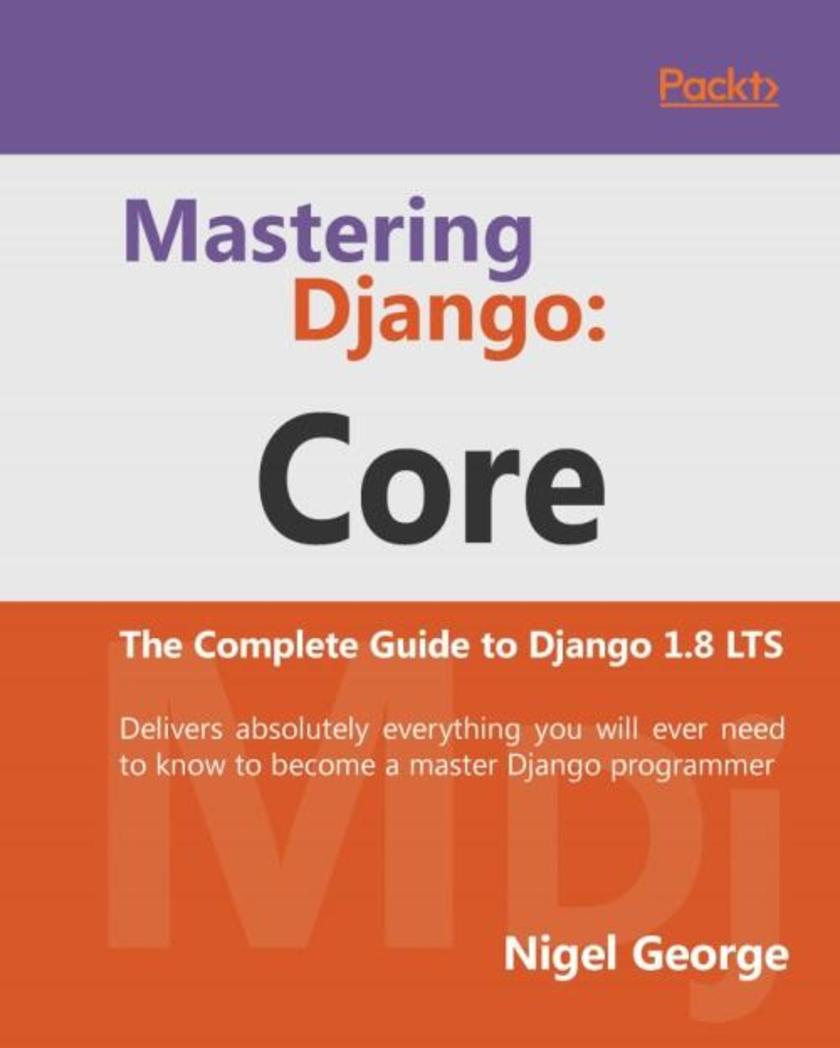
Mastering Django: Core
¥90.46
Delivers absolutely everything you will ever need to know to become a master Django programmer About This Book Gain a complete understanding of Django—the most popular, Python-based web framework in the world Gain the skills to successfully designing, developing, and deploying your app This book is packaged with fully described code so you can learn the fundamentals and the advanced topics to get a complete understanding of all of Django’s core functions Who This Book Is For This book assumes you have a basic understanding of the Internet and programming. Experience with Python or Django would be an advantage, but is not necessary. It is ideal for beginner to intermediate programmers looking for a fast, secure, scalable, and maintainable alternative web development platform to those based on PHP, Java, and dotNET. What You Will Learn Use Django to access user-submitted form data, validate it, and work with it Get to know advanced URLconf tips and tricks Extend Django’s template system with custom code Define models and use the database API to create, retrieve, update, and delete records Fully extend and customize the default implementation as per your project’s needs Test and deploy your Django application Get to know more about Django’s session, cache Framework, and middleware In Detail Mastering Django: Core is a completely revised and updated version of the original Django Book, written by Adrian Holovaty and Jacob Kaplan-Moss - the creators of Django. The main goal of this book is to make you a Django expert. By reading this book, you’ll learn the skills needed to develop powerful websites quickly, with code that is clean and easy to maintain. This book is also a programmer’s manual that provides complete coverage of the current Long Term Support (LTS) version of Django. For developers creating applications for commercial and business critical deployments, Mastering Django: Core provides a complete, up-to-date resource for Django 1.8LTS with a stable code-base, security fixes and support out to 2018. Style and approach This comprehensive step-by-step practical guide offers a thorough understanding of all the web development concepts related to Django. In addition to explaining the features of Django, this book provides real-world experience on how these features fit together to build extraordinary apps.
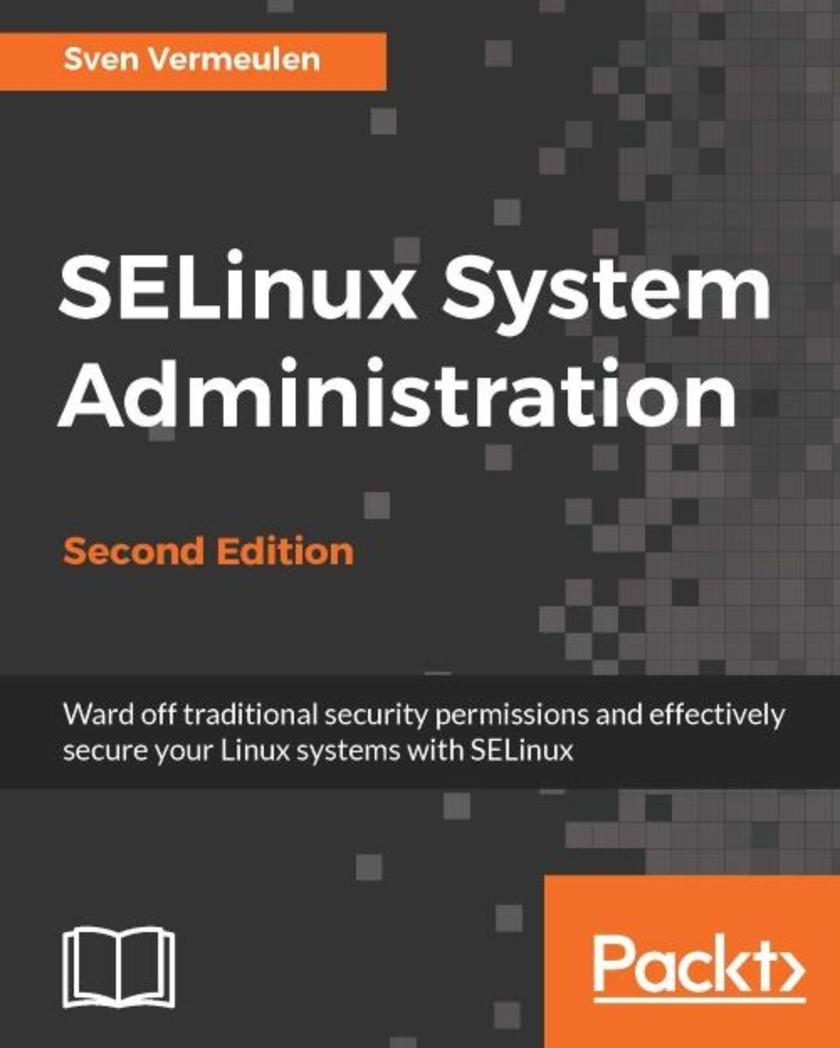
SELinux System Administration - Second Edition
¥90.46
Ward off traditional security permissions and effectively secure your Linux systems with SELinux About This Book Leverage SELinux to improve the secure state of your Linux system A clear approach to adopting SELinux within your organization Essential skills and techniques to help further your system administration career Who This Book Is For This book is for Linux administrators who want to control the secure state of their systems. It’s packed with the latest information on SELinux operations and administrative procedures so you’ll be able to further harden your system through mandatory access control (MAC) – a security strategy that has been shaping Linux security for years. What You Will Learn Analyze SELinux events and selectively enable or disable SELinux enforcement Manage Linux users and associate them with the right role and permission set Secure network communications through SELinux access controls Tune the full service flexibility by dynamically assigning resource labels Handle SELinux access patterns enforced through the system Query the SELinux policy in depth In Detail Do you have the crucial job of protecting your private and company systems from malicious attacks and undefined application behaviorAre you looking to secure your Linux systems with improved access controlsLook no further, intrepid administrator! This book will show you how to enhance your system’s secure state across Linux distributions, helping you keep application vulnerabilities at bay. This book covers the core SELinux concepts and shows you how to leverage SELinux to improve the protection measures of a Linux system. You will learn the SELinux fundamentals and all of SELinux’s configuration handles including conditional policies, constraints, policy types, and audit capabilities. These topics are paired with genuine examples of situations and issues you may come across as an administrator. In addition, you will learn how to further harden the virtualization offering of both libvirt (sVirt) and Docker through SELinux. By the end of the book you will know how SELinux works and how you can tune it to meet your needs. Style and approach This book offers a complete overview of SELinux administration and how it integrates with other components on a Linux system. It covers the majority of SELinux features with a mix of real life scenarios, de*ions, and examples. This book contains everything an administrator needs to customize SELinux.
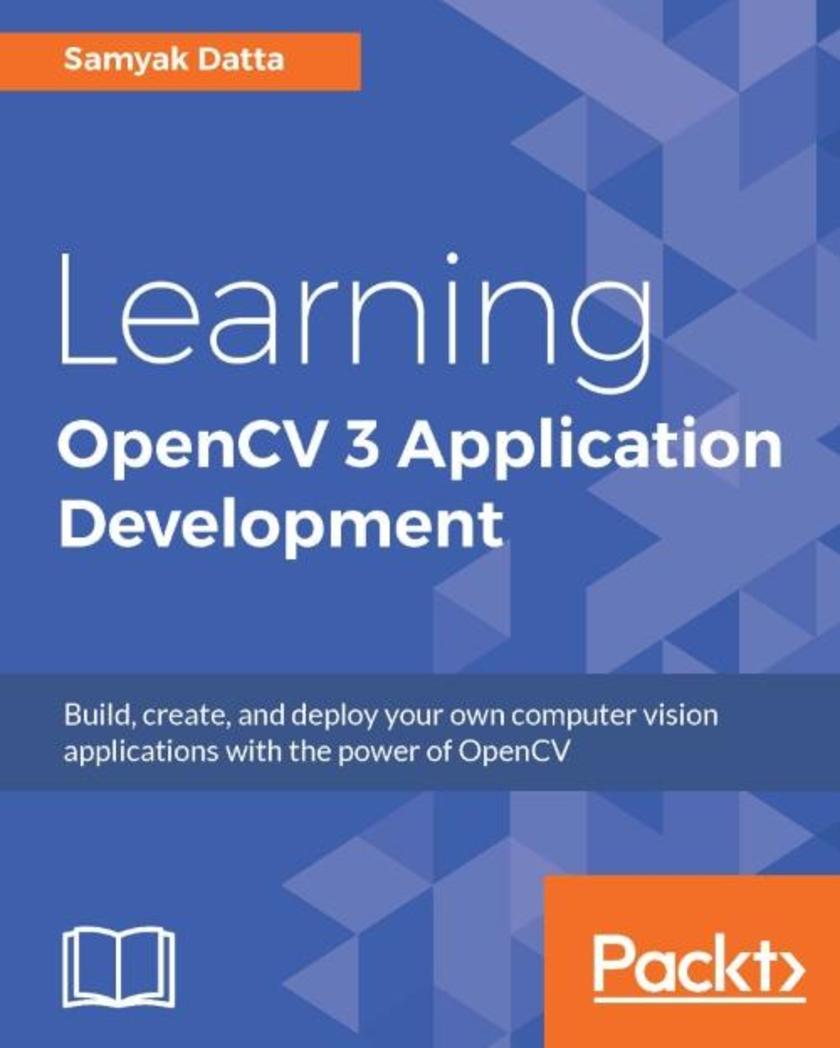
Learning OpenCV 3 Application Development
¥90.46
Build, create, and deploy your own computer vision applications with the power of OpenCV About This Book This book provides hands-on examples that cover the major features that are part of any important Computer Vision application It explores important algorithms that allow you to recognize faces, identify objects, extract features from images, help your system make meaningful predictions from visual data, and much more All the code examples in the book are based on OpenCV 3.1 – the latest version Who This Book Is For This is the perfect book for anyone who wants to dive into the exciting world of image processing and computer vision. This book is aimed at programmers with a working knowledge of C++. Prior knowledge of OpenCV or Computer Vision/Machine Learning is not required. What You Will Learn Explore the steps involved in building a typical computer vision/machine learning application Understand the relevance of OpenCV at every stage of building an application Harness the vast amount of information that lies hidden in images into the apps you build Incorporate visual information in your apps to create more appealing software Get acquainted with how large-scale and popular image editing apps such as Instagram work behind the scenes by getting a glimpse of how the image filters in apps can be recreated using simple operations in OpenCV Appreciate how difficult it is for a computer program to perform tasks that are trivial for human beings Get to know how to develop applications that perform face detection, gender detection from facial images, and handwritten character (digit) recognition In Detail Computer vision and machine learning concepts are frequently used in practical computer vision based projects. If you’re a novice, this book provides the steps to build and deploy an end-to-end application in the domain of computer vision using OpenCV/C++. At the outset, we explain how to install OpenCV and demonstrate how to run some simple programs. You will start with images (the building blocks of image processing applications), and see how they are stored and processed by OpenCV. You’ll get comfortable with OpenCV-specific jargon (Mat Point, Scalar, and more), and get to know how to traverse images and perform basic pixel-wise operations. Building upon this, we introduce slightly more advanced image processing concepts such as filtering, thresholding, and edge detection. In the latter parts, the book touches upon more complex and ubiquitous concepts such as face detection (using Haar cascade classifiers), interest point detection algorithms, and feature de*ors. You will now begin to appreciate the true power of the library in how it reduces mathematically non-trivial algorithms to a single line of code! The concluding sections touch upon OpenCV’s Machine Learning module. You will witness not only how OpenCV helps you pre-process and extract features from images that are relevant to the problems you are trying to solve, but also how to use Machine Learning algorithms that work on these features to make intelligent predictions from visual data! Style and approach This book takes a very hands-on approach to developing an end-to-end application with OpenCV. To avoid being too theoretical, the de*ion of concepts are accompanied simultaneously by the development of applications. Throughout the course of the book, the projects and practical, real-life examples are explained and developed step by step in sync with the theory.
Scientific Computing with Python 3
¥90.46
An example-rich, comprehensive guide for all of your Python computational needs About This Book Your ultimate resource for getting up and running with Python numerical computations Explore numerical computing and mathematical libraries using Python 3.x code with SciPy and NumPy modules A hands-on guide to implementing mathematics with Python, with complete coverage of all the key concepts Who This Book Is For This book is for anyone who wants to perform numerical and mathematical computations in Python. It is especially useful for developers, students, and anyone who wants to use Python for computation. Readers are expected to possess basic a knowledge of scientific computing and mathematics, but no prior experience with Python is needed. What You Will Learn The principal syntactical elements of Python The most important and basic types in Python The essential building blocks of computational mathematics, linear algebra, and related Python objects Plot in Python using matplotlib to create high quality figures and graphics to draw and visualize your results Define and use functions and learn to treat them as objects How and when to correctly apply object-oriented programming for scientific computing in Python Handle exceptions, which are an important part of writing reliable and usable code Two aspects of testing for scientific programming: Manual and Automatic In Detail Python can be used for more than just general-purpose programming. It is a free, open source language and environment that has tremendous potential for use within the domain of scientific computing. This book presents Python in tight connection with mathematical applications and demonstrates how to use various concepts in Python for computing purposes, including examples with the latest version of Python 3. Python is an effective tool to use when coupling scientific computing and mathematics and this book will teach you how to use it for linear algebra, arrays, plotting, iterating, functions, polynomials, and much more. Style and approach This book takes a concept-based approach to the language rather than a systematic introduction. It is a complete Python tutorial and introduces computing principles, using practical examples to and showing you how to correctly implement them in Python. You’ll learn to focus on high-level design as well as the intricate details of Python syntax. Rather than providing canned problems to be solved, the exercises have been designed to inspire you to think about your own code and give you real-world insight.
iOS 10 Programming for Beginners
¥90.46
Begin your iOS mobile application development journey with this accessible, practical guide About This Book Use Swift 3 and latest iOS 10 features to build awesome apps for iPhone and iPad Explore and use a wide range of Apple development tools to become a confident iOS developer From prototype to App Store—find out how to build an app from start to finish! Who This Book Is For This book is for beginners who want to be able to create iOS applications. If you have some programming experience, this book is a great way to get a full understanding of how to create an iOS application from scratch and submit it to the App Store. You do not need any knowledge of Swift or any prior programming experience. What You Will Learn Get to grips with Swift 3 and Xcode, the building blocks of Apple development Get to know the fundamentals of Swift, including variables, constants, and control flow Discover the distinctive design principles that define the iOS user experience See how to prototype your app with Swift’s Playgrounds feature Build a responsive UI that looks great on a range of devices Find out how to use CoreLocation to add location services to your app Add push notifications to your app Make your app able to be used on both iPhone and iPad In Detail You want to build iOS applications for iPhone and iPad—but where do you startForget sifting through tutorials and blog posts, this is a direct route into iOS development, taking you through the basics and showing you how to put the principles into practice. With every update, iOS has become more and more developer-friendly, so take advantage of it and begin building applications that might just take the App Store by storm! Whether you’re an experienced programmer or a complete novice, this book guides you through every facet of iOS development. From Xcode and Swift—the building blocks of modern Apple development—and Playgrounds for beginners, one of the most popular features of the iOS development experience, you’ll quickly gain a solid foundation to begin venturing deeper into your development journey. For the experienced programmer, jump right in and learn the latest iOS 10 features. You’ll also learn the core elements of iOS design, from tables to tab bars, as well as more advanced topics such as gestures and animations that can give your app the edge. Find out how to manage databases, as well as integrating standard elements such as photos, GPS into your app. With further guidance on beta testing with TestFlight, you’ll quickly learn everything you need to get your project on the App Store! Style and approach Created for anyone that wants to build their first iOS application, this book offers practical, actionable guidance through iOS development. Combining engaging visuals with accessible, step-by-step instructiona and explanation, this book will not only develop the your understanding, but also show you how to put your knowledge to work.
Functional C#
¥90.46
Uncover the secrets of functional programming using C# and change the way you approach your applications forever About This Book This book focuses on the functional paradigm of C#, which will give you a whole new angle on coding with C# It illustrates the advantages that functional programming brings to the table and the associated coding benefits This practical guide covers all the aspects of functional programming and provides solutions that can be applied in business scenarios Who This Book Is For This book is suitable for C# developers with basic prior knowledge of C# and with no functional programming experience at all. What You Will Learn Develop an application using the functional approach Implement unit testing to functionally program code Create efficient code using functional programming Work through a LINQ query so you can work with data Compose asynchronous programs to create a responsive application Use recursion in function programming in order to simplify code Optimize the program code using Laziness and Caching Techniques In Detail Functional programming makes your application faster, improves performance, and increases your productivity. C# code is written at a higher level of abstraction, so that code will be closer to business requirements, abstracting away many low-level implementation details. This book bridges the language gap for C# developers by showing you how to create and consume functional constructs in C#. We also bridge the domain gap by showing how functional constructs can be applied in business scenarios. We’ll take you through lambda expressions and extension methods, and help you develop a deep understanding of the concepts and practices of LINQ and recursion in C#. By the end of the book, you will be able to write code using the best approach and will be able to perform unit testing in functional programming, changing how you write your applications and revolutionizing your projects. Style and approach This book takes a pragmatic approach and shows you techniques to write better functional constructs in C#. We’ll also show you how these concepts can be applied in business scenarios.
Practical GIS
¥90.46
Learn the basics of Geographic Information Systems by solving real-world problems with powerful open source tools About This Book ? This easy-to-follow guide allows you to manage and analyze geographic data with ease using open source tools ? Publish your geographical data online ? Learn the basics of geoinformatics in a practical way by solving problems Who This Book Is For The book is for IT professionals who have little or no knowledge of GIS. It’s also useful for those who are new to the GIS field who don’t want to spend a lot of money buying licenses of commercial tools and training. What You Will Learn ? Collect GIS data for your needs ? Store the data in a PostGIS database ? Exploit the data using the power of the GIS queries ? Analyze the data with basic and more advanced GIS tools ? Publish your data and share it with others ? Build a web map with your published data In Detail The most commonly used GIS tools automate tasks that were historically done manually—compiling new maps by overlaying one on top of the other or physically cutting maps into pieces representing specific study areas, changing their projection, and getting meaningful results from the various layers by applying mathematical functions and operations. This book is an easy-to-follow guide to use the most matured open source GIS tools for these tasks. We’ll start by setting up the environment for the tools we use in the book. Then you will learn how to work with QGIS in order to generate useful spatial data. You will get to know the basics of queries, data management, and geoprocessing. After that, you will start to practice your knowledge on real-world examples. We will solve various types of geospatial analyses with various methods. We will start with basic GIS problems by imitating the work of an enthusiastic real estate agent, and continue with more advanced, but typical tasks by solving a decision problem. Finally, you will find out how to publish your data (and results) on the web. We will publish our data with QGIS Server and GeoServer, and create a basic web map with the API of the lightweight Leaflet web mapping library. Style and approach The book guides you step by step through each of the core concepts of the GIS toolkit, building an overall picture of its capabilities. This guide approaches the topic systematically, allowing you to build upon what you learned in previous chapters. By the end of this book, you’ll have an understanding of the aspects of building a GIS system and will be able to take that knowledge with you to whatever project calls for it.


