


 购物车
购物车 个人中心
个人中心
Keras 2.x Projects
¥81.74
Demonstrate fundamentals of Deep Learning and neural network methodologies using Keras 2.x Key Features *Experimental projects showcasing the implementation of high-performance deep learning models with Keras. * *Use-cases across reinforcement learning, natural language processing, GANs and computer vision. * *Build strong fundamentals of Keras in the area of deep learning and artificial intelligence. Book Description Keras 2.x Projects explains how to leverage the power of Keras to build and train state-of-the-art deep learning models through a series of practical projects that look at a range of real-world application areas. To begin with, you will quickly set up a deep learning environment by installing the Keras library. Through each of the projects, you will explore and learn the advanced concepts of deep learning and will learn how to compute and run your deep learning models using the advanced offerings of Keras. You will train fully-connected multilayer networks, convolutional neural networks, recurrent neural networks, autoencoders and generative adversarial networks using real-world training datasets. The projects you will undertake are all based on real-world scenarios of all complexity levels, covering topics such as language recognition, stock volatility, energy consumption prediction, faster object classification for self-driving vehicles, and more. By the end of this book, you will be well versed with deep learning and its implementation with Keras. You will have all the knowledge you need to train your own deep learning models to solve different kinds of problems. What you will learn *Apply regression methods to your data and understand how the regression algorithm works *Understand the basic concepts of classification methods and how to implement them in the Keras environment *Import and organize data for neural network classification analysis *Learn about the role of rectified linear units in the Keras network architecture *Implement a recurrent neural network to classify the sentiment of sentences from movie reviews *Set the embedding layer and the tensor sizes of a network Who this book is for If you are a data scientist, machine learning engineer, deep learning practitioner or an AI engineer who wants to build speedy intelligent applications with minimal lines of codes, then this book is the best fit for you. Sound knowledge of machine learning and basic familiarity with Keras library would be useful.
AWS Certified SysOps Administrator – Associate Guide
¥81.74
An effective guide to becoming an AWS Certified SysOps Administrator Key Features * Not only pass the certification with confidence but also enhance your skills to solving real-world scenarios. * A practical guide to getting you hands-on experience with application management, deployment, operation. * Enhance your AWS skills with practice questions and mock tests. Book Description AWS certifications are becoming one of the must have certifications for any IT professional working on an AWS Cloud platform. This book will act as your one stop preparation guide to validate your technical expertise in deployment, management, and operations on the AWS platform. Along with exam specific content this book will also deep dive into real world scenarios and hands-on instructions. This book will revolve around concepts like teaching you to deploy, manage, and operate scalable, highly available, and fault tolerant systems on AWS. You will also learn to migrate an existing on-premises application to AWS. You get hands-on experience in selecting the appropriate AWS service based on compute, data, or security requirements. This book will also get you well versed with estimating AWS usage costs and identifying operational cost control mechanisms. By the end of this book, you will be all prepared to implement and manage resources efficiently on the AWS cloud along with confidently passing the AWS Certified SysOps Administrator – Associate exam. What you will learn * Create and manage users, groups, and permissions using AWS IAM services * Create a secure VPC with public and private subnets, Network Access Control, and security groups * Get started with launching your first EC2 instance, and working with it * Handle application traffic with ELB and monitor AWS resources with CloudWatch * Work with S3, Glacier, and CloudFront * Work across distributed application components using SWF * Understand event-based processing with Lambda and messaging SQS and SNS in AWS * Get familiar with AWS deployment concepts and tools including Elastic Beanstalk, CloudFormation and AWS OpsWorks Who this book is for If you are a system administrator or a system engineer interested in leveraging the AWS platform to deploy applications then, this book is for you. IT professionals interested in passing the AWS Certified Sysops Administrator will also benefit from this book. Some basic understanding of working AWS components would do wonders.
Serverless Programming Cookbook
¥81.74
Build, secure, and deploy real-world serverless applications in AWS and peek into the serverless cloud offerings from Azure, Google Cloud, and IBM Cloud Key Features * Build serverless applications with AWS Lambda, AWS CloudFormation and AWS CloudWatch * Perform data analytics and natural language processing(NLP)on the AWS serverless platform * Explore various design patterns and best practices involved in serverless computing Book Description Managing physical servers will be a thing of the past once you’re able to harness the power of serverless computing. If you’re already prepped with the basics of serverless computing, Serverless Programming Cookbook will help you take the next step ahead. This recipe-based guide provides solutions to problems you might face while building serverless applications. You'll begin by setting up Amazon Web Services (AWS), the primary cloud provider used for most recipes. The next set of recipes will cover various components to build a Serverless application including REST APIs, database, user management, authentication, web hosting, domain registration, DNS management, CDN, messaging, notifications and monitoring. The book also introduces you to the latest technology trends such as Data Streams, Machine Learning and NLP. You will also see patterns and practices for using various services in a real world application. Finally, to broaden your understanding of Serverless computing, you'll also cover getting started guides for other cloud providers such as Azure, Google Cloud Platform and IBM cloud. By the end of this book, you’ll have acquired the skills you need to build serverless applications efficiently using various cloud offerings. What you will learn * Serverless computing in AWS and explore services with other clouds * Develop full-stack apps with API Gateway, Cognito, Lambda and DynamoDB * Web hosting with S3, CloudFront, Route 53 and AWS Certificate Manager * SQS and SNS for effective communication between microservices * Monitoring and troubleshooting with CloudWatch logs and metrics * Explore Kinesis Streams, Amazon ML models and Alexa Skills Kit Who this book is for For developers looking for practical solutions to common problems while building a serverless application, this book provides helpful recipes. To get started with this intermediate-level book, knowledge of basic programming is a must.
Hands-On Data Science for Marketing
¥81.74
Optimize your marketing strategies through analytics and machine learning Key Features * Understand how data science drives successful marketing campaigns * Use machine learning for better customer engagement, retention, and product recommendations * Extract insights from your data to optimize marketing strategies and increase profitability Book Description Regardless of company size, the adoption of data science and machine learning for marketing has been rising in the industry. With this book, you will learn to implement data science techniques to understand the drivers behind the successes and failures of marketing campaigns. This book is a comprehensive guide to help you understand and predict customer behaviors and create more effectively targeted and personalized marketing strategies. This is a practical guide to performing simple-to-advanced tasks, to extract hidden insights from the data and use them to make smart business decisions. You will understand what drives sales and increases customer engagements for your products. You will learn to implement machine learning to forecast which customers are more likely to engage with the products and have high lifetime value. This book will also show you how to use machine learning techniques to understand different customer segments and recommend the right products for each customer. Apart from learning to gain insights into consumer behavior using exploratory analysis, you will also learn the concept of A/B testing and implement it using Python and R. By the end of this book, you will be experienced enough with various data science and machine learning techniques to run and manage successful marketing campaigns for your business. What you will learn * Learn how to compute and visualize marketing KPIs in Python and R * Master what drives successful marketing campaigns with data science * Use machine learning to predict customer engagement and lifetime value * Make product recommendations that customers are most likely to buy * Learn how to use A/B testing for better marketing decision making * Implement machine learning to understand different customer segments Who this book is for If you are a marketing professional, data scientist, engineer, or a student keen to learn how to apply data science to marketing, this book is what you need! It will be beneficial to have some basic knowledge of either Python or R to work through the examples. This book will also be beneficial for beginners as it covers basic-to-advanced data science concepts and applications in marketing with real-life examples.
Ensemble Machine Learning Cookbook
¥81.74
Implement machine learning algorithms to build ensemble models using Keras, H2O, Scikit-Learn, Pandas and more Key Features * Apply popular machine learning algorithms using a recipe-based approach * Implement boosting, bagging, and stacking ensemble methods to improve machine learning models * Discover real-world ensemble applications and encounter complex challenges in Kaggle competitions Book Description Ensemble modeling is an approach used to improve the performance of machine learning models. It combines two or more similar or dissimilar machine learning algorithms to deliver superior intellectual powers. This book will help you to implement popular machine learning algorithms to cover different paradigms of ensemble machine learning such as boosting, bagging, and stacking. The Ensemble Machine Learning Cookbook will start by getting you acquainted with the basics of ensemble techniques and exploratory data analysis. You'll then learn to implement tasks related to statistical and machine learning algorithms to understand the ensemble of multiple heterogeneous algorithms. It will also ensure that you don't miss out on key topics, such as like resampling methods. As you progress, you’ll get a better understanding of bagging, boosting, stacking, and working with the Random Forest algorithm using real-world examples. The book will highlight how these ensemble methods use multiple models to improve machine learning results, as compared to a single model. In the concluding chapters, you'll delve into advanced ensemble models using neural networks, natural language processing, and more. You’ll also be able to implement models such as fraud detection, text categorization, and sentiment analysis. By the end of this book, you'll be able to harness ensemble techniques and the working mechanisms of machine learning algorithms to build intelligent models using individual recipes. What you will learn * Understand how to use machine learning algorithms for regression and classification problems * Implement ensemble techniques such as averaging, weighted averaging, and max-voting * Get to grips with advanced ensemble methods, such as bootstrapping, bagging, and stacking * Use Random Forest for tasks such as classification and regression * Implement an ensemble of homogeneous and heterogeneous machine learning algorithms * Learn and implement various boosting techniques, such as AdaBoost, Gradient Boosting Machine, and XGBoost Who this book is for This book is designed for data scientists, machine learning developers, and deep learning enthusiasts who want to delve into machine learning algorithms to build powerful ensemble models. Working knowledge of Python programming and basic statistics is a must to help you grasp the concepts in the book.
Hands-On High Performance Programming with Qt 5
¥81.74
Build efficient and fast Qt applications, target performance problems, and discover solutions to refine your code Key Features * Build efficient and concurrent applications in Qt to create cross-platform applications * Identify performance bottlenecks and apply the correct algorithm to improve application performance * Delve into parallel programming and memory management to optimize your code Book Description Achieving efficient code through performance tuning is one of the key challenges faced by many programmers. This book looks at Qt programming from a performance perspective. You'll explore the performance problems encountered when using the Qt framework and means and ways to resolve them and optimize performance. The book highlights performance improvements and new features released in Qt 5.9, Qt 5.11, and 5.12 (LTE). You'll master general computer performance best practices and tools, which can help you identify the reasons behind low performance, and the most common performance pitfalls experienced when using the Qt framework. In the following chapters, you’ll explore multithreading and asynchronous programming with C++ and Qt and learn the importance and efficient use of data structures. You'll also get the opportunity to work through techniques such as memory management and design guidelines, which are essential to improve application performance. Comprehensive sections that cover all these concepts will prepare you for gaining hands-on experience of some of Qt's most exciting application fields - the mobile and embedded development domains. By the end of this book, you'll be ready to build Qt applications that are more efficient, concurrent, and performance-oriented in nature What you will learn * Understand classic performance best practices * Get to grips with modern hardware architecture and its performance impact * Implement tools and procedures used in performance optimization * Grasp Qt-specific work techniques for graphical user interface (GUI) and platform programming * Make Transmission Control Protocol (TCP) and Hypertext Transfer Protocol (HTTP) performant and use the relevant Qt classes * Discover the improvements Qt 5.9 (and the upcoming versions) holds in store * Explore Qt's graphic engine architecture, strengths, and weaknesses Who this book is for This book is designed for Qt developers who wish to build highly performance applications for desktop and embedded devices. Programming Experience with C++ is required.
Azure for Architects
¥81.74
Create advanced data and integrated solutions using Azure Event Grid, functions, and containers Key Features * Get familiar with the different design patterns available in Microsoft Azure * Develop Azure cloud architecture and a pipeline management system * Get to know the security best practices for your Azure deployment Book Description Over the years, Azure cloud services have grown quickly, and the number of organizations adopting Azure for their cloud services is also gradually increasing. Leading industry giants are finding that Azure fulfills their extensive cloud requirements. Azure for Architects – Second Edition starts with an extensive introduction to major designing and architectural aspects available with Azure. These design patterns focus on different aspects of the cloud, such as high availability, security, and scalability. Gradually, we move on to other aspects, such as ARM template modular design and deployments. This is the age of microservices and serverless is the preferred implementation mechanism for them. This book covers the entire serverless stack available in Azure including Azure Event Grid, Azure Functions, and Azure Logic Apps. New and advance features like durable functions are discussed at length. A complete integration solution using these serverless technologies is also part of the book. A complete chapter discusses all possible options related to containers in Azure including Azure Kubernetes services, Azure Container Instances and Registry, and Web App for Containers. Data management and integration is an integral part of this book that discusses options for implementing OLTP solutions using Azure SQL, Big Data solutions using Azure Data factory and Data Lake Storage, eventing solutions using stream analytics, and Event Hubs. This book will provide insights into Azure governance features such as tagging, RBAC, cost management, and policies. By the end of this book, you will be able to develop a full-?edged Azure cloud solution that is Enterprise class and future-ready. What you will learn * Create an end-to-end integration solution using Azure Serverless Stack * Learn Big Data solutions and OLTP–based applications on Azure * Understand DevOps implementations using Azure DevOps * Architect solutions comprised of multiple resources in Azure * Develop modular ARM templates * Develop Governance on Azure using locks, RBAC, policies, tags and cost * Learn ways to build data solutions on Azure * Understand the various options related to containers including Azure Kubernetes Services Who this book is for If you are Cloud Architects, DevOps Engineers, or developers who want to learn key architectural aspects of the Azure Cloud platform, then this book is for you. Prior basic knowledge of the Azure Cloud platform is good to have.
Learning Python for Forensics
¥81.74
Design, develop, and deploy innovative forensic solutions using Python Key Features * Discover how to develop Python scripts for effective digital forensic analysis * Master the skills of parsing complex data structures with Python libraries * Solve forensic challenges through the development of practical Python scripts Book Description Digital forensics plays an integral role in solving complex cybercrimes and helping organizations make sense of cybersecurity incidents. This second edition of Learning Python for Forensics illustrates how Python can be used to support these digital investigations and permits the examiner to automate the parsing of forensic artifacts to spend more time examining actionable data. The second edition of Learning Python for Forensics will illustrate how to develop Python scripts using an iterative design. Further, it demonstrates how to leverage the various built-in and community-sourced forensics scripts and libraries available for Python today. This book will help strengthen your analysis skills and efficiency as you creatively solve real-world problems through instruction-based tutorials. By the end of this book, you will build a collection of Python scripts capable of investigating an array of forensic artifacts and master the skills of extracting metadata and parsing complex data structures into actionable reports. Most importantly, you will have developed a foundation upon which to build as you continue to learn Python and enhance your efficacy as an investigator. What you will learn * Learn how to develop Python scripts to solve complex forensic problems * Build scripts using an iterative design * Design code to accommodate present and future hurdles * Leverage built-in and community-sourced libraries * Understand the best practices in forensic programming * Learn how to transform raw data into customized reports and visualizations * Create forensic frameworks to automate analysis of multiple forensic artifacts * Conduct effective and efficient investigations through programmatic processing Who this book is for If you are a forensics student, hobbyist, or professional seeking to increase your understanding in forensics through the use of a programming language, then Learning Python for Forensics is for you. You are not required to have previous experience in programming to learn and master the content within this book. This material, created by forensic professionals, was written with a unique perspective and understanding for examiners who wish to learn programming.
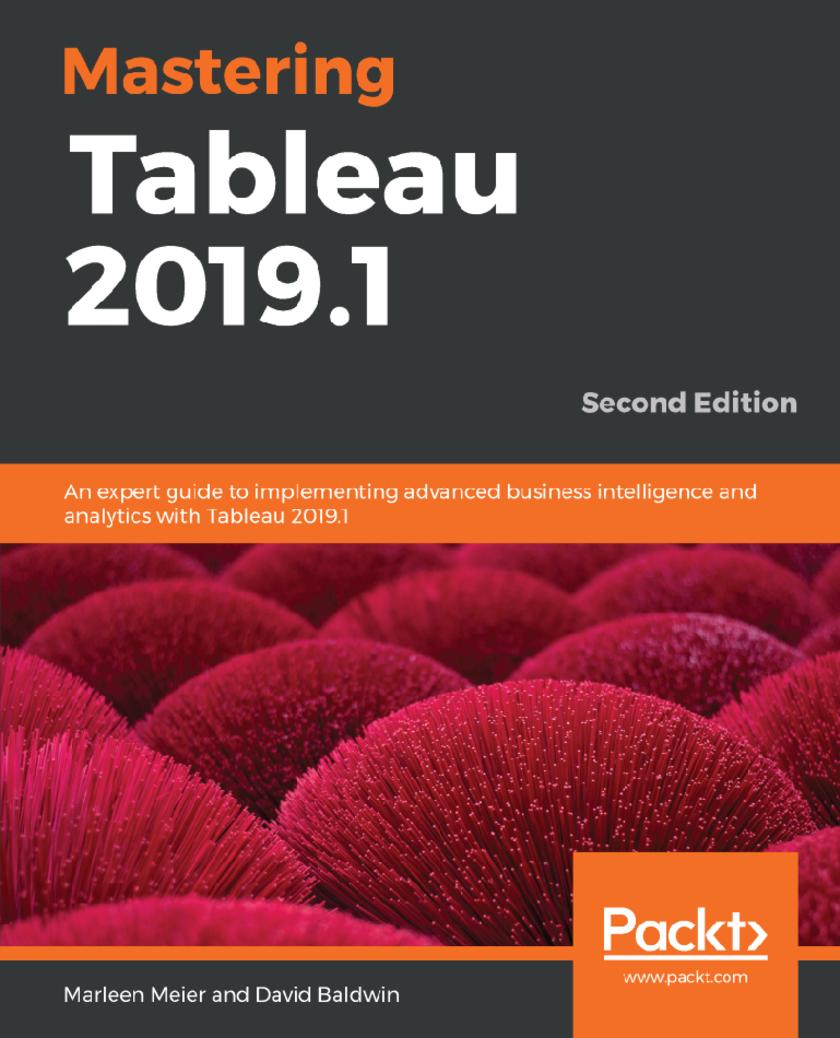
Mastering Tableau 2019.1
¥81.74
Build, design and improve advanced business intelligence solutions using Tableau’s latest features, including Tableau Prep, Tableau Hyper, and Tableau Server Key Features * Master new features in Tableau 2019.1 to solve real-world analytics challenges * Perform Geo-Spatial Analytics, Time Series Analysis, and self-service analytics using real-life examples * Build and publish dashboards and explore storytelling using Python and MATLAB integration support Book Description Tableau is one of the leading business intelligence (BI) tools used to solve BI and analytics challenges. With this book, you will master Tableau's features and offerings in various paradigms of the BI domain. This book is also the second edition of the popular Mastering Tableau series, with new features, examples, and updated code. The book covers essential Tableau concepts and its advanced functionalities. Using Tableau Hyper and Tableau Prep, you’ll be able to handle and prepare data easily. You’ll gear up to perform complex joins, spatial joins, union, and data blending tasks using practical examples. Following this, you’ll learn how to perform data densification to make displaying granular data easier. Next, you’ll explore expert-level examples to help you with advanced calculations, mapping, and visual design using various Tableau extensions. With the help of examples, you’ll also learn about improving dashboard performance, connecting Tableau Server, and understanding data visualizations. In the final chapters, you’ll cover advanced use cases such as Self-Service Analytics, Time Series Analytics, and Geo-Spatial Analytics, and learn to connect Tableau to R, Python, and MATLAB. By the end of this book, you’ll have mastered the advanced offerings of Tableau and be able to tackle common and not-so-common challenges faced in the BI domain. What you will learn * Get up to speed with various Tableau components * Master data preparation techniques using Tableau Prep * Discover how to use Tableau to create a PowerPoint-like presentation * Understand different Tableau visualization techniques and dashboard designs * Interact with the Tableau server to understand its architecture and functionalities * Study advanced visualizations and dashboard creation techniques * Brush up on powerful Self-Service Analytics, Time Series Analytics, and Geo-Spatial Analytics Who this book is for This book is designed for business analysts, BI professionals and data analysts who want to master Tableau to solve a range of data science and business intelligence problems. The book is ideal if you have a good understanding of Tableau and want to take your skills to the next level.
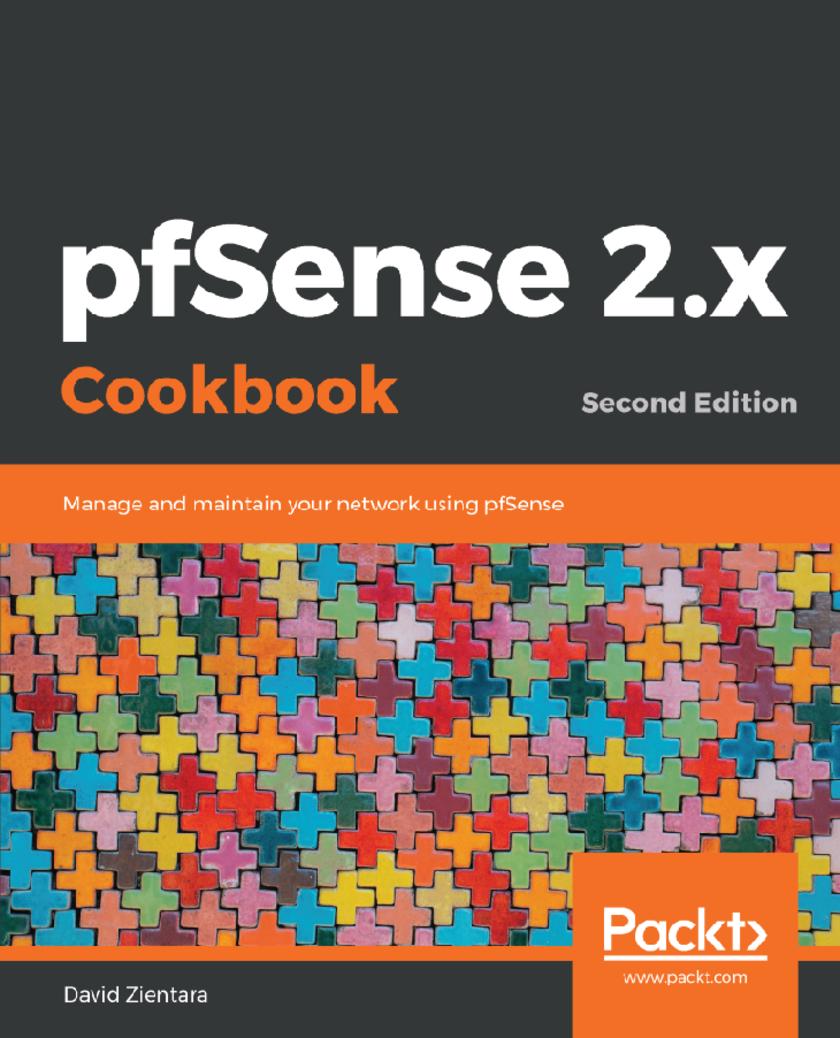
pfSense 2.x Cookbook
¥81.74
A practical, example-driven guide to configuring even the most advanced features of pfSense 2.x Key Features *Build a high-availability fault-tolerant security system with pfSense 2.x *Leverage the latest version of pfSense to secure your cloud environment *A recipe-based guide that will help you enhance your on-premise and cloud security principles Book Description pfSense is an open source distribution of the FreeBSD-based firewall that provides a platform for ?exible and powerful routing and firewalling. The versatility of pfSense presents us with a wide array of configuration options, which makes determining requirements a little more difficult and a lot more important compared to other offerings. pfSense 2.x Cookbook – Second Edition starts by providing you with an understanding of how to complete the basic steps needed to render a pfSense firewall operational. It starts by showing you how to set up different forms of NAT entries and firewall rules and use aliases and scheduling in firewall rules. Moving on, you will learn how to implement a captive portal set up in different ways (no authentication, user manager authentication, and RADIUS authentication), as well as NTP and SNMP configuration. You will then learn how to set up a VPN tunnel with pfSense. The book then focuses on setting up traffic shaping with pfSense, using either the built-in traffic shaping wizard, custom ?oating rules, or Snort. Toward the end, you will set up multiple WAN interfaces, load balancing and failover groups, and a CARP failover group. You will also learn how to bridge interfaces, add static routing entries, and use dynamic routing protocols via third-party packages. What you will learn *Configure the essential pfSense services (namely, DHCP, DNS, and DDNS) *Create aliases, firewall rules, NAT port-forward rules, and rule schedules *Create multiple WAN interfaces in load-balanced or failover configurations *Configure firewall redundancy with a CARP firewall failover *Configure backup/restoration and automatic configuration-file backup *Configure some services and perform diagnostics with command-line utilities Who this book is for This book is intended for all levels of network administrators. If you are an advanced user of pfSense, then you can flip to a particular recipe and quickly accomplish the task at hand; if you are new to pfSense, on the other hand, you can work through the book chapter by chapter and learn all of the features of the system from the ground up.
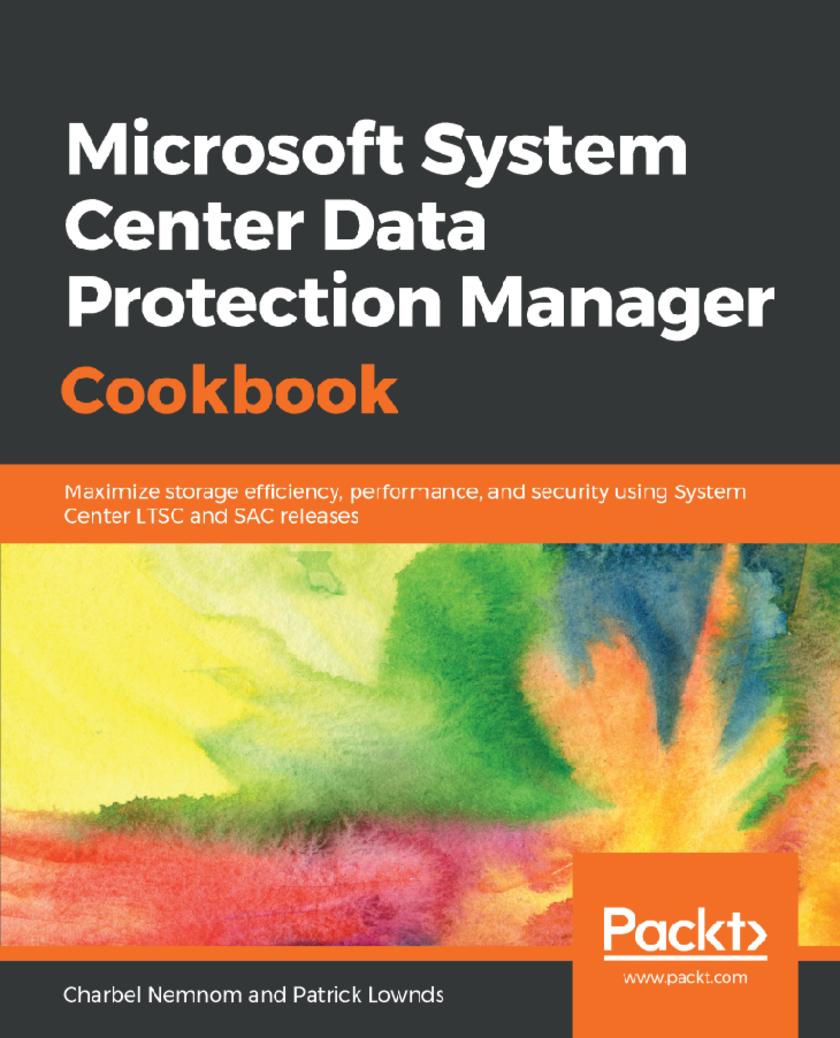
Microsoft System Center Data Protection Manager Cookbook
¥81.74
Over 60 recipes to achieve a robust and advanced backup and recovery solution leveraging SCDPM Key Features *Adapt to the modern data center design challenges and improve storage efficiency *Effective recipes to help you create your own robust architectural designs *Solve data protection and recovery problems in your organization Book Description System Center Data Protection Manager (SCDPM) is a robust enterprise backup and recovery system that contributes to your BCDR strategy by facilitating the backup and recovery of enterprise data. With an increase in data recovery and protection problems faced in organizations, it has become important to keep data safe and recoverable. This book contains recipes that will help you upgrade to SCDPM and it covers the advanced features and functionality of SCDPM. This book starts by helping you install SCDPM and then moves on to post-installation and management tasks. You will come across a lot of useful recipes that will help you recover your VMware and Hyper-V VMs. It will also walk you through tips for monitoring SCDPM in different scenarios. Next, the book will also offer insights into protecting windows workloads followed by best practices on SCDPM. You will also learn to back up your Azure Stack Infrastructure using Azure Backup. You will also learn about recovering data from backup and implementing disaster recovery. Finally, the book will show you how to configure the protection groups to enable online protection and troubleshoot Microsoft Azure Backup Agent. What you will learn *Install and prepare SQL Server for the SCDPM database *Reduce backup storage with SCDPM and data deduplication *Learn about the prerequisites for supported Hyper-V Server protection *Integrate SCDPM with other System Center products to build optimal services *Protect and restore the SCDPM database *Protect your data center by integrating SCDPM with Azure Backup *Manually create online recovery points and recover production data from Azure *Protect and learn about the requirements to recover Azure Stack with SCDPM Who this book is for If you are an SCDPM administrator, this book will help you verify your knowledge and provide you with everything you need to know about the new release of System Center Data Protection Manager.
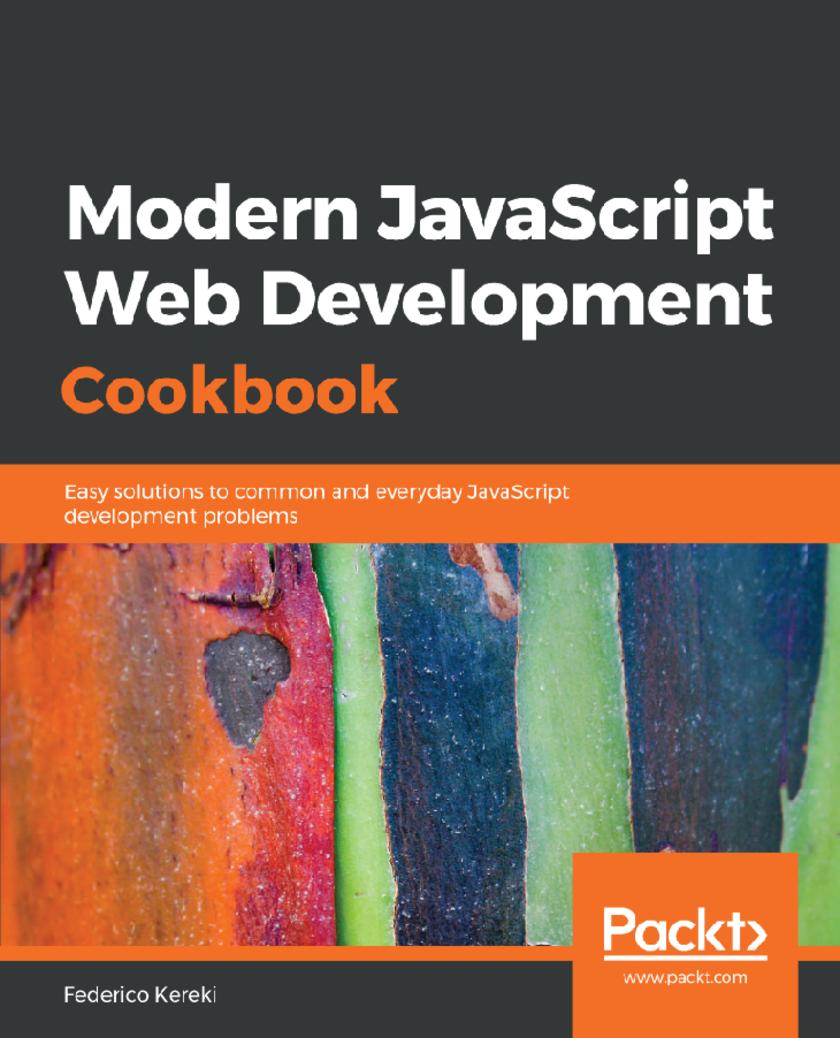
Modern JavaScript Web Development Cookbook
¥81.74
Over 90 recipes to help you write clean code, solve common JavaScript problems, and work on popular use cases like SPAs, microservices, native mobile development with Node, React, React Native and Electron. Key Features *Over 90 practical recipes to help you write clean and maintainable JavaScript codes with the latest ES8 *Leverage the power of leading web frameworks like Node and React to build modern web apps *Features comprehensive coverage of tools and techniques needed to create multi-platform apps with JavaScript Book Description JavaScript has evolved into a language that you can use on any platform. Modern JavaScript Web Development Cookbook is a perfect blend of solutions for traditional JavaScript development and modern areas that developers have lately been exploring with JavaScript. This comprehensive guide teaches you how to work with JavaScript on servers, browsers, mobile phones and desktops. You will start by exploring the new features of ES8. You will then move on to learning the use of ES8 on servers (with Node.js), with the objective of producing services and microservices and dealing with authentication and CORS. Once you get accustomed to ES8, you will learn to apply it to browsers using frameworks, such as React and Redux, which interact through Ajax with services. You will then understand the use of a modern framework to develop the UI. In addition to this, development for mobile devices with React Native will walk you through the benefits of creating native apps, both for Android and iOS. Finally, you’ll be able to apply your new-found knowledge of server-side and client-side tools to develop applications with Electron. What you will learn *Use the latest features of ES8 and learn new ways to code with JavaScript *Develop server-side services and microservices with Node.js *Learn to do unit testing and to debug your code *Build client-side web applications using React and Redux *Create native mobile applications for Android and iOS with React Native *Write desktop applications with Electron Who this book is for This book is for developers who want to explore the latest JavaScript features, frameworks, and tools for building complete mobile, desktop and web apps, including server and client-side code. You are expected to have working knowledge of JavaScript to get the most out of this book.
Hands-On RESTful Python Web Services
¥81.74
Explore the best tools and techniques to create lightweight, maintainable, and scalable Python web services Key Features *Combine Python with different data sources to build complex RESTful APIs from scratch *Configure and fine-tune your APIs using the best tools and techniques available *Use command-line and GUI tools to test CRUD operations performed by RESTful Web Services or APIs Book Description Python is the language of choice for millions of developers worldwide that builds great web services in RESTful architecture. This second edition of Hands-On RESTful Python Web Services will cover the best tools you can use to build engaging web services. This book shows you how to develop RESTful APIs using the most popular Python frameworks and all the necessary stacks with Python, combined with related libraries and tools. You’ll learn to incorporate all new features of Python 3.7, Flask 1.0.2, Django 2.1, Tornado 5.1, and also a new framework, Pyramid. As you advance through the chapters, you will get to grips with each of these frameworks to build various web services, and be shown use cases and best practices covering when to use a particular framework. You’ll then successfully develop RESTful APIs with all frameworks and understand how each framework processes HTTP requests and routes URLs. You’ll also discover best practices for validation, serialization, and deserialization. In the concluding chapters, you will take advantage of specific features available in certain frameworks such as integrated ORMs, built-in authorization and authentication, and work with asynchronous code. At the end of each framework, you will write tests for RESTful APIs and improve code coverage. By the end of the book, you will have gained a deep understanding of the stacks needed to build RESTful web services. What you will learn *Select the most appropriate framework based on requirements *Develop complex RESTful APIs from scratch using Python *Use requests handlers, URL patterns, serialization, and validations *Add authentication, authorization, and interaction with ORMs and databases *Debug, test, and improve RESTful APIs with four frameworks *Design RESTful APIs with frameworks and create automated tests Who this book is for This book is for web developers who have a working knowledge of Python and would like to build amazing web services by taking advantage of the various frameworks of Python. You should have some knowledge of RESTful APIs.
Mastering OpenCV 4
¥81.74
Work on practical computer vision projects covering advanced object detector techniques and modern deep learning and machine learning algorithms Key Features *Learn about the new features that help unlock the full potential of OpenCV 4 *Build face detection applications with a cascade classifier using face landmarks *Create an optical character recognition (OCR) model using deep learning and convolutional neural networks Book Description Mastering OpenCV, now in its third edition, targets computer vision engineers taking their first steps toward mastering OpenCV. Keeping the mathematical formulations to a solid but bare minimum, the book delivers complete projects from ideation to running code, targeting current hot topics in computer vision such as face recognition, landmark detection and pose estimation, and number recognition with deep convolutional networks. You’ll learn from experienced OpenCV experts how to implement computer vision products and projects both in academia and industry in a comfortable package. You’ll get acquainted with API functionality and gain insights into design choices in a complete computer vision project. You’ll also go beyond the basics of computer vision to implement solutions for complex image processing projects. By the end of the book, you will have created various working prototypes with the help of projects in the book and be well versed with the new features of OpenCV4. What you will learn *Build real-world computer vision problems with working OpenCV code samples *Uncover best practices in engineering and maintaining OpenCV projects *Explore algorithmic design approaches for complex computer vision tasks *Work with OpenCV’s most updated API (v4.0.0) through projects *Understand 3D scene reconstruction and Structure from Motion (SfM) *Study camera calibration and overlay AR using the ArUco Module Who this book is for This book is for those who have a basic knowledge of OpenCV and are competent C++ programmers. You need to have an understanding of some of the more theoretical/mathematical concepts, as we move quite quickly throughout the book.
Odoo 12 Development Essentials
¥81.74
Extend your skills with Odoo 12 to build resourceful and open source business applications Key Features *Explore Odoo 12 capabilities to develop business applications *Program business logic and manipulate data to implement specific business rules in your applications *Integrate Python APIs for building customizable and scalable business logic Book Description Odoo is one of the best platforms for open source ERP and CRM. Its latest version, Odoo 12, brings with it new features and updates in Python packages to develop more customizable applications with additional cloud capabilities. The book begins by covering the development essentials for building business applications. You will start your journey by learning how to install and configure Odoo, and then transition from having no specific knowledge of Odoo to being ready for application development. You will develop your first Odoo application and understand topics such as models and views. Odoo 12 Development Essentials will also guide you in using server APIs to add business logic, helping you lay a solid foundation for advanced topics. As you progress through the chapters, you will be equipped to build and customize your applications and explore the new features in Odoo 12, such as cloud integration, to scale your business applications. You will get insights into building business logic and integrating various APIs into your application. By the end of the book, you will be able to build a business application from scratch by using the latest version of Odoo. What you will learn *Manage Odoo server instances *Create a new Odoo application from scratch using the most frequently used elements *Develop new models and use inheritance to extend existing models *Use ORM methods in the Odoo server and from external clients *Create Kanban views using QWeb effectively *Build custom web and website CMS pages *Use external APIs to integrate Odoo with external applications *Add automated tests and techniques to debug module business logic Who this book is for If you are a developer familiar with Python and MVC design and want to build business applications using Odoo, this book is for you.
Mastering Python Scripting for System Administrators
¥81.74
Leverage the features and libraries of Python to administrate your environment efficiently. Key Features * Learn how to solve problems of system administrators and automate routine activities * Learn to handle regular expressions, network administration * Building GUI, web-scraping and database administration including data analytics Book Description Python has evolved over time and extended its features in relation to every possible IT operation. Python is simple to learn, yet has powerful libraries that can be used to build powerful Python scripts for solving real-world problems and automating administrators' routine activities. The objective of this book is to walk through a series of projects that will teach readers Python scripting with each project. This book will initially cover Python installation and quickly revise basic to advanced programming fundamentals. The book will then focus on the development process as a whole, from setup to planning to building different tools. It will include IT administrators' routine activities (text processing, regular expressions, file archiving, and encryption), network administration (socket programming, email handling, the remote controlling of devices using telnet/ssh, and protocols such as SNMP/DHCP), building graphical user interface, working with websites (Apache log file processing, SOAP and REST APIs communication, and web scraping), and database administration (MySQL and similar database data administration, data analytics, and reporting). By the end of this book, you will be able to use the latest features of Python and be able to build powerful tools that will solve challenging, real-world tasks What you will learn * Understand how to install Python and debug Python scripts * Understand and write scripts for automating testing and routine administrative activities * Understand how to write scripts for text processing, encryption, decryption, and archiving * Handle files, such as pdf, excel, csv, and txt files, and generate reports * Write scripts for remote network administration, including handling emails * Build interactive tools using a graphical user interface * Handle Apache log files, SOAP and REST APIs communication * Automate database administration and perform statistical analysis Who this book is for This book would be ideal for users with some basic understanding of Python programming and who are interested in scaling their programming skills to command line scripting and system administration. Prior knowledge of Python would be necessary.
Mastering Internet of Things
¥81.74
Augment your IoT skills with the help of engaging and enlightening tutorials designed for Raspberry Pi 3 About This Book ? Design and implement state-of-the-art solutions for the Internet of Things ? Build complex projects using motions detectors, controllers, sensors, and Raspberry Pi 3 ? A hands-on guide that provides interoperable solutions for sensors, actuators, and controllers Who This Book Is For If you're a developer or electronic engineer and are curious about the Internet of Things, this is the book for you. With only a rudimentary understanding of electronics and Raspberry Pi 3, and some programming experience using managed code, such as C# or Java, you will be taught to develop state-of-the-art solutions for the Internet of Things. What You Will Learn ? Create your own project, run and debug it ? Master different communication patterns using the MQTT, HTTP, CoAP, LWM2M and XMPP protocols ? Build trust-based as hoc networks for open, secure and interoperable communication ? Explore the IoT Service Platform ? Manage the entire product life cycle of devices ? Understand and set up the security and privacy features required for your system ? Master interoperability, and how it is solved in the realms of HTTP,CoAP, LWM2M and XMPP In Detail The Internet of Things (IoT) is the fastest growing technology market. Industries are embracing IoT technologies to improve operational expenses, product life, and people's well-being. Mastering Internet of Things starts by presenting IoT fundamentals and the smart city. You will learn the important technologies and protocols that are used for the Internet of Things, their features, corresponding security implications, and practical examples on how to use them. This book focuses on creating applications and services for the Internet of Things. Further, you will learn to create applications and services for the Internet of Things. You will be discover various interesting projects and understand how to publish sensor data, control devices, and react to asynchronous events using the XMPP protocol. The book also introduces chat, to interact with your devices. You will learn how to automate your tasks by using Internet of Things Service Platforms as the base for an application. You will understand the subject of privacy, requirements they should be familiar with, and how to avoid violating any of the important new regulations being introduced. At the end of the book, you will have mastered creating open, interoperable and secure networks of things, protecting the privacy and integrity of your users and their information. Style and approach This mastering-level guide will immerse you in the advanced functionalities of IoT, along with extending them, and finishes up with security and privacy techniques.
Rust High Performance
¥81.74
Find bottlenecks, identify the proper algorithm to use, optimize performance, and create really efficient Rust applications About This Book ? Understand common performance pitfalls and improve the performance of your applications. ? Get to grips with parallel programming and multithreading with Rust. ? Learn metaprogramming in Rust. Who This Book Is For This book is for Rust developers keen to improve the speed of their code or simply to take their skills to the next level. What You Will Learn ? Master tips and tricks to make your code faster. ? Learn how to identify bottlenecks in your Rust applications ? Discover how to profile your Rust software. ? Understand the type system to create compile-time optimizations. ? Master the borrow checker . ? Learn metaprogramming in Rust to avoid boilerplate code. ? Discover multithreading and work stealing in Rust. ? Understand asynchronous programming in Rust. In Detail At times, it is difficult to get the best performance out of Rust. This book teaches you to optimize the speed of your Rust code to the level of languages such as C/C++. You'll understand and fix common pitfalls, learn how to improve your productivity by using metaprogramming, and speed up your code by concurrently executing parts of it safely and easily. You will master the features of the language which will make you stand out and use them to really improve the efficiency of your algorithms The book begins with a gentle introduction to help you identify bottlenecks when programming in Rust. We highlight common performance pitfalls, along with strategies to detect and resolve these issues early. We move on to mastering Rust's type system, which will enable us to create impressive optimizations in both performance and safety at compile time. You will then learn how to effectively manage memory in Rust, mastering the borrow checker. We move on to measuring performance and you will see how this affects the way you write code. Moving ahead, you will perform metaprogramming in Rust to boost the performance of your code and your productivity. You will finally learn parallel programming in Rust, which enables efficient and faster execution by using multithreading and asynchronous programming. Style and approach You'll embark on a learning journey that will teach about you deep-core concepts in the Rust language. Learning those concepts—such as understanding the borrow checker—will make you competent to write more efficient Rust code. To learn those core concepts, you'll perform practical work and see for yourself how specific patterns improve the performance of your code.
Cloud Security Automation
¥81.74
Secure public and private cloud workloads with this comprehensive learning guide. About This Book ? Take your cloud security functions to the next level by automation ? Learn to automate your security functions on AWS and OpenStack ? Practical approach towards securing your workloads efficiently Who This Book Is For This book is targeted at DevOps Engineers, Security professionals, or any stakeholders responsible for securing cloud workloads. Prior experience with AWS or OpenStack will be an advantage. What You Will Learn ? Define security for public and private cloud services ? Address the security concerns of your cloud ? Understand Identity and Access Management ? Get acquainted with cloud storage and network security ? Improve and optimize public and private cloud security ? Automate cloud security ? Understand the security compliance requirements of your cloud In Detail Security issues are still a major concern for all IT organizations. For many enterprises, the move to cloud computing has raised concerns for security, but when applications are architected with focus on security, cloud platforms can be made just as secure as on-premises platforms. Cloud instances can be kept secure by employing security automation that helps make your data meet your organization's security policy. This book starts with the basics of why cloud security is important and how automation can be the most effective way of controlling cloud security. You will then delve deeper into the AWS cloud environment and its security services by dealing with security functions such as Identity and Access Management and will also learn how these services can be automated. Moving forward, you will come across aspects such as cloud storage and data security, automating cloud deployments, and so on. Then, you'll work with OpenStack security modules and learn how private cloud security functions can be automated for better time- and cost-effectiveness. Toward the end of the book, you will gain an understanding of the security compliance requirements for your Cloud. By the end of this book, you will have hands-on experience of automating your cloud security and governance. Style and approach This book follows a step-by-step, practical approach to help automate and secure your cloud account structure in an Amazon Web Services (AWS) and OpenStack environment.
Odoo 11 Development Essentials - Third Edition
¥81.74
Fast track your development skills to build resourceful, open-source business applications with Odoo 11 About This Book ? Discover the latest technical capabilities in Odoo 11 while you build your own app ? Program business logic and manipulate data to implement specific business rules in your applications ? Implement automated tests to add modules and techniques and debug module business logic Who This Book Is For Odoo 11 Development Essentials caters to developers who are familiar with Python and MVC design and now want to build effective business applications using Odoo. What You Will Learn ? Install Odoo from source ? Manage Odoo server instances ? Create a new Odoo application from scratch covering the most frequently used elements ? Develop new models and use inheritance to extend/modify existing models ? Use ORM methods, both in the Odoo server and from external clients ? Create Kanban views using QWeb effectively ? Develop custom web and website CMS pages ? Use external API to integrate Odoo with external applications In Detail Odoo continues to gain worldwide momentum as the best platform for open source ERP installations. Now, with Odoo 11, you have access to an improved GUI, performance optimization, integrated in-app purchase features, and a fast-growing community to help transform and modernize your business. With this practical guide, you will cover all the new features that Odoo 11 has to offer to build and customize business applications, focusing on the publicly available community edition. We begin with setting up a development environment, and as you make your way through the chapters, you will learn to build feature-rich business applications. With the aim of jump-starting your Odoo proficiency level, from no specific knowledge to application development readiness, you will develop your first Odoo application. We then move on to topics such as models and views, and understand how to use server APIs to add business logic, helping to lay a solid foundation for advanced topics. The book concludes with Odoo interactions and how to use the Odoo API from other programs, all of which will enable you to efficiently integrate applications with other external systems. Style and Approach This fast-paced tutorial explains topics with the help of practical examples to help you understand each chapter efficiently.
Mobile DevOps
¥81.74
This step-by-step guide will teach you to continuously improve your mobile application development process About This Book ? Efficiently deliver continuous integration and deployment within all the stages of your application's lifecycle ? Learn to implement mobile DevOps with Xamarin and Visual Studio ? Deliver high quality and performing mobile applications Who This Book Is For If you are a programmer and developer who wants to increase the efficiency and scalability of your mobile application with the implementation of DevOps, then this book is for you. You need basic experience of the application process development. What You Will Learn ? Become fluent with the basic components of Mobile Devops ? Find out how to use code repositories and install Git on an EC2 server and manage users and groups ? Set up an Android device for development and install Visual Studio and Xamarin on Windows ? Create an Android project and UI for applications ? Add permissions to Android Manifest ? Write tests with Xamarin. UI and test using test cloud to check it on multiple devices ? Monitor and optimize the application using the Android monitoring tool ? Debug the mobile application and improve its efficiency In Detail Today's world is all about perfection, and there are hundreds of applications that are released each day out of which only a few succeed. Making sure that the app looks, performs, and behaves as expected is one of the biggest challenge developers face today. The main goal of this book is to teach developers to implement DevOps to build, test, and deliver. This book will teach you to implement Mobile DevOps at every stage of your application's lifecycle with Visual Studio and Xamarin Mobile Lifecycle solutions. Later, it will also show you how to leverage Mobile Center's continuous integration and automated testing to develop a high-quality applications. Next, you’ll see how to mobilize your on-premises data to the cloud and increase your productivity with code reuse. Finally, you’ll discover how to find and fix bugs beforehand, improving the efficiency of your application while it is being developed. By the end of this book, you will be well-versed with Mobile DevOps techniques, delivering high quality and high performance mobile apps. Style and approach This clear, concise, and straightforward book will make you aware of mobile applications by showing you Devops fundamentals such as building, testing, and delivery. This book has been created to help you put new ideas into practice, and demonstrate precisely what's possible with mobile Devops.


