


 购物车
购物车 个人中心
个人中心

One Meal a Day: The Proper Knowledge of How to Eat to Live Abundantly
¥81.75
One Meal a Day: The Proper Knowledge of How to Eat to Live Abundantly

A n?: Csajsziknak
¥81.75
A n?: Csajsziknak

Divergent - Vol. II - Insurgent
¥81.75
Volumul reune?te interviuri din 1997 (Pana mea), 2008 (chat cu scriitori rom?ni – Observator cultural), 2010 (Rom?nia literar?), un chestionar, un dialog inedit (2016) ?i extrase din dou? din documentarele ?n care autoarea a fost prezent? (Aici Nora Iuga ?i Nino al meu). ?n cazul Norei, c?r?ile nu s?nt totul ?i, a?a cum nu avem prea multe exemple literare actuale, omul ?ncununeaz? opera. De-aceea ne-am permis s-o coment?m ?mpreun? ?n dialoguri mai vechi sau mai noi, ?n filme documentare ?i-ntr-un blog audio, pentru a mai trage de timp cu Operele complete. (un cristian)

Bébi. Bumm!: Jesszus, szülni 40 f?l?tt?
¥81.75
Bevándorlás Magyarországra, kitelepítés Németországba, málenkij robot Oroszországban, küzdelmes napok újra Magyarországon, a hazában. Világos, Hódmez?vásárhely és Elek. Itt kezd?d?tt családunk élete. 1856-ban született Josef Schwarz anyai dédnagytatám Világoson, katolikus sváb családban. Hódmez?vásárhely az apai ág születési helye. Kerekes Sándor nagyapám 1871-ben született katolikus magyar családban.A sváb parasztok Eleken találkoztak a magyar iparosokkal. Itt találták meg a munkalehet?séget, amivel családjukat el tudták tartani.Családunk t?rténete egyszer? hétk?znapi emberek életér?l szól, akik átéltek két világháborút, ukrajnai kényszermunkát és németországi kitelepítést. Unokáim családunk leszármazottainak ?t?dik generációja. Tudniuk kell, hogy a t?bb mint 150 év alatt családunk t?rténete hogyan alakult, milyen életet éltek ük- és dédszüleik.Elégtételt kell kapnia a nagyszüleimnek és a szüleimnek, hogy az emlékezet nem engedi elfelejteni az életüket.
Mastering Kubernetes
¥81.74
Exploit design, deployment, and management of large-scale containers About This Book ? Explore the latest features available in Kubernetes 1.10 ? Ensure that your clusters are always available, scalable, and up to date ? Master the skills of designing and deploying large clusters on various cloud platforms Who This Book Is For Mastering Kubernetes is for you if you are a system administrator or a developer who has an intermediate understanding of Kubernetes and wish to master its advanced features. Basic knowledge of networking would also be helpful. In all, this advanced-level book provides a smooth pathway to mastering Kubernetes. What You Will Learn ? Architect a robust Kubernetes cluster for long-time operation ? Discover the advantages of running Kubernetes on GCE, AWS, Azure, and bare metal ? Understand the identity model of Kubernetes, along with the options for cluster federation ? Monitor and troubleshoot Kubernetes clusters and run a highly available Kubernetes ? Create and configure custom Kubernetes resources and use third-party resources in your automation workflows ? Enjoy the art of running complex stateful applications in your container environment ? Deliver applications as standard packages In Detail Kubernetes is an open source system that is used to automate the deployment, scaling, and management of containerized applications. If you are running more containers or want automated management of your containers, you need Kubernetes at your disposal. To put things into perspective, Mastering Kubernetes walks you through the advanced management of Kubernetes clusters. To start with, you will learn the fundamentals of both Kubernetes architecture and Kubernetes design in detail. You will discover how to run complex stateful microservices on Kubernetes including advanced features such as horizontal pod autoscaling, rolling updates, resource quotas, and persistent storage backend. Using real-world use cases, you will explore the options for network configuration, and understand how to set up, operate, and troubleshoot various Kubernetes networking plugins. In addition to this, you will get to grips with custom resource development and utilization in automation and maintenance workflows. To scale up your knowledge of Kubernetes, you will encounter some additional concepts based on the Kubernetes 1.10 release, such as Promethus, Role-based access control, API aggregation, and more. By the end of this book, you’ll know everything you need to graduate from intermediate to advanced level of understanding Kubernetes. Style and approach Delving into the design of the Kubernetes platform, the reader will be exposed to Kubernetes advanced features and best practices. This advanced-level book will provide a pathway to mastering Kubernetes.
Embedded Linux Development Using Yocto Project Cookbook - Second Edition
¥81.74
Over 79 hands-on recipes for professional embedded Linux developers to optimize and boost their Yocto Project know-how About This Book ? Optimize your Yocto setup to speed up development and debug build issues ? Use what is quickly becoming the standard embedded Linux product builder framework—the Yocto Project ? Recipe-based implementation of best practices to optimize your Linux system Who This Book Is For If you are an embedded Linux developer with the basic knowledge of Yocto Project, this book is an ideal way to broaden your knowledge with recipes for embedded development. What You Will Learn ? Optimize your Yocto Project setup to speed up development and debug build issues ? Use Docker containers to build Yocto Project-based systems ? Take advantage of the user-friendly Toaster web interface to the Yocto Project build system ? Build and debug the Linux kernel and its device trees ? Customize your root filesystem with already-supported and new Yocto packages ? Optimize your production systems by reducing the size of both the Linux kernel and root filesystems ? Explore the mechanisms to increase the root filesystem security ? Understand the open source licensing requirements and how to comply with them when cohabiting with proprietary programs ? Create recipes, and build and run applications in C, C++, Python, Node.js, and Java In Detail The Yocto Project has become the de facto distribution build framework for reliable and robust embedded systems with a reduced time to market. You'll get started by working on a build system where you set up Yocto, create a build directory, and learn how to debug it. Then, you'll explore everything about the BSP layer, from creating a custom layer to debugging device tree issues. In addition to this, you’ll learn how to add a new software layer, packages, data, *s, and configuration files to your system. You will then cover topics based on application development, such as using the Software Development Kit and how to use the Yocto project in various development environments. Toward the end, you will learn how to debug, trace, and profile a running system. This second edition has been updated to include new content based on the latest Yocto release. Style and approach This recipe-based book will guide you through all the development stages of an embedded Linux product design using the Yocto Project.
Advanced Infrastructure Penetration Testing
¥81.74
A highly detailed guide to performing powerful attack vectors in many hands-on scenarios and defending significant security flaws in your company's infrastructure About This Book ? Advanced exploitation techniques to breach modern operating systems and complex network devices ? Learn about Docker breakouts, Active Directory delegation, and CRON jobs ? Practical use cases to deliver an intelligent endpoint-protected system Who This Book Is For If you are a system administrator, SOC analyst, penetration tester, or a network engineer and want to take your penetration testing skills and security knowledge to the next level, then this book is for you. Some prior experience with penetration testing tools and knowledge of Linux and Windows command-line syntax is beneficial. What You Will Learn ? Exposure to advanced infrastructure penetration testing techniques and methodologies ? Gain hands-on experience of penetration testing in Linux system vulnerabilities and memory exploitation ? Understand what it takes to break into enterprise networks ? Learn to secure the configuration management environment and continuous delivery pipeline ? Gain an understanding of how to exploit networks and IoT devices ? Discover real-world, post-exploitation techniques and countermeasures In Detail It has always been difficult to gain hands-on experience and a comprehensive understanding of advanced penetration testing techniques and vulnerability assessment and management. This book will be your one-stop solution to compromising complex network devices and modern operating systems. This book provides you with advanced penetration testing techniques that will help you exploit databases, web and application servers, switches or routers, Docker, VLAN, VoIP, and VPN. With this book, you will explore exploitation abilities such as offensive PowerShell tools and techniques, CI servers, database exploitation, Active Directory delegation, kernel exploits, cron jobs, VLAN hopping, and Docker breakouts. Moving on, this book will not only walk you through managing vulnerabilities, but will also teach you how to ensure endpoint protection. Toward the end of this book, you will also discover post-exploitation tips, tools, and methodologies to help your organization build an intelligent security system. By the end of this book, you will have mastered the skills and methodologies needed to breach infrastructures and provide complete endpoint protection for your system. Style and approach Your one-stop guide to mastering the skills and methodologies of breaching infrastructures and providing complete endpoint protection to your system.
Spring Boot 2.0 Cookbook - Second Edition
¥81.74
Take your application development skills to the next level by implementing Spring Boot features effectively About This Book ? This collection of effective recipes serves as guidelines for Spring Boot application development ? Get up to date with features of the latest version of Spring Boot 2.0 ? Tips and tricks to improve your efficiency through the stages of software development Who This Book Is For This book is for Java Developers who have good knowledge and understanding of Spring and Java application development. What You Will Learn ? Get to know Spring Boot Starters and create custom auto-configurations ? Work with custom annotations that enable bean activation ? Use DevTools to easily develop and debug applications ? Learn the effective testing techniques by integrating Cucumber and Spock ? Observe an eternal application configuration using Consul ? Move your existing Spring Boot applications to the cloud ? Use Hashicorp Consul and Netflix Eureka for dynamic Service Discovery ? Understand the various mechanisms that Spring Boot provides to examine an application’s health In Detail The Spring framework provides great flexibility for Java development, which also results in tedious configuration work. Spring Boot addresses the configuration difficulties of Spring and makes it easy to create standalone, production-grade Spring-based applications. This practical guide makes the existing development process more efficient. Spring Boot Cookbook 2.0 Second Edition smartly combines all the skills and expertise to efficiently develop, test, deploy, and monitor applications using Spring Boot on premise and in the cloud. We start with an overview of the important Spring Boot features you will learn to create a web application for a RESTful service. Learn to fine-tune the behavior of a web application by learning about custom routes and asset paths and how to modify routing patterns. Address the requirements of a complex enterprise application and cover the creation of custom Spring Boot starters. This book also includes examples of the new and improved facilities available to create various kinds of tests introduced in Spring Boot 1.4 and 2.0, and gain insights into Spring Boot DevTools. Explore the basics of Spring Boot Cloud modules and various Cloud starters to make applications in “Cloud Native” and take advantage of Service Discovery and Circuit Breakers. Style and approach This practical guide follows a recipe-based approach and provides extremely helpful guidelines to build, configure, and customize your Spring Boot applications.
Practical Big Data Analytics
¥81.74
Get command of your organizational Big Data using the power of data science and analytics About This Book ? A perfect companion to boost your Big Data storing, processing, analyzing skills to help you take informed business decisions ? Work with the best tools such as Apache Hadoop, R, Python, and Spark for NoSQL platforms to perform massive online analyses ? Get expert tips on statistical inference, machine learning, mathematical modeling, and data visualization for Big Data Who This Book Is For The book is intended for existing and aspiring Big Data professionals who wish to become the go-to person in their organization when it comes to Big Data architecture, analytics, and governance. While no prior knowledge of Big Data or related technologies is assumed, it will be helpful to have some programming experience. What You Will Learn ? Get a 360-degree view into the world of Big Data, data science and machine learning ? Broad range of technical and business Big Data analytics topics that caters to the interests of the technical experts as well as corporate IT executives ? Get hands-on experience with industry-standard Big Data and machine learning tools such as Hadoop, Spark, MongoDB, KDB+ and R ? Create production-grade machine learning BI Dashboards using R and R Shiny with step-by-step instructions ? Learn how to combine open-source Big Data, machine learning and BI Tools to create low-cost business analytics applications ? Understand corporate strategies for successful Big Data and data science projects ? Go beyond general-purpose analytics to develop cutting-edge Big Data applications using emerging technologies In Detail Big Data analytics relates to the strategies used by organizations to collect, organize and analyze large amounts of data to uncover valuable business insights that otherwise cannot be analyzed through traditional systems. Crafting an enterprise-scale cost-efficient Big Data and machine learning solution to uncover insights and value from your organization's data is a challenge. Today, with hundreds of new Big Data systems, machine learning packages and BI Tools, selecting the right combination of technologies is an even greater challenge. This book will help you do that. With the help of this guide, you will be able to bridge the gap between the theoretical world of technology with the practical ground reality of building corporate Big Data and data science platforms. You will get hands-on exposure to Hadoop and Spark, build machine learning dashboards using R and R Shiny, create web-based apps using NoSQL databases such as MongoDB and even learn how to write R code for neural networks. By the end of the book, you will have a very clear and concrete understanding of what Big Data analytics means, how it drives revenues for organizations, and how you can develop your own Big Data analytics solution using different tools and methods articulated in this book. Style and approach This book equips you with a knowledge of various NoSQL tools, R, Python programming, cloud platforms, and techniques so you can use them to store, analyze, and deliver meaningful insights from your data.
OpenCV 3.x with Python By Example - Second Edition
¥81.74
Learn the techniques for object recognition, 3D reconstruction, stereo imaging, and other computer vision applications using examples on different functions of OpenCV. About This Book ? Learn how to apply complex visual effects to images with OpenCV 3.x and Python ? Extract features from an image and use them to develop advanced applications ? Build algorithms to help you understand image content and perform visual searches ? Get to grips with advanced techniques in OpenCV such as machine learning, artificial neural network, 3D reconstruction, and augmented reality Who This Book Is For This book is intended for Python developers who are new to OpenCV and want to develop computer vision applications with OpenCV and Python. This book is also useful for generic software developers who want to deploy computer vision applications on the cloud. It would be helpful to have some familiarity with basic mathematical concepts such as vectors, matrices, and so on. What You Will Learn ? Detect shapes and edges from images and videos ? How to apply filters on images and videos ? Use different techniques to manipulate and improve images ? Extract and manipulate particular parts of images and videos ? Track objects or colors from videos ? Recognize specific object or faces from images and videos ? How to create Augmented Reality applications ? Apply artificial neural networks and machine learning to improve object recognition In Detail Computer vision is found everywhere in modern technology. OpenCV for Python enables us to run computer vision algorithms in real time. With the advent of powerful machines, we have more processing power to work with. Using this technology, we can seamlessly integrate our computer vision applications into the cloud. Focusing on OpenCV 3.x and Python 3.6, this book will walk you through all the building blocks needed to build amazing computer vision applications with ease. We start off by manipulating images using simple filtering and geometric transformations. We then discuss affine and projective transformations and see how we can use them to apply cool advanced manipulations to your photos like resizing them while keeping the content intact or smoothly removing undesired elements. We will then cover techniques of object tracking, body part recognition, and object recognition using advanced techniques of machine learning such as artificial neural network. 3D reconstruction and augmented reality techniques are also included. The book covers popular OpenCV libraries with the help of examples. This book is a practical tutorial that covers various examples at different levels, teaching you about the different functions of OpenCV and their actual implementation. By the end of this book, you will have acquired the skills to use OpenCV and Python to develop real-world computer vision applications. Style and approach The book is a practical tutorial that covers various examples at different levels, teaching you about the different functions of OpenCV and their actual implementation.
Kubernetes for Serverless Applications
¥81.74
Transform yourself into a Kubernetes specialist in serverless applications. About This Book ? Get hands-on experience in installing, configuring, and using services such as Kubeless, Funktion, OpenWhisk, and Fission ? Learn how to launch Kubernetes both locally and in public clouds ? Explore the differences between using services such as AWS Lambda and Azure Functions and running your own Who This Book Is For If you are a DevOps engineer, cloud architect, or a stakeholder keen to learn about serverless functions in Kubernetes environments, then this book is for you. What You Will Learn ? Get a detailed analysis of serverless/Functions as a Service ? Get hands-on with installing and running tasks in Kubernetes using Minikube ? Install Kubeless locally and launch your first function. ? Launch Kubernetes in the cloud and move your applications between your local machine and your cloud cluster ? Deploy applications on Kubernetes using Apache OpenWhisk ? Explore topics such as Funktion and Fission installation on the cloud followed by launching applications ? Monitor a serverless function and master security best practices and Kubernetes use cases In Detail Kubernetes has established itself as the standard platform for container management, orchestration, and deployment. It has been adopted by companies such as Google, its original developers, and Microsoft as an integral part of their public cloud platforms, so that you can develop for Kubernetes and not worry about being locked into a single vendor. This book will initially start by introducing serverless functions. Then you will configure tools such as Minikube to run Kubernetes. Once you are up-and-running, you will install and configure Kubeless, your first step towards running Function as a Service (FaaS) on Kubernetes. Then you will gradually move towards running Fission, a framework used for managing serverless functions on Kubernetes environments. Towards the end of the book, you will also work with Kubernetes functions on public and private clouds. By the end of this book, we will have mastered using Function as a Service on Kubernetes environments. Style and approach A clear, concise, and straightforward book that will empower you work with clusters and run serverless functions effectively.
VMware vSphere 6.5 Cookbook - Third Edition
¥81.74
Deploy and manage VMware vSphere 6.5 components with ease. About This Book ? Simplified and to-the-point theory and practical recipes to deploy and manage vSphere 6.5 ? Discover the best ways to deploy stateless and stateful ESXi hosts and upgrade them ? Storage and network resource management ? Certificate management using VMCA ? Monitor the performance of a vSphere environment. Who This Book Is For If you are a system administrator, support professional, or anyone interested in learning how to install, configure, and manage a vSphere environment, then this book is for you. This task-oriented reference guide will also benefit consultants or infrastructure architects who design and deploy vSphere 6.5 environments. What You Will Learn ? Upgrade your existing vSphere environment or perform a fresh deployment. ? Automate the deployment and management of large sets of ESXi hosts in your vSphere Environment ? Configure and manage FC, iSCSI, and NAS storage, and get more control over how storage resources are allocated and managed ? Configure vSphere networking by deploying host-wide and data center-wide switches in your vSphere environment ? Configure high availability on a host cluster and learn how to enable the fair distribution and utilization of compute resources ? Patch and upgrade the vSphere environment ? Handle certificate request generation and renew component certificates ? Monitor performance of a vSphere environment In Detail VMware vSphere is a complete and robust virtualization product suite that helps transform data centers into simplified on-premises cloud infrastructures, providing for the automation and orchestration of workload deployment and life cycle management of the infrastructure. This book focuses on the latest release of VMware vSphere and follows a recipe-based approach, giving you hands-on instructions required to deploy and manage a vSphere environment. The book starts with the procedures involved in upgrading your existing vSphere infrastructure to vSphere 6.5, followed by deploying a new vSphere 6.5 environment. Then the book delves further into the procedures involved in managing storage and network access to the ESXi hosts and the virtual machines running on them. Moving on, the book covers high availability and fair distribution/utilization of clustered compute and storage resources. Finally, the book covers patching and upgrading the vSphere infrastructure using VUM, certificate management using VMCA, and finishes with a chapter covering the tools that can be used to monitor the performance of a vSphere infrastructure. Style and approach This book will quickly get you started with managing VMware components.
Selenium Framework Design in Data-Driven Testing
¥81.74
Take a deep dive into building data-driven test frameworks using Selenium WebDriver About This Book ? A comprehensive guide to designing data-driven test frameworks using the Selenium 3 WebDriver API, AppiumDriver API, Java-Bindings, and TestNG ? Learn how to use Selenium Page Object Design Patterns and D.R.Y. (Don’t Repeat Yourself) Approaches to software development in automated testing ? Discover the Selenium Grid Architecture and build your own grid for browser and mobile devices ? Use third party tools and services like ExtentReports for results processing, reporting, and SauceLabs for cloud-based test services Who This Book Is For This book is intended for software quality assurance/testing professionals, software project managers, or software developers with prior experience in using Selenium and Java to test web-based applications.This book is geared towards the quality assurance and development professionals responsible for designing and building enterprise-based testing frameworks.The user should have a working knowledge of the Java, TestNG, and Selenium technologies What You Will Learn ? Design the Selenium Driver Class for local, remote, and third party grid support ? Build Page Object Classes using the Selenium Page Object Model ? Develop Data-Driven Test Classes using the TestNG framework ? Encapsulate Data using the JSON Protocol ? Build a Selenium Grid for RemoteWebDriver Testing ? Construct Utility Classes for use in Synchronization, File I/O, Reporting and Test Listener Classes ? Run the sample framework and see the benefits of a live data-driven framework in real-time In Detail The Selenium WebDriver 3.x Technology is an open source API available to test both Browser and Mobile applications. It is completely platform independent in that tests built for one browser or mobile device, will also work on all other browsers and mobile devices. Selenium supports all major development languages which allow it to be tied directly into the technology used to develop the applications. This guide will provide a step-by-step approach to designing and building a data-driven test framework using Selenium WebDriver, Java, and TestNG. The book starts off by introducing users to the Selenium Page Object Design Patterns and D.R.Y Approaches to Software Development. In doing so, it covers designing and building a Selenium WebDriver framework that supports both Browser and Mobile Devices. It will lead the user through a journey of architecting their own framework with a scalable driver class, Java utility classes, JSON Data Provider, Data-Driven Test Classes, and support for third party tools and plugins. Users will learn how to design and build a Selenium Grid from scratch to allow the framework to scale and support different browsers, mobile devices, versions, and platforms, and how they can leverage third party grids in the Cloud like SauceLabs. Other topics covered include designing abstract base and sub-classes, inheritance, dual-driver support, parallel testing, testing multi-branded applications, best practices for using locators, and data encapsulation. Finally, you will be presented with a sample fully-functional framework to get them up and running with the Selenium WebDriver for browser testing. By the end of the book, you will be able to design your own automation testing framework and perform data-driven testing with Selenium WebDriver. Style and approach A comprehensive approach to designing data-driven test frameworks using the Selenium 3 WebDriver API, Java-Bindings, and TestNG Technologies
Microservices with Clojure
¥81.74
The common patterns and practices of the microservice architecture and their application using the Clojure programming language. About This Book ? Relevance of the microservice architecture and benefits of Clojure's functional and simple features to implement it. ? Learn best practices and common principles to avoid common pitfalls while developing microservices. ? Learn how to use Pedestal to build your next microservices, secure them using JWT, and monitor them using the ELK stack Who This Book Is For You should have a working knowledge of programming in Clojure. However, no knowledge of RESTful architecture, microservices, or web services is expected. If you are looking to apply techniques to your own projects, taking your first steps into microservice architecture, this book is for you. What You Will Learn ? Explore the pros and cons of monolithic and microservice architectures ? Use Clojure to effectively build a reallife application using Microservices ? Gain practical knowledge of the Clojure Pedestal framework and how to use it to build Microservices ? Explore various persistence patterns and learn how to use Apache Kafka to build event-driven microservice architectures ? Secure your Microservices using JWT ? Monitor Microservices at scale using the ELK stack ? Deploy Microservices at scale using container orchestration platforms such as Kubernetes In Detail The microservice architecture is sweeping the world as the de facto pattern with which to design and build scalable, easy-tomaintain web applications. This book will teach you common patterns and practices, and will show you how to apply these using the Clojure programming language. This book will teach you the fundamental concepts of architectural design and RESTful communication, and show you patterns that provide manageable code that is supportable in development and at scale in production. We will provide you with examples of how to put these concepts and patterns into practice with Clojure. This book will explain and illustrate, with practical examples, how teams of all sizes can start solving problems with microservices. You will learn the importance of writing code that is asynchronous and non-blocking and how Pedestal helps us do this. Later, the book explains how to build Reactive microservices in Clojure that adhere to the principles underlying the Reactive Manifesto. We finish off by showing you various ways to monitor, test, and secure your microservices. By the end, you will be fully capable of setting up, modifying, and deploying a microservice with Clojure and Pedestal. Style and approach This book highlights the merits of the microservice architecture and its implementation with Clojure. Learn to implement microservices by migrating a monolithic application to a microservice-based architecture.
Learning Scala Programming
¥81.74
Learn how to write scalable and concurrent programs in Scala, a language that grows with you. About This Book ? Get a grip on the functional features of the Scala programming language ? Understand and develop optimal applications using object-oriented and functional Scala constructs ? Learn reactive principles with Scala and work with the Akka framework Who This Book Is For This book is for programmers who choose to get a grip over Scala to write concurrent, scalable, and reactive programs. No prior experience with any programming language is required to learn the concepts explained in this book. Knowledge of any programming language would help the reader understanding concepts faster though. What You Will Learn ? Get to know the reasons for choosing Scala: its use and the advantages it provides over other languages ? Bring together functional and object-oriented programming constructs to make a manageable application ? Master basic to advanced Scala constructs ? Test your applications using advanced testing methodologies such as TDD ? Select preferred language constructs from the wide variety of constructs provided by Scala ? Make the transition from the object-oriented paradigm to the functional programming paradigm ? Write clean, concise, and powerful code with a functional mindset ? Create concurrent, scalable, and reactive applications utilizing the advantages of Scala In Detail Scala is a general-purpose programming language that supports both functional and object-oriented programming paradigms. Due to its concise design and versatility, Scala's applications have been extended to a wide variety of fields such as data science and cluster computing. You will learn to write highly scalable, concurrent, and testable programs to meet everyday software requirements. We will begin by understanding the language basics, syntax, core data types, literals, variables, and more. From here you will be introduced to data structures with Scala and you will learn to work with higher-order functions. Scala's powerful collections framework will help you get the best out of immutable data structures and utilize them effectively. You will then be introduced to concepts such as pattern matching, case classes, and functional programming features. From here, you will learn to work with Scala's object-oriented features. Going forward, you will learn about asynchronous and reactive programming with Scala, where you will be introduced to the Akka framework. Finally, you will learn the interoperability of Scala and Java. After reading this book, you'll be well versed with this language and its features, and you will be able to write scalable, concurrent, and reactive programs in Scala. Style and approach This book is for programmers who want to master Scala to write concurrent, scalable, and reactive programs. Though no experience with any programming language is needed, some basic knowledge would help understand concepts faster.
Hands-On Application Penetration Testing with Burp Suite
¥81.74
Test, fuzz, and break web applications and services using Burp Suite’s powerful capabilities Key Features * Master the skills to perform various types of security tests on your web applications * Get hands-on experience working with components like scanner, proxy, intruder and much more * Discover the best-way to penetrate and test web applications Book Description Burp suite is a set of graphic tools focused towards penetration testing of web applications. Burp suite is widely used for web penetration testing by many security professionals for performing different web-level security tasks. The book starts by setting up the environment to begin an application penetration test. You will be able to configure the client and apply target whitelisting. You will also learn to setup and configure Android and IOS devices to work with Burp Suite. The book will explain how various features of Burp Suite can be used to detect various vulnerabilities as part of an application penetration test. Once detection is completed and the vulnerability is confirmed, you will be able to exploit a detected vulnerability using Burp Suite. The book will also covers advanced concepts like writing extensions and macros for Burp suite. Finally, you will discover various steps that are taken to identify the target, discover weaknesses in the authentication mechanism, and finally break the authentication implementation to gain access to the administrative console of the application. By the end of this book, you will be able to effectively perform end-to-end penetration testing with Burp Suite. What you will learn * Set up Burp Suite and its configurations for an application penetration test * Proxy application traffic from browsers and mobile devices to the server * Discover and identify application security issues in various scenarios * Exploit discovered vulnerabilities to execute commands * Exploit discovered vulnerabilities to gain access to data in various datastores * Write your own Burp Suite plugin and explore the Infiltrator module * Write macros to automate tasks in Burp Suite Who this book is for If you are interested in learning how to test web applications and the web part of mobile applications using Burp, then this is the book for you. It is specifically designed to meet your needs if you have basic experience in using Burp and are now aiming to become a professional Burp user.
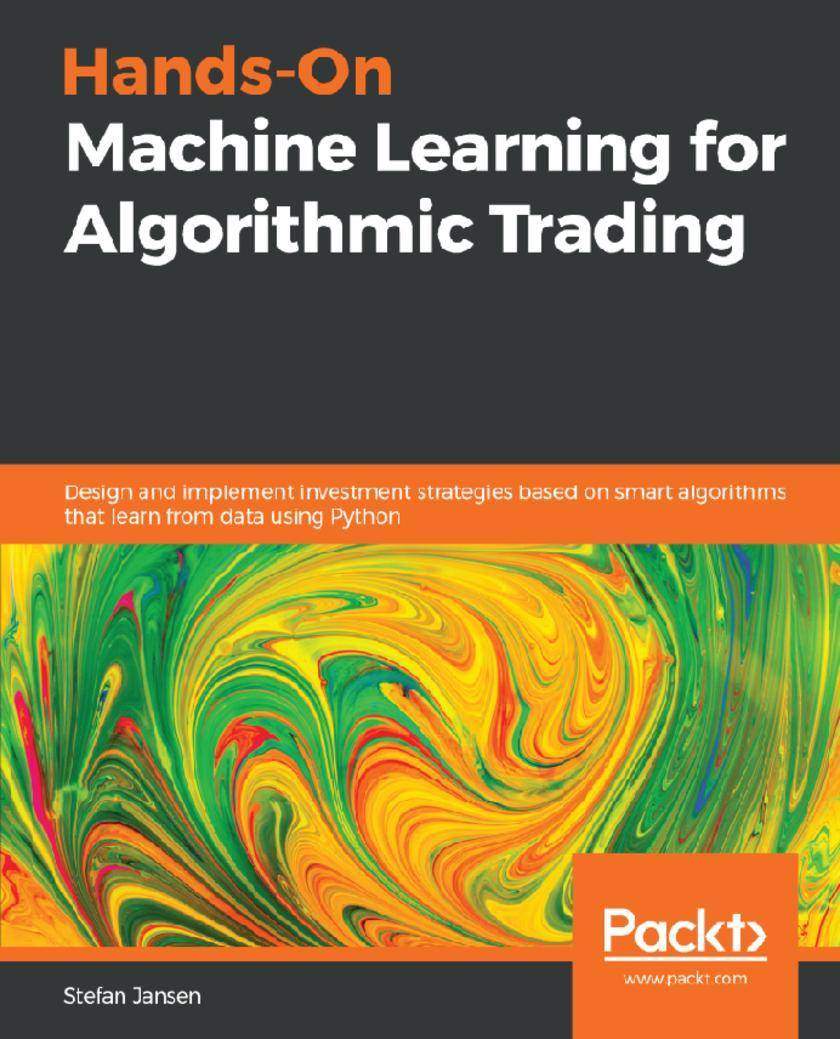
Hands-On Machine Learning for Algorithmic Trading
¥81.74
Explore effective trading strategies in real-world markets using NumPy, spaCy, pandas, scikit-learn, and Keras Key Features *Implement machine learning algorithms to build, train, and validate algorithmic models *Create your own algorithmic design process to apply probabilistic machine learning approaches to trading decisions *Develop neural networks for algorithmic trading to perform time series forecasting and smart analytics Book Description The explosive growth of digital data has boosted the demand for expertise in trading strategies that use machine learning (ML). This book enables you to use a broad range of supervised and unsupervised algorithms to extract signals from a wide variety of data sources and create powerful investment strategies. This book shows how to access market, fundamental, and alternative data via API or web scraping and offers a framework to evaluate alternative data. You’ll practice the ML work?ow from model design, loss metric definition, and parameter tuning to performance evaluation in a time series context. You will understand ML algorithms such as Bayesian and ensemble methods and manifold learning, and will know how to train and tune these models using pandas, statsmodels, sklearn, PyMC3, xgboost, lightgbm, and catboost. This book also teaches you how to extract features from text data using spaCy, classify news and assign sentiment scores, and to use gensim to model topics and learn word embeddings from financial reports. You will also build and evaluate neural networks, including RNNs and CNNs, using Keras and PyTorch to exploit unstructured data for sophisticated strategies. Finally, you will apply transfer learning to satellite images to predict economic activity and use reinforcement learning to build agents that learn to trade in the OpenAI Gym. What you will learn *Implement machine learning techniques to solve investment and trading problems *Leverage market, fundamental, and alternative data to research alpha factors *Design and fine-tune supervised, unsupervised, and reinforcement learning models *Optimize portfolio risk and performance using pandas, NumPy, and scikit-learn *Integrate machine learning models into a live trading strategy on Quantopian *Evaluate strategies using reliable backtesting methodologies for time series *Design and evaluate deep neural networks using Keras, PyTorch, and TensorFlow *Work with reinforcement learning for trading strategies in the OpenAI Gym Who this book is for Hands-On Machine Learning for Algorithmic Trading is for data analysts, data scientists, and Python developers, as well as investment analysts and portfolio managers working within the finance and investment industry. If you want to perform efficient algorithmic trading by developing smart investigating strategies using machine learning algorithms, this is the book for you. Some understanding of Python and machine learning techniques is mandatory.
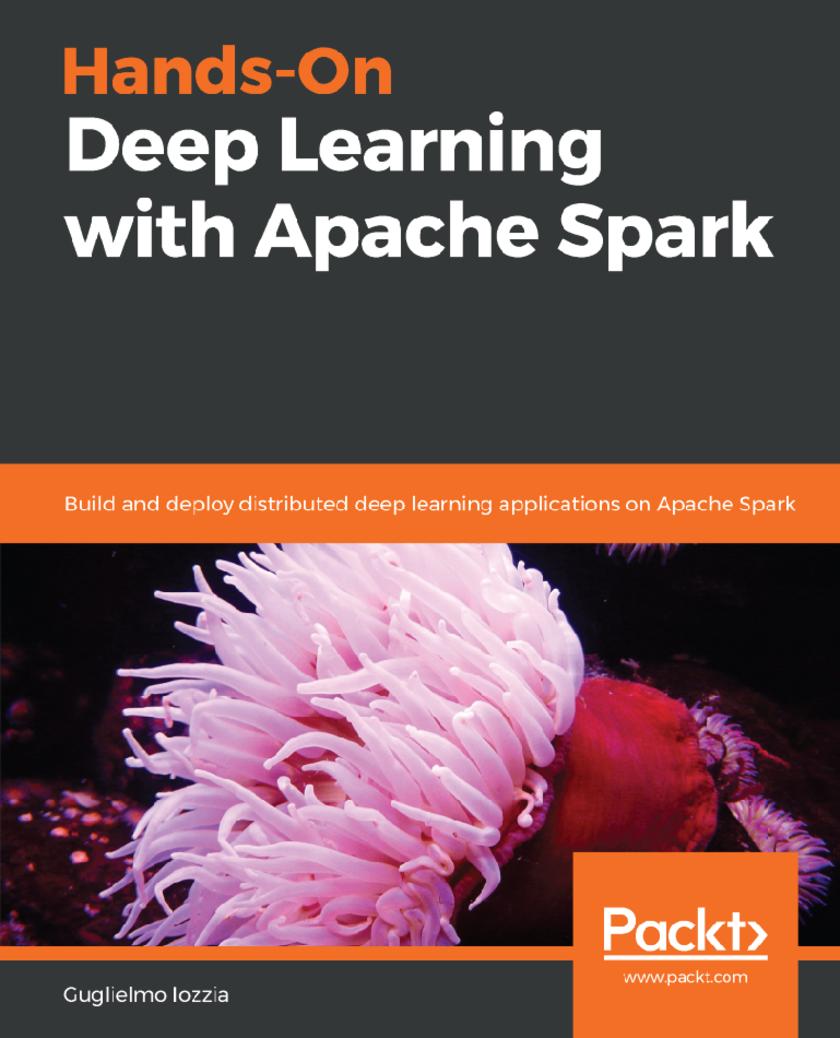
Hands-On Deep Learning with Apache Spark
¥81.74
Speed up the design and implementation of deep learning solutions using Apache Spark Key Features * Explore the world of distributed deep learning with Apache Spark * Train neural networks with deep learning libraries such as BigDL and TensorFlow * Develop Spark deep learning applications to intelligently handle large and complex datasets Book Description Deep learning is a subset of machine learning where datasets with several layers of complexity can be processed. Hands-On Deep Learning with Apache Spark addresses the sheer complexity of technical and analytical parts and the speed at which deep learning solutions can be implemented on Apache Spark. The book starts with the fundamentals of Apache Spark and deep learning. You will set up Spark for deep learning, learn principles of distributed modeling, and understand different types of neural nets. You will then implement deep learning models, such as convolutional neural networks (CNNs), recurrent neural networks (RNNs), and long short-term memory (LSTM) on Spark. As you progress through the book, you will gain hands-on experience of what it takes to understand the complex datasets you are dealing with. During the course of this book, you will use popular deep learning frameworks, such as TensorFlow, Deeplearning4j, and Keras to train your distributed models. By the end of this book, you'll have gained experience with the implementation of your models on a variety of use cases. What you will learn * Understand the basics of deep learning * Set up Apache Spark for deep learning * Understand the principles of distribution modeling and different types of neural networks * Obtain an understanding of deep learning algorithms * Discover textual analysis and deep learning with Spark * Use popular deep learning frameworks, such as Deeplearning4j, TensorFlow, and Keras * Explore popular deep learning algorithms Who this book is for If you are a Scala developer, data scientist, or data analyst who wants to learn how to use Spark for implementing efficient deep learning models, Hands-On Deep Learning with Apache Spark is for you. Knowledge of the core machine learning concepts and some exposure to Spark will be helpful.
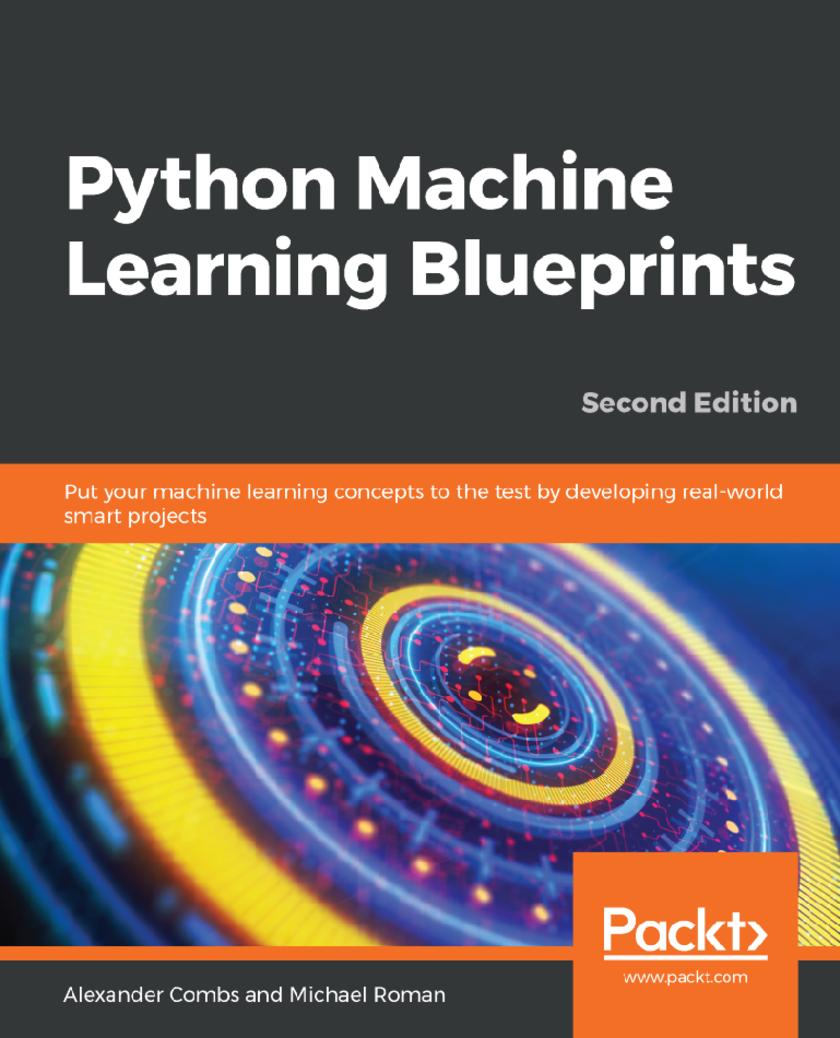
Python Machine Learning Blueprints
¥81.74
Discover a project-based approach to mastering machine learning concepts by applying them to everyday problems using libraries such as scikit-learn, TensorFlow, and Keras Key Features * Get to grips with Python's machine learning libraries including scikit-learn, TensorFlow, and Keras * Implement advanced concepts and popular machine learning algorithms in real-world projects * Build analytics, computer vision, and neural network projects Book Description Machine learning is transforming the way we understand and interact with the world around us. This book is the perfect guide for you to put your knowledge and skills into practice and use the Python ecosystem to cover key domains in machine learning. This second edition covers a range of libraries from the Python ecosystem, including TensorFlow and Keras, to help you implement real-world machine learning projects. The book begins by giving you an overview of machine learning with Python. With the help of complex datasets and optimized techniques, you’ll go on to understand how to apply advanced concepts and popular machine learning algorithms to real-world projects. Next, you’ll cover projects from domains such as predictive analytics to analyze the stock market and recommendation systems for GitHub repositories. In addition to this, you’ll also work on projects from the NLP domain to create a custom news feed using frameworks such as scikit-learn, TensorFlow, and Keras. Following this, you’ll learn how to build an advanced chatbot, and scale things up using PySpark. In the concluding chapters, you can look forward to exciting insights into deep learning and you'll even create an application using computer vision and neural networks. By the end of this book, you’ll be able to analyze data seamlessly and make a powerful impact through your projects. What you will learn * Understand the Python data science stack and commonly used algorithms * Build a model to forecast the performance of an Initial Public Offering (IPO) over an initial discrete trading window * Understand NLP concepts by creating a custom news feed * Create applications that will recommend GitHub repositories based on ones you’ve starred, watched, or forked * Gain the skills to build a chatbot from scratch using PySpark * Develop a market-prediction app using stock data * Delve into advanced concepts such as computer vision, neural networks, and deep learning Who this book is for This book is for machine learning practitioners, data scientists, and deep learning enthusiasts who want to take their machine learning skills to the next level by building real-world projects. The intermediate-level guide will help you to implement libraries from the Python ecosystem to build a variety of projects addressing various machine learning domains. Knowledge of Python programming and machine learning concepts will be helpful.
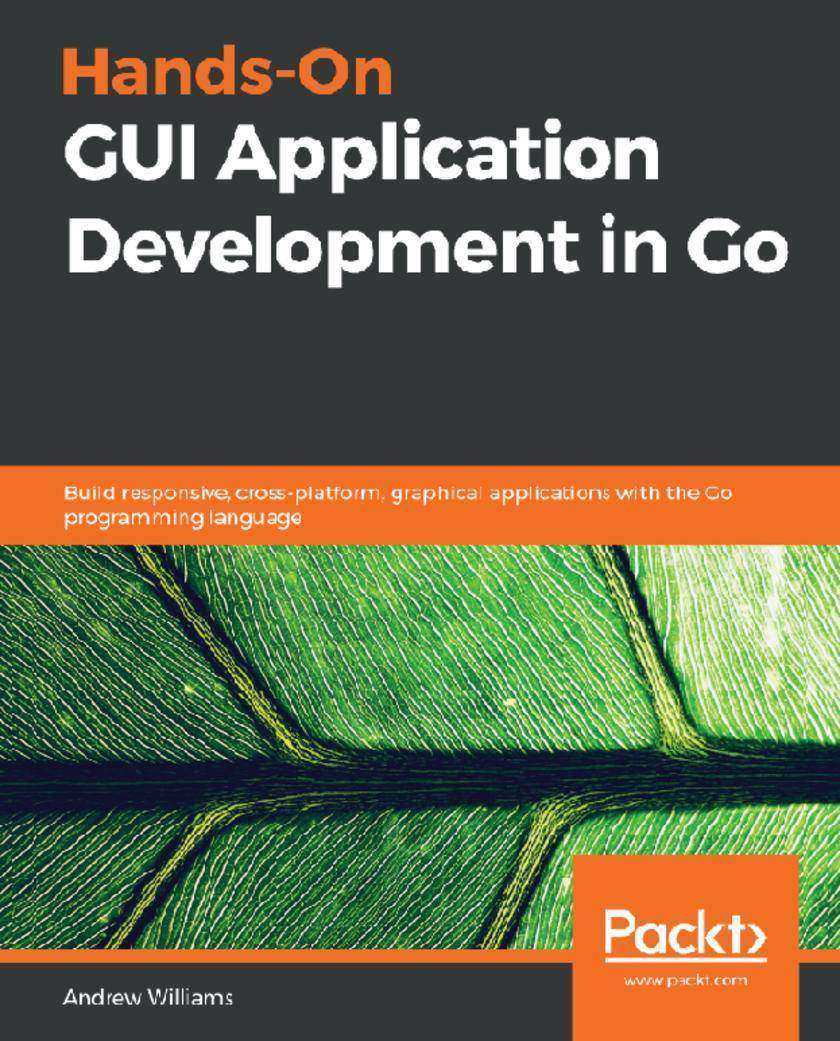
Hands-On GUI Application Development in Go
¥81.74
Discover Golang's GUI libraries such as Go-GTK (GIMP Toolkit) and Go-Qt and build beautiful, performant, and responsive graphical applications Key Features * Conceptualize and build state-of-art GUI applications with Golang (Go) * Tackle the complexity of varying GUI application sizes with a structured and scalable approach * Get hands-on experience of GUI development with Shiny, and labs/ui, Fyne, and Walk Book Description Go is often compared to C++ when it comes to low-level programming and implementations that require faster processing, such as Graphical User Interfaces (GUIs). In fact, many claim that Go is superior to C++ in terms of its concurrency and ease of use. Most graphical application toolkits, though, are still written using C or C++, and so they don't enjoy the benefits of using a modern programming language such as Go. This guide to programming GUIs with Go 1.11 explores the various toolkits available, including UI, Walk, Shiny, and Fyne. The book compares the vision behind each project to help you pick the right approach for your project. Each framework is described in detail, outlining how you can build performant applications that users will love. To aid you further in creating applications using these emerging technologies, you'll be able to easily refer to code samples and screenshots featured in the book. In addition to toolkit-specific discussions, you'll cover more complex topics, such as how to structure growing graphical applications, and how cross-platform applications can integrate with each desktop operating system to create a seamless user experience. By delving into techniques and best practices for organizing and scaling Go-based graphical applications, you'll also glimpse Go's impressive concurrency system. In the concluding chapters, you'll discover how to distribute to the main desktop marketplaces and distribution channels. By the end of this book, you'll be a confident GUI developer who can use the Go language to boost the performance of your applications. What you will learn * Understand the benefits and complexities of building native graphical applications * Gain insights into how Go makes cross-platform graphical application development simple * Build platform-native GUI applications using andlabs/ui * Develop graphical Windows applications using Walk * Create multiplatform GUI applications using Shiny, Nuklear, and Fyne * Use Go wrappers for GTK and Qt for GUI application development * Streamline your requirements to pick the correct toolkit strategy Who this book is for This book is designed for Go developers who are interested in building native graphical applications for desktop computers and beyond. Some knowledge of building applications using Go is useful, but not essential. Experience in developing GUIs is not required as the book explores the benefits and challenges they pose. This book will also be beneficial for GUI application developers who are interested in trying Go.
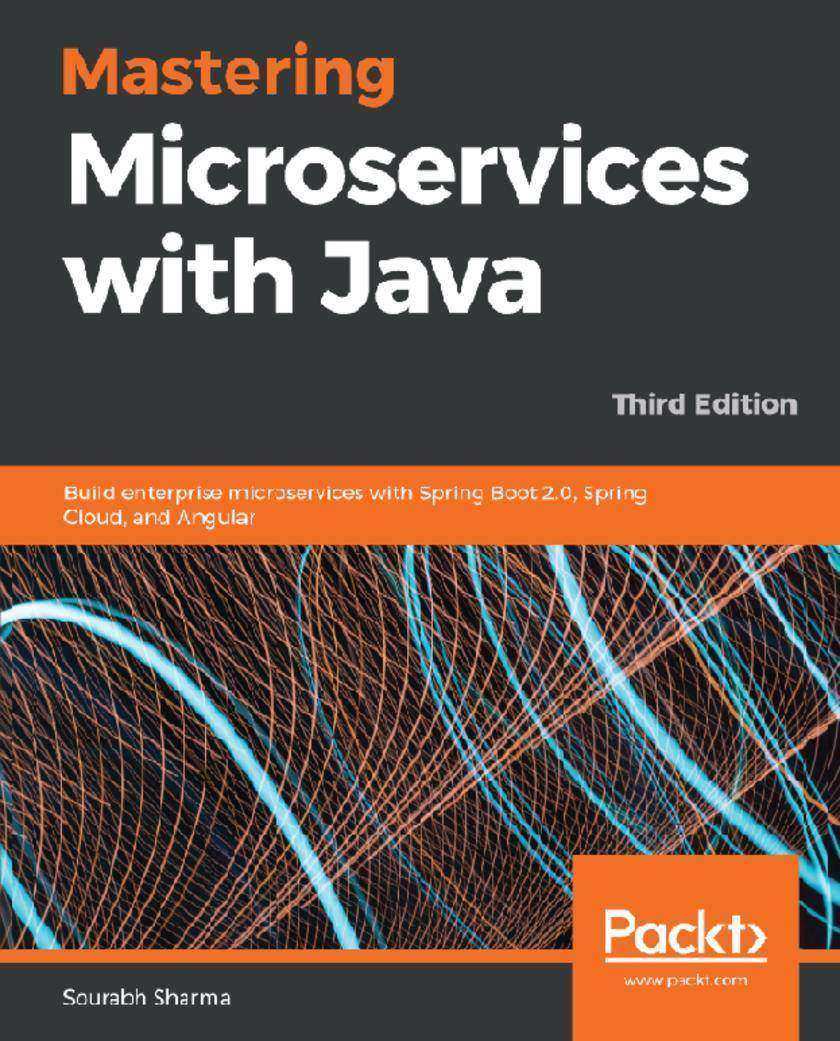
Mastering Microservices with Java
¥81.74
Master the art of implementing scalable and reactive microservices in your production environment with Java 11 Key Features * Use domain-driven designs to build microservices * Explore various microservices design patterns such as service discovery, registration, and API Gateway * Use Kafka, Avro, and Spring Streams to implement event-based microservices Book Description Microservices are key to designing scalable, easy-to-maintain applications. This latest edition of Mastering Microservices with Java, works on Java 11. It covers a wide range of exciting new developments in the world of microservices, including microservices patterns, interprocess communication with gRPC, and service orchestration. This book will help you understand how to implement microservice-based systems from scratch. You'll start off by understanding the core concepts and framework, before focusing on the high-level design of large software projects. You'll then use Spring Security to secure microservices and test them effectively using REST Java clients and other tools. You will also gain experience of using the Netflix OSS suite, comprising the API Gateway, service discovery and registration, and Circuit Breaker. Additionally, you'll be introduced to the best patterns, practices, and common principles of microservice design that will help you to understand how to troubleshoot and debug the issues faced during development. By the end of this book, you'll have learned how to build smaller, lighter, and faster services that can be implemented easily in a production environment. What you will learn * Use domain-driven designs to develop and implement microservices * Understand how to implement microservices using Spring Boot * Explore service orchestration and distributed transactions using the Sagas * Discover interprocess communication using REpresentational State Transfer (REST) and events * Gain knowledge of how to implement and design reactive microservices * Deploy and test various microservices Who this book is for This book is designed for Java developers who are familiar with microservices architecture and now want to effectively implement microservices at an enterprise level. Basic knowledge and understanding of core microservice elements and applications is necessary.


