


 购物车
购物车 个人中心
个人中心
iOS 12 Programming for Beginners
¥81.74
Begin your iOS 12 app development journey with this practical guide Key Features *Kick-start your iOS programming career and have fun building iOS apps of your choice *Get to grips with Xcode 10 and Swift 4.2, the building blocks of iOS development *Discover the latest features of iOS 12 - SiriKit, notifications, and much more Book Description Want to build iOS 12 applications from scratch with the latest Swift 4.2 language and Xcode 10 by your side? Forget sifting through tutorials and blog posts; this book is a direct route to iOS development, taking you through the basics and showing you how to put principles into practice. Take advantage of this developer-friendly guide and start building applications that may just take the App Store by storm! If you’re already an experienced programmer, you can jump right in and learn the latest iOS 12 features. For beginners, this book starts by introducing you to iOS development as you learn Xcode and Swift. You'll also study advanced iOS design topics, such as gestures and animations, to give your app the edge. You’ll explore the latest Swift 4.2 and iOS 12 developments by incorporating new features, such as the latest in notifications, custom-UI notifications, maps, and the recent additions in Sirikit. The book will guide you in using TestFlight to quickly get to grips with everything you need to get your project on the App Store. By the end of this book, you'll be ready to start building your own cool iOS applications confidently. What you will learn *Explore the distinctive design principles that define the iOS user experience *Navigate panels within an Xcode project *Use the latest Xcode asset catalogue of Xcode 10 *Create a playgrounds project within your projects and understand how Ranges and Control flow work *Study operations with integers and work your way through if statements *Build a responsive UI and add privacy to your custom-rich notifications *Set up Sirikit to add voice for Siri shortcuts *Collect valuable feedback with TestFlight before releasing your apps on the App Store Who this book is for This book is for you if you are completely new to Swift, iOS, or programming and want to make iOS applications. However, you’ll also find this book useful if you’re an experienced programmer looking to explore the latest iOS 12 features.
Julia Programming Projects
¥81.74
A step-by-step guide that demonstrates how to build simple-to-advanced applications through examples in Julia Lang 1.x using modern tools Key Features *Work with powerful open-source libraries for data wrangling, analysis, and visualization *Develop full-featured, full-stack web applications *Learn to perform supervised and unsupervised machine learning and time series analysis with Julia Book Description Julia is a new programming language that offers a unique combination of performance and productivity. Its powerful features, friendly syntax, and speed are attracting a growing number of adopters from Python, R, and Matlab, effectively raising the bar for modern general and scientific computing. After six years in the making, Julia has reached version 1.0. Now is the perfect time to learn it, due to its large-scale adoption across a wide range of domains, including fintech, biotech, education, and AI. Beginning with an introduction to the language, Julia Programming Projects goes on to illustrate how to analyze the Iris dataset using DataFrames. You will explore functions and the type system, methods, and multiple dispatch while building a web scraper and a web app. Next, you'll delve into machine learning, where you'll build a books recommender system. You will also see how to apply unsupervised machine learning to perform clustering on the San Francisco business database. After metaprogramming, the final chapters will discuss dates and time, time series analysis, visualization, and forecasting. We'll close with package development, documenting, testing and benchmarking. By the end of the book, you will have gained the practical knowledge to build real-world applications in Julia. What you will learn *Leverage Julia's strengths, its top packages, and main IDE options *Analyze and manipulate datasets using Julia and DataFrames *Write complex code while building real-life Julia applications *Develop and run a web app using Julia and the HTTP package *Build a recommender system using supervised machine learning *Perform exploratory data analysis *Apply unsupervised machine learning algorithms *Perform time series data analysis, visualization, and forecasting Who this book is for Data scientists, statisticians, business analysts, and developers who are interested in learning how to use Julia to crunch numbers, analyze data and build apps will find this book useful. A basic knowledge of programming is assumed.
Generative Adversarial Networks Cookbook
¥81.74
Simplify next-generation deep learning by implementing powerful generative models using Python, TensorFlow and Keras Key Features *Understand the common architecture of different types of GANs *Train, optimize, and deploy GAN applications using TensorFlow and Keras *Build generative models with real-world data sets, including 2D and 3D data Book Description Developing Generative Adversarial Networks (GANs) is a complex task, and it is often hard to find code that is easy to understand. This book leads you through eight different examples of modern GAN implementations, including CycleGAN, simGAN, DCGAN, and 2D image to 3D model generation. Each chapter contains useful recipes to build on a common architecture in Python, TensorFlow and Keras to explore increasingly difficult GAN architectures in an easy-to-read format. The book starts by covering the different types of GAN architecture to help you understand how the model works. This book also contains intuitive recipes to help you work with use cases involving DCGAN, Pix2Pix, and so on. To understand these complex applications, you will take different real-world data sets and put them to use. By the end of this book, you will be equipped to deal with the challenges and issues that you may face while working with GAN models, thanks to easy-to-follow code solutions that you can implement right away. What you will learn *Structure a GAN architecture in pseudocode *Understand the common architecture for each of the GAN models you will build *Implement different GAN architectures in TensorFlow and Keras *Use different datasets to enable neural network functionality in GAN models *Combine different GAN models and learn how to fine-tune them *Produce a model that can take 2D images and produce 3D models *Develop a GAN to do style transfer with Pix2Pix Who this book is for This book is for data scientists, machine learning developers, and deep learning practitioners looking for a quick reference to tackle challenges and tasks in the GAN domain. Familiarity with machine learning concepts and working knowledge of Python programming language will help you get the most out of the book.
Generative Adversarial Networks Projects
¥81.74
Explore various Generative Adversarial Network architectures using the Python ecosystem Key Features * Use different datasets to build advanced projects in the Generative Adversarial Network domain * Implement projects ranging from generating 3D shapes to a face aging application * Explore the power of GANs to contribute in open source research and projects Book Description Generative Adversarial Networks (GANs) have the potential to build next-generation models, as they can mimic any distribution of data. Major research and development work is being undertaken in this field since it is one of the rapidly growing areas of machine learning. This book will test unsupervised techniques for training neural networks as you build seven end-to-end projects in the GAN domain. Generative Adversarial Network Projects begins by covering the concepts, tools, and libraries that you will use to build efficient projects. You will also use a variety of datasets for the different projects covered in the book. The level of complexity of the operations required increases with every chapter, helping you get to grips with using GANs. You will cover popular approaches such as 3D-GAN, DCGAN, StackGAN, and CycleGAN, and you’ll gain an understanding of the architecture and functioning of generative models through their practical implementation. By the end of this book, you will be ready to build, train, and optimize your own end-to-end GAN models at work or in your own projects. What you will learn * Train a network on the 3D ShapeNet dataset to generate realistic shapes * Generate anime characters using the Keras implementation of DCGAN * Implement an SRGAN network to generate high-resolution images * Train Age-cGAN on Wiki-Cropped images to improve face verification * Use Conditional GANs for image-to-image translation * Understand the generator and discriminator implementations of StackGAN in Keras Who this book is for If you’re a data scientist, machine learning developer, deep learning practitioner, or AI enthusiast looking for a project guide to test your knowledge and expertise in building real-world GANs models, this book is for you.
Hands-On Microservices with Rust
¥81.74
A comprehensive guide in developing and deploying high performance microservices with Rust Key Features * Start your microservices journey and get a broader perspective on microservices development using RUST 2018, * Build, deploy, and test microservices using AWS * Explore advanced techniques for developing microservices such as actor model, Requests Routing, and threads Book Description Microservice architecture is sweeping the world as the de facto pattern for building web-based applications. Rust is a language particularly well-suited for building microservices. It is a new system programming language that offers a practical and safe alternative to C. This book describes web development using the Rust programming language and will get you up and running with modern web frameworks and crates with examples of RESTful microservices creation. You will deep dive into Reactive programming, and asynchronous programming, and split your web application into a set of concurrent actors. The book provides several HTTP-handling examples with manageable memory allocations. You will walk through stateless high-performance microservices, which are ideally suitable for computation or caching tasks, and look at stateful microservices, which are filled with persistent data and database interactions. As we move along, you will learn how to use Rust macros to describe business or protocol entities of our application and compile them into native structs, which will be performed at full speed with the help of the server's CPU. Finally, you will be taken through examples of how to test and debug microservices and pack them into a tiny monolithic binary or put them into a container and deploy them to modern cloud platforms such as AWS. What you will learn * Get acquainted with leveraging Rust web programming * Get to grips with various Rust crates, such as hyper, Tokio, and Actix * Explore RESTful microservices with Rust * Understand how to pack Rust code to a container using Docker * Familiarize yourself with Reactive microservices * Deploy your microservices to modern cloud platforms such as AWS Who this book is for This book is for developers who have basic knowledge of RUST, and want to learn how to build, test, scale, and manage RUST microservices. No prior experience of writing microservices in RUST is assumed.
Hands-On Embedded Programming with C++17
¥81.74
Build safety-critical and memory-safe stand-alone and networked embedded systems Key Features * Know how C++ works and compares to other languages used for embedded development * Create advanced GUIs for embedded devices to design an attractive and functional UI * Integrate proven strategies into your design for optimum hardware performance Book Description C++ is a great choice for embedded development, most notably, because it does not add any bloat, extends maintainability, and offers many advantages over different programming languages. Hands-On Embedded Programming with C++17 will show you how C++ can be used to build robust and concurrent systems that leverage the available hardware resources. Starting with a primer on embedded programming and the latest features of C++17, the book takes you through various facets of good programming. You’ll learn how to use the concurrency, memory management, and functional programming features of C++ to build embedded systems. You will understand how to integrate your systems with external peripherals and efficient ways of working with drivers. This book will also guide you in testing and optimizing code for better performance and implementing useful design patterns. As an additional benefit, you will see how to work with Qt, the popular GUI library used for building embedded systems. By the end of the book, you will have gained the confidence to use C++ for embedded programming. What you will learn * Choose the correct type of embedded platform to use for a project * Develop drivers for OS-based embedded systems * Use concurrency and memory management with various microcontroller units (MCUs) * Debug and test cross-platform code with Linux * Implement an infotainment system using a Linux-based single board computer * Extend an existing embedded system with a Qt-based GUI * Communicate with the FPGA side of a hybrid FPGA/SoC system Who this book is for If you want to start developing effective embedded programs in C++, then this book is for you. Good knowledge of C++ language constructs is required to understand the topics covered in the book. No knowledge of embedded systems is assumed.
Hands-On Blockchain for Python Developers
¥81.74
Implement real-world decentralized applications using Python, Vyper, Populus, and Ethereum Key Features * Stay up-to-date with everything you need to know about the blockchain ecosystem * Implement smart contracts, wallets, and decentralized applications(DApps) using Python libraries * Get deeper insights into storing content in a distributed storage platform Book Description Blockchain is seen as the main technological solution that works as a public ledger for all cryptocurrency transactions. This book serves as a practical guide to developing a full-fledged decentralized application with Python to interact with the various building blocks of blockchain applications. Hands-On Blockchain for Python Developers starts by demonstrating how blockchain technology and cryptocurrency hashing works. You will understand the fundamentals and benefits of smart contracts such as censorship resistance and transaction accuracy. As you steadily progress, you'll go on to build smart contracts using Vyper, which has a similar syntax to Python. This experience will further help you unravel the other benefits of smart contracts, including reliable storage and backup, and efficiency. You'll also use web3.py to interact with smart contracts and leverage the power of both the web3.py and Populus framework to build decentralized applications that offer security and seamless integration with cryptocurrencies. As you explore later chapters, you'll learn how to create your own token on top of Ethereum and build a cryptocurrency wallet graphical user interface (GUI) that can handle Ethereum and Ethereum Request for Comments (ERC-20) tokens using the PySide2 library. This will enable users to seamlessly store, send, and receive digital money. Toward the end, you'll implement InterPlanetary File System (IPFS) technology in your decentralized application to provide a peer-to-peer filesystem that can store and expose media. By the end of this book, you'll be well-versed in blockchain programming and be able to build end-to-end decentralized applications on a range of domains using Python. What you will learn * Understand blockchain technology and what makes it an immutable database * Use the features of web3.py API to interact with the smart contract * Create your own cryptocurrency and token in Ethereum using Vyper * Use IPFS features to store content on the decentralized storage platform * Implement a Twitter-like decentralized application with a desktop frontend * Build decentralized applications in the shape of console, web, and desktop applications Who this book is for If you are a Python developer who wants to enter the world of blockchain, Hands-On Blockchain for Python Developers is for you. The book will be your go-to guide to becoming well-versed with the blockchain ecosystem and building your own decentralized applications using Python and library support.
Hands-On Design Patterns with Delphi
¥81.74
Get up to speed with creational, structural, behavioral and concurrent patterns in Delphi to write clear, concise and effective code Key Features * Delve into the core patterns and components of Delphi in order to master your application's design * Brush up on tricks, techniques, and best practices to solve common design and architectural challenges * Choose the right patterns to improve your program’s efficiency and productivity Book Description Design patterns have proven to be the go-to solution for many common programming scenarios. This book focuses on design patterns applied to the Delphi language. The book will provide you with insights into the language and its capabilities of a runtime library. You'll start by exploring a variety of design patterns and understanding them through real-world examples. This will entail a short explanation of the concept of design patterns and the original set of the 'Gang of Four' patterns, which will help you in structuring your designs efficiently. Next, you'll cover the most important 'anti-patterns' (essentially bad software development practices) to aid you in steering clear of problems during programming. You'll then learn about the eight most important patterns for each creational, structural, and behavioral type. After this, you'll be introduced to the concept of 'concurrency' patterns, which are design patterns specifically related to multithreading and parallel computation. These will enable you to develop and improve an interface between items and harmonize shared memories within threads. Toward the concluding chapters, you'll explore design patterns specific to program design and other categories of patterns that do not fall under the 'design' umbrella. By the end of this book, you'll be able to address common design problems encountered while developing applications and feel confident while building scalable projects. What you will learn * Gain insights into the concept of design patterns * Study modern programming techniques with Delphi * Keep up to date with the latest additions and program design techniques in Delphi * Get to grips with various modern multithreading approaches * Discover creational, structural, behavioral, and concurrent patterns * Determine how to break a design problem down into its component parts Who this book is for Hands-On Design Patterns with Delphi is aimed at beginner-level Delphi developers who want to build scalable and robust applications. Basic knowledge of Delphi is a must.
Mastering Windows PowerShell Scripting
¥81.74
Grasp advanced PowerShell Core 6.0 functionalities to automate your environment Key Features * Keep up with changes introduced in PowerShell Core 6.0 * Easily maintain appropriate compatibility with older versions * Automate complex tasks, manipulate data, and secure your environment with PowerShell Core 6.0 Book Description PowerShell scripts offer a handy way to automate various chores, however working effectively with these scripts can be a difficult task. This comprehensive guide starts with the fundamentals before moving on to advanced-level topics to help you become a PowerShell Core 6.0 expert. The first module, PowerShell Core 6.0 Fundamentals, begins with the new features of PowerShell Core 6.0, installing it on Linux, and working with parameters, objects and .NET classes from within PowerShell Core 6.0. As you make your way through the chapters, you'll see how to efficiently manage large amounts of data and interact with other services using PowerShell Core 6.0. You'll be able to make the most of PowerShell Core 6.0's powerful automation feature, where you will have different methods available to parse data and manipulate regular expressions and Windows Management Instrumentation (WMI). After having explored automation, you will enter the extending PowerShell Core 6.0 module, covering asynchronous processing and desired state configuration. In the last module, you will learn to extend PowerShell Core 6.0 using advanced scripts and filters, and also debug issues along with working on error handling techniques. By the end of this book, you will be an expert in scripting with PowerShell Core 6.0. What you will learn * Optimize code through the use of functions, switches, and looping structures * Work with objects and operators to test and manipulate data * Parse and manipulate different data types * Create scripts and functions using PowerShell * Use jobs, events, and popular public modules which assist with implementing multithreading * Write .NET classes with ease within the PowerShell * Create and implement regular expressions in PowerShell scripts * Make use of advanced techniques to define and restrict the behavior of parameters Who this book is for If you are a system administrator who wants to become an expert in controlling and automating your Windows environment, then Mastering Windows PowerShell Scripting is for you. It is also ideal for those new to the PowerShell language.
Hands-On Unsupervised Learning with Python
¥81.74
Discover the skill-sets required to implement various approaches to Machine Learning with Python Key Features * Explore unsupervised learning with clustering, autoencoders, restricted Boltzmann machines, and more * Build your own neural network models using modern Python libraries * Practical examples show you how to implement different machine learning and deep learning techniques Book Description Unsupervised learning is about making use of raw, untagged data and applying learning algorithms to it to help a machine predict its outcome. With this book, you will explore the concept of unsupervised learning to cluster large sets of data and analyze them repeatedly until the desired outcome is found using Python. This book starts with the key differences between supervised, unsupervised, and semi-supervised learning. You will be introduced to the best-used libraries and frameworks from the Python ecosystem and address unsupervised learning in both the machine learning and deep learning domains. You will explore various algorithms, techniques that are used to implement unsupervised learning in real-world use cases. You will learn a variety of unsupervised learning approaches, including randomized optimization, clustering, feature selection and transformation, and information theory. You will get hands-on experience with how neural networks can be employed in unsupervised scenarios. You will also explore the steps involved in building and training a GAN in order to process images. By the end of this book, you will have learned the art of unsupervised learning for different real-world challenges. What you will learn * Use cluster algorithms to identify and optimize natural groups of data * Explore advanced non-linear and hierarchical clustering in action * Soft label assignments for fuzzy c-means and Gaussian mixture models * Detect anomalies through density estimation * Perform principal component analysis using neural network models * Create unsupervised models using GANs Who this book is for This book is intended for statisticians, data scientists, machine learning developers, and deep learning practitioners who want to build smart applications by implementing key building block unsupervised learning, and master all the new techniques and algorithms offered in machine learning and deep learning using real-world examples. Some prior knowledge of machine learning concepts and statistics is desirable.
Go Web Development Cookbook
¥81.74
86 recipes on how to build fast, scalable, and powerful web services and applications with Go About This Book ? Become proficient in RESTful web services ? Build scalable, high-performant web applications in Go ? Get acquainted with Go frameworks for web development Who This Book Is For This book is for Go developers interested in learning how to use Go to build powerful web applications. A background in web development is expected. What You Will Learn ? Create a simple HTTP and TCP web server and understand how it works ? Explore record in a MySQL and MongoDB database ? Write and consume RESTful web service in Go ? Invent microservices in Go using Micro – a microservice toolkit ? Create and Deploy the Beego application with Nginx ? Deploy Go web application and Docker containers on an AWS EC2 instance In Detail Go is an open source programming language that is designed to scale and support concurrency at the language level. This gives you the liberty to write large concurrent web applications with ease. From creating web application to deploying them on Amazon Cloud Services, this book will be your one-stop guide to learn web development in Go. The Go Web Development Cookbook teaches you how to create REST services, write microservices, and deploy Go Docker containers. Whether you are new to programming or a professional developer, this book will help get you up to speed with web development in Go. We will focus on writing modular code in Go; in-depth informative examples build the base, one step at a time. You will learn how to create a server, work with static files, SQL, NoSQL databases, and Beego. You will also learn how to create and secure REST services, and create and deploy Go web application and Go Docker containers on Amazon Cloud Services. By the end of the book, you will be able to apply the skills you've gained in Go to create and explore web applications in any domain. Style and approach This book helps you learn core Go concepts faster by taking a recipe-based approach.
Hands-On GUI Programming with C++ and Qt5
¥81.74
Create visually appealing and feature-rich applications by using Qt 5 and the C++ language About This Book ? Explore Qt 5’s powerful features to easily design your GUI application ? Leverage Qt 5 to build attractive cross-platform applications ? Work with Qt modules for multimedia, networking, and location, to customize your Qt applications Who This Book Is For This book will appeal to developers and programmers who would like to build GUI-based applications. Basic knowledge of C++ is necessary and the basics of Qt would be helpful. What You Will Learn ? Implement tools provided by Qt 5 to design a beautiful GUI ? Understand different types of graphs and charts supported by Qt 5 ? Create a web browser using the Qt 5 WebEngine module and web view widget ? Connect to the MySQL database and display data obtained from it onto the Qt 5 GUI ? Incorporate the Qt 5 multimedia and networking module in your application ? Develop Google Map-like applications using Qt 5’s location module ? Discover cross-platform development by exporting the Qt 5 application to different platforms ? Uncover the secrets behind debugging Qt 5 and C++ applications In Detail Qt 5, the latest version of Qt, enables you to develop applications with complex user interfaces for multiple targets. It provides you with faster and smarter ways to create modern UIs and applications for multiple platforms. This book will teach you to design and build graphical user interfaces that are functional, appealing, and user-friendly. In the initial part of the book, you will learn what Qt 5 is and what you can do with it. You will explore the Qt Designer, discover the different types of widgets generally used in Qt 5, and then connect your application to the database to perform dynamic operations. Next, you will be introduced to Qt 5 chart which allows you to easily render different types of graphs and charts and incorporate List View Widgets in your application. You will also work with various Qt modules, like QtLocation, QtWebEngine, and the networking module through the course of the book. Finally, we will focus on cross-platform development with QT 5 that enables you to code once and run it everywhere, including mobile platforms. By the end of this book, you will have successfully learned about high-end GUI applications and will be capable of building many more powerful, cross-platform applications. Style and approach This is a comprehensive guide that explores the essential Qt features and implement them in building real-world cross-platform GUI applications
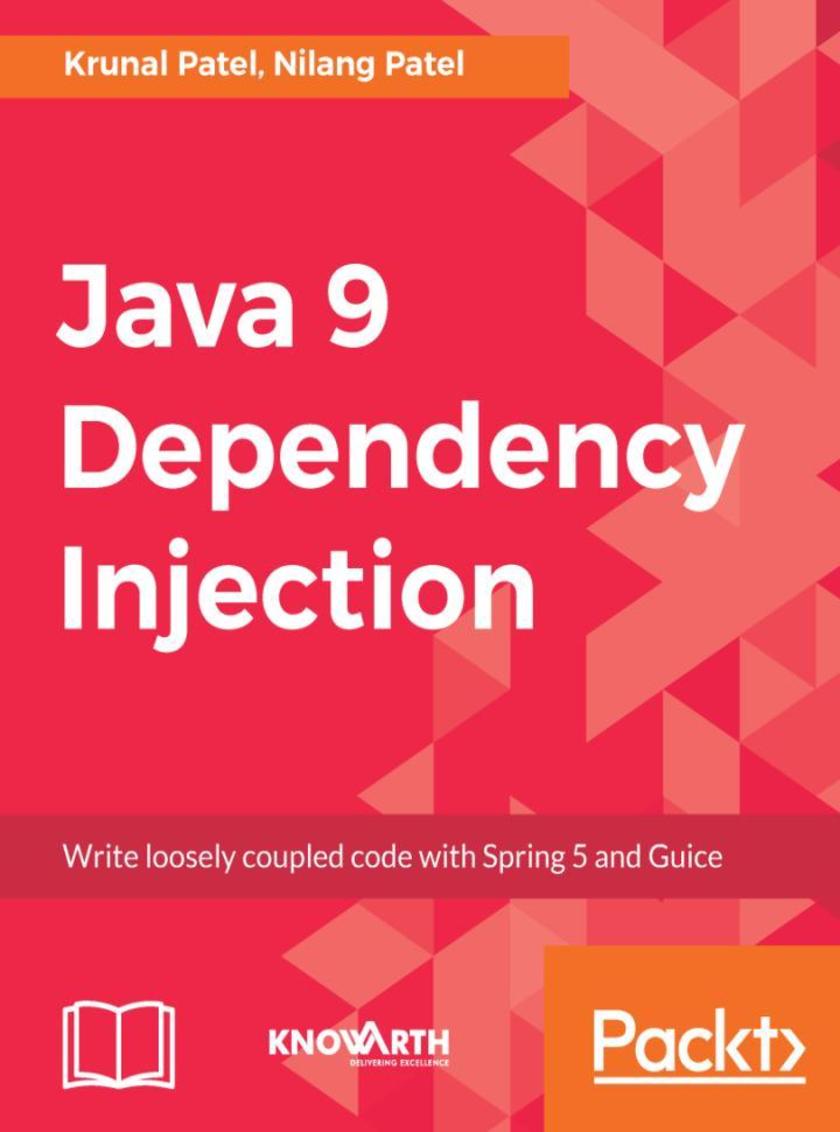
Java 9 Dependency Injection
¥81.74
Create clean code with Dependency Injection principles About This Book ? Use DI to make your code loosely coupled to manage and test your applications easily on Spring 5 and Google Guice ? Learn the best practices and methodologies to implement DI ? Write more maintainable Java code by decoupling your objects from their implementations Who This Book Is For This book is for Java developers who would like to implement DI in their application. Prior knowledge of the Spring and Guice frameworks and Java programming is assumed. What You Will Learn ? Understand the benefits of DI and fo from a tightly coupled design to a cleaner design organized around dependencies ? See Java 9’s new features and modular framework ? Set up Guice and Spring in an application so that it can be used for DI ? Write integration tests for DI applications ? Use scopes to handle complex application scenarios ? Integrate any third-party library in your DI-enabled application ? Implement Aspect-Oriented Programming to handle common cross-cutting concerns such as logging, authentication, and transactions ? Understand IoC patterns and anti-patterns in DI In Detail Dependency Injection (DI) is a design pattern that allows us to remove the hard-coded dependencies and make our application loosely coupled, extendable, and maintainable. We can implement DI to move the dependency resolution from compile-time to runtime. This book will be your one stop guide to write loosely coupled code using the latest features of Java 9 with frameworks such as Spring 5 and Google Guice. We begin by explaining what DI is and teaching you about IoC containers. Then you’ll learn about object compositions and their role in DI. You’ll find out how to build a modular application and learn how to use DI to focus your efforts on the business logic unique to your application and let the framework handle the infrastructure work to put it all together. Moving on, you’ll gain knowledge of Java 9’s new features and modular framework and how DI works in Java 9. Next, we’ll explore Spring and Guice, the popular frameworks for DI. You’ll see how to define injection keys and configure them at the framework-specific level. After that, you’ll find out about the different types of scopes available in both popular frameworks. You’ll see how to manage dependency of cross-cutting concerns while writing applications through aspect-oriented programming. Towards the end, you’ll learn to integrate any third-party library in your DI-enabled application and explore common pitfalls and recommendations to build a solid application with the help of best practices, patterns, and anti-patterns in DI. Style and approach This book will take an easy-to-understand, step-by-step approach providing hands-on examples at every stage.
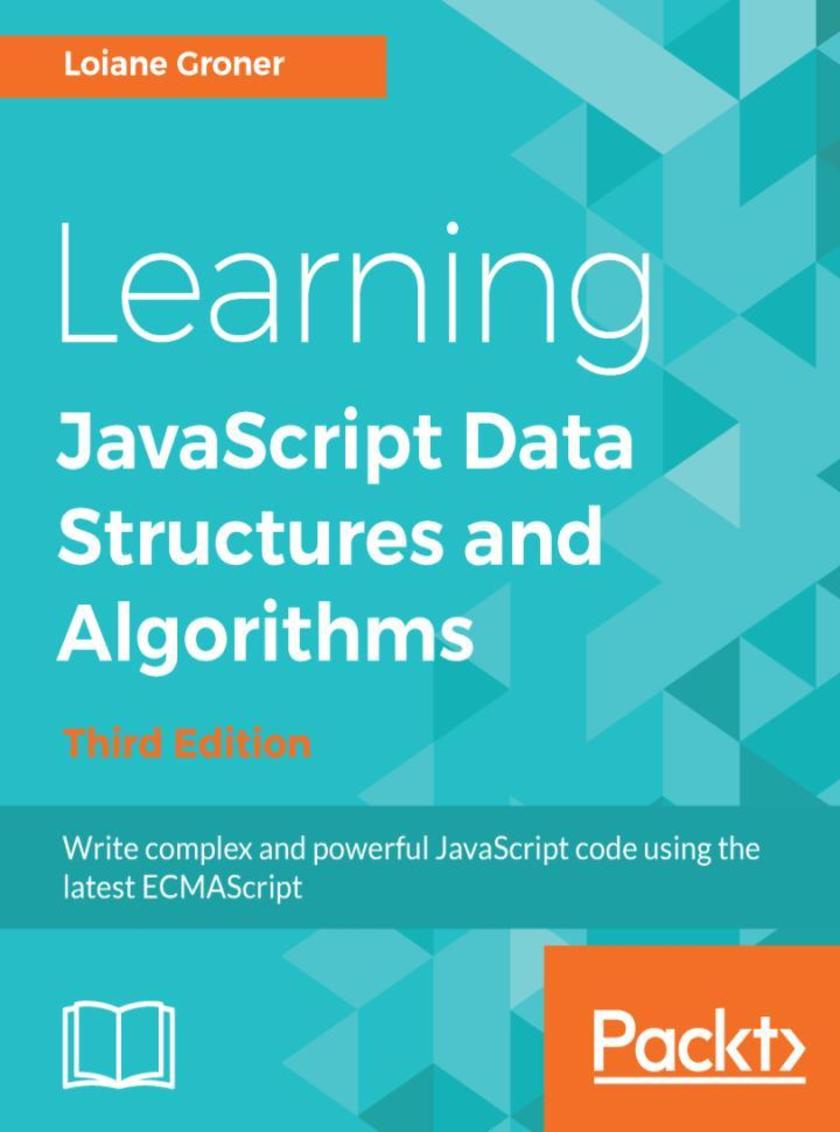
Learning JavaScript Data Structures and Algorithms
¥81.74
Create classic data structures and algorithms such as depth-first search and breadth-first search, learn recursion, as well as create and use a heap data structure using JavaScript About This Book ? Implement common data structures and the associated algorithms along with the context in which they are used ? Master existing JavaScript data structures such as arrays, sets, and maps, and learn how to implement new ones such as stacks, linked lists, trees, and graphs in ES 8 ? Develop abstract data types to make JavaScript a more flexible and powerful programming language Who This Book Is For If you’re a JavaScript developer who wants to dive deep into JavaScript and write complex programs using JavaScript data structures and algorithms, this book is for you. What You Will Learn ? Declare, initialize, add, and remove items from arrays, stacks, and queues ? Create and use linked lists, doubly linked lists, and circular linked lists ? Store unique elements with hash tables, dictionaries, and sets ? Explore the use of binary trees and binary search trees ? Sort data structures using algorithms such as bubble sort, selection sort, insertion sort, merge sort, and quick sort ? Search elements in data structures using sequential sort and binary search In Detail A data structure is a particular way of organizing data in a computer to utilize resources efficiently. Data structures and algorithms are the base of every solution to any programming problem. With this book, you will learn to write complex and powerful code using the latest ES 2017 features. Learning JavaScript Data Structures and Algorithms begins by covering the basics of JavaScript and introduces you to ECMAScript 2017, before gradually moving on to the most important data structures such as arrays, queues, stacks, and linked lists. You will gain in-depth knowledge of how hash tables and set data structures function as well as how trees and hash maps can be used to search files in an HD or represent a database. This book serves as a route to take you deeper into JavaScript. You’ll also get a greater understanding of why and how graphs, one of the most complex data structures, are largely used in GPS navigation systems in social networks. Toward the end of the book, you’ll discover how all the theories presented in this book can be applied to solve real-world problems while working on your own computer networks and Facebook searches. Style and approach Easy to follow guide which will cover the most used data structures and sorting/searching algorithms known in the computer science world along with examples to help the readers understand each chapter thoroughly.
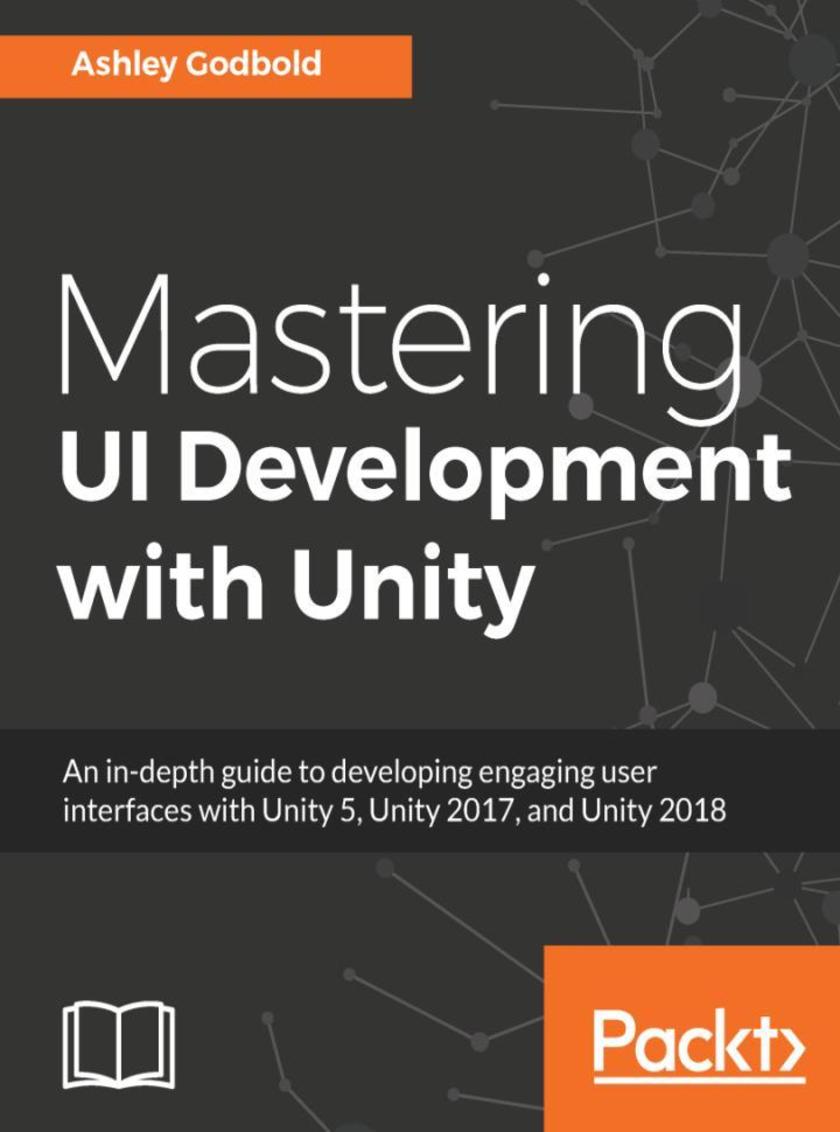
Mastering UI Development with Unity
¥81.74
Master Game UI system by creating captivating user interface components with Unity 5 through Unity 2018 and C#. Learn about UI texts, images, world space UI, mobile-specific UI and much more. About This Book ? Develop a game UI with both technical and aesthetic considerations ? Use all the UI elements provided by Unity's UI system ? Step-by-step examples of creating user interface components in the top game genres Who This Book Is For This book is for anyone keen to improve their games via a great user interface with Unity's UI system. If you're looking for a book that explains how to develop specific user interfaces or that thoroughly explains how each of the individual Unity components work, this book is for you. What You Will Learn ? Design principles and patterns for laying out elements in your UI ? Techniques that allow your UI to scale appropriately in different resolutions ? How to use automatic layouts to streamline your UI building process ? Properties of the Event System and how to appropriately hook events to your UI elements ? Access the components and properties of UI elements via code ? Implement all of Unity's built-in UI elements as well as those provided by TextMeshPro ? Develop key UI components that are popularly used in multiple game genres ? Add visual flare to user interfaces with the use of animation and particle effects ? Create a UI that displays in the Screen Space as well as World Space In Detail A functional UI is an important component for player interaction in every type of video game. Along with imparting crucial statistical information to the player, the UI is also the window through which the player engages with the world established by the game. Unity's tools give you the opportunity to create complex and attractive UIs to make your game stand out. This book helps you realize the full potential of Unity's powerful tools to create the best UI for your games by walking you through the creation of myriad user interface components. Learn how to create visually engaging heads-up-displays, pause menus, health bars, circular progress bars, animated menus, and more. This book not only teaches how to lay out visual elements, but also how to program these features and implement them across multiple games of varying genres. While working through the examples provided, you will learn how to develop a UI that scales to multiple screen resolutions, so your game can be released on multiple platforms with minimal changes. Style and approach The book walks you through the process of creating many different user interface components, by describing each UI component and property thoroughly and then providing step-by-step examples of its implementation. You will not only learn how to lay out visual elements, but you will also learn how to program for these features and hook them in to your game. The examples provided in the book can be reused for many other products.
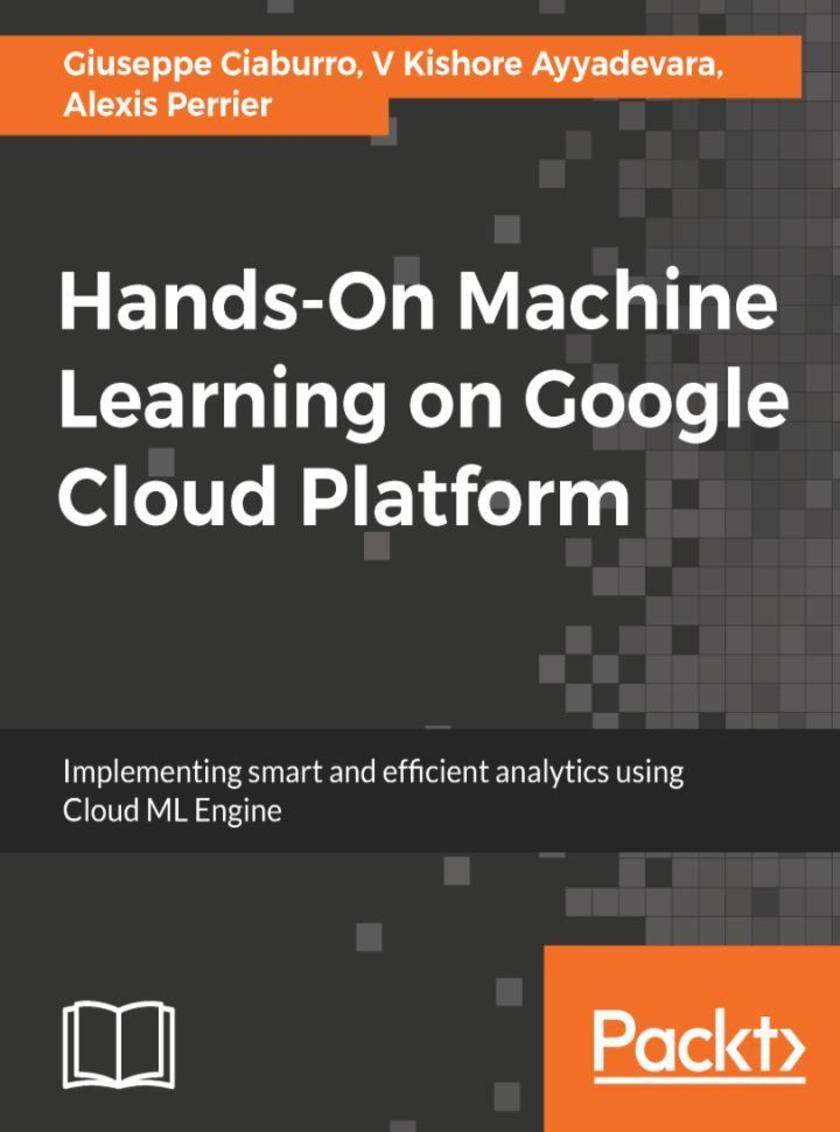
Hands-On Machine Learning on Google Cloud Platform
¥81.74
Unleash Google's Cloud Platform to build, train and optimize machine learning models About This Book ? Get well versed in GCP pre-existing services to build your own smart models ? A comprehensive guide covering aspects from data processing, analyzing to building and training ML models ? A practical approach to produce your trained ML models and port them to your mobile for easy access Who This Book Is For This book is for data scientists, machine learning developers and AI developers who want to learn Google Cloud Platform services to build machine learning applications. Since the interaction with the Google ML platform is mostly done via the command line, the reader is supposed to have some familiarity with the bash shell and Python scripting. Some understanding of machine learning and data science concepts will be handy What You Will Learn ? Use Google Cloud Platform to build data-based applications for dashboards, web, and mobile ? Create, train and optimize deep learning models for various data science problems on big data ? Learn how to leverage BigQuery to explore big datasets ? Use Google’s pre-trained TensorFlow models for NLP, image, video and much more ? Create models and architectures for Time series, Reinforcement Learning, and generative models ? Create, evaluate, and optimize TensorFlow and Keras models for a wide range of applications In Detail Google Cloud Machine Learning Engine combines the services of Google Cloud Platform with the power and flexibility of TensorFlow. With this book, you will not only learn to build and train different complexities of machine learning models at scale but also host them in the cloud to make predictions. This book is focused on making the most of the Google Machine Learning Platform for large datasets and complex problems. You will learn from scratch how to create powerful machine learning based applications for a wide variety of problems by leveraging different data services from the Google Cloud Platform. Applications include NLP, Speech to text, Reinforcement learning, Time series, recommender systems, image classification, video content inference and many other. We will implement a wide variety of deep learning use cases and also make extensive use of data related services comprising the Google Cloud Platform ecosystem such as Firebase, Storage APIs, Datalab and so forth. This will enable you to integrate Machine Learning and data processing features into your web and mobile applications. By the end of this book, you will know the main difficulties that you may encounter and get appropriate strategies to overcome these difficulties and build efficient systems. Style and approach An easy-to-follow step by step guide which will help you get to the grips with real-world applications of Google Cloud Machine Learning.
Google Cloud Platform Cookbook
¥81.74
Practical recipes to implement cost-effective and scalable cloud solutions for your organization About This Book ? Implement Google Cloud services in your organization ? Leverage Google Cloud components to secure your organization’s data ? A recipe-based guide that promises hands-on experience in deploying a highly scalable and available environment Who This Book Is For This book is for IT professionals, engineers, and developers looking at implementing Google Cloud in their organizations. Administrators and architects planning to make their organization more efficient with Google Cloud will also find this book useful. Basic understanding of Cloud services and the Google Cloud platform is necessary. What You Will Learn ? Host a Python application on Google Compute Engine ? Host an application using Google Cloud Functions ? Migrate a MySQL DB to Cloud Spanner ? Configure a network for a highly available application on GCP ? Learn simple image processing using Storage and Cloud Functions ? Automate security checks using Policy Scanner ? Understand tools for monitoring a production environment in GCP ? Learn to manage multiple projects using service accounts In Detail Google Cloud Platform is a cloud computing platform that offers products and services to host applications using state-of-the art infrastructure and technology. You can build and host applications and websites, store data, and analyze data on Google's scalable infrastructure. This book follows a recipe-based approach, giving you hands-on experience to make the most of Google Cloud services. This book starts with practical recipes that explain how to utilize Google Cloud's common services. Then, you'll see how to make full use of Google Cloud components such as networking, security, management, and developer tools. Next, we'll deep dive into implementing core Google Cloud services into your organization, with practical recipes on App Engine, Compute Engine microservices with Cloud Functions, virtual networks, and Cloud Storage. Later, we'll provide recipes on implementing authentication and security, Cloud APIs, command-line management, deployment management, and the Cloud SDK. Finally, we'll cover administration troubleshooting tasks with the Compute and Container Engines and we'll show how to monitor your organization's efficiency with best practices. By the end of this book, you'll have a complete understanding of how to implement Google Cloud services in your organization with ease. Style and approach This book will quickly get you started with using Google Cloud Services.
OpenCV 3 Computer Vision with Python Cookbook
¥81.74
Recipe-based approach to tackle the most common problems in Computer Vision by leveraging the functionality of OpenCV using Python APIs About This Book ? Build computer vision applications with OpenCV functionality via Python API ? Get to grips with image processing, multiple view geometry, and machine learning ? Learn to use deep learning models for image classification, object detection, and face recognition Who This Book Is For This book is for developers who have a basic knowledge of Python. If you are aware of the basics of OpenCV and are ready to build computer vision systems that are smarter, faster, more complex, and more practical than the competition, then this book is for you. What You Will Learn ? Get familiar with low-level image processing methods ? See the common linear algebra tools needed in computer vision ? Work with different camera models and epipolar geometry ? Find out how to detect interesting points in images and compare them ? Binarize images and mask out regions of interest ? Detect objects and track them in videos In Detail OpenCV 3 is a native cross-platform library for computer vision, machine learning, and image processing. OpenCV's convenient high-level APIs hide very powerful internals designed for computational efficiency that can take advantage of multicore and GPU processing. This book will help you tackle increasingly challenging computer vision problems by providing a number of recipes that you can use to improve your applications. In this book, you will learn how to process an image by manipulating pixels and analyze an image using histograms. Then, we'll show you how to apply image filters to enhance image content and exploit the image geometry in order to relay different views of a pictured scene. We’ll explore techniques to achieve camera calibration and perform a multiple-view analysis. Later, you’ll work on reconstructing a 3D scene from images, converting low-level pixel information to high-level concepts for applications such as object detection and recognition. You’ll also discover how to process video from files or cameras and how to detect and track moving objects. Finally, you'll get acquainted with recent approaches in deep learning and neural networks. By the end of the book, you’ll be able to apply your skills in OpenCV to create computer vision applications in various domains. Style and approach This book helps you learn the core concepts of OpenCV faster by taking a recipe-based approach where you can try out different code snippets to understand a concept.
Expert AWS Development
¥81.74
Key concepts, sample applications, best practices, and troubleshooting tips to build highly scalable applications in AWS. About This Book ? Design highly available, cost efficient, fault tolerant, and scalable distributed systems ? A practical guide that will help you build, deploy, and manage applications with ease. ? Develop effective solutions with AWS SDK and Lambda Who This Book Is For This book targets developers who would like to build and manage web and mobile applications and services on the AWS platform. If you are an architect you will be able to take a deep dive and use examples that can be readily applied to real world scenarios. Some prior programming experience is assumed along with familiarity of cloud computing. What You Will Learn ? Learn how to get up and running with AWS Developer Tools. ? Integrate the four major phases in the Release Processes. Source, Build, Test and Production. ? Learn how to integrate Continuous Integration, Continuous Delivery, and Continuous Deployment in AWS. ? Make secure, scalable and fault tolerant applications. ? Understand different architectures and deploy complex architectures within minutes In Detail Continuous deployment and Agile methodology have enabled huge advances in modern applications. This book will enable the reader to make use of this rapidly evolving technology to build highly scalable applications within AWS using different architectures. You will begin with installation of AWS SDK and you will get hands-on experience on creating an application using AWS Management Console and AWS Command Line Interface (CLI). Next you will be integrating Applications with AWS services such as DynamoDB, Amazon Kinesis, AWS Lambda, Amazon SQS and Amazon SWF Following this you will get well versed with CI/CD workflow and work with four major phases in Release processes – Source, Build, Test and Production. Next you will learn to apply AWS developer tools in your Continuous Integration (CI) and Continuous Deployment (CD) WorkFlow. Later you will learn about User Authentication using Amazon Cognito and also how you can evaluate the best architecture as per your infrastructure costs. You will learn about Amazon EC2 service and deploy an app using Amazon EC2.You will also get well versed with container service which is Amazon EC2 Container Service (Amazon ECS) and you will learn to deploy an app using Amazon ECS. Along with EC2 and ECS, you will also deploying a practical real-world example of a CI/CD application with the Serverless Application Framework which is known as AWS Lambda. Finally you will learn how to build, develop and deploy the Application using AWS Developer tools like AWS CodeCommit, AWS CodeBuild, AWS CodeDeploy and AWS CodePipeline as per project needs. Also you can develop and deploy applications within minutes using AWS CodeStar from wizard. By the end of this book, the reader will effectively build, deploy, and manage applications on AWS along with scaling and securing applications with best practices and troubleshooting tips. Style and approach This book covers follows an approach where you will learn the key concepts followed by a real world example and some tips and tricks to make building and deploying easier
Rust Standard Library Cookbook
¥81.74
Explore the Rust Standard library and compose algorithms with minimal dependency on external libraries About This Book ? Develop high-quality, fast, and portable applications by leveraging the power of Rust's Standard library. ? Practical recipes that will help you work with the Standard library to boost your productivity as a Rust developer. ? Learn about most relevant external crates to be used along with the Standard library. Who This Book Is For This book is for developers who would like to explore the power of Rust and learn to use the STL for various functionalities. A basic Rust programming knowledge is assumed. What You Will Learn ? How to use the basic modules of the library: strings, command line access, and more. ? Implement collections and folding of collections using vectors, Deque, linked lists, and more. ? Handle various file types , compressing and decompressing data. ? Search for files with glob patterns. ? Implement parsing through various formats such as CSV, TOML, and JSON. ? Utilize drop trait , the Rust version of destructor. ? Resource locking with Bilocks. In Detail Mozilla’s Rust is gaining much attention with amazing features and a powerful library. This book will take you through varied recipes to teach you how to leverage the Standard library to implement efficient solutions. The book begins with a brief look at the basic modules of the Standard library and collections. From here, the recipes will cover packages that support file/directory handling and interaction through parsing. You will learn about packages related to advanced data structures, error handling, and networking. You will also learn to work with futures and experimental nightly features. The book also covers the most relevant external crates in Rust. By the end of the book, you will be proficient at using the Rust Standard library. Style and approach This recipe-based practical guide presents each topic with step-by-step instructions on how you can create fast and efficient applications utilizing Rust's Standard library packages.
Mastering High Performance with Kotlin
¥81.74
Find out how to write Kotlin code without overhead and how to use different profiling tools and bytecode viewer to inspect expressions of Kotlin language. About This Book ? Apply modern Kotlin features to speed up processing and implement highly efficient and reliable codes. ? Learn memory optimization, concurrency, multi-threading, scaling, and caching techniques to achieve high performance. ? Learn how to prevent unnecessary overhead and use profiling tools to detect performance issues. Who This Book Is For This book is for Kotlin developers who would like to build reliable and high-performance applications. Prior Kotlin programming knowledge is assumed. What You Will Learn ? Understand the importance of high performance ? Learn performance metrics ? Learn popular design patterns currently being used in Kotlin ? Understand how to apply modern Kotlin features to data processing ? Learn how to use profling tools ? Discover how to read bytecode ? Learn to perform memory optimizations ? Uncover approaches to the multithreading environment In Detail The ease with which we write applications has been increasing, but with it comes the need to address their performance. A balancing act between easily implementing complex applications and keeping their performance optimal is a present-day requirement In this book, we explore how to achieve this crucial balance, while developing and deploying applications with Kotlin. The book starts by analyzing various Kotlin specifcations to identify those that have a potentially adverse effect on performance. Then, we move on to monitor techniques that enable us to identify performance bottlenecks and optimize performance metrics. Next, we look at techniques that help to us achieve high performance: memory optimization, concurrency, multi threading, scaling, and caching. We also look at fault tolerance solutions and the importance of logging. We'll also cover best practices of Kotlin programming that will help you to improve the quality of your code base. By the end of the book, you will have gained some insight into various techniques and solutions that will help to create high-performance applications in the Kotlin environment Style and approach This book guides you through how to use profiling tools to detect performance issues and build high-performance applications in the Kotlin environment.


