


 购物车
购物车 个人中心
个人中心
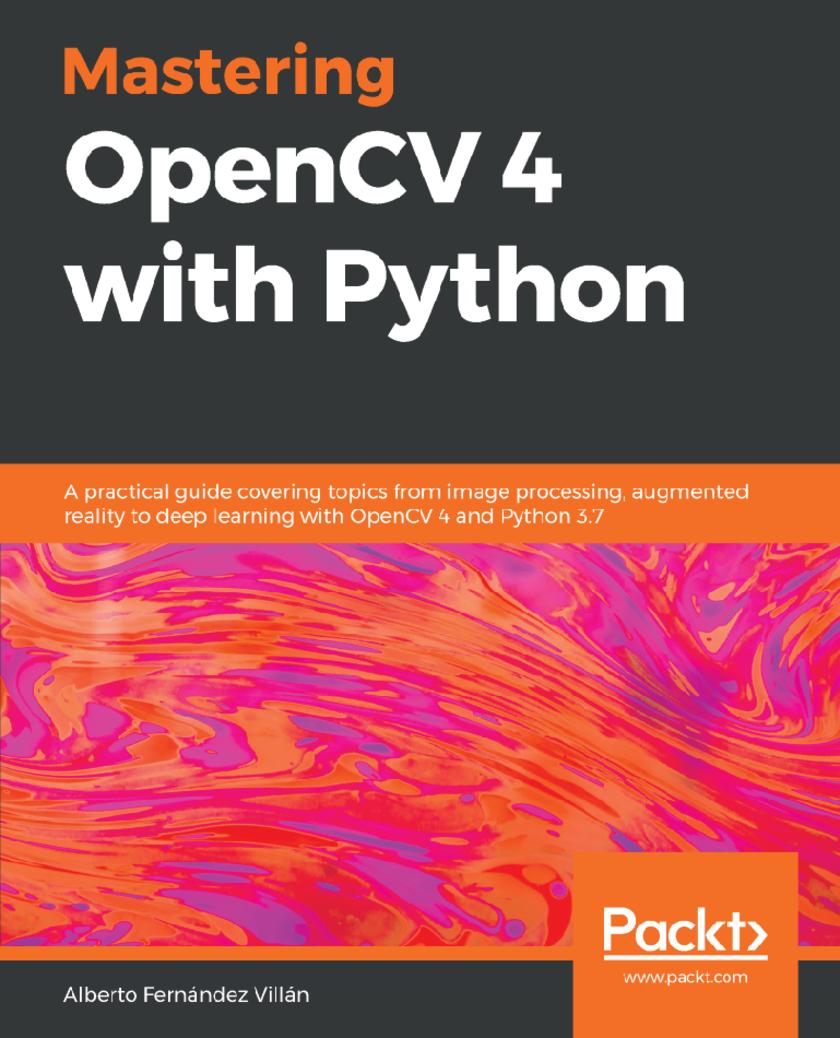
Mastering OpenCV 4 with Python
¥81.74
Create advanced applications with Python and OpenCV, exploring the potential of facial recognition, machine learning, deep learning, web computing and augmented reality. Key Features * Develop your computer vision skills by mastering algorithms in Open Source Computer Vision 4 (OpenCV 4)and Python * Apply machine learning and deep learning techniques with TensorFlow, Keras, and PyTorch * Discover the modern design patterns you should avoid when developing efficient computer vision applications Book Description OpenCV is considered to be one of the best open source computer vision and machine learning software libraries. It helps developers build complete projects in relation to image processing, motion detection, or image segmentation, among many others. OpenCV for Python enables you to run computer vision algorithms smoothly in real time, combining the best of the OpenCV C++ API and the Python language. In this book, you'll get started by setting up OpenCV and delving into the key concepts of computer vision. You'll then proceed to study more advanced concepts and discover the full potential of OpenCV. The book will also introduce you to the creation of advanced applications using Python and OpenCV, enabling you to develop applications that include facial recognition, target tracking, or augmented reality. Next, you'll learn machine learning techniques and concepts, understand how to apply them in real-world examples, and also explore their benefits, including real-time data production and faster data processing. You'll also discover how to translate the functionality provided by OpenCV into optimized application code projects using Python bindings. Toward the concluding chapters, you'll explore the application of artificial intelligence and deep learning techniques using the popular Python libraries TensorFlow, and Keras. By the end of this book, you'll be able to develop advanced computer vision applications to meet your customers' demands. What you will learn * Handle files and images, and explore various image processing techniques * Explore image transformations, including translation, resizing, and cropping * Gain insights into building histograms * Brush up on contour detection, filtering, and drawing * Work with Augmented Reality to build marker-based and markerless applications * Work with the main machine learning algorithms in OpenCV * Explore the deep learning Python libraries and OpenCV deep learning capabilities * Create computer vision and deep learning web applications Who this book is for This book is designed for computer vision developers, engineers, and researchers who want to develop modern computer vision applications. Basic experience of OpenCV and Python programming is a must.
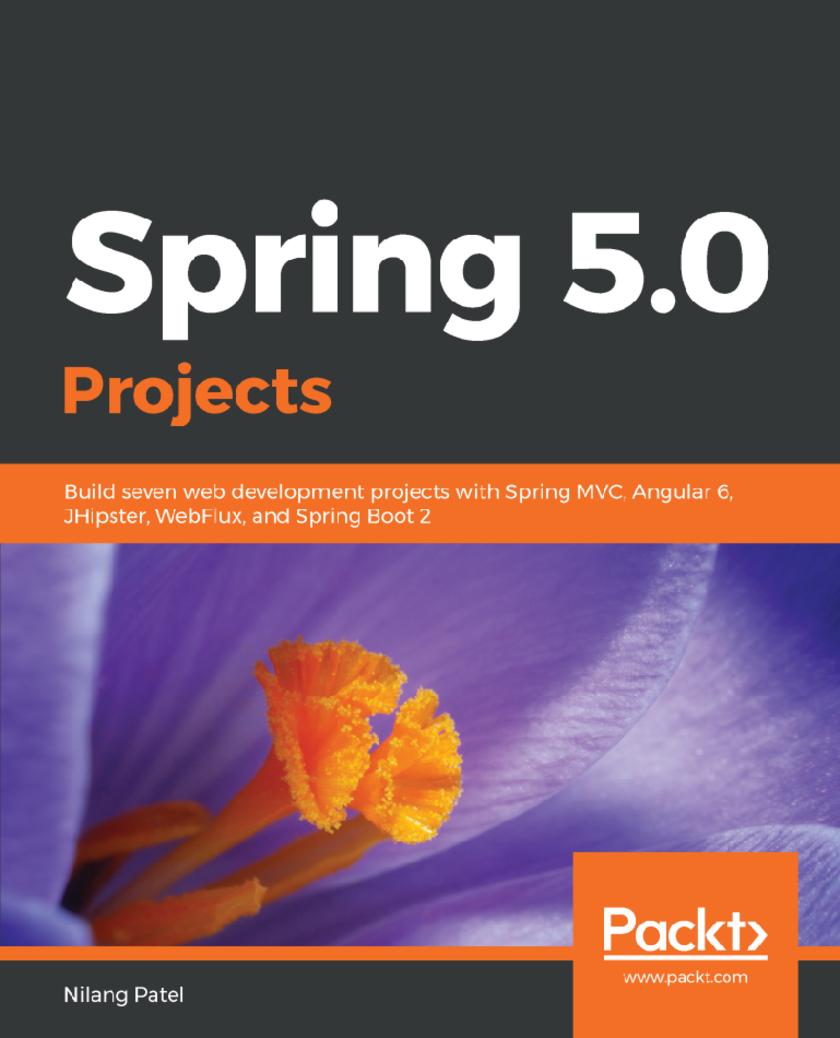
Spring 5.0 Projects
¥81.74
Discover the latest features of Spring framework by building robust, fast, and reactive web applications Key Features * Take advantage of all the features of Spring 5.0 with third party tools to build a robust back end * Secure Spring based web application using Spring Security framework with LDAP and OAuth protocol * Develop robust and scalable microservice based applications on Spring Cloud, using Spring Boot Book Description Spring makes it easy to create RESTful applications, merge with social services, communicate with modern databases, secure your system, and make your code modular and easy to test. With the arrival of Spring Boot, developers can really focus on the code and deliver great value, with minimal contour. This book will show you how to build various projects in Spring 5.0, using its features and third party tools. We'll start by creating a web application using Spring MVC, Spring Data, the World Bank API for some statistics on different countries, and MySQL database. Moving ahead, you'll build a RESTful web services application using Spring WebFlux framework. You'll be then taken through creating a Spring Boot-based simple blog management system, which uses Elasticsearch as the data store. Then, you'll use Spring Security with the LDAP libraries for authenticating users and create a central authentication and authorization server using OAuth 2 protocol. Further, you'll understand how to create Spring Boot-based monolithic application using JHipster. Toward the end, we'll create an online book store with microservice architecture using Spring Cloud and Net?ix OSS components, and a task management system using Spring and Kotlin. By the end of the book, you'll be able to create coherent and ?exible real-time web applications using Spring Framework. What you will learn * Build Spring based application using Bootstrap template and JQuery * Understand the Spring WebFlux framework and how it uses Reactor library * Interact with Elasticsearch for indexing, querying, and aggregating data * Create a simple monolithic application using JHipster * Use Spring Security and Spring Security LDAP and OAuth libraries for Authentication * Develop a microservice-based application with Spring Cloud and Netflix * Work on Spring Framework with Kotlin Who this book is for This book is for competent Spring developers who wish to understand how to develop complex yet flexible applications with Spring. You must have a good knowledge of Java programming and be familiar with the basics of Spring.
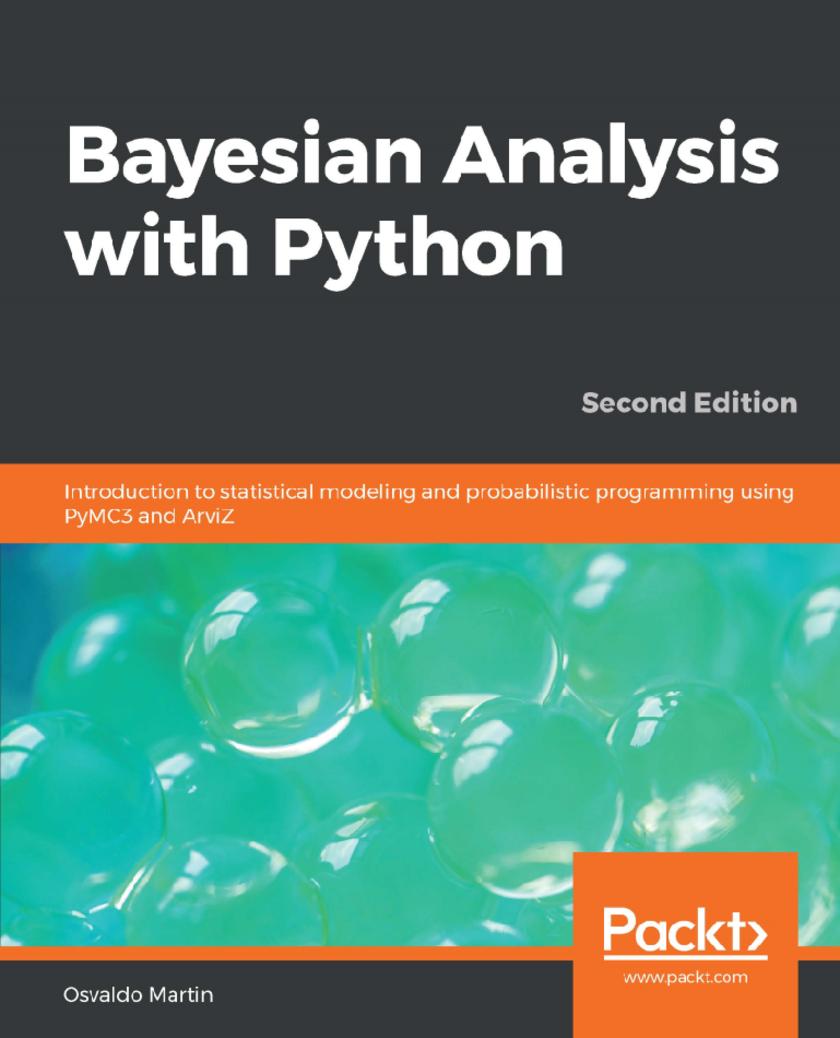
Bayesian Analysis with Python
¥81.74
Bayesian modeling with PyMC3 and exploratory analysis of Bayesian models with ArviZ Key Features *A step-by-step guide to conduct Bayesian data analyses using PyMC3 and ArviZ *A modern, practical and computational approach to Bayesian statistical modeling *A tutorial for Bayesian analysis and best practices with the help of sample problems and practice exercises. Book Description The second edition of Bayesian Analysis with Python is an introduction to the main concepts of applied Bayesian inference and its practical implementation in Python using PyMC3, a state-of-the-art probabilistic programming library, and ArviZ, a new library for exploratory analysis of Bayesian models. The main concepts of Bayesian statistics are covered using a practical and computational approach. Synthetic and real data sets are used to introduce several types of models, such as generalized linear models for regression and classification, mixture models, hierarchical models, and Gaussian processes, among others. By the end of the book, you will have a working knowledge of probabilistic modeling and you will be able to design and implement Bayesian models for your own data science problems. After reading the book you will be better prepared to delve into more advanced material or specialized statistical modeling if you need to. What you will learn *Build probabilistic models using the Python library PyMC3 *Analyze probabilistic models with the help of ArviZ *Acquire the skills required to sanity check models and modify them if necessary *Understand the advantages and caveats of hierarchical models *Find out how different models can be used to answer different data analysis questions *Compare models and choose between alternative ones *Discover how different models are unified from a probabilistic perspective *Think probabilistically and benefit from the flexibility of the Bayesian framework Who this book is for If you are a student, data scientist, researcher, or a developer looking to get started with Bayesian data analysis and probabilistic programming, this book is for you. The book is introductory so no previous statistical knowledge is required, although some experience in using Python and NumPy is expected.
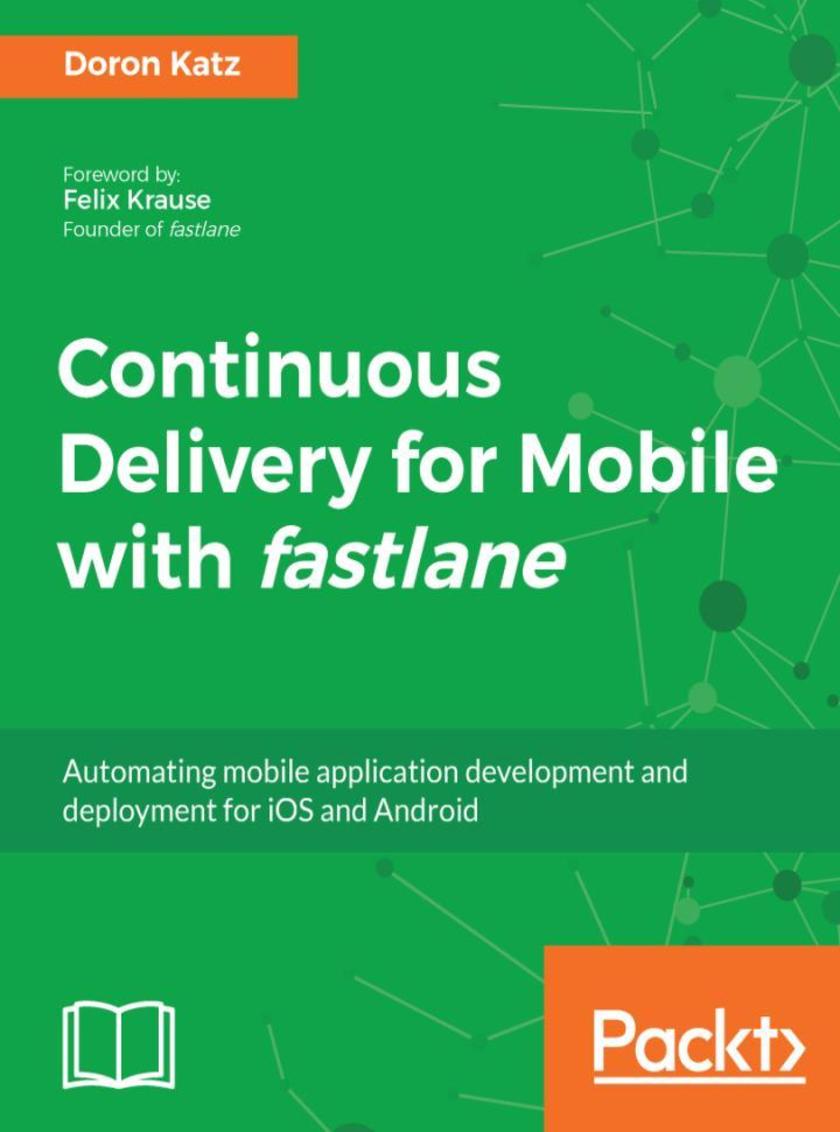
Continuous Delivery for Mobile with fastlane
¥81.74
Learn continuous deployment and automation with code-signing, continuous testing, building, deploying, and releasing of your app. About This Book ? A practical guide on automating your mobile development pipeline with Fastlane, Jenkins, and Slack. ? Build, test, run and deploy your mobile application release with this end to end guide. ? Implement Continuous Integration, delivery, and deployment practices to optimize your application development workflow for faster and efficient release builds. Who This Book Is For This book is intended for mobile developers who are keen on incorporating Continuous integration and deployment practices in their workflow. What You Will Learn ? Harness the fastlane tools for the Continuous Deployment strategy ? Integrate Continuous Deployment with existing Continuous Integration. ? Automate upload of screenshots across all device screen-sizes ? Manage push notifications, provisioning profiles, and code-signing certificates ? Orchestrate automated build and deployments of new versions of your app ? Regulate your TestFlight users and on-board new testers In Detail Competitive mobile apps depend strongly on the development team’s ability to deliver successful releases, consistently and often. Although continuous integration took a more mainstream priority among the development industry, companies are starting to realize the importance of continuity beyond integration and testing. This book starts off with a brief introduction to fastlane—a robust command-line tool that enables iOS and Android developers to automate their releasing workflow. The book then explores and guides you through all of its features and utilities; it provides the reader a comprehensive understanding of the tool and how to implement them. Themes include setting up and managing your certificates and provisioning and push notification profiles; automating the creation of apps and managing the app metadata on iTunes Connect and the Apple Developer Portal; and building, distributing and publishing your apps to the App Store. You will also learn how to automate the generation of localized screenshots and mesh your continuous delivery workflow into a continuous integration workflow for a more robust setup. By the end of the book, you will gain substantial knowledge on delivering bug free, developer-independent, and stable application release cycle. Style and approach A step by step guide taking the readers through all the tools of fastlane.
Microservice Patterns and Best Practices
¥81.74
Explore the concepts and tools you need to discover the world of microservices with various design patterns About This Book ? Get to grips with the microservice architecture and build enterprise-ready microservice applications ? Learn design patterns and the best practices while building a microservice application ? Obtain hands-on techniques and tools to create high-performing microservices resilient to possible fails Who This Book Is For This book is for architects and senior developers who would like implement microservice design patterns in their enterprise application development. The book assumes some prior programming knowledge. What You Will Learn ? How to break monolithic application into microservices ? Implement caching strategies, CQRS and event sourcing, and circuit breaker patterns ? Incorporate different microservice design patterns, such as shared data, aggregator, proxy, and chained ? Utilize consolidate testing patterns such as integration, signature, and monkey tests ? Secure microservices with JWT, API gateway, and single sign on ? Deploy microservices with continuous integration or delivery, Blue-Green deployment In Detail Microservices are a hot trend in the development world right now. Many enterprises have adopted this approach to achieve agility and the continuous delivery of applications to gain a competitive advantage. This book will take you through different design patterns at different stages of the microservice application development along with their best practices. Microservice Patterns and Best Practices starts with the learning of microservices key concepts and showing how to make the right choices while designing microservices. You will then move onto internal microservices application patterns, such as caching strategy, asynchronism, CQRS and event sourcing, circuit breaker, and bulkheads. As you progress, you'll learn the design patterns of microservices. The book will guide you on where to use the perfect design pattern at the application development stage and how to break monolithic application into microservices. You will also be taken through the best practices and patterns involved while testing, securing, and deploying your microservice application. At the end of the book, you will easily be able to create interoperable microservices, which are testable and prepared for optimum performance. Style and approach Comprehensive guide that uses architectural patterns with the best choices involved in application development
Delphi High Performance
¥81.74
Build fast, scalable, and high performing applications with Delphi About This Book ? Build efficient and concurrent applications in Delphi with focused examples ? Identify performance bottlenecks and apply the correct algorithm to increase the performance of applications. ? Delve into parallel programming and memory management to optimize your code Who This Book Is For This book is for Delphi developers who would like to build high performance applications with Delphi. Prior knowledge of Delphi is assumed. What You Will Learn ? Find performance bottlenecks and easily mitigate them ? Discover different approaches to fix algorithms ? Understand parallel programming and work with various tools included with Delphi ? Master the RTL for code optimization ? Explore memory managers and their implementation ? Leverage external libraries to write better performing programs In Detail Delphi is a cross-platform Integrated Development Environment (IDE) that supports rapid application development for Microsoft Windows, Apple Mac OS X, Google Android, iOS, and now Linux with RAD Studio 10.2. This book will be your guide to build efficient high performance applications with Delphi. The book begins by explaining how to find performance bottlenecks and apply the correct algorithm to fix them. It will teach you how to improve your algorithms before taking you through parallel programming. You’ll then explore various tools to build highly concurrent applications. After that, you’ll delve into improving the performance of your code and master cross-platform RTL improvements. Finally, we’ll go through memory management with Delphi and you’ll see how to leverage several external libraries to write better performing programs. By the end of the book, you’ll have the knowledge to create high performance applications with Delphi. Style and approach This book will take a step-by-step approach with focused examples to teach you how to increase the performance of applications.
Developing Middleware in Java EE 8
¥81.74
Use Java features such as JAX-RS, EJBs, and JPAs to build powerful middleware for newer architectures such as the cloud About This Book ? Explore EJBs to build middleware solutions for enterprise and distributed applications ? Understand middleware designs such as event-based and message-driven web services ? Learn to design and maintain large-scale systems and vendor disputes Who This Book Is For Enterprise architects, designers, developers, and programmers who are interested in learning how to build robust middleware solutions for enterprise software will find this book useful. Prior knowledge of Java EE is essential What You Will Learn ? Implement the latest Java EE 8 APIs and manage dependencies with CDI 2.0 ? Perform CRUD operations and access databases with JPA 2.1 ? Use bean validation API 2.0 to validate data ? Develop business logic with EJB 3.2 ? Incorporate the REST architecture and RESTful API design patterns ? Perform serialization and deserialization on JSON documents using JSON-B ? Utilize JMS for messaging and queuing models and securing applications ? Test applications using JUnit and Mockito and deploy them using Docker In Detail Middleware is the infrastructure in software based applications that enables businesses to solve problems, operate more efficiently, and make money. As the use of middleware extends beyond a single application, the importance of having it written by experts increases substantially. This book will help you become an expert in developing middleware for a variety of applications. The book starts off by exploring the latest Java EE 8 APIs with newer features and managing dependencies with CDI 2.0. You will learn to implement object-to-relational mapping using JPA 2.1 and validate data using bean validation. You will also work with different types of EJB to develop business logic, and with design RESTful APIs by utilizing different HTTP methods and activating JAX-RS features in enterprise applications. You will learn to secure your middleware with Java Security 1.0 and implement various authentication techniques, such as OAuth authentication. In the concluding chapters, you will use various test technologies, such as JUnit and Mockito, to test applications, and Docker to deploy your enterprise applications. By the end of the book, you will be proficient in developing robust, effective, and distributed middleware for your business. Style and approach Learn how to design and implement professional enterprise middleware solutions using the latest techniques and features provided by the Java EE 8 platform.
Managing Mission - Critical Domains and DNS
¥81.74
This book will give you an all encompassing view of the domain name ecosystem combined with a comprehensive set of operations strategies. About This Book ? Manage infrastructure, risk, and management of DNS name servers. Get hands-on with factors like types of name servers, DNS queries and and so on. ? Practical guide for system administrators to manage mission-critical servers ? Based on real-world experience - Written by an industry veteran who has made every possible mistake within this field. Who This Book Is For Ideal for sysadmins, webmasters, IT consultants, and developers-anyone responsible for maintaining your organization's core DNS What You Will Learn ? Anatomy of a domain - how a domain is the sum of both its DNS zone and its registration data, and why that matters. ? The domain name ecosystem - the role of registries, registrars and oversight bodies and their effect on your names. ? How DNS queries work - queries and responses are examined including debugging techniques to zero in on problems. ? Nameserver considerations - alternative nameserver daemons, numbering considerations, and deployment architectures. ? DNS use cases - the right way for basic operations such as domain transfers, large scale migrations, GeoDNS, Anycast DNS. ? Securing your domains - All aspects of security from registrar vendor selection, to DNSSEC and DDOS mitigation strategies. In Detail Managing your organization's naming architecture and mitigating risks within complex naming environments is very important. This book will go beyond looking at “how to run a name server” or “how to DNSSEC sign a domain”, Managing Mission Critical Domains & DNS looks across the entire spectrum of naming; from external factors that exert influence on your domains to all the internal factors to consider when operating your DNS. The readers are taken on a comprehensive guided tour through the world of naming: from understanding the role of registrars and how they interact with registries, to what exactly is it that ICANN does anyway? Once the prerequisite knowledge of the domain name ecosystem is acquired, the readers are taken through all aspects of DNS operations. Whether your organization operates its own nameservers or utilizes an outsourced vendor, or both, we examine the complex web of interlocking factors that must be taken into account but are too frequently overlooked. By the end of this book, our readers will have an end to end to understanding of all the aspects covered in DNS name servers. Style and approach The book is divided into two parts, the first part looks at the wider domain name ecosystem: registries, registrars and oversight policies. The second and larger part goes into operations. Every aspect of naming is considered from the viewpoint of how this affects ones domains, what are the ramifications of different operating methods as portfolios scale.
Python GUI Programming with Tkinter
¥81.74
Find out how to create visually stunning and feature-rich applications by empowering Python's built-in Tkinter GUI toolkit About This Book ? Explore Tkinter's powerful features to easily design and customize your GUI application ? Learn the basics of 2D and 3D animation in GUI applications. ? Learn to integrate stunning Data Visualizations using Tkinter Canvas and Matplotlib. Who This Book Is For This book will appeal to developers and programmers who would like to build GUI-based applications. Knowledge of Python is a prerequisite. What You Will Learn ? Implement the tools provided by Tkinter to design beautiful GUIs ? Discover cross-platform development through minor customizations in your existing application ? Visualize graphs in real time as data comes in using Tkinter's animation capabilities ? Use PostgreSQL authentication to ensure data security for your application ? Write unit tests to avoid regressions when updating code In Detail Tkinter is a lightweight, portable, and easy-to-use graphical toolkit available in the Python Standard Library, widely used to build Python GUIs due to its simplicity and availability. This book teaches you to design and build graphical user interfaces that are functional, appealing, and user-friendly using the powerful combination of Python and Tkinter. After being introduced to Tkinter, you will be guided step-by-step through the application development process. Over the course of the book, your application will evolve from a simple data-entry form to a complex data management and visualization tool while maintaining a clean and robust design. In addition to building the GUI, you'll learn how to connect to external databases and network resources, test your code to avoid errors, and maximize performance using asynchronous programming. You'll make the most of Tkinter's cross-platform availability by learning how to maintain compatibility, mimic platform-native look and feel, and build executables for deployment across popular computing platforms. By the end of this book, you will have the skills and confidence to design and build powerful high-end GUI applications to solve real-world problems. Style and approach This is a comprehensive guide that explores the essential Tkinter features and modules and implements them in building real-world cross-platform GUI applications
Building Applications with Spring 5 and Kotlin
¥81.74
Learn to build a full-fledged application in Spring and Kotlin taking a reactive, microservice-based approach for scalability and robustness in the cloud About This Book ? Build a full-fledged application in Spring and Kotlin ? Architect your application to take a microservice-based approach in the cloud ? Integrate your application with a variety of Spring components Who This Book Is For Developers comfortable using Spring who have basic knowledge of Kotlin and want to take their development skills to the next level and build enterprise-grade applications will benefit from this book. What You Will Learn ? Explore Spring 5 concepts with Kotlin ? Learn both dependency injections and complex configurations ? Utilize Spring Data, Spring Cloud, and Spring Security in your applications ? Create efficient reactive systems with Project Reactor ? Write unit tests for your Spring/Kotlin applications ? Deploy applications on cloud platforms like AWS In Detail Kotlin is being used widely by developers because of its light weight, built-in null safety, and functional and reactive programming aspects. Kotlin shares the same pragmatic, innovative and opinionated mindset as Spring, so they work well together. Spring when combined with Kotlin helps you to reach a new level of productivity. This combination has helped developers to create Functional Applications using both the tools together. This book will teach you how to take advantage of these developments and build robust, scalable and reactive applications with ease. In this book, you will begin with an introduction to Spring and its setup with Kotlin. You will then dive into assessing the design considerations of your application. Then you will learn to use Spring (with Spring Boot) along with Kotlin to build a robust backend in a microservice architecture with a REST based collaboration, and leverage Project Reactor in your application. You’ll then learn how to integrate Spring Data and Spring Cloud to manage configurations for database interaction and cloud deployment. You’ll also learn to use Spring Security to beef up security of your application before testing it with the JUnit framework and then deploying it on a cloud platform like AWS. Style and approach Everything you learn will be demonstrated on real-world Spring project. In each chapter we will cover some of Spring features and apply it on our project. We will guide you from the project initialization till the project deployment.
Hands-On Design Patterns with Kotlin
¥81.74
Make the most of Kotlin by leveraging design patterns and best practices to build scalable and high performing apps About This Book ? Understand traditional GOF design patterns to apply generic solutions ? Shift from OOP to FP; covering reactive and concurrent patterns in a step-by-step manner ? Choose the best microservices architecture and MVC for your development environment Who This Book Is For This book is for developers who would like to master design patterns with Kotlin to build efficient and scalable applications. Basic Java or Kotlin programming knowledge is assumed What You Will Learn ? Get to grips with Kotlin principles, including its strengths and weaknesses ? Understand classical design patterns in Kotlin ? Explore functional programming using built-in features of Kotlin ? Solve real-world problems using reactive and concurrent design patterns ? Use threads and coroutines to simplify concurrent code flow ? Understand antipatterns to write clean Kotlin code, avoiding common pitfalls ? Learn about the design considerations necessary while choosing between architectures In Detail Design patterns enable you as a developer to speed up the development process by providing you with proven development paradigms. Reusing design patterns helps prevent complex issues that can cause major problems, improves your code base, promotes code reuse, and makes an architecture more robust. The mission of this book is to ease the adoption of design patterns in Kotlin and provide good practices for programmers. The book begins by showing you the practical aspects of smarter coding in Kotlin, explaining the basic Kotlin syntax and the impact of design patterns. From there, the book provides an in-depth explanation of the classical design patterns of creational, structural, and behavioral families, before heading into functional programming. It then takes you through reactive and concurrent patterns, teaching you about using streams, threads, and coroutines to write better code along the way By the end of the book, you will be able to efficiently address common problems faced while developing applications and be comfortable working on scalable and maintainable projects of any size. Style and approach This book explains design patterns in a step-by-step manner with clear and concise code examples
AWS Administration - The Definitive Guide - Second Edition
¥81.74
Leverage this step-by-step guide to build a highly secure, fault-tolerant, and scalable Cloud environment About This Book ? Learn how to leverage various Amazon Web Services (AWS) components and services to build a secure, reliable, and robust environment to host your applications on. ? Delve into core AWS service offerings with hands-on tutorials, real-world use case scenarios, and best practices. ? A self-paced, systematic, and step-by-step guide to learning and implementing AWS in your own environment. Who This Book Is For This book is for those who want to learn and leverage the rich plethora of services provided by AWS. Although no prior experience with AWS is required, it is recommended that you have some hands-on experience of Linux, Web Services, and basic networking. What You Will Learn ? Take an in-depth look at what's new with AWS, along with how to effectively manage and automate your EC2 infrastructure with AWS Systems Manager ? Deploy and scale your applications with ease using AWS Elastic Beanstalk and Amazon Elastic File System ? Secure and govern your environments using AWS CloudTrail, AWS Config, and AWS Shield ? Learn the DevOps way using a combination of AWS CodeCommit, AWS CodeDeploy, and AWS CodePipeline ? Run big data analytics and workloads using Amazon EMR and Amazon Redshift ? Learn to back up and safeguard your data using AWS Data Pipeline ? Get started with the Internet of Things using AWS IoT and AWS Greengrass In Detail Many businesses are moving from traditional data centers to AWS because of its reliability, vast service offerings, lower costs, and high rate of innovation. AWS can be used to accomplish a variety of both simple and tedious tasks. Whether you are a seasoned system admin or a rookie, this book will help you to learn all the skills you need to work with the AWS cloud. This book guides you through some of the most popular AWS services, such as EC2, Elastic Beanstalk, EFS, CloudTrail, Redshift, EMR, Data Pipeline, and IoT using a simple, real-world, application-hosting example. This book will also enhance your application delivery skills with the latest AWS services, such as CodeCommit, CodeDeploy, and CodePipeline, to provide continuous delivery and deployment, while also securing and monitoring your environment's workflow. Each chapter is designed to provide you with maximal information about each AWS service, coupled with easy to follow, hands-on steps, best practices, tips, and recommendations. By the end of the book, you will be able to create a highly secure, fault-tolerant, and scalable environment for your applications to run on. Style and approach This in-depth and insightful guide is filled with easy-to-follow examples, real-world use cases, best practices, and recommendations that will help you design and leverage some of the most commonly used AWS services.
Hands-on Machine Learning with JavaScript
¥81.74
A definitive guide to creating an intelligent web application with the best of machine learning and JavaScript About This Book ? Solve complex computational problems in browser with JavaScript ? Teach your browser how to learn from rules using the power of machine learning ? Understand discoveries on web interface and API in machine learning Who This Book Is For This book is for you if you are a JavaScript developer who wants to implement machine learning to make applications smarter, gain insightful information from the data, and enter the field of machine learning without switching to another language. Working knowledge of JavaScript language is expected to get the most out of the book. What You Will Learn ? Get an overview of state-of-the-art machine learning ? Understand the pre-processing of data handling, cleaning, and preparation ? Learn Mining and Pattern Extraction with JavaScript ? Build your own model for classification, clustering, and prediction ? Identify the most appropriate model for each type of problem ? Apply machine learning techniques to real-world applications ? Learn how JavaScript can be a powerful language for machine learning In Detail In over 20 years of existence, JavaScript has been pushing beyond the boundaries of web evolution with proven existence on servers, embedded devices, Smart TVs, IoT, Smart Cars, and more. Today, with the added advantage of machine learning research and support for JS libraries, JavaScript makes your browsers smarter than ever with the ability to learn patterns and reproduce them to become a part of innovative products and applications. Hands-on Machine Learning with JavaScript presents various avenues of machine learning in a practical and objective way, and helps implement them using the JavaScript language. Predicting behaviors, analyzing feelings, grouping data, and building neural models are some of the skills you will build from this book. You will learn how to train your machine learning models and work with different kinds of data. During this journey, you will come across use cases such as face detection, spam filtering, recommendation systems, character recognition, and more. Moreover, you will learn how to work with deep neural networks and guide your applications to gain insights from data. By the end of this book, you'll have gained hands-on knowledge on evaluating and implementing the right model, along with choosing from different JS libraries, such as NaturalNode, brain, harthur, classifier, and many more to design smarter applications. Style and approach This is a practical tutorial that uses hands-on examples to step through some real-world applications of machine learning. Without shying away from the technical details, you will explore machine learning with JavaScript using clear and practical examples.
Python Robotics Projects
¥81.74
Leverage the power of Python to build DIY robotic projects About This Book ? Design, build, and stimulate collaborative robots ? Build high-end robotics projects such as a customized personal Jarvis ? Leverage the power of Python and ROS for DIY robotic projects Who This Book Is For If building robots is your dream, then this book is made for you. Prior knowledge of Python would be an added advantage. What You Will Learn ? Get to know the basics of robotics and its functions ? Walk through interface components with microcontrollers ? Integrate robotics with the IoT environment ? Build projects using machine learning ? Implement path planning and vision processing ? Interface your robots with Bluetooth In Detail Robotics is a fast-growing industry. Multiple surveys state that investment in the field has increased tenfold in the last 6 years, and is set to become a $100-billion sector by 2020. Robots are prevalent throughout all industries, and they are all set to be a part of our domestic lives. This book starts with the installation and basic steps in configuring a robotic controller. You'll then move on to setting up your environment to use Python with the robotic controller. You'll dive deep into building simple robotic projects, such as a pet-feeding robot, and more complicated projects, such as machine learning enabled home automation system (Jarvis), vision processing based robots and a self-driven robotic vehicle using Python. By the end of this book, you'll know how to build smart robots using Python. Style and approach A simple step-by-step guide to help you learn the concepts of robotics using simple to advanced steps. You’ll not only learn the concepts of AI, machine learning, and Vision Processing, but also how to practically implement them in your projects.
C# 7 and .NET Core 2.0 High Performance
¥81.74
Improve the speed of your code and optimize the performance of your apps About This Book ? Understand the common performance pitfalls and improve your application’s performance ? Get to grips with multi-threaded and asynchronous programming in C# ? Develop highly performant applications on .NET Core using microservice architecture Who This Book Is For This book is for .NET developers looking at improving the speed of their code or simply wanting to take their skills to the next level. Basic C# knowledge is assumed. What You Will Learn ? Measure application performance using BenchmarkDotNet ? Explore the techniques to write multithreaded applications ? Leverage TPL and PLinq libraries to perform asynchronous operations ? Get familiar with data structures to write optimized code ? Understand design techniques to increase your application’s performance ? Learn about memory management techniques in .NET Core ? Develop a containerized application based on microservices architecture ? Learn tools and techniques to monitor application performance In Detail While writing an application, performance is paramount. Performance tuning for realworld applications often involves activities geared toward fnding bottlenecks; however, this cannot solve the dreaded problem of slower code. If you want to improve the speed of your code and optimize an application's performance, then this book is for you. C# 7 and .NET Core 2.0 High Performance begins with an introduction to the new features of what?explaining how they help in improving an application's performance. Learn to identify the bottlenecks in writing programs and highlight common performance pitfalls, and learn strategies to detect and resolve these issues early. You will explore multithreading and asynchronous programming with .NET Core and learn the importance and effcient use of data structures. This is followed with memory management techniques and design guidelines to increase an application’s performance. Gradually, the book will show you the importance of microservices architecture for building highly performant applications and implementing resiliency and security in .NET Core. After reading this book, you will learn how to structure and build scalable, optimized, and robust applications in C#7 and .NET. Style and approach This book will be a step by step easy to follow guide with focused examples to increase performance of applications and provide optimization techniques.
Architecting Microsoft Azure Solutions – Exam Guide 70-535
¥81.74
Get certified as an Azure architect by acing the 70-535 Architecting Microsoft Solutions (70-535) exam using this comprehensive guide with full coverage of the exam objectives About This Book ? Learn to successfully design and architect powerful solutions on the Azure Cloud platform ? Enhance your skills with mock tests and practice questions ? A detailed certification guide that will help you ace the 70-535 exam with confidence Who This Book Is For This book is for architects and experienced developers, who are gearing up for the 70-535 exam. Technical architects interested in learning more about designing Cloud solutions will also find this book useful. What You Will Learn ? Use Azure Virtual Machines to design effective VM deployments ? Implement architecture styles, like serverless computing and microservices ? Secure your data using different security features and design effective security strategies ? Design Azure storage solutions using various storage features ? Create identity management solutions for your applications and resources ? Architect state-of-the-art solutions using Artificial Intelligence, IoT, and Azure Media Services ? Use different automation solutions that are incorporated in the Azure platform In Detail Architecting Microsoft Azure Solutions: Exam Guide 70-535 will get Azure architects and developers up-to-date with the latest updates on Azure from an architecture and design perspective. The book includes all the topics that are still relevant from the previous 70-534 exam, and is updated with latest topics covered, including Artificial Intelligence, IoT, and architecture styles. This exam guide is divided into six parts, where the first part will give you a good understanding of how to design a compute infrastructure. It also dives into designing networking and data implementations. You will learn about designing solutions for Platform Service and operations. Next, you will be able to secure your resources and data, as well as design a mechanism for governance and policies. You will also understand the objective of designing solutions for Platform Services, by covering Artificial Intelligence, IoT, media services, and messaging solution concepts. Finally, you will cover the designing for operations objective. This objective covers application and platform monitoring, as well as designing alerting strategies and operations automation strategies. By the end of the book, you'll have met all of the exam objectives, and will have all the information you need to ace the 70-535 exam. You will also have become an expert in designing solutions on Microsoft Azure. Style and approach This book offers clear and crisp explanations of the exam objectives that will help you with all the information needed to pass the 70-535 exam. The detail oriented approach will make you an expert on designing solutions on Microsoft Azure.
PostgreSQL 10 High Performance
¥81.74
Leverage the power of PostgreSQL 10 to design, administer and maintain a high-performance database solution About This Book ? Obtain optimal PostgreSQL 10 database performance, ranging from initial design to routine maintenance ? Fine tune the performance of your queries and avoid the common pitfalls that can slow your system down ? Contains tips and tricks on scaling successful database installations, and ensuring a highly available PostgreSQL solution Who This Book Is For This book is designed for database administrators and PostgreSQL architects who already use or plan to exploit the features of PostgreSQL 10 to design and maintain a high-performance PostgreSQL database. A working knowledge of SQL, and some experience with PostgreSQL will be helpful in getting the most out of this book. What You Will Learn ? Learn best practices for scaling PostgreSQL 10 installations ? Discover the best hardware for developing high-performance PostgreSQL applications ? Benchmark your whole system – from hardware to application ? Learn by real examples how server parameters impact performance ? Discover PostgreSQL 10 features for partitioning and parallel query ? Monitor your server, both inside and outside the database ? Design and implement a good replication system on PostgreSQL 10 In Detail PostgreSQL database servers have a common set of problems that they encounter as their usage gets heavier and requirements get more demanding. Peek into the future of your PostgreSQL 10 database's problems today. Know the warning signs to look for and how to avoid the most common issues before they even happen. Surprisingly, most PostgreSQL database applications evolve in the same way—choose the right hardware, tune the operating system and server memory use, optimize queries against the database and CPUs with the right indexes, and monitor every layer, from hardware to queries, using tools from inside and outside PostgreSQL. Also, using monitoring insight, PostgreSQL database applications continuously rework the design and configuration. On reaching the limits of a single server, they break things up; connection pooling, caching, partitioning, replication, and parallel queries can all help handle increasing database workloads. By the end of this book, you will have all the knowledge you need to design, run, and manage your PostgreSQL solution while ensuring high performance and high availability Style and approach This book has been organized in such a manner that will help you understand basic PostgreSQL 10 performance tuning to an advanced-level configuration.
Artificial Intelligence for Big Data
¥81.74
Build next-generation Artificial Intelligence systems with Java About This Book ? Implement AI techniques to build smart applications using Deeplearning4j ? Perform big data analytics to derive quality insights using Spark MLlib ? Create self-learning systems using neural networks, NLP, and reinforcement learning Who This Book Is For This book is for you if you are a data scientist, big data professional, or novice who has basic knowledge of big data and wish to get proficiency in Artificial Intelligence techniques for big data. Some competence in mathematics is an added advantage in the field of elementary linear algebra and calculus. What You Will Learn ? Manage Artificial Intelligence techniques for big data with Java ? Build smart systems to analyze data for enhanced customer experience ? Learn to use Artificial Intelligence frameworks for big data ? Understand complex problems with algorithms and Neuro-Fuzzy systems ? Design stratagems to leverage data using Machine Learning process ? Apply Deep Learning techniques to prepare data for modeling ? Construct models that learn from data using open source tools ? Analyze big data problems using scalable Machine Learning algorithms In Detail In this age of big data, companies have larger amount of consumer data than ever before, far more than what the current technologies can ever hope to keep up with. However, Artificial Intelligence closes the gap by moving past human limitations in order to analyze data. With the help of Artificial Intelligence for big data, you will learn to use Machine Learning algorithms such as k-means, SVM, RBF, and regression to perform advanced data analysis. You will understand the current status of Machine and Deep Learning techniques to work on Genetic and Neuro-Fuzzy algorithms. In addition, you will explore how to develop Artificial Intelligence algorithms to learn from data, why they are necessary, and how they can help solve real-world problems. By the end of this book, you'll have learned how to implement various Artificial Intelligence algorithms for your big data systems and integrate them into your product offerings such as reinforcement learning, natural language processing, image recognition, genetic algorithms, and fuzzy logic systems. Style and approach An easy-to-follow, step-by-step guide to help you get to grips with real-world applications of Artificial Intelligence for big data using Java
C++ Reactive Programming
¥81.74
Learn how to implement the reactive programming paradigm with C++ and build asynchronous and concurrent applications About This Book ? Efficiently exploit concurrency and parallelism in your programs ? Use the Functional Reactive programming model to structure programs ? Understand reactive GUI programming to make your own applications using Qt Who This Book Is For If you’re a C++ developer interested in using reactive programming to build asynchronous and concurrent applications, you’ll find this book extremely useful. This book doesn’t assume any previous knowledge of reactive programming. What You Will Learn ? Understand language-level concurrency in C++ ? Explore advanced C++ programming for the FRP ? Uncover the RxCpp library and its programming model ? Mix the FP and OOP constructs in C++ 17 to write well-structured programs ? Master reactive microservices in C++ ? Create custom operators for RxCpp ? Learn advanced stream processing and error handling In Detail Reactive programming is an effective way to build highly responsive applications with an easy-to-maintain code base. This book covers the essential functional reactive concepts that will help you build highly concurrent, event-driven, and asynchronous applications in a simpler and less error-prone way. C++ Reactive Programming begins with a discussion on how event processing was undertaken by different programming systems earlier. After a brisk introduction to modern C++ (C++17), you’ll be taken through language-level concurrency and the lock-free programming model to set the stage for our foray into the Functional Programming model. Following this, you’ll be introduced to RxCpp and its programming model. You’ll be able to gain deep insights into the RxCpp library, which facilitates reactive programming. You’ll learn how to deal with reactive programming using Qt/C++ (for the desktop) and C++ microservices for the Web. By the end of the book, you will be well versed with advanced reactive programming concepts in modern C++ (C++17). Style and approach The book includes real-world problems that you will solve with the reactive programming model. It highlights the way event processing has evolved in the programming world.
Hands-On Microservices with C#
¥81.74
Build enterprise-grade microservice ecosystems with intensive case studies using C# About This Book ? Learn to build message-based microservices ? Packed with case studies to explain the intricacies of large-scale microservices ? Build scalable, modular, and robust architectures with C# Who This Book Is For C# developers, software architects, and professionals who want to master the art of designing the microservice architecture that is scalable based on environment. Developers should have a basic understanding of.NET application development using C# and Visual Studio What You Will Learn ? Explore different open source tools within the context of designing microservices ? Learn to provide insulation to exception-prone function calls ? Build common messages used between microservices for communication ? Learn to create a microservice using our base class and interface ? Design a quantitative financial machine microservice ? Learn to design a microservice that is capable of using Blockchain technology In Detail C# is a powerful language when it comes to building applications and software architecture using rich libraries and tools such as .NET. This book will harness the strength of C# in developing microservices architectures and applications. This book shows developers how to develop an enterprise-grade, event-driven, asynchronous, message-based microservice framework using C#, .NET, and various open source tools. We will discuss how to send and receive messages, how to design many types of microservice that are truly usable in a corporate environment. We will also dissect each case and explain the code, best practices, pros and cons, and more. Through our journey, we will use many open source tools, and create file monitors, a machine learning microservice, a quantitative financial microservice that can handle bonds and credit default swaps, a deployment microservice to show you how to better manage your deployments, and memory, health status, and other microservices. By the end of this book, you will have a complete microservice ecosystem you can place into production or customize in no time. Style and approach A step-by-step guide that enables readers to create a complete microservice ecosystem they can place into production or customize in no time.
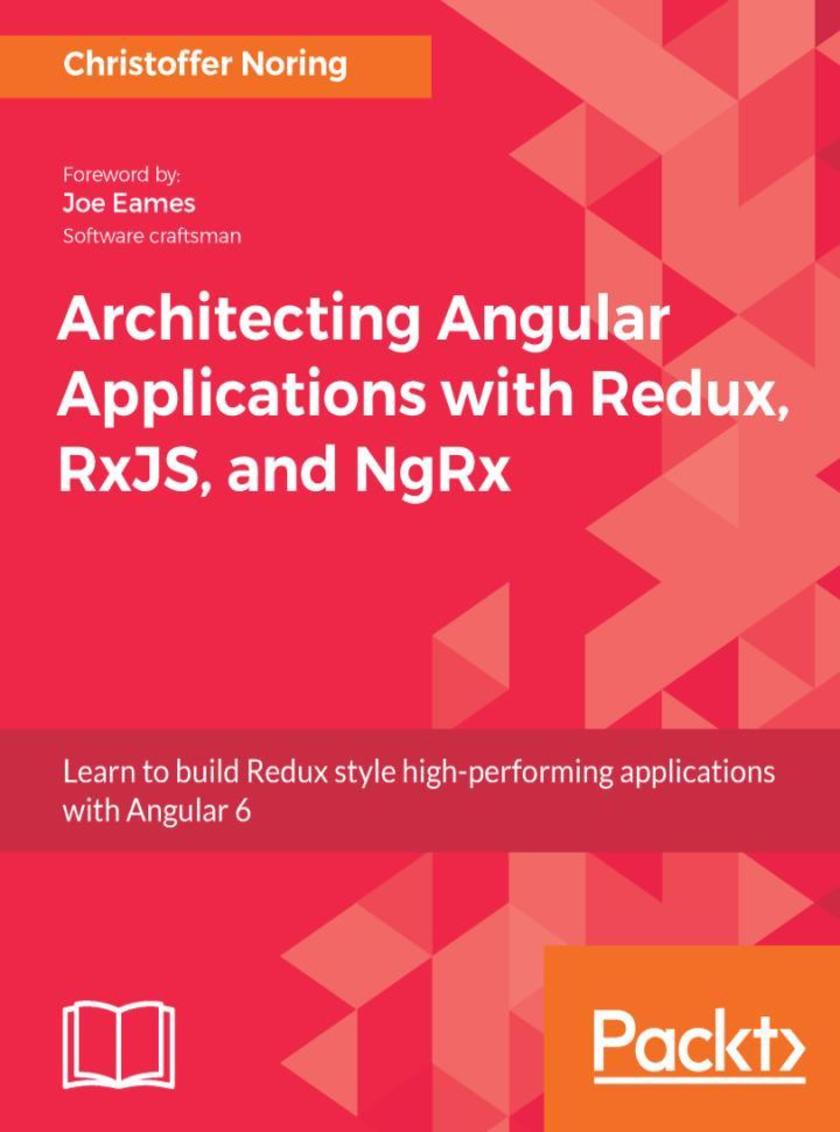
Architecting Angular Applications with Redux, RxJS, and NgRx
¥81.74
Manage state in Angular to write high performing web apps by combining the power of Flux, RxJS, and NgRx About This Book ? Learn what makes an excellent Angular application architecture ? Use Redux to write performant, consistent Angular applications ? Incorporate Reactive Programming principles and RxJS to make it easier to develop, test, and debug your Angular applications Who This Book Is For If you have been developing Angular applications and want to dive deeper into the Angular architecture with Redux, RxJS, and NgRx to write robust web apps, then this book is for you. What You Will Learn ? Understand the one-way data flow and Flux pattern ? Work with functional programming and asynchronous data streams ? Figure out how RxJS can help us address the flaws in promises ? Set up different versions of cascading calls ? Explore advanced operators ? Get familiar with the Redux pattern and its principles ? Test and debug different features of your application ? Build your own lightweight app using Flux, Redux, and NgRx In Detail Managing the state of large-scale web applications is a highly challenging task with the need to align different components, backends, and web workers harmoniously. When it comes to Angular, you can use NgRx, which combines the simplicity of Redux with the reactive programming power of RxJS to build your application architecture, making your code elegant and easy to reason about, debug, and test. In this book, we start by looking at the different ways of architecting Angular applications and some of the patterns that are involved in it. This will be followed by a discussion on one-way data flow, the Flux pattern, and the origin of Redux. The book introduces you to declarative programming or, more precisely, functional programming and talks about its advantages. We then move on to the reactive programming paradigm. Reactive programming is a concept heavily used in Angular and is at the core of NgRx. Later, we look at RxJS, as a library and master it. We thoroughly describe how Redux works and how to implement it from scratch. The two last chapters of the book cover everything NgRx has to offer in terms of core functionality and supporting libraries, including how to build a micro implementation of NgRx. This book will empower you to not only use Redux and NgRx to the fullest, but also feel confident in building your own version, should you need it. Style and approach This book covers everything there is to know to get well-acquainted with Angular without bogging you down. Everything is neatly laid out under clear headings for quick consultation, giving you the information required to understand a concept immediately.


