


 购物车
购物车 个人中心
个人中心
Azure Serverless Computing Cookbook
¥80.65
Over 50 recipes to help you build applications hosted on Serverless architecture using Azure Functions. About This Book ? Enhance Azure Functions with continuous deployment using Visual Studio Team Services ? Learn to deploy and manage cost-effective and highly available serverless applications using Azure Functions ? This recipe-based guide will teach you to build a robust serverless environment Who This Book Is For If you are a Cloud administrator, architect, or developer who wants to build scalable systems and deploy serverless applications with Azure functions, then this book is for you. Prior knowledge and hands-on experience with core services of Microsoft Azure is required. What You Will Learn ? Develop different event-based handlers supported by serverless architecture supported by Microsoft Cloud Platform – Azure ? Integrate Azure Functions with different Azure Services to develop Enterprise-level applications ? Get to know the best practices in organizing and refactoring the code within the Azure functions ? Test, troubleshoot, and monitor the Azure functions to deliver high-quality, reliable, and robust cloud-centric applications ? Automate mundane tasks at various levels right from development to deployment and maintenance ? Learn how to develop statefulserverless applications and also self-healing jobs using DurableFunctions In Detail Microsoft provides a solution to easily run small segment of code in the Cloud with Azure Functions. Azure Functions provides solutions for processing data, integrating systems, and building simple APIs and microservices. The book starts with intermediate-level recipes on serverless computing along with some use cases on benefits and key features of Azure Functions. Then, we’ll deep dive into the core aspects of Azure Functions such as the services it provides, how you can develop and write Azure functions, and how to monitor and troubleshoot them. Moving on, you’ll get practical recipes on integrating DevOps with Azure functions, and providing continuous integration and continous deployment with Visual Studio Team Services. It also provides hands-on steps and tutorials based on real-world serverless use cases, to guide you through configuring and setting up your serverless environments with ease. Finally, you’ll see how to manage Azure functions, providing enterprise-level security and compliance to your serverless code architecture. By the end of this book, you will have all the skills required to work with serverless code architecture, providing continuous delivery to your users. Style and approach This recipe-based guide explains the different features of Azure Function by taking a real-world application related to a specific domain. You will learn how to implement automation and DevOps and discover industry best practices to develop applications hosted on serverless architecture using Azure functions.
Mastering PostCSS for Web Design
¥80.65
Explore the power of PostCSS to write highly performing, modular, and modern CSS code for your web pages About This Book Incorporate cutting-edge styles in your web pages with PostCSS Simplify the process of writing CSS to a great extent using PostCSS shortcuts, fallbacks, and pack plugins This in-depth, step-by-step guide will help you master PostCSS, to create amazing and responsive web designs Who This Book Is For This book is ideal for web developers and designers who are comfortable with HTML5 and CSS and now want to master PostCSS for web design. Web designers who have been using SASS or Less and now want to adopt PostCSS would also find this book useful. What You Will Learn Add mixin and variable support to PostCSS along with conditional support Explore the different ways of nesting code such as BEM and standard nesting within PostCSS Optimize media queries built with PostCSS to get the best performance Add dynamic styling elements such as images, fonts, grids, and SVG and retina support using existing preprocessors as well as PostCSS Get familiar with using plugins, and extend PostCSS with the API Build a fully working custom preprocessor and test it on different sites such as WordPress Write a custom syntax in PostCSS while still using pre-built syntaxes such as Less, SASS, or Stylus Provide support for future CSS such as CSS4 using current CSS3 classes In Detail PostCSS is a tool that has quickly emerged as the future of existing preprocessors such as SASS and Less, mainly because of its power, speed, and ease of use. This comprehensive guide offers in-depth guidance on incorporating cutting-edge styles into your web page and at the same time maintaining the performance and maintainability of your code. The book will show how you can take advantage of PostCSS to simplify the entire process of stylesheet authoring. It covers various techniques to add dynamic and modern styling features to your web pages. As the book progresses, you will learn how to make CSS code more maintainable by taking advantage of the modular architecture of PostCSS. By the end of this book, you would have mastered the art of adding modern CSS effects to web pages by authoring high performing, maintainable stylesheets. Style and approach This comprehensive book provides in-depth guidance on how to build a PostCSS powered responsive site from scratch. Following a step-by-step approach, you will learn how to add modern styles to web pages. It also contains several tips and best practices on how you can optimize your sites by writing high performing code in PostCSS.
Advanced Machine Learning with Python
¥80.65
Solve challenging data science problems by mastering cutting-edge machine learning techniques in Python About This Book Resolve complex machine learning problems and explore deep learning Learn to use Python code for implementing a range of machine learning algorithms and techniques A practical tutorial that tackles real-world computing problems through a rigorous and effective approach Who This Book Is For This title is for Python developers and analysts or data scientists who are looking to add to their existing skills by accessing some of the most powerful recent trends in data science. If you’ve ever considered building your own image or text-tagging solution, or of entering a Kaggle contest for instance, this book is for you! Prior experience of Python and grounding in some of the core concepts of machine learning would be helpful. What You Will Learn Compete with top data scientists by gaining a practical and theoretical understanding of cutting-edge deep learning algorithms Apply your new found skills to solve real problems, through clearly-explained code for every technique and test Automate large sets of complex data and overcome time-consuming practical challenges Improve the accuracy of models and your existing input data using powerful feature engineering techniques Use multiple learning techniques together to improve the consistency of results Understand the hidden structure of datasets using a range of unsupervised techniques Gain insight into how the experts solve challenging data problems with an effective, iterative, and validation-focused approach Improve the effectiveness of your deep learning models further by using powerful ensembling techniques to strap multiple models together In Detail Designed to take you on a guided tour of the most relevant and powerful machine learning techniques in use today by top data scientists, this book is just what you need to push your Python algorithms to maximum potential. Clear examples and detailed code samples demonstrate deep learning techniques, semi-supervised learning, and more - all whilst working with real-world applications that include image, music, text, and financial data. The machine learning techniques covered in this book are at the forefront of commercial practice. They are applicable now for the first time in contexts such as image recognition, NLP and web search, computational creativity, and commercial/financial data modeling. Deep Learning algorithms and ensembles of models are in use by data scientists at top tech and digital companies, but the skills needed to apply them successfully, while in high demand, are still scarce. This book is designed to take the reader on a guided tour of the most relevant and powerful machine learning techniques. Clear de*ions of how techniques work and detailed code examples demonstrate deep learning techniques, semi-supervised learning and more, in real world applications. We will also learn about NumPy and Theano. By this end of this book, you will learn a set of advanced Machine Learning techniques and acquire a broad set of powerful skills in the area of feature selection & feature engineering. Style and approach This book focuses on clarifying the theory and code behind complex algorithms to make them practical, useable, and well-understood. Each topic is described with real-world applications, providing both broad contextual coverage and detailed guidance.
The Android Game Developer's Handbook
¥80.65
Discover an all in one handbook to developing immersive and cross-platform Android games About This Book Practical tips and tricks to develop powerful Android games Learn to successfully implement microtransactions and monitor the performance of your game once it’s out live. Integrate Google’s DIY VR tool and Google Cardboard into your games to join in on the VR revolution Who This Book Is For This book is ideal for any game developer, with prior knowledge of developing games in Android. A good understanding of game development and a basic knowledge on Android platform application development and JAVA/C++ will be appreciated. What You Will Learn Learn the prospects of Android in Game Development Understand the Android architecture and explore platform limitation and variations Explore the various approaches for Game Development using Android Learn about the common mistakes and possible solutions on Android Game Development Discover the top Cross Platform Game Engines and port games on different android platform Optimize memory and performance of your game. Familiarize yourself with different ways to earn money from Android Games In Detail Gaming in android is an already established market and growing each day. Previously games were made for specific platforms, but this is the time of cross platform gaming with social connectivity. It requires vision of polishing, design and must follow user behavior. This book would help developers to predict and create scopes of improvement according to user behavior. You will begin with the guidelines and rules of game development on the Android platform followed by a brief de*ion about the current variants of Android devices available. Next you will walk through the various tools available to develop any Android games and learn how to choose the most appropriate tools for a specific purpose. You will then learn JAVA game coding standard and style upon the Android SDK. Later, you would focus on creation, maintenance of Game Loop using Android SDK, common mistakes in game development and the solutions to avoid them to improve performance. We will deep dive into Shaders and learn how to optimize memory and performance for an Android Game before moving on to another important topic, testing and debugging Android Games followed by an overview about Virtual Reality and how to integrate them into Android games. Want to program a different wayInside you’ll also learn Android game Development using C++ and OpenGL. Finally you would walk through the required tools to polish and finalize the game and possible integration of any third party tools or SDKs in order to monetize your game when it’s one the market! Style and approach The book follows a handbook approach, focused on current and future game development trend from every possible aspect including monetization and sustainability in the market.
Implementing Domain-Specific Languages with Xtext and Xtend - Second Edition
¥80.65
Learn how to implement a DSL with Xtext and Xtend using easy-to-understand examples and best practices About This Book Leverage the latest features of Xtext and Xtend to develop a domain-specific language. Integrate Xtext with popular third party IDEs and get the best out of both worlds. Discover how to test a DSL implementation and how to customize runtime and IDE aspects of the DSL Who This Book Is For This book is targeted at programmers and developers who want to create a domain-specific language with Xtext. They should have a basic familiarity with Eclipse and its functionality. Previous experience with compiler implementation can be helpful but is not necessary since this book will explain all the development stages of a DSL. What You Will Learn Write Xtext grammar for a DSL; Use Xtend as an alternative to Java to write cleaner, easier-to-read, and more maintainable code; Build your Xtext DSLs easily with Maven/Tycho and Gradle; Write a code generator and an interpreter for a DSL; Explore the Xtext scoping mechanism for symbol resolution; Test most aspects of the DSL implementation with JUnit; Understand best practices in DSL implementations with Xtext and Xtend; Develop your Xtext DSLs using Continuous Integration mechanisms; Use an Xtext editor in a web application In Detail Xtext is an open source Eclipse framework for implementing domain-specific languages together with IDE functionalities. It lets you implement languages really quickly; most of all, it covers all aspects of a complete language infrastructure, including the parser, code generator, interpreter, and more. This book will enable you to implement Domain Specific Languages (DSL) efficiently, together with their IDE tooling, with Xtext and Xtend. Opening with brief coverage of Xtext features involved in DSL implementation, including integration in an IDE, the book will then introduce you to Xtend as this language will be used in all the examples throughout the book. You will then explore the typical programming development workflow with Xtext when we modify the grammar of the DSL. Further, the Xtend programming language (a fully-featured Java-like language tightly integrated with Java) will be introduced. We then explain the main concepts of Xtext, such as validation, code generation, and customizations of runtime and UI aspects. You will have learned how to test a DSL implemented in Xtext with JUnit and will progress to advanced concepts such as type checking and scoping. You will then integrate the typical Continuous Integration systems built in to Xtext DSLs and familiarize yourself with Xbase. By the end of the book, you will manually maintain the EMF model for an Xtext DSL and will see how an Xtext DSL can also be used in IntelliJ. Style and approach A step-by step-tutorial with illustrative examples that will let you master using Xtext and implementing DSLs with its custom language, Xtend.
Splunk Best Practices
¥80.65
Design, implement, and publish custom Splunk applications by following best practices About This Book This is the most up-to-date guide on the market and will help you finish your tasks faster, easier, and more efficiently. Highly practical guide that addresses common and not-so-common pain points in Splunk. Want to explore shortcuts to perform tasks more efficiently with SplunkThis is the book for you! Who This Book Is For This book is for administrators, developers, and search ninjas who have been using Splunk for some time. A comprehensive coverage makes this book great for Splunk veterans and newbies alike. What You Will Learn Use Splunk effectively to gather, analyze, and report on operational data throughout your environment Expedite your reporting, and be empowered to present data in a meaningful way Create robust searches, reports, and charts using Splunk Modularize your programs for better reusability. Build your own Splunk apps and learn why they are important Learn how to integrate with enterprise systems Summarize data for longer term trending, reporting, and analysis In Detail This book will give you an edge over others through insights that will help you in day-to-day instances. When you're working with data from various sources in Splunk and performing analysis on this data, it can be a bit tricky. With this book, you will learn the best practices of working with Splunk. You'll learn about tools and techniques that will ease your life with Splunk, and will ultimately save you time. In some cases, it will adjust your thinking of what Splunk is, and what it can and cannot do. To start with, you'll get to know the best practices to get data into Splunk, analyze data, and package apps for distribution. Next, you'll discover the best practices in logging, operations, knowledge management, searching, and reporting. To finish off, we will teach you how to troubleshoot Splunk searches, as well as deployment, testing, and development with Splunk. Style and approach If you're stuck or want to find a better way to work with Splunk environment, this book will come handy. This easy-to-follow, insightful book contains step-by-step instructions and examples and scenarios that you will connect to.
VMware NSX Network Essentials
¥80.65
Learn how to virtualize your network and discover the full potential of a Software Defined Data Center. A smarter way to use network resources begins here About This Book Experience the dynamism and flexibility of a virtualized software defined data center with NSX Find out how to design your network infrastructure based on what your organization needs From security to automation, discover how NSX’s impressive range of features can unlock a more effective and intelligent approach to system administration Who This Book Is For If you’re a network administrator and want a simple but powerful solution to your network virtualization headaches, look no further than this fast-paced, practical guide. What You Will Learn Deep dive into NSX-v Manager, Controller deployment, and design decisions Get to know the strategies needed to make decisions on each mode of VXLAN that is based on physical network design Deploy Edge Gateway and leverage all the gateway features and design decisions Get to grips with NSX-v Security features and automate security Leverage Cross VC, identify the benefits, and work through a few deployment scenarios Troubleshoot an NSX-v to isolate problems and identify solutions through a step-by-step process In Detail VMware NSX is at the forefront of the software-defined networking revolution. It makes it even easier for organizations to unlock the full benefits of a software-defined data center – scalability, flexibility – while adding in vital security and automation features to keep any sysadmin happy. Software alone won’t power your business – with NSX you can use it more effectively than ever before, optimizing your resources and reducing costs. Getting started should be easy – this guide makes sure it is. It takes you through the core components of NSX, demonstrating how to set it up, customize it within your current network architecture. You’ll learn the principles of effective design, as well as some things you may need to take into consideration when you’re creating your virtual networks. We’ll also show you how to construct and maintain virtual networks, and how to deal with any tricky situations and failures. By the end, you’ll be confident you can deliver, scale and secure an exemplary virtualized network with NSX. Style and approach This book provides you with an introduction to software-defined networking with VMware NSX. Focusing on the most essential elements, so you can put your knowledge into practice quickly, it’s a guide dedicated to anyone who understands that sometimes real-world problems require virtualized solutions.
Mastering PHP Design Patterns
¥80.65
Develop robust and reusable code using a multitude of design patterns for PHP 7 About This Book Learn about advanced design patterns in PHP 7 Understand enhanced architectural patterns Learn to implement reusable design patterns to address common recurring problems Who This Book Is For This book is for PHP developers who wish to have better organization structure over their code through learning common methodologies to solve architectural problems against a backdrop of learning new functionality in PHP 7. What You Will Learn Recognize recurring problems in your code with Anti-Patterns Uncover object creation mechanisms using Creational Patterns Use Structural design patterns to easily access your code Address common issues encountered when linking objects using the splObserver classes in PHP 7 Achieve a common style of coding with Architectural Patterns Write reusable code for common MVC frameworks such as Zend, Laravel, and Symfony Get to know the best practices associated with design patterns when used with PHP 7 In Detail Design patterns are a clever way to solve common architectural issues that arise during software development. With an increase in demand for enhanced programming techniques and the versatile nature of PHP, a deep understanding of PHP design patterns is critical to achieve efficiency while coding. This comprehensive guide will show you how to achieve better organization structure over your code through learning common methodologies to solve architectural problems. You’ll also learn about the new functionalities that PHP 7 has to offer. Starting with a brief introduction to design patterns, you quickly dive deep into the three main architectural patterns: Creational, Behavioral, and Structural popularly known as the Gang of Four patterns. Over the course of the book, you will get a deep understanding of object creation mechanisms, advanced techniques that address issues concerned with linking objects together, and improved methods to access your code. You will also learn about Anti-Patterns and the best methodologies to adopt when building a PHP 7 application. With a concluding chapter on best practices, this book is a complete guide that will equip you to utilize design patterns in PHP 7 to achieve maximum productivity, ensuring an enhanced software development experience. Style and approach The book covers advanced design patterns in detail in PHP 7 with the help of rich code-based examples.
Mastering Bootstrap 4
¥80.65
Learn how to build beautiful and highly customizable web interfaces by leveraging the power of Bootstrap 4 About This Book Adapt and customize Bootstrap to produce enticing websites that fit your needs Explore Bootstrap's grid system, helper classes, and responsive utilities Extend Bootstrap with jQuery plugins and learn how to create your own custom plugins Who This Book Is For This book targets intermediate-level front-end web-developers. The book is not intended to be an introduction to web development. As such, the book assumes that readers have a firm grasp on the basic concepts behind web-development, as well as essential HTML, JavaScript and CSS skills. What You Will Learn Create a professional Bootstrap-based website from scratch without using third-party templates Apply the Bootstrap mobile-first grid system and add responsiveness and aesthetic touches to image elements Style various types of content and learn how to build a page’s layout from scratch by applying the power of Bootstrap 4 Take advantage of Bootstrap’s form helper and contextual classes Infuse your web pages with life and movement using Bootstrap jQuery plugins Customize the behavior and features of Bootstrap’s jQuery Plugins extensively Optimize your Bootstrap-based project before deployment Incorporate Bootstrap into an AngularJS or React application and use Bootstrap components as AngularJS directives or React components In Detail Bootstrap 4 is a free CSS and JavaScript framework that allows developers to rapidly build responsive web-interfaces. Right from the first chapter, dive into building a customized Bootstrap website from scratch. Get to grips with Bootstrap’s key features and quickly discover the various ways in which Bootstrap can help you develop web-interfaces. Then take walk through the fundamental features, such as its grid system, helper classes, and responsive utilities. When you have mastered these, you will discover how to structure page layouts, use forms, style different types of content and utilize Bootstrap’s various navigation components. Among other things, you will also tour the anatomy of a Bootstrap plugin, creating your own custom components and extending Bootstrap using jQuery. Finally, you will discover how to optimize your website and integrate it with third-party frameworks. By the end of this book, you will have a thorough knowledge of the framework’s ins and outs, and be able to build highly customizable and optimized web interfaces. Style and approach This comprehensive step-by-step guide walks you through building a complete website using Bootstrap 4. Each chapter is accompanied by source code and screenshots, and focuses on a distinct set of lessons that are illustrated within the context of a demo project.
Teaching with Google Classroom
¥80.65
Put Google Classroom to work while teaching your students and make your life easier About This Book This is the first book to guide educators step by step through teaching with Google Classroom It’s focused on you, your students, and providing great learning experiences easily It’s easy to follow, with everything you need to get started and keep going even if you’re not a technology fan Who This Book Is For This is a book for educators who want to use Google Classroom to teach better. It’s not for geeks. There are rich examples, clear instructions, and enlightening explanations to help you put this platform to work. What You Will Learn Create a Google Classroom and add customized information for each individual class Add students to a Google Classroom Send announcements and questions to students Create, distribute, collect, and grade assignments through Google Classroom Add events to and share a Google Classroom’s calendar with parents to track a student's progress Reuse posts, archive classrooms, and perform other administrative tasks in Google Classroom Use Google Docs Add-ons, and Google Chrome Webstore Apps and Extensions to enhance assignments Set up Google Classroom’s mobile app In Detail Google Classroom helps teachers bring their work online. According to Google Trends, it’s already bigger than Moodle after barely a year in the wild. This book is a complete start-to-finish guide for teachers using Google Classroom for the first time. It explains what Google Classroom is, what it can do, how to set it up, and how to use it to enhance student learning while making your life as a teacher easier. It shows you how to place resources and activities online, gather assignments, and develop group and individual activities. It’s not just a manual, you’ll also discover inspiring, easy ways to put Google Classroom to work for you and your class. Style and approach This is a step-by-step guide to using Google Classroom, the rapidly emerging platform for education, effectively.
Mastering JavaScript Object-Oriented Programming
¥80.65
Unleash the true power of JavaScript by mastering Object-Oriented programming principles and patterns About This Book Covering all the new Object-Oriented features introduced in ES6, this book shows you how to build large-scale web apps Build apps that promote scalability, maintainability, and reusability Learn popular Object-Oriented programming (OOP) principles and design patterns to build robust apps Implement Object-Oriented concepts in a wide range of front-end architectures Who This Book Is For This book is ideal for you if you are a JavaScript developers who wants to gain expertise in OOP with JavaScript to improve your web development skills and build professional quality web applications. What You Will Learn Master JavaScript's OOP features, including the one's provided by ES6 specification Identify and apply the most common design patterns such as Singleton, Factory, Observer, Model-View-Controller, and Mediator Patterns Understand the SOLID principles and their benefits Use the acquired OOP knowledge to build robust and maintainable code Design applications using a modular architecture based on SOLID principles In Detail ECMAScript 6 introduces several new Object-Oriented features that drastically change the way developers structure their projects. Web developers now have some advanced OOP functionality at their disposal to build large-scale applications in JavaScript. With this book, we'll provide you with a comprehensive overview of OOP principles in JavaScript and how they can be implemented to build sophisticated web applications. Kicking off with a subtle refresher on objects, we'll show you how easy it is to define objects with the new ES6 classes. From there, we'll fly you through some essential OOP principles, forming a base for you to get hands-on with encapsulation. You'll get to work with the different methods of inheritance and we'll show you how to avoid using inheritance with Duck Typing. From there, we'll move on to some advanced patterns for object creation and you'll get a strong idea of how to use interesting patterns to present data to users and to bind data. We'll use the famous promises to work with asynchronous processes and will give you some tips on how to organize your code effectively. You'll find out how to create robust code using SOLID principles and finally, we'll show you how to clearly define the goals of your application architecture to get better, smarter, and more effective coding. This book is your one-way ticket to becoming a JavaScript Jedi who can be counted on to deliver flexible and maintainable code. Style and approach This comprehensive guide on advanced OOP principles and patterns in JavaScript is packed with real-world use cases, and shows you how to implement advanced OOP features to build sophisticated web applications that promote scalability and reusability.
Xamarin 4.x Cross-Platform Application Development - Third Edition
¥80.65
Develop powerful cross-platform applications with Xamarin About This Book Write native cross-platform applications with Xamarin Design user interfaces that can be shared across Android, iOS, and Windows Phone using Xamarin.Forms Practical cross-platform development strategies Who This Book Is For If you are a developer with experience in C# and are just getting into mobile development, this is the book for you. This book will give you a head start with cross-platform development and will be the most useful to developers who have experience with desktop applications or the web. What You Will Learn Apple’s MVC design pattern The Android activity lifecycle Share C# code across platforms and call native Objective-C or Java libraries from C# Create a real web service back end in Windows Azure using SQL Azure as database storage Set up third-party libraries such as NuGet and Objective Sharpie in many different ways, and port a desktop .NET library to Xamarin Use Xamarin.Mobile for camera, contacts, and location In Detail Xamarin is a leading cross-platform application development tool used by top companies such as Coca-Cola, Honeywell, and Alaska Airlines to build apps. Version 4 features significant updates to the platform including the release of Xamarin.Forms 2.0 and improvements have been made to the iOS and Android designers. Xamarin was acquired by Microsoft so it is now a part of the Visual Studio family. This book will show you how to build applications for iOS, Android, and Windows. You will be walked through the process of creating an application that comes complete with a back-end web service and native features such as GPS location, camera, push notifications, and other core features. Additionally, you’ll learn how to use external libraries with Xamarin and Xamarin.Forms to create user interfaces. This book also provides instructions for Visual Studio and Windows. This edition has been updated with new screenshots and detailed steps to provide you with a holistic overview of the new features in Xamarin 4. Style and approach This book offers a tutorial style approach to teach you the skills required to develop end-to-end cross-platform solutions with Xamarin.
React Native By Example
¥80.65
React Native's ability to build performant mobile applications with JavaScript has resulted in its popularity amongst developers. Developers now have the luxury to create incredible mobile experiences that look and feel native to their platforms with the comfort of a well-known language and the popular React.js library. This book will show you how to build your own native mobile applications for the iOS and Android platforms while leveraging the finesse and simplicity of JavaScript and React. Throughout the book you will build three projects, each of increasing complexity. You will also link up with the third-party Facebook SDK, convert an app to support the Redux architecture, and learn the process involved in making your apps available for sale on the iOS App Store and Google Play. At the end of this book, you will have learned and implemented a wide breadth of core APIs and components found in the React Native framework that are necessary in creating great mobile experiences. What you will learn ?How to create mobile-performant iOS and Android apps using JavaScript and React ?The potential of each API and component, putting them into practice throughout the course of three projects ?The process of integrating the Facebook SDK to build an app that connects to third-party data ?Every step taken to implement Redux, a popular state management library, in your mobile apps
Swift Functional Programming - Second Edition
¥80.65
Bring the power of functional programming to Swift to develop clean, smart, scalable and reliable applications. About This Book ?Written for the latest version of Swift, this is a comprehensive guide that introduces iOS, Web and macOS developers to the all-new world of functional programming that has so far been alien to them ?Get familiar with using functional programming alongside existing OOP techniques so you can get the best of both worlds and develop clean, robust, and scalable code ?Develop a case study on example backend API with Swift and Vapor Framework and an iOS application with Functional Programming, Protocol-Oriented Programming, Functional Reactive Programming, and Object-Oriented Programming techniques Who This Book Is For Meant for a reader who knows object-oriented programming, has some experience with Objective-C/Swift programming languages and wants to further enhance his skills with functional programming techniques with Swift 3.x. What You Will Learn ?Understand what functional programming is and why it matters ?Understand custom operators, function composition, currying, recursion, and memoization ?Explore algebraic data types, pattern matching, generics, associated type protocols, and type erasure ?Get acquainted with higher-kinded types and higher-order functions using practical examples ?Get familiar with functional and non-functional ways to deal with optionals ?Make use of functional data structures such as semigroup, monoid, binary search tree, linked list, stack, and lazy list ?Understand the importance of immutability, copy constructors, and lenses
Applied Network Security
¥80.65
Master the art of detecting and averting advanced network security attacks and techniques About This Book ?Deep dive into the advanced network security attacks and techniques by leveraging tools such as Kali Linux 2, MetaSploit, Nmap, and Wireshark ?Become an expert in cracking WiFi passwords, penetrating anti-virus networks, sniffing the network, and USB hacks ?This step-by-step guide shows you how to confidently and quickly detect vulnerabilities for your network before the hacker does Who This Book Is For This book is for network security professionals, cyber security professionals, and Pentesters who are well versed with fundamentals of network security and now want to master it. So whether you're a cyber security professional, hobbyist, business manager, or student aspiring to becoming an ethical hacker or just want to learn more about the cyber security aspect of the IT industry, then this book is definitely for you. What You Will Learn ?Use SET to clone webpages including the login page ?Understand the concept of Wi-Fi cracking and use PCAP file to obtain passwords ?Attack using a USB as payload injector ?Familiarize yourself with the process of trojan attacks ?Use Shodan to identify honeypots, rogue access points, vulnerable webcams, and other exploits found in the database ?Explore various tools for wireless penetration testing and auditing ?Create an evil twin to intercept network traffic ?Identify human patterns in networks attacks In Detail Computer networks are increasing at an exponential rate and the most
Redmine Cookbook
¥80.65
Over 80 hands-on recipes to improve your skills in project management, team management, process improvement, and Redmine administrationAbout This BookEfficiently install and customize Redmine for your own infrastructure, whether that be Microsoft or open sourceManage multiple projects with multiple teams across the globe in a standardized and effective wayCustomize Redmine to fit your organisation's specific and unique needsWho This Book Is ForThis book is for those who working in management or administrator positions who are already using Redmine or are willing to start using it for project management, tracking, collaboration, or process management. Additionally, individual developers or teams can benefit from recipes related to code repositories, bug tracking, and software project management.What You Will LearnMake Redmine run on Microsoft SQL Server with IISEnjoy the benefits of updating the code on a real-time basis and maintaining consistencyManage multiple projects and teams simultaneouslyLeverage Redmine features to enhance team's performanceUse Redmine for SCRUM and Agile methodologiesDeploy Redmine for Service DeskCustomize the user experience by manually tracking the ongoing projectsExtend Redmine through various pluginsIn DetailIn a variety of online project management tools, Redmine markets itself as offering flexibility. Choosing the right management tool can mean the difference between the success and failure of a project. Flexible project management tools bend themselves to fit your needs, whether that’s communication regarding a simple project, or collaboration, or more complex project methodology such as SCRUM, or an issue-code relationship, or the need of different methodology for your project.Whether you are project manager or system administrator, this book provides valuable recipes to get the best possible performance out of your team, organization, infrastructure, and Redmine itself. Through a series of carefully crafted recipes covering the nitty-gritty of Redmine, you’ll be guided through the installation of Redmine, as well as how to fine-tune and customize your Redmine installation. Finally, we walk you through integrating Redmine with other softwares and databases like Tortoise SVN and Visual Studio and troubleshooting Redmine.Style and approachThis book follows a step-by-step recipe-based approach. Detailed prerequisites make each recipe easy to follow and apply in practice in any kind of live environment.
MEAN Cookbook
¥80.65
Over 50 recipes to create full-stack high-performance web applications using pure JavaScript and the MEAN stack. About This Book ? Architect a fully functional stand-alone web application, including the web server, database, and front-end web application ? Improve the performance and maintainability of your MEAN stack application with tips for configuration and optimization ? Highlights MEAN Stack best practices when working with your application Who This Book Is For If you are a JavaScript developer who wants to create high-performing, modern web applications with the MEAN stack, this is the book for you. Web developers familiar with some parts of the MEAN stack will find this a comprehensive guide to fleshing out the other technologies and skills they need to build all JavaScript web applications. Developers interested in transitioning from other web application stacks to an all-JavaScript environment will find a wealth of information about how to work in a MEAN stack environment. To get the most from this book, you should have a general understanding of web servers and web applications. You are expected to have a basic understanding of running JavaScript, both in a web browser and outside it, using Node.js and the NPM package manager. What You Will Learn ? Bootstrap a new MEAN stack web application using Node.js and Express ? Build a single-page application (SPA) with Angular and Angular-CLI ? Improve browser performance by optimizing your web application resources using Webpack ? Model complex JSON object relationships in MongoDB using Mongoose ? Debug all the layers of a MEAN stack application, including working with source maps ? Build Restful APIs using Express.js and JSON Web Token (JWT) for user authentication ? Use automated testing to improve the reliability and quality of your MEAN stack application In Detail The MEAN Stack is a framework for web application development using JavaScript-based technologies; MongoDB, Express, Angular, and Node.js. If you want to expand your understanding of using JavaScript to produce a fully functional standalone web application, including the web server, user interface, and database, then this book can help guide you through that transition. This book begins by configuring the frontend of the MEAN stack web application using the Angular JavaScript framework. We then implement common user interface enhancements before moving on to configuring the server layer of our MEAN stack web application using Express for our backend APIs. You will learn to configure the database layer of your MEAN stack web application using MongoDB and the Mongoose framework, including modeling relationships between documents. You will explore advanced topics such as optimizing your web application using WebPack as well as the use of automated testing with the Mocha and Chai frameworks. By the end of the book, you should have acquired a level of proficiency that allows you to confidently build a full production-ready and scalable MEAN stack application. Style and Approach This book is a guide of MEAN Stack specific solutions to common web application problems and includes in-depth guides for each layer of the application stack. Readers looking to upgrade their MEAN Stack web application will find recipes within to help them transition.
Vue.js 2 and Bootstrap 4 Web Development
¥80.65
Learn how to combine Bootstrap with Vue.js to build responsive web applications. About This Book ? Build applications with a good architecture and clean UI with Vue.js and Bootstrap ? Understand Bootstrap components and learn to integrate them with the Vue.js structure ? Build, deploy, and test your code with various utility tools provided by Vue.js Who This Book Is For This book is for JavaScript programmers who are new to web frameworks and want to start learning it by developing interactive and responsive web applications. What You Will Learn ? Create and build web applications using Vue.js, Webpack, and Nuxt.js ? Combine Bootstrap components with Vue.js' power to enrich your web applications with reusable elements ? Connect the Vuex state management architecture to the Firebase cloud backend to persist and manage application data ? Explore the new grid system of Bootstrap 4 along with the far simpler directives in Vue.js ? Test Vue applications using Jest ? Authenticate your application using Bootstrap's forms, Vue.js' reactivity, and Firebase's authentication API ? Deploy your application using Firebase, which provides Backend as a Service In Detail In this book, we will build a full stack web application right from scratch up to its deployment. We will start by building a small introduction application and then proceed to the creation of a fully functional, dynamic responsive web application called ProFitOro. In this application, we will build a Pomodoro timer combined with office workouts. Besides the Pomodoro timer and ProFitOro workouts will enable authentication and collaborative content management. We will explore topics such as Vue reactive data binding, reusable components, routing, and Vuex store along with its state, actions, mutations, and getters. We will create Vue applications using both webpack and Nuxt.js templates while exploring cool hot Nuxt.js features such as code splitting and server-side rendering. We will use Jest to test this application, and we will even revive some trigonometry from our secondary school! While developing the app, you will go through the new grid system of Bootstrap 4 along with Vue.js’ directives. We will connect Vuex store to the Firebase real-time database, data storage, and authentication APIs and use this data later inside the application’s reactive components. Finally, we will quickly deploy our application using the Firebase hosting mechanism. Style and Approach Step-by-step tutorial
Expert Android Programming
¥80.65
Become a pro with the latest Android SDK and create state of the art applications for Android. About This Book ? Dive deep into Android development with practical hands on examples to help you in each stage. ? Develop smart professional grade apps for the latest Android N version and become a pro android developer. ? Unclog your development highway by utilising the industry standard best practices techniques. Who This Book Is For This book is for mobile developers having some expertise in building android apps and who wish to now take a leap into building complex app such as Zomato, using latest Android N power of Google. What You Will Learn ? Building UI/UX following best industry practices ? Development of Zomato Clone ? Measure and improve app performance ? Improving app using test mechanisms ? Bringing the app live on the play store In Detail Android O brings a number of important changes for the users as well as the developers. If you want to create smart android applications which are fast, lightweight and also highly efficient then this is the book that will solve all your problems. You will create a complex enterprise grade app in this book. You will get a quick refresher of the latest android SDK and how to configure your development environment. Then you will move onto creating app layouts, component and module building, creating smart and efficient UIs. The most important part of a modern day app is how real time they are. With this book, you will create a smooth back-end for your app, ensure dynamic and real time communication between different app layers. As we move on, you will learn to leverage the different Android APIs and create an efficient SQLite data layer for your apps. You will implement effective testing techniques to make your app reliable and robust and finally you will learn to deploy it efficiently. The multiple stages of android development will also be simplified by giving you an industry standard set of best practices. Style and approach This book will have a dedicated practical tutorial style approach with focus on professional & enterprise grade android app development. The examples in each chapter will be modular and will also help you to create a complete fully fueatured android app by the end of the book.
Mastering AWS Lambda
¥80.65
Build cost-effective and highly scalable Serverless applications using AWS Lambda. About This Book ? Leverage AWS Lambda to significantly lower your infrastructure costs and deploy out massively scalable, event-driven systems and applications ? Learn how to design and build Lambda functions using real-world examples and implementation scenarios ? Explore the Serverless ecosystem with a variety of toolsets and AWS services including DynamoDB, API Gateway, and much more! Who This Book Is For If you are a Cloud administrator and/or developer who wishes to explore, learn, and leverage AWS Lambda to design, build, and deploy Serverless applications in the cloud, then this is the book for you! The book assumes you have some prior knowledge and hands-on experience with AWS core services such as EC2, IAM, S3, along with the knowledge to work with any popular programming language such as Node.Js, Java, C#, and so on. What You Will Learn ? Understand the hype, significance, and business benefits of Serverless computing and applications ? Plunge into the Serverless world of AWS Lambda and master its core components and how it works ? Find out how to effectively and efficiently design, develop, and test Lambda functions using Node.js, along with some keen coding insights and best practices ? Explore best practices to effectively monitor and troubleshoot Serverless applications using AWS CloudWatch and other third-party services in the form of Datadog and Loggly ? Quickly design and develop Serverless applications by leveraging AWS Lambda, DynamoDB, and API Gateway using the Serverless Application Framework (SAF) and other AWS services such as Step Functions ? Explore a rich variety of real-world Serverless use cases with Lambda and see how you can apply it to your environments In Detail AWS is recognized as one of the biggest market leaders for cloud computing and why not? It has evolved a lot since the time it started out by providing just basic services such as EC2 and S3 and today; they go all the way from IoT to Machine Learning, Image recognition, Chatbot Frameworks, and much more! One of those recent services that is also gaining a lot of traction is AWS Lambda! Although seemingly simple and easy to use, Lambda is a highly effective and scalable compute service that provides developers with a powerful platform to design and develop Serverless event-driven systems and applications. The book begins with a high-level introduction into the world of Serverless computing and its advantages and use cases, followed by a deep dive into AWS Lambda! You’ll learn what services AWS Lambda provides to developers; how to design, write, and test Lambda functions; as well as monitor and troubleshoot them. The book is designed and accompanied with a vast variety of real-world examples, use cases, and code samples that will enable you to get started on your Serverless applications quickly. By the end of the book, you will have gained all the skills required to work with AWS Lambda services! Style and approach This step-by-step guide will help you build Serverless applications and run Serverless workloads using the AWS Lambda service. You’ll be able to get started with it in a matter of minutes with easy-to-follow code snippets and examples.
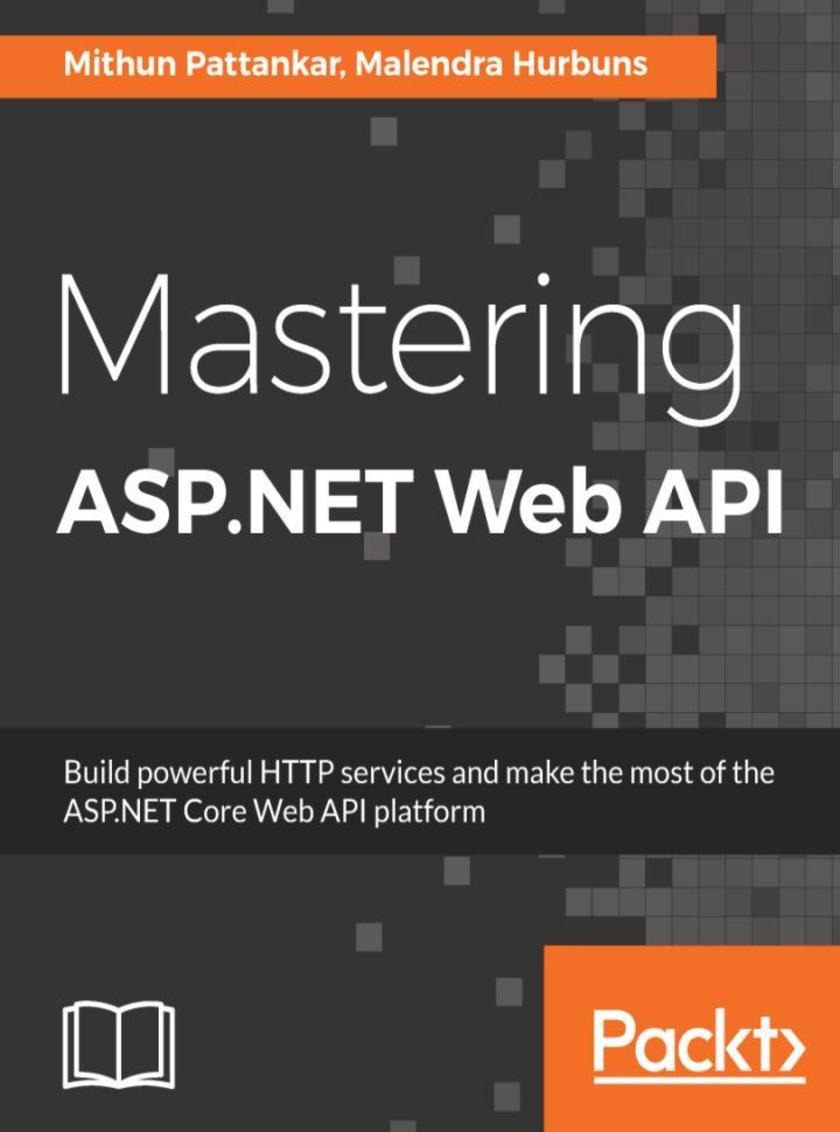
Mastering ASP.NET Web API
¥80.65
Leverage ASP.Net Web API to build professional web services and create powerful applications. About This Book ? Get a comprehensive analysis of the latest specification of ASP.NET Core and all the changes to the underlying platform that you need to know to make the most of the web API ? See an advanced coverage of ASP.NET Core Web API to create robust models for your data, create controllers, and handle routing and security ? This book is packed with key theoretical and practical concepts that can be instantly applied to build professional applications using API with Angular 4, Ionic, and React Who This Book Is For This book is for .Net developers who wants to Master ASP.NET Core (Web API) and have played around with previous ASP.NET Web API a little, but don’t have in-depth knowledge of it. You need to know Visual Studio and C#, and have some HTML, CSS, and JavaScript knowledge. What You Will Learn ? Acquire conceptual and hands-on knowledge of ASP.NET Core (MVC & Web API) ? Learn about HTTP methods, the structure of HTTP content, internet media types, and how servers respond to HTTP requests and their associated HTTP codes ? Explore middleware, filters, routing, and unit testing ? Optimize Web API implementations ? Develop a secure Web API interface ? Deploy Web API projects to various platforms ? Consume your web API in front end application based on Angular 4, Bootstrap, and Ionic ? Implement and explore the current trends in service architecture In Detail Microsoft has unified their main web development platforms. This unification will help develop web applications using various pieces of the ASP.NET platform that can be deployed on both Windows and LINUX. With ASP.NET Core (Web API), it will become easier than ever to build secure HTTP services that can be used from any client. Mastering ASP.NET Web API starts with the building blocks of the ASP.NET Core, then gradually moves on to implementing various HTTP routing strategies in the Web API. We then focus on the key components of building applications that employ the Web API, such as Kestrel, Middleware, Filters, Logging, Security, and Entity Framework.Readers will be introduced to take the TDD approach to write test cases along with the new Visual Studio 2017 live unit testing feature. They will also be introduced to integrate with the database using ORMs. Finally, we explore how the Web API can be consumed in a browser as well as by mobile applications by utilizing Angular 4, Ionic and ReactJS. By the end of this book, you will be able to apply best practices to develop complex Web API, consume them in frontend applications and deploy these applications to a modern hosting infrastructure. Style and approach Using a hands-on approach, we cover both the conceptual as well as the technical aspects of the ASP.NET Core (Web API) framework.


