


 购物车
购物车 个人中心
个人中心
pfSense 2 Cookbook
¥80.65
This book is written in a cookbook style. Each chapter consists of recipes, each of which is composed of step-by-step instructions to complete a particular task. Each recipe also includes tips, alternatives, and references to other recipes or appropriate external sources. The book can be explored chapter by chapter or in no particular order. This book is intended for all levels of network administrators. If you are an advanced user of pfSense, then you can flip to a particular recipe and quickly accomplish the task at hand, while if you are new to pfSense, you can read chapter by chapter and learn all of the features of the system from the ground up.
LaTeX beginners Guide
¥80.65
Packed with fully explained examples, LaTeX Beginner's Guide is a hands-on introduction quickly leading a novice user to professional-quality results. If you are about to write mathematical or scientific papers, seminar handouts, or even plan to write a thesis, then this book offers you a fast-paced and practical introduction. Particularly during studying in school and university you will benefit much, as a mathematician or physicist as well as an engineer or a humanist. Everybody with high expectations who plans to write a paper or a book will be delighted by this stable software.
concrete5 Beginners Guide
¥80.65
Create and customize your own website with the Concrete5 Beginner's Guide
ZBrush 4 Sculpting for Games
¥80.65
This guidebook is built around four complex example projects with clear step-by-step instructions followed by useful explanation, advice, and handy reference material. It is richly illustrated with a friendly, informal writing style. If you want to get started fast using ZBrush for games then this is the book for you. This book is for all digital artists or game developers who want to create their own 3D sculptures in ZBrush. No experience with ZBrush is required – it's suitable for complete beginners and intermediate users.
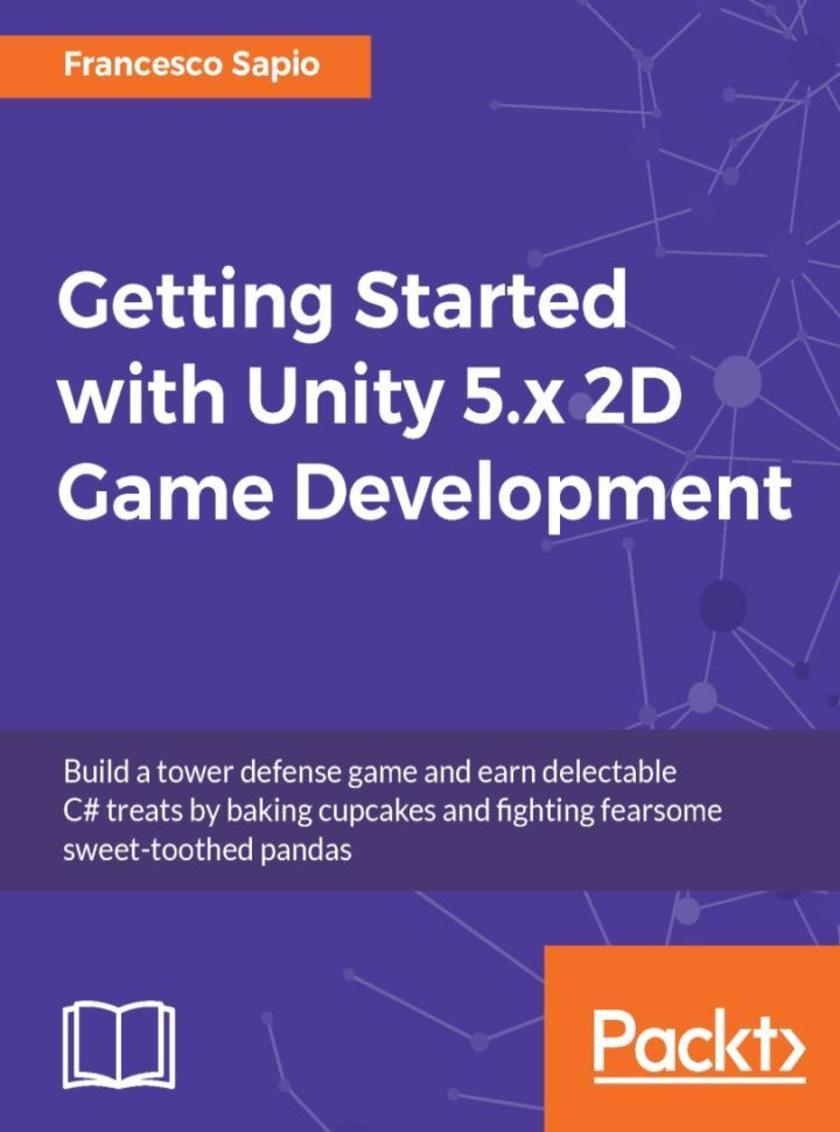
Getting Started with Unity 5.x 2D Game Development
¥80.65
Build a tower defense game and earn delectable C# treats by baking cupcakes and fighting fearsome sweet-toothed pandas About This Book Build a complete and exciting 2D Tower Defense game from scratch. Understand and learn to perform each phase of the game development pipeline Homework and exercises to improve your skills and take them to the next level Who This Book Is For If you are looking forward to get started with 2D game development, either if you are a newcomer to this world, or you came from 3D games or other game engines, this book is for you. Although there are many references to other resources throughout the book, it is assumed that you have a general understanding of C# and its syntax and structure. What You Will Learn Import and set up assets for 2D game development Design and implement dynamic and responsive User Interfaces Create and handle complex animation systems Unlock all the potentiality of the physics engine Implement Artificial Intelligence algorithms to give intelligence to your NPCs Script gameplay and overall bring your ideas to life In Detail Want to get started in the world of 2D game development with UnityThis book will take your hand and guide you through this amazing journey to let you know exactly what you need to build the games you want to build, without sacrificing quality. You will build a solid understanding of Unity 5.x, by focusing with the embedded tools to develop 2D games. In learning about these, along with accurate explanations and practical examples, you will design, develop, learn how to market and publish a delectable Tower Defense game about cupcakes versus pandas. Each chapter in this book is structured to give you a full understanding on a specific aspect of the workflow pipeline. Each of these aspects are essential for developing games in Unity. In a step-by-step approach, you will learn about each of the following phases: Game Design, Asset Importing, Scripting, User Interfaces, Animations, Physics, Artificial Intelligence, Gameplay Programming, Polishing and Improving, Marketing, Publishing and much more. This book provides you with exercises and homework at the end of each chapter so that you can level up your skills as a Unity game developer. In addition, each of these parts are centered on a common point of discussion with other learners just like you. Therefore, by sharing your ideas with other people you will not only develop your skills but you will also build a network. Style and approach This is a fun step-by-step approach in the whole pipeline of 2D game development in Unity, which is explained in a conversational and easy-to-follow style. Each topic is explained sequentially, allowing you to experience both basics and advanced features of Unity. By doing this, the book is able to provide you with a solid grasp on each of the topics. In this way, by engaging with the book’s content, exploring the additional references to further readings and completing the homework sections, you are able to challenge yourself and apply what you know in a variety of ways. Once you have finished reading this book, you will be well on your way to developing games from start to finish!
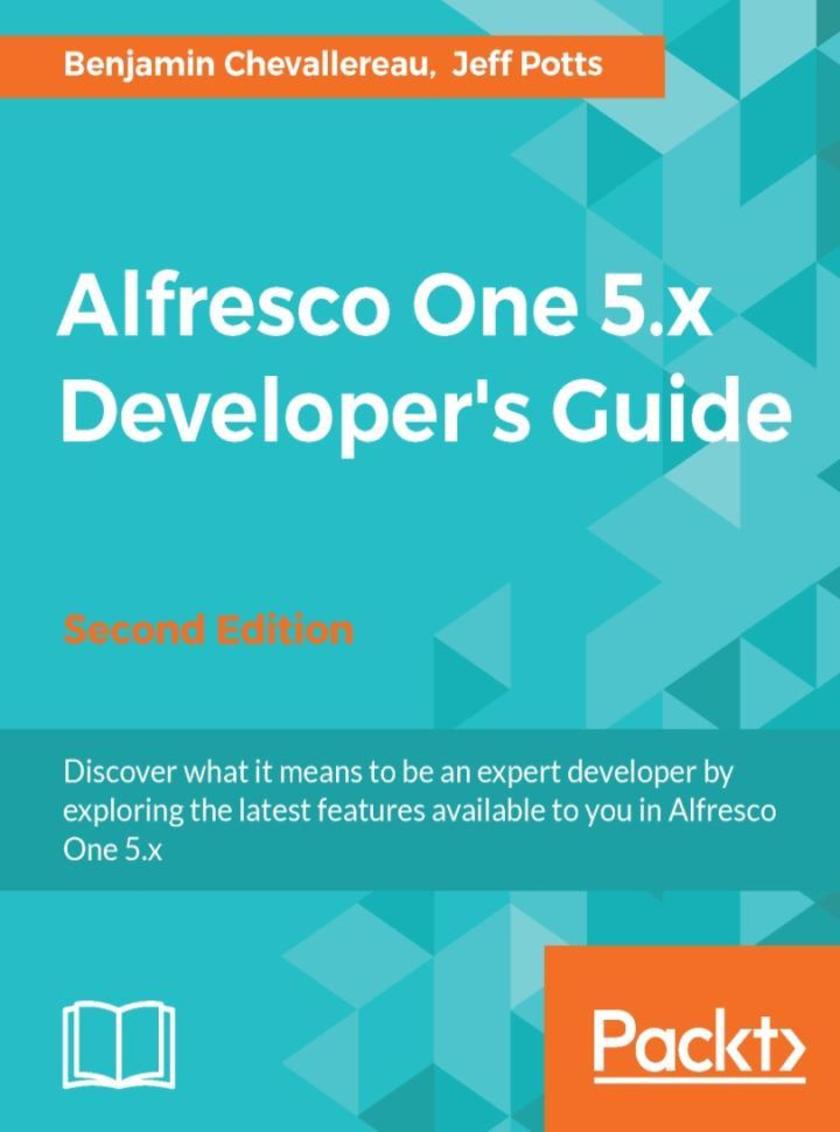
Alfresco One 5.x Developer’s Guide - Second Edition
¥80.65
Discover what it means to be an expert developer by exploring the latest features available to you in Alfresco One 5.x About This Book Create reliable and secure enterprise apps with the latest Alfresco One 5.x platform Explore all the latest Alfresco One 5.x APIs such as the CMIS API, Alfresco One API, and the integrated RESTful API to get more out of your enterprise apps Unleash the power of the latest JavaScript engine and the JavaScript API for Alfresco to customize your existing apps for the Alfresco 5 platform Who This Book Is For If you’re an enterprise app developer who wants to create custom applications with Alfresco, then this book is for you. Previous knowledge with Alfresco would be helpful but is not necessary. What You Will Learn Create and manage a custom content model Configure the Alfresco Share user interface Build a new AngularJS 2.0 application Create business process definitions using Activiti Designer Discover the most common extensions provided by Alfresco Configure Alfresco to authenticate against LDAP, including & chaining" LDAP with Alfresco authentication Get familiar with the latest features of Alfresco Mobile SDK, Smart Search, and the new Angular framework In Detail Do you want to create more reliable and secure solutions for enterprise appsAlfresco One 5.x is your gateway to developing the best industry-standard enterprise apps and this book will help you to become a pro with Alfresco One 5.x development. This book will help you create a complete fully featured app for your organization and while you create that perfect app, you will explore and implement the new and intriguing features of Alfresco. The book starts with an introduction to the Alfresco platform and you’ll see how to configure and customize it. You will learn how to work with the content in a content management system and how you can extend it to your own use case. Next, you will find out how to work with Alfresco Share, an all-purpose user interface for general document management, and customize it. Moving on, you write web *s that create, read, and delete data in the back-end repository. Further on from that, you’ll work with a set of tools that Alfresco provides; to generate a basic AnglularJS application supporting use cases, to name a few authentication, document list, document view. Finally, you’ll learn how to develop your own Alfresco Mobile app and understand how Smart Folders and Search manager work. By the end of the book, you’ll know how to configure Alfresco to authenticate against LDAP, be able to set up Single Sign-On (SSO), and work with Alfresco’s security services. Style and approach This book takes a step-by-step practical tutorial-style approach helping you create a complete enterprise app using Alfresco.
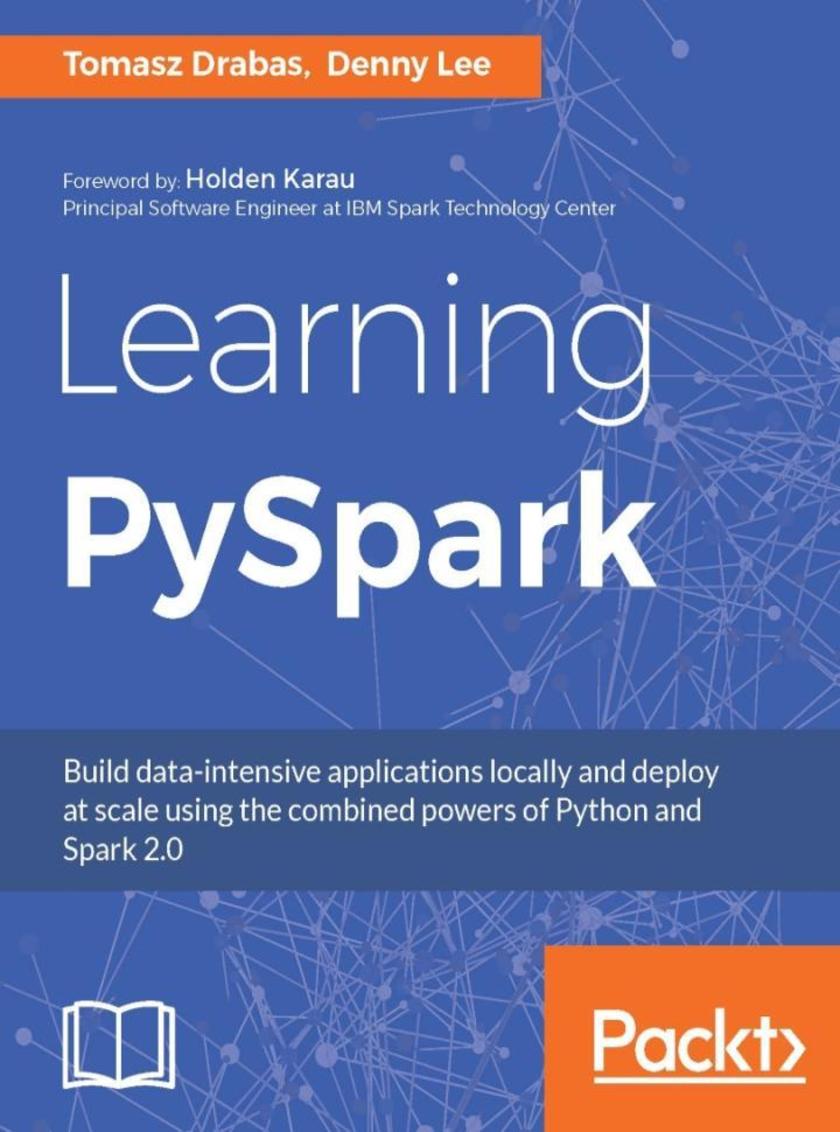
Learning PySpark
¥80.65
Build data-intensive applications locally and deploy at scale using the combined powers of Python and Spark 2.0 About This Book Learn why and how you can efficiently use Python to process data and build machine learning models in Apache Spark 2.0 Develop and deploy efficient, scalable real-time Spark solutions Take your understanding of using Spark with Python to the next level with this jump start guide Who This Book Is For If you are a Python developer who wants to learn about the Apache Spark 2.0 ecosystem, this book is for you. A firm understanding of Python is expected to get the best out of the book. Familiarity with Spark would be useful, but is not mandatory. What You Will Learn Learn about Apache Spark and the Spark 2.0 architecture Build and interact with Spark DataFrames using Spark SQL Learn how to solve graph and deep learning problems using GraphFrames and TensorFrames respectively Read, transform, and understand data and use it to train machine learning models Build machine learning models with MLlib and ML Learn how to submit your applications programmatically using spark-submit Deploy locally built applications to a cluster In Detail Apache Spark is an open source framework for efficient cluster computing with a strong interface for data parallelism and fault tolerance. This book will show you how to leverage the power of Python and put it to use in the Spark ecosystem. You will start by getting a firm understanding of the Spark 2.0 architecture and how to set up a Python environment for Spark. You will get familiar with the modules available in PySpark. You will learn how to abstract data with RDDs and DataFrames and understand the streaming capabilities of PySpark. Also, you will get a thorough overview of machine learning capabilities of PySpark using ML and MLlib, graph processing using GraphFrames, and polyglot persistence using Blaze. Finally, you will learn how to deploy your applications to the cloud using the spark-submit command. By the end of this book, you will have established a firm understanding of the Spark Python API and how it can be used to build data-intensive applications. Style and approach This book takes a very comprehensive, step-by-step approach so you understand how the Spark ecosystem can be used with Python to develop efficient, scalable solutions. Every chapter is standalone and written in a very easy-to-understand manner, with a focus on both the hows and the whys of each concept.
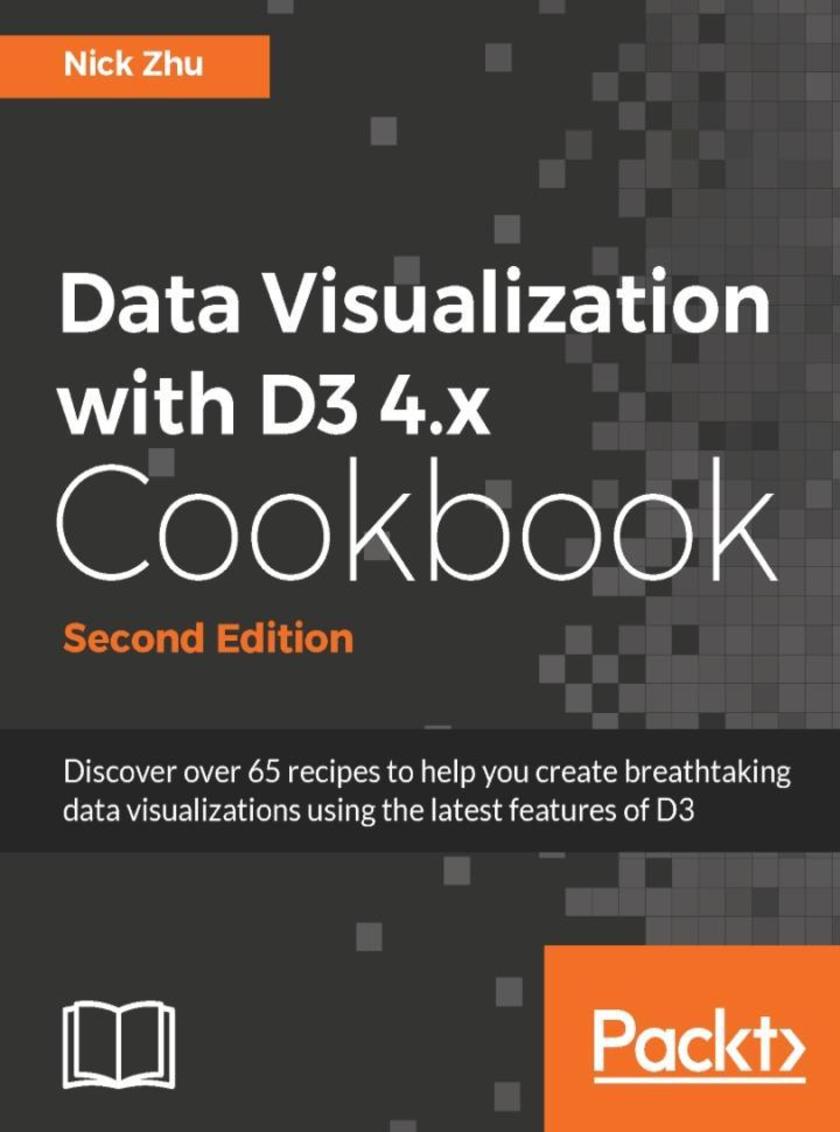
Data Visualization with D3 4.x Cookbook - Second Edition
¥80.65
Discover over 65 recipes to help you create breathtaking data visualizations using the latest features of D3 About This Book Learn about D3 4.0 from the inside out and master its new features Utilize D3 packages to generate graphs, manipulate data, and create beautiful presentations Solve real-world visualization problems with the help of practical recipes Who This Book Is For If you are a developer familiar with HTML, CSS, and JavaScript, and you wish to get the most out of D3, then this book is for you. This book can serve as a desktop quick-reference guide for experienced data visualization developers. You’ll also find this book useful if you’re a D3 user who wants to take advantage of the new features introduced in D3 4.0. You should have previous experience with D3. What You Will Learn Get a solid understanding of the D3 fundamentals and idioms Use D3 to load, manipulate, and map data to any kind of visual representation on the web Create data-driven dynamic visualizations that update as the data does Leverage the various modules provided by D3 to create sophisticated, dynamic, and interactive charts and graphics Create data-driven transitions and animations within your visualizations Understand and leverage more advanced concepts such as force, touch, and Geo data visualizations In Detail This book gives you all the guidance you need to start creating modern data visualizations with D3 4.x that take advantage of the latest capabilities of JavaScript. The book starts with the basic D3 structure and building blocks and quickly moves on to writing idiomatic D3-style JavaScript code. You will learn how to work with selection to target certain visual elements on the page, then you will see techniques to represent data both in programming constructs and its visual metaphor. You will learn how map values in your data domain to the visual domain using scales, and use the various shape functions supported by D3 to create SVG shapes in visualizations. Moving on, you’ll see how to use and customize various D3 axes and master transition to add bells and whistles to otherwise dry visualizations. You’ll also learn to work with charts, hierarchy, graphs, and build interactive visualizations. Next you’ll work with Force, which is one of the most awe-inspiring techniques you can add to your visualizations, and you’ll implement a fully functional Choropleth map (a special purpose colored map) in D3. Finally, you’ll learn to unit test data visualization code and test-driven development in a visualization project so you know how to produce high-quality D3 code. Style and approach This step-by-step guide to mastering data visualizations with D3 will help you create amazing data visualizations with professional efficiency and precision. It is a solution-based guide in which you learn through practical recipes, illustrations, and code samples.
Big Data Visualization
¥80.65
Learn effective tools and techniques to separate big data into manageable and logical components for efficient data visualization About This Book This unique guide teaches you how to visualize your cluttered, huge amounts of big data with ease It is rich with ample options and solid use cases for big data visualization, and is a must-have book for your shelf Improve your decision-making by visualizing your big data the right way Who This Book Is For This book is for data analysts or those with a basic knowledge of big data analysis who want to learn big data visualization in order to make their analysis more useful. You need sufficient knowledge of big data platform tools such as Hadoop and also some experience with programming languages such as R. This book will be great for those who are familiar with conventional data visualizations and now want to widen their horizon by exploring big data visualizations. What You Will Learn Understand how basic analytics is affected by big data Deep dive into effective and efficient ways of visualizing big data Get to know various approaches (using various technologies) to address the challenges of visualizing big data Comprehend the concepts and models used to visualize big data Know how to visualize big data in real time and for different use cases Understand how to integrate popular dashboard visualization tools such as Splunk and Tableau Get to know the value and process of integrating visual big data with BI tools such as Tableau Make sense of the visualization options for big data, based upon the best suited visualization techniques for big data In Detail When it comes to big data, regular data visualization tools with basic features become insufficient. This book covers the concepts and models used to visualize big data, with a focus on efficient visualizations. This book works around big data visualizations and the challenges around visualizing big data and address characteristic challenges of visualizing like speed in accessing, understanding/adding context to, improving the quality of the data, displaying results, outliers, and so on. We focus on the most popular libraries to execute the tasks of big data visualization and explore "big data oriented" tools such as Hadoop and Tableau. We will show you how data changes with different variables and for different use cases with step-through topics such as: importing data to something like Hadoop, basic analytics. The choice of visualizations depends on the most suited techniques for big data, and we will show you the various options for big data visualizations based upon industry-proven techniques. You will then learn how to integrate popular visualization tools with graphing databases to see how huge amounts of certain data. Finally, you will find out how to display the integration of visual big data with BI using Cognos BI. Style and approach With the help of insightful real-world use cases, we’ll tackle data in the world of big data. The scalability and hugeness of the data makes big data visualizations different from normal data visualizations, and this book addresses all the difficulties encountered by professionals while visualizing their big data.
ServiceNow Cookbook
¥80.65
Over 50 practical and immediately applicable recipes to help you manage services in your enterprise environment efficiently About This Book Solve problems and challenges encountered while implementing or using ServiceNow in your organization Helps you build core administration, management, and maintenance skills to automate and orchestrate your IT environment Comes with recipes to improve the way you design and create automated workflows Who This Book Is For This book targets IT professionals and administrators who have some experience of working with ServiceNow already and are looking to solve regular or unique problems that surface when using ServiceNow. It’s advisable to have a basic level of administration experience with ServiceNow. Familiarity with JavaScript is assumed. What You Will Learn Grasp the basics, such as entering and navigation, required to implement ServiceNow Perform core configuration and management tasks Use the ServiceNow plugins to manage development Build and publish custom applications for service management Design data-driven apps to connect with outside worlds by getting into Client and server *ing Configure alerts and notifications and understand e-mail troubleshooting and watermarking Build and configure reports to set up your dashboard as per the requirement Create and configure workflow activities In Detail ServiceNow is the ideal platform for you to create enterprise-level applications, giving borh requesters and fulfillers better visibility and access to a process. With this title we’ll guide you through the world of ServiceNow, letting you take on the best the platform offers you with the least amount of hassle. Starting with the core configuration and management tasks, this book will help you build data-driven apps and it will also explore development best practices. You will learn to set up email notifications for users and work with the database view for reporting. Next, the book will guide you through creating various tasks from the workflow and show you how to make the most of the workflow utilities available in ServiceNow. Finally, the book will drive you through the auditing and diagnosing aspects of ServiceNow. By the end of this book, you will acquire immediately applicable skills to rectify everyday problems encountered on the ServiceNow platform. Style and approach This book follows a recipe-based problem-solution approach to address and dispel challenges faced when implementing and using ServiceNow on a regular basis. It will act as a quick solution when trying to solve specific problems without having to read an exhaustive tutorial.
Java 9 Programming By Example
¥80.65
This book gets you started with essential software development easily and quickly, guiding you through Java's different facets. By adopting this approach, you can bridge the gap between learning and doing immediately. You will learn the new features of Java 9 quickly and experience a simple and powerful approach to software development. You will be able to use the Java runtime tools, understand the Java environment, and create Java programs. We then cover more simple examples to build your foundation before diving to some complex data structure problems that will solidify your Java 9 skills. With a special focus on modularity and HTTP 2.0, this book will guide you to get employed as a top notch Java developer. By the end of the book, you will have a firm foundation to continue your journey towards becoming a professional Java developer. What you will learn ?Compile, package and run a trivial program using a build management tool ?Get to know the principles of test-driven development and dependency management ?Separate the wiring of multiple modules from the application logic into an application using dependency injection ?Benchmark Java execution using Java 9 microbenchmarking ?See the workings of the Spring framework
Mastering OpenCV 3 - Second Edition
¥80.65
Practical Computer Vision Projects About This Book ?Updated for OpenCV 3, this book covers new features that will help you unlock the full potential of OpenCV 3 ?Written by a team of 7 experts, each chapter explores a new aspect of OpenCV to help you make amazing computer-vision aware applications ?Project-based approach with each chapter being a complete tutorial, showing you how to apply OpenCV to solve complete problems Who This Book Is For This book is for those who have a basic knowledge of OpenCV and are competent C++ programmers. You need to have an understanding of some of the more theoretical/mathematical concepts, as we move quite quickly throughout the book. What You Will Learn ?Execute basic image processing operations and cartoonify an image ?Build an OpenCV project natively with Raspberry Pi and cross-compile it for Raspberry Pi.text ?Extend the natural feature tracking algorithm to support the tracking of multiple image targets on a video ?Use OpenCV 3's new 3D visualization framework to illustrate the 3D scene geometry ?Create an application for Automatic Number Plate Recognition (ANPR) using a support vector machine and Artificial Neural Networks ?Train and predict pattern-recognition algorithms to decide whether an image is a number plate ?Use POSIT for the six degrees of freedom head pose ?Train a face recognition database using deep learning and recognize faces from that database In Detail As we become more capable of handling data in every kind, we are becoming more reliant on visual input and what
Learning Ionic - Second Edition
¥80.65
"Create real-time hybrid applications with the leader of HTML5 frameworks: Ionic Framework About This Book ?Step into the world of amazingly interactive and real-time app development using Ionic 2 ?Leverage the powerful Angular 2 along with Ionic to develop cutting edge apps ?Detailed code examples and explanations will help you get up and running with Ionic quickly and easily Who This Book Is For This book is for JavaScript developers with basic skills. No previous knowledge of Ionic is required for this book. What You Will Learn ?Understanding the world of the mobile hybrid architecture ?Scaffolding and working with Ionic templates ?Transforming a single page app to a multi-page app using Navigation Controller ?Integrating Ionic components, decorators, and services and rapidly developing complex applications ?Theming Ionic apps as well as customizing components using SCSS ?Working with Ionic Native to interface with device features, such as camera, notifications, and battery ?Building a production grade app using Ionic and Uber API to let users book a ride ?Migrating an Ionic 1 app to Ionic 2 or Ionic 3 ?Performing unit testing, end-to-end testing, and device testing on your apps ?Deploying Ionic apps to store and manage their subsequent releases In Detail Ionic makes it incredibly easy to build beautiful and interactive mobile apps using HTML5, SCSS, and Angular. Ionic also makes app development easier, faster, and more fun. This hands-on guide will help you understand the Ionic framework and how you can leverage it to create amazing real-time applications. We begin by covering the essential features of Angular 2, and then dive straight into how Ionic fits in today's world of hybrid app development and give you a better understanding of the mobile hybrid architecture along the way. Further on, you will learn how to work with Ionic decorators, services, and components, which will allow you to build complex apps using the Ionic framework. We will take a look at theming Ionic apps using the built-in SCSS setup. After that, we will explore Ionic Native, and you will learn how to integrate device-specific features, such as notifications, with the Ionic app. To complete our learning, we will be building a Rider app, using Ionic and Uber API, to book a ride. Next, you will learn how to unit test, end-to-end test, monkey test, and execute device testing on AWS Device farm. Then, we will take a look at migrating the existing Ionic 1 apps to Ionic 2 and deploy them to the App Store. The final chapter on Ionic 3 wraps up this book by explaining the new features of Ionic 3 at the time of writing this book. By the end of this book, you will be able to develop, deploy, and manage hybrid mobile applications built with Cordova, Ionic, and Angular. All the examples in this book are valid for both Ionic 2 and Ionic 3. Style and approach A step-by-step, practical approach to learning Ionic using the example of designing an online course app. Each topic is explained sequentially in the process of creating a course. This includes explanations of both basic and advanced features of Ionic. "
Vue.js 2 Cookbook
¥80.65
"Key Features ?Understand and use Vue's reactivity system, data binding, and computed properties ?Create fluid transitions in your application with Vue's built-in transition system ?Use Vuex and Webpack to build medium-to-large scale SPAs and enhance your development workflow Book De*ion Vue.js is an open source JavaScript library for building modern, interactive web applications. With a rapidly growing community and a strong ecosystem, Vue.js makes developing complex single page applications a breeze. Its component-based approach, intuitive API, blazing fast core, and compact size make Vue.js a great solution to craft your next front-end application. From basic to advanced recipes, this book arms you with practical solutions to common tasks when building an application using Vue. We start off by exploring the fundamentals of Vue.js: its reactivity system, data-binding syntax, and component-based architecture through practical examples. After that, we delve into integrating Webpack and Babel to enhance your development workflow using single file components. Finally, we take an in-depth look at Vuex for state management and Vue Router to route in your single page applications, and integrate a variety of technologies ranging from Node.js to Electron, and Socket.io to Firebase and HorizonDB. This book will provide you with the best practices as determined by the Vue.js community. What you will learn ?Understand the fundamentals of Vue.js through numerous practical examples ?Piece together complex web interfaces using theVue.js component system ?Use Webpack and Babel to enhance your development workflow ?Manage your "
BeagleBone Home Automation Blueprints
¥80.65
Automate and control your home using the power of the BeagleBone Black with practical home automation projectsAbout This BookBuild, set up, and develop your circuits via step-by-step tutorial of practical examples, from initial board setup to device driver managementGet access to several kinds of computer peripherals to monitor and control your domestic environment using this guideThis book is spread across 10 chapters all focused on one practical home automation projectWho This Book Is ForThis book is for developers who know how to use BeagleBone and are just above the “beginner” level. If you want to learn to use embedded machine learning capabilities, you should have some experience of creating simple home automation projects.What You Will LearnBuild a CO (and other gas) sensor with a buzzer/LED alarm to signal high concentrationsLog environment data and plot it in a fancy mannerDevelop a simple web interface with a LAMP platformPrepare complex web interfaces in JavaScript and get to know how to stream video data from a webcamUse APIs to get access to a Google Docs account or a WhatsApp/Facebook account to manage a home automation systemAdd custom device drivers to manage an LED with different blinking frequenciesDiscover how to work with electronic components to build small circuitsUse an NFS, temperature sensor, relays, and other peripherals to monitor and control your surroundingsIn DetailBeagleBone is a microboard PC that runs Linux. It can connect to the Internet and can run OSes such as Android and Ubuntu. BeagleBone is used for a variety of different purposes and projects, from simple projects such as building a thermostat to more advanced ones such as home security systems.Packed with real-world examples, this book will provide you with examples of how to connect several sensors and an actuator to the BeagleBone Black. You’ll learn how to give access to them, in order to realize simple-to-complex monitoring and controlling systems that will help you take control of the house. You will also find software examples of implementing web interfaces using the classical PHP/HTML pair with JavaScript, using complex APIs to interact with a Google Docs account, WhatsApp, or Facebook. This guide is an invaluable tutorial if you are planning to use a BeagleBone Black in a home automation project.Style and approachThis step-by-step guide contains several home automation examples that can be used as base projects for tons of other home automation and control systems. Through clear, concise examples based on real-life situations, you will quickly get to grips with the core concepts needed to develop home automation applications with the BeagleBone Black using both the C language and high-level *ing languages such as PHP, Python, and JavaScript.
AWS Administration – The Definitive Guide
¥80.65
Learn to design, build, and manage your infrastructure on the most popular of all the Cloud platforms—Amazon Web ServicesAbout This BookLearn how to leverage various Amazon Web Services (AWS) components and services to build a secure, reliable, and robust environment to host your applications onDeep dive into the core AWS service offerings with hands-on tutorials, real-world use case scenarios, and best practicesA self-paced, systematic, and step-by-step guide to learning and implementing AWS in your own environmentWho This Book Is ForThis book is for those who want to learn and leverage AWS. Although no prior experience with AWS is required, it is recommended that you have some hands-on experienceofLinux, Web Services, and basic networkingWhat You Will LearnA brief introduction to Cloud Computing and AWS accompanied by steps to sign up for your first AWS accountCreate and manage users, groups, and permissions using AWSS Identity and Access Management servicesGet started with deploying and accessing EC2 instances, working with EBS Volumes and SnapshotsCustomize and create your very own Amazon Machine ImageDesign and deploy your instances on a highly secured, network isolated environment using Amazon VPCEffectively monitor your AWS environment using specialized alarms, custom monitoring metrics, and much moreExplore the various benefits of Database-as-a-Service offerings and leverage them using Amazon RDS and Amazon DynamoDBTake an in-depth look at what’s new with AWS, including EC2 Container Service and Elastic File SystemIn DetailAWS is at the forefront of Cloud Computing today. Many businesses are moving away from traditional datacenters and toward AWS because of its reliability, vast service offerings, lower costs, and high rate of innovation. Because of its versatility and flexible design, AWS can be used to accomplish a variety of simple and complicated tasks such as hosting multitier websites, running large scale parallel processing, content delivery, petabyte storage and archival, and lots more.Whether you are a seasoned sysadmin or a rookie, this book will provide you with all the necessary skills to design, deploy, and manage your applications on the AWS cloud platform. The book guides you through the core AWS services such as IAM, EC2, VPC, RDS, and S3 using a simple real world application hosting example that you can relate to. Each chapter is designed to provide you with the most information possible about a particular AWS service coupled with easy to follow hands-on steps, best practices, tips, and recommendations.By the end of the book, you will be able to create a highly secure, fault tolerant, and scalable environment for your applications to run on.Style and approach This in-depth and insightful guide is filled with easy-to-follow examples, real-world use cases, best practices, and recommendations that will help you design and leverage AWS.
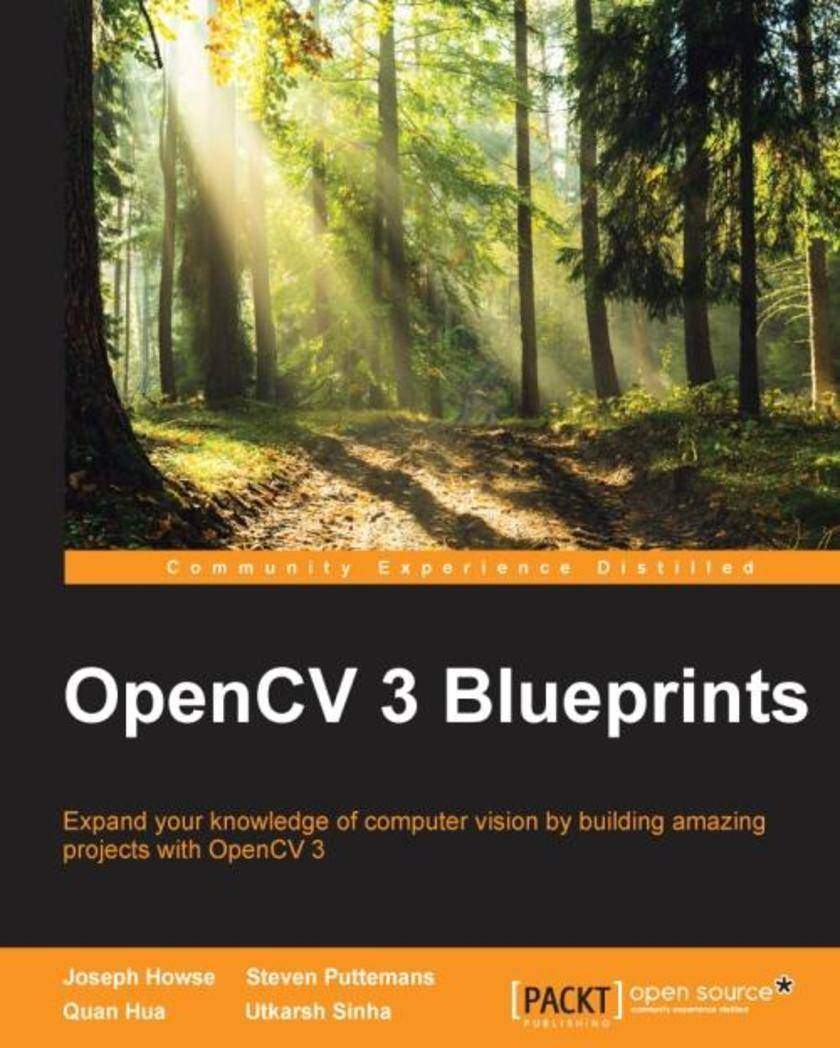
OpenCV 3 Blueprints
¥80.65
Expand your knowledge of computer vision by building amazing projects with OpenCV 3About This BookBuild computer vision projects to capture high-quality image data, detect and track objects, process the actions of humans or animals, and much moreDiscover practical and interesting innovations in computer vision while building atop a mature open-source library, OpenCV 3Familiarize yourself with multiple approaches and theories wherever critical decisions need to be madeWho This Book Is ForThis book is ideal for you if you aspire to build computer vision systems that are smarter, faster, more complex, and more practical than the competition. This is an advanced book intended for those who already have some experience in setting up an OpenCV development environment and building applications with OpenCV. You should be comfortable with computer vision concepts, object-oriented programming, graphics programming, IDEs, and the command line.What You Will LearnSelect and configure camera systems to see invisible light, fast motion, and distant objectsBuild a “camera trap”, as used by nature photographers, and process photos to create beautiful effectsDevelop a facial expression recognition system with various feature extraction techniques and machine learning methodsBuild a panorama Android application using the OpenCV stitching module in C++ with NDK supportOptimize your object detection model, make it rotation invariant, and apply scene-specific constraints to make it faster and more robustCreate a person identification and registration system based on biometric properties of that person, such as their fingerprint, iris, and faceFuse data from videos and gyroscopes to stabilize videos shot from your mobile phone and create hyperlapse style videosIn DetailComputer vision is becoming accessible to a large audience of software developers who can leverage mature libraries such as OpenCV. However, as they move beyond their first experiments in computer vision, developers may struggle to ensure that their solutions are sufficiently well optimized, well trained, robust, and adaptive in real-world conditions. With sufficient knowledge of OpenCV, these developers will have enough confidence to go about creating projects in the field of computer vision.This book will help you tackle increasingly challenging computer vision problems that you may face in your careers. It makes use of OpenCV 3 to work around some interesting projects. Inside these pages, you will find practical and innovative approaches that are battle-tested in the authors’ industry experience and research. Each chapter covers the theory and practice of multiple complementary approaches so that you will be able to choose wisely in your future projects. You will also gain insights into the architecture and algorithms that underpin OpenCV’s functionality.We begin by taking a critical look at inputs in order to decide which kinds of light, cameras, lenses, and image formats are best suited to a given purpose. We proceed to consider the finer aspects of computational photography as we build an automated camera to assist nature photographers. You will gain a deep understanding of some of the most widely applicable and reliable techniques in object detection, feature selection, tracking, and even biometric recognition. We will also build Android projects in which we explore the complexities of camera motion: first in panoramic image stitching and then in video stabilization.By the end of the book, you will have a much richer understanding of imaging, motion, machine learning, and the architecture of computer vision libraries and applications!Style and approachThis book covers a combination of theory and practice. We examine blueprints for specific projects and discuss the principles behind these blueprints, in detail.
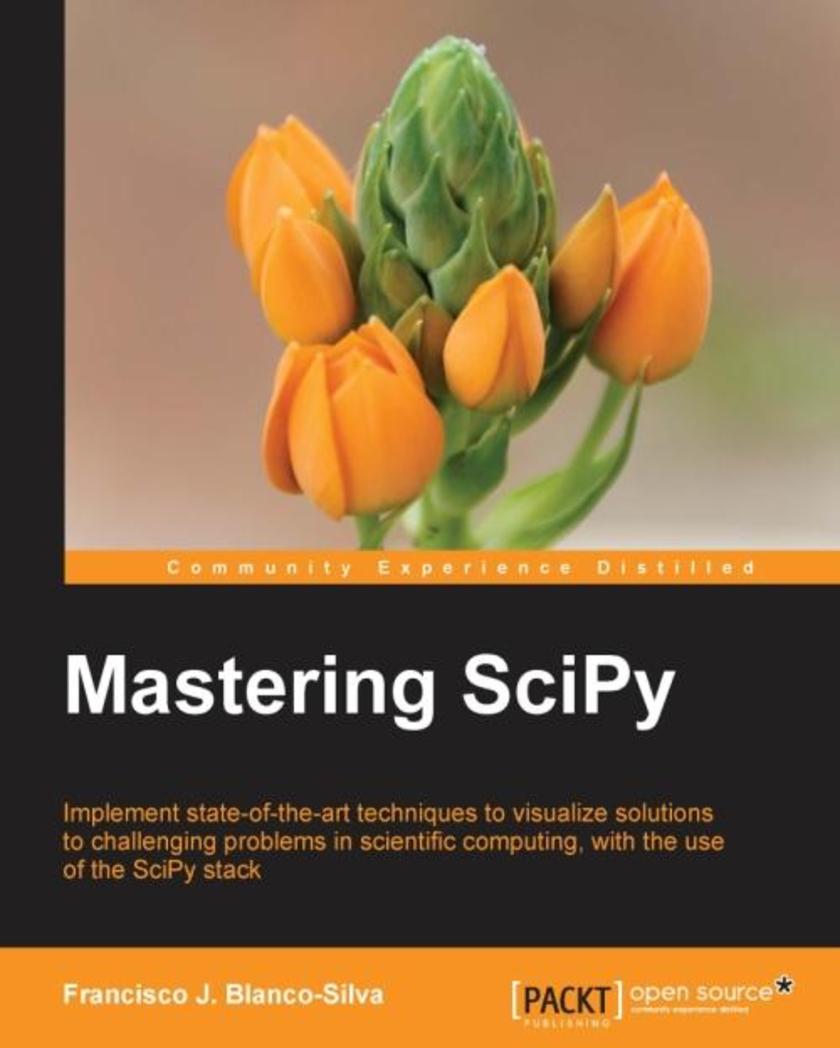
Mastering SciPy
¥80.65
Implement state-of-the-art techniques to visualize solutions to challenging problems in scientific computing, with the use of the SciPy stackAbout This BookMaster the theory and algorithms behind numerical recipes and how they can be applied to real-world problemsLearn to combine the most appropriate built-in functions from the SciPy stack by understanding the connection between the sources of your problem, volume of data, or computer architectureA comprehensive coverage of all the mathematical techniques needed to solve the presented topics, with a discussion of the relevant algorithms built in the SciPy stackWho This Book Is ForIf you are a mathematician, engineer, or computer scientist with a proficiency in Python and familiarity with IPython, this is the book for you. Some basic knowledge of numerical methods in scientific computing would be helpful.What You Will LearnMaster relevant algorithms used in symbolic or numerical mathematics to address approximation, interpolation, differentiation, integration, root-finding, and optimization of scalar or multi-variate functionsDevelop different algorithms and strategies to efficiently store and manipulate large matrices of data, in particular to solve systems of linear equations, or compute their eigenvalues/eigenvectorsUnderstand how to model physical problems with systems of differential equations and distinguish the factors that dictate the strategies to solve themPerform statistical analysis, hypothesis test design and resolution, or data mining at a higher level, and apply them to real-life problems in the field of data analysisGain insights on the power of distances, Delaunay triangulations and Voronoi diagrams for Computational Geometry, and apply them to various engineering problemsFamiliarize yourself with different techniques in signal/image processing, including filtering audio, images, or video to extract information, features, or remove componentsIn DetailThe SciPy stack is a collection of open source libraries of the powerful *ing language Python, together with its interactive shells. This environment offers a cutting-edge platform for numerical computation, programming, visualization and publishing, and is used by some of the world’s leading mathematicians, scientists, and engineers. It works on any operating system that supports Python and is very easy to install, and completely free of charge! It can effectively transform into a data-processing and system-prototyping environment, directly rivalling MATLAB and Octave.This book goes beyond a mere de*ion of the different built-in functions coded in the libraries from the SciPy stack. It presents you with a solid mathematical and computational background to help you identify the right tools for each problem in scientific computing and visualization. You will gain an insight into the best practices with numerical methods depending on the amount or type of data, properties of the mathematical tools employed, or computer architecture, among other factors.The book kicks off with a concise exploration of the basics of numerical linear algebra and graph theory for the treatment of problems that handle large data sets or matrices. In the subsequent chapters, you will delve into the depths of algorithms in symbolic algebra and numerical analysis to address modeling/simulation of various real-world problems with functions (through interpolation, approximation, or creation of systems of differential equations), and extract their representing features (zeros, extrema, integration or differentiation).Lastly, you will move on to advanced concepts of data analysis, image/signal processing, and computational geometry.Style and approachPacked with real-world examples, this book explores the mathematical techniques needed to solve the presented topics, and focuses on the algorithms built in the SciPy stack.
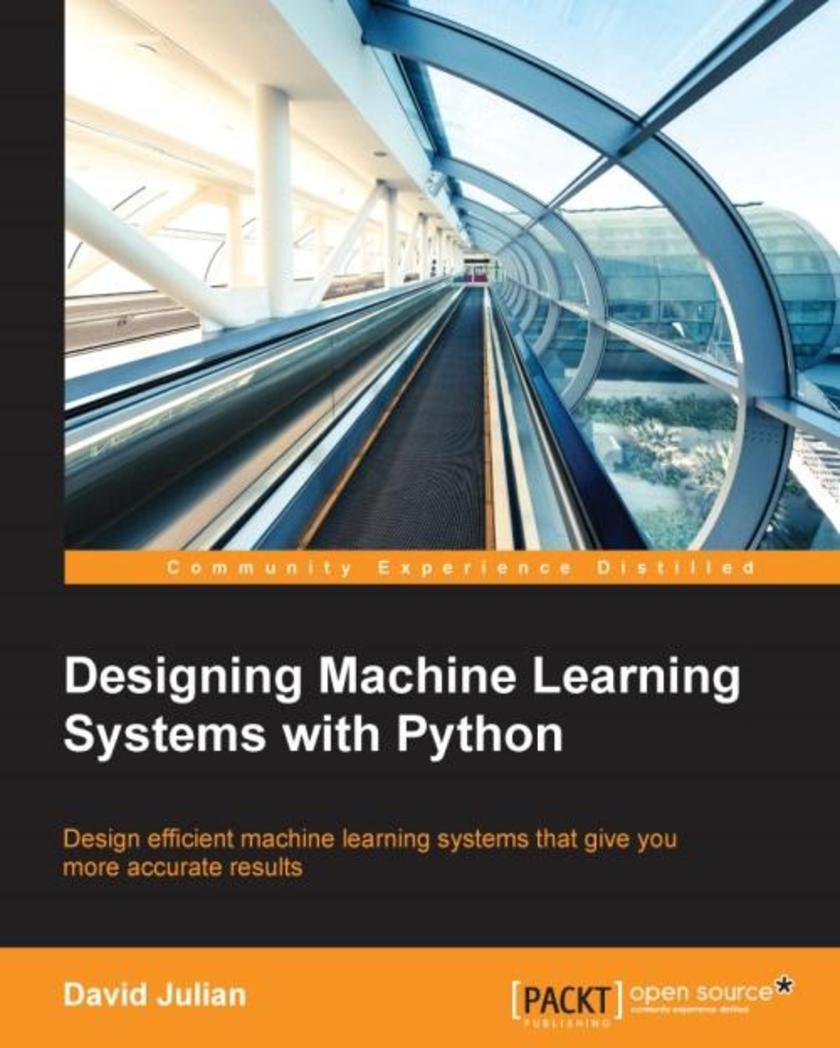
Designing Machine Learning Systems with Python
¥80.65
Design efficient machine learning systems that give you more accurate results About This Book Gain an understanding of the machine learning design process Optimize machine learning systems for improved accuracy Understand common programming tools and techniques for machine learning Develop techniques and strategies for dealing with large amounts of data from a variety of sources Build models to solve unique tasks Who This Book Is For This book is for data scientists, scientists, or just the curious. To get the most out of this book, you will need to know some linear algebra and some Python, and have a basic knowledge of machine learning concepts. What You Will Learn Gain an understanding of the machine learning design process Optimize the error function of your machine learning system Understand the common programming patterns used in machine learning Discover optimizing techniques that will help you get the most from your data Find out how to design models uniquely suited to your task In Detail Machine learning is one of the fastest growing trends in modern computing. It has applications in a wide range of fields, including economics, the natural sciences, web development, and business modeling. In order to harness the power of these systems, it is essential that the practitioner develops a solid understanding of the underlying design principles. There are many reasons why machine learning models may not give accurate results. By looking at these systems from a design perspective, we gain a deeper understanding of the underlying algorithms and the optimisational methods that are available. This book will give you a solid foundation in the machine learning design process, and enable you to build customised machine learning models to solve unique problems. You may already know about, or have worked with, some of the off-the-shelf machine learning models for solving common problems such as spam detection or movie classification, but to begin solving more complex problems, it is important to adapt these models to your own specific needs. This book will give you this understanding and more. Style and approach This easy-to-follow, step-by-step guide covers the most important machine learning models and techniques from a design perspective.
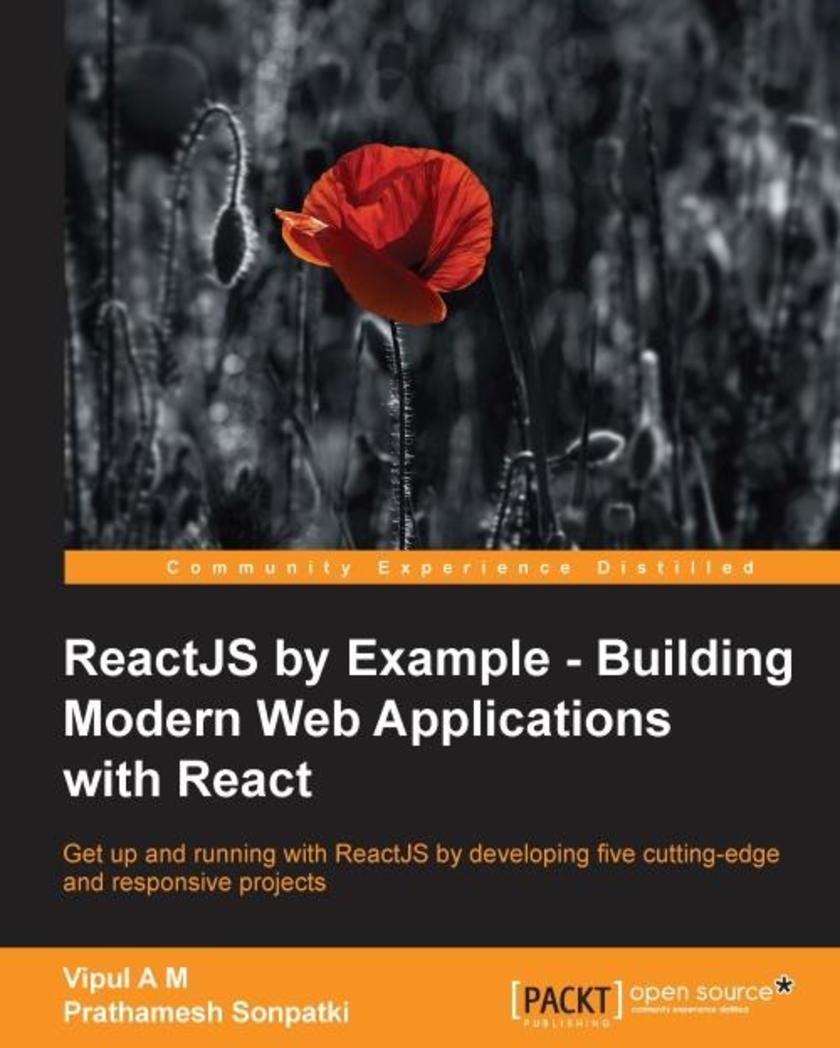
ReactJS by Example - Building Modern Web Applications with React
¥80.65
Get up and running with ReactJS by developing five cutting-edge and responsive projects About This Book Create pragmatic real-world applications while learning React and its modern developer tools Build sustainable user interfaces by transforming data into components of UI Learn how to generate reusable ReactJS components effectively Who This Book Is For If you are a web developer and wish to learn ReactJS from scratch, then this book is tailor-made for you. Good understanding of Java*, HTML, and CSS is expected. What You Will Learn Create, reuse, and compose React components using JSX Share data between various React components and techniques for data flow within a React app Handle user interactions with the help of event handlers and dynamic components Set up and use various next generation ES2015/ES6 features with React Understand the performance and immutability features of React using React add-ons Learn the techniques of Animation in React Use data stores to store model-related data and information Create a flux-based React application by using Reflux library In Detail ReactJS is an open-source JavaScript library that brings the power of reactive programming to web applications and sites. It aims to address the challenges encountered in developing single-page applications, and is intended to help developers build large, easily scalable and changing web apps. Starting with a project on Open Library API, you will be introduced to React and JSX before moving on to learning about the life cycle of a React component. In the second project, building a multi-step wizard form, you will learn about composite dynamic components and perform DOM actions. You will also learn about building a fast search engine by exploring server-side rendering in the third project on a search engine application. Next, you will build a simple frontpage for an e-commerce app in the fourth project by using data models and React add-ons. In the final project you will develop a complete social media tracker by using the flux way of defining React apps and know about the best practices and use cases with the help of ES6 and redux. By the end of this book, you will not only have a good understanding of ReactJS but will also have built your very own responsive frontend applications from scratch. Style and approach An easy-to-follow program to learn ReactJS with the help of real world projects. Each topic is explained within the context of a project and provides plenty of tips and tricks for using ReactJS.
Apple Watch App Development
¥80.65
Build real-world applications for the Apple Watch platform using the WatchKit framework and Swift 2.0 About This Book Find out how to download and install the Xcode development tools before learning about Xcode playgrounds and the Swift programming language Discover everything you need to know about the WatchKit platform architecture, its classes, as well its limitations This book introduces you to the very latest mobile platform with hands-on instructions so you can build your very own Apple Watch apps Who This Book Is For This book is for developers who are interested in creating amazing apps for the Apple Watch platform. Readers are expected to have no prior experience of programming. What You Will Learn Navigate within the WatchKit interface using the page-based, modal, and hierarchical navigation techniques Work with context menus to allow your users to interact with the Apple Watch and respond to their actions to perform a task Use the MapKit framework to display a map within the WatchKit interface to track the user's current location Build effective user interfaces for the WatchKit platform and integrate iCloud capabilities to synchronize data between the iOS app and the WatchKit UI Design your apps for the Apple Watch platform by adhering to the set of User Interface design guidelines set out by Apple Reinforce image caching to display animations within the Apple Watch user interface Explore WatchKit tables, which allow your users to purchase groceries and pay for them using Apple Pay Analyze the new layout system to ensure that your Apple Watch apps work with various screen sizes In Detail Wearable are the next wave of mobile technology and with the release of Apple’s WatchKit SDK, a whole new world of exciting development possibilities has opened up. Apple Watch App Development introduces you to the architecture and possibilities of the Apple Watch platform, as well as an in-depth look at how to work with Xcode playgrounds. Benefit from a rapid introduction to the Swift programming language so you can quickly begin developing apps with the WatchKit framework and the Xcode Development IDE. Get to grips with advanced topics such as notifications, glances, iCloud, Apple pay, closures, tuples, protocols, delegates, concurrency, and using Swift Playgrounds, with each concept is backed up with example code that demonstrates how to properly execute it. Finally, discover how to package and deploy your Watch application to the Apple AppStore. By the end of this book, you will have a good understanding of how to develop apps for the Apple Watch platform, and synchronize data using iCloud between the wearable and the iOS device. Style and approach This book takes a step-by-step approach to developing applications for the Apple Watch using the Swift programming language and the WatchKit UI. Each topic is explained in a conversational and easy-to-follow style.


