


 购物车
购物车 个人中心
个人中心
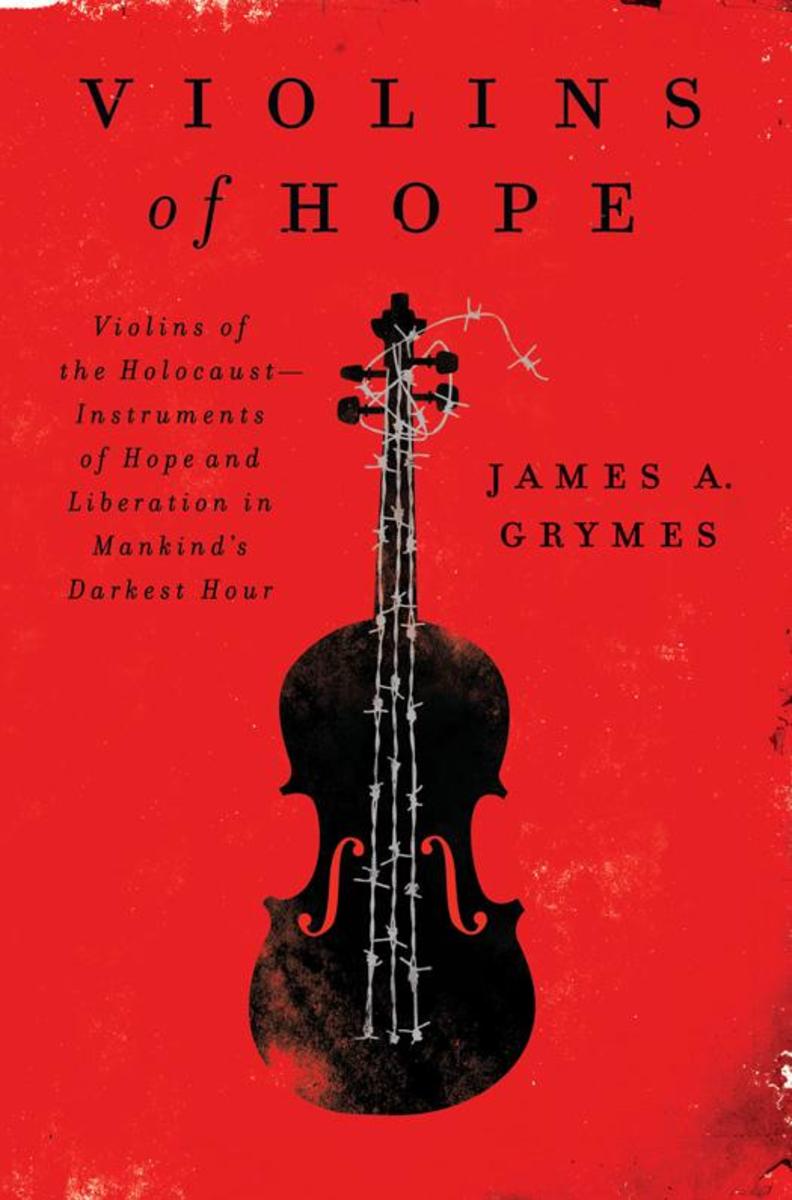
Violins of Hope
¥94.10
A stirring testament to the strength of the human spirit and the power of music, Violins of Hope tells the remarkable stories of violins played by Jewish musicians during the Holocaust and of the Israeli violinmaker dedicated to bringing these inspirational instruments back to life.The violin has formed an important aspect of Jewish culture for centuries, both as a popular instrument with Jewish classical musicians and as a central part of social life, as in the Klezmer tradition. But during the Holocaust, the violin assumed extraordinary roles within the Jewish community. For some musicians, the instrument was a liberator; for others, it was a savior that spared their lives. For many, the violin provided comfort in mankind's darkest hour, and, in at least one case, a violin helped avenge murdered family members. Above all, the violins of the Holocaust represented strength and optimism for the future.Today, these instruments serve as powerful reminders of an unimaginable experience they are memorials to those who perished and testaments to those who survived. In this spirit, renowned Israeli violinmaker Amnon Weinstein has devoted the past twenty years to restoring the violins of the Holocaust as a tribute to those who were lost, including four hundred of his own relatives. Behind each of these violins is a uniquely fascinating and inspiring story. Juxtaposing these narratives against one man's harrowing struggle to reconcile his own family's history and the history of his people, this insightful, moving, and achingly human book presents a new way of understanding the Holocaust.
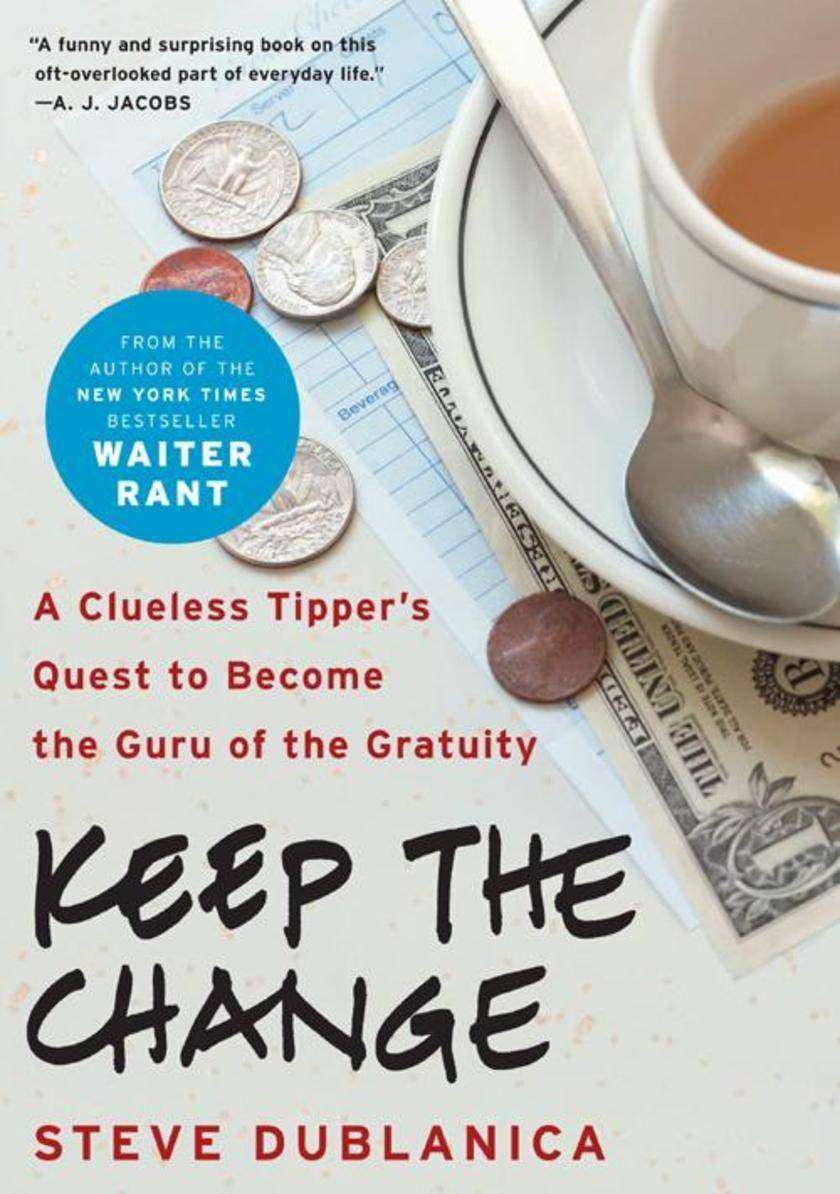
Keep the Change
¥94.10
An irreverent, pavement-pounding, eye-opening exploration of a neglected part of the American economy: tipping Tipping is huge in America. Almost everyoneleaves at least one tip every day. More thanfive million American workers depend onthem, and we spend $66 billion on tips each year.And everyone recognizes that queasy feeling inbars and restaurants, barbershops and beautyparlors, hotels and strip clubs, and everywhereelse when the check arrives or the tip jar looms.Omnipresent yet poorly understood, tipping hasworked its way into almost every part of daily life.In Keep the Change, bestselling author SteveDublanica dives into this unexplored world, in acomical yet serious attempt to turn himself intothe Guru of the Gratuity. As intrepid and irreverentas Michael Moore or A. J. Jacobs, Dublanicatravels the country to meet shoeshine men, strippers,bartenders, bellhops, bathroom attendants,and many others, all in an effort to overcome hisown sweaty palms when faced with those perennialquestions: Should I tipHow muchThroughouthe explores why tipping has spread; he explainshow differences in gender, age, ethnicity, and nationalityaffect our attitudes; and he reveals just whatthe cabdriver or deliveryman thinks of us after we've left a tip.Written in the lively style that made WaiterRant such a hit, Keep the Change is a fun and enlighteningquest that will change the way wethink and tip.

Go For The Goal
¥94.10
For the more than seven million girls from knobby-kneed tykes to high school and college stars who are tearing across the country chasing a soccer ball and dreams of glory, there is one name that eclipses all others, male or female: Mia Hamm. With her cheetahlike acceleration and lightning-bolt shot, Hamm broke nearly every record in her sport, while galvanizing a whole generation of fans and players.Go for the Goal is not only the inspiring story of how a tiny suburban sprite became a global terror with a ball (and the world) at her feet it's also a step-by-step or dribble-by-dribble guide for any kid with the all-American dream of making the team and becoming a champion.Filled with personal anecdotes and fully illustrated with both action and instructional photographs, Go for the Goal shows readers exactly how to master the silky skills and techniques that made Hamm and her teammates the finest women's soccer team in the world.

Six Wives
¥94.10
No one in history had a more eventful career in matrimony than Henry VIII. His marriages were daring and tumultuous, and made instant legends of six very different women. In this remarkable study, David Starkey argues that the king was not a depraved philanderer but someone seeking happiness -- and a son. Knowingly or not, he elevateda group of women to extraordinary heights and changed the way a nation was governed.Six Wives is a masterful work of history that intimately examines the rituals of diplomacy, marriage, pregnancy, and religion that were part of daily life for women at the Tudor Court. Weaving new facts and fresh interpretations into a spellbinding account of the emotional drama surrounding Henry's six marriages, David Starkey reveals the central role that the queens played in determining policy. With an equally keen eye for romantic and political intrigue, he brilliantly recaptures the story of Henry's wives and the England they ruled.

It's All Greek To Me
¥94.10
Why is ancient Greece importantBecause, quite simply, if we want to understand the modern Western world, we need to look back to the Greeks. Consider the way we think about ethics, about the nature of beauty and truth, about our place in the universe, about our mortality. All this we have learned from the ancient Greeks. They molded the basic disciplines and genres in which we still organize thought, from poetry to drama, from medicine to philosophy, from history to ethnography.Packed with useful facts, including a timeline, a "mythology for dummies," a who's who, a guide to Homer's epics, and a handy map for those struggling to know their Lemnos from their Lesbos, It's All Greek to Me is an entertaining and insightful tour through the world of the ancient Greeks. Why are some laws DraconianWhat is an Achilles' heelWhy were the Spartans spartanCharlotte Higgins provides these answers and more, arming average readers with the knowledge they need to understand the Greeks and their tremendous contributions to our lives. This book aims to unlock the richness of a fascinating culture and place it where it should be in the mainstream of life.

A Garden of Marvels
¥94.10
A witty and engaging history of the first botanists, interwoven with stories of today's extraordinary plants found in the garden and the labIn Paradise Under Glass, Ruth Kassinger recounts with grace and humor her journey from brown thumb to green, sharing the lessons that she learned from building a home conservatory in the wake of a devastating personal crisis. In A Garden of Marvels, she extends the story. "This book was born of a murder, a murder I committed," she begins. The victim was a kumquat tree. Though she diligently did her best watering, fertilizing, repotting, and pruning the plant turned brown and brittle. Why did the kumquat die when other plants in the garden that received the same attention thrivedshe wondered. It was an experience that offered invaluable insight. While she knew the basic rules of caring for indoor plants, Kassinger realized that she understood very little about plant physiology how roots, stems, leaves, and flowers actually function. Determined not to repeat her failure, she set out to learn the fundamentals of botany in order to become a better gardener. A Garden of Marvels is the story of her wise and enchanting odyssey to discover the secret life of plants. Kassinger retraces the progress of the first botanists including a melancholy Italian anatomist, a renegade French surgeon, a stuttering English minister, an obsessive German schoolteacher, and Charles Darwin who banished myths and misunderstandings and discovered that flowers have sex, leaves eat air, roots choose their food, and hormones make morning glories climb fence posts. She goes out into the world as well, visiting modern gardens, farms, and labs to discover the science behind extraordinary plants like one-ton pumpkins, truly black petunias, ferns that eat the arsenic in contaminated soil, biofuel grass that grows twelve feet tall, and the world's only photosynthesizing animal. Kassinger also introduces us to modern scientific research that offers hope for combatting climate change and alleviating world hunger. She then transfers her insights to her own garden, where she nurtures a "cocktail" tree that bears five kinds of fruit, cures an ailing Buddha's Hand plant with beneficial fungi, and gets a tree to text her when it's thirsty. Intertwining personal anecdotes, accessible science, and little-known history, A Garden of Marvels takes us on an eye-opening journey into Kassinger's garden and yours offering us a new appreciation of this exquisite gift of nature: "Our garden is more than a marvel. It's as close to a miracle as there is on Earth."

Becoming Charlemagne
¥94.10
On Christmas morning in the year 800, Pope Leo III placed the crown of imperial Rome on the brow of a Germanic king named Karl. With one gesture, the man later hailed as Charlemagne claimed his empire and forever shaped the destiny of Europe. Becoming Charlemagne tells the story of the international power struggle that led to this world-changing event.Illuminating an era that has long been overshadowed by legend, this far-ranging book shows how the Frankish king and his wise counselors built an empire not only through warfare but also by careful diplomacy. With consummate political skill, Charlemagne partnered with a scandal-ridden pope, fended off a ruthless Byzantine empress, nurtured Jewish communities in his empire, and fostered ties with a famous Islamic caliph. For 1,200 years, the deeds of Charlemagne captured the imagination of his descendants, inspiring kings and crusaders, the conquests of Napolon and Hitler, and the optimistic architects of the European Union.In this engaging narrative, Jeff Sypeck crafts a vivid portrait of Karl, the ruler who became a legend, while transporting readers far beyond Europe to the glittering palaces of Constantinople and the streets of medieval Baghdad. Evoking a long-ago world of kings, caliphs, merchants, and monks, Becoming Charlemagne brings alive an age of empire building that continues to resonate today.

Hip: The History
¥94.10
Hip: The History is the story of how American pop culture has evolved throughout the twentieth century to its current position as world cultural touchstone. How did hip become such an obsessionFrom sex and music to fashion and commerce, John Leland tracks the arc of ideas as they move from subterranean Bohemia to Madison Avenue and back again. Hip: The History examines how hip has helped shape -- and continues to influence -- America's view of itself, and provides an incisive account of hip's quest for authenticity.This P.S. edition features an extra 16 pages of insights into the book, including author interviews, recommended reading, and more.

Summer World
¥94.10
In Summer World: A Season of Bounty, Bernd Heinrich brings us the same bottomless reserve of wonder and reverence for the teeming animal life of backwoods New England that he brought us in Winter World: The Ingenuity of Animal Survival. Now he is focusing on the animal kingdom in the extremes of the warmer months, with all its feeding, nesting, fighting, and mating.Whether presenting disquisitions on ant wars, the predatory characteristics of wasps, the mating rituals of woodpeckers, or describing an encounter with a road full of wood frogs, Summer World never stops observing the beautifully complex interactions of animals and plants with nature, giving extraordinary depth to the relationships between habitat and the warming of the earth. How can cicadas survive and thrive at temperatures pushing 115°FDo hummingbirds know what they're up against before they migrate over the Gulf of MexicoWhy do some trees stop growing taller even when three months of warm weather remainWith awe and unmatched expertise, Heinrich explores hundreds of questions like these. Exquisitely illustrated with dozens of the author's own drawings, Summer World is Bernd Heinrich's most engaging book to date, a fascinating work from one of our very best science writers.
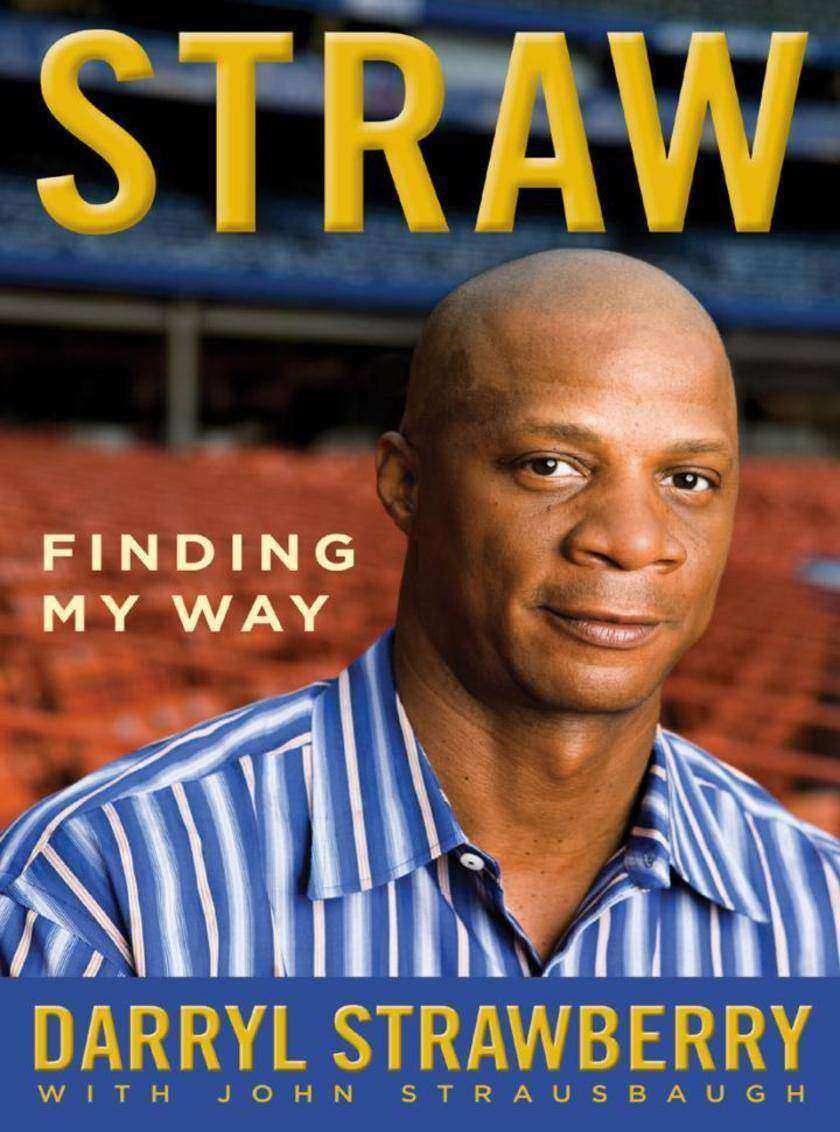
Straw
¥94.10
Former baseball slugger Darryl Strawberry, whose achievements on the field were often overshadowed by his struggles off the field, recounts the highs, the lows, and the lessons of hope and survival he learned along the way.The youngest son of Henry and Ruby Strawberry, Darryl grew up in a working-class neighborhood in Los Angeles, where he channeled his energy into baseball and basketball. The New York Mets drafted him in 1980, and he won the National League Rookie of the Year Award in 1983. Strawberry became the first National League player voted to the All-Star Game in each of his first four full seasons. Throughout the eighties and nineties, however, Strawberry faced many personal challenges, includ-ing drug use, tax evasion, solicitation, and allegations of domestic violence. His seasons with the Dodgers, Giants, and Yankees were interrupted by suspensions, visits to rehab, and treatment for colon cancer. But in 2006, Strawberry's life changed course dramatically. With his wife, Tracy, he devoted himself to his church and to his work with children and adults affected by autism and other developmental disorders.For the first time, in his own words, Darryl Strawberry delivers his inspirational narrative the extraordinary story of his life.

Dialogues with Silence
¥94.10
An intensely personal devotional book from Thomas Merton, the ultimate spiritual writer of our time, showing his contemplative and religious side through his prayers and rarely-seen drawings. The only Merton gift book available.Dialogues with Silence contains a selection of prayers from throughout Merton's life--from his journals, letters, poetry, books--accompanied by all 100 of Merton's rarely seen, delightful Zen-like pen-and-ink drawings, and will attract new readers as well as Merton devotees. There is no other Merton devotional like this, and the paperback edition will be elegantly designed and packaged.
Winter World
¥94.10
From flying squirrels to grizzly bears, and from torpid turtles to insects with antifreeze, the animal kingdom relies on some staggering evolutionary innovations to survive winter. Unlike their human counterparts, who must alter the environment to accommodate physical limitations, animals are adaptable to an amazing range of conditions.Examining everything from food sources in the extremely barren winter land-scape to the chemical composition that allows certain creatures to survive, Heinrich's Winter World awakens the largely undiscovered mysteries by which nature sustains herself through winter's harsh, cruel exigencies.

The Human Side of Cancer
¥94.10
For more than twenty years, Dr. Holland has pioneered the study of psychological problems of cancer patients and their families -- whom she calls "the real experts." In The Human Side of Cancer, she shares what she has learned from all of them about facing this life-threatening illness and what truly helps along the cancer journey. This book is the next best thing to sitting in Dr. Holland's office and talking with her about the uncertainty and anxiety elicited by this disease. And it is a book that inspires hope -- through stories of the simple courage of ordinary people confronting cancer.
Rat Bastards
¥94.10
You've met the Italian mobin The Godfather, now welcometo the real-life world of IrishAmerica's own murderous clanof organized crime The man who has remained silent for more than a decade finally speaks, revealing the gritty true story of his life inside the infamous South Boston Irish mob led by the elusive, Machiavellian kingpin Whitey Bulger, who to this day remains on the lam as one of the world's Ten Most Wanted criminals, second only to Osama bin Laden.John "Red" Shea was a top lieutenant in the South Boston Irish mob, rising to this position at the age of twenty-one. Thus began his tutelage under the notorious Irish godfather James "Whitey" Bulger. An ice-cold enforcer with a legendary red-hot temper, Shea was a legend among his Southie peers in the 1980s. From the first delivery truck he robbed at thirteen to the start of his twelve-year federal sentence for drug trafficking at twenty-seven, Shea was a portrait in American crime -- a terror, brutal and ruthlessly ambitious. Drug dealer, loan shark, money launderer, and multimillion-dollar narcotics kingpin, Shea was at the pinnacle of power -- until the feds came knocking and eventually obliterated the legendary mob in a well-orchestrated sweep of arrests, fueled by insider tips to the FBI and DEA. While Bulger's other top men turned informant to save their own hides, Shea alone kept his code of honor and his mouth shut -- loyalty that earned him a dozen years of hard time even as the man he was protecting turned out to be, himself, a rat. For in the end, in a remarkable show of betrayal, Bulger turned out to be the FBI's "main man" and top informant -- tipping off the feds for decades while still managing to operate one of the most murderous and profitable organized crime outfits of all time.In Rat Bastards, Shea brings that mysterious world and gritty urban Irish American street culture into sharp focus by telling his own story -- of his fatherless upbringing, his apprenticeship on the tough streets of Southie, and his love affair with trouble, boxing, and then the gangster life. In prose that is refreshingly honest, personal, and surprisingly tender, Shea tells his harrowing, unflinching, and unapologetic story. A man who did the crime, did the time, and held fast to the Irish code of silence, which he was raised to follow at any cost, Shea remains a man of honor and in doing so has become a living legend. One of the last of a dying breed, a true stand-up guy.Shea expects no forgiveness and makes no excuses for the life he chose. His story is intense, compelling, and in your face.

To Hell on a Fast Horse
¥94.10
A sheriff . . . An outlaw . . . A legendary showdown. Billy the Kid a.k.a. Henry McCarty, Henry Antrim, and William Bonney was a horse thief, cattle rustler, charismatic rogue, and cold-blooded killer. A superb shot, the Kid gunned down four men single-handedly and five others with the help of cronies. Two of his victims were Lincoln County, New Mexico, deputies killed during the Kid's brazen daylight escape from the courthouse jail on April 28, 1881.After dispensing with his guards and breaking the chain securing his leg irons, the Kid danced a macabre jig on the jail's porch before riding away on a stolen horse as terrified townspeople and many sympathizers watched. For new sheriff Pat Garrett, an acquaintance of Billy's, the chase was on. . . . To Hell on a Fast Horse re-creates the thrilling manhunt for the Wild West's most iconic outlaw. It is also the first dual biography of the Kid and Garrett, each a larger-than-life figure who would not have become legendary without the other. Drawing on voluminous primary sources and a wealth of published scholarship, Mark Lee Gardner digs beneath the myth to take a fresh look at these two men, their relationship, and their epic ride to immortality.
I'm Not Dead, I'm Different
¥94.10
Rand was initially puzzled as to why young spirits wanted to speak through her she had no children of her own and the responsibility of talking with people who had lost theirs seemed too great to bear. But the compelling answers came with time and patience: No one finds death more inexplicable than a grieving parent, thus no spirits are more motivated to make sense of it all for those they've left behind than young ones.These spirits clearly want to heal broken hearts and deepen our understanding of life and death, and Rand has the unique ability to help deliver their messages.Through her, young spirits talk freely about how to make sense of murder, suicide, and accidental deaths. They also discuss the different ways relationships on both sides can be mended, how the intergenerational cycle of abuse and addiction can be stopped, and how joy guides miscarried and aborted children can actually help those they've left behind move forward.The insights they share in this uniquely comforting book will surprise, inform, and inspire. What's more, their answers to our questions about death reveal many valuable tips for living a better life while on earth too.

My Year with Eleanor
¥94.10
After losing her high-octane job as an entertainment blogger, Noelle Hancock was lost. About to turn twenty-nine, she'd spent her career writing about celebrities' lives and had forgotten how to live her own. Unemployed and full of self-doubt, she had no idea what she wanted out of life. She feared change in fact, she feared almost everything. Once confident and ambitious, she had become crippled by anxiety, lacking the courage required even to attend a dinner party until inspiration struck one day in the form of a quote on a chalkboard in a coffee shop:"Do one thing every day that scares you." Eleanor RooseveltPainfully timid as a child, Eleanor Roosevelt dedicated herself to facing her fears, a commitment that shaped the rest of her life. With Eleanor as her guide, Noelle spends the months leading up to her thirtieth birthday pursuing a "Year of Fear." From shark diving to fighter pilot lessons, from tap dancing and stand-up comedy to confronting old boyfriends, her hilarious and harrowing adventures teach her about who she is, and what she can become lessons she makes vital for all of us.

Maybe You Never Cry Again
¥94.10
By the tender of age of five, Bernie Mac had found his calling:making others laugh. Now this amazing comedian delves deep inside to share the poignant story of his childhood and the people who shaped him into the strong, self-reliant man and ruthlessly funny comedian he is today.When Bernie was just sixteen, he lost his mother to cancer.A tough but loving teacher, she showered the unwilling boy with life lessons and "Mac-isms" that would later carry him through many hardships and give him strength during his slow rise to stardom. Maybe You Never Cry Again recounts this ascent in hilarious detail, from eight-year-old Bernie's stand-up comedy performance at a church dinner to open mike nights in Chicago, the jobs he juggled to make ends meet and eventually, his success in entertaining huge audiences on stage, in film, and on television.Maybe You Never Cry Again is a powerful testamentto how a mother's love makes everything possible.

Re-Claiming the Bible for a Non-Religious World
¥94.10
For two hundred years, scholars have been analyzing one of the most important books ever written the Bible and overturning much of what we once thought we knew. Everyday Christians, however, are not privy to this deeper conversation. It is for these people that renowned bishop and author John Shelby Spong presents Re-Claiming the Bible for a Non-Religious World, a book designed to take readers into the contemporary academic debate about the Bible.A definitive voice for progressive Christianity, Spong frees readers from a literal view of the Bible. He opens the possibility that some of the characters in the New Testament are imaginary composites or even literary creations such as Joseph, the earthly father of Jesus; Judas Iscariot; Nicodemus; the Samaritan woman by the well; and Lazarus who was raised from the dead. He presents the Bible as an ever-changing and always growing story. He demonstrates that it is possible to be both a deeply committed Christian and an informed twenty-first-century citizen.In this thorough, substantive guide, Spong explores the origin and essential meaning of each of the individual books in the Bible, examining the background, the context, the level of authenticity and even the trustworthiness of the messages found there. He explains why these particular books, written between two and three thousand years ago, came to be regarded as authoritative and preserved as sacred; he traces the pathway that biblical religion has traveled as it evolved through the centuries, and he shows how people have misused many of these texts in the service of their prejudices.Reaching far beyond the familiar Sunday-school stories that have provided the content of most people’s biblical knowledge, Spong’s journey into the heart of the Bible is his attempt to call his readers into their own journeys into the mystery of God. One does not,” he asserts, have to twist one’s brain into a first-century pretzel in order to take the Bible seriously in this increasingly non-religious world.”
Dark Invasion
¥94.10
What happens when German spies collaborate to unleash a campaign of terror upon America at the start of World War I?In the summer of 1914, New York Police Department captain Tom Tunney is preoccupied by Manhattan's raging gang rivalries and has little idea that, halfway around the world, a much more ominous threat to the city is brewing. As Germany teeters on the brink of war, its ambassador to the United States is given instructions to find and finance a team of undercover saboteurs who can bring America to its knees before it has a chance to enter the conflict on the side of the Allies.At the page-turning pace of a spy thriller, Dark Invasion tells the remarkable true story of Tunney and his pivotal role in discovering, and delivering to justice, a ruthless ring of German terrorists determined to annihilate the United States. Overwhelmed and undermatched, Tunney's small squad of cops was the David to Germany's Goliath, the operatives of which included military officers, a germ warfare expert, a gifted Harvard professor, a bomb technician, and a document forger. As explosions leveled munitions plants and destroyed cargo ships, particularly in and around New York City, pan- icked officials talked about rogue activists and anarchists but it was Tunney who suspected that these incidents were part of something bigger and became determined to bring down the culprits.Through meticulous research, Blum deftly reconstructs an enthralling, vividly detailed saga of subterfuge and bravery. Enhanced by more than fifty images sourced from global archives, his gritty, energetic narrative follows the German spies with Tunney hot on their heels from the streets, harbors, and warehouses of New York City to the genteel quads of Harvard, the grand estates of industry tycoons, and the steps of the U.S. Capitol. The New York Police Department's breathtaking efforts to unravel the extent of the German plot and close in on its perpetrators are revealed in this riveting account of America's first encounter with a national security threat unlike any other the threat of terrorism that is more relevant now than ever.
Two Awesome Hours
¥94.10
Whether we love our jobs or not, the amount of work on our plate has reached unsustainable levels. We start each workday anxious about how we will get it all done, and which important tasks will have to be sacrificed again so we can keep our heads above water. We often respond to our out-of-control to-do lists by focusing on being more efficient trying to get more done in less time.According to Josh Davis, Ph.D., we're going about it the wrong way. The answer is not to get more done faster, but rather to create the conditions for at least two awesome hours of peak productivity each day.Neuroscience and psychology research is revealing what those conditions are. Drawing on this research, Davis explains that our minds operate according to complex factors that, when leveraged the right way, can make us truly effective. Davis shows us five deceptively simple strategies to create the conditions for incredible productivity and to restore sanity and balance to our lives: Maximize the moments in our day when we are between tasks, intentionally choosing what to tackle next Schedule tasks based on their cognitive and emotional demands Learn how to direct attention Feed and move our bodies for short-term benefit Identify how our environment affects our focus and alertness We are capable of impressive feats of comprehension, motivation, and performance when our psychological and biological systems are functioning optimally. Two Awesome Hours will show us how to be our most productive every day.


