万本电子书0元读

万本电子书0元读

Django 1.1 Testing and Debugging
Karen M. Tracey
¥90.46
This book teaches by example. It walks in detail through development of a sample application, illustrating each step via complete working code and either screenshots or console snippets. The cumbersome and time consuming task of debugging will be a cake walk with this book. If you are a Django application developer who wants to create robust applications quickly that work well and are easy to maintain in the long term, this book is for you. This book is the right pick if you want to be smartly tutored to make best use of Django's rich testing and debugging support and make testing an effortless task. Basic knowledge of Python, Django, and the overall structure of a database-driven web application is assumed. However, the code samples are fully explained so that even beginners who are new to the area can learn a great deal from this book.
Magento 1.3 Sales Tactics Cookbook
William Rice
¥90.46
This book is written with the business owner in mind. Each of the recipes in the book supports a business objective, and is designed to increase the success of your Magento storefront. Magento beginners will find the recipes easy to follow. They are written in plain language. When special jargon is needed, it is clearly explained. The techniques are illustrated with many screenshots, showing you exactly what you must do. An example storefront is used throughout the book, so you can see exactly what effect each technique will have on your storefront. Most of these techniques stand alone, so you can jump into the book at any time and implement the techniques that are best for your storefront at this time. If you are a Magento store owner or store designer who wants to boost sales, then this book is for you
Backbase 4.4.x RIA Development
Ghica van Emde Boas
¥90.46
This is a practical book, where every example is tested and all source code is available with the book. Each chapter ends with work on a sample application using the new things learned. At the end of the book there is a complete, usable Travel Blog application. This book is for web developers who want to develop applications using the Backbase Client Framework. It may also be interesting for web developers and web application architects who want to know more about XML-based web application architectures.
ModSecurity 2.5
ModSecurity 2.5
Magnus Mischel
¥90.46
This book teaches ModSecurity from the beginning to anyone with basic Linux skills. It starts by focusing on introducing ModSecurity, and explaining the concept of ModSecurity rules and how to write them. Later, it looks at the performance of ModSecurity and what sort of impact ModSecurity has on the speed of your web application. This book is written for system administrators or anyone running an Apache web server who wants to learn how to secure that server. It assumes that you are familiar with using the Linux shell and command-line tools, but does its best to explain everything so that those who are not Linux experts can make full use of ModSecurity.
eZ Publish 4: Enterprise Web Sites Step-by-Step
Francesco Fullone
¥90.46
The book is a carefully structured, practical, step-by-step guide to overcoming the trials and tribulations of building an eZ Publish enterprise web site. Each chapter will be based on a three-layer approach. Firstly, it teaches the techniques and principles required to fulfill the needs of our site, then it goes deep in the CMS approach to fulfill them. Lastly, example code and step-by-step screenshots are used to dig deeper. This book is written for beginners to eZ Publish who need to work on an enterprise-level site with a complex publishing workflow. This book is best for people who want to use eZ Publish from scratch without hard-core programming skills. Even if you are not a PHP-guru, and you don't want to study eZ Publish core functionality – this book is for you. In general, however, you'll get more out of the book if you know a little PHP, have some concept of Object-Oriented Programming, and have a general familiarity with CMS concepts.
3D Game Development with Microsoft Silverlight 3: Beginner's Guide
Gaston C. Hillar
¥90.46
This book takes a step-by-step approach to building a complete interactive 3D game using Silverlight and enhancing it through its related technologies. The book focuses on practical examples and has a friendly approach, with the opportunity to learn by experiment and play. It uses illustrations, screenshots, and interactive experiences to understand the most complex topics related to the 3D scenes. This book is designed primarily for C# developers with basic knowledge of the Visual Studio IDE who want to develop online 3D games using Silverlight or create interactive 3D scenes for a web site with animated models. No prior experience in 3D programming, 3D animation, or Silverlight is required. The book is also aimed at 3D developers who want to improve their online content, offering innovative 3D models in action.
Expert Cube Development with Microsoft SQL Server 2008 Analysis Services
Alberto Ferrari
¥90.46
This is a practical tutorial for Analysis Services that shows readers how to solve problems commonly encountered while designing cubes, and explains which features of Analysis Services work well and which should be avoided. The book walks through the whole cube development lifecycle, from building dimensions, cubes and calculations to tuning and moving the cube into production. This book is aimed at Analysis Services developers who already have some experience but who want to go into more detail on advanced topics, and who want to learn best practices for cube design.
Mastering Python for Finance
James Ma Weiming
¥90.46
If you are an undergraduate or graduate student, a beginner to algorithmic development and research, or a software developer in the financial industry who is interested in using Python for quantitative methods in finance, this is the book for you. It would be helpful to have a bit of familiarity with basic Python usage, but no prior experience is required.
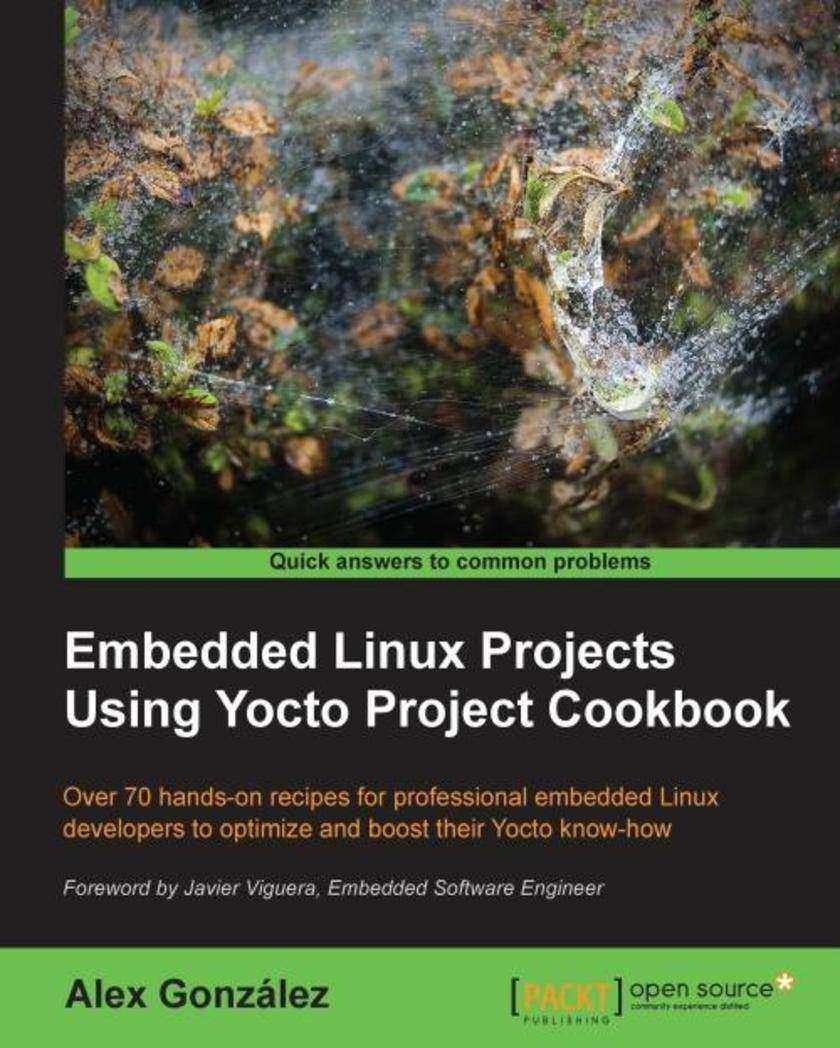
Embedded Linux Projects Using Yocto Project Cookbook
Alex González
¥90.46
If you are an embedded developer learning about embedded Linux with some experience with the Yocto project, this book is the ideal way to become proficient and broaden your knowledge with examples that are immediately applicable to your embedded developments. Experienced embedded Yocto developers will find new insight into working methodologies and ARM specific development competence.
Learning Tableau
Learning Tableau
Joshua N. Milligan
¥90.46
If you want to understand your data using data visualization and don't know where to start, then this is the book for you. Whether you are a beginner or have years of experience, this book will help you to quickly acquire the skills and techniques used to discover, analyze, and communicate data visually. Some familiarity with databases and data structures is helpful, but not required.
Mastering Jenkins
Mastering Jenkins
Jonathan McAllister
¥90.46
Configure and extend Jenkins to architect, build, and automate efficient software delivery pipelinesAbout This BookConfigure and horizontally scale a Jenkins installation to support a development organization of any sizeImplement Continuous Integration, Continuous Delivery, and Continuous Deployment solutions in JenkinsA step-by-step guide to help you get the most out of the powerful automation orchestration platform that is Jenkins Who This Book Is For If you are a novice or intermediate-level Jenkins user who has used Jenkins before but are not familiar with architecting solutions and implementing it in your organization, then this is the book for you. A basic understanding of the core elements of Jenkins is required to make the best use of this book.What You Will LearnCreate and manage various types of build jobs, and implement automation tasks to support a software project of any kindGet to grips with the automated testing architecture, and scalable automated testing techniquesFacilitate the delivery of software across the SDLC by creating scalable automated deployment solutionsManage scalable automation pipelines in Jenkins using the latest build, test, and deployment strategiesImplement a scalable master / slave build automation platform, which can support Windows, Mac OSX, and Linux software solutionsCover troubleshooting and advanced configuration techniques for Jenkins slave nodesSupport a robust build and delivery system by implementing basic infrastructure as code solutions in configuration management tools such as Ansible In Detail With the software industry becoming more and more competitive, organizations are now integrating delivery automation and automated quality assurance practices into their business model. Jenkins represents a complete automation orchestration system, and can help converge once segregated groups into a cohesive product development and delivery team. By mastering the Jenkins platform and learning to architect and implement Continuous Integration, Continuous Delivery, and Continuous Deployment solutions, your organization can learn to outmanoeuvre and outpace the competition. This book will equip you with the best practices to implement advanced continuous delivery and deployment systems in Jenkins. The book begins with giving you high-level architectural fundamentals surrounding Jenkins and Continuous Integration. You will cover the different installation scenarios for Jenkins, and see how to install it as a service, as well as the advanced XML configurations. Then, you will proceed to learn more about the architecture and implementation of the Jenkins Master/Save node system, followed by creating and managing Jenkins build jobs effectively. Furthermore, you’ll explore Jenkins as an automation orchestration system, followed by implementing advanced automated testing techniques. The final chapters describe in depth the common integrations to Jenkins from third-party tools such as Jira, Artifactory, Amazon EC2, and getting the most out of the Jenkins REST-based API. By the end of this book, you will have all the knowledge necessary to be the definitive resource for managing and implementing advanced Jenkins automation solutions for your organization.Style and approach This book is a step-by-step guide to architecting and implementing automated build solutions, automated testing practices, and automated delivery methodologies. The topics covered are based on industry-proven techniques, and are explained in a simple and easy to understand manner.
Unreal Engine Game Development Cookbook
John P. Doran
¥90.46
Over 40 recipes to accelerate the process of learning game design and solving development problems using Unreal EngineAbout This BookExplore the quickest way to tackle common challenges faced in Unreal EngineCreate your own content, levels, light scenes, and materials, and work with Blueprints and C++ *ingAn intermediate, fast-paced Unreal Engine guide with targeted recipes to design games within its framework Who This Book Is For This book is for those who are relatively experienced with Unreal Engine 4 and have knowledge of its fundamentals. Working knowledge of C++ is required.What You Will LearnDiscover editor functionalities for an in-depth insight into game designDevelop environments using terrain for outdoor areas and a workflow for interiors as well using brushesDesign various kinds of materials with unique features, such as mirrors and glowsExplore the various ways that lighting can be used in the engineBuild various level effects using Blueprints, Unreal's visual *ing systemSet up a development environment and develop custom functionality with C++ for your gamesCreate healthbars and main menus with animations using Slate, Unreal's UI solution, through the UMG EditorPackage and create an installer to get your project out into the world In Detail Unreal Engine is powerful tool with rich functionalities to create games. It equips you with the skills to easily build mobile and desktop games from scratch without worrying about which platform they will run on. You can focus on the individual complexities of game development such as animation and rendering. This book takes you on a journey to jumpstart your game design efforts. You will learn various aspects of the Unreal engine commonly encountered with practical examples of how it can be used, with numerous references for further study. You will start by getting acquainted with Unreal Engine 4 and building out levels for your game. This will be followed by recipes to help you create environments, place meshes, and implement your characters. You will then learn to work with lights, camera, and shadows to include special effects in your game. Moving on, you’ll learn Blueprint *ing and C++ programming to enable you to achieve trigger effects and add simple functionalities. By the end of the book, you will see how to create a healthbar and main menu, and then get your game ready to be deployed and published.Style and approach This book offers detailed, easy-to-follow recipes that will help you master a wide range of Unreal Engine 4's features. Every recipe provides step-by-step instructions, with explanations of how these features work, and alternative approaches and research materials so you can learn even more.
Learning D
Learning D
Michael Parker
¥90.46
Leverage the modern convenience and modelling power of the D programming language to develop software with native efficiency About This Book Acquire the skills to understand the fundamentals of D through its support for imperative and object-oriented programming Take advantage of D’s powerful compile-time features, templates and ranges to apply generative, generic, and functional style A systematic guide that will help you become familiar with the concepts in D with the help of simple and easy-to-understand examples Who This Book Is For This book is intended for those with some background in a C-family language who want to learn how to apply their knowledge and experience to D. Perhaps you’re a college student looking to use D for hobby projects, or a career programmer interested in expanding your skillset. This book will help you get up to speed with the language and avoid common pitfalls that arise when translating C-family experience to D. What You Will Learn Compile programs with DMD and manage projects with DUB Work efficiently by binding your D programs with new and existing C libraries Generate code at compile-time to enhance runtime performance Implement complex templates for more powerful generic code Write idiomatic D with range-based functional pipelines Use the DUB repository to find a link with a variety of D libraries Implement a web-app in D from the ground up In Detail D is a modern programming language that is both powerful and efficient. It combines multiple paradigms in a way that opens up a whole new world of software design. It is used to develop both desktop and web applications, with future targets including mobile, and is available on multiple platforms. It is familiar to anyone with some experience in one or more of the C-family languages. However, hidden in the similarities are several differences that can be surprising when trying to apply common idioms from other languages. When learning D on your own, this can make it more time-consuming to master. In order to make the most of the language and become an idiomatic D programmer, it’s necessary to learn how to think in D. This book familiarizes you with D from the ground up, with a heavy focus on helping you to avoid surprises so that you can take your D knowledge to the next level more quickly and painlessly. Your journey begins with a taste of the language and the basics of compiling D programs with DMD, the reference D compiler developed by Digital Mars, and DUB, a community-developed build utility and package manager. You then set out on an exploration of major language features. This begins with the fundamentals of D, including built-in types, conditionals, loops and all of the basic building-blocks of a D program, followed by an examination of D’s object-oriented programming support. You’ll learn how these features differ from languages you may already be familiar with. Next up are D’s compile-time features, such as Compile-Time Function Evaluation and conditional compilation, then generic programming with templates. After that, you’ll learn the more advanced features of ranges and functional pipeline programming. To enhance your D experience, you are next taken on a tour of the D ecosystem and learn how to make D interact with C. Finally, you get a look at D web development using the vibe.d project and the book closes with some handy advice on where to go next. Style and approach A friendly guide to the D programming language and its ecosystem that walks programmers through all they need to know for a painless experience in learning D.
Banana Pro Blueprints
Ruediger Follmann
¥90.46
Leverage the capability of Banana Pi with exciting real-world projects About This Book Delve into the expanse of Banana Pi’s self-managing functionalities and develop real-world projects Gain hands-on experience of developing various wireless, multimedia, robotic, and sensor-based applications with Banana Pi Develop your applications using Banana Pi through a project-based approach Who This Book Is For This book is designed for those who are interested in exploring the capabilities of Banana Pro. Basic know-how of Linux and embedded systems would be an added advantage. What You Will Learn Remotely connect to Banana Pro and program the embedded board Use Banana Pro as a hotspot or provide an AirPlay server for wireless audio transmission Find out about the different programming languages that can be used with Banana Pro Build and program your own multimedia centre in order to watch television and movies Connect peripherals such as a camera, LCD, or hard disk to Banana Pro Manage and regulate your Linux system with Banana Pro Stream music wirelessly from your mobile phone to Banana Pro In Detail This book follows a tactical plan that will guide you through the implementation of Banana Pro and its configurations. You will then learn the various programming languages used with Banana Pi with the help of examples. In no time at all, you’ll be working on a wireless project that implements AirPlay servers, hotspots, and so on. Following this, you’ll develop a retro-style arcade kiosk game. Then we’ll move on to explore the multimedia features of Banana Pro by designing and building an enclosure for it. After this, you’ll learn to build a remote-controlled smart car and we’ll examine how to control a robotic arm. The book will conclude with the creation of a home sensor system that has the ability to expand or shrink to suit any home. Style and approach This book follows a project-based approach that covers the most important features of Banana Pro. Every chapter dives into the practical side of the implementation.
Red Hat Enterprise Linux Server Cookbook
William Leemans
¥90.46
Over 60 recipes to help you build, configure, and orchestrate RHEL 7 Server to make your everyday administration experience seamless About This Book Create fully unattended installations and deploy configurations without breaking a sweat Discover and kick-start the newest RHEL 7 configuration and management tools through an easy-to-follow, practical approach for a lazy system management Be guided by an experienced RHEL expert who is a certified Linux engineer with a passion for open source and open standards Who This Book Is For Red Hat Enterprise Linux Server Cookbook is for RHEL 7 system administrators and DevOps in need of a practical reference guide to troubleshoot common issues and quickly perform tasks. What You Will Learn Set up and configure RHEL 7 Server Use NetworkManager to configure all aspects of your network Manage virtual environments using libvirt Set up software repositories Secure and monitor your RHEL environment Configure SELinux, and create and apply its policies Create kickstart *s to automatically deploy RHEL 7 systems Use Orchestration and configuration management tools to manage your environment In Detail Dominating the server market, the Red Hat Enterprise Linux operating system gives you the support you need to modernize your infrastructure and boost your organization’s efficiency. Combining both stability and flexibility, RHEL helps you meet the challenges of today and adapt to the demands of tomorrow. This practical Cookbook guide will help you get to grips with RHEL 7 Server and automating its installation. Designed to provide targeted assistance through hands-on recipe guidance, it will introduce you to everything you need to know about KVM guests and deploying multiple standardized RHEL systems effortlessly. Get practical reference advice that will make complex networks setups look like child’s play, and dive into in-depth coverage of configuring a RHEL system. Also including full recipe coverage of how to set up, configuring, and troubleshoot SELinux, you’ll also discover how secure your operating system, as well as how to monitor it. Style and approach This practical guide is packed full of hands-on recipes that provide quick solutions to the problems faced when building your RHEL 7 system from scratch using orchestration tools. Each topic is explained sequentially in the process of setting up a system and binding everything together.
Magento 2 Development Cookbook
Bart Delvaux
¥90.46
Over 60 recipes that will tailor and customize your experience with Magento 2 About This Book Solve common problems encountered while extending your Magento 2 store to fit your business needs Delve into the exciting and enhanced features of Magento 2 such as customizing security permissions, intelligent filtered search options, easy third-party integration, among others Learn to build and maintain a Magento 2 shop via a visual-based page editor and customize the look and feel using Magento 2’s offerings on the go Who This Book Is For This book is for every developer who has knowledge of PHP and wants to extend or customize the functionality of their Magento 2 system. If you have prior experience of the Magento platform, you will find this book useful in exploring the advanced features. What You Will Learn Install a Magento 2 shop with sample data Upgrade the data in a Magento 1 shop to a Magento 2 shop Manage the look and feel of the shop with custom themes Extend the shop with custom functionality such as forms, grids, and more Accelerate your store with some performance tool Build and structure your own shipping module Test your shop with automated tests and manage your product display In Detail With the challenges of growing an online business, Magento 2 is an open source e-commerce platform with innumerable functionalities that gives you the freedom to make on-the-fly decisions. It allows you to customize multiple levels of security permissions and enhance the look and feel of your website, and thus gives you a personalized experience in promoting your business. Style and approach This book is packed with a wide range of techniques to modify and extend the functionality of your online store. It contains easy-to-understand recipes starting with the basics and moving on to cover advanced topics. Many recipes work with code examples that can be downloaded from the book’s website.
SFML Game Development By Example
Raimondas Pupius
¥90.46
Create and develop exciting games from start to finish using SFML About This Book Familiarize yourself with the SFML library and explore additional game development techniques Craft, shape, and improve your games with SFML and common game design elements A practical guide that will teach you how to use utilize the SFML library to build your own, fully functional applications Who This Book Is For This book is intended for game development enthusiasts with at least decent knowledge of the C++ programming language and an optional background in game design. What You Will Learn Create and open a window by using SFML Utilize, manage, and apply all of the features and properties of the SFML library Employ some basic game development techniques to make your game tick Build your own code base to make your game more robust and flexible Apply common game development and programming patterns to solve design problems Handle your visual and auditory resources properly Construct a robust system for user input and interfacing Develop and provide networking capabilities to your game< In Detail Simple and Fast Multimedia Library (SFML) is a simple interface comprising five modules, namely, the audio, graphics, network, system, and window modules, which help to develop cross-platform media applications. By utilizing the SFML library, you are provided with the ability to craft games quickly and easily, without going through an extensive learning curve. This effectively serves as a confidence booster, as well as a way to delve into the game development process itself, before having to worry about more advanced topics such as “rendering pipelines” or “shaders.” With just an investment of moderate C++ knowledge, this book will guide you all the way through the journey of game development. The book starts by building a clone of the classical snake game where you will learn how to open a window and render a basic sprite, write well-structured code to implement the design of the game, and use the AABB bounding box collision concept. The next game is a simple platformer with enemies, obstacles and a few different stages. Here, we will be creating states that will provide custom application flow and explore the most common yet often overlooked design patterns used in game development. Last but not the least, we will create a small RPG game where we will be using common game design patterns, multiple GUI. elements, advanced graphical features, and sounds and music features. We will also be implementing networking features that will allow other players to join and play together. By the end of the book, you will be an expert in using the SFML library to its full potential. Style and approach An elaborate take on the game development process in a way that compliments the reader’s existing knowledge, this book provides plenty of examples and is kind to the uninitiated. Each chapter builds upon the knowledge gained from the previous one and offers clarifications on common issues while still remaining within the scope of its own subject and retaining clarity.
Mastering Embedded Linux Programming
Chris Simmonds
¥90.46
Harness the power of Linux to create versatile and robust embedded solutions About This Book Create efficient and secure embedded devices using Linux Minimize project costs by using open source tools and programs Explore each component technology in depth, using sample implementations as a guide Who This Book Is For This book is ideal for Linux developers and system programmers who are already familiar with embedded systems and who want to know how to create best-in-class devices. A basic understanding of C programming and experience with systems programming is needed. What You Will Learn Understand the role of the Linux kernel and select an appropriate role for your application Use Buildroot and Yocto to create embedded Linux systems quickly and efficiently Create customized bootloaders using U-Boot Employ perf and ftrace to identify performance bottlenecks Understand device trees and make changes to accommodate new hardware on your device Write applications that interact with Linux device drivers Design and write multi-threaded applications using POSIX threads Measure real-time latencies and tune the Linux kernel to minimize them In Detail Mastering Embedded Linux Programming takes you through the product cycle and gives you an in-depth de*ion of the components and options that are available at each stage. You will begin by learning about toolchains, bootloaders, the Linux kernel, and how to configure a root filesystem to create a basic working device. You will then learn how to use the two most commonly used build systems, Buildroot and Yocto, to speed up and simplify the development process. Building on this solid base, the next section considers how to make best use of raw NAND/NOR flash memory and managed flash eMMC chips, including mechanisms for increasing the lifetime of the devices and to perform reliable in-field updates. Next, you need to consider what techniques are best suited to writing applications for your device. We will then see how functions are split between processes and the usage of POSIX threads, which have a big impact on the responsiveness and performance of the final device The closing sections look at the techniques available to developers for profiling and tracing applications and kernel code using perf and ftrace. Style and approach This book is an easy-to-follow and pragmatic guide consisting of an in-depth analysis of the implementation of embedded devices. Each topic has a logical approach to it; this coupled with hints and best practices helps you understand embedded Linux better.
Android Programming for Beginners
John Horton
¥90.46
Learn all the Java and Android skills you need to start making powerful mobile applications About This Book Kick-start your Android programming career, or just have fun publishing apps to the Google Play marketplace A first-principles introduction to Java, via Android, which means you’ll be able to start building your own applications from scratch Learn by example and build three real-world apps and over 40 mini apps throughout the book Who This Book Is For Are you trying to start a career in programming, but haven’t found the right way inDo you have a great idea for an app, but don’t know how to make it a realityOr maybe you’re just frustrated that “to learn Android, you must know java.” If so, Android Programming for Beginners is for you. You don’t need any programming experience to follow along with this book, just a computer and a sense of adventure. What You Will Learn Master the fundamentals of coding Java for Android Install and set up your Android development environment Build functional user interfaces with the Android Studio visual designer Add user interaction, data captures, sound, and animation to your apps Manage your apps’ data using the built-in Android SQLite database Find out about the design patterns used by professionals to make top-grade applications Build, deploy, and publish real Android applications to the Google Play marketplace In Detail Android is the most popular OS in the world. There are millions of devices accessing tens of thousands of applications. It is many people's entry point into the world of technology; it is an operating system for everyone. Despite this, the entry-fee to actually make Android applications is usually a computer science degree, or five years’ worth of Java experience. Android Programming for Beginners will be your companion to create Android applications from scratch—whether you’re looking to start your programming career, make an application for work, be reintroduced to mobile development, or are just looking to program for fun. We will introduce you to all the fundamental concepts of programming in an Android context, from the Java basics to working with the Android API. All examples are created from within Android Studio, the official Android development environment that helps supercharge your application development process. After this crash-course, we’ll dive deeper into Android programming and you’ll learn how to create applications with a professional-standard UI through fragments, make location-aware apps with Google Maps integration, and store your user’s data with SQLite. In addition, you’ll see how to make your apps multilingual, capture images from a device’s camera, and work with graphics, sound, and animations too. By the end of this book, you’ll be ready to start building your own custom applications in Android and Java. Style and approach With more than 40 mini apps to code and run, Android Programming for Beginners is a hands-on guide to learning Android and Java. Each example application demonstrates a different aspect of Android programming. Alongside these mini apps, we push your abilities by building three larger applications to demonstrate Android application development in context.
Building  Large-Scale Web Applications with Angular
Building Large-Scale Web Applications with Angular
Chandermani Arora
¥90.46
A definitive guide on frontend development with Angular from design to deployment Key Features *Develop web applications from scratch using Angular and TypeScript *Explore reactive programming principles and RxJS to develop and test apps easily *Study continuous integration and deployment on the AWS cloud Book Description If you have been burnt by unreliable JavaScript frameworks before, you will be amazed by the maturity of the Angular platform. Angular enables you to build fast, efficient, and real-world web apps. In this Learning Path, you'll learn Angular and to deliver high-quality and production-grade Angular apps from design to deployment. You will begin by creating a simple fitness app, using the building blocks of Angular, and make your final app, Personal Trainer, by morphing the workout app into a full-fledged personal workout builder and runner with an advanced directive building - the most fundamental and powerful feature of Angular. You will learn the different ways of architecting Angular applications using RxJS, and some of the patterns that are involved in it. Later you’ll be introduced to the router-first architecture, a seven-step approach to designing and developing mid-to-large line-of-business apps, along with popular recipes. By the end of this book, you will be familiar with the scope of web development using Angular, Swagger, and Docker, learning patterns and practices to be successful as an individual developer on the web or as a team in the Enterprise. This Learning Path includes content from the following Packt products: *Angular 6 by Example by Chandermani Arora, Kevin Hennessy *Architecting Angular Applications with Redux, RxJS, and NgRx by Christoffer Noring *Angular 6 for Enterprise-Ready Web Applications by Doguhan Uluca What you will learn *Develop web applications from scratch using Angular and TypeScript *Explore reactive programming principles, RxJS to develop and test apps efficiently *Study continuous integration and deployment your Angular app on the AWS cloud Who this book is for If you're a JavaScript or frontend developer looking to gain comprehensive experience of using Angular for end-to-end enterprise-ready applications, this Learning Path is for you.
Implementing Microsoft Dynamics 365 Business Central On-Premise
Roberto Stefanetti
¥90.46
Implement Business Central and explore methods to upgrade to NAV 2018 Key Features *Learn the key roles of Dynamics NAV partner and the roles within your customer's organization *Create configuration packages and perform data migration *Explore Microsoft Dynamics 365 Business Central to use Dynamics NAV 2018 functionalities in the Cloud Book Description Microsoft Dynamics Business Central is a full business solution suite and a complete ERP solution, which contains a robust set of development tools; these tools can help you to gain control over your business and can simplify supply chains, manufacturing, and operations. Implementing Microsoft Dynamics 365 Business Central On-Premise covers the latest features of Dynamics Business Central and NAV from the end users' and developers' perspectives. It also provides an insight into different tools available for implementation, whether it's a new installation or migrating from the previous version of Dynamics NAV. This book will take you from an introduction to Dynamics NAV 2018 through to exploring all the techniques related to implementation and migration. You will also learn to expand functionalities within your existing Microsoft Dynamics NAV installation, perform data analysis, and implement free third-party add-ons to your existing installation. As you progress through the book, you will learn to work with third-party add-on tools. In the concluding chapters, you will explore Dynamics 365 Business Central, the new Cloud solution based on the Microsoft NAV platform, and techniques for using Docker and Sandbox to develop applications. By the end of the book, you will have gained a deep understanding of the key components for successful Dynamics NAV implementation for an organization. What you will learn *Explore new features introduced in Microsoft Dynamics NAV 2018 *Migrate to Microsoft Dynamics NAV 2018 from previous versions *Learn abstract techniques for data analysis, reporting, and debugging *Install, configure, and use additional tools for business intelligence, document management, and reporting *Discover Dynamics 365 Business Central and several other Microsoft services *Utilize different tools to develop applications for Business Central Who this book is for Implementing Microsoft Dynamics 365 Business Central On-Premise is for Dynamics NAV partners and end users who want to know everything about Dynamics NAV implementation. This book is for you if you want to be a project manager or get involved with Dynamics NAV, but do not have the expertise to write code yourself. This book can also help you to understand the need to move to Business Central and its advantages.