


 购物车
 个人中心

C Programming for Arduino
¥90.46
Written as a practical Packt book brimming with engaging examples, C Programming for Arduino will help those new to the amazing open source electronic platform so that they can start developing some great projects from the very start.This book is great for people who want to learn how to design & build their own electronic devices. From interaction design art school students to the do-it-yourself hobbyist, or even simply people who want to learn electronics, this book will help by adding a new way to design autonomous but connected devices.
Nagios Core Administration Cookbook
¥90.46
This book is written in Cookbook style, beginning with recipes based on basic structure which gradually progresses towards using Nagios Core as a monitoring framework. This book is for System Administrators who are looking for recipes to help them deal with advanced network monitoring issues with Nagios Core.
Torque 3D Game Development Cookbook
¥90.46
Cookbook; packed with recipes to help you create amazing 3D games with Torque. The recipes provide clear step-by-step instruction and practical examples to advance your understanding of Torque 3D and all of its subsystems. The book is written for professional and indie game developers that have basic knowledge of TorqueScript, are acquainted with Torque 3D’s built-in tools, and wish to take their skills to the next level. Having gone through the comprehensive Torque 3D 1.2 FPS game tutorial on the GarageGames website (or its equivalent) is assumed.
AngularJS Web Application Development Cookbook
¥90.46
This is not your grandmother's JavaScript cookbook. If you have a foundational understanding of the framework and want to expand your AngularJS skillset with strategies and methodologies for building performant and scaleable production applications, this is the book for you. This book assumes you have an understanding of the basics of AngularJS, and experience with JavaScript.
Mastering Dart
¥90.46
If you are an application developer who has experience with Dart and want to develop reusable and robust code in Dart, then this book is for you. You are expected to have a basic knowledge of core elements and applications.
Mastering KnockoutJS
¥90.46
If you are an experienced JavaScript developer who is looking for new tools to build web applications and get an understanding of core elements and applications, this is the book for you. A basic knowledge of DOM, JavaScript, and KnockoutJS is assumed.
Proxmox Cookbook
¥90.46
This book is perfect for system administrators who want to learn how to implement and administer Proxmox VE environments. Since this book will not cover the basics of Proxmox, a basic understanding of virtualization and networking with the Proxmox VE is required.
Node Cookbook Second Edition
¥90.46
In Node Cookbook Second Edition, each chapter focuses on a different aspect of working with Node. Following a Cookbook structure, the recipes are written in an easytounderstand language. Readers will find it easier to grasp even the complex recipes which are backed by lots of illustrations, tips, and hints. If you have some knowledge of JavaScript and want to build fast, efficient, scalable clientserver solutions, then Node Cookbook Second Edition is for you. Knowledge of Node will be an advantage but is not required. Experienced users of Node will be able to improve their skills.
Magento 2 Development Cookbook
¥90.46
Over 60 recipes that will tailor and customize your experience with Magento 2 About This Book Solve common problems encountered while extending your Magento 2 store to fit your business needs Delve into the exciting and enhanced features of Magento 2 such as customizing security permissions, intelligent filtered search options, easy third-party integration, among others Learn to build and maintain a Magento 2 shop via a visual-based page editor and customize the look and feel using Magento 2’s offerings on the go Who This Book Is For This book is for every developer who has knowledge of PHP and wants to extend or customize the functionality of their Magento 2 system. If you have prior experience of the Magento platform, you will find this book useful in exploring the advanced features. What You Will Learn Install a Magento 2 shop with sample data Upgrade the data in a Magento 1 shop to a Magento 2 shop Manage the look and feel of the shop with custom themes Extend the shop with custom functionality such as forms, grids, and more Accelerate your store with some performance tool Build and structure your own shipping module Test your shop with automated tests and manage your product display In Detail With the challenges of growing an online business, Magento 2 is an open source e-commerce platform with innumerable functionalities that gives you the freedom to make on-the-fly decisions. It allows you to customize multiple levels of security permissions and enhance the look and feel of your website, and thus gives you a personalized experience in promoting your business. Style and approach This book is packed with a wide range of techniques to modify and extend the functionality of your online store. It contains easy-to-understand recipes starting with the basics and moving on to cover advanced topics. Many recipes work with code examples that can be downloaded from the book’s website.
SFML Game Development By Example
¥90.46
Create and develop exciting games from start to finish using SFML About This Book Familiarize yourself with the SFML library and explore additional game development techniques Craft, shape, and improve your games with SFML and common game design elements A practical guide that will teach you how to use utilize the SFML library to build your own, fully functional applications Who This Book Is For This book is intended for game development enthusiasts with at least decent knowledge of the C++ programming language and an optional background in game design. What You Will Learn Create and open a window by using SFML Utilize, manage, and apply all of the features and properties of the SFML library Employ some basic game development techniques to make your game tick Build your own code base to make your game more robust and flexible Apply common game development and programming patterns to solve design problems Handle your visual and auditory resources properly Construct a robust system for user input and interfacing Develop and provide networking capabilities to your game< In Detail Simple and Fast Multimedia Library (SFML) is a simple interface comprising five modules, namely, the audio, graphics, network, system, and window modules, which help to develop cross-platform media applications. By utilizing the SFML library, you are provided with the ability to craft games quickly and easily, without going through an extensive learning curve. This effectively serves as a confidence booster, as well as a way to delve into the game development process itself, before having to worry about more advanced topics such as “rendering pipelines” or “shaders.” With just an investment of moderate C++ knowledge, this book will guide you all the way through the journey of game development. The book starts by building a clone of the classical snake game where you will learn how to open a window and render a basic sprite, write well-structured code to implement the design of the game, and use the AABB bounding box collision concept. The next game is a simple platformer with enemies, obstacles and a few different stages. Here, we will be creating states that will provide custom application flow and explore the most common yet often overlooked design patterns used in game development. Last but not the least, we will create a small RPG game where we will be using common game design patterns, multiple GUI. elements, advanced graphical features, and sounds and music features. We will also be implementing networking features that will allow other players to join and play together. By the end of the book, you will be an expert in using the SFML library to its full potential. Style and approach An elaborate take on the game development process in a way that compliments the reader’s existing knowledge, this book provides plenty of examples and is kind to the uninitiated. Each chapter builds upon the knowledge gained from the previous one and offers clarifications on common issues while still remaining within the scope of its own subject and retaining clarity.
Mastering Embedded Linux Programming
¥90.46
Harness the power of Linux to create versatile and robust embedded solutions About This Book Create efficient and secure embedded devices using Linux Minimize project costs by using open source tools and programs Explore each component technology in depth, using sample implementations as a guide Who This Book Is For This book is ideal for Linux developers and system programmers who are already familiar with embedded systems and who want to know how to create best-in-class devices. A basic understanding of C programming and experience with systems programming is needed. What You Will Learn Understand the role of the Linux kernel and select an appropriate role for your application Use Buildroot and Yocto to create embedded Linux systems quickly and efficiently Create customized bootloaders using U-Boot Employ perf and ftrace to identify performance bottlenecks Understand device trees and make changes to accommodate new hardware on your device Write applications that interact with Linux device drivers Design and write multi-threaded applications using POSIX threads Measure real-time latencies and tune the Linux kernel to minimize them In Detail Mastering Embedded Linux Programming takes you through the product cycle and gives you an in-depth de*ion of the components and options that are available at each stage. You will begin by learning about toolchains, bootloaders, the Linux kernel, and how to configure a root filesystem to create a basic working device. You will then learn how to use the two most commonly used build systems, Buildroot and Yocto, to speed up and simplify the development process. Building on this solid base, the next section considers how to make best use of raw NAND/NOR flash memory and managed flash eMMC chips, including mechanisms for increasing the lifetime of the devices and to perform reliable in-field updates. Next, you need to consider what techniques are best suited to writing applications for your device. We will then see how functions are split between processes and the usage of POSIX threads, which have a big impact on the responsiveness and performance of the final device The closing sections look at the techniques available to developers for profiling and tracing applications and kernel code using perf and ftrace. Style and approach This book is an easy-to-follow and pragmatic guide consisting of an in-depth analysis of the implementation of embedded devices. Each topic has a logical approach to it; this coupled with hints and best practices helps you understand embedded Linux better.
WildFly Configuration, Deployment, and Administration - Second Edition
¥90.46
This book is aimed at Java developers, system administrators, application testers using WildFly, and anyone who performs a DevOps role. Whether you are completely new to WildFly or just require an understanding of WildFly's new features, this book is for you.
PrestaShop Module Development
¥90.46
If you are a developer who is new to PrestaShop and wants to get a good foundation in development on the PrestaShop framework, this book is for you. It's assumed that you will have some experience with PHP5, jQuery, and HTML/CSS (no need to be an expert on it).
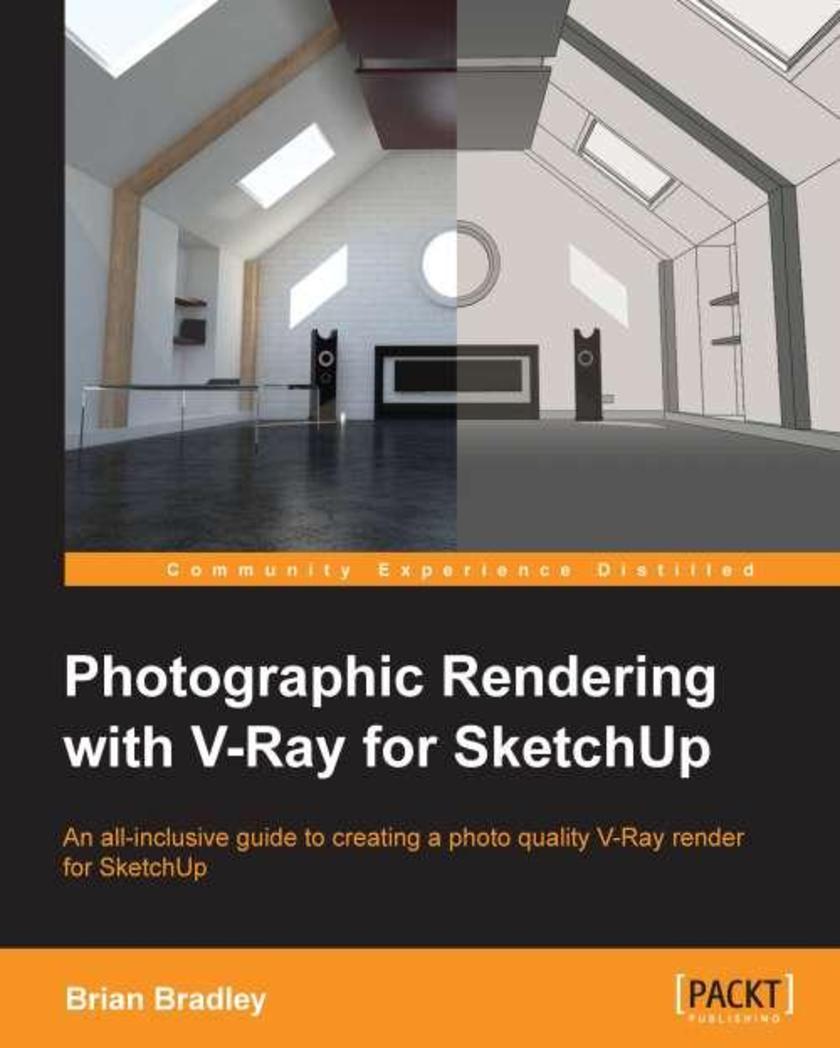
Photographic Rendering with V-Ray for SketchUp
¥90.46
This book is filled with examples explaining the theoretical concepts behind them. Filled with ample screenshots, diagrams, and final rendered images, this book will help readers develop an understanding of photographic rendering with VRay. If you are a SketchUp user who would love to turn your favourite modelling application into a ‘virtual photography studio’, then this book has been designed and written for you. Existing VRay users will also find plenty to enjoy and benefit from in this book. Some basic experience with SketchUp and familiarity with photography will be helpful, but is not mandatory.
PostGIS Cookbook
¥90.46
An easytouse guide, full of handson recipes for manipulating spatial data in a PostGIS database. Each topic is explained and placed in context, and for the more inquisitive, there are more details of the concepts used. If you are a web developer or a software architect, especially in locationbased companies, and want to expand the range of techniques you are using with PostGIS, then this book is for you. You should have some prior experience with PostgreSQL database and spatial concepts.
Red Hat Enterprise Linux Server Cookbook
¥90.46
Over 60 recipes to help you build, configure, and orchestrate RHEL 7 Server to make your everyday administration experience seamless About This Book Create fully unattended installations and deploy configurations without breaking a sweat Discover and kick-start the newest RHEL 7 configuration and management tools through an easy-to-follow, practical approach for a lazy system management Be guided by an experienced RHEL expert who is a certified Linux engineer with a passion for open source and open standards Who This Book Is For Red Hat Enterprise Linux Server Cookbook is for RHEL 7 system administrators and DevOps in need of a practical reference guide to troubleshoot common issues and quickly perform tasks. What You Will Learn Set up and configure RHEL 7 Server Use NetworkManager to configure all aspects of your network Manage virtual environments using libvirt Set up software repositories Secure and monitor your RHEL environment Configure SELinux, and create and apply its policies Create kickstart *s to automatically deploy RHEL 7 systems Use Orchestration and configuration management tools to manage your environment In Detail Dominating the server market, the Red Hat Enterprise Linux operating system gives you the support you need to modernize your infrastructure and boost your organization’s efficiency. Combining both stability and flexibility, RHEL helps you meet the challenges of today and adapt to the demands of tomorrow. This practical Cookbook guide will help you get to grips with RHEL 7 Server and automating its installation. Designed to provide targeted assistance through hands-on recipe guidance, it will introduce you to everything you need to know about KVM guests and deploying multiple standardized RHEL systems effortlessly. Get practical reference advice that will make complex networks setups look like child’s play, and dive into in-depth coverage of configuring a RHEL system. Also including full recipe coverage of how to set up, configuring, and troubleshoot SELinux, you’ll also discover how secure your operating system, as well as how to monitor it. Style and approach This practical guide is packed full of hands-on recipes that provide quick solutions to the problems faced when building your RHEL 7 system from scratch using orchestration tools. Each topic is explained sequentially in the process of setting up a system and binding everything together.
Python Network Programming Cookbook - Second Edition
¥90.46
Discover practical solutions for a wide range of real-world network programming tasks About This Book ? Solve real-world tasks in the area of network programming, system/networking administration, network monitoring, and more. ? Familiarize yourself with the fundamentals and functionalities of SDN ? Improve your skills to become the next-gen network engineer by learning the various facets of Python programming Who This Book Is For This book is for network engineers, system/network administrators, network programmers, and even web application developers who want to solve everyday network-related problems. If you are a novice, you will develop an understanding of the concepts as you progress with this book. What You Will Learn ? Develop TCP/IP networking client/server applications ? Administer local machines' IPv4/IPv6 network interfaces ? Write multi-purpose efficient web clients for HTTP and HTTPS protocols ? Perform remote system administration tasks over Telnet and SSH connections ? Interact with popular websites via web services such as XML-RPC, SOAP, and REST APIs ? Monitor and analyze major common network security vulnerabilities ? Develop Software-Defined Networks with Ryu, OpenDaylight, Floodlight, ONOS, and POX Controllers ? Emulate simple and complex networks with Mininet and its extensions for network and systems emulations ? Learn to configure and build network systems and Virtual Network Functions (VNF) in heterogeneous deployment environments ? Explore various Python modules to program the Internet In Detail Python Network Programming Cookbook - Second Edition highlights the major aspects of network programming in Python, starting from writing simple networking clients to developing and deploying complex Software-Defined Networking (SDN) and Network Functions Virtualization (NFV) systems. It creates the building blocks for many practical web and networking applications that rely on various networking protocols. It presents the power and beauty of Python to solve numerous real-world tasks in the area of network programming, network and system administration, network monitoring, and web-application development. In this edition, you will also be introduced to network modelling to build your own cloud network. You will learn about the concepts and fundamentals of SDN and then extend your network with Mininet. Next, you’ll find recipes on Authentication, Authorization, and Accounting (AAA) and open and proprietary SDN approaches and frameworks. You will also learn to configure the Linux Foundation networking ecosystem and deploy and automate your networks with Python in the cloud and the Internet scale. By the end of this book, you will be able to analyze your network security vulnerabilities using advanced network packet capture and analysis techniques. Style and approach This book follows a practical approach and covers major aspects of network programming in Python. It provides hands-on recipes combined with short and concise explanations on code snippets. This book will serve as a supplementary material to develop hands-on skills in any academic course on network programming. This book further elaborates network softwarization, including Software-Defined Networking (SDN), Network Functions Virtualization (NFV), and orchestration. We learn to configure and deploy enterprise network platforms, develop applications on top of them with Python.
Learning C++ Functional Programming
¥90.46
Apply Functional Programming techniques to C++ to build highly modular, testable, and reusable code About This Book ? Modularize your applications and make them highly reusable and testable ? Get familiar with complex concepts such as metaprogramming, concurrency, and immutability ? A highly practical guide to building functional code in C++ filled with lots of examples and real-world use cases Who This Book Is For This book is for C++ developers comfortable with OOP who are interested in learning how to apply the functional paradigm to create robust and testable apps. What You Will Learn ? Get to know the difference between imperative and functional approaches ? See the use of first-class functions and pure functions in a functional style ? Discover various techniques to apply immutable state to avoid side effects ? Design a recursive algorithm effectively ? Create faster programs using lazy evaluation ? Structure code using design patterns to make the design process easier ? Use concurrency techniques to develop responsive software ? Learn how to use the C++ Standard Template Library and metaprogramming in a functional way to improve code optimization In Detail Functional programming allows developers to divide programs into smaller, reusable components that ease the creation, testing, and maintenance of software as a whole. Combined with the power of C++, you can develop robust and scalable applications that fulfill modern day software requirements. This book will help you discover all the C++ 17 features that can be applied to build software in a functional way. The book is divided into three modules—the first introduces the fundamentals of functional programming and how it is supported by modern C++. The second module explains how to efficiently implement C++ features such as pure functions and immutable states to build robust applications. The last module describes how to achieve concurrency and apply design patterns to enhance your application’s performance. Here, you will also learn to optimize code using metaprogramming in a functional way. By the end of the book, you will be familiar with the functional approach of programming and will be able to use these techniques on a daily basis. Style and approach This book uses a module-based approach, where each module will cover important aspects of functional programming in C++ and will help you develop efficient and robust applications through gaining a practical understanding.
MATLAB for Machine Learning
¥90.46
Extract patterns and knowledge from your data in easy way using MATLAB About This Book ? Get your first steps into machine learning with the help of this easy-to-follow guide ? Learn regression, clustering, classification, predictive analytics, artificial neural networks and more with MATLAB ? Understand how your data works and identify hidden layers in the data with the power of machine learning. Who This Book Is For This book is for data analysts, data scientists, students, or anyone who is looking to get started with machine learning and want to build efficient data processing and predicting applications. A mathematical and statistical background will really help in following this book well. What You Will Learn ? Learn the introductory concepts of machine learning. ? Discover different ways to transform data using SAS XPORT, import and export tools, ? Explore the different types of regression techniques such as simple & multiple linear regression, ordinary least squares estimation, correlations and how to apply them to your data. ? Discover the basics of classification methods and how to implement Naive Bayes algorithm and Decision Trees in the Matlab environment. ? Uncover how to use clustering methods like hierarchical clustering to grouping data using the similarity measures. ? Know how to perform data fitting, pattern recognition, and clustering analysis with the help of MATLAB Neural Network Toolbox. ? Learn feature selection and extraction for dimensionality reduction leading to improved performance. In Detail MATLAB is the language of choice for many researchers and mathematics experts for machine learning. This book will help you build a foundation in machine learning using MATLAB for beginners. You’ll start by getting your system ready with t he MATLAB environment for machine learning and you’ll see how to easily interact with the Matlab workspace. We’ll then move on to data cleansing, mining and analyzing various data types in machine learning and you’ll see how to display data values on a plot. Next, you’ll get to know about the different types of regression techniques and how to apply them to your data using the MATLAB functions. You’ll understand the basic concepts of neural networks and perform data fitting, pattern recognition, and clustering analysis. Finally, you’ll explore feature selection and extraction techniques for dimensionality reduction for performance improvement. At the end of the book, you will learn to put it all together into real-world cases covering major machine learning algorithms and be comfortable in performing machine learning with MATLAB. Style and approach The book takes a very comprehensive approach to enhance your understanding of machine learning using MATLAB. Sufficient real-world examples and use cases are included in the book to help you grasp the concepts quickly and apply them easily in your day-to-day work.
Mastering Machine Learning with Spark 2.x
¥90.46
Unlock the complexities of machine learning algorithms in Spark to generate useful data insights through this data analysis tutorial About This Book ? Process and analyze big data in a distributed and scalable way ? Write sophisticated Spark pipelines that incorporate elaborate extraction ? Build and use regression models to predict flight delays Who This Book Is For Are you a developer with a background in machine learning and statistics who is feeling limited by the current slow and “small data” machine learning tools? Then this is the book for you! In this book, you will create scalable machine learning applications to power a modern data-driven business using Spark. We assume that you already know the machine learning concepts and algorithms and have Spark up and running (whether on a cluster or locally) and have a basic knowledge of the various libraries contained in Spark. What You Will Learn ? Use Spark streams to cluster tweets online ? Run the PageRank algorithm to compute user influence ? Perform complex manipulation of DataFrames using Spark ? Define Spark pipelines to compose individual data transformations ? Utilize generated models for off-line/on-line prediction ? Transfer the learning from an ensemble to a simpler Neural Network ? Understand basic graph properties and important graph operations ? Use GraphFrames, an extension of DataFrames to graphs, to study graphs using an elegant query language ? Use K-means algorithm to cluster movie reviews dataset In Detail The purpose of machine learning is to build systems that learn from data. Being able to understand trends and patterns in complex data is critical to success; it is one of the key strategies to unlock growth in the challenging contemporary marketplace today. With the meteoric rise of machine learning, developers are now keen on finding out how can they make their Spark applications smarter. This book gives you access to transform data into actionable knowledge. The book commences by defining machine learning primitives by the MLlib and H2O libraries. You will learn how to use Binary classification to detect the Higgs Boson particle in the huge amount of data produced by CERN particle collider and classify daily health activities using ensemble Methods for Multi-Class Classification. Next, you will solve a typical regression problem involving flight delay predictions and write sophisticated Spark pipelines. You will analyze Twitter data with help of the doc2vec algorithm and K-means clustering. Finally, you will build different pattern mining models using MLlib, perform complex manipulation of DataFrames using Spark and Spark SQL, and deploy your app in a Spark streaming environment. Style and approach This book takes a practical approach to help you get to grips with using Spark for analytics and to implement machine learning algorithms. We'll teach you about advanced applications of machine learning through illustrative examples. These examples will equip you to harness the potential of machine learning, through Spark, in a variety of enterprise-grade systems.
Learning Redux
¥90.46
Build consistent web apps with Redux by easily centralizing the state of your application. About This Book ? Write applications that behave consistently, run in different environments (client, server and native), and are easy to test ? Take your web apps to the next level by combining the power of Redux with other frameworks such as React and Angular ? Uncover the best practices and hidden features of Redux to build applications that are powerful, consistent, and maintainable Who This Book Is For This book targets developers who are already fluent in JavaScript but want to extend their web development skills to develop and maintain bigger applications. What You Will Learn ? Understand why and how Redux works ? Implement the basic elements of Redux ? Use Redux in combination with React/Angular to develop a web application ? Debug a Redux application ? Interface with external APIs with Redux ? Implement user authentication with Redux ? Write tests for all elements of a Redux application ? Implement simple and more advanced routing with Redux ? Learn about server-side rendering with Redux and React ? Create higher-order reducers for Redux ? Extend the Redux store via middleware In Detail The book starts with a short introduction to the principles and the ecosystem of Redux, then moves on to show how to implement the basic elements of Redux and put them together. Afterward, you are going to learn how to integrate Redux with other frameworks, such as React and Angular. Along the way, you are going to develop a blog application. To practice developing growing applications with Redux, we are going to start from nothing and keep adding features to our application throughout the book. You are going to learn how to integrate and use Redux DevTools to debug applications, and access external APIs with Redux. You are also going to get acquainted with writing tests for all elements of a Redux application. Furthermore, we are going to cover important concepts in web development, such as routing, user authentication, and communication with a backend server After explaining how to use Redux and how powerful its ecosystem can be, the book teaches you how to make your own abstractions on top of Redux, such as higher-order reducers and middleware. By the end of the book, you are going to be able to develop and maintain Redux applications with ease. In addition to learning about Redux, you are going be familiar with its ecosystem, and learn a lot about JavaScript itself, including best practices and patterns. Style and approach This practical guide will teach you how to develop a complex, data-intensive application leveraging the capabilities of the Redux framework.


