


 购物车
购物车 个人中心
个人中心
Home Automation with Intel Galileo
¥54.49
This book is for anyone who wants to learn Intel Galileo for home automation and cross-platform software development. No knowledge of programming with Intel Galileo is assumed, but knowledge of the C programming language is essential.
Responsive Design High Performance
¥54.49
This book is ideal for developers who have experience in developing websites or possess minor knowledge of how responsive websites work. No experience of high-level website development or performance tweaking is required.

CentOS High Availability
¥54.49
This book is targeted at system engineers and system administrators who want to upgrade their knowledge and skills in high availability and want to learn practically how to achieve high availability with CentOS Linux. You are expected to have good CentOS Linux knowledge and basic networking experience.
Laravel 5 Essentials
¥54.49
This book is intended for PHP web developers who have an interest in Laravel and who know the basics of the framework in theory, but don't really know how to use it in practice. No experience of using frameworks is required, but it is assumed you are at least familiar with building dynamic websites in PHP already.
WebSocket Essentials – Building Apps with HTML5 WebSockets
¥54.49
This book is for web developers who want to learn and implement WebSocket to create interesting apps for modern browsers, leveraging the capabilities of HTML5 with WebSockets.
Shopify Application Development
¥54.49
This is an easy-to follow manual that will guide you through the entire process of application development with Shopify, beginning with the installation and configuration of your local development environment for your app to the deployment of the app to Heroku. If you are a web developer or a designer who wants to extend Shopify stores by building apps, then this book is for you. A basic understanding of programming concepts and some familiarity with Shopify is all that is required to get started with Shopify app development.

Getting Started with BizTalk Services
¥54.49
A practical book that acts as a clear and concise introduction to BizTalk Services. Full of realworld scenarios, each area of BizTalk Services is explained in detail, essentially enabling you to smoothly design your own integration solutions with minimal effort. This book is intended for those who want to understand BizTalk Services, what it can do, and how to build integration solutions using it in their organizations. If you are a developer, architect, or project manager, this book will quickly get you acquainted with this powerful cloud integration technology. It would be helpful to have some experience with BizTalk Server; however, this is neither required nor assumed. It is recommended to have a sub*ion with Windows Azure to try out the examples in the book.
Gitolite Essentials
¥54.49
The book is written to suit an easyreading style, using typical problems in access control to illustrate the need for each Gitolite feature explained. This book is for system administrators or development managers who need to keep a lid on Gitbased development workflows. Basic knowledge of Git as well as of the Unix shell is helpful.
Wireframing Essentials
¥54.49
An easy to follow, examplebased guide introducing you to the world of user experience design through the author's real world experiences Whether you are looking to become a professional UX Designer, or just need to get the job done, the principles and processes discussed in this book will help you understand how to craft reliably effective and successful design solutions.
Learning Shell Scripting with Zsh
¥54.49
A stepbystep tutorial that will teach you, through realworld examples, how to configure and use zsh and its various features. If you are a system administrator, developer, or computer professional involved with UNIX who are looking to improve on their daily tasks involving the UNIX shell, "Learning Shell Scripting with zsh" will be great for you. It’s assumed that you have some familiarity with an UNIX commandline interface and feel comfortable with editors such as Emacs or vi.
Python Penetration Testing Essentials
¥54.49
If you are a Python programmer or a security researcher who has basic knowledge of Python programming and want to learn about penetration testing with the help of Python, this book is ideal for you. Even if you are new to the field of ethical hacking, this book can help you find the vulnerabilities in your system so that you are ready to tackle any kind of attack or intrusion.
Selenium Essentials
¥54.49
If you are a developer who wants to migrate from Selenium RC or any other automation tool to Selenium WebDriver, then this book is for you. Knowledge of automation tools is necessary to follow the examples in this book.
Getting Started with Unity 5
¥54.49
If you are a game developer interested in learning Unity 3D from scratch and becoming familiar with its core features, then this book is for you. No prior knowledge of Unity 3D is required.

Arduino for Secret Agents
¥54.49
Transform your tiny Arduino device into a secret agent gadget to build a range of espionage projects with this practical guide for hackers About This Book Discover the limitless possibilities of the tiny Arduino and build your own secret agent projects From a fingerprint sensor to a GPS Tracker and even a robot– learn how to get more from your Arduino Build nine secret agent projects using the power and simplicity of the Arduino platform Who This Book Is For This book is for Arduino programmers with intermediate experience of developing projects, and who want to extend their knowledge by building projects for secret agents. It would also be great for other programmers who are interested in learning about electronics and programming on the Arduino platform. What You Will Learn Get to know the full range of Arduino features so you can be creative through practical projects Discover how to create a simple alarm system and a fingerprint sensor Find out how to transform your Arduino into a GPS tracker Use the Arduino to monitor top secret data Build a complete spy robot! Build a set of other spy projects such as Cloud Camera and Microphone System In Detail Q might have Bond’s gadgets– but he doesn’t have an Arduino (not yet at least). Find out how the tiny Arduino microcomputer can be used to build an impressive range of neat secret agent projects that can help you go undercover and get to grips with the cutting-edge of the world of espionage with this book, created for ardent Arduino fans and anyone new to the powerful device. Each chapter shows you how to construct a different secret agent gadget, helping you to unlock the full potential of your Arduino and make sure you have a solution for every tricky spying situation. You’ll find out how to build everything from an alarm system to a fingerprint sensor, each project demonstrating a new feature of Arduino, so you can build your expertise as you complete each project. Learn how to open a lock with a text message, monitor top secret data remotely, and even create your own Arduino Spy Robot, Spy Microphone System, and Cloud Spy Camera This book isn’t simply an instruction manual – it helps you put your knowledge into action so you can build every single project to completion. Style and approach This practical reference guide shows you how to build various projects with step-by-step explanations on each project, starting with the assembly of the hardware, followed by basics tests of all those hardware components and finally developing project on the hardware.
Building Python Real-Time Applications with Storm
¥54.49
Learn to process massive real-time data streams using Storm and Python—no Java required!About This Book Learn to use Apache Storm and the Python Petrel library to build distributed applications that process large streams of data Explore sample applications in real-time and analyze them in the popular NoSQL databases MongoDB and Redis Discover how to apply software development best practices to improve performance, productivity, and quality in your Storm projects Who This Book Is For This book is intended for Python developers who want to benefit from Storm’s real-time data processing capabilities. If you are new to Python, you’ll benefit from the attention to key supporting tools and techniques such as automated testing, virtual environments, and logging. If you’re an experienced Python developer, you’ll appreciate the thorough and detailed examples What You Will Learn Install Storm and learn about the prerequisites Get to know the components of a Storm topology and how to control the flow of data between them Ingest Twitter data directly into Storm Use Storm with MongoDB and Redis Build topologies and run them in Storm Use an interactive graphical debugger to debug your topology as it’s running in Storm Test your topology components outside of Storm Configure your topology using YAML In Detail Big data is a trending concept that everyone wants to learn about. With its ability to process all kinds of data in real time, Storm is an important addition to your big data “bag of tricks.” At the same time, Python is one of the fastest-growing programming languages today. It has become a top choice for both data science and everyday application development. Together, Storm and Python enable you to build and deploy real-time big data applications quickly and easily. You will begin with some basic command tutorials to set up storm and learn about its configurations in detail. You will then go through the requirement scenarios to create a Storm cluster. Next, you’ll be provided with an overview of Petrel, followed by an example of Twitter topology and persistence using Redis and MongoDB. Finally, you will build a production-quality Storm topology using development best practices. Style and approach This book takes an easy-to-follow and a practical approach to help you understand all the concepts related to Storm and Python.
Learning iOS UI Development
¥54.49
Implement complex iOS user interfaces with ease using Swift About This Book Build compelling user interfaces that users will enjoy using the iOS UIKit frameworkMake your iOS apps easily recognizable and familiar with the UIKit frameworkUse this comprehensive, step-by-step guide to create a complete custom layoutWho This Book Is ForThis easy-to-follow guide is perfect for beginner-level iOS developers who want to become proficient in user interface development. It would also be useful for experienced iOS developers who need a complete overview of this broad topic all in one place, without having to consult various sources.What You Will LearnUnderstand the basic requirements to work with iOS user interfacesGet to know about the UI tools, frameworks, and built-in componentsPlot dynamic layout structures using Auto LayoutShape and implement adaptive user interfaces for different screen sizesDraw and animate your user interfaces using the CALayer and UIKit animationsIntercept and handle user touches to create user interface interactivity Create and depict totally custom controls Design with iOS through Core Graphics In Detail Through this comprehensive one-stop guide, you’ll get to grips with the entire UIKit framework and in a flash, you’ll be creating modern user interfaces for your iOS devices using Swift. Starting with an overview of the iOS drawing system and the available tools, you will then learn how to use these technologies to create adaptable layouts and custom elements for your applications. Next, you’ll be introduced to other topics such as animation and code-drawing with Core Graphics, which will give you all the knowledge you need to create astonishing user interfaces. By the end of this book, you will have a solid foundation in iOS user interface development and will have gained valuable insights on the process of building firm and complex UIs. Style and approach This concise yet information-packed guide is full of step-by-step instructions and screenshots of real-life examples, delivered in a direct manner, to get you creating modern user interfaces for your iOS devices using SWIFT in no time.
PhoneGap Essentials
¥54.49
Use PhoneGap to build cross-platform mobile applications quickly and efficiently About This Book Build native mobile phone applications with HTML5, JavaScript, and CSS Incorporate smartphone capabilities such as GPS, camera, accelerometer, and more into your apps for any mobile platform Use Cordova view to embed PhoneGap into native applications to either transit smoothly to PhoneGap or incorporate PhoneGap functionalities Who This Book Is For If you are a mobile application developer in iOS or Android, or a web application developer who wants to learn how to make cross-platform mobile applications using PhoneGap, this book is perfect for you. To make the most of this book, it will be helpful if you have prior knowledge of HTML5, CSS, and JavaScript. What You Will Learn Get to grips with the fundamentals of PhoneGap to get started Set up a development environment for Linux, Mac OS, and Windows Use Cordova CLI, workflows, and Plugman Plugin manager to create mobile applications efficiently Understand the development workflow to create native cross-platform mobile applications Embed plugin support to transition to PhoneGap or use it to enhance existing applications Improve your mobile development knowledge using object-oriented programming (OOP), reusable components, and AJAX closures Be empowered to build your own mobile apps quickly with ease Discover tips and tricks to make app development fun and easy In Detail PhoneGap is an open source framework that allows you to quickly build cross-platform mobile apps using HTML5, JavaScript, and CSS. PhoneGap Build is a cloud service that allows you to quickly develop and compile mobile applications without SDKs, compilers, and hardware. PhoneGap allows you to use its existing plugins or create new ones, as per your requirements, to enhance your mobile applications. Starting by installing PhoneGap, you’ll develop an app that uses various device capabilities through different plugins and learn how to build an app in the cloud with PhoneGap’s Build service. You’ll discover how to use PhoneGap to create an application view, along with how to use a camera, geolocation, and other device capabilities to create engaging apps. Next, you’ll augment applications with PhoneGap's plugins using minimalistic code. You’ll explore the app preparation process to deploy your app to the app store. By the end of the book, you’ll have also learned how to apply hybrid mobile UIs that will work across different platforms and different screen sizes for better user experience. Style and approach This is an example-based, fast-paced guide that covers the fundamentals of creating cross-platform mobile applications with PhoneGap.
Getting Started with hapi.js
¥54.49
Build well-structured, testable applications and APIs using hapi.js About This Book With the help of this book, you will improve your productivity as a developer and that of your team by focusing on business logic utilizing the structure that Hapi.js provides You will be introduced to a real-world problem and we’ll demonstrate how to use the tools Hapi provides to resolve it This is the only book with a learn-by-example approach Who This Book Is For If you are a JavaScript developer with or without Node.js experience and would like to learn to build applications, APIs, and web servers with the best-in-class framework hapi.js, this book is perfect for you. What You Will Learn Increase your productivity by taking advantage of the out-of-the-box features hapi.js provides Build secure API servers Create websites and applications using your favorite templating language Leverage hapi.js plugins to better structure your codebase Simplify your security workflows with the built-in authentication and authorization functionality of hapi.js Ensure application reliability with testing and code coverage Reduce code complexity using reusable validation logic with joi Gather insight into your application performance via logging Start the journey to building robust production-ready applications In Detail This book will introduce hapi.js and walk you through the creation of your first working application using the out-of-the-box features hapi.js provides. Packed with real-world problems and examples, this book introduces some of the basic concepts of hapi.js and Node.js and takes you through the typical journey you'll face when developing an application. Starting with easier concepts such as routing requests, building APIs serving JSON, using templates to build websites and applications, and connecting databases, we then move on to more complex problems such as authentication, model validation, caching, and techniques for structuring your codebase to scale gracefully. You will also develop skills to ensure your application's reliability through testing, code coverage, and logging. By the end of this book, you'll be equipped with all the skills you need to build your first fully featured application. This book will be invaluable if you are investigating Node.js frameworks or planning on using hapi.js in your next project. Style and approach This book takes a step-by-step approach to building an application or web server using hapi.js though examples.
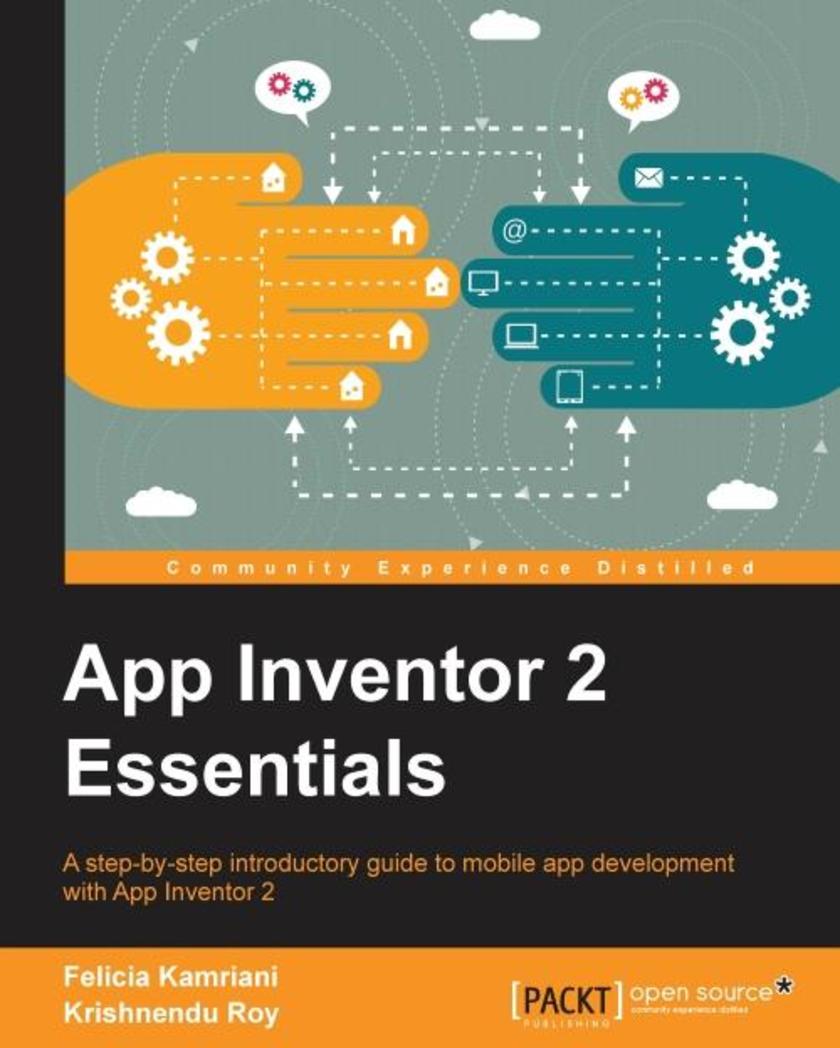
App Inventor 2 Essentials
¥54.49
A step-by-step introductory guide to mobile app development with App Inventor 2 About This Book Get an introduction to the functionalities of App Inventor 2 and use it to unleash your creativity Learn to navigate the App Inventor platform, develop basic coding skills and become familiar with a blocks based programming language Build your very first mobile app and feel proud of your accomplishment Follow tutorials to expand your app development skills Who This Book Is For App Inventor 2 Essentials is for anyone who wants to learn to make mobile apps for Android devices – no prior coding experience is necessary. What You Will Learn Perform technical setup and navigate the App Inventor platform Utilize the interactive development environment by pairing a mobile device with a computer using Wi-Fi or USB Build three apps: a game, an event app and a raffle app Create the user interface of the app in the Designer and program the code in the Blocks Editor Integrate basic computer science principles along with more complex elements such fusion tables and lists Test and troubleshoot your applications Publish your apps on Google Play Store to reach a wide audience Unleash your creativity for further app development In Detail App Inventor 2 will take you on a journey of mobile app development. We begin by introducing you to the functionalities of App Inventor and giving you an idea about the types of apps you can develop using it. We walk you through the technical set up so you can take advantage of the interactive development environment (live testing). You will get hands-on, practical experience building three different apps using tutorials. Along the way, you will learn computer science principles as well as tips to help you prepare for the creative process of building an app from scratch. By the end of the journey, you will learn how to package an app and deploy it to app markets. App Inventor 2 Essentials prepares you to amass a resource of skills, knowledge and experience to become a mobile app developer Style and approach Every topic in this book is explained in step-by-step and easy-to-follow fashion, accompanied with screenshots of the interface that will make it easier for you to understand the processes.
Alfresco for Administrators
¥54.49
A fast-paced administrator's guide to Alfresco from the administration, managing, and high-level design perspectives About This Book Understand system capabilities in order to make informed and appropriate decisions about its administration Manage users, groups, email, file systems, and transformer availability using Alfresco Use Alfresco to capture and efficiently manage information about repositories, servers, and statistics Who This Book Is For The target audience would be users with a basic knowledge of Content Management System, and also users who want to understand Alfresco from the administration and high-level design perspectives. What You Will Learn Understand Alfresco's architecture and important building blocks Learn to install Alfresco on various application servers such as Tomcat , JBoss, and WebLogic. Become familiar with various configurations in Alfresco such as databases, filesystems, email, and audits Administrate Alfresco using the Explorer Admin Console, Share Admin Console, and Workflow Admin Console Understand how to integrate LDAP and Active Directory with Alfresco for centralized user management Learn how Alfresco environments can be clustered for high availability Fully understand how Alfresco stores content and easily retrieve any information from Alfresco Monitor and manage Alfresco systems in production In Detail Alfresco is an open source Enterprise Content Management (ECM) system for Windows and Linux-like operating systems. The year-on-year growth of business connections, contacts, and communications is expanding enterprise boundaries more than ever before. Alfresco enables organizations to collaborate more effectively, improve business process efficiency, and ensure information governance. The basic purpose of Alfresco is to help users to capture and manage information in a better way. It helps you capture, organize, and share binary files. This book will cover the basic building blocks of an Alfresco system, how the components fit together, and the information required to build a system architecture. This book will also focus on security aspects of Alfresco. such as authentication, troubleshooting, managing permissions, and so on. It will also focus on managing content and storage, indexing and searches, setting up clustering for high availability, and so forth. Style and approach A step-by-step guide to understanding the Alfresco system and making informed and appropriate decisions about administration.

Learning Node.js for .NET Developers
¥54.49
Solve practical real-world problems using JavaScript and Node.js About This Book Learn the concepts of Node.js to gain a high-level understanding of the Node.js execution model Build an interactive web application with MongoDB and Redis and create your own JavaScript modules that work both on the client side and server side Familiarize yourself with the new features of Node.js and JavaScript with this exclusive step-by-step guide Who This Book Is For This book is for developers who want to learn JavaScript and Node.js. Previous experience with programming is desired, but no JavaScript or Node.js knowledge is required. The book focuses mostly on web development, such as networking, serving dynamic pages, and real-time client-server communication. What You Will Learn Understand which problems Node.js best solves Write idiomatic JavaScript and Node.js code Build web applications and command-line tools Minimise complexity and efficiently solve difficult problems Test and deploy Node.js applications Work with persistent data Implement real-time client-server applications Integrate .NET and Node.js code In Detail Node.js is an open source, cross-platform runtime environment that allows you to use JavaScript to develop server-side web applications. This short guide will help you develop applications using JavaScript and Node.js, leverage your existing programming skills from .NET or Java, and make the most of these other platforms through understanding the Node.js programming model. You will learn how to build web applications and APIs in Node, discover packages in the Node.js ecosystem, test and deploy your Node.js code, and more. Finally, you will discover how to integrate Node.js and .NET code. Style and approach This is a step-by-step and practical guide to Node.js for .Net developers. It covers the fundamentals relating to typical applications. The focus is on providing the practical skills required to develop applications, with a summary of the key concepts covered.


