


 购物车
购物车 个人中心
个人中心
Chef Cookbook - Third Edition
¥80.65
Master over 80 incredibly effective recipes to manage the day-to-day complications in your infrastructure About This Book Immediately apply Devops techniques and methods, then combine them with powerful Chef tools to manage and automate your infrastructure Address the growing challenges of code management, cloud, and virtualization with Chef quickly Explore and implement the important aspects of Chef Automate using this recipe-based guide Who This Book Is For This book is for system engineers and administrators who have a fundamental understanding of information management systems and infrastructure. It is also for DevOps Engineers, IT professionals, and organizations who want to automate and gain greater control of their infrastructures with Chef. No experience with Chef is needed, but may help. What You Will Learn Test your cookbooks with Test Kitchen Manage cookbook dependencies with Berkshelf Use reporting to keep track of what happens during the execution of chef-client runs across all of the machines Create custom Ohai and Knife plugins Build a high-availability service using Heartbeat Use a HAProxy to load-balance multiple web servers In Detail Chef is a configuration management tool that lets you automate your more cumbersome IT infrastructure processes and control a large network of computers (and virtual machines) from one master server. This book will help you solve everyday problems with your IT infrastructure with Chef. It will start with recipes that show you how to effectively manage your infrastructure and solve problems with users, applications, and automation. You will then come across a new testing framework, InSpec, to test any node in your infrastructure. Further on, you will learn to customize plugins and write cross-platform cookbooks depending on the platform. You will also install packages from a third-party repository and learn how to manage users and applications. Toward the end, you will build high-availability services and explore what Habitat is and how you can implement it. Style and approach This book follows a recipe-based approach and covers all the important topics you need to know. If you don't want to dig through a whole book before you get started, this book is for you, as it features a set of independent recipes you can try out immediately.
Learning ASP.NET Core MVC Programming
¥80.65
Learn the fundamentals of ASP.NET MVC and build real-world web applications using ASP.NET Core MVC About This Book Get a first-principles coverage of ASP.NET MVC and the latest release, Core This book is uniquely designed for developers who are looking to transition their skills into the .NET development field The standalone chapter structure leaves you free to explore ASP.NET MVC to immediately solve your pain points Who This Book Is For This book is for developers who want to learn to build web applications using ASP.NET Core, developers who want to make a career building web applications using Microsoft technology, and developers who are working in Ruby on Rails or other web frameworks and want to learn ASP.NET Core MVC. No knowledge of the ASP.NET platform or the .NET platform is required. Even though you do not need to have experience in C#, an understanding of the basic constructs (loops, conditionals, classes, and objects) of any modern programming language would be helpful. What You Will Learn Get to know the concepts of ASP.NET MVC and build a new static web page using HTML, CSS, and jQuery Set up a development environment and run a sample application using the template Create a Controller with action methods Build a view using several features of the Razor View engine Construct a Model for ASP.NET Core MVC application Devise a custom mechanism to provide maximum flexibility to your application through routing Validate the user input on the client side using jQuery Enhance your applications using Bootstrap Explore new configuration and deployment scenarios—step by step guide to deploying ASP.NET Core web application in Linux In Detail ASP.NET Core MVC helps you build robust web applications using the Model-View-Controller design. This guide will help you in building applications which can be deployed on non-windows platforms such as Linux. In today’s age, it is crucial that you possess the ability to separate the programming and business logic, and this is exactly what ASP.NET Core MVC application will help you achieve. This version comes with a number of improvements that enable fast, TDD-friendly development to create sophisticated applications. You would also learn the fundamentals of Entity framework and on how to use the same in ASP.NET Core web applications. The book presents the fundamentals and philosophies of ASP.NET Core. Starting with an overview of the MVC pattern, we quickly dive into the aspects that you need to know to get started with ASP.NET. You will learn about the core architecture of model, view, and control. Integrating your application with Bootstrap, validating user input, interacting with databases, and deploying your application are some of the things that you will be able to execute with this fast-paced guide. The end of the book will test your knowledge as you build a fully working sample application using the skills you’ve learned throughout the book. Style and approach This book takes a first-principles approach to help you understand and implement ASP.NET MVC solutions. It is focused primarily on giving you practical skills rather than the old conventional theoretical teaching.
Learning Ansible 2 - Second Edition
¥80.65
Learn everything you need to manage and handle your systems with ease with Ansible 2 using this comprehensive guide About This Book Simplify the automation of applications and systems using the newest version of Ansible Get acquainted with fundamentals of Ansible such as playbooks, modules, and various testing strategies A comprehensive, learning guide that provides you with great skills to automate your organization’s infrastructure using Ansible 2 Who This Book Is For The book is for sys admins who want to automate their organization’s infrastructure using Ansible 2. No prior knowledge of Ansible is required. What You Will Learn Set up Ansible 2 and an Ansible 2 project in a future-proof way Perform basic operations with Ansible 2 such as creating, copying, moving, changing, and deleting files, and creating and deleting users Deploy complete cloud environments using Ansible 2 on AWS and DigitalOcean Explore complex operations with Ansible 2 (Ansible vault, e-mails, and Nagios) Develop and test Ansible playbooks Write a custom module and test it In Detail Ansible is an open source automation platform that assists organizations with tasks such as configuration management, application deployment, orchestration, and task automation. With Ansible, even complex tasks can be handled easier than before. In this book, you will learn about the fundamentals and practical aspects of Ansible 2 by diving deeply into topics such as installation (Linux, BSD, and Windows Support), playbooks, modules, various testing strategies, provisioning, deployment, and orchestration. In this book, you will get accustomed with the new features of Ansible 2 such as cleaner architecture, task blocks, playbook parsing, new execution strategy plugins, and modules. You will also learn how to integrate Ansible with cloud platforms such as AWS. The book ends with the enterprise versions of Ansible, Ansible Tower and Ansible Galaxy, where you will learn to interact Ansible with different OSes to speed up your work to previously unseen levels By the end of the book, you’ll able to leverage the Ansible parameters to create expeditious tasks for your organization by implementing the Ansible 2 techniques and paradigms. Style and approach This book is a step-by-step learning guide on the all new Ansible 2, which is an ideal configuration management tool.
Practical Data Science Cookbook - Second Edition
¥80.65
Over 85 recipes to help you complete real-world data science projects in R and Python About This Book ? Tackle every step in the data science pipeline and use it to acquire, clean, analyze, and visualize your data ? Get beyond the theory and implement real-world projects in data science using R and Python ? Easy-to-follow recipes will help you understand and implement the numerical computing concepts Who This Book Is For If you are an aspiring data scientist who wants to learn data science and numerical programming concepts through hands-on, real-world project examples, this is the book for you. Whether you are brand new to data science or you are a seasoned expert, you will benefit from learning about the structure of real-world data science projects and the programming examples in R and Python. What You Will Learn ? Learn and understand the installation procedure and environment required for R and Python on various platforms ? Prepare data for analysis by implement various data science concepts such as acquisition, cleaning and munging through R and Python ? Build a predictive model and an exploratory model ? Analyze the results of your model and create reports on the acquired data ? Build various tree-based methods and Build random forest In Detail As increasing amounts of data are generated each year, the need to analyze and create value out of it is more important than ever. Companies that know what to do with their data and how to do it well will have a competitive advantage over companies that don’t. Because of this, there will be an increasing demand for people that possess both the analytical and technical abilities to extract valuable insights from data and create valuable solutions that put those insights to use. Starting with the basics, this book covers how to set up your numerical programming environment, introduces you to the data science pipeline, and guides you through several data projects in a step-by-step format. By sequentially working through the steps in each chapter, you will quickly familiarize yourself with the process and learn how to apply it to a variety of situations with examples using the two most popular programming languages for data analysis—R and Python. Style and approach This step-by-step guide to data science is full of hands-on examples of real-world data science tasks. Each recipe focuses on a particular task involved in the data science pipeline, ranging from readying the dataset to analytics and visualization
Distributed Computing in Java 9
¥80.65
Explore the power of distributed computing to write concurrent, scalable applications in Java About This Book ? Make the best of Java 9 features to write succinct code ? Handle large amounts of data using HPC ? Make use of AWS and Google App Engine along with Java to establish a powerful remote computation system Who This Book Is For This book is for basic to intermediate level Java developers who is aware of object-oriented programming and Java basic concepts. What You Will Learn ? Understand the basic concepts of parallel and distributed computing/programming ? Achieve performance improvement using parallel processing, multithreading, concurrency, memory sharing, and hpc cluster computing ? Get an in-depth understanding of Enterprise Messaging concepts with Java Messaging Service and Web Services in the context of Enterprise Integration Patterns ? Work with Distributed Database technologies ? Understand how to develop and deploy a distributed application on different cloud platforms including Amazon Web Service and Docker CaaS Concepts ? Explore big data technologies ? Effectively test and debug distributed systems ? Gain thorough knowledge of security standards for distributed applications including two-way Secure Socket Layer In Detail Distributed computing is the concept with which a bigger computation process is accomplished by splitting it into multiple smaller logical activities and performed by diverse systems, resulting in maximized performance in lower infrastructure investment. This book will teach you how to improve the performance of traditional applications through the usage of parallelism and optimized resource utilization in Java 9. After a brief introduction to the fundamentals of distributed and parallel computing, the book moves on to explain different ways of communicating with remote systems/objects in a distributed architecture. You will learn about asynchronous messaging with enterprise integration and related patterns, and how to handle large amount of data using HPC and implement distributed computing for databases. Moving on, it explains how to deploy distributed applications on different cloud platforms and self-contained application development. You will also learn about big data technologies and understand how they contribute to distributed computing. The book concludes with the detailed coverage of testing, debugging, troubleshooting, and security aspects of distributed applications so the programs you build are robust, efficient, and secure. Style and approach This is a step-by-step practical guide with real-world examples.
Go Cookbook
¥80.65
Bridge the gap between basic understanding of Go and use of its advanced features About This Book ? Discover a number of recipes and approaches to develop modern back-end applications ? Put to use the best practices to combine the recipes for sophisticated parallel tools ? This book is based on Go 1.8, which is the latest version Who This Book Is For This book is for web developers, programmers, and enterprise developers. Basic knowledge of the Go language is assumed. Experience with back-end application development is not necessary, but may help understand the motivation behind some of the recipes. What You Will Learn ? Test your application using advanced testing methodologies ? Develop an awareness of application structures, interface design, and tooling ? Create strategies for third-party packages, dependencies, and vendoring ? Get to know tricks on treating data such as collections ? Handle errors and cleanly pass them along to calling functions ? Wrap dependencies in interfaces for ease of portability and testing ? Explore reactive programming design patterns in Go In Detail Go (a.k.a. Golang) is a statically-typed programming language first developed at Google. It is derived from C with additional features such as garbage collection, type safety, dynamic-typing capabilities, additional built-in types, and a large standard library. This book takes off where basic tutorials on the language leave off. You can immediately put into practice some of the more advanced concepts and libraries offered by the language while avoiding some of the common mistakes for new Go developers. The book covers basic type and error handling. It explores applications that interact with users, such as websites, command-line tools, or via the file system. It demonstrates how to handle advanced topics such as parallelism, distributed systems, and performance tuning. Lastly, it finishes with reactive and serverless programming in Go. Style and approach This guide is a handy reference for developers to quickly look up Go development patterns. It is a companion to other resources and a reference that will be useful long after reading it through the first time. Each recipe includes working, simple, and tested code that can be used as a reference or foundation for your own applications.
TypeScript 2.x By Example
¥80.65
Leverage the power of Type* 2.0 using real-world examples About This Book ? Begin with the fundamentals of TypeScript and learn how to write better JavaScript code ? Build three amazing applications throughout the book ? Leverage the power of tools such as Angular 2 and NativeScript to build for the web as well as for mobile Who This Book Is For Web developers who would like to learn how to use TypeScript to build amazing applications will benefit from this book. What You Will Learn ? Design your first project in Visual Studio ? Learn about the different data types in TypeScript ? Create web applications in an object-oriented fashion using TypeScript ? Build a Trello application using TypeScript's complex features. ? Explore the tools available in a web application ecosystem to write unit test cases ? Deploy web applications to cloud and assign resources to the application In Detail The TypeScript language, compiler, and open source development toolset brings JavaScript development up to the enterprise level. It allows you to use ES5, ES6, and ES7 JavaScript language features today, including classes, interfaces, generics, modules, and more. Its simple typing syntax enables building large, robust applications using object-oriented techniques and industry-standard design principles. This book aims at teaching you how to get up and running with TypeScript development in the most practical way possible. Taking you through two exciting projects built from scratch, you will learn the basics of TypeScript, before progressing to functions, generics, promises, and callbacks. Then, you’ll get to implement object-oriented programming as well as optimize your applications with effective memory management. You’ll also learn to test and secure your applications, before deploying them. Starting with a basic SPA built using Angular, you will progress on to building, maybe, a Chat application or a cool application. You’ll also learn how to use NativeScript to build a cool mobile application. Each of these applications with be explained in detail, allowing you to grasp the concepts fast. By the end of this book, you will have not only built two amazing projects but you will also have the skills necessary to take your development to the next level. Style and approach Example-based approach to get you quickly started with Type*
Learning Alteryx
¥80.65
Implement your Business Intelligence solutions without any coding - by leveraging the power of the Alteryx platform About This Book ? Experience the power of codeless analytics using Alteryx, a leading Business Intelligence tool ? Uncover hidden trends and valuable insights from your data across different sources and make accurate predictions ? Includes real-world examples to put your understanding of the features in Alteryx to practical use Who This Book Is For This book is for aspiring data professionals who want to learn and implement self-service analytics from scratch, without any coding. Those who have some experience with Alteryx and want to gain more proficiency will also find this book to be useful. A basic understanding of the data science concepts is all you need to get started with this book. What You Will Learn ? Create efficient workflows with Alteryx to answer complex business questions ? Learn how to speed up the cleansing, data preparing, and shaping process ? Blend and join data into a single dataset for self-service analysis ? Write advanced expressions in Alteryx leading to an optimal workflow for efficient processing of huge data ? Develop high-quality, data-driven reports to improve consistency in reporting and analysis ? Explore the flexibility of macros by automating analytic processes ? Apply predictive analytics from spatial, demographic, and behavioral analysis and quickly publish, schedule ? Share your workflows and insights with relevant stakeholders In Detail Alteryx, as a leading data blending and advanced data analytics platform, has taken self-service data analytics to the next level. Companies worldwide often find themselves struggling to prepare and blend massive datasets that are time-consuming for analysts. Alteryx solves these problems with a repeatable workflow designed to quickly clean, prepare, blend, and join your data in a seamless manner. This book will set you on a self-service data analytics journey that will help you create efficient workflows using Alteryx, without any coding involved. It will empower you and your organization to take well-informed decisions with the help of deeper business insights from the data.Starting with the fundamentals of using Alteryx such as data preparation and blending, you will delve into the more advanced concepts such as performing predictive analytics. You will also learn how to use Alteryx’s features to share the insights gained with the relevant decision makers. To ensure consistency, we will be using data from the Healthcare domain throughout this book. The knowledge you gain from this book will guide you to solve real-life problems related to Business Intelligence confidently. Whether you are a novice with Alteryx or an experienced data analyst keen to explore Alteryx’s self-service analytics features, this book will be the perfect companion for you. Style and approach Comprehensive, step by step guide filled with real-world examples to step through the complex business questions using one of the leading data analytics platform.
Cacti Beginner's Guide - Second Edition
¥80.65
A comprehensive guide to learning Cacti and using it to implement performance measurement and reporting within a Network Operations Center About This Book ? A complete Cacti book that focuses on the basics as well as the advanced concepts you need to know for implementing a Network Operations Center ? A step-by-step Beginner's Guide with detailed instructions on how to create and implement custom plugins ? Written by Thomas Urban – creator of the "Cereus" and "NMID" plugins for Cacti known as Phalek in the Cacti forum Who This Book Is For If you are a network operator and want to use Cacti for implementing performance measurement for trending, troubleshooting, and reporting purposes, then this book is for you. You only need to know the basics of network management and SNMP. What You Will Learn ? Setting up Cacti on Linux and Windows systems ? Extending the core functionality by using the plugin architecture ? Building your own custom plugins ? Creating your own custom data input method to retrieve data from your systems ? Using SNMP, SSH, and WMI to retrieve remote performance data ? Designing and create enterprise-class reports with the reporting plugins ? Implementing threshold-based alerting using the Thold plugin ? Automating common administrative tasks utilizing the command-line interface and the automate functionality ? Migrating Cacti to new servers ? Building a multi remote-poller environment In Detail Cacti is a performance measurement tool that provides easy methods and functions for gathering and graphing system data. You can use Cacti to develop a robust event management system that can alert on just about anything you would like it to. But to do that, you need to gain a solid understanding of the basics of Cacti, its plugin architecture, and automation concepts. Cacti Beginner's Guide will introduce you to the wide variety of features of Cacti and will guide you on how to use them for maximum effectiveness. Advanced topics such as the plugin architecture and Cacti automation using the command-line interface will help you build a professional performance measurement system. Designed as a beginner's guide, the book starts off with the basics of installing and using Cacti, and also covers the advanced topics that will show you how to customize and extend the core Cacti functionalities. The book offers essential tutorials for creating advanced graphs and using plugins to create enterprise-class reports to show your customers and colleagues. From data templates to input methods and plugin installation to creating your own customized plugins, this book provides you with a rich selection of step-by-step instructions to reach your goals. It covers all you need to know to implement professional performance measurement techniques with Cacti and ways to fully customize Cacti to fit your needs. You will also learn how to migrate Cacti to new servers. Lastly you will also be introduced to the latest feature of building a scalable remote poller environment. By the end of the book, you will be able to implement and extend Cacti to monitor, display, and report the performance of your network exactly the way you want. Style and approach Written for beginners to Cacti, this book contains step-by-step instructions and hands-on tutorials for network operators to learn how to implement and use the core Cacti functions.
Building RESTful Web services with Go
¥80.65
Explore the necessary concepts of REST API development by building few real world services from scratch. About This Book ? Follow best practices and explore techniques such as clustering and caching to achieve a reactive, scalable web service ? Leverage the Buffalo Framework to quickly implement RESTful endpoints ? Learn to implement a client library for a RESTful web service using Go Who This Book Is For This book is intended for those who want to learn to build RESTful web services with a framework like Buffalo. To make best use of the code samples included in the book, you should have a basic knowledge of Go programming. What You Will Learn ? Create HTTP handler and introspect the Gorilla Mux router ? OAuth 2 implementation with Go ? Build RESTFul API with go-restful, Revel.Go and Buffalo Go ? Create REST API with MongoDB and Go ? Build a working client library and unit test for REST API ? Debug, test, and profile RESTful APIs with each of the frameworks ? Optimize and scale REST API using microservices In Detail REST is an architectural style that tackles the challenges of building scalable web services and in today's connected world, APIs have taken a central role on the web. APIs provide the fabric through which systems interact, and REST has become synonymous with APIs. The depth, breadth, and ease of use of Go, makes it a breeze for developers to work with it to build robust Web APIs. This book takes you through the design of RESTful web services and leverages a framework like Buffalo Go to implement these services. The book starts with a brief introduction to REST API development and how it transformed the modern web. You will learn how to handle routing and authentication of web services along with working with middleware for internal service. The book explains how to use Go frameworks to build RESTful web services and work with MongoDB to create REST API. You will learn how to integrate Postgres SQL and JSON with a Go web service and build a client library in Go for consuming REST API. You will learn how to scale APIs using the microservice architecture and deploy the REST APIs using Nginx as a proxy server. Finally you will learn how to metricize a REST API using an API Gateway. By the end of the book you will be proficient in building RESTful APIs in Go. Style and approach This book is a step-by-step, hands-on guide to designing and building RESTful web services.
Kali Linux Cookbook - Second Edition
¥80.65
Over 80 recipes to effectively test your network and boost your career in security About This Book ? Learn how to scan networks to find vulnerable computers and servers ? Hack into devices to control them, steal their data, and make them yours ? Target wireless networks, databases, and web servers, and password cracking to make the most of Kali Linux Who This Book Is For If you are looking to expand your career into penetration testing, you will need a good understanding of Kali Linux and the variety of tools it includes. This book will work as a perfect guide for anyone who wants to have a practical approach in leveraging penetration testing mechanisms using Kali Linux What You Will Learn ? Acquire the key skills of ethical hacking to perform penetration testing ? Learn how to perform network reconnaissance ? Discover vulnerabilities in hosts ? Attack vulnerabilities to take control of workstations and servers ? Understand password cracking to bypass security ? Learn how to hack into wireless networks ? Attack web and database servers to exfiltrate data ? Obfuscate your command and control connections to avoid firewall and IPS detection In Detail Kali Linux is a Linux distribution designed for penetration testing and security auditing. It is the successor to BackTrack, the world’s most popular penetration testing distribution. Kali Linux is the most widely used platform and toolkit for penetration testing. Security is currently the hottest field in technology with a projected need for millions of security professionals. This book focuses on enhancing your knowledge in Kali Linux for security by expanding your skills with toolkits and frameworks that can increase your value as a security professional. Kali Linux Cookbook, Second Edition starts by helping you install Kali Linux on different options available. You will also be able to understand the lab architecture and install a Windows host for use in the lab. Next, you will understand the concept of vulnerability analysis and look at the different types of exploits. The book will introduce you to the concept and psychology of Social Engineering and password cracking. You will then be able to use these skills to expand the scope of any breaches you create. Finally, the book will guide you in exploiting specific technologies and gaining access to other systems in the environment. By the end of this book, you will have gained the core knowledge and concepts of the penetration testing process. Style and approach This book teaches you everything you need to know about Kali Linux from the perspective of a penetration tester. It is filled with powerful recipes and practical examples that will help you gain in-depth knowledge of Kali Linux.
Android Development with Kotlin
¥80.65
Learn how to make Android development much faster using a variety of Kotlin features, from basics to advanced, to write better quality code. About This Book ? Leverage specific features of Kotlin to ease Android application development ? Write code based on both object oriented and functional programming to build robust applications ? Filled with various practical examples so you can easily apply your knowledge to real world scenarios ? Identify the improved way of dealing with common Java patterns Who This Book Is For This book is for developers who have a basic understanding of Java language and have 6-12 months of experience with Android development and developers who feel comfortable with OOP concepts. What You Will Learn ? Run a Kotlin application and understand the integration with Android Studio ? Incorporate Kotlin into new/existing Android Java based project ? Learn about Kotlin type system to deal with null safety and immutability ? Define various types of classes and deal with properties ? Define collections and transform them in functional way ? Define extensions, new behaviours to existing libraries and Android framework classes ? Use generic type variance modifiers to define subtyping relationship between generic types ? Build a sample application In Detail Nowadays, improved application development does not just mean building better performing applications. It has become crucial to find improved ways of writing code. Kotlin is a language that helps developers build amazing Android applications easily and effectively. This book discusses Kotlin features in context of Android development. It demonstrates how common examples that are typical for Android development, can be simplified using Kotlin. It also shows all the benefits, improvements and new possibilities provided by this language. The book is divided in three modules that show the power of Kotlin and teach you how to use it properly. Each module present features in different levels of advancement. The first module covers Kotlin basics. This module will lay a firm foundation for the rest of the chapters so you are able to read and understand most of the Kotlin code. The next module dives deeper into the building blocks of Kotlin, such as functions, classes, and function types. You will learn how Kotlin brings many improvements to the table by improving common Java concepts and decreasing code verbosity. The last module presents features that are not present in Java. You will learn how certain tasks can be achieved in simpler ways thanks to Kotlin. Through the book, you will learn how to use Kotlin for Android development. You will get to know and understand most important Kotlin features, and how they can be used. You will be ready to start your own adventure with Android development with Kotlin. Style and approach A step-by-step guide that is filled with numerous real-world examples.
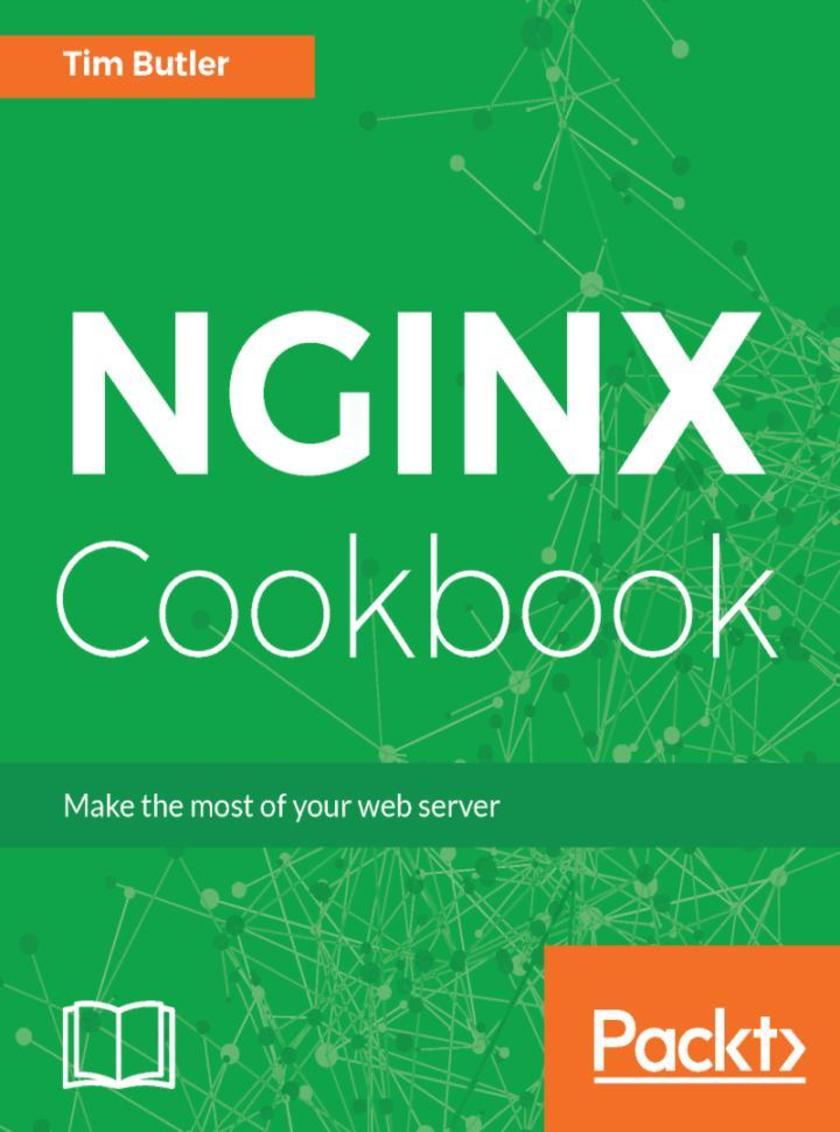
NGINX Cookbook
¥80.65
A practical book on real-world NGINX deployments to get you up and running quickly. About This Book ? Be the first to immerse yourself in the NGINX 1.9x web server and explore the plethora of advanced features. ? Master the skills of load balancing TCP-based applications and implementing HTTP/2. ? A recipe-based approach book that provides you with up-to-date information on NGINX, allowing you to implement specific use cases immediately. Who This Book Is For This book is aimed at smaller-to-medium developers, who are just getting started with NGINX. It assumes they already understand the basics of how a web server works and how basic networking works. What You Will Learn ? Practical, real-world examples and recipes on how to use NGINX ? Common CMS deployments such as WordPress, Joomla and more ? NGINX configurations for frameworks such as Ruby on Rails, Django and more ? Detailed SSL recipes, including HTTP/2 ? Real world rewrite examples ? Basic web and TCP load balancing configuration ? Bandwidth management and connection limiting ? Detailed NGINX deployment scen+BO377arios with Docker ? Performance tuning and monitoring of your NGINX deployments ? OpenResty deployment guides ? Advanced deployments with NGINX Plus features In Detail NGINX Cookbook covers the basics of configuring NGINX as a web server for use with common web frameworks such as WordPress and Ruby on Rails, through to utilization as a reverse proxy. Designed as a go-to reference guide, this book will give you practical answers based on real-world deployments to get you up and running quickly. Recipes have also been provided for multiple SSL configurations, different logging scenarios, practical rewrites, and multiple load balancing scenarios. Advanced topics include covering bandwidth management, Docker container usage, performance tuning, OpenResty, and the NGINX Plus commercial features. By the time you've read this book, you will be able to adapt and use a wide variety of NGINX implementations to solve any problems you have. Style and approach With practical, real-world examples and recipes on how to use NGINX, this go-to book will remain valid for many years. Included are detailed recipes that solve very specific and sometimes complicated user scenarios with NGINX. Readers will think "Ah, so that's how you do it!" after reading a chapter/sub-chapter. Each scenario in the book is thoroughly tested and validated, especially, when it comes to direct cut and paste code scenarios, where possible, we made test code available so that the reader can instantly see the system in action
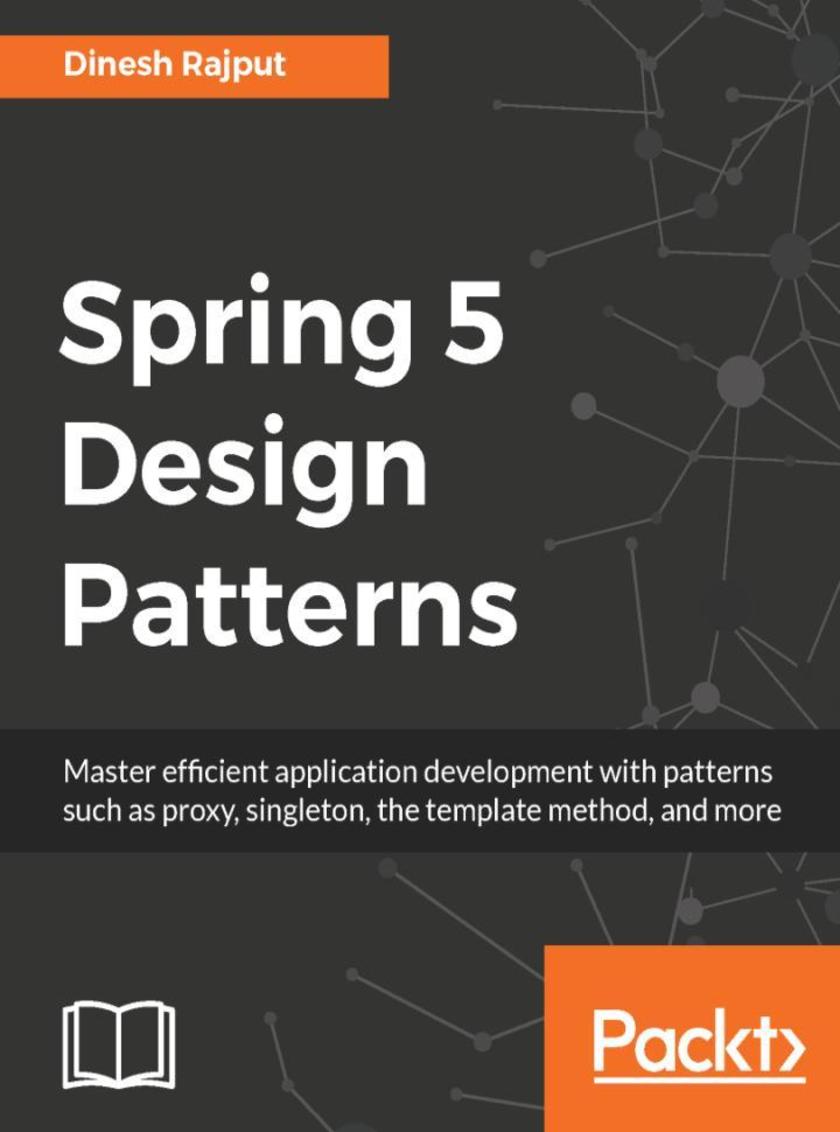
Spring 5 Design Patterns
¥80.65
Learn various design patterns and best practices in Spring 5 and use them to solve common design problems. About This Book ? Explore best practices for designing an application ? Manage your code easily with Spring's Dependency Injection pattern ? Understand the benefits that the right design patterns can offer your toolkit Who This Book Is For This book is for developers who would like to use design patterns to address common problems while designing an app using the Spring Framework and Reactive Programming approach. A basic knowledge of the Spring Framework and Java is assumed. What You Will Learn ? Develop applications using dependency injection patterns ? Learn best practices to design enterprise applications ? Explore Aspect-Oriented Programming relating to transactions, security, and caching. ? Build web applications using traditional Spring MVC patterns ? Learn to configure Spring using XML, annotations, and Java. ? Implement caching to improve application performance. ? Understand concurrency and handle multiple connections inside a web server. ? Utilizing Reactive Programming Pattern to build Reactive web applications. In Detail Design patterns help speed up the development process by offering well tested and proven solutions to common problems. These patterns coupled with the Spring framework offer tremendous improvements in the development process. The book begins with an overview of Spring Framework 5.0 and design patterns. You will understand the Dependency Injection pattern, which is the main principle behind the decoupling process that Spring performs, thus making it easier to manage your code. You will learn how GoF patterns can be used in Application Design. You will then learn to use Proxy patterns in Aspect Oriented Programming and remoting. Moving on, you will understand the JDBC template patterns and their use in abstracting database access. Then, you will be introduced to MVC patterns to build Reactive web applications. Finally, you will move on to more advanced topics such as Reactive streams and Concurrency. At the end of this book, you will be well equipped to develop efficient enterprise applications using Spring 5 with common design patterns Style and approach The book takes a pragmatic approach, showing various design patterns and best-practice considerations, including the Reactive programming approach with the Spring 5 Framework and ways to solve common development and design problems for enterprise applications.
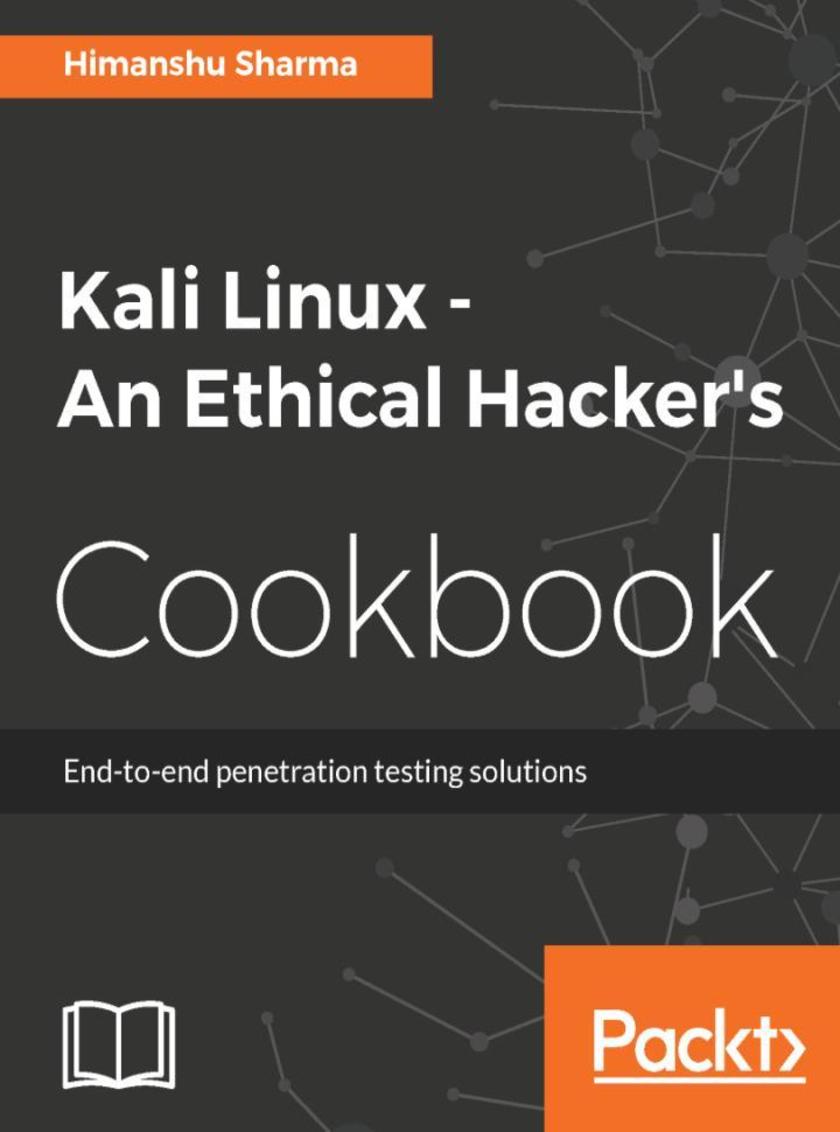
Kali Linux - An Ethical Hacker's Cookbook
¥80.65
Over 120 recipes to perform advanced penetration testing with Kali Linux About This Book ? Practical recipes to conduct effective penetration testing using the powerful Kali Linux ? Leverage tools like Metasploit, Wireshark, Nmap, and many more to detect vulnerabilities with ease ? Confidently perform networking and application attacks using task-oriented recipes Who This Book Is For This book is aimed at IT security professionals, pentesters, and security analysts who have basic knowledge of Kali Linux and want to conduct advanced penetration testing techniques. What You Will Learn ? Installing, setting up and customizing Kali for pentesting on multiple platforms ? Pentesting routers and embedded devices ? Bug hunting 2017 ? Pwning and escalating through corporate network ? Buffer over?ows 101 ? Auditing wireless networks ? Fiddling around with software-defned radio ? Hacking on the run with NetHunter ? Writing good quality reports In Detail With the current rate of hacking, it is very important to pentest your environment in order to ensure advanced-level security. This book is packed with practical recipes that will quickly get you started with Kali Linux (version 2016.2) according to your needs, and move on to core functionalities. This book will start with the installation and configuration of Kali Linux so that you can perform your tests. You will learn how to plan attack strategies and perform web application exploitation using tools such as Burp, and Jexboss. You will also learn how to perform network exploitation using Metasploit, Sparta, and Wireshark. Next, you will perform wireless and password attacks using tools such as Patator, John the Ripper, and airo*-ng. Lastly, you will learn how to create an optimum quality pentest report! By the end of this book, you will know how to conduct advanced penetration testing thanks to the book’s crisp and task-oriented recipes. Style and approach This is a recipe-based book that allows you to venture into some of the most cutting-edge practices and techniques to perform penetration testing with Kali Linux.
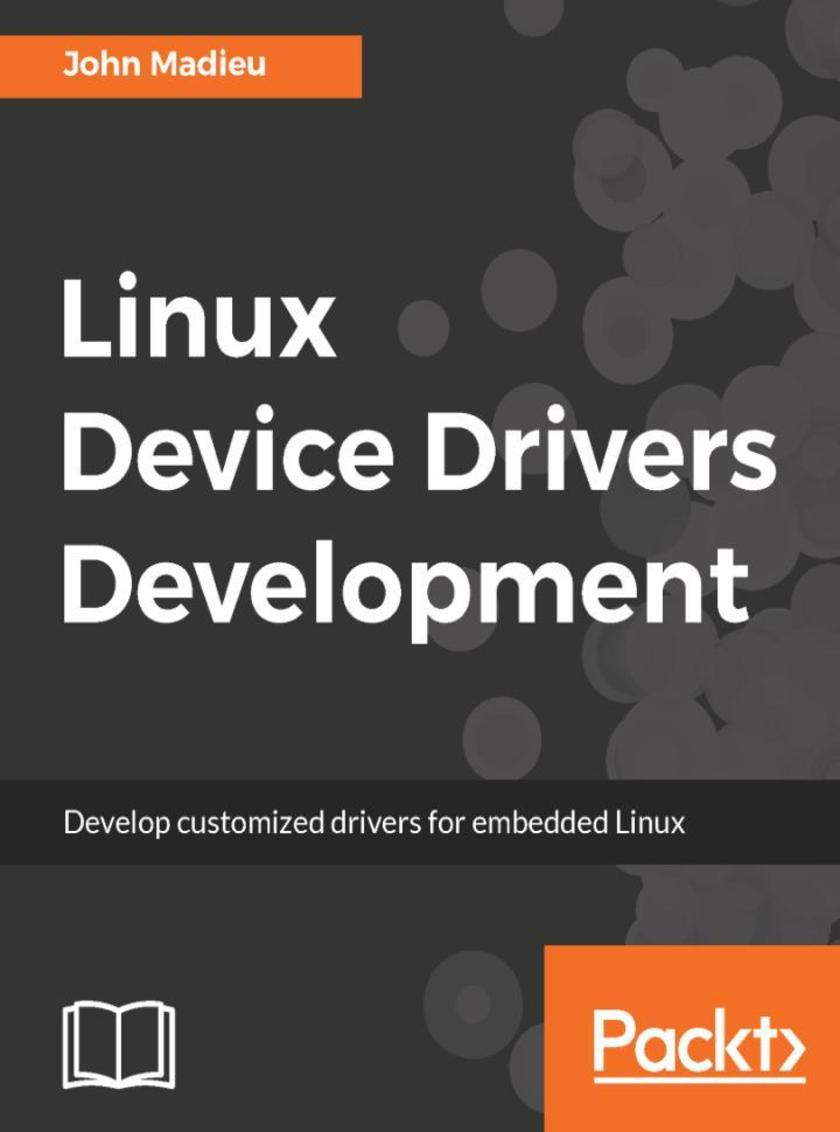
Linux Device Drivers Development
¥80.65
Learn to develop customized device drivers for your embedded Linux system About This Book ? Learn to develop customized Linux device drivers ? Learn the core concepts of device drivers such as memory management, kernel caching, advanced IRQ management, and so on. ? Practical experience on the embedded side of Linux Who This Book Is For This book will help anyone who wants to get started with developing their own Linux device drivers for embedded systems. Embedded Linux users will benefit highly from this book. This book covers all about device driver development, from char drivers to network device drivers to memory management. What You Will Learn ? Use kernel facilities to develop powerful drivers ? Develop drivers for widely used I2C and SPI devices and use the regmap API ? Write and support devicetree from within your drivers ? Program advanced drivers for network and frame buffer devices ? Delve into the Linux irqdomain API and write interrupt controller drivers ? Enhance your skills with regulator and PWM frameworks ? Develop measurement system drivers with IIO framework ? Get the best from memory management and the DMA subsystem ? Access and manage GPIO subsystems and develop GPIO controller drivers In Detail Linux kernel is a complex, portable, modular and widely used piece of software, running on around 80% of servers and embedded systems in more than half of devices throughout the World. Device drivers play a critical role in how well a Linux system performs. As Linux has turned out to be one of the most popular operating systems used, the interest in developing proprietary device drivers is also increasing steadily. This book will initially help you understand the basics of drivers as well as prepare for the long journey through the Linux Kernel. This book then covers drivers development based on various Linux subsystems such as memory management, PWM, RTC, IIO, IRQ management, and so on. The book also offers a practical approach on direct memory access and network device drivers. By the end of this book, you will be comfortable with the concept of device driver development and will be in a position to write any device driver from scratch using the latest kernel version (v4.13 at the time of writing this book). Style and approach A set of engaging examples to develop Linux device drivers
MySQL 8 for Big Data
¥80.65
Uncover the power of MySQL 8 for Big Data About This Book ? Combine the powers of MySQL and Hadoop to build a solid Big Data solution for your organization ? Integrate MySQL with different NoSQL APIs and Big Data tools such as Apache Sqoop ? A comprehensive guide with practical examples on building a high performance Big Data pipeline with MySQL Who This Book Is For This book is intended for MySQL database administrators and Big Data professionals looking to integrate MySQL 8 and Hadoop to implement a high performance Big Data solution. Some previous experience with MySQL will be helpful, although the book will highlight the newer features introduced in MySQL 8. What You Will Learn ? Explore the features of MySQL 8 and how they can be leveraged to handle Big Data ? Unlock the new features of MySQL 8 for managing structured and unstructured Big Data ? Integrate MySQL 8 and Hadoop for efficient data processing ? Perform aggregation using MySQL 8 for optimum data utilization ? Explore different kinds of join and union in MySQL 8 to process Big Data efficiently ? Accelerate Big Data processing with Memcached ? Integrate MySQL with the NoSQL API ? Implement replication to build highly available solutions for Big Data In Detail With organizations handling large amounts of data on a regular basis, MySQL has become a popular solution to handle this structured Big Data. In this book, you will see how DBAs can use MySQL 8 to handle billions of records, and load and retrieve data with performance comparable or superior to commercial DB solutions with higher costs. Many organizations today depend on MySQL for their websites and a Big Data solution for their data archiving, storage, and analysis needs. However, integrating them can be challenging. This book will show you how to implement a successful Big Data strategy with Apache Hadoop and MySQL 8. It will cover real-time use case scenario to explain integration and achieve Big Data solutions using technologies such as Apache Hadoop, Apache Sqoop, and MySQL Applier. Also, the book includes case studies on Apache Sqoop and real-time event processing. By the end of this book, you will know how to efficiently use MySQL 8 to manage data for your Big Data applications. Style and approach Step by Step guide filled with real-world practical examples.
Building Business Websites with Squarespace 7 - Second Edition
¥80.65
Discover the best way to build, design and launch professional websites with Squarespace quickly, without needing to learn any code About This Book ? Discover time-saving tricks and best practices, and avoid common pitfalls while creating a website ? Create visually stunning Responsive Design templates for your website with Squarespace 7 ? Understand how to monitor, measure, and manage your website after launching it Who This Book Is For This book is ideal for anyone who wants to learn how to use the latest version of Squarespace to create a website from scratch and take it through to go-live. You don't need any prior experience with Squarespace, HTML, or CSS, or building websites in general as everything is done using Squarespace's simple, browser-based interface. What You Will Learn ? Develop an essential Website Toolkit that will act as reference and materials for your entire project, ensuring you stay on-target to meet your objectives ? Set up your Squarespace account, learn how the interface works, and select the correct template for your website's purpose and goals ? Create your website framework, fill it with content, and arrange your pages using Squarespace's easy drag-and-drop tools ? Customize your site's look and feel to match your brand, and create a stunning visual impact for your website on all types of devices, including mobiles and tablets ? Configure the core functions your business needs, whether connecting to social media, promoting events, showcasing your work, or selling goods and services online ? Learn time-saving tricks and how to avoid common pitfalls from an experienced professional with years of Squarespace experience ? Gain valuable insights about search engine optimization, communicating effectively online, and other e-marketing advice ? How to monitor, measure, and manage your website post-launch In Detail Squarespace is a web-based tool that allows non-technical people to create and manage professional-looking websites quickly, without needing to write any code. It empowers business owners to take total control of their own websites, without needing to pay someone to design or maintain it. This book covers much more than just how to use Squarespace. It covers all aspects of creating a successful business website, from developing your brand identity, to writing and structuring content to match your target audience's needs, and dozens of other other valuable tips that will help your website shine. Most importantly, you'll learn the correct steps to follow in order to ensure your project is smooth and stress-free. The book starts by helping you plan your website project and gather all the raw materials you'll need. Next, you'll set up your account and become familiar with the terminology and tools that you'll be using. Once you've learned the basics of how the Squarespace interface, templates, and different page types operate, you will create the framework of your website, ready for you to insert content and functionality. Then, once all the core elements are in place, you'll apply the aesthetic fine-tuning needed to bring your website in line with your brand. After the aesthetics have been honed and all functions tested, you will launch your website and drive traffic to it, monitor it, and improve it. Style and approach This easy-to-follow guide will teach you to build websites the easiest way in the latest version of Squarespace.
Building Android UIs with Custom Views
¥80.65
Create engaging user experiences and awesome user interfaces using this guide About This Book ? Move beyond default UI templates, create and customize amazing UIs with Android Custom View ? Enable smooth data flow and create futuristic UIs by creating flexible custom views ? Scale your apps with responsive and data intensive views Who This Book Is For This book is for Android developers who want to create great user interfaces and move beyond the basics of the standard UI elements. They must have basic Android development knowledge along with basic Java programming. What You Will Learn ? Extend the standard UI widget framework by creating Custom views ? Add complex rendering, animations, and interactions to your views ? Optimize performance and decrease battery usage ? Implement custom views to share between multiple projects, or share it publicly ? Create 3D custom views using OpenGL ES In Detail To build great user interfaces for your Android apps that go beyond the standard UI elements, you need to use custom Android views. With these, you can give your app a distinctive look and ensure that it functions properly across multiple devices. This book will help you construct a great UI for your apps by teaching you how to create custom Android views. You will start by creating your first Android custom view and go through the design considerations. You will then see how the right choices will enable your custom view to perform seamlessly across multiple platforms and Android versions. You will create custom styleable attributes that work with Android XML layouts, learn to process touch events, define custom attributes, and add properties and events to them. By the end of this book, you will be able to create apps with custom views that are responsive and adaptable to make your app distinctive and an instant hit with its users. Style and approach The approach will be that of a step by step practical tutorial. The book will take you through a complete journey, right from creating your first Android view to customizing it to enable it to support any complex app.
Python Deep Learning Cookbook
¥80.65
Solve different problems in modelling deep neural networks using Python, Tensorflow, and Keras with this practical guide About This Book ? Practical recipes on training different neural network models and tuning them for optimal performance ? Use Python frameworks like TensorFlow, Caffe, Keras, Theano for Natural Language Processing, Computer Vision, and more ? A hands-on guide covering the common as well as the not so common problems in deep learning using Python Who This Book Is For This book is intended for machine learning professionals who are looking to use deep learning algorithms to create real-world applications using Python. Thorough understanding of the machine learning concepts and Python libraries such as NumPy, SciPy and scikit-learn is expected. Additionally, basic knowledge in linear algebra and calculus is desired. What You Will Learn ? Implement different neural network models in Python ? Select the best Python framework for deep learning such as PyTorch, Tensorflow, MXNet and Keras ? Apply tips and tricks related to neural networks internals, to boost learning performances ? Consolidate machine learning principles and apply them in the deep learning field ? Reuse and adapt Python code snippets to everyday problems ? Evaluate the cost/benefits and performance implication of each discussed solution In Detail Deep Learning is revolutionizing a wide range of industries. For many applications, deep learning has proven to outperform humans by making faster and more accurate predictions. This book provides a top-down and bottom-up approach to demonstrate deep learning solutions to real-world problems in different areas. These applications include Computer Vision, Natural Language Processing, Time Series, and Robotics. The Python Deep Learning Cookbook presents technical solutions to the issues presented, along with a detailed explanation of the solutions. Furthermore, a discussion on corresponding pros and cons of implementing the proposed solution using one of the popular frameworks like TensorFlow, PyTorch, Keras and CNTK is provided. The book includes recipes that are related to the basic concepts of neural networks. All techniques s, as well as classical networks topologies. The main purpose of this book is to provide Python programmers a detailed list of recipes to apply deep learning to common and not-so-common scenarios. Style and approach Unique blend of independent recipes arranged in the most logical manner
Mastering Windows PowerShell Scripting - Second Edition
¥80.65
Master the art of automating and managing your environment using PowerShell About This Book ? Find quick solutions to automate your environment with ease ? Work with large amounts of data effortlessly with PowerShell data types and secure them ? Packed with real-world examples to automate and simplify the management of your Windows environment Who This Book Is For If you are a system administrator who wants to become an expert in controlling and automating your Windows environment, then this book is for you. It is also for those new to the PowerShell language. What You Will Learn ? Optimize code through the use of functions, switches, and looping structures ? Install PowerShell on your Linux system ? Utilize variables, hashes, and arrays to store data ? Work with Objects and Operators to test and manipulate data ? Parse and manipulate different data types ? Write .NET classes with ease within the PowerShell ? Create and implement regular expressions in PowerShell *s ? Deploy applications and code with PowerShell’s Package management modules ? Leverage session-based remote management ? Manage files, folders, and registries through the use of PowerShell In Detail PowerShell *s offer a handy way to automate various chores. Working with these *s effectively can be a difficult task. This comprehensive guide starts from scratch and covers advanced-level topics to make you a PowerShell expert. The first module, PowerShell Fundamentals, begins with new features, installing PowerShell on Linux, working with parameters and objects, and also how you can work with .NET classes from within PowerShell. In the next module, you’ll see how to efficiently manage large amounts of data and interact with other services using PowerShell. You’ll be able to make the most of PowerShell’s powerful automation feature, where you will have different methods to parse and manipulate data, regular expressions, and WMI. After automation, you will enter the Extending PowerShell module, which covers topics such as asynchronous processing and, creating modules. The final step is to secure your PowerShell, so you will land in the last module, Securing and Debugging PowerShell, which covers PowerShell execution policies, error handling techniques, and testing. By the end of the book, you will be an expert in using the PowerShell language. Style and approach This practical guide covers all the advanced PowerShell functionalities that an administrator needs to learn to automate their environments.


