


 购物车
购物车 个人中心
个人中心
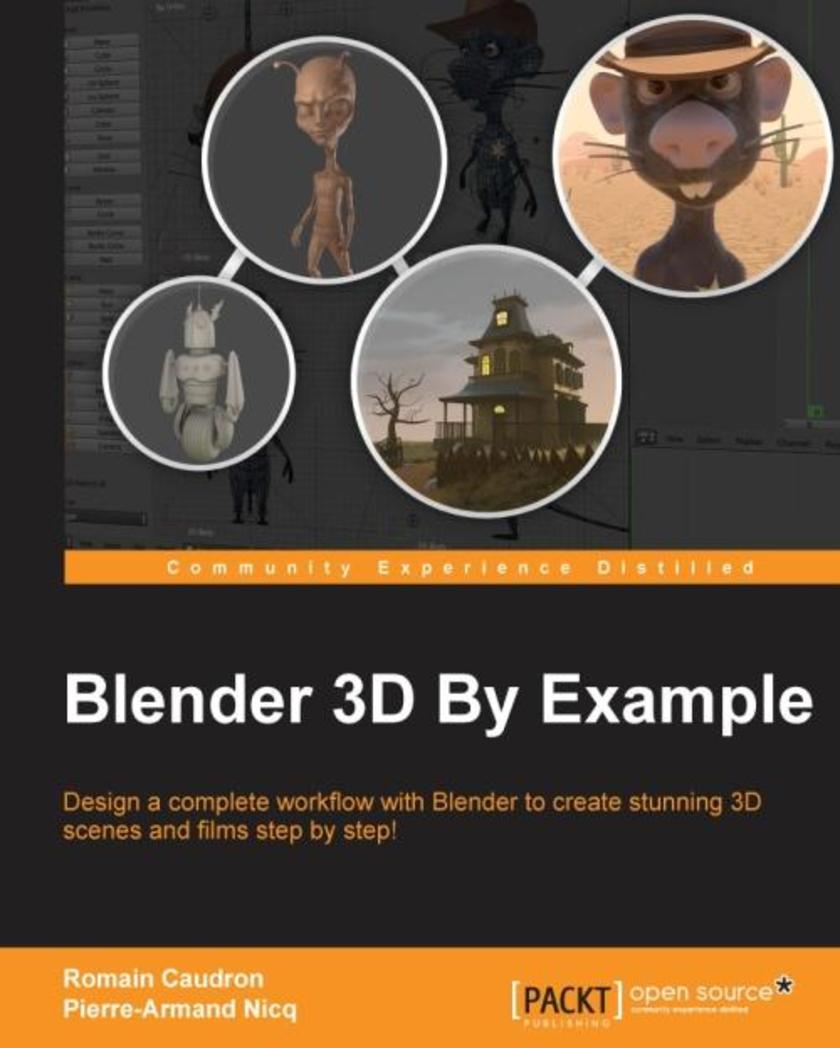
Blender 3D By Example
¥80.65
Design a complete workflow with Blender to create stunning 3D scenes and films step-by-step! About This Book Give life to a character within a full animated short film by learning the rigging and animation process Make use of the powerful tools available in Blender to produce professional-quality 3D characters and environments Discover advanced techniques by adding fur to a character, creating a grass field, and fine-tuning a shot with post-processing effects to enhance your creations Who This Book Is For This book will give any beginner the necessary skills and knowledge to create own 3D projects with Blender. You don't need to have any previous experience in 3D modeling, but if you do, then this book is a great way get you started with Blender. This book is for anyone who wants to learn Blender by creating concrete projects. What You Will Learn Understand the basics of 3D and how to navigate your way around the Blender interface Create a 3D robot toy model from start to finish using the basic modeling tools of Blender Make a full alien character using the skin mesh modifier and the sculpting tools with an artistic approach Use re-topology techniques to create a clean 3D version of the previously sculpted alien Model a full haunted house and its environment using more advanced modeling tools and techniques such as the Array Modifier, Instance duplication, or Curves Discover the power of the texture paint tool in order to add color to the haunted house Get to know the Cycles render engine by creating different materials for the house and the environment In Detail Blender is a powerful tool, stable, with an integral workflow that will allow you to understand your learning of 3D creation with serenity. Today, it is considered to be one of the most complete 3D packages on the market and it is free and open source! It is very efficient for many types of productions, such as 3D animated or live action films, architecture, research, or even game creation with its integrated game engine and its use of the Python language. Moreover, Blender has an active community that contributes to expanding its functionalities. Today, it is used in many professional products and by many companies. Through this book, you will create many types of concert projects using a step-by-step approach. You will start by getting to know the modeling tools available in Blender as you create a 3D robot toy. Then, you will discover more advanced techniques such as sculpting and re-topology by creating a funny alien character. After that, you will create a full haunted house scene. For the last project, you will create a short film featuring a rat cowboy shooting cheese in a rat trap! This will be a more complex project in which you learn how to rig, animate, compose advanced material, composite, and edit a full sequence. Each project in this book will give you more practice and increase your knowledge of the Blender tools. By the end of this book, you will master a workflow that you will be able to apply to your own creations. Style and approach This is an easy-to-follow book that is based on four concrete projects, with increasing levels of difficulty. Each chapter will teach you how to create these projects step-by-step. New tools and techniques are introduced in a theoretical and practical way, so you can apply them in your own projects later.
Dart By Example
¥80.65
Design and develop modern web applications with Google's bold and productive language through engaging example projects About This Book Full of engaging and varied example projects to equip you to build your own web applications Learn the Dart language and key libraries Productively create fast and reliable web applications Who This Book Is For If you are a front- or back-end web developer who is looking to build complex full-featured web applications without the quagmire of disconnected JavaScript frameworks, this book is a practical walkthrough of substantial applications that will have you and your team coding Dart in a productive manner. This book will give you a compiled, optional typed, scalable environment to rapidly develop applications. As Dart was designed to be familiar, any developer with even a small amount of knowledge of JavaScript or another programming language will be at home with the language immediately and will be coding quickly. What You Will Learn Master the core Dart language, type system, and key development tools Connect to existing web services, process JSON, and create your own framework for the data display Run and debug the Dart server and web applications and compile them in JavaScript Handle form data and encryption Build and deploy server applications on the major OSes and implement the REST API Work with PostgreSQL—an industry standard relational database system Create robust applications with unit tests, documentation, and diagnostic logging Develop command-line applications, and explore the key data structures and libraries In Detail Designed to create next generation apps, Google’s Dart offers a much more robust framework and also supersedes JavaScript in several aspects. Familiar yet innovative, compact yet scalable, it blows away the accumulated JavaScript legacy limitations. Dart was designed for great tool-ability and developer productivity, allowing you to create better application faster than before. Google chose it for their billion dollar advertising business and you have its power for your projects too. This book will introduce you the Dart language starting from its conception to its current form, and where it headed is through engaging substantial practical projects. You will be taken through building typical applications and exploring the exciting new technologies of HTML5. With example code projects such as a live data monitoring and viewing system, a blogging system, a slides presentation application, and more, then this book will walk you through step by step through building data-driven web applications with ease and speed. Style and approach A varied collection of compelling practical Dart projects that are developed progressively with full explanations of concepts and implementation. Each project introduces features of the language and environment, demonstrating how Dart can be used in rich structured web applications.
Learning Unity iOS Game Development
¥80.65
Build exciting games with Unity on iOS and publish them on the App Store About This Book Take advantage of Unity 5's new tools to create a fully interactive mobile game Learn how to connect your iTunes developer account and use Unity 5 to communicate with it Use your Macintosh computer to publish your game to the App Store Who This Book Is For This book is for iOS developers who want to learn how to build games with Unity for the iOS platform. Some prior experience in game development would be useful. What You Will Learn Create your own iTunes Connect Developer account and create an app within it Set up iTunes Game Center features in iTunes Connect so you can use them within Unity 5 Construct a game using C# that allows users to interactively control the game character Use Unity 5's editor window to create a custom editor tool specific for the game made in the book Store and keep track of data so the player is able to collect in-game pick-ups that can be used to purchase in-game goods Use all game features so the player is able to fully navigate menus between the front menu and in the game state Make, test, and finally release builds so you can play on your device and then submit the game to Apple for review In Detail Over recent years, the market for mobile game development using Unity has grown multi-fold with an overwhelming 600 million gamers playing games developed using Unity engine. The newly launched Unity 5 offers a wide range of dedicated and powerful tools for iOS developers who intend to follow the basics and gradually elevate their skills to revolutionize the way they design and publish games for the App Store. From beginners, to those who are experienced making video games, this book goes through the steps of using Unity 5 to make a game from the ground up and setting the game up with iTunes Game Center features. The book begins with an introduction to setting up an iTunes Connect developer account, this will allow you to use Unity to its full potential with iOS. You will create a new app in iTunes Connect with the settings for Apple approval. You will learn, in detail, how to use Unity 5 and the programming language C# to make a fully interactive game that keeps track of player progress, Game Center Leaderboards, and Achievements, as well as displaying iAds and offering In-App purchases. Moving on, you’ll discover how to create development and release builds, enabling you to test the game on your device before finally submitting the game for Apple’s approval. By the end of the book, you will have a complete understanding of how iTunes and Unity can be used in combination to build and publish a fully interactive and reliable game to the App Store. Style and approach This is a step-by-step guide that covers the fundamentals of gaming and reveals the secrets of building and monetizing games for the iOS platform.
Yii2 By Example
¥80.65
Develop complete web applications from scratch through practical examples and tips for beginners and more advanced users About This Book Improve your programming experience and become a full stack developer Master real-life web applications, and create and manage four different projects Step-by-step guidance to develop real-world web applications smoothly Who This Book Is For This book is for anyone who wants to discover and explore Yii Framework. Basic programming experience with PHP and object oriented programming is assumed. What You Will Learn Understand basic concepts, along with the installation and customization of Yii Discover models, controllers, and views—concepts applied in a web context—and how they are employed in Yii Use ActiveRecord to manipulate a database Add access control to your web application through authentication and authorization Install and customize an advanced template for multiple applications in the same project Create a RESTful Web Service to allow remote access to data Develop a console application to launch a command in the console as an automated task (cron job) Make code reusable through widgets and components and localize text messages to make a multilanguage web app In Detail Yii is a high-performance PHP framework best for developing Web 2.0 applications. It provides fast, secure, and professional features to create robust projects, however, this rapid development requires the ability to organize common tasks together to build a complete application. It's all too easy to get confused; this is where this book comes in. This book contains a series of practical project examples for developers starting from scratch. Each section contains the most relevant theories for every topic as you walk through developing each project, focusing on key aspects that commonly confuse users. The book starts with all the framework’s basic concepts, such as controllers and views, to introduce you to Yii and creating your first application, a simple news reader. You will be learn to configure URL rules to make a pretty URL, essential for search engine optimization. Next, you will walk through Model and ActiveRecord, key concepts in database interaction. The second application you will develop is a reservation system that allows you to manage rooms, customers, and reservations. For this, you will use database connection through SQL and ActiveRecord. More complex than the first one, this application will introduce you to the advanced template of Yii 2, splitting the app into two parts: a frontend for all visitors and a backend for the admin. Finally, you will move on to the last two applications: one that allows connections from remote clients, through RESTful components of Yii 2, and another that creates and organizes automatic tasks using the console application structure of Yii 2. Style and approach This is a step-by-step guide with each topic introduced in the context of real-world applications, highlighting common cases where users may encounter difficulties.
Mastering iOS Game Development
¥80.65
Master the advanced concepts of game development for iOS to build impressive games About This Book Create a complete game with advanced techniques through the course of the book using in-depth, hands-on instructions Learn how to multi-task and improve performance optimization in your game playing experience The author, Miguel, has 11 years of iOS game development using xcode and has released over 10 games to the Apple AppStoreMaster player movement using touch controls as well as discuss motion controls Who This Book Is For This book is for those who have created an iOS game already and want to hone their skills. A reasonable level of knowledge and an understanding of the core elements and applications would be helpful. What You Will Learn Blast off and start developing fun games Optimize the assets for the best performance in the game app Master player movement using touch controls as well as discuss motion controls Perform bug Squashing by testing and debugging Design interesting various characters and enemies for your game Test your game on both, the simulator on the computer and on real devices Tweak and fine tune the code and graphics before the release of your app Uncover some awesome new gameplay by adding in multiplayer elements, to get more people playing together In Detail iOS is an operating system for Apple manufactured phones and tablets. Mobile gaming is one of the fastest-growing industries, and compatibility with iOS is now becoming the norm for game developers. SpriteKit is part of the native SDK from Apple, and enables developers to make simple entry into game development without unnecessary overhead and a long learning process. SpriteKit also provides other functionality that is useful for games, including basic sound playback support and physics simulation. In addition, Xcode provides built-in support for SpriteKit so that you can create complex special effects and texture atlases directly in Xcode. This combination of framework and tools makes SpriteKit a good choice for games and other apps that require similar kinds of animation. Become a master in iOS game development through this fast and fun guide! In the beginning, we’ll tell you everything you need to plan and design your game. You’ll then start developing your game through step-by-step instructions using the various built-in technologies of Xcode. From there on, we discuss how to deploy your game to the iOS App Store, as well as monetizing it to make more revenue. You will also learn advanced techniques to improve your game playing experience, including better multi-tasking, improved performance optimization, battery management, and more. To end the book off, we’ll show you how to update your game with different features, then port the update to the App Store. Style and approach This book provides an easy-to-understand and fun approach to game development, with step-by-step instructions and detailed explanation of each block of code. The topics covered range from easy to advanced, so buckle up for a fast-paced ride!

Mastering MeteorJS Application Development
¥80.65
MeteorJS makes full-stack JavaScript Application Development simple – Learn how to build better modern web apps with MeteorJS, and become an expert in the innovative JavaScript framework About This Book Get your dream project up and running by building exceptional MeteorJS applications in a matter of days Learn how to integrate other JavaScript frameworks into your MeteorJS project and become an expert in full-stack development Go beyond coding and learn how to make modern design decisions – from mobile design to SEO – that drive great user experiences Who This Book Is For If you’ve already had some experience with MeteorJS but want to learn how to build even better modern web application, this book has been created for you. It provides you with a comprehensive look at one of those most important frameworks being used for the modern web today.What You Will Learn Get to grips with the basics and learn how to build a complete real-time application with MeteorJS Find out how Meteor makes full-stack development simple – become a better developer, fast. Use some of the most effective testing tools in modern web development to troubleshoot, debug and optimize your app Find out how to write custom packages for applications – so you can build your project exactly how you want Integrate React and Angular into your project Design and develop high quality animations that will give your UI the edge Build MeteorJS to serve as REST-based application and reactive system Learn how to host a MeteorJS application and then scale it for data Find out how MeteorJS can help you build for mobile Learn how to make sure you implement an effective SEO strategy in your MeteorJS application In Detail The web is dead – applications now rule our online experiences. But how are you going to build themWell, if you’ve been paying attention, you might already have tried your hand with MeteorJS, the JavaScript framework that helps you build complete full-stack web applications that are responsive and fast with ease. Mastering MeteorJS Application Development shows you how to do even more with MeteorJS – if you’re ready to try a comprehensive course through one of the most exciting frameworks in web development today, this is the book you need. Designed to take you through the entire process of building an advanced multipage application with Meteor, you’ll be able to bring your web development ideas with surprising ease. You’ll not only learn how Meteor makes web development easier, but also how you can make using Meteor easier, by automating and simplifying tasks so you can be confident you have full control of everything in your workflow – especially everything that could go wrong. From automated testing to integrating other useful frameworks such as Angular and D3, each chapter covers a crucial element in the Meteor development process. Discover how to integrate animations using Meteor’s Blaze, to give your UI designs the edge, and explore reactive programming to effectively harness RESTful systems in your projects. You will also learn how to deploy and scale your application, two crucial aspects of modern development and vital in a changing digital environment with users expecting a product and experience that delivers. With further insights on developing for mobile – and how Meteor can help you tackle the challenges of the trend – and details on incorporating SEO strategies into your application, this book isn’t just a code tutorial – it’s about creating a product that users love. Style and approach This book is a practical guide that teaches you different ways to create custom packages, efficient client and server code, and more using Meteor. This book is packed with perfect examples and explanations to help you understand the concepts. With the perfect mix of theory and practical experience, it will equip you to become a professional MeteorJS developer.
Building Telephony Systems with OpenSIPS - Second Edition
¥80.65
Build high-speed and highly scalable telephony systems using OpenSIPSAbout This BookInstall and configure OpenSIPS to authenticate, route, bill, and monitor VoIP callsGain a competitive edge using the most scalable VoIP technologyDiscover the latest features of OpenSIPS with practical examples and case studiesWho This Book Is ForIf you want to understand how to build a SIP provider from scratch using OpenSIPS, then this book is ideal for you. It is beneficial for VoIP providers, large enterprises, and universities. This book will also help readers who were using OpenSER but are now confused with the new OpenSIPS.Telephony and Linux experience will be helpful to get the most out of this book but is not essential. Prior knowledge of OpenSIPS is not assumed.What You Will LearnLearn to prepare and configure a Linux system for OpenSIPSFamiliarise yourself with the installation and configuration of OpenSIPSUnderstand how to set a domain and create users/extensionsConfigure SIP endpoints and make calls between themMake calls to and from the PSTN and create access control lists to authorize callsInstall a graphical user interface to simplify the task of provisioning user and system informationImplement an effective billing system with OpenSIPSMonitor and troubleshoot OpenSIPS to keep it running smoothlyIn DetailOpenSIPS is a multifunctional, multipurpose signalling SIP server. SIP (Session Initiation Protocol) is nowadays the most important VoIP protocol and OpenSIPS is the open source leader in VoIP platforms based on SIP. OpenSIPS is used to set up SIP Proxy servers. The purpose of these servers is to receive, examine, and classify SIP requests. The whole telecommunication industry is changing to an IP environment, and telephony as we know it today will completely change in less than ten years. SIP is the protocol leading this disruptive revolution and it is one of the main protocols on next generation networks. While a VoIP provider is not the only kind of SIP infrastructure created using OpenSIPS, it is certainly one of the most difficult to implement.This book will give you a competitive edge by helping you to create a SIP infrastructure capable of handling tens of thousands of subscribers.Starting with an introduction to SIP and OpenSIPS, you will begin by installing and configuring OpenSIPS. You will be introduced to OpenSIPS Scripting language and OpenSIPS Routing concepts, followed by comprehensive coverage of Subscriber Management. Next, you will learn to install, configure, and customize the OpenSIPS control panel and explore dialplans and routing. You will discover how to manage the dialog module, accounting, NATTraversal, and other new SIP services. The final chapters of the book are dedicated to troubleshooting tools, SIP security, and advanced scenarios including TCP/TLS support, load balancing, asynchronous processing, and more.A fictional VoIP provider is used to explain OpenSIPS and by the end of the book, you will have a simple but complete system to run a VoIP provider.Style and approachThis book is a step-by-step guide based on the example of a VoIP provider. You will start with OpenSIPS installation and gradually, your knowledge depth will increase.
BeagleBone Home Automation Blueprints
¥80.65
Automate and control your home using the power of the BeagleBone Black with practical home automation projectsAbout This BookBuild, set up, and develop your circuits via step-by-step tutorial of practical examples, from initial board setup to device driver managementGet access to several kinds of computer peripherals to monitor and control your domestic environment using this guideThis book is spread across 10 chapters all focused on one practical home automation projectWho This Book Is ForThis book is for developers who know how to use BeagleBone and are just above the “beginner” level. If you want to learn to use embedded machine learning capabilities, you should have some experience of creating simple home automation projects.What You Will LearnBuild a CO (and other gas) sensor with a buzzer/LED alarm to signal high concentrationsLog environment data and plot it in a fancy mannerDevelop a simple web interface with a LAMP platformPrepare complex web interfaces in JavaScript and get to know how to stream video data from a webcamUse APIs to get access to a Google Docs account or a WhatsApp/Facebook account to manage a home automation systemAdd custom device drivers to manage an LED with different blinking frequenciesDiscover how to work with electronic components to build small circuitsUse an NFS, temperature sensor, relays, and other peripherals to monitor and control your surroundingsIn DetailBeagleBone is a microboard PC that runs Linux. It can connect to the Internet and can run OSes such as Android and Ubuntu. BeagleBone is used for a variety of different purposes and projects, from simple projects such as building a thermostat to more advanced ones such as home security systems.Packed with real-world examples, this book will provide you with examples of how to connect several sensors and an actuator to the BeagleBone Black. You’ll learn how to give access to them, in order to realize simple-to-complex monitoring and controlling systems that will help you take control of the house. You will also find software examples of implementing web interfaces using the classical PHP/HTML pair with JavaScript, using complex APIs to interact with a Google Docs account, WhatsApp, or Facebook. This guide is an invaluable tutorial if you are planning to use a BeagleBone Black in a home automation project.Style and approachThis step-by-step guide contains several home automation examples that can be used as base projects for tons of other home automation and control systems. Through clear, concise examples based on real-life situations, you will quickly get to grips with the core concepts needed to develop home automation applications with the BeagleBone Black using both the C language and high-level *ing languages such as PHP, Python, and JavaScript.
AWS Administration – The Definitive Guide
¥80.65
Learn to design, build, and manage your infrastructure on the most popular of all the Cloud platforms—Amazon Web ServicesAbout This BookLearn how to leverage various Amazon Web Services (AWS) components and services to build a secure, reliable, and robust environment to host your applications onDeep dive into the core AWS service offerings with hands-on tutorials, real-world use case scenarios, and best practicesA self-paced, systematic, and step-by-step guide to learning and implementing AWS in your own environmentWho This Book Is ForThis book is for those who want to learn and leverage AWS. Although no prior experience with AWS is required, it is recommended that you have some hands-on experienceofLinux, Web Services, and basic networkingWhat You Will LearnA brief introduction to Cloud Computing and AWS accompanied by steps to sign up for your first AWS accountCreate and manage users, groups, and permissions using AWSS Identity and Access Management servicesGet started with deploying and accessing EC2 instances, working with EBS Volumes and SnapshotsCustomize and create your very own Amazon Machine ImageDesign and deploy your instances on a highly secured, network isolated environment using Amazon VPCEffectively monitor your AWS environment using specialized alarms, custom monitoring metrics, and much moreExplore the various benefits of Database-as-a-Service offerings and leverage them using Amazon RDS and Amazon DynamoDBTake an in-depth look at what’s new with AWS, including EC2 Container Service and Elastic File SystemIn DetailAWS is at the forefront of Cloud Computing today. Many businesses are moving away from traditional datacenters and toward AWS because of its reliability, vast service offerings, lower costs, and high rate of innovation. Because of its versatility and flexible design, AWS can be used to accomplish a variety of simple and complicated tasks such as hosting multitier websites, running large scale parallel processing, content delivery, petabyte storage and archival, and lots more.Whether you are a seasoned sysadmin or a rookie, this book will provide you with all the necessary skills to design, deploy, and manage your applications on the AWS cloud platform. The book guides you through the core AWS services such as IAM, EC2, VPC, RDS, and S3 using a simple real world application hosting example that you can relate to. Each chapter is designed to provide you with the most information possible about a particular AWS service coupled with easy to follow hands-on steps, best practices, tips, and recommendations.By the end of the book, you will be able to create a highly secure, fault tolerant, and scalable environment for your applications to run on.Style and approach This in-depth and insightful guide is filled with easy-to-follow examples, real-world use cases, best practices, and recommendations that will help you design and leverage AWS.
Getting Started with ResearchKit
¥80.65
Enter the era of medical research using mobile devices with the help of this guide on ResearchKit!About This BookCreate a simple clinical research app using most aspects of ResearchKitBuild a simple survey with various data types with the results printed on the screen.A step-by-step guide introducing Apple's ResearchKit and techniques to incorporate it into various apps.Who This Book Is ForThis book is aimed at medical researchers with basic iOS coding knowledge and iOS developers looking to create clinical research apps.What You Will LearnLearn to create customized consent formGet introduced to two backend services: a simple backend server using Sinatra and Sage BridgeBuild a custom task (a conditional survey example) and a navigable taskGet an Overview of ResearchKit's open source repository and App CoreInteraction with the hardware of the device including the gyro and the motion sensorsLearn the basics of this revolutionary technologyGet introduced to the barebones app and learn to write your first codeIn DetailResearchKit is an open source software development framework from Apple that lets you easily create mobile applications for clinical research studies. ResearchKit provides you the ability to orchestrate the administration of tasks and recording of the results. ResearchKit provides tasks in order to perform informed consent, active tasks, and surveys.Starting with the basics of the ResearchKit framework, this books walks you through the steps of creating iOS applications that could serve as the basis of a clinical research mobile app.This book will introduce readers to ResearchKit and how to turn your iPhone into into a clinical research tool. The book will start off by installing and building the research framework in line with the researcher's needs; during this, the reader will learn to embed ResearchKit in the application and create a small task.After this, the book will go a little deeper into creating modules for surveys, consents, and so on. The book will also cover the various aspects of privacy and security with regard to participant data, and how to build dashboards for visualizing medical data and results in line with the researcher's requirements: data backends, JSON serialization and deserialization, and so on.Readers will be able to fully utilize ResearchKit for medical research, will be able to get more and more patients to participate in their surveys, and will gain insights from the surveys using the dashboards created.Style and approachA hands-on guide with ample screenshots for you to follow and learn about ResearchKit. Each topic is explained sequentially and placed in context so that you can get a better understanding of every step in the process of creating clinical research apps.
Unreal Engine 4 Game Development Essentials
¥80.65
Master the basics of Unreal Engine 4 to build stunning video gamesAbout This BookGet to grips with the user interface of Unreal Engine 4 and find out more about its various robust featuresCreate dream video games with the help of the different tools Unreal Engine 4 offersCreate video-games and fully utilize the power of Unreal Engine 4 to bring games to life through this step-by-step guideWho This Book Is ForIf you have a basic understanding of working on a 3D environment and you are interested in video game development, then this book is for you. A solid knowledge of C++ will come in handy.What You Will LearnDownload both the binary and source version of Unreal Engine 4 and get familiar with the UIGet to know more about the Material Editor and how it worksAdd a post process to the scene and alter it to get a unique look for your sceneAcquaint yourself with the unique and exclusive feature of Unreal Engine 4—BlueprintsFind out more about Static and Dynamic lighting and the difference between various lightsUse Matinee to create cut scenesCreate a health bar for the player with the use of Unreal Motion Graphics (UMG)Get familiar with Cascade Particle EditorIn DetailUnreal Engine 4 is a complete suite of game development tools that gives you power to develop your game and seamlessly deploy it to iOS and Android devices. It can be used for the development of simple 2D games or even stunning high-end visuals. Unreal Engine features a high degree of portability and is a tool used by many game developers today.This book will introduce you to the very popular Unreal 4 engine with hands-on instructions to build stunning video games. You will begin by creating a new project or prototype by learning the essentials of Unreal engine, then you’ll get an understanding of how the World Browser can help to improve performance of our game. Next, we’ll create a level of detailed models and materials to further improve performance. After that, you’ll see how to import textures, create different materials, and see what materials can do in terms of post-processing. Finally, you will get acquainted with the Paper2D tool and the blueprints system to further increase our project's performance with Engine’s scalability tools.Style and approachThis step-by-step guide will help you gain practical knowledge about Unreal Engine through detailed de*ions of all the tools offered by Unreal Engine.
Real-Time Big Data Analytics
¥80.65
Design, process, and analyze large sets of complex data in real timeAbout This BookGet acquainted with transformations and database-level interactions, and ensure the reliability of messages processed using StormImplement strategies to solve the challenges of real-time data processingLoad datasets, build queries, and make recommendations using Spark SQLWho This Book Is ForIf you are a Big Data architect, developer, or a programmer who wants to develop applications/frameworks to implement real-time analytics using open source technologies, then this book is for you.What You Will LearnExplore big data technologies and frameworksWork through practical challenges and use cases of real-time analytics versus batch analyticsDevelop real-word use cases for processing and analyzing data in real-time using the programming paradigm of Apache StormHandle and process real-time transactional dataOptimize and tune Apache Storm for varied workloads and production deploymentsProcess and stream data with Amazon Kinesis and Elastic MapReducePerform interactive and exploratory data analytics using Spark SQLDevelop common enterprise architectures/applications for real-time and batch analyticsIn DetailEnterprise has been striving hard to deal with the challenges of data arriving in real time or near real time.Although there are technologies such as Storm and Spark (and many more) that solve the challenges of real-time data, using the appropriate technology/framework for the right business use case is the key to success. This book provides you with the skills required to quickly design, implement and deploy your real-time analytics using real-world examples of big data use cases.From the beginning of the book, we will cover the basics of varied real-time data processing frameworks and technologies. We will discuss and explain the differences between batch and real-time processing in detail, and will also explore the techniques and programming concepts using Apache Storm.Moving on, we’ll familiarize you with “Amazon Kinesis” for real-time data processing on cloud. We will further develop your understanding of real-time analytics through a comprehensive review of Apache Spark along with the high-level architecture and the building blocks of a Spark program.You will learn how to transform your data, get an output from transformations, and persist your results using Spark RDDs, using an interface called Spark SQL to work with Spark.At the end of this book, we will introduce Spark Streaming, the streaming library of Spark, and will walk you through the emerging Lambda Architecture (LA), which provides a hybrid platform for big data processing by combining real-time and precomputed batch data to provide a near real-time view of incoming data.Style and approachThis step-by-step is an easy-to-follow, detailed tutorial, filled with practical examples of basic and advanced features.Each topic is explained sequentially and supported by real-world examples and executable code snippets.
Reactive Programming for .NET Developers
¥80.65
Get up and running with reactive programming paradigms to build fast, concurrent, and powerful applications About This Book . Get to grips with the core design principles of reactive programming . Learn about Reactive Extensions for .NET through real-world examples . Improve your problem-solving ability by applying functional programming Who This Book Is For If you are a .NET developer who wants to implement all the reactive programming paradigm techniques to create better and more efficient code, then this is the book for you. No prior knowledge of reactive programming is expected. What You Will Learn . Create, manipulate, and aggregate sequences in a functional-way . Query observable data streams using standard LINQ query operators . Program reactive observers and observable collections with C# . Write concurrent programs with ease, scheduling actions on various workers . Debug, analyze, and instrument Rx functions . Integrate Rx with CLR events and custom scheduling . Learn Functional Reactive Programming with F# In Detail Reactive programming is an innovative programming paradigm focused on time-based problem solving. It makes your programs better-performing, easier to scale, and more reliable. Want to create fast-running applications to handle complex logics and huge datasets for financial and big-data challengesThen you have picked up the right book! Starting with the principles of reactive programming and unveiling the power of the pull-programming world, this book is your one-stop solution to get a deep practical understanding of reactive programming techniques. You will gradually learn all about reactive extensions, programming, testing, and debugging observable sequence, and integrating events from CLR data-at-rest or events. Finally, you will dive into advanced techniques such as manipulating time in data-flow, customizing operators and providers, and exploring functional reactive programming. By the end of the book, you'll know how to apply reactive programming to solve complex problems and build efficient programs with reactive user interfaces. Style and approach This is a concise reference manual for reactive programming with Rx for C# and F# using real-world, practical examples.
Qt5 C++ GUI Programming Cookbook
¥80.65
Use Qt5 to design and build a graphical user interface that is functional, appealing, and user-friendly for your software application About This Book Learn to make use of Qt5 to design and customize the look-and-feel of your application Improve the visual quality of your application by utilizing the graphic rendering system and animation system provided by Qt5 A good balance of visual presentation and its contents will make an application appealing yet functional Who This Book Is For This book intended for those who want to develop software using Qt5. If you want to improve the visual quality and content presentation of your software application, this book is best suited to you. What You Will Learn Customize the look and feel of your application using the widget editor provided by Qt5 Change the states of the GUI elements to make them appear in a different form Animating the GUI elements using the built-in animation system provided by Qt5 Draw shapes and 2D images in your application using Qt5’s powerful rendering system Draw 3D graphics in your application by implementing OpenGL, an industry-standard graphical library to your project Build a mobile app that supports touch events and export it to your device Parse and extract data from an XML file, then present it on your software’s GUI Display web content on your program and interact with it by calling JavaScript functions from C++, or calling C++ functions from the web content Access to MySQL and SQLite databases to retrieve data and display it on your software’s GUI In Detail With the advancement of computer technology, the software market is exploding with tons of software choices for the user, making their expectations higher in terms of functionality and the look and feel of the application. Therefore, improving the visual quality of your application is vital in order to overcome the market competition and stand out from the crowd. This book will teach you how to develop functional and appealing software using Qt5 through multiple projects that are interesting and fun. This book covers a variety of topics such as look-and-feel customization, GUI animation, graphics rendering, implementing Google Maps, and more. You will learn tons of useful information, and enjoy the process of working on the creative projects provided in this book. Style and approach This book focuses on customizing the look and feel and utilizing the graphical features provided by Qt5. It takes a step-by-step approach, providing tons of screenshots and sample code for you to follow and learn. Each topic is explained sequentially and placed in context.

Practical Internet of Things Security
¥80.65
A practical, indispensable security guide that will navigate you through the complex realm of securely building and deploying systems in our IoT-connected world About This Book Learn to design and implement cyber security strategies for your organization Learn to protect cyber-physical systems and utilize forensic data analysis to beat vulnerabilities in your IoT ecosystem Learn best practices to secure your data from device to the cloud Gain insight into privacy-enhancing techniques and technologies Who This Book Is For This book targets IT Security Professionals and Security Engineers (including pentesters, security architects and ethical hackers) who would like to ensure security of their organization's data when connected through the IoT. Business analysts and managers will also find it useful. What You Will Learn Learn how to break down cross-industry barriers by adopting the best practices for IoT deployments Build a rock-solid security program for IoT that is cost-effective and easy to maintain Demystify complex topics such as cryptography, privacy, and penetration testing to improve your security posture See how the selection of individual components can affect the security posture of the entire system Use Systems Security Engineering and Privacy-by-design principles to design a secure IoT ecosystem Get to know how to leverage the burdgening cloud-based systems that will support the IoT into the future. In Detail With the advent of Intenret of Things (IoT), businesses will be faced with defending against new types of threats. The business ecosystem now includes cloud computing infrastructure, mobile and fixed endpoints that open up new attack surfaces, a desire to share information with many stakeholders and a need to take action quickly based on large quantities of collected data. . It therefore becomes critical to ensure that cyber security threats are contained to a minimum when implementing new IoT services and solutions. . The interconnectivity of people, devices, and companies raises stakes to a new level as computing and action become even more mobile, everything becomes connected to the cloud, and infrastructure is strained to securely manage the billions of devices that will connect us all to the IoT. This book shows you how to implement cyber-security solutions, IoT design best practices and risk mitigation methodologies to address device and infrastructure threats to IoT solutions. This book will take readers on a journey that begins with understanding the IoT and how it can be applied in various industries, goes on to describe the security challenges associated with the IoT, and then provides a set of guidelines to architect and deploy a secure IoT in your Enterprise. The book will showcase how the IoT is implemented in early-adopting industries and describe how lessons can be learned and shared across diverse industries to support a secure IoT. Style and approach This book aims to educate readers on key areas in IoT security. It walks readers through engaging with security challenges and then provides answers on how to successfully manage IoT security and build a safe infrastructure for smart devices. After reading this book, you will understand the true potential of tools and solutions in order to build real-time security intelligence on IoT networks.
Smarter Decisions – The Intersection of Internet of Things and Decision Science
¥80.65
Enter the world of Internet of Things with the power of data science with this highly practical, engaging book About This Book Explore real-world use cases from the Internet of Things (IoT) domain using decision science with this easy-to-follow, practical book Learn to make smarter decisions on top of your IoT solutions so that your IoT is smart in a real sense This highly practical, example-rich guide fills the gap between your knowledge of data science and IoT Who This Book Is For If you have a basic programming experience with R and want to solve business use cases in IoT using decision science then this book is for you. Even if your're a non-technical manager anchoring IoT projects, you can skip the code and still benefit from the book. What You Will Learn Explore decision science with respect to IoT Get to know the end to end analytics stack – De*ive + Inquisitive + Predictive + Pre*ive Solve problems in IoT connected assets and connected operations Design and solve real-life IoT business use cases using cutting edge machine learning techniques Synthesize and assimilate results to form the perfect story for a business Master the art of problem solving when IoT meets decision science using a variety of statistical and machine learning techniques along with hands on tasks in R In Detail With an increasing number of devices getting connected to the Internet, massive amounts of data are being generated that can be used for analysis. This book helps you to understand Internet of Things in depth and decision science, and solve business use cases. With IoT, the frequency and impact of the problem is huge. Addressing a problem with such a huge impact requires a very structured approach. The entire journey of addressing the problem by defining it, designing the solution, and executing it using decision science is articulated in this book through engaging and easy-to-understand business use cases. You will get a detailed understanding of IoT, decision science, and the art of solving a business problem in IoT through decision science. By the end of this book, you’ll have an understanding of the complex aspects of decision making in IoT and will be able to take that knowledge with you onto whatever project calls for it Style and approach This scenario-based tutorial approaches the topic systematically, allowing you to build upon what you learned in previous chapters.
Hacking Android
¥80.65
Explore every nook and cranny of the Android OS to modify your device and guard it against security threats About This Book Understand and counteract against offensive security threats to your applications Maximize your device’s power and potential to suit your needs and curiosity See exactly how your smartphone’s OS is put together (and where the seams are) Who This Book Is For This book is for anyone who wants to learn about Android security. Software developers, QA professionals, and beginner- to intermediate-level security professionals will find this book helpful. Basic knowledge of Android programming would be a plus. What You Will Learn Acquaint yourself with the fundamental building blocks of Android Apps in the right way Pentest Android apps and perform various attacks in the real world using real case studies Take a look at how your personal data can be stolen by malicious attackers Understand the offensive maneuvers that hackers use Discover how to defend against threats Get to know the basic concepts of Android rooting See how developers make mistakes that allow attackers to steal data from phones Grasp ways to secure your Android apps and devices Find out how remote attacks are possible on Android devices In Detail With the mass explosion of Android mobile phones in the world, mobile devices have become an integral part of our everyday lives. Security of Android devices is a broad subject that should be part of our everyday lives to defend against ever-growing smartphone attacks. Everyone, starting with end users all the way up to developers and security professionals should care about android security. Hacking Android is a step-by-step guide that will get you started with Android security. You’ll begin your journey at the absolute basics, and then will slowly gear up to the concepts of Android rooting, application security assessments, malware, infecting APK files, and fuzzing. On this journey you’ll get to grips with various tools and techniques that can be used in your everyday pentests. You’ll gain the skills necessary to perform Android application vulnerability assessment and penetration testing and will create an Android pentesting lab. Style and approach This comprehensive guide takes a step-by-step approach and is explained in a conversational and easy-to-follow style. Each topic is explained sequentially in the process of performing a successful penetration test. We also include detailed explanations as well as screenshots of the basic and advanced concepts.
Mastering RethinkDB
¥80.65
Master the capabilities of RethinkDB and implement them to develop efficient real-time web applications. The way to better database development is here! About This Book Master the powerful ReQL queries to manipulate your JSON data, Learn how to develop scalable, real-time web applications using RethinkDB and Node.js and deploy them for production, A detailed, step-by-step guide to help you master the concepts of RethinkDB programming with ease Who This Book Is For This book caters to all the real-time application developers looking forward to master their skills using RethinkDB. A basic understanding of RethinkDB and Node.js is essential to get the most out of this book. What You Will Learn Master the web-based management console for data-center configuration (sharding, replication, and more), database monitoring, and testing queries. Run queries using the ReQL language Perform Geospatial queries (such as finding all the documents with locations within 5km of a given point). Deal with time series data, especially across various times zones. Extending the functionality of RethinkDB and integrate it with third party libraries such as ElasticSearch to enhance our search In Detail RethinkDB has a lot of cool things to be excited about: ReQL (its readable,highly-functional syntax), cluster management, primitives for 21st century applications, and change-feeds. This book starts with a brief overview of the RethinkDB architecture and data modeling, and coverage of the advanced ReQL queries to work with JSON documents. Then, you will quickly jump to implementing these concepts in real-world scenarios, by building real-time applications on polling, data synchronization, share market, and the geospatial domain using RethinkDB and Node.js. You will also see how to tweak RethinkDB's capabilities to ensure faster data processing by exploring the sharding and replication techniques in depth. Then, we will take you through the more advanced administration tasks as well as show you the various deployment techniques using PaaS, Docker, and Compose. By the time you have finished reading this book, you would have taken your knowledge of RethinkDB to the next level, and will be able to use the concepts in RethinkDB to develop efficient, real-time applications with ease. Style and approach This book is a unique blend of comprehensive theory and real-world examples to help you master RethinkDB.
Native Docker Clustering with Swarm
¥80.65
Deploy, configure, and run clusters of Docker containers with Swarm About This Book Get to grips with Docker Swarm, one of the key components of the Docker ecosystem. Optimize Swarm and SwarmKit features for scaling massive applications through containers. Learn about Docker’s scheduling tricks, high availability, security, and platform scalability. Who This Book Is For If you are a Linux admin or a Docker user who wants to natively manage Docker clusters, then this is the book for you. What You Will Learn Create and manage Swarm Mode clusters of any size Get a backstage view of the biggest Swarms ever built : Swarm2k and Swarm3k, with their 2,300 and 4,700 nodes Discovery mechanisms and Raft Deploy your containerized app on Swarm Administer Swarm clusters on AWS, Azure, and DigitalOcean Integrate Flocker volumes with Swarm Create and manage Swarms on OpenStack Magnum In Detail Docker Swarm serves as one of the crucial components of the Docker ecosystem and offers a native solution for you to orchestrate containers. It’s turning out to be one of the preferred choices for Docker clustering thanks to its recent improvements. This book covers Swarm, Swarm Mode, and SwarmKit. It gives you a guided tour on how Swarm works and how to work with Swarm. It describes how to set up local test installations and then moves to huge distributed infrastructures. You will be shown how Swarm works internally, what’s new in Swarmkit, how to automate big Swarm deployments, and how to configure and operate a Swarm cluster on the public and private cloud. This book will teach you how to meet the challenge of deploying massive production-ready applications and a huge number of containers on Swarm. You'll also cover advanced topics that include volumes, scheduling, a Libnetwork deep dive, security, and platform scalability. Style and approach A comprehensive guide that covers all aspects of Docker Swarm from setup to customization.
Docker Orchestration
¥80.65
A concise, fast-paced guide to orchestrating and deploying scalable services with Docker About This Book Explore the new features added to the core Docker Engine to make multi-container orchestration easy Leverage tools such as Docker Machine, Swarm, Compose, and third-party tools such as Kubernetes, Mesosphere, and CoreOS to orchestrate containers Use Docker Compose with Swarm and apply rolling updates for zero downtime deployments Who This Book Is For This book is aimed at Sysadmins and DevOps engineers who know what Docker does and are now looking to manage multiple containers on multiple hosts using the orchestration feature. What You Will Learn Build scalable, reliable services with Docker See how to manage a service in Docker using Docker Swarm, Kubernetes, and Mesosphere Discover simpler orchestration tools such as CoreOS/Fleet and Rancher Cattle Understand cluster-wide logging, system monitoring, and troubleshooting Build, test, and deploy containers using Continuous Integration Deploy cluster hosts on cloud services and automate your infrastructure In Detail Docker orchestration is what you need when transitioning from deploying containers individually on a single host to deploying complex multi-container apps on many machines. This book covers the new orchestration features of Docker 1.12 and helps you efficiently build, test, and deploy your application using Docker. You will be shown how to build multi-container applications using Docker Compose. You will also be introduced to the building blocks for multi-host Docker clusters such as registry, overlay networks, and shared storage using practical examples. This book gives an overview of core tools such as Docker Machine, Swarm, and Compose which will enhance your orchestration skills. You’ll learn how to set up a swarm using the decentralized building block. Next, you’ll be shown how to make the most out of the in-built orchestration feature of Docker engine and you’ll use third-party tools such as Kubernetes, Mesosphere, and CoreOS to orchestrate your existing process. Finally, you will learn to deploy cluster hosts on cloud services and automate your infrastructure. Style and approach This comprehensive guide will take you through the orchestration feature of Docker. Using practical examples, you will discover various tools that can be used to manage multiple containers with ease.
Moodle Theme Development
¥80.65
Build customized themes to make your Moodle courses engaging and interactive About This Book Leverage the power of Moodle 3 to create interactive and engaging themes for your courses Experience and integrate the power of Bootstrap and CSS into your Moodle app Implement your plans with illustrative examples to become a top notch designer Who This Book Is For If you are a Moodle administrator, developer, or designer and wish to enhance your Moodle site to make it visually attractive, then this book is for you. You should be familiar with web design techniques such as HTML and further experience with CSS would be helpful. What You Will Learn Plan a personalized Moodle theme from start to finish Install a Moodle theme in different operating systems and change Moodle’s theme settings Add your own customized logo and test your changes in several web browsers Customize the Moodle site to fit in with other elements such as websites and social networks, among others Create a design mock-up using graphics software Design themes that are capable of working with a huge number of different resolutions, screen sizes, screen orientations, and pixel densities Work with code to adjust the theme to users requirements Create new custom icons for your theme In Detail Theming is one of the main features of Moodle, and it can be used to customize your online courses and make them look exactly how you want them to,according to your target audience. If you have been looking for a book that will help you develop Moodle themes that you are proud of, and that your students will enjoy, then this is the book for you. We start off by introducing Moodle 3 and explaining what it is, how it works, and what tools you might need to create a stunning Moodle theme. We then show you how to choose and change the pre-installed Moodle themes in detailed steps, and explain what Moodle themes are and how they work. Next, we show you how to change an existing theme and test the changes that you have made. You can not only plan the customization of theme, but also tailor it using advanced Moodle theming processes; this book is your one-stop guide to creating your own personalized Moodle 3 theme. Style and approach This book acts as a comprehensive guide which helps you to create visually stunning and responsive themes to add that extra edge to your Moodle apps.


