


 购物车
购物车 个人中心
个人中心
Appcelerator Titanium Application Development by Example Beginner’s Guide
¥90.46
"Appcelerator Titanium Application Development by Example Beginner's Guide" is an example-driven tour of the language that guides you through all the stages of app design. The style is relaxed and friendly whilst remaining concise and structured. If you are new to this technology or curious about the possibilities of Appcelerator Titanium then this book is for you. If you are a web developer who is looking for a way to craft cross-platform apps, then this book and the Titanium language is the choice for you.
Moodle 1.9: The English Teacher's Cookbook
¥90.46
This book follows a cookbook style, which will help you achieve outstanding results using ready-to-use recipes for reading comprehension, writing, and composition holding hands with Moodle 1.9 in the Web 2.0 Era. Each recipe is unique; some deal with similar teaching techniques, but they show how to develop the same technique using different software, situations, or topics. Images, videos, poems, songs, artists, classic stories, cartoons, superheroes, painting, the environment, and comics are inserted into the Moodle course, in order to be used as either prewriting or writing activities. If you are an English teacher who wants to discover practical, funny, and engaging activities to insert in your course, this is a perfectly designed book for you. It will help you to use different techniques in the teaching of reading comprehension, writing, and composition using a great variety of resources from the free and open source software available in the Web and interesting websites as well as social networks. You need basic experience with Moodle 1.9 or 1.9.5, as well as installation and configuration procedures.
Tcl 8.5 Network Programming
¥90.46
The book is written so that both experienced and novice Tclers can find useful information inside. It starts with quick introduction to Tcl and its networking support for those who are less familiar with them. Authors focus on showing practical, yet simple examples for each module and command described so that reader understands how to use them when solving the real life problems. The examples given are useful programs that try to solve real-world needs. All sample programs are clear and concise yet nothing essential is left out and the programming style focuses on readability rather than on stylistic rigor or efficiency. This book is for Tcl developers with basic network programming concepts, who want to add networking capabilities to their applications. Working knowledge of Tcl and basic experience of network protocols will be useful. The reader should be familiar with basic concepts used in modern networking – keywords like TCP, HTTP or XML should not be a mystery. The book does not require advanced knowledge of Tcl – the first chapters will swiftly introduce the reader into it, allowing refreshing the information or gaining a quick overview of the Tcl language abilities.
VirtualBox 3.1: Beginner's Guide
¥90.46
This beginner's guide consists of comprehensive explanation, appropriate screenshots, tips, tricks, and best practices. It offers step-by-step instructions on building your own virtual environment from scratch, supported by the reasoning behind what you do. If you are a System Administrator who has to set up a virtual machine and want to use an open source tool to do it this book will prove invaluable. No prior knowledge of VirtualBox is required, but you should have experience with general system administration.
Pentaho 3.2 Data Integration: Beginner's Guide
¥90.46
As part of Packt's Beginner's Guide, this book focuses on teaching by example. The book walks you through every aspect of PDI, giving step-by-step instructions in a friendly style, allowing you to learn in front of your computer, playing with the tool. The extensive use of drawings and screenshots make the process of learning PDI easy. Throughout the book numerous tips and helpful hints are provided that you will not find anywhere else. The book provides short, practical examples and also builds from scratch a small datamart intended to reinforce the learned concepts and to teach you the basics of data warehousing. This book is for software developers, database administrators, IT students, and everyone involved or interested in developing ETL solutions, or, more generally, doing any kind of data manipulation. If you have never used PDI before, this will be a perfect book to start with. You will find this book is a good starting point if you are a database administrator, data warehouse designer, architect, or any person who is responsible for data warehouse projects and need to load data into them. You don't need to have any prior data warehouse or database experience to read this book. Fundamental database and data warehouse technical terms and concepts are explained in easy-to-understand language.
Oracle Database 11g – Underground Advice for Database Administrators
¥90.46
This book is designed to cover the problems that novice DBAs particularly struggle with. This handbook covers a minimal amount of theoretical information before showing you how to overcome common problems through the use of real-life examples. It covers both Oracle 11g R1 and 11g R2 in examples, with material applicable to all versions of Oracle. This book is for you if you find yourself in charge of an Oracle database. It can be easy to feel overwhelmed. Whether you are a single employee or the DBA manager of several employees, whether you are taking over an existing position or taking up a newly created one – this book is designed to be a sanity check. If you need guidance for migrating to 11g or implementing Oracle's Maximum Availability Architecture, you will find this book very helpful.
Expert PHP 5 Tools
¥90.46
Each chapter focuses on one topic, such as version control or debugging. After initially discussing essential concepts, the author takes an in-depth look at one or more tools relevant to the topic. Sample projects and plenty of well-documented code are used to work through practical application of the concepts. This book has been written for professional developers new to PHP and experienced PHP developers who want to take their skills to the next level by learning enterprise-level tools and techniques.
Microsoft Dynamics AX 2009 Administration
¥90.46
A practical tutorial, this book shows you how to set up and configure Dynamics AX 2009 and then how to improve and maintain its performance with clear step-by-step instructions, enabling Dynamics AX to fit your company's needs. If you are a network administrator or IT personnel charged with setting up and configuring Dynamics AX 2009 in your company, then this book is for you. A basic knowledge of Dynamics AX 2009 and general Windows Server Administration is required and familiarity with maintaining a SQL Server database server. Additionally, if you are a VAR tasked with implementing Dynamics AX into companies, then this book will provide you with a good overview and details of the whole Dynamics AX 2009 system.
Microsoft Windows Communication Foundation 4.0 Cookbook for Developing SOA Appli
¥90.46
The recipes in this book are easy to understand and follow as the author discusses real-world scenarios. The range of topics covered in this book will bring out the forward-thinking WCF developer in you. It is not a comprehensive reference to the whole of WCF, but a practical guide that boosts proficiency when working with the various features of WCF. The examples are supported by relevant background information for ease of understanding. If you work with Windows Communication Foundation 4.0 and you want to be efficient when working with WCF features such as interoperability, proxy generation, and security, you will find this book very useful. With this book you will be able to find quick and handy solutions for various kinds of service development scenarios using Microsoft Windows Communication Foundation 4.0. To follow the recipes you will need to be comfortable with .NET Framework, C# programming, and the basics of SOA and how to develop them.
Silverlight 4 User Interface Cookbook
¥90.46
Written in a Cookbook style, this book offers learning and techniques through recipes. It contains step-by-step instructions for designers and developers who want to learn about how to design and implement numerous user interface patterns with Silverlight. It will take you a step further by providing you with professional and proven user interface and user experience guidelines wherever possible. The book is designed in such a way that you can explore it chapter-by-chapter, or read it in any order. Written in a Cookbook style, this book offers learning and techniques through recipes. It contains step-by-step instructions for designers and developers who want to learn about how to design and implement numerous user interface patterns with Silverlight. It will take you a step further by providing you with professional and proven user interface and user experience guidelines wherever possible. The book is designed in such a way that you can explore it chapter-by-chapter, or read it in any order.
Flash Multiplayer Virtual Worlds
¥90.46
This is a step-by-step, hands-on guide that is filled with examples and screenshots of building a multiplayer virtual world. The virtual world is built gradually; each chapter in the book sequentially develops the virtual world. The author explains the fundamentals with examples from existing virtual worlds such as Club Penguin, Mole, Dofus, and World of Warcraft. If you are a Flash or an ActionScript developer who wants to build powerful and immersive multiplayer games, this book is for you. This book assumes that you have some experience with ActionScript 3.0.
Oracle 10g/11g Data and Database Management Utilities
¥90.46
This book is written using a practical approach that guides you through different practical scenarios. It provides a brief introduction to the topics; this way you can quickly get to know the main features, start being productive with the tool, and grow with it at a fast pace. You won't have to spend too much time getting to the basics of the tool and can immediately progress towards the advanced tips. Using this practical approach you don't have to spend valuable time trying to decipher arid reference manuals; you can easily set up the practical scenarios, and try to follow up the presentations. The images used in the book come from real scenarios, and the output is always explained so you can easily interpret what is being displayed on the screen after issuing the commands. This book is aimed at all Oracle professionals who interact with the database through the data and database utilities and are willing to optimize their interaction with it. Entry-level users will get acquainted with the best practices to get their job done in a timely and efficient manner. Advanced users will find useful tips and How-Tos that will help them focus on getting the most out of the database utilities and fine-tune batch processing.
WebSphere Application Server 7.0 Administration Guide
¥90.46
This book is an example-driven tutorial that introduces you to the WebSphere application server and then takes you through all the major aspects of server configuration. It covers everything you need to deploy and tune your applications for best performance. This book is for administrators with some experience in Java who want to get started with WebSphere. Existing WebSphere users will also find this book useful, especially as there are so many new features in the new version.
Moodle Administration
¥90.46
Written in a clear, straightforward way with lots of screenshots and direct instructions this book will equip you with all the tools you need to set up, optimize, extend, and maintain a Moodle system. A problem-solution approach has been taken when possible to bring the content more in line with your day-to-day operations. This book is written for technicians, systems administrators, as well as academic staff”basically anyone who has to administer a Moodle system. Whether you are dealing with a small-scale local Moodle system or a large-scale multi-site Virtual Learning Environment, this book will assist you with any administrative tasks. Some basic Moodle knowledge is helpful, but not essential.
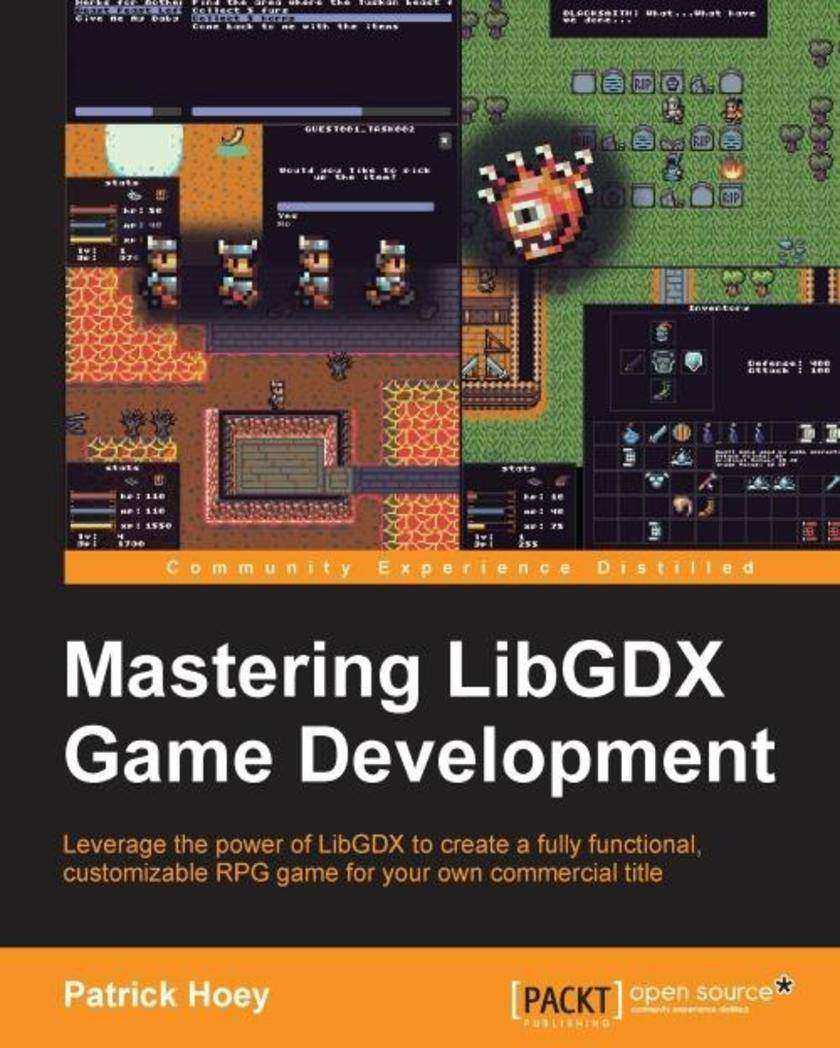
Mastering LibGDX Game Development
¥90.46
Leverage the power of LibGDX to create a fully functional, customizable RPG game for your own commercial title About This Book Learn game architecture and design patterns with concrete examples using proper software engineering principles Save time and money with this handy reference guide for future game development with LibGDX Design and develop a fully functional RPG video game from scratch with a hands on, step-by-step approach using LibGDX Who This Book Is For If you are an intermediate-level game developer who wants to create an RPG video game but found the creation process overwhelming, either by lack of tutorials or by getting lost in a sea of game-related technologies, engines, or frameworks, then this book is for you. This book assumes familiarity with Java and some basic knowledge of LibGDX. What You Will Learn Develop characters with stat attributes, player movement, animation, physics, and collision detection Create interactive NPC characters with speech windows and build immersion via dialog trees Build inventory management system UIs with drag and drop items to sell, buy, and equip Design a quest system to expand out the content of your game Form interesting enemies with battle mechanics and spawn points Devise *ed cutscenes to add an element of story and drama Develop save and load game profiles Create special effects to give the game extra “juiciness” and polish, and help build the atmosphere In Detail LibGDX is a Java-based framework developed with a heavy emphasis on performance, and includes cross-platform support out of the box (Windows, OS X, Linux, iOS, Android, and HTML5) as well as providing all the low-level functionality so that you can focus on developing your game and not battling with the platform. LibGDX also has an engaged and responsive community, active maintenance, and is available for free without a prohibitive license. Starting from the beginning, this book will take you through the entire development process of creating an RPG video game using LibGDX. First, this book will introduce you to the features specific to RPG games, as well as an overview of game architecture. Then, you will create map locations, develop character movement, add animation, integrate collision detection, and develop a portal system. Next, you will learn and develop a HUD and other UI components, as well as an inventory management system. You will then develop NPC interactions including dialog trees, shopkeepers, and quest givers. After this, you will design and create battle features for fighting enemies, as well as event triggers for world events. Finally, you will add the final polish with sound, music, and lighting effects. By the end of this book, you will have learned and applied core components from the LibGDX framework, as well as have a finished game to use as a springboard for customization and story development for your own commercial video game. Style and approach This book walks you through the concepts and implementation of developing a complete RPG game, unfolding chapter by chapter and building upon previous concepts. Each chapter can be used as an individual reference with diagrams to explain core concepts with concrete example code explained in detail.
Learning OpenStack Networking (Neutron) - Second Edition
¥90.46
Wield the power of OpenStack Neutron networking to bring network infrastructure and capabilities to your cloud About This Book This completely up-to-date edition will show you how to deploy a cloud on OpenStack using community-driven processes. It includes rich examples that will help you understand complex networking topics with ease Understand every aspect of designing, creating, customizing, and maintaining the core network foundation of an OpenStack cloud using OpenStack Neutron all in one book Written by best-selling author James Denton, who has more than 15 years of experience in system administration and networking. James has experience of deploying, operating, and maintaining OpenStack clouds and has worked with top enterprises and organizations Who This Book Is For If you are an OpenStack-based cloud operator and administrator who is new to Neutron networking and wants to build your very own OpenStack cloud, then this book is for you. Prior networking experience and a physical server and network infrastructure is recommended to follow along with concepts demonstrated in the book. What You Will Learn Architect and install the latest release of OpenStack on Ubuntu Linux 14.04 LTS Review the components of OpenStack networking, including plugins, agents, and services, and learn how they work together to coordinate network operations Build a virtual switching infrastructure using reference architectures based on ML2 + Open vSwitch or ML2 + LinuxBridge Create networks, subnets, and routers that connect virtual machine instances to the network Deploy highly available routers using DVR or VRRP-based methods Scale your application with haproxy and Load Balancing as-a-Service Implement port and router-level security using Security Groups and Firewall as-a-Service Provide connectivity to tenant networks with Virtual Private Networking as-a-Service (VPNaaS) Find out how to manage OpenStack networking resources using CLI and GUI-driven methods In Detail OpenStack Neutron is an OpenStack component that provides networking as a service for other OpenStack services to architect networks and create virtual machines through its API. This API lets you define network connectivity in order to leverage network capabilities to cloud deployments. Through this practical book, you will build a strong foundational knowledge of Neutron, and will architect and build an OpenStack cloud using advanced networking features. We start with an introduction to OpenStack Neutron and its various components, including virtual switching, routing, FWaaS, VPNaaS, and LBaaS. You’ll also get hands-on by installing OpenStack and Neutron and its components, and use agents and plugins to orchestrate network connectivity and build a virtual switching infrastructure. Moving on, you’ll get to grips with the HA routing capabilities utilizing VRRP and distributed virtual routers in Neutron. You’ll also discover load balancing fundamentals, including the difference between nodes, pools, pool members, and virtual IPs. You’ll discover the purpose of security groups and learn how to apply the security concept to your cloud/tenant/instance. Finally, you'll configure virtual private networks that will allow you to avoid the use of SNAT and floating IPs when connecting to remote networks. Style and approach This easy-to-follow guide on networking in OpenStack follows a step-by-step process to installing OpenStack and configuring the base networking components. Each major networking component has a dedicated chapter that will build on your experience gained from prior chapters.
Learning Network Programming with Java
¥90.46
Harness the hidden power of Java to build network-enabled applications with lower network traffic and faster processes About This BookLearn to deliver superior server-to-server communication through the networking channelsGain expertise of the networking features of your own applications to support various network architectures such as client/server and peer-to-peerExplore the issues that impact scalability, affect security, and allow applications to work in a heterogeneous environmentWho This Book Is ForLearning Network Programming with Java is oriented to developers who wish to use network technologies to enhance the utility of their applications. You should have a working knowledge of Java and an interest in learning the latest in network programming techniques using Java. No prior experience with network development or special software beyond the Java SDK is needed. Upon completion of the book, beginner and experienced developers will be able to use Java to access resources across a network and the Internet.What You Will LearnConnect to other applications using socketsUse channels and buffers to enhance communication between applicationsAccess network services and develop client/server applicationsExplore the critical elements of peer-to-peer applications and current technologies availableUse UDP to perform multicastingAddress scalability through the use of core and advanced threading techniques Incorporate techniques into an application to make it more secure Configure and address interoperability issues to enable your applications to work in a heterogeneous environment In Detail Network-aware applications are becoming more prevalent and play an ever-increasing role in the world today. Connecting and using an Internet-based service is a frequent requirement for many applications. Java provides numerous classes that have evolved over the years to meet evolving network needs. These range from low-level socket and IP-based approaches to those encapsulated in software services. This book explores how Java supports networks, starting with the basics and then advancing to more complex topics. An overview of each relevant network technology is presented followed by detailed examples of how to use Java to support these technologies. We start with the basics of networking and then explore how Java supports the development of client/server and peer-to-peer applications. The NIO packages are examined as well as multitasking and how network applications can address practical issues such as security. A discussion on networking concepts will put many network issues into perspective and let you focus on the appropriate technology for the problem at hand. The examples used will provide a good starting point to develop similar capabilities for many of your network needs. Style and approach Each network technology’s terms and concepts are introduced first. This is followed up with code examples to explain these technologies. Many of the examples are supplemented with alternate Java 8 solutions when appropriate. Knowledge of Java 8 is not necessary but these examples will help you better understand the power of Java 8.
Learning Python
¥90.46
Learn to code like a professional with Python – an open source, versatile, and powerful programming language About This Book Learn the fundamentals of programming with Python – one of the best languages ever created Develop a strong set of programming skills that you will be able to express in any situation, on every platform, thanks to Python’s portability Create outstanding applications of all kind, from websites to *ing, and from GUIs to data science Who This Book Is For Python is the most popular introductory teaching language in U.S. top computer science universities, so if you are new to software development, or maybe you have little experience, and would like to start off on the right foot, then this language and this book are what you need. Its amazing design and portability will help you become productive regardless of the environment you choose to work with. What You Will Learn Get Python up and running on Windows, Mac, and Linux in no time Grasp the fundamental concepts of coding, along with the basics of data structures and control flow. Write elegant, reusable, and efficient code in any situation Understand when to use the functional or the object oriented programming approach Create bulletproof, reliable software by writing tests to support your code Explore examples of GUIs, *ing, data science and web applications Learn to be independent, capable of fetching any resource you need, as well as dig deeper In Detail Learning Python has a dynamic and varied nature. It reads easily and lays a good foundation for those who are interested in digging deeper. It has a practical and example-oriented approach through which both the introductory and the advanced topics are explained. Starting with the fundamentals of programming and Python, it ends by exploring very different topics, like GUIs, web apps and data science. The book takes you all the way to creating a fully fledged application. The book begins by exploring the essentials of programming, data structures and teaches you how to manipulate them. It then moves on to controlling the flow of a program and writing reusable and error proof code. You will then explore different programming paradigms that will allow you to find the best approach to any situation, and also learn how to perform performance optimization as well as effective debugging. Throughout, the book steers you through the various types of applications, and it concludes with a complete mini website built upon all the concepts that you learned. Style and approach This book is an easy-to-follow guide that will take you from a novice to the proficient level at a comfortable pace, using a lot of simple but effective examples. Each topic is explained thoroughly, and pointers are left for the more inquisitive readers to dig deeper and expand their knowledge.
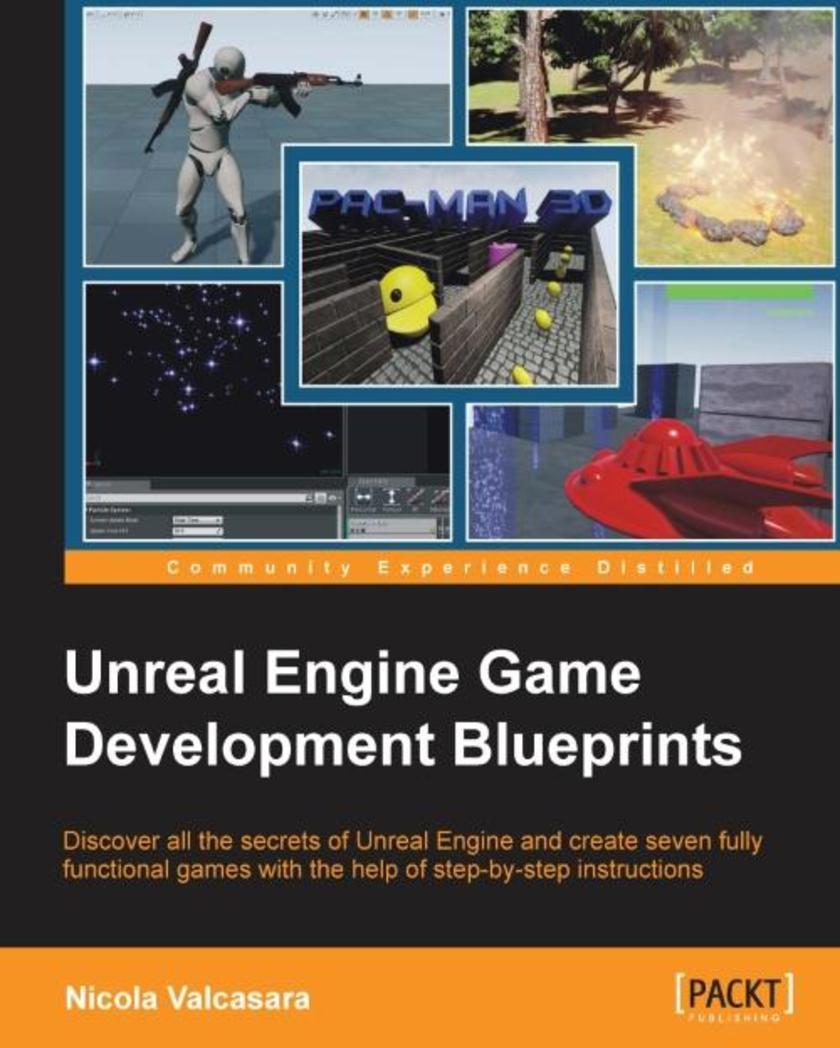
Unreal Engine Game Development Blueprints
¥90.46
Discover all the secrets of Unreal Engine and create seven fully functional games with the help of step-by-step instructions About This Book Understand what a Blueprint is and how to create a complex visual *ing code Discover the infinite possibilities that Unreal Engine offers, and understand which tool to use, where and when Learn to think like a real game developer in order to create enjoyable and bug-free games using this comprehensive and practical handbook Who This Book Is For This book is ideal for intermediate level developers who know how to use Unreal Engine and want to go through a series of projects that will further their expertise. Working knowledge of C++ is a must. What You Will Learn Write clean and reusable Blueprint *s Develop any kind of game you have in mind, following the rules used by experts Move through Unreal Engine 4, always knowing what you are doing and where to find the right tool for your needs Integrate C++ code into your projects using Visual Studio and the tools that Unreal provides Extricate between classes, nodes, interfaces, macros, and functions Work with different types of assets, from 3D objects to audio sources, from UI buttons to animations Explore all the aspects of the game logic—collisions, navigation meshes, matinees, volumes, events, and states In Detail With the arrival of Unreal Engine 4, a new wonderful tool was born: Blueprint. This visual *ing tool allows even non-programmers to develop the logic for their games, allowing almost anyone to create entire games without the need to write a single line of code. The range of features you can access with Blueprint * is pretty extensive, making it one of the foremost choices for many game developers. Unreal Engine Game Development Blueprints helps you unleash the real power of Unreal by helping you to create engaging and spectacular games. It will explain all the aspects of developing a game, focusing on visual *ing, and giving you all the information you need to create your own games. We start with an introductory chapter to help you move fluidly inside the Blueprint user interface, recognize its different components, and understand any already written Blueprint *. Following this, you will learn how to modify generated Blueprint classes to produce a single player tic-tac-toe game and personalize it. Next, you will learn how to create simple user interfaces, and how to extend Blueprints through code. This will help you make an informed decision between choosing Blueprint or code. You will then see the real power of Unreal unleashed as you create a beautiful scene with moving, AI controlled objects, particles, and lights. Then, you will learn how to create AI using a behavior tree and a global level Blueprint, how to modify the camera, and how to shoot custom bullets. Finally, you will create a complex game using Blueprintable components complete with a menu, power-up, dangerous objects, and different weapons. Style and approach This is an easy-to-follow guide full of practical game examples. Each chapter contains step-by-step instructions to build a complete game and each game uses a different tool in order to cover all the topics in a detailed and progressive manner.
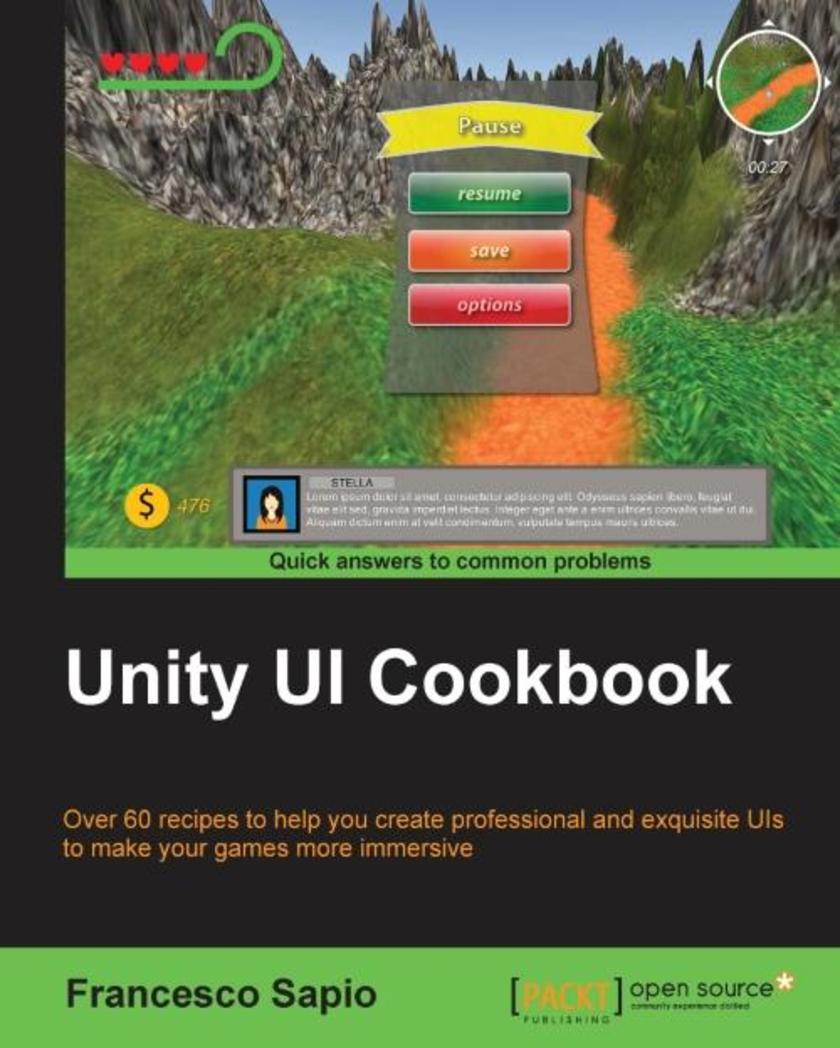
Unity UI Cookbook
¥90.46
Over 60 recipes to help you create professional and exquisite UIs to make your games more immersive About This Book Design and develop interactive and professional user interfaces (UIs) for games in Unity Discover how to implement and deal with various in-game UI elements that will impress your players This practical recipe guide will help you to efficiently create powerful and remarkable UIs using C# code Who This Book Is For If you are a game developer with some experience in Unity and C# and want to create the best interactive experience fast and intuitively, then this book is for you. If you are an intermediate game developer or an expert, these recipes will help you bring out the power of the new UI Unity system. What You Will Learn Implement different kinds of counters and healthbars Deal with timers and find out how to format them Animate and vivify UI elements Handle runtime customizations Add complex Head-up displays (HUDs) Design and implement 3D UIs Integrate minimaps in the UI In Detail With the increasing interest in game development, it's essential to design and implement a UI that reflects the game settings and shows the right information to the player. The Unity system is used to create complex and aesthetically pleasing user interfaces in order to give a professional look and feel to a game. Although the new Unity UI system is powerful and quite easy to use, by integrating it with C# *s, it's possible to realize the potential of this system and bring an impressive UI to games.This guide is an invaluable collection of recipes if you are planning to use Unity to develop a game. Starting with the basic concepts of the UI components, we’ll take you all the way through to creating complex interfaces by including animations and dynamics elements. Based on real-world problems, these recipes will start by showing you how to make common UI elements such as counters and healthbars. You will then get a walkthrough of how to manage time using timers, and will learn how to format them. You will move on to decorating and animating the UI elements to vivify them and give them a professional touch. Furthermore, you will be guided into the 3D UI world and into HUD *ing. Finally, you will discover how to implement complex minimaps in the interface.Style and approach Interactive, easy-to-follow recipes will help you create and implement UIs that make gaming an exhilarating experience.
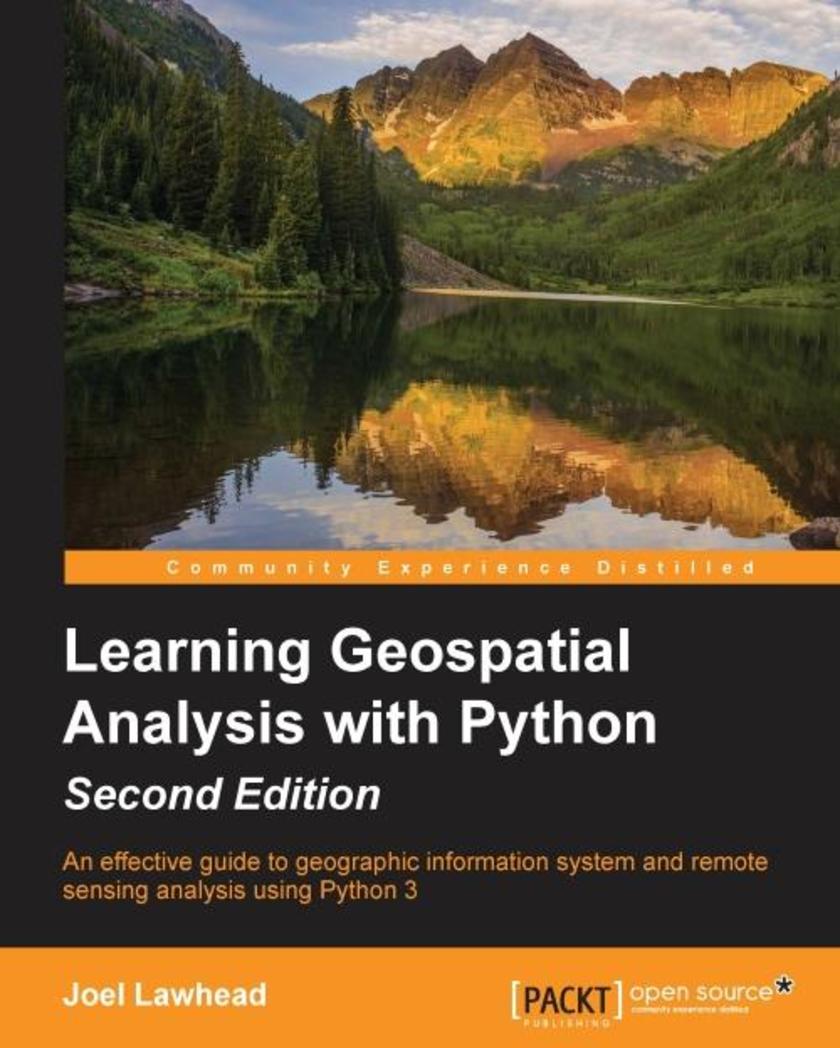
Learning Geospatial Analysis with Python - Second Edition
¥90.46
An effective guide to geographic information systems and remote sensing analysis using Python 3 About This Book Construct applications for GIS development by exploiting Python This focuses on built-in Python modules and libraries compatible with the Python Packaging Index distribution system—no compiling of C libraries necessary This practical, hands-on tutorial teaches you all about Geospatial analysis in Python Who This Book Is For If you are a Python developer, researcher, or analyst who wants to perform Geospatial, modeling, and GIS analysis with Python, then this book is for you. Familarity with digital mapping and analysis using Python or another *ing language for automation or crunching data manually is appreciated. What You Will Learn Automate Geospatial analysis workflows using Python Code the simplest possible GIS in 60 lines of Python Mold thematic maps with Python tools Get hold of the various forms that geospatial data comes in Produce elevation contours using Python tools Create flood inundation models Apply Geospatial analysis to find out about real-time data tracking and for storm chasing In Detail Geospatial Analysis is used in almost every field you can think of from medicine, to defense, to farming. This book will guide you gently into this exciting and complex field. It walks you through the building blocks of geospatial analysis and how to apply them to influence decision making using the latest Python software. Learning Geospatial Analysis with Python, 2nd Edition uses the expressive and powerful Python 3 programming language to guide you through geographic information systems, remote sensing, topography, and more, while providing a framework for you to approach geospatial analysis effectively, but on your own terms. We start by giving you a little background on the field, and a survey of the techniques and technology used. We then split the field into its component specialty areas: GIS, remote sensing, elevation data, advanced modeling, and real-time data. This book will teach you everything you need to know about, Geospatial Analysis from using a particular software package or API to using generic algorithms that can be applied. This book focuses on pure Python whenever possible to minimize compiling platform-dependent binaries, so that you don’t become bogged down in just getting ready to do analysis. This book will round out your technical library through handy recipes that will give you a good understanding of a field that supplements many a modern day human endeavors. Style and approach This is a practical, hands-on tutorial that teaches you all about Geospatial analysis interactively using Python.


