


 购物车
购物车 个人中心
个人中心
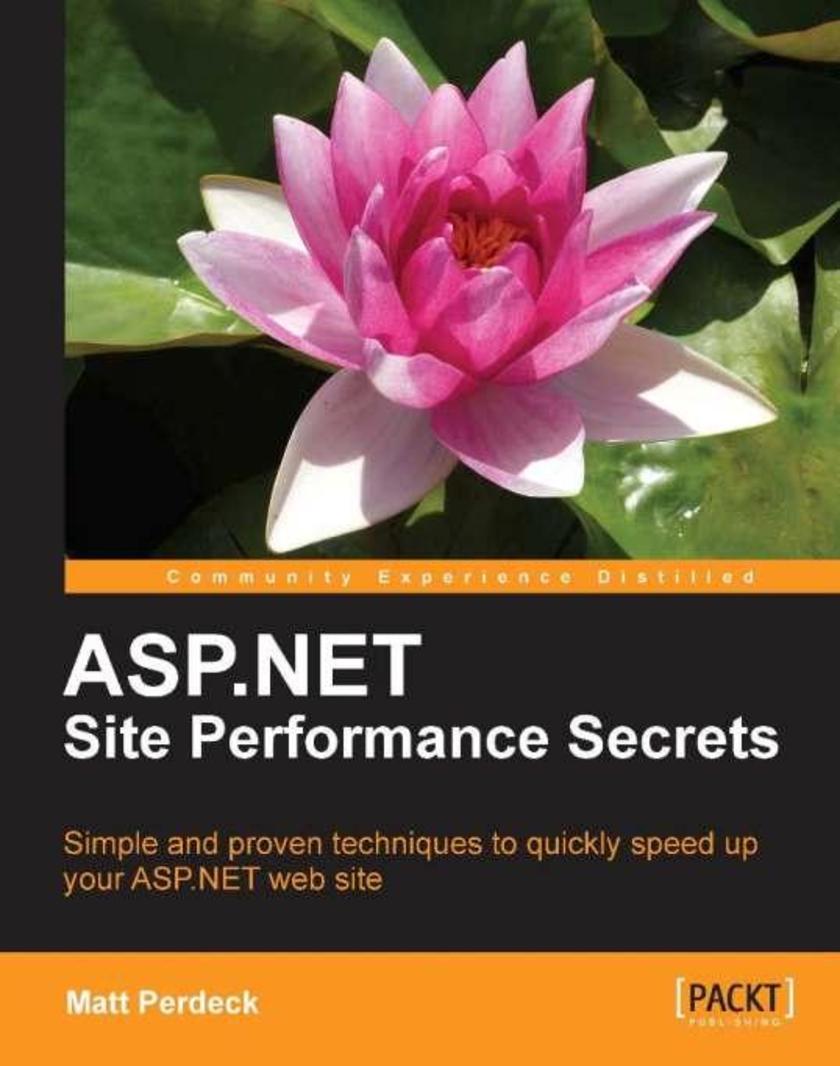
ASP.NET Site Performance Secrets
¥107.90
Written in a practical and clear conversational style, this book is filled with real-life website performance scenarios. It is replete with lots of working code samples and practical advice, and just the right amount of theory you need to make sense of it all. This book is written for ASP.NET/SQL Server-based website developers who want to speed up their site using simple, proven tactics without going through a lot of unnecessary theoretical learning. If your website isn't performing well, this is the ideal book for you.
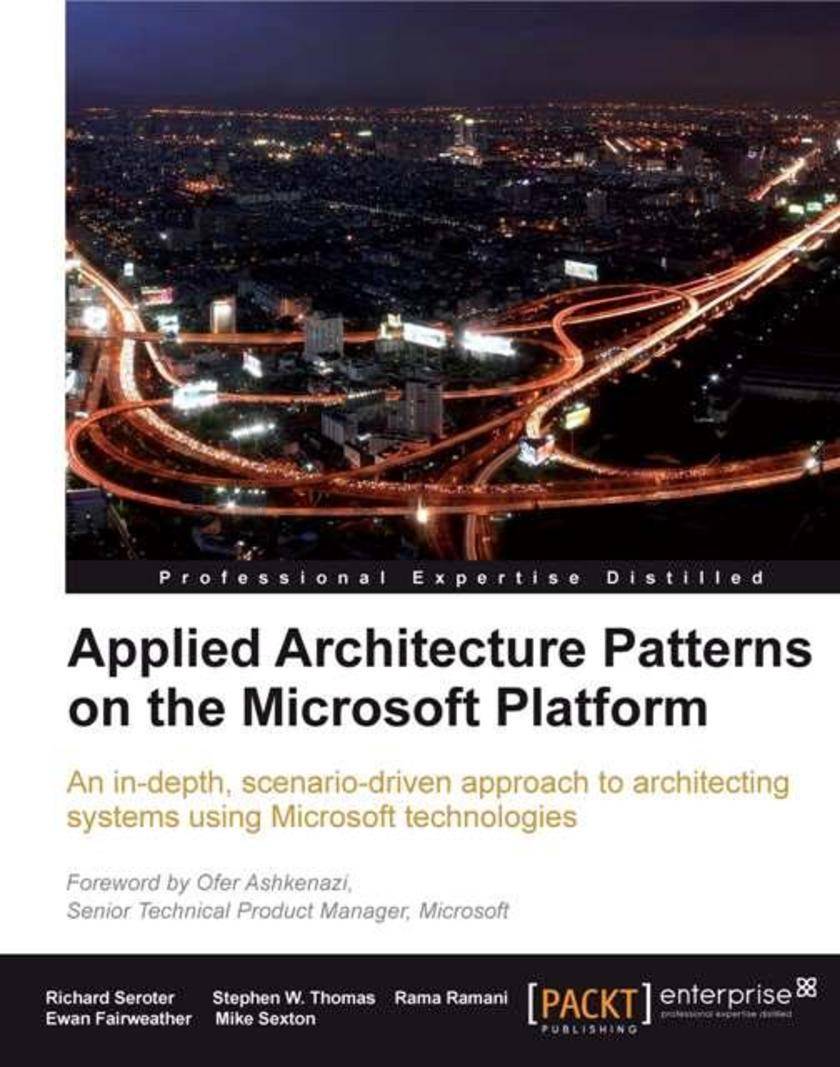
Applied Architecture Patterns on the Microsoft Platform
¥107.90
The book consists of a set of business scenarios and corresponding solution critiques. Each "use case" chapter is made up of a problem de*ion, assessment of implementation options, and the selection of the ideal solution candidate. We then construct the solution using the chosen Microsoft technology. This book is for architects, developers, and managers who need to improve their knowledge of the Microsoft application platform. This book will appeal to anyone who wants to get up to speed on selecting the most appropriate platform for a particular problem. Consultants and executive leadership will also find significant value in this book. A good understanding of the general Windows platform and development technologies would be helpful.
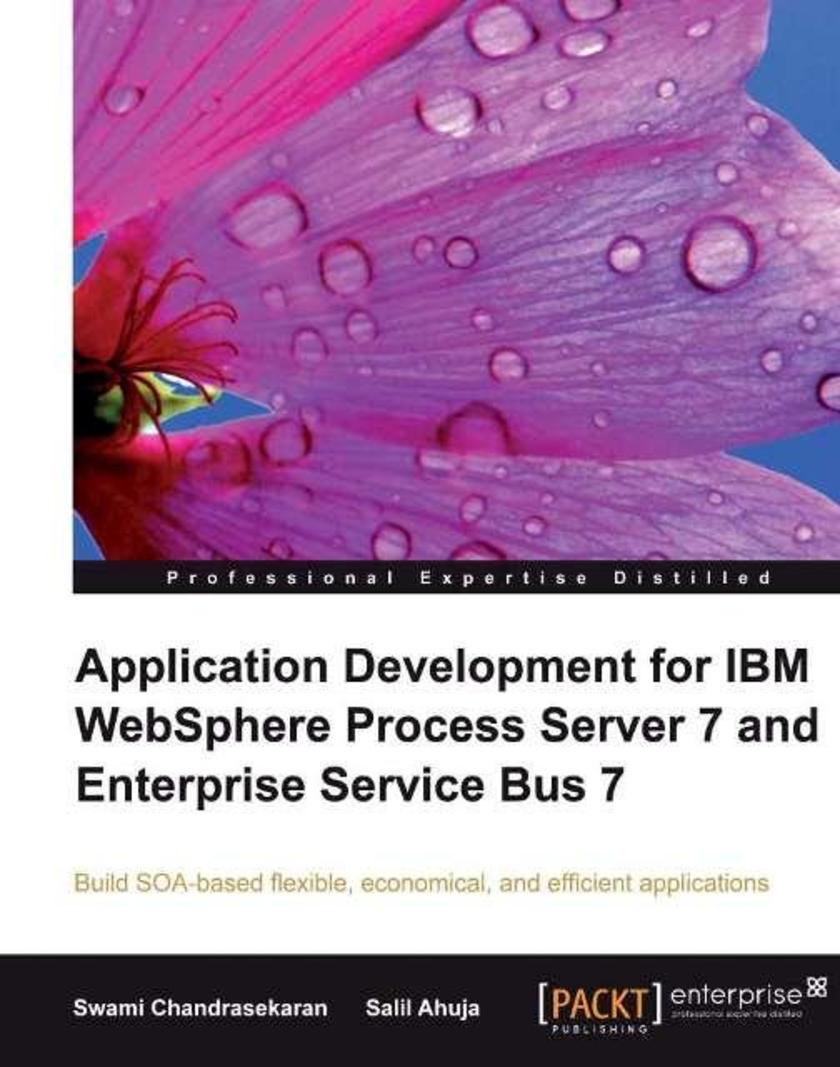
Application Development for IBM WebSphere Process Server 7 and Enterprise Servic
¥107.90
This book covers building an application using the principles of BPM and SOA, using WPS and WESB. The various detailed aspects, features, and capabilities of the product are conveyed though examples. It also provides pragmatic guidance on various aspects in relation to building the SOA application. Every section has solutions to common problems and pitfalls. This book is for SOA architects, designers, and developers who have a basic understanding of SOA concepts and would like to learn more about building solutions and applications using IBM WebSphere Process Server and WebSphere Enterprise Service Bus.
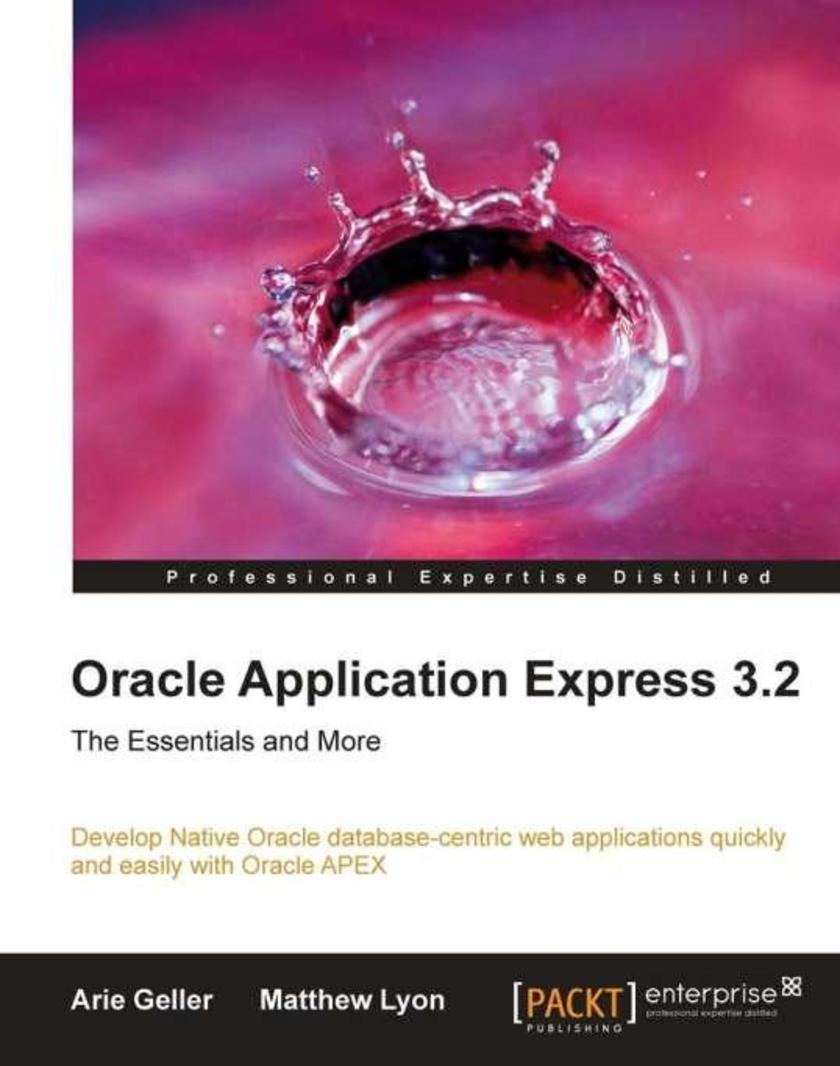
Oracle Application Express 3.2 – The Essentials and More
¥107.90
This book is a practical guide that not only shows you how to do things, but also makes you understand how things really work, so you'll be able to develop your own applications. It uses many screenshots, examples, and real-time "APEX code", some of which is documented for the first time. This book is for developers, in general, and web developers, in particular, who wish to learn how to develop data-centric web applications in the Oracle environment. It is also for novice APEX developers, who wish to learn how to use and best utilize the APEX environment, as well as for more experience APEX developers who wish to improve their knowledge and understanding of APEX and its capabilities, and learn from the experience of others. It assumes basic knowledge of HTML, SQL, and PL/SQL. Basic JavaScript understanding is an advantage, and in general can make your life much easier as an APEX developer.
Oracle 11g Streams Implementer's Guide
¥107.90
This book has a tutorial approach that provides both theoretical explanations and practical step-by-step examples using familiar Oracle demo schemas. Step-by-step examples include use of both Enterprise Manager and the SQLPLUS command-line interface. The authors have combined their experiences of working with customers in Oracle Support, Oracle training and education, and Oracle consulting, to identify the most common areas of confusion and misinterpretation experienced by Oracle Streams users. This book highlights these areas and focuses on bringing clarity and understanding to the reader. This book is for users who have implemented, or are about to implement, a distributed database environment using Oracle Streams replication. The reader is expected to have an intermediate understanding of Oracle database technology. This book is mainly intended for use by: Oracle Database Administrators responsible for the implementation and maintenance of an Oracle Streamed environment, System and Database Architects responsible for the design of distributed database environments using Oracle Streams Readers with limited knowledge of basic Oracle database technology can benefit from Chapters 1 and 2, which cover Oracle Streams Components and Design Considerations.
Microsoft Dynamics GP 2013 Reporting, Second Edition
¥107.90
A practical guide to creating and managing reports as well as identifying the most appropriate reporting tool for any reporting challenge, this book employs real-life, step-by-step examples in a part tutorial, part reference manner.If you are a Microsoft Dynamics GP developer, consultant or power user who wants to create and manage reports, then "Microsoft Dynamics GP 2013 Reporting, Second Edition" is for you. A working knowledge of Microsoft Dynamics GP is required. A basic understanding of business management systems and reporting applications such as Microsoft Excel and SQL Reporting Services is highly recommended.
Microsoft Dynamics GP 2013 Implementation
¥107.90
A step-by-step guide for planning and carrying out your Microsoft Dynamics GP 2013 implementation. Detailed de*ions and illustrations of setup screens and practical examples and advice are included for the Dynamics GP system and core modules.If you are a new or existing Microsoft Dynamics GP consultant or an end user who wants to implement, install, and set up core modules of Dynamics GP 2013, then this book is for you. A basic understanding of business management systems and either Dynamics GP or a similar application is recommended.
Oracle Data Guard 11gR2 Administration Beginner's Guide
¥107.90
Using real-world examples and hands-on tasks, Oracle Data Guard 11gR2 Administration Beginner's Guide will give you a solid foundation in Oracle Data Guard. It has been designed to teach you everything you need to know to successfully create and operate Data Guard environments with maximum flexibility, compatibility, and effectiveness. If you are an Oracle database administrator who wants to configure and administer Data Guard configurations, then "Oracle Data Guard 11gR2 Administration Beginner's Guide" is for you. With a basic understanding of Oracle database administration, you’ll be able to easily follow the book.
Oracle Solaris 11 Advanced Administration Cookbook
¥107.90
If you are a Solaris administrator who wants to learn more about administering an Oracle Solaris system and want to go a level higher in utilizing the advanced features of Oracle Solaris, then this book is for you. A working knowledge of Solaris Administration is assumed.
SQL Server 2012 with PowerShell V3 Cookbook
¥107.90
SQL Server 2012 with PowerShell V3 Cookbook" is an example-focused book that provides step-by-step instructions on how to accomplish specific SQL Server tasks using PowerShell. Each recipe is followed by an analysis of the steps or design decisions taken, and additional information about the task at hand. Working *s are provided for all examples so that you can dive in right away. You can read this book sequentially by chapter, or you can pick and choose which topics you need right away,This book is written for the SQL Server database professional (DBA, developer, BI developer) who wants to use PowerShell to automate, integrate, and simplify database tasks. A little bit of *ing background is helpful, but not necessary.
Mastering jBPM6
¥107.90
If you are a designer or developer who wants to build and operate business process-centric applications, then this book is for you. Knowledge of the basic concepts of application development in Java will be helpful in following the concepts covered in the book, but is not necessary.
Microsoft Dynamics CRM 2011 Customization & Configuration…
¥107.90
This book is in the Enterprise certification series which means it is a hands-on guide with practical instruction, examples and all the information you will need to be successful in the exam, as well as 75 practice questions in the exam style. It includes practical advice on how to book the exam, approach the questions and maximize your score. "Microsoft Dynamics CRM 2011 Customization & Configuration (MB2-866) Certification Guide" is perfect for IT professionals and developers who work for a Microsoft partner or customer organizations. If you want to demonstrate your expertise and advance your career by obtaining Microsoft certification this book will provide you with the insight you need to succeed.
IBM Websphere Portal 8: Web Experience Factory and the Cloud
¥107.90
This book is written in simple, easy to understand format with lots of screenshots and step-by-step explanations. If you are an IBM WebSphere Portal developer, looking to develop and enhance enterprise portals by understanding the complete portal project lifecycle, then this is the best guide for you. This book assumes that you have a fundamental knowledge of working in the WebSphere Portal environment.
SQL Server 2017 Integration Services Cookbook
¥107.90
Harness the power of SQL Server 2017 Integration Services to build your data integration solutions with ease About This Book ? Acquaint yourself with all the newly introduced features in SQL Server 2017 Integration Services ? Program and extend your packages to enhance their functionality ? This detailed, step-by-step guide covers everything you need to develop efficient data integration and data transformation solutions for your organization Who This Book Is For This book is ideal for software engineers, DW/ETL architects, and ETL developers who need to create a new, or enhance an existing, ETL implementation with SQL Server 2017 Integration Services. This book would also be good for individuals who develop ETL solutions that use SSIS and are keen to learn the new features and capabilities in SSIS 2017. What You Will Learn ? Understand the key components of an ETL solution using SQL Server 2016-2017 Integration Services ? Design the architecture of a modern ETL solution ? Have a good knowledge of the new capabilities and features added to Integration Services ? Implement ETL solutions using Integration Services for both on-premises and Azure data ? Improve the performance and scalability of an ETL solution ? Enhance the ETL solution using a custom framework ? Be able to work on the ETL solution with many other developers and have common design paradigms or techniques ? Effectively use *ing to solve complex data issues In Detail SQL Server Integration Services is a tool that facilitates data extraction, consolidation, and loading options (ETL), SQL Server coding enhancements, data warehousing, and customizations. With the help of the recipes in this book, you’ll gain complete hands-on experience of SSIS 2017 as well as the 2016 new features, design and development improvements including SCD, Tuning, and Customizations. At the start, you’ll learn to install and set up SSIS as well other SQL Server resources to make optimal use of this Business Intelligence tools. We’ll begin by taking you through the new features in SSIS 2016/2017 and implementing the necessary features to get a modern scalable ETL solution that fits the modern data warehouse. Through the course of chapters, you will learn how to design and build SSIS data warehouses packages using SQL Server Data Tools. Additionally, you’ll learn to develop SSIS packages designed to maintain a data warehouse using the Data Flow and other control flow tasks. You’ll also be demonstrated many recipes on cleansing data and how to get the end result after applying different transformations. Some real-world scenarios that you might face are also covered and how to handle various issues that you might face when designing your packages. At the end of this book, you’ll get to know all the key concepts to perform data integration and transformation. You’ll have explored on-premises Big Data integration processes to create a classic data warehouse, and will know how to extend the toolbox with custom tasks and transforms. Style and approach This cookbook follows a problem-solution approach and tackles all kinds of data integration scenarios by using the capabilities of SQL Server 2016 Integration Services. This book is well supplemented with screenshots, tips, and tricks. Each recipe focuses on a particular task and is written in a very easy-to-follow manner.
Dynamics 365 for Finance and Operations Development Cookbook - Fourth Edition
¥107.90
Over 80 effective recipes to help you solve real-world Microsoft Dynamics 365 for Finance and Operations development problems About This Book ? Learn all about the enhanced functionalities of Dynamics 365 for Finance and Operations and master development best practices ? Develop powerful projects using new tools and features ? Work through easy-to-understand recipes with step-by-step instructions and useful screenshots Who This Book Is For If you are a Dynamics AX developer primarily focused on delivering time-proven applications, then this book is for you. This book is also ideal for people who want to raise their programming skills above the beginner level, and at the same time learn the functional aspects of Dynamics 365 for Finance and Operations. Some X++ coding experience is expected. What You Will Learn ? Explore data manipulation concepts in Dynamics 365 for Operations ? Build *s to assist data migration processes ? Organize data in Dynamics 365 for Operations forms ? Make custom lookups using AOT forms and dynamically generate them from X++ code ? Create a custom electronic payment format and process a vendor payment using it ? Integrate your application with Microsoft Office Suite and other external systems using various approaches ? Export and import business data for further distribution or analysis ? Improve your development efficiency and performance In Detail Microsoft Dynamics 365 for Finance and Operations has a lot to offer developers. It allows them to customize and tailor their implementations to meet their organization’s needs. This Development Cookbook will help you manage your company or customer ERP information and operations efficiently. We start off by exploring the concept of data manipulation in Dynamics 365 for Operations. This will also help you build *s to assist data migration, and show you how to organize data in forms. You will learn how to create custom lookups using Application Object Tree forms and generate them dynamically. We will also show you how you can enhance your application by using advanced form controls, and integrate your system with other external systems. We will help you * and enhance your user interface using UI elements. This book will help you look at application development from a business process perspective, and develop enhanced ERP solutions by learning and implementing the best practices and techniques. Style and approach The book follows a practical recipe-based approach, focusing on real-world scenarios and giving you all the information you need to build a strong Dynamics 365 for Finance and Operations implementation.
Data Analysis with IBM SPSS Statistics
¥107.90
Master data management & analysis techniques with IBM SPSS Statistics 24 About This Book ? Leverage the power of IBM SPSS Statistics to perform efficient statistical analysis of your data ? Choose the right statistical technique to analyze different types of data and build efficient models from your data with ease ? Overcome any hurdle that you might come across while learning the different SPSS Statistics concepts with clear instructions, tips and tricks Who This Book Is For This book is designed for analysts and researchers who need to work with data to discover meaningful patterns but do not have the time (or inclination) to become programmers. We assume a foundational understanding of statistics such as one would learn in a basic course or two on statistical techniques and methods. What You Will Learn ? Install and set up SPSS to create a working environment for analytics ? Techniques for exploring data visually and statistically, assessing data quality and addressing issues related to missing data ? How to import different kinds of data and work with it ? Organize data for analytical purposes (create new data elements, sampling, weighting, subsetting, and restructure your data) ? Discover basic relationships among data elements (bivariate data patterns, differences in means, correlations) ? Explore multivariate relationships ? Leverage the offerings to draw accurate insights from your research, and benefit your decision-making In Detail SPSS Statistics is a software package used for logical batched and non-batched statistical analysis. Analytical tools such as SPSS can readily provide even a novice user with an overwhelming amount of information and a broad range of options for analyzing patterns in the data. The journey starts with installing and configuring SPSS Statistics for first use and exploring the data to understand its potential (as well as its limitations). Use the right statistical analysis technique such as regression, classification and more, and analyze your data in the best possible manner. Work with graphs and charts to visualize your findings. With this information in hand, the discovery of patterns within the data can be undertaken. Finally, the high level objective of developing predictive models that can be applied to other situations will be addressed. By the end of this book, you will have a firm understanding of the various statistical analysis techniques offered by SPSS Statistics, and be able to master its use for data analysis with ease. Style and approach Provides a practical orientation to understanding a set of data and examining the key relationships among the data elements. Shows useful visualizations to enhance understanding and interpretation. Outlines a roadmap that focuses the process so decision regarding how to proceed can be made easily.
Microsoft Power BI Cookbook
¥107.90
Get more out of Microsoft Power BI turning your data into actionable insights About This Book ? From connecting to your data sources to developing and deploying immersive, mobile-ready dashboards and visualizations, this book covers it all ? Over 90 hands-on, technical recipes, tips, and use cases from across the Power BI platform including the Power BI Service and Mobile Applications ? Proven development techniques and guidance for implementing custom solutions with DAX and M languages Who This Book Is For This book is for BI professionals who wish to enhance their knowledge of Power BI beyond and to enhance the value of the Power BI solutions they deliver to business users. Those who are looking at quick solutions to common problems while using Power BI will also find this book to be a very useful resource .Some experience with Power BI will be useful. What You Will Learn ? Cleanse, stage, and integrate your data sources with Power BI ? Abstract data complexities and provide users with intuitive, self-service BI capabilities ? Build business logic and analysis into your solutions via the DAX programming language and dynamic, dashboard-ready calculations ? Take advantage of the analytics and predictive capabilities of Power BI ? Make your solutions more dynamic and user specific and/or defined including use cases of parameters, functions, and row level security ? Understand the differences and implications of DirectQuery, Live Connections, and Import-Mode Power BI datasets and how to deploy content to the Power BI Service and schedule refreshes ? Integrate other Microsoft data tools such as Excel and SQL Server Reporting Services into your Power BI solution In Detail Microsoft Power BI is a business intelligence and analytics platform consisting of applications and services designed to provide coherent, visual and interactive insights of data. This book will provide thorough, technical examples of using all primary Power BI tools and features as well as demonstrate high impact end-to-end solutions that leverage and integrate these technologies and services. Get familiar with Power BI development tools and services, go deep into the data connectivity and transformation, modeling, visualization and analytical capabilities of Power BI, and see Power BI’s functional programming languages of DAX and M come alive to deliver powerful solutions to address common, challenging scenarios in business intelligence. This book will excite and empower you to get more out of Power BI via detailed recipes, advanced design and development tips, and guidance on enhancing existing Power BI projects. Style and approach This book consists of practical recipes on Power BI that target novices as well as intermediate Power BI users. It goes deep into the technical issues, covers additional protocols, and many more real-live examples.
Microsoft Windows Server AppFabric Cookbook
¥107.90
‘Microsoft Windows Server AppFabric Cookbook’ is full of immediately useable recipes showing you how to get the most from WCF and WF services using Windows Server AppFabric, leveraging the right capabilities for building composite solutions on the .NET platform. In addition to its cookbook style, which ensures the solutions are presented in a clear step-by-step manner, its explanations go into the right level of detail, making it good learning material for everyone who has experience with some of the challenging aspects of WCF and WF development from a scalability, configuration and management perspective. The book is designed in such a way that each recipe is presented as a separate, standalone entity and reading of other, prior recipes is not required. If you are a .NET developer or WCF/WF developer, then this book is for you. This book does not assume any prior knowledge of Windows AppFabric. However, a basic understanding of .NET Framework 4.0, Windows Communication Foundation (WCF) and Windows Workflow Foundation (WWF) technologies is required.
Business Intelligence: A Project Lifecycle Approach Using Oracle Technology Cook
¥107.90
This book is written in a simple, easy to understand format with lots of screenshots and step-by-step explanations. If you are Project Managers or IT professionals looking to design and develop a data warehouse and business intelligence solution, then this is the best guide for you. This book assumes that you have a fundamental knowledge of data warehouse and business intelligence projects.
Oracle Essbase 9 Implementation Guide
¥107.90
This book uses a practical step-by-step approach with the next chapter always building on the knowledge foundation created by the previous chapter. Understanding and really grasping the multidimensional concept is difficult enough without a lot of confusing jargon thrown in. This book speaks to the reader in plain English with plenty of easy-to-follow examples. You will create, build, and maintain data for a fictional automobile company. This book is primarily for the IT professional who has a good understanding of IT principles and processes but is a multidimensional OLAP novice. Experienced OLAP professionals will also gain insight from this book. Simply put, if you are in the IT field and wish to gain a functional level of knowledge in the world of Oracle Essbase, whether it be for a developer role or a PM or BA role, this is the book you need.
Active Directory Disaster Recovery
¥107.90
The book is a combined planning/response-focused book and can be read end to end but also is designed so that the second half can be read standalone, should disaster have struck already. This book is targeted at network security professionals who find themselves charged with creating an Active Directory Disaster Recovery plan or who want to quickly recover once disaster has struck. This book expects you to be familiar with the basics of Active Directory and Windows Servers.


