


 购物车
购物车 个人中心
个人中心

Population Fluctuations in Rodents
¥488.54
How did rodent outbreaks in Germany help to end World War IWhat caused the destructive outbreak of rodents in Oregon and California in the late 1950s, the large population outbreak of lemmings in Scandinavia in 2010, and the great abundance of field mice in Scotland in the spring of 2011Population fluctuations, or outbreaks, of rodents constitute one of the classic problems of animal ecology, and in Population Fluctuations in Rodents, Charles J. Krebs sifts through the last eighty years of research to draw out exactly what we know about rodent outbreaks and what should be the agenda for future research.?Krebs has synthesized the research in this area, focusing mainly on the voles and lemmings of the Northern Hemisphere-his primary area of expertise-but also referring to the literature on rats and mice. He covers the patterns of changes in reproduction and mortality and the mechanisms that cause these changes-including predation, disease, food shortage, and social behavior-and discusses how landscapes can affect population changes, methodically presenting the hypotheses related to each topic before determining whether or not the data supports them. He ends on an expansive note, by turning his gaze outward and discussing how the research on rodent populations can apply to other terrestrial mammals. Geared toward advanced undergraduate students, graduate students, and practicing ecologists interested in rodent population studies, this book will also appeal to researchers seeking to manage rodent populations and to understand outbreaks in both natural and urban settings-or, conversely, to protect endangered species.
Regimens of the Mind
¥488.54
In Regimens of the Mind, Sorana Corneanu proposes a new approach to the epistemological and methodological doctrines of the leading experimental philosophers of seventeenth-century England, an approach that considers their often overlooked moral, psychological, and theological elements. Corneanu focuses on the views about the pursuit of knowledge in the writings of Robert Boyle and John Locke, as well as in those of several of their influences, including Francis Bacon and the early Royal Society virtuosi. She argues that their experimental programs of inquiry fulfill the role of regimens for curing, ordering, and educating the mind toward an ethical purpose, an idea she tracks back to the ancient tradition of cultura animi. Corneanu traces this idea through its early modern revival and illustrates how it organizes the experimental philosophers' reflections on the discipline of judgment, the study of nature, and the study of Scripture. It is through this lens, the author suggests, that the core features of the early modern English experimental philosophy-including its defense of experience, its epistemic modesty, its communal nature, and its pursuit of "e;objectivity"e;-are best understood.
Steam-Powered Knowledge
¥488.54
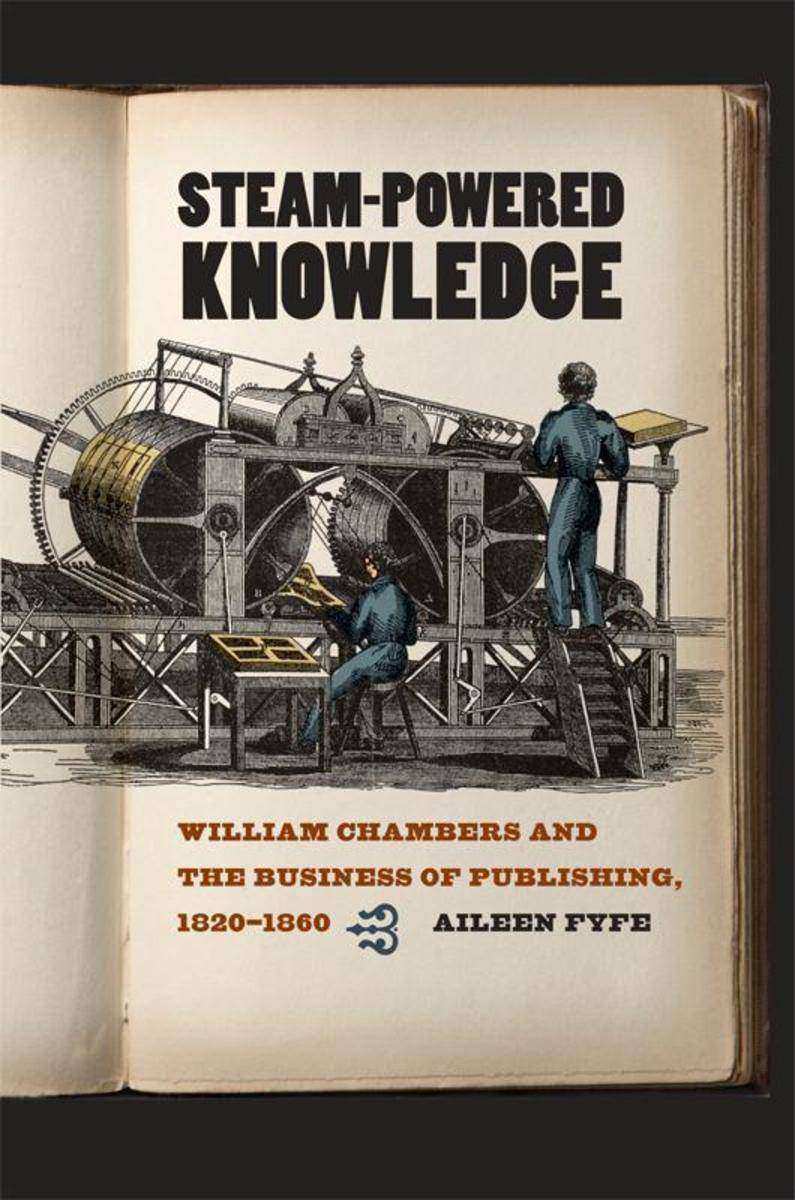
With the overwhelming amount of new information that bombards us each day, it is perhaps difficult to imagine a time when the widespread availability of the printed word was a novelty. In early nineteenth-century Britain, print was not novel-Gutenberg's printing press had been around for nearly four centuries-but printed matter was still a rare and relatively expensive luxury. All this changed, however, as publishers began employing new technologies to astounding effect, mass-producing instructive and educational books and magazines and revolutionizing how knowledge was disseminated to the general public.In Steam-Powered Knowledge, Aileen Fyfe explores the activities of William Chambers and the W. & R. Chambers publishing firm during its formative years, documenting for the first time how new technologies were integrated into existing business systems. Chambers was one of the first publishers to abandon traditional skills associated with hand printing, instead favoring the latest innovations in printing processes and machinery: machine-made paper, stereotyping, and, especially, printing machines driven by steam power. The mid-nineteenth century also witnessed dramatic advances in transportation, and Chambers used proliferating railway networks and steamship routes to speed up communication and distribution. As a result, his high-tech publishing firm became an exemplar of commercial success by 1850 and outlived all of its rivals in the business of cheap instructive print. Fyfe follows Chambers's journey from small-time bookseller and self-trained hand-press printer to wealthy and successful publisher of popular educational books on both sides of the Atlantic, demonstrating along the way the profound effects of his and his fellow publishers' willingness, or unwillingness, to incorporate these technological innovations into their businesses.
Miss Cutler and the Case of the Resurrected Horse
¥488.54
Social workers produced thousands of case files about the poor during the interwar years. Analyzing almost two thousand such case files and traveling from Boston, Minneapolis, and?Portland to London and Melbourne, Miss Cutler and the Case of the Resurrected Horse is a pioneering comparative study that examines how these stories of poverty were narrated and reshaped by ethnic diversity, economic crisis, and war.Probing the similarities and differences in the ways Americans, Australians, and Britons understood and responded to poverty, Mark Peel draws a picture of social work that is based in the sometimes fraught encounters between the poor and their interpreters. He uses dramatization to bring these encounters to life-joining Miss Cutler and that resurrected horse are Miss Lindstrom and the fried potatoes and Mr. O'Neil and the seductive client-and to give these people a voice. Adding new dimensions to the study of charity and social work, this book is essential to understanding and tackling poverty in the twenty-first century.
Gusto for Things
¥488.54
We live in a material world-our homes are filled with things, from electronics to curios and hand-me-downs, that disclose as much about us and our aspirations as they do about current trends. But we are not the first: the early modern period was a time of expanding consumption, when objects began to play an important role in defining gender as well as social status. Gusto for Things reconstructs the material lives of seventeenth-century Romans, exploring new ways of thinking about the meaning of things as a historical phenomenon.?Through creative use of account books, inventories, wills, and other records, Renata Ago examines early modern attitudes toward possessions, asking what people did with their things, why they wrote about them, and how they passed objects on to their heirs. While some inhabitants of Rome were connoisseurs of the paintings, books, and curiosities that made the city famous, Ago shows that men and women of lesser means also filled their homes with a more modest array of goods. She also discovers the genealogies of certain categories of things-for instance, books went from being classed as luxury goods to a category all their own-and considers what that reveals about the early modern era. An animated investigation into the relationship between people and the things they buy, Gusto for Things paints an illuminating portrait of the meaning of objects in preindustrial Europe.

Institutional Foundations of Impersonal Exchange
¥488.54
Governments and development agencies spend considerable resources building property and company registries to protect property rights. When these efforts succeed, owners feel secure enough to invest in their property and banks are able use it as collateral for credit. Similarly, firms prosper when entrepreneurs can transform their firms into legal entities and thus contract more safely. Unfortunately, developing registries is harder than it may seem to observers, especially in developed countries, where registries are often taken for granted. As a result, policies in this area usually disappoint. ?Benito Arruada aims to avoid such failures by deepening our understanding of both the value of registries and the organizational requirements for constructing them. Presenting a theory of how registries strengthen property rights and reduce transaction costs, he analyzes the major trade-offs and proposes principles for successfully building registries in countries at different stages of development. Arruada focuses on land and company registries, explaining the difficulties they face, including current challenges like the subprime mortgage crisis in the United States and the dubious efforts made in developing countries toward universal land titling. Broadening the account, he extends his analytical framework to other registries, including intellectual property and organized exchanges of financial derivatives. With its nuanced presentation of the theoretical and practical implications, Institutional Foundations of Impersonal Exchange significantly expands our understanding of how public registries facilitate economic growth.
Improbability of Othello
¥488.54
Shakespeare's dramatis personae exist in a world of supposition, struggling to connect knowledge that cannot be had, judgments that must be made, and actions that need to be taken.For them, probability-what they and others might be persuaded to believe-governs human affairs, not certainty. Yet negotiating the space of probability is fraught with difficulty. Here, Joel B. Altman explores the problematics of probability and the psychology of persuasion in Renaissance rhetoric and Shakespeare's theater.Focusing on the Tragedy of Othello, Altman investigates Shakespeare's representation of the self as a specific realization of tensions pervading the rhetorical culture in which he was educated and practiced his craft. In Altman's account, Shakespeare also restrains and energizes his audiences' probabilizing capacities, alternately playing the skeptical critic and dramaturgic trickster. A monumental work of scholarship by one of America's most respected scholars of Renaissance literature, The Improbability of Othello contributes fresh ideas to our understanding of Shakespeare's conception of the self, his shaping of audience response, and the relationship of actors to his texts.
Reading the World
¥488.54
The thirteenth century saw such a proliferation of new encyclopedic texts that more than one scholar has called it the "e;century of the encyclopedias."e; Variously referred to as a speculum, thesaurus, or imago mundi-the term encyclopedia was not commonly applied to such books until the eighteenth century-these texts were organized in such a way that a reader could easily locate a collection of authoritative statements on any given topic. Because they reproduced, rather than simply summarized, parts of prior texts, these compilations became libraries in miniature.?In this groundbreaking study, Mary Franklin-Brown examines writings in Latin, Catalan, and French that are connected to the encyclopedic movement: Vincent of Beauvais's Speculum maius; Ramon Llull's Libre de meravelles, Arbor scientiae, and Arbre de filosofia d'amor; and Jean de Meun's continuation of the Roman de la Rose. Franklin-Brown analyzes the order of knowledge in these challenging texts, describing the wide-ranging interests, the textual practices-including commentary, compilation, and organization-and the diverse discourses that they absorb from preexisting classical, patristic, and medieval writing. She also demonstrates how these encyclopedias, like libraries, became "e;heterotopias"e; of knowledge-spaces where many possible ways of knowing are juxtaposed.?But Franklin-Brown's study will not appeal only to historians: she argues that a revised understanding of late medievalism makes it possible to discern a close connection between scholasticism and contemporary imaginative literature. She shows how encyclopedists employed the same practices of figuration, narrative, and citation as poets and romanciers, while much of the difficulty of the imaginative writing of this period derives from a juxtaposition of heterogeneous discourses inspired by encyclopedias.With rich and innovative readings of texts both familiar and neglected, Reading the World reveals how the study of encyclopedism can illuminate both the intellectual work and the imaginative writing of the scholastic age.
Materials and Expertise in Early Modern Europe
¥488.54
It is often assumed that natural philosophy was the forerunner of early modern natural sciences. But where did these sciences' systematic observation and experimentation get their startsIn Materials and Expertise in Early Modern Europe, the laboratories, workshops, and marketplaces emerge as arenas where hands-on experience united with higher learning. In an age when chemistry, mineralogy, geology, and botany intersected with mining, metallurgy, pharmacy, and gardening, materials were objects that crossed disciplines.Here, the contributors tell the stories of metals, clay, gunpowder, pigments, and foods, and thereby demonstrate the innovative practices of technical experts, the development of the consumer market, and the formation of the observational and experimental sciences in the early modern period. Materials and Expertise in Early Modern Europe showcases a broad variety of forms of knowledge, from ineffable bodily skills and technical competence to articulated know-how and connoisseurship, from methods of measuring, data gathering, and classification to analytical and theoretical knowledge. By exploring the hybrid expertise involved in the making, consumption, and promotion of various materials, and the fluid boundaries they traversed, the book offers an original perspective on important issues in the history of science, medicine, and technology.
The Saxon Tales Collection: Books #5-7
¥485.49
The Saxon Tales Collection: Books #5-7 by Bernard Cornwell has de*ive copy which is not yet available from the Publisher.
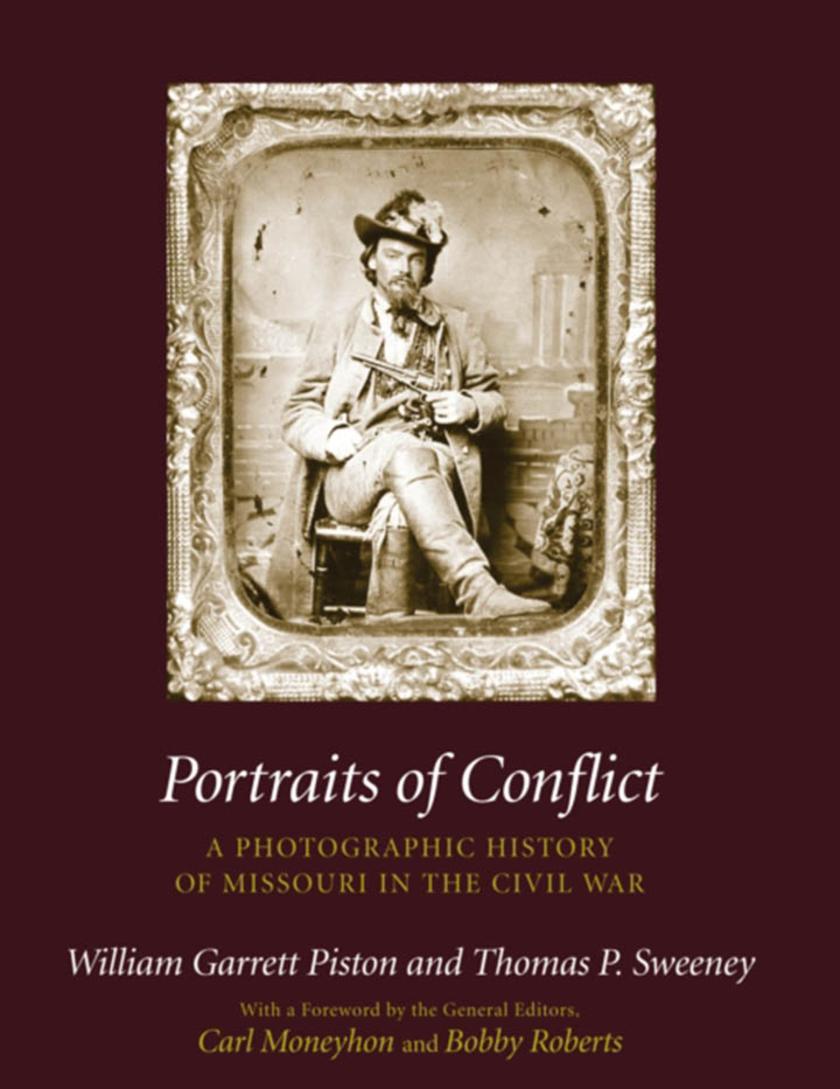
Portraits of Conflict
¥484.91
A deeply divided border state, heir to the "Bleeding Kansas" era, Missouri became the third most fought-over state in the war, following Virginia and Tennessee. Rich in resources and manpower, critical politically to both the Union and the Confederacy, it was the scene of conventional battles, river warfare, and cavalry raids. It saw the first combat by organized units of Native Americans and African Americans. It was also marked by guerrilla warfare of unparalleled viciousness. This volume, the ninth in the series, includes hundreds of photographs, many of them never before published. The authors provide text and commentary, organizing the photographs into chapters covering the origins of the war, its conventional and guerrilla phases, the war on the rivers, medicine (Sweeny's medical knowledge adds a great deal to this chapter and expands our knowledge of its practice in the west), the experiences of Missourians who served out of state, and the process of reunion in the postwar years.
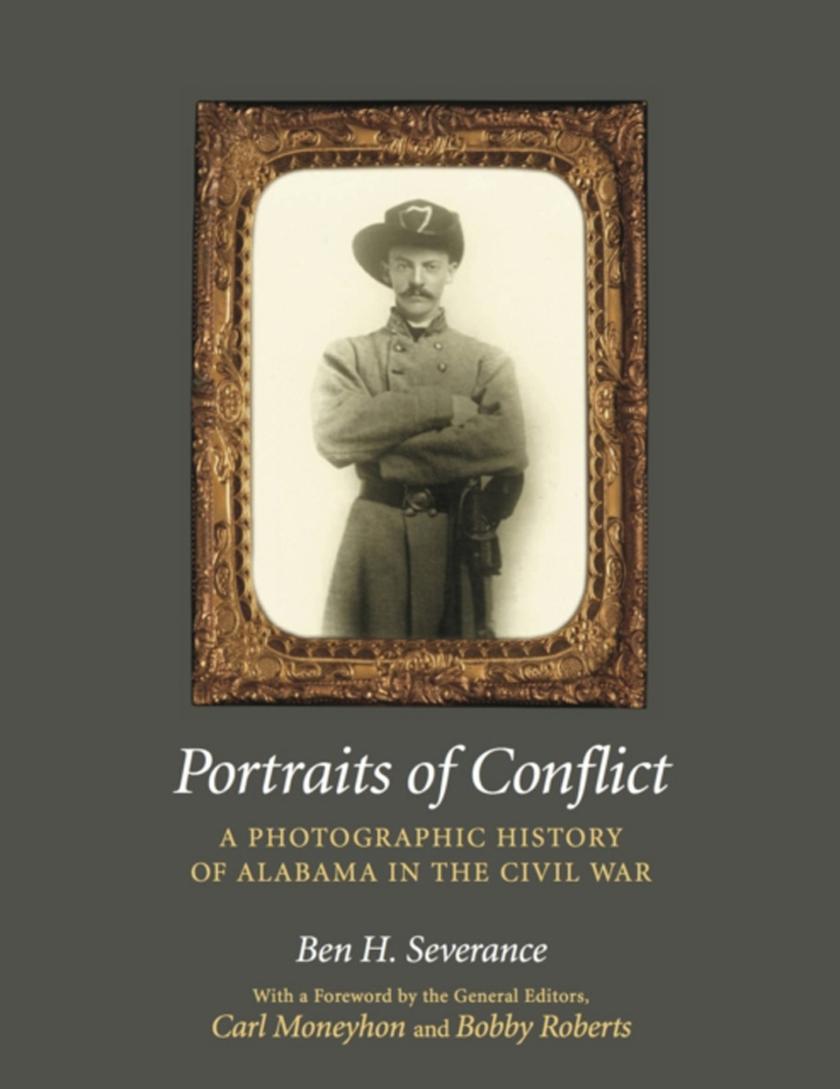
Portraits of Conflict
¥484.91
Portraits of Conflict: A Photographic History of Alabama in the Civil War is the tenth volume in this acclaimed series showing the human side of the country's great national conflict. Over 230 photographs of soldiers and civilians from Alabama, many never seen before, are accompanied by their personal stories and woven into the larger narrative of the war both on the battlefield and the home front. Alabama is unusual among the Rebel states in that, while its people saw little fighting inside its boundaries, nearly one hundred thousand Alabamians served with Confederate units throughout the South. This volume chronicles their experiences in almost every battle east of the Mississippi River--especially at Sharpsburg, Chancellorsville, and Gettysburg under the legendary Robert E. Lee; at Murfreesboro and Chickamauga as part of the ill-fated Army of Tennessee; and at the famous siege of Vicksburg. Ultimately Union soldiers did invade the state, and Alabamians defended their homeland against enemy cavalry raiders at Selma and against Federal warships in the fight for Mobile Bay. The volume also includes accounts of some of Alabama's leading politicians as well as several of its more ordinary citizens. This new volume contains the same quality of photography and storytelling that has attracted Civil War enthusiasts since the first volume was published in 1987, making it another welcome addition to the series Civil War History called "e;a sensibly priced, beautifully produced photographic history."e;

Lindsey Kelk 6-Book ‘I Heart...’ Collection
¥484.81
Indulge in the unputdownable I HEART series. Follow Angela’s adventures from day one . . . Includes two bonus short stories! When Angela Clark flees her best friend's wedding for New York, leaving chaos, an injured groom and a boyfriend in her wake, her adventures are only just beginning. Follow her through six hilarious and highly entertaining novels, as well as two short stories, as her attempts to start a new life and new career – and a new love affair too – take her to Hollywood, Vegas, Paris, back to London, all the way to Christmas. Being Angela, it's not long before she's in one scrape after another… Contains I Heart New York, I Heart Hollywood, I Heart Paris, Jenny Lopez Has A Bad Week, I Heart Vegas, I Heart London, I Heart Christmas, Jenny Lopez Saves Christmas
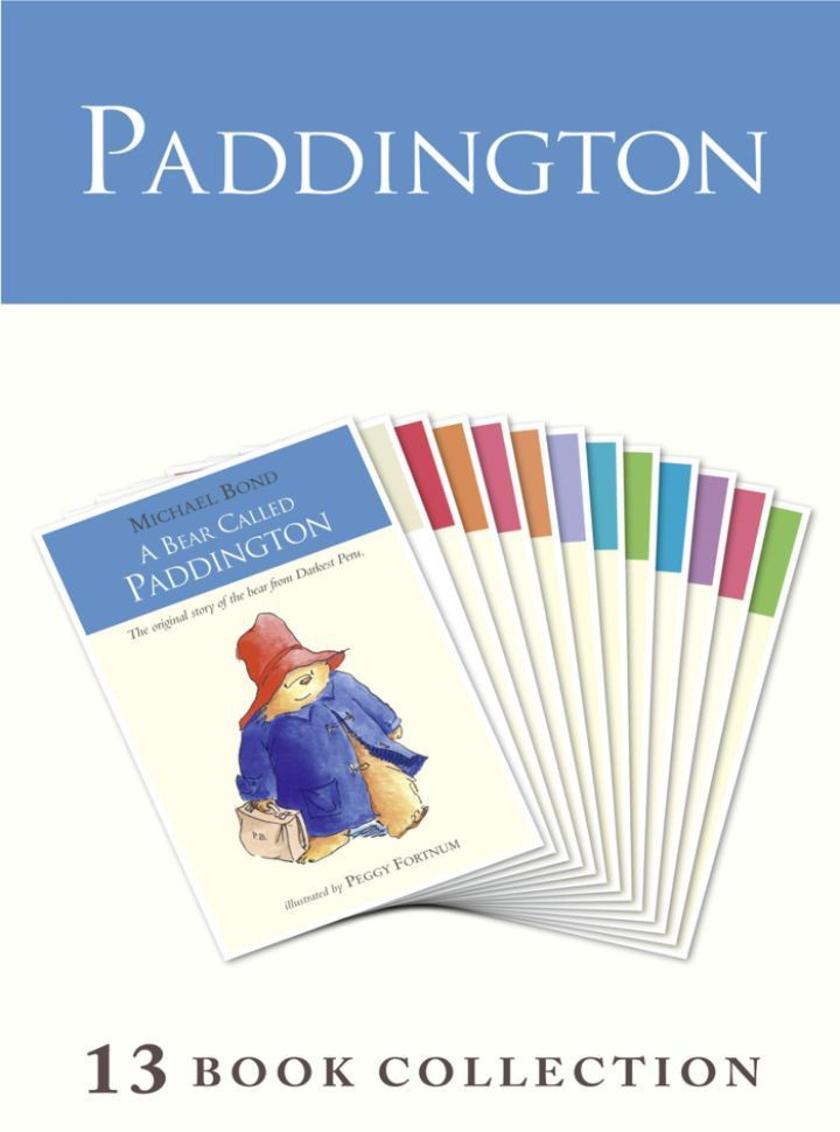
Paddington Complete Novels (Paddington)
¥481.47
Brought together for the very first time, all 13 novels about Paddington, the beloved, classic bear from Darkest Peru! Paddington Bear had travelled all the way from Darkest Peru when the Brown family first met him on Paddington Station. Since then their lives have never been quite the same… for ordinary things become quite extraordinary when a bear called Paddington is around. From arriving at Paddington station and meeting the Brown family, to being mistaken for a famous athlete, with plenty of laugh-out-lad mishaps along the way, there is certainly never a dull moment in this fabulous story collection! Paddington Bear has been delighting adults and children alike with his earnest good intentions and humorous misadventures for over fifty years.
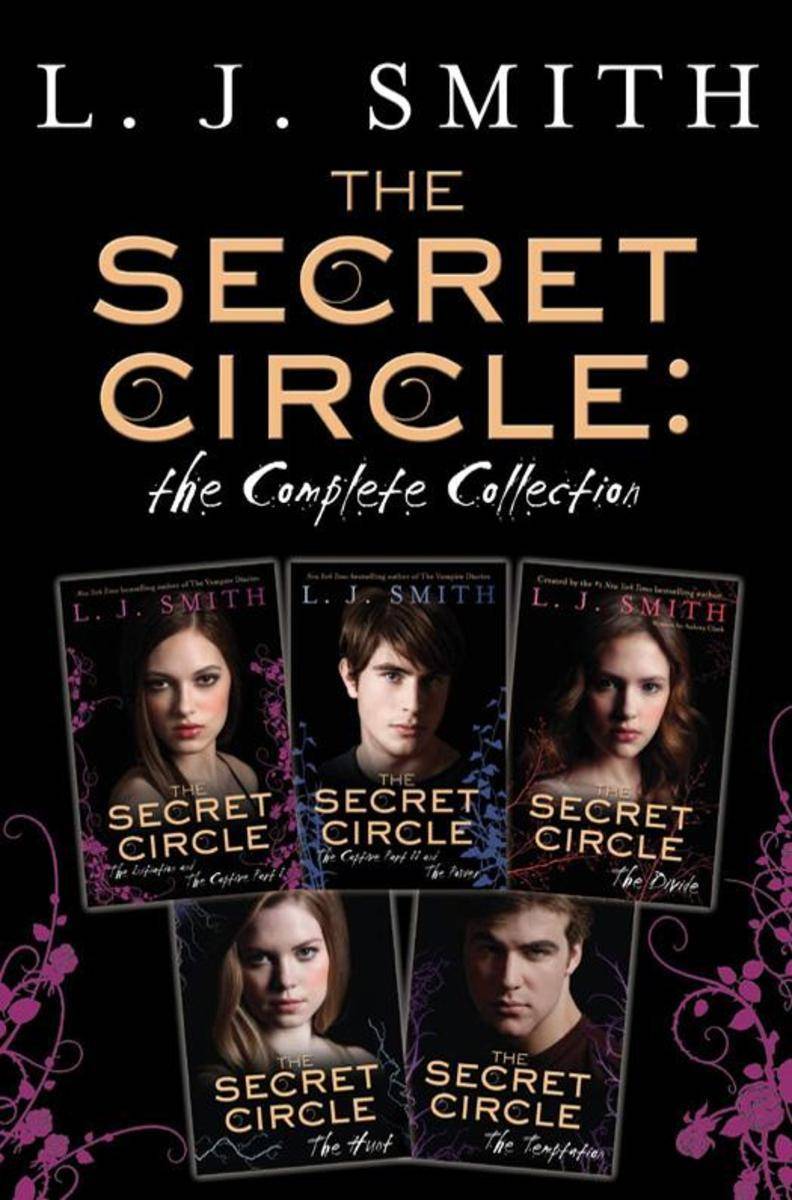
The Secret Circle: The Complete Collection
¥479.81
From the bestselling author of The Vampire Diaries L. J. Smith, comes a dangerously exciting tale of love, witchcraft, and the supernatural, perfect for fans of the Beautiful Creatures series. This collection includes all seven books in the series.The Secret Circle: The Initiation and The Captive Part I: Forced to move from sunny California to gloomy New England, Cassie longs for her old life. Even so, she feels a strange kinship to a terrifying group of teens who seem to rule her school. But when she falls for the mysterious and intriguing Adam, Cassie must choose whether to resist temptation or risk dark forces to get what she wants—even if it means that one wrong move could ultimately destroy her.The Secret Circle: The Captive Part II and The Power: Cassie has joined the most alluring—and deadly—in-crowd imaginable. But power comes with a price, and it's more dangerous than she knows. In the ultimate battle between good and evil, will Cassie's supernatural powers be strong enough to lead the coven out of danger?The Secret Circle: The Divide: For the first time since moving to New Salem, Cassie Blake feels normal. She's dating her soul mate Adam and making new friends in town. But the Circle is being hunted by an unknown enemy—and anyone could be the next victim. As they struggle to protect themselves, alliances are formed and relationships are tested. No one knows who to trust or who to fear. Will Cassie be able to save the Circle . . . and herself?The Secret Circle: The Hunt: Cassie's life is far from ordinary. Her best friends are a coven of witches and her relationship with her boyfriend, Adam, is written in the stars. But then Cassie's evil half sister surfaces, determined to take Cassie's place in the Secret Circle. And a band of powerful witch-hunters begins targeting the group, determined to destroy them. Will Cassie survive this ultimate battle between good and evil?The Secret Circle: The Temptation: Black John's curse has been unleashed on the Circle, and it is up to Cassie to set things right. As Cassie's heart is tested once more, she is forced to finally choose between Nick and Adam, and she faces the ultimate test of her power in this gripping showdown between good and evil.
The New Forest (Collins New Naturalist Library, Book 73)
¥476.96
I recall the New Forest in childhood and explored it in the 1950s. It has been my home and I have been involved in its affairs since 1960 when almost by accident I found myself working in the Nature Conservancy (since 1974 the NCC). The Forest has not been my only professional concern or research interest since then, but it has been of constant and absorbing interest. The absorption grows with time – partly because over long time spans, it becomes possible to measure and witness changes which illuminate the relationships between soils, vegetation, animals and management in ways which no short-term study can achieve; and partly because time increases rather than diminishes the degree of spiritual renewal and intellectual wonder to be derived from the familiar woods and heaths.
The Broads (Collins New Naturalist Library, Book 46)
¥476.96
The broads are shallow, reed-fringed lakes associated with rivers that wind slowly through the lowlands of east Norfolk and neighbouring Suffolk to flow into the North Sea through a common harbour at Great Yarmouth. Their waters are often ruffled by sea breezes and salt tides affect them from time to time; indeed, but for coast defences, they and many thousands of acres of adjacent marshes would be at the mercy of regular sea flooding. It used to be thought that they were relict pools of an estuary clogged by centuries of silting and reclaimed by the spread of marsh vegetation; but the recent researches of Dr. J. M. Lambert and her associates have proved (seechapter 3) that although estuarine conditions have prevailed temporarily in the lower parts of the east Norfolk river valleys on more than one occasion in the past, the broads originated comparatively recently as peat-pits, flooded and linked by artificial channels with the rivers, as the general water-level rose in late historic times.

Northumberland (Collins New Naturalist Library, Book 95)
¥476.96
A native of Northumberland, Angus Lunn is a geographer and ecologist who, until he took early retirement, was Head of Adult Education at the University of Newcastle. He now lectures there part-time. He served for several years on the Northumberland National Park Committee and is currently Chairman of the Council for National Parks and of the Conservation Committee of the Northumberland Wildlife Trust. He has contributed to several published works, including the Flora of Northumberland, Geology of North East England and the Red Data Book for Northumberland.
Insect Natural History (Collins New Naturalist Library, Book 8)
¥476.96
THE name insect is very commonly given to any small creeping animal with a ringed or segmented body and several pairs of legs. Not many people, excepting entomologists and trained biologists, could give a proper definition of an insect that would distinguish it from its near relatives. In the first place it needs to be borne in mind that insects belong to the great group of invertebrate animals known as the Arthropoda. These creatures have the body divided into more or less separate rings or segments, of which a variable number bear jointed limbs. Their whole body and the limbs are covered with a specially hardened cuticle forming an external skeleton. Between the segments, and at the joints of the limbs, there is flexible connecting membrane which allows of freedom of movement. An arthropod, in fact, is encased in a tubular outer skeleton, in striking contrast with a vertebrate animal whose skeleton lies within the body. The functions of the skeleton, whether it be an inner or an outer one, is to give attachment to the muscles and general support to the body. The word insect is derived from the Latin insectum, meaning “cut into,” and refers to the way in which its body is made up of a series of ring-like pieces.

A Country Parish (Collins New Naturalist Library, Book 9)
¥456.66
The natural history of an ordinary English country parish was one of the first subjects that suggested themselves when the New Naturalist series was planned. Collins are delighted to announce the republication in facsimile form of the first editions of the very first volumes in the New Naturalist Library. Originally planned in the darkest days of World War II and first published in 1945, this series is the longest running nature series in the world. It is a reflection of the quality of the authors and the books they wrote, that they are still sought after 73 years later. The books will be identical in every way to the original first editions, including the iconic jackets by Clifford and Rosemary Ellis. The natural history of an ordinary English country parish was one of the first subjects that suggested themselves when the New Naturalist series was planned. Being chiefly farmland and therefore practically all man-made, most country parishes are extremely complex from the naturalist's point of view and also inevitably contain a vast amount of human history. Any attempt to describe their plants and animals has to be closely related with the ways of man himself, who must be regarded as the chief element in the community - a fact which has been obvious enough to naturalists ever since the days of Gilbert White. For this book we were fortunate to find an author who combined a thorough all-round knowledge of natural history with a sound insight into human customs, history, pastimes and farming methods. Arnold Boyd lived in Cheshire all his life - and in keeping with the best tradition of English amateur naturalists, he excelled as a collector of facts, as is apparent from his previous books, his writing in the Manchester Guardian and other journals, and in his assistant editorship of British Birds. By weaving together his collection of facts he presents us with a book of remarkable unity and which shows a wide grasp of every aspect of the living communities. This charming yet erudite portrait will protect his beloved parish for ever from the ravages of human forgetfulness.

Grass and Grassland (Collins New Naturalist Library, Book 48)
¥456.66
The use of natural and seeded grass pastures for the feeding of livestock and other unfamiliar uses for the ubiquitous grass family are described in this succinct and beautifully illustrated work. This edition is exclusive to newnaturalists.com The New Naturalist series has already covered many facets of the interrelationship between man and nature, but the grass family is probably the most important man in the whole plant kingdom - just how important is shown in this book. Dr. Moore, the Principal of Seale Hayne Agricultural College in Devon, is our leading authority on grasses and their utilization. His special interest is the use of natural and seeded grass pastures for the feeding of livestock. Striking advances have been made in recent years in the improvement of such pastures and Dr. Moore deals very fully with this vital link in the feeding of the human race; but he also covers that other equally important role of the grass family in our economy, the cultivation of cereal crops for the production of grain. Grass lawns and playing fields form a centre-piece in most British gardens and public parks and there is a chapter on these, but the horticultural value of grasses as ornamental plants in herbaceous borders and woodland gardens is less well known. These and many other unfamiliar uses for the ubiquitous grass family are described in this succinct and beautifully illustrated work.


