


 购物车
购物车 个人中心
个人中心
Mastering Elastic Stack
¥99.18
Get the most out of the Elastic Stack for various complex analytics using this comprehensive and practical guide About This Book Your one-stop solution to perform advanced analytics with Elasticsearch, Logstash, and Kibana Learn how to make better sense of your data by searching, analyzing, and logging data in a systematic way This highly practical guide takes you through an advanced implementation on the ELK stack in your enterprise environment Who This Book Is For This book cater to developers using the Elastic stack in their day-to-day work who are familiar with the basics of Elasticsearch, Logstash, and Kibana, and now want to become an expert at using the Elastic stack for data analytics. What You Will Learn Build a pipeline with help of Logstash and Beats to visualize Elasticsearch data in Kibana Use Beats to ship any type of data to the Elastic stack Understand Elasticsearch APIs, modules, and other advanced concepts Explore Logstash and it’s plugins Discover how to utilize the new Kibana UI for advanced analytics See how to work with the Elastic Stack using other advanced configurations Customize the Elastic Stack and plugin development for each of the component Work with the Elastic Stack in a production environment Explore the various components of X-Pack in detail. In Detail Even structured data is useless if it can’t help you to take strategic decisions and improve existing system. If you love to play with data, or your job requires you to process custom log formats, design a scalable analysis system, and manage logs to do real-time data analysis, this book is your one-stop solution. By combining the massively popular Elasticsearch, Logstash, Beats, and Kibana, elastic.co has advanced the end-to-end stack that delivers actionable insights in real time from almost any type of structured or unstructured data source. If your job requires you to process custom log formats, design a scalable analysis system, explore a variety of data, and manage logs, this book is your one-stop solution. You will learn how to create real-time dashboards and how to manage the life cycle of logs in detail through real-life scenarios. This book brushes up your basic knowledge on implementing the Elastic Stack and then dives deeper into complex and advanced implementations of the Elastic Stack. We’ll help you to solve data analytics challenges using the Elastic Stack and provide practical steps on centralized logging and real-time analytics with the Elastic Stack in production. You will get to grip with advanced techniques for log analysis and visualization. Newly announced features such as Beats and X-Pack are also covered in detail with examples. Toward the end, you will see how to use the Elastic stack for real-world case studies and we’ll show you some best practices and troubleshooting techniques for the Elastic Stack. Style and approach This practical guide shows you how to perform advanced analytics with the Elastic stack through real-world use cases. It includes common and some not so common scenarios to use the Elastic stack for data analysis.
Python Deep Learning
¥99.18
"Take your machine learning skills to the next level by mastering Deep Learning concepts and algorithms using Python. About This Book ?Explore and create intelligent systems using cutting-edge deep learning techniques ?Implement deep learning algorithms and work with revolutionary libraries in Python ?Get real-world examples and easy-to-follow tutorials on Theano, TensorFlow, H2O and more Who This Book Is For This book is for Data Science practitioners as well as aspirants who have a basic foundational understanding of Machine Learning concepts and some programming experience with Python. A mathematical background with a conceptual understanding of calculus and statistics is also desired. What You Will Learn ?Get a practical deep dive into deep learning algorithms ?Explore deep learning further with Theano, Caffe, Keras, and TensorFlow ?Learn about two of the most powerful techniques at the core of many practical deep learning implementations: Auto-Encoders and Restricted Boltzmann Machines ?Dive into Deep Belief Nets and Deep Neural Networks ?Discover more deep learning algorithms with Dropout and Convolutional Neural Networks ?Get to know device strategies so you can use deep learning algorithms and libraries in the real world In Detail With an increasing interest in AI around the world, deep learning has attracted a great deal of public attention. Every day, deep learning algorithms are used broadly across different industries. The book will give you all the practical information available on the subject, including the best practices, using real-world use cases. You will learn to recognize and extract information to increase predictive accuracy and optimize results. Starting with a quick recap of important machine learning concepts, the book will delve straight into deep learning principles using Sci-kit learn. Moving ahead, you will learn to use the latest open source libraries such as Theano, Keras, Google's TensorFlow, and H20. Use this guide to uncover the difficulties of pattern recognition, scaling data with greater accuracy and discussing deep learning algorithms and techniques. Whether you want to dive deeper into Deep Learning, or want to investigate how to get more out of this powerful technology, you'll find everything inside. Style and approach Python Machine Learning by example follows practical hands on approach. It walks you through the key elements of Python and its powerful machine learning libraries with the help of real world projects. "
Jira 8 Essentials
¥99.18
Explore the new and improved Jira 8 features such as agile board and advanced search for efficient project management Key Features * Work on agile projects in Jira from both the administrator and end user's perspective * Explore the improved Scrum and Kanban board and backlog * Work through exercises at the end of each chapter to reinforce your skills Book Description Atlassian Jira enables effective bug tracking for your software and mobile applications and provides tools to track and manage tasks for your projects. Jira Essentials is a comprehensive guide, now updated to Jira 8 to include enhanced features such as updates to Scrum and Kanban UI, additional search capabilities, and changes to Jira Service Desk. The book starts by explaining how to plan and set up a new Jira 8 instance from scratch before getting you acquainted with key features such as emails, workflows, business processes, and much more. You'll then understand Jira's data hierarchy and how to design and work with projects. Since Jira is used for issue management, this book delves into the different issues that can arise in your projects. You’ll explore fields, including custom fields, and learn to use them for more effective data collection. You’ll create new screens from scratch and customize them to suit your requirements. The book also covers workflows and business processes, and guides you in setting up incoming and outgoing mail servers. Toward the end, you’ll study Jira's security model and Jira Service Desk, which allows you to run Jira as a support portal. By the end of this Jira book, you will be able to implement Jira 8 in your projects with ease. What you will learn * Understand Jira's data hierarchy and how to design and work with projects in Jira * Use Jira for agile software projects, business process management, customer service support, and more * Understand issues and work with them * Design both system and custom fields to behave differently under different contexts * Create and design your own screens and apply them to different project and issue types * Gain an understanding of the workflow and its various components * Set up both incoming and outgoing mail servers to work with e-mails Who this book is for This book will be especially useful for project managers but it's also intended for other Jira users, including developers, and any other industry besides software development, who would like to leverage Jira's powerful task management and workflow features to better manage their business processes.
Extending Microsoft Dynamics 365 for Operations Cookbook
¥99.18
Have the best tools at your fingertips to extend and maximize the efficiency of your business management About This Book ? Follow practical and easy-to-grasp examples, illustrations and coding to make the most out of Dynamics 365 for Operations in your business scenario ? Extend Dynamics 365 for Operations in a cost-effective manner by using tools you already have ? Solve common business problems with the valuable features of Dynamics 365 for Operations Who This Book Is For This book is for those who are getting to grips with Dynamics 365 for Operations developers or those migrating from C# development. The guide includes information essential for new and experienced Dynamics 365 for Operations developers. What You Will Learn ? Create enumerated and extended data types ? Understand the importance of using patterns and frameworks while creating a unique concept for your solution ? Service and deploy your code and packages to improve performance ? Write and perform unit tests to automate the testing process ? Design your security model and policies to provide code access privileges ? Construct the UI and business logic to add Power BI to dashboards In Detail Dynamics 365 for Operations is the ERP element of Microsoft’s new Dynamics 365 Enterprise Edition. Operations delivers the infrastructure to allow businesses to achieve growth and make better decisions using scalable and contemporary ERP system tools. This book provides a collection of “recipes” to instruct you on how to create—and extend—a real-world solution using Operations. All key aspects of the new release are covered, and insights into the development language, structure, and tools are discussed in detail. New concepts and patterns that are pivotal to elegant solution designs are introduced and explained, and readers will learn how to extend various aspects of the system to enhance both the usability and capabilities of Operations. Together, this gives the reader important context regarding the new concepts and the confidence to reuse in their own solution designs. This “cookbook” provides the ingredients and methods needed to maximize the efficiency of your business management using the latest in ERP software—Dynamics 365 for Operations. Style and approach The book takes a practical recipe-based approach, focusing on real-world scenarios and giving you all the information you need to build a strong Dynamics 365 for Operations implementation.
Odoo 10 Implementation Cookbook
¥99.18
Comprehensive tasks covering Odoo 10 in the right way About This Book ? Reduce implementation costs and improve major benchmarks relating to storage space and speed. ? Implement the approval hierarchy and user and access rights, configure the company and language, and so on. ? Cover all platforms such as mobile, web, content management, and e-commerce. Who This Book Is For This book is targeted towards Odoo functional users and project managers who would like to use it for their organization. No expertise in Odoo is required. What You Will Learn ? Learn the modern way of doing sales and managing sales contracts. ? Create and configure your products and manage your sales quotations ? Set up an online shop and start selling online with Odoo eCommerce ? Manage multi-currency transactions and create a deferred revenue plan and link it with products ? Administer vendors and products and request quotations, confirm orders, and get them delivered ? Manage quality control in the warehouse and manual and real-time inventory stock valuations. ? Manage projects and project forecasting via grid and Gantt views ? Implement Human Resource apps and manage the employee appraisal process ? Manage Workcenters and the product lifecycle ? Track worker activity with tablets and launch new changes in production In Detail Odoo is a Python-based ERP system and is completely open source. Odoo is a comprehensive suite of business applications offering a wealth of functionalities that can be deployed to meet your business needs. This book will help you manage the different functionalities of your business and optimize it. You will learn in detail about the various facets of the business process such as sales, accounting, purchases, manufacturing, and inventory. We will cover each of these topics in detail and learn how Odoo handles all these tasks with much ease. With its modular approach, you will be able to build customized solutions, take advantage of the Odoo 10 system in your organization, and master basic administration. We will cover modules and applications in Odoo that will help optimize quality checks. You will also be able to customize major reporting functions for your teams and set up forms and documents for sales, purchase, inventory, and so on. By the end of the book, you will be able to use the major functionalities of Odoo 10 and fully implement them into your business. Style and approach The book follows a recipe-based format; the recipes are filled with real-world use cases and various functional topics.
Implementing Qlik Sense
¥99.18
Become a full-fledged Qlik Sense Consultant with the help of this unique guide About This Book ? Become a successful Qlik consultant with the help of this insightful guide ? Build what is in line as well as exceeding your customer’s expectations from your Qlik Sense solutions using this highly practical guide ? Build result-driven optimized BI solutions using Qlik with the help of industry examples Who This Book Is For If you have basic familiarity with Qlik Sense and want to upgrade your skills to become a full-fledged Qlik Consultant, this book is for you. With this book, you will be able to create efficient business intelligence solutions that would fetch client satisfaction, and in turn, more projects. What You Will Learn ? Understand the importance and expectations of a consultant’s role ? Engage with the customer to understand the ir goals and future objectives ? Design the optimum architecture, using the best practices for the development and implementation of your projects ? Ensure successful adoption using real-life examples to make your learning complete ? Learn about the important stages of a Qlik project’s life cycle In Detail Qlik Sense is a leading platform for business intelligence (BI) solutions. Qlik Sense helps organizations in making informed decisions based on the data they have. This book will teach you how to effectively use Qlik for optimum customer satisfaction. You will undergo a metamorphosis from a developer to a consultant who is capable of building the most suitable BI solutions for your clients. The book will take you through several business cases – this will give you enough insight to understand the needs of the client clearly and build a BI solution that meets or exceeds their expectations. Starting from the pre-project activities, you will go to the actual execution of the project, the implementation, and even maintenance. This book will give you all the information you need - from the strategy to requirement gathering to implementing BI solutions using Qlik Sense. The book will empower you to take the right decisions in tricky and diffi cult situations while developing analytics and dashboards. Style and approach This book will be a hands-on guide that will teach you all the what-to-do’s, when-to-do’s, and how-to-do’s for becoming a successful Qlik Sense Consultant. With the help of various business scenarios, the book will cover real-world problems that you can relate to. Various solutions in the book will be backed up by the thought process of why are these solutions used and how you can implement them in your own business environment.
Splunk Operational Intelligence Cookbook - Second Edition
¥99.18
Over 70 practical recipes to gain operational data intelligence with Splunk Enterprise About This Book This is the most up-to-date book on Splunk 6.3 and teaches you how to tackle real-world operational intelligence scenarios efficiently Get business insights using machine data using this easy-to-follow guide Search, monitor, and analyze your operational data skillfully using this recipe-based, practical guide Who This Book Is For This book is intended for users of all levels who are looking to leverage the Splunk Enterprise platform as a valuable operational intelligence tool. The recipes provided in this book will appeal to individuals from all facets of business, IT, security, product, marketing, and many more! Also, existing users of Splunk who want to upgrade and get up and running with Splunk 6.3 will find this book invaluable. What You Will Learn Use Splunk to gather, analyze, and report on data Create dashboards and visualizations that make data meaningful Build an operational intelligence application with extensive features and functionality Enrich operational data with lookups and workflows Model and accelerate data and perform pivot-based reporting Build real-time, *ed, and other intelligence-driven alerts Summarize data for longer term trending, reporting, and analysis Integrate advanced JavaScript charts and leverage Splunk's API In Detail Splunk makes it easy for you to take control of your data, and with Splunk Operational Cookbook, you can be confident that you are taking advantage of the Big Data revolution and driving your business with the cutting edge of operational intelligence and business analytics. With more than 70 recipes that demonstrate all of Splunk’s features, not only will you find quick solutions to common problems, but you’ll also learn a wide range of strategies and uncover new ideas that will make you rethink what operational intelligence means to you and your organization. You’ll discover recipes on data processing, searching and reporting, dashboards, and visualizations to make data shareable, communicable, and most importantly meaningful. You’ll also find step-by-step demonstrations that walk you through building an operational intelligence application containing vital features essential to understanding data and to help you successfully integrate a data-driven way of thinking in your organization. Throughout the book, you’ll dive deeper into Splunk, explore data models and pivots to extend your intelligence capabilities, and perform advanced searching to explore your data in even more sophisticated ways. Splunk is changing the business landscape, so make sure you’re taking advantage of it. Style and approach Splunk is an excellent platform that allows you to make sense of machine data with ease. The adoption of Splunk has been huge and everyone who has gone beyond installing Splunk wants to know how to make most of it. This book will not only teach you how to use Splunk in real-world scenarios to get business insights, but will also get existing Splunk users up to date with the latest Splunk 6.3 release.
TensorFlow Machine Learning Cookbook
¥99.18
Explore machine learning concepts using the latest numerical computing library — TensorFlow — with the help of this comprehensive cookbook About This Book Your quick guide to implementing TensorFlow in your day-to-day machine learning activities Learn advanced techniques that bring more accuracy and speed to machine learning Upgrade your knowledge to the second generation of machine learning with this guide on TensorFlow Who This Book Is For This book is ideal for data scientists who are familiar with C++ or Python and perform machine learning activities on a day-to-day basis. Intermediate and advanced machine learning implementers who need a quick guide they can easily navigate will find it useful. What You Will Learn Become familiar with the basics of the TensorFlow machine learning library Get to know Linear Regression techniques with TensorFlow Learn SVMs with hands-on recipes Implement neural networks and improve predictions Apply NLP and sentiment analysis to your data Master CNN and RNN through practical recipes Take TensorFlow into production In Detail TensorFlow is an open source software library for Machine Intelligence. The independent recipes in this book will teach you how to use TensorFlow for complex data computations and will let you dig deeper and gain more insights into your data than ever before. You’ll work through recipes on training models, model evaluation, sentiment analysis, regression analysis, clustering analysis, artificial neural networks, and deep learning – each using Google’s machine learning library TensorFlow. This guide starts with the fundamentals of the TensorFlow library which includes variables, matrices, and various data sources. Moving ahead, you will get hands-on experience with Linear Regression techniques with TensorFlow. The next chapters cover important high-level concepts such as neural networks, CNN, RNN, and NLP. Once you are familiar and comfortable with the TensorFlow ecosystem, the last chapter will show you how to take it to production. Style and approach This book takes a recipe-based approach where every topic is explicated with the help of a real-world example.
Mastering Windows Presentation Foundation
¥99.18
Master the art of building modern desktop applications on Windows About This Book Learn how to use the MVVM software architectural pattern and see the benefits of using it with Windows Presentation Fountain (WPF) Explore various ways to enhance efficiency through performance tuning and UI automation Obtain a deep understanding of data validation and understand various methods that suit different situations Who This Book Is For This book is for working developers with a moderate level of knowledge about Windows Presentation Foundation. It will also be of special interest to ambitious individuals who want to know more about application architecture. It is also suitable for those who just want to learn how to build visually stunning user interfaces. What You Will Learn Use MVVM to improve workflow Create visually stunning user interfaces Perform data binds proficiently Implement advanced data validation Locate and resolve errors quickly Master practical animations Improve your applications’ performance In Detail Windows Presentation Foundation is rich in possibilities when it comes to delivering an excellent user experience. This book will show you how to build professional-grade applications that look great and work smoothly. We start by providing you with a foundation of knowledge to improve your workflow – this includes teaching you how to build the base layer of the application, which will support all that comes after it. We’ll also cover the useful details of data binding. Next, we cover the user interface and show you how to get the most out of the built-in and custom WPF controls. The final section of the book demonstrates ways to polish your applications, from adding practical animations and data validation to improving application performance. The book ends with a tutorial on how to deploy your applications and outlines potential ways to apply your new-found knowledge so you can put it to use right away. The book also covers 2D and 3D graphics, UI automation, and performance tuning. Style and approach Filled with intriguing and practical examples, this book delineates concepts that will help you take your WPF skills to the next level.
Learning Tableau 10 - Second Edition
¥99.18
Learn how to create effective data visualizations with Tableau and unlock a smarter approach to business analytics. It might just transform your organization About This Book Create stylish visualizations and dashboards that explain complexity with clarity Learn effective data storytelling to transform how your business uses ideas and makes decisions Explore all the new features in Tableau 10 and start to redefine what business analytics means to your organization Who This Book Is For Got dataNot sure what to make of itThis is the guide for you – whether you’ve been working with Tableau for years or are just beginning your adventure into business analytics. What You Will Learn Find out how to build effective visualizations and dashboards Prepare and clean your data so you can be sure Tableau is finding answers to your questions – not raising more problems Discover how to create advanced visualizations that explain complexity with clarity and style Dig deeper into your data with clustering and distribution models that allow you to analyze trends and make forecasts Learn how to use data storytelling to aid decision-making and strategy Share dashboards and visualizations to cultivate a culture where data is available and valued In Detail Tableau has for some time been one of the most popular Business Intelligence and data visualization tools available. WhyBecause, quite simply, it’s a tool that’s responsive to the needs of modern businesses. But it’s most effective when you know how to get what you want from it – it might make your business intelligent, but it isn’t going to make you intelligent… We’ll make sure you’re well prepared to take full advantage of Tableau 10’s new features. Whether you’re an experienced data analyst that wants to explore 2016’s new Tableau, or you’re a beginner that wants to expand their skillset and bring a more professional and sharper approach to their organization, we’ve got you covered. Beginning with the fundamentals, such as data preparation, you’ll soon learn how to build and customize your own data visualizations and dashboards, essential for high-level visibility and effective data storytelling. You’ll also find out how to so trend analysis and forecasting using clustering and distribution models to inform your analytics. But it’s not just about you – when it comes to data it’s all about availability and access. That’s why we’ll show you how to share your Tableau visualizations. It’s only once insights are shared and communicated that you – and your organization – will start making smarter and informed decisions. And really, that’s exactly what this guide is for. Style and approach Practical yet comprehensive, this Tableau guide takes you from the fundamentals of the tool before diving deeper into creating advanced visualizations. Covering the latest features found in Tableau 10, this might be the guide that transforms your organization.
Xamarin Blueprints
¥99.18
Leverage the power of Xamarin to create stunning cross-platform and native apps About This Book Helps you get a clear practical understanding of creating professional-grade apps with Xamarin Covers Xamarin.Forms, Xamarin Android, and Xamarin iOS If you want to transform yourself from an amateur mobile developer into a professional app developer across multiple platforms, then this is the ideal book for you Who This Book Is For If you are a mobile developer looking to create interesting and fully featured apps for different platforms, then this book is the ideal solution for you. A basic knowledge of Xamarin and C# programming is assumed What You Will Learn Discover eight different ways to create your own Xamarin applications Improve app performance by using SQLite for data-intensive applications Set up a simple web service to feed JSON data into mobile applications Store files locally with Xamarin.Forms using dependency services Use Xamarin extension libraries to create effective applications with less coding In Detail Do you want to create powerful, efficient, and independent apps from scratch that will leverage the Xamarin framework and code with C#Well, look no further; you’ve come to the right place! This is a learn-as-you-build practical guide to building eight full-fledged applications using Xamarin.Forms, Xamarin Android, and Xamarin iOS. Each chapter includes a project, takes you through the process of building applications (such as a gallery Application, a text-to-speech service app, a GPS locator app, and a stock market app), and will show you how to deploy the application’s source code to a Google Cloud Source Repository. Other practical projects include a chat and a media-editing app, as well as other examples fit to adorn any developer’s utility belt. In the course of building applications, this book will teach you how to design and prototype professional-grade applications implementing performance and security considerations. Style and approach A project-based approach that will solve all your needs when it comes to creating native Android, iOS, and cross-platform apps efficiently and effectively.
Mastering QGIS - Second Edition
¥99.18
Go beyond the basics and unleash the full power of QGIS with practical, step-by-step examples About This Book This book is your one-stop solution to all of your GIS needs using the open source QGIS Master QGIS by learning about database integration, geoprocessing tools, Python *s, advanced cartography, and custom plugins This example-rich, practical guide will help you create sophisticated analyses and maps Who This Book Is For If you are a GIS professional, a consultant, a student, or perhaps a fast learner who wants to go beyond the basics of QGIS, then this book is for you. It will prepare you to realize the full potential of QGIS. What You Will Learn Create and manage a spatial database Get to know advanced techniques to style GIS data Prepare both vector and raster data for processing Add heat maps, live layer effects, and labels to your maps Master LAStools and GRASS integration with the Processing Toolbox Edit and repair topological data errors Automate workflows with batch processing and the QGIS Graphical Modeler Integrate Python *ing into your data processing workflows Develop your own QGIS plugin In Detail QGIS is an open source solution to GIS. It is widely used by GIS professionals all over the world. It is the leading alternative to the proprietary GIS software. Although QGIS is described as intuitive, it is also by default complex. Knowing which tools to use and how to apply them is essential to producing valuable deliverables on time. Starting with a refresher on the QGIS basics, this book will take you all the way through to creating your first custom QGIS plugin. From the refresher, we will recap how to create, populate, and manage a spatial database. You’ll also walk through styling GIS data, from creating custom symbols and color ramps to using blending modes. In the next section, you will discover how to prepare vector, heat maps, and create live layer effects, labeling, and raster data for processing. You’ll also discover advanced data creation and editing techniques. The last third of the book covers the more technical aspects of QGIS such as using LAStools and GRASS GIS’s integration with the Processing Toolbox, how to automate workflows with batch processing, and how to create graphical models. Finally, you will see how to create and run Python data processing *s and write your own QGIS plugin with pyqgis. By the end of the book, you will understand how to work with all the aspects of QGIS, and will be ready to use it for any type of GIS work. Style and approach This step-by-step comprehensive guide will let you dig your teeth into working with spatial databases, creating your own QGIS plugins, and creating your own custom graphical models.
Mastering JBoss Enterprise Application Platform 7
¥99.18
Create modular scalable enterprise-grade applications with JBoss Enterprise Application Platform 7 About This Book Leverage the power of JBoss EAP 7 along with Java EE 7 to create professional enterprise grade applications. Get you applications cloud ready and make them highly scalable using this advanced guide. Become a pro Java Developer and move ahead of the crowd with this advanced practical guide. Who This Book Is For The ideal target audience for this book is Java System Administrators who already have some experience with JBoss EAP and who now want explore in depth creating Enterprise grade apps with the latest JBoss EAP version. What You Will Learn Configure services using the Command Line Interface Deliver fault tolerant server configurations Harden the application server with advanced techniques Expand the application server's horizon with tools such as like Docker/OpenShift Create enterprise ready configurations using clustering techniques. Deliver advanced security solutions and learn how to troubleshoot common network/performance issues In Detail The JBoss Enterprise Application Platform (EAP) has been one of the most popular tools for Java developers to create modular, cloud-ready, and modern applications. It has achieved a reputation for architectural excellence and technical savvy, making it a solid and efficient environment for delivering your applications. The book will first introduce application server configuration and the management instruments that can be used to control the application server. Next, the focus will shift to enterprise solutions such as clustering, load balancing, and data caching; this will be the core of the book. We will also discuss services provided by the application server, such as database connectivity and logging. We focus on real-world example configurations and how to avoid common mistakes. Finally, we will implement the knowledge gained so far in terms of Docker containers and cloud availability using RedHat's OpenShift. Style and approach If you are a Java developer who wants to level-up to modern day Java web development with the latest Java EE 7 and JBoss EAP 7, this book is the ideal solution for you. It addresses (in a clear and simple way) proof-of-concept scenarios such as clustering and cloud and container configurations, and explains how to solve common issues.
Big Data Analytics with R
¥99.18
Utilize R to uncover hidden patterns in your Big Data About This Book Perform computational analyses on Big Data to generate meaningful results Get a practical knowledge of R programming language while working on Big Data platforms like Hadoop, Spark, H2O and SQL/NoSQL databases, Explore fast, streaming, and scalable data analysis with the most cutting-edge technologies in the market Who This Book Is For This book is intended for Data Analysts, Scientists, Data Engineers, Statisticians, Researchers, who want to integrate R with their current or future Big Data workflows. It is assumed that readers have some experience in data analysis and understanding of data management and algorithmic processing of large quantities of data, however they may lack specific skills related to R. What You Will Learn Learn about current state of Big Data processing using R programming language and its powerful statistical capabilities Deploy Big Data analytics platforms with selected Big Data tools supported by R in a cost-effective and time-saving manner Apply the R language to real-world Big Data problems on a multi-node Hadoop cluster, e.g. electricity consumption across various socio-demographic indicators and bike share scheme usage Explore the compatibility of R with Hadoop, Spark, SQL and NoSQL databases, and H2O platform In Detail Big Data analytics is the process of examining large and complex data sets that often exceed the computational capabilities. R is a leading programming language of data science, consisting of powerful functions to tackle all problems related to Big Data processing. The book will begin with a brief introduction to the Big Data world and its current industry standards. With introduction to the R language and presenting its development, structure, applications in real world, and its shortcomings. Book will progress towards revision of major R functions for data management and transformations. Readers will be introduce to Cloud based Big Data solutions (e.g. Amazon EC2 instances and Amazon RDS, Microsoft Azure and its HDInsight clusters) and also provide guidance on R connectivity with relational and non-relational databases such as MongoDB and HBase etc. It will further expand to include Big Data tools such as Apache Hadoop ecosystem, HDFS and MapReduce frameworks. Also other R compatible tools such as Apache Spark, its machine learning library Spark MLlib, as well as H2O. Style and approach This book will serve as a practical guide to tackling Big Data problems using R programming language and its statistical environment. Each section of the book will present you with concise and easy-to-follow steps on how to process, transform and analyse large data sets.
Clojure Data Analysis Cookbook - Second Edition
¥99.18
This book is for those with a basic knowledge of Clojure, who are looking to push the language to excel with data analysis.
Machine Learning with R - Second Edition
¥99.18
Perhaps you already know a bit about machine learning but have never used R, or perhaps you know a little R but are new to machine learning. In either case, this book will get you up and running quickly. It would be helpful to have a bit of familiarity with basic programming concepts, but no prior experience is required.
HTML5 Data and Services Cookbook
¥99.18
A practical approach with hands on recipes to learn more about HTML5 Data and Services, its features and techniques when building websites or web applications.This book is for programmers and developers who work with a lot of backend code and want to get fast tracked into the world of HTML5 and Java*. It is also for JavaScript developers who would like to update their knowledge with new techniques and capabilities made possible with HTML5.Some experience in HTML and jQuery is assumed.
Oracle JD Edwards EnterpriseOne 9.0: Supply Chain Management Cookbook
¥99.18
A cookbook full of practical and immediately useable recipes for real world business implementation of EnterpriseOne Supply Chain Management. If you are a functional consultant, technical consultant/developer, or project manager and want to improve your business perspective of EnterpriseOne SCM, this book is for you. You should have basic knowledge of navigating EnterpriseOne and general supply chain familiarity. Knowledge of the Common Foundation JDE 9.0 module is advantageous; the supply chain business domain knowledge will be an add-on to this.
Unreal Development Kit Game Design Cookbook
¥99.18
Written in cookbook style, this book offers many recipes to learn game design with UDK. Each recipe contains step-by-step instructions followed by analysis of what was done in each task and other useful information. The book is designed so that you can read it chapter by chapter, or you can look at the list of recipes and refer to them in no particular order. This book is meant for game artists who are getting used to UDK but may feel the need for guidance on matters of implementation. It also targets brave beginners who are struggling to find an all in one package for getting started with UDK, and want a ready to hand reference. Level designers can use this book to gauge their understanding of the editor, check for specific problems, and discover gems they may not have come across before.
Oracle Information Integration, Migration, and Consolidation
¥99.18
This enormously practical guide, interspersed with numerous real-life case studies and actual business scenarios, shows readers when, where, and how to use Oracle's wide range of data integration products. If you are a DBA, application or data architect, or data integration specialist who is running an Oracle database or middleware and you want to learn about the latest on Oracle's information integration platform, then this book is for you. You can also benefit from this book if you are an application developer or technical and project lead with a focus on master data management, data warehousing, and data consolidation. You should have working experience with Oracle Database, data integration, consolidation, and migration, as well as some familiarity with integration middleware products and information service buses.
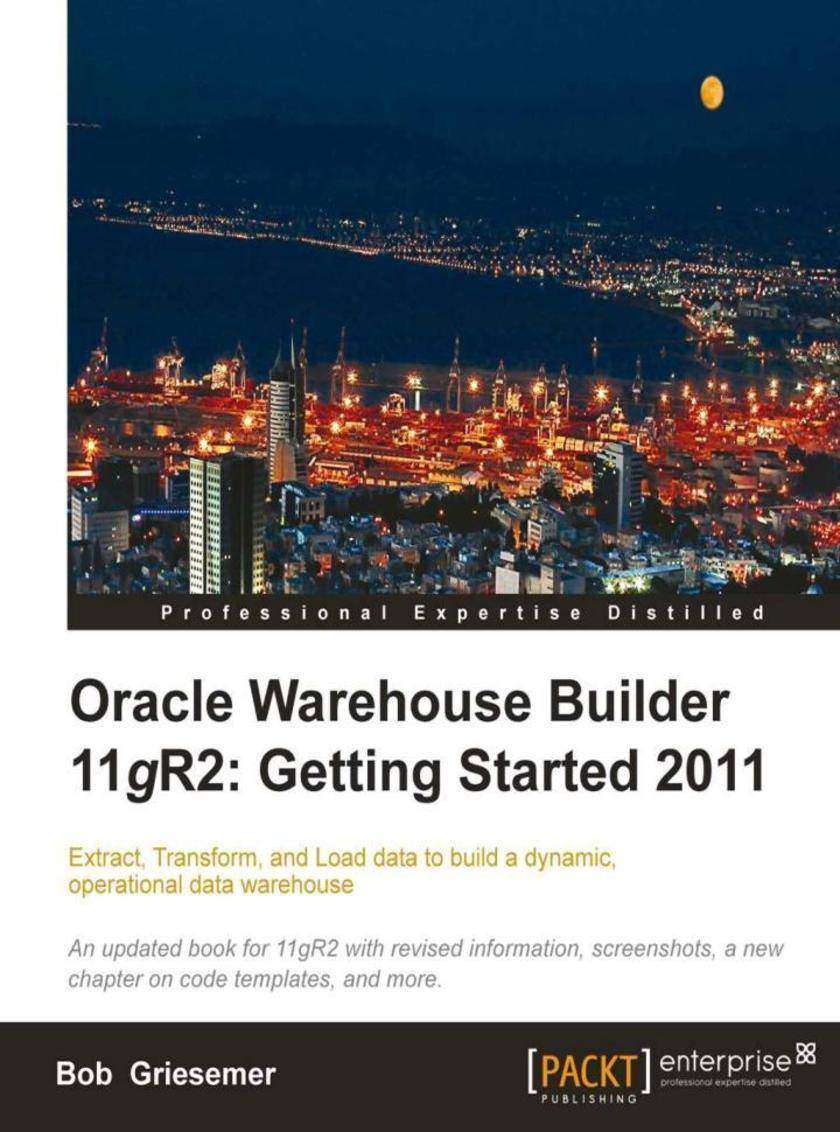
Oracle Warehouse Builder 11g R2: Getting Started 2011
¥99.18
This easy-to-understand tutorial covers Oracle Warehouse Builder from the ground up, and taps into the author's wide experience as a software and database engineer. Written in a relaxed style with step-by-step explanations, lots of screenshots are provided throughout the book. There are numerous tips and helpful hints throughout that are not found in the original documentation. By following this book, you can use Oracle Warehouse Builder in the best possible way and maximize your learning potential. This book is an update of Oracle Warehouse Builder 11g: Getting Started. This book is a good starting point for database engineers, administrators, and architects who are responsible for data warehouse projects and need to design them and load data into them. If you are someone who wants to learn Oracle Warehouse Builder and expand your knowledge of the tool and data warehousing, this is an ideal book for you. No prior data warehouse or database experience is presumed. All new database and data warehouse technical terms and concepts explained in clear easy-to-understand language.


