


 购物车
购物车 个人中心
个人中心
Myth of Achievement Tests
¥265.87
Achievement tests play an important role in modern societies. They are used to evaluate schools, to assign students to tracks within schools, and to identify weaknesses in student knowledge. The GED is an achievement test used to grant the status of high school graduate to anyone who passes it. GED recipients currently account for 12 percent of all high school credentials issued each year in the United States. But do achievement tests predict success in life?The Myth of Achievement Tests shows that achievement tests like the GED fail to measure important life skills. James J. Heckman, John Eric Humphries, Tim Kautz, and a group of scholars offer an in-depth exploration of how the GED came to be used throughout the United States and why our reliance on it is dangerous. Drawing on decades of research, the authors show that, while GED recipients score as well on achievement tests as high school graduates who do not enroll in college, high school graduates vastly outperform GED recipients in terms of their earnings, employment opportunities, educational attainment, and health. The authors show that the differences in success between GED recipients and high school graduates are driven by character skills. Achievement tests like the GED do not adequately capture character skills like conscientiousness, perseverance, sociability, and curiosity. These skills are important in predicting a variety of life outcomes. They can be measured, and they can be taught.?Using the GED as a case study, the authors explore what achievement tests miss and show the dangers of an educational system based on them. They call for a return to an emphasis on character in our schools, our systems of accountability, and our national dialogue.ContributorsEric Grodsky, University of Wisconsin-MadisonAndrew Halpern-Manners, Indiana University BloomingtonPaul A. LaFontaine, Federal Communications CommissionJanice H. Laurence, Temple UniversityLois M. Quinn, University of Wisconsin-MilwaukeePedro L. Rodrguez, Institute of Advanced Studies in AdministrationJohn Robert Warren, University of Minnesota, Twin Cities

Sound Diplomacy
¥265.87
The German-American relationship was special long before the Cold War; it was rooted not simply in political actions, but also long-term traditions of cultural exchange that date back to the nineteenth century. Between 1850 and 1910, the United States was a rising star in the international arena, and several European nations sought to strengthen their ties to the republic by championing their own cultures in America. While France capitalized on its art and Britain on its social ties and literature, Germany promoted its particular breed of classical music.Delving into a treasure trove of archives that document cross-cultural interactions between America and Germany, Jessica Gienow-Hecht retraces these efforts to export culture as an instrument of nongovernmental diplomacy, paying particular attention to the role of conductors, and uncovers the remarkable history of the musician as a cultural symbol of German cosmopolitanism. Considered sexually attractive and emotionally expressive, German players and conductors acted as an army of informal ambassadors for their home country, and Gienow-Hecht argues that their popularity in the United States paved the way for an emotional elective affinity that survived broken treaties and several wars and continues to the present.
Man Is by Nature a Political Animal
¥265.87
In Man Is by Nature a Political Animal, Peter K. Hatemi and Rose McDermott bring together a diverse group of contributors to examine the ways in which evolutionary theory and biological research are increasingly informing analyses of political behavior. Focusing on the theoretical, methodological, and empirical frameworks of a variety of biological approaches to political attitudes and preferences, the authors consider a wide range of topics, including the comparative basis of political behavior, the utility of formal modeling informed by evolutionary theory, the genetic bases of attitudes and behaviors, psychophysiological methods and research, and the wealth of insight generated by recent research on the human brain. Through this approach, the book reveals the biological bases of many previously unexplained variances within the extant models of political behavior.?The diversity of methods discussed and variety of issues examined here will make this book of great interest to students and scholars seeking a comprehensive overview of this emerging approach to the study of politics and behavior.
THE Affect Effect
¥265.87
two sections branch out to explore how politics work at the societal level and suggest the next steps in modeling, research, and political activity itself. Opening up new paths of inquiry in an exciting new field, this volume will appeal not only to scholars of American politics and political behavior, but also to anyone interested in political psychology and sociology.
Diving Seals and Meditating Yogis
¥265.87
The comparative physiology of seemingly disparate organisms often serves as a surprising pathway to biological enlightenment. How appropriate, then, that Robert Elsner sheds new light on the remarkable physiology of diving seals through comparison with members of our own species on quests toward enlightenment: meditating yogis.As Elsner reveals, survival in extreme conditions such as those faced by seals is often not about running for cover or coming up for air, but rather about working within the confines of an environment and suppressing normal bodily function. Animals in this withdrawn state display reduced resting metabolic rates and are temporarily less dependent upon customary levels of oxygen. For diving seals-creatures especially well-adapted to prolonged submergence in the ocean's cold depths-such periods of rest lengthen dive endurance. But while human divers share modest, brief adjustments of suppressed metabolism with diving seals, it is the practiced response achieved during deep meditation that is characterized by metabolic rates well below normal levels, sometimes even approaching those of non-exercising diving seals. And the comparison does not end here: hibernating animals, infants during birth, near-drowning victims, and clams at low tide all also display similarly reduced metabolisms.By investigating these states-and the regulatory functions that help maintain them-across a range of species, Elsner offers suggestive insight into the linked biology of survival and well-being.
Laughing at Leviathan
¥265.87
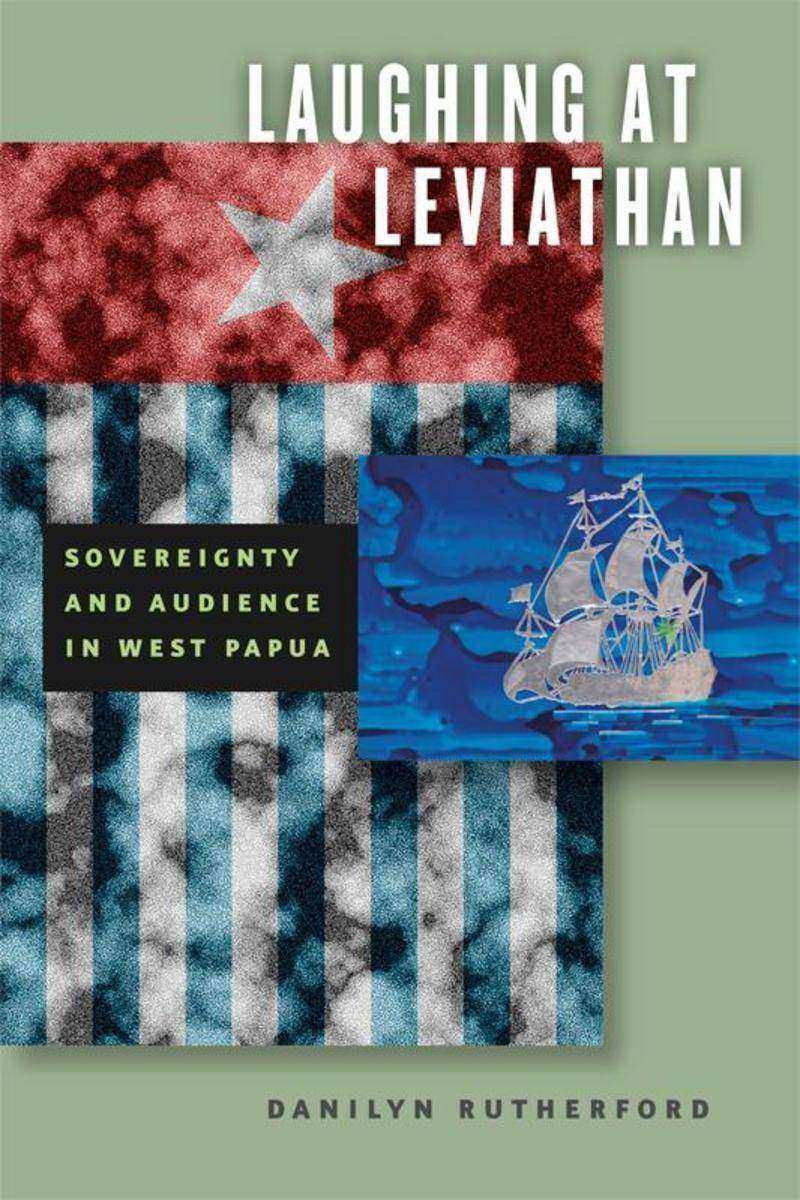
For West Papua and its people, the promise of sovereignty has never been realized, despite a long and fraught struggle for independence from Indonesia. In Laughing at Leviathan, Danilyn Rutherford examines this struggle through a series of interlocking essays that drive at the core meaning of sovereignty itself-how it is fueled, formed, and even thwarted by pivotal but often overlooked players: those that make up an audience. Whether these players are citizens, missionaries, competing governmental powers, nongovernmental organizations, or the international community at large, Rutherford shows how a complex interplay of various observers is key to the establishment and understanding of the sovereign nation-state.?Drawing on a wide array of sources, from YouTube videos to Dutch propaganda to her own fieldwork observations, Rutherford draws the history of Indonesia, empire, and postcolonial nation-building into a powerful examination of performance and power. Ultimately she revises Thomas Hobbes, painting a picture of the Leviathan not as a coherent body but a fragmented one distributed across a wide range of both real and imagined spectators. In doing so, she offers an important new approach to the understanding of political struggle.

Empire's Children
¥265.87
Europe's imperial projects were often predicated on a series of legal and scientific distinctions that were frequently challenged by the reality of social and sexual interactions between the colonized and the colonizers.When Emmanuelle Saada discovered a 1928 decree defining the status of persons of mixed parentage born in French Indochina-the mtis-she found not only a remarkable artifact of colonial rule, but a legal bombshell that introduced race into French law for the first time. The decree was the culmination of a decades-long effort to resolve the "e;mtis question"e;: the educational, social, and civil issues surrounding the mixed population. Operating at the intersection of history, anthropology, and law, Empire's Children reveals the unacknowledged but central role of race in the definition of French nationality.Through extensive archival work in both France and Vietnam, and a close reading of primary and secondary material from the Pacific islands and sub-Saharan and North Africa, Saada has created in Empire's Children an original and compelling perspective on colonialism, law, race, and culture from the end of the nineteenth century until decolonization.

Knowledge in the Time of Cholera
¥265.87
Vomiting. Diarrhea. Dehydration. Death. Confusion. In 1832, the arrival of cholera in the United States created widespread panic throughout the country. For the rest of the century, epidemics swept through American cities and towns like wildfire, killing thousands. Physicians of all stripes offered conflicting answers to the cholera puzzle, ineffectively responding with opiates, bleeding, quarantines, and all manner of remedies, before the identity of the dreaded infection was consolidated under the germ theory of disease some sixty years later.These cholera outbreaks raised fundamental questions about medical knowledge and its legitimacy, giving fuel to alternative medical sects that used the confusion of the epidemic to challenge both medical orthodoxy and the authority of the still-new American Medical Association. In Knowledge in the Time of Cholera, Owen Whooley tells us the story of those dark days, centering his narrative on rivalries between medical and homeopathic practitioners and bringing to life the battle to control public understanding of disease, professional power, and democratic governance in nineteenth-century America.

Music, the Arts, and Ideas
¥265.87
Meyer makes a valuable statement on aesthetics, criteria for assessing great works of music, compositional practices and theories of the present day, and predictions of the future of Western culture. His postlude, written for the book's twenty-fifth anniversary, looks back at his thoughts on the direction of music in 1967.

Parables of Coercion
¥265.87
In the sixteenth and seventeenth centuries, competing scholarly communities sought to define a Spain that was, at least officially, entirely Christian, even if many suspected that newer converts from Islam and Judaism were Christian in name only. Unlike previous books on conversion in early modern Spain, however, Parables of Coercion focuses not on the experience of the converts themselves, but rather on how questions surrounding conversion drove religious reform and scholarly innovation.In its careful examination of how Spanish authors transformed the history of scholarship through debate about forced religious conversion, Parables of Coercion makes us rethink what we mean by tolerance and intolerance, and shows that debates about forced conversion and assimilation were also disputes over the methods and practices that demarcated one scholarly discipline from another.

Securing Approval
¥265.87
Among the most momentous decisions that leaders of a state are called upon to make is whether or not to initiate warfare. How their military will fare against the opponent may be the first consideration, but not far behind are concerns about domestic political response and the reaction of the international community.Securing Approval makes clear the relationship between these two seemingly distinct concerns, demonstrating how multilateral security organizations like the UN influence foreign policy through public opinion without ever exercising direct enforcement power. While UN approval of a proposed action often bolsters public support, its refusal of endorsement may conversely send a strong signal to domestic audiences that the action will be exceedingly costly or overly aggressive. With a cogent theoretical and empirical argument, Terrence L. Chapman provides new evidence for how multilateral organizations matter in security affairs as well as a new way of thinking about the design and function of these institutions.
Travels with Tooy
¥265.87
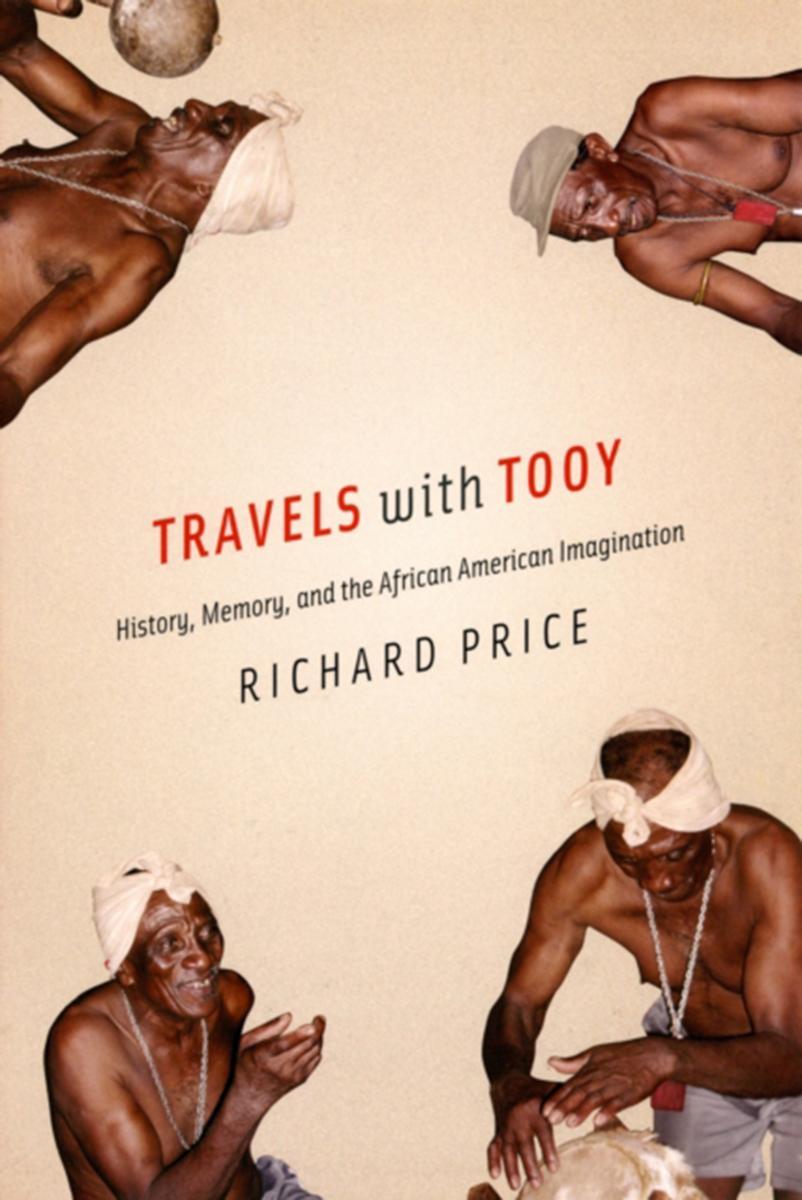
At first glance, the rough shantytowns that ring Cayenne, where Haitian, Brazilian, Guyanese, and Suriname migrants live cheek by jowl, might seem the least likely of places to meet a fellow intellectual. And yet . . . The poverty that threatens to crush the spirit of both the hardworking and the unemployed can leave largely untouched the richness of the imagination. Amidst the mud and stench and random violence, Tooy—captain of the Saramakas of Cayenne—runs a household in which spiritual and rhetorical gifts abound. I’ve felt privileged to play a part in it during the past seven years.
Hayek's Challenge
¥265.87
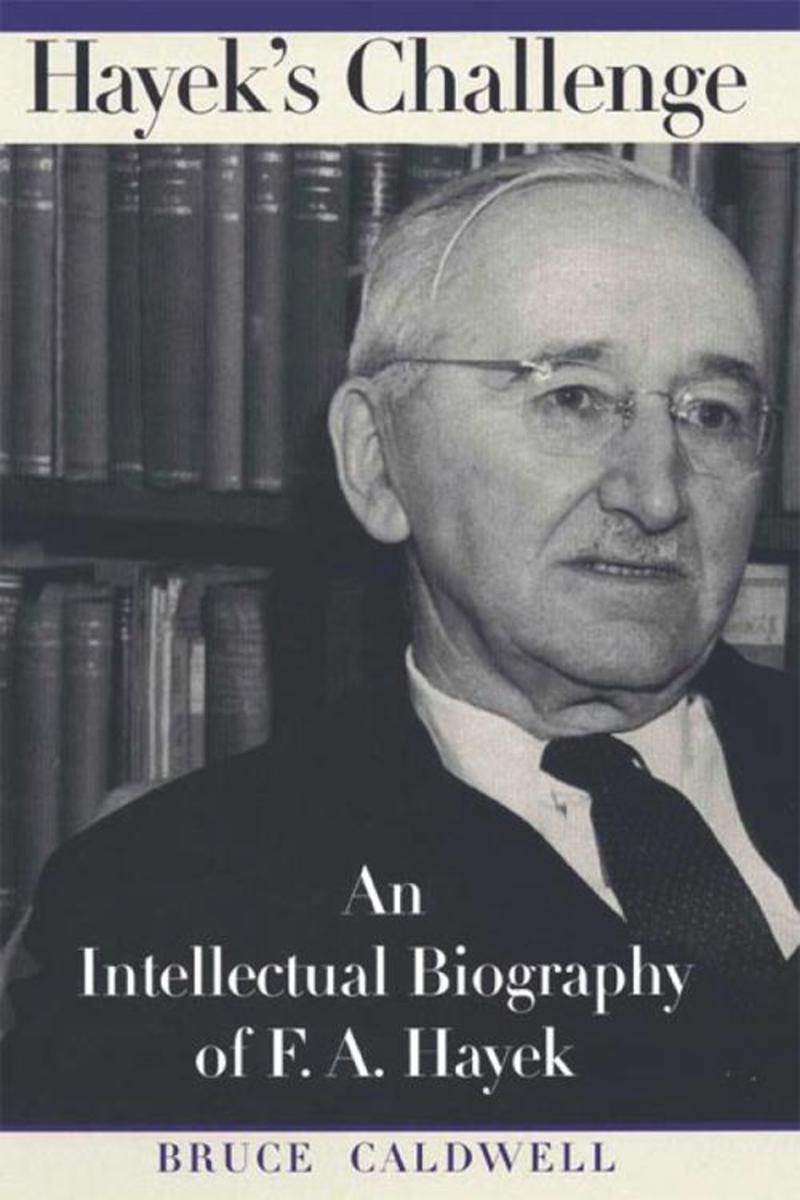
Friedrich A. Hayek is regarded as one of the preeminent economic theorists of the twentieth century, as much for his work outside of economics as for his work within it. During a career spanning several decades, he made contributions in fields as diverse as psychology, political philosophy, the history of ideas, and the methodology of the social sciences. Bruce Caldwell-editor of The Collected Works of F. A. Hayek-understands Hayek's thought like few others, and with this book he offers us the first full intellectual biography of this pivotal social theorist.Caldwell begins by providing the necessary background for understanding Hayek's thought, tracing the emergence, in fin-de-sicle Vienna, of the Austrian school of economics-a distinctive analysis forged in the midst of contending schools of thought. In the second part of the book, Caldwell follows the path by which Hayek, beginning from the standard Austrian assumptions, gradually developed his unique perspective on not only economics but a broad range of social phenomena. In the third part, Caldwell offers both an assessment of Hayek's arguments and, in an epilogue, an insightful estimation of how Hayek's insights can help us to clarify and reexamine changes in the field of economics during the twentieth century.As Hayek's ideas matured, he became increasingly critical of developments within mainstream economics: his works grew increasingly contrarian and evolved in striking-and sometimes seemingly contradictory-ways. Caldwell is ideally suited to explain the complex evolution of Hayek's thought, and his analysis here is nothing short of brilliant, impressively situating Hayek in a broader intellectual context, unpacking the often difficult turns in his thinking, and showing how his economic ideas came to inform his ideas on the other social sciences.Hayek's Challenge will be received as one of the most important works published on this thinker in recent decades.
Moral Imagination
¥265.87
Using path-breaking discoveries of cognitive science, Mark Johnson argues that humans are fundamentally imaginative moral animals, challenging the view that morality is simply a system of universal laws dictated by reason. According to the Western moral tradition, we make ethical decisions by applying universal laws to concrete situations. But Johnson shows how research in cognitive science undermines this view and reveals that imagination has an essential role in ethical deliberation.Expanding his innovative studies of human reason in Metaphors We Live By and The Body in the Mind, Johnson provides the tools for more practical, realistic, and constructive moral reflection.
Argument and the Action of Plato's Laws
¥265.87
The posthumous publication of The Argument and the Action of Plato's "e;Laws"e; was compiled shortly before the death of Leo Strauss in 1973. Strauss offers an insightful and instructive reading through careful probing of Plato's classic text."e;Strauss's The Argument and the Action of Plato's 'Laws' reflects his interest in political thought, his dogged method of following the argument of the Laws step by step, and his vigorous defense of this dialogue's integrity in respect to the ideals of the Republic."e;-Cross Currents"e;The unique characteristics of this commentary on the Laws reflect the care and precision which were the marks of Professor Strauss's efforts to understand the complex thoughts of other men."e;-Allan D. Nelson, Canadian Journal of Political Science"e;Thorough and provocative, an important addition to Plato scholarship."e;-Library Journal"e;The major purpose of the commentary is to provide a reading of the dialogue which displays its structural arrangement and the continuity of the argument."e;-J. W. Dy, Bibliographical Bulletin of Philosophy"e;The reader of Strauss's book is indeed guided closely through the whole text."e;- M. J. Silverthorne, The Humanities Association ReviewLeo Strauss (1899-1973) was the Robert Maynard Hutchins Distinguished Service Professor Emeritus of political science at the University of Chicago.

Gesture and Thought
¥265.87
Gesturing is such an integral yet unconscious part of communication that we are mostly oblivious to it. But if you observe anyone in conversation, you are likely to see his or her fingers, hands, and arms in some form of spontaneous motion. WhyDavid McNeill, a pioneer in the ongoing study of the relationship between gesture and language, set about answering this question over twenty-five years ago. In Gesture and Thought he brings together years of this research, arguing that gesturing, an act which has been popularly understood as an accessory to speech, is actually a dialectical component of language.Gesture and Thought expands on McNeill's acclaimed classic Hand and Mind. While that earlier work demonstrated what gestures reveal about thought, here gestures are shown to be active participants in both speaking and thinking. Expanding on an approach introduced by Lev Vygotsky in the 1930s, McNeill posits that gestures are key ingredients in an "imagery-language dialectic" that fuels both speech and thought. Gestures are both the "imagery" and components of "language." The smallest element of this dialectic is the "growth point," a snapshot of an utterance at its beginning psychological stage. Utilizing several innovative experiments he created and administered with subjects spanning several different age, gender, and language groups, McNeill shows how growth points organize themselves into utterances and extend to discourse at the moment of speaking.An ambitious project in the ongoing study of the relationship of human communication and thought, Gesture and Thought is a work of such consequence that it will influence all subsequent theory on the subject.
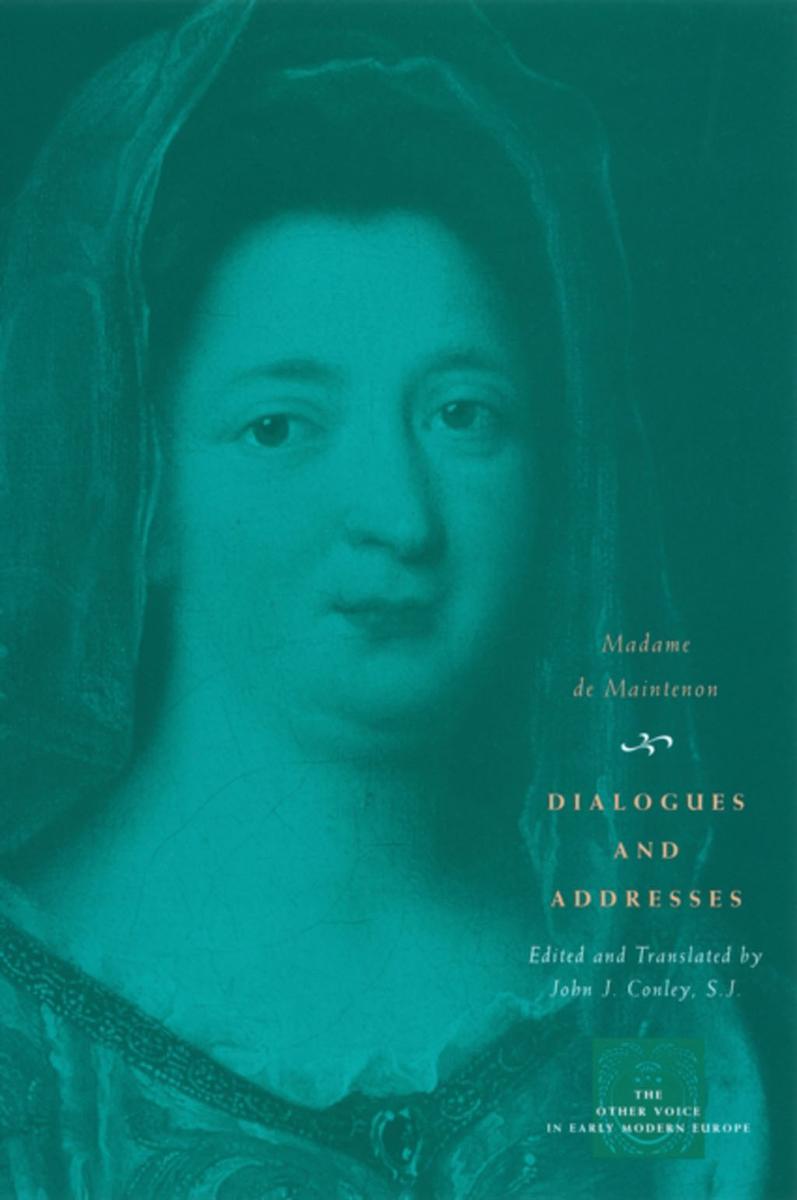
Dialogues and Addresses
¥265.87
Born Francoise d'Aubigne, a criminal's daughter reduced to street begging as a child, Madame de Maintenon (1653-1719) made an improbable rise from impoverished beginnings to the summit of power as the second, secret wife of Louis XIV. An educational reformer, Maintenon founded and directed the celebrated academy for aristocratic women at Saint-Cyr. This volume presents the dialogues and addresses in which Maintenon explains her controversial philosophy of education for women.Denounced by her contemporaries as a political schemer and religious fanatic, Maintenon has long been criticized as an opponent of gender equality. The writings in this volume faithfully reflect Maintenon's respect for social hierarchy and her stoic call for women to accept the duties of their state in life. But the writings also echo Maintenon's more feminist concerns: the need to redefine the virtues in the light of women's experience, the importance of naming the constraints on women's freedom, and the urgent need to remedy the scandalous neglect of the education of women.In her writings as well as in her own model school at Saint-Cyr, Maintenon embodies the demand for educational reform as the key to the empowerment of women at the dawn of modernity.

Memory's Library
¥265.87
In Jennifer Summit's account, libraries are more than inert storehouses of written tradition; they are volatile spaces that actively shape the meanings and uses of books, reading, and the past. Considering the two-hundred-year period between 1431, which saw the foundation of Duke Humfrey's famous library, and 1631, when the great antiquarian Sir Robert Cotton died, Memory's Library revises the history of the modern library by focusing on its origins in medieval and early modern England.Summit argues that the medieval sources that survive in English collections are the product of a Reformation and post-Reformation struggle to redefine the past by redefining the cultural place, function, and identity of libraries. By establishing the intellectual dynamism of English libraries during this crucial period of their development, Memory's Library demonstrates how much current discussions about the future of libraries can gain by reexamining their past.

Goethe and the Ginkgo
¥265.87
In 1815, Goethe gave symbolic expression to his intense relationship with Marianne Willemer, a recently married woman thirty-five years his junior. He gave her a leaf from the ginkgo tree, explaining that, like its deeply cleft yet still whole leaf, he was "single yet twofold." Although it is not known if their relationship was ever consummated, they did exchange love poetry, and Goethe published several of Marianne's poems in his West-East Divan without crediting her authorship.In this beautiful little book, renowned Goethe scholar Siegfried Unseld considers what this episode means to our estimation of a writer many consider nearly godlike in stature. Unseld begins by exploring the botanical and medical lore of the ginkgo, including the use of its nut as an aphrodisiac and anti-aging serum. He then delves into Goethe's writings for the light they shed on his relationship with Marianne. Unseld reveals Goethe as a great yet human being, subject, as any other man, to the vagaries of passion.
Education, Justice, and Democracy
¥265.87
Education is a contested topic, and not just politically. For years scholars have approached it from two different points of view: one empirical, focused on explanations for student and school success and failure, and the other philosophical, focused on education's value and purpose within the larger society. Rarely have these separate approaches been brought into the same conversation. Education, Justice, and Democracy does just that, offering an intensive discussion by highly respected scholars across empirical and philosophical disciplines.?The contributors explore how the institutions and practices of education can support democracy, by creating the conditions for equal citizenship and egalitarian empowerment, and how they can advance justice, by securing social mobility and cultivating the talents and interests of every individual. Then the authors evaluate constraints on achieving the goals of democracy and justice in the educational arena and identify strategies that we can employ to work through or around those constraints. More than a thorough compendium on a timely and contested topic, Education, Justice, and Democracy exhibits an entirely new, more deeply composed way of thinking about education as a whole and its importance to a good society.
Marketing Schools, Marketing Cities
¥265.87
Discuss real estate with any young family and the subject of schools is certain to come up-in fact, it will likely be a crucial factor in determining where that family lives. Not merely institutions of learning, schools have increasingly become a sign of a neighborhood's vitality, and city planners have ever more explicitly promoted "e;good schools"e; as a means of attracting more affluent families to urban areas, a dynamic process that Maia Bloomfield Cucchiara critically examines in Marketing Schools, Marketing Cities.?Focusing on Philadelphia's Center City Schools Initiative, she shows how education policy makes overt attempts to prevent, or at least slow, middle-class flight to the suburbs. Navigating complex ethical terrain, she balances the successes of such policies in strengthening urban schools and communities against the inherent social injustices they propagate-the further marginalization and disempowerment of lowerclass families. By asking what happens when affluent parents become "e;valued customers,"e; Marketing Schools, Marketing Cities uncovers a problematic relationship between public institutions and private markets, where the former are used to leverage the latter to effect urban transformations.


