


 购物车
购物车 个人中心
个人中心
Zend Framework 2 Cookbook
¥90.46
This book is written in a practical, cookbook style with numerous examples and recipes. This style allows you to go both directly to your topic of interest or follow topics throughout a chapter to gain an in-depth knowledge of certain areas.'Zend Framework 2 Cookbook" is for PHP developers who are fairly advanced in programming in PHP. It will also be useful for developers who have a keen interest in expanding their knowledge outside the boundaries of simply *ing pages together. As unit testing and MVC will be discussed, it is beneficial for the reader to know what these technologies are, although experience with developing applications is not necessarily essential.
CodeIgniter 2 Cookbook
¥90.46
Presented in a recipe-based format, you are led step-by-step through each aspect of CodeIgniter, allowing you to dip in and out as you choose.CodeIgniter 2 Cookbook is for intermediate to advanced PHP developers who want to begin using the powerful CodeIgniter framework to create web applications. Familiarity with CodeIgniter isn’t essential, but it will be useful if you have been introduced to the framework before.
Android NDK Game Development Cookbook
¥90.46
A systematic guide consisting of over 70 recipes which focus on helping you build portable mobile games and aims to enhance your game development skills with clear instructions.If you are a C++ developer who wants to jump into the world of Android game development and who wants to use the power of existing C++ libraries in your existing Android Java applications, then this book is for you. You need to have basic knowledge of C or C++ including pointer manipulation, multithreading, and object-oriented programming concepts as well as some experience developing applications without using an IDE.
Multithreading in C# 5.0 Cookbook
¥90.46
Cookbook.Multithreading in C# 5.0 Cookbook is written for existing C# developers who want a complete, professional, and authoritative guide to multithreading. You don’t need any experience with multithreaded programming to use this book.
Learning Geospatial Analysis with Python
¥90.46
This is a tutorial-style book that helps you to perform Geospatial and GIS analysis with Python and its tools/libraries. This book will first introduce various Python-related tools/packages in the initial chapters before moving towards practical usage, examples, and implementation in specialized kinds of Geospatial data analysis.This book is for anyone who wants to understand digital mapping and analysis and who uses Python or another *ing language for automation or crunching data manually.This book primarily targets Python developers, researchers, and analysts who want to perform Geospatial, modeling, and GIS analysis with Python.
Visualforce Development Cookbook
¥90.46
Visualforce Development Cookbook is written in such a way that even complex concepts are explained in an easy-to-understand manner. Following a Cookbook structure, the book covers some essential technical scenarios and includes over 75 recipes focusing on real-world development problems. This book is packed with illustrations and also contains lots of code samples for the better understanding of the reader."Visualforce Development Cookbook" is aimed at developers who have already grasped the basics of Visualforce. Awareness of the standard component library and the purpose of controllers is expected.
Web Penetration Testing with Kali Linux
¥90.46
Web Penetration Testing with Kali Linux contains various penetration testing methods using BackTrack that will be used by the reader. It contains clear step-by-step instructions with lot of screenshots. It is written in an easy to understand language which will further simplify the understanding for the user."Web Penetration Testing with Kali Linux" is ideal for anyone who is interested in learning how to become a penetration tester. It will also help the users who are new to Kali Linux and want to learn the features and differences in Kali versus Backtrack, and seasoned penetration testers who may need a refresher or reference on new tools and techniques. Basic familiarity with web-based programming languages such as PHP, JavaScript and MySQL will also prove helpful.
Moodle 3 Administration - Third Edition
¥90.46
An administrator’s guide to configuring, securing, customizing, and extending MoodleAbout This BookLearn how to plan, install, optimize, customize, and configure MoodleGuarantee a cutting-edge learning experience in a secure and customizable environment while optimizing your day-to-day workloadA one-stop guide with a problem-solution approach and a wide range of real-world examplesWho This Book Is ForIf you are a technician, systems administrator, or part of academic staff, this is the book for you. This book is ideal for anyone who has to administer a Moodle system. Whether you are dealing with a small-scale local Moodle system or a large-scale multi-site Virtual Learning Environment, this book will assist you with any administrative task. Some basic Moodle knowledge is helpful, but not essential.What You Will LearnInstall and update Moodle on multiple platforms manually and via CLI and GITManage courses and categories, users and cohorts, as well as rolesGet Moodle hooked up to repositories, portfolios, and open badgesConfigure Moodle for mobile usage, accessibility, localization, communication, and collaborationGuarantee backups, security and privacy, and achieve maximum performance via the Moodle Universal Cache and the new cron systemConfigure the Moodle events system to generate comprehensive reports, statistics, and learning analyticsNetwork Moodle with Mahara and extend it with third-party add-ons and via LTICustomize Moodle web services to enable mobile learning and integration with other IT systemsIn DetailMoodle is the de facto standard for open source learning platforms. However, setting up and managing a learning environment can be a complex task since it covers a wide range of technical, organizational, and pedagogical topics. This ranges from basic user and course management, to configuring plugins and design elements, all the way to system settings, performance optimization, events frameworks, and so on.This book concentrates on basic tasks such as how to set up and configure Moodle and how to perform day-to-day administration activities, and progresses on to more advanced topics that show you how to customize and extend Moodle, manage courses, cohorts, and users, and how to work with roles and capabilities. You’ll learn to configure Moodle plugins and ensure your VLE conforms to pedagogical and technical requirements in your organization. You’ll then learn how to integrate the VLE via web services and network it with other sites, including Mahara, and extend your system via plugins and LTI. By the end of this book, you will be able to set up an efficient, fully fledged, and secure Moodle system.Style and approachThe book takes a problem-solution approach to fall in line with your day-to-day operations. This is a one-stop reference for any task you will ever come across when administering a Moodle site of any shape and size.
Kali Linux Web Penetration Testing Cookbook
¥90.46
Over 80 recipes on how to identify, exploit, and test web application security with Kali Linux 2About This BookFamiliarize yourself with the most common web vulnerabilities a web application faces, and understand how attackers take advantage of themSet up a penetration testing lab to conduct a preliminary assessment of attack surfaces and run exploitsLearn how to prevent vulnerabilities in web applications before an attacker can make the most of itWho This Book Is ForThis book is for IT professionals, web developers, security enthusiasts, and security professionals who want an accessible reference on how to find, exploit, and prevent security vulnerabilities in web applications. You should know the basics of operating a Linux environment and have some exposure to security technologies and tools.What You Will LearnSet up a penetration testing laboratory in a secure wayFind out what information is useful to gather when performing penetration tests and where to look for itUse crawlers and spiders to investigate an entire website in minutesDiscover security vulnerabilities in web applications in the web browser and using command-line toolsImprove your testing efficiency with the use of automated vulnerability scannersExploit vulnerabilities that require a complex setup, run custom-made exploits, and prepare for extraordinary scenariosSet up Man in the Middle attacks and use them to identify and exploit security flaws within the communication between users and the web serverCreate a malicious site that will find and exploit vulnerabilities in the user's web browserRepair the most common web vulnerabilities and understand how to prevent them becoming a threat to a site's securityIn DetailWeb applications are a huge point of attack for malicious hackers and a critical area for security professionals and penetration testers to lock down and secure. Kali Linux is a Linux-based penetration testing platform and operating system that provides a huge array of testing tools, many of which can be used specifically to execute web penetration testing.This book will teach you, in the form step-by-step recipes, how to detect a wide array of vulnerabilities, exploit them to analyze their consequences, and ultimately buffer attackable surfaces so applications are more secure, for you and your users.Starting from the setup of a testing laboratory, this book will give you the skills you need to cover every stage of a penetration test: from gathering information about the system and the application to identifying vulnerabilities through manual testing and the use of vulnerability scanners to both basic and advanced exploitation techniques that may lead to a full system compromise. Finally, we will put this into the context of OWASP and the top 10 web application vulnerabilities you are most likely to encounter, equipping you with the ability to combat them effectively. By the end of the book, you will have the required skills to identify, exploit, and prevent web application vulnerabilities.Style and approachTaking a recipe-based approach to web security, this book has been designed to cover each stage of a penetration test, with de*ions on how tools work and why certain programming or configuration practices can become security vulnerabilities that may put a whole system, or network, at risk. Each topic is presented as a sequence of tasks and contains a proper explanation of why each task is performed and what it accomplishes.
Mobile Application Penetration Testing
¥90.46
Explore real-world threat scenarios, attacks on mobile applications, and ways to counter them About This Book Gain insights into the current threat landscape of mobile applications in particular Explore the different options that are available on mobile platforms and prevent circumventions made by attackers This is a step-by-step guide to setting up your own mobile penetration testing environment Who This Book Is For If you are a mobile application evangelist, mobile application developer, information security practitioner, penetration tester on infrastructure web applications, an application security professional, or someone who wants to learn mobile application security as a career, then this book is for you. This book will provide you with all the skills you need to get started with Android and iOS pen-testing. What You Will Learn Gain an in-depth understanding of Android and iOS architecture and the latest changes Discover how to work with different tool suites to assess any application Develop different strategies and techniques to connect to a mobile device Create a foundation for mobile application security principles Grasp techniques to attack different components of an Android device and the different functionalities of an iOS device Get to know secure development strategies for both iOS and Android applications Gain an understanding of threat modeling mobile applications Get an in-depth understanding of both Android and iOS implementation vulnerabilities and how to provide counter-measures while developing a mobile app In Detail Mobile security has come a long way over the last few years. It has transitioned from "should it be done?" to "it must be done!"Alongside the growing number of devises and applications, there is also a growth in the volume of Personally identifiable information (PII), Financial Data, and much more. This data needs to be secured. This is why Pen-testing is so important to modern application developers. You need to know how to secure user data, and find vulnerabilities and loopholes in your application that might lead to security breaches. This book gives you the necessary skills to security test your mobile applications as a beginner, developer, or security practitioner. You'll start by discovering the internal components of an Android and an iOS application. Moving ahead, you'll understand the inter-process working of these applications. Then you'll set up a test environment for this application using various tools to identify the loopholes and vulnerabilities in the structure of the applications. Finally, after collecting all information about these security loop holes, we'll start securing our applications from these threats. Style and approach This is an easy-to-follow guide full of hands-on examples of real-world attack simulations. Each topic is explained in context with respect to testing, and for the more inquisitive, there are more details on the concepts and techniques used for different platforms.
OpenCV By Example
¥90.46
Enhance your understanding of Computer Vision and image processing by developing real-world projects in OpenCV 3About This BookGet to grips with the basics of Computer Vision and image processingThis is a step-by-step guide to developing several real-world Computer Vision projects using OpenCV 3This book takes a special focus on working with Tesseract OCR, a free, open-source library to recognize text in imagesWho This Book Is ForIf you are a software developer with a basic understanding of Computer Vision and image processing and want to develop interesting Computer Vision applications with Open CV, this is the book for you. Knowledge of C++ is required.What You Will LearnInstall OpenCV 3 on your operating systemCreate the required CMake *s to compile the C++ application and manage its dependenciesGet to grips with the Computer Vision workflows and understand the basic image matrix format and filtersUnderstand the segmentation and feature extraction techniquesRemove backgrounds from a static scene to identify moving objects for video surveillanceTrack different objects in a live video using various techniquesUse the new OpenCV functions for text detection and recognition with TesseractIn DetailOpen CV is a cross-platform, free-for-use library that is primarily used for real-time Computer Vision and image processing. It is considered to be one of the best open source libraries that helps developers focus on constructing complete projects on image processing, motion detection, and image segmentation.Whether you are completely new to the concept of Computer Vision or have a basic understanding of it, this book will be your guide to understanding the basic OpenCV concepts and algorithms through amazing real-world examples and projects.Starting from the installation of OpenCV on your system and understanding the basics of image processing, we swiftly move on to creating optical flow video analysis or text recognition in complex scenes, and will take you through the commonly used Computer Vision techniques to build your own Open CV projects from scratch.By the end of this book, you will be familiar with the basics of Open CV such as matrix operations, filters, and histograms, as well as more advanced concepts such as segmentation, machine learning, complex video analysis, and text recognition.Style and approachThis book is a practical guide with lots of tips, and is closely focused on developing Computer vision applications with OpenCV. Beginning with the fundamentals, the complexity increases with each chapter. Sample applications are developed throughout the book that you can execute and use in your own projects.
Boost.Asio C++ Network Programming Cookbook
¥90.46
Over 25 hands-on recipes to create robust and highly-efficient cross-platform distributed applications with the Boost.Asio libraryAbout This BookBuild highly efficient distributed applications with easeEnhance your cross-platform network programming skills with one of the most reputable C++ librariesFind solutions to real-world problems related to network programming with ready-to-use recipes using this detailed and practical handbookWho This Book Is ForIf you want to enhance your C++ network programming skills using the Boost.Asio library and understand the theory behind development of distributed applications, this book is just what you need. The prerequisite for this book is experience with general C++11. To get the most from the book and comprehend advanced topics, you will need some background experience in multithreading.What You Will LearnBoost your working knowledge of one of the most reputable C++ networking libraries—Boost.AsioFamiliarize yourself with the basics of TCP and UDP protocolsCreate scalable and highly-efficient client and server applicationsUnderstand the theory behind development of distributed applicationsIncrease the security of your distributed applications by adding SSL supportImplement a HTTP client easilyUse iostreams, scatter-gather buffers, and timersIn DetailStarting with recipes demonstrating the execution of basic Boost.Asio operations, the book goes on to provide ready-to-use implementations of client and server applications from simple synchronous ones to powerful multithreaded scalable solutions. Finally, you are presented with advanced topics such as implementing a chat application, implementing an HTTP client, and adding SSL support. All the samples presented in the book are ready to be used in real projects just out of the box.As well as excellent practical examples, the book also includes extended supportive theoretical material on distributed application design and construction.Style and approachThis book is a set of recipes, each containing the statement and de*ion of a particular practical problem followed by code sample providing the solution to the problem and detailed step-by-step explanation. Recipes are grouped by topic into chapters and ordered by the level of complexity from basic to advanced.
CentOS 7 Linux Server Cookbook - Second Edition
¥90.46
Over 80 recipes to get up and running with CentOS 7 Linux serverAbout This BookA practical guide to install, configure, administer and maintain CentOS 7 serversAn in-depth guide to the CentOS 7 operating system, exploring its various new features and changes in server administrationPresents tricks and solutions to tackle common server issues with the help of practical examples and real-life scenariosWho This Book Is ForThis book is targeted at beginner and more experienced system administrators alike who want to use CentOS as their server solution. Readers do not need much pre-knowledge or experience at all to work with this book.What You Will LearnInstall and configure CentOS 7 Linux server system from scratch using normal and advanced methodsMaintain a performance-based and secure server solution by deploying expert configuration advice and managing software packagesMonitor, manage and develop your server's file system to maintain a stable performanceGain best practice methods on sharing files and resources through a networkInstall and configure common standard services such as web, mail, FTP, database and domain name server technologiesIntroduce you to the world of operating-system-level virtualization using the Docker platform.Understand the fundamentals of the Security-Enhanced Linux access control architectureMonitor your IT infrastructure using NagiosIn DetailThis book will provide you with a comprehensive series of starting points that will give you direct access to the inner workings of the latest CentOS version 7 and help you trim the learning curve to master your server.You will begin with the installation and basic configuration of CentOS 7, followed by learning how to manage your system, services and software packages. You will then gain an understanding of how to administer the file system, secure access to your server and configure various resource sharing services such as file, printer and DHCP servers across your network. Further on, we cover advanced topics such as FTP services, building your own DNS server, running database servers, and providing mail and web services. Finally, you will get a deep understanding of SELinux and you will learn how to work with Docker operating-system virtualization and how to monitor your IT infrastructure with Nagios.By the end of this book, you will have a fair understanding of all the aspects of configuring, implementing and administering CentOS 7 Linux server and how to put it in control.Style and approachThis book is a practical reference guide with hands-on examples and solutions to real-world administration problems. It covers in-depth and comprehensive information on CentOS 7 and its new features.
Sass and Compass Designer's Cookbook
¥90.46
Over 120 practical and easy-to-understand recipes that explain how to use Sass and Compass to write efficient, maintainable, and reusable CSS code for your web development projects About This Book Leverage Sass to make your CSS code maintainable, reusable and prevent code duplications Shorten debug time with Sass when creating complex CSS code for different browsers and devices Write easy and bullet-proof CSS with Compass using this step-by-step and detailed guide Who This Book Is For This book is mainly intended for web developers and designers who are comfortable with CSS and HTML. If you are someone with some experience with CSS, you will find the learning curve of learning Sass syntax to be less steep. Basic knowledge of web development is helpful but you don't have to be a programmer to understand Sass. What You Will Learn Spend less time debugging code Compile Sass code into readable and maintainable CSS Integrate Sass in your own projects Reuse your code to prevent code duplications Write reusable and portable CSS code Make use of pre-built and established code written by other developers Reduce development and maintenance time of your projects Set up a development environment with Gulp In Detail Sass and Compass Designer's Cookbook helps you to get most out of CSS3 and harness its benefits to create engaging and receptive applications. This book will help you develop faster and reduce the maintenance time for your web development projects by using Sass and Compass. You will learn how to use with CSS frameworks such as Bootstrap and Foundation and understand how to use other libraries of pre-built mixins. You will also learn setting up a development environment with Gulp. This book guides you through all the concepts and gives you practical examples for full understanding. Style and approach This book is the perfect mix of essential theory combined with real-life examples and problems, with clear explanations of the more sophisticated Sass concepts. Learn Sass and Compass with practical and well-explained example code. This book follows a problem and solution approach that is convenient to understand and follow.
Sitecore Cookbook for Developers
¥90.46
Over 70 incredibly effective and practical recipes to get you up and running with Sitecore development About This Book Build enterprise-level rich websites quickly and deliver the best possible content management to your website Get maximum usage of functionalities like different user interfaces, workflow, publishing, search, analytics, etc and learn different rendering techniques using presentation components for data bindings, events, handlers, schedulers, media, etc. Add a surprising amount of functionality just by customizing the Sitecore architecture through the best practices contained in this book Who This Book Is For If you are a Sitecore developer or a programmer who wants to expand your Sitecore development skills, this book is ideal for you. You will need working knowledge of ASP.NET WebForms or MVC, as well as HTML, and a basic knowledge of Sitecore installation. What You Will Learn Create, access, and personalize your website content using different Sitecore presentation components Learn how to extend the presentation components to fulfill some real-life requiremnts such as improving the site’s performance, generating Rss feeds and so on Work with multiple websites on a single Sitecore instance and create multilingual websites Customize the Sitecore interfaces as per your business requirements to provide easier and error-free user interface to content authors to save time and improve accuracy Customize the Sitecore backend architecture as per your business needs Automate tasks and achieve scalability by altering the development and configuration settings Integrate external systems with Sitecore to import or export content and secure user interactions Integrate the advanced features of analytics and personalization, to get the best possible customer experience and generate its reports In Detail This book will get you started on building rich websites, and customizing user interfaces by creating content management applications quickly. It will give you an insight into web designs and how to customize the Sitecore architecture as per your website's requirements using best practices. Packed with over 70 recipes to help you achieve and solve real-world common tasks, requirements, and the problems of content management, content delivery, and publishing instance environments. It also presents recipes on Sitecore’s backend processes of customizing pipelines, creating custom event handler and media handler, setting hooks to interpret foreign language URL and more. Other topics covered include creating a workflow action, publishing sublayouts and media files, securing your environment by customizing user profiles and access rights, boosting search capabilities, optimising performance, scalability and high-availability of Sitecore instances and much more. By the end of this book, you will have be able to add virtually limitless features to your websites by developing and deploying Sitecore efficiently. Style and approach This easy-to-follow guide is full of hands-on recipes on real-world development tasks to improve your existing Sitecore system. Each topic is presented with its benefits and detailed steps to achieve it through well-explained code and images.
Advanced Splunk
¥90.46
Master the art of getting the maximum out of your machine data using Splunk About This Book A practical and comprehensive guide to the advanced functions of Splunk,, including the new features of Splunk 6.3 Develop and manage your own Splunk apps for greater insight from your machine data Full coverage of high-level Splunk techniques including advanced searches, manipulations, and visualization Who This Book Is For This book is for Splunk developers looking to learn advanced strategies to deal with big data from an enterprise architectural perspective. It is expected that readers have a basic understanding and knowledge of using Splunk Enterprise. What You Will Learn Find out how to develop and manage apps in Splunk Work with important search commands to perform data analytics on uploaded data Create visualizations in Splunk Explore tweaking Splunk Integrate Splunk with any pre-existing application to perform data crunching efficiently and in real time Make your big data speak with analytics and visualizations using Splunk Use SDK and Enterprise integration with tools such as R and Tableau In Detail Master the power of Splunk and learn the advanced strategies to get the most out of your machine data with this practical advanced guide. Make sense of the hidden data of your organization – the insight of your servers, devices, logs, traffic and clouds. Advanced Splunk shows you how. Dive deep into Splunk to find the most efficient solution to your data problems. Create the robust Splunk solutions you need to make informed decisions in big data machine analytics. From visualizations to enterprise integration, this well-organized high level guide has everything you need for Splunk mastery. Start with a complete overview of all the new features and advantages of the latest version of Splunk and the Splunk Environment. Go hands on with uploading data, search commands for basic and advanced analytics, advanced visualization techniques, and dashboard customizing. Discover how to tweak Splunk to your needs, and get a complete on Enterprise Integration of Splunk with various analytics and visualization tools. Finally, discover how to set up and use all the new features of the latest version of Splunk. Style and approach This book follows a step by step approach. Every new concept is built on top of its previous chapter, and it is full of examples and practical scenarios to help the reader experiment as they read.
Extending Docker
¥90.46
Master the art of making Docker more extensible, composable, and modular by leveraging plugins and other supporting tools About This Book Get the first book on the market that shows you how to extend the capabilities of Docker using plugins and third-party tools Master the skills of creating various plugins and integrating great tools in order to enhance the functionalities of Docker A practical and learning guide that ensures your investment in Docker becomes more valuable Who This Book Is For This book is for developers and sys admins who are well versed Docker and have knowledge on basic programming languages. If you can’t wait to extend Docker and customize it to meet your requirements, this is the book for you! What You Will Learn Find out about Docker plugins and the problems they solve Gain insights into creating your own plugin Use Docker tools to extend the basic functionality of the core Docker engine Get to grips with the installation and configuration of third-party tools available to use with Docker plugins Install, configure, and use a scheduling service to manage the containers in your environment Enhance your day-to-day Docker usage through security, troubleshooting, and best practices In Detail With Docker, it is possible to get a lot of apps running on the same old servers, making it very easy to package and ship programs. The ability to extend Docker using plugins and load third-party plugins is incredible, and organizations can massively benefit from it. In this book, you will read about what first and third party tools are available to extend the functionality of your existing Docker installation and how to approach your next Docker infrastructure deployment. We will show you how to work with Docker plugins, install it, and cover its lifecycle. We also cover network and volume plugins, and you will find out how to build your own plugin. You’ll discover how to integrate it with Puppet, Ansible, Jenkins, Flocker, Rancher, Packer, and more with third-party plugins. Then, you’ll see how to use Schedulers such as Kubernetes and Amazon ECS. Finally, we’ll delve into security, troubleshooting, and best practices when extending Docker. By the end of this book, you will learn how to extend Docker and customize it based on your business requirements with the help of various tools and plugins. Style and approach An easy to follow guide with plenty of hands-on practical examples which can be executed both on your local machine or externally hosted services.
ASP.NET Core 1.0 High Performance
¥90.46
Create fast, scalable, and high performance applications with C#, ASP.NET Core 1.0, and MVC 6 About This Book Learn the importance of measuring, profiling, and locating the most impactful problems Discover the common areas you might encounter performance problems and areas you don’t need to worry about Understand the differences between development workstations and production infrastructure and how these can amplify problems Design workflows that run asynchronously and are resilient to transient performance issues Who This Book Is For This book is for ASP.NET and C# developers who have experience with the MVC framework for web application development and are looking to deploy applications that will perform well in live production environments. These could be virtual machines or hosted by a cloud service provider such as AWS or Azure. What You Will Learn Why performance matters and when it should be considered Use different tools to measure performance Spot common performance issues, their root causes, and how to easily mitigate them Improve performance at the network level and I/O level, and how to optimize the application as a whole Work with caching and message queuing tools, including patterns and strategies Discover the dark side of performance improvement and find out how to manage complexity Monitor performance as part of continuous integration and regression testing Assess and solve performance issues with other advanced technologies In Detail ASP.NET Core is the new, open source, and cross-platform, web-application framework from Microsoft. It's a stripped down version of ASP.NET that's lightweight and fast. This book will show you how to make your web apps deliver high performance when using it. We'll address many performance improvement techniques from both a general web standpoint and from a C#, ASP.NET Core, and .NET Core perspective. This includes delving into the latest frameworks and demonstrating software design patterns that improve performance. We will highlight common performance pitfalls, which can often occur unnoticed on developer workstations, along with strategies to detect and resolve these issues early. By understanding and addressing challenges upfront, you can avoid nasty surprises when it comes to deployment time. We will introduce performance improvements along with the trade-offs that they entail. We will strike a balance between premature optimization and inefficient code by taking a scientific- and evidence-based approach. We'll remain pragmatic by focusing on the big problems. By reading this book, you'll learn what problems can occur when web applications are deployed at scale and know how to avoid or mitigate these issues. You'll gain experience of how to write high-performance applications without having to learn about issues the hard way. You'll see what's new in ASP.NET Core, why it's been rebuilt from the ground up, and what this means for performance. You will understand how you can now develop on and deploy to Windows, Mac OS X, and Linux using cross-platform tools, such as Visual Studio Code. Style and approach Starting with a drill down into the nuts and bolts of various performance parameters, you will get an understanding of the ASP.NET MVC 6 framework with the help of rich code-based examples that will equip you to build highly scalable and optimized applications.
VMware vRealize Configuration Manager Cookbook
¥90.46
Over 80 recipes to teach you the power of vRealize Configuration Manager 5.8 to provide automated and continuous configuration management About This Book First book in the market that provides a broad configuration and compliance management solution for your enterprise. Champion the skills of the latest features of VMware vRealize Configuration Manager and implement it in your organization. A recipe based approach book that will enlighten you to configure VCM to collect and manage data from your virtual and physical environment. Who This Book Is For If you are a system administrator who is eager to provide better administration with VCM and are familiar with managing network users and resources along with performing system maintenance, then this book is for you. What You Will Learn Find out how to configure automated patching of your infrastructure for Windows as well Unix machines Maintain and upgrade your vRealize Configuration Manager Integrate with other VMware tools such as vCloud Director, vRealise Operations, vCenter, and vCloud Network and Security Understand what vRealize Configuration Manager is and what its capacities are Explore how vRealize Configuration Manager can be used for patching, compliance management, and software distribution Troubleshoot vRealize Configuration Manager with ease In Detail VMware vRealize Configuration Manager (VCM) helps you to automate IT operations, manage performance, and gain visibility across physical and virtual infrastructure. It is continuously being used by enterprises to audit the configurations of the VMware infrastructure as well as the Windows, Linux, and UNIX operating systems. This book is filled with practical recipes through which you will learn about the latest features of vRealize Configuration Manager 5.8.X, starting with installation of various tiers of VCM followed by configuration management across physical and virtual servers. Throughout this book, you will explore how VCM can perform tasks such as patch management, compliance assessment, and software package distribution along with Machine filters for new platforms such as RHEL 7 and Windows 10. This book will ease your troubles while upgrading from the existing VCM to the latest version by providing you with step-by-step instructions about the process of migration along with upgrade and maintenance support. This book will help you understand how to integrate vRealize Configuration with other applications along with schedule management and also guide you on how to handle security issues. After reading this book, you will have a clear understanding of how VCM fits in the overall picture of the data center design from a patching and compliance perspective. Style and approach This book takes a recipe-based approach that will provide you with an effective and a practical configuration management solution for your enterprise.
Python Data Analysis Cookbook
¥90.46
Over 140 practical recipes to help you make sense of your data with ease and build production-ready data apps About This Book Analyze Big Data sets, create attractive visualizations, and manipulate and process various data types Packed with rich recipes to help you learn and explore amazing algorithms for statistics and machine learning Authored by Ivan Idris, expert in python programming and proud author of eight highly reviewed books Who This Book Is For This book teaches Python data analysis at an intermediate level with the goal of transforming you from journeyman to master. Basic Python and data analysis skills and affinity are assumed. What You Will Learn Set up reproducible data analysis Clean and transform data Apply advanced statistical analysis Create attractive data visualizations Web scrape and work with databases, Hadoop, and Spark Analyze images and time series data Mine text and analyze social networks Use machine learning and evaluate the results Take advantage of parallelism and concurrency In Detail Data analysis is a rapidly evolving field and Python is a multi-paradigm programming language suitable for object-oriented application development and functional design patterns. As Python offers a range of tools and libraries for all purposes, it has slowly evolved as the primary language for data science, including topics on: data analysis, visualization, and machine learning. Python Data Analysis Cookbook focuses on reproducibility and creating production-ready systems. You will start with recipes that set the foundation for data analysis with libraries such as matplotlib, NumPy, and pandas. You will learn to create visualizations by choosing color maps and palettes then dive into statistical data analysis using distribution algorithms and correlations. You’ll then help you find your way around different data and numerical problems, get to grips with Spark and HDFS, and then set up migration *s for web mining. In this book, you will dive deeper into recipes on spectral analysis, smoothing, and bootstrapping methods. Moving on, you will learn to rank stocks and check market efficiency, then work with metrics and clusters. You will achieve parallelism to improve system performance by using multiple threads and speeding up your code. By the end of the book, you will be capable of handling various data analysis techniques in Python and devising solutions for problem scenarios. Style and Approach The book is written in “cookbook” style striving for high realism in data analysis. Through the recipe-based format, you can read each recipe separately as required and immediately apply the knowledge gained.
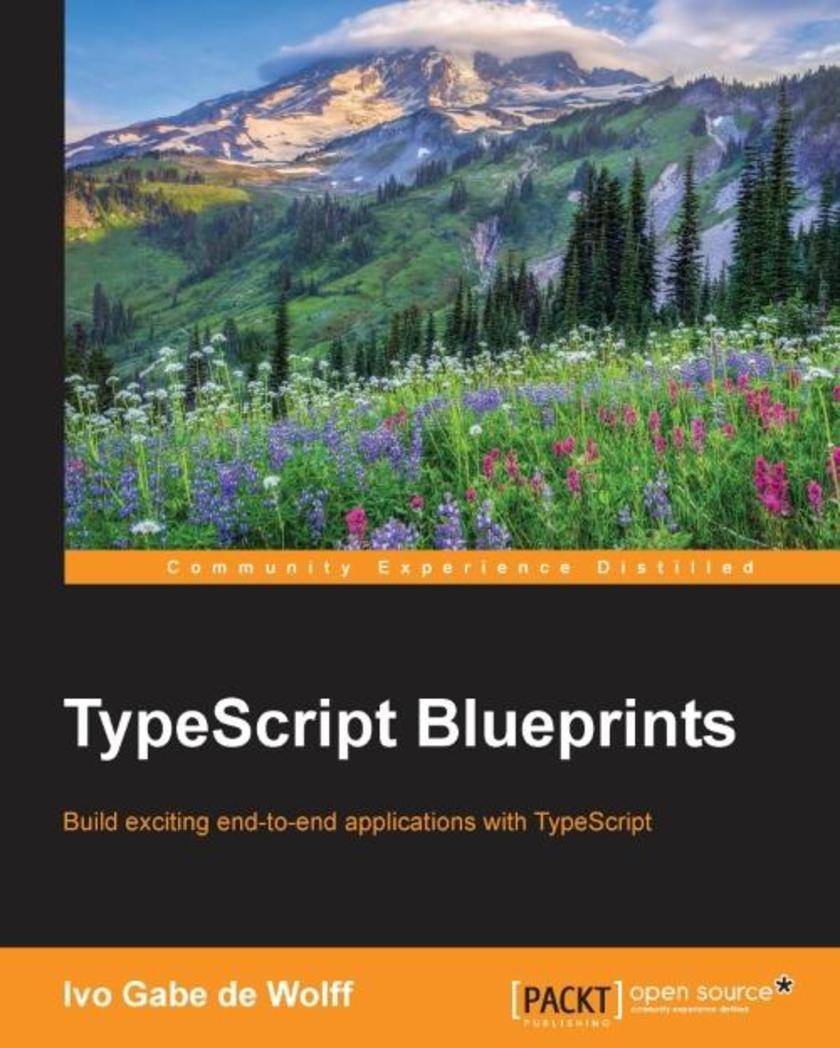
TypeScript Blueprints
¥90.46
Build exciting end-to-end applications with TypeScript About This Book This book will help you whether you’re a beginner or an expert Complete and complex projects provide codes that are ready and solutions for start-ups and enterprise developers The book will showcase the power and depth of TypeScript when it comes to high performance and scalability Who This Book Is For This book was written for web developers who wish to make the most of TypeScript and build fun projects. You should be familiar with the fundamentals of JavaScript What You Will Learn Build quirky and fun projects from scratch while exploring widely applicable practices and techniques Use TypeScript with a range of different technologies such as Angular 2 and React and write cross-platform applications Migrate JavaScript codebases to TypeScript to improve your workflow Write maintainable and reusable code that is helpful in the world of programming revolving around features and bugs Using System.JS and Webpack to load *s and their dependencies. Developing highly performance server-side applications to run within Node Js. Reviewing high performant Node.js patterns and manage garbage collection. In Detail TypeScript is the future of JavaScript. Having been designed for the development of large applications, it is being widely incorporated in popular projects such as Angular JS 2.0. Adopting TypeScript results in more robust software, while still being deployable in apps where regular JavaScript would run. Scale and performance lie at the heart of the projects built in our book. The lessons learned throughout this book will arm you with everything you need to build amazing projects. During the course of this book, you will learn how to build a complete Single Page Application with Angular 2 and create a popular mobile app using NativeScript. Further on, you will build a classic Pac Man game in TypeScript. We will also help you migrate your legacy codebase project from JavaScript to TypeScript. By the end of the book, you will have created a number of exciting projects and will be competent using TypeScript for your live projects. Style and approach The book focuses on building projects from scratch. These end-to-end projects will give you ready-to-implement solutions for your business scenario, showcasing the depth and robustness of TypeScript.


