


 购物车
购物车 个人中心
个人中心
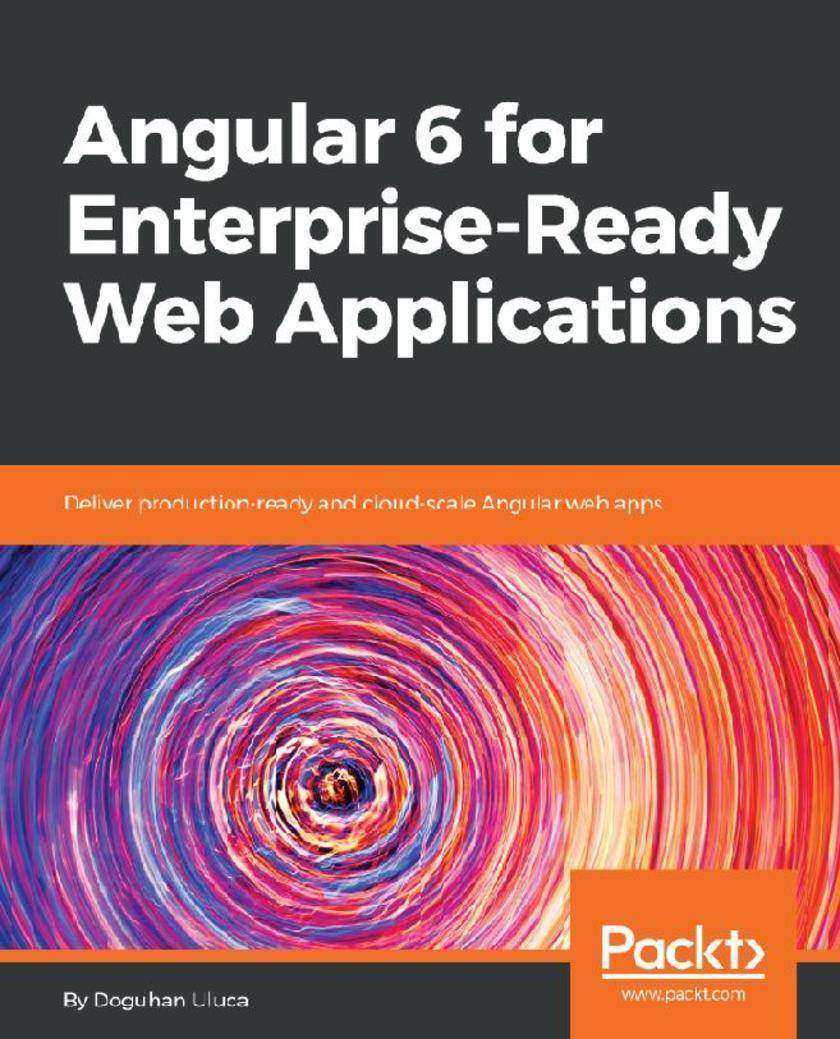
Angular 6 for Enterprise-Ready Web Applications
¥90.46
A hands-on guide with a minimalist and flexible approach that enables quick learning and rapid delivery of cloud-ready enterprise applications with Angular 6 About This Book ? Explore tools and techniques to push your web app to the next level ? Master Angular app design and architectural considerations ? Learn continuous integration and deploy your app on a highly available cloud infrastructure in AWS Who This Book Is For This book is for developers who want to confidently deliver high-quality and production-grade Angular apps from design to deployment. We assume that you have prior experience in writing a RESTful API with the tech stack of your choice; if you don't, you can still gain a lot of benefit from this book, which focuses on the entire scope of frontend development, from design to deployment! What You Will Learn ? Create full-stack web applications using Angular and RESTful APIs ? Master Angular fundamentals, RxJS, CLI tools, unit testing, GitHub, and Docker ? Design and architect responsive, secure and scalable apps to deploy on AWS ? Adopt a minimalist, value-first approach to delivering your app with Kanban ? Get introduced to automated testing with continuous integration on CircleCI ? Optimize Nginx and Node.js web servers with load testing tools In Detail Angular 6 for Enterprise-Ready Web Applications follows a hands-on and minimalist approach demonstrating how to design and architect high quality apps. The first part of the book is about mastering the Angular platform using foundational technologies. You will use the Kanban method to focus on value delivery, communicate design ideas with mock-up tools and build great looking apps with Angular Material. You will become comfortable using CLI tools, understand reactive programming with RxJS, and deploy to the cloud using Docker. The second part of the book will introduce you to the router-first architecture, a seven-step approach to designing and developing mid-to-large line-of-business applications, along with popular recipes. You will learn how to design a solid authentication and authorization experience; explore unit testing, early integration with backend APIs using Swagger and continuous integration using CircleCI. In the concluding chapters, you will provision a highly available cloud infrastructure on AWS and then use Google Analytics to capture user behavior. By the end of this book, you will be familiar with the scope of web development using Angular, Swagger, and Docker, learning patterns and practices to be successful as an individual developer on the web or as a team in the Enterprise. Style and approach The book follows a hands-on, value-first methodology to help readers design and architect small and large applications, while covering ancillary topics that all web developers should be aware of. The book uses minimal and flexible tools and techniques to enable quick learning and rapid delivery of high-quality and reliable Angular applications.
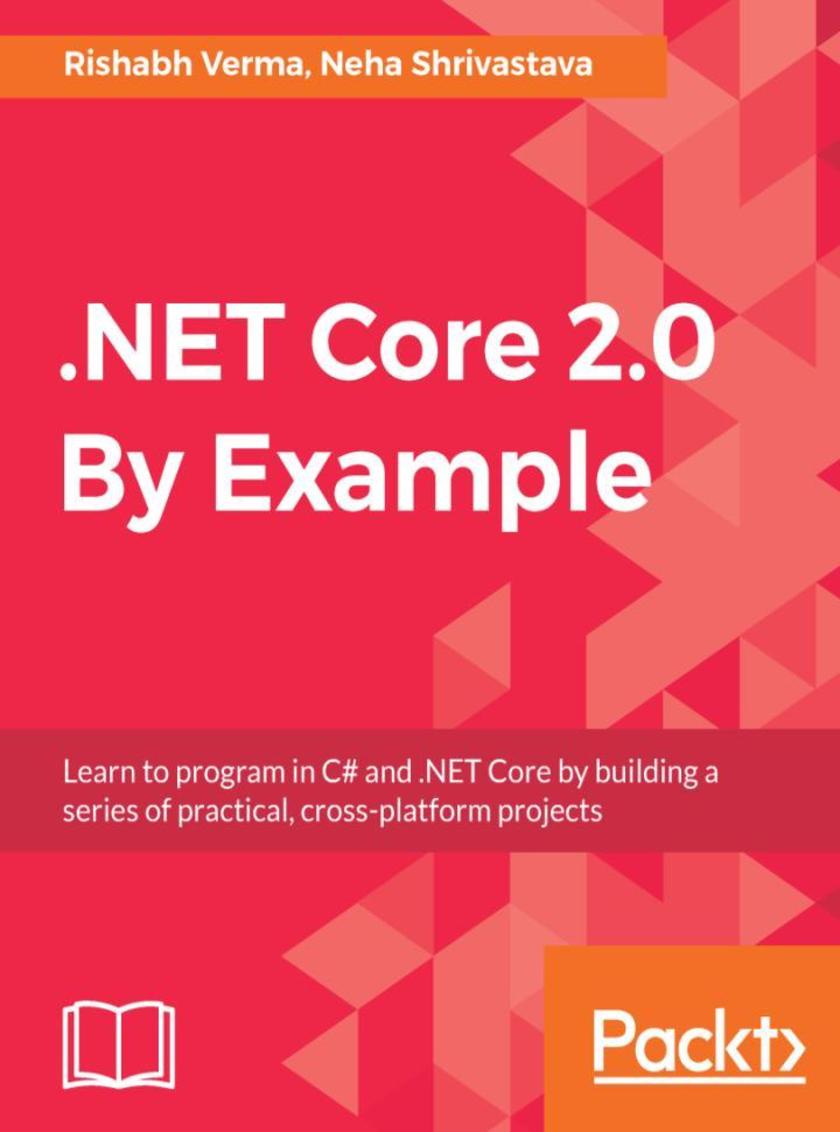
.NET Core 2.0 By Example
¥90.46
Build cross-platform solutions with .NET Core 2.0 through real-life scenarios About This Book ? Bridges the gap between learning and doing and improves your software development skills ? Covers the best practices of .NET development to improve your productivity ? Example-based approach to get you started quickly with software programming Who This Book Is For If you are a developer or architect and want to learn how to build cross-platform solutions using Microsoft .NET Core, this book is for you. It is assumed that you have some knowledge of the .NET Framework, OOP, and C# (or a similar programming language). What You Will Learn ? Build cross-platform applications with ASP.NET Core 2.0 and its tools ? Integrate, host, and deploy web apps with the cloud (Microsoft Azure) ? Leverage the ncurses native library to extend console capabilities in .NET Core on Linux and interop with native coden .NET Core on Linux and learn how to interop with existing native code ? Reuse existing .NET Framework and Mono assemblies from .NET Core 2.0 applications ? Develop real-time web applications using ASP.NET Core ? Learn the differences between SOA and microservices and get started with microservice development using ASP.NET Core 2.0 ? Walk through functional programming with F# and .NET Core from scratch In Detail With the rise in the number of tools and technologies available today, developers and architects are always exploring ways to create better and smarter solutions. Before, the differences between target platforms was a major roadblock, but that's not the case now. .NET Core 2.0 By Example will take you on an exciting journey to building better software. This book provides fresh and relevant content to .NET Core 2.0 in a succinct format that’s enjoyable to read. It also delivers concepts, along with the implications, design decisions, and potential pitfalls you might face when targeting Linux and Windows systems, in a logical and simple way. With the .NET framework at its center, the book comprises of five varied projects: a multiplayer Tic-tac-toe game; a real-time chat application, Let'sChat; a chatbot; a microservice-based buying-selling application; and a movie booking application. You will start each chapter with a high-level overview of the content, followed by the above example applications described in detail. By the end of each chapter, you will not only be proficient with the concepts, but you’ll also have created a tangible component in the application. By the end of the book, you will have built five solid projects using all the tools and support provided by the .NET Core 2.0 framework. Style and approach This book takes a concise yet comprehensive project-based approach to teaching the tricks and tools of .NET Core 2.0.
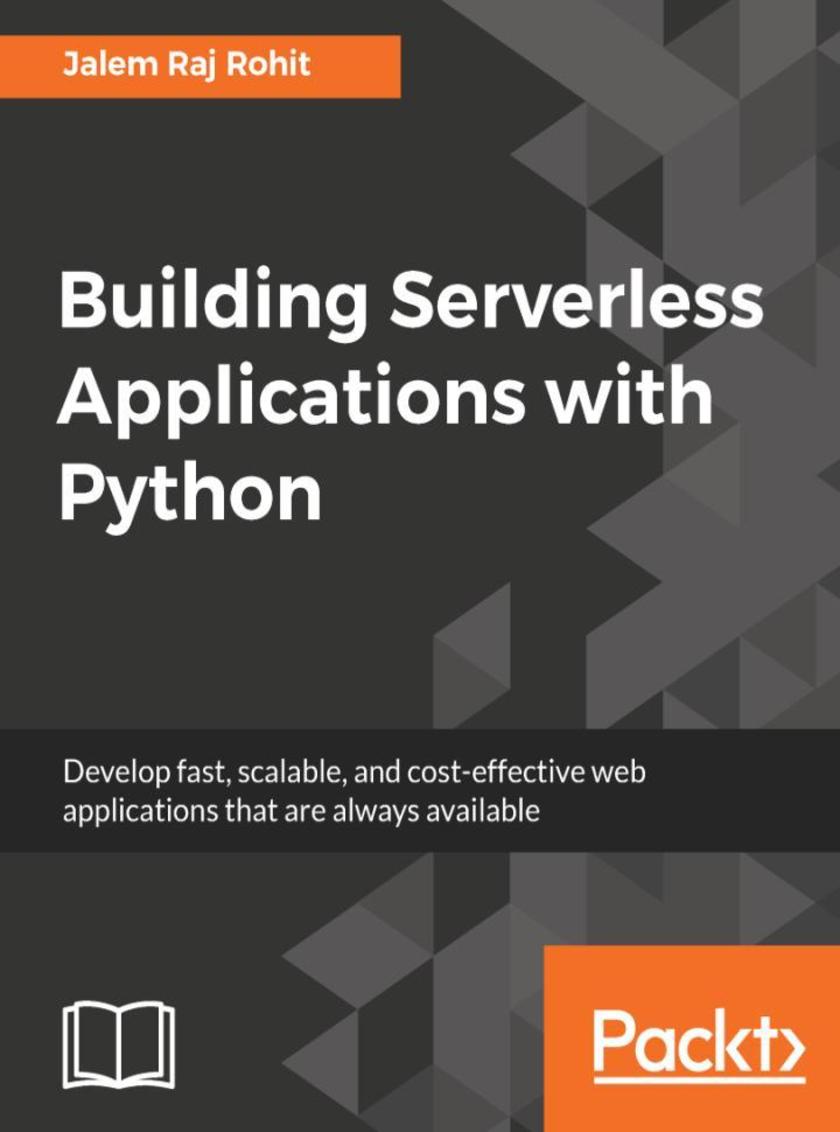
Building Serverless Applications with Python
¥90.46
Building efficient Python applications at minimal cost by adopting serverless architectures About This Book ? Design and set up a data flow between cloud services and custom business logic ? Make your applications efficient and reliable using serverless architecture ? Build and deploy scalable serverless Python APIs Who This Book Is For This book is for Python developers who would like to learn about serverless architecture. Python programming knowledge is assumed. What You Will Learn ? Understand how AWS Lambda and Microsoft Azure Functions work and use them to create an application ? Explore various triggers and how to select them, based on the problem statement ? Build deployment packages for Lambda functions ? Master the finer details about building Lambda functions and versioning ? Log and monitor serverless applications ? Learn about security in AWS and Lambda functions ? Scale up serverless applications to handle huge workloads and serverless distributed systems in production ? Understand SAM model deployment in AWS Lambda In Detail Serverless architectures allow you to build and run applications and services without having to manage the infrastructure. Many companies have adopted this architecture to save cost and improve scalability. This book will help you design serverless architectures for your applications with AWS and Python. The book is divided into three modules. The first module explains the fundamentals of serverless architecture and how AWS lambda functions work. In the next module, you will learn to build, release, and deploy your application to production. You will also learn to log and test your application. In the third module, we will take you through advanced topics such as building a serverless API for your application. You will also learn to troubleshoot and monitor your app and master AWS lambda programming concepts with API references. Moving on, you will also learn how to scale up serverless applications and handle distributed serverless systems in production. By the end of the book, you will be equipped with the knowledge required to build scalable and cost-efficient Python applications with a serverless framework. Style and approach The book takes a pragmatic approach, using a real-world example to demonstrate building efficient, secure, and scalable serverless applications.
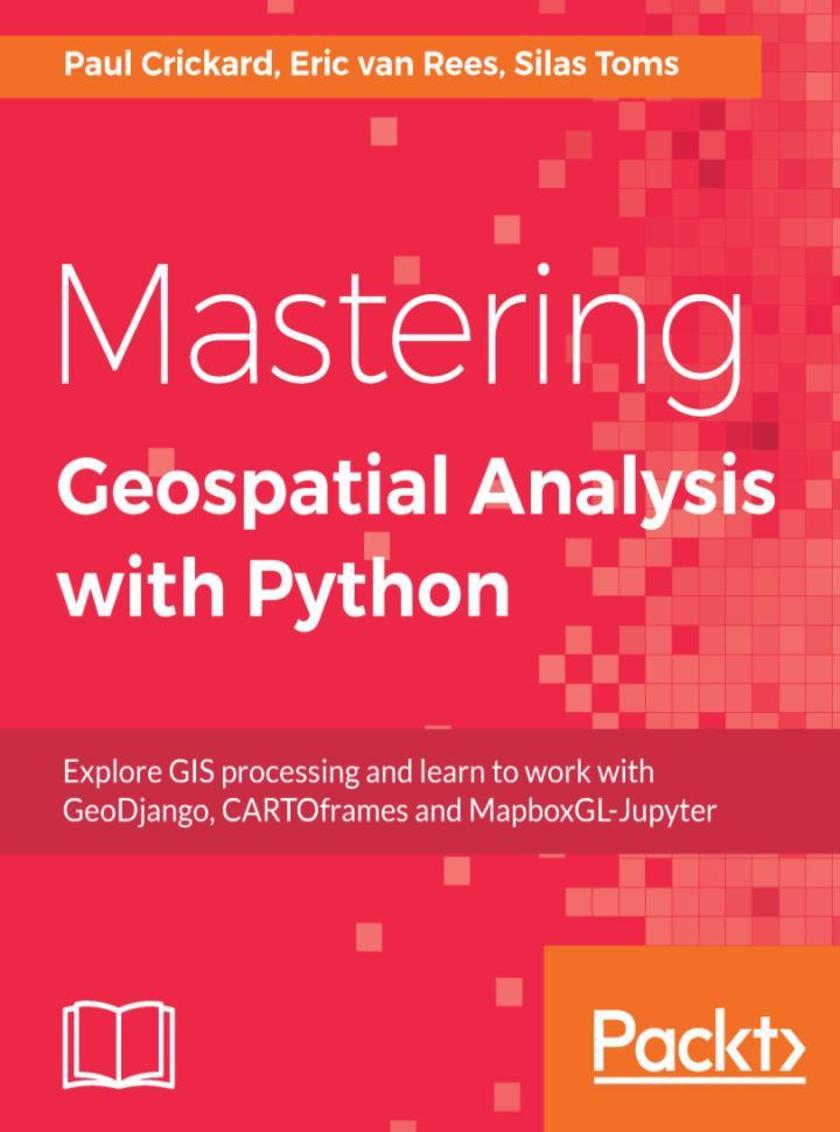
Mastering Geospatial Analysis with Python
¥90.46
Explore GIS processing and learn to work with various tools and libraries in Python. About This Book ? Analyze and process geospatial data using Python libraries such as; Anaconda, GeoPandas ? Leverage new ArcGIS API to process geospatial data for the cloud. ? Explore various Python geospatial web and machine learning frameworks. Who This Book Is For The audience for this book includes students, developers, and geospatial professionals who need a reference book that covers GIS data management, analysis, and automation techniques with code libraries built in Python 3. What You Will Learn ? Manage code libraries and abstract geospatial analysis techniques using Python 3. ? Explore popular code libraries that perform specific tasks for geospatial analysis. ? Utilize code libraries for data conversion, data management, web maps, and REST API creation. ? Learn techniques related to processing geospatial data in the cloud. ? Leverage features of Python 3 with geospatial databases such as PostGIS, SQL Server, and SpatiaLite. In Detail Python comes with a host of open source libraries and tools that help you work on professional geoprocessing tasks without investing in expensive tools. This book will introduce Python developers, both new and experienced, to a variety of new code libraries that have been developed to perform geospatial analysis, statistical analysis, and data management. This book will use examples and code snippets that will help explain how Python 3 differs from Python 2, and how these new code libraries can be used to solve age-old problems in geospatial analysis. You will begin by understanding what geoprocessing is and explore the tools and libraries that Python 3 offers. You will then learn to use Python code libraries to read and write geospatial data. You will then learn to perform geospatial queries within databases and learn PyQGIS to automate analysis within the QGIS mapping suite. Moving forward, you will explore the newly released ArcGIS API for Python and ArcGIS Online to perform geospatial analysis and create ArcGIS Online web maps. Further, you will deep dive into Python Geospatial web frameworks and learn to create a geospatial REST API. Style and approach The book takes a practical, example-driven approach to teach you GIS analysis and automation techniques with Python 3.
Functional Python Programming
¥90.46
Create succinct and expressive implementations with functional programming in Python About This Book ? Learn how to choose between imperative and functional approaches based on expressiveness, clarity, and performance ? Get familiar with complex concepts such as monads, concurrency, and immutability ? Apply functional Python to common Exploratory Data Analysis (EDA) programming problems Who This Book Is For This book is for Python developers who would like to perform Functional programming with Python. Python Programming knowledge is assumed. What You Will Learn ? Use Python's generator functions and generator expressions to work with collections in a non-strict (or lazy) manner ? Utilize Python library modules including itertools, functools, multiprocessing, and concurrent features to ensure efficient functional programs ? Use Python strings with object-oriented suffix notation and prefix notation ? Avoid stateful classes with families of tuples ? Design and implement decorators to create composite functions ? Use functions such as max(), min(), map(), filter(), and sorted() ? Write higher-order functions In Detail If you’re a Python developer who wants to discover how to take the power of functional programming (FP) and bring it into your own programs, then this book is essential for you, even if you know next to nothing about the paradigm. Starting with a general overview of functional concepts, you’ll explore common functional features such as first-class and higher-order functions, pure functions, and more. You’ll see how these are accomplished in Python 3.6 to give you the core foundations you’ll build upon. After that, you’ll discover common functional optimizations for Python to help your apps reach even higher speeds. You’ll learn FP concepts such as lazy evaluation using Python’s generator functions and expressions. Moving forward, you’ll learn to design and implement decorators to create composite functions. You'll also explore data preparation techniques and data exploration in depth, and see how the Python standard library fits the functional programming model. Finally, to top off your journey into the world of functional Python, you’ll at look at the PyMonad project and some larger examples to put everything into perspective. Style and approach This book provides a general overview of functional concepts and then delves deeper into the functional features, showing you how the Python standard library fits the functional programming model. It also demonstrates how to implement common functional programming design patterns and techniques in Python.
Unity Virtual Reality Projects
¥90.46
Explore the latest features of Unity 2018 to create immersive VR projects for Oculus Rift, HTC Vive, Daydream and Gear VR About This Book ? A project-based guide to teach you how to develop immersive and fun VR applications using Unity 3D ? Build experiences with interactable objects, physics, UI, animations, C# scripting, and other Unity features ? Explore the world of VR by building experiences such as diorama, first-person characters, 360-degree projections, social VR, audio fireball game, and VR storytelling Who This Book Is For If you're a non-programmer unfamiliar with 3D computer graphics, or experienced in both but new to virtual reality, and are interested in building your own VR games or applications, then this book is for you. Any experience in Unity is an advantage. What You Will Learn ? Create 3D scenes with Unity and other 3D tools while learning about world space and scale ? Build and run VR applications for specific headsets, including Oculus, Vive, and Daydream ? Interact with virtual objects using eye gaze, hand controllers, and user input events ? Move around your VR scenes using locomotion and teleportation ? Implement an audio fireball game using physics and particle systems ? Implement an art gallery tour with teleportation and data info ? Design and build a VR storytelling animation with a soundtrack and timelines ? Create social VR experiences with Unity networking In Detail Unity has become the leading platform for building virtual reality games, applications, and experiences for this new generation of consumer VR devices. Unity Virtual Reality Projects walks you through a series of hands-on tutorials and in-depth discussions on using the Unity game engine. With its practical and project-based approach, this book will get you up to speed with the specifics of Virtual Reality development in Unity. You will learn how to use Unity to develop VR applications that can be experienced with devices such as Oculus, Daydream, and Vive. Among the many topics and projects, you will explore gaze-based versus hand controller input, world space UI canvases, locomotion and teleportation, software design patterns, 360-degree media, timeline animation, and multiplayer networking. You will learn the Unity 3D game engine via the interactive Unity Editor as well as C# programming. By the end of the book, you will be fully equipped to develop rich, interactive virtual reality experiences using Unity. Style and approach A practical step-by-step guide to building impressive VR experiences with Unity 2018.
Unity 2018 Shaders and Effects Cookbook
¥90.46
Bring realism to your games by mastering post-processing effects and advanced shading techniques in Unity 2018 About This Book ? Learn the secrets of creating AAA quality shaders without writing long algorithms ? Master shader programming through easy-to-follow examples ? Create stunning visual effects that can be used in 3D games Who This Book Is For Unity Shaders and Effects Cookbook is for developers who want to create their first shaders in Unity 2018 or wish to take their game to a whole new level by adding professional post-processing effects. A solid understanding of Unity is required to get the most from this book. What You Will Learn ? Understand physically based rendering to fit the aesthetic of your game ? Write shaders from scratch in ShaderLab and HLSL/Cg ? Combine shader programming with interactive scripts to add life to your materials ? Design efficient shaders for mobile platforms without sacrificing their realism ? Use state-of-the-art techniques, such as volumetric explosions and fur shading ? Master the math and algorithms behind the most used lighting models ? Understand how shader models have evolved and how you can create your own In Detail Since their introduction to Unity, shaders have been seen as notoriously difficult to understand and implement in games. Complex mathematics has always stood in the way of creating your own shaders and attaining the level of realism you crave. Unity 2018 Shaders and Effects Cookbook changes that by giving you a recipe-based guide to creating shaders using Unity. It will show you everything you need to know about vectors, how lighting is constructed with them, and how textures are used to create complex effects without the heavy math. This book starts by teaching you how to use shaders without writing code with the post-processing stack. Then, you’ll learn how to write shaders from scratch, build up essential lighting, and finish by creating stunning screen effects just like those in high-quality 3D and mobile games. You'll discover techniques, such as normal mapping, image-based lighting, and animating your models inside a shader. We'll explore how to use physically based rendering to treat light the way it behaves in the real world. At the end, we’ll even look at Unity 2018’s new Shader Graph system. With this book, what seems like a dark art today will be second nature by tomorrow. Style and approach The recipes in this book contain step-by-step instructions, complemented with screenshots, code, and real-world examples.
Mastering Microsoft Dynamics 365 Customer Engagement
¥90.46
A comprehensive guide packed with the latest features of Dynamics 365 for customer relationship management Key Features * Create efficient client-side apps and customized plugins that work seamlessly * Learn best practices from field experience to use Dynamics 365 efficiently * Unleash the power of Dynamics 365 to maximize your organization’s profits Book Description Microsoft Dynamics 365 is an all-in-one business management solution that's easy to use and adapt. It helps you connect your finances, sales, service, and operations to streamline business processes, improve customer interactions, and enable growth. This book gives you all the information you need to become an expert in MS Dynamics 365. This book starts with a brief overview of the functional features of Dynamics 365. You will learn how to create Word and Excel templates using CRM data to enable customized data analysis for your organization. This book helps you understand how to use Dynamics 365 as an XRM Framework, gain a deep understanding of client-side scripting in Dynamics 365, and create client-side applications using JavaScript and the Web API. In addition to this, you will discover how to customize Dynamics 365, and quickly move on to grasp the app structure, which helps you customize Dynamics 365 better. You will also learn how Dynamics 365 can be seamlessly embedded into various productivity tools to customize them for machine learning and contextual guidance. By the end of this book, you will have mastered utilizing Dynamics 365 features through real-world scenarios. What you will learn * Manage various divisions of your organization using Dynamics 365 customizations * Explore the XRM Framework and leverage its features * Provide an enhanced mobile and tablet experience * Develop client-side applications using JavaScript and the Web API * Understand how to develop plugins and workflows using Dynamics 365 * Explore solution framework improvements and new field types Who this book is for Mastering Microsoft Dynamics 365 Customer Engagement is for you if you have knowledge of Dynamics CRM and want to utilize the latest features of Dynamics 365. This book is also for you if you’re a skilled developer looking to move to the Microsoft stack to build business solution software. Extensive Dynamics CRM development experience will be beneficial to understand the concepts covered in this book.
Securing Network Infrastructure
¥90.46
Plug the gaps in your network’s infrastructure with resilient network security models Key Features * Develop a cost-effective and end-to-end vulnerability management program * Explore best practices for vulnerability scanning and risk assessment * Understand and implement network enumeration with Nessus and Network Mapper (Nmap) Book Description Digitization drives technology today, which is why it’s so important for organizations to design security mechanisms for their network infrastructures. Analyzing vulnerabilities is one of the best ways to secure your network infrastructure. This Learning Path begins by introducing you to the various concepts of network security assessment, workflows, and architectures. You will learn to employ open source tools to perform both active and passive network scanning and use these results to analyze and design a threat model for network security. With a firm understanding of the basics, you will then explore how to use Nessus and Nmap to scan your network for vulnerabilities and open ports and gain back door entry into a network. As you progress through the chapters, you will gain insights into how to carry out various key scanning tasks, including firewall detection, OS detection, and access management to detect vulnerabilities in your network. By the end of this Learning Path, you will be familiar with the tools you need for network scanning and techniques for vulnerability scanning and network protection. This Learning Path includes content from the following Packt books: * Network Scanning Cookbook by Sairam Jetty * Network Vulnerability Assessment by Sagar Rahalkar What you will learn * Explore various standards and frameworks for vulnerability assessments and penetration testing * Gain insight into vulnerability scoring and reporting * Discover the importance of patching and security hardening * Develop metrics to measure the success of a vulnerability management program * Perform configuration audits for various platforms using Nessus * Write custom Nessus and Nmap scripts on your own * Install and configure Nmap and Nessus in your network infrastructure * Perform host discovery to identify network devices Who this book is for This Learning Path is designed for security analysts, threat analysts, and security professionals responsible for developing a network threat model for an organization. Professionals who want to be part of a vulnerability management team and implement an end-to-end robust vulnerability management program will also find this Learning Path useful.
Hands-On System Programming with C++
¥90.46
A hands-on guide to making system programming with C++ easy Key Features *Write system-level code leveraging C++17 *Learn the internals of the Linux Application Binary Interface (ABI) and apply it to system programming *Explore C++ concurrency to take advantage of server-level constructs Book Description C++ is a general-purpose programming language with a bias toward system programming as it provides ready access to hardware-level resources, efficient compilation, and a versatile approach to higher-level abstractions. This book will help you understand the benefits of system programming with C++17. You will gain a firm understanding of various C, C++, and POSIX standards, as well as their respective system types for both C++ and POSIX. After a brief refresher on C++, Resource Acquisition Is Initialization (RAII), and the new C++ Guideline Support Library (GSL), you will learn to program Linux and Unix systems along with process management. As you progress through the chapters, you will become acquainted with C++'s support for IO. You will then study various memory management methods, including a chapter on allocators and how they benefit system programming. You will also explore how to program file input and output and learn about POSIX sockets. This book will help you get to grips with safely setting up a UDP and TCP server/client. Finally, you will be guided through Unix time interfaces, multithreading, and error handling with C++ exceptions. By the end of this book, you will be comfortable with using C++ to program high-quality systems. What you will learn *Understand the benefits of using C++ for system programming *Program Linux/Unix systems using C++ *Discover the advantages of Resource Acquisition Is Initialization (RAII) *Program both console and file input and output *Uncover the POSIX socket APIs and understand how to program them *Explore advanced system programming topics, such as C++ allocators *Use POSIX and C++ threads to program concurrent systems *Grasp how C++ can be used to create performant system applications Who this book is for If you are a fresh developer with intermediate knowledge of C++ but little or no knowledge of Unix and Linux system programming, this book will help you learn system programming with C++ in a practical way.
Python Network Programming
¥90.46
Power up your network applications with Python programming Key Features * Master Python skills to develop powerful network applications * Grasp the fundamentals and functionalities of SDN * Design multi-threaded, event-driven architectures for echo and chat servers Book Description This Learning Path highlights major aspects of Python network programming such as writing simple networking clients, creating and deploying SDN and NFV systems, and extending your network with Mininet. You’ll also learn how to automate legacy and the latest network devices. As you progress through the chapters, you’ll use Python for DevOps and open source tools to test, secure, and analyze your network. Toward the end, you'll develop client-side applications, such as web API clients, email clients, SSH, and FTP, using socket programming. By the end of this Learning Path, you will have learned how to analyze a network's security vulnerabilities using advanced network packet capture and analysis techniques. This Learning Path includes content from the following Packt products: * Practical Network Automation by Abhishek Ratan * Mastering Python Networking by Eric Chou * Python Network Programming Cookbook, Second Edition by Pradeeban Kathiravelu, Dr. M. O. Faruque Sarker What you will learn * Create socket-based networks with asynchronous models * Develop client apps for web APIs, including S3 Amazon and Twitter * Talk to email and remote network servers with different protocols * Integrate Python with Cisco, Juniper, and Arista eAPI for automation * Use Telnet and SSH connections for remote system monitoring * Interact with websites via XML-RPC, SOAP, and REST APIs * Build networks with Ryu, OpenDaylight, Floodlight, ONOS, and POX * Configure virtual networks in different deployment environments Who this book is for If you are a Python developer or a system administrator who wants to start network programming, this Learning Path gets you a step closer to your goal. IT professionals and DevOps engineers who are new to managing network devices or those with minimal experience looking to expand their knowledge and skills in Python will also find this Learning Path useful. Although prior knowledge of networking is not required, some experience in Python programming will be helpful for a better understanding of the concepts in the Learning Path.
Tableau 2019.x Cookbook
¥90.46
Perform advanced dashboard, visualization, and analytical techniques with Tableau Desktop, Tableau Prep, and Tableau Server Key Features * Unique problem-solution approach to aid effective business decision-making * Create interactive dashboards and implement powerful business intelligence solutions * Includes best practices on using Tableau with modern cloud analytics services Book Description Tableau has been one of the most popular business intelligence solutions in recent times, thanks to its powerful and interactive data visualization capabilities. Tableau 2019.x Cookbook is full of useful recipes from industry experts, who will help you master Tableau skills and learn each aspect of Tableau's ecosystem. This book is enriched with features such as Tableau extracts, Tableau advanced calculations, geospatial analysis, and building dashboards. It will guide you with exciting data manipulation, storytelling, advanced filtering, expert visualization, and forecasting techniques using real-world examples. From basic functionalities of Tableau to complex deployment on Linux, you will cover it all. Moreover, you will learn advanced features of Tableau using R, Python, and various APIs. You will learn how to prepare data for analysis using the latest Tableau Prep. In the concluding chapters, you will learn how Tableau fits the modern world of analytics and works with modern data platforms such as Snowflake and Redshift. In addition, you will learn about the best practices of integrating Tableau with ETL using Matillion ETL. By the end of the book, you will be ready to tackle business intelligence challenges using Tableau's features. What you will learn * Understand the basic and advanced skills of Tableau Desktop * Implement best practices of visualization, dashboard, and storytelling * Learn advanced analytics with the use of build in statistics * Deploy the multi-node server on Linux and Windows * Use Tableau with big data sources such as Hadoop, Athena, and Spectrum * Cover Tableau built-in functions for forecasting using R packages * Combine, shape, and clean data for analysis using Tableau Prep * Extend Tableau’s functionalities with REST API and R/Python Who this book is for Tableau 2019.x Cookbook is for data analysts, data engineers, BI developers, and users who are looking for quick solutions to common and not-so-common problems faced while using Tableau products. Put each recipe into practice by bringing the latest offerings of Tableau 2019.x to solve real-world analytics and business intelligence challenges. Some understanding of BI concepts and Tableau is required.
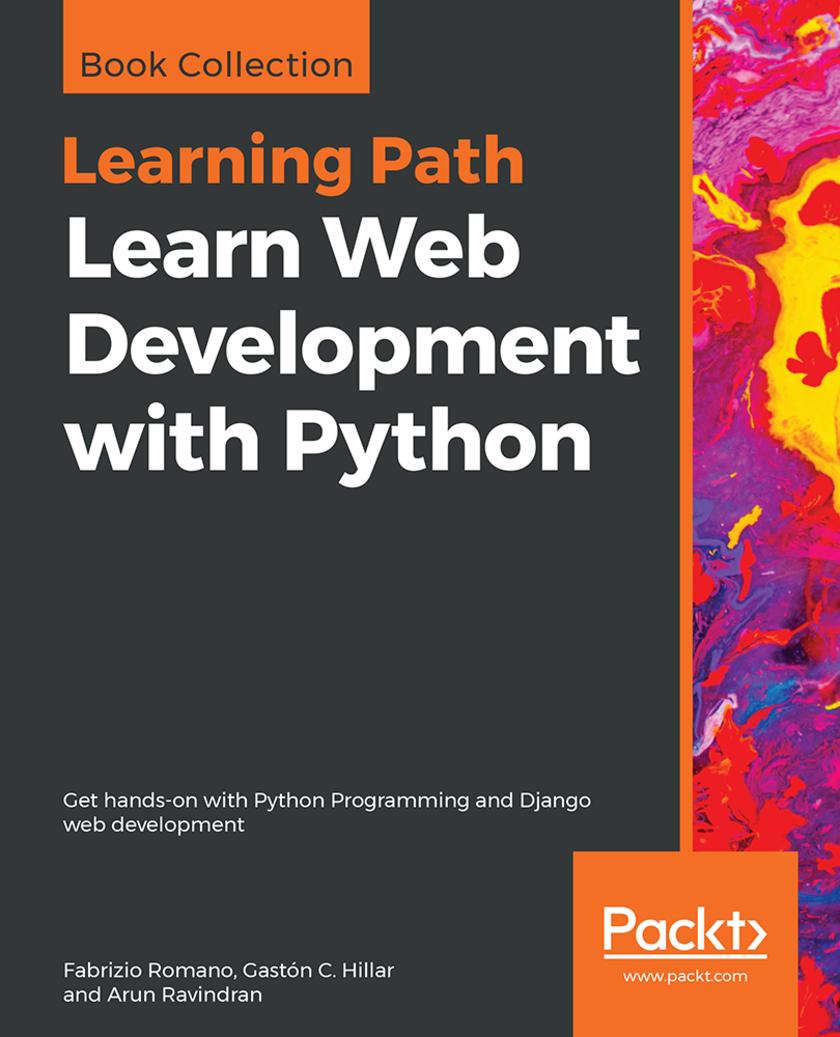
Learn Web Development with Python
¥90.46
A comprehensive guide to Python programming for web development using the most popular Python web framework - Django Key Features *Learn the fundamentals of programming with Python and building web apps *Build web applications from scratch with Django *Create real-world RESTful web services with the latest Django framework Book Description If you want to develop complete Python web apps with Django, this Learning Path is for you. It will walk you through Python programming techniques and guide you in implementing them when creating 4 professional Django projects, teaching you how to solve common problems and develop RESTful web services with Django and Python. You will learn how to build a blog application, a social image bookmarking website, an online shop, and an e-learning platform. Learn Web Development with Python will get you started with Python programming techniques, show you how to enhance your applications with AJAX, create RESTful APIs, and set up a production environment for your Django projects. Last but not least, you’ll learn the best practices for creating real-world applications. By the end of this Learning Path, you will have a full understanding of how Django works and how to use it to build web applications from scratch. This Learning Path includes content from the following Packt products: *Learn Python Programming by Fabrizio Romano *Django RESTful Web Services by Gastón C. Hillar *Django Design Patterns and Best Practices by Arun Ravindran What you will learn *Explore the fundamentals of Python programming with interactive projects *Grasp essential coding concepts along with the basics of data structures and control flow *Develop RESTful APIs from scratch with Django and the Django REST Framework *Create automated tests for RESTful web services *Debug, test, and profile RESTful web services with Django and the Django REST Framework *Use Django with other technologies such as Redis and Celery Who this book is for If you have little experience in coding or Python and want to learn how to build full-fledged web apps, this Learning Path is for you. No prior experience with RESTful web services, Python, or Django is required, but basic Python programming experience is needed to understand the concepts covered.
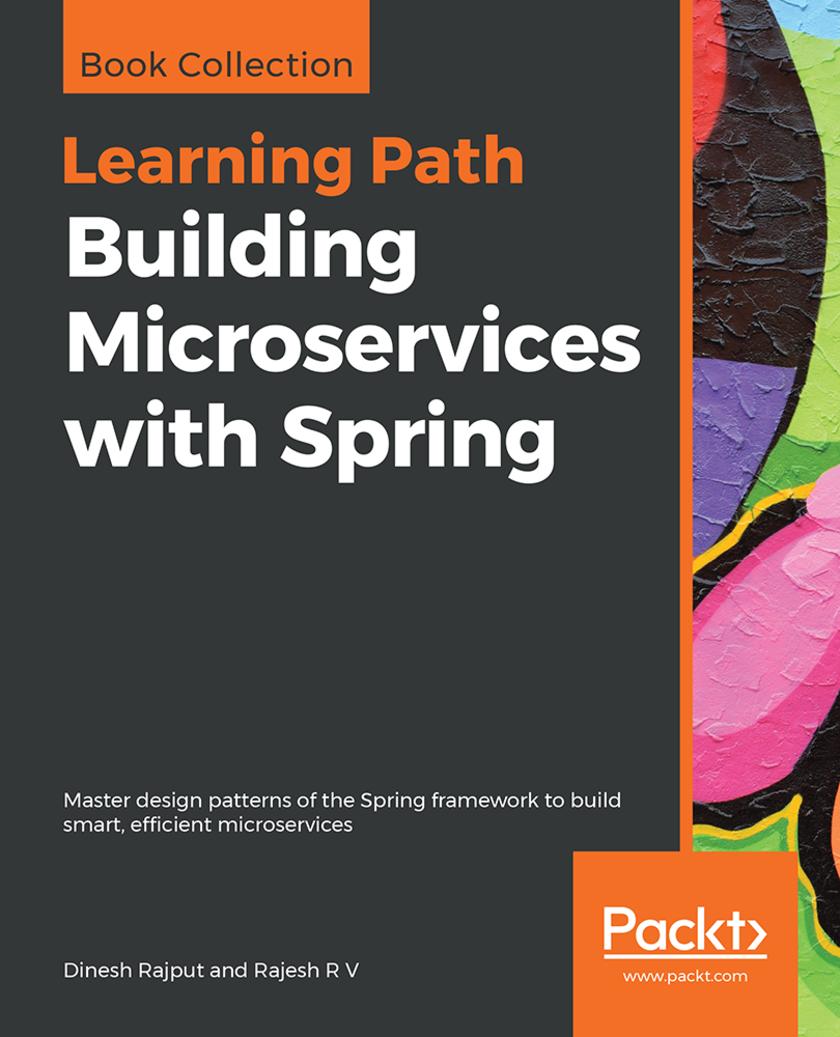
Building Microservices with Spring
¥90.46
Learn and use the design patterns and best practices in Spring to solve common design problems and build user-friendly microservices Key Features *Study the benefits of using the right design pattern in your toolkit *Manage your code easily with Spring's dependency injection pattern *Explore the features of Docker and Mesos to build successful microservices Book Description Getting Started with Spring Microservices begins with an overview of the Spring Framework 5.0, its design patterns, and its guidelines that enable you to implement responsive microservices at scale. You will learn how to use GoF patterns in application design. You will understand the dependency injection pattern, which is the main principle behind the decoupling process of the Spring Framework and makes it easier to manage your code. Then, you will learn how to use proxy patterns in aspect-oriented programming and remoting. Moving on, you will understand the JDBC template patterns and their use in abstracting database access. After understanding the basics, you will move on to more advanced topics, such as reactive streams and concurrency. Written to the latest specifications of Spring that focuses on Reactive Programming, the Learning Path teaches you how to build modern, internet-scale Java applications in no time. Next, you will understand how Spring Boot is used to deploying serverless autonomous services by removing the need to have a heavyweight application server. You’ll also explore ways to deploy your microservices to Docker and managing them with Mesos. By the end of this Learning Path, you will have the clarity and confidence for implementing microservices using Spring Framework. This Learning Path includes content from the following Packt products: *Spring 5 Microservices by Rajesh R V *Spring 5 Design Patterns by Dinesh Rajput What you will learn *Develop applications using dependency injection patterns *Build web applications using traditional Spring MVC patterns *Utilize the reactive programming pattern to build reactive web apps *Learn concurrency and handle multiple connections inside a web server *Use Spring Boot and Spring Cloud to develop microservices *Leverage reactive programming to build cloud-native applications Who this book is for Getting Started with Spring Microservices is ideal for Spring developers who want to use design patterns to solve common design problems and build cloud-ready, Internet-scale applications, and simple RESTful services.
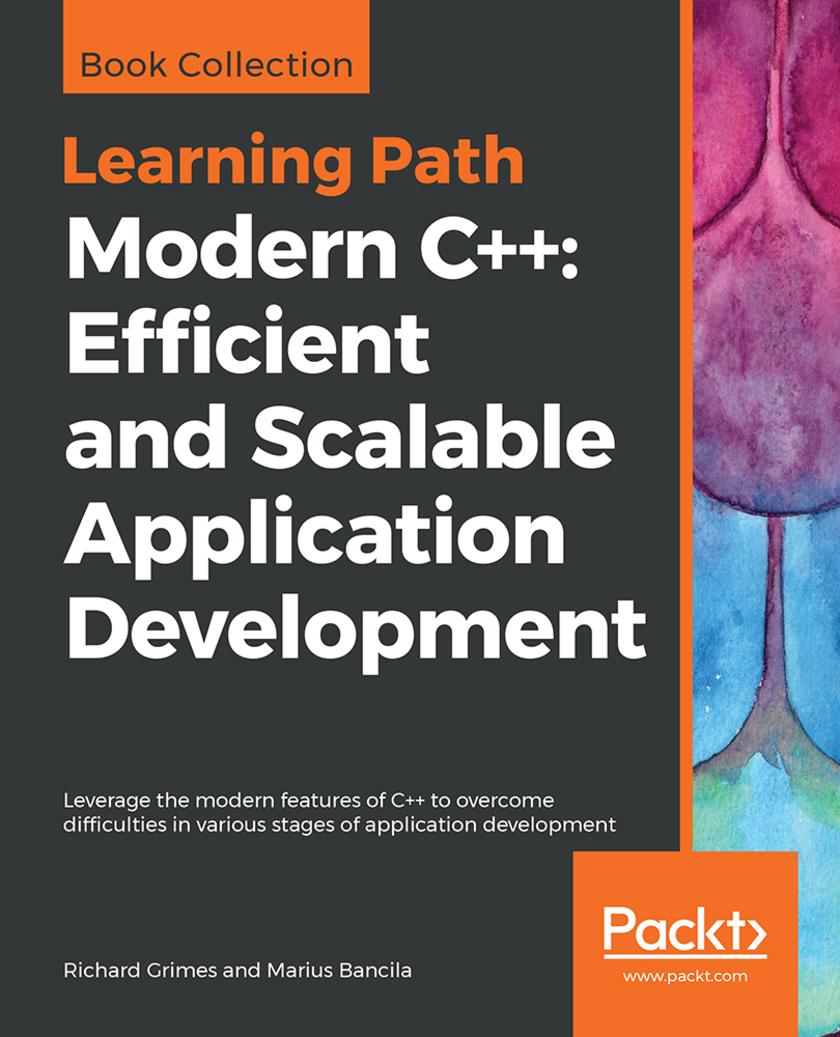
Modern C++: Efficient and Scalable Application Development
¥90.46
Create apps in C++ and leverage its latest features using modern programming techniques. Key Features *Develop strong C++ skills to build a variety of applications *Explore features of C++17, such as containers, algorithms, and threads *Grasp the standard support for threading and concurrency and use them in basic daily tasks Book Description C++ is one of the most widely used programming languages. It is fast, flexible, and used to solve many programming problems. This Learning Path gives you an in-depth and hands-on experience of working with C++, using the latest recipes and understanding most recent developments. You will explore C++ programming constructs by learning about language structures, functions, and classes, which will help you identify the execution flow through code. You will also understand the importance of the C++ standard library as well as memory allocation for writing better and faster programs. Modern C++: Efficient and Scalable Application Development deals with the challenges faced with advanced C++ programming. You will work through advanced topics such as multithreading, networking, concurrency, lambda expressions, and many more recipes. By the end of this Learning Path, you will have all the skills to become a master C++ programmer. This Learning Path includes content from the following Packt products: *Beginning C++ Programming by Richard Grimes *Modern C++ Programming Cookbook by Marius Bancila *The Modern C++ Challenge by Marius Bancila What you will learn *Become familiar with the structure of C++ projects *Identify the main structures in the language: functions and classes *Learn to debug your programs *Leverage C++ features to obtain increased robustness and performance *Explore functions and callable objects with a focus on modern features *Serialize and deserialize JSON and XML data *Create client-server applications that communicate over TCP/IP *Use design patterns to solve real-world problems Who this book is for This Learning Path is designed for developers who want to gain a solid foundation in C++. The desire to learn how to code in C++ is all you need to get started with this Learning Path
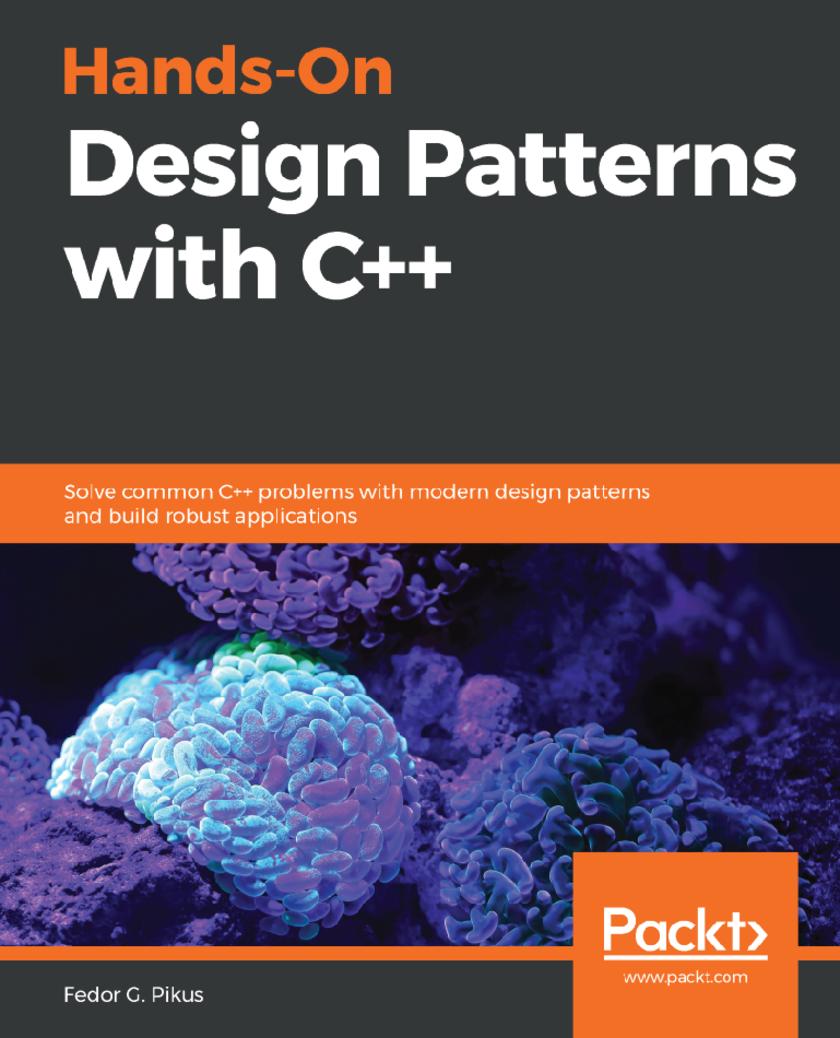
Hands-On Design Patterns with C++
¥90.46
A comprehensive guide with extensive coverage on concepts such as OOP, functional programming, generic programming, and STL along with the latest features of C++ Key Features * Delve into the core patterns and components of C++ in order to master application design * Learn tricks, techniques, and best practices to solve common design and architectural challenges * Understand the limitation imposed by C++ and how to solve them using design patterns Book Description C++ is a general-purpose programming language designed with the goals of efficiency, performance, and flexibility in mind. Design patterns are commonly accepted solutions to well-recognized design problems. In essence, they are a library of reusable components, only for software architecture, and not for a concrete implementation. The focus of this book is on the design patterns that naturally lend themselves to the needs of a C++ programmer, and on the patterns that uniquely benefit from the features of C++, in particular, the generic programming. Armed with the knowledge of these patterns, you will spend less time searching for a solution to a common problem and be familiar with the solutions developed from experience, as well as their advantages and drawbacks. The other use of design patterns is as a concise and an efficient way to communicate. A pattern is a familiar and instantly recognizable solution to specific problem; through its use, sometimes with a single line of code, we can convey a considerable amount of information. The code conveys: "This is the problem we are facing, these are additional considerations that are most important in our case; hence, the following well-known solution was chosen." By the end of this book, you will have gained a comprehensive understanding of design patterns to create robust, reusable, and maintainable code. What you will learn * Recognize the most common design patterns used in C++ * Understand how to use C++ generic programming to solve common design problems * Explore the most powerful C++ idioms, their strengths, and drawbacks * Rediscover how to use popular C++ idioms with generic programming * Understand the impact of design patterns on the program’s performance Who this book is for This book is for experienced C++ developers and programmers who wish to learn about software design patterns and principles and apply them to create robust, reusable, and easily maintainable apps.
React Native Cookbook
¥90.46
Improve your React Native mobile development skills or transition from web development to mobile development with this practical solution-packed guide Key Features * Learn strategies and techniques to face challenges in React Native mobile development head-on * Leverage the best ways to use iOS and Android for React Native development while maximizing code reuse and cohesion * Build engaging, performant user experiences with React Native Book Description If you are a developer looking to create mobile applications with maximized code reusability and minimized cost, then React Native is here to help. With this practical guide, you will be able to build attractive UIs, tackle common mobile development-related issues, and achieve improved performance in mobile environments. This book starts with common techniques for React Native customization and helps you set up your development platforms. Over the course of the book, a wide variety of step-by-step recipes are designed with both built-in React Native and custom third-party components that you will create, style, and animate. You will create real-world browser-based authentication, build a fully functional audio player, and integrate with Google maps. You will also explore different strategies for working with data, including leveraging the popular Redux library and optimizing your app’s dataflow. You will then get an introduction to writing native device functionality for new and already existing native projects. Finally, you will learn how app deployment works, and tips and tricks for writing performant code. By the end of the book, you'll have gained enough knowledge to build full iOS and Android applications using React Native. What you will learn * Build UI features and components using React Native * Create advanced animations for UI components * Develop universal apps that run on phones and tablets * Leverage Redux to manage application flow and data * Expose both custom native UI components and application logic to React Native * Employ open-source third-party plugins to create React Native apps more efficiently Who this book is for If you're a JavaScript developer looking for a practical guide with step-by-step tutorials for developing feature rich mobile apps using React Native, then this book is for you. Though not required, some experience working with React will help you more easily understand the React Native concepts covered in this book. While React Native development can be done on a Windows machine, certain aspects, such as running your apps on iOS devices and in the iOS simulator, or editing native code with Xcode, can only be done with a Mac.
Mastering Rust
¥90.46
Become proficient in designing, developing and deploying effective software systems using the advanced constructs of Rust Key Features * Improve your productivity using the latest version of Rust and write simpler and easier code * Understand Rust’s immutability and ownership principle, expressive type system, safe concurrency * Deep dive into the new doamins of Rust like WebAssembly, Networking and Command line tools Book Description Rust is an empowering language that provides a rare combination of safety, speed, and zero-cost abstractions. Mastering Rust – Second Edition is filled with clear and simple explanations of the language features along with real-world examples, showing you how you can build robust, scalable, and reliable programs. This second edition of the book improves upon the previous one and touches on all aspects that make Rust a great language. We have included the features from latest Rust 2018 edition such as the new module system, the smarter compiler, helpful error messages, and the stable procedural macros. You’ll learn how Rust can be used for systems programming, network programming, and even on the web. You’ll also learn techniques such as writing memory-safe code, building idiomatic Rust libraries, writing efficient asynchronous networking code, and advanced macros. The book contains a mix of theory and hands-on tasks so you acquire the skills as well as the knowledge, and it also provides exercises to hammer the concepts in. After reading this book, you will be able to implement Rust for your enterprise projects, write better tests and documentation, design for performance, and write idiomatic Rust code. What you will learn * Write generic and type-safe code by using Rust’s powerful type system * How memory safety works without garbage collection * Know the different strategies in error handling and when to use them * Learn how to use concurrency primitives such as threads and channels * Use advanced macros to reduce boilerplate code * Create efficient web applications with the Actix-web framework * Use Diesel for type-safe database interactions in your web application Who this book is for The book is aimed at beginner and intermediate programmers who already have familiarity with any imperative language and have only heard of Rust as a new language. If you are a developer who wants to write robust, efficient and maintainable software systems and want to become proficient with Rust, this book is for you. It starts by giving a whirlwind tour of the important concepts of Rust and covers advanced features of the language in subsequent chapters using code examples that readers will find useful to advance their knowledge.

Learn Spring for Android Application Development
¥90.46
A hands-on guide to Android programming with Spring MVC, Spring Boot, and Spring Security Key Features * Build native Android applications with Spring for Android * Explore Reactive programming, concurrency, and multithreading paradigms for building fast and efficient applications * Write more expressive and robust code with Kotlin using its coroutines and other latest features Book Description As the new official language for Android, Kotlin is attracting new as well as existing Android developers. As most developers are still working with Java and want to switch to Kotlin, they find a combination of these two appealing. This book addresses this interest by bringing together Spring, a widely used Java SE framework for building enterprise-grade applications, and Kotlin. Learn Spring for Android Application Development will guide you in leveraging some of the powerful modules of the Spring Framework to build lightweight and robust Android apps using Kotlin. You will work with various modules, such as Spring AOP, Dependency Injection, and Inversion of Control, to develop applications with better dependency management. You’ll also explore other modules of the Spring Framework, such as Spring MVC, Spring Boot, and Spring Security. Each chapter has practice exercises at the end for you to assess your learning. By the end of the book, you will be fully equipped to develop Android applications with Spring technologies. What you will learn * Get to grips with the basics of the Spring Framework * Write web applications using the Spring Framework with Kotlin * Develop Android apps with Kotlin * Connect a RESTful web service with your app using Retrofilt * Understand JDBC, JPA, MySQL for Spring and SQLite Room for Android * Explore Spring Security fundamentals, Basic Authentication, and OAuth2 * Delve into Concurrency and Reactive programming using Kotlin * Develop testable applications with Spring and Android Who this book is for If you’re an aspiring Android developer or an existing developer who wants to learn how to use Spring to build robust Android applications in Kotlin, this book is for you. Though not necessary, basic knowledge of Spring will assist with understanding key concepts covered in this book.

Implementing AWS: Design, Build, and Manage your Infrastructure
¥90.46
Work through exciting recipes to administer your AWS cloud Key Features * Build secure environments using AWS components and services * Explore core AWS features with real-world applications and best practices * Design and build Lambda functions using real-world examples Book Description With this Learning Path, you’ll explore techniques to easily manage applications on the AWS cloud. You’ll begin with an introduction to serverless computing, its advantages, and the fundamentals of AWS. The following chapters will guide you on how to manage multiple accounts by setting up consolidated billing, enhancing your application delivery skills, with the latest AWS services such as CodeCommit, CodeDeploy, and CodePipeline to provide continuous delivery and deployment, while also securing and monitoring your environment's workflow. It’ll also add to your understanding of the services AWS Lambda provides to developers. To refine your skills further, it demonstrates how to design, write, test, monitor, and troubleshoot Lambda functions. By the end of this Learning Path, you’ll be able to create a highly secure, fault-tolerant, and scalable environment for your applications. This Learning Path includes content from the following Packt products: * AWS Administration: The Definitive Guide, Second Edition by Yohan Wadia * AWS Administration Cookbook by Rowan Udell, Lucas Chan * Mastering AWS Lambda by Yohan Wadia, Udita Gupta What you will learn * Explore the benefits of serverless computing and applications * Deploy apps with AWS Elastic Beanstalk and Amazon Elastic File System * Secure environments with AWS CloudTrail, AWSConfig, and AWS Shield * Run big data analytics with Amazon EMR and Amazon Redshift * Back up and safeguard data using AWS Data Pipeline * Create monitoring and alerting dashboards using CloudWatch * Effectively monitor and troubleshoot serverless applications with AWS * Design serverless apps via AWS Lambda, DynamoDB, and API Gateway Who this book is for This Learning Path is specifically designed for IT system and network administrators, AWS architects, and DevOps engineers who want to effectively implement AWS in their organization and easily manage daily activities. Familiarity with Linux, web services, cloud computing platforms, virtualization, networking, and other administration-related tasks will assist in understanding the concepts in the book. Prior hands-on experience with AWS core services such as EC2, IAM, S3, and programming languages, such as Node.Js, Java, and C#, will also prove beneficial.
Mastering Distributed Tracing
¥90.46
Understand how to apply distributed tracing to microservices-based architectures Key Features * A thorough conceptual introduction to distributed tracing * An exploration of the most important open standards in the space * A how-to guide for code instrumentation and operating a tracing infrastructure Book Description Mastering Distributed Tracing will equip you to operate and enhance your own tracing infrastructure. Through practical exercises and code examples, you will learn how end-to-end tracing can be used as a powerful application performance management and comprehension tool. The rise of Internet-scale companies, like Google and Amazon, ushered in a new era of distributed systems operating on thousands of nodes across multiple data centers. Microservices increased that complexity, often exponentially. It is harder to debug these systems, track down failures, detect bottlenecks, or even simply understand what is going on. Distributed tracing focuses on solving these problems for complex distributed systems. Today, tracing standards have developed and we have much faster systems, making instrumentation less intrusive and data more valuable. Yuri Shkuro, the creator of Jaeger, a popular open-source distributed tracing system, delivers end-to-end coverage of the field in Mastering Distributed Tracing. Review the history and theoretical foundations of tracing; solve the data gathering problem through code instrumentation, with open standards like OpenTracing, W3C Trace Context, and OpenCensus; and discuss the benefits and applications of a distributed tracing infrastructure for understanding, and profiling, complex systems. What you will learn * How to get started with using a distributed tracing system * How to get the most value out of end-to-end tracing * Learn about open standards in the space * Learn about code instrumentation and operating a tracing infrastructure * Learn where distributed tracing fits into microservices as a core function Who this book is for Any developer interested in testing large systems will find this book very revealing and in places, surprising. Every microservice architect and developer should have an insight into distributed tracing, and the book will help them on their way. System administrators with some development skills will also benefit. No particular programming language skills are required, although an ability to read Java, while non-essential, will help with the core chapters.


