


 购物车
购物车 个人中心
个人中心

L?VE2d for Lua Game Programming
¥54.49
This book follows a tutorial approach with examples and step-by-step instructions to help explain the key concepts of the L?VE framework as well as everything you need to know about game development using the Lua programming language.L?VE2d for Lua Game Programming is for anyone who is interested in learning about desktop game development.
FreeSWITCH Cookbook
¥54.49
This is a problem-solution approach to take your FreeSWITCH skills to the next level, where everything is explained in a practical way. If you are a system administrator, hobbyist, or someone who uses FreeSWITCH on a regular basis, this book is for you. Whether you are a FreeSWITCH expert or just getting started, this book will take your skills to the next level.
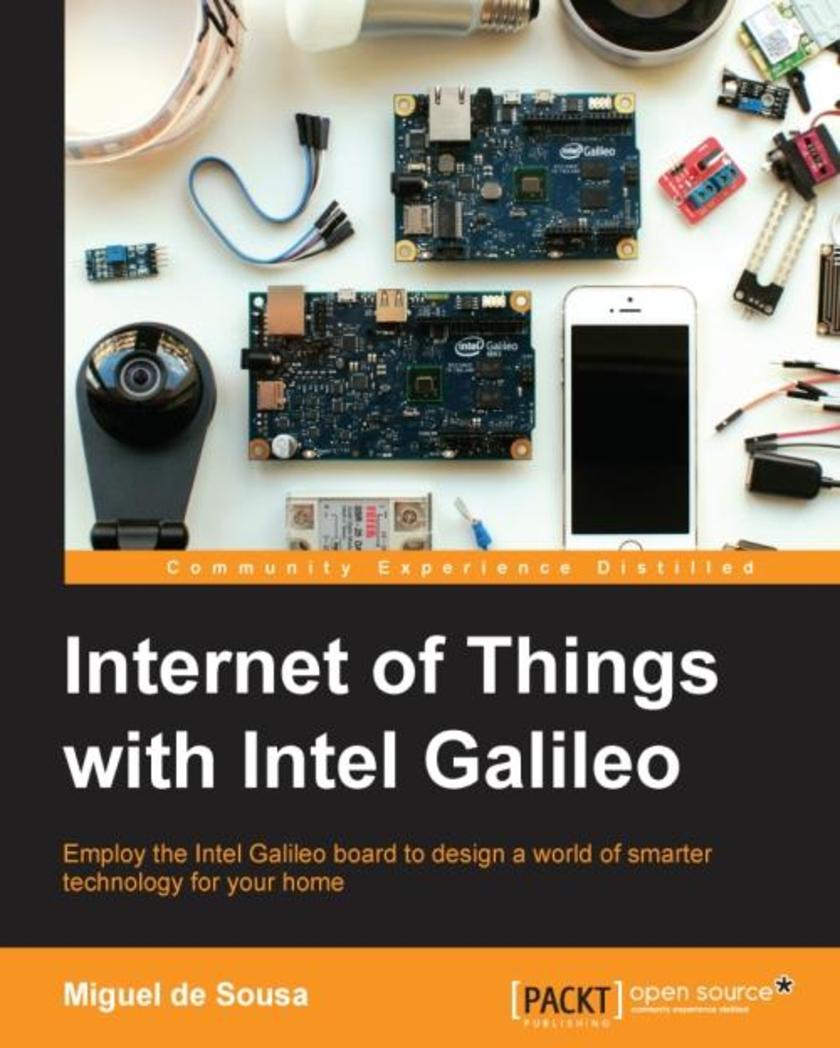
Internet of Things with Intel Galileo
¥54.49
This book employs an incremental, step-by-step approach to get you familiarized with everything from the basic terms, board components, and development environments to developing real projects. Each project will demonstrate how to use specific board components and tools. Both Galileo and Galileo Gen 2 are covered in this book.

Monitoring Hadoop
¥54.49
This book is useful for Hadoop administrators who need to learn how to monitor and diagnose their clusters. Also, the book will prove useful for new users of the technology, as the language used is simple and easy to grasp.
Joomla! Accessibility
¥54.49
Fast-paced and to-the-point, this book takes you through the important topics of Microsoft Dynamics NAV with clear explanations and practical example code. The book's selection of topics is driven by what the working developer needs to know in order to become productive as quickly as possible. The business applications software designer/developer who: Wants to become productive in NAV C/SIDE C/AL development as quickly as possible Understands business applications and the associated software Has significant programming experience Has access to NAV including at least the Designer granules, preferably a full development license and a standard Cronus demo database Is willing to do the exercises to get hands-on experience The Reseller manager or executive who wants a concise, in depth view of NAVs development environment and tool set The technically knowledgeable manager or executive of a firm using NAV that is about to embark on a significant NAV enhancement project The technically knowledgeable manager or executive of a firm considering purchase of NAV as a highly customizable business applications platform The reader of this book: Does not need to be expert in object-oriented programming Does not need to have previous experience with NAV
Joomla! Search Engine Optimization
¥54.49
The book will take a hands-on approach to the process involved in configuring a site for SEO. As SEO is an ongoing process – it doesn’t stop once the site is built – the book will provide reusable tips and techniques in order to understand what they have to do after the site is live,This book targets site builders, webmasters and site owners. Advanced technical skills are not required, though the user should be familiar with administering a Joomla! website, including how to install Extensions.
Pro Tools HD 11
¥54.49
An easy-to-follow guide for using Pro Tools HD 11 effectively.This book is ideal for anyone who already uses ProTools and wants to learn more, or is new to Pro Tools HD and wants to use it effectively in their own audio workstations.

Managing Virtual Infrastructure with Veeam? ONE?
¥54.49
This book is aimed at virtualization professionals who want to improve their skills in infrastructure monitoring and management. You need a good understanding of server virtualization and management of virtual environments.
Mockito Essentials
¥54.49
This book is ideal for developers who have some experience in Java application development as well as some basic knowledge of test doubles and JUnit testing. This book also introduces you to the fundamentals of JUnit testing, test doubles, refactoring legacy code, and writing JUnit tests for GWT and web services.
Haxe Game Development Essentials
¥54.49
Create games on multiple platforms from a single codebase using Haxe and the HaxeFlixel engine About This Book Learn the modern, cross-platform language Haxe to build games without any trouble Create engaging 2D games that are compatible with desktop, web, and mobile platforms Learn how to speed up your workflow with OpenFL and HaxeFlixel using this useful and compact guide Who This Book Is For This book is for game developers with some experience programming games on one or more platforms already. If you want to leverage your game development experience on one platform to develop for multiple platforms and to get up and running quickly, this book is for you. Having prior experience with a language similar to Haxe, such as ActionScript or JavaScript will help, but isn't required. What You Will Learn Understand the fundamentals of the Haxe programming language Set up a development environment that will work on Windows, Mac, and Linux Create fun 2D games using OpenFL and HaxeFlixel Understand how to implement a user interface Enhance the gameplay experience with cool animations Improve immersion by adding sound Make your game modular and easily expandable using configuration files Compile games that will work on desktop, web, and mobile platforms In Detail Haxe is a powerful and high-level multi-platform language that's incredibly easy to learn. Used by thousands of developers and many high-profile companies, Haxe is quickly emerging as a forerunner in the area of cross-platform programming. OpenFL builds on top of Haxe to make developing for multiple platforms quick and painless. HaxeFlixel provides you with the tools you need to build amazing 2D games easier than ever before. Cross-platform development has been supercharged using the Haxe programming language, making it increasingly easy and hassle-free to develop multi-platform games. If you've programmed games before and want to learn out how to deliver games across multiple platforms, or develop games faster, then Haxe Game Development Essentials is the book for you. It starts by showing you how to set up your development environment, then running you through some Haxe language fundamentals, and finally taking you through the process of programming a game from start to finish. You will learn how to create a side scrolling shooter game using HaxeFlixel. Next you will learn to enhance the game with new gameplay features, user interfaces, animations, sound, and configuration files to make your game expandable. Once your game is built and ready, you will learn how to deploy it to web, Android, iOS, and desktop systems. By the end of this book, you will be confident about creating multi-platform games using Haxe, OpenFL, and HaxeFlixel in a faster and easier way. Style and approach Since this book is aimed at people who have worked on games before, this book is written in a way that will get you quickly up to speed with a new set of tools, but will still be accessible for less experienced developers. Each chapter covers an essential milestone in building a game from start to finish. The chapters move in a logical fashion, starting with the basics of Haxe development and ending with preparing a game for deployment.

Android 6 Essentials
¥54.49
Design, build, and create your own applications using the full range of features available in Android 6 About This Book Learn how to utilize the robust features of Android 6 to design, develop, and publish better Android applications Get useful guidance on creating new apps or migrating existing apps to support features such as app permissions, app links, fingerprint authentication, etc A fast paced guide, packed with hands-on examples that ties all the features such as API, audio, video, camera, tab customization together under a single cover Who This Book Is For This book is for Android developers who are looking to move their applications into the next Android version with ease. What You Will Learn Familiarize yourself with the features of Android 6 Code with the new Android permissions model Use apps auto backup and restore lost data automatically Increase user engagement with apps through an assistant using triggers and providing contextual assistance Assess and handle proper usage of the API Work with Audio, Video,Camera in Android 6 Utilize the new features in Android for professional purposes Understand and code Chrome’s custom tabs In Detail Android 6 is the latest and greatest version of the Android operating system, and comes packed with cutting edge new features for you to harness for the benefit of building better applications. This step-by-step guide will take you through the basics of the Android Marshmallow permissions model and beyond into other crucial areas such as the Audio,Video,Camera API and Android’s at work features. Learn how to create, deploy, and manage Android applications with Marshmallow’s API and the latest functionalities. The combination of instructions and real-world examples will make your application deployment and testing a breeze. Style and approach This easy-to-follow, step-by-step tutorial provides explanations and examples to add the new Android 6 features to your skill set. Each chapter provides sequential steps and detailed information about the API, as well as best practices and testing options.
NumPy Essentials
¥54.49
Boost your scientific and analytic capabilities in no time at all by discovering how to build real-world applications with NumPy About This Book Optimize your Python *s with powerful NumPy modules Explore the vast opportunities to build outstanding scientific/ analytical modules by yourself Packed with rich examples to help you master NumPy arrays and universal functions Who This Book Is For If you are an experienced Python developer who intends to drive your numerical and scientific applications with NumPy, this book is for you. Prior experience or knowledge of working with the Python language is required. What You Will Learn Manipulate the key attributes and universal functions of NumPy Utilize matrix and mathematical computation using linear algebra modules Implement regression and curve fitting for models Perform time frequency / spectral density analysis using the Fourier Transform modules Collate with the distutils and setuptools modules used by other Python libraries Establish Cython with NumPy arrays Write extension modules for NumPy code using the C API Build sophisticated data structures using NumPy array with libraries such as Panda and Scikits In Detail In today’s world of science and technology, it’s all about speed and flexibility. When it comes to scientific computing, NumPy tops the list. NumPy gives you both the speed and high productivity you need. This book will walk you through NumPy using clear, step-by-step examples and just the right amount of theory. We will guide you through wider applications of NumPy in scientific computing and will then focus on the fundamentals of NumPy, including array objects, functions, and matrices, each of them explained with practical examples. You will then learn about different NumPy modules while performing mathematical operations such as calculating the Fourier Transform; solving linear systems of equations, interpolation, extrapolation, regression, and curve fitting; and evaluating integrals and derivatives. We will also introduce you to using Cython with NumPy arrays and writing extension modules for NumPy code using the C API. This book will give you exposure to the vast NumPy library and help you build efficient, high-speed programs using a wide range of mathematical features. Style and approach This quick guide will help you get to grips with the nitty-gritties of NumPy using with practical programming examples. Each topic is explained in both theoretical and practical ways with hands-on examples providing you efficient way of learning and adequate knowledge to support your professional work.
Raspberry Pi 2 Server Essentials
¥54.49
Transform your Raspberry Pi into a multi-purpose web server that supports your entire multimedia world with this practical and accessible tutorial! About This Book Host websites, games, and even stream HD videos with the impressive power of Raspberry Pi 2 Get to grips with embedded programming by turning your Pi into the cloud server that can be used to power Internet of Things projects Make the Raspberry Pi 2 the center of your latest tech experiments and discover how it can manage and host resources Who This Book Is For Seeking inspiration for some new tech projectsWant to get more from your Raspberry PiThis book has been created especially for you! What You Will Learn Host your Raspberry Pi as a web server using the minimum power resources Connect your Pi to the Internet and perform network benchmarking Explore the cross-platform features of the Pi as you run Python, Node.JS, ASP.NET, and PHP all in one place Share files over the Internet using your Pi as a file server Turn your Pi into a game server, host and engage into playing Enjoy live HD video streaming and exclusive real-time text overlays In Detail There’s no end to what you can do with a Raspberry Pi – it makes a huge range of tech projects possible. This book shows you how to transform it into a multipurpose web server, able to store and manage resources that lets you build some truly innovative and impressive computing creations. You’ll learn how to use your Raspberry Pi 2 to host a website using a range of different languages, host a game server, store files, and run everything from a media center to a cloud network. If you want to take control of your technological world, start building your own server and find out what’s possible with the Raspberry Pi microcomputer. Begin by getting your Pi set up – follow each step as the book shows you how to prepare a network and configure the additional features that you’ll need to build your projects. Once you’ve done this you’ll dig a little deeper and set up your pi as a file server, making sure it’s built for speed using a range of different tools, including Python, Node.js and ASP.NET. Following this the book shows you how to extend your server to allow you to host games, and stream live HD video before customizing it even further to create a fully-fledged media center. It doesn’t stop there however – the book then dives into the exciting world of the Internet of Things (IoT). You’ll learn how to install Windows IoT onto your Raspberry Pi, the operating system that’s driving embedded software projects all around the world. Once you’ve done this you’ll be ready to explore IoT further, as the book shows you how to use your device to host a cloud network that can form the basis of a wider IoT project. Style and approach Packed with plenty of practical examples that walk you through a number of Raspberry Pi projects, this book is an accessible journey into embedded computing and Internet of Things.
Building a 3D Game with LibGDX
¥54.49
Learn how to build an exciting 3D game with LibGDX from scratch About This Book Implement an exhaustive list of features that LibGDX unleashes to build your 3D game. Write, test, and debug your application on your desktop and deploy them on multiple platforms. Gain a clear understanding of the physics behind LibGDX and libraries like OpenGL and WebGL that make up LibGDX. Who This Book Is For If you are a game developer or enthusiasts who want to build 3D games with LibGDX, then this book is for you. A basic knowledge of LibGDX and Java programming is appreciated. What You Will Learn Learn the potential of LibGDX in game development Understand the LibGDX architecture and explore platform limitation and variations Explore the various approaches for game development using LibGDX Learn about the common mistakes and possible solutions of development Discover the 3D workflow with Blender and how it works with LibGDX Implement 3D models along with textures and animations into your games Familiarize yourself with Scene2D and its potential to boost your game’s design In Detail LibGDX is a hugely popular open source, cross-platform, Java-based game development framework built for the demands of cross-platform game development. This book will teach readers how the LibGDX framework uses its 3D rendering API with the OpenGL wrapper, in combination with Bullet Physics, 3D Particles, and Shaders to develop and deploy a game application to different platforms You will start off with the basic Intellij environment, workflow and set up a LibGDX project with necessary APIs for 3D development. You will then go through LibGDX’s 3D rendering API main features and talk about the camera used for 3D. Our next step is to put everything together to build a basic 3D game with Shapes, including basic gameplay mechanics and basic UI. Next you will go through modeling, rigging, and animation in Blender. We will then talk about refining mechanics, new input implementations, implementing enemy 3D models, mechanics, and gameplay balancing. The later part of this title will help you to manage secondary resources like audio, music and add 3D particles in the game to make the game more realistic. You will finally test and deploy the app on a multitude of different platforms, ready to start developing your own titles how you want! Style and approach A step by step guide on building a 3D game with LibGDX and implementing an exhaustive list of features that you would wish to incorporate into your 3D game
3D Printing Designs: Fun and Functional Projects
¥54.49
Get to grips with 3D printing and learn to model designs using Blender About This Book From the author who brought you the first practical look at 3D printing with 3D Printing Blueprints Get a comprehensive coverage of the prototyping techniques you need to know to start printing your own 3D designs Rekindle your mathematical genius to design personalized objects for complex puzzles Who This Book Is For If you’re new to the world of 3D printing, this is the book for you. Some basic knowledge of Blender and geometry would be helpful, but is not necessary. What You Will Learn Get to know about the different types of 3D printers and their limitations See how Y, H, and T shapes illustrate different ideas of successful 3D design for home 3D printers Set up and configure Blender to model a file for 3D printing Understand material characteristics, printing specifications, tolerances, and design tips Work through the techniques of editing complex meshes, smoothing, combining shapes, and exporting them into STL files for printing Break down complex geometries into multiple simple shapes and model them in layers using Blender Design, manipulate, and export 3D models for 3D printing with Blender Master the art of creating meshes, scaling, subdivision, and adding detail with the Boolean modifier as well as sculpting a custom shape Cut a model into small pieces and understand how to design complex interlocking joints that form a part of a jigsaw puzzle In Detail 3D printing has revolutionized the way that global industries conceptualize and design products for mass consumption. Considered as the next “trillion-dollar” business, every industry is in the race to equip its personnel with techniques to prototype and simplify complex manufacturing process. This book will take you through some simple to complex and effective principles of designing 3D printed objects using Blender. There is a comprehensive coverage of projects such as a 3D print-ready octopus pencil holder, which will teach you how to add basic geometric shapes, and use techniques such as extruding and subdividing to transform these shapes into complex meshes. Furthermore, you’ll learn to use various techniques to derive measurements for an object, model these objects using Blender, organize the parts into layers, and later combine them to create the desired object with the help of a 3D printable SD card holder ring design project. The final project will help you master the techniques of designing simple to complex puzzles models for 3D printing. Through the course of the book, we'll explore various robust sculpting methods supported by Blender to create objects. You’ll move, rotate, and scale the object, and manipulate the view. You’ll edit objects with actions such as bends or curves, similar to drawing or building up a clay structure of different shapes and sizes. By the end of the book, you will have gained thorough practical hands-on experience to be able to create a real-world 3D printable object of your choice. Style and approach This is a hands-on guide to the world of 3D printing. With the help of simple to complex projects, you'll learn various techniques to design 3D printable objects using Blender.
Learning WordPress REST API
¥54.49
A practical tutorial to get you up and running with the revolutionary WordPress REST API About This Book Learn how to run the latest WordPress REST API with various platforms Create exciting apps and manage non-WordPress content with them Secure, export, and manage your data through illustrative examples Who This Book Is For This book is for WordPress developers and designers who want to get a complete practical understanding of the WordPress REST API and leverage it to create fully-featured web apps. What You Will Learn Use the WordPress REST API to read, write, and edit posts Create and work with metadata using the WordPress REST API Work with taxonomies using the REST API Add custom routes and build apps using the WordPress REST API Process requests and integrate with external applications and frameworks Make your WordPress projects ready for the RESTful API standard In Detail The WordPress REST API is a recent innovation that has the potential to unlock several new opportunities for WordPress developers. It can help you integrate with technologies outside of WordPress, as well as offer great flexibility when developing themes and plugins for WordPress. As such, the REST API can make developers’ lives easier. The book begins by covering the basics of the REST API and how it can be used along with WordPress. Learn how the REST API interacts with WordPress, allowing you to copy posts and modify post metadata. Move on to get an understanding of taxonomies and user roles are in WordPress and how to use them with the WordPress REST API. Next, find out how to edit and process forms with AJAX and how to create custom routes and functions. You will create a fully-functional single page web app using a WordPress site and the REST API. Lastly, you will see how to deal with the REST API in future versions and will use it to interact it with third-party services. By the end of the book, you will be able to work with the WordPress REST API to build web applications. Style and Approach A step by step tutorial to explain the new and exciting world of the WordPress REST API with the real world examples.
Practical Responsive Typography
¥54.49
Get your attractive type design up and running in the browser with real-world, responsive, and tailored tutorials About This Book No coding experience necessary - get started with responsive typography today! Find out how to customize your own typography designs to truly own your website's identity From the basics to cutting-edge design, this book is the perfect guide Who This Book Is For This book is for web developers familiar with the basics of HTML5 and CSS3 who want to learn how to implement responsive typography. No coding experience is required, so dive in and get started! What You Will Learn Customize and personalize fonts on a responsive website Learn how to write CSS3 rules for viewports Define media queries and write them using CSS3 and HTML5 Implement SASS typography techniques to minimize the CSS output and manage the font variables Get to grips with dropcaps and learn how to use them effectively on the web In Detail Typography is an essential part of any website’s design. It can help you stand out from the crowd, communicate with clarity, and cultivate a distinctive identity. Practical Responsive Typography demonstrates how to use typography to greatest effect. With this book you won't underestimate it's importance - you'll be in complete control over this crucial component of web design. From scaling and optimizing screen spaces to using a range of different web fonts, you'll quickly get up to speed with the practical considerations behind successful typography. But more than the fundamentals, you'll also find out how to go further by customizing typography designs to suit your identity. Style and approach This is an easy-to-follow guide full of real-world examples and tutorials. Each typography style and rule is clearly explained and placed in context.
Getting Started with Knockout.js for .NET Developers
¥54.49
This book is intended for .NET developers who want to use the MVVM design pattern to create powerful client-side JavaScript linked to server-side C# logic. Basic experience with ASP.NET, Razor, and creating web applications is needed.
Drupal 8 Configuration Management
¥54.49
Drupal 8 Configuration Management is intended for people who use Drupal 8 to build websites, whether you are a hobbyist using Drupal for the first time, a long-time Drupal site builder, or a professional web developer.
Android Application Development with Maven
¥54.49
Android Application Development with Maven is intended for Android developers or devops engineers who want to use Maven to effectively develop quality Android applications. It would be helpful, but not necessary, if you have some previous experience with Maven.
Interactive Applications Using Matplotlib
¥54.49
This book is intended for Python programmers who want to do more than just see their data. Experience with GUI toolkits is not required, so this book can be an excellent complement to other GUI programming resources.


