


 购物车
购物车 个人中心
个人中心
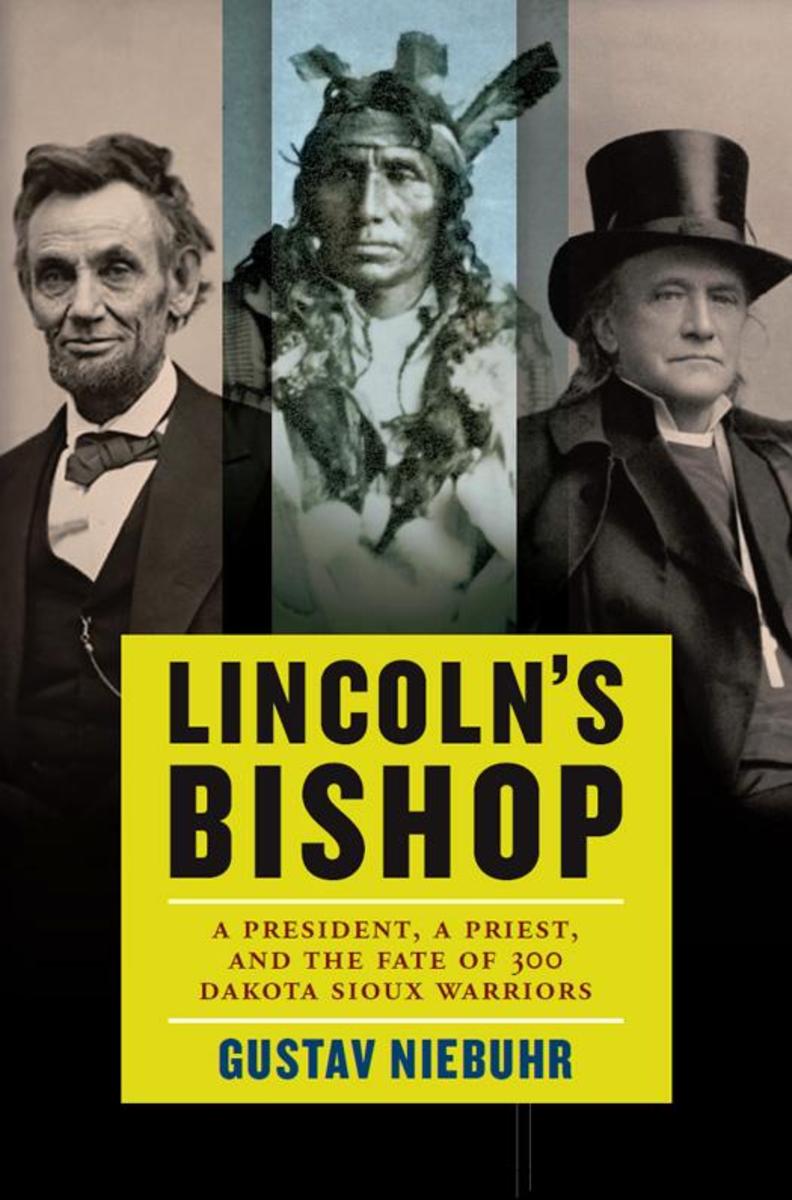
Lincoln's Bishop
¥151.53
It is hard to recall what powerful moral voices Protestant church leaders had in the formative years of the nation. Gustav Niebuhr travels back to the Minnesota frontier of 1862 when Dakota Sioux rose up against pioneering families and slaughtered hundreds. Citizens demanded mass executions and deportations. Into this turmoil stepped Henry Benjamin Whipple, the state's first Episcopal bishop.Whipple had already loudly decried the crimes and corruption of those managing Indian affairs and warned of calamity. Now he made the case of mercy and a deeper justice, which eventually led to meeting with President Lincoln. Despite being preoccupied with the Civil War, Lincoln was moved to intervene, surprisingly taking the time to review all 303 cases and overturning the death sentence for most of the Indians. Nevertheless, the result was still the largest single execution on American soil.If not for Whipple's vigorous campaigning, both in state and in Washington, DC, a greater tragedy might well have occurred. His success should haunt us: Where today do we hear these trumpet calls for justice like those given by figures such as Bishop Henry Benjamin Whipple?

The Thank You Economy
¥151.53
If this were 1923, this book would have been called "Why Radio Is Going to Change the Game" . . . If it were 1995, it would be "Why Amazon Is Going to Take Over the Retailing World" . . . The Thank You Economy is about something big, something greater than any single revolutionary platform. It isn't some abstract concept or wacky business strategy it's real, and every one of us is doing business in it every day, whether we choose to recognize it or not. It's the way we communicate, the way we buy and sell, the way businesses and consumers interact online and offline. The Internet, where the Thank You Economy was born, has given consumers back their voice, and the tremendous power of their opinions via social media means that companies and brands have to compete on a whole different level than they used to. Gone are the days when a blizzard of marketing dollars could be used to overwhelm the airwaves, shut out the competition, and grab customer awareness. Now customers' demands for authenticity, originality, creativity, honesty, and good intent have made it necessary for companies and brands to revert to a level of customer service rarely seen since our great-grandparents' day, when business owners often knew their customers personally, and gave them individual attention. Here renowned entrepreneur Gary Vaynerchuk reveals how companies big and small can scale that kind of personal, one-on-one attention to their entire customer base, no matter how large, using the same social media platforms that carry consumer word of mouth. The Thank You Economy offers compelling, data-driven evidence that we have entered into an entirely new business era, one in which the companies that see the biggest returns won't be the ones that can throw the most money at an advertising campaign, but will be those that can prove they care about their customers more than anyone else. The businesses and brands that harness the word-of-mouth power from social media, those that can shift their culture to be more customer-aware and fan-friendly, will pull away from the pack and profit in today's markets. Filled with Vaynerchuk's irrepressible candor and wit, as well as real-world examples of companies that are profiting by putting Thank You Economy principles into practice, The Thank You Economy reveals how businesses can harness all the changes and challenges inherent in social media and turn them into tremendous opportunities for profit and growth.

浙南本草新编:续编
¥151.50
浙南本草新编>(续编)》历时近两年,新增正名药物174种,插图200幅。特别选录中草药单方、验方2762首,供读者应用参考。在本书附页中,有对《浙南本草新编》的勘误内容。 本书是对浙南地区用药特色的集锦,也是对瓯越文化的一种传承,更是对民间中医药的推动。其出版不仅对浙南地区民间草药医提供用药参考和指导;同时也为医院医务工作者提供了临床上的指导。

中国式现代化新实践研究丛书(第二辑5本)
¥151.33
发展新质生产力是推动高质量发展的内在要求和重要着力点,江苏肩负着习近平总书记赋予的“成为发展新质生产力的重要阵地”重大使命,不断发展新质生产力,助推中国式现代化江苏新实践。本书阐述了新质生产力的科学内涵与实践要求,从创新要素配置角度对发展新质生产力的方法论进行了研究。本书就新质生产力与传统产业升级、战略新兴产业壮大、未来产业培育的关系展开了论述。本书对江苏发展新质生产力的典型做法进行了总结提炼,为读者了解江苏发展提供了更多的现实案例。

Obama: The Historic Campaign in Photographs
¥151.30
Through 150 striking color photographs, Obama: The Historic Campaign in Photographs charts the road to Barack Obama's nomination as the first African American to lead the presidential ticket of a major party. Announcing his campaign in Springfield, Illinois, on February 10, 2007, Obama stood on the grounds of the Old State Capitol, where Abraham Lincoln delivered his famous "House Divided" speech against slavery in 1858. During an eighteen-month campaign, from the snows of Iowa to the hunt for Democratic "superdelegates," this junior senator from Chicago confounded the party establishment and rewrote the playbook on modern presidential campaigning. This amazing collection of photographs captures the public and private moments of his journey, and offers a unique window into one of the great triumphs in American politics.
Going Wireless
¥151.30
Going Wireless delivers the unexpected by showing how wireless is transforming every type of enterprise from micro-businesses to multi-national conglomerates.Award-winning technology journalist Jaclyn Easton begins with an in-depth look at owning your customers and clients through mobile commerce whether your company focuses on consumers or business-to-business.From there you will learn about the advantages of wirelessly fortifying your mobile workforce of itinerant executives, sales personnel, and field service technicians as well as how wireless is dramatically redefining customer service, marketing, and advertising.Going Wireless also delves deep inside the corporation. First you'll find out why most companies are "handsizing" in addition to deploying wireless technology to rejuvenate warehouses, supply chains, procurement procedures, data collection, competitive intelligence, and much more.The best part is that these scenarios are supported by over 40 brand-name success stories, including: How Sears saves millions by wirelessly enabling 100 percent of their appliance repair technicians; How the Gap proved that by sewing wireless technology in their clothing they could reduce labor distribution costs by 50 percent; How McKessanHBOC a Fortune 40 corporation used mobile technology to entirely eliminate all their manifest imaging costs. While most people associate wireless with cell phones and Palm handhelds, you'll also learn that wireless has been around for over 100 years and has spawned mobile options you've never heard of and is being used in ways you've never imagined.This makes Going Wireless the perfect book for executives and managers who need a comprehensive overview of the wireless options that can make their companies more competitive, more productive, and more profitable.
Outside Innovation
¥151.30
How dynamic businesses of every size can unleash innovation by inviting customers to codesign what they do and make. Reading line: The 8 Roles Customers Play in Trend Setting Companies The refrain is familiar for Patricia Seybold in her journeys as a top technology and management strategist: "I want our company to be acknowledged as the most admired and most customer valued in our industry and to be recognized as the company that has forever changed the way things are done." "How can we become the Google of banking?" "How can we be the eBay of software?" "I want to be the JetBlue of manufacturing." "How can we become the undisputed trend setter in our industry with a competitive bar no one can topple?" In Outside Innovation, bestselling author Seybold taps her close relationship with dozens of high innovation companies to reveal the untold strategy behind the trendsetters and the next HUGE leap forward in customer strategy. Seybold shows that companies that are dominating their category and staying ahead of the pack are collaborating at every level of their business with their customers.

The Early Years
¥151.30
Known for his growling vocals and for the distinct poetry of his lyrics, Tom Waits has amassed over the course of three decades a devoted cult following. The Early Years collects the lyrics formative and classic from the first ten albums of this true bard of hard living. A celebration of both his words and of the artist himself, this lyrical biography charts the course from Wait's emotional debut album, Closing Time (1977), to the experimental stirrings in Heartattack and Vine (1991) and One from the Heart (1992). Here the words achieve a new potency, adding further dimension to this singularly gifted artist.
HarperCollins e-books
¥151.30
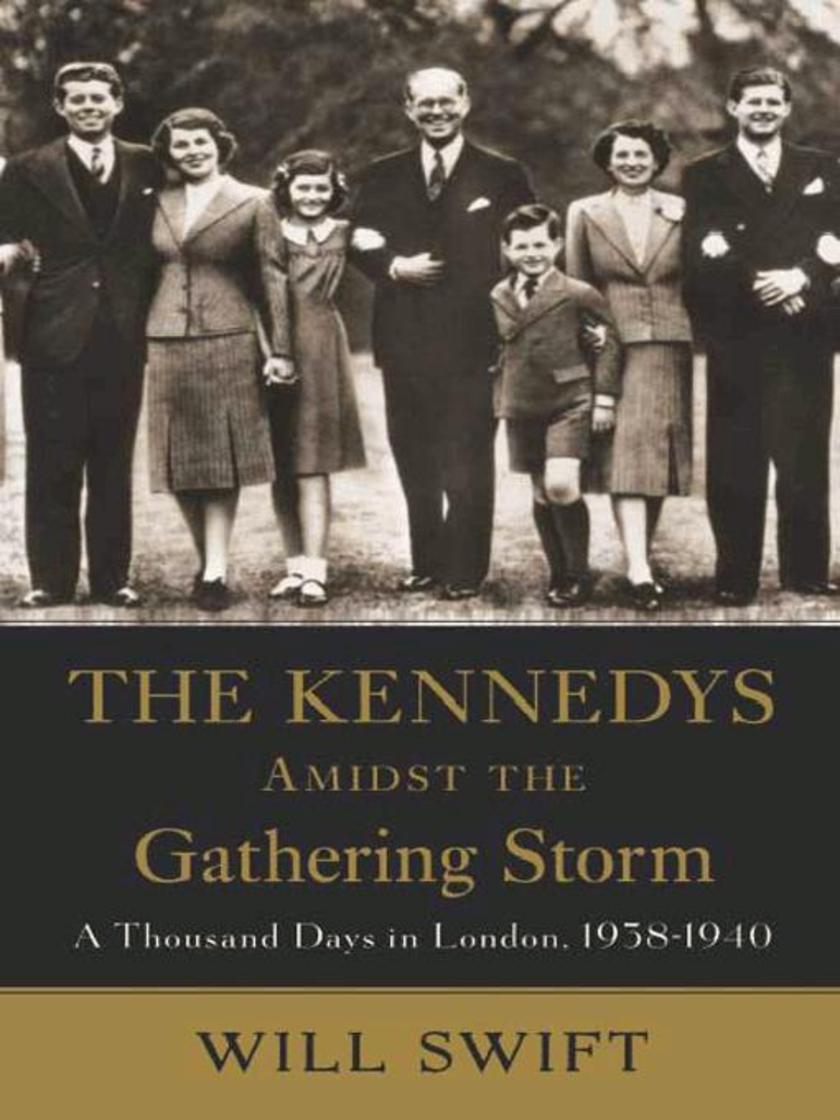
In The Kennedys Amidst the Gathering Storm, Will Swift presents a fresh, empathetic interpretation of the ambassadorship of Joseph Kennedy and explores the intricate, often shifting relationships among Kennedy, Chamberlain, Churchill, and, of course, Roosevelt. Arriving in London in early 1938, the Irish-Catholic Kennedys were welcomed by politicians, aristocrats, and intellectuals, all eager to court America. They finally appeared to have overcome their lifelong status as outsiders. From 1938 to 1940, the Kennedys crystallized their identity as protagonists on the world stage, making public the competitive and clannish intrafamily dynamics that would fuel their mythic rise to power. They all learned from their father's successes and failures. The older children Joe Jr., Jack, and Kathleen took an active part in England's glittering, "last fling before the bombs fall" society, but all nine children charmed, their every move chronicled by the British and American media. John F. Kennedy's path to the White House began in London. As his father's political fortunes dimmed, Jack published a best-selling book and his star rose. Drawing on recently released Kennedy family archives, Joseph P. Kennedy's private papers, and using rare photographs of English society and the photogenic Kennedy clan, Dr. Swift, with penetrating psychological insight, brings to life this fascinating family during a dramatic one thousand day period.
The Copa
¥151.30
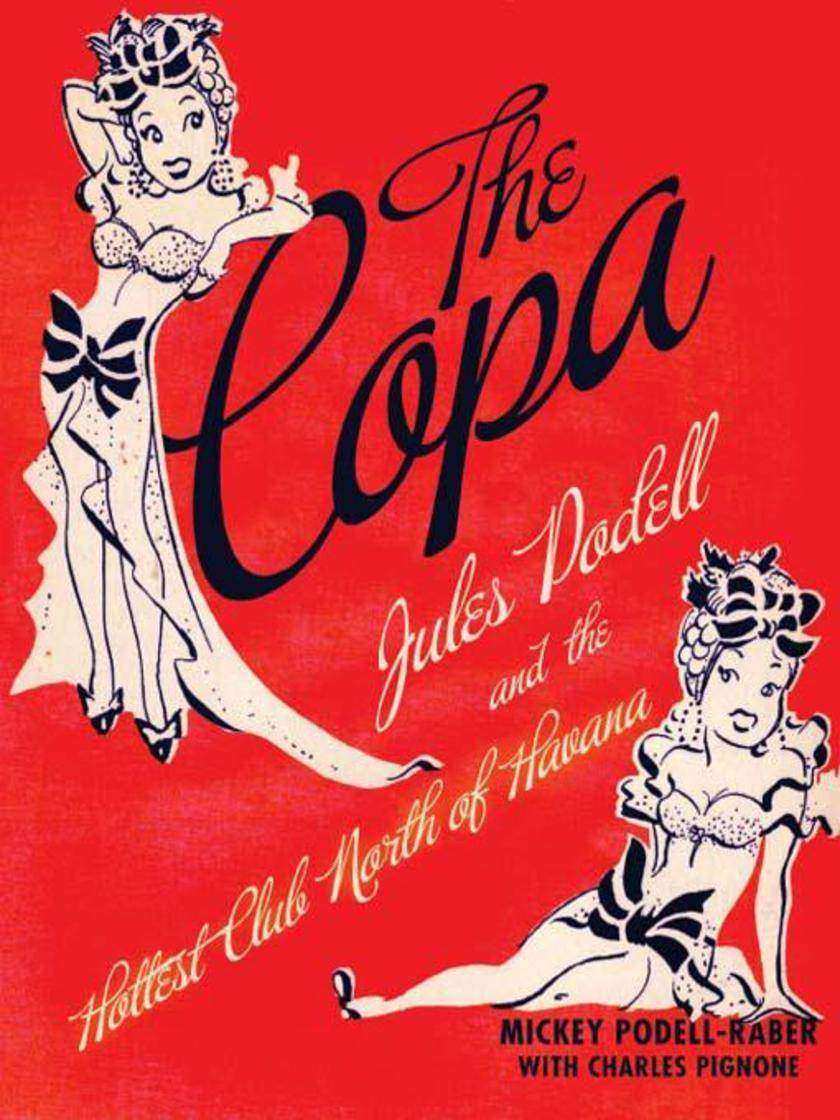
This beautifully illustrated history of Jules Podell's legendary club Copacabana features colorful characters, romance, and intrigue from the golden age of nightclubs.In this fascinating look behind the scenes of one of the world's most legendary nightclubs, the story of the Copa begins and ends with its fiery owner, Jules Podell. A Russian immigrant, Jules dropped out of the fourth grade to make money for his family and went on to create the number one destination for the rich, famous, and dangerous of New York. All the legends of the fifties and early sixties stood on his stage, including Frank Sinatra, Dean Martin, Jerry Lewis, Nat King Cole, Peggy Lee, Tony Bennett, Bobby Darin, Tom Jones, Sam Cooke, Johnny Mathis, and the Temptations. This book, which includes the Podell family's never-before-seen photos, menus, and club memorabilia, as well as interviews, allows us to truly get a peek at the Copa and its great moment in New York history.
第六次产业革命
¥151.20
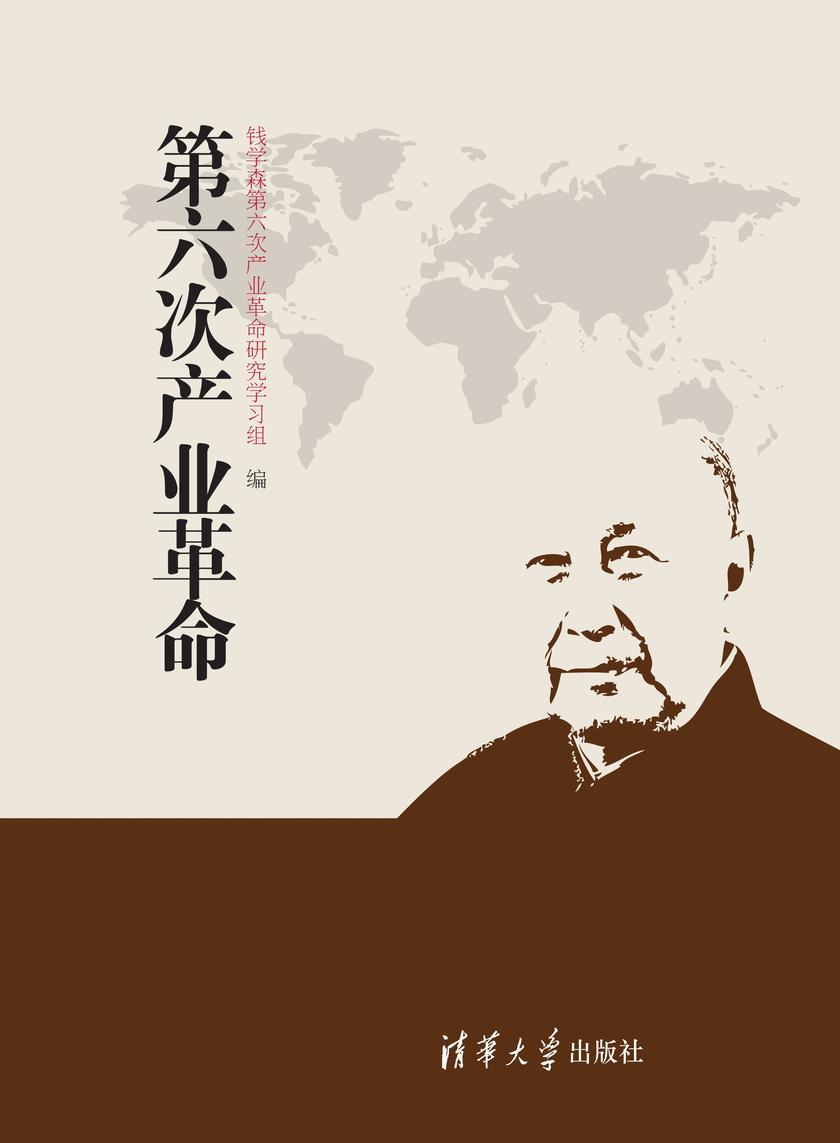
第六次产业革命就是建立农业型的知识密集产业。农业型的产业是指像传统农业一样,以太阳光为直能源,靠地面上(或海洋里的)植物的光合作用为基础,来行产品生产的生产体系。 知识密集型产业,是把所有的科学技术都用在生产上,靠高度的科学技术的生产。有关第六次产业革命的建设内容包括5方面,分别为:农产业、林产业、草产业、海产业、沙产业。 本书以钱学森办公室整理、国防工业出版社出版的《钱学森书信》《钱学森书信补编》、《钱学森文集》为主要资料来源,还从其他出版物中收录了部分材料,后共选取书信497封,文章79篇。
Paranormalcy Trilogy Collection
¥151.17
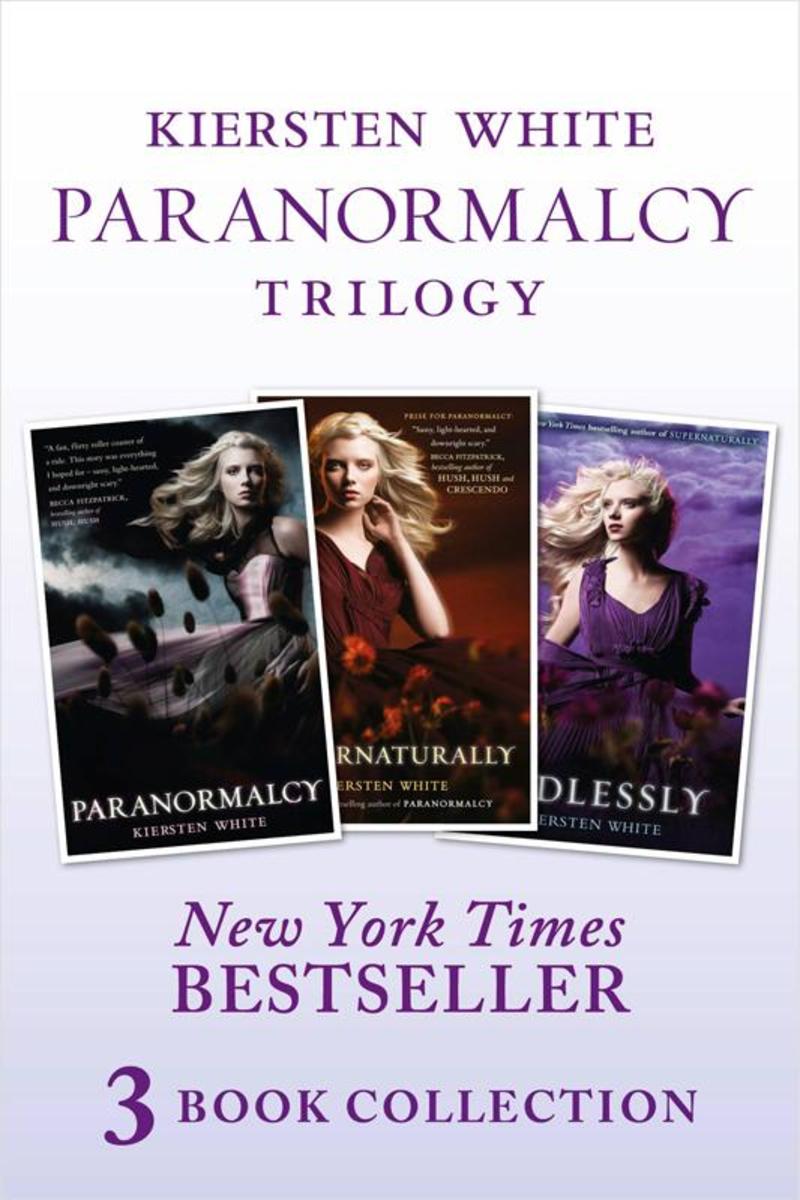
Vampires, werewolves and shape-shifters? Just an average day for Evie, the kick-ass heroine of New York Times bestselling PARANORMALCY trilogy.

The Double-Daring Book for Girls
¥151.10
The eagerly anticipated follow-up to the bestselling phenomenon The Daring Book for Girls is an even more daring guide to everything from making a raft to learning how to play football to the art of the Japanese Tea ceremony. This second volume, with all new original material, promises to be even more of a daring adventure than the first. Girls will learn how to surf, get horseback riding tips, make a labyrinth, find out about April Fool's Day history and pranks, how to organize a croquet tournament, find out about cowgirls, the Nobel Prize, being a detective and much more! Just as packed with creative and exciting material as the original, but twice as fun, this book will be beloved by all Daring fans everywhere!
Attention All Passengers
¥151.10
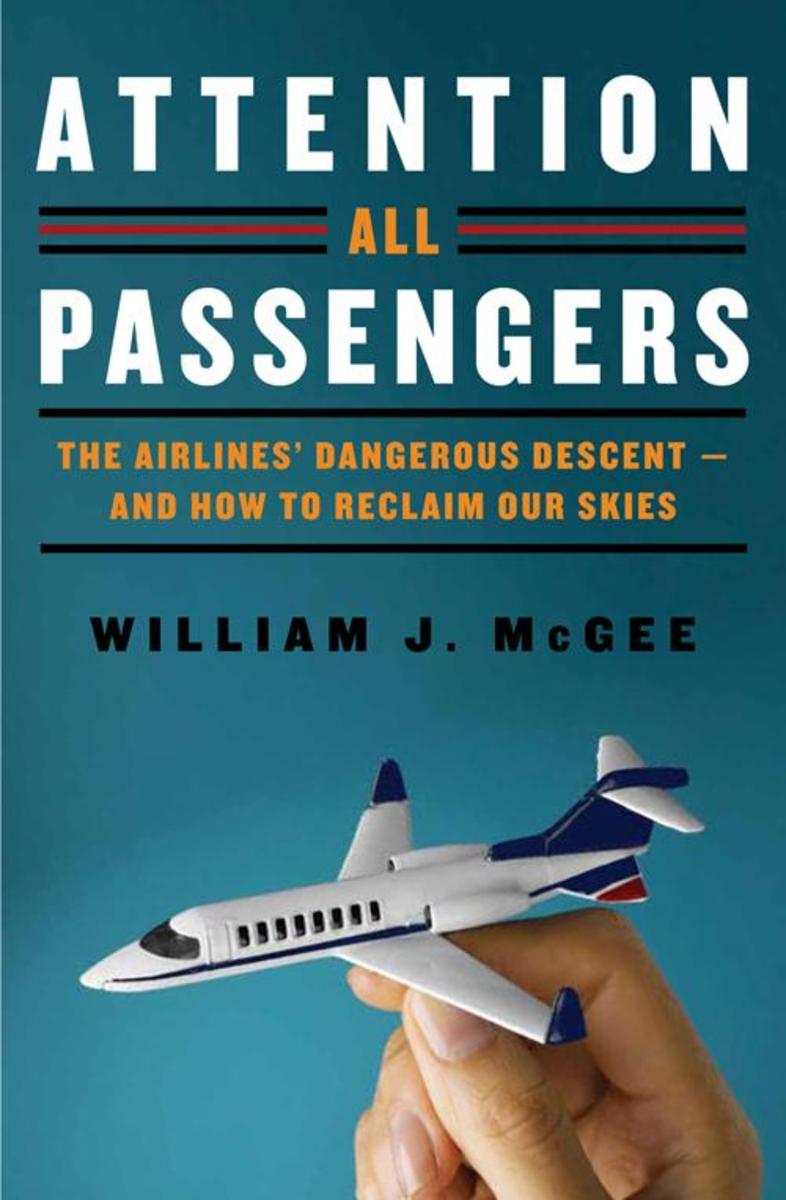
Award-winning journalist and leading consumer advocate William J. McGee offers a shocking, essential exposé that reveals the real state of the "friendly skies."From outsourced call centers in India to the Alabama location where all lost baggage ends up, William J. McGee crisscrossed the country and traveled around the globe immersing himself deep into the world of commercial airlines. And what he found was shocking.McGee interviewed countless industry insiders pilots, TSA security screeners, FAA inspectors, legislators, the CEOs of the major carriers, and even Ralph Nader and Steven Slater, the disgruntled flight attendant who famously jettisoned a JetBlue flight. Here he reveals how airline executives are cutting costs in "a mad race to the bottom" by delegating flights to second-tier regional airlines and outsourcing critical aircraft maintenance and repairs to unlicensed "mechanics" in China, Singapore, Mexico, and El Salvador. And while the U.S. airlines have raked in tens of billions of dollars for checked baggage alone in recent years, our skies (and our airports) are not getting any safer. What's more, McGee explains how both political parties and all branches of the U.S. government have conspired to place corporate interests above the interests of consumers, workers, the nation's economy, and even the planet itself. Attention All Passengers will change the way you view the airline industry and make you think twice the next time you see the fasten seat belts sign.
KIM
¥151.10
Kim Kardashian is a phenomenon.Despite her privileged upbringing in Beverly Hills, ten years ago Kim was just a modest stylist to stars like Paris Hilton and Brandy, making extra money selling her clothes on eBay. But a combination of hard work, an astute business brain, a hit TV series and a body to die for turned her life around.In this revealing unauthorized biography of Kim, bestselling author Sean Smith discovers a sweet, kind, and smart young woman whose life story reads like an X-rated version of Dynasty . . . an infamous murder case, elopement, a notorious sex tape, a seventy-two-day marriage, gender transition and impossibly glamorous designer dresses.Finding love with one of the biggest stars on the planet, Kanye West, she has begun her own dynasty with her daughter, North, and the approaching birth of her son. Now, as Kim Kardashian West, she is the most photographed and talked-about celebrity of the past decade. Her following on Instagram alone exceeds 42 million, over 4 million more than the population of her home state of California.Kim Kardashian follows her extraordinary journey from her childhood and amazing family to her turbulent love life and multi-million-dollar lifestyle. It is the ultimate insight into an icon of our times.
Fascinate
¥151.10
What triggers fascination, and how do companies, people, and ideas put those triggers to useWhy are you captivated by some people but not by othersWhy do you recall some brands yet forget the restIn a distracted, overcrowded world, how do certain leaders, friends, and family members convince you to change your behaviorFascination: the most powerful way to influence decision making. It's more persuasive than marketing, advertising, or any other form of communication. And it all starts with seven universal triggers: lust, mystique, alarm, prestige, power, vice, and trust. Fascination plays a role in every type of decision making, from the brands you choose to the songs you remember, from the person you marry to the employees you hire. And by activating the right triggers, you can make anything become fascinating.To explore and explain fascination's irresistible influence, Sally Hogshead looks beyond marketing, delving into behavioral and social studies, historical precedents, neurobiology and evolutionary anthropology, as well as conducting in-depth interviews and a national study of a thousand consumers, to emerge with deeply rooted patterns for why, and how, we become captivated.Hogshead reveals why the Salem witch trials began with the same fixations as those in Sex and the City. How Olympic athletes are subject to obsessions similar to those of fetishists. How a 1636 frenzy over Dutch tulip bulbs perfectly mirrors the 2006 real estate bubble. And why a billion-dollar "Just Say No" program actually increased drug use among teens, by activating the same "forbidden fruit" syndrome as a Victoria's Secret catalog.Whether you realize it or not, you're already using the seven triggers. The question is, are you using the right triggers, in the right way, to get your desired resultThis book will show you.
A Year with Aslan
¥151.10
For more than fifty years, the world C. S. Lewis created in Narnia has captured our hearts and imaginations. Both children and adults have discovered that rereading the books leads to entirely new experiences and insights. In the midst of these breathtaking stories of adventure, betrayal, and discovery in a magical land are profound messages about the true meaning of life. Whether it is Eustace struggling with his dragon skin, Digory debating obedience to Aslan versus saving his mother, or Edmund facing his shame after his rescue from the White Witch, the questions and dilemmas facing the characters are surprisingly relevant to us today. By pondering the world of Narnia, we better understand our own.In the first book of its kind, A Year with Aslan offers 365 of the most thought-provoking passages from all seven books, paired with reflective questions that get at the heart of what matters most. An unprecedented way to experience the magic of Narnia every day of the year, A Year with Aslan allows us all to go "Further up and further in!"
Where Everybody Looks Like Me
¥151.10
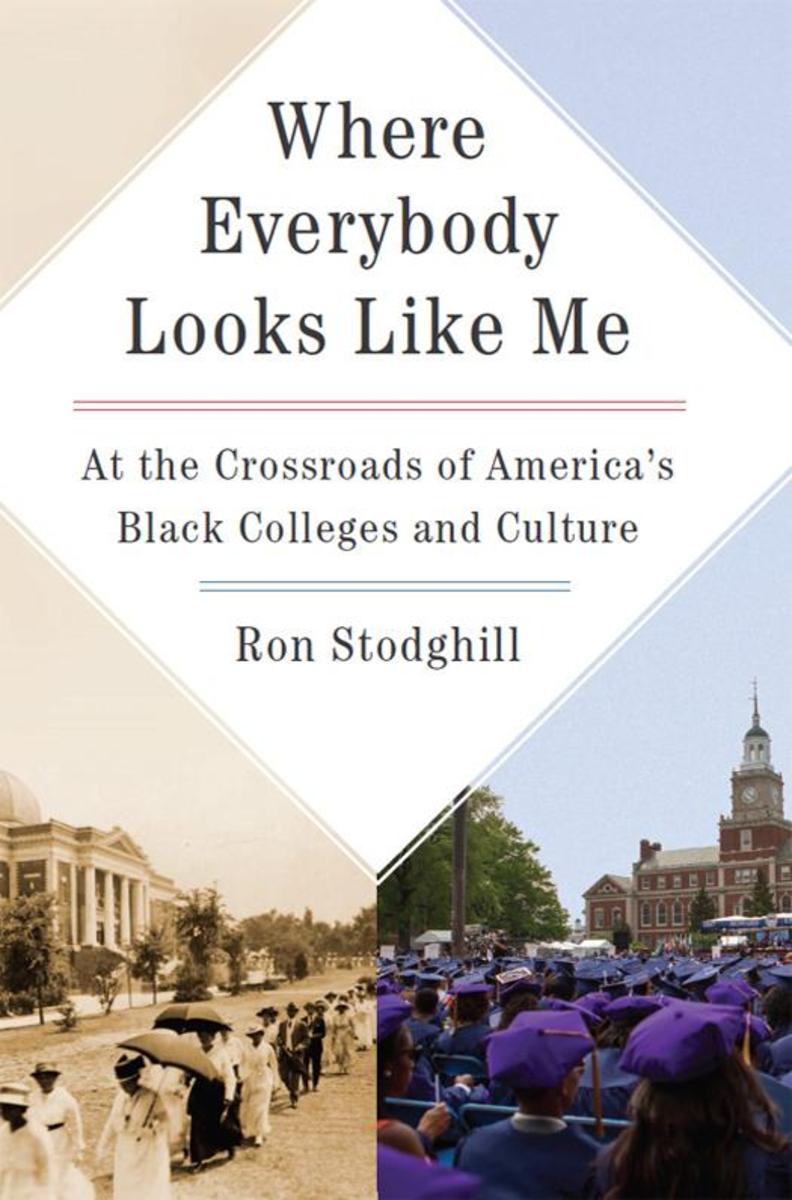
"We've got no time for excuses . . . nobody is going to give you anything that you have not earned." —President Barack Obama, Morehouse College commencement address Historically black colleges and universities, or HBCUs, have long been the bedrock of black culture. They have graduated countless luminary figures, including Nobel laureate Toni Morrison, the Reverend James Forbes, Supreme Court justice Thurgood Marshall, actor Samuel L. Jackson, media mogul Oprah Winfrey, and Nobel Prize winner Martin Luther King Jr. But the 104 HBCUs are indisputably under siege, and whether they will remain vital informs this riveting tale of vision and vanity, boardroom backbiting and financial chicanery, idealism and passion. In recent years, from Kentucky State to Morgan State, funding cuts have forced universities to send home thousands of students, dozens of college presidents have been ousted from their jobs, criminal investigations have been launched, conservative legislators have schemed to shut down schools, and overworked faculty have feuded with bureaucrats. Chronicling this near breaking point for black colleges, Where Everybody Looks Like Me presents a compelling, tightly woven story of the challenges faced by HBCUs. It features administrators, celebrities, and alumni whose lives are intricately tied to the fate of these institutions—those such as Dr. John Silvanus Wilson Jr., who breathed new life into Morehouse College; Dr. Walter Kimbrough, also known as the "Hip-Hop President," who took issue with rap impresario Dr. Dre's $35 million contribution to an unprecedented $70 million gift to the University of Southern California; and Professor Richard Deering, whose protest of the poor management at struggling Wilberforce University led to the resignation of its president. It also captures the passion and idealism of students such as Savannah Bowen, an academic star recruited by elite white schools who ultimately chose an HBCU. At the center of the drama is Howard University trustee Renee Higginbotham-Brooks's crusade to save the grand dame of HBCUs. The crisis at these schools threatens to upend more than a century and a half of advances, placing the black community at risk of reliving the social and economic hardships that their ancestors struggled to overcome. Where Everybody Looks Like Me makes a powerful case for saving these schools, while offering a rare glimpse behind the social and economic organs that determine the promise and peril of the race.

For Goodness Sex
¥151.10
Let's talk about sex.We do it all the time, don't weWe talk about our sex lives with friends; we gossip about celebrity hookups; we watch reality dating shows. Yet when it comes to talking to our kids—many of whom are in sexually intimate relationships—we are strangely silent. But our kids are talking—and seeing and listening and learning—about sex every day. Unfortunately the messages they receive are often problematic: boys are studs, girls are sluts; real sex should be like porn; hookups are better than relationships. Your kids know more about sex than you think they do. But your kids don't know as much about sex as they think they do.To make matters worse, most sexuality education in schools is either abstinence-only or abstinence-based—and both models tend to leave young people ill equipped to make fully informed decisions. Sexuality educator Al Vernacchio, a high school teacher for more than twenty years, has been an advocate of a new category: sex-positive education.In For Goodness Sex, Vernacchio refutes the "disaster prevention" model of sex ed, offering instead a progressive and realistic approach. Without a broader understanding to offset the damaging perceptions of sex that pervade much of our culture, adolescents and teens are dangerously unprepared intellectually and emotionally to develop as sexual beings, let alone cope with today's world of sex via smartphone, cyberbullying, and the precipitous rise of high school and college sexual assault.For Goodness Sex offers the tools and information adults and young people need in order to have important conversations about sexuality and to develop healthy values and safe habits.

The Alley of Love and Yellow Jasmines
¥151.10
Oscar nominee and Emmy Award winning actress Shohreh Aghdashloo shares her remarkable personal journey from a childhood in the Shah's Iran to the red carpets of Hollywood in this dazzling memoir of family, faith, revolution, and hope.Enchanted by the movies she watched while growing up in affluent Tehran in the 1950s and '60s, Shohreh Aghdashloo dreamed of becoming an actress despite her parents' more practical plans. When she fell in love and married her husband, Aydin, a painter twelve years her senior, she made him promise he'd allow her to follow her passion.The first years of her marriage were magical. As Shohreh began to build a promising career, Aydin worked at the royal offices as an art director while exhibiting his paintings in Tehran. But in 1979 revolution swept Iran, toppling the Shah and installing an Islamic republic under the Ayatollah Khomeini. Alarmed by the stifling new restrictions on women and art, Shohreh made the bold and dangerous decision to escape the new regime and her home country. Leaving her family and the man she loved behind, she fled in a covert journey to Europe and eventually to Los Angeles.In this moving, deeply personal memoir, Shohreh shares her story: it is a tale of privilege and affluence, pain and prejudice, tenacity and success. She writes poignantly about her struggles as an outsider in a for-eign culture as a woman, a Muslim, and an Iranian adapting to a new land and a new language. She shares behind-the-scenes stories about what it's really like to be a Hollywood actress including being snubbed by two of Tinseltown's biggest names on Oscar night.Lyrical and atmospheric, The Alley of Love and Yellow Jasmines is a powerful story of ambition, art, politics, terror, and courage of an extraordinary woman determined to live her dreams.
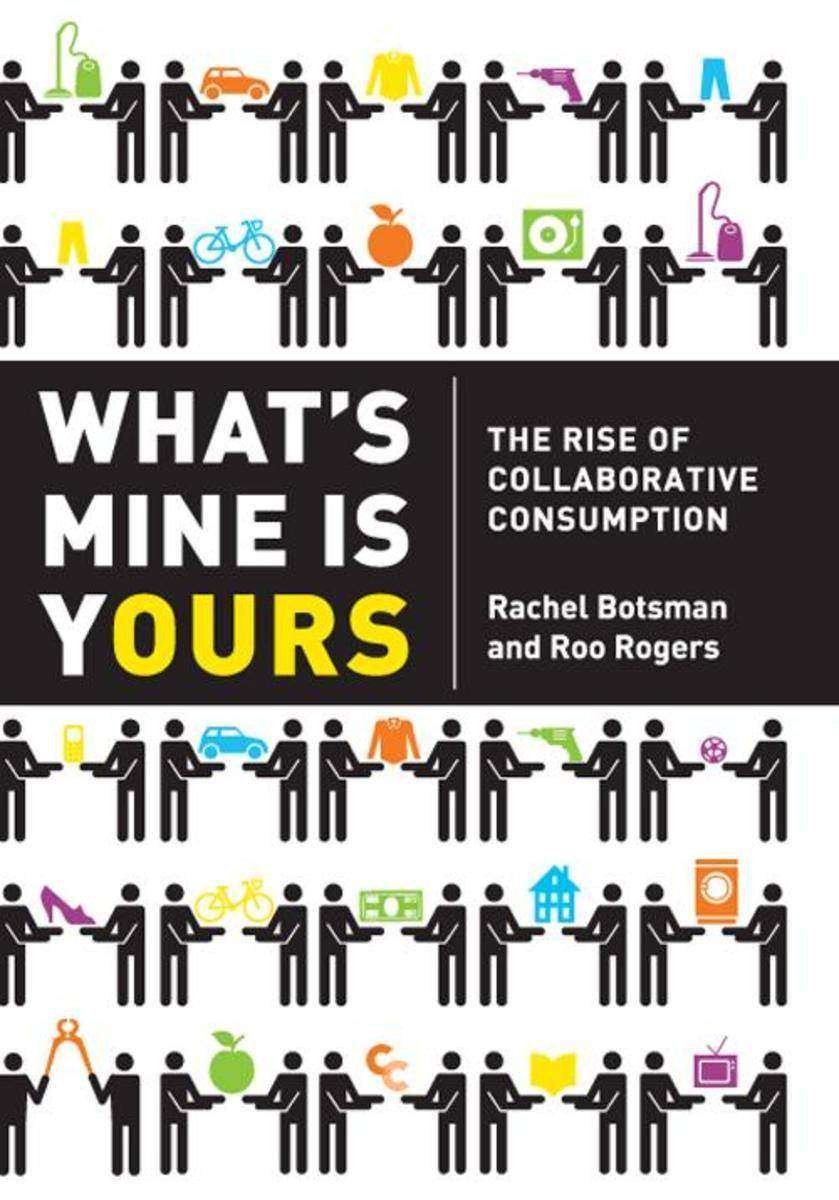
What's Mine Is Yours
¥151.10
WHAT'S MINE IS YOURS is about Collaborative Consumption, a new, emerging economy made possible by online social networks and fueled by increasing cost consciousness and environmental necessity. Collaborative Consumption occurs when people participate in organized sharing, bartering, trading, renting, swapping, and collectives to get the same pleasures of ownership with reduced personal cost and burden, and lower environmental impact. The book addresses three growing models of Collaborative Consumption: Product Service Systems, Communal Economies, and Redistribution Markets. The first, Product Service Systems, reflects the increasing number of people from all different backgrounds and across ages who are buying into the idea of using the service of the product-what it does for them-without owning it. Examples include Zipcar and Ziploc, and these companies are disrupting traditional industries based on models of individual ownership. Second, in what the authors define as Communal Economies, there is a growing realization that as individual consumers, we have relatively little in the way of bargaining power with corporations. A crowd of consumers, however, introduces a different, empowering dynamic. Online networks are bringing people together again and making them more willing to leverage the proverbial power of numbers. Examples of this second category include Etsy, an online market for handcrafts, or the social lending marketplace Zopa. The third model is Redistribution Markets, exemplified by worldwide networks such as Freecycle and Ebay as well as emerging forms of modern day bartering and swap trading such as Zwaggle, Swaptree, and Zunafish. Social networks facilitate consumer-to-consumer marketplaces that redistribute goods from where they are not needed to somewhere or someone where they are. This business model encourages reusing/reselling of old items rather them throwing them out, thereby reducing the waste and carbon emissions that go along with new production.WHAT'S MINE IS YOURS describes how these three models come together to form a new economy of more sustainable consumerism. Collaborative Consumption started as a trend in conjunction with the emergence of shared collective content/information sites such as Wikipedia and Flickr and with the recent economic troubles and increasing environmental awareness, it is growing into an international movement. The authors predict it will be a fully fledged economy within the next five years.In this book the authors travel among the quiet revolutionaries (consumers and companies) from all around the world. They explore how businesses will both prosper and fail in this environment, and, in particular, they examine how it has the potential to help create the mass sustainable change in consumer behaviors this planet so desperately needs. The authors themselves are environmentalists, but they are also entrepreneurs, parents, and optimistic citizens. This is a good news book about long-term positive change.


