


 购物车
购物车 个人中心
个人中心
Kotlin Programming By Example
¥90.46
Enhance your Kotlin programming skills by building 3 real-world applications About This Book ? Build three full-fledged, engaging applications from scratch and learn to deploy them ? Enhance your app development and programming activities with Kotlin’s powerful and intuitive tools and utilities. ? Experience the gentle learning curve, expressiveness, and intuitiveness of Kotlin, as you develop your own applications Who This Book Is For This book is for those who are new to Kotlin or are familiar with the basics, having dabbled with Java until now. Basic programming knowledge is mandatory. What You Will Learn ? Learn the building blocks of the Kotlin programming language ? Develop powerful RESTful microservices for Android applications ? Create reactive Android applications efficiently ? Implement an MVC architecture pattern and dependency management using Kotlin ? Centralize, transform, and stash data with Logstash ? Secure applications using Spring Security ? Deploy Kotlin microservices to AWS and Android applications to the Play Store In Detail Kotlin greatly reduces the verbosity of source code. With Google having announced their support for Kotlin as a first-class language for writing Android apps, now's the time learn how to create apps from scratch with Kotlin Kotlin Programming By Example takes you through the building blocks of Kotlin, such as functions and classes. You’ll explore various features of Kotlin by building three applications of varying complexity. For a quick start to Android development, we look at building a classic game, Tetris, and elaborate on object-oriented programming in Kotlin. Our next application will be a messenger app, a level up in terms of complexity. Before moving onto the third app, we take a look at data persistent methods, helping us learn about the storage and retrieval of useful applications. Our final app is a place reviewer: a web application that will make use of the Google Maps API and Place Picker. By the end of this book, you will have gained experience of of creating and deploying Android applications using Kotlin. Style and approach Here we will build three exciting projects in Kotlin which will demonstrate how to effectively use Kotlin language constructs
.NET Core 2.0 By Example
¥90.46
Build cross-platform solutions with .NET Core 2.0 through real-life scenarios About This Book ? Bridges the gap between learning and doing and improves your software development skills ? Covers the best practices of .NET development to improve your productivity ? Example-based approach to get you started quickly with software programming Who This Book Is For If you are a developer or architect and want to learn how to build cross-platform solutions using Microsoft .NET Core, this book is for you. It is assumed that you have some knowledge of the .NET Framework, OOP, and C# (or a similar programming language). What You Will Learn ? Build cross-platform applications with ASP.NET Core 2.0 and its tools ? Integrate, host, and deploy web apps with the cloud (Microsoft Azure) ? Leverage the ncurses native library to extend console capabilities in .NET Core on Linux and interop with native coden .NET Core on Linux and learn how to interop with existing native code ? Reuse existing .NET Framework and Mono assemblies from .NET Core 2.0 applications ? Develop real-time web applications using ASP.NET Core ? Learn the differences between SOA and microservices and get started with microservice development using ASP.NET Core 2.0 ? Walk through functional programming with F# and .NET Core from scratch In Detail With the rise in the number of tools and technologies available today, developers and architects are always exploring ways to create better and smarter solutions. Before, the differences between target platforms was a major roadblock, but that's not the case now. .NET Core 2.0 By Example will take you on an exciting journey to building better software. This book provides fresh and relevant content to .NET Core 2.0 in a succinct format that’s enjoyable to read. It also delivers concepts, along with the implications, design decisions, and potential pitfalls you might face when targeting Linux and Windows systems, in a logical and simple way. With the .NET framework at its center, the book comprises of five varied projects: a multiplayer Tic-tac-toe game; a real-time chat application, Let'sChat; a chatbot; a microservice-based buying-selling application; and a movie booking application. You will start each chapter with a high-level overview of the content, followed by the above example applications described in detail. By the end of each chapter, you will not only be proficient with the concepts, but you’ll also have created a tangible component in the application. By the end of the book, you will have built five solid projects using all the tools and support provided by the .NET Core 2.0 framework. Style and approach This book takes a concise yet comprehensive project-based approach to teaching the tricks and tools of .NET Core 2.0.
Test-Driven Java Development - Second Edition
¥90.46
This book will teach the concepts of test driven development in Java so you can build clean, maintainable and robust code About This Book ? Explore the most popular TDD tools and frameworks and become more proficient in building applications ? Create applications with better code design, fewer bugs, and higher test coverage, enabling you to get them to market quickly ? Implement test-driven programming methods into your development workflows Who This Book Is For If you're an experienced Java developer and want to implement more effective methods of programming systems and applications, then this book is for you. What You Will Learn ? Explore the tools and frameworks required for effective TDD development ? Perform the Red-Green-Refactor process efficiently, the pillar around which all other TDD procedures are based ? Master effective unit testing in isolation from the rest of your code ? Design simple and easily maintainable code by implementing different techniques ? Use mocking frameworks and techniques to easily write and quickly execute tests ? Develop an application to implement behavior-driven development in conjunction with unit testing ? Enable and disable features using feature toggles In Detail Test-driven development (TDD) is a development approach that relies on a test-first procedure that emphasizes writing a test before writing the necessary code, and then refactoring the code to optimize it.The value of performing TDD with Java, one of the longest established programming languages, is to improve the productivity of programmers and the maintainability and performance of code, and develop a deeper understanding of the language and how to employ it effectively. Starting with the basics of TDD and understanding why its adoption is beneficial, this book will take you from the first steps of TDD with Java until you are confident enough to embrace the practice in your day-to-day routine.You'll be guided through setting up tools, frameworks, and the environment you need, and we will dive right into hands-on exercises with the goal of mastering one practice, tool, or framework at a time. You'll learn about the Red-Green-Refactor procedure, how to write unit tests, and how to use them as executable documentation.With this book, you'll also discover how to design simple and easily maintainable code, work with mocks, utilize behavior-driven development, refactor old legacy code, and release a half-finished feature to production with feature toggles.You will finish this book with a deep understanding of the test-driven development methodology and the confidence to apply it to application programming with Java. Style and approach An easy-to-follow, hands-on guide to building applications through effective coding practices. This book covers practical examples by introducing different problems, each one designed as a learning exercise to help you understand each aspect of TDD.
Angular 6 for Enterprise-Ready Web Applications
¥90.46
A hands-on guide with a minimalist and flexible approach that enables quick learning and rapid delivery of cloud-ready enterprise applications with Angular 6 About This Book ? Explore tools and techniques to push your web app to the next level ? Master Angular app design and architectural considerations ? Learn continuous integration and deploy your app on a highly available cloud infrastructure in AWS Who This Book Is For This book is for developers who want to confidently deliver high-quality and production-grade Angular apps from design to deployment. We assume that you have prior experience in writing a RESTful API with the tech stack of your choice; if you don't, you can still gain a lot of benefit from this book, which focuses on the entire scope of frontend development, from design to deployment! What You Will Learn ? Create full-stack web applications using Angular and RESTful APIs ? Master Angular fundamentals, RxJS, CLI tools, unit testing, GitHub, and Docker ? Design and architect responsive, secure and scalable apps to deploy on AWS ? Adopt a minimalist, value-first approach to delivering your app with Kanban ? Get introduced to automated testing with continuous integration on CircleCI ? Optimize Nginx and Node.js web servers with load testing tools In Detail Angular 6 for Enterprise-Ready Web Applications follows a hands-on and minimalist approach demonstrating how to design and architect high quality apps. The first part of the book is about mastering the Angular platform using foundational technologies. You will use the Kanban method to focus on value delivery, communicate design ideas with mock-up tools and build great looking apps with Angular Material. You will become comfortable using CLI tools, understand reactive programming with RxJS, and deploy to the cloud using Docker. The second part of the book will introduce you to the router-first architecture, a seven-step approach to designing and developing mid-to-large line-of-business applications, along with popular recipes. You will learn how to design a solid authentication and authorization experience; explore unit testing, early integration with backend APIs using Swagger and continuous integration using CircleCI. In the concluding chapters, you will provision a highly available cloud infrastructure on AWS and then use Google Analytics to capture user behavior. By the end of this book, you will be familiar with the scope of web development using Angular, Swagger, and Docker, learning patterns and practices to be successful as an individual developer on the web or as a team in the Enterprise. Style and approach The book follows a hands-on, value-first methodology to help readers design and architect small and large applications, while covering ancillary topics that all web developers should be aware of. The book uses minimal and flexible tools and techniques to enable quick learning and rapid delivery of high-quality and reliable Angular applications.
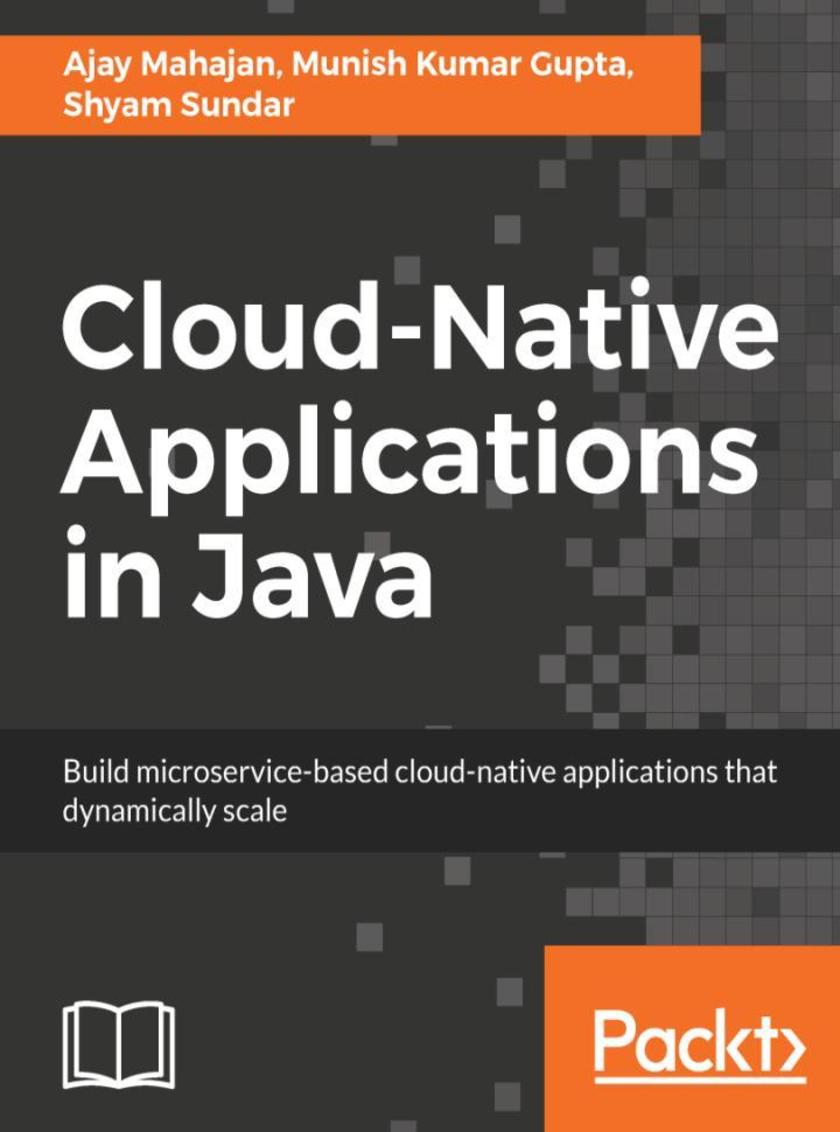
Cloud-Native Applications in Java
¥90.46
Highly available microservice-based web apps for Cloud with Java About This Book ? Take advantage of the simplicity of Spring to build a full-fledged application ? Let your applications run faster while generating smaller cloud service bills ? Integrate your application with various tools such as Docker and ElasticSearch and use specific tools in Azure and AWS Who This Book Is For Java developers who want to build secure, resilient, robust and scalable applications that are targeted for cloud based deployment, will find this book helpful. Some knowledge of Java, Spring, web programming and public cloud providers (AWS, Azure) should be sufficient to get you through the book. What You Will Learn ? See the benefits of the cloud environment when it comes to variability, provisioning, and tooling support ? Understand the architecture patterns and considerations when developing on the cloud ? Find out how to perform cloud-native techniques/patterns for request routing, RESTful service creation, Event Sourcing, and more ? Create Docker containers for microservices and set up continuous integration using Jenkins ? Monitor and troubleshoot an application deployed in the cloud environment ? Explore tools such as Docker and Kubernetes for containerization and the ELK stack for log aggregation and visualization ? Use AWS and Azure specific tools to design, develop, deploy, and manage applications ? Migrate from monolithic architectures to a cloud native deployment In Detail Businesses today are evolving so rapidly that they are resorting to the elasticity of the cloud to provide a platform to build and deploy their highly scalable applications. This means developers now are faced with the challenge of building build applications that are native to the cloud. For this, they need to be aware of the environment, tools, and resources they’re coding against. If you’re a Java developer who wants to build secure, resilient, robust, and scalable applications that are targeted for cloud-based deployment, this is the book for you. It will be your one stop guide to building cloud-native applications in Java Spring that are hosted in On-prem or cloud providers - AWS and Azure The book begins by explaining the driving factors for cloud adoption and shows you how cloud deployment is different from regular application deployment on a standard data centre. You will learn about design patterns specific to applications running in the cloud and find out how you can build a microservice in Java Spring using REST APIs You will then take a deep dive into the lifecycle of building, testing, and deploying applications with maximum automation to reduce the deployment cycle time. Gradually, you will move on to configuring the AWS and Azure platforms and working with their APIs to deploy your application. Finally, you’ll take a look at API design concerns and their best practices. You’ll also learn how to migrate an existing monolithic application into distributed cloud native applications. By the end, you will understand how to build and monitor a scalable, resilient, and robust cloud native application that is always available and fault tolerant. Style and approach Filled with examples, this book will build you an entire cloud-native application through its course and will stop at each point and explain in depth the functioning and design considerations that will make a robust, highly available application
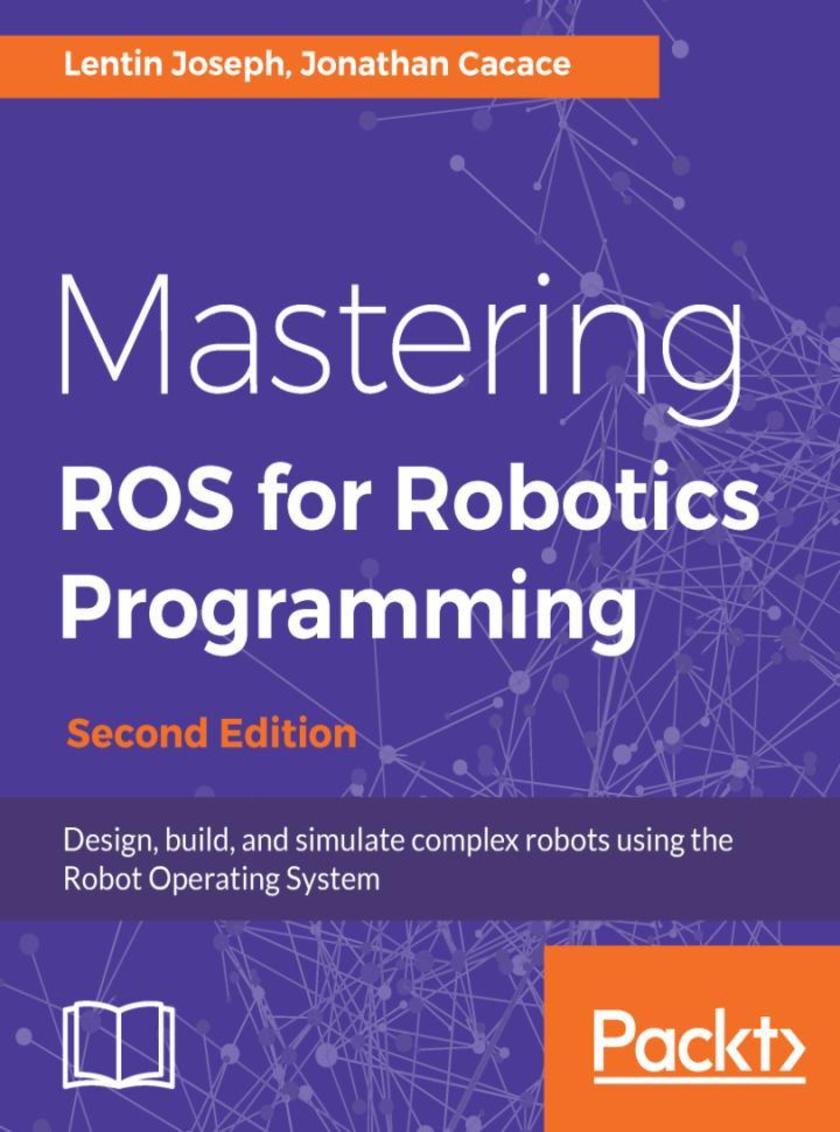
Mastering ROS for Robotics Programming - Second Edition
¥90.46
Discover best practices and troubleshooting solutions when working on ROS About This Book ? Develop complex robotic applications using ROS to interface robot manipulators and mobile robots ? Gain insight into autonomous navigation in mobile robots and motion planning in robot manipulators ? Discover best practices and troubleshooting solutions Who This Book Is For If you are a robotics enthusiast or researcher who want to learn more about building robot applications using ROS, this book is for you. In order to learn from this book, you should have a basic knowledge of ROS, GNU/Linux, and C++ programming concepts. The book is also excellent for programmers who want to explore the advanced features of ROS. What You Will Learn ? Create a robot model with a seven-DOF robotic arm and a differential wheeled mobile robot ? Work with Gazebo and V-REP robotic simulator ? Implement autonomous navigation in differential drive robots using SLAM and AMCL packages ? Explore the ROS Pluginlib, ROS nodelets, and Gazebo plugins ? Interface I/O boards such as Arduino, robot sensors, and high-end actuators ? Simulate and motion plan an ABB and universal arm using ROS Industrial ? Explore the latest version of the ROS framework ? Work with the motion planning of a seven-DOF arm using MoveIt! In Detail In this day and age, robotics has been gaining a lot of traction in various industries where consistency and perfection matter. Automation is achieved via robotic applications and various platforms that support robotics. The Robot Operating System (ROS) is a modular software platform to develop generic robotic applications. This book focuses on the most stable release of ROS (Kinetic Kame), discusses advanced concepts, and effectively teaches you programming using ROS. We begin with aninformative overview of the ROS framework, which will give you a clear idea of how ROS works. During the course of this book, you’ll learn to build models of complex robots, and simulate and interface the robot using the ROS MoveIt! motion planning library and ROS navigation stacks. Learn to leverage several ROS packages to embrace your robot models. After covering robot manipulation and navigation, you’ll get to grips with the interfacing I/O boards, sensors, and actuators of ROS. Vision sensors are a key component of robots, and an entire chapter is dedicated to the vision sensor and image elaboration, its interface in ROS and programming. You’ll also understand the hardware interface and simulation of complex robots to ROS and ROS Industrial. At the end of this book, you’ll discover the best practices to follow when programming using ROS. Style and approach This is a simplified guide to help you learn and master advanced topics in ROS using hands-on examples.
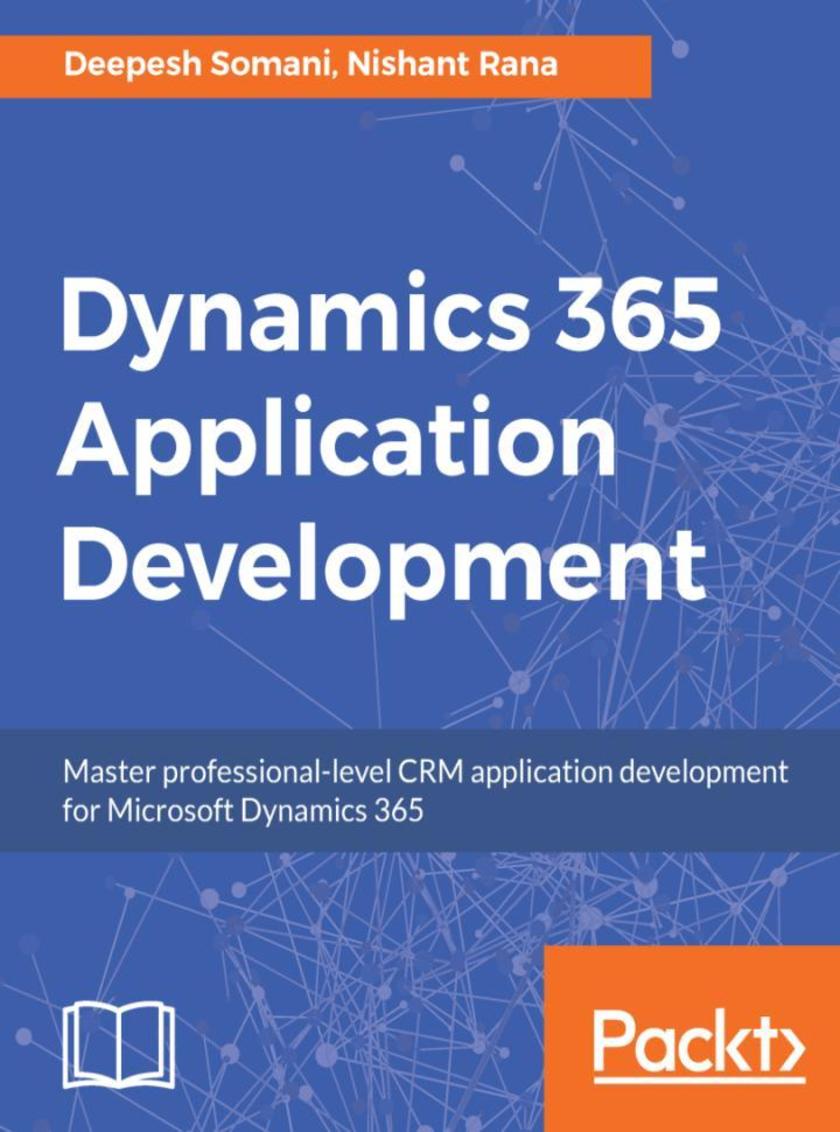
Dynamics 365 Application Development
¥90.46
Learn, develop, and design applications using the new features in Microsoft Dynamics CRM About This Book ? Implement business logic using processes, plugins, and client-side *s with MS Dynamics 365 ? Develop custom CRM solutions to improve your business applications ? A comprehensive guide that covers the new features of Microsoft Dynamics 365 and increasingly advanced topics. Who This Book Is For This book targets skilled developers who are looking to build business-solution software and are new to application development in Microsoft Dynamics 365, especially for CRM. What You Will Learn ? Discover new designers tools included in Dynamics 365 CRM ? Develop apps using the platform-agnostic Web API ? Leverage Azure Extensions to design cloud-aware applications ? Learn how to implement CRUD operation ? Create integrated real-world apps using Microsoft PowerApps and Flow by combining services such as Twitter, Facebook, and SharePoint ? Configure and use Artificial Intelligence Azure Cognitive Services for Recommendation and Text Analytic services In Detail Microsoft Dynamics 365 CRM is the most trusted name in enterprise-level customer relationship management. Thelatest version of Dynamics CRM comes with the important addition of exciting features guaranteed to make your life easier. It comes straight off the shelf with a whole new frontier of updated business rules, process enhancements, SDK methods, and other enhancements. This book will introduce you to the components of the new designer tools, such as SiteMap, App Module, and Visual Designer for Business Processes. Going deeper, this book teaches you how to develop custom SaaS applications leveraging the features of PowerApps available in Dynamics 365.Further, you will learn how to automate business processes using Microsoft Flow, and then we explore Web API, the most important platform update in Dynamics 365 CRM. Here, you'll also learn how to implement Web API in custom applications. You will learn how to write an Azure-aware plugin to design and integrate cloud-aware solutions. The book concludes with configuring services using newly released features such as Editable grids, Data Export Service, LinkedIn Integration, Relationship Insights, and Live Assist. Style and approach The book takes a pragmatic approach, exploring Dynamics 365 and its CRM features with the help of real-world scenarios.
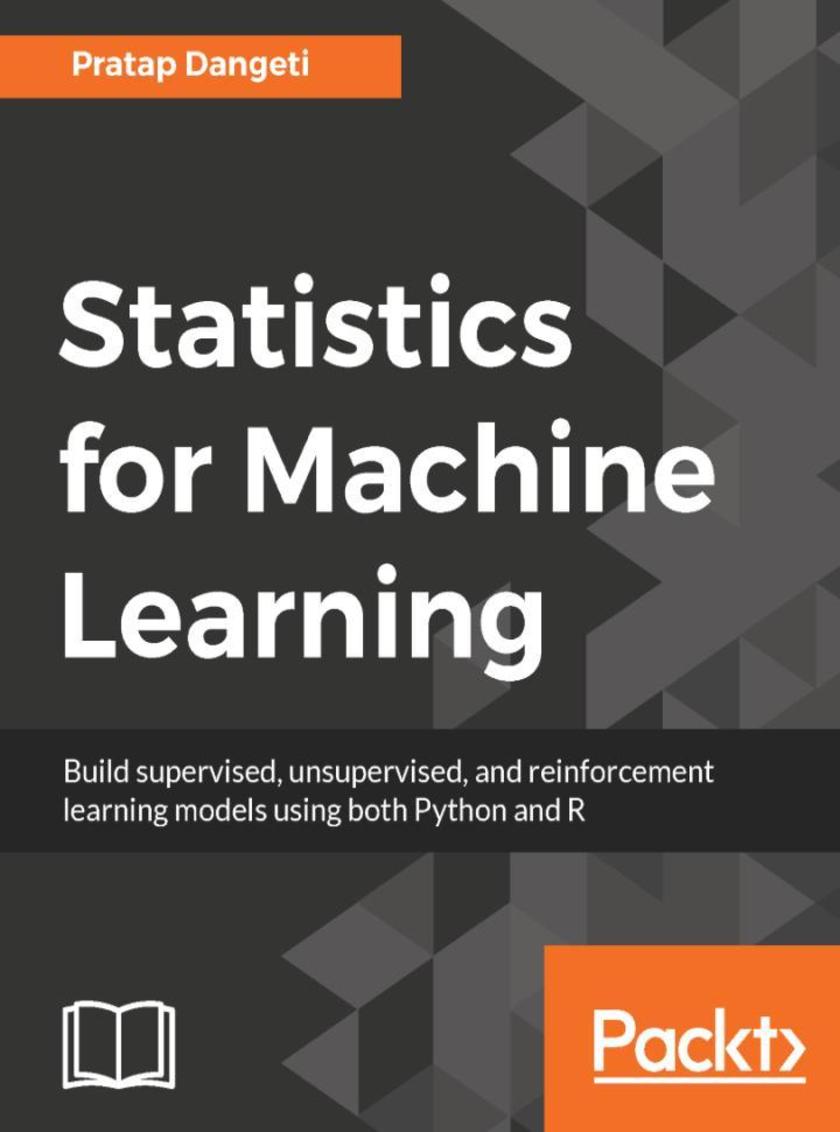
Statistics for Machine Learning
¥90.46
Build Machine Learning models with a sound statistical understanding. About This Book ? Learn about the statistics behind powerful predictive models with p-value, ANOVA, and F- statistics. ? Implement statistical computations programmatically for supervised and unsupervised learning through K-means clustering. ? Master the statistical aspect of Machine Learning with the help of this example-rich guide to R and Python. Who This Book Is For This book is intended for developers with little to no background in statistics, who want to implement Machine Learning in their systems. Some programming knowledge in R or Python will be useful. What You Will Learn ? Understand the Statistical and Machine Learning fundamentals necessary to build models ? Understand the major differences and parallels between the statistical way and the Machine Learning way to solve problems ? Learn how to prepare data and feed models by using the appropriate Machine Learning algorithms from the more-than-adequate R and Python packages ? Analyze the results and tune the model appropriately to your own predictive goals ? Understand the concepts of required statistics for Machine Learning ? Introduce yourself to necessary fundamentals required for building supervised & unsupervised deep learning models ? Learn reinforcement learning and its application in the field of artificial intelligence domain In Detail Complex statistics in Machine Learning worry a lot of developers. Knowing statistics helps you build strong Machine Learning models that are optimized for a given problem statement. This book will teach you all it takes to perform complex statistical computations required for Machine Learning. You will gain information on statistics behind supervised learning, unsupervised learning, reinforcement learning, and more. Understand the real-world examples that discuss the statistical side of Machine Learning and familiarize yourself with it. You will also design programs for performing tasks such as model, parameter fitting, regression, classification, density collection, and more. By the end of the book, you will have mastered the required statistics for Machine Learning and will be able to apply your new skills to any sort of industry problem. Style and approach This practical, step-by-step guide will give you an understanding of the Statistical and Machine Learning fundamentals you'll need to build models.
Mastering Apache Spark 2.x - Second Edition
¥90.46
Advanced analytics on your Big Data with latest Apache Spark 2.x About This Book ? An advanced guide with a combination of instructions and practical examples to extend the most up-to date Spark functionalities. ? Extend your data processing capabilities to process huge chunk of data in minimum time using advanced concepts in Spark. ? Master the art of real-time processing with the help of Apache Spark 2.x Who This Book Is For If you are a developer with some experience with Spark and want to strengthen your knowledge of how to get around in the world of Spark, then this book is ideal for you. Basic knowledge of Linux, Hadoop and Spark is assumed. Reasonable knowledge of Scala is expected. What You Will Learn ? Examine Advanced Machine Learning and DeepLearning with MLlib, SparkML, SystemML, H2O and DeepLearning4J ? Study highly optimised unified batch and real-time data processing using SparkSQL and Structured Streaming ? Evaluate large-scale Graph Processing and Analysis using GraphX and GraphFrames ? Apply Apache Spark in Elastic deployments using Jupyter and Zeppelin Notebooks, Docker, Kubernetes and the IBM Cloud ? Understand internal details of cost based optimizers used in Catalyst, SystemML and GraphFrames ? Learn how specific parameter settings affect overall performance of an Apache Spark cluster ? Leverage Scala, R and python for your data science projects In Detail Apache Spark is an in-memory cluster-based parallel processing system that provides a wide range of functionalities such as graph processing, machine learning, stream processing, and SQL. This book aims to take your knowledge of Spark to the next level by teaching you how to expand Spark’s functionality and implement your data flows and machine/deep learning programs on top of the platform. The book commences with an overview of the Spark ecosystem. It will introduce you to Project Tungsten and Catalyst, two of the major advancements of Apache Spark 2.x. You will understand how memory management and binary processing, cache-aware computation, and code generation are used to speed things up dramatically. The book extends to show how to incorporate H20, SystemML, and Deeplearning4j for machine learning, and Jupyter Notebooks and Kubernetes/Docker for cloud-based Spark. During the course of the book, you will learn about the latest enhancements to Apache Spark 2.x, such as interactive querying of live data and unifying DataFrames and Datasets. You will also learn about the updates on the APIs and how DataFrames and Datasets affect SQL, machine learning, graph processing, and streaming. You will learn to use Spark as a big data operating system, understand how to implement advanced analytics on the new APIs, and explore how easy it is to use Spark in day-to-day tasks. Style and approach This book is an extensive guide to Apache Spark modules and tools and shows how Spark's functionality can be extended for real-time processing and storage with worked examples.
Mastering Drupal 8
¥90.46
Mastering Drupal can lead to a mighty website - discover what Drupal 8 can really do with hidden techniques, best practices, and more! About This Book ? The most up-to-date advanced practical guide on Drupal 8 with an in-depth look at all the advanced new features such as authoring, HTML markup, built-in web services, and more ? If you are looking to dive deep into Drupal 8 and create industry-standard web apps, then this is the ideal book for you ? All the code and examples are explained in great detail to help you in the development process Who This Book Is For This book is ideally suited to web developers, designers, and web administrators who want to dive deep into Drupal. Previous experience with Drupal is a must to unleash the full potential of this book. What You Will Learn ? Discover how to better manage content using custom blocks and views ? Display content in multiple ways, taking advantage of display modes ? Create custom modules with YAML and Symfony 2 ? Easily translate content using the new multilingual capabilities ? Use RESTful services and JavaScript frameworks to build headless websites ? Manage Drupal configuration from one server to another easily In Detail Drupal is an open source content management system trusted by governments and organizations around the globe to run their websites. It brings with it extensive content authoring tools, reliable performance, and a proven track record of security. The community of more than 1,000,000 developers, designers, editors, and others have developed and maintained a wealth of modules, themes, and other add-ons to help you build a dynamic web experience. Drupal 8 is the latest release of the Drupal built on the Symfony2 framework. This is the largest change to the Drupal project in its history. The entire API of Drupal has been rebuilt using Symfony and everything from the administrative UI to themes to custom module development has been affected. This book will cover everything you need to plan and build a complete website using Drupal 8. It will provide a clear and concise walkthrough of the more than 200 new features and improvements introduced in Drupal core. In this book, you will learn advanced site building techniques, create and modify themes using Twig, create custom modules using the new Drupal API, explore the new REST and Multilingual functionality, import, and export Configuration, and learn how to migrate from earlier versions of Drupal. Style and approach This book takes a practical approach with equal emphasis on examples and illustrative screenshots.
Mastering Visual Studio 2017
¥90.46
A guide to mastering Visual Studio 2017 About This Book ? Focus on coding with the new, improved, and powerful tools of VS 2017 ? Master improved debugging and unit testing support capabilities ? Accelerate cloud development with the built-in Azure tools Who This Book Is For .NET Developers who would like to master the new features of VS 2017, and would like to delve into newer areas such as cloud computing, would benefit from this book. Basic knowledge of previous versions of Visual Studio is assumed. What You Will Learn ? Learn what's new in the Visual Studio 2017 IDE, C# 7.0, and how it will help developers to improve their productivity ? Learn the workloads and components of the new installation wizard and how to use the online and offline installer ? Build stunning Windows apps using Windows Presentation Foundation (WPF) and Universal Windows Platform (UWP) tools ? Get familiar with .NET Core and learn how to build apps targeting this new framework ? Explore everything about NuGet packages ? Debug and test your applications using Visual Studio 2017 ? Accelerate cloud development with Microsoft Azure ? Integrate Visual Studio with most popular source control repositories, such as TFS and GitHub In Detail Visual Studio 2017 is the all-new IDE released by Microsoft for developers, targeting Microsoft and other platforms to build stunning Windows and web apps. Learning how to effectively use this technology can enhance your productivity while simplifying your most common tasks, allowing you more time to focus on your project. With this book, you will learn not only what VS2017 offers, but also what it takes to put it to work for your projects. Visual Studio 2017 is packed with improvements that increase productivity, and this book will get you started with the new features introduced in Visual Studio 2017 IDE and C# 7.0. Next, you will learn to use XAML tools to build classic WPF apps, and UWP tools to build apps targeting Windows 10. Later, you will learn about .NET Core and then explore NuGet, the package manager for the Microsoft development platform. Then, you will familiarize yourself with the debugging and live unit testing techniques that comes with the IDE. Finally, you'll adapt Microsoft's implementation of cloud computing with Azure, and the Visual Studio integration with Source Control repositories. Style and approach This comprehensive guide covers the advanced features of Visual Studio 2017, and communicates them through a practical approach to explore the underlying concepts of how, when, and why to use it.
Python Social Media Analytics
¥90.46
Leverage the power of Python to collect, process, and mine deep insights from social media data About This Book ? Acquire data from various social media platforms such as Facebook, Twitter, YouTube, GitHub, and more ? Analyze and extract actionable insights from your social data using various Python tools ? A highly practical guide to conducting efficient social media analytics at scale Who This Book Is For If you are a programmer or a data analyst familiar with the Python programming language and want to perform analyses of your social data to acquire valuable business insights, this book is for you. The book does not assume any prior knowledge of any data analysis tool or process. What You Will Learn ? Understand the basics of social media mining ? Use PyMongo to clean, store, and access data in MongoDB ? Understand user reactions and emotion detection on Facebook ? Perform Twitter sentiment analysis and entity recognition using Python ? Analyze video and campaign performance on YouTube ? Mine popular trends on GitHub and predict the next big technology ? Extract conversational topics on public internet forums ? Analyze user interests on Pinterest ? Perform large-scale social media analytics on the cloud In Detail Social Media platforms such as Facebook, Twitter, Forums, Pinterest, and YouTube have become part of everyday life in a big way. However, these complex and noisy data streams pose a potent challenge to everyone when it comes to harnessing them properly and benefiting from them. This book will introduce you to the concept of social media analytics, and how you can leverage its capabilities to empower your business. Right from acquiring data from various social networking sources such as Twitter, Facebook, YouTube, Pinterest, and social forums, you will see how to clean data and make it ready for analytical operations using various Python APIs. This book explains how to structure the clean data obtained and store in MongoDB using PyMongo. You will also perform web scraping and visualize data using Scrappy and Beautifulsoup. Finally, you will be introduced to different techniques to perform analytics at scale for your social data on the cloud, using Python and Spark. By the end of this book, you will be able to utilize the power of Python to gain valuable insights from social media data and use them to enhance your business processes. Style and approach This book follows a step-by-step approach to teach readers the concepts of social media analytics using the Python programming language. To explain various data analysis processes, real-world datasets are used wherever required.
Expert Angular
¥90.46
Learn everything you need to build highly scalable, robust web applications using Angular release 4 About This Book ? Apply best practices and design patterns to achieve higher scalability in your Angular applications ? Understand the latest features of Angular and create your own components ? Get acquainted with powerful, advanced techniques in Angular to build professional web applications Who This Book Is For This book is for JavaScript developers with some prior exposure to Angular, at least through basic examples. We assume that you’ve got working knowledge of HTML, CSS, and JavaScript. What You Will Learn ? Implement asynchronous programming using Angular ? Beautify your application with the UI components built to the material design specification ? Secure your web application from unauthorized users ? Create complex forms, taking full advantage of 2-way data binding ? Test your Angular applications using the Jasmine and Protractor frameworks for better efficiency ? Learn how to integrate Angular with Bootstrap to create compelling web applications ? Use Angular built-in classes to apply animation in your app In Detail Got some experience of Angular under your belt? Want to learn everything about using advanced features for developing websites? This book is everything you need for the deep understanding of Angular that will set you apart from the developer crowd. Angular has introduced a new way to build applications. Creating complex and rich web applications, with a lighter resource footprint, has never been easier or faster. Angular is now at release 4, with significant changes through previous versions. This book has been written and tested for Angular release 4. Angular is a mature technology, and you'll likely have applications built with earlier versions. This book starts by showing you best practices and approaches to migrating your existing Angular applications so that you can be immediately up-to-date. You will take an in-depth look at components and see how to control the user journey in your applications by implementing routing and navigation. You will learn how to work with asynchronous programming by using Observables. To easily build applications that look great, you will learn all about template syntax and how to beautify applications with Material Design. Mastering forms and data binding will further speed up your application development time. Learning about managing services and animations will help you to progressively enhance your applications. Next you’ll use native directives to integrate Bootstrap with Angular. You will see the best ways to test your application with the leading options such as Jasmine and Protractor. At the end of the book, you’ll learn how to apply design patterns in Angular, and see the benefits they will bring to your development. Style and approach This book provides comprehensive coverage of all aspects of development with Angular. You will learn about all the most powerful Angular concepts, with examples and best practices. This book is everything you need for the deep understanding of Angular that will set you apart from the developer crowd.
Learning Neo4j 3.x - Second Edition
¥90.46
Run blazingly fast queries on complex graph datasets with the power of the Neo4j graph database About This Book ? Get acquainted with graph database systems and apply them in real-world use cases ? Use Cypher query language, APOC and other Neo4j extensions to derive meaningful analysis from complex data sets. ? A practical guide filled with ready to use examples on querying, graph processing and visualizing information to build smarter spatial applications. Who This Book Is For This book is for developers who want an alternative way to store and process data within their applications. No previous graph database experience is required; however, some basic database knowledge will help you understand the concepts more easily. What You Will Learn ? Understand the science of graph theory, databases and its advantages over traditional databases. ? Install Neo4j, model data and learn the most common practices of traversing data ? Learn the Cypher query language and tailor-made procedures to analyze and derive meaningful representations of data ? Improve graph techniques with the help of precise procedures in the APOC library ? Use Neo4j advanced extensions and plugins for performance optimization. ? Understand how Neo4j's new security features and clustering architecture are used for large scale deployments. In Detail Neo4j is a graph database that allows traversing huge amounts of data with ease. This book aims at quickly getting you started with the popular graph database Neo4j. Starting with a brief introduction to graph theory, this book will show you the advantages of using graph databases along with data modeling techniques for graph databases. You'll gain practical hands-on experience with commonly used and lesser known features for updating graph store with Neo4j's Cypher query language. Furthermore, you'll also learn to create awesome procedures using APOC and extend Neo4j's functionality, enabling integration, algorithmic analysis, and other advanced spatial operation capabilities on data. Through the course of the book you will come across implementation examples on the latest updates in Neo4j, such as in-graph indexes, scaling, performance improvements, visualization, data refactoring techniques, security enhancements, and much more. By the end of the book, you'll have gained the skills to design and implement modern spatial applications, from graphing data to unraveling business capabilities with the help of real-world use cases. Style and approach A step-by-step approach of adopting Neo4j, the world's leading graph database. This book includes a lot of background information, helps you grasp the fundamental concepts behind this radical new way of dealing with connected data, and will give you lots of examples of use cases and environments where a graph database would be a great fit
Building Web and Mobile ArcGIS Server Applications with JavaScript - Second Edit
¥90.46
Master the ArcGIS API for JavaScript to build web and mobile applications using this practical guide. About This Book ? Develop ArcGIS Server applications with JavaScript, both for traditional web browsers as well as the mobile platform ? Make your maps informative with intuitive geographic layers, user interface widgets, and more ? Integrate ArcGIS content into your custom applications and perform analytics with the ArcGIS Online Who This Book Is For If you are a web or mobile application developer, who wants to create GIS applications in your respective platform, this book is ideal for you. You will need Java Script programming experience to get the most out of this book. Although designed as an introductory to intermediate level book, it will also be useful for more advanced developers who are new to the topic of developing applications with ArcGIS Server. What You Will Learn ? To create an application with the ArcGIS API for JavaScript ? Build and display a broad range of different geometry types to represent features on the map ? The best way to leverage a feature layer and display related attribute data ? The functionality of the wide range of widgets and how to use them effectively ? Query data to gain new insights into the information it contains ? Work with tasks to discover and locate features on the map ? Using the geocoder and associated widgets ? The ability of the API to provide turn by turn directions and routing capabilities ? How to use the Geometry Engine and Geometry Service tasks for common geoprocessing operations ? Integrate content on ArcGIS online and add it to your custom web mapping application In Detail The ArcGIS API for JavaScript enables you to quickly build web and mobile mapping applications that include sophisticated GIS capabilities, yet are easy and intuitive for the user. Aimed at both new and experienced web developers, this practical guide gives you everything you need to get started with the API. After a brief introduction to HTML/CSS/JavaScript, you'll embed maps in a web page, add the tiled, dynamic, and streaming data layers that your users will interact with, and mark up the map with graphics. You will learn how to quickly incorporate a broad range of useful user interface elements and GIS functionality to your application with minimal effort using prebuilt widgets. As the book progresses, you will discover and use the task framework to query layers with spatial and attribute criteria, search for and identify features on the map, geocode addresses, perform network analysis and routing, and add custom geoprocessing operations. Along the way, we cover exciting new features such as the client-side geometry engine, learn how to integrate content from ArcGIS.com, and use your new skills to build mobile web mapping applications. We conclude with a look at version 4 of the ArcGIS API for JavaScript (which is being developed in parallel with version 3.x) and what it means for you as a developer. Style and approach Readers will be taken through a series of exercises that will demonstrate how to efficiently build ArcGIS Server applications for the mobile and web.
Jenkins 2.x Continuous Integration Cookbook - Third Edition
¥90.46
Get a problem-solution approach enriched with code examples for practical and easy comprehension About This Book ? Explore the use of more than 40 best-of-breed plug-ins for improving efficiency ? Secure and maintain Jenkins 2.x by integrating it with LDAP and CAS, which is a Single Sign-on solution ? Efficiently build advanced pipelines with pipeline as code, thus increasing your team's productivity Who This Book Is For If you are a Java developer, a software architect, a technical project manager, a build manager, or a development or QA engineer, then this book is ideal for you. A basic understanding of the software development life cycle and Java development is needed, as well as a rudimentary understanding of Jenkins. What You Will Learn ? Install and Configure Jenkins 2.x on AWS and Azure ? Explore effective ways to manage and monitor Jenkins 2.x ? Secure Jenkins 2.x using Matrix-based Security ? Deploying a WAR file from Jenkins 2.x to Azure App Services and AWS Beanstalk ? Automate deployment of application on AWS and Azure PaaS ? Continuous Testing – Unit Test Execution, Functional Testing and Load Testing In Detail Jenkins 2.x is one of the most popular Continuous Integration servers in the market today. It was designed to maintain, secure, communicate, test, build, and improve the software development process. This book will begin by guiding you through steps for installing and configuring Jenkins 2.x on AWS and Azure. This is followed by steps that enable you to manage and monitor Jenkins 2.x. You will also explore the ways to enhance the overall security of Jenkins 2.x. You will then explore the steps involved in improving the code quality using SonarQube. Then, you will learn the ways to improve quality, followed by how to run performance and functional tests against a web application and web services. Finally, you will see what the available plugins are, concluding with best practices to improve quality. Style and approach This book provides a problem-solution approach to some common tasks and some uncommon tasks using Jenkins 2.x and is well-illustrated with practical code examples.
Deploying Microsoft System Center Configuration Manager
¥90.46
Plan, design, and deploy System Center Configuration Manager 1706 like never before, regardless of how complex your infrastructure is About This Book ? The most up-to-date resource on deploying or migrating to System Center Configuration Manager 1706 within your IT infrastructure ? Plan, design, and deploy ConfigMgr 1706 with ease, both on primary and multiple-hierarchy sites ? Master the new features of ConfigMgr 1706, including Windows 10 support Who This Book Is For If you are a system engineer or an administrator planning to deploy Microsoft System Center Configuration Manager 1706, then this book is for you. This book will also benefit system administrators who are responsible for designing and deploying one or more System CenterConfiguration Manager 1706 sites in their new or existing systems. What You Will Learn ? Install ConfigMgr servers and the necessary roles ? Design and scale ConfigMgr environments ? Configure and administrate essential ConfigMgr roles and features ? Create software packages using .msi and .exe files ? Deliver detailed reports with an automatic patching process ? Apply proper hardening on your deployment and secure workstations ? Deploy operating systems and updates leveraging ConfigMgr mechanisms ? Create high-availability components using the built-in mechanism for backup and recovery In Detail It becomes important to plan, design, and deploy configurations when administrators know that Configuration Manager interacts with a number of infrastructure components such as Active Directory Domain Services, network protocols, Windows Server services, and so on. Via real-world-world deployment scenarios, this book will help you implement a single primary site or multiples sites. You will be able to efficiently plan and deploy a multiple-site hierarchy such as central administration site. Next, you will learn various methods to plan and deploy Configuration Manager clients, secure them and make the most of new features offered through ConfigMgr 1706 like compliance, deploying updates operating systems to the endpoints. Then, this book will show you how to install, configure, and run SQL reports to extract information. Lastly, you will also learn how to create and manage users access in an ConfigMgr environment By the end of this book, you will have learned to use the built-in mechanism to back up and restore data and also design maintenance plan. Style and approach This step-by-step guide teaches you cool ways to plan, deploy, and configure ConfigMgr 1706. This tutorial, which complements the release of ConfigMgr 1706 with a refreshing new approach and expert guidance, will teach you everything you need to know about the essentials of server.
R Data Analysis Cookbook - Second Edition
¥90.46
Over 80 recipes to help you breeze through your data analysis projects using R About This Book ? Analyse your data using the popular R packages like ggplot2 with ready-to-use and customizable recipes ? Find meaningful insights from your data and generate dynamic reports ? A practical guide to help you put your data analysis skills in R to practical use Who This Book Is For This book is for data scientists, analysts and even enthusiasts who want to learn and implement the various data analysis techniques using R in a practical way. Those looking for quick, handy solutions to common tasks and challenges in data analysis will find this book to be very useful. Basic knowledge of statistics and R programming is assumed. What You Will Learn ? Acquire, format and visualize your data using R ? Using R to perform an Exploratory data analysis ? Introduction to machine learning algorithms such as classification and regression ? Get started with social network analysis ? Generate dynamic reporting with Shiny ? Get started with geospatial analysis ? Handling large data with R using Spark and MongoDB ? Build Recommendation system- Collaborative Filtering, Content based and Hybrid ? Learn real world dataset examples- Fraud Detection and Image Recognition In Detail Data analytics with R has emerged as a very important focus for organizations of all kinds. R enables even those with only an intuitive grasp of the underlying concepts, without a deep mathematical background, to unleash powerful and detailed examinations of their data. This book will show you how you can put your data analysis skills in R to practical use, with recipes catering to the basic as well as advanced data analysis tasks. Right from acquiring your data and preparing it for analysis to the more complex data analysis techniques, the book will show you how you can implement each technique in the best possible manner. You will also visualize your data using the popular R packages like ggplot2 and gain hidden insights from it. Starting with implementing the basic data analysis concepts like handling your data to creating basic plots, you will master the more advanced data analysis techniques like performing cluster analysis, and generating effective analysis reports and visualizations. Throughout the book, you will get to know the common problems and obstacles you might encounter while implementing each of the data analysis techniques in R, with ways to overcoming them in the easiest possible way. By the end of this book, you will have all the knowledge you need to become an expert in data analysis with R, and put your skills to test in real-world scenarios. Style and Approach ? Hands-on recipes to walk through data science challenges using R ? Your one-stop solution for common and not-so-common pain points while performing real-world problems to execute a series of tasks. ? Addressing your common and not-so-common pain points, this is a book that you must have on the shelf
Apache Spark 2.x Machine Learning Cookbook
¥90.46
Simplify machine learning model implementations with Spark About This Book ? Solve the day-to-day problems of data science with Spark ? This unique cookbook consists of exciting and intuitive numerical recipes ? Optimize your work by acquiring, cleaning, analyzing, predicting, and visualizing your data Who This Book Is For This book is for Scala developers with a fairly good exposure to and understanding of machine learning techniques, but lack practical implementations with Spark. A solid knowledge of machine learning algorithms is assumed, as well as hands-on experience of implementing ML algorithms with Scala. However, you do not need to be acquainted with the Spark ML libraries and ecosystem. What You Will Learn ? Get to know how Scala and Spark go hand-in-hand for developers when developing ML systems with Spark ? Build a recommendation engine that scales with Spark ? Find out how to build unsupervised clustering systems to classify data in Spark ? Build machine learning systems with the Decision Tree and Ensemble models in Spark ? Deal with the curse of high-dimensionality in big data using Spark ? Implement Text analytics for Search Engines in Spark ? Streaming Machine Learning System implementation using Spark In Detail Machine learning aims to extract knowledge from data, relying on fundamental concepts in computer science, statistics, probability, and optimization. Learning about algorithms enables a wide range of applications, from everyday tasks such as product recommendations and spam filtering to cutting edge applications such as self-driving cars and personalized medicine. You will gain hands-on experience of applying these principles using Apache Spark, a resilient cluster computing system well suited for large-scale machine learning tasks. This book begins with a quick overview of setting up the necessary IDEs to facilitate the execution of code examples that will be covered in various chapters. It also highlights some key issues developers face while working with machine learning algorithms on the Spark platform. We progress by uncovering the various Spark APIs and the implementation of ML algorithms with developing classification systems, recommendation engines, text analytics, clustering, and learning systems. Toward the final chapters, we’ll focus on building high-end applications and explain various unsupervised methodologies and challenges to tackle when implementing with big data ML systems. Style and approach This book is packed with intuitive recipes supported with line-by-line explanations to help you understand how to optimize your work flow and resolve problems when working with complex data modeling tasks and predictive algorithms. This is a valuable resource for data scientists and those working on large scale data projects.
Spring 5.0 Cookbook
¥90.46
Over 100 hands-on recipes to build web applications easily and efficiently IN Spring 5.0 About This Book ? Solve real-world problems using the latest features of the Spring framework like Reactive Streams and the Functional Web Framework. ? Learn how to use dependency injection and aspect-oriented programming to write compartmentalized and testable code. ? Understand when to choose between Spring MVC and Spring Web Reactive for your projects Who This Book Is For Java developers who would like to gain in-depth knowledge of how to overcome problems that they face while developing great Spring applications. It will also cater to Spring enthusiasts, users and experts who need an arena for comparative analysis, new ideas and inquiries on some details regarding Spring 5.0 and its previous releases. A basic knowledge of Spring development is essential What You Will Learn ? Understand how functional programming and concurrency in JDK 1.9 works, and how it will affect Spring 5.0 ? Learn the importance and application of reactive programming in creating services, and also the process of creating asynchronous MVC applications ? Implement different Spring Data modules ? Integrate Spring Security to the container ? Create applications and deploy using Spring Boot ? Conceptualize the architecture behind Microservices and learn the details of its implementation ? Create different test cases for the components of Spring 5.0 components In Detail The Spring framework has been the go-to framework for Java developers for quite some time. It enhances modularity, provides more readable code, and enables the developer to focus on developing the application while the underlying framework takes care of transaction APIs, remote APIs, JMX APIs, and JMS APIs. The upcoming version of the Spring Framework has a lot to offer, above and beyond the platform upgrade to Java 9, and this book will show you all you need to know to overcome common to advanced problems you might face. Each recipe will showcase some old and new issues and solutions, right from configuring Spring 5.0 container to testing its components. Most importantly, the book will highlight concurrent processes, asynchronous MVC and reactive programming using Reactor Core APIs. Aside from the core components, this book will also include integration of third-party technologies that are mostly needed in building enterprise applications. By the end of the book, the reader will not only be well versed with the essential concepts of Spring, but will also have mastered its latest features in a solution-oriented manner. Style and Approach This book follows a cookbook style approach, presenting a problem and showing you how to overcome it with useful recipes. The examples provided will help you code along as you learn.
AWS Certified Developer - Associate Guide
¥90.46
An effective guide to becoming an AWS Certified Developer About This Book ? This fast-paced guide will help you clear the exam with confidence ? Learn to design, develop, and deploy cloud-based solutions using AWS ? Enhance your AWS skills with practice questions and mock tests Who This Book Is For This book is for IT professionals and developers looking to clear the AWS Certified Developer – Associate 2017 exam. Developers looking to develop and manage their applications on the AWS platform will also find this book useful. No prior AWS experience is needed. What You Will Learn ? Create and manage users, groups, and permissions using AWS Identity and Access Management services ? Create a secured Virtual Private Cloud (VPC) with Public and Private Subnets, Network Access Control, and Security groups ? Get started with Elastic Compute Cloud (EC2), launching your first EC2 instance, and working with it ? Handle application traffic with Elastic Load Balancing (ELB) and monitor AWS resources with CloudWatch ? Work with AWS storage services such as Simple Storage Service (S3), Glacier, and CloudFront ? Get acquainted with AWS DynamoDB – a NoSQL database service ? Coordinate work across distributed application components using Simple Workflow Service (SWF) In Detail AWS Certified Developer - Associate Guide starts with a quick introduction to AWS and the prerequisites to get you started. Then, this book gives you a fair understanding of core AWS services and basic architecture. Next, this book will describe about getting familiar with Identity and Access Management (IAM) along with Virtual private cloud (VPC). Moving ahead you will learn about Elastic Compute cloud (EC2) and handling application traffic with Elastic Load Balancing (ELB). Going ahead you we will talk about Monitoring with CloudWatch, Simple storage service (S3) and Glacier and CloudFront along with other AWS storage options. Next we will take you through AWS DynamoDB – A NoSQL Database Service, Amazon Simple Queue Service (SQS) and CloudFormation Overview. Finally, this book covers understanding Elastic Beanstalk and overview of AWS lambda. At the end of this book, we will cover enough topics, tips and tricks along with mock tests for you to be able to pass the AWS Certified Developer - Associate exam and develop as well as manage your applications on the AWS platform. Style and approach This step-by-step guide includes exercises and mock tests to clear the AWS certification exam and become a successful AWS developer.


