


 购物车
购物车 个人中心
个人中心
Salesforce Lightning Reporting and Dashboards
¥90.46
Learn how to build advanced reports and dashboards in Salesforce Lightning experience About This Book ? Visualize and create advanced reports and dashboards using Lightning Experience ? Improve overall business efficiency with advanced and effective reports and dashboards ? Understand and create custom reports and dashboards Who This Book Is For This book is targeted at Salesforce.com administrators, business analysts, and managers who use Salesforce.com for their daily job and want to learn in depth about Salesforce Reporting and Dashboard in Lightning Experience. Readers should have a basic knowledge of Salesforce, such as: Accounts, Contacts, Leads, Opportunities and custom objects. What You Will Learn ? Navigate in Salesforce.com within the Lightning Experience user interface ? Secure and share your reports and dashboards with other users ? Create, manage, and maintain reports using Report Builder ? Learn how the report type can affect the report generated ? Explore the report and dashboard folder and the sharing model ? Create reports with multiple formats and custom report types ? Explore various dashboard features in Lightning Experience ? Use Salesforce1, including accessing reports and dashboards In Detail Built on the Salesforce App Cloud, the new Lightning Experience combines the new Lightning Design System, Lightning App Builder, and Lightning Components to enable anyone to quickly and easily create modern enterprise apps. The book will start with a gentle introduction to the basics of Salesforce reports and dashboards. It will also explain how to access reports in depth. Then you will learn how to create and manage reports, to use Schedule Report, and create advanced report configurations. The next section talks about dashboards and will enable you to understand and compare various types of dashboard component and how you can benefit the most from each of them. Then we move on to advanced topics and explain tips and tricks related to reports and dashboards, including reporting snapshots, report parameters, and collaboration. Finally, we will discuss how to access dashboards and reports from the Salesforce1 mobile app. Style and approach This comprehensive guide covers the advanced features of the all new Salesforce Lightning concepts and communicates them through a practical approach to explore the underlying concepts of how, when, and why to use them.
Serverless computing in Azure with .NET
¥90.46
Harness the power of the Cloud, leveraging the speed and scale of Azure Serverless computing About This Book ? Take advantage of the agility, scale, and cost-effectiveness of the cloud using Azure Serverless compute ? Build scalable, reliable, and cost-effecient applications with Serverless architecture and .NET ? Learn to use Azure functions to their fullest potential in .NET Who This Book Is For This book is for .NET developers who would like to learn about serverless architecture. Basic C# programming knowledge is assumed. What You Will Learn ? Understand the best practices of Serverless architecture ? Learn how how to deploy a Text Sentiment Evaluation application in an Azure Serverless environment ? Implement security, identity, and access control ? Take advantage of the speed of deployment in the cloud ? Configure application health monitoring, logging, and alerts ? Design your application to ensure cost effectiveness, high availability, and scale In Detail Serverless architecture allows you to build and run applications and services without having to manage the infrastructure. Many companies have started adopting serverless architecture for their applications to save cost and improve scalability. This book will be your companion in designing Serverless architecture for your applications using the .NET runtime, with Microsoft Azure as the cloud service provider. You will begin by understanding the concepts of Serverless architecture, its advantages and disadvantages. You will then set up the Azure environment and build a basic application using a sample text sentiment evaluation function. From here, you will be shown how to run services in a Serverless environment. We will cover the integration with other Azure and 3rd party services such as Azure Service Bus, as well as configuring dependencies on NuGet libraries, among other topics. After this, you will learn about debugging and testing your Azure functions, and then automating deployment from source control. Securing your application and monitoring its health will follow from there, and then in the final part of the book, you will learn how to Design for High Availability, Disaster Recovery and Scale, as well as how to take advantage of the cloud pay-as-you-go model to design cost-effective services. We will finish off with explaining how azure functions scale up against AWS Lambda, Azure Web Jobs, and Azure Batch compare to other types of compute-on-demand services. Whether you’ve been working with Azure for a while, or you’re just getting started, by the end of the book you will have all the information you need to set up and deploy applications to the Azure Serverless Computing environment. Style and approach This step-by-step guide shows you the concepts and features of Serverless architecture in Azure with .NET.
Practical Game AI Programming
¥90.46
Jump into the world of Game AI development About This Book ? Move beyond using libraries to create smart game AI, and create your own AI projects from scratch ? Implement the latest algorithms for AI development and in-game interaction ? Customize your existing game AI and make it better and more efficient to improve your overall game performance Who This Book Is For This book is for game developers with a basic knowledge of game development techniques and some basic programming techniques in C# or C++. What You Will Learn ? Get to know the basics of how to create different AI for different type of games ? Know what to do when something interferes with the AI choices and how the AI should behave if that happens ? Plan the interaction between the AI character and the environment using Smart Zones or Triggering Events ? Use animations correctly, blending one animation into another and rather than stopping one animation and starting another ? Calculate the best options for the AI to move using Pruning Strategies, Wall Distances, Map Preprocess Implementation, and Forced Neighbours ? Create Theta algorithms to the AI to find short and realistic looking paths ? Add many characters into the same scene and make them behave like a realistic crowd In Detail The book starts with the basics examples of AI for different game genres and directly jumps into defining the probabilities and possibilities of the AI character to determine character movement. Next, you’ll learn how AI characters should behave within the environment created. Moving on, you’ll explore how to work with animations. You’ll also plan and create pruning strategies, and create Theta algorithms to find short and realistic looking game paths. Next, you’ll learn how the AI should behave when there is a lot of characters in the same scene. You'll explore which methods and algorithms, such as possibility maps, Forward Chaining Plan, Rete Algorithm, Pruning Strategies, Wall Distances, and Map Preprocess Implementation should be used on different occasions. You’ll discover how to overcome some limitations, and how to deliver a better experience to the player. By the end of the book, you think differently about AI. Style and approach The book has a step-by-step tutorial style approach. The algorithms are explained by implementing them in #.
vSphere High Performance Cookbook - Second Edition
¥90.46
Over 80 recipes to help you improve vSphere 6.5's performance and solve problems before they arise About This Book ? The practical recipes provide cost-effective and high performance for any application running in a virtual machine ? Contains best practices and troubleshooting techniques to resolve vSphere 6.5 performance issues ? Get a comprehensive coverage of performance issues and solutions including vCenter Server design and virtual machine and application tuning Who This Book Is For If you are a system administrator and are planning to deploy vSphere 6.5 in your organization and want to maximize its performance, then this book is for you. Prior knowledge of the vSphere 6.5 concepts is essential. What You Will Learn ? Understand the VMM Scheduler, cache aware CPU Scheduler, NUMA aware CPU Scheduler, and more during the CPU Performance Design phase ? Get to know the virtual memory reclamation technique, host ballooning monitoring, and swapping activity ? Choose the right platform while designing your vCenter Server, redundant vCenter design, and vCenter SSO and its deployment ? Learn how to use various performance simulation tools ? Design VCSA Server Certificates to minimize security threats ? Use health check tools for storage and boost vSphere 6.5's performance with VAAI and VASA In Detail vSphere is a mission-critical piece of software for many businesses. It is a complex tool, and incorrect design and deployment can create performance related issues that can negatively affect the business. This book is focused on solving these problems as well as providing best practices and performance-enhancing techniques. This edition is fully updated to include all the new features in version 6.5 as well as the latest tools and techniques to keep vSphere performing at its best. This book starts with interesting recipes, such as the interaction of vSphere 6.5 components with physical layers such as CPU, memory, and networking. Then we focus on DRS, resource control design, and vSphere cluster design. Next, you'll learn about storage performance design and how it works with VMware vSphere 6.5. Moving on, you will learn about the two types of vCenter installation and the benefits of each. Lastly, the book covers performance tools that help you get the most out of your vSphere installation. By the end of this book, you will be able to identify, diagnose, and troubleshoot operational faults and critical performance issues in vSphere 6.5. Style and approach This cookbook is written in a practical, helpful style with numerous recipes focusing on answering and providing solutions to common and not-so-common performance issues and problems.
Practical Predictive Analytics
¥90.46
Make sense of your data and predict the unpredictable About This Book ? A unique book that centers around develop six key practical skills needed to develop and implement predictive analytics ? Apply the principles and techniques of predictive analytics to effectively interpret big data ? Solve real-world analytical problems with the help of practical case studies and real-world scenarios taken from the world of healthcare, marketing, and other business domains Who This Book Is For This book is for those with a mathematical/statistics background who wish to understand the concepts, techniques, and implementation of predictive analytics to resolve complex analytical issues. Basic familiarity with a programming language of R is expected. What You Will Learn ? Master the core predictive analytics algorithm which are used today in business ? Learn to implement the six steps for a successful analytics project ? Classify the right algorithm for your requirements ? Use and apply predictive analytics to research problems in healthcare ? Implement predictive analytics to retain and acquire your customers ? Use text mining to understand unstructured data ? Develop models on your own PC or in Spark/Hadoop environments ? Implement predictive analytics products for customers In Detail This is the go-to book for anyone interested in the steps needed to develop predictive analytics solutions with examples from the world of marketing, healthcare, and retail. We'll get started with a brief history of predictive analytics and learn about different roles and functions people play within a predictive analytics project. Then, we will learn about various ways of installing R along with their pros and cons, combined with a step-by-step installation of RStudio, and a de*ion of the best practices for organizing your projects. On completing the installation, we will begin to acquire the skills necessary to input, clean, and prepare your data for modeling. We will learn the six specific steps needed to implement and successfully deploy a predictive model starting from asking the right questions through model development and ending with deploying your predictive model into production. We will learn why collaboration is important and how agile iterative modeling cycles can increase your chances of developing and deploying the best successful model. We will continue your journey in the cloud by extending your skill set by learning about Databricks and SparkR, which allow you to develop predictive models on vast gigabytes of data. Style and Approach This book takes a practical hands-on approach wherein the algorithms will be explained with the help of real-world use cases. It is written in a well-researched academic style which is a great mix of theoretical and practical information. Code examples are supplied for both theoretical concepts as well as for the case studies. Key references and summaries will be provided at the end of each chapter so that you can explore those topics on their own.
Learning Elasticsearch
¥90.46
Store, search, and analyze your data with ease using Elasticsearch 5.x About This Book ? Get to grips with the basics of Elasticsearch concepts and its APIs, and use them to create efficient applications ? Create large-scale Elasticsearch clusters and perform analytics using aggregation ? This comprehensive guide will get you up and running with Elasticsearch 5.x in no time Who This Book Is For If you want to build efficient search and analytics applications using Elasticsearch, this book is for you. It will also benefit developers who have worked with Lucene or Solr before and now want to work with Elasticsearch. No previous knowledge of Elasticsearch is expected. What You Will Learn ? See how to set up and configure Elasticsearch and Kibana ? Know how to ingest structured and unstructured data using Elasticsearch ? Understand how a search engine works and the concepts of relevance and scoring ? Find out how to query Elasticsearch with a high degree of performance and scalability ? Improve the user experience by using autocomplete, geolocation queries, and much more ? See how to slice and dice your data using Elasticsearch aggregations. ? Grasp how to use Kibana to explore and visualize your data ? Know how to host on Elastic Cloud and how to use the latest X-Pack features such as Graph and Alerting In Detail Elasticsearch is a modern, fast, distributed, scalable, fault tolerant, and open source search and analytics engine. You can use Elasticsearch for small or large applications with billions of documents. It is built to scale horizontally and can handle both structured and unstructured data. Packed with easy-to- follow examples, this book will ensure you will have a firm understanding of the basics of Elasticsearch and know how to utilize its capabilities efficiently. You will install and set up Elasticsearch and Kibana, and handle documents using the Distributed Document Store. You will see how to query, search, and index your data, and perform aggregation-based analytics with ease. You will see how to use Kibana to explore and visualize your data. Further on, you will learn to handle document relationships, work with geospatial data, and much more, with this easy-to-follow guide. Finally, you will see how you can set up and scale your Elasticsearch clusters in production environments. Style and approach This comprehensive guide will get you started with Elasticsearch 5.x, so you build a solid understanding of the basics. Every topic is explained in depth and is supplemented with practical examples to enhance your understanding.
Learning Salesforce Visual Workflow and Process Builder - Second Edition
¥90.46
Click your way to automating various business processes using Salesforce Visual Workflow About This Book ? Develop an application using Point and Click with the help of Flow ? Get to grips with various ways to launch a Flow ? Capture data from an external user without using the Visualforce page ? Save user input into the database, and learn how to query and manipulate the data ? Discover various ways to debug and deploy Flow and Process Builder ? Understand the concepts of Subflow and Login Flow ? Handle complex business processes using Process builder and keep them clean ? Use existing or new Flows to work with Salesforce Lightning Experience. Who This Book Is For This book is intended for those who want to use Flows to automate their business requirements by clicking, not coding. No previous experience in computer coding or programming is required. What You Will Learn ? Develop an application using point and click with the help of Flow ? Get to grips with various ways to launch a Flow ? Capture data from an external user without using the Visualforce page ? Save user input into the database, and learn how to query and manipulate the data ? Discover various ways to debug and deploy Flow and Process Builder ? Understand the concepts of Subflow and Login Flow ? Handle complex business processes using Process builder and keep them clean ? Use existing or new Flows to work with Salesforce Lightning Experience. In Detail Salesforce Management System is an information system used in CRM to automate the business processes like sales and marketing. To implement this, Force.com developed a powerful tool called Visual Workflow to automate business processes by creating applications also called Flows. Learning Salesforce Visual Workflow, Second Edition is a practical guide on Flows that will enable you to develop custom applications in Salesforce with minimized code usage. The book starts with an introduction to Visual Workflows that teaches all the building blocks of creating Flows and use it efficiently. You will learn how to easily automate business processes and tackle complex business scenarios using Flows. The book explains the working of the Process Builder so you can create reusable processes. The book also covers how you can integrate existing or newly created Flows with the Salesforce Lightening Experience. By the end of the book, you will get a clear understanding on how to use Flows and Process Builder in your organization to optimize code usage. Style and approach Step by step approch to use Process Builder to solve complex business requirements with the help of Flow
Cisco ACI Cookbook
¥90.46
Over 90 recipes to maximize automated solutions and policy-drive application profiles using Cisco ACI About This Book ? Confidently provision your virtual and physical infrastructure for application deployment ? Integrate Cisco ACI with hypervisors and other third party devices ? Packed with powerful recipes to automate your IT operations Who This Book Is For If you are a network administrator, system administrator, or engineer and are aware of the basics of Cisco ACI but want to start using it to automate your tasks, then this book is for you What You Will Learn ? Master the Cisco ACI architecture ? Discover the ACI fabric with easy-to-follow steps ? Set up quality of service within ACI ? Configure external networks with Cisco ACI ? Integrate with VMware and track VMware virtual machines ? Configure apply and verify access policies ? Extend or migrate a VMware virtual-machine LAN inside the ACI fabric ? Monitor ACI with third party tools and troubleshoot issues In Detail Cisco Application Centric Infrastructure (ACI) is a tough architecture that automates IT tasks and accelerates data-center application deployments. This book focuses on practical recipes to help you quickly build, manage, and customize hybrid environment for your organization using Cisco ACI. You will begin by understanding the Cisco ACI architecture and its major components. You will then configure Cisco ACI policies and tenants. Next you will connect to hypervisors and other third-party devices. Moving on, you will configure routing to external networks and within ACI tenants and also learn to secure ACI through RBAC. Furthermore, you will understand how to set up quality of service and network programming with REST, XML, Python and so on. Finally you will learn to monitor and troubleshoot ACI in the event of any issues that arise. By the end of the book, you will gain have mastered automating your IT tasks and accelerating the deployment of your applications. Style and approach A set of exciting recipes to automate your IT operations related to datacenters, the Cloud, and networking tasks
Kali Linux Network Scanning Cookbook - Second Edition
¥90.46
Over 100 practical recipes that leverage custom *s and integrated tools in Kali Linux to help you effectively master network scanning About This Book ? Learn the fundamentals behind commonly used scanning techniques ? Deploy powerful scanning tools that are integrated into the Kali Linux testing platform ? The practical recipes will help you automate menial tasks and build your own * library Who This Book Is For This book is for information security professionals and casual security enthusiasts alike. It provides foundational principles if you’re a novice, but will also introduce *ing techniques and in-depth analysis if you’re more advanced. Whether you are brand new to Kali Linux or a seasoned veteran, this book will help you both understand and ultimately master many of the most powerful and useful scanning techniques in the industry. It is assumed that you have some basic security testing experience. What You Will Learn ? Develop a network-testing environment to test scanning tools and techniques ? Understand the principles of network-scanning tools by building *s and tools ? Identify distinct vulnerabilities in web apps and remote services and learn how they are exploited ? Perform comprehensive scans to identify listening on TCP and UDP sockets ? Get started with different Kali desktop environments--KDE, MATE, LXDE, and Xfce ? Use Sparta for information gathering, port scanning, fingerprinting, vulnerability scanning, and more ? Evaluate DoS threats and learn how common DoS attacks are performed ? Learn how to use Burp Suite to evaluate web applications In Detail With the ever-increasing amount of data flowing in today’s world, information security has become vital to any application. This is where Kali Linux comes in. Kali Linux focuses mainly on security auditing and penetration testing. This step-by-step cookbook on network scanning trains you in important scanning concepts based on version 2016.2. It will enable you to conquer any network environment through a range of network scanning techniques and will also equip you to * your very own tools. Starting with the fundamentals of installing and managing Kali Linux, this book will help you map your target with a wide range of network scanning tasks, including discovery, port scanning, fingerprinting, and more. You will learn how to utilize the arsenal of tools available in Kali Linux to conquer any network environment. The book offers expanded coverage of the popular Burp Suite and has new and updated *s for automating scanning and target exploitation. You will also be shown how to identify remote services, how to assess security risks, and how various attacks are performed. You will cover the latest features of Kali Linux 2016.2, which includes the enhanced Sparta tool and many other exciting updates. This immersive guide will also encourage the creation of personally *ed tools and the skills required to create them. Style and approach This step-by-step guide is full of recipes that will help you use integrated scanning tools in Kali Linux and develop custom *s to make new and unique tools of your own.
Kotlin Programming Cookbook
¥90.46
Discover Android programming and web development by understanding the concepts of Kotlin Programming About This Book ? Practical solutions to your common programming problems with Kotlin 1.1 ? Leverage the functional power of Kotlin to ease your Android application development ? Learn to use Java code in conjunction with Kotlin Who This Book Is For This book will appeal to Kotlin developers keen to find solutions for their common programming problems. Java programming knowledge would be an added advantage. What You Will Learn ? Understand the basics and object-oriented concepts of Kotlin Programming ? Explore the full potential of collection frameworks in Kotlin ? Work with SQLite databases in Android, make network calls, and fetch data over a network ? Use Kotlin's Anko library for efficient and quick Android development ? Uncover some of the best features of Kotlin: Lambdas and Delegates ? Set up web service development environments, write servlets, and build RESTful services with Kotlin ? Learn how to write unit tests, integration tests, and instrumentation/acceptance tests. In Detail The Android team has announced first-class support for Kotlin 1.1. This acts as an added boost to the language and more and more developers are now looking at Kotlin for their application development. This recipe-based book will be your guide to learning the Kotlin programming language. The recipes in this book build from simple language concepts to more complex applications of the language. After the fundamentals of the language, you will learn how to apply the object-oriented programming features of Kotlin 1.1. Programming with Lambdas will show you how to use the functional power of Kotlin. This book has recipes that will get you started with Android programming with Kotlin 1.1, providing quick solutions to common problems encountered during Android app development. You will also be taken through recipes that will teach you microservice and concurrent programming with Kotlin. Going forward, you will learn to test and secure your applications with Kotlin. Finally, this book supplies recipes that will help you migrate your Java code to Kotlin and will help ensure that it's interoperable with Java. Style and approach This book explains concepts related to Kotlin Programming using a practical approach and with the help of easy-to-follow recipes.
Machine Learning for the Web
¥90.46
Explore the web and make smarter predictions using Python About This Book Targets two big and prominent markets where sophisticated web apps are of need and importance. Practical examples of building machine learning web application, which are easy to follow and replicate. A comprehensive tutorial on Python libraries and frameworks to get you up and started. Who This Book Is For The book is aimed at upcoming and new data scientists who have little experience with machine learning or users who are interested in and are working on developing smart (predictive) web applications. Knowledge of Django would be beneficial. The reader is expected to have a background in Python programming and good knowledge of statistics. What You Will Learn Get familiar with the fundamental concepts and some of the jargons used in the machine learning community Use tools and techniques to mine data from websites Grasp the core concepts of Django framework Get to know the most useful clustering and classification techniques and implement them in Python Acquire all the necessary knowledge to build a web application with Django Successfully build and deploy a movie recommendation system application using the Django framework in Python In Detail Python is a general purpose and also a comparatively easy to learn programming language. Hence it is the language of choice for data scientists to prototype, visualize, and run data analyses on small and medium-sized data sets. This is a unique book that helps bridge the gap between machine learning and web development. It focuses on the difficulties of implementing predictive analytics in web applications. We focus on the Python language, frameworks, tools, and libraries, showing you how to build a machine learning system. You will explore the core machine learning concepts and then develop and deploy the data into a web application using the Django framework. You will also learn to carry out web, document, and server mining tasks, and build recommendation engines. Later, you will explore Python’s impressive Django framework and will find out how to build a modern simple web app with machine learning features. Style and approach Instead of being overwhelmed with multiple concepts at once, this book provides a step-by-step approach that will guide you through one topic at a time. An intuitive step-by step guide that will focus on one key topic at a time. Building upon the acquired knowledge in each chapter, we will connect the fundamental theory and practical tips by illustrative visualizations and hands-on code examples.
Spring MVC Blueprints
¥90.46
Design and implement real-world web-based applications using the Spring Framework 4.x specification based on technical documentation About This Book . Learn all the details of implementing Spring 4.x MVC applications from basic core platform construction to advanced integration implementations. Gain a complete reference guide to implementing the controllers, models, views, view resolvers, and other service-related components to solve various real-world problems. Discover the possible optimal solutions for developers and experts to build enterprise and personal web-based applications. Create a Spring MVC application that has a validation process and exception handling with the HTTP status codes Who This Book Is For This book is for competent Spring developers who wish to understand how to develop complex yet flexible applications with Spring MVC. You must have a good knowledge of JAVA programming and be familiar with the basics of Spring. What You Will Learn . Set up and configure the Spring 4.x MVC platform from ground level up using the basic Spring Framework 4.x APIs. Study requirements and manage solutions on file uploading transactions in Spring 4.x applications Configure, , and test Spring integration to the Hibernate, MyBatis, and JPA frameworks for database transactions. Properly implement exception handlers and audit trails in Spring MVC applications. Generate reports using JFreeChart, Google Charts, JasperReports, DynamicReports, FreeMarker, Velocity, and Spring’s API known as ContentNegotiatingViewResolver. Configure security and flexibility by adding Captcha, Spring Security, Spring Flow, Spring Portlets, JTA to improve data management performance. Implement web services using Spring’s RESTful implementation and other service-oriented integration plugins. Design and implement a Spring 4.x application using AngularJS, ExtJs, Twitter Bootstrap, and Spring Mobile for responsive web design In Detail Spring MVC is the ideal tool to build modern web applications on the server side. With the arrival of Spring Boot, developers can really focus on the code and deliver great value, leveraging the rich Spring ecosystem with minimal configuration. Spring makes it simple to create RESTful applications, interact with social services, communicate with modern databases, secure your system, and make your code modular and easy to test. It is also easy to deploy the result on different cloud providers. This book starts all the necessary topics in starting a Spring MVC-based application. Moving ahead it explains how to design model objects to handle file objects. save files into a data store and how Spring MVC behaves when an application deals with uploading and downloading files. Further it highlights form transactions and the user of Validation Framework as the tool in validating data input. It shows how to create a customer feedback system which does not require a username or password to log in. It will show you the soft side of Spring MVC where layout and presentation are given importance. Later it will discuss how to use Spring Web Flow on top of Spring MVC to create better web applications. Moving ahead, it will teach you how create an Invoice Module that receives and transport data using Web Services By the end of the book you will be able to create efficient and flexible real-time web applications using all the frameworks in Spring MVC. Style and approach This book is a compendium of technical specification documents that will guide you through building an application using Spring 4.x MVC. Each chapter starts with a high-level wireframe design of the software followed by how to set up and configure different libraries and tools.
JavaScript for .NET Developers
¥90.46
Unlock the potential of evergreen browsers and increase the efficiency of your ASP.NET applications by learning how to write JavaScript About This Book Boost your skillset and start bringing JavaScript into your web development projects Leverage your existing ASP.NET knowledge to develop dynamic and responsive SPAs Learn effective design patterns for sustainable, and scalable web development Who This Book Is For This book is for ASP.NET developers that want to bring JavaScript into their skillset to build applications that are truly dynamic and responsive. It's for developers who are focused on developing for users who want to deliver a great end product and a fantastic experience. What You Will Learn Get to grips with the basic to advanced concepts of JavaScript Learn how to use JavaScript on server side using Node.js Develop web applications in ASP.NET using JavaScript Get to know with industry-wide best practices and design patterns that provide maintainability and scalability Build an ASP.NET application using Angular 2 with TypeScript and Web API Explore WinJS and see how to use mobile capabilities from web applications Use JavaScript to develop scalable ASP.NET applications See how to test and debug JavaScript In Detail If you want to improve responsiveness or the UX in your ASP.NET applications, JavaScript can be a life saver. In an age where server-side operations have shifted to the client, being able to handle JavaScript with confidence and fluency is vital for ASP.NET developers. There’s no point trying to fight it, so start learning with this book. Make sure your projects exceed user expectations. Begin by getting stuck into the basics of JavaScript, and explore the language in the context of ASP.NET Core. You’ll then find out how to put the principles into practice, as you learn how to develop a basic ASP.NET application using Angular 2 and TypeScript. You’ll also develop essential skills required to develop responsive apps, with a little help from AJAX, ensuring that you’re building projects that can be easily accessed across different devices. With guidance on Node.js and some neat techniques to test and debug a range of JavaScript libraries in Visual Studio, you’ll soon be well on your way to combining JavaScript with ASP.NET in a way that’s capable of meeting the challenges of modern web development head-on. Style and approach This book will build the skillset of every .NET developer, so they can build stronger and more responsive web apps with confidence.
Mastering KVM Virtualization
¥90.46
Dive in to the cutting edge techniques of Linux KVM virtualization, and build the virtualization solutions your datacentre demands About This Book Become an expert in Linux virtualization Migrate your virtualized datacenter to the cloud Find out how to build a large scale virtualization solution that will transform your organization Who This Book Is For Linux administrators – if you want to build incredible, yet manageable virtualization solutions with KVM this is the book to get you there. It will help you apply what you already know to some tricky virtualization tasks. What You Will Learn Explore the ecosystem of tools that support Linux virtualization Find out why KVM offers you a smarter way to unlock the potential of virtualization Implement KVM virtualization using oVirt Explore the KVM architecture – so you can manage, scale and optimize it with ease Migrate your virtualized datacenter to the cloud for truly resource-efficient computing Find out how to integrate OpenStack with KVM to take full control of the cloud In Detail A robust datacenter is essential for any organization – but you don’t want to waste resources. With KVM you can virtualize your datacenter, transforming a Linux operating system into a powerful hypervisor that allows you to manage multiple OS with minimal fuss. This book doesn’t just show you how to virtualize with KVM – it shows you how to do it well. Written to make you an expert on KVM, you’ll learn to manage the three essential pillars of scalability, performance and security – as well as some useful integrations with cloud services such as OpenStack. From the fundamentals of setting up a standalone KVM virtualization platform, and the best tools to harness it effectively, including virt-manager, and kimchi-project, everything you do is built around making KVM work for you in the real-world, helping you to interact and customize it as you need it. With further guidance on performance optimization for Microsoft Windows and RHEL virtual machines, as well as proven strategies for backup and disaster recovery, you’ll can be confident that your virtualized data center is working for your organization – not hampering it. Finally, the book will empower you to unlock the full potential of cloud through KVM. Migrating your physical machines to the cloud can be challenging, but once you’ve mastered KVM, it’s a little easie. Style and approach Combining advanced insights with practical solutions, Mastering KVM Virtualization is a vital resource for anyone that believes in the power of virtualization to help a business use resources more effectively.
Extending Docker
¥90.46
Master the art of making Docker more extensible, composable, and modular by leveraging plugins and other supporting tools About This Book Get the first book on the market that shows you how to extend the capabilities of Docker using plugins and third-party tools Master the skills of creating various plugins and integrating great tools in order to enhance the functionalities of Docker A practical and learning guide that ensures your investment in Docker becomes more valuable Who This Book Is For This book is for developers and sys admins who are well versed Docker and have knowledge on basic programming languages. If you can’t wait to extend Docker and customize it to meet your requirements, this is the book for you! What You Will Learn Find out about Docker plugins and the problems they solve Gain insights into creating your own plugin Use Docker tools to extend the basic functionality of the core Docker engine Get to grips with the installation and configuration of third-party tools available to use with Docker plugins Install, configure, and use a scheduling service to manage the containers in your environment Enhance your day-to-day Docker usage through security, troubleshooting, and best practices In Detail With Docker, it is possible to get a lot of apps running on the same old servers, making it very easy to package and ship programs. The ability to extend Docker using plugins and load third-party plugins is incredible, and organizations can massively benefit from it. In this book, you will read about what first and third party tools are available to extend the functionality of your existing Docker installation and how to approach your next Docker infrastructure deployment. We will show you how to work with Docker plugins, install it, and cover its lifecycle. We also cover network and volume plugins, and you will find out how to build your own plugin. You’ll discover how to integrate it with Puppet, Ansible, Jenkins, Flocker, Rancher, Packer, and more with third-party plugins. Then, you’ll see how to use Schedulers such as Kubernetes and Amazon ECS. Finally, we’ll delve into security, troubleshooting, and best practices when extending Docker. By the end of this book, you will learn how to extend Docker and customize it based on your business requirements with the help of various tools and plugins. Style and approach An easy to follow guide with plenty of hands-on practical examples which can be executed both on your local machine or externally hosted services.
Beginning C++ Programming
¥90.46
C++ has come a long way and is now adopted in several contexts. Its key strengths are its software infrastructure and resource-constrained applications, including desktop applications, servers, and performance-critical applications, not to forget its importance in game programming. Despite its strengths in these areas, beginners usually tend to shy away from learning the language because of its steep learning curve. The main mission of this book is to make you familiar and comfortable with C++. You will finish the book not only being able to write your own code, but more importantly, you will be able to read other projects. It is only by being able to read others' code that you will progress from a beginner to an advanced programmer. This book is the first step in that progression. The first task is to familiarize you with the structure of C++ projects so you will know how to start reading a project. Next, you will be able to identify the main structures in the language, functions, and classes, and feel confident being able to identify the execution flow through the code. You will then become aware of the facilities of the standard library and be able to determine whether you need to write a routine yourself, or use an existing routine in the standard library. Throughout the book, there is a big emphasis on memory and pointers. You will understand memory usage, allocation, and
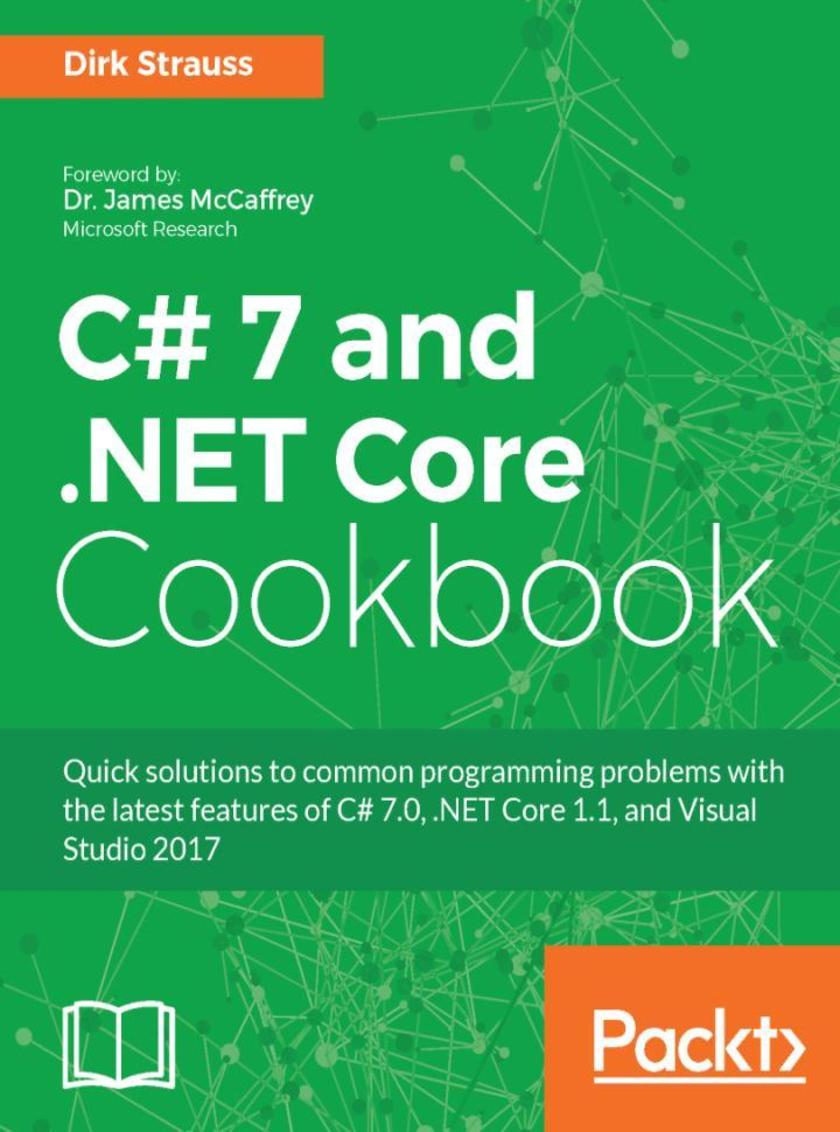
C# 7 and .NET Core Cookbook
¥90.46
C# has recently been open-sourced and C# 7 comes with a host of new features for building powerful, cross-platform applications. This book will be your solution to some common programming problems that you come across with C# and will also help you get started with .NET Core 1.1. Through a recipe-based approach, this book will help you overcome common programming challenges and get your applications ready to face the modern world. We start by running you through new features in C# 7, such as tuples, pattern matching, and so on, giving you hands-on experience with them. Moving forward, you will work with generics and the OOP features in C#. You will then move on to more advanced topics, such as reactive extensions, Regex, code analyzers, and asynchronous programming. This book will also cover new, cross-platform .NET Core 1.1 features and teach you how to utilize .NET Core on macOS. Then, we will explore microservices as well as serverless computing and how these benefit modern developers. Finally, you will learn what you can do with Visual Studio 2017 to put mobile application development across multiple platforms within the reach of any developer. What you will learn ?Writing better and less code to achieve the same result as in previous versions of C# ?Working with analyzers in Visual Studio ?Working with files, streams, and serialization ?Writing high-performant code
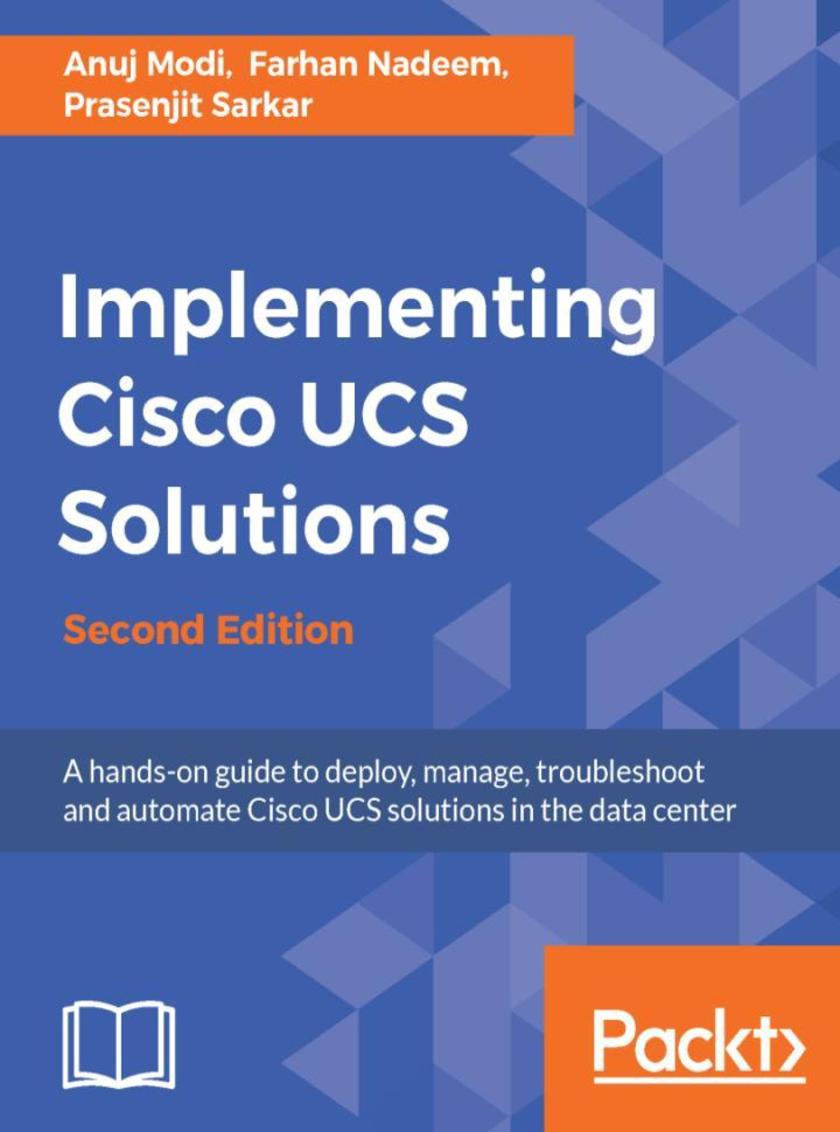
Implementing Cisco UCS Solutions - Second Edition
¥90.46
Cisco Unified Computer System (UCS) is a powerful solution for modern data centers and is responsible for increasing efficiency and reducing costs. This hands-on guide will take you through deployment in Cisco UCS. Using real-world examples of configuring and deploying Cisco UCS components, we'll prepare you for the practical deployments of Cisco UCS data center solutions. If you want to develop and enhance your hands-on skills with Cisco UCS solutions, this book is certainly for you. We start by showing you the Cisco UCS equipment options, then introduce Cisco UCS Emulator so you can learn and practice deploying Cisco UCS components. We'll also introduce you to all the areas of UCS solutions through practical configuration examples. Moving on, you'll explore the Cisco UCS Manager, which is the centralized management interface for Cisco UCS. Once you get to know UCS Manager, you'll dive deeper into configuring LAN, SAN, identity pools, resource pools, and service profiles for the servers. You'll also get hands-on with administration topics including backup, restore, user's roles, and high availability cluster configuration. Finally, you will learn about virtualized networking, third-party integration tools, and testing failure scenarios. By the end of this book, you'll know everything you need to know to rapidly grow Cisco UCS deployments in the real world. What you will learn ?Set up your Lab using Cisco UCS Emulator ?Configure Cisco UCS, LAN, and SAN connectivity ?Create and manage Service profiles ?Perform various tasks using UCS ?Back up and restore Cisco UCS configuration ?Test various Cisco UCS scenarios
HoloLens Beginner’s Guide
¥90.46
"Key Features?Start developing immersive and interactive apps for Microsoft HoloLens ?Explore the Windows Universal Development platform for HoloLens development ?Leverage the full set of HoloLens sensors to create mesmerizing apps"
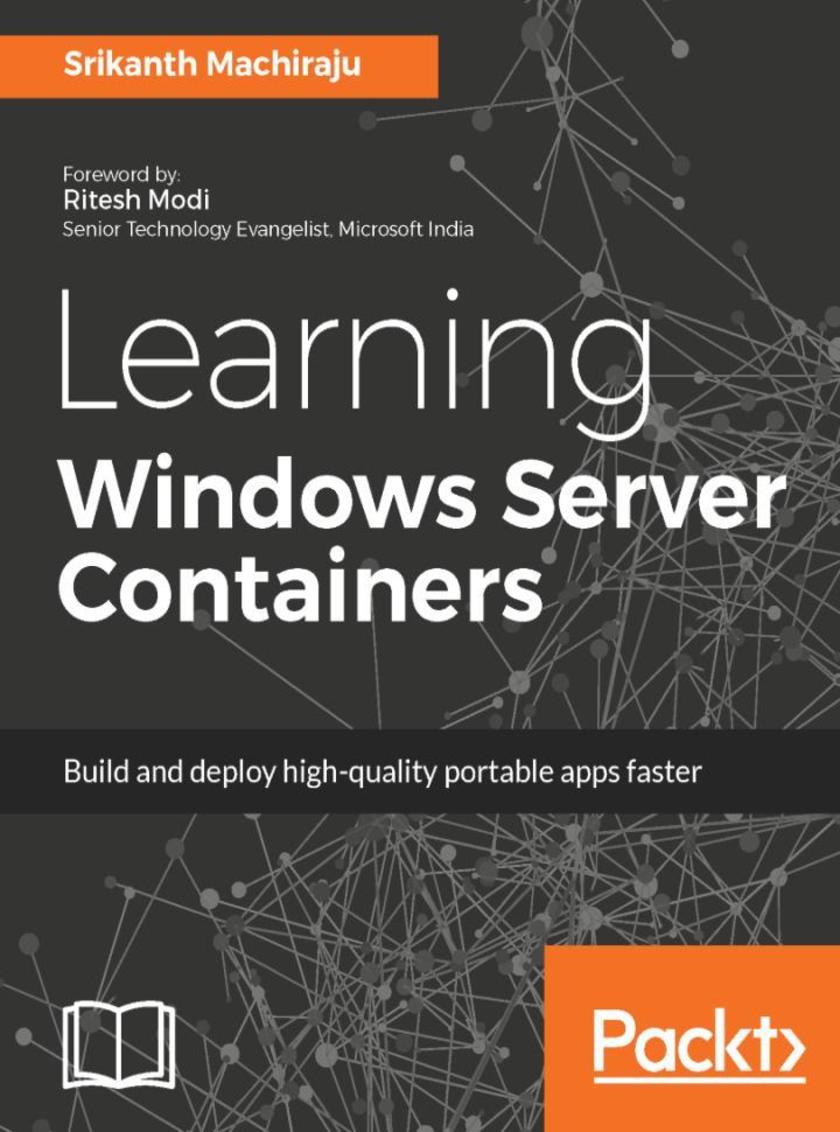
Learning Windows Server Containers
¥90.46
"About This Book ?Discover the secret to building highly portable apps that run on any machine with Windows Server 2016 anywhere, from laptops, desktop servers, and public or private clouds, without any changes to the code ?Build your company cost-effective, container-based apps that support large-scale, virtual cloud environments ?The most up-to-date help on the market, offering developers expert guidance in building and shipping high-quality apps, and also helping admins create infrastructure that's simple to maintain Who This Book Is For This book is for application developers with a basic programming knowledge of C#, ASP.NET, and PowerShell. IT Administrators or DevOps engineers with basic PowerShell experience can benefit by extending their learning to use PowerShell to manage containers on Windows environments and use additional management tools. What You Will Learn ?Build and deploy ASP.NET web applications as Windows Containers on Windows 10 (Desktop) and Azure using Visual Studio 2015, Docker, and PowerShell ?Build and manage custom images using Windows Server Core base OS image and Docker CLI, publish images to Docker, tag images, author Docker files, and so on ?Create enterprise-scale, production-grade container environments using Redis Cache containers and SQL Server containers with storage volumes, set up custom container networks, continuous integration, and deployment pipelines using VSTS, Azure, and Git ?Deploy a composite container environment using Docker Compose on Windows ?Learn to build applications using Microsoft's thinnest server platform - Nano Servers. Build custom Nano Server images and Nano Containers using Windows PowerShell and "
Implementing DevOps with Microsoft Azure
¥90.46
"Accelerate and Automate Build, Deploy, and Management of applications to achieve High Availability. About This Book ?This guide highlights tools that offer development and deployment environments for application services ?Secure and continuously monitor your web application in order to make it highly available ?Use Visual Studio Team Services for Continuous Integration and Continuous Development to expedite your application life cycle management process ?Use Microsoft Azure App Services (Azure Web Apps / Azure Websites), PaaS offering from Microsoft to deploy web application Who This Book Is For This book is for DevOps engineers, system administrators, and developers (.net) who want to implement DevOps for their organization. You do not need to have any knowledge of VSTS or Azure App Services (Azure Web Apps / Azure Websites). What You Will Learn ?Explore the features of PaaS and aPaaS in DevOps ?Use Visual Studio Team Services (VSTS) to manage versions of code and integrating VSTS with Eclipse IDE ?Understand and configure Continuous Integration in VSTS ?Review Unit Test Execution for Automated Testing ?Create different environments that can be used to continuous deploy a web application ?Configure Roll-based Access to enable secure access for Azure Web Apps ?Create and configure the App Service Environment to enhance security ?Understand the execution of the end-to-end automation process ?Conduct Performance Testing using JMeter ?Discover the different monitoring options available in Microsoft Azure Portal In Detail This book will teach you all about the Visual Studio Team Services and Microsoft Azure PaaS offerings that support Continuous Integration, Continuous Delivery, Continuous Deployment, and execution in the cloud with high availability, disaster recovery, and security. You will first be given a tour of all the concepts and tools that Microsoft Azure has to offer and how these can be used in situations to cultivate the DevOps culture. You'll be taught how to use and manage Visual Studio Team Services (VSTS) and about the structure of the sample application used throughout the book. You will become familiar with the nitty gritty of Continuous Integration and Continuous Development with VSTS and Microsoft Azure Apps. You will not only learn how to create App service environments, but also how to compare Azure Web Apps and App Service Environments to deploy web applications in a more secure environment. Once you have completed Continuous Integration and created the Platform for application deployment, you will learn more about the final stepping stone in achieving end-to-end automation using approval-based Continuous Delivery and Deployment. You will then learn about Continuous Monitoring, using the monitoring and notification options provided by Microsoft Azure and Visual Studio Team Services. Style and Approach This book is an easy-to-follow guide filled with examples and real-world applications for gaining an in-depth understanding of Microsoft Azure and Visual Studio. This book will help you leverage Microsoft Azure and Visual Studio using real-world examples. "


