


 购物车
购物车 个人中心
个人中心
Mobile Application Penetration Testing
¥90.46
Explore real-world threat scenarios, attacks on mobile applications, and ways to counter them About This Book Gain insights into the current threat landscape of mobile applications in particular Explore the different options that are available on mobile platforms and prevent circumventions made by attackers This is a step-by-step guide to setting up your own mobile penetration testing environment Who This Book Is For If you are a mobile application evangelist, mobile application developer, information security practitioner, penetration tester on infrastructure web applications, an application security professional, or someone who wants to learn mobile application security as a career, then this book is for you. This book will provide you with all the skills you need to get started with Android and iOS pen-testing. What You Will Learn Gain an in-depth understanding of Android and iOS architecture and the latest changes Discover how to work with different tool suites to assess any application Develop different strategies and techniques to connect to a mobile device Create a foundation for mobile application security principles Grasp techniques to attack different components of an Android device and the different functionalities of an iOS device Get to know secure development strategies for both iOS and Android applications Gain an understanding of threat modeling mobile applications Get an in-depth understanding of both Android and iOS implementation vulnerabilities and how to provide counter-measures while developing a mobile app In Detail Mobile security has come a long way over the last few years. It has transitioned from "should it be done?" to "it must be done!"Alongside the growing number of devises and applications, there is also a growth in the volume of Personally identifiable information (PII), Financial Data, and much more. This data needs to be secured. This is why Pen-testing is so important to modern application developers. You need to know how to secure user data, and find vulnerabilities and loopholes in your application that might lead to security breaches. This book gives you the necessary skills to security test your mobile applications as a beginner, developer, or security practitioner. You'll start by discovering the internal components of an Android and an iOS application. Moving ahead, you'll understand the inter-process working of these applications. Then you'll set up a test environment for this application using various tools to identify the loopholes and vulnerabilities in the structure of the applications. Finally, after collecting all information about these security loop holes, we'll start securing our applications from these threats. Style and approach This is an easy-to-follow guide full of hands-on examples of real-world attack simulations. Each topic is explained in context with respect to testing, and for the more inquisitive, there are more details on the concepts and techniques used for different platforms.
Cisco UCS Cookbook
¥90.46
Over 40 practical recipes to get your hands dirty with the powerful Cisco UCS and overcome various challenges About This Book Master the skills of minimizing cost, enabling your business to work faster by reducing cycle times for reporting and improving overall revenue Work through hands-on recipes for efficient deployment approaches, see computing techniques, and explore new operational models with UCS Render a better work-flow management, ensure effective monitoring, and learn new deployment paradigms for the operational infrastructure with the help of this book Who This Book Is For This book is for competent system/network or storage administrators who are working with Cisco UCS, but now want to learn new ways to compute UCS. What You Will Learn Familiarize yourself with information on the latest information on memory management practices, virtualization architectures, and the specific technical advantages of UCS Get a concrete understanding of integrating processes and techniques to ensure effective convergence of LAN/SAN Get to know the best practices of Cisco UCS, EMC Storage, and VMware vSphere Master migrating data from other band servers or Blade to Cisco UCS Comprehend how to replicate and back up UCS to remote sites UCS Assimilate innovative techniques to deploy UCS to leverage its full potential Gather information on installing and configuring automatic and manual Pinning Discover ways to integrate a system in Cisco UCS In Detail Cisco Unified Computing System (UCS) is a data center server platform that is used for computing, deploying, and storing resources in data center environments. This cookbook aims to teach you about various tasks you can implement to improve your existing method of configuring and deploying UCS. You will start by learning how to upgrade your firmware on Brocade and Cisco Fibre Channel Switch and will move on to enhance your knowledge of LAN connectivity. We will then discuss how to configure Windows 2008 and 2012 local boot in Cisco UCS. Next, you will learn how to install the operating system on Cisco UCS and use Cisco UCS Power Calculator to calculate the UCS consumption. Finally, we’ll take a look at backup solutions. By the end of the book, you will know several ways to build and compute in data center environment using Cisco UCS. Style and approach This guide explains every task in a conversational and easy-to-follow style. You can open this book up to the task you want to learn and will be able to perform that task by the end of the recipe.
Sass and Compass Designer's Cookbook
¥90.46
Over 120 practical and easy-to-understand recipes that explain how to use Sass and Compass to write efficient, maintainable, and reusable CSS code for your web development projects About This Book Leverage Sass to make your CSS code maintainable, reusable and prevent code duplications Shorten debug time with Sass when creating complex CSS code for different browsers and devices Write easy and bullet-proof CSS with Compass using this step-by-step and detailed guide Who This Book Is For This book is mainly intended for web developers and designers who are comfortable with CSS and HTML. If you are someone with some experience with CSS, you will find the learning curve of learning Sass syntax to be less steep. Basic knowledge of web development is helpful but you don't have to be a programmer to understand Sass. What You Will Learn Spend less time debugging code Compile Sass code into readable and maintainable CSS Integrate Sass in your own projects Reuse your code to prevent code duplications Write reusable and portable CSS code Make use of pre-built and established code written by other developers Reduce development and maintenance time of your projects Set up a development environment with Gulp In Detail Sass and Compass Designer's Cookbook helps you to get most out of CSS3 and harness its benefits to create engaging and receptive applications. This book will help you develop faster and reduce the maintenance time for your web development projects by using Sass and Compass. You will learn how to use with CSS frameworks such as Bootstrap and Foundation and understand how to use other libraries of pre-built mixins. You will also learn setting up a development environment with Gulp. This book guides you through all the concepts and gives you practical examples for full understanding. Style and approach This book is the perfect mix of essential theory combined with real-life examples and problems, with clear explanations of the more sophisticated Sass concepts. Learn Sass and Compass with practical and well-explained example code. This book follows a problem and solution approach that is convenient to understand and follow.
Sitecore Cookbook for Developers
¥90.46
Over 70 incredibly effective and practical recipes to get you up and running with Sitecore development About This Book Build enterprise-level rich websites quickly and deliver the best possible content management to your website Get maximum usage of functionalities like different user interfaces, workflow, publishing, search, analytics, etc and learn different rendering techniques using presentation components for data bindings, events, handlers, schedulers, media, etc. Add a surprising amount of functionality just by customizing the Sitecore architecture through the best practices contained in this book Who This Book Is For If you are a Sitecore developer or a programmer who wants to expand your Sitecore development skills, this book is ideal for you. You will need working knowledge of ASP.NET WebForms or MVC, as well as HTML, and a basic knowledge of Sitecore installation. What You Will Learn Create, access, and personalize your website content using different Sitecore presentation components Learn how to extend the presentation components to fulfill some real-life requiremnts such as improving the site’s performance, generating Rss feeds and so on Work with multiple websites on a single Sitecore instance and create multilingual websites Customize the Sitecore interfaces as per your business requirements to provide easier and error-free user interface to content authors to save time and improve accuracy Customize the Sitecore backend architecture as per your business needs Automate tasks and achieve scalability by altering the development and configuration settings Integrate external systems with Sitecore to import or export content and secure user interactions Integrate the advanced features of analytics and personalization, to get the best possible customer experience and generate its reports In Detail This book will get you started on building rich websites, and customizing user interfaces by creating content management applications quickly. It will give you an insight into web designs and how to customize the Sitecore architecture as per your website's requirements using best practices. Packed with over 70 recipes to help you achieve and solve real-world common tasks, requirements, and the problems of content management, content delivery, and publishing instance environments. It also presents recipes on Sitecore’s backend processes of customizing pipelines, creating custom event handler and media handler, setting hooks to interpret foreign language URL and more. Other topics covered include creating a workflow action, publishing sublayouts and media files, securing your environment by customizing user profiles and access rights, boosting search capabilities, optimising performance, scalability and high-availability of Sitecore instances and much more. By the end of this book, you will have be able to add virtually limitless features to your websites by developing and deploying Sitecore efficiently. Style and approach This easy-to-follow guide is full of hands-on recipes on real-world development tasks to improve your existing Sitecore system. Each topic is presented with its benefits and detailed steps to achieve it through well-explained code and images.
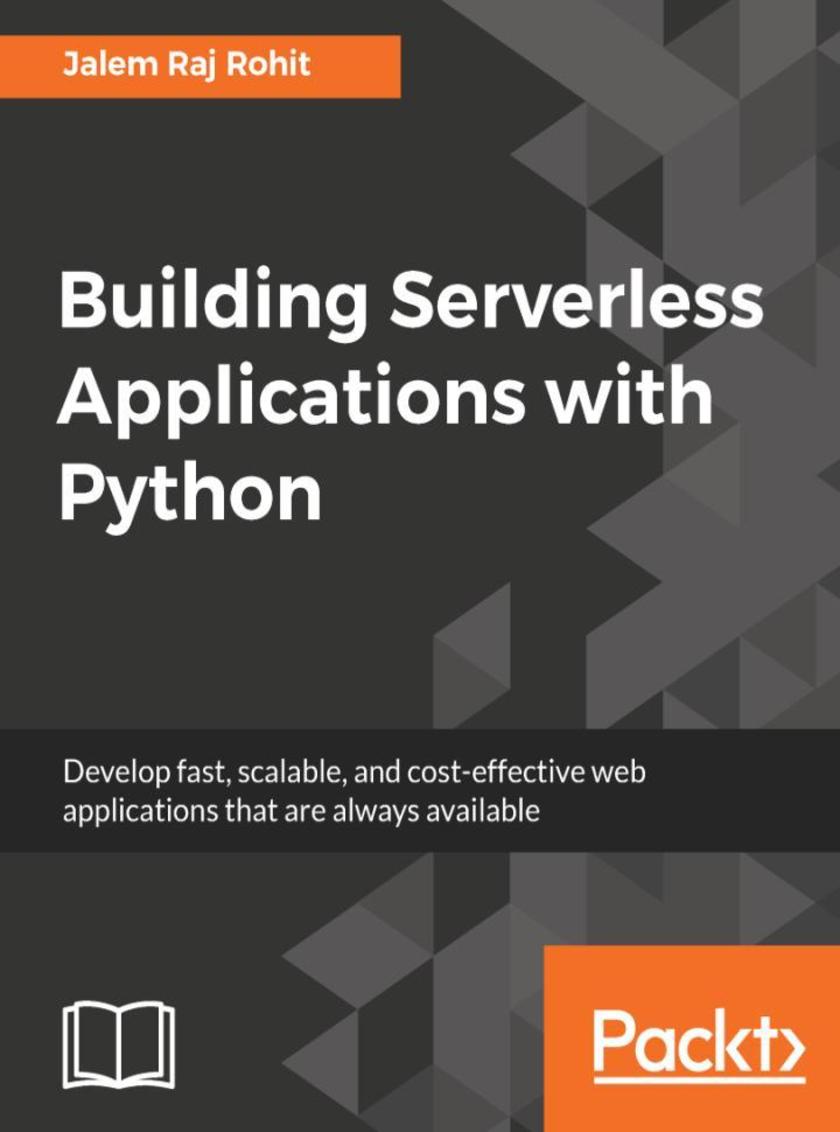
Building Serverless Applications with Python
¥90.46
Building efficient Python applications at minimal cost by adopting serverless architectures About This Book ? Design and set up a data flow between cloud services and custom business logic ? Make your applications efficient and reliable using serverless architecture ? Build and deploy scalable serverless Python APIs Who This Book Is For This book is for Python developers who would like to learn about serverless architecture. Python programming knowledge is assumed. What You Will Learn ? Understand how AWS Lambda and Microsoft Azure Functions work and use them to create an application ? Explore various triggers and how to select them, based on the problem statement ? Build deployment packages for Lambda functions ? Master the finer details about building Lambda functions and versioning ? Log and monitor serverless applications ? Learn about security in AWS and Lambda functions ? Scale up serverless applications to handle huge workloads and serverless distributed systems in production ? Understand SAM model deployment in AWS Lambda In Detail Serverless architectures allow you to build and run applications and services without having to manage the infrastructure. Many companies have adopted this architecture to save cost and improve scalability. This book will help you design serverless architectures for your applications with AWS and Python. The book is divided into three modules. The first module explains the fundamentals of serverless architecture and how AWS lambda functions work. In the next module, you will learn to build, release, and deploy your application to production. You will also learn to log and test your application. In the third module, we will take you through advanced topics such as building a serverless API for your application. You will also learn to troubleshoot and monitor your app and master AWS lambda programming concepts with API references. Moving on, you will also learn how to scale up serverless applications and handle distributed serverless systems in production. By the end of the book, you will be equipped with the knowledge required to build scalable and cost-efficient Python applications with a serverless framework. Style and approach The book takes a pragmatic approach, using a real-world example to demonstrate building efficient, secure, and scalable serverless applications.
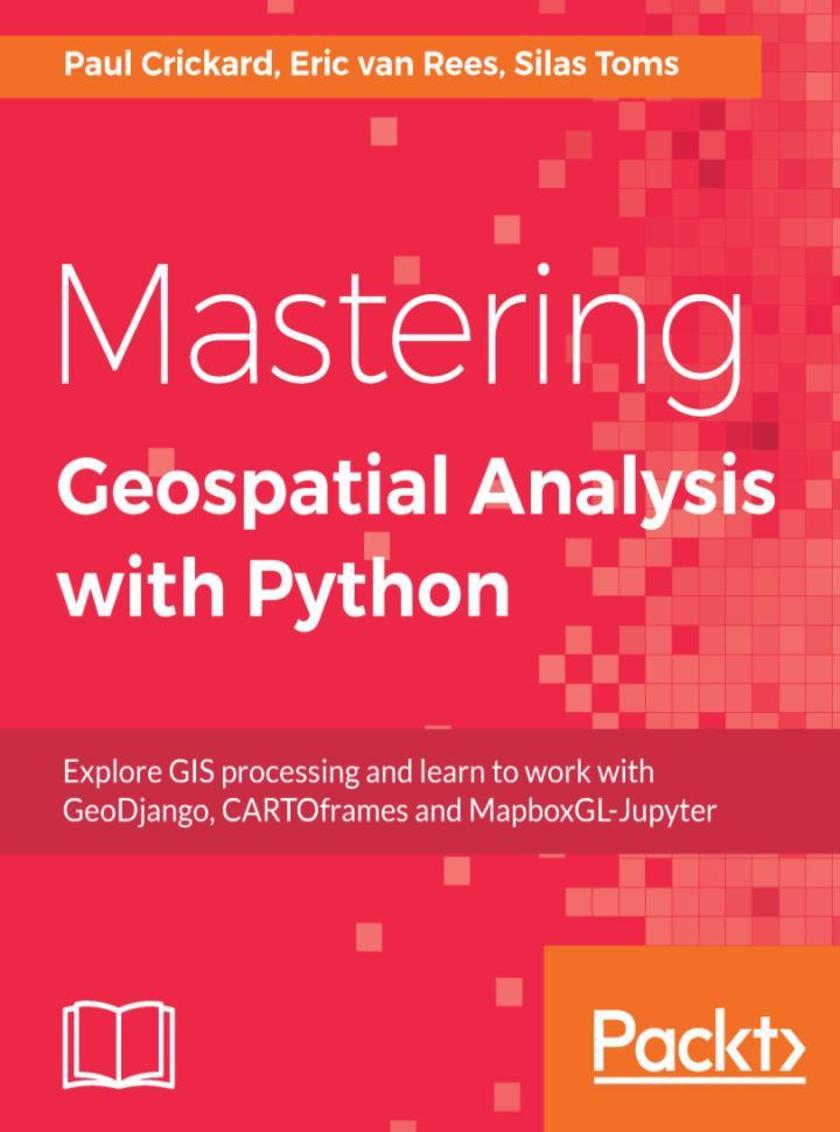
Mastering Geospatial Analysis with Python
¥90.46
Explore GIS processing and learn to work with various tools and libraries in Python. About This Book ? Analyze and process geospatial data using Python libraries such as; Anaconda, GeoPandas ? Leverage new ArcGIS API to process geospatial data for the cloud. ? Explore various Python geospatial web and machine learning frameworks. Who This Book Is For The audience for this book includes students, developers, and geospatial professionals who need a reference book that covers GIS data management, analysis, and automation techniques with code libraries built in Python 3. What You Will Learn ? Manage code libraries and abstract geospatial analysis techniques using Python 3. ? Explore popular code libraries that perform specific tasks for geospatial analysis. ? Utilize code libraries for data conversion, data management, web maps, and REST API creation. ? Learn techniques related to processing geospatial data in the cloud. ? Leverage features of Python 3 with geospatial databases such as PostGIS, SQL Server, and SpatiaLite. In Detail Python comes with a host of open source libraries and tools that help you work on professional geoprocessing tasks without investing in expensive tools. This book will introduce Python developers, both new and experienced, to a variety of new code libraries that have been developed to perform geospatial analysis, statistical analysis, and data management. This book will use examples and code snippets that will help explain how Python 3 differs from Python 2, and how these new code libraries can be used to solve age-old problems in geospatial analysis. You will begin by understanding what geoprocessing is and explore the tools and libraries that Python 3 offers. You will then learn to use Python code libraries to read and write geospatial data. You will then learn to perform geospatial queries within databases and learn PyQGIS to automate analysis within the QGIS mapping suite. Moving forward, you will explore the newly released ArcGIS API for Python and ArcGIS Online to perform geospatial analysis and create ArcGIS Online web maps. Further, you will deep dive into Python Geospatial web frameworks and learn to create a geospatial REST API. Style and approach The book takes a practical, example-driven approach to teach you GIS analysis and automation techniques with Python 3.
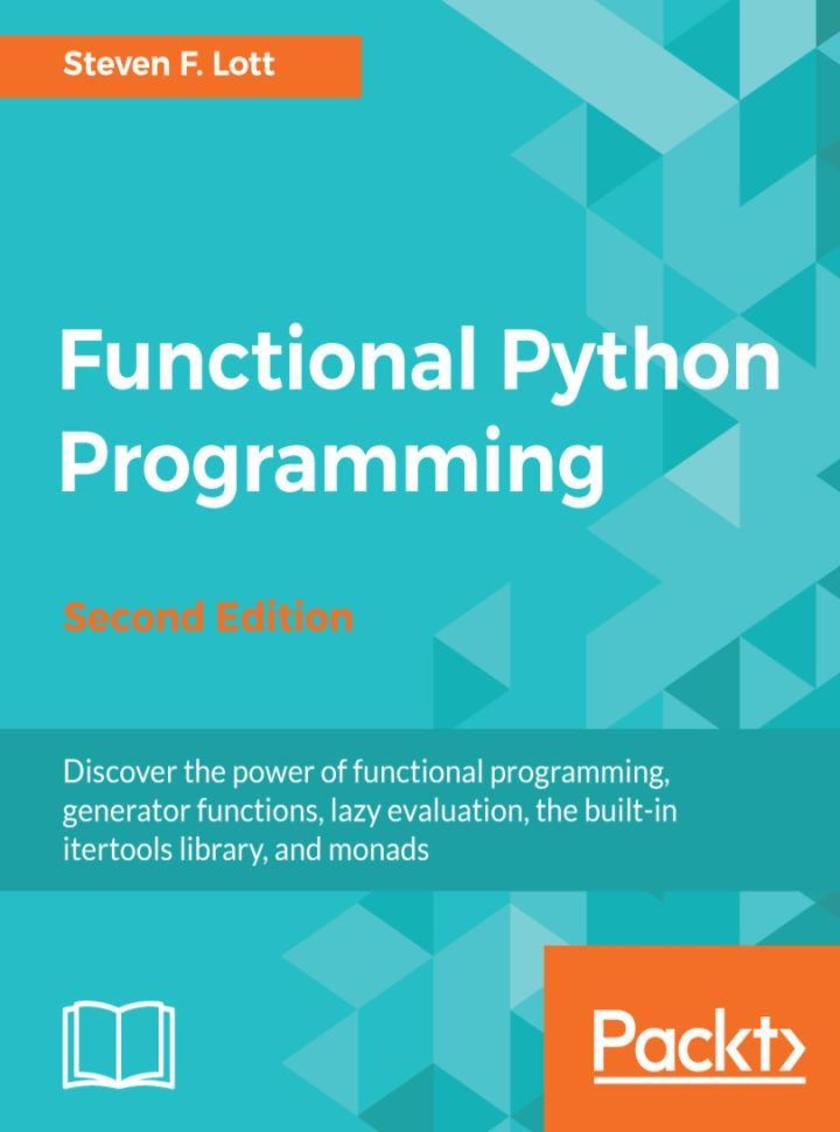
Functional Python Programming
¥90.46
Create succinct and expressive implementations with functional programming in Python About This Book ? Learn how to choose between imperative and functional approaches based on expressiveness, clarity, and performance ? Get familiar with complex concepts such as monads, concurrency, and immutability ? Apply functional Python to common Exploratory Data Analysis (EDA) programming problems Who This Book Is For This book is for Python developers who would like to perform Functional programming with Python. Python Programming knowledge is assumed. What You Will Learn ? Use Python's generator functions and generator expressions to work with collections in a non-strict (or lazy) manner ? Utilize Python library modules including itertools, functools, multiprocessing, and concurrent features to ensure efficient functional programs ? Use Python strings with object-oriented suffix notation and prefix notation ? Avoid stateful classes with families of tuples ? Design and implement decorators to create composite functions ? Use functions such as max(), min(), map(), filter(), and sorted() ? Write higher-order functions In Detail If you’re a Python developer who wants to discover how to take the power of functional programming (FP) and bring it into your own programs, then this book is essential for you, even if you know next to nothing about the paradigm. Starting with a general overview of functional concepts, you’ll explore common functional features such as first-class and higher-order functions, pure functions, and more. You’ll see how these are accomplished in Python 3.6 to give you the core foundations you’ll build upon. After that, you’ll discover common functional optimizations for Python to help your apps reach even higher speeds. You’ll learn FP concepts such as lazy evaluation using Python’s generator functions and expressions. Moving forward, you’ll learn to design and implement decorators to create composite functions. You'll also explore data preparation techniques and data exploration in depth, and see how the Python standard library fits the functional programming model. Finally, to top off your journey into the world of functional Python, you’ll at look at the PyMonad project and some larger examples to put everything into perspective. Style and approach This book provides a general overview of functional concepts and then delves deeper into the functional features, showing you how the Python standard library fits the functional programming model. It also demonstrates how to implement common functional programming design patterns and techniques in Python.
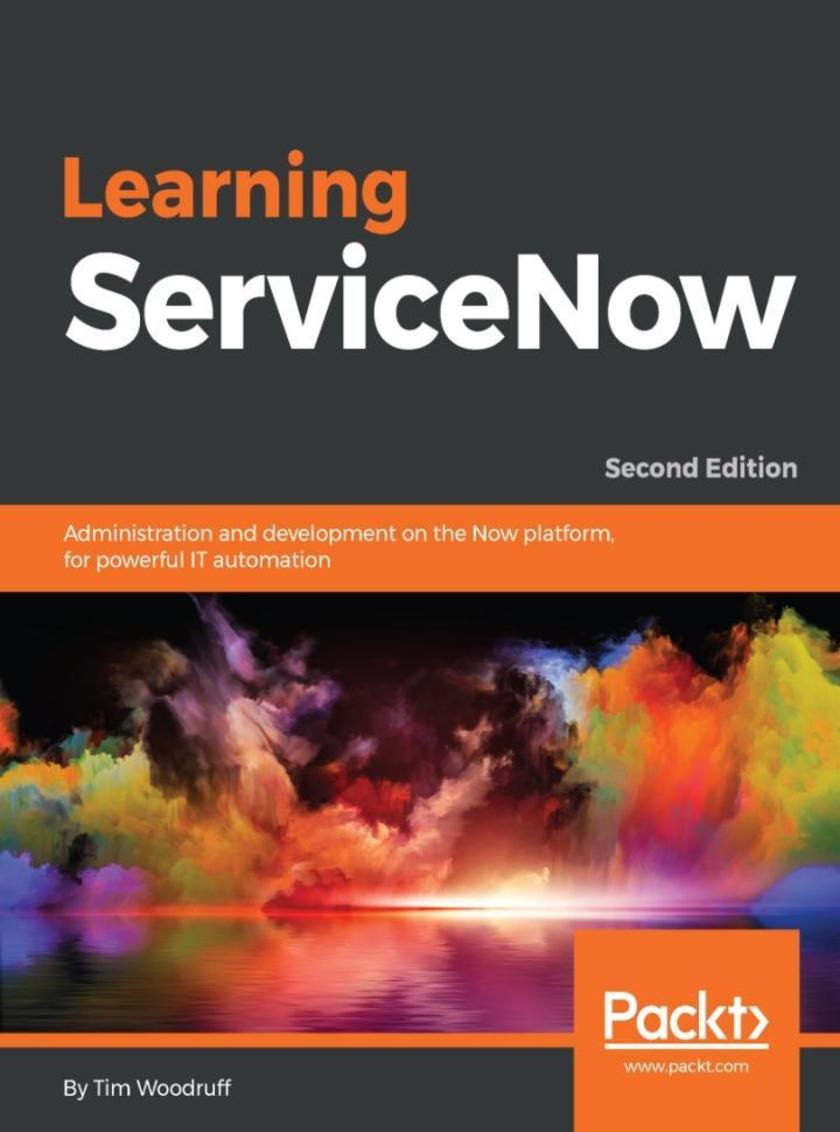
Learning ServiceNow
¥90.46
IT service management automation at your fingertips About This Book ? Learn to leverage ServiceNow’s capabilities for improved IT automation by following step-by-step, practical instructions ? Build core administration, development, and maintenance skills with IT service management in ServiceNow ? Improve your workflow efficiency by designing and creating responsive and automated workflows, business logic, and front-end automation Who This Book Is For This book is for IT professionals and administrators who are planning to or are already trying to implement ServiceNow in their organization for Enterprise IT service management tasks. Some familiarity with web technologies (JavaScript) would be helpful. Prior ServiceNow experience is not necessary. What You Will Learn ? Read and write clear, effective code for the ServiceNow platform ? Identify and avoid common pitfalls and missteps that could seriously impact future progress and upgradeability ? Use debugging tools to troubleshoot when things go wrong ? Discover tips and tricks from top ServiceNow developers, architects, and administrators. Find out what the pros wish they knew when they were starting out In Detail This book is an updated version of Learning ServiceNow, that will cover the new and updated features of the ServiceNow platform. It will show you how to put important ServiceNow features to work in the real world, while introducing key concepts via examples of managing and automating IT services. It'll help you build a solid foundation of knowledge, and will demonstrate how to effectively implement and configure modules within ServiceNow. We'll show you how to configure and administer your instance, and then move on to building strong user interfaces and creating powerful workflows. We also cover other key elements of ServiceNow, such as notifications, security, reporting, and custom development. You will learn how to improve and automate your business' workflow and processes. By the end of this book, you will be able to successfully configure and manage ServiceNow like a pro. Style and approach This book is a step-by-step practical tutorial to help you quickly deploy and configure ServiceNow in your organization. It guides you through the process of building applications and understanding the underlying systems, to help you become a more effective ServiceNow/ITSM administrator and/or developer.
Unity 2018 Shaders and Effects Cookbook
¥90.46
Bring realism to your games by mastering post-processing effects and advanced shading techniques in Unity 2018 About This Book ? Learn the secrets of creating AAA quality shaders without writing long algorithms ? Master shader programming through easy-to-follow examples ? Create stunning visual effects that can be used in 3D games Who This Book Is For Unity Shaders and Effects Cookbook is for developers who want to create their first shaders in Unity 2018 or wish to take their game to a whole new level by adding professional post-processing effects. A solid understanding of Unity is required to get the most from this book. What You Will Learn ? Understand physically based rendering to fit the aesthetic of your game ? Write shaders from scratch in ShaderLab and HLSL/Cg ? Combine shader programming with interactive scripts to add life to your materials ? Design efficient shaders for mobile platforms without sacrificing their realism ? Use state-of-the-art techniques, such as volumetric explosions and fur shading ? Master the math and algorithms behind the most used lighting models ? Understand how shader models have evolved and how you can create your own In Detail Since their introduction to Unity, shaders have been seen as notoriously difficult to understand and implement in games. Complex mathematics has always stood in the way of creating your own shaders and attaining the level of realism you crave. Unity 2018 Shaders and Effects Cookbook changes that by giving you a recipe-based guide to creating shaders using Unity. It will show you everything you need to know about vectors, how lighting is constructed with them, and how textures are used to create complex effects without the heavy math. This book starts by teaching you how to use shaders without writing code with the post-processing stack. Then, you’ll learn how to write shaders from scratch, build up essential lighting, and finish by creating stunning screen effects just like those in high-quality 3D and mobile games. You'll discover techniques, such as normal mapping, image-based lighting, and animating your models inside a shader. We'll explore how to use physically based rendering to treat light the way it behaves in the real world. At the end, we’ll even look at Unity 2018’s new Shader Graph system. With this book, what seems like a dark art today will be second nature by tomorrow. Style and approach The recipes in this book contain step-by-step instructions, complemented with screenshots, code, and real-world examples.
Unity Virtual Reality Projects
¥90.46
Explore the latest features of Unity 2018 to create immersive VR projects for Oculus Rift, HTC Vive, Daydream and Gear VR About This Book ? A project-based guide to teach you how to develop immersive and fun VR applications using Unity 3D ? Build experiences with interactable objects, physics, UI, animations, C# scripting, and other Unity features ? Explore the world of VR by building experiences such as diorama, first-person characters, 360-degree projections, social VR, audio fireball game, and VR storytelling Who This Book Is For If you're a non-programmer unfamiliar with 3D computer graphics, or experienced in both but new to virtual reality, and are interested in building your own VR games or applications, then this book is for you. Any experience in Unity is an advantage. What You Will Learn ? Create 3D scenes with Unity and other 3D tools while learning about world space and scale ? Build and run VR applications for specific headsets, including Oculus, Vive, and Daydream ? Interact with virtual objects using eye gaze, hand controllers, and user input events ? Move around your VR scenes using locomotion and teleportation ? Implement an audio fireball game using physics and particle systems ? Implement an art gallery tour with teleportation and data info ? Design and build a VR storytelling animation with a soundtrack and timelines ? Create social VR experiences with Unity networking In Detail Unity has become the leading platform for building virtual reality games, applications, and experiences for this new generation of consumer VR devices. Unity Virtual Reality Projects walks you through a series of hands-on tutorials and in-depth discussions on using the Unity game engine. With its practical and project-based approach, this book will get you up to speed with the specifics of Virtual Reality development in Unity. You will learn how to use Unity to develop VR applications that can be experienced with devices such as Oculus, Daydream, and Vive. Among the many topics and projects, you will explore gaze-based versus hand controller input, world space UI canvases, locomotion and teleportation, software design patterns, 360-degree media, timeline animation, and multiplayer networking. You will learn the Unity 3D game engine via the interactive Unity Editor as well as C# programming. By the end of the book, you will be fully equipped to develop rich, interactive virtual reality experiences using Unity. Style and approach A practical step-by-step guide to building impressive VR experiences with Unity 2018.
Beginning C++ Programming
¥90.46
C++ has come a long way and is now adopted in several contexts. Its key strengths are its software infrastructure and resource-constrained applications, including desktop applications, servers, and performance-critical applications, not to forget its importance in game programming. Despite its strengths in these areas, beginners usually tend to shy away from learning the language because of its steep learning curve. The main mission of this book is to make you familiar and comfortable with C++. You will finish the book not only being able to write your own code, but more importantly, you will be able to read other projects. It is only by being able to read others' code that you will progress from a beginner to an advanced programmer. This book is the first step in that progression. The first task is to familiarize you with the structure of C++ projects so you will know how to start reading a project. Next, you will be able to identify the main structures in the language, functions, and classes, and feel confident being able to identify the execution flow through the code. You will then become aware of the facilities of the standard library and be able to determine whether you need to write a routine yourself, or use an existing routine in the standard library. Throughout the book, there is a big emphasis on memory and pointers. You will understand memory usage, allocation, and
C# 7 and .NET Core Cookbook
¥90.46
C# has recently been open-sourced and C# 7 comes with a host of new features for building powerful, cross-platform applications. This book will be your solution to some common programming problems that you come across with C# and will also help you get started with .NET Core 1.1. Through a recipe-based approach, this book will help you overcome common programming challenges and get your applications ready to face the modern world. We start by running you through new features in C# 7, such as tuples, pattern matching, and so on, giving you hands-on experience with them. Moving forward, you will work with generics and the OOP features in C#. You will then move on to more advanced topics, such as reactive extensions, Regex, code analyzers, and asynchronous programming. This book will also cover new, cross-platform .NET Core 1.1 features and teach you how to utilize .NET Core on macOS. Then, we will explore microservices as well as serverless computing and how these benefit modern developers. Finally, you will learn what you can do with Visual Studio 2017 to put mobile application development across multiple platforms within the reach of any developer. What you will learn ?Writing better and less code to achieve the same result as in previous versions of C# ?Working with analyzers in Visual Studio ?Working with files, streams, and serialization ?Writing high-performant code
Implementing Cisco UCS Solutions - Second Edition
¥90.46
Cisco Unified Computer System (UCS) is a powerful solution for modern data centers and is responsible for increasing efficiency and reducing costs. This hands-on guide will take you through deployment in Cisco UCS. Using real-world examples of configuring and deploying Cisco UCS components, we'll prepare you for the practical deployments of Cisco UCS data center solutions. If you want to develop and enhance your hands-on skills with Cisco UCS solutions, this book is certainly for you. We start by showing you the Cisco UCS equipment options, then introduce Cisco UCS Emulator so you can learn and practice deploying Cisco UCS components. We'll also introduce you to all the areas of UCS solutions through practical configuration examples. Moving on, you'll explore the Cisco UCS Manager, which is the centralized management interface for Cisco UCS. Once you get to know UCS Manager, you'll dive deeper into configuring LAN, SAN, identity pools, resource pools, and service profiles for the servers. You'll also get hands-on with administration topics including backup, restore, user's roles, and high availability cluster configuration. Finally, you will learn about virtualized networking, third-party integration tools, and testing failure scenarios. By the end of this book, you'll know everything you need to know to rapidly grow Cisco UCS deployments in the real world. What you will learn ?Set up your Lab using Cisco UCS Emulator ?Configure Cisco UCS, LAN, and SAN connectivity ?Create and manage Service profiles ?Perform various tasks using UCS ?Back up and restore Cisco UCS configuration ?Test various Cisco UCS scenarios
HoloLens Beginner’s Guide
¥90.46
"Key Features?Start developing immersive and interactive apps for Microsoft HoloLens ?Explore the Windows Universal Development platform for HoloLens development ?Leverage the full set of HoloLens sensors to create mesmerizing apps"
Learning Windows Server Containers
¥90.46
"About This Book ?Discover the secret to building highly portable apps that run on any machine with Windows Server 2016 anywhere, from laptops, desktop servers, and public or private clouds, without any changes to the code ?Build your company cost-effective, container-based apps that support large-scale, virtual cloud environments ?The most up-to-date help on the market, offering developers expert guidance in building and shipping high-quality apps, and also helping admins create infrastructure that's simple to maintain Who This Book Is For This book is for application developers with a basic programming knowledge of C#, ASP.NET, and PowerShell. IT Administrators or DevOps engineers with basic PowerShell experience can benefit by extending their learning to use PowerShell to manage containers on Windows environments and use additional management tools. What You Will Learn ?Build and deploy ASP.NET web applications as Windows Containers on Windows 10 (Desktop) and Azure using Visual Studio 2015, Docker, and PowerShell ?Build and manage custom images using Windows Server Core base OS image and Docker CLI, publish images to Docker, tag images, author Docker files, and so on ?Create enterprise-scale, production-grade container environments using Redis Cache containers and SQL Server containers with storage volumes, set up custom container networks, continuous integration, and deployment pipelines using VSTS, Azure, and Git ?Deploy a composite container environment using Docker Compose on Windows ?Learn to build applications using Microsoft's thinnest server platform - Nano Servers. Build custom Nano Server images and Nano Containers using Windows PowerShell and "
Implementing DevOps with Microsoft Azure
¥90.46
"Accelerate and Automate Build, Deploy, and Management of applications to achieve High Availability. About This Book ?This guide highlights tools that offer development and deployment environments for application services ?Secure and continuously monitor your web application in order to make it highly available ?Use Visual Studio Team Services for Continuous Integration and Continuous Development to expedite your application life cycle management process ?Use Microsoft Azure App Services (Azure Web Apps / Azure Websites), PaaS offering from Microsoft to deploy web application Who This Book Is For This book is for DevOps engineers, system administrators, and developers (.net) who want to implement DevOps for their organization. You do not need to have any knowledge of VSTS or Azure App Services (Azure Web Apps / Azure Websites). What You Will Learn ?Explore the features of PaaS and aPaaS in DevOps ?Use Visual Studio Team Services (VSTS) to manage versions of code and integrating VSTS with Eclipse IDE ?Understand and configure Continuous Integration in VSTS ?Review Unit Test Execution for Automated Testing ?Create different environments that can be used to continuous deploy a web application ?Configure Roll-based Access to enable secure access for Azure Web Apps ?Create and configure the App Service Environment to enhance security ?Understand the execution of the end-to-end automation process ?Conduct Performance Testing using JMeter ?Discover the different monitoring options available in Microsoft Azure Portal In Detail This book will teach you all about the Visual Studio Team Services and Microsoft Azure PaaS offerings that support Continuous Integration, Continuous Delivery, Continuous Deployment, and execution in the cloud with high availability, disaster recovery, and security. You will first be given a tour of all the concepts and tools that Microsoft Azure has to offer and how these can be used in situations to cultivate the DevOps culture. You'll be taught how to use and manage Visual Studio Team Services (VSTS) and about the structure of the sample application used throughout the book. You will become familiar with the nitty gritty of Continuous Integration and Continuous Development with VSTS and Microsoft Azure Apps. You will not only learn how to create App service environments, but also how to compare Azure Web Apps and App Service Environments to deploy web applications in a more secure environment. Once you have completed Continuous Integration and created the Platform for application deployment, you will learn more about the final stepping stone in achieving end-to-end automation using approval-based Continuous Delivery and Deployment. You will then learn about Continuous Monitoring, using the monitoring and notification options provided by Microsoft Azure and Visual Studio Team Services. Style and Approach This book is an easy-to-follow guide filled with examples and real-world applications for gaining an in-depth understanding of Microsoft Azure and Visual Studio. This book will help you leverage Microsoft Azure and Visual Studio using real-world examples. "
ASP.NET Core 1.0 High Performance
¥90.46
Create fast, scalable, and high performance applications with C#, ASP.NET Core 1.0, and MVC 6 About This Book Learn the importance of measuring, profiling, and locating the most impactful problems Discover the common areas you might encounter performance problems and areas you don’t need to worry about Understand the differences between development workstations and production infrastructure and how these can amplify problems Design workflows that run asynchronously and are resilient to transient performance issues Who This Book Is For This book is for ASP.NET and C# developers who have experience with the MVC framework for web application development and are looking to deploy applications that will perform well in live production environments. These could be virtual machines or hosted by a cloud service provider such as AWS or Azure. What You Will Learn Why performance matters and when it should be considered Use different tools to measure performance Spot common performance issues, their root causes, and how to easily mitigate them Improve performance at the network level and I/O level, and how to optimize the application as a whole Work with caching and message queuing tools, including patterns and strategies Discover the dark side of performance improvement and find out how to manage complexity Monitor performance as part of continuous integration and regression testing Assess and solve performance issues with other advanced technologies In Detail ASP.NET Core is the new, open source, and cross-platform, web-application framework from Microsoft. It's a stripped down version of ASP.NET that's lightweight and fast. This book will show you how to make your web apps deliver high performance when using it. We'll address many performance improvement techniques from both a general web standpoint and from a C#, ASP.NET Core, and .NET Core perspective. This includes delving into the latest frameworks and demonstrating software design patterns that improve performance. We will highlight common performance pitfalls, which can often occur unnoticed on developer workstations, along with strategies to detect and resolve these issues early. By understanding and addressing challenges upfront, you can avoid nasty surprises when it comes to deployment time. We will introduce performance improvements along with the trade-offs that they entail. We will strike a balance between premature optimization and inefficient code by taking a scientific- and evidence-based approach. We'll remain pragmatic by focusing on the big problems. By reading this book, you'll learn what problems can occur when web applications are deployed at scale and know how to avoid or mitigate these issues. You'll gain experience of how to write high-performance applications without having to learn about issues the hard way. You'll see what's new in ASP.NET Core, why it's been rebuilt from the ground up, and what this means for performance. You will understand how you can now develop on and deploy to Windows, Mac OS X, and Linux using cross-platform tools, such as Visual Studio Code. Style and approach Starting with a drill down into the nuts and bolts of various performance parameters, you will get an understanding of the ASP.NET MVC 6 framework with the help of rich code-based examples that will equip you to build highly scalable and optimized applications.
Spring Microservices
¥90.46
Build scalable microservices with Spring, Docker, and Mesos About This Book Learn how to efficiently build and implement microservices in Spring, and how to use Docker and Mesos to push the boundaries of what you thought possible Examine a number of real-world use cases and hands-on code examples. Distribute your microservices in a completely new way Who This Book Is For If you are a Spring developers and want to build cloud-ready, internet-scale applications to meet modern business demands, then this book is for you Developers will understand how to build simple Restful services and organically grow them to truly enterprise grade microservices ecosystems. What You Will Learn Get to know the microservices development lifecycle process See how to implement microservices governance Familiarize yourself with the microservices architecture and its benefits Use Spring Boot to develop microservices Find out how to avoid common pitfalls when developing microservices Be introduced to end-to-end microservices written in Spring Framework and Spring Boot In Detail The Spring Framework is an application framework and inversion of the control container for the Java platform. The framework's core features can be used by any Java application, but there are extensions to build web applications on top of the Java EE platform. This book will help you implement the microservice architecture in Spring Framework, Spring Boot, and Spring Cloud. Written to the latest specifications of Spring, you'll be able to build modern, Internet-scale Java applications in no time. We would start off with the guidelines to implement responsive microservices at scale. We will then deep dive into Spring Boot, Spring Cloud, Docker, Mesos, and Marathon. Next you will understand how Spring Boot is used to deploy autonomous services, server-less by removing the need to have a heavy-weight application server. Later you will learn how to go further by deploying your microservices to Docker and manage it with Mesos. By the end of the book, you'll will gain more clarity on how to implement microservices using Spring Framework and use them in Internet-scale deployments through real-world examples. Style and approach The book follows a step by step approach on how to develop microservices using Spring Framework, Spring Boot, and a set of Spring Cloud components that will help you scale your applications.
Learning PowerCLI - Second Edition
¥90.46
Learn to leverage the power of PowerCLI to automate your VMware vSphere environment with ease About This Book This is first book on the market that will enlighten you on the latest version of PowerCLI and how to implement it Effectively manage virtual machines, networks, and reports with the latest features of PowerCLI A comprehensive and practical book on automating VMware vSphere Who This Book Is For This book is ideal for you if you want to learn how to automate your VMware vSphere or vCloud infrastructure by getting the most out of PowerCLI. It’s assumed that you have some experience in administrating a vSphere or vCloud environment. Knowledge of Microsoft’s Windows PowerShell is not a prerequisite. What You Will Learn Explore PowerShell and PowerCLI cmdlets and their output objects See how to manage virtual machines and work with virtual networks Manage vCloud Director from PowerCLI Use Site Recovery Manager from PowerCLI to create a disaster recovery solution Manage NSX and vRealize Automation using REST API with PowerCLI Create and configure vSphere HA and DRS clusters Use vSphere Update Manager with PowerCLI to create patch baselines and scan hosts Explore reporting techniques to retrieve log files In Detail VMware vSphere PowerCLI, a free extension to Microsoft Windows PowerShell, enables you to automate the management of a VMware vSphere or vCloud environment. This book will show you how to automate your tasks and make your job easier. Starting with an introduction to the basics of PowerCLI, the book will teach you how to manage your vSphere and vCloud infrastructure from the command line. To help you manage a vSphere host overall, you will learn how to manage vSphere ESXi hosts, host profiles, host services, host firewall, and deploy and upgrade ESXi hosts using Image Builder and Auto Deploy. The next chapter will not only teach you how to create datastore and datastore clusters, but you’ll also work with profile-driven and policy-based storage to manage your storage. To create a disaster recovery solution and retrieve information from vRealize Operations, you will learn how to use Site Recovery Manager and vRealize Operations respectively. Towards the end, you’ll see how to use the REST APIs from PowerShell to manage NSX and vRealize Automation and create patch baselines, scan hosts against the baselines for missing patches, and re-mediate hosts. By the end of the book, you will be capable of using the best tool to automate the management and configuration of VMware vSphere. Style and approach This comprehensive book will teach system administrators everything about PowerCLI 6 and how to utilize it to automate VMware vSphere.
Effective Robotics Programming with ROS - Third Edition
¥90.46
Find out everything you need to know to build powerful robots with the most up-to-date ROS About This Book This comprehensive, yet easy-to-follow guide will help you find your way through the ROS framework Successfully design and simulate your 3D robot model and use powerful robotics algorithms and tools to program and set up your robots with an unparalleled experience by using the exciting new features from Robot Kinetic Use the latest version of gazebo simulator, OpenCV 3.0, and C++11 standard for your own algorithms Who This Book Is For This book is suitable for an ROS beginner as well as an experienced ROS roboticist or ROS user or developer who is curious to learn ROS Kinetic and its features to make an autonomous Robot. The book is also suitable for those who want to integrate sensors and embedded systems with other software and tools using ROS as a framework. What You Will Learn Understand the concepts of ROS, the command-line tools, visualization GUIs, and how to debug ROS Connect robot sensors and actuators to ROS Obtain and analyze data from cameras and 3D sensors Use Gazebo for robot/sensor and environment simulation Design a robot and see how to make it map the environment, navigate autonomously, and manipulate objects in the environment using MoveIt! Add vision capabilities to the robot using OpenCV 3.0 Add 3D perception capabilities to the robot using the latest version of PCL In Detail Building and programming a robot can be cumbersome and time-consuming, but not when you have the right collection of tools, libraries, and more importantly expert collaboration. ROS enables collaborative software development and offers an unmatched simulated environment that simplifies the entire robot building process. This book is packed with hands-on examples that will help you program your robot and give you complete solutions using open source ROS libraries and tools. It also shows you how to use virtual machines and Docker containers to simplify the installation of Ubuntu and the ROS framework, so you can start working in an isolated and control environment without changing your regular computer setup. It starts with the installation and basic concepts, then continues with more complex modules available in ROS such as sensors and actuators integration (drivers), navigation and mapping (so you can create an autonomous mobile robot), manipulation, Computer Vision, perception in 3D with PCL, and more. By the end of the book, you’ll be able to leverage all the ROS Kinetic features to build a fully fledged robot for all your needs. Style and approach This book is packed with hands-on examples that will help you program your robot and give you complete solutions using ROS open source libraries and tools. All the robotics concepts and modules are explained and multiple examples are provided so that you can understand them easily.
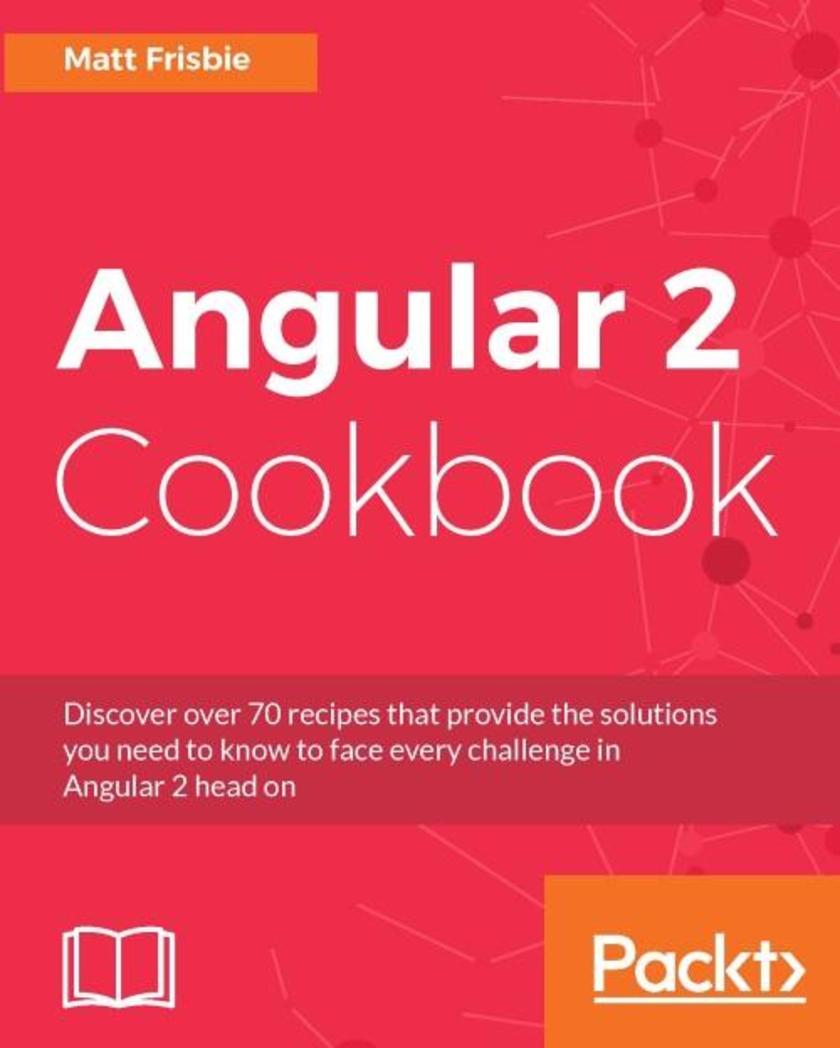
Angular 2 Cookbook
¥90.46
Discover over 70 recipes that provide the solutions you need to know to face every challenge in Angular 2 head on About This Book · A first-rate reference guide with a clear structure and intuitive index that gives you as a developer exactly the information you want in exactly the way you want it · Covers no legacy material from the outdated Angular release candidates; it is up-to-date with the latest release of Angular 2.4 · All the code in the book is explicitly written out, and every piece of code shown is a step towards building a simple working example Who This Book Is For This book is for developers who are competent with JavaScript and are looking to dive headfirst into the TypeScript edition of Angular 2. This book is also geared towards developers with experience in Angular 1 who are looking to make the transition. What You Will Learn · Understand how to best move an Angular 1 application to Angular 2 · Build a solid foundational understanding of the core elements of Angular 2 such as components, forms, and services · Gain an ability to wield complex topics such as Observables and Promises · Properly implement applications utilizing advanced topics such as dependency injection · Know how to maximize the performance of Angular 2 applications · Understand the best ways to take an Angular 2 application from TypeScript in a code editor to a fully function application served on your site · Get to know the best practices when organizing and testing a large Angular 2 application In Detail Angular 2 introduces an entirely new way to build applications. It wholly embraces all the newest concepts that are built into the next generation of browsers, and it cuts away all the fat and bloat from Angular 1. This book plunges directly into the heart of all the most important Angular 2 concepts for you to conquer. In addition to covering all the Angular 2 fundamentals, such as components, forms, and services, it demonstrates how the framework embraces a range of new web technologies such as ES6 and TypeScript syntax, Promises, Observables, and Web Workers, among many others. This book covers all the most complicated Angular concepts and at the same time introduces the best practices with which to wield these powerful tools. It also covers in detail all the concepts you'll need to get you building applications faster. Oft-neglected topics such as testing and performance optimization are widely covered as well. A developer that reads through all the content in this book will have a broad and deep understanding of all the major topics in the Angular 2 universe. Style and approach This book follows a cookbook approach—each recipe presents a unique problem to which the solution is presented in a clear, concise, and manner step-by-step manner. With practical hands-on guidance in each and every recipe, you’ll be able to get to grips with the concepts.


