


 购物车
购物车 个人中心
个人中心

Britain in the Middle Ages: An Archaeological History (Text only)
¥81.03
As in ‘Britain B.C.’ and ‘Britain A.D.’ (also accompanied by Channel 4 series), eminent archaeologist Francis Pryor challenges familiar historical views of the Middle Ages by examining fresh evidence from the ground. The term 'Middle Ages' suggests a time between two other ages: a period when nothing much happened. In his radical reassessment, Francis Pryor shows that this is very far from the truth, and that the Middle Ages (approximately 800-1550) were actually the time when the modern world was born. This was when Britain moved from Late Antiquity into a world we can recognize as more or less familiar: roads and parishes became fixed; familiar institutions, such as the church and local government, came into being; industry became truly industrial; and international trade was now a routine process. Archaeology shows that the Middle Ages were far from static. Based on everyday, often humdrum evidence, it demonstrates that the later agricultural and industrial revolutions were not that unexpected, given what we now know of the later medieval period. Similarly, the explosion of British maritime power in the late 1700s had roots in the 15th century. The book stresses continuous development at the expense of ‘revolution', though the Black Death (1348), which killed a third of the population, did have a profound effect in loosening the grip of the feudal system. Labour became scarce and workers gained power; land became more available and the move to modern farming began. The Middle Ages can now be seen in a fresh light as an era of great inventiveness, as the author examines such topics as 'upward mobility'; the power of the Church; the role of the Guilds as precursors of trade unions; the transport infrastructure of roads, bridges and shipbuilders; and the increase in iron production.
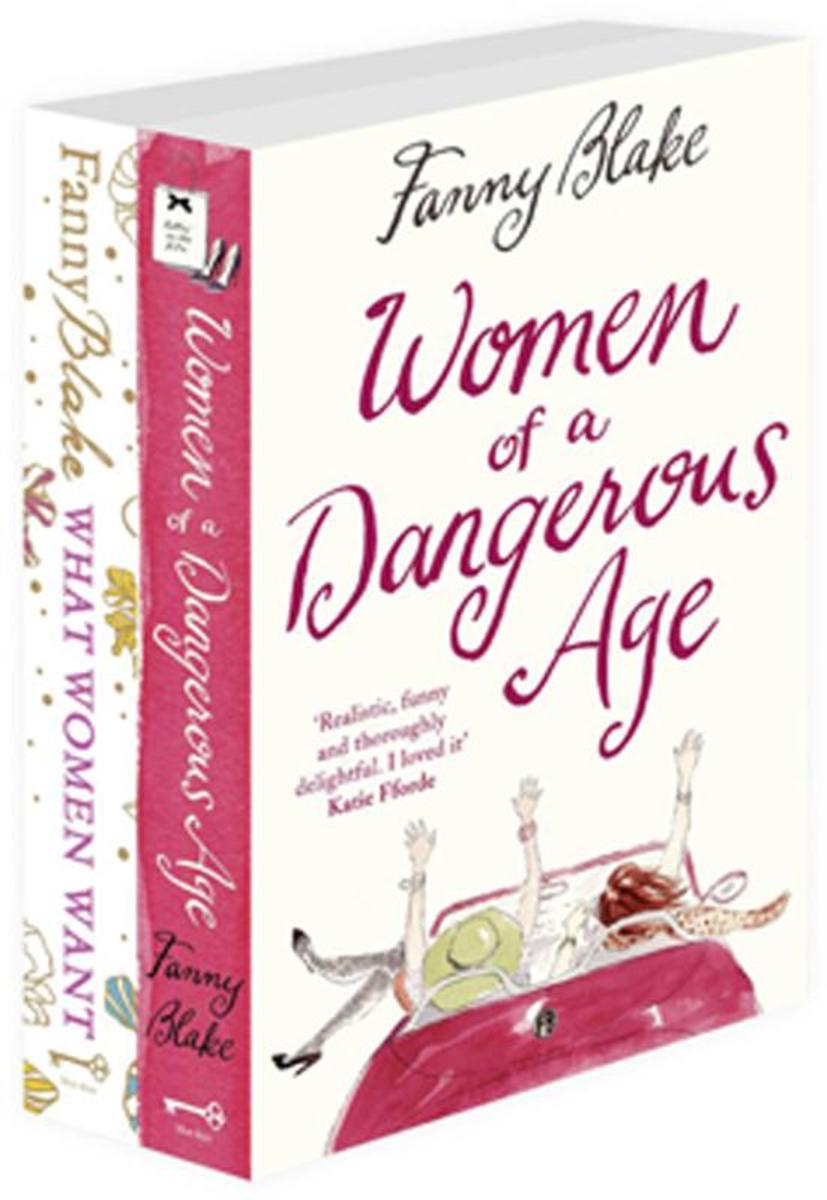
What Women Want, Women of a Dangerous Age: 2-Book Collection
¥81.03
For all women of a dangerous age, a warm and witty two-book collection from the author of The Secrets Women Keep What Women Want Bea is grappling with a job in jeopardy, a stroppy teenage son and the prospect of dating again. Kate is contending with an empty nest and a marriage which has lost its sheen. And then there is Ellen. Widowed at a young age, she is finally ready to date. But her choice of man will put her friendship with Bea and Kate to the ultimate test. Women of a Dangerous Age Lou is celebrating her new-found freedom following the breakdown of her marriage. To celebrate, she travels to India, where she befriends Ali. Ali is a serial mistress. But when she returns home, she discovers her latest lover is not the man she took him for. As Lou and Ali put their pasts behind them, they discover a world of possibilities, until the shocking realisation that they have far more in common than they thought.
Double Trouble: Twins and How to Survive Them (Text Only)
¥81.03
This indispensable guide to multiple pregnancy, birth and beyond, comes from an expert on the subject – Emma Mahony is a twin herself as well as being the mother of twins. Humorous cartoons from the Times’ front-page cartoonist make this a lighthearted, informative guide to everything expectant mothers of twins need to know. Twins are amazing – but multiple pregnancy and birth, not to mention coping with twins once they are born, carries a set of special fears, risks and issues. Many parents-to-be find themselves overwhelmed. This guide is informative yet informal – in a similar vein to ‘Best Friends Guide To Pregnancy’. The author is uniquely experienced in this subject, being a twin and also a mother of baby twins. Contains advice from pregnancy and childcare experts as well as case studies. Illustrated inside with humorous cartoons from Jonathan Pugh, father of two and front-page cartoonist at The Times. An exploration of practical issues such as eating for three, managing breastfeeding, and the trend towards Caesareans for NHS twin births. ? Any special concerns? The unnecessary label of ‘high risk’ in pregnancy. ? Testimonies from mums who have tried different approaches. ? Interviews with medical and midwife experts. ? A step-by-step guide to the different stages of pregnancy and birth, including how to involve the father and explain twins to other siblings. ? Tips on managing once the twins have arrived.

Why Men Marry Some Women and Not Others: How to Increase Your Marriage Potential
¥81.03
A compulsive, informative and eye-opening read for women who want to know which men are most likely to commit to a relationship, what attributes in a partner they’re looking for or whether their current partner will ever propose. Based on 11 years of extensive market research An utterly compelling read, this book contains illuminating facts and tips from the author's market research team of 300 experienced researchers who interviewed focus groups and engaged couples over a period of 11 years. Over 2,500 women and their fiances, along with over 1000 single people, were interviewed. When their answers to questions were analysed, patterns arose that led to the successful strategies offered in this book. Discover: ? How to increase your chances of marrying by up to 60% ? Ten warning signals that a man is never going to marry ? How to trigger a proposal ? The advantages and dangers of dating divorced or widowed men ? How to deal with a partner’s children Findings included: ? After 18 months of a relationship, the chances that a man will propose drop by 50% ? Women who are slender have an easier time meeting men and better odds of getting married ? To be on the safe side, a woman should seriously start looking for a husband in her late 20s. ? The majority of male graduates between 28 and 33 are in their high commitment years and likely to propose ? After 38, the chances men will ever marry drop dramatically. At 42 or 43 many men become confirmed batchelors ? Single men in their late thirties or forties with divorced parents may believe in living together, because in their minds, once people marry, the romance ends ? Men rate sexual or social virtue when choosing a bride: someone they could take home to Mother or introduce to their boss ? For many, their future spouse is a status symbol; meeting their ideas of refinement, elegance and decency
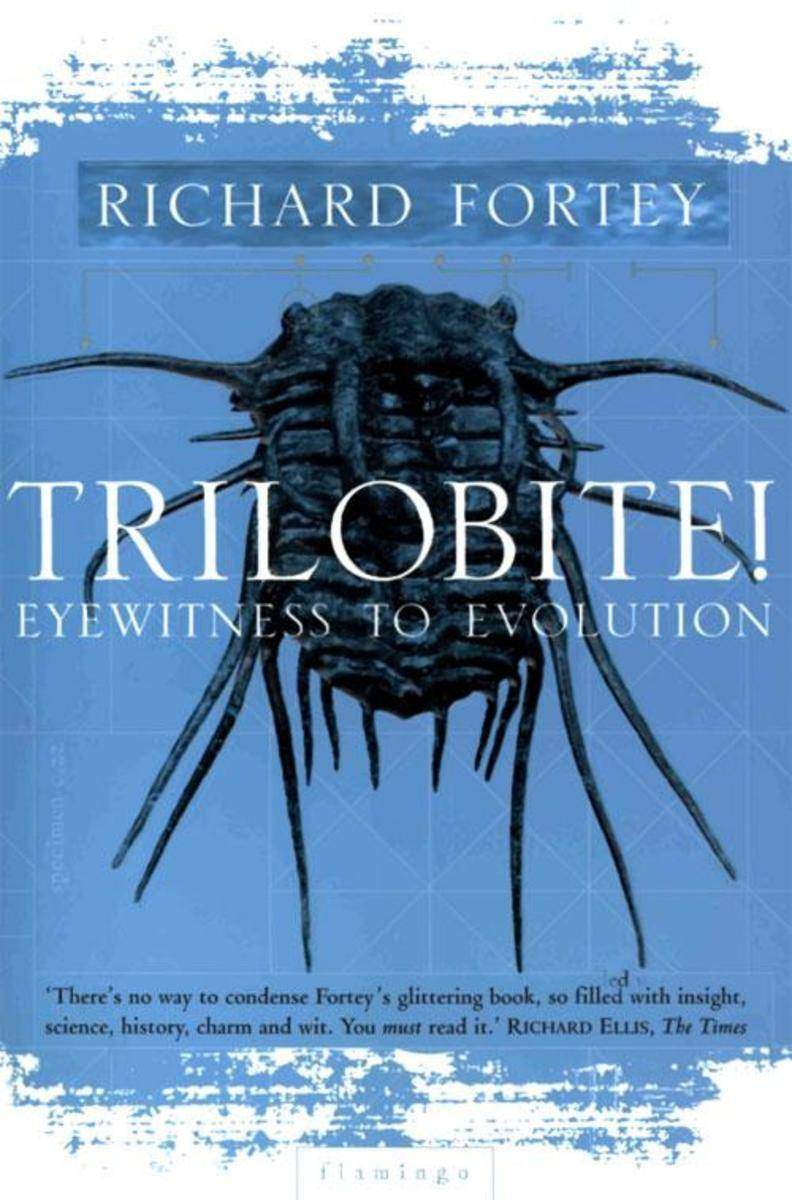
Trilobite! (Text Only)
¥81.03
This ebook edition does not include illustrations. ‘In Richard Fortey’s capable hands the humble grey trilobite has been transformed into the E.T. of the Lower Palaeozoic – a remarkable and fascinating book.’ SIMON WINCHESTER Richard Fortey is one of Britain’s leading popular scientists. Life: An Unauthorised Biography, was short-listed for the Rhone Poulenc prize and has been reprinted five times. In all he writes, Fortey displays extraordinary range, delight and de*ive gifts which make complicated scientific facts and concepts not only easy to understand but a delight to absorb. Trilobite! is an unashamedly trilobito-centric view of the world unravelling the history of the exotic, crustacean-like animals which dominated the seas for three hundred million years. These arthropods witnessed continents move, mountain chains elevated and eroded; they survived ice ages and volcanic eruptions, evolving and adapting exquisitely to their environment. They watched through their crystal eyes whilst life evolved. Their own evolution calibrated geological time itself. Structured like a detective story, this is a light, but highly informative account of the wonders of scientific discovery and an engaging, quirky and fascinating introduction to evolution. Note that it has not been possible to include the same picture content that appeared in the original print version.
Manhood for Amateurs
¥81.03
Michael Chabon, author of WONDER BOYS and the Pulitzer Prize-wining THE AMAZING ADVENTURES OF KAVALIER & CLAY, has written an autobiographical narrative as inventive, beautiful and powerful as his novels. In these insightful, provocative, slyly interlinked essays, one of our most brilliant and humane writers presents his autobiography and vision of life in the way so many of us experience our own: as a series of reflections, regrets and re-examinations, each sparked by an encounter, in the present, that holds some legacy of the past. What does it mean to be a man today? Chabon invokes and interprets and struggles to reinvent for us, with characteristic warmth and lyric wit, the personal and family history that haunts him even as it goes on being written every day. As a son, a husband and above all as a father of four young children, Chabon’s memories of childhood, of his parents’ marriage and divorce, of moments of painful adolescent comedy and giddy encounters with the popular art and literature of his own youth, are like a theme played – on different instruments, with a fresh tempo and in a new key – by the mad quartet of which he now finds himself co-conductor.
The Big Healthy Soup Diet: Nourish Your Body and Lose up to 10lbs in a Week
¥81.03
An incredible and fast 2 week programme with 60 soups that helps you lose up to 10lbs – the healthy way. Each soup is full of specific nutritional superfoods to help you look years younger and build your immunity too. Soup has always been an excellent way to bring your body back to health and lose weight. Linda Lazarides offers a 2 week superfood-filled soup programme that not only helps you lose as much as 10lbs but can also be used to target health problems in a revolutionary way. Quick and easy to make, soup is the ultimate convenience food – a delicious way to change your diet for the better. It allows you effortlessly to eat those recommended daily portions of vegetables, herbs and pulses in the most mouth-watering combinations. Linda Lazarides gives you all of the most up-to-date information on how to combat weight problems and other health and beauty problems by eating soups with ingredients such as onions, coriander, soy, tomatoes, radishes and lemon juice. As well as the weight loss related soup recipes, the book includes a strong section of ailment-specific soups containing those nutritional 'magic bullets' that can help you naturally overcome symptoms. It will include soup recipes to help with: High cholesterol or blood pressure; Overweight; Gall-stones; Candida; Chronic tiredness; Arthritis; Syndrome X; Skin problems; Low thyroid function.

Survival of the Sickest: The Surprising Connections Between Disease and Longevit
¥81.03
In this groundbreaking and absorbing book Dr. Sharon Moalem, delves back into the evolution of man to offer a radical perspective on survival, the human body, and our understanding of disease. Survival of the Sickest will change the way you think about your body. Dr. Moalem investigates peculiar and puzzling features of human biology to reveal the answers to such provocative questions as: ? Why do we need to pee when we’re cold? ? Can a person rust to death? ? Why are Greeks hairier than Africans? ? Can the tanning salon lower cholesterol? ? Why are leeches back in vogue? ? Can sunglasses cause sunburns? ? Who gets drunk faster – Europeans or Asians? In considering the question of why diseases exist, Dr Moalem proposes that most common diseases came into existence for very good reasons. Diabetes, hemochromatosis, cystic fibrosis and sickle cell anemia may all exist because, at some time in our past, they helped our ancestors survive some grand challenge to human existence. In turn, he also discovers that genetic and cultural differences have led to each race having different and unique ways of reacting to their environment and subsequently how they become susceptible to certain diseases. Survival of the Sickest is a book about life – yours, ours and every little living thing under the sun. About how we all got here, where we're all going and what we can do about it. Revelatory and written in an utterly engaging fashion, Sharon Moalem's book will change the way you think about your body.
Tommy’s Honour: The Extraordinary Story of Golf’s Founding Father and Son
¥81.03
The definitive account of golf’s founding father and son, Old and Young Tom Morris. For the first time, the two will be portrayed as men of flesh and blood – heroic but also ambitious, loving but sometimes confused and angry. Two men from one household, with ambitions that made them devoted partners as well as ardent foes. Tommy's Honour is a compelling story of the two Tom Morrises, father and son, both supremely talented golfers but utterly different, constituting a record-breaking golfing dynasty that has never been known before or since. Father, Old Tom Morris, grew up a stone's throw away from golf's ancestral home at St Andrews, a whisky-fuelled caddie, a wonderful 19th century character who became an Open Champion three times before running the Royal & Ancient, then sole governing body of the game. His son, Young Tom, arguably an even more prodigious talent than his father, was a golfing genius, the Tiger Woods of his era, who at 17 became the youngest player, to this day, to win the Open Championship. He then went on to win it four times in a row, an unprecedented achievement. On one occasion, father and son fought it out at the last hole of the Championship before the son finally triumphed. But then came the pivotal day that would change their lives forever, the death of Young Tom’s wife and unborn child. The cataclysmic events of that day eventually lead to Young Tom’s tragic death, aged 24, with his father living on for another 20 years in deep remorse. So on the one hand, you have the story of one of the most influential figures in the history of golf, a pioneer in the birth of the modern game and of Scottish and Open Championship golf. And on the other hand – and this is the real appeal of this book – you have an extraordinary father-and-son story. It’s for every son who ever competed with his father, and every father who has guided his son towards manhood, then found it hard to let go.
Jumbo to Jockey: Fasting to the Finishing Post
¥81.03
How one man turned a midlife crisis into the realisation of a childhood dream at 4pm at Wincanton Dominic Prince, journalist, documentary-maker, racing enthusiast and bon viveur hit the scales at nearly 16 stone on his 45th birthday. It was not always so. His first love was and still is horses. As a child he would bunk off school to ride his first horse, Conker, and it was only after an horrific accident that left him and his horse wound up in barbed wire that he stepped down off his mount and gave in to the lure of Fleet Street and the three hour lunch. But the smell of oats and the mist of early morning canters were never far away, even if he was living it from the other side of the paddock. In the 20 years since he last rode a horse he has made a film on Lester Piggott, bought and sold one race horse and won and lost thousands on 'the occasional flutter'. Through the drastic changes to his overindulgent lifestyle that he has had to go through to make the weight for the 4pm at Wincanton in October, is weaved an insider's account of the very particular world of jockeys, racing and the multi-billionaire owners who pull the strings at the world's greatest race courses. Memoir, sports book, exposé of the dark world of horse racing, at heart Jumbo to Jockey is the story that all middle aged men will know well of the realisation of a childhood dream before it is too late.
Working It Out
¥81.03
Watch out Bridget Jones and Ally McBeal – Johnathan Burlip wants you to know his side of the story! For Johnathan Burlip, solicitor and virtuoso shirt ironer, nothing is ever simple. Girlfriends, dysfunctional families, petulant bosses – all cause him grief and confusion. Marooned in modern London, Johnathan finds himself rudely ejected from the comfortable life of corporate lawyer, leaving him spinning out of control towards an undistinguished legal career in Finsbury Park, where the clientele and professional challenges are somewhat different. While he participates in a love story for our times, Johnathan is tormented on his journey by a chorus of politically correct parents, well-manicured mobsters, a bionic hamster and a cat with only one (curtailed) life.
The Discovery of Chocolate: A Novel
¥81.03
A wonderfully inventive and entertaining journey through time and the history of chocolate! The Discovery of Chocolate is a fabulous tale, as rich and exotic as the gorgeous creation that Diego de Godoy first discovers when he arrives in Mexico with Cortes and his conquistadors. Diego arrives in the New World in search of treasure. What he finds is love, and chocolate, and an elixir of life. Separated from his lover, he must wander the world, and the centuries, in search of the fulfillment that he first knew in Mexico. In a series of dramatic episodes that are evocative, witty and thought-provoking, from revolutionary Paris to Freud’s Vienna, Fry’s Bristol and Hershey’s Pittsburgh, Diego and his ever-faithful greyhound, Pedro, seek the perfection of chocolate and the meaning of life.
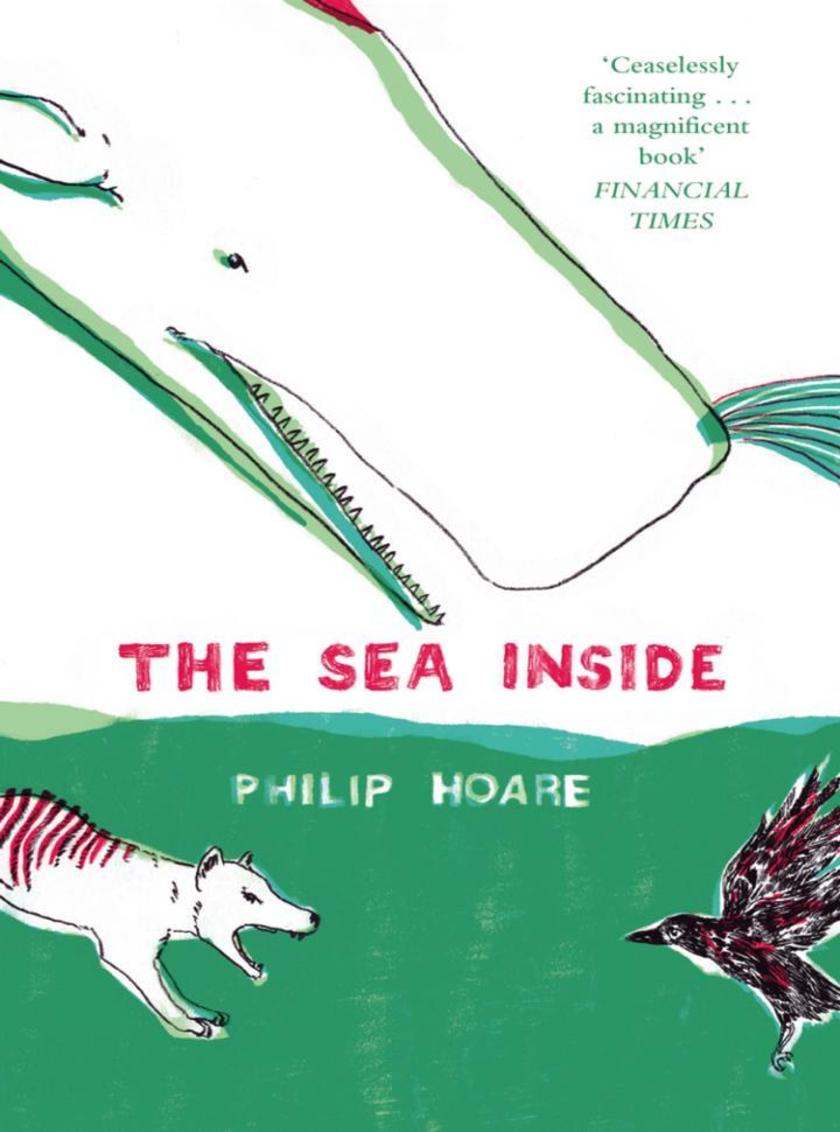
The Sea Inside
¥81.03
A startling new book, his most personal to date, from Philip Hoare, co-curator of ’Moby Dick: Big Read and winner of the 2009 Samuel Johnson Prize for ‘Leviathan’. The sea surrounds us. It gives us life, provides us with the air we breathe and the food we eat. It is ceaseless change and constant presence. It covers two-thirds of our planet. Yet caught up in our everyday lives, we barely notice it. In ‘The Sea Inside’, Philip Hoare sets out to rediscover the sea, its islands, birds and beasts. He begins on the south coast where he grew up, a place of almost monastic escape. From there he travels to the other side of the world – the Azores, Sri Lanka, New Zealand – in search of encounters with animals and people. Navigating between human and natural history, he asks what these stories mean for us now. Along the way we meet an amazing cast; from scientists to tattooed warriors; from ravens to whales and bizarre creatures that may, or may not, be extinct. Part memoir, part fantastical travelogue, ‘The Sea Inside’ takes us on an astounding journey of discovery.
A Piece of the Sky is Missing
¥81.03
David Nobbs’ classic is now available as an ebook . Why should up-and-coming, thirty-two-year-old executive Robert Bellamy get himself the sack? What made him draw a caricature of the Exports Manager on the wall of the non-executive gents? Why is he his own worst enemy? Is it because he nearly ran away from boarding school on his third day or because, when he was fourteen, his mother developed a fatal friendship for a man who looked like Hitler? Does his sense of inadequacy stem from his once being mistaken for a draft of 350 men? Or from his failure long ago to do justice to the facilities at Mme Antoinette's Maison d'Amitié (Paris branch)? Has he been too slow with Sonia, too fast with Frances? Whatever the reason, one act of brinkmanship seems to lead to another. Robert finds himself involved in a series of embarrassing farewells and confusing interviews and open and shut court case as he drifts towards the prospect of a stiflingly happy Christmas and an intolerably cheerful New Year.
The Complete Short Stories: The 1960s (Part 2)
¥81.03
Following on from the 1950s collection, this is the second collection of Brian Aldiss’ short stories, taken from the 1960s. A must-have for collectors. Part two of four. This collection gathers together, for the very first time, Brian Aldiss’ complete catalogue of short stories from the 1960s, in four parts. Taken from diverse and often rare sources, the works in this collection chart the blossoming career of one of Britain’s most beloved authors. From stories of discordant astronauts, approaching a star-swallowing vortex, to a mother and son, in danger of becoming ever younger when they are captured by an alien race and taken to a world where time runs backward, this book proves once again that Aldiss’ gifted prose and unparalleled imagination never fail to challenge and delight. The four books of the 1960s short story collection are must-have volumes for all Aldiss fans, and an excellent introduction to the work of a true master. THE BRIAN ALDISS COLLECTION INCLUDES OVER 50 BOOKS AND SPANS THE AUTHOR’S ENTIRE CAREER, FROM HIS DEBUT IN 1955 TO HIS MORE RECENT WORK.
Cancer is a Word, Not a Sentence
¥81.03
A six-step, practical guide that helps you through the first few weeks following diagnosis. Cancer is a Word, Not a Sentence is a straightforward guide to life after diagnosis. It explains what your diagnosis actually means, what the tests are about, what the future holds, how to judge the treatment options open to you, how to cope with the side effects, and the inevitable ups and downs you experience following treatment. Dr Buckman focuses on the day-to-day: how to talk to your partner, children and friends, and how to communicate with your medical team. There's even a section addressed to those close to you who 'just don't know what to say.' His informed, no-nonsense approach offers reliable and essential facts and advice for everyone dealing with a diagnosis of cancer.
A Scandalous Life: The Biography of Jane Digby (Text only)
¥81.03
The biography of Jane Digby, an ‘enthralling tale of a nineteenth-century beauty whose heart – and hormones – ruled her head.’ Harpers and Queen A celebrated aristocratic beauty, Jane Digby married Lord Ellenborough at seventeen. Their divorce a few years later was one of England s most scandalous at that time. In her quest for passionate fulfilment she had lovers which included an Austrian prince, King Ludvig I of Bavaria, and a Greek count whose infidelities drove her to the Orient. In Syria, she found the love of her life, a Bedouin nobleman, Sheikh Medjuel el Mezrab who was twenty years her junior. Bestselling biographer Mary Lovell has produced from Jane Digby’s diaries not only a sympathetic and dramatic portrait of a rare woman, but a fascinating glimpse into the centuries-old Bedouin tradition that is now almost lost. Note that it has not been possible to include the same picture content that appeared in the original print version.
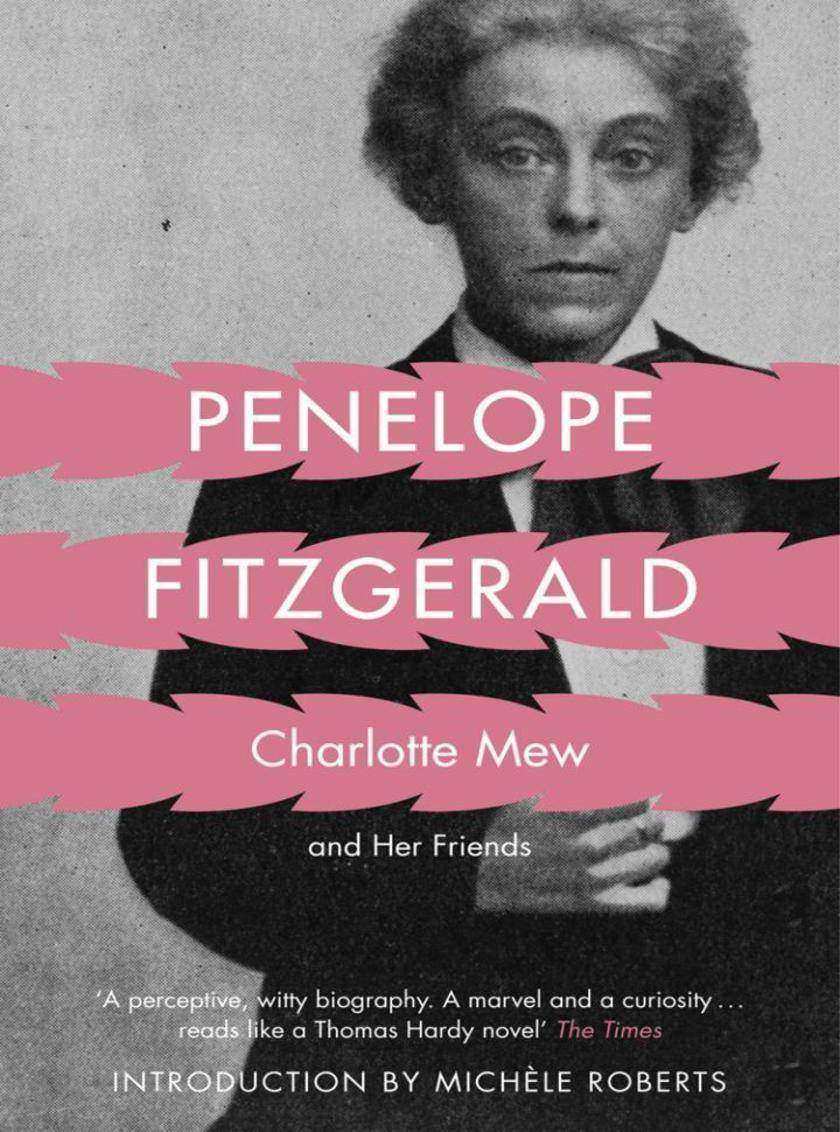
Charlotte Mew: and Her Friends
¥81.03
Penelope Fitzgerald’s fascinating portrait of the tragic poet and her life at the heart of the Bloomsbury set. Charlotte Mew (1869-1928) cut one of the most distinctive figures of the twentieth century – beloved of Siegfried Sassoon and Walter de la Mare (for whom she was ‘a very rare being’), unafraid of Virginia Woolf, and considered by Hardy to be ‘far and away the best living woman poet’. Part of a new wave of fashionable female dandies who lived passionate, precarious existences in Bloomsbury, she was an enchanting and spirited personality. But behind the brave face was a life riddled with grief: left to care for her disturbed mother, two siblings with undiagnosed Schizophrenia and Charlotte herself burdened by depression and closeted lesbianism; she killed herself by drinking household disinfectant. In this unexpectedly gripping portrait of a life of passion unfulfilled, Penelope Fitzgerald brings all her novelist’s skills into play in telling a story that is at once tragic, beautiful and deeply human.
The Year of Yes: The Story of a Girl, a Few Hundred Dates, and Fate
¥81.03
Headley, a wise-cracking New York City girl with as much wit as any character on Sex and the City, is jaded and cynical about men in New York. She vows to say yes to any and every person who asks her out – a taxi driver, a homeless man – you name it, she'll say yes for an entire year. By the year's end, she meets the man she eventually marries. ‘The Year of Yes’ is the hilarious and hopeful true account of one woman’s quest to find a man she can stand (for longer than a couple of hours). Frustrated by her own pitiful taste, writer Maria Headley decided to leave her love life up to fate, going out with everyone who asked her: homeless men, taxi drivers, and yes, even a couple of women. Opening her heart and mind to the possibility that her perfect match might be the person she least expects, she spent 12 months dating most of New York City, and beyond, including: JARZHE: A Microsoft Millionaire who still lived with his mother THE ROCKSTAR: A young homeless man who believed himself to be Jimi Hendrix IRA: Her high school nemesis, whom she’d spent seven years rejecting THE MIME: A man in the Marceau Mold who proposed with hand gestures CHUPA CHUPA: A 70-year-old neighborhood eccentric who spoke only Spanish And finally, a man whose baggage should have taken him off her list – at least until ‘The Year of Yes’ taught her what was really important: love and perseverance always wins in the end.
The Sisters Who Would Be Queen: The tragedy of Mary, Katherine and Lady Jane Gre
¥81.03
The dramatic untold story of the three tragic Grey sisters, all heirs to the Tudor throne, all victims to their royal blood. Lady Jane Grey is an icon of innocence abused. Remembered as the ‘Nine Days Queen’, she has been mythologized as a child-woman sacrificed to political expedience. But behind the legend lay a rebellious adolescent who became a leader, and no mere victim. Growing up in her shadow, Jane’s sisters Katherine and Mary would have to tread carefully to survive. The dramatic lives of the younger Grey sisters remain little known, but both women became heirs and rivals to the Tudor monarchs, Mary and Elizabeth I. To gain Queen Mary’s trust, teenaged Katherine ignored Jane’s final request not to change her religion, only to risk her life with a marriage that threatened Queen Elizabeth’s throne. While Katherine’s friends fought to save her, the youngest Grey sister, Mary, stayed at court. Though too poor and plain to be significant, she looked set to escape the burden of her royal blood. But then she too fell in love and incurred the Queen’s fury. Exploding the many myths of Lady Jane’s life, and casting fresh light onto Elizabeth’s reign, acclaimed historian Leanda de Lisle brings the Grey sisters’ tumultuous world to life: at a time when a royal marriage could gain you a kingdom, or cost you everything.
The Obvious: Everything You Need to Know to Succeed
¥81.03
The secrets to success in business aren't secrets at all. They are simple and obvious, but we overlook them. This life-changing book offers the short-cut road to success – in business and beyond giving digestible and effective advice that actually works, served up with inspirational anecdotes in a humorous style. 'The Obvious' is a refreshingly simple and original business book. Business guru James Dale shows how the principles, values, and strategies that make businesses successful are those simple ideas that apply to life. Listening opens up worlds to you, paying attention puts you at an advantage over people who don't even show up, and telling the truth beats lying ten times out of ten. Try the simple – it's almost always more effective than the complicated. You'll find this book not only a sharp, cut-to-the-chase career book, but also an handbook of engaging wisdom that will bring you fast solutions to problems in any area of your life. 'The Obvious' reveals the eight core lessons you need to remember – each full of humour and fascinating anecdotes about the world's most successful movers and shakers. You'll find compelling real-life examples of the 'simple=success' formula from companies such as Apple and IBM, Ikea and Starbucks, as well as innovative people from Thomas Edison and Bill Gates, to Woody Allen and Steven Spielberg. Some ‘Obvious’ life-lessons that work: ? Simple is Better Than Complicated – ask if you don't know; shut up and listen; be nice – it gets results. ? Be Honest – the truth is powerful; apologies work; an excuse is not a reason; take responsibility – 'I will do it' gets you noticed. ? Open Your Mind – failure is a good teacher; bosses are not all idiots – learn from them. ? Energy Gives You the Edge – patience is a virtue; so is impatience; 'Do it today' – the key to effectiveness. Readable, fast-paced and entertaining, 'The Obvious' is for anyone's business bookshelf, from the CEO to the postroom, HR director to the entire sales force – or anyone wanting to be successful in life.


