万本电子书0元读

万本电子书0元读

Laws
Laws
Plato
¥40.79
The Laws are discussed by three representatives of Athens, Crete, and Sparta. The Athenian, as might be expected, is the protagonist or chief speaker, while the second place is assigned to the Cretan, who, as one of the leaders of a new colony, has a special interest in the conversation. At least four-fifths of the answers are put into his mouth. The Spartan is every inch a soldier, a man of few words himself, better at deeds than words. The Athenian talks to the two others, although they are his equals in age, in the style of a master discoursing to his scholars; he frequently praises himself; he entertains a very poor opinion of the understanding of his companions.
The Athenian Constitution
Aristotle
¥40.79
The Constitution of the Athenians describes the political system of ancient Athens. The treatise was composed between 330 and 322 BC.
The Analects
The Analects
Confucius
¥40.79
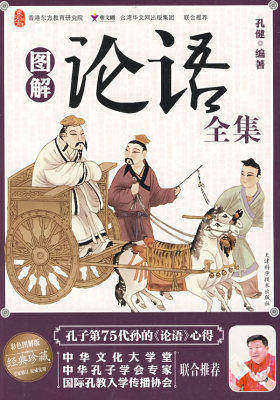
Confucius believed that the welfare of a country depended on the moral cultivation of its people, beginning from the nation's leadership. He believed that individuals could begin to cultivate an all-encompassing sense of virtue through ren, and that the most basic step to cultivating ren was devotion to one's parents and older siblings. He taught that one's individual desires do not need to be suppressed, but that people should be educated to reconcile their desires via rituals and forms of propriety, through which people could demonstrate their respect for others and their responsible roles in society.
On Interpretation
On Interpretation
Aristotle
¥40.79
On Interpretation is among the earliest surviving philosophical works in the Western tradition to deal with the relationship between language and logic in a comprehensive, explicit, and formal way.
On Longevity and Shortness of Life
Aristotle
¥40.79
The reasons for some animals being long-lived and others short-lived, and, in a word, causes of the length and brevity of life.
Phaedrus
Phaedrus
Plato
¥40.79
The Phaedrus is closely connected with the Symposium, and may be regarded either as introducing or following it. The two Dialogues together contain the whole philosophy of Plato on the nature of love, which in the Republic and in the later writings of Plato is only introduced playfully or as a figure of speech. But in the Phaedrus and Symposium love and philosophy join hands, and one is an aspect of the other. The spiritual and emotional part is elevated into the ideal, to which in the Symposium mankind are described as looking forward, and which in the Phaedrus, as well as in the Phaedo, they are seeking to recover from a former state of existence.
On Generation and Corruption
Aristotle
¥40.79
Our next task is to study coming-to-be and passing-away. We are to distinguish the causes, and to state the definitions, of these processes considered in general-as changes predicable uniformly of all the things that come-to-be and pass-away by nature. Further, we are to study growth and 'alteration'. We must inquire what each of them is; and whether 'alteration' is to be identified with coming-to-be, or whether to these different names there correspond two separate processes with distinct natures.
The Critique of Practical Reason
Immanuel Kant
¥40.79
The Critique of Practical Reason follows on from Kant's Critique of Pure Reason and deals with his moral philosophy. The second Critique exercised a decisive influence over the subsequent development of the field of ethics and moral philosophy, beginning with Johann Gottlieb Fichte's Doctrine of Science and becoming, during the 20th century, the principal reference point for deontological moral philosophy.
Fundamental Principles of the Metaphysic of Morals
Immanuel Kant
¥40.79
The first of Immanuel Kant's mature works on moral philosophy and remains one of the most influential in the field. Kant conceives his investigation as a work of foundational ethics, one that clears the ground for future research by explaining the core concepts and principles of moral theory and showing that they are normative for rational agents. Kant aspires to nothing less than this: to lay bare the fundamental principle of morality and show that it applies to us.
The Great Learning
The Great Learning
Confucius
¥40.79
What the great learning teaches, is to illustrate illustrious virtue; to renovate the people; and to rest in the highest excellence. The point where to rest being known, the object of pursuit is then determined; and, that being determined, a calm unperturbedness may be attained to. To that calmness there will succeed a tranquil repose. In that repose there may be careful deliberation, and that deliberation will be followed by the attainment of the desired end.
The Alexandrian Wars: English and Latin Language
Julius Caesar
¥40.79
When the war broke out at Alexandria, Caesar sent to Rhodes, Syria, and Cilicia, for all his fleet; and summoned archers from Crete, and cavalry from Malchus, king of the Nabatheans. He likewise ordered military engines to be provided, corn to be brought, and forces dispatched to him. Meanwhile he daily strengthened his fortifications by new works; and such parts of the town as appeared less tenable were strengthened with testudos and mantelets. Openings were made in the walls, through which the battering-rams might play; and the fortifications were extended over whatever space was covered with ruins, or taken by force. For Alexandria is in a manner secure from fire, because the houses are all built without joists or wood, and are all vaulted, and roofed with tile or pavement.
The Civil Wars, Book 3
Julius Caesar
¥40.79
Julius Caesar, holding the election as dictator, was himself appointed consul with Publius Servilius; for this was the year in which it was permitted by the laws that he should be chosen consul. This business being ended, as credit was beginning to fail in Italy, and the debts could not be paid, he determined that arbitrators should be appointed: and that they should make an estimate of the possessions and properties of the debtors, how much they were worth before the war, and that they should be handed over in payment to the creditors. This he thought the most likely method to remove and abate the apprehension of an abolition of debt, the usual consequence of civil wars and dissensions, and to support the credit of the debtors.
Cum s? fii un bun p?rinte
Poenaru Michiela
¥40.79
This is a complete facsimile of the original edition published by the Interborough Rapid Transit Company to commemorate the opening of New York's first subway line. From the perspective of both urban history and the history of transportation, this book is an important primary source. Building the city's first subway in the early years of the twentieth century required delicate collaboration between public and private interests and called for the expenditure of considerable sums of both public and private money. The book introduces us to Abram S. Hewitt, a late nineteenth-century mayor of New York City. It was Hewitt who realized that, while private capital alone had been perfectly adequate for building elevated rapid transit lines in New York as early as the 1870s, the more costly construction of underground rapid transit lines was far beyond the ability of private corporations to finance. Hewitt set in motion a chain of events that sanctioned the use of public funds for subway construction, with the completed facility then to be leased to a private company for day-to-day operation. The private firm that emerged, both to build and to operate the first subway in New York, was called the Interborough Rapid Transit Company, a name that would later be rendered more crisply as the IRT. The City of New York and the Interborough Rapid transit Company inaugurated service over the city's first subway line on Thursday afternoon, October 27, 1904. Mayor George B. McClellan, son of the Civil War general, took the controls of the first ceremonial train at City Hall Station in downtown Manhattan and headed north. In one way or another, the subway has been going ever since. The book also presents important tabular and statistical information, as well as clear and concise narrative descriptions of technical details.
Wild Apples
Wild Apples
Henry David Thoreau
¥40.79
It is remarkable how closely the history of the Apple-tree is connected with that of man. The geologist tells us that the order of the Rosaceae, which includes the Apple, also the true Grasses, and the Labiatae, or Mints, were introduced only a short time previous to the appearance of man on the globe.
Canoeing in the wilderness
Henry David Thoreau
¥40.79
At the time Thoreau made this wilderness canoe trip he was forty years old. The record of the journey is the latter half of his The Maine Woods, which is perhaps the finest idyl of the forest ever written. It is particularly charming in its blending of meditative and poetic fancies with the minute description of the voyager’s experiences.
Gorgias
Gorgias
Plato
¥40.79
In several of the dialogues of Plato, doubts have arisen among his interpreters as to which of the various subjects discussed in them is the main thesis. The speakers have the freedom of conversation; no severe rules of art restrict them, and sometimes we are inclined to think, with one of the dramatis personae in the Theaetetus, that the digressions have the greater interest. Yet in the most irregular of the dialogues there is also a certain natural growth or unity; the beginning is not forgotten at the end, and numerous allusions and references are interspersed, which form the loose connecting links of the whole.
Protagoras
Protagoras
Plato
¥40.79
The Protagoras, like several of the Dialogues of Plato, is put into the mouth of Socrates, who describes a conversation which had taken place between himself and the great Sophist at the house of Callias—'the man who had spent more upon the Sophists than all the rest of the world'—and in which the learned Hippias and the grammarian Prodicus had also shared, as well as Alcibiades and Critias, both of whom said a few words—in the presence of a distinguished company consisting of disciples of Protagoras and of leading Athenians belonging to the Socratic circle.
Reverie cu flori de cire
Gwyneth Rees
¥40.79
A fi rom?n? ?E o ru?ine!“, exclama Cioran. ?n ce m?sur? filosoful de la Paris avea dreptate? Ce ?nseamn? ?a fi rom?n“ ?ntr-o fals? tranzi?ie care aparent nu se mai termin?? La aceste ?i multe alte ?ntreb?ri ?ncearc? s? r?spund? scriitorul Ionel Necula ?n opus-ul de fa??, care ?nsumeaz? analize ale r?sturn?rilor sociale evidente, ?nregistrate ?n ultimii ?aptesprezece ani. Nu ?ntotdeauna comod, spiritul coroziv al autorului ??i spune cuv?ntul, av?nd uneori accente incendiare.
每满80减40 幸福的感觉: 给青少年讲积极心理学
幸福的感觉: 给青少年讲积极心理学
岳晓东
¥40.71
本书是一本兼顾理论与实践的参考书,作者尝试以轻松的笔触,深浅出地讲解积极心理的窍门,为青少年的生命注活力。由备受保护的儿童过渡至成年人阶段,无可避免地要面对生命中不同的挑战,学业、工作、恋爱,或逢成功,或遇挫败;能够掌握书中谈到的“积极心理公式”,自能易于在学业与事业发展上找到方向,也不会因一时的挫折而否定自我,明白自己在处理不同事情时的行为及心理反应,从而借着个人的努力来找出调节和步的方法和空间,寻得快乐人生。 大量的心理学研究也表明,主观幸福感高的人会在各种不利的应激状况下,多体验愉悦情绪而少体验不愉悦情绪。由此,主观幸福感高的人会对困境充满了乐观期盼,而避免悲观期望。如美国康奈尔大学心理学家伊森(Alice Isen)等人的研究表明,体验正面情绪的人思考问题会更活跃。而本书,将会与您分享怎样在生活磨炼中不断提高自我的认知调整能力。
每满80减40 英国食物史
英国食物史
克拉丽莎·迪克森·赖特
¥40.70
著名美食作家、明星主厨克拉丽莎·赖特按照时间顺序讲述了英国人餐桌的变迁,从中世纪时单一的本土食物鸡蛋和培根、王朝及帝国时代随着移民带的东方香料、食材和烹调方法,到现代的饮食方式。你可以在书中读到王室、贵族、厨师、烹饪书作家、美食家和平常人的故事,了解到来自欧洲大陆的王后们怎么引领英国的餐桌潮流、土豆是怎么从无人问津的外来植物变成国民食物(英国皇家学会功不可没)、学术大咖约翰·伊夫林为他挚爱的沙拉写的专著…… 英伦三岛这个在地理上与大陆分隔的岛国,从来都不是孤独的,它继承了欧洲和其他帝国的历史,经历了一波又一波的侵略和移民,而英国的食物就是这些历史和体验的产物,独具地域特色和历史特色。享用这本书吧,愿各位吃得愉快,读得心!
每满80减40 文献语言学(第六辑)  中华书局出品
文献语言学(第六辑) 中华书局出品
华学诚主编
¥40.70
《文献语言学》为学术集刊,每年两辑。主要栏目有:经典重刊、原创报道、学术综述、争鸣书评、青年论坛。 本刊着重刊发原创性研究作品,主要包括文献语言学理论与方法、汉字与汉字史、训诂与词汇史、音韵与语音史、语法与语法史、方俗语与方言史、语文与语言学史等研究领域的成果。也刊登学术热与重的研究综述、有重要影响的学术著作的书评、重要论题的纯学术争鸣或商榷性文章,并刊布具有重要学术价值的文献语言学研究数据。本刊更强调扶持年轻学者。