


 购物车
购物车 个人中心
个人中心
Sakai CLE Courseware Management
¥99.18
This book takes a step-by-step, practical approach and is filled with examples and illustrations. This book is written for a wide audience that includes teachers, system administrators, and first time developers. It also appeals to the Sakai open source community, potential community members, and decision makers working in education.
Oracle PeopleSoft Enterprise Financial Management 9.1 Implementation
¥99.18
This step-by-step tutorial will take you through Oracle PeopleSoft Financial Management 9.1 and show you how to implement it into your business. It is written in an easy-to-read style, with a strong emphasis on real-world, practical examples with step-by-step explanations. This book will establish a solid foundation for your efforts to become a successful PeopleSoft Financials practitioner. If you are a functional implementation analyst, a business analyst, or a business user who plans to start using PeopleSoft applications, this book is for you. Reading this book will equip you with the basic skills to configure and maintain PeopleSoft financial applications.
Getting Started with XenDesktop 7.x
¥99.18
This is a stepbystep, taskbased, practical guide to learning and getting your basic XenDesktop 7.x site up and running. It is fast, easy, and makes learning desktop and application virtualization simple. If you are a system administrator, consultant, or beginner who wants to implement and administer Citrix XenDesktop sites, then this book is for you. Familiarity with virtualization of desktops and applications and datacenter concepts will be helpful. The ability to read network diagrams and understand servers, data flow, clients, devices, and the interworking of these pieces will be beneficial.
Minitab Cookbook
¥99.18
This practical cookbook covers a broad range of topics in an easytounderstand manner. Stepbystep instructions guide you through even the most complicated of tools in Minitab. This book is great for anyone who is familiar with statistics and who wants to learn how Minitab works. Whilst you do not need to be an expert in all areas of statistics, you should understand the basics of the chapters you are interested in.
Microsoft Exchange 2013 High Availability
¥99.18
This book is a handson practical guide that provides the reader with a number of clear scenarios and examples, making it easier to understand and apply the new concepts. Each chapter can be used as a reference, or it can be read from beginning to end, allowing consultants/administrators to build a solid and highly available Exchange 2013 environment. If you are a messaging professional who wants to learn to design a highly available Exchange 2013 environment, this book is for you. Although not a definite requirement, practical experience with Exchange 2010 is expected, without being a subject matter expert.
VMware vSphere 5.x Datacenter Design Cookbook
¥99.18
A practical guide packed with stepbystep recipes to design a virtual datacenter using VMware 5.x This book is a guide for anyone interested in designing virtualized datacenters using VMware vSphere 5.x and the supporting components. Current administrators of VMware vSphere environments will find this book useful when interested in becoming a vSphere Architect or are interested in learning more about the virtual datacenter design process. Knowledge of vSphere installation, configuration, and administration is a prerequisite.
Direct3D Rendering Cookbook
¥99.18
This is a practical cookbook that dives into the various methods of programming graphics with a focus on games. It is a perfect package of all the innovative and uptodate 3D rendering techniques supported by numerous illustrations, strong sample code, and concise explanations. Direct3D Rendering Cookbook is for C# .NET developers who want to learn the advanced rendering techniques made possible with DirectX 11.2. It is expected that the reader has at least a cursory knowledge of graphics programming, and although some knowledge of Direct3D 10+ is helpful, it is not necessary. An understanding of vector and matrix algebra is required.
IBM Cognos 10 Report Studio Cookbook, Second Edition
¥99.18
This Cookbook contains step-by-step instructions for Report Studio 10.1 users to author effective reports. The book is designed in a way that you can refer to it chapter by chapter, look at the list of recipes and read them in no particular order.The Cognos 10.1 Report Studio Cookbook is for you if you are a Business Intelligence Developer who is working on IBM Cognos 10 Report Studio and wants to author impressive reports by putting to use what this tool has to offer. It is also ideal you are a Business Analyst or Power User who authors his own reports and wants to look beyond the conventional features of IBM Cognos 10 Report Studio.This book assumes that you are familiar with the architecture of IBM Cognos 10. You should also have basic knowledge of IBM Cognos Report Studio and can do the basic report authoring tasks.
Learning Joomla! 3 Extension Development, Third Edition
¥99.18
A practical guide with step-by-step examples that build on each other so you can learn by doing and get hands-on knowledge about creating your plugins, modules, and components in Joomla."Learning Joomla! 3 Extension Development, Third Edition" is for developers who want to create their own Joomla extensions. It is assumed you will have some basic PHP, HTML, and CSS knowledge, but you don’t need any prior Joomla programming experience. This book will also be useful to people who just want to make minor customizations to existing Joomla extensions and build on the work of others in the open source spirit.
Oracle SOA Suite Performance Tuning Cookbook
¥99.18
This is a Cookbook with interesting, hands-on recipes, giving detailed de*ions and lots of practical walkthroughs for boosting the performance of your Oracle SOA Suite.This book is for Oracle SOA Suite 11g administrators, developers, and architects who want to understand how they can maximise the performance of their SOA Suite infrastructure. The recipes contain easy to follow step-by-step instructions and include many helpful and practical tips. It is suitable for anyone with basic operating system and application server administration experience.
Microsoft Dynamics AX 2012 R2 Services
¥99.18
This book is a tutorial guide that covers each topic in depth with examples. The stepbystep approach will help you better understand each task as you will have to perform them frequently when utilizing the services. If you are a Dynamics AX developer, new or experienced who wants to implement services with Microsoft Dynamics AX 2012, then this book is for you. A basic understanding of MorphX and X++ is assumed, but the stepbystep instructions are easy to follow even for beginners. Some examples use C# and .NET, so experience with Visual Studio is a plus but not a must.
Unity 5.x Cookbook
¥99.18
Over 100 recipes exploring the new and exciting features of Unity 5 to spice up your Unity skillsetAbout This BookBuilt on the solid foundation of the popular Unity 4.x Cookbook, the recipes in this edition have been completely updated for Unity 5Features recipes for both 2D and 3D gamesProvides you with techniques for the new features of Unity 5, including the new UI system, 2D game development, new Standard Shaders, and the new Audio Mixer Who This Book Is For From beginners to advanced users, from artists to coders, this book is for you and everyone in your team! Programmers can explore multimedia features, and multimedia developers can try their hand at *ing. Basic knowledge and understanding of the Unity platform, game design principles, and programming knowledge in C# is essential.What You Will LearnImmerse players with great audio, utilizing Unity 5's audio features including the new Audio Mixer, ambient sound with Reverb Zones, dynamic soundtracks with Snapshots, and balanced audio via DuckingCreate better materials with Unity’s new, physically-based, Standard ShaderMeasure and control time, including pausing the game, displaying clocks and countdown timers, and even implementing “bullet time” effectsImprove ambiance through the use of lights and effects such as reflection and light probesCreate stylish user interfaces with the new UI system, including power-bars, clock displays, and an extensible inventory systemSave and load text and media assets from local or remote sources, publish your game via Unity Cloud, and communicate with websites and their databases to create online scoreboardsDiscover advanced techniques, including the publisher-subscriber and state patterns, performance bottleneck identification, and methods to maximize game performance and frame ratesControl 2D and 3D character movement, and use NavMeshAgents to write NPC and enemy behaviors such as seek, flee, flock, and waypoint path following In Detail Unity 5 is a flexible and intuitive multiplatform game engine that is becoming the industry’s de facto standard. Learn to craft your own 2D and 3D computer games by working through core concepts such as animation, audio, shaders, GUI, lights, cameras, and *ing to create your own games with Unity 5. Completely re-written to cover the new features of Unity 5, this book is a great resource for all Unity game developers, from those who have recently started using Unity right up to Unity professionals. The first half of the book focuses on core concepts of 2D game design while the second half focuses on developing 3D game development skills. In the first half, you will discover the new GUI system, the new Audio Mixer, external files, and animating 2D characters in 2D game development. As you progress further, you will familiarize yourself with the new Standard Shaders, the Mecanim system, Cameras, and the new Lighting features to hone your skills towards building 3D games to perfection. Finally, you will learn non-player character control and explore Unity 5's extra features to enhance your 3D game development skills.Style and approach Each chapter first introduces the topic area and explains how the techniques covered can enhance your games. Every recipe provides step-by-step instructions, followed by an explanation of how it all works, and useful additional refinements or alternative approaches. Every required resource and C# * (fully commented) is available to download, enabling you to follow each recipe yourself.
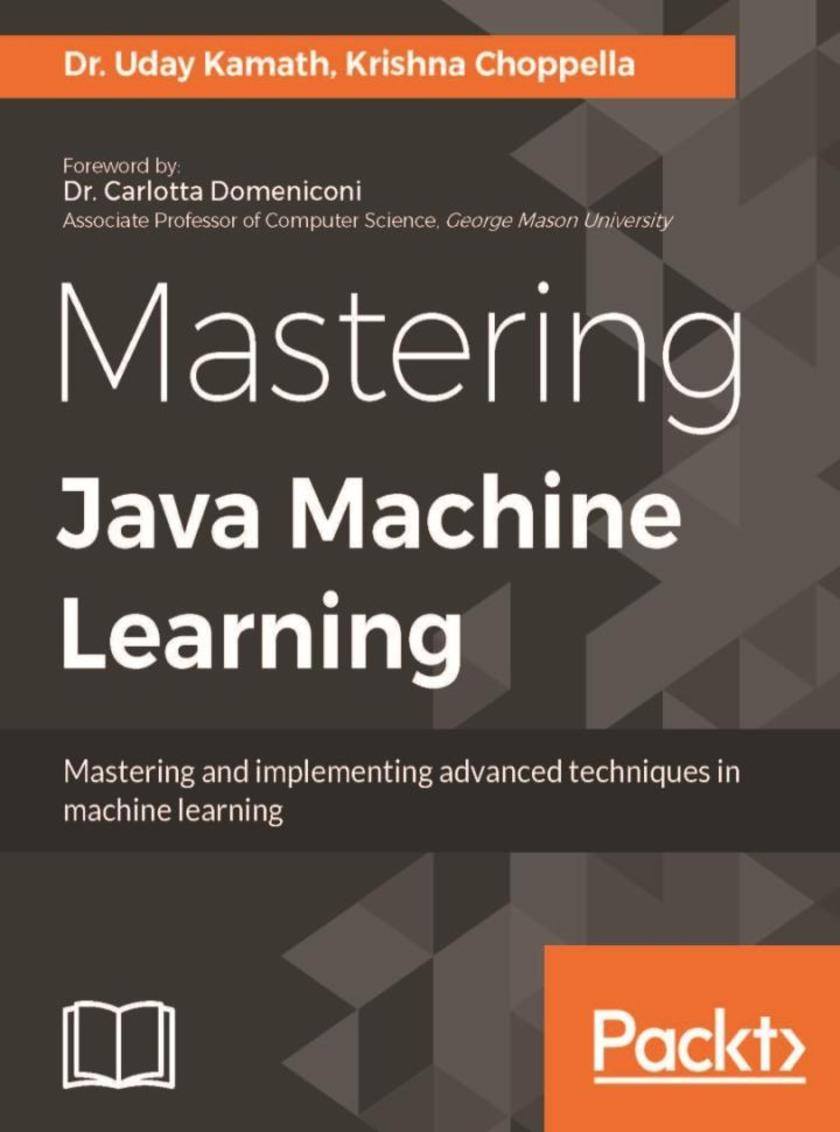
Mastering Java Machine Learning
¥99.18
Become an advanced practitioner with this progressive set of master classes on application-oriented machine learning About This Book ? Comprehensive coverage of key topics in machine learning with an emphasis on both the theoretical and practical aspects ? More than 15 open source Java tools in a wide range of techniques, with code and practical usage. ? More than 10 real-world case studies in machine learning highlighting techniques ranging from data ingestion up to analyzing the results of experiments, all preparing the user for the practical, real-world use of tools and data analysis. Who This Book Is For This book will appeal to anyone with a serious interest in topics in Data Science or those already working in related areas: ideally, intermediate-level data analysts and data scientists with experience in Java. Preferably, you will have experience with the fundamentals of machine learning and now have a desire to explore the area further, are up to grappling with the mathematical complexities of its algorithms, and you wish to learn the complete ins and outs of practical machine learning. What You Will Learn ? Master key Java machine learning libraries, and what kind of problem each can solve, with theory and practical guidance. ? Explore powerful techniques in each major category of machine learning such as classification, clustering, anomaly detection, graph modeling, and text mining. ? Apply machine learning to real-world data with methodologies, processes, applications, and analysis. ? Techniques and experiments developed around the latest specializations in machine learning, such as deep learning, stream data mining, and active and semi-supervised learning. ? Build high-performing, real-time, adaptive predictive models for batch- and stream-based big data learning using the latest tools and methodologies. ? Get a deeper understanding of technologies leading towards a more powerful AI applicable in various domains such as Security, Financial Crime, Internet of Things, social networking, and so on. In Detail Java is one of the main languages used by practicing data scientists; much of the Hadoop ecosystem is Java-based, and it is certainly the language that most production systems in Data Science are written in. If you know Java, Mastering Machine Learning with Java is your next step on the path to becoming an advanced practitioner in Data Science. This book aims to introduce you to an array of advanced techniques in machine learning, including classification, clustering, anomaly detection, stream learning, active learning, semi-supervised learning, probabilistic graph modeling, text mining, deep learning, and big data batch and stream machine learning. Accompanying each chapter are illustrative examples and real-world case studies that show how to apply the newly learned techniques using sound methodologies and the best Java-based tools available today. On completing this book, you will have an understanding of the tools and techniques for building powerful machine learning models to solve data science problems in just about any domain. Style and approach A practical guide to help you explore machine learning—and an array of Java-based tools and frameworks—with the help of practical examples and real-world use cases.
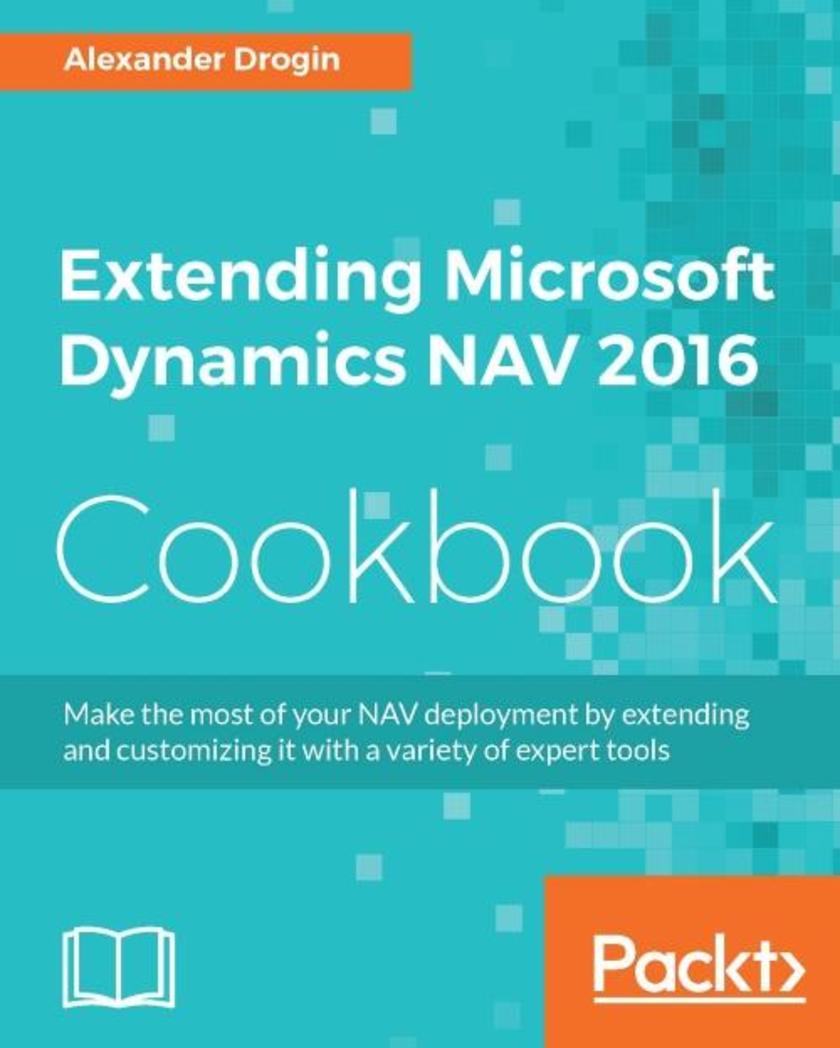
Extending Microsoft Dynamics NAV 2016 Cookbook
¥99.18
Make the most of your NAV deployment by extending and customizing it with a variety of expert tools About This Book Extend Dynamics in a cost-effective manner by using tools that are ready at your disposal Solve common business problems with the valuable features and flexibility of Dynamics NAV Follow practical and easy-to-grasp examples, illustrations, and coding to make the most out of Dynamics NAV in your organisation Who This Book Is For This book is for Dynamics NAV developers and administrators who have a good knowledge level and understanding of Dynamics NAV application development and administration. What You Will Learn Develop a module in Dynamics NAV using C/AL Build relationships with COM technologies Develop and integrate COM with Dynamics NAV 2016 Call the framework members from C/AL Develop an event in the .NET framework and see how to subscribe to it using C/AL Automate the deployment into Dynamics NAV Develop Windows Client Control add-Ins Deploy your resource automatically from Visual Studio Install and Configure Windows Client Control add-Ins Integrate Dynamics NAV with Sharepoint In Detail Microsoft Dynamics NAV is an enterprise resource planning (ERP) software suite for organizations. The system offers specialized functionality for manufacturing, distribution, government, retail, and other industries. Its integrated development environment enables customizations with minimal disruption to business processes. The book starts explaining the new features of Dynamics NAV along with how to create and modify a simple module. Moving on, you will learn the importance of thinking beyond the boundaries of C/AL development and the possibilities opened by with it. Next, you will get to know how COM can be used to extend the functionalities of Dynamics NAV. You’ll find out how to extend the Dynamics NAV 2016 version using .NET interoperability and will see the steps required to subscribe to .NET events in order to extend Dynamics NAV. Finally, you’ll see the cmdlets available to manage extension packages. By the end of the book, you will have the knowledge needed to become more efficient in selecting the extending methods, developing and deploying them to the Dynamics NAV, and practicing the best practices. Style and approach The book follows a practical recipe-based approach focusing on real-world scenarios and giving you all the information you need to build a strong Dynamics NAV implementation.
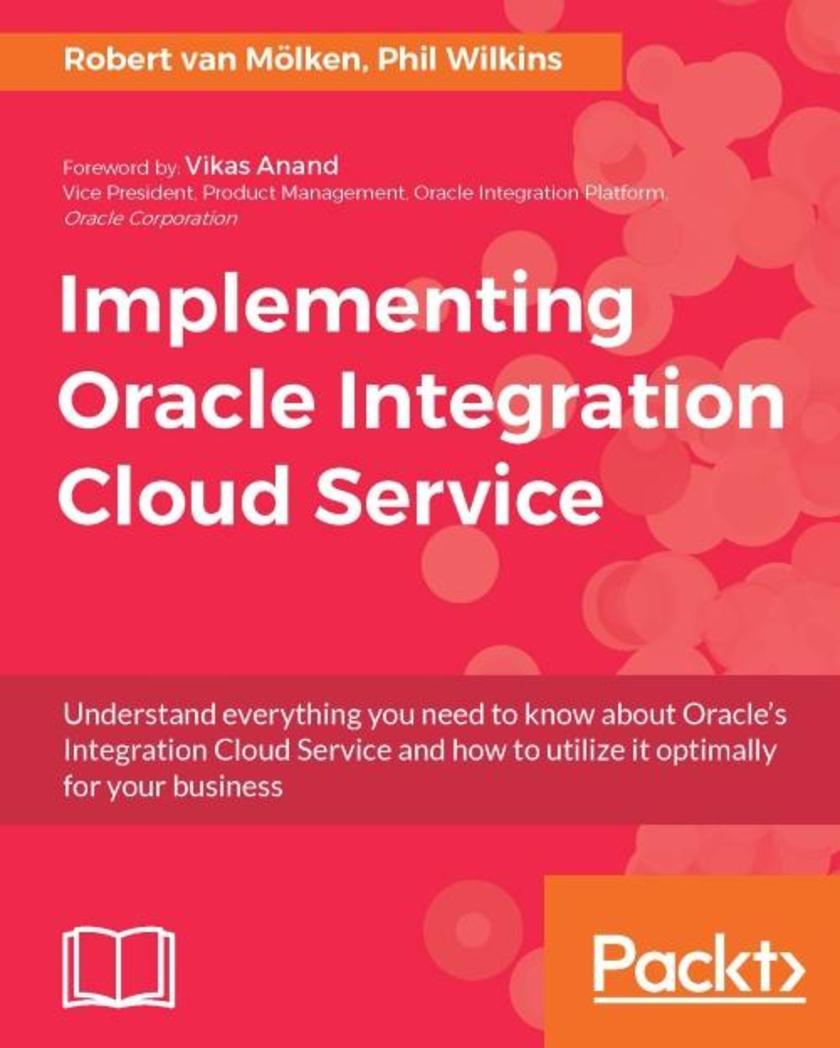
Implementing Oracle Integration Cloud Service
¥99.18
Understand everything you need to know about Oracle’s Integration Cloud Service and how to utilize it optimally for your business About This Book The only guide to Integration Cloud Service in the market Focused on practical action to deliver business value A professional’s guide to an expensive product, providing comprehensive training, and showing how to extract real business value from the product Who This Book Is For This book is ideal for any IT professional working with ICS, any Oracle application or cloud solution developer or analyst who wants to work with ICS to deliver business value. What You Will Learn Use ICS to integrate different systems together without needing to be a developer Gain understanding of what a number of technologies and standards provide – without needing to understand the fine details of those standards and technologies Understand the use of connectors that Oracle provide from technology based connections such as file and database connections to SaaS solutions ranging from Salesforce to Twitter Enrich data and extend SaaS integration to route to different instances Utilize a number of tools to help develop and check that your integrations work before connecting to live systems Introduce and explain integration concepts so that the integrations created are maintainable and sustainable for the longer term Provide details on how to keep up to date with the features that Oracle and partners provide in the future Get special connections developed to work with ICS In Detail Businesses are built on data, and applications that access that data. In modern businesses the same cloud-based data stores and applications might be accessed by hundreds of different applications from thousands of different devices via APIs. To make this happen, APIs must be wired together i.e. integrated. Oracle Integration Cloud Service provides a complete method for integrating enterprise applications in the cloud. Integration Cloud Service (ICS) provides a cloud hosted means to integrate systems together using a graphical means to define and represent integrations. This book will be a comprehensive, hands-on guide to building successful, high-availability integrations on ICS. This book sets out to demonstrate how ICS can be used to effectively implement integrations that work both in the cloud and on premise. It starts with a fast, practical introduction to what ICS can do for your business and then shows how ICS allows you to develop integrations not only quickly but in a way that means they are maintainable and extensible. Gradually it moves into more advanced integrations, showing how to achieve sophisticated results with ICS and work with external applications. Finally the book shows you how to monitor cloud apps and go beyond ICS to build even more powerful integrated applications. By the end of the book, you will the knowledge on how to use ICS to solve your own integration needs and harness the technologies in a maintainable and sustainable manner. Style and approach This book will take a pragmatic approach and will be a business-focused guide to delivering business value with ICS.
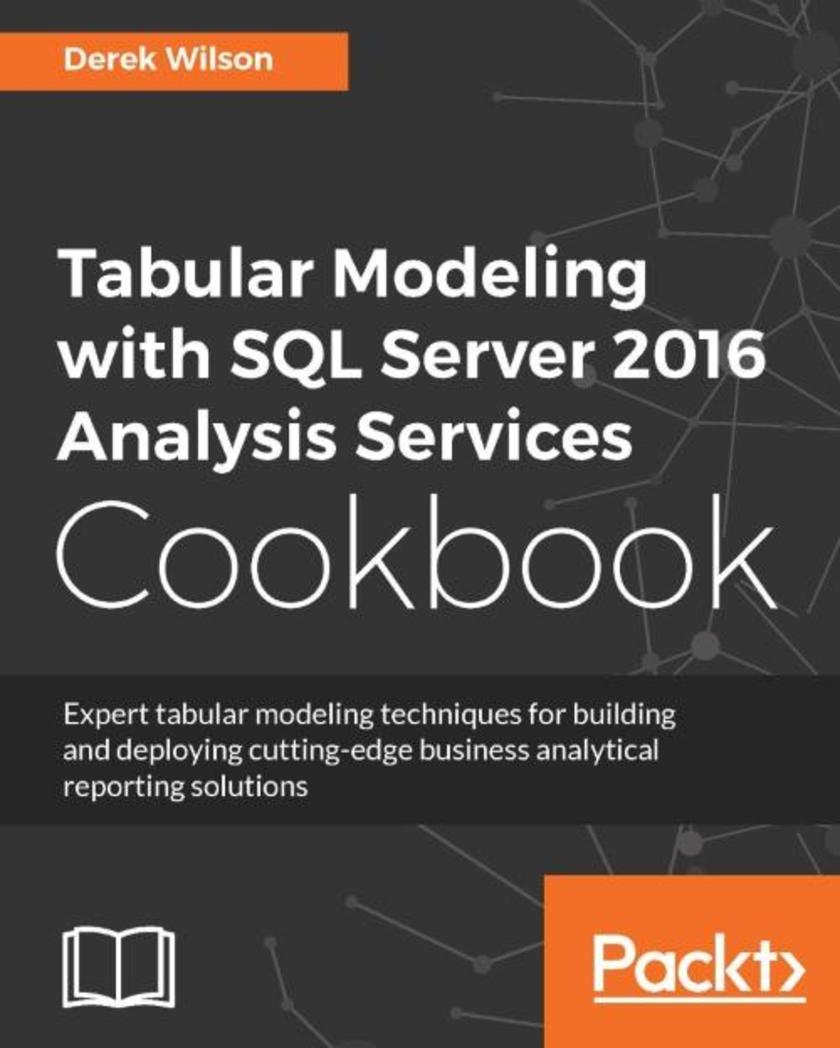
Tabular Modeling with SQL Server 2016 Analysis Services Cookbook
¥99.18
Expert tabular modeling techniques for building and deploying cutting-edge business analytical reporting solutions About This Book Build and deploy Tabular Model projects from relational data sources Leverage DAX and create high-performing calculated fields and measures Create ad-hoc reports based on a Tabular Model solution Useful tips to monitor and optimize your tabular solutions Who This Book Is For This book is for SQL BI professionals and Architects who want to exploit the full power of the new Tabular models in Analysis Services. Some knowledge of previous versions of Analysis services would be helpful but is not essential. What You Will Learn Learn all about Tabular services mode and how it speeds up development Build solutions using sample datasets Explore built-in actions and transitions in SSAS 2016 Implement row-column, and role-based security in a Tabular Data model Realize the benefits of in-memory and DirectQuery deployment modes Get up to date with the new features added to SQL Server 2016 Analysis Services Optimize Data Models and Relationships Usage In Detail SQL Server Analysis Service (SSAS) has been widely used across multiple businesses to build smart online analytical reporting solutions. It includes two different types of modeling for analysis services: Tabular and Multi Dimensional. This book covers Tabular modeling, which uses tables and relationships with a fast in-memory engine to provide state of the art compression algorithms and query performance. The book begins by quickly taking you through the concepts required to model tabular data and set up the necessary tools and services. As you learn to create tabular models using tools such as Excel and Power View, you’ll be shown various strategies to deploy your model on the server and choose a query mode (In-memory or DirectQuery) that best suits your reporting needs. You’ll also learn how to implement key and newly introduced DAX functions to create calculated columns and measures for your model data. Last but not least, you’ll be shown techniques that will help you administer and secure your BI implementation along with some widely used tips and tricks to optimize your reporting solution. By the end of this book, you’ll have gained hands-on experience with the powerful new features that have been added to Tabular models in SSAS 2016 and you’ll be able to improve user satisfaction with faster reports and analytical queries. Style and approach This book takes a practical, recipe-based approach where each recipe lists the steps to address or implement a solution. You will be provided with several approaches to creating a business intelligence semantic model using analysis services.
Mastering Hadoop 3
¥99.18
A comprehensive guide to mastering the most advanced Hadoop 3 concepts Key Features * Get to grips with the newly introduced features and capabilities of Hadoop 3 * Crunch and process data using MapReduce, YARN, and a host of tools within the Hadoop ecosystem * Sharpen your Hadoop skills with real-world case studies and code Book Description Apache Hadoop is one of the most popular big data solutions for distributed storage and for processing large chunks of data. With Hadoop 3, Apache promises to provide a high-performance, more fault-tolerant, and highly efficient big data processing platform, with a focus on improved scalability and increased efficiency. With this guide, you’ll understand advanced concepts of the Hadoop ecosystem tool. You’ll learn how Hadoop works internally, study advanced concepts of different ecosystem tools, discover solutions to real-world use cases, and understand how to secure your cluster. It will then walk you through HDFS, YARN, MapReduce, and Hadoop 3 concepts. You’ll be able to address common challenges like using Kafka efficiently, designing low latency, reliable message delivery Kafka systems, and handling high data volumes. As you advance, you’ll discover how to address major challenges when building an enterprise-grade messaging system, and how to use different stream processing systems along with Kafka to fulfil your enterprise goals. By the end of this book, you’ll have a complete understanding of how components in the Hadoop ecosystem are effectively integrated to implement a fast and reliable data pipeline, and you’ll be equipped to tackle a range of real-world problems in data pipelines. What you will learn * Gain an in-depth understanding of distributed computing using Hadoop 3 * Develop enterprise-grade applications using Apache Spark, Flink, and more * Build scalable and high-performance Hadoop data pipelines with security, monitoring, and data governance * Explore batch data processing patterns and how to model data in Hadoop * Master best practices for enterprises using, or planning to use, Hadoop 3 as a data platform * Understand security aspects of Hadoop, including authorization and authentication Who this book is for If you want to become a big data professional by mastering the advanced concepts of Hadoop, this book is for you. You’ll also find this book useful if you’re a Hadoop professional looking to strengthen your knowledge of the Hadoop ecosystem. Fundamental knowledge of the Java programming language and basics of Hadoop is necessary to get started with this book.

ArcGIS Blueprints
¥99.18
Explore the robust features of Python to create real-world ArcGIS applications through exciting, hands-on projects About This Book Get to grips with the big world of Python add-ins and wxPython in GUI development to implement their features in your application Integrate advanced Python libraries, ArcPy mapping, and data access module techniques to develop a mapping application Construct a top-notch intermediate-to-advanced project by accessing ArcGIS Server and ArcGIS Online resources through the ArcGIS REST API using a project-based approach Who This Book Is For If you have prior experience building simple apps with ArcGIS and now have a fancy for developing a more challenging and complex desktop application in ArcGIS, then this book is ideal for you. What You Will Learn Automate the creation of creative output data visualizations including maps, charts, and graphs Explore ways to use the ArcPy Mapping module and Data-driven Pages to automate the creation of map books in your own project Develop applications that use the Plotly platform and library to create stunning charts and graphs that can be integrated into ArcGIS Desktop Build tools that access REST services and download data to a local geodatabase Design, build, and integrate advanced GUIs with wxPython and ArcGIS Desktop in ArcGIS Get clued up about constructing applications that export data to Google Earth Pro to automate time-consuming complex processes Maximize the access of ArcGIS Server and ArcGIS Online using the ArcGIS REST API with Python In Detail This book is an immersive guide to take your ArcGIS Desktop application development skills to the next level It starts off by providing detailed de*ion and examples of how to create ArcGIS Desktop Python toolboxes that will serve as containers for many of the applications that you will build. We provide several practical projects that involve building a local area/community map and extracting wildfire data. You will then learn how to build tools that can access data from ArcGIS Server using the ArcGIS REST API. Furthermore, we deal with the integration of additional open source Python libraries into your applications, which will help you chart and graph advanced GUI development; read and write JSON, CSV, and XML format data sources; write outputs to Google Earth Pro, and more. Along the way, you will be introduced to advanced ArcPy Mapping and ArcPy Data Access module techniques and use data-driven Pages to automate the creation of map books. Finally, you will learn advanced techniques to work with video and social media feeds. By the end of the book, you will have your own desktop application without having spent too much time learning sophisticated theory. Style and approach This is an easy-to-follow, project-based guide that guides you through the whole ArcGIS theme with practical, real-world examples and a systematic approach.
Mastering XenApp?
¥99.18
Master the skills required to implement CitrixXenApp7.6 to deploy a complete Citrix?-hosted application from scratch About This Book Learn to implement and configure components of CitrixXenApp7.6, which are XenServer?, XenApp?, CitrixLicense server, PVS, Storefront, CitrixReceiver, and Netscaler to secure WAN traffic Build the XenApp7.6 environment independently and perform tests to make sure the components are working as expected for internal and external traffic Implement advanced tools in CitrixXenAppto build and manage a cost effective, secure, and high-performing application delivery infrastructure with this comprehensive guide Who This Book Is For This is book is for administrators who are currently managing the implemented environment and want to learn how to deploy the CitrixHosted virtualization solution for the application in a windows server 2012 R2 environment. A reasonable knowledge and understanding of core XenAppelements and concepts used during virtualizing applications are assumed. What You Will Learn Understand how to set up Hypervisor, install the management console, configure the storage repository, and create a virtual machine on hypervisor Set up an Infrastructure component and explore ways to tune them up so that they can be used for Citrixenvironment Set up a Domain controller, DHCP, Certificate authority, and SQL server for static database for CitrixXenAppValidate the CitrixXenApp7.6 solution to make sure components are communicating properly Manage the essential Citrixcomponents – Director, Licensing, and Policies with the Help of Citrixstudio Optimize the behavior of an Application and share desktop via Policies Installing and configuring CitrixProvisioning services to deliver CitrixXenApp7.6 virtual machines Secure the external Delivery of an application and shared desktop via netscaler to enjoy mobility In Detail CitrixXenAppis one of the leading pieces of Application delivery software that delivers Windows compatible apps to users on any device, anywhere. CitrixXenAppalso gives administrators the ability to manage and control the freedom of mobility by increasing the security and saving costs at the same time. This book will provide you with all the knowledge required to successfully deploy and master a complete Citrixhosted application. First, it will cover essential concepts of the architecture of XenApp?. You will then learn how to set up Hypervisor and how to set up Infrastructure components. Next you will learn how to Set up CitrixComponents, XenAppresources, PVS, and Netscaler. We will further look at how to prepare the environment for Rollout. Additionally, you will learn how to configure the Citrixcomponents such as CitrixDirector. Moreover, you’ll learn about shared desktop for delivery to end users and the application of policies for effective and secure delivery. Finally, you will learn how to implement provisioning services for a CitrixXenApp7.6 environment. Style and approach This book is based on a course outline and hence takes a very practical approach so you will understand how to implement the components of XenAppin a production environment. Complemented with many best practices and troubleshooting concepts of XenApp?, this book will help you master XenAppswiftly.
Scala Design Patterns
¥99.18
Write efficient, clean, and reusable code with ScalaAbout This BookUnleash the power of Scala and apply it in the real worldIncrease your efficiency by leveraging the power of Creational, Structural, Behavioural, and Functional design patternsBuild object oriented and functional applications quickly and effectivelyWho This Book Is ForIf you want to increase your understanding of Scala and apply it to real-life application development, then this book is for you. We’ve also designed the book to be used as a quick reference guide while creating applications. Previous Scala programming knowledge is expected.What You Will LearnImmerse yourself in industry-standard design patterns—structural, creational, and behavioral—to create extraordinary applicationsFeel the power of traits and their application in ScalaImplement abstract and self types and build clean design patternsBuild complex entity relationships using structural design patternsCreate applications faster by applying functional design patternsIn DetailScala has become increasingly popular in many different IT sectors. The language is exceptionally feature-rich which helps developers write less code and get faster results. Design patterns make developer’s lives easier by helping them write great software that is easy to maintain, runs efficiently and is valuable to the company or people concerned.You will learn about the various features of Scala and be able to apply well-known, industry-proven design patterns in your work. The book starts off by focusing on some of the most interesting features of Scala while using practical real-world examples. We will also cover the popular "Gang of Four" design patterns and show you how to incorporate functional patterns effectively. By the end of this book, you will have enough knowledge and understanding to quickly assess problems and come up with elegant solutions.Style and approachThe design patterns in the book will be explained using real-world, step-by-step examples. For each design pattern, there will be hints about when to use it and when to look for something more suitable. This book can also be used as a practical guide, showing you how to leverage design patterns effectively.
SQL Server 2017 Developer’s Guide
¥99.18
Build smarter and efficient database application systems for your organization with SQL Server 2017 About This Book ? Build database applications by using the development features of SQL Server 2017 ? Work with temporal tables to get information stored in a table at any time ? Use adaptive querying to enhance the performance of your queries Who This Book Is For Database developers and solution architects looking to design efficient database applications using SQL Server 2017 will find this book very useful. In addition, this book will be valuable to advanced analysis practitioners and business intelligence developers. Database consultants dealing with performance tuning will get a lot of useful information from this book as well. Some basic understanding of database concepts and T-SQL is required to get the best out of this book. What You Will Learn ? Explore the new development features introduced in SQL Server 2017 ? Identify opportunities for In-Memory OLTP technology ? Use columnstore indexes to get storage and performance improvements ? Exchange JSON data between applications and SQL Server ? Use the new security features to encrypt or mask the data ? Control the access to the data on the row levels ? Discover the potential of R and Python integration ? Model complex relationships with the graph databases in SQL Server 2017 In Detail Microsoft SQL Server 2017 is the next big step in the data platform history of Microsoft as it brings in the power of R and Python for machine learning and containerization-based deployment on Windows and Linux. Compared to its predecessor, SQL Server 2017 has evolved into Machine Learning with R services for statistical analysis and Python packages for analytical processing. This book prepares you for more advanced topics by starting with a quick introduction to SQL Server 2017’s new features and a recapitulation of the possibilities you may have already explored with previous versions of SQL Server. The next part introduces you to enhancements in the Transact-SQL language and new database engine capabilities and then switches to a completely new technology inside SQL Server: JSON support. We also take a look at the Stretch database, security enhancements, and temporal tables. Furthermore, the book focuses on implementing advanced topics, including Query Store, columnstore indexes, and In-Memory OLTP. Towards the end of the book, you’ll be introduced to R and how to use the R language with Transact-SQL for data exploration and analysis. You’ll also learn to integrate Python code in SQL Server and graph database implementations along with deployment options on Linux and SQL Server in containers for development and testing. By the end of this book, you will have the required information to design efficient, high-performance database applications without any hassle. Style and approach This book is a detailed guide to mastering the development features offered by SQL Server 2017, with a unique learn-as-you-do approach. All the concepts are explained in a very easy-to-understand manner and are supplemented with examples to ensure that you—the developer—are able to take that next step in building more powerful, robust applications for your organization with ease.


