


 购物车
购物车 个人中心
个人中心
Microsoft Dynamics 365 Extensions Cookbook
¥99.18
More than 80 recipes to help you leverage the various extensibility features available for Microsoft Dynamics and solve problems easily About This Book ? Customize, configure, and extend the vanilla features of Dynamics 365 to deliver bespoke CRM solutions fit for any organization ? Implement business logic using point-and-click configuration, plugins, and client-side *s with MS Dynamics 365 ? Built a DevOps pipeline as well as Integrate Dynamics 365 with Azure and other platforms Who This Book Is For This book is for developers, administrators, consultants, and power users who want to learn about best practices when extending Dynamics 365 for enterprises. You are expected to have a basic understand of the Dynamics CRM/365 platform. What You Will Learn ? Customize, configure, and extend Microsoft Dynamics 365 ? Create business process automation ? Develop client-side extensions to add features to the Dynamics 365 user interface ? Set up a security model to securely manage data with Dynamics 365 ? Develop and deploy clean code plugins to implement a wide range of custom behaviors ? Use third-party applications, tools, and patterns to integrate Dynamics 365 with other platforms ? Integrate with Azure, Java, SSIS, PowerBI, and Octopus Deploy ? Build an end-to-end DevOps pipeline for Dynamics 365 In Detail Microsoft Dynamics 365 is a powerful tool. It has many unique features that empower organisations to bridge common business challenges and technology pitfalls that would usually hinder the adoption of a CRM solution. This book sets out to enable you to harness the power of Dynamics 365 and cater to your unique circumstances. We start this book with a no-code configuration chapter and explain the schema, fields, and forms modeling techniques. We then move on to server-side and client-side custom code extensions. Next, you will see how best to integrate Dynamics 365 in a DevOps pipeline to package and deploy your extensions to the various SDLC environments. This book also covers modern libraries and integration patterns that can be used with Dynamics 365 (Angular, 3 tiers, and many others). Finally, we end by highlighting some of the powerful extensions available. Throughout we explain a range of design patterns and techniques that can be used to enhance your code quality; the aim is that you will learn to write enterprise-scale quality code. Style and approach This book takes a recipe-based approach, delivering practical examples and use cases so that you can identify the best possible approach to extend your Dynamics 365 deployment and tackle your specific business problems.
Learning Salesforce Einstein
¥99.18
Incorporate the power of Einstein in your Salesforce application About This Book ? Make better predictions of your business processes using prediction and predictive modeling ? Build your own custom models by leveraging PredictionIO on the Heroku platform ? Integrate Einstein into various cloud services to predict sales, marketing leads, insights into news feeds, and more Who This Book Is For This book is for developers, data scientists, and Salesforce-experienced consultants who want to explore Salesforce Einstein and its current offerings. It assumes some prior experience with the Salesforce platform. What You Will Learn ? Get introduced to AI and its role in CRM and cloud applications ? Understand how Einstein works for the sales, service, marketing, community, and commerce clouds ? Gain a deep understanding of how to use Einstein for the analytics cloud ? Build predictive apps on Heroku using PredictionIO, and work with Einstein Predictive Vision Services ? Incorporate Einstein in the IoT cloud ? Test the accuracy of Einstein through Salesforce reporting and Wave analytics In Detail Dreamforce 16 brought forth the latest addition to the Salesforce platform: an AI tool named Einstein. Einstein promises to provide users of all Salesforce applications with a powerful platform to help them gain deep insights into the data they work on. This book will introduce you to Einstein and help you integrate it into your respective business applications based on the Salesforce platform. We start off with an introduction to AI, then move on to look at how AI can make your CRM and apps smarter. Next, we discuss various out-of-the-box components added to sales, service, marketing, and community clouds from salesforce to add Artificial Intelligence capabilities. Further on, we teach you how to use Heroku, PredictionIO, and the force.com platform, along with Einstein, to build smarter apps. The core chapters focus on developer content and introduce PredictionIO and Salesforce Einstein Vision Services. We explore Einstein Predictive Vision Services, along with analytics cloud, the Einstein Data Discovery product, and IOT core concepts. Throughout the book, we also focus on how Einstein can be integrated into CRM and various clouds such as sales, services, marketing, and communities. By the end of the book, you will be able to embrace and leverage the power of Einstein, incorporating its functions to gain more knowledge. Salesforce developers will be introduced to the world of AI, while data scientists will gain insights into Salesforce’s various cloud offerings and how they can use Einstein’s capabilities and enhance applications. Style and approach This book takes a straightforward approach to explain Salesforce Einstein and all of its potential applications. Filled with examples, the book presents the facts along with seasoned advice and real-world use cases to ensure you have all the resources you need to incorporate the power of Einstein in your work.
Mastering PostgreSQL 9.6
¥99.18
Master the capabilities of PostgreSQL 9.6 to efficiently manage and maintain your database About This Book ? Your one-stop guide to mastering the advanced concepts in PostgreSQL with ease ? Master query optimization, replication, and high availability with PostgreSQL ? Extend the functionalities of PostgreSQL to suit your organizational needs with minimum effort Who This Book Is For If you are a PostgreSQL data architect or an administrator who wants to understand how to implement advanced functionalities and master complex administrative tasks with PostgreSQL, then this book is perfect for you. Prior experience of administrating a PostgreSQL database and a working knowledge of SQL is required to make the best use of this book. What You Will Learn ? Get to grips with the advanced features of PostgreSQL 9.6 and handle advanced SQL ? Make use of the indexing features in PostgreSQL and fine-tune the performance of your queries ? Work with the stored procedures and manage backup and recovery ? Master the replication and failover techniques ? Troubleshoot your PostgreSQL instance for solutions to the common and not-so-common problems ? Learn how to migrate your database from MySQL and Oracle to PostgreSQL without any hassle In Detail PostgreSQL is an open source database used for handling large datasets (Big Data) and as a JSON document database. It also has applications in the software and web domains. This book will enable you to build better PostgreSQL applications and administer databases more efficiently. We begin by explaining the advanced database design concepts in PostgreSQL 9.6, along with indexing and query optimization. You will also see how to work with event triggers and perform concurrent transactions and table partitioning, along with exploring SQL and server tuning. We will walk you through implementing advanced administrative tasks such as server maintenance and monitoring, replication, recovery and high availability, and much more. You will understand the common and not-so-common troubleshooting problems and how you can overcome them. By the end of this book, you will have an expert-level command of the advanced database functionalities and will be able to implement advanced administrative tasks with PostgreSQL. Style and Approach This book is a comprehensive guide covering all the concepts you need to master PostgreSQL. Packed with hands-on examples, tips and tricks, even the most advanced concepts are explained in a very easy-to-follow manner. Every chapter in the book does not only focus on how each task is performed, but also why.
ArcGIS Pro 2.x Cookbook
¥99.18
Creating and Sharing Maps and Data using ArcGIS Pro About This Book ? Leverage the power of ArcGIS to build beautiful 2D and 3D maps. ? Work with ArcGIS to analyze and process data. ? Extend the power of ArcGIS to ArcGIS Online to create and edit content. Who This Book Is For GIS developers who are comfortable using ArcGIS, and are looking to increase their capabilities and skills, will find this book useful. What You Will Learn ? Edit data using standard tools and topology ? Convert and link data together using joins and relates ? Create and share data using Projections and Coordinate Systems ? Access and collect data in the field using ArcGIS Collector ? Perform proximity analysis and map clusters with hotspot analysis ? Use the 3D Analyst Extension and perform advanced 3D analysis ? Share maps and data using ArcGIS Online via web and mobile apps In Detail ArcGIS is Esri's catalog of GIS applications with powerful tools for visualizing, maintaining, and analyzing data. ArcGIS makes use of the modern ribbon interface and 64-bit processing to increase the speed and efficiency of using GIS. It allows users to create amazing maps in both 2D and 3D quickly and easily. If you want to gain a thorough understanding of the various data formats that can be used in ArcGIS Pro and shared via ArcGIS Online, then this book is for you. Beginning with a refresher on ArcGIS Pro and how to work with projects, this book will quickly take you through recipes about using various data formats supported by the tool. You will learn the limits of each format, such as Shapefiles, Geodatabase, and CAD files, and learn how to link tables from outside sources to existing GIS data to expand the amount of data that can be used in ArcGIS. You'll learn methods for editing 2D and 3D data using ArcGIS Pro and how topology can be used to ensure data integrity. Lastly the book will show you how data and maps can be shared via ArcGIS Online and used with web and mobile applications. Style and approach This book takes a recipe-based approach, teaching you how to create and share maps and data using ArcGIS Pro.
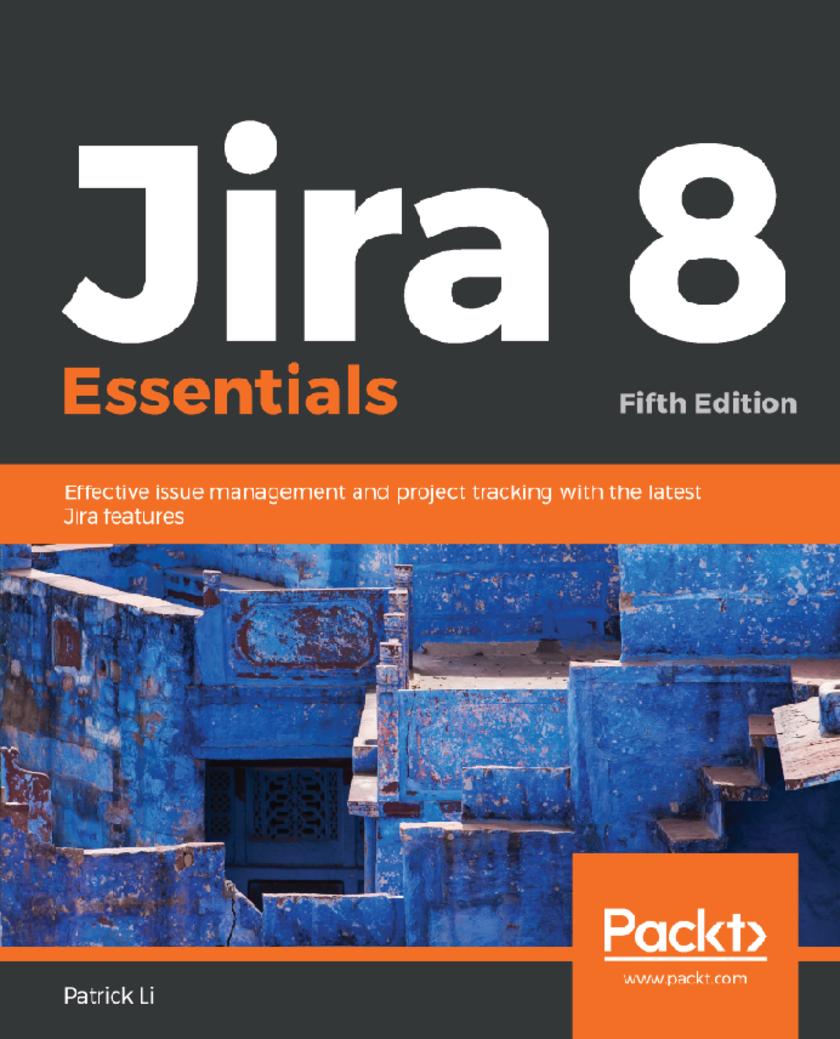
Jira 8 Essentials
¥99.18
Explore the new and improved Jira 8 features such as agile board and advanced search for efficient project management Key Features * Work on agile projects in Jira from both the administrator and end user's perspective * Explore the improved Scrum and Kanban board and backlog * Work through exercises at the end of each chapter to reinforce your skills Book Description Atlassian Jira enables effective bug tracking for your software and mobile applications and provides tools to track and manage tasks for your projects. Jira Essentials is a comprehensive guide, now updated to Jira 8 to include enhanced features such as updates to Scrum and Kanban UI, additional search capabilities, and changes to Jira Service Desk. The book starts by explaining how to plan and set up a new Jira 8 instance from scratch before getting you acquainted with key features such as emails, workflows, business processes, and much more. You'll then understand Jira's data hierarchy and how to design and work with projects. Since Jira is used for issue management, this book delves into the different issues that can arise in your projects. You’ll explore fields, including custom fields, and learn to use them for more effective data collection. You’ll create new screens from scratch and customize them to suit your requirements. The book also covers workflows and business processes, and guides you in setting up incoming and outgoing mail servers. Toward the end, you’ll study Jira's security model and Jira Service Desk, which allows you to run Jira as a support portal. By the end of this Jira book, you will be able to implement Jira 8 in your projects with ease. What you will learn * Understand Jira's data hierarchy and how to design and work with projects in Jira * Use Jira for agile software projects, business process management, customer service support, and more * Understand issues and work with them * Design both system and custom fields to behave differently under different contexts * Create and design your own screens and apply them to different project and issue types * Gain an understanding of the workflow and its various components * Set up both incoming and outgoing mail servers to work with e-mails Who this book is for This book will be especially useful for project managers but it's also intended for other Jira users, including developers, and any other industry besides software development, who would like to leverage Jira's powerful task management and workflow features to better manage their business processes.
OpenGL 4 Shading Language Cookbook, Second Edition
¥99.18
OpenGL Shading Language 4 Cookbook is a hands-on guide that gets straight to the point – actually creating graphics, instead of just theoretical learning. Each recipe is specifically tailored to satisfy your appetite for producing real-time 3-D graphics using the latest GLSL specification.This book is for OpenGL programmers looking to use the modern features of GLSL 4 to create real-time, three-dimensional graphics. Familiarity with OpenGL programming, along with the typical 3D coordinate systems, projections, and transformations is assumed. It can also be useful for experienced GLSL programmers who are looking to implement the techniques that are presented here.
Scala for Data Science
¥99.18
Leverage the power of Scala with different tools to build scalable, robust data science applicationsAbout This BookA complete guide for scalable data science solutions, from data ingestion to data visualizationDeploy horizontally scalable data processing pipelines and take advantage of web frameworks to build engaging visualizationsBuild functional, type-safe routines to interact with relational and NoSQL databases with the help of tutorials and examples providedWho This Book Is ForIf you are a Scala developer or data scientist, or if you want to enter the field of data science, then this book will give you all the tools you need to implement data science solutions.What You Will LearnTransform and filter tabular data to extract features for machine learningImplement your own algorithms or take advantage of MLLib’s extensive suite of models to build distributed machine learning pipelinesRead, transform, and write data to both SQL and NoSQL databases in a functional mannerWrite robust routines to query web APIsRead data from web APIs such as the GitHub or Twitter APIUse Scala to interact with MongoDB, which offers high performance and helps to store large data sets with uncertain query requirementsCreate Scala web applications that couple with JavaScript libraries such as D3 to create compelling interactive visualizationsDeploy scalable parallel applications using Apache Spark, loading data from HDFS or HiveIn DetailScala is a multi-paradigm programming language (it supports both object-oriented and functional programming) and *ing language used to build applications for the JVM. Languages such as R, Python, Java, and so on are mostly used for data science. It is particularly good at analyzing large sets of data without any significant impact on performance and thus Scala is being adopted by many developers and data scientists. Data scientists might be aware that building applications that are truly scalable is hard. Scala, with its powerful functional libraries for interacting with databases and building scalable frameworks will give you the tools to construct robust data pipelines.This book will introduce you to the libraries for ingesting, storing, manipulating, processing, and visualizing data in Scala.Packed with real-world examples and interesting data sets, this book will teach you to ingest data from flat files and web APIs and store it in a SQL or NoSQL database. It will show you how to design scalable architectures to process and modelling your data, starting from simple concurrency constructs such as parallel collections and futures, through to actor systems and Apache Spark. As well as Scala’s emphasis on functional structures and immutability, you will learn how to use the right parallel construct for the job at hand, minimizing development time without compromising scalability. Finally, you will learn how to build beautiful interactive visualizations using web frameworks.This book gives tutorials on some of the most common Scala libraries for data science, allowing you to quickly get up to speed with building data science and data engineering solutions.Style and approachA tutorial with complete examples, this book will give you the tools to start building useful data engineering and data science solutions straightaway
Mastering RabbitMQ
¥99.18
Master the art of developing message-based applications with RabbitMQAbout This BookLearn how to administer, manage, and extend your own message broker, RabbitMQDevelop clients to make a message bridge between your software systems using RabbitMQDiscover how to achieve proficiency with RabbitMQ with the well-defined de*ions of the topicsWho This Book Is ForIf you are an intermediate-level RabbitMQ developer, who wants to achieve professional-level expertise in the subject, this book is for you. You’ll also need to have a decent understanding of message queuing.What You Will LearnAdminister RabbitMQ using different toolsUnderstand the roots and details of messaging, message brokers, and AMQP protocolScale the RabbitMQ server using the clusters and high availability techniquesExtend RabbitMQ by developing the Erlang OTP-based applications that use the RabbitMQ APIManage the RabbitMQ server using its powerful toolsMonitor the RabbitMQ Server using different open source tools such as Nagios, Munin, and ZabbixEnsure your RabbitMQ’s security using SSL, SASL, and access controlDevelop RabbitMQ clients using Java, Python, and C# with an industry exampleIn DetailRabbitMQ is one of the most powerful Open Source message broker software, which is widely used in tech companies such as Mozilla, VMware, Google, AT&T, and so on. RabbitMQ gives you lots of fantastic and easy-to-manage functionalities to control and manage the messaging facility with lots of community support. As scalability is one of our major modern problems, messaging with RabbitMQ is the main part of the solution to this problem.This book explains and demonstrates the RabbitMQ server in a detailed way. It provides you with lots of real-world examples and advanced solutions to tackle the scalability issues.You’ll begin your journey with the installation and configuration of the RabbitMQ server, while also being given specific details pertaining to the subject. Next, you’ll study the major problems that our server faces, including scalability and high availability, and try to get the solutions for both of these issues by using the RabbitMQ mechanisms. Following on from this, you’ll get to design and develop your own plugins using the Erlang language and RabbitMQ’s internal API. This knowledge will help you to start with the management and monitoring of the messages, tools, and applications. You’ll also gain an understanding of the security and integrity of the messaging facilities that RabbitMQ provides. In the last few chapters, you will build and keep track of your clients (senders and receivers) using Java, Python, and C#.Style and approach An easy-to-follow guide, full of hands-on examples based around managing, monitoring, extending, and securing RabbitMQ and its internal tools. You will learn how to develop your own clients using Java, Python, and C#.
Oracle SQL Developer
¥99.18
Learn Database design, development,and administration using the feature-rich SQL Developer 4.1 interfaceAbout This BookExplore all the SQL Developer 4.1 features useful for Oracle database developers, architects, and administratorsUnderstand how this free tool from Oracle has evolved over the years and has become a complete tool that makes life easy for Oracle and third-party database usersThe author, Ajith Narayanan, has a total of 10+ years of work experience as an Oracle [APPS] DBAWho This Book Is ForThis book is intended for Oracle developers who are responsible for database management. You are expected to have programming knowledge of SQL and PL/SQL, and must be familiar with basic Oracle database concepts.What You Will LearnInstall and navigate through all the advanced features of SQL Developer that were introduced in version 4.1Browse, create, edit, and delete (drop) database objectsUse the SQL worksheet to run SQL statements and *s, edit and debug PL/SQL code, manipulate and export (unload) dataCarry out all DBA-related activities such as exporting/importing, tuning, and analyzing database performance issuesQuickly analyze, create, and edit the data model using data modelerExtend the SQL developer capabilities by exploring the APEX related pages, enabling and working with RESTful servicesUse the available reports and create new custom reports with custom *sGrasp how to connect to third-party databases and work smoothly with themIn DetailAt times, DBAs support 100s of databases at work. In such scenarios, using a command-line tool like putty adds to the difficulty, while SQL Developer makes the life of a developer, DBA, or DB architect easier by providing a graphical user interface equipped with features that can bolster and enhance the user experience and boost efficiency. Features such as DBA panel, Reports, Data Modeler, and Data Miner are just a few examples of its rich features, and its support for APEX, REST Services, timesten, and third-party database drivers demonstrate its extensibility.You may be a newbie to databases or a seasoned database expert, either way this book will help you understand the database structure and the different types of objects that organize enterprise data in an efficient manner. This book introduces the features of the SQL Developer 4.1 tool in an incremental fashion, starting with installing them, making the database connections, and using the different panels. By sequentially walking through the steps in each chapter, you will quickly master SQL Developer 4.1.Style and approachThis book follows a step-by-step approach and is in a conversational and easy-to-follow style. Screenshots , and detailed explanations of the basic and advanced features of SQL Developer 4.1 that will make your work and life easy.
Mastering Concurrency Programming with Java 8
¥99.18
Master the principles and techniques of multithreaded programming with the Java 8 Concurrency APIAbout This BookImplement concurrent applications using the Java 8 Concurrency API and its new componentsImprove the performance of your applications or process more data at the same time, taking advantage of all of your resources.Construct real-world examples related to machine learning, data mining, image processing, and client/server environmentsWho This Book Is ForIf you are a competent Java developer with a good understanding of concurrency but have no knowledge of how to effectively implement concurrent programs or use streams to make processes more efficient, then this book is for you.What You Will LearnDesign concurrent applications by converting a sequential algorithm into a concurrent oneDiscover how to avoid all the possible problems you can get in concurrent algorithmsUse the Executor framework to manage concurrent tasks without creating threadsExtend and modify Executors to adapt their behavior to your needsSolve problems using the divide and conquer technique and the Fork/Join frameworkProcess massive data sets with parallel streams and Map/Reduce implementationControl data-race conditions using concurrent data structures and synchronization mechanismsTest and monitor concurrent applicationsIn DetailConcurrency programming allows several large tasks to be divided into smaller sub-tasks, which are further processed as individual tasks that run in parallel. All the sub-tasks are combined together once the required results are achieved; they are then merged to get the final output. The whole process is very complex. This process goes from the design of concurrent algorithms to the testing phase where concurrent applications need extra attention. Java includes a comprehensive API with a lot of ready-to-use components to implement powerful concurrency applications in an easy way, but with a high flexibility to adapt these components to your needs.The book starts with a full de*ion of design principles of concurrent applications and how to parallelize a sequential algorithm. We'll show you how to use all the components of the Java Concurrency API from basics to the most advanced techniques to implement them in powerful concurrency applications in Java.You will be using real-world examples of complex algorithms related to machine learning, data mining, natural language processing, image processing in client / server environments. Next, you will learn how to use the most important components of the Java 8 Concurrency API: the Executor framework to execute multiple tasks in your applications, the phaser class to implement concurrent tasks divided into phases, and the Fork/Join framework to implement concurrent tasks that can be split into smaller problems (using the divide and conquer technique). Toward the end, we will cover the new inclusions in Java 8 API, the Map and Reduce model, and the Map and Collect model. The book will also teach you about the data structures and synchronization utilities to avoid data-race conditions and other critical problems. Finally, the book ends with a detailed de*ion of the tools and techniques that you can use to test a Java concurrent application.Style and approach A complete guide implementing real-world examples with algorithms related to machine learning, data mining, and natural language processing in client/server environments. All the examples are explained in a step-by-step approach.
Hadoop Real-World Solutions Cookbook - Second Edition
¥99.18
Over 90 hands-on recipes to help you learn and master the intricacies of Apache Hadoop 2.X, YARN, Hive, Pig, Oozie, Flume, Sqoop, Apache Spark, and Mahout About This Book Implement outstanding Machine Learning use cases on your own analytics models and processes. Solutions to common problems when working with the Hadoop ecosystem. Step-by-step implementation of end-to-end big data use cases. Who This Book Is For Readers who have a basic knowledge of big data systems and want to advance their knowledge with hands-on recipes. What You Will Learn Installing and maintaining Hadoop 2.X cluster and its ecosystem. Write advanced Map Reduce programs and understand design patterns. Advanced Data Analysis using the Hive, Pig, and Map Reduce programs. Import and export data from various sources using Sqoop and Flume. Data storage in various file formats such as Text, Sequential, Parquet, ORC, and RC Files. Machine learning principles with libraries such as Mahout Batch and Stream data processing using Apache Spark In Detail Big data is the current requirement. Most organizations produce huge amount of data every day. With the arrival of Hadoop-like tools, it has become easier for everyone to solve big data problems with great efficiency and at minimal cost. Grasping Machine Learning techniques will help you greatly in building predictive models and using this data to make the right decisions for your organization. Hadoop Real World Solutions Cookbook gives readers insights into learning and mastering big data via recipes. The book not only clarifies most big data tools in the market but also provides best practices for using them. The book provides recipes that are based on the latest versions of Apache Hadoop 2.X, YARN, Hive, Pig, Sqoop, Flume, Apache Spark, Mahout and many more such ecosystem tools. This real-world-solution cookbook is packed with handy recipes you can apply to your own everyday issues. Each chapter provides in-depth recipes that can be referenced easily. This book provides detailed practices on the latest technologies such as YARN and Apache Spark. Readers will be able to consider themselves as big data experts on completion of this book. This guide is an invaluable tutorial if you are planning to implement a big data warehouse for your business. Style and approach An easy-to-follow guide that walks you through world of big data. Each tool in the Hadoop ecosystem is explained in detail and the recipes are placed in such a manner that readers can implement them sequentially. Plenty of reference links are provided for advanced reading.
Mastering .NET Machine Learning
¥99.18
Master the art of machine learning with .NET and gain insight into real-world applications About This Book Based on .NET framework 4.6.1, includes examples on ASP.NET Core 1.0 Set up your business application to start using machine learning techniques Familiarize the user with some of the more common .NET libraries for machine learning Implement several common machine learning techniques Evaluate, optimize and adjust machine learning models Who This Book Is For This book is targeted at .Net developers who want to build complex machine learning systems. Some basic understanding of data science is required. What You Will Learn Write your own machine learning applications and experiments using the latest .NET framework, including .NET Core 1.0 Set up your business application to start using machine learning. Accurately predict the future using regressions. Discover hidden patterns using decision trees. Acquire, prepare, and combine datasets to drive insights. Optimize business throughput using Bayes Classifier. Discover (more) hidden patterns using KNN and Na?ve Bayes. Discover (even more) hidden patterns using K-Means and PCA. Use Neural Networks to improve business decision making while using the latest ASP.NET technologies. Explore “Big Data”, distributed computing, and how to deploy machine learning models to IoT devices – making machines self-learning and adapting Along the way, learn about Open Data, Bing maps, and MBrace In Detail .Net is one of the widely used platforms for developing applications. With the meteoric rise of Machine learning, developers are now keen on finding out how can they make their .Net applications smarter. Also, .NET developers are interested into moving into the world of devices and how to apply machine learning techniques to, well, machines. This book is packed with real-world examples to easily use machine learning techniques in your business applications. You will begin with introduction to F# and prepare yourselves for machine learning using .NET framework. You will be writing a simple linear regression model using an example which predicts sales of a product. Forming a base with the regression model, you will start using machine learning libraries available in .NET framework such as Math.NET, Numl.NET and Accord.NET with the help of a sample application. You will then move on to writing multiple linear regressions and logistic regressions. You will learn what is open data and the awesomeness of type providers. Next, you are going to address some of the issues that we have been glossing over so far and take a deep dive into obtaining, cleaning, and organizing our data. You will compare the utility of building a KNN and Naive Bayes model to achieve best possible results. Implementation of Kmeans and PCA using Accord.NET and Numl.NET libraries is covered with the help of an example application. We will then look at many of issues confronting creating real-world machine learning models like overfitting and how to combat them using confusion matrixes, scaling, normalization, and feature selection. You will now enter into the world of Neural Networks and move your line of business application to a hybrid scientific application. After you have covered all the above machine learning models, you will see how to deal with very large datasets using MBrace and how to deploy machine learning models to Internet of Thing (IoT) devices so that the machine can learn and adapt on the fly. Style and approach This book will guide you in learning everything about how to tackle the flood of data being encountered these days in your .NET applications with the help of popular machine learning libraries offered by the .NET framework.
Elasticsearch 5.x Cookbook - Third Edition
¥99.18
Over 170 advanced recipes to search, analyze, deploy, manage, and monitor data effectively with Elasticsearch 5.x About This Book Deploy and manage simple Elasticsearch nodes as well as complex cluster topologies Write native plugins to extend the functionalities of Elasticsearch 5.x to boost your business Packed with clear, step-by-step recipes to walk you through the capabilities of Elasticsearch 5.x Who This Book Is For If you are a developer who wants to get the most out of Elasticsearch for advanced search and analytics, this is the book for you. Some understanding of JSON is expected. If you want to extend Elasticsearch, understanding of Java and related technologies is also required. What You Will Learn Choose the best Elasticsearch cloud topology to deploy and power it up with external plugins Develop tailored mapping to take full control of index steps Build complex queries through managing indices and documents Optimize search results through executing analytics aggregations Monitor the performance of the cluster and nodes Install Kibana to monitor cluster and extend Kibana for plugins Integrate Elasticsearch in Java, Scala, Python and Big Data applications In Detail Elasticsearch is a Lucene-based distributed search server that allows users to index and search unstructured content with petabytes of data. This book is your one-stop guide to master the complete Elasticsearch ecosystem. We’ll guide you through comprehensive recipes on what’s new in Elasticsearch 5.x, showing you how to create complex queries and analytics, and perform index mapping, aggregation, and *ing. Further on, you will explore the modules of Cluster and Node monitoring and see ways to back up and restore a snapshot of an index. You will understand how to install Kibana to monitor a cluster and also to extend Kibana for plugins. Finally, you will also see how you can integrate your Java, Scala, Python, and Big Data applications such as Apache Spark and Pig with Elasticsearch, and add enhanced functionalities with custom plugins. By the end of this book, you will have an in-depth knowledge of the implementation of the Elasticsearch architecture and will be able to manage data efficiently and effectively with Elasticsearch. Style and approach This book follows a problem-solution approach to effectively use and manage Elasticsearch. Each recipe focuses on a particular task at hand, and is explained in a very simple, easy to understand manner.
Mastering Elastic Stack
¥99.18
Get the most out of the Elastic Stack for various complex analytics using this comprehensive and practical guide About This Book Your one-stop solution to perform advanced analytics with Elasticsearch, Logstash, and Kibana Learn how to make better sense of your data by searching, analyzing, and logging data in a systematic way This highly practical guide takes you through an advanced implementation on the ELK stack in your enterprise environment Who This Book Is For This book cater to developers using the Elastic stack in their day-to-day work who are familiar with the basics of Elasticsearch, Logstash, and Kibana, and now want to become an expert at using the Elastic stack for data analytics. What You Will Learn Build a pipeline with help of Logstash and Beats to visualize Elasticsearch data in Kibana Use Beats to ship any type of data to the Elastic stack Understand Elasticsearch APIs, modules, and other advanced concepts Explore Logstash and it’s plugins Discover how to utilize the new Kibana UI for advanced analytics See how to work with the Elastic Stack using other advanced configurations Customize the Elastic Stack and plugin development for each of the component Work with the Elastic Stack in a production environment Explore the various components of X-Pack in detail. In Detail Even structured data is useless if it can’t help you to take strategic decisions and improve existing system. If you love to play with data, or your job requires you to process custom log formats, design a scalable analysis system, and manage logs to do real-time data analysis, this book is your one-stop solution. By combining the massively popular Elasticsearch, Logstash, Beats, and Kibana, elastic.co has advanced the end-to-end stack that delivers actionable insights in real time from almost any type of structured or unstructured data source. If your job requires you to process custom log formats, design a scalable analysis system, explore a variety of data, and manage logs, this book is your one-stop solution. You will learn how to create real-time dashboards and how to manage the life cycle of logs in detail through real-life scenarios. This book brushes up your basic knowledge on implementing the Elastic Stack and then dives deeper into complex and advanced implementations of the Elastic Stack. We’ll help you to solve data analytics challenges using the Elastic Stack and provide practical steps on centralized logging and real-time analytics with the Elastic Stack in production. You will get to grip with advanced techniques for log analysis and visualization. Newly announced features such as Beats and X-Pack are also covered in detail with examples. Toward the end, you will see how to use the Elastic stack for real-world case studies and we’ll show you some best practices and troubleshooting techniques for the Elastic Stack. Style and approach This practical guide shows you how to perform advanced analytics with the Elastic stack through real-world use cases. It includes common and some not so common scenarios to use the Elastic stack for data analysis.
SQL Server 2016 Reporting Services Cookbook
¥99.18
Create interactive cross-platform reports and dashboards using SQL Server 2016 Reporting Services About This Book Get up to speed with the newly-introduced enhancements and the more advanced query and reporting features Easily access your important data by creating visually appealing dashboards in the Power BI practical recipe Create cross-browser and cross-platform reports using SQL Server 2016 Reporting Services Who This Book Is For This book is for software professionals who develop and implement reporting solutions using Microsoft SQL Server. It is especially relevant for professionals who are software engineers, software architects, DW/BI engineers, and DW/BI architects who perform simple to complex report authoring implementations. This book is also suitable for those who develop software solutions that integrate reporting solutions and are keen to learn about Microsoft SQL Server 2016’s features and capabilities. What You Will Learn Key capabilities, architecture, and components of Reporting Services New features that have been added to Reporting Services Design the architecture for reporting solutions Design the architecture for BI solutions Implement reporting solutions using Reporting Services Improve the performance, availability, and scalability of the reporting solution Enhance reporting solutions with custom programming and improved security In Detail Microsoft SQL Server 2016 Reporting Services comes with many new features. It offers different types of reporting such as Production, Ad-hoc, Dashboard, Mash-up, and Analytical. SQL Server 2016 also has a surfeit of new features including Mobile Reporting, and Power BI integration. This book contains recipes that explore the new and advanced features added to SQL Server 2016. The first few chapters cover recipes on configuring components and how to explore these new features. You’ll learn to build your own reporting solution with data tools and report builder, along with learning techniques to create visually appealing reports. This book also has recipes for enhanced mobile reporting solutions, accessing these solutions effectively, and delivering interactive business intelligence solutions. Towards the end of the book, you’ll get to grips with running reporting services in SharePoint integrated mode and be able to administer, monitor, and secure your reporting solution. This book covers about the new offerings of Microsoft SQL Server 2016 Reporting Services in comprehensive detail and uses examples of real-world problem-solving business scenarios. Style and approach This comprehensive cookbook follows a problem-solution approach to help you overcome any obstacle when creating interactive, visually-appealing reports using SQL Server 2016 Reporting Services. Each recipe focuses on a specific task and is written in a clear, solution-focused style.
MDX with Microsoft SQL Server 2016 Analysis Services Cookbook - Third Edition
¥99.18
Over 70 practical recipes to analyze multi-dimensional data in SQL Server 2016 Analysis Services cubes About This Book Updated for SQL Server 2016, this book helps you take advantage of the new MDX commands and the new features introduced in SSAS Perform time-related, context-aware, and business related-calculations with ease to enrich your Business Intelligence solutions Collection of techniques to write flexible and high performing MDX queries in SSAS with carefully structured examples Who This Book Is For This book is for anyone who has been involved in working with multidimensional data. If you are a multidimensional cube developer, a multidimensional database administrator, or a report developer who writes MDX queries to access multidimensional cube, this book will help you. If you are a power cube user or an experienced business analyst, you will also find this book invaluable in your data analysis. This book is for you are interested in doing more data analysis so that the management can make timely and accurate business decisions. What You Will Learn Grasp the fundamental MDX concepts, features, and techniques Work with sets Work with Time dimension and create time-aware calculations Make analytical reports compact, concise, and efficient Navigate cubes Master MDX for reporting with Reporting Services (new) Perform business analytics Design efficient cubes and efficient MDX queries Create metadata-driven calculations (new) Capture MDX queries and many other techniques In Detail If you're often faced with MDX challenges, this is a book for you. It will teach you how to solve various real-world business requirements using MDX queries and calculations. Examples in the book introduce an idea or a problem and then guide you through the process of implementing the solution in a step-by-step manner, inform you about the best practices and offer a deep knowledge in terms of how the solution works. Recipes are organized by chapters, each covering a single topic. They start slowly and logically progress to more advanced techniques. In case of complexity, things are broken down. Instead of one, there are series of recipes built one on top of another. This way you are able to see intermediate results and debug potential errors faster. Finally, the cookbook format is here to help you quickly identify the topic of interest and in it a wide range of practical solutions, that is – MDX recipes for your success. Style and approach This book is written in a cookbook format, where you can browse through and look for solutions to a particular problem in one place. Each recipe is short, to the point and grouped by relevancy. All the recipes are sequenced in a logical progression; you will be able to build up your understanding of the topic incrementally.
Mastering ROS for Robotics Programming
¥99.18
Design, build and simulate complex robots using Robot Operating System and master its out-of-the-box functionalities About This Book Develop complex robotic applications using ROS for interfacing robot manipulators and mobile robots with the help of high end robotic sensors Gain insights into autonomous navigation in mobile robot and motion planning in robot manipulators Discover the best practices and troubleshooting solutions everyone needs when working on ROS Who This Book Is For If you are a robotics enthusiast or researcher who wants to learn more about building robot applications using ROS, this book is for you. In order to learn from this book, you should have a basic knowledge of ROS, GNU/Linux, and C++ programming concepts. The book will also be good for programmers who want to explore the advanced features of ROS. What You Will Learn Create a robot model of a Seven-DOF robotic arm and a differential wheeled mobile robot Work with motion planning of a Seven-DOF arm using MoveIt! Implement autonomous navigation in differential drive robots using SLAM and AMCL packages in ROS Dig deep into the ROS Pluginlib, ROS nodelets, and Gazebo plugins Interface I/O boards such as Arduino, Robot sensors, and High end actuators with ROS Simulation and motion planning of ABB and Universal arm using ROS Industrial Explore the ROS framework using its latest version In Detail The area of robotics is gaining huge momentum among corporate people, researchers, hobbyists, and students. The major challenge in robotics is its controlling software. The Robot Operating System (ROS) is a modular software platform to develop generic robotic applications.This book discusses the advanced concepts in robotics and how to program using ROS. It starts with deep overview of the ROS framework, which will give you a clear idea of how ROS really works. During the course of the book, you will learn how to build models of complex robots, and simulate and interface the robot using the ROS MoveIt motion planning library and ROS navigation stacks.After discussing robot manipulation and navigation in robots, you will get to grips with the interfacing I/O boards, sensors, and actuators of ROS. One of the essential ingredients of robots are vision sensors, and an entire chapter is dedicated to the vision sensor, its interfacing in ROS, and its programming.You will discuss the hardware interfacing and simulation of complex robot to ROS and ROS Industrial (Package used for interfacing industrial robots).Finally, you will get to know the best practices to follow when programming using ROS.Style and approach This is a simplified guide to help you learn and master advanced topics in ROS using hands-on examples.
Data Analysis with R
¥99.18
Load, wrangle, and analyze your data using the world's most powerful statistical programming language About This Book Load, manipulate and analyze data from different sources Gain a deeper understanding of fundamentals of applied statistics A practical guide to performing data analysis in practice Who This Book Is For Whether you are learning data analysis for the first time, or you want to deepen the understanding you already have, this book will prove to an invaluable resource. If you are looking for a book to bring you all the way through the fundamentals to the application of advanced and effective analytics methodologies, and have some prior programming experience and a mathematical background, then this is for you. What You Will Learn Navigate the R environment Describe and visualize the behavior of data and relationships between data Gain a thorough understanding of statistical reasoning and sampling Employ hypothesis tests to draw inferences from your data Learn Bayesian methods for estimating parameters Perform regression to predict continuous variables Apply powerful classification methods to predict categorical data Handle missing data gracefully using multiple imputation Identify and manage problematic data points Employ parallelization and Rcpp to scale your analyses to larger data Put best practices into effect to make your job easier and facilitate reproducibility In Detail Frequently the tool of choice for academics, R has spread deep into the private sector and can be found in the production pipelines at some of the most advanced and successful enterprises. The power and domain-specificity of R allows the user to express complex analytics easily, quickly, and succinctly. With over 7,000 user contributed packages, it’s easy to find support for the latest and greatest algorithms and techniques. Starting with the basics of R and statistical reasoning, Data Analysis with R dives into advanced predictive analytics, showing how to apply those techniques to real-world data though with real-world examples. Packed with engaging problems and exercises, this book begins with a review of R and its syntax. From there, get to grips with the fundamentals of applied statistics and build on this knowledge to perform sophisticated and powerful analytics. Solve the difficulties relating to performing data analysis in practice and find solutions to working with “messy data”, large data, communicating results, and facilitating reproducibility. This book is engineered to be an invaluable resource through many stages of anyone’s career as a data analyst. Style and approach Learn data analysis using engaging examples and fun exercises, and with a gentle and friendly but comprehensive "learn-by-doing" approach.
Python Deep Learning
¥99.18
"Take your machine learning skills to the next level by mastering Deep Learning concepts and algorithms using Python. About This Book ?Explore and create intelligent systems using cutting-edge deep learning techniques ?Implement deep learning algorithms and work with revolutionary libraries in Python ?Get real-world examples and easy-to-follow tutorials on Theano, TensorFlow, H2O and more Who This Book Is For This book is for Data Science practitioners as well as aspirants who have a basic foundational understanding of Machine Learning concepts and some programming experience with Python. A mathematical background with a conceptual understanding of calculus and statistics is also desired. What You Will Learn ?Get a practical deep dive into deep learning algorithms ?Explore deep learning further with Theano, Caffe, Keras, and TensorFlow ?Learn about two of the most powerful techniques at the core of many practical deep learning implementations: Auto-Encoders and Restricted Boltzmann Machines ?Dive into Deep Belief Nets and Deep Neural Networks ?Discover more deep learning algorithms with Dropout and Convolutional Neural Networks ?Get to know device strategies so you can use deep learning algorithms and libraries in the real world In Detail With an increasing interest in AI around the world, deep learning has attracted a great deal of public attention. Every day, deep learning algorithms are used broadly across different industries. The book will give you all the practical information available on the subject, including the best practices, using real-world use cases. You will learn to recognize and extract information to increase predictive accuracy and optimize results. Starting with a quick recap of important machine learning concepts, the book will delve straight into deep learning principles using Sci-kit learn. Moving ahead, you will learn to use the latest open source libraries such as Theano, Keras, Google's TensorFlow, and H20. Use this guide to uncover the difficulties of pattern recognition, scaling data with greater accuracy and discussing deep learning algorithms and techniques. Whether you want to dive deeper into Deep Learning, or want to investigate how to get more out of this powerful technology, you'll find everything inside. Style and approach Python Machine Learning by example follows practical hands on approach. It walks you through the key elements of Python and its powerful machine learning libraries with the help of real world projects. "
Mastering Julia
¥99.18
This hands-on guide is aimed at practitioners of data science. The book assumes some previous skills with Julia and skills in coding in a *ing language such as Python or R, or a compiled language such as C or Java.
Mastering Elasticsearch - Second Edition
¥99.18
This book is for Elasticsearch users who want to extend their knowledge and develop new skills. Prior knowledge of the Query DSL and data indexing is expected.


