


 购物车
购物车 个人中心
个人中心
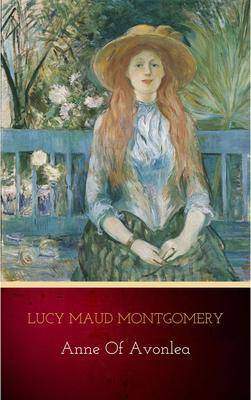
Anne of Avonlea
¥9.00
Following Anne of Green Gables (1908), the book covers the second chapter in the life of Anne Shirley. This book follows Anne from the age of 16 to 18, during the two years that she teaches at Avonlea school. It includes many of the characters from Anne of Green Gables, as well as new ones like Mr Harrison, Miss Lavendar Lewis, Paul Irving, and the twins Dora and Davy.
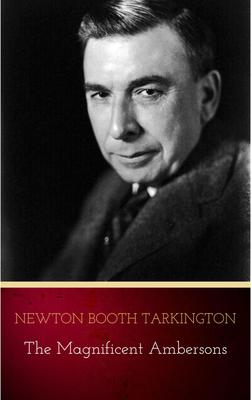
The Magnificent Ambersons
¥9.00
The Magnificent Ambersons is a 1918 novel by Booth Tarkington which won the 1919 Pulitzer Prize. It was the second novel in the Growth trilogy, which included The Turmoil (1915) and The Midlander (1923, retitled National Avenue in 1927). In 1942 Orson Welles directed a film version, also titled The Magnificent Ambersons. The novel and trilogy traces the growth of the United States through the declining fortunes of three generations of the aristocratic Amberson family in a fictional Mid-Western town, between the end of the Civil War and the early part of the 20th century, a period of rapid industrialization and socio-economic change in America. The decline of the Ambersons is contrasted with the rising fortunes of industrial tycoons and other new-money families, which did not derive power from family names but by "doing things". As George Amberson's friend (name unspecified) says, "don't you think being things is 'rahthuh bettuh' than doing things?" "The Magnificent Ambersons is perhaps Tarkington's best novel," said Van Wyck Brooks. "[It is] a typical story of an American family and town—the great family that locally ruled the roost and vanished virtually in a day as the town spread and darkened into a city. This novel no doubt was a permanent page in the social history of the United States, so admirably conceived and written was the tale of the Ambersons, their house, their fate and the growth of the community in which they were submerged in the end." Even though the story is set in a fictitious city, it was inspired by Tarkington's hometown of Indianapolis and the neighborhood he once lived in, Woodruff Place.
The Gentleman from Indiana
¥9.00
There is a fertile stretch of flat lands in Indiana where unagrarian Eastern travellers, glancing from car-windows, shudder and return their eyes to interior upholstery, preferring even the swaying caparisons of a Pullman to the monotony without. The landscape lies interminably level: bleak in winter, a desolate plain of mud and snow; hot and dusty in summer, in its flat lonesomeness, miles on miles with not one cool hill slope away from the sun.
The Conquest of Canaan
¥9.00
Newton Booth Tarkington (July 29, 1869 – May 19, 1946) was an American novelist and dramatist best known for his novels The Magnificent Ambersons and Alice Adams. He is one of only three novelists to win the Pulitzer Prize for Fiction more than once, along with William Faulkner and John Updike.
The Beautiful Lady
¥9.00
"The Beautiful Lady", is another of the short novels from Booth Tarkington's early career. It was originally published in two parts, December of 1904 and January of 1905, in "Harper's Magazine", and then as Tarkington's fifth book in May of 1905. As with many of Tarkington's other works, it is a bit too predictable, though in this case that doesn't detract too much from the story. The story appears to sets up a love triangle (or in this case it may be a love square), but it does deviate from that a bit. The story is told from the point of the Italian, Ansolini from Naples, living in Paris who due to being down on his luck is forced into a most embarrassing position of acting as a billboard by shaving his head and having an advertisement for a show placed on the back of his bald head. It is while performing this job, that he nearly meets the "beautiful lady", though he keeps his head down and sees only her feet and the hem of her skirt and hears her lovely voice as it has sympathy for his plight. In fact, Ansolini's feelings are appreciative of her beautiful soul, and not that of romance.
Beasley's Christmas Party
¥9.00
A young newspaperman who has just moved to a new town overhears the wealthy politician in the house next door talking aloud to nonexistent figures. Has David Beasley gone mad, or is his imagination simply greater than his friends and ex-fiancée believe?
Youth and the Bright Medusa
¥9.00
Youth and the Bright Medusa is a collection of short stories by Willa Cather, published in 1920. Several were published in an earlier collection, The Troll Garden. This collection contains the following stories: "Coming, Aphrodite!" a.k.a. "Coming, Eden Bower!" "The Diamond Mine" "A Gold Slipper" "Scandal" "Paul's Case" "A Wagner Matinee" "The Sculptor's Funeral" "A Death in the Desert"
O Pioneers!
¥9.00
The first of her renowned prairie novels--a story that expresses Cather's conviction that "the history of every country begins in the heart of a man or a woman." When Alexandra Bergson takes over the family farm after her father's death, she falls under the spell of the rich, forbidding Nebraska prairie.

The White Ship
¥9.00
"The White Ship" is a short story written by H.P. Lovecraft. It was first published in The United Amateur (Volume 19) #2, November 1919. A lighthouse keeper named Basil Elton engages upon a peculiar fantasy in which a bearded man piloting a mystical white ship is found sailing upon a bridge of moonlight. Elton joins the bearded man on this ship, and together they explore a mystical chain of islands unlike anything that can be found on Earth.

Medusa's Coil
¥9.00
"Medusa's Coil" is a short story by H. P. Lovecraft and Zealia Bishop. It was first published in Weird Tales magazine in January 1939, two years after Lovecraft's death. The story concerns the son of an American plantation owner who brings back from Paris a new wife. It mixes elements of Lovecraft's Cthulhu Mythos with the ancient Greek myth of Medusa, but it has also been noted for its racist aspects.

The Festival
¥9.00
"The Festival" is a short story by H. P. Lovecraft written in October 1923 and published in the January 1925 issue of Weird Tales. The story is set at Christmas time: "It was the Yuletide, that men call Christmas though they know in their hearts it is older than Bethlehem and Babylon, older than Memphis and mankind." An unnamed narrator is making his first visit to Kingsport, Massachusetts, an "ancient sea town where my people had dwelt and kept festival in the elder time when festival was forbidden; where also they had commanded their sons to keep festival once every century, that the memory of primal secrets might not be forgotten."

The Disinterment
¥9.00
Fist published in 1935, "The Disinterment" is a short horror story by H.P. Lovecraft.

Beyond the Wall of Sleep
¥9.00
"Beyond the Wall of Sleep" is a science fiction short story by American writer H. P. Lovecraft, written in 1919 and first published in the amateur publication Pine Cones in October 1919. An intern in a mental hospital relates his experience with Joe Slater, an inmate who died at the facility a few weeks after being confined as a criminally insane murderer. He describes Slater as a "typical denizen of the Catskill Mountain region, who corresponds exactly with the 'white trash' of the South", for whom "laws and morals are nonexistent" and whose "general mental status is probably below that of any other native American people".

Cool Air
¥9.00
"Cool Air" is a short story by the American horror fiction writer H. P. Lovecraft, written in March 1926 and published in the March 1928 issue of Tales of Magic and Mystery. The narrator offers a story to explain why a "draught of cool air" is the most detestable thing to him. His tale begins in the spring of 1923, when he was looking for housing in New York City. He finally settles in a converted brownstone on West Fourteenth Street. Investigating a chemical leak from the floor above, he discovers that the inhabitant directly overhead is a strange, old, and reclusive physician. One day the narrator suffers a heart attack, and remembering that a doctor lives overhead, he climbs the stairs and meets Dr. Mu?oz for the first time.

Le Songe D'Une Nuit D'?té
¥9.00
L'action se déroule en Grèce et réunit pour mieux les désunir deux couples de jeunes amants, Lysandre, Démétrius, Hélène et Hermia. Hermia veut épouser Lysandre, mais son père, ?gée, la destine à Démétrius, dont est amoureuse Hélèna. Lysandre et Hermia s'enfuient dans la forêt, poursuivis par Démétrius, lui-même poursuivi par Hélèna. Pendant ce temps, Obéron, roi des fées, a ordonné à Puck de verser une potion sur les paupières de sa femme, Titania. Il entre dans la forêt avec Puck. Pendant la nuit, la confusion règne.

Henry VI, Part 2
¥9.00
The Second Part of King Henry the Sixth, or Henry VI, Part 2, is a history play by William Shakespeare believed written in approximately 1590-91. It is the second part of the trilogy on Henry VI, and often grouped together with Richard III as a tetralogy on The Wars of the Roses—the success of which established Shakespeare's reputation as a playwright.

Oeuvres Complètes
¥9.00
Cet ebook regroupe les oeuvres complètes de Charles Baudelaire. Des tables des matières rendent la navigation intuitive et agréable. ---- Contenu: Le Jeune Enchanteur (1846) La Fanfarlo (1847) Les Fleurs du mal (1857) Les Paradis artificiels (1860) Les Fleurs du mal (1861) Les ?paves (1866) Les Fleurs du mal (additional poems of the 1868 edition) Curiosités esthétiques (1868): Salon de 1845, Salon de 1846, Le musée classique du bazar bonne-nouvelle, Exposition universelle — 1855 — beaux-arts, Salon de 1859, De l'essence du rire, Quelques caricaturistes fran?ais, Quelques caricaturistes étrangers. L'Art romantique (1869): L'?uvre et la vie d'Eugène Delacroix, Peintures murales d'Eugène Delacroix à Saint-Sulpice, Le peintre de la vie moderne, Peintres et aqua-fortistes, Vente de la collection de M. E. Piot, L'art philosophique, Morale du joujou, Théophile Gautier, Pierre Dupont, Richard Wagner et Tannh?user à Paris, Philibert Rouvière, Conseils aux jeunes littérateurs, Les drames et les ...

Los Despojos
¥9.00
Esta recopilación compuesta de inéditos y piezas condenadas fue publicada en Bruselas, bajo el cuidado de Poulet-Malassis, amigo de Baudelaire con un pie de imprenta apócrifo: Amsterdam, a l'Enseigne du Coq, precedida por un simbólico frontispicio de Félicien Rops.

Las Flores del Mal
¥9.00
Les Fleurs du mal es una colección de poemas de Charles Baudelaire. Considerada la obra máxima de su autor, abarca casi la totalidad de su producción poética desde 1840 hasta la fecha de su primera publicación en 1857. Las Flores del mal es considerada una de las obras más importantes de la poesía moderna, imprimiendo una estética nueva, donde la belleza y lo sublime surgen, a través del lenguaje poético, de la realidad más trivial.

La Fanfarlo
¥9.00
Este cuento ha sido publicado en el Boletín de la Sociedad de la Gente de Letras en enero de 1847 bajo el seudónimo de Charles Dufays. Narra la historia de los amores y desamores del joven poeta Samuel Cramer.Una peque?a joya de la literatura clásica.
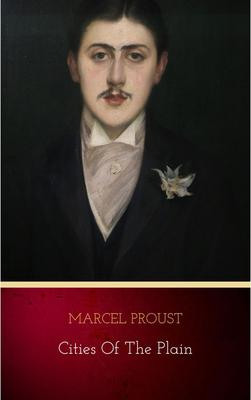
Cities of the Plain: (Sodom and Gomorrah)
¥9.00
In this fourth volume, Proust’s novel takes up for the first time the theme of homosexual love and examines how destructive sexual jealousy can be for those who suffer it. Sodom and Gomorrah is also an unforgiving analysis of both the decadent high society of Paris and the rise of a philistine bourgeoisie that will inevitably supplant it.


