


 购物车
购物车 个人中心
个人中心
Raspberry Pi Blueprints
¥80.65
If you have already undertaken some simple projects with the Raspberry Pi and are looking to enter the exciting work of hardware interaction, then this book is ideal for you.
Mastering Cocos2d Game Development
¥80.65
If you are a developer who is experienced with Cocos2d and Objective-C, and want to take your game development skills to the next level, this book is going to help you achieve your goal.
Canvas LMS Course Design
¥80.65
This book is intended for educators who want to use Canvas to enhance their teaching or for educators whose institution has adopted Canvas as its learning management system. Whether you are brand new to online learning or you are a seasoned expert, you will be able to master both the basic functions and the advanced features of Canvas with this book.
PostgreSQL 9 High Availability Cookbook
¥80.65
A comprehensive series of dependable recipes to design, build, and implement a PostgreSQL server architecture free of common pitfalls that can operate for years to come. Each chapter is packed with instructions and examples to simplify even highly complex database operations. If you are a PostgreSQL DBA working on Linux systems who want a database that never gives up, this book is for you. If you've ever experienced a database outage, restored from a backup, spent hours trying to repair a malfunctioning cluster, or simply want to guarantee system stability, this book is definitely for you.

Scala Data Analysis Cookbook
¥80.65
Navigate the world of data analysis, visualization, and machine learning with over 100 hands-on Scala recipesAbout This BookImplement Scala in your data analysis using features from Spark, Breeze, and ZeppelinScale up your data anlytics infrastructure with practical recipes for Scala machine learningRecipes for every stage of the data analysis process, from reading and collecting data to distributed analytics Who This Book Is For This book shows data scientists and analysts how to leverage their existing knowledge of Scala for quality and scalable data analysis.What You Will LearnFamiliarize and set up the Breeze and Spark libraries and use data structuresImport data from a host of possible sources and create dataframes from CSVClean, validate and transform data using Scala to pre-process numerical and string dataIntegrate quintessential machine learning algorithms using Scala stackBundle and scale up Spark jobs by deploying them into a variety of cluster managersRun streaming and graph analytics in Spark to visualize data, enabling exploratory analysis In Detail This book will introduce you to the most popular Scala tools, libraries, and frameworks through practical recipes around loading, manipulating, and preparing your data. It will also help you explore and make sense of your data using stunning and insightfulvisualizations, and machine learning toolkits. Starting with introductory recipes on utilizing the Breeze and Spark libraries, get to grips withhow to import data from a host of possible sources and how to pre-process numerical, string, and date data. Next, you’ll get an understanding of concepts that will help you visualize data using the Apache Zeppelin and Bokeh bindings in Scala, enabling exploratory data analysis. iscover how to program quintessential machine learning algorithms using Spark ML library. Work through steps to scale your machine learning models and deploy them into a standalone cluster, EC2, YARN, and Mesos. Finally dip into the powerful options presented by Spark Streaming, and machine learning for streaming data, as well as utilizing Spark GraphX.Style and approach This book contains a rich set of recipes that covers the full spectrum of interesting data analysis tasks and will help you revolutionize your data analysis skills using Scala and Spark.

Swift 2 Blueprints
¥80.65
Sharpen your skills in Swift by designing and deploying seven fully functional applicationsAbout This BookDevelop a variety of iOS-compatible applications that range from health and fitness to utilities using this project-based handbookDiscover ways to make the best use of the latest features in Swift to build on a wide array of applicationsFollow step-by-step instructions to create Swift apps oriented for the real world Who This Book Is For If you are a competent iOS developer who wants to develop stunning applications with Swift, then this book is for you. Familiarity with Swift programming is assumed.What You Will LearnGet to grips with the basics of Xcode and Swift for application developmentCreate a Photo Sharing application to capture an image, edit it using different features and share it via social media.Develop applications using the WatchKit and exchange data between iPhone and the WatchUse advanced features such as SpriteKit to build a gameInstall third-party Swift frameworks to improvise on your application developmentDiscover how to simulate home automation with HomeKitBuild an application to monitor the user's weight, heart rate and the number of steps for Health Historic AnalysisManipulate media using AVFoundation framework to merge audio and video. In Detail In this book, you will work through seven different projects to get you hands-on with developing amazing applications for iOS devices. We start off with a project that teaches you how to build a utility app using Swift. Moving on, we cover the concepts behind developing an entertainment or social networking related application, for example, a small application that helps you to share images, audio, and video files from one device to another. You’ll also be guided through create a city information app with customized table views, a reminder app for the Apple Watch, and a game app using SpriteKit. By the end of this book, you will have the required skillset to develop various types of iOS applications with Swift that can run on different iOS devices. You will also be well versed with complex techniques that can be used to enhance the performance of your applications.Style and approach This book takes a step-by-step approach to help you build apps from scratch and learn the methodology to develop real-time applications using Swift.
Appcelerator Titanium Smartphone App Development Cookbook - Second Edition
¥80.65
Over 100 recipes to help you develop cross-platform, native applications in JavaScript About This Book Leverage your JavaScript skills to write mobile applications using Titanium Studio tools with the native advantage Deploy your application on the App Store and Google Play Add your own IOS native modules in objective-C, in an easy-to-follow step-by-step format Who This Book Is For This book is an essential for any developer learning or using JavaScript who wants to write native UI applications for iOS and Android. No knowledge of Objective-C, Swift and Java is required and you’ll quickly be developing native, cross-platform apps, in JavaScript! What You Will Learn Transfer data between applications with URL schemes, and make your application accessible to other mobile applications and services Connect with remote services using JSON Work with Google Maps and Apple Maps, GPS and annotate routes Create animations and special effects Integrate notifications and connect with social media services such as Facebook and Twitter Build applications with Alloy MVC – a rapid application development framework Design native APIs and use local databases In Detail The mobile web has paved the way but many users want to have “native” applications installed. Using Appcelerator as a platform it’s now possible to write iOS, Android, and Windows phone applications in JavaScript! It allows developers to develop fully native UI applications using Appcelerator studio tools without any knowledge of Objective-C, Swift or Java. This book will take you through the process of building cross-platform, native UI applications for the mobile from scratch. You will learn how to develop apps, how to use GPS, cameras and photos and how to build socially connected apps. You will also learn how to package them for submission to the App Store and Google Play. This cookbook takes a pragmatic approach to creating applications in JavaScript from putting together basic UIs, to handling events and implementation of third party services such as Twitter, Facebook and Push notifications. The book shows you how to integrate datasources and server APIs, and how to use local databases. The topics covered will guide you to use Appcelerator Studio tools for all the mobile features such as Geolocation, Accelerometer, animation and more. You’ll also learn about Alloy, the Appcelerator MVC framework for rapid app development, and how to transfer data between applications using URLSchemes, enabling other developers to access and launch specific parts of your app. Finally, you will learn how to register developer accounts and publish your very own applications on the App Store and Google Play. Style and approach This book offers a set of practical recipes with a step-by-step approach for building native applications for both the iOS and Android using JavaScript. This hands-on guide shows you exactly how to use the Appcelerator platform to rapidly develop cross-platform, native apps.
Building a Game with Unity and Blender
¥80.65
Learn how to build a complete 3D game using the industry-leading Unity game development engine and Blender, the graphics software that gives life to your ideas About This Book Learn the fundamentals of two powerful tools and put the concepts into practice Find out how to designand buildall the core elements required for a great game - from characters to environments, to props— Learn how to integrate Artificial Intelligence (AI) into your game for sophisticated and engaging gameplay Who This Book Is For This book has been created for anyone who wants to learn how to develop their own game using Blender and Unity, both of which are freely available, yet very popular and powerful, tools. Not only will you be able to master the tools, but you will also learn the entire process of creating a game from the ground up. What You Will Learn Design and create a game concept that will determine how your game will look and how it will be played Construct 3D models of your game characters and create animations for them before importing them into the game Build the game environment from scratch by constructing the terrain and props, and eventually put it all together to form a scene Import and integrate game assets created in Blender into Unity—for example, setting up textures, materials, animation states, and prefabs Develop game structures including a game flow, user interface diagram, game logic, and a state machine Make the game characters move around and perform certain actions either through player inputs or fully controlled by artificial intelligence Create particles and visual effects to enhance the overall visual aesthetic Deploy the game for various types of platforms In Detail In the wake of the indie game development scene, game development tools are no longer luxury items costing up to millions of dollars but are now affordable by smaller teams or even individual developers. Among these cutting-edge applications, Blender and Unity stand out from the crowd as a powerful combination that allows small-to-no budget indie developers or hobbyists alike to develop games that they have always dreamt of creating. Starting from the beginning, this book will cover designing the game concept, constructing the gameplay, creating the characters and environment, implementing game logic and basic artificial intelligence, and finally deploying the game for others to play. By sequentially working through the steps in each chapter, you will quickly master the skills required to develop your dream game from scratch. Style and approach A step-by-step approach with tons of screenshots and sample code for readers to follow and learn from. Each topic is explained sequentially and placed in context so that readers can get a better understanding of every step in the process of creating a fully functional game.
Selenium Testing Tools Cookbook - Second Edition
¥80.65
Over 90 recipes to help you build and run automated tests for your web applications with Selenium WebDriverAbout This BookLearn to leverage the power of Selenium WebDriver with simple examples that illustrate real-world problems and their workaroundsExplains the testing of mobile applications with Appium for mobile platforms such as iOS and AndroidA pragmatic manual with engaging recipes and attractive screenshots to test your web applications efficiently Who This Book Is For This book is intended for software quality assurance/testing professionals, software project managers, or software developers with prior experience in using Selenium and Java to test web-based applications. This books also provides examples for C#, Python and Ruby users.What You Will LearnUnderstand how the locators work and use various locator methods to build reliable testsBuild reliable and maintainable tests with the Selenium WebDriver APIUse the PageFactory pattern to build a robust and easy to maintain test frameworkBuild data-driven tests and extend Selenium API to implement custom steps and checksIntegrate and use ATDD/BDD tools such as Cucumber, SpecFlow, Capybara, and Behave with the Selenium WebDriver APISet up iPhone/iPad and Android simulators and devices to test your mobile web application with AppiumSet up Selenium Grid for faster and parallel running of tests, increasing test coverage and reducing test execution time for cross-browser testingBuild extended Selenium WebDriver tests for additional coverage In Detail This book is an incremental guide that will help you learn and use the advanced features of the Selenium toolset including the WebDriver API in various situations to build a reliable test automation. You start off by setting up the test development environment and gain tips on the advanced locater strategy and the effective use of the Selenium WebDriver API. After that, the use of design patterns such as data - driven tests and PageFactory are demonstrated. You will then be familiarised with extending Selenium WebDriver API by implementing custom tasks and setting up your own distributed environment to run tests in parallel for cross-browser testing. Finally, we give you some tips on integrating Selenium WebDriver with other popular tools and testing mobile applications. By the end of this book, you will have learned enough to solve complex testing issues on your own.Style and approach This recipe-based guide covers real-life scenarios of testing your web apps with Selenium. Each recipe begins with a short introduction and key concepts along with illustrated examples of use cases, and ends with detailed but informative de*ions of the inner workings of the example.
Modular Programming with JavaScript
¥80.65
Modularize your JavaScript code for better readability, greater maintainability, and enhanced testability About This Book Design and build fully modular, modern JavaScript applications using modular design concepts Improve code portability, maintainability, and integrity while creating highly scalable and responsive web applications Implement your own loosely coupled code blocks that can power highly maintainable and powerful applications in a flexible and highly responsive modular architecture Who This Book Is For If you are an intermediate to advanced JavaScript developer who has experience of writing JavaScript code but probably not in a modular, portable manner, or you are looking to develop enterprise level JavaScript applications, then this book is for you. A basic understanding of JavaScript concepts such as OOP, prototypal inheritance, and closures is expected. What You Will Learn Understand the important concepts of OOP in JavaScript, such as scope, objects, inheritance, event delegation, and more Find out how the module design pattern is used in OOP in JavaScript Design and augment modules using both tight augmentation and loose augmentation Extend the capabilities of modules by creating sub-modules using techniques such as cloning and inheritance Move from isolated module pieces to a cohesive, well integrated application modules that can interact and work together without being tightly coupled See how SandBoxing is used to create a medium for all the modules to talk to each other as well as to the core Use the concepts of modular application design to handle dependencies and load modules asynchronously Become familiar with AMD and CommonJS utilities and discover what the future of JavaScript holds for modular programming and architecture In Detail Programming in the modular manner is always encouraged for bigger systems—it is easier to achieve scalability with modular programming. Even JavaScript developers are now interested in building programs in a modular pattern. Modules help people who aren’t yet familiar with code to find what they are looking for and also makes it easier for programmers to keep things that are related close together. Designing and implementing applications in a modular manner is highly encouraged and desirable in both simple and enterprise level applications. This book covers some real-life examples of modules and how we can translate that into our world of programming and application design. After getting an overview of JavaScript object-oriented programming (OOP) concepts and their practical usage, you should be able to write your own object definitions using the module pattern. You will then learn to design and augment modules and will explore the concepts of cloning, inheritance, sub-modules, and code extensibility. You will also learn about SandBoxing, application design, and architecture based on modular design concepts. Become familiar with AMD and CommonJS utilities. By the end of the book, you will be able to build spectacular modular applications in JavaScript. Style and approach This in-depth step-by-step guide will teach you modular programming with JavaScript. Starting from the basics, it will cover advanced modular patterns that can be used in sophisticated JavaScript applications.
Mastering Swift 3 - Linux
¥80.65
Learn to build fast and robust applications on the Linux platform with Swift About This Book Create robust applications by building a strong foundation in the Swift Language Utilize Swift 3 on the embedded Linux platform for IoT and Robotic projects Build more flexible and high-performing applications on desktop, server, and embedded Linux platforms Who This Book Is For This book is for Linux developers who are interested in quickly learning how to use Swift to create exciting applications on Linux platforms. What You Will Learn Install Swift on the Linux platform Explore the power of the Swift language Get to know the proper design techniques Understand Swift’s new Core Library Implement popular design patterns with Swift Integrate C libraries with Swift Using Swift on Single-Board Computers Learn how to add concurrency to your application with Grand Central Dispatch Learn how to work with Swift Generics Learn how to use the Protocol-Oriented design paradigm In Detail Swift is a modern, fast, and safe programming language created by Apple. Writing Swift is interactive and fun, the syntax is concise yet expressive, and the code runs lightning-fast. Swift’s move to open source has been embraced with open arms and has seen increased adoption in the Linux platform. Our book will introduce you to the Swift language, further delving into all the key concepts you need to create applications for desktop, server, and embedded Linux platforms. We will teach you the best practices to design an application with Swift 3 via design patterns and Protocol-Oriented Programming. Further on, you will learn how to catch and respond to errors within your application. When you have gained a strong knowledge of using Swift in Linux, we’ll show you how to build IoT and robotic projects using Swift on single board computers. By the end of the book, you will have a solid understanding of the Swift Language with Linux and will be able to create your own applications with ease. Style and approach This easy-to-follow, code-rich guide is filled with examples that demonstrate how to put the concepts into practice. You’ll also get design patterns and best practices to get you writing better applications on the Linux platform.
Microsoft Dynamics NAV 2016 Financial Management - Second Edition
¥80.65
Master the world of financial management with Microsoft Dynamics NAV 2016 About This Book Familiarize yourself with Dynamics NAV and get up to date with the latest release – this is an invaluable tool for financial management Learn how to use reporting tools that will help you to make the right decisions at the right time Explore features inside the sale and purchase areas as well as functionalities including payments, budgets, cash flow, fixed assets, and business intelligence Who This Book Is For This book will appeal to financers and accountants who are using Dynamics NAV as their ERP and financial management system. Dynamics NAV consultants and project managers will find it useful for their daily work. What You Will Learn Handle complete business processes for purchases and sales in Dynamics NAV. Use the banking features and the reconciliation process to gain greater insights into a company’s financial status. Report data in a meaningful way that provides the company with insightful analysis. Set up dimensions and link them with master tables and journals. Work with multi-currency and intercompany postings. Receive and send documents electronically. Manage complete Fixed Asset by Setup, transactions, budgets, and Fixed Asset Reporting. In Detail Microsoft Dynamics NAV is a global Enterprise Resource Planning (ERP) solution that provides small and mid-size businesses with greater control over their finances and a way to simplify their supply chain, manufacturing, and operations. Microsoft Dynamics NAV Financial Management explains all you need to know in order to successfully handle your daily financial management tasks. This book walks you through all the improvements in the latest release and shows you how to apply them in your workplace. You will learn about functionalities including sales and purchase processes, payments, bank account management, reporting taxes, budgets, cash flow, fixed assets, cost accounting, inventory valuation, workflows, sending and receiving electronic documents, and business intelligence. This book comprehensively covers all the financial management features inside the latest version of Dynamics NAV and follows a logical schema. By the time you’re finished this book you will have learned about budgets, cash flow management, currencies, intercompany postings, and accounting implications in areas such as jobs, services, warehousing, and manufacturing. Style and approach This book is an in-depth, practical tutorial demonstrating both the basic and more advanced concepts of financial management in Dynamics NAV.
Programming Kotlin
¥80.65
Familiarize yourself with all of Kotlin’s features with this in-depth guide About This Book Get a thorough introduction to Kotlin Learn to use Java code alongside Kotlin without any hiccups Get a complete overview of null safety, Generics, and many more interesting features Who This Book Is For The book is for existing Java developers who want to learn more about an alternative JVM language. If you want to see what Kotlin has to offer, this book is ideal for you. What You Will Learn Use new features to write structured and readable object-oriented code Find out how to use lambdas and higher order functions to write clean, reusable, and simple code Write unit tests and integrate Kotlin tests with Java code in a transitioning code base Write real-world production code in Kotlin in the style of microservices Leverage Kotlin’s extensions to the Java collections library Use destructuring expressions and find out how to write your own Write code that avoids null pointer errors and see how Java-nullable code can integrate with features in a Kotlin codebase Discover how to write functions in Kotlin, see the new features available, and extend existing libraries Learn to write an algebraic data types and figure out when they should be used In Detail Kotlin has been making waves ever since it was open sourced by JetBrains in 2011; it has been praised by developers across the world and is already being adopted by companies. This book provides a detailed introduction to Kotlin that shows you all its features and will enable you to write Kotlin code to production. We start with the basics: get you familiar with running Kotlin code, setting up, tools, and instructions that you can use to write basic programs. Next, we cover object oriented code: functions, lambdas, and properties – all while using Kotlin’s new features. Then, we move on to null safety aspects and type parameterization. We show you how to destructure expressions and even write your own. We also take you through important topics like testing, concurrency, microservices, and a whole lot more. By the end of this book you will be able to compose different services and build your own applications. Style and approach An easy to follow guide that covers the full set of features in Kotlin programming.
F# High Performance
¥80.65
Build powerful and fast applications with F# About This Book· Explore the advanced concurrency support in F# and .NET TPL·Covers major optimization techniques in F# to improve the performance of applications·Use Struct, Class and Record model, Interop with C# and VB without sacrificing performance. Who This Book Is For This book is for F# developers who want to build high-performance applications. Knowledge of functional programming would be helpful. What You Will Learn· Understand how the execution of functions in F# works·Identify common performance bottlenecks·Implement best practices to optimize performance·Use the available tooling to help measure performance·Combine the best practice of asynchronous and synchronous·Optimize further using various F# language constructs In Detail F# is a functional programming language and is used in enterprise applications that demand high performance. It has its own unique trait: it is a functional programming language and has OOP support at the same time. This book will help you make F# applications run faster with examples you can easily break down and take into your own work. You will be able to assess the performance of the program and identify bottlenecks. Beginning with a gentle overview of concurrency features in F#, you will get to know the advanced topics of concurrency optimizations in F#, such as F# message passing agent of MailboxProcessor and further interoperation with .NET TPL. Based on this knowledge, you will be able to enhance the performance optimizations when implementing and using other F# language features. The book also covers optimization techniques by using F# best practices and F# libraries. You will learn how the concepts of concurrency and parallel programming will help in improving the performance. With this, you would be able to take advantage of multi-core processors and track memory leaks, root causes, and CPU issues. Finally, you will be able to test their applications to achieve scalability. Style and approach This easy-to-follow guide is full of hands-on examples of real-world multithreading tasks. Each topic is explained and placed in context, and for the more inquisitive, there are also more in-depth details of the concepts used.
Principles of Data Science
¥80.65
Learn the techniques and math you need to start making sense of your data About This Book Enhance your knowledge of coding with data science theory for practical insight into data science and analysis More than just a math class, learn how to perform real-world data science tasks with R and Python Create actionable insights and transform raw data into tangible value Who This Book Is For You should be fairly well acquainted with basic algebra and should feel comfortable reading snippets of R/Python as well as pseudo code. You should have the urge to learn and apply the techniques put forth in this book on either your own data sets or those provided to you. If you have the basic math skills but want to apply them in data science or you have good programming skills but lack math, then this book is for you. What You Will Learn Get to know the five most important steps of data science Use your data intelligently and learn how to handle it with care Bridge the gap between mathematics and programming Learn about probability, calculus, and how to use statistical models to control and clean your data and drive actionable results Build and evaluate baseline machine learning models Explore the most effective metrics to determine the success of your machine learning models Create data visualizations that communicate actionable insights Read and apply machine learning concepts to your problems and make actual predictions In Detail Need to turn your skills at programming into effective data science skillsPrinciples of Data Science is created to help you join the dots between mathematics, programming, and business analysis. With this book, you’ll feel confident about asking—and answering—complex and sophisticated questions of your data to move from abstract and raw statistics to actionable ideas. With a unique approach that bridges the gap between mathematics and computer science, this books takes you through the entire data science pipeline. Beginning with cleaning and preparing data, and effective data mining strategies and techniques, you’ll move on to build a comprehensive picture of how every piece of the data science puzzle fits together. Learn the fundamentals of computational mathematics and statistics, as well as some pseudocode being used today by data scientists and analysts. You’ll get to grips with machine learning, discover the statistical models that help you take control and navigate even the densest datasets, and find out how to create powerful visualizations that communicate what your data means. Style and approach This is an easy-to-understand and accessible tutorial. It is a step-by-step guide with use cases, examples, and illustrations to get you well-versed with the concepts of data science. Along with explaining the fundamentals, the book will also introduce you to slightly advanced concepts later on and will help you implement these techniques in the real world.
Android Design Patterns and Best Practice
¥80.65
Create reliable, robust, and efficient Android apps with industry-standard design patterns About This Book Create efficient object interaction patterns for faster and more efficient Android development Get into efficient and fast app development and start making money from your android apps Implement industry-standard design patterns and best practices to reduce your app development time drastically Who This Book Is For This book is intended for Android developers who have some basic android development experience. Basic Java programming knowledge is a must to get the most out of this book. What You Will Learn Build a simple app and run it on real and emulated devices Explore the WYSIWYG and XML approaches to material design provided within Android Studio Detect user activities by using touch screen listeners, gesture detection, and reading sensors Apply transitions and shared elements to employ elegant animations and efficiently use the minimal screen space of mobile devices Develop apps that automatically apply the best layouts for different devices by using designated directories Socialize in the digital word by connecting your app to social media Make your apps available to the largest possible audience with the AppCompat support library In Detail Are you an Android developer with some experience under your beltAre you wondering how the experts create efficient and good-looking appsThen your wait will end with this book! We will teach you about different Android development patterns that will enable you to write clean code and make your app stand out from the crowd. The book starts by introducing the Android development environment and exploring the support libraries. You will gradually explore the different design and layout patterns and get to know the best practices of how to use them together. Then you’ll then develop an application that will help you grasp activities, services, and broadcasts and their roles in Android development. Moving on, you will add user-detecting classes and APIs such as gesture detection, touch screen listeners, and sensors to your app. You will also learn to adapt your app to run on tablets and other devices and platforms, including Android Wear, auto, and TV. Finally, you will see how to connect your app to social media and explore deployment patterns as well as the best publishing and monetizing practices. The book will start by introducing the Android development environment and exploring the support libraries. You will gradually explore the different Design and layout patterns and learn the best practices on how to use them together. You will then develop an application that will help you grasp Activities, Services and Broadcasts and their roles in Android development. Moving on, you will add user detecting classes and APIs such as at gesture detection, touch screen listeners and sensors to our app. You will also learn to adapt your app to run on tablets and other devices and platforms, including Android Wear, Auto, and TV. Finally, you will learn to connect your app to social media and explore deployment patterns and best publishing and monetizing practices. Style and approach This book takes a step-by-step approach. The steps are explained using real-world practical examples. Each chapter uses case studies where we show you how using design patterns will help in your development process.
Chef Cookbook - Third Edition
¥80.65
Master over 80 incredibly effective recipes to manage the day-to-day complications in your infrastructure About This Book Immediately apply Devops techniques and methods, then combine them with powerful Chef tools to manage and automate your infrastructure Address the growing challenges of code management, cloud, and virtualization with Chef quickly Explore and implement the important aspects of Chef Automate using this recipe-based guide Who This Book Is For This book is for system engineers and administrators who have a fundamental understanding of information management systems and infrastructure. It is also for DevOps Engineers, IT professionals, and organizations who want to automate and gain greater control of their infrastructures with Chef. No experience with Chef is needed, but may help. What You Will Learn Test your cookbooks with Test Kitchen Manage cookbook dependencies with Berkshelf Use reporting to keep track of what happens during the execution of chef-client runs across all of the machines Create custom Ohai and Knife plugins Build a high-availability service using Heartbeat Use a HAProxy to load-balance multiple web servers In Detail Chef is a configuration management tool that lets you automate your more cumbersome IT infrastructure processes and control a large network of computers (and virtual machines) from one master server. This book will help you solve everyday problems with your IT infrastructure with Chef. It will start with recipes that show you how to effectively manage your infrastructure and solve problems with users, applications, and automation. You will then come across a new testing framework, InSpec, to test any node in your infrastructure. Further on, you will learn to customize plugins and write cross-platform cookbooks depending on the platform. You will also install packages from a third-party repository and learn how to manage users and applications. Toward the end, you will build high-availability services and explore what Habitat is and how you can implement it. Style and approach This book follows a recipe-based approach and covers all the important topics you need to know. If you don't want to dig through a whole book before you get started, this book is for you, as it features a set of independent recipes you can try out immediately.
Learning ASP.NET Core MVC Programming
¥80.65
Learn the fundamentals of ASP.NET MVC and build real-world web applications using ASP.NET Core MVC About This Book Get a first-principles coverage of ASP.NET MVC and the latest release, Core This book is uniquely designed for developers who are looking to transition their skills into the .NET development field The standalone chapter structure leaves you free to explore ASP.NET MVC to immediately solve your pain points Who This Book Is For This book is for developers who want to learn to build web applications using ASP.NET Core, developers who want to make a career building web applications using Microsoft technology, and developers who are working in Ruby on Rails or other web frameworks and want to learn ASP.NET Core MVC. No knowledge of the ASP.NET platform or the .NET platform is required. Even though you do not need to have experience in C#, an understanding of the basic constructs (loops, conditionals, classes, and objects) of any modern programming language would be helpful. What You Will Learn Get to know the concepts of ASP.NET MVC and build a new static web page using HTML, CSS, and jQuery Set up a development environment and run a sample application using the template Create a Controller with action methods Build a view using several features of the Razor View engine Construct a Model for ASP.NET Core MVC application Devise a custom mechanism to provide maximum flexibility to your application through routing Validate the user input on the client side using jQuery Enhance your applications using Bootstrap Explore new configuration and deployment scenarios—step by step guide to deploying ASP.NET Core web application in Linux In Detail ASP.NET Core MVC helps you build robust web applications using the Model-View-Controller design. This guide will help you in building applications which can be deployed on non-windows platforms such as Linux. In today’s age, it is crucial that you possess the ability to separate the programming and business logic, and this is exactly what ASP.NET Core MVC application will help you achieve. This version comes with a number of improvements that enable fast, TDD-friendly development to create sophisticated applications. You would also learn the fundamentals of Entity framework and on how to use the same in ASP.NET Core web applications. The book presents the fundamentals and philosophies of ASP.NET Core. Starting with an overview of the MVC pattern, we quickly dive into the aspects that you need to know to get started with ASP.NET. You will learn about the core architecture of model, view, and control. Integrating your application with Bootstrap, validating user input, interacting with databases, and deploying your application are some of the things that you will be able to execute with this fast-paced guide. The end of the book will test your knowledge as you build a fully working sample application using the skills you’ve learned throughout the book. Style and approach This book takes a first-principles approach to help you understand and implement ASP.NET MVC solutions. It is focused primarily on giving you practical skills rather than the old conventional theoretical teaching.
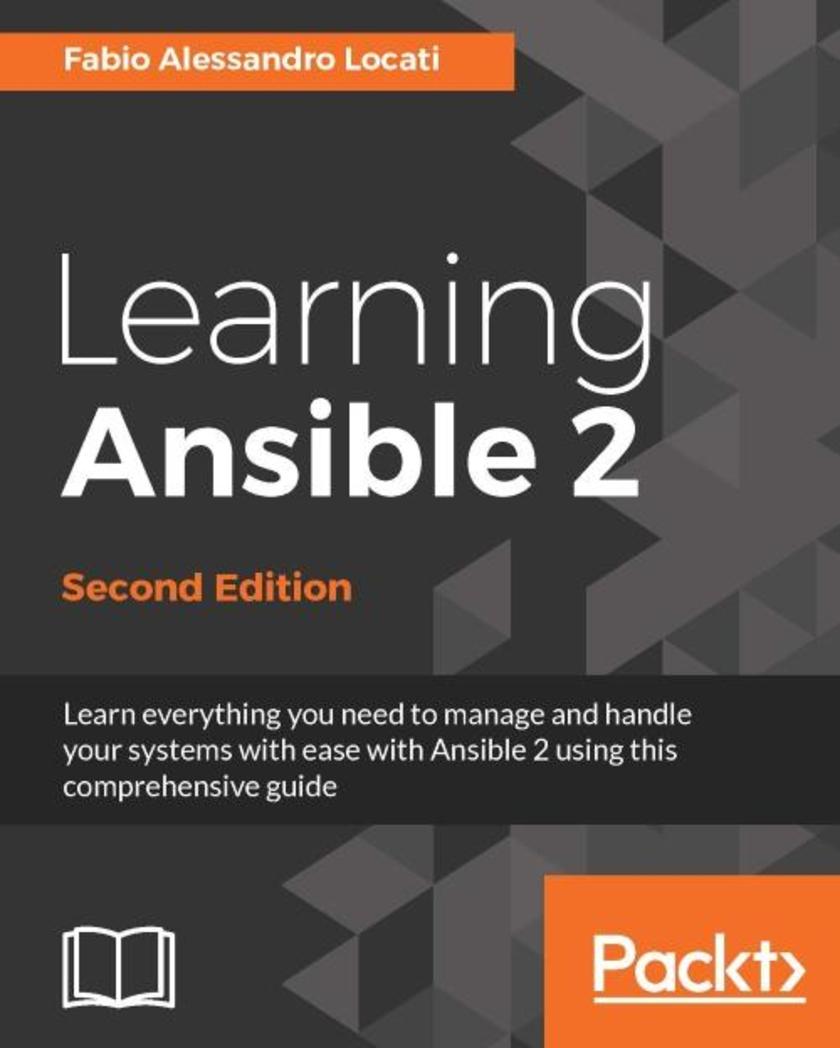
Learning Ansible 2 - Second Edition
¥80.65
Learn everything you need to manage and handle your systems with ease with Ansible 2 using this comprehensive guide About This Book Simplify the automation of applications and systems using the newest version of Ansible Get acquainted with fundamentals of Ansible such as playbooks, modules, and various testing strategies A comprehensive, learning guide that provides you with great skills to automate your organization’s infrastructure using Ansible 2 Who This Book Is For The book is for sys admins who want to automate their organization’s infrastructure using Ansible 2. No prior knowledge of Ansible is required. What You Will Learn Set up Ansible 2 and an Ansible 2 project in a future-proof way Perform basic operations with Ansible 2 such as creating, copying, moving, changing, and deleting files, and creating and deleting users Deploy complete cloud environments using Ansible 2 on AWS and DigitalOcean Explore complex operations with Ansible 2 (Ansible vault, e-mails, and Nagios) Develop and test Ansible playbooks Write a custom module and test it In Detail Ansible is an open source automation platform that assists organizations with tasks such as configuration management, application deployment, orchestration, and task automation. With Ansible, even complex tasks can be handled easier than before. In this book, you will learn about the fundamentals and practical aspects of Ansible 2 by diving deeply into topics such as installation (Linux, BSD, and Windows Support), playbooks, modules, various testing strategies, provisioning, deployment, and orchestration. In this book, you will get accustomed with the new features of Ansible 2 such as cleaner architecture, task blocks, playbook parsing, new execution strategy plugins, and modules. You will also learn how to integrate Ansible with cloud platforms such as AWS. The book ends with the enterprise versions of Ansible, Ansible Tower and Ansible Galaxy, where you will learn to interact Ansible with different OSes to speed up your work to previously unseen levels By the end of the book, you’ll able to leverage the Ansible parameters to create expeditious tasks for your organization by implementing the Ansible 2 techniques and paradigms. Style and approach This book is a step-by-step learning guide on the all new Ansible 2, which is an ideal configuration management tool.
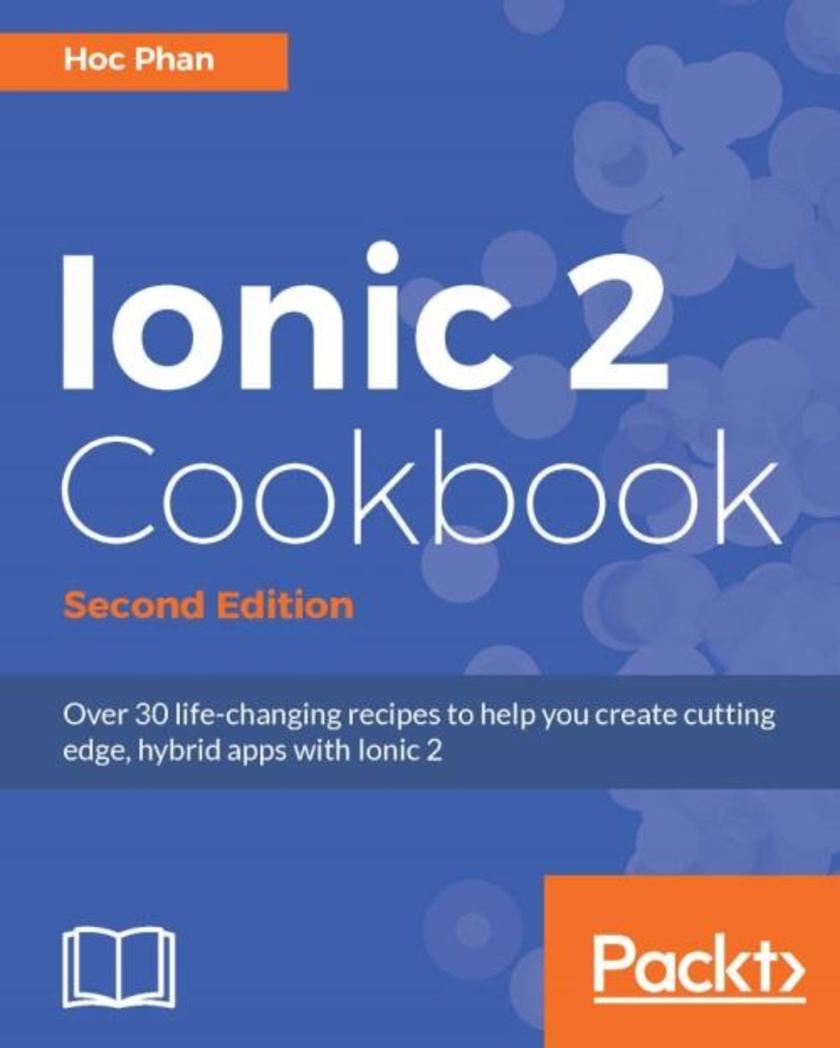
Ionic 2 Cookbook - Second Edition
¥80.65
Over 30 life-changing recipes to help you create cutting edge, hybrid apps with Ionic 2 About This Book Leverage Ionic 2 and its exciting new features to create cutting edge real-time apps Work through simple recipes to address your problems directly and solve them effectively Get examples at each step to guide you on your learning curve Who This Book Is For This book is for front end JavaScript developers who know the basics of JavaScript programming. No prior knowledge of Ionic is required to get the most of this book. What You Will Learn Create custom UIs using Angular 2 directives Make the best use of REST APIs to submit forms Create beautiful animations and graphics in the application Embed videos and other media into the app Access native device functionalities such as a camera and maps using ngCordova Theme the application based on the various platform styles available Publish your application to a variety of platforms Leverage Angular 2 events and Ionic-specific events to communicate In Detail Developing real-time apps is the need of the hour, and apps that deal with humongous amounts of user data and real-time information that needs to be updated frequently are in high demand. Currently, one of the most popular frameworks for this task is Ionic Framework, which is undergoing a major makeover. This book will get you started with Ionic and help you create Angular 2 components that interact with templates. From there, you’ll work with Ionic components and find out how to share data efficiently between them. You’ll discover how to make the best use of the REST API to handle back-end services and then move on to animating the application to make it look pretty. You’ll learn to add in a local push notification in order to test the app. You’ll work with Cordova to support native functionalities on both iOS and Android. From there, you’ll get to grips with using the default themes for each platform as well as customizing your own. Finally, you’ll see how best to deploy your app to different platforms. This book will solve all your Ionic-related issues through dedicated recipes that will help you get the best out of Ionic. Style and approach This book is a recipe-based solution to all your Ionic 2 related problems and will help you create cutting edge real-time apps with ease through simple-to-understand step-by-step recipes.
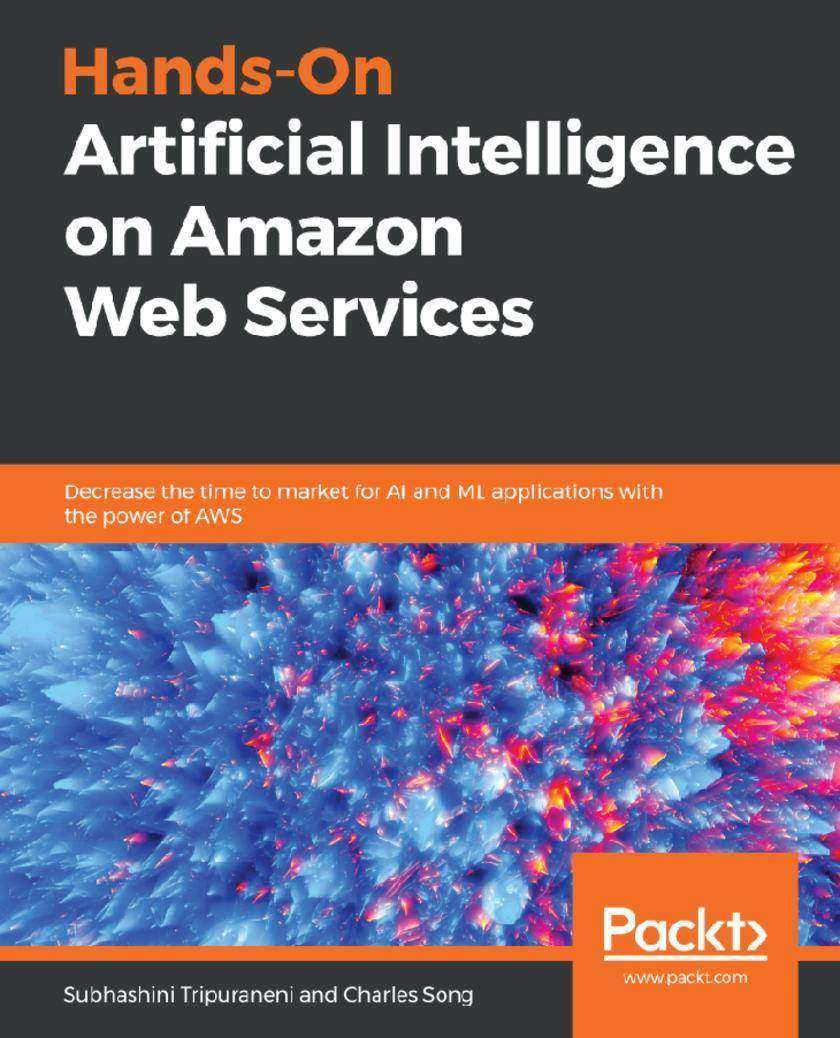
Hands-On Artificial Intelligence on Amazon Web Services
¥80.65
Perform cloud-based machine learning and deep learning using Amazon Web Services such as SageMaker, Lex, Comprehend, Translate, and Polly Key Features * Explore popular machine learning and deep learning services with their underlying algorithms * Discover readily available artificial intelligence(AI) APIs on AWS like Vision and Language Services * Design robust architectures to enable experimentation, extensibility, and maintainability of AI apps Book Description From data wrangling through to translating text, you can accomplish this and more with the artificial intelligence and machine learning services available on AWS. With this book, you’ll work through hands-on exercises and learn to use these services to solve real-world problems. You’ll even design, develop, monitor, and maintain machine and deep learning models on AWS. The book starts with an introduction to AI and its applications in different industries, along with an overview of AWS artificial intelligence and machine learning services. You’ll then get to grips with detecting and translating text with Amazon Rekognition and Amazon Translate. The book will assist you in performing speech-to-text with Amazon Transcribe and Amazon Polly. Later, you’ll discover the use of Amazon Comprehend for extracting information from text, and Amazon Lex for building voice chatbots. You will also understand the key capabilities of Amazon SageMaker such as wrangling big data, discovering topics in text collections, and classifying images. Finally, you’ll cover sales forecasting with deep learning and autoregression, before exploring the importance of a feedback loop in machine learning. By the end of this book, you will have the skills you need to implement AI in AWS through hands-on exercises that cover all aspects of the ML model life cycle. What you will learn * Gain useful insights into different machine and deep learning models * Build and deploy robust deep learning systems to production * Train machine and deep learning models with diverse infrastructure specifications * Scale AI apps without dealing with the complexity of managing the underlying infrastructure * Monitor and Manage AI experiments efficiently * Create AI apps using AWS pre-trained AI services Who this book is for This book is for data scientists, machine learning developers, deep learning researchers, and artificial intelligence enthusiasts who want to harness the power of AWS to implement powerful artificial intelligence solutions. A basic understanding of machine learning concepts is expected.


