


 购物车
购物车 个人中心
个人中心
ServiceNow IT Operations Management
¥80.65
Align your business requirements with IT by implementing ServiceNow IT Operations with ease. About This Book ?Written to the latest specification, it will cover basic to advanced concepts and architecture. ?Take a service-centric approach to operations management and consolidate all your resource data into a single system IT record. ?Beat the key challenge of managing multiple business operations (even running globally) over a complex IT infrastructure and see immediate results. Who This Book Is For The book is aimed at System administrators, IT operations and IT managers who plan to implement ServiceNow IT Operations Management for their organization. They have no knowledge of ServiceNow ITOM. What You Will Learn ?Step by step guide in setting up each features with in ServiceNow ITOM ?Install and configure the required application or plugin ?Integrate with other provider services as deemed appropriate ?Explore Orchestration capabilities and how to analyze the data ?Learn about the ServiceNow graphical interface ?Integrate with other applications within ServiceNow ?Aims to cover the fundamentals concepts to advanced concepts ?Best practices and advanced features In Detail ServiceNow ITOM enables infrastructure and processes to be managed in a highly automated manner. It contains various segments that ensure its applications and enterprise infrastructures are optimized for high performance and helps in creating a lean and agile organization through service-level visibility and automation. This book will be a
AWS Administration Cookbook
¥80.65
Amazon Web Services (AWS) is a bundled remote computing service that provides cloud computing infrastructure over the Internet with storage, bandwidth, and customized support for application programming interfaces (API). Implementing these services to efficiently administer your cloud environments is a core task. This book will help you build and administer your cloud environment with AWS. We'll begin with the AWS fundamentals, and you'll build the foundation for the recipes you'll work on throughout the book. Next, you will find out how to manage multiple accounts and set up consolidated billing. You will then learn to set up reliable and fast hosting for static websites, share data between running instances, and back up your data for compliance. Moving on, you will find out how to use the compute service to enable consistent and fast instance provisioning, and will see how to provision storage volumes and autoscale an application server. Next, you'll discover how to effectively use the networking and database service of AWS. You will also learn about the different management tools of AWS along with securing your AWS cloud. Finally, you will learn to estimate the costs for your cloud. By the end of the book, you will be able to easily administer your AWS cloud. What you will learn ?Discover the best practices to achieve an automated repeatable infrastructure in AWS ?Bring down your IT costs by managing AWS successfully and deliver high availability, fault tolerance, and scalability ?Make any website faster with static and dynamic caching ?Create monitoring and alerting dashboards using CloudWatch ?Migrate a database to AWS ?Set up consolidated billing to achieve simple and effective cost management with accounts ?Host a domain and find out how you can automate health checks About the Author Lucas Chan has been working in tech since 1995 in a variety of development, systems admin, and DevOps roles. He is currently a senior consultant and engineer at Versent and technical director at Stax. He's been running production workloads on AWS for over 10 years. He's also a member of the APAC AWS warriors program and holds all five of the available AWS certifications. Rowan Udell has been working in development and operations for 15 years. He has held a variety of positions, such as SRE, frontend developer, backend developer, consultant, technical lead, and team leader. His travels have seen him work in start-ups and enterprises in the finance, education, and web industries in Australia and Canada. He currently works as a senior consultant with Versent, an AWS Advanced Partner in Sydney. He specializes in serverless applications and architectures on AWS, and contributes actively in the Serverless Framework community.
Learning Apache Cassandra - Second Edition
¥80.65
Cassandra is a distributed database that stands out thanks to its robust feature set and intuitive interface, while providing high availability and scalability of a distributed data store. This book will introduce you to the rich feature set offered by Cassandra, and empower you to create and manage a highly scalable, performant and fault-tolerant database layer. The book starts by explaining the new features implemented in Cassandra 3.x and get you set up with Cassandra. Then you'll walk through data modeling in Cassandra and the rich feature set available to design a flexible schema. Next you'll learn to create tables with composite partition keys, collections and user-defined types and get to know different methods to avoid denormalization of data. You will then proceed to create user-defined functions and aggregates in Cassandra. Then, you will set up a multi node cluster and see how the dynamics of Cassandra change with it. Finally, you will implement some application-level optimizations using a Java client. By the end of this book, you'll be fully equipped to build powerful, scalable Cassandra database layers for your applications. What you will learn ?Install Cassandra ?Create keyspaces and tables with multiple clustering columns to organize related data ?Use secondary indexes and materialized views to avoid denormalization of data
SAP Lumira Essentials
¥80.65
Discover how to make your business data more interactive and engaging with SAP Lumira About This Book Create a powerful data discovery experience with the advanced capabilities of SAP Lumira Find business insights in your data through data blending, wrangling, transformation, and visualization A fast-paced guide packed with hands-on practical examples, real-world solutions, and best practices to get you started with SAP Lumira Who This Book Is For If you are a SAP user, business analyst, BI developer, or a junior data engineer who wants to use SAP Lumira to build creative visualizations, this book is for you. You should have a reasonable level of knowledge of SAP Business Objects and its components. What You Will Learn Deploy SAP Lumira on your computer and learn more about the SAP Lumira interface Extract data from different sources using SAP Lumira’s data connecters Prepare, filter, clean, and format your data Discover visualization techniques and data discovery methods Administrate and customize SAP Lumira to get basic knowledge of its SDK Create various charts to deliver fantastic data visualizations Connect to SAP BusinessObjects BI Platform and SAP HANA to extract, prepare, and visualize data In Detail SAP Lumira allows you to combine data from multiple sources into a single view and create engaging visualizations quickly and easily. It is a reporting platform that helps users access data and independently perform analysis. With the increasing interest in data discovery, self-service BI, and visualization around the world, tools like SAP Lumira help to eliminate the complexities of analyzing and discovering data. Learn data discovery techniques, build amazing visualizations, create fantastic stories, and share your visualizations through an electronic medium with one of the most powerful tools around—SAP Lumira. You will begin with an overview of the SAP Lumira family of products. You will then go through various data discovery techniques using real-world scenarios of an online e-commerce retailer through detailed recipes on the installation, administration, and customization of SAP Lumira. Next, you will work with data, starting from acquiring data from various data sources, then preparing and visualizing it using the rich functionality of SAP Lumira. Finally, you will present data via a data story or infographic and publish it across your organization or on the World Wide Web. Style and approach This is a step-by-step guide to learning SAP Lumira essentials packed with examples on real-world problems and solutions.
Mastering ArcGIS Server Development with JavaScript
¥80.65
Transform maps and raw data into full-fledged web mapping applications using the power of the ArcGIS JavaScript API and JavaScript libraries About This Book Create and share modern map applications for desktops, tablets, and mobile browsers Present and edit geographic and related data through maps, charts, graphs, and more Learn the tools, tips, and tricks made available through the API and related libraries with examples of real-world applications Who This Book Is For This book is intended for intermediate developers who want to design web mapping applications. You should have some experience with geographic information systems, especially with ArcGIS products such as ArcGIS Server. It also helps to have some experience with HTML, CSS, and JavaScript. What You Will Learn Create single-page mapping applications, lining up data from different sources Search for and display geographic and tabular information based on locations and attributes Customize maps and widgets to deliver the best user experience Present location data intuitively using charts and graphs Integrate mapping applications with your favorite JavaScript frameworks Test the working of your web map application and take advantage of cloud services such as ArcGIS Online Create modern-looking web maps through styling tips and tricks In Detail ESRI and its ArcGIS line of software have been an industry leader in digital map production and publication for over 30 years. ArcGIS Server lets you design, configure, and publish maps that can be viewed and edited through the Internet. After designing basic maps, you may want to find out new and innovative ways to represent information using these maps. In this book, you'll work through practical examples, experiencing the pitfalls and successes of creating desktop and mobile map applications for a web browser using the ArcGIS Server platform. The book begins by introducing you to ArcGIS Server and ESRI's JavaScript API. You'll work with your first web map and then move on to learn about ESRI's building blocks. A Dojo AMS style widget will help you create your own widgets for a map and then see how to collect geographic data. Furthermore, you will learn different techniques such as using Dojo Charts to create charts and graphs to represent your data. Then you will see how to use ESRI JavaScript API with other JavaScript libraries and different styling methods to make your map stand out. By the end of the book, you will discover how to make your application compatible with different devices and platforms and test it using testing libraries. Style and approach An in-depth guide that explores web application development using ArcGIS Server and the ArcGIS JavaScript API. Topics are explained in the context of developing two applications for fictional clients. Details of application development, including possible pitfalls and best practices, are included in this book.
Extending Unity with Editor Scripting
¥80.65
Put Unity to use for your video games by creating your own custom tools with editor *ing About This Book Acquire a good understanding of extending Unity’s editor capabilities for a platformer game by using Gizmos, custom inspectors, editor windows, *able objects, and more Learn to configure and get control over your asset import pipeline using asset preprocessors A step-by-step, comprehensible guide to creating and customizing a build pipeline that fits the necessities of your video game development team Who This Book Is For This book is for anyone who has a basic knowledge of Unity programming using C# and wants to learn how to extend and create custom tools using Unity editor *ing to improve the development workflow and make video game development easier. What You Will Learn Use Gizmos to create visual aids for debugging Extend the editor capabilities using custom inspectors, property and decorator drawers, editor windows, and handles Save your video game data in a persistent way using *able objects Improve the look and feel of your custom tools using GUIStyles and GUISkins Configure and control the asset import pipeline Improve the build creation pipeline Distribute the custom tools in your team or publish them in the Asset Store In Detail One of Unity's most powerful features is the extensible editor it has. With editor *ing, it is possible to extend or create functionalities to make video game development easier. For a Unity developer, this is an important topic to know and understand because adapting Unity editor *ing to video games saves a great deal of time and resources. This book is designed to cover all the basic concepts of Unity editor *ing using a functional platformer video game that requires workflow improvement. You will commence with the basics of editor *ing, exploring its implementation with the help of an example project, a level editor, before moving on to the usage of visual cues for debugging with Gizmos in the scene view. Next, you will learn how to create custom inspectors and editor windows and implement custom GUI. Furthermore, you will discover how to change the look and feel of the editor using editor GUIStyles and editor GUISkins. You will then explore the usage of editor *ing in order to improve the development pipeline of a video game in Unity by designing ad hoc editor tools, customizing the way the editor imports assets, and getting control over the build creation process. Step by step, you will use and learn all the key concepts while creating and developing a pipeline for a simple platform video game. As a bonus, the final chapter will help you to understand how to share content in the Asset Store that shows the creation of custom tools as a possible new business. By the end of the book, you will easily be able to extend all the concepts to other projects. Style and approach This book uses a step-by-step approach that will help you finish with a level editor tool, a custom configuration for the asset import pipeline, and a build pipeline totally adjusted to the video game.
RESTful Java Web Services - Second Edition
¥80.65
Design scalable and robust RESTful web services with JAX-RS and Jersey extension APIs About This Book Get to grips with the portable Java APIs used for JSON processing Design solutions to produce, consume, and visualize RESTful web services using WADL, RAML, and Swagger A step-by-step guide packed with many real-life use-cases to help you build efficient and secure RESTful web APIs in Java Who This Book Is For If you are a web developer with a basic understanding of the REST concepts but are new to the idea of designing and developing RESTful web services, this is the book for you. As all the code samples for the book are written in Java, proficiency in Java is a must. What You Will Learn Introduce yourself to the RESTful software architectural style and the REST API design principles Make use of the JSR 353 APIs and Jackson API for JSON processing Build portable RESTful web APIs, making use of the JAX-RS 2.0 API Simplify API development using the Jersey extension APIs Secure your RESTful web services with various authentication and authorization mechanisms Get to grips with the various metadata solutions to describe, produce, and consume RESTful web services Understand the design and coding guidelines to build well-performing RESTful APIs See how the role of RESTful web services changes with emerging technologies and trends In Detail REST (REpresentational State Transfer) is a simple yet powerful software architecture style to create scalable web services and allow them to be simple, lightweight, and fast. The REST API uses HTTP and JSON, so that it can be used with many programming languages such as Ruby, Java, Python, and Scala. Its use in Java seems to be the most popular though, because of the API's reusability. This book is a guide to developing RESTful web services in Java using the popular RESTful framework APIs available today. You will begin with gaining an in-depth knowledge of the RESTful software architectural style and its relevance in modern applications. Further, you will understand the APIs to parse, generate, transform, and query JSON effectively. Then, you will see how to build a simple RESTful service using the popular JAX-RS 2.0 API along with some real-world examples. This book will introduce you to the Jersey framework API, which is used to simplify your web services. You will also see how to secure your services with various authentication mechanisms. You will get to grips with various solutions to describe, produce, consume, and visualize RESTful web services. Finally, you will see how to design your web services to equip them for the future technological advances, be it Cloud or mobile computing. By the end of this book, you will be able to efficiently build robust, scalable, and secure RESTful web services, making use of the JAX-RS and Jersey framework extensions. Style and approach This book is written as a step-by-step guide to designing and developing robust RESTful web services. Each topic is explained in a simple and easy-to-understand manner with lots of real-life use-cases and their solutions.
WordPress 4.0 Site Blueprints - Second Edition
¥80.65
Create a variety of exciting sites for e-commerce, networking, video streaming, and more, using WordPress About This Book Build ten different types of website using WordPress Transfer your static site to WordPress and create sites to make money, build communities, and share your ideas The projects in the book will teach you how to use free themes and plugins without any prior coding experience Who This Book Is For WordPress Site Blueprints is suitable for new or experienced WordPress users. You don’t need to be a PHP developer or have ever created a WordPress theme or plugin. Instead the book will help you use themes and plugins (all free) to create a wide range of sites. Familiarity with the WordPress interface will help you but you don’t need to be able to write code. What You Will Learn Migrate your old static site into WordPress Create a network of sites for other people to work with each other Build a great store using the free WooCommerce plugin Create a video streaming site linked to YouTube Create a review site for products, services, or anything you’d like Create a jobs board so people can post jobs and apply for them Create websites that focus on networking such as a social media site, a communications center for your team, and a membership site to build a community Create a beautiful gallery site to showcase your photography In Detail WordPress is the world’s most popular Content Management System (CMS) and you can use it to create any kind of site you or your clients need. Using free plugins and themes for WordPress, you can create a store, a social media site, a review site, a video site, a network of sites or a community site, and more. Wordpress makes your job of creating your own website simple and hassle-free! If you’ve started using WordPress to create a blog or simple website, you’ll have had a taste of the opportunities offered by this massively popular CMS. This book will take you through the process of creating ten popular kinds of site using WordPress with free plugins and themes, each chapter covering various functionality of the web. After having learned how to migrate from your static site to Wordpress in the first chapter, you will then explore the world of social networking websites followed focusing on e-commerce. Without writing too much code, you’ll be able to create a store, a video streaming site, a team communications site, a jobs board, and more. This book is a one-stop solution to resolve all your worries about creating a website that will give the best experience to your users. Style and approach A project-based step-by-step guide to creating ten different types of popular website using WordPress. This book takes you through clear and logical steps, with screenshots and tips along the way to help you follow the guide and learn how to get more from WordPress.
KnockoutJS by Example
¥80.65
Develop rich, interactive, and real-world web applications using knockout.js About This Book Master the full range of features provided by knockout.js such as declarative binding, automatic refresh, dependency tracking, and templating using this project based guide Tackle real-world problems such as page navigation, forms, composite UI components, maps integration, server interaction for CRUD operations, and application security Discover the power of knockout.js as you build applications with complexity ranging from beginner to advanced Extend and customize knockout.js to harness its full potential Integrate with third party libraries and APIs to build fully featured applications Who This Book Is For This book is intended for designers and developers who want to learn how to use Knockout to develop rich, interactive, and modular web applications. The book assumes no prior knowledge of the Knockout library but basic familiarity with HTML, CSS, and JavaScript would be helpful. What You Will Learn Explore the basic concept behind the Model-View-View Model (MVVM) design pattern and how it is implemented by Knockout Develop a modular application skeleton based on the module pattern that can be used as a template for your projects Create single page, rich, interactive, modular, real-world applications using Knockout Use knockout.js with other libraries and APIs such as JQuery, Bootstrap, and Google Maps API to give your users a richer experience Create a real-world dynamic web form to capture user information and learn how Knockout makes it easier to capture, validate, and submit form data Develop and use dynamic UI components such as grids, tabs, dialogs, and wizards Extend knockout.js to add custom extenders, binding handlers, and observables Communicate with the backend server using JSON over restful web services Secure your single page application using token-based authentication In Detail Knockout is an open source JavaScript library that lets you develop rich, interactive, and modular web applications. It reduces the complexities of JavaScript and HTML development by following the Model-View-View Model (MVVM) design pattern. It allows you to efficiently develop highly scalable, testable, and maintainable web applications that are rich and interactive. Knockout is a pure JavaScript library and supports all major browsers. This book starts with introducing the key features and concepts of knockout.js. It helps you create an application skeleton and a hello world application. You will develop a To-Do list application that aims to show the basic features of knockout.js in action such as data binding and observables, following which you will develop a dynamic online customer registration form that captures and validates customer information. This book will further walk your way to develop a customer banking portal, which demonstrates the use of knockout.js with components such as navigation bars, tabs, carousel, master details view, panels, forms, wizards, and modal dialogs. You will also discover to use token-based authentication and authorization to secure the customer banking portal and move on to creating an editable products grid with CRUD operations. Finally, you will explore using the Google maps api with knockout.js. By working along with the examples, this book will not only leave you with the basic understanding of knockout.js fundamentals but you will also have a web application ready instantly. Style and approach The book takes an iterative approach in explaining and building the sample applications. The applications are built in small portions with each portion delivering a set of features. It is an easy-to-follow yet comprehensive hands-on guide, which is full of real-world applications.
Highcharts Essentials
¥80.65
If you are a web developer with a basic knowledge of HTML, CSS, and JavaScript and want to quickly get started with this web charting technology, this is the book for you. This book will also serve as an essential guide to those who have probably used a similar library and are now looking at migrating to Highcharts.
Python for Finance
¥80.65
A handson guide with easytofollow examples to help you learn about option theory, quantitative finance, financial modeling, and time series using Python. Python for Finance is perfect for graduate students, practitioners, and application developers who wish to learn how to utilize Python to handle their financial needs. Basic knowledge of Python will be helpful but knowledge of programming is necessary.
Lo-Dash Essentials
¥80.65
If you are a curious JavaScript developer interested simultaneously in tweaking the efficiency of your code, as well as improving the conciseness of it, and maintaining the readability of it, then this is the book for you. Ideally, the book is intended for readers already working on JavaScript projects and using frameworks such as jQuery and Backbone. Even if you're already using Lo-Dash, this book will show you how to use it efficiently. While extensive JavaScript experience isn't a requirement, you should have at least some prior programming experience in order to best understand the concepts presented.
Raspberry Pi Mechatronics Projects HOTSHOT
¥80.65
This book is targeted towards beginners and intermediate designers of mechatronic systems and embedded system design. Some familiarity with the Raspberry Pi and Python programming is preferred but not required.
Natural Language Processing with Java
¥80.65
If you are a Java programmer who wants to learn about the fundamental tasks underlying natural language processing, this book is for you. You will be able to identify and use NLP tasks for many common problems, and integrate them in your applications to solve more difficult problems. Readers should be familiar/experienced with Java software development.
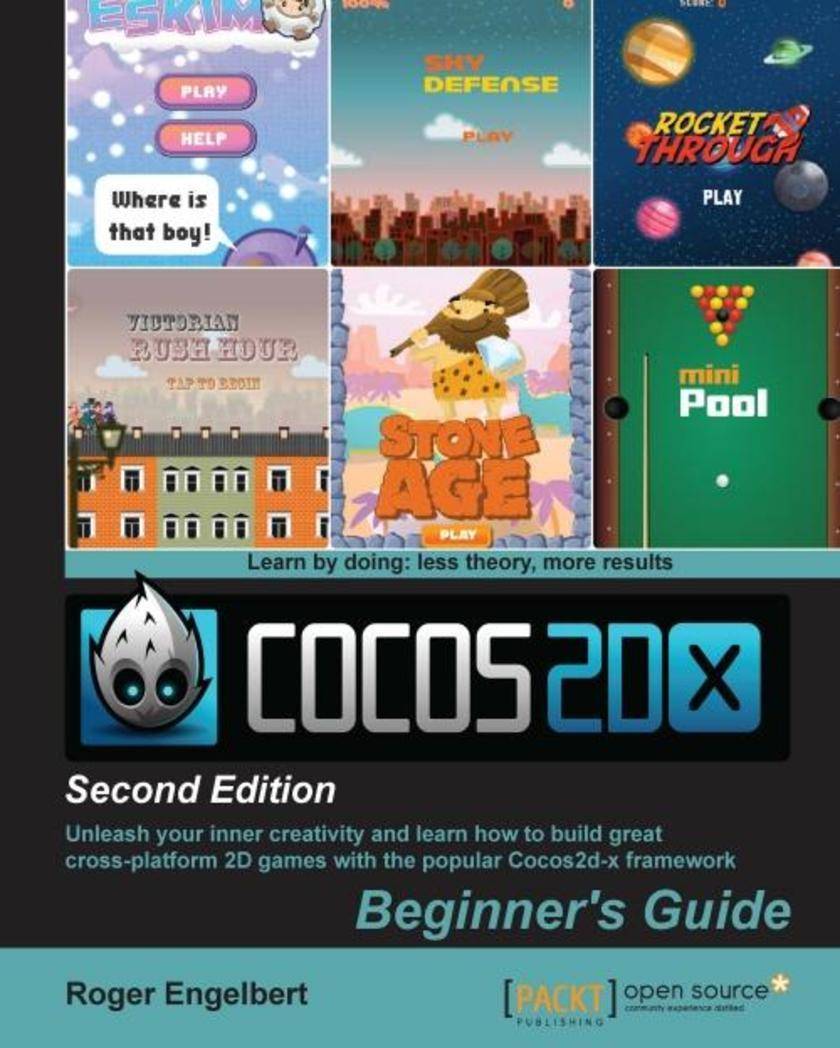
Cocos2d-x by Example: Beginner's Guide - Second Edition
¥80.65
If you are a game enthusiast who would like to develop and publish your own game ideas onto different app stores, this is the book for you. Some knowledge of C++ or Java is helpful but not necessary.
Data Visualization with D3 and AngularJS
¥80.65
If you are a web developer with experience in AngularJS and want to implement interactive visualizations using D3.js, this book is for you. Knowledge of SVG or D3.js will give you an edge to get the most out of this book.
LLVM Cookbook
¥80.65
The book is for compiler programmers who are familiar with concepts of compilers and want to indulge in understanding, exploring, and using LLVM infrastructure in a meaningful way in their work. This book is also for programmers who are not directly involved in compiler projects but are often involved in development phases where they write thousands of lines of code. With knowledge of how compilers work, they will be able to code in an optimal way and improve performance with clean code.
Learning Reactive Programming with Java 8
¥80.65
If you are a Java developer that knows how to write software and would like to learn how to apply your existing skills to reactive programming, this book is for you.
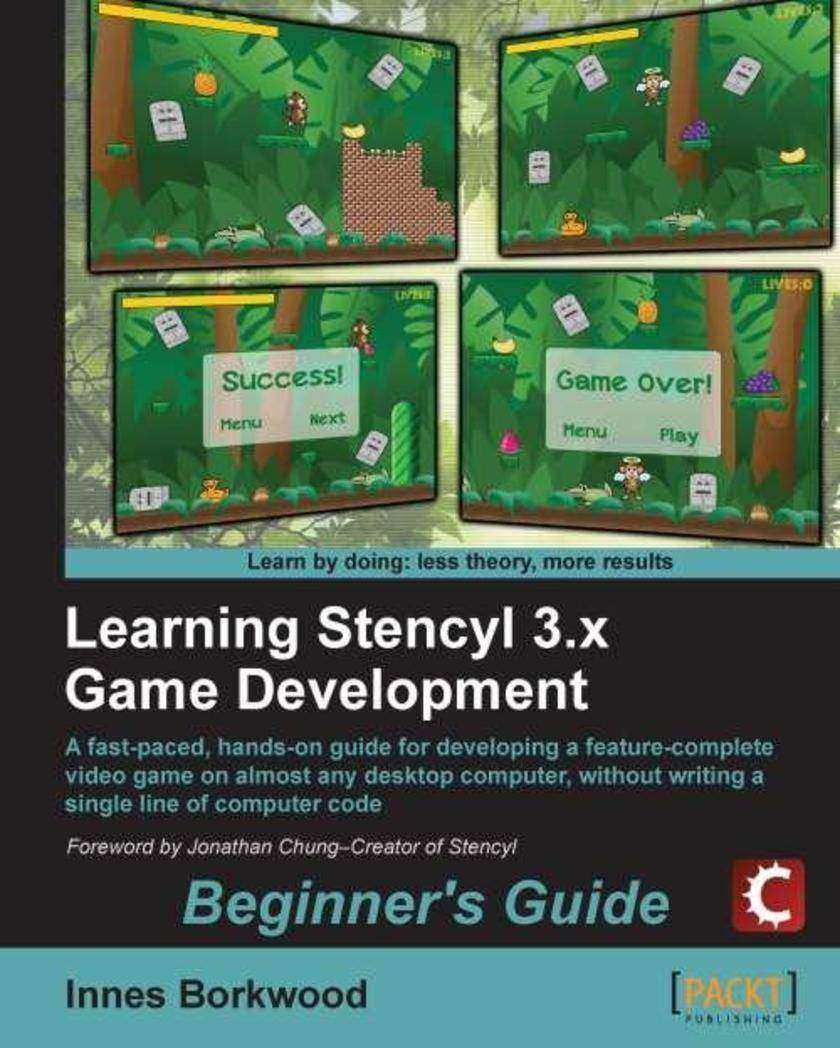
Learning Stencyl 3.x Game Development: Beginner's Guide
¥80.65
A step-by-step, practical tutorial with a no-nonsense approach. The book starts by showing readers how to create a playable game that is fully-functioning, then moves on to demonstrate how to fine-tune the game with eye-catching graphics techniques, audio-effects and more.This book is for indie and existing game developers and those who want to get started with game development using Stencyl. Some understanding of Objective-C, C++, and game development basics is recommended. People with some programming experience may also find this book useful.
Linux Shell Scripting Cookbook, Second Edition
¥80.65
This book is written in a Cookbook style and it offers learning through recipes with examples and illustrations. Each recipe contains step-by-step instructions about everything necessary to execute a particular task. The book is designed so that you can read it from start to end for beginners, or just open up any chapter and start following the recipes as a reference for advanced users.If you are a beginner or an intermediate user who wants to master the skill of quickly writing *s to perform various tasks without reading the entire manual, this book is for you. You can start writing *s and one-liners by simply looking at the similar recipe and its de*ions without any working knowledge of shell *ing or Linux. Intermediate/advanced users as well as system administrators/ developers and programmers can use this book as a reference when they face problems while coding.
PrimeFaces Cookbook
¥80.65
This is a cookbook with plenty of practical recipes enriched with code and detailed explanations. This book is for you if you would like to learn modern Java web development based on PrimeFaces and are looking for a quick introduction into this matter. Prerequisites required for this book are basic JSF and jQuery skills.


