


 购物车
购物车 个人中心
个人中心
Python Network Programming
¥90.46
Power up your network applications with Python programming Key Features * Master Python skills to develop powerful network applications * Grasp the fundamentals and functionalities of SDN * Design multi-threaded, event-driven architectures for echo and chat servers Book Description This Learning Path highlights major aspects of Python network programming such as writing simple networking clients, creating and deploying SDN and NFV systems, and extending your network with Mininet. You’ll also learn how to automate legacy and the latest network devices. As you progress through the chapters, you’ll use Python for DevOps and open source tools to test, secure, and analyze your network. Toward the end, you'll develop client-side applications, such as web API clients, email clients, SSH, and FTP, using socket programming. By the end of this Learning Path, you will have learned how to analyze a network's security vulnerabilities using advanced network packet capture and analysis techniques. This Learning Path includes content from the following Packt products: * Practical Network Automation by Abhishek Ratan * Mastering Python Networking by Eric Chou * Python Network Programming Cookbook, Second Edition by Pradeeban Kathiravelu, Dr. M. O. Faruque Sarker What you will learn * Create socket-based networks with asynchronous models * Develop client apps for web APIs, including S3 Amazon and Twitter * Talk to email and remote network servers with different protocols * Integrate Python with Cisco, Juniper, and Arista eAPI for automation * Use Telnet and SSH connections for remote system monitoring * Interact with websites via XML-RPC, SOAP, and REST APIs * Build networks with Ryu, OpenDaylight, Floodlight, ONOS, and POX * Configure virtual networks in different deployment environments Who this book is for If you are a Python developer or a system administrator who wants to start network programming, this Learning Path gets you a step closer to your goal. IT professionals and DevOps engineers who are new to managing network devices or those with minimal experience looking to expand their knowledge and skills in Python will also find this Learning Path useful. Although prior knowledge of networking is not required, some experience in Python programming will be helpful for a better understanding of the concepts in the Learning Path.
Blockchain Development with Hyperledger
¥90.46
Learn quick and effective techniques for developing blockchain-based distributed ledgers with ease Key Features * Discover why blockchain is a game changer in the technology landscape * Set up blockchain networks using Hyperledger Fabric * Write smart contracts at speed with Hyperledger Composer Book Description Blockchain and Hyperledger are open source technologies that power the development of decentralized applications. This Learning Path is your helpful reference for exploring and building blockchain networks using Ethereum, Hyperledger Fabric, and Hyperledger Composer. Blockchain Development with Hyperledger will start off by giving you an overview of blockchain and demonstrating how you can set up an Ethereum development environment for developing, packaging, building, and testing campaign-decentralized applications. You'll then explore the de facto language Solidity, which you can use to develop decentralized applications in Ethereum. Following this, you'll be able to configure Hyperledger Fabric and use it to build private blockchain networks and applications that connect to them. Toward the later chapters, you'll learn how to design and launch a network, and even implement smart contracts in chain code. By the end of this Learning Path, you'll be able to build and deploy your own decentralized applications by addressing the key pain points encountered in the blockchain life cycle. This Learning Path includes content from the following Packt products: * Blockchain Quick Start Guide by Xun (Brian) Wu and Weimin Sun * Hands-On Blockchain with Hyperledger by Nitin Gaur et al. What you will learn * Understand why decentralized applications are necessary * Develop and test a decentralized application with Hyperledger Fabric and Hyperledger Composer * Write and test a smart contract using Solidity * Design transaction models and chain code with Golang * Deploy the Composer REpresentational State Transfer (REST) Gateway to access Composer transactions * Maintain, monitor, and manage your blockchain solutions Who this book is for This Learning Path is designed for blockchain developers who want to build decentralized applications and smart contracts from scratch using Hyperledger. Basic familiarity with or exposure to any programming language will be useful to get started with this course.
Implementing Azure: Putting Modern DevOps to Use
¥90.46
Explore powerful Azure DevOps solutions to develop and deploy your software faster and more efficiently. Key Features * Build modern microservice-based systems with Azure architecture * Learn to deploy and manage cloud services and virtual machines * Configure clusters with Azure Service Fabric for deployment Book Description This Learning Path helps you understand microservices architecture and leverage various services of Microsoft Azure Service Fabric to build, deploy, and maintain highly scalable enterprise-grade applications. You will learn to select an appropriate Azure backend structure for your solutions and work with its toolkit and managed apps to share your solutions with its service catalog. As you progress through the Learning Path, you will study Azure Cloud Services, Azure-managed Kubernetes, and Azure Container Services deployment techniques. To apply all that you’ve understood, you will build an end-to-end Azure system in scalable, decoupled tiers for an industrial bakery with three business domains. Toward the end of this Learning Path, you will build another scalable architecture using Azure Service Bus topics to send orders between decoupled business domains with scalable worker roles processing these orders. By the end of this Learning Path, you will be comfortable in using development, deployment, and maintenance processes to build robust cloud solutions on Azure. This Learning Path includes content from the following Packt products: * Learn Microsoft Azure by Mohamed Wali * Implementing Azure Solutions - Second Edition by Florian Klaffenbach, Oliver Michalski, Markus Klein * Microservices with Azure by Namit Tanasseri and Rahul Rai What you will learn * Study various Azure Service Fabric application programming models * Create and manage a Kubernetes cluster in Azure Kubernetes Service * Use site-to-site VPN and ExpressRoute connections in your environment * Design an Azure IoT app and learn to operate it in various scenarios * Implement a hybrid Azure design using Azure Stack * Build Azure SQL databases with Code First Migrations * Integrate client applications with Web API and SignalR on Azure * Implement the Azure Active Directory (Azure AD) across the entire system Who this book is for If you are an IT system architect, network admin, or a DevOps engineer who wants to implement Azure solutions for your organization, this Learning Path is for you. Basic knowledge of the Azure Cloud platform will be beneficial.
Tableau 2019.x Cookbook
¥90.46
Perform advanced dashboard, visualization, and analytical techniques with Tableau Desktop, Tableau Prep, and Tableau Server Key Features * Unique problem-solution approach to aid effective business decision-making * Create interactive dashboards and implement powerful business intelligence solutions * Includes best practices on using Tableau with modern cloud analytics services Book Description Tableau has been one of the most popular business intelligence solutions in recent times, thanks to its powerful and interactive data visualization capabilities. Tableau 2019.x Cookbook is full of useful recipes from industry experts, who will help you master Tableau skills and learn each aspect of Tableau's ecosystem. This book is enriched with features such as Tableau extracts, Tableau advanced calculations, geospatial analysis, and building dashboards. It will guide you with exciting data manipulation, storytelling, advanced filtering, expert visualization, and forecasting techniques using real-world examples. From basic functionalities of Tableau to complex deployment on Linux, you will cover it all. Moreover, you will learn advanced features of Tableau using R, Python, and various APIs. You will learn how to prepare data for analysis using the latest Tableau Prep. In the concluding chapters, you will learn how Tableau fits the modern world of analytics and works with modern data platforms such as Snowflake and Redshift. In addition, you will learn about the best practices of integrating Tableau with ETL using Matillion ETL. By the end of the book, you will be ready to tackle business intelligence challenges using Tableau's features. What you will learn * Understand the basic and advanced skills of Tableau Desktop * Implement best practices of visualization, dashboard, and storytelling * Learn advanced analytics with the use of build in statistics * Deploy the multi-node server on Linux and Windows * Use Tableau with big data sources such as Hadoop, Athena, and Spectrum * Cover Tableau built-in functions for forecasting using R packages * Combine, shape, and clean data for analysis using Tableau Prep * Extend Tableau’s functionalities with REST API and R/Python Who this book is for Tableau 2019.x Cookbook is for data analysts, data engineers, BI developers, and users who are looking for quick solutions to common and not-so-common problems faced while using Tableau products. Put each recipe into practice by bringing the latest offerings of Tableau 2019.x to solve real-world analytics and business intelligence challenges. Some understanding of BI concepts and Tableau is required.
Learn Web Development with Python
¥90.46
A comprehensive guide to Python programming for web development using the most popular Python web framework - Django Key Features *Learn the fundamentals of programming with Python and building web apps *Build web applications from scratch with Django *Create real-world RESTful web services with the latest Django framework Book Description If you want to develop complete Python web apps with Django, this Learning Path is for you. It will walk you through Python programming techniques and guide you in implementing them when creating 4 professional Django projects, teaching you how to solve common problems and develop RESTful web services with Django and Python. You will learn how to build a blog application, a social image bookmarking website, an online shop, and an e-learning platform. Learn Web Development with Python will get you started with Python programming techniques, show you how to enhance your applications with AJAX, create RESTful APIs, and set up a production environment for your Django projects. Last but not least, you’ll learn the best practices for creating real-world applications. By the end of this Learning Path, you will have a full understanding of how Django works and how to use it to build web applications from scratch. This Learning Path includes content from the following Packt products: *Learn Python Programming by Fabrizio Romano *Django RESTful Web Services by Gastón C. Hillar *Django Design Patterns and Best Practices by Arun Ravindran What you will learn *Explore the fundamentals of Python programming with interactive projects *Grasp essential coding concepts along with the basics of data structures and control flow *Develop RESTful APIs from scratch with Django and the Django REST Framework *Create automated tests for RESTful web services *Debug, test, and profile RESTful web services with Django and the Django REST Framework *Use Django with other technologies such as Redis and Celery Who this book is for If you have little experience in coding or Python and want to learn how to build full-fledged web apps, this Learning Path is for you. No prior experience with RESTful web services, Python, or Django is required, but basic Python programming experience is needed to understand the concepts covered.
Building Microservices with Spring
¥90.46
Learn and use the design patterns and best practices in Spring to solve common design problems and build user-friendly microservices Key Features *Study the benefits of using the right design pattern in your toolkit *Manage your code easily with Spring's dependency injection pattern *Explore the features of Docker and Mesos to build successful microservices Book Description Getting Started with Spring Microservices begins with an overview of the Spring Framework 5.0, its design patterns, and its guidelines that enable you to implement responsive microservices at scale. You will learn how to use GoF patterns in application design. You will understand the dependency injection pattern, which is the main principle behind the decoupling process of the Spring Framework and makes it easier to manage your code. Then, you will learn how to use proxy patterns in aspect-oriented programming and remoting. Moving on, you will understand the JDBC template patterns and their use in abstracting database access. After understanding the basics, you will move on to more advanced topics, such as reactive streams and concurrency. Written to the latest specifications of Spring that focuses on Reactive Programming, the Learning Path teaches you how to build modern, internet-scale Java applications in no time. Next, you will understand how Spring Boot is used to deploying serverless autonomous services by removing the need to have a heavyweight application server. You’ll also explore ways to deploy your microservices to Docker and managing them with Mesos. By the end of this Learning Path, you will have the clarity and confidence for implementing microservices using Spring Framework. This Learning Path includes content from the following Packt products: *Spring 5 Microservices by Rajesh R V *Spring 5 Design Patterns by Dinesh Rajput What you will learn *Develop applications using dependency injection patterns *Build web applications using traditional Spring MVC patterns *Utilize the reactive programming pattern to build reactive web apps *Learn concurrency and handle multiple connections inside a web server *Use Spring Boot and Spring Cloud to develop microservices *Leverage reactive programming to build cloud-native applications Who this book is for Getting Started with Spring Microservices is ideal for Spring developers who want to use design patterns to solve common design problems and build cloud-ready, Internet-scale applications, and simple RESTful services.
Modern C++: Efficient and Scalable Application Development
¥90.46
Create apps in C++ and leverage its latest features using modern programming techniques. Key Features *Develop strong C++ skills to build a variety of applications *Explore features of C++17, such as containers, algorithms, and threads *Grasp the standard support for threading and concurrency and use them in basic daily tasks Book Description C++ is one of the most widely used programming languages. It is fast, flexible, and used to solve many programming problems. This Learning Path gives you an in-depth and hands-on experience of working with C++, using the latest recipes and understanding most recent developments. You will explore C++ programming constructs by learning about language structures, functions, and classes, which will help you identify the execution flow through code. You will also understand the importance of the C++ standard library as well as memory allocation for writing better and faster programs. Modern C++: Efficient and Scalable Application Development deals with the challenges faced with advanced C++ programming. You will work through advanced topics such as multithreading, networking, concurrency, lambda expressions, and many more recipes. By the end of this Learning Path, you will have all the skills to become a master C++ programmer. This Learning Path includes content from the following Packt products: *Beginning C++ Programming by Richard Grimes *Modern C++ Programming Cookbook by Marius Bancila *The Modern C++ Challenge by Marius Bancila What you will learn *Become familiar with the structure of C++ projects *Identify the main structures in the language: functions and classes *Learn to debug your programs *Leverage C++ features to obtain increased robustness and performance *Explore functions and callable objects with a focus on modern features *Serialize and deserialize JSON and XML data *Create client-server applications that communicate over TCP/IP *Use design patterns to solve real-world problems Who this book is for This Learning Path is designed for developers who want to gain a solid foundation in C++. The desire to learn how to code in C++ is all you need to get started with this Learning Path
Hands-On System Programming with C++
¥90.46
A hands-on guide to making system programming with C++ easy Key Features *Write system-level code leveraging C++17 *Learn the internals of the Linux Application Binary Interface (ABI) and apply it to system programming *Explore C++ concurrency to take advantage of server-level constructs Book Description C++ is a general-purpose programming language with a bias toward system programming as it provides ready access to hardware-level resources, efficient compilation, and a versatile approach to higher-level abstractions. This book will help you understand the benefits of system programming with C++17. You will gain a firm understanding of various C, C++, and POSIX standards, as well as their respective system types for both C++ and POSIX. After a brief refresher on C++, Resource Acquisition Is Initialization (RAII), and the new C++ Guideline Support Library (GSL), you will learn to program Linux and Unix systems along with process management. As you progress through the chapters, you will become acquainted with C++'s support for IO. You will then study various memory management methods, including a chapter on allocators and how they benefit system programming. You will also explore how to program file input and output and learn about POSIX sockets. This book will help you get to grips with safely setting up a UDP and TCP server/client. Finally, you will be guided through Unix time interfaces, multithreading, and error handling with C++ exceptions. By the end of this book, you will be comfortable with using C++ to program high-quality systems. What you will learn *Understand the benefits of using C++ for system programming *Program Linux/Unix systems using C++ *Discover the advantages of Resource Acquisition Is Initialization (RAII) *Program both console and file input and output *Uncover the POSIX socket APIs and understand how to program them *Explore advanced system programming topics, such as C++ allocators *Use POSIX and C++ threads to program concurrent systems *Grasp how C++ can be used to create performant system applications Who this book is for If you are a fresh developer with intermediate knowledge of C++ but little or no knowledge of Unix and Linux system programming, this book will help you learn system programming with C++ in a practical way.
Hands-On Design Patterns with C++
¥90.46
A comprehensive guide with extensive coverage on concepts such as OOP, functional programming, generic programming, and STL along with the latest features of C++ Key Features * Delve into the core patterns and components of C++ in order to master application design * Learn tricks, techniques, and best practices to solve common design and architectural challenges * Understand the limitation imposed by C++ and how to solve them using design patterns Book Description C++ is a general-purpose programming language designed with the goals of efficiency, performance, and flexibility in mind. Design patterns are commonly accepted solutions to well-recognized design problems. In essence, they are a library of reusable components, only for software architecture, and not for a concrete implementation. The focus of this book is on the design patterns that naturally lend themselves to the needs of a C++ programmer, and on the patterns that uniquely benefit from the features of C++, in particular, the generic programming. Armed with the knowledge of these patterns, you will spend less time searching for a solution to a common problem and be familiar with the solutions developed from experience, as well as their advantages and drawbacks. The other use of design patterns is as a concise and an efficient way to communicate. A pattern is a familiar and instantly recognizable solution to specific problem; through its use, sometimes with a single line of code, we can convey a considerable amount of information. The code conveys: "This is the problem we are facing, these are additional considerations that are most important in our case; hence, the following well-known solution was chosen." By the end of this book, you will have gained a comprehensive understanding of design patterns to create robust, reusable, and maintainable code. What you will learn * Recognize the most common design patterns used in C++ * Understand how to use C++ generic programming to solve common design problems * Explore the most powerful C++ idioms, their strengths, and drawbacks * Rediscover how to use popular C++ idioms with generic programming * Understand the impact of design patterns on the program’s performance Who this book is for This book is for experienced C++ developers and programmers who wish to learn about software design patterns and principles and apply them to create robust, reusable, and easily maintainable apps.
React Native Cookbook
¥90.46
Improve your React Native mobile development skills or transition from web development to mobile development with this practical solution-packed guide Key Features * Learn strategies and techniques to face challenges in React Native mobile development head-on * Leverage the best ways to use iOS and Android for React Native development while maximizing code reuse and cohesion * Build engaging, performant user experiences with React Native Book Description If you are a developer looking to create mobile applications with maximized code reusability and minimized cost, then React Native is here to help. With this practical guide, you will be able to build attractive UIs, tackle common mobile development-related issues, and achieve improved performance in mobile environments. This book starts with common techniques for React Native customization and helps you set up your development platforms. Over the course of the book, a wide variety of step-by-step recipes are designed with both built-in React Native and custom third-party components that you will create, style, and animate. You will create real-world browser-based authentication, build a fully functional audio player, and integrate with Google maps. You will also explore different strategies for working with data, including leveraging the popular Redux library and optimizing your app’s dataflow. You will then get an introduction to writing native device functionality for new and already existing native projects. Finally, you will learn how app deployment works, and tips and tricks for writing performant code. By the end of the book, you'll have gained enough knowledge to build full iOS and Android applications using React Native. What you will learn * Build UI features and components using React Native * Create advanced animations for UI components * Develop universal apps that run on phones and tablets * Leverage Redux to manage application flow and data * Expose both custom native UI components and application logic to React Native * Employ open-source third-party plugins to create React Native apps more efficiently Who this book is for If you're a JavaScript developer looking for a practical guide with step-by-step tutorials for developing feature rich mobile apps using React Native, then this book is for you. Though not required, some experience working with React will help you more easily understand the React Native concepts covered in this book. While React Native development can be done on a Windows machine, certain aspects, such as running your apps on iOS devices and in the iOS simulator, or editing native code with Xcode, can only be done with a Mac.
Mastering Rust
¥90.46
Become proficient in designing, developing and deploying effective software systems using the advanced constructs of Rust Key Features * Improve your productivity using the latest version of Rust and write simpler and easier code * Understand Rust’s immutability and ownership principle, expressive type system, safe concurrency * Deep dive into the new doamins of Rust like WebAssembly, Networking and Command line tools Book Description Rust is an empowering language that provides a rare combination of safety, speed, and zero-cost abstractions. Mastering Rust – Second Edition is filled with clear and simple explanations of the language features along with real-world examples, showing you how you can build robust, scalable, and reliable programs. This second edition of the book improves upon the previous one and touches on all aspects that make Rust a great language. We have included the features from latest Rust 2018 edition such as the new module system, the smarter compiler, helpful error messages, and the stable procedural macros. You’ll learn how Rust can be used for systems programming, network programming, and even on the web. You’ll also learn techniques such as writing memory-safe code, building idiomatic Rust libraries, writing efficient asynchronous networking code, and advanced macros. The book contains a mix of theory and hands-on tasks so you acquire the skills as well as the knowledge, and it also provides exercises to hammer the concepts in. After reading this book, you will be able to implement Rust for your enterprise projects, write better tests and documentation, design for performance, and write idiomatic Rust code. What you will learn * Write generic and type-safe code by using Rust’s powerful type system * How memory safety works without garbage collection * Know the different strategies in error handling and when to use them * Learn how to use concurrency primitives such as threads and channels * Use advanced macros to reduce boilerplate code * Create efficient web applications with the Actix-web framework * Use Diesel for type-safe database interactions in your web application Who this book is for The book is aimed at beginner and intermediate programmers who already have familiarity with any imperative language and have only heard of Rust as a new language. If you are a developer who wants to write robust, efficient and maintainable software systems and want to become proficient with Rust, this book is for you. It starts by giving a whirlwind tour of the important concepts of Rust and covers advanced features of the language in subsequent chapters using code examples that readers will find useful to advance their knowledge.

Implementing AWS: Design, Build, and Manage your Infrastructure
¥90.46
Work through exciting recipes to administer your AWS cloud Key Features * Build secure environments using AWS components and services * Explore core AWS features with real-world applications and best practices * Design and build Lambda functions using real-world examples Book Description With this Learning Path, you’ll explore techniques to easily manage applications on the AWS cloud. You’ll begin with an introduction to serverless computing, its advantages, and the fundamentals of AWS. The following chapters will guide you on how to manage multiple accounts by setting up consolidated billing, enhancing your application delivery skills, with the latest AWS services such as CodeCommit, CodeDeploy, and CodePipeline to provide continuous delivery and deployment, while also securing and monitoring your environment's workflow. It’ll also add to your understanding of the services AWS Lambda provides to developers. To refine your skills further, it demonstrates how to design, write, test, monitor, and troubleshoot Lambda functions. By the end of this Learning Path, you’ll be able to create a highly secure, fault-tolerant, and scalable environment for your applications. This Learning Path includes content from the following Packt products: * AWS Administration: The Definitive Guide, Second Edition by Yohan Wadia * AWS Administration Cookbook by Rowan Udell, Lucas Chan * Mastering AWS Lambda by Yohan Wadia, Udita Gupta What you will learn * Explore the benefits of serverless computing and applications * Deploy apps with AWS Elastic Beanstalk and Amazon Elastic File System * Secure environments with AWS CloudTrail, AWSConfig, and AWS Shield * Run big data analytics with Amazon EMR and Amazon Redshift * Back up and safeguard data using AWS Data Pipeline * Create monitoring and alerting dashboards using CloudWatch * Effectively monitor and troubleshoot serverless applications with AWS * Design serverless apps via AWS Lambda, DynamoDB, and API Gateway Who this book is for This Learning Path is specifically designed for IT system and network administrators, AWS architects, and DevOps engineers who want to effectively implement AWS in their organization and easily manage daily activities. Familiarity with Linux, web services, cloud computing platforms, virtualization, networking, and other administration-related tasks will assist in understanding the concepts in the book. Prior hands-on experience with AWS core services such as EC2, IAM, S3, and programming languages, such as Node.Js, Java, and C#, will also prove beneficial.
Hands-On Enterprise Application Development with Python
¥90.46
Architect scalable, reliable, and maintainable applications for enterprises with Python Key Features *Explore various Python design patterns used for enterprise software development *Apply best practices for testing and performance optimization to build stable applications *Learn about different attacking strategies used on enterprise applications and how to avoid them Book Description Dynamically typed languages like Python are continuously improving. With the addition of exciting new features and a wide selection of modern libraries and frameworks, Python has emerged as an ideal language for developing enterprise applications. Hands-On Enterprise Application Development with Python will show you how to build effective applications that are stable, secure, and easily scalable. The book is a detailed guide to building an end-to-end enterprise-grade application in Python. You will learn how to effectively implement Python features and design patterns that will positively impact your application lifecycle. The book also covers advanced concurrency techniques that will help you build a RESTful application with an optimized frontend. Given that security and stability are the foundation for an enterprise application, you’ll be trained on effective testing, performance analysis, and security practices, and understand how to embed them in your codebase during the initial phase. You’ll also be guided in how to move on from a monolithic architecture to one that is service oriented, leveraging microservices and serverless deployment techniques. By the end of the book, you will have become proficient at building efficient enterprise applications in Python. What you will learn *Understand the purpose of design patterns and their impact on application lifecycle *Build applications that can handle large amounts of data-intensive operations *Uncover advanced concurrency techniques and discover how to handle a large number of requests in production *Optimize frontends to improve the client-side experience of your application *Effective testing and performance profiling techniques to detect issues in applications early in the development cycle *Build applications with a focus on security *Implement large applications as microservices to improve scalability Who this book is for If you’re a developer who wants to build enterprise-grade applications, this book is for you. Basic to intermediate-level of programming experience with Python and database systems is required to understand the concepts covered in this book.
Spring Microservices
¥90.46
Build scalable microservices with Spring, Docker, and Mesos About This Book Learn how to efficiently build and implement microservices in Spring, and how to use Docker and Mesos to push the boundaries of what you thought possible Examine a number of real-world use cases and hands-on code examples. Distribute your microservices in a completely new way Who This Book Is For If you are a Spring developers and want to build cloud-ready, internet-scale applications to meet modern business demands, then this book is for you Developers will understand how to build simple Restful services and organically grow them to truly enterprise grade microservices ecosystems. What You Will Learn Get to know the microservices development lifecycle process See how to implement microservices governance Familiarize yourself with the microservices architecture and its benefits Use Spring Boot to develop microservices Find out how to avoid common pitfalls when developing microservices Be introduced to end-to-end microservices written in Spring Framework and Spring Boot In Detail The Spring Framework is an application framework and inversion of the control container for the Java platform. The framework's core features can be used by any Java application, but there are extensions to build web applications on top of the Java EE platform. This book will help you implement the microservice architecture in Spring Framework, Spring Boot, and Spring Cloud. Written to the latest specifications of Spring, you'll be able to build modern, Internet-scale Java applications in no time. We would start off with the guidelines to implement responsive microservices at scale. We will then deep dive into Spring Boot, Spring Cloud, Docker, Mesos, and Marathon. Next you will understand how Spring Boot is used to deploy autonomous services, server-less by removing the need to have a heavy-weight application server. Later you will learn how to go further by deploying your microservices to Docker and manage it with Mesos. By the end of the book, you'll will gain more clarity on how to implement microservices using Spring Framework and use them in Internet-scale deployments through real-world examples. Style and approach The book follows a step by step approach on how to develop microservices using Spring Framework, Spring Boot, and a set of Spring Cloud components that will help you scale your applications.
Mastering Scala Machine Learning
¥90.46
Advance your skills in efficient data analysis and data processing using the powerful tools of Scala, Spark, and Hadoop About This Book This is a primer on functional-programming-style techniques to help you efficiently process and analyze all of your data Get acquainted with the best and newest tools available such as Scala, Spark, Parquet and MLlib for machine learning Learn the best practices to incorporate new Big Data machine learning in your data-driven enterprise to gain future scalability and maintainability Who This Book Is For Mastering Scala Machine Learning is intended for enthusiasts who want to plunge into the new pool of emerging techniques for machine learning. Some familiarity with standard statistical techniques is required. What You Will Learn Sharpen your functional programming skills in Scala using REPL Apply standard and advanced machine learning techniques using Scala Get acquainted with Big Data technologies and grasp why we need a functional approach to Big Data Discover new data structures, algorithms, approaches, and habits that will allow you to work effectively with large amounts of data Understand the principles of supervised and unsupervised learning in machine learning Work with unstructured data and serialize it using Kryo, Protobuf, Avro, and AvroParquet Construct reliable and robust data pipelines and manage data in a data-driven enterprise Implement scalable model monitoring and alerts with Scala In Detail Since the advent of object-oriented programming, new technologies related to Big Data are constantly popping up on the market. One such technology is Scala, which is considered to be a successor to Java in the area of Big Data by many, like Java was to C/C++ in the area of distributed programing. This book aims to take your knowledge to next level and help you impart that knowledge to build advanced applications such as social media mining, intelligent news portals, and more. After a quick refresher on functional programming concepts using REPL, you will see some practical examples of setting up the development environment and tinkering with data. We will then explore working with Spark and MLlib using k-means and decision trees. Most of the data that we produce today is unstructured and raw, and you will learn to tackle this type of data with advanced topics such as regression, classification, integration, and working with graph algorithms. Finally, you will discover at how to use Scala to perform complex concept analysis, to monitor model performance, and to build a model repository. By the end of this book, you will have gained expertise in performing Scala machine learning and will be able to build complex machine learning projects using Scala. Style and approach This hands-on guide dives straight into implementing Scala for machine learning without delving much into mathematical proofs or validations. There are ample code examples and tricks that will help you sail through using the standard techniques and libraries. This book provides practical examples from the field on how to correctly tackle data analysis problems, particularly for modern Big Data datasets.
Mastering Python Data Analysis
¥90.46
Become an expert at using Python for advanced statistical analysis of data using real-world examples About This Book Clean, format, and explore data using graphical and numerical summaries Leverage the IPython environment to efficiently analyze data with Python Packed with easy-to-follow examples to develop advanced computational skills for the analysis of complex data Who This Book Is For If you are a competent Python developer who wants to take your data analysis skills to the next level by solving complex problems, then this advanced guide is for you. Familiarity with the basics of applying Python libraries to data sets is assumed. What You Will Learn Read, sort, and map various data into Python and Pandas Recognise patterns so you can understand and explore data Use statistical models to discover patterns in data Review classical statistical inference using Python, Pandas, and SciPy Detect similarities and differences in data with clustering Clean your data to make it useful Work in Jupyter Notebook to produce publication ready figures to be included in reports In Detail Python, a multi-paradigm programming language, has become the language of choice for data scientists for data analysis, visualization, and machine learning. Ever imagined how to become an expert at effectively approaching data analysis problems, solving them, and extracting all of the available information from your dataWell, look no further, this is the book you want! Through this comprehensive guide, you will explore data and present results and conclusions from statistical analysis in a meaningful way. You’ll be able to quickly and accurately perform the hands-on sorting, reduction, and subsequent analysis, and fully appreciate how data analysis methods can support business decision-making. You’ll start off by learning about the tools available for data analysis in Python and will then explore the statistical models that are used to identify patterns in data. Gradually, you’ll move on to review statistical inference using Python, Pandas, and SciPy. After that, we’ll focus on performing regression using computational tools and you’ll get to understand the problem of identifying clusters in data in an algorithmic way. Finally, we delve into advanced techniques to quantify cause and effect using Bayesian methods and you’ll discover how to use Python’s tools for supervised machine learning. Style and approach This book takes a step-by-step approach to reading, processing, and analyzing data in Python using various methods and tools. Rich in examples, each topic connects to real-world examples and retrieves data directly online where possible. With this book, you are given the knowledge and tools to explore any data on your own, encouraging a curiosity befitting all data scientists.
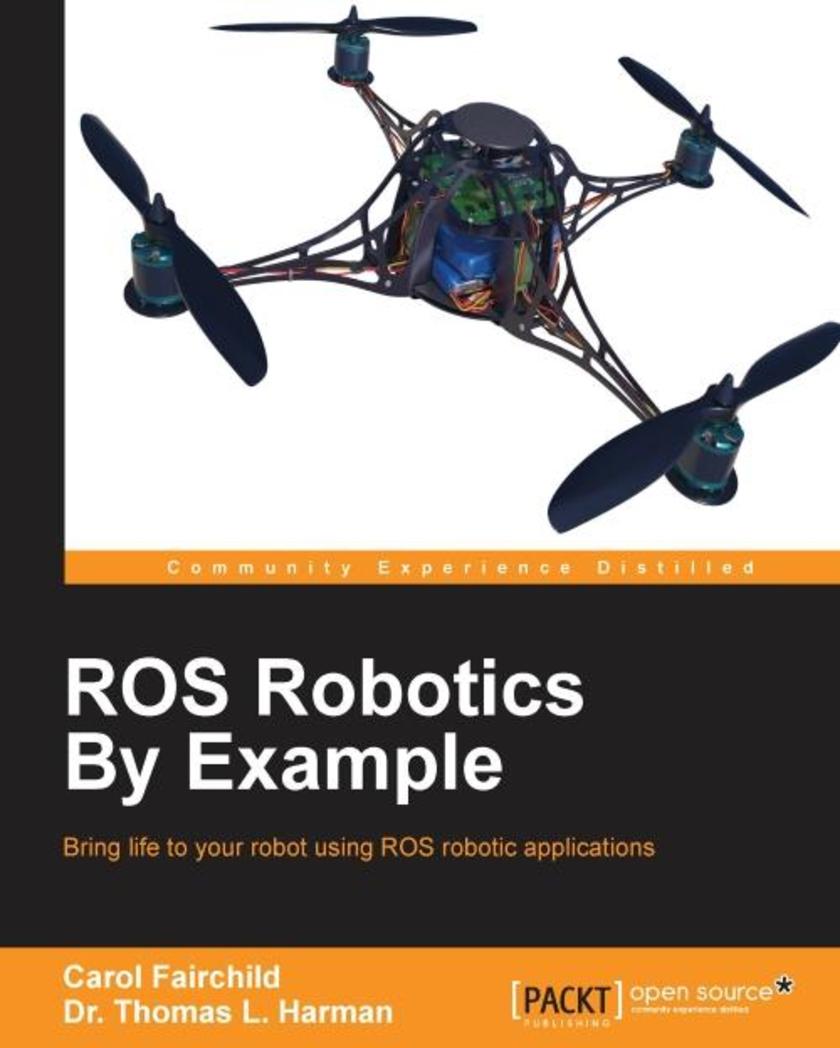
ROS Robotics By Example
¥90.46
Bring life to your robot using ROS robotic applications About This Book .This book will help you boost your knowledge of ROS and give you advanced practical experience you can apply to your ROS robot platforms.This is the only book that offers you step-by-step instructions to solidify your ROS understanding and gain experience using ROS tools.From eminent authors, this book offers you a plethora of fun-filled examples to make your own quadcopter, turtlebot, and two-armed robots Who This Book Is For If you are a robotics developer, whether a hobbyist, researchers or professional, and are interested in learning about ROS through a hands-on approach, then this book is for you. You are encouraged to have a working knowledge of GNU/Linux systems and Python. What You Will Learn .Get to know the fundamentals of ROS and apply its concepts to real robot examples.Control a mobile robot to navigate autonomously in an environment.Model your robot designs using URDF and Xacro, and operate them in a ROS Gazebo simulation.Control a 7 degree-of-freedom robot arm for visual servoing.Fly a quadcopter to autonomous waypoints.Gain working knowledge of ROS tools such as Gazebo, rviz, rqt, and Move-It.Control robots with mobile devices and controller boards In Detail The visionaries who created ROS developed a framework for robotics centered on the commonality of robotic systems and exploited this commonality in ROS to expedite the development of future robotic systems. From the fundamental concepts to advanced practical experience, this book will provide you with an incremental knowledge of the ROS framework, the backbone of the robotics evolution. ROS standardizes many layers of robotics functionality from low-level device drivers to process control to message passing to software package management. This book provides step-by-step examples of mobile, armed, and flying robots, describing the ROS implementation as the basic model for other robots of these types. By controlling these robots, whether in simulation or in reality, you will use ROS to drive, move, and fly robots using ROS control. Style and approach This is an easy-to-follow guide with hands-on examples of ROS robots, both real and in simulation.
Simulation for Data Science with R
¥90.46
Harness actionable insights from your data with computational statistics and simulations using R About This Book Learn five different simulation techniques (Monte Carlo, Discrete Event Simulation, System Dynamics, Agent-Based Modeling, and Resampling) in-depth using real-world case studies A unique book that teaches you the essential and fundamental concepts in statistical modeling and simulation Who This Book Is For This book is for users who are familiar with computational methods. If you want to learn about the advanced features of R, including the computer-intense Monte-Carlo methods as well as computational tools for statistical simulation, then this book is for you. Good knowledge of R programming is assumed/required. What You Will Learn The book aims to explore advanced R features to simulate data to extract insights from your data. Get to know the advanced features of R including high-performance computing and advanced data manipulation See random number simulation used to simulate distributions, data sets, and populations Simulate close-to-reality populations as the basis for agent-based micro-, model- and design-based simulations Applications to design statistical solutions with R for solving scientific and real world problems Comprehensive coverage of several R statistical packages like boot, simPop, VIM, data.table, dplyr, parallel, StatDA, simecol, simecolModels, deSolve and many more. In Detail Data Science with R aims to teach you how to begin performing data science tasks by taking advantage of Rs powerful ecosystem of packages. R being the most widely used programming language when used with data science can be a powerful combination to solve complexities involved with varied data sets in the real world. The book will provide a computational and methodological framework for statistical simulation to the users. Through this book, you will get in grips with the software environment R. After getting to know the background of popular methods in the area of computational statistics, you will see some applications in R to better understand the methods as well as gaining experience of working with real-world data and real-world problems. This book helps uncover the large-scale patterns in complex systems where interdependencies and variation are critical. An effective simulation is driven by data generating processes that accurately reflect real physical populations. You will learn how to plan and structure a simulation project to aid in the decision-making process as well as the presentation of results. By the end of this book, you reader will get in touch with the software environment R. After getting background on popular methods in the area, you will see applications in R to better understand the methods as well as to gain experience when working on real-world data and real-world problems. Style and approach This book takes a practical, hands-on approach to explain the statistical computing methods, gives advice on the usage of these methods, and provides computational tools to help you solve common problems in statistical simulation and computer-intense methods.
Ubuntu Server Cookbook
¥90.46
Arm yourself to make the most of the versatile, powerful Ubuntu Server with over 100 hands-on recipes About This Book Master the skills to setup secure and scalable web services with popular tools like Apache, Nginx, MySQL and HAProxy Set up your own cloud with Open Stack and quickly deploy applications with Docker or LXD Packed with clear, step-by-step recipes to let you protect you valuable data with your own chat servers, code hosting and collaboration tools. Who This Book Is For Ubuntu Server Cookbook is for system administrators or software developers with a basic understanding of the Linux operating system who want to set up their own servers. You are not required to have in-depth knowledge or hands-on experience with Ubuntu, but you should know the basics commands for directory navigation, file management, and the file editing tool. An understanding of computer networks is advisable What You Will Learn Set up high performance, scalable, and fault-tolerant back ends with web and database servers Facilitate team communication with a real-time chat service and collaboration tools Quickly deploy your applications to their own containers and scale your infrastructure as and when needed Find out how to set up your own cloud infrastructure for your internal use or rent it to the public Ensure quick and easy access for your users while also securing your infrastructure from intruders Set up a high performance private network with a personal VPN server and centralized authentication system Swiftly start a content streaming service Set up network storage for private data and source code and say good bye to costly and unreliable cloud services In Detail Ubuntu is one of the most secure operating systems and defines the highest level of security as compared other operating system. Ubuntu server is a popular Linux distribution and the first choice when deploying a Linux server. It can be used with a $35 Raspberry Pi to top-notch, thousand-dollar-per-month cloud hardware. Built with lists that there are 4 million + websites built using Ubuntu. With its easy-to-use package management tools and availability of well-known packages, we can quickly set up our own services such as web servers and database servers using Ubuntu. This book will help you develop the skills required to set up high performance and secure services with open source tools. Starting from user management and an in-depth look at networking, we then move on to cover the installation and management of web servers and database servers, as well as load balancing various services. You will quickly learn to set up your own cloud and minimize costs and efforts with application containers. Next, you will get to grips with setting up a secure real-time communication system. Finally, we’ll explore source code hosting and various collaboration tools. By the end of this book, you will be able to make the most of Ubuntu’s advanced functionalities. Style and approach This easy-to-follow guide contains a series of step-by-step recipes ranging from simple to complex. Each topic will start with basic introduction to each technology followed by a detailed step-by-step installation guide and then a detailed explanation of the approach taken during installation and the various advanced options available.
VMware vRealize Configuration Manager Cookbook
¥90.46
Over 80 recipes to teach you the power of vRealize Configuration Manager 5.8 to provide automated and continuous configuration management About This Book First book in the market that provides a broad configuration and compliance management solution for your enterprise. Champion the skills of the latest features of VMware vRealize Configuration Manager and implement it in your organization. A recipe based approach book that will enlighten you to configure VCM to collect and manage data from your virtual and physical environment. Who This Book Is For If you are a system administrator who is eager to provide better administration with VCM and are familiar with managing network users and resources along with performing system maintenance, then this book is for you. What You Will Learn Find out how to configure automated patching of your infrastructure for Windows as well Unix machines Maintain and upgrade your vRealize Configuration Manager Integrate with other VMware tools such as vCloud Director, vRealise Operations, vCenter, and vCloud Network and Security Understand what vRealize Configuration Manager is and what its capacities are Explore how vRealize Configuration Manager can be used for patching, compliance management, and software distribution Troubleshoot vRealize Configuration Manager with ease In Detail VMware vRealize Configuration Manager (VCM) helps you to automate IT operations, manage performance, and gain visibility across physical and virtual infrastructure. It is continuously being used by enterprises to audit the configurations of the VMware infrastructure as well as the Windows, Linux, and UNIX operating systems. This book is filled with practical recipes through which you will learn about the latest features of vRealize Configuration Manager 5.8.X, starting with installation of various tiers of VCM followed by configuration management across physical and virtual servers. Throughout this book, you will explore how VCM can perform tasks such as patch management, compliance assessment, and software package distribution along with Machine filters for new platforms such as RHEL 7 and Windows 10. This book will ease your troubles while upgrading from the existing VCM to the latest version by providing you with step-by-step instructions about the process of migration along with upgrade and maintenance support. This book will help you understand how to integrate vRealize Configuration with other applications along with schedule management and also guide you on how to handle security issues. After reading this book, you will have a clear understanding of how VCM fits in the overall picture of the data center design from a patching and compliance perspective. Style and approach This book takes a recipe-based approach that will provide you with an effective and a practical configuration management solution for your enterprise.
Python Data Analysis Cookbook
¥90.46
Over 140 practical recipes to help you make sense of your data with ease and build production-ready data apps About This Book Analyze Big Data sets, create attractive visualizations, and manipulate and process various data types Packed with rich recipes to help you learn and explore amazing algorithms for statistics and machine learning Authored by Ivan Idris, expert in python programming and proud author of eight highly reviewed books Who This Book Is For This book teaches Python data analysis at an intermediate level with the goal of transforming you from journeyman to master. Basic Python and data analysis skills and affinity are assumed. What You Will Learn Set up reproducible data analysis Clean and transform data Apply advanced statistical analysis Create attractive data visualizations Web scrape and work with databases, Hadoop, and Spark Analyze images and time series data Mine text and analyze social networks Use machine learning and evaluate the results Take advantage of parallelism and concurrency In Detail Data analysis is a rapidly evolving field and Python is a multi-paradigm programming language suitable for object-oriented application development and functional design patterns. As Python offers a range of tools and libraries for all purposes, it has slowly evolved as the primary language for data science, including topics on: data analysis, visualization, and machine learning. Python Data Analysis Cookbook focuses on reproducibility and creating production-ready systems. You will start with recipes that set the foundation for data analysis with libraries such as matplotlib, NumPy, and pandas. You will learn to create visualizations by choosing color maps and palettes then dive into statistical data analysis using distribution algorithms and correlations. You’ll then help you find your way around different data and numerical problems, get to grips with Spark and HDFS, and then set up migration *s for web mining. In this book, you will dive deeper into recipes on spectral analysis, smoothing, and bootstrapping methods. Moving on, you will learn to rank stocks and check market efficiency, then work with metrics and clusters. You will achieve parallelism to improve system performance by using multiple threads and speeding up your code. By the end of the book, you will be capable of handling various data analysis techniques in Python and devising solutions for problem scenarios. Style and Approach The book is written in “cookbook” style striving for high realism in data analysis. Through the recipe-based format, you can read each recipe separately as required and immediately apply the knowledge gained.


