


 购物车
购物车 个人中心
个人中心
Learning ArcGIS Pro
¥90.46
Create, analyze, maintain, and share 2D and 3D maps with the powerful tools of ArcGIS Pro About This Book Visualize GIS data in 2D and 3D maps Create GIS projects for quick and easy access to data, maps, and analysis tools A practical guide that helps to import maps, globes, and scenes from ArcMap, ArcScene, or ArcGlobe Who This Book Is For This book is for anyone wishing to learn how ArcGIS Pro can be used to create maps and perform geospatial analysis. It will be especially helpful for those that have used ArcMap and ArcCatalog in the past and are looking to migrate to Esri’s newest desktop GIS solution. Though previous GIS experience is not required, you must have a solid foundation using Microsoft Windows. It is also helpful if you understand how to manage folders and files within the Microsoft Windows environment. What You Will Learn Install ArcGIS Pro and assign Licenses to users in your organization Navigate and use the ArcGIS Pro ribbon interface to create maps and perform analysis Create and manage ArcGIS Pro GIS Projects Create 2D and 3D maps to visualize and analyze data Author map layouts using cartographic tools and best practices to show off the results of your analysis and maps Import existing map documents, scenes, and globes into your new ArcGIS Pro projects quickly Create standardized workflows using Tasks Automate analysis and processes using ModelBuilder and Python In Detail ArcGIS Pro is Esri’s newest desktop GIS application with powerful tools for visualizing, maintaining, and analyzing data. ArcGIS Pro makes use of the modern ribbon interface and 64-bit processing to increase the speed and efficiency of using GIS. It allows users to create amazing maps in both 2D and 3D quickly and easily.This book will take you from software installation to performing geospatial analysis. It is packed with how-to’s for a host of commonly-performed tasks. You will start by learning how to download and install the software including hardware limitations and recommendations. Then you are exposed to the new Ribbon interface and how its smart design can make finding tools easier.After you are exposed to the new interface, you are walked through the steps to create a new GIS Project to provide quick access to project resources. With a project created, you will learn how to construct 2D and 3D maps including how to add layers, adjust symbology, and control labeling. Next you will learn how to access and use analysis tools to help you answer real-world questions.Lastly, you will learn how processes can be automated and standardized in ArcGIS Pro using Tasks, Models, and Python Scripts.This book will provide an invaluable resource for all those seeking to use ArcGIS Pro as their primary GIS application or for those looking to migrate from ArcMap and ArcCatalog. Style and approach This book includes detailed explanations of the GIS functionality and workflows in ArcGIS Pro. These are supported by easy-to-follow exercises that will help you gain an understanding of how to use ArcGIS Pro to perform a range of tasks.
Unity UI Cookbook
¥90.46
Over 60 recipes to help you create professional and exquisite UIs to make your games more immersive About This Book Design and develop interactive and professional user interfaces (UIs) for games in Unity Discover how to implement and deal with various in-game UI elements that will impress your players This practical recipe guide will help you to efficiently create powerful and remarkable UIs using C# code Who This Book Is For If you are a game developer with some experience in Unity and C# and want to create the best interactive experience fast and intuitively, then this book is for you. If you are an intermediate game developer or an expert, these recipes will help you bring out the power of the new UI Unity system. What You Will Learn Implement different kinds of counters and healthbars Deal with timers and find out how to format them Animate and vivify UI elements Handle runtime customizations Add complex Head-up displays (HUDs) Design and implement 3D UIs Integrate minimaps in the UI In Detail With the increasing interest in game development, it's essential to design and implement a UI that reflects the game settings and shows the right information to the player. The Unity system is used to create complex and aesthetically pleasing user interfaces in order to give a professional look and feel to a game. Although the new Unity UI system is powerful and quite easy to use, by integrating it with C# *s, it's possible to realize the potential of this system and bring an impressive UI to games.This guide is an invaluable collection of recipes if you are planning to use Unity to develop a game. Starting with the basic concepts of the UI components, we’ll take you all the way through to creating complex interfaces by including animations and dynamics elements. Based on real-world problems, these recipes will start by showing you how to make common UI elements such as counters and healthbars. You will then get a walkthrough of how to manage time using timers, and will learn how to format them. You will move on to decorating and animating the UI elements to vivify them and give them a professional touch. Furthermore, you will be guided into the 3D UI world and into HUD *ing. Finally, you will discover how to implement complex minimaps in the interface.Style and approach Interactive, easy-to-follow recipes will help you create and implement UIs that make gaming an exhilarating experience.
Learning Geospatial Analysis with Python - Second Edition
¥90.46
An effective guide to geographic information systems and remote sensing analysis using Python 3 About This Book Construct applications for GIS development by exploiting Python This focuses on built-in Python modules and libraries compatible with the Python Packaging Index distribution system—no compiling of C libraries necessary This practical, hands-on tutorial teaches you all about Geospatial analysis in Python Who This Book Is For If you are a Python developer, researcher, or analyst who wants to perform Geospatial, modeling, and GIS analysis with Python, then this book is for you. Familarity with digital mapping and analysis using Python or another *ing language for automation or crunching data manually is appreciated. What You Will Learn Automate Geospatial analysis workflows using Python Code the simplest possible GIS in 60 lines of Python Mold thematic maps with Python tools Get hold of the various forms that geospatial data comes in Produce elevation contours using Python tools Create flood inundation models Apply Geospatial analysis to find out about real-time data tracking and for storm chasing In Detail Geospatial Analysis is used in almost every field you can think of from medicine, to defense, to farming. This book will guide you gently into this exciting and complex field. It walks you through the building blocks of geospatial analysis and how to apply them to influence decision making using the latest Python software. Learning Geospatial Analysis with Python, 2nd Edition uses the expressive and powerful Python 3 programming language to guide you through geographic information systems, remote sensing, topography, and more, while providing a framework for you to approach geospatial analysis effectively, but on your own terms. We start by giving you a little background on the field, and a survey of the techniques and technology used. We then split the field into its component specialty areas: GIS, remote sensing, elevation data, advanced modeling, and real-time data. This book will teach you everything you need to know about, Geospatial Analysis from using a particular software package or API to using generic algorithms that can be applied. This book focuses on pure Python whenever possible to minimize compiling platform-dependent binaries, so that you don’t become bogged down in just getting ready to do analysis. This book will round out your technical library through handy recipes that will give you a good understanding of a field that supplements many a modern day human endeavors. Style and approach This is a practical, hands-on tutorial that teaches you all about Geospatial analysis interactively using Python.
Learning Network Programming with Java
¥90.46
Harness the hidden power of Java to build network-enabled applications with lower network traffic and faster processes About This BookLearn to deliver superior server-to-server communication through the networking channelsGain expertise of the networking features of your own applications to support various network architectures such as client/server and peer-to-peerExplore the issues that impact scalability, affect security, and allow applications to work in a heterogeneous environmentWho This Book Is ForLearning Network Programming with Java is oriented to developers who wish to use network technologies to enhance the utility of their applications. You should have a working knowledge of Java and an interest in learning the latest in network programming techniques using Java. No prior experience with network development or special software beyond the Java SDK is needed. Upon completion of the book, beginner and experienced developers will be able to use Java to access resources across a network and the Internet.What You Will LearnConnect to other applications using socketsUse channels and buffers to enhance communication between applicationsAccess network services and develop client/server applicationsExplore the critical elements of peer-to-peer applications and current technologies availableUse UDP to perform multicastingAddress scalability through the use of core and advanced threading techniques Incorporate techniques into an application to make it more secure Configure and address interoperability issues to enable your applications to work in a heterogeneous environment In Detail Network-aware applications are becoming more prevalent and play an ever-increasing role in the world today. Connecting and using an Internet-based service is a frequent requirement for many applications. Java provides numerous classes that have evolved over the years to meet evolving network needs. These range from low-level socket and IP-based approaches to those encapsulated in software services. This book explores how Java supports networks, starting with the basics and then advancing to more complex topics. An overview of each relevant network technology is presented followed by detailed examples of how to use Java to support these technologies. We start with the basics of networking and then explore how Java supports the development of client/server and peer-to-peer applications. The NIO packages are examined as well as multitasking and how network applications can address practical issues such as security. A discussion on networking concepts will put many network issues into perspective and let you focus on the appropriate technology for the problem at hand. The examples used will provide a good starting point to develop similar capabilities for many of your network needs. Style and approach Each network technology’s terms and concepts are introduced first. This is followed up with code examples to explain these technologies. Many of the examples are supplemented with alternate Java 8 solutions when appropriate. Knowledge of Java 8 is not necessary but these examples will help you better understand the power of Java 8.

Learning Qlik Sense?: The Official Guide - Second Edition
¥90.46
Get the most out of your Qlik Sense investment with the latest insight and guidance direct from the Qlik Sense team About This Book Updated with new coverage on Qlik Cloud, Qlik Sense Modeling, and Extending the Qlik Analytic Platform. Get insider insight on Qlik Sense and its new approach to business intelligence Explore practical demonstrations for utilizing Qlik Sense to discover data for sales, human resources, and more Who This Book Is For Learning Qlik Sense?: The Official Guide Second Edition is for anyone seeking to understand and utilize the revolutionary new approach to business intelligence offered by Qlik Sense. Familiarity with the basics of business intelligence will be helpful when picking up this book, but not essential. What You Will Learn Understand the vision behind the creation of Qlik Sense, and the promise that data discovery offers to you and your organization Get to grips with the life cycle of a Qlik Sense application Load and manage your data for app creation Visualize your data with Qlik Sense's engaging and informative graphing Administer your Qlik Sense system and monitor its security Build efficient and responsive Associative Models Extend the Qlik Analytic Platform with the Dev Hub Optimize Qlik Sense for sales, human resources, and demographic data discovery In Detail The intuitive and powerful Qlik Sense visual analytics software allows anyone to engage in data discovery, to explore your data, and find meaningful insights to empower your business. Qlik Sense lets you easily create personalized reports and visualizations and reveal essential connections to show new opportunities from every angle. Written by members of the Qlik Sense team, this book is the official guide from Qlik to understanding and using their powerful new product with fully updated coverage to the latest features of the most modern edition of Qlik Sense. Benefit from the vision behind the development of Qlik Sense and get to grips with how Qlik Sense can empower you as a data discovery consumer. Learn how to create your own applications for Qlik Sense to customize it to meet your personal needs for business intelligence, and how to oversee and administer the Qlik Sense data architecture. Finally, explore utilizing Qlik Sense to uncover essential data, with practical examples on finding and visualizing intelligence for sales figures, human resources information, travel expense tracking, and demographic data discovery. Style and approach This book is a practical guide to understand what Qlik Sense is and how to implement it. This is an example-rich, step-by-step book to implement and optimize Qlik Sense for sales, human resources, and demographic data discovery.
Learning Python
¥90.46
Learn to code like a professional with Python – an open source, versatile, and powerful programming language About This Book Learn the fundamentals of programming with Python – one of the best languages ever created Develop a strong set of programming skills that you will be able to express in any situation, on every platform, thanks to Python’s portability Create outstanding applications of all kind, from websites to *ing, and from GUIs to data science Who This Book Is For Python is the most popular introductory teaching language in U.S. top computer science universities, so if you are new to software development, or maybe you have little experience, and would like to start off on the right foot, then this language and this book are what you need. Its amazing design and portability will help you become productive regardless of the environment you choose to work with. What You Will Learn Get Python up and running on Windows, Mac, and Linux in no time Grasp the fundamental concepts of coding, along with the basics of data structures and control flow. Write elegant, reusable, and efficient code in any situation Understand when to use the functional or the object oriented programming approach Create bulletproof, reliable software by writing tests to support your code Explore examples of GUIs, *ing, data science and web applications Learn to be independent, capable of fetching any resource you need, as well as dig deeper In Detail Learning Python has a dynamic and varied nature. It reads easily and lays a good foundation for those who are interested in digging deeper. It has a practical and example-oriented approach through which both the introductory and the advanced topics are explained. Starting with the fundamentals of programming and Python, it ends by exploring very different topics, like GUIs, web apps and data science. The book takes you all the way to creating a fully fledged application. The book begins by exploring the essentials of programming, data structures and teaches you how to manipulate them. It then moves on to controlling the flow of a program and writing reusable and error proof code. You will then explore different programming paradigms that will allow you to find the best approach to any situation, and also learn how to perform performance optimization as well as effective debugging. Throughout, the book steers you through the various types of applications, and it concludes with a complete mini website built upon all the concepts that you learned. Style and approach This book is an easy-to-follow guide that will take you from a novice to the proficient level at a comfortable pace, using a lot of simple but effective examples. Each topic is explained thoroughly, and pointers are left for the more inquisitive readers to dig deeper and expand their knowledge.
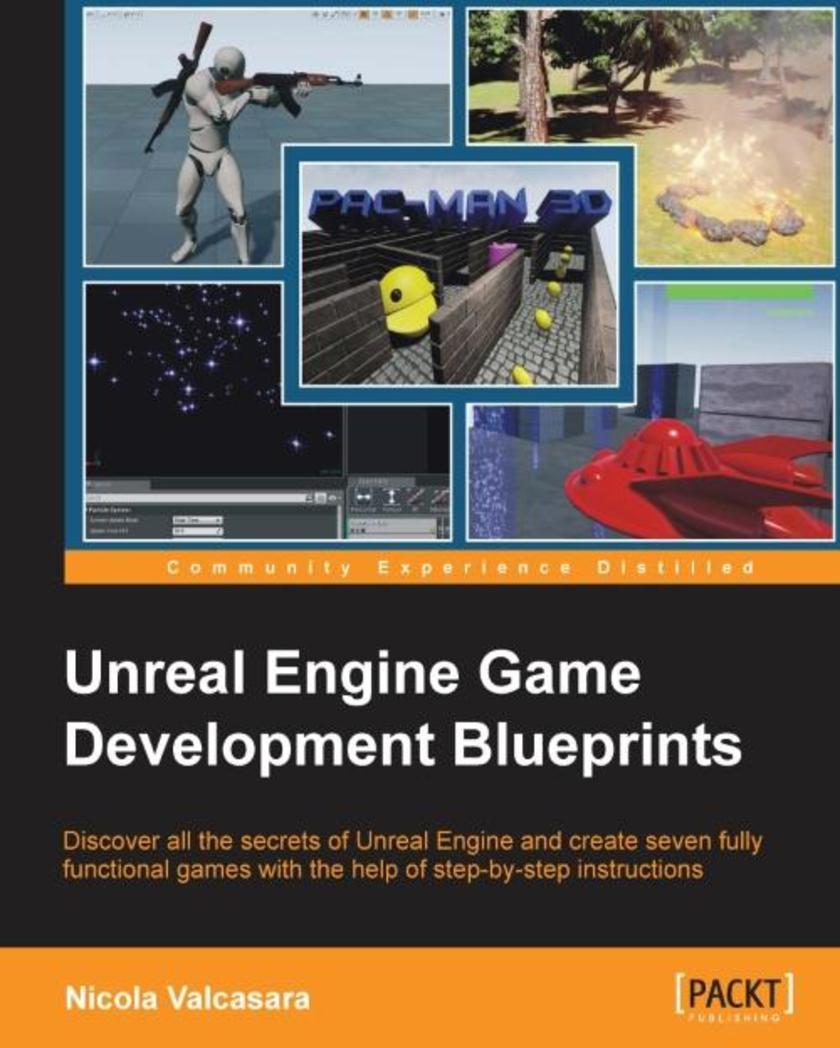
Unreal Engine Game Development Blueprints
¥90.46
Discover all the secrets of Unreal Engine and create seven fully functional games with the help of step-by-step instructions About This Book Understand what a Blueprint is and how to create a complex visual *ing code Discover the infinite possibilities that Unreal Engine offers, and understand which tool to use, where and when Learn to think like a real game developer in order to create enjoyable and bug-free games using this comprehensive and practical handbook Who This Book Is For This book is ideal for intermediate level developers who know how to use Unreal Engine and want to go through a series of projects that will further their expertise. Working knowledge of C++ is a must. What You Will Learn Write clean and reusable Blueprint *s Develop any kind of game you have in mind, following the rules used by experts Move through Unreal Engine 4, always knowing what you are doing and where to find the right tool for your needs Integrate C++ code into your projects using Visual Studio and the tools that Unreal provides Extricate between classes, nodes, interfaces, macros, and functions Work with different types of assets, from 3D objects to audio sources, from UI buttons to animations Explore all the aspects of the game logic—collisions, navigation meshes, matinees, volumes, events, and states In Detail With the arrival of Unreal Engine 4, a new wonderful tool was born: Blueprint. This visual *ing tool allows even non-programmers to develop the logic for their games, allowing almost anyone to create entire games without the need to write a single line of code. The range of features you can access with Blueprint * is pretty extensive, making it one of the foremost choices for many game developers. Unreal Engine Game Development Blueprints helps you unleash the real power of Unreal by helping you to create engaging and spectacular games. It will explain all the aspects of developing a game, focusing on visual *ing, and giving you all the information you need to create your own games. We start with an introductory chapter to help you move fluidly inside the Blueprint user interface, recognize its different components, and understand any already written Blueprint *. Following this, you will learn how to modify generated Blueprint classes to produce a single player tic-tac-toe game and personalize it. Next, you will learn how to create simple user interfaces, and how to extend Blueprints through code. This will help you make an informed decision between choosing Blueprint or code. You will then see the real power of Unreal unleashed as you create a beautiful scene with moving, AI controlled objects, particles, and lights. Then, you will learn how to create AI using a behavior tree and a global level Blueprint, how to modify the camera, and how to shoot custom bullets. Finally, you will create a complex game using Blueprintable components complete with a menu, power-up, dangerous objects, and different weapons. Style and approach This is an easy-to-follow guide full of practical game examples. Each chapter contains step-by-step instructions to build a complete game and each game uses a different tool in order to cover all the topics in a detailed and progressive manner.
Mastering Entity Framework Core 2.0
¥90.46
Learn how to leverage the features of the new Entity Framework Core APIs and use them to build pure .NET Core applications. About This Book ? Learn how to effectively manage your database to make it more productive and maintainable. ? Write simplified queries using LINQ to acquire the desired data easily ? Raise the abstraction level from data to objects so teams can function independently, resulting in easily maintainable code Who This Book Is For This book is for .NET Core developers who would like to integrate EF Core in their application. Prior knowledge of .NET Core and C# is assumed. What You Will Learn ? Create databases and perform CRUD operations on them ? Understand and build relationships (related to entities, keys, and properties) ? Understand in-built, custom, and remote validation (both client and server side) ? You will learn to handle concurrency to build responsive applications ? You will handle transactions and multi-tenancy while also improving performance In Detail Being able to create and maintain data-oriented applications has become crucial in modern programming. This is why Microsoft came up with Entity Framework so architects can optimize storage requirements while also writing efficient and maintainable application code. This book is a comprehensive guide that will show how to utilize the power of the Entity Framework to build efficient .NET Core applications. It not only teaches all the fundamentals of Entity Framework Core but also demonstrates how to use it practically so you can implement it in your software development. The book is divided into three modules. The first module focuses on building entities and relationships. Here you will also learn about different mapping techniques, which will help you choose the one best suited to your application design. Once you have understood the fundamentals of the Entity Framework, you will move on to learn about validation and querying in the second module. It will also teach you how to execute raw SQL queries and extend the Entity Framework to leverage Query Objects using the Query Object Pattern. The final module of the book focuses on performance optimization and managing the security of your application. You will learn to implement failsafe mechanisms using concurrency tokens. The book also explores row-level security and multitenant databases in detail. By the end of the book, you will be proficient in implementing Entity Framework on your .NET Core applications. Style and approach This book is filled with various examples that will help you use Entity Framework Core 2.0 to write efficient software.
Mastering Node.js - Second Edition
¥90.46
Expert techniques for building fast servers and scalable, real-time network applications with minimal effort; rewritten for Node.js 8 and Node.js 9 About This Book ? Packed with practical examples and explanations, Mastering Node.js contains everything you need to take your applications to the next level. ? Unleash the full potential of Node.js 9 to build real-time and scalable applications. ? Gain in-depth knowledge of asynchronous programming, event loops, and parallel data processing. ? Explore Node's innovative event-non-blocking design, and build professional applications with the help of detailed examples. Who This Book Is For This book is targeted at JavaScript developers who want to take an in-depth look at the latest Node.js framework to create faster, scalable, real-time backend applications. Basic JavaScript programming knowledge—and also some previous Node.js development experience—are mandatory to get the best out of this book What You Will Learn ? Build an Electron desktop app using Node that manages a filesystem ? Explore Streams and understand how they apply to building networked services ? Develop and deploy an SMS-driven customer service application ? Use WebSockets for rapid bi-directional communication ? Construct serverless applications with Amazon Lambda ? Test and debug with headless browsers, CPU profiling, Mocha, Sinon, and more ? Scale applications vertically and horizontally across multiple cores and web services In Detail Node.js, a modern development environment that enables developers to write server- and client-side code with JavaScript, thus becoming a popular choice among developers. This book covers the features of Node that are especially helpful to developers creating highly concurrent real-time applications. It takes you on a tour of Node's innovative event non-blocking design, showing you how to build professional applications. This edition has been updated to cover the latest features of Node 9 and ES6. All code examples and demo applications have been completely rewritten using the latest techniques, introducing Promises, functional programming, async/await, and other cutting-edge patterns for writing JavaScript code. Learn how to use microservices to simplify the design and composition of distributed systems. From building serverless cloud functions to native C++ plugins, from chatbots to massively scalable SMS-driven applications, you'll be prepared for building the next generation of distributed software. By the end of this book, you'll be building better Node applications more quickly, with less code and more power, and know how to run them at scale in production environments. Style and approach Mastering Node.js contains all of the examples and explanations you'll need to build applications in a short amount of time and at a low cost, running rapidly and at scale.
ArcPy and ArcGIS - Second Edition
¥90.46
Use Python modules such as ArcPy, ArcREST and the ArcGIS API for Python to automate the analysis and mapping of geospatial data. About This Book ? Perform GIS analysis faster by automating tasks. ? Access the spatial data contained within shapefiles and geodatabases and transform between spatial reference systems. ? Automate the mapping of geospatial analyses and production of map books. Who This Book Is For If you are a GIS student or professional who needs an understanding of how to use ArcPy to reduce repetitive tasks and perform analysis faster, this book is for you. It is also a valuable book for Python programmers who want to understand how to automate geospatial analyses and implement ArcGIS Online data management. What You Will Learn ? Understand how to integrate Python into ArcGIS and make GIS analysis faster and easier. ? Create Python * using ArcGIS ModelBuilder. ? Learn to use ArcGIS online feature services and the basics of the ArcGIS REST API ? Understand the unique Python environment that is new with ArcGIS Pro ? Learn about the new ArcGIS Python API and how to use Anaconda and Jupyter with it ? Learn to control ArcGIS Enterprise using ArcPy In Detail ArcGIS allows for complex analyses of geographic information. The ArcPy module is used to * these ArcGIS analyses, providing a productive way to perform geo-analyses and automate map production. The second edition of the book focuses on new Python tools, such as the ArcGIS API for Python. Using Python, this book will guide you from basic Python *ing to advanced ArcPy * tools. This book starts off with setting up your Python environment for ArcGIS automation. Then you will learn how to output maps using ArcPy in MXD and update feature class in a geodatabase using arcpy and ArcGIS Online. Next, you will be introduced to ArcREST library followed by examples on querying, updating and manipulating ArcGIS Online feature services. Further, you will be enabling your *s in the browser and directly interacting with ArcGIS Online using Jupyter notebook. Finally, you can learn ways to use of ArcPy to control ArcGIS Enterprise and explore topics on deployments, data quality assurances, data updates, version control, and editing safeguards. By the end of the book, you will be equipped with the knowledge required to create automated analysis with administration reducing the time-consuming nature of GIS. Style and approach The book takes a pragmatic approach, showing ways to automate repetitive tasks and utilizing features of ArcPy with ArcGIS Pro and ArcGIS online.
Practical Game AI Programming
¥90.46
Jump into the world of Game AI development About This Book ? Move beyond using libraries to create smart game AI, and create your own AI projects from scratch ? Implement the latest algorithms for AI development and in-game interaction ? Customize your existing game AI and make it better and more efficient to improve your overall game performance Who This Book Is For This book is for game developers with a basic knowledge of game development techniques and some basic programming techniques in C# or C++. What You Will Learn ? Get to know the basics of how to create different AI for different type of games ? Know what to do when something interferes with the AI choices and how the AI should behave if that happens ? Plan the interaction between the AI character and the environment using Smart Zones or Triggering Events ? Use animations correctly, blending one animation into another and rather than stopping one animation and starting another ? Calculate the best options for the AI to move using Pruning Strategies, Wall Distances, Map Preprocess Implementation, and Forced Neighbours ? Create Theta algorithms to the AI to find short and realistic looking paths ? Add many characters into the same scene and make them behave like a realistic crowd In Detail The book starts with the basics examples of AI for different game genres and directly jumps into defining the probabilities and possibilities of the AI character to determine character movement. Next, you’ll learn how AI characters should behave within the environment created. Moving on, you’ll explore how to work with animations. You’ll also plan and create pruning strategies, and create Theta algorithms to find short and realistic looking game paths. Next, you’ll learn how the AI should behave when there is a lot of characters in the same scene. You'll explore which methods and algorithms, such as possibility maps, Forward Chaining Plan, Rete Algorithm, Pruning Strategies, Wall Distances, and Map Preprocess Implementation should be used on different occasions. You’ll discover how to overcome some limitations, and how to deliver a better experience to the player. By the end of the book, you think differently about AI. Style and approach The book has a step-by-step tutorial style approach. The algorithms are explained by implementing them in #.
vSphere High Performance Cookbook - Second Edition
¥90.46
Over 80 recipes to help you improve vSphere 6.5's performance and solve problems before they arise About This Book ? The practical recipes provide cost-effective and high performance for any application running in a virtual machine ? Contains best practices and troubleshooting techniques to resolve vSphere 6.5 performance issues ? Get a comprehensive coverage of performance issues and solutions including vCenter Server design and virtual machine and application tuning Who This Book Is For If you are a system administrator and are planning to deploy vSphere 6.5 in your organization and want to maximize its performance, then this book is for you. Prior knowledge of the vSphere 6.5 concepts is essential. What You Will Learn ? Understand the VMM Scheduler, cache aware CPU Scheduler, NUMA aware CPU Scheduler, and more during the CPU Performance Design phase ? Get to know the virtual memory reclamation technique, host ballooning monitoring, and swapping activity ? Choose the right platform while designing your vCenter Server, redundant vCenter design, and vCenter SSO and its deployment ? Learn how to use various performance simulation tools ? Design VCSA Server Certificates to minimize security threats ? Use health check tools for storage and boost vSphere 6.5's performance with VAAI and VASA In Detail vSphere is a mission-critical piece of software for many businesses. It is a complex tool, and incorrect design and deployment can create performance related issues that can negatively affect the business. This book is focused on solving these problems as well as providing best practices and performance-enhancing techniques. This edition is fully updated to include all the new features in version 6.5 as well as the latest tools and techniques to keep vSphere performing at its best. This book starts with interesting recipes, such as the interaction of vSphere 6.5 components with physical layers such as CPU, memory, and networking. Then we focus on DRS, resource control design, and vSphere cluster design. Next, you'll learn about storage performance design and how it works with VMware vSphere 6.5. Moving on, you will learn about the two types of vCenter installation and the benefits of each. Lastly, the book covers performance tools that help you get the most out of your vSphere installation. By the end of this book, you will be able to identify, diagnose, and troubleshoot operational faults and critical performance issues in vSphere 6.5. Style and approach This cookbook is written in a practical, helpful style with numerous recipes focusing on answering and providing solutions to common and not-so-common performance issues and problems.
Practical Predictive Analytics
¥90.46
Make sense of your data and predict the unpredictable About This Book ? A unique book that centers around develop six key practical skills needed to develop and implement predictive analytics ? Apply the principles and techniques of predictive analytics to effectively interpret big data ? Solve real-world analytical problems with the help of practical case studies and real-world scenarios taken from the world of healthcare, marketing, and other business domains Who This Book Is For This book is for those with a mathematical/statistics background who wish to understand the concepts, techniques, and implementation of predictive analytics to resolve complex analytical issues. Basic familiarity with a programming language of R is expected. What You Will Learn ? Master the core predictive analytics algorithm which are used today in business ? Learn to implement the six steps for a successful analytics project ? Classify the right algorithm for your requirements ? Use and apply predictive analytics to research problems in healthcare ? Implement predictive analytics to retain and acquire your customers ? Use text mining to understand unstructured data ? Develop models on your own PC or in Spark/Hadoop environments ? Implement predictive analytics products for customers In Detail This is the go-to book for anyone interested in the steps needed to develop predictive analytics solutions with examples from the world of marketing, healthcare, and retail. We'll get started with a brief history of predictive analytics and learn about different roles and functions people play within a predictive analytics project. Then, we will learn about various ways of installing R along with their pros and cons, combined with a step-by-step installation of RStudio, and a de*ion of the best practices for organizing your projects. On completing the installation, we will begin to acquire the skills necessary to input, clean, and prepare your data for modeling. We will learn the six specific steps needed to implement and successfully deploy a predictive model starting from asking the right questions through model development and ending with deploying your predictive model into production. We will learn why collaboration is important and how agile iterative modeling cycles can increase your chances of developing and deploying the best successful model. We will continue your journey in the cloud by extending your skill set by learning about Databricks and SparkR, which allow you to develop predictive models on vast gigabytes of data. Style and Approach This book takes a practical hands-on approach wherein the algorithms will be explained with the help of real-world use cases. It is written in a well-researched academic style which is a great mix of theoretical and practical information. Code examples are supplied for both theoretical concepts as well as for the case studies. Key references and summaries will be provided at the end of each chapter so that you can explore those topics on their own.
Learning Elasticsearch
¥90.46
Store, search, and analyze your data with ease using Elasticsearch 5.x About This Book ? Get to grips with the basics of Elasticsearch concepts and its APIs, and use them to create efficient applications ? Create large-scale Elasticsearch clusters and perform analytics using aggregation ? This comprehensive guide will get you up and running with Elasticsearch 5.x in no time Who This Book Is For If you want to build efficient search and analytics applications using Elasticsearch, this book is for you. It will also benefit developers who have worked with Lucene or Solr before and now want to work with Elasticsearch. No previous knowledge of Elasticsearch is expected. What You Will Learn ? See how to set up and configure Elasticsearch and Kibana ? Know how to ingest structured and unstructured data using Elasticsearch ? Understand how a search engine works and the concepts of relevance and scoring ? Find out how to query Elasticsearch with a high degree of performance and scalability ? Improve the user experience by using autocomplete, geolocation queries, and much more ? See how to slice and dice your data using Elasticsearch aggregations. ? Grasp how to use Kibana to explore and visualize your data ? Know how to host on Elastic Cloud and how to use the latest X-Pack features such as Graph and Alerting In Detail Elasticsearch is a modern, fast, distributed, scalable, fault tolerant, and open source search and analytics engine. You can use Elasticsearch for small or large applications with billions of documents. It is built to scale horizontally and can handle both structured and unstructured data. Packed with easy-to- follow examples, this book will ensure you will have a firm understanding of the basics of Elasticsearch and know how to utilize its capabilities efficiently. You will install and set up Elasticsearch and Kibana, and handle documents using the Distributed Document Store. You will see how to query, search, and index your data, and perform aggregation-based analytics with ease. You will see how to use Kibana to explore and visualize your data. Further on, you will learn to handle document relationships, work with geospatial data, and much more, with this easy-to-follow guide. Finally, you will see how you can set up and scale your Elasticsearch clusters in production environments. Style and approach This comprehensive guide will get you started with Elasticsearch 5.x, so you build a solid understanding of the basics. Every topic is explained in depth and is supplemented with practical examples to enhance your understanding.
Learning Salesforce Visual Workflow and Process Builder - Second Edition
¥90.46
Click your way to automating various business processes using Salesforce Visual Workflow About This Book ? Develop an application using Point and Click with the help of Flow ? Get to grips with various ways to launch a Flow ? Capture data from an external user without using the Visualforce page ? Save user input into the database, and learn how to query and manipulate the data ? Discover various ways to debug and deploy Flow and Process Builder ? Understand the concepts of Subflow and Login Flow ? Handle complex business processes using Process builder and keep them clean ? Use existing or new Flows to work with Salesforce Lightning Experience. Who This Book Is For This book is intended for those who want to use Flows to automate their business requirements by clicking, not coding. No previous experience in computer coding or programming is required. What You Will Learn ? Develop an application using point and click with the help of Flow ? Get to grips with various ways to launch a Flow ? Capture data from an external user without using the Visualforce page ? Save user input into the database, and learn how to query and manipulate the data ? Discover various ways to debug and deploy Flow and Process Builder ? Understand the concepts of Subflow and Login Flow ? Handle complex business processes using Process builder and keep them clean ? Use existing or new Flows to work with Salesforce Lightning Experience. In Detail Salesforce Management System is an information system used in CRM to automate the business processes like sales and marketing. To implement this, Force.com developed a powerful tool called Visual Workflow to automate business processes by creating applications also called Flows. Learning Salesforce Visual Workflow, Second Edition is a practical guide on Flows that will enable you to develop custom applications in Salesforce with minimized code usage. The book starts with an introduction to Visual Workflows that teaches all the building blocks of creating Flows and use it efficiently. You will learn how to easily automate business processes and tackle complex business scenarios using Flows. The book explains the working of the Process Builder so you can create reusable processes. The book also covers how you can integrate existing or newly created Flows with the Salesforce Lightening Experience. By the end of the book, you will get a clear understanding on how to use Flows and Process Builder in your organization to optimize code usage. Style and approach Step by step approch to use Process Builder to solve complex business requirements with the help of Flow
Cisco ACI Cookbook
¥90.46
Over 90 recipes to maximize automated solutions and policy-drive application profiles using Cisco ACI About This Book ? Confidently provision your virtual and physical infrastructure for application deployment ? Integrate Cisco ACI with hypervisors and other third party devices ? Packed with powerful recipes to automate your IT operations Who This Book Is For If you are a network administrator, system administrator, or engineer and are aware of the basics of Cisco ACI but want to start using it to automate your tasks, then this book is for you What You Will Learn ? Master the Cisco ACI architecture ? Discover the ACI fabric with easy-to-follow steps ? Set up quality of service within ACI ? Configure external networks with Cisco ACI ? Integrate with VMware and track VMware virtual machines ? Configure apply and verify access policies ? Extend or migrate a VMware virtual-machine LAN inside the ACI fabric ? Monitor ACI with third party tools and troubleshoot issues In Detail Cisco Application Centric Infrastructure (ACI) is a tough architecture that automates IT tasks and accelerates data-center application deployments. This book focuses on practical recipes to help you quickly build, manage, and customize hybrid environment for your organization using Cisco ACI. You will begin by understanding the Cisco ACI architecture and its major components. You will then configure Cisco ACI policies and tenants. Next you will connect to hypervisors and other third-party devices. Moving on, you will configure routing to external networks and within ACI tenants and also learn to secure ACI through RBAC. Furthermore, you will understand how to set up quality of service and network programming with REST, XML, Python and so on. Finally you will learn to monitor and troubleshoot ACI in the event of any issues that arise. By the end of the book, you will gain have mastered automating your IT tasks and accelerating the deployment of your applications. Style and approach A set of exciting recipes to automate your IT operations related to datacenters, the Cloud, and networking tasks
Kali Linux Network Scanning Cookbook - Second Edition
¥90.46
Over 100 practical recipes that leverage custom *s and integrated tools in Kali Linux to help you effectively master network scanning About This Book ? Learn the fundamentals behind commonly used scanning techniques ? Deploy powerful scanning tools that are integrated into the Kali Linux testing platform ? The practical recipes will help you automate menial tasks and build your own * library Who This Book Is For This book is for information security professionals and casual security enthusiasts alike. It provides foundational principles if you’re a novice, but will also introduce *ing techniques and in-depth analysis if you’re more advanced. Whether you are brand new to Kali Linux or a seasoned veteran, this book will help you both understand and ultimately master many of the most powerful and useful scanning techniques in the industry. It is assumed that you have some basic security testing experience. What You Will Learn ? Develop a network-testing environment to test scanning tools and techniques ? Understand the principles of network-scanning tools by building *s and tools ? Identify distinct vulnerabilities in web apps and remote services and learn how they are exploited ? Perform comprehensive scans to identify listening on TCP and UDP sockets ? Get started with different Kali desktop environments--KDE, MATE, LXDE, and Xfce ? Use Sparta for information gathering, port scanning, fingerprinting, vulnerability scanning, and more ? Evaluate DoS threats and learn how common DoS attacks are performed ? Learn how to use Burp Suite to evaluate web applications In Detail With the ever-increasing amount of data flowing in today’s world, information security has become vital to any application. This is where Kali Linux comes in. Kali Linux focuses mainly on security auditing and penetration testing. This step-by-step cookbook on network scanning trains you in important scanning concepts based on version 2016.2. It will enable you to conquer any network environment through a range of network scanning techniques and will also equip you to * your very own tools. Starting with the fundamentals of installing and managing Kali Linux, this book will help you map your target with a wide range of network scanning tasks, including discovery, port scanning, fingerprinting, and more. You will learn how to utilize the arsenal of tools available in Kali Linux to conquer any network environment. The book offers expanded coverage of the popular Burp Suite and has new and updated *s for automating scanning and target exploitation. You will also be shown how to identify remote services, how to assess security risks, and how various attacks are performed. You will cover the latest features of Kali Linux 2016.2, which includes the enhanced Sparta tool and many other exciting updates. This immersive guide will also encourage the creation of personally *ed tools and the skills required to create them. Style and approach This step-by-step guide is full of recipes that will help you use integrated scanning tools in Kali Linux and develop custom *s to make new and unique tools of your own.
Nmap: Network Exploration and Security Auditing Cookbook - Second Edition
¥90.46
Over 100 practical recipes related to network and application security auditing using the powerful Nmap About This Book ? Learn through practical recipes how to use Nmap for a wide range of tasks for system administrators and penetration testers. ? Learn the latest and most useful features of Nmap and the Nmap Scripting Engine. ? Learn to audit the security of networks, web applications, databases, mail servers, Microsoft Windows servers/workstations and even ICS systems. ? Learn to develop your own modules for the Nmap Scripting Engine. ? Become familiar with Lua programming. ? 100% practical tasks, relevant and explained step-by-step with exact commands and optional arguments de*ion Who This Book Is For The book is for anyone who wants to master Nmap and its *ing engine to perform real life security auditing checks for system administrators and penetration testers. This book is also recommended to anyone looking to learn about network security auditing. Finally, novice Nmap users will also learn a lot from this book as it covers several advanced internal aspects of Nmap and related tools. What You Will Learn ? Learn about Nmap and related tools, such as Ncat, Ncrack, Ndiff, Zenmap and the Nmap Scripting Engine ? Master basic and advanced techniques to perform port scanning and host discovery ? Detect insecure configurations and vulnerabilities in web servers, databases, and mail servers ? Learn how to detect insecure Microsoft Windows workstations and scan networks using the Active Directory technology ? Learn how to safely identify and scan critical ICS/SCADA systems ? Learn how to optimize the performance and behavior of your scans ? Learn about advanced reporting ? Learn the fundamentals of Lua programming ? Become familiar with the development libraries shipped with the NSE ? Write your own Nmap Scripting Engine *s In Detail This is the second edition of 'Nmap 6: Network Exploration and Security Auditing Cookbook'. A book aimed for anyone who wants to master Nmap and its *ing engine through practical tasks for system administrators and penetration testers. Besides introducing the most powerful features of Nmap and related tools, common security auditing tasks for local and remote networks, web applications, databases, mail servers, Microsoft Windows machines and even ICS SCADA systems are explained step by step with exact commands and argument explanations. The book starts with the basic usage of Nmap and related tools like Ncat, Ncrack, Ndiff and Zenmap. The Nmap Scripting Engine is thoroughly covered through security checks used commonly in real-life scenarios applied for different types of systems. New chapters for Microsoft Windows and ICS SCADA systems were added and every recipe was revised. This edition reflects the latest updates and hottest additions to the Nmap project to date. The book will also introduce you to Lua programming and NSE * development allowing you to extend further the power of Nmap. Style and approach This book consists of practical recipes on network exploration and security auditing techniques, enabling you to get hands-on experience through real life scenarios.
Python GUI Programming Cookbook - Second Edition
¥90.46
Master over 80 object-oriented recipes to create amazing GUIs in Python and revolutionize your applications today About This Book ? Use object-oriented programming to develop amazing GUIs in Python ? Create a working GUI project as a central resource for developing your Python GUIs ? Easy-to-follow recipes to help you develop code using the latest released version of Python Who This Book Is For This book is for intermediate Python programmers who wish to enhance their Python skills by writing powerful GUIs in Python. As Python is such a great and easy to learn language, this book is also ideal for any developer with experience of other languages and enthusiasm to expand their horizon. What You Will Learn ? Create the GUI Form and add widgets ? Arrange the widgets using layout managers ? Use object-oriented programming to create GUIs ? Create Matplotlib charts ? Use threads and talking to networks ? Talk to a MySQL database via the GUI ? Perform unit-testing and internationalizing the GUI ? Extend the GUI with third-party graphical libraries ? Get to know the best practices to create GUIs In Detail Python is a multi-domain, interpreted programming language. It is a widely used general-purpose, high-level programming language. It is often used as a *ing language because of its forgiving syntax and compatibility with a wide variety of different eco-systems. Python GUI Programming Cookbook follows a task-based approach to help you create beautiful and very effective GUIs with the least amount of code necessary. This book will guide you through the very basics of creating a fully functional GUI in Python with only a few lines of code. Each and every recipe adds more widgets to the GUIs we are creating. While the cookbook recipes all stand on their own, there is a common theme running through all of them. As our GUIs keep expanding, using more and more widgets, we start to talk to networks, databases, and graphical libraries that greatly enhance our GUI’s functionality. This book is what you need to expand your knowledge on the subject of GUIs, and make sure you’re not missing out in the long run. Style and approach This programming cookbook consists of standalone recipes, and this approach makes it unique.. While each recipe explains a certain concept, throughout the book you’ll build a more and more advanced GUI, recipe after recipe. In some of the advanced topics, we simply create a new GUI in order to explore these topics in depth.
Python Machine Learning By Example
¥90.46
Take tiny steps to enter the big world of data science through this interesting guide About This Book ? Learn the fundamentals of machine learning and build your own intelligent applications ? Master the art of building your own machine learning systems with this example-based practical guide ? Work with important classification and regression algorithms and other machine learning techniques Who This Book Is For This book is for anyone interested in entering the data science stream with machine learning. Basic familiarity with Python is assumed. What You Will Learn ? Exploit the power of Python to handle data extraction, manipulation, and exploration techniques ? Use Python to visualize data spread across multiple dimensions and extract useful features ? Dive deep into the world of analytics to predict situations correctly ? Implement machine learning classification and regression algorithms from scratch in Python ? Be amazed to see the algorithms in action ? Evaluate the performance of a machine learning model and optimize it ? Solve interesting real-world problems using machine learning and Python as the journey unfolds In Detail Data science and machine learning are some of the top buzzwords in the technical world today. A resurging interest in machine learning is due to the same factors that have made data mining and Bayesian analysis more popular than ever. This book is your entry point to machine learning. This book starts with an introduction to machine learning and the Python language and shows you how to complete the setup. Moving ahead, you will learn all the important concepts such as, exploratory data analysis, data preprocessing, feature extraction, data visualization and clustering, classification, regression and model performance evaluation. With the help of various projects included, you will find it intriguing to acquire the mechanics of several important machine learning algorithms – they are no more obscure as they thought. Also, you will be guided step by step to build your own models from scratch. Toward the end, you will gather a broad picture of the machine learning ecosystem and best practices of applying machine learning techniques. Through this book, you will learn to tackle data-driven problems and implement your solutions with the powerful yet simple language, Python. Interesting and easy-to-follow examples, to name some, news topic classification, spam email detection, online ad click-through prediction, stock prices forecast, will keep you glued till you reach your goal. Style and approach This book is an enticing journey that starts from the very basics and gradually picks up pace as the story unfolds. Each concept is first succinctly defined in the larger context of things, followed by a detailed explanation of their application. Every concept is explained with the help of a project that solves a real-world problem, and involves hands-on work—giving you a deep insight into the world of machine learning. With simple yet rich language—Python—you will understand and be able to implement the examples with ease.
Advanced Splunk
¥90.46
Master the art of getting the maximum out of your machine data using Splunk About This Book A practical and comprehensive guide to the advanced functions of Splunk,, including the new features of Splunk 6.3 Develop and manage your own Splunk apps for greater insight from your machine data Full coverage of high-level Splunk techniques including advanced searches, manipulations, and visualization Who This Book Is For This book is for Splunk developers looking to learn advanced strategies to deal with big data from an enterprise architectural perspective. It is expected that readers have a basic understanding and knowledge of using Splunk Enterprise. What You Will Learn Find out how to develop and manage apps in Splunk Work with important search commands to perform data analytics on uploaded data Create visualizations in Splunk Explore tweaking Splunk Integrate Splunk with any pre-existing application to perform data crunching efficiently and in real time Make your big data speak with analytics and visualizations using Splunk Use SDK and Enterprise integration with tools such as R and Tableau In Detail Master the power of Splunk and learn the advanced strategies to get the most out of your machine data with this practical advanced guide. Make sense of the hidden data of your organization – the insight of your servers, devices, logs, traffic and clouds. Advanced Splunk shows you how. Dive deep into Splunk to find the most efficient solution to your data problems. Create the robust Splunk solutions you need to make informed decisions in big data machine analytics. From visualizations to enterprise integration, this well-organized high level guide has everything you need for Splunk mastery. Start with a complete overview of all the new features and advantages of the latest version of Splunk and the Splunk Environment. Go hands on with uploading data, search commands for basic and advanced analytics, advanced visualization techniques, and dashboard customizing. Discover how to tweak Splunk to your needs, and get a complete on Enterprise Integration of Splunk with various analytics and visualization tools. Finally, discover how to set up and use all the new features of the latest version of Splunk. Style and approach This book follows a step by step approach. Every new concept is built on top of its previous chapter, and it is full of examples and practical scenarios to help the reader experiment as they read.


