万本电子书0元读

万本电子书0元读

SignalR Real-time Application Cookbook
Roberto Vespa
¥90.46
This book contains illustrated code examples to help you create realtime, asynchronous, and bidirectional clientserver applications. Each recipe will concentrate on one specific aspect of application development with SignalR showing you how that aspect can be used proficiently. Different levels of developers will find this book useful. Beginners will be able to learn all the fundamental concepts of SignalR, quickly becoming productive in a difficult arena. Experienced programmers will find in this book a handy and useful collection of readymade solutions to common use cases, which they will be able to enhance as needed. Developers can also use the book as a quick reference to the most important SignalR features. No previous practical experience either with SignalR or with realtime communication in general is required.
Implementing Samba 4
Marcelo Leal
¥90.46
This book is an implementation tutorial covering stepbystep procedures, examples, and sample code, and has a practical approach to set up a Samba 4 Server as an Active Directory Domain Controller and also set up different Samba 4 server roles. This book is ideal for system administrators who are new to the Samba 4 software, and who are looking to get a good grounding in how to use Samba 4 to implement Active Directory Services. It's assumed that you will have some experience with general system administration, Active Directory, and GNU/Linux systems. Readers are expected to have some test machines (virtual machines), which will be used to execute the examples within this book.
Oracle ADF Faces Cookbook
Amr Gawish
¥90.46
This is a cookbook that covers more than 80 different recipes to teach you about different aspects of Oracle ADF Faces. It follows a practical approach and covers how to build your components for reuse in different applications. This book will also help you in tuning the performance of your ADF Faces application. If you are an ADF developer who wants to harness the power of Oracle ADF Faces to create exceptional user interfaces and reactive applications, this book will provide you with the recipes needed to do just that. You will not need to be familiar with Oracle ADF Faces, but you should be comfortable with Java application development, Java EE frameworks, and JSF. This book is also for ADF developers who know how to use Oracle ADF Faces but who want to know what’s new in Oracle ADF Faces 12c.
MariaDB Cookbook
MariaDB Cookbook
Daniel Bartholomew
¥90.46
A practical cookbook, filled with advanced recipes , and plenty of code and commands used for illustration,which will make your learning curve easy and quick. This book is for anyone who wants to learn more about databases in general or MariaDB in particular. Some familiarity with SQL databases is assumed, but the recipes are approachable to almost anyone with basic database skills.
Administering ArcGIS for Server
Hussein Nasser
¥90.46
This book is a practical, stepbystep tutorial providing a complete reference guide to the setup, installation, and administration of ArcGIS Server technology. If you are a GIS user, analyst, DBA, or programmer with a basic knowledge of ESRI GIS, then this book is for you.
Functional Python Programming
Steven Lott
¥90.46
This book is for developers who want to use Python to write programs that lean heavily on functional programming design patterns. You should be comfortable with Python programming, but no knowledge of functional programming paradigms is needed.
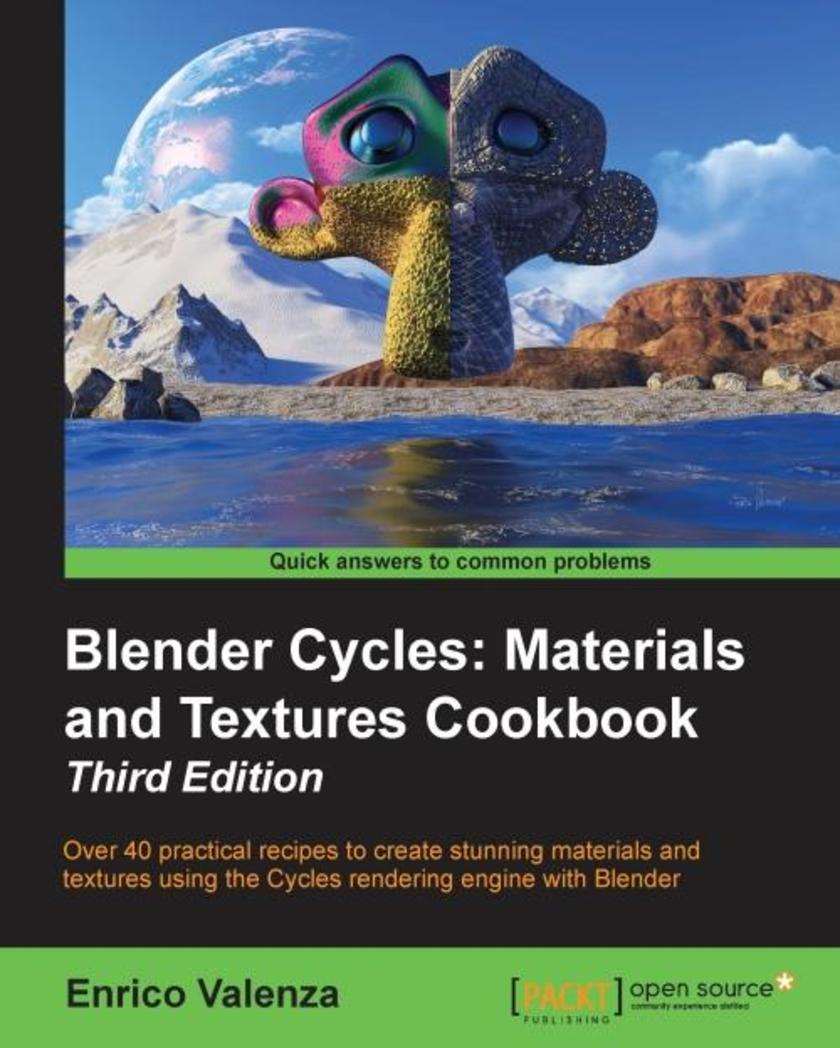
Blender Cycles: Materials and Textures Cookbook - Third Edition
Enrico Valenza
¥90.46
This book is aimed at those familiar with the basics of Blender, looking to delve into the depths of the Cycles rendering engine to create an array of breath-taking materials and textures.
Learning Android Application Testing
Paul Blundell
¥90.46
If you are an Android developer looking to test your applications or optimize your application development process, then this book is for you. No previous experience in application testing is required.
Mastering Git
Mastering Git
Jakub Narębski
¥90.46
Attain expert-level proficiency with Git for enhanced productivity and efficient collaboration by mastering advanced distributed version control features About This Book Set up Git for solo and collaborative development Harness the full power of Git version control system to customize Git behavior, manipulate history, integrate external tools and explore platform shortcuts A detailed guide, which explains how to apply advanced Git techniques and workflows and ways to handle submodules Who This Book Is For If you are a Git user with reasonable knowledge of Git and familiarity with basic concepts such as branching, merging, staging, and workflows, this is the book for you. Basic knowledge of installing Git and software configuration management concepts is essential. What You Will Learn Explore project history, find revisions using different criteria, and filter and format how history looks Manage your working directory and staging area for commits and interactively create new revisions and amend them Set up repositories and branches for collaboration Submit your own contributions and integrate contributions from other developers via merging or rebasing Customize Git behavior system-wide, on a per-user, per-repository, and per-file basis Take up the administration and set up of Git repositories, configure access, find and recover from repository errors, and perform repository maintenance Chose a workflow and configure and set up support for the chosen workflow In Detail Git is one of the most popular types of Source Code Management (SCM) and Distributed Version Control System (DVCS). Despite the powerful and versatile nature of the tool enveloping strong support for nonlinear development and the ability to handle large projects efficiently, it is a complex tool and often regarded as “user-unfriendly”. Getting to know the ideas and concepts behind the architecture of Git will help you make full use of its power and understand its behavior. Learning the best practices and recommended workflows should help you to avoid problems and ensure trouble-free development. The book scope is meticulously designed to help you gain deeper insights into Git's architecture, its underlying concepts, behavior, and best practices. Mastering Git starts with a quick implementation example of using Git for a collaborative development of a sample project to establish the foundation knowledge of Git operational tasks and concepts. Furthermore, as you progress through the book, the tutorials provide detailed de*ions of various areas of usage: from archaeology, through managing your own work, to working with other developers. This book also helps augment your understanding to examine and explore project history, create and manage your contributions, set up repositories and branches for collaboration in centralized and distributed version control, integrate work from other developers, customize and extend Git, and recover from repository errors. By exploring advanced Git practices, you will attain a deeper understanding of Git’s behavior, allowing you to customize and extend existing recipes and write your own. Style and approach Step-by-step instructions and useful information make this book the ultimate guide to understanding and mastering Git. This book will show road to mastery example by example, while explaining mental model of Git. The Introduction section covers the 'Essentials' just for refreshing the basics. The main highlight is that the concepts are based on HOW the technology/framework works and not just practical 'WHAT to do'.
Multithreading with C# Cookbook - Second Edition
Eugene Agafonov
¥90.46
Over 70 recipes to get you writing powerful and efficient multithreaded, asynchronous, and parallel programs in C# 6.0 About This Book Rewritten and updated to take advantage of the latest C# 6 features Learn about multithreaded, asynchronous, and parallel programming through hands-on, code-first examples Use these recipes to build fast, scalable, and reliable applications in C# Who This Book Is For This book is aimed at those who are new to multithreaded programming, and who are looking for a quick and easy way to get started. It is assumed that you have some experience in C# and .NET already, and you should also be familiar with basic computer science terminology and basic algorithms and data structures. What You Will Learn Use C# 6.0 asynchronous language features Work with raw threads, synchronize threads, and coordinate their work Develop your own asynchronous API with Task Parallel Library Work effectively with a thread pool Scale up your server application with I/O threads Parallelize your LINQ queries with PLINQ Use common concurrent collections Apply different parallel programming patterns Use Reactive Extensions to run asynchronous operations and manage their options In Detail Multi-core processors are synonymous with computing speed and power in today’s world, which is why multithreading has become a key concern for C# developers. Multithreaded code helps you create effective, scalable, and responsive applications. This is an easy-to-follow guide that will show you difficult programming problems in context. You will learn how to solve them with practical, hands-on, recipes. With these recipes, you’ll be able to start creating your own scalable and reliable multithreaded applications. Starting from learning what a thread is, we guide you through the basics and then move on to more advanced concepts such as task parallel libraries, C# asynchronous functions, and much more. Rewritten to the latest C# specification, C# 6, and updated with new and modern recipes to help you make the most of the hardware you have available, this book will help you push the boundaries of what you thought possible in C#. Style and approach This is an easy-to-follow guide full of hands-on examples of real-world multithreading tasks. Each topic is explained and placed in context, and for the more inquisitive, there are also more in-depth details of the concepts used.
Practical Data Analysis Cookbook
Tomasz Drabas
¥90.46
Over 60 practical recipes on data exploration and analysis About This Book Clean dirty data, extract accurate information, and explore the relationships between variables Forecast the output of an electric plant and the water flow of American rivers using pandas, NumPy, Statsmodels, and scikit-learn Find and extract the most important features from your dataset using the most efficient Python libraries Who This Book Is For If you are a beginner or intermediate-level professional who is looking to solve your day-to-day, analytical problems with Python, this book is for you. Even with no prior programming and data analytics experience, you will be able to finish each recipe and learn while doing so. What You Will Learn Read, clean, transform, and store your data usng Pandas and OpenRefine Understand your data and explore the relationships between variables using Pandas and D3.js Explore a variety of techniques to classify and cluster outbound marketing campaign calls data of a bank using Pandas, mlpy, NumPy, and Statsmodels Reduce the dimensionality of your dataset and extract the most important features with pandas, NumPy, and mlpy Predict the output of a power plant with regression models and forecast water flow of American rivers with time series methods using pandas, NumPy, Statsmodels, and scikit-learn Explore social interactions and identify fraudulent activities with graph theory concepts using NetworkX and Gephi Scrape Internet web pages using urlib and BeautifulSoup and get to know natural language processing techniques to classify movies ratings using NLTK Study simulation techniques in an example of a gas station with agent-based modeling In Detail Data analysis is the process of systematically applying statistical and logical techniques to describe and illustrate, condense and recap, and evaluate data. Its importance has been most visible in the sector of information and communication technologies. It is an employee asset in almost all economy sectors. This book provides a rich set of independent recipes that dive into the world of data analytics and modeling using a variety of approaches, tools, and algorithms. You will learn the basics of data handling and modeling, and will build your skills gradually toward more advanced topics such as simulations, raw text processing, social interactions analysis, and more. First, you will learn some easy-to-follow practical techniques on how to read, write, clean, reformat, explore, and understand your data—arguably the most time-consuming (and the most important) tasks for any data scientist. In the second section, different independent recipes delve into intermediate topics such as classification, clustering, predicting, and more. With the help of these easy-to-follow recipes, you will also learn techniques that can easily be expanded to solve other real-life problems such as building recommendation engines or predictive models. In the third section, you will explore more advanced topics: from the field of graph theory through natural language processing, discrete choice modeling to simulations. You will also get to expand your knowledge on identifying fraud origin with the help of a graph, scrape Internet websites, and classify movies based on their reviews. By the end of this book, you will be able to efficiently use the vast array of tools that the Python environment has to offer. Style and approach This hands-on recipe guide is divided into three sections that tackle and overcome real-world data modeling problems faced by data analysts/scientist in their everyday work. Each independent recipe is written in an easy-to-follow and step-by-step fashion.
Odoo Development Cookbook
Holger Brunn
¥90.46
Build effective applications by applying Odoo development best practices About This Book Each recipe stands by itself as much as possible, so that you can jump straight into the topics you prefer The recipes included cover all the major development areas of Odoo and the most important techniques explained through real-life projects From seasoned authors, learn the tricks of becoming a productive developer with the Odoo framework Who This Book Is For If you are a Python developer who wants to learn or consolidate your Odoo development skills, then this book is for you! Some experience with the JavaScript programming language and web development is required to fully benefit from the front-end chapters. What You Will Learn Install and manage Odoo environments and instances Use Models to define your application's data structures Add business logic to your applications Implement automated tests and debug Odoo apps Use back-end views to create a user interface Get to know about the access security model and internationalization features Develop front-end website features Extend the web client with new widgets and features In Detail Odoo is a full-featured open source ERP with a focus on extensibility. The flexibility and sustainability of open source is also a key selling point of Odoo. It is built on a powerful framework for rapid application development, both for back-end applications and front-end websites. The book starts by covering Odoo installation and administration, and provides a gentle introduction to application development. It then dives deep into several of the areas that an experienced developer will need to use. You’ll learn implement business logic, adapt the UI, and extend existing features. Style and Approach These practical and easy-to-follow recipes are presented step-by-step, with dozens of hands-on recipes to boost your Odoo skills. This book can also be used as a reference guide for your daily work.
Deep Learning with Keras
Antonio Gulli
¥90.46
This book starts by introducing you to supervised learning algorithms such as simple linear regression, the classical multilayer perceptron and more sophisticated deep convolutional networks. You will also explore image processing with recognition of hand written digit images, classification of images into different categories, and advanced objects recognition with related image annotations. An example of identification of salient points for face detection is also provided. Next you will be introduced to Recurrent Networks, which are optimized for processing sequence data such as text, audio or time series. Following that, you will learn about unsupervised learning algorithms such as Autoencoders and the very popular Generative Adversarial Networks (GAN). You will also explore non-traditional uses of neural networks as Style Transfer. Finally, you will look at Reinforcement Learning and its application to AI game playing, another popular direction of research and application of neural networks. What you will learn ?Optimize step-by-step functions on a large neural network using the Backpropagation Algorithm ?Fine-tune a neural network to improve the quality of results ?Use deep learning for image and audio processing ?Use Recursive Neural Tensor Networks (RNTNs) to outperform standard word embedding in special cases ?Identify problems
Spatial Analytics with ArcGIS
Eric Pimpler
¥90.46
Spatial statistics has the potential to provide insight that is not otherwise available through traditional GIS tools. This book is designed to introduce you to the use of spatial statistics so you can solve complex geographic analysis. The book begins by introducing you to the many spatial statistics tools available in ArcGIS. You will learn how to analyze patterns, map clusters, and model spatial relationships with these tools. Further on, you will explore how to extend the spatial statistics tools currently available in ArcGIS, and use the R programming language to create custom tools in ArcGIS through the ArcGIS Bridge using real-world examples. At the end of the book, you will be presented with two exciting case studies where you will be able to practically apply all your learning to analyze and gain insights into real estate data. What you will learn ?Get to know how to measure geographic distributions ?Perform clustering analysis including hot spot and outlier analysis ?Conduct data conversion tasks using the Utilities toolset ?Understand how to use the tools provided by the Mapping Clusters toolset in the Spatial Statistics Toolbox ?Get to grips with the basics of R for performing spatial statistical programming ?Create custom ArcGIS tools with R and ArcGIS Bridge ?Understand the application of Spatial Statistics tools
Mastering Java for Data Science
Alexey Grigorev
¥90.46
Java is the most popular programming language, according to the TIOBE index, and it is a typical choice for running production systems in many companies, both in the startup world and among large enterprises. Not surprisingly, it is also a common choice for creating data science applications: it is fast and has a great set of data processing tools, both built-in and external. What is more, choosing Java for data science allows you to easily integrate solutions with existing software, and bring data science into production with less effort. This book will teach you how to create data science applications with Java. First, we will revise the most important things when starting a data science application, and then brush up the basics of Java and machine learning before diving into more advanced topics. We start by going over the existing libraries for data processing and libraries with machine learning algorithms. After that, we cover topics such as classification and regression, dimensionality reduction and clustering, information retrieval and natural language processing, and deep learning and big data. Finally, we finish the book by talking about the ways to deploy the model and evaluate it in production settings. What you will learn ?Get a solid understanding of the data processing toolbox available in Java ?Explore the data science ecosystem available in Java
Vulkan Cookbook
Vulkan Cookbook
Pawel Lapinski
¥90.46
Work through recipes to unlock the full potential of the next generation graphics API―Vulkan About This Book ?This book explores a wide range of modern graphics programming techniques and GPU compute methods to make the best use of the Vulkan API ?Learn techniques that can be applied to a wide range of platforms desktop, smartphones, and embedded devices Who This Book Is For This book is ideal for developers who know C/C++ languages, have some basic familiarity with graphics programming, and now want to take advantage of the new Vulkan API in the process of building next generation computer graphics. Some basic familiarity of Vulkan would be useful to follow the recipes. OpenGL developers who want to take advantage of the Vulkan API will also find this book useful. What You Will Learn?Work with Swapchain to present images on screen ?Create, submit, and synchronize operations processed by the hardware ?Create buffers and images, manage their memory, and upload data to them from CPU ?Explore de*or sets and set up an interface between application and shaders ?Organize drawing operations into a set of render passes and subpasses ?Prepare graphics pipelines to draw 3D scenes and compute pipelines to perform mathematical calculations ?Implement geometry projection and tessellation, texturing, lighting, and post-processing techniques ?Write shaders in GLSL and convert them into SPIR-V assemblies ?Find out about and
Machine Learning with Spark - Second Edition
Rajdeep Dua
¥90.46
"Key Features ?Get to the grips with the latest version of Apache Spark ?Utilize Spark's machine learning library to implement predictive analytics ?Leverage Spark's powerful tools to load, analyze, clean, and transform your data Book De*ion Spark ML is the machine learning module of Spark. It uses in-memory RDDs to process machine learning models faster for clustering, classification, and regression. This book will teach you about popular machine learning algorithms and their implementation. You will learn how various machine learning concepts are implemented in the context of Spark ML. You will start by installing Spark in a single and multinode cluster. Next you'll see how to execute Scala and Python based programs for Spark ML. Then we will take a few datasets and go deeper into clustering, classification, and regression. Toward the end, we will also cover text processing using Spark ML. Once you have learned the concepts, they can be applied to implement algorithms in either green-field implementations or to migrate existing systems to this new platform. You can migrate from Mahout or Scikit to use Spark ML. What you will learn ?Get hands-on with the latest version of Spark ML ?Create your first Spark program with Scala and Python ?Set up and configure a development environment for Spark on your own computer, as well as on Amazon EC2 ?Access public machine learning datasets and use Spark to load, process, clean, and transform data ?Use Spark's machine learning library to implement programs by utilizing well-known machine learning models ?Deal with large-scale text data, including feature extraction and using text data as input to your machine learning models ?Write Spark functions to evaluate the performance of your machine learning models "
Deep Learning with TensorFlow
Giancarlo Zaccone,Md. Rezaul Karim,Ahmed Menshawy
¥90.46
Delve into neural networks, implement deep learning algorithms, and explore layers of data abstraction with the help of this comprehensive TensorFlow guide About This Book ?Learn how to implement advanced techniques in deep learning with Google's brainchild, TensorFlow ?Explore deep neural networks and layers of data abstraction with the help of this comprehensive guide ?Real-world contextualization through some deep learning problems concerning research and application Who This Book Is For The book is intended for a general audience of people interested in machine learning and machine intelligence. A rudimentary level of programming in one language is assumed, as is a basic familiarity with computer science techniques and technologies, including a basic awareness of computer hardware and algorithms. Some competence in mathematics is needed to the level of elementary linear algebra and calculus. What You Will Learn ?Learn about machine learning landscapes along with the historical development and progress of deep learning ?Learn about deep machine intelligence and GPU computing with the latest TensorFlow 1.x ?Access public datasets and utilize them using TensorFlow to load, process, and transform data ?Use TensorFlow on real-world datasets, including images, text, and more ?Learn how to evaluate the performance of your deep learning models ?Using deep learning for scalable object detection and mobile computing ?Train machines quickly to learn from data by exploring reinforcement learning techniques ?Explore active areas of deep learning research and applications
Expert Data Visualization
Jos Dirksen
¥90.46
Do you want to make sense of your data? Do you want to create interactive charts, data trees, info-graphics, geospatial charts, and maps efficiently? This book is your ideal choice to master interactive data visualization with D3.js V4. The book includes a number of extensive examples that to help you hone your skills with data visualization. Throughout nine chapters these examples will help you acquire a clear practical understanding of the various techniques, tools and functionality provided by D3.js. You will first setup your D3.JS development environment and learn the basic patterns needed to visualize your data. After that you will learn techniques to optimize different processes such as working with selections; animating data transitions; creating graps and charts, integrating external resources (static as well as streaming); visualizing information on maps; working with colors and scales; utilizing the different D3.js APIs; and much more. The book will also guide you through creating custom graphs and visualizations, and show you how to go from the raw data to beautiful visualizations. The extensive examples will include working with complex and realtime data streams, such as seismic data, geospatial data, scientific data, and more. Towards the end of the book, you will learn to add more functionality on top of D3.js by using it with other external libraries and integrating it with Ecma* 6 and Type*
Java 9 Concurrency Cookbook - Second Edition
Javier Fernández González
¥90.46
Writing concurrent and parallel programming applications is an integral skill for any Java programmer. Java 9 comes with a host of fantastic features, including significant performance improvements and new APIs. This book will take you through all the new APIs, showing you how to build parallel and multi-threaded applications. The book covers all the elements of the Java Concurrency API, with essential recipes that will help you take advantage of the exciting new capabilities. You will learn how to use parallel and reactive streams to process massive data sets. Next, you will move on to create streams and use all their intermediate and terminal operations to process big collections of data in a parallel and functional way. Further, you ll discover a whole range of recipes for almost everything, such as thread management, synchronization, executors, parallel and reactive streams, and many more. At the end of the book, you will learn how to obtain information about the status of some of the most useful components of the Java Concurrency API and how to test concurrent applications using different tools. What you will learn ?Find out to manage the basic components of the Java Concurrency API ?Use synchronization mechanisms to avoid data race conditions and other problems of concurrent applications ?Separate the thread management from the rest of the application with the Executor framework ?Solve problems using a parallelized version of the divide and conquer paradigm with the Fork / Join framework ?Process massive data sets in an optimized way using streams and reactive streams ?See which data structures we can use in concurrent applications and how to use them ?Practice efficient techniques to test concurrent applications ?Get to know tips and tricks to design concurrent applications
Big Data Analytics
Big Data Analytics
Venkat Ankam
¥90.46
A handy reference guide for data analysts and data scientists to help to obtain value from big data analytics using Spark on Hadoop clusters About This Book This book is based on the latest 2.0 version of Apache Spark and 2.7 version of Hadoop integrated with most commonly used tools. Learn all Spark stack components including latest topics such as DataFrames, DataSets, GraphFrames, Structured Streaming, DataFrame based ML Pipelines and SparkR. Integrations with frameworks such as HDFS, YARN and tools such as Jupyter, Zeppelin, NiFi, Mahout, HBase Spark Connector, GraphFrames, H2O and Hivemall. Who This Book Is For Though this book is primarily aimed at data analysts and data scientists, it will also help architects, programmers, and practitioners. Knowledge of either Spark or Hadoop would be beneficial. It is assumed that you have basic programming background in Scala, Python, SQL, or R programming with basic Linux experience. Working experience within big data environments is not mandatory. What You Will Learn Find out and implement the tools and techniques of big data analytics using Spark on Hadoop clusters with wide variety of tools used with Spark and Hadoop Understand all the Hadoop and Spark ecosystem components Get to know all the Spark components: Spark Core, Spark SQL, DataFrames, DataSets, Conventional and Structured Streaming, MLLib, ML Pipelines and Graphx See batch and real-time data analytics using Spark Core, Spark SQL, and Conventional and Structured Streaming Get to grips with data science and machine learning using MLLib, ML Pipelines, H2O, Hivemall, Graphx, SparkR and Hivemall. In Detail Big Data Analytics book aims at providing the fundamentals of Apache Spark and Hadoop. All Spark components – Spark Core, Spark SQL, DataFrames, Data sets, Conventional Streaming, Structured Streaming, MLlib, Graphx and Hadoop core components – HDFS, MapReduce and Yarn are explored in greater depth with implementation examples on Spark + Hadoop clusters. It is moving away from MapReduce to Spark. So, advantages of Spark over MapReduce are explained at great depth to reap benefits of in-memory speeds. DataFrames API, Data Sources API and new Data set API are explained for building Big Data analytical applications. Real-time data analytics using Spark Streaming with Apache Kafka and HBase is covered to help building streaming applications. New Structured streaming concept is explained with an IOT (Internet of Things) use case. Machine learning techniques are covered using MLLib, ML Pipelines and SparkR and Graph Analytics are covered with GraphX and GraphFrames components of Spark. Readers will also get an opportunity to get started with web based notebooks such as Jupyter, Apache Zeppelin and data flow tool Apache NiFi to analyze and visualize data. Style and approach This step-by-step pragmatic guide will make life easy no matter what your level of experience. You will deep dive into Apache Spark on Hadoop clusters through ample exciting real-life examples. Practical tutorial explains data science in simple terms to help programmers and data analysts get started with Data Science