


 购物车
 个人中心

Modern R Programming Cookbook
¥80.65
Recipes for emerging developers in R programming and data scientists to simplify their R programming capabilities About This Book ? Develop strategies to speed up your R code ? Tackle programming problems and explore both functional and object-oriented programming techniques ? Learn how to address the core problems of programming in R with the most popular R packages for common tasks Who This Book Is For This book is for developers who would like to enhance the R programming skills. Basic knowledge of R programming is assumed. What You Will Learn ? Install R and its various IDE for a given platform along with installing libraries from different repositories and version control ? Learn about basic data structures in R and how to work with them ? Write customized R functions and handle recursions, exceptions in R environments ? Create the data processing task as a step by step computer program and execute using dplyr ? Extract and process unstructured text data ? Interact with database management system to develop statistical applications ? Formulate and implement parallel processing in R In Detail R is a powerful tool for statistics, graphics, and statistical programming. It is used by tens of thousands of people daily to perform serious statistical analyses. It is a free, open source system whose implementation is the collective accomplishment of many intelligent, hard-working people. There are more than 2,000 available add-ons, and R is a serious rival to all commercial statistical packages. The objective of this book is to show how to work with different programming aspects of R. The emerging R developers and data science could have very good programming knowledge but might have limited understanding about R syntax and semantics. Our book will be a platform develop practical solution out of real world problem in scalable fashion and with very good understanding. You will work with various versions of R libraries that are essential for scalable data science solutions. You will learn to work with Input / Output issues when working with relatively larger dataset. At the end of this book readers will also learn how to work with databases from within R and also what and how meta programming helps in developing applications. Style and approach This book will be a companion for R programmer and emerging developers in R programming areas. This book will contain recipes related to advanced R programming which will enable users to solve complex problems efficiently.
AMP: Building Accelerated Mobile Pages
¥80.65
Engineer naturally lean web pages and leverage the latest web platform features to dramatically boost page speed About This Book ? The first book for web developers that shows how to put AMP to work ? Improve your website's mobile experience and get more traffic ? Practical methods to achieve a step change in performance quickly and easily Who This Book Is For This book is for experienced web developers who are aware of the impact of slow-loading web pages on conversion rates and user engagement, and who are seeking to serve content to their end users in a rich and enticing way using the Accelerated Mobile Pages framework. You should be familiar with HTML5, CSS3, JavaScript, and JSON. What You Will Learn ? Build, validate, and deploy AMP pages ? Create interactive user notifications, navigation menus, accordions, contact pages with forms and maps ? Monetize your traffic with a variety of ad styles and providers ? Analyze your traffic by integrating analytics providers and tracking user-behavior along several dimensions ? Embed social media with amp-youtube, amp-instagram, amp-twitter, and amp-facebook ? Build e-commerce functionality including product pages and shopping carts ? Deliver rich media experiences using AMP custom elements ? Use advanced deployment techniques to extend functionality ? Install ServiceWorkers and build Progressive Web Apps for offline use In Detail Google introduced the Accelerated Mobile Pages (AMP) project to give mobile users lightning-fast response times when accessing web pages on mobile devices. AMP delivers great user experiences by providing a framework for optimizing web pages that otherwise would take much longer to load on a mobile platform. This book shows how to solve page performance issues using the mobile web technologies available today. You will learn how to build instant-loading web pages, and have them featured more prominently on Google searches. If you want your website to succeed on mobile, if you care about SEO, and if you want to stay competitive, then this book is for you! You will go on a mobile web development journey that demonstrates with concrete examples how to build lightning-fast pages that will keep your visitors on-site and happy. This journey begins by showing how to build a simple blog article-style web page using AMP. As new concepts are introduced this page is gradually refined until you will have the skills and confidence to build a variety of rich and interactive mobile web pages. These will include e-commerce product pages, interactive forms and menus, maps and commenting systems, and even Progressive Web Apps. Style and approach Get step-by-step instructions to build web pages of different types, gain expert tricks to brand your pages without bloating them, and see methods to embed advertising.
Appcelerator Titanium Smartphone App Development Cookbook - Second Edition
¥80.65
Over 100 recipes to help you develop cross-platform, native applications in JavaScript About This Book Leverage your JavaScript skills to write mobile applications using Titanium Studio tools with the native advantage Deploy your application on the App Store and Google Play Add your own IOS native modules in objective-C, in an easy-to-follow step-by-step format Who This Book Is For This book is an essential for any developer learning or using JavaScript who wants to write native UI applications for iOS and Android. No knowledge of Objective-C, Swift and Java is required and you’ll quickly be developing native, cross-platform apps, in JavaScript! What You Will Learn Transfer data between applications with URL schemes, and make your application accessible to other mobile applications and services Connect with remote services using JSON Work with Google Maps and Apple Maps, GPS and annotate routes Create animations and special effects Integrate notifications and connect with social media services such as Facebook and Twitter Build applications with Alloy MVC – a rapid application development framework Design native APIs and use local databases In Detail The mobile web has paved the way but many users want to have “native” applications installed. Using Appcelerator as a platform it’s now possible to write iOS, Android, and Windows phone applications in JavaScript! It allows developers to develop fully native UI applications using Appcelerator studio tools without any knowledge of Objective-C, Swift or Java. This book will take you through the process of building cross-platform, native UI applications for the mobile from scratch. You will learn how to develop apps, how to use GPS, cameras and photos and how to build socially connected apps. You will also learn how to package them for submission to the App Store and Google Play. This cookbook takes a pragmatic approach to creating applications in JavaScript from putting together basic UIs, to handling events and implementation of third party services such as Twitter, Facebook and Push notifications. The book shows you how to integrate datasources and server APIs, and how to use local databases. The topics covered will guide you to use Appcelerator Studio tools for all the mobile features such as Geolocation, Accelerometer, animation and more. You’ll also learn about Alloy, the Appcelerator MVC framework for rapid app development, and how to transfer data between applications using URLSchemes, enabling other developers to access and launch specific parts of your app. Finally, you will learn how to register developer accounts and publish your very own applications on the App Store and Google Play. Style and approach This book offers a set of practical recipes with a step-by-step approach for building native applications for both the iOS and Android using JavaScript. This hands-on guide shows you exactly how to use the Appcelerator platform to rapidly develop cross-platform, native apps.
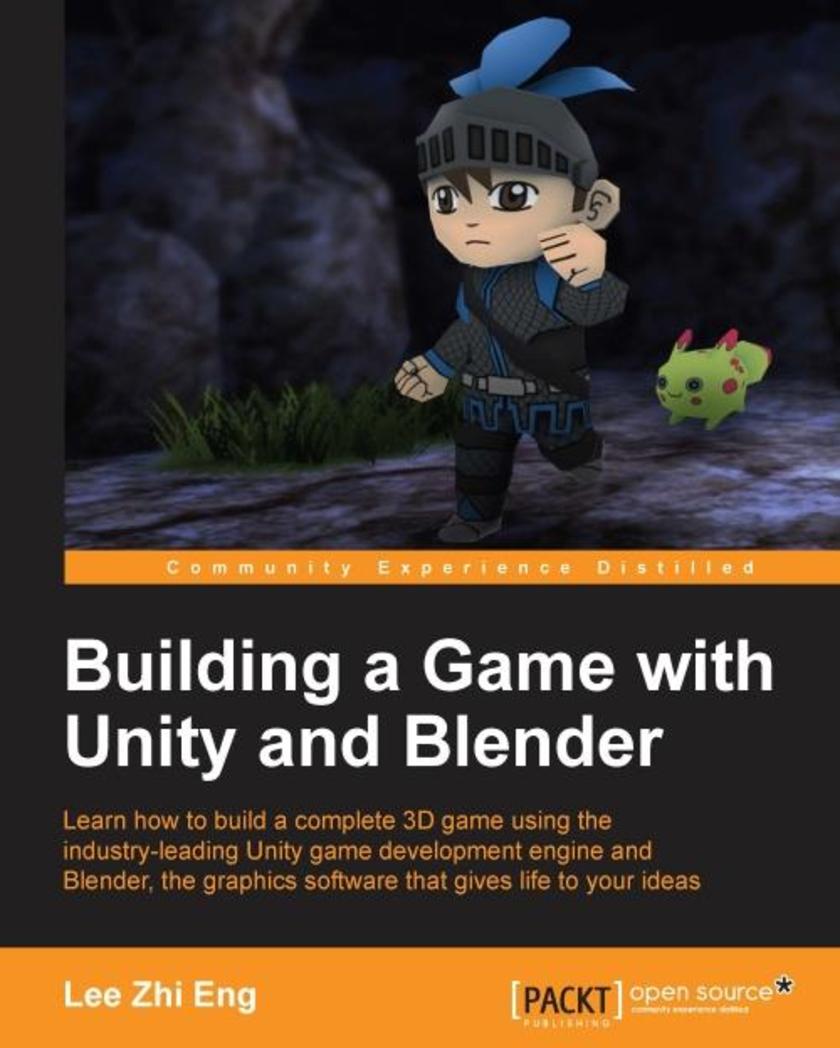
Building a Game with Unity and Blender
¥80.65
Learn how to build a complete 3D game using the industry-leading Unity game development engine and Blender, the graphics software that gives life to your ideas About This Book Learn the fundamentals of two powerful tools and put the concepts into practice Find out how to designand buildall the core elements required for a great game - from characters to environments, to props— Learn how to integrate Artificial Intelligence (AI) into your game for sophisticated and engaging gameplay Who This Book Is For This book has been created for anyone who wants to learn how to develop their own game using Blender and Unity, both of which are freely available, yet very popular and powerful, tools. Not only will you be able to master the tools, but you will also learn the entire process of creating a game from the ground up. What You Will Learn Design and create a game concept that will determine how your game will look and how it will be played Construct 3D models of your game characters and create animations for them before importing them into the game Build the game environment from scratch by constructing the terrain and props, and eventually put it all together to form a scene Import and integrate game assets created in Blender into Unity—for example, setting up textures, materials, animation states, and prefabs Develop game structures including a game flow, user interface diagram, game logic, and a state machine Make the game characters move around and perform certain actions either through player inputs or fully controlled by artificial intelligence Create particles and visual effects to enhance the overall visual aesthetic Deploy the game for various types of platforms In Detail In the wake of the indie game development scene, game development tools are no longer luxury items costing up to millions of dollars but are now affordable by smaller teams or even individual developers. Among these cutting-edge applications, Blender and Unity stand out from the crowd as a powerful combination that allows small-to-no budget indie developers or hobbyists alike to develop games that they have always dreamt of creating. Starting from the beginning, this book will cover designing the game concept, constructing the gameplay, creating the characters and environment, implementing game logic and basic artificial intelligence, and finally deploying the game for others to play. By sequentially working through the steps in each chapter, you will quickly master the skills required to develop your dream game from scratch. Style and approach A step-by-step approach with tons of screenshots and sample code for readers to follow and learn from. Each topic is explained sequentially and placed in context so that readers can get a better understanding of every step in the process of creating a fully functional game.
SFML Game Development
¥80.65
SFML Game Development is a fast-paced, step-by-step guide, providing you with all the knowledge and tools you need to create your first game using SFML 2.0.SFML Game Development addresses ambitious C++ programmers who want to develop their own game. If you have plenty of ideas for an awesome and unique game, but don’t know how to start implementing them, then this book is for you. The book assumes no knowledge about SFML or game development, but a solid understanding of C++ is required.
VMware vRealize Operations Performance and Capacity Management
¥80.65
If you are an IT professional who is interested in performance management and capacity management in a virtual data center, then this book is ideal for you. The book is an intermediate-level book.
Unity Game Development Blueprints
¥80.65
If you want to build enticing projects with Unity, this book is for you. Readers who are familiar with the basics of how to create simple projects in Unity will have an easier time.
Object–Oriented Programming with Swift 2
¥80.65
Get to grips with object-oriented programming in Swift to efficiently build powerful real-world applicationsAbout This BookLeverage the most efficient object-oriented design patterns in your Swift applicationsWrite robust, safer, and better code using the blueprints that generate objectsBuild a platform with object-oriented code by using real-world elements and represent them in your appWho This Book Is ForIf you are an iOS developer who has a basic idea of object-oriented programming and want to incorporate its concepts with Swift to optimize your application's code and create reusable and easily to understand building blocks, then this book is for you. This is a very useful resource for developers who want to shift from Objective C, C#, Java, Python, JavaScript, or other object-oriented languages to SwiftWhat You Will LearnBuild solid, stable, and reliable applications using SwiftWork with encapsulation, abstraction, and polymorphism using Swift 2.0Customize constructors and destructors based on your needsDevelop Swift 2.0 with classes, instances, properties, and methodsTake advantage of generic code to maximize code reuse and generalize behaviorsUse state of inheritance, specialization, and the possibility to overload membersWrite high quality object-oriented code to build apps for iOS or Mac OS XIn DetailObject-Oriented Programming (OOP) is a programming paradigm based on the concept of objects; these are data structures that contain data in the form of fields, often known as attributes and code. Objects are everywhere, and so it is very important to recognize elements, known as objects, from real-world situations and know how they can easily be translated into object-oriented code.Object-Oriented Programming with Swift is an easy-to-follow guide packed full of hands-on examples of solutions to common problems encountered with object-oriented code in Swift. It starts by helping you to recognize objects using real-life scenarios and demonstrates how working with them makes it simpler to write code that is easy to understand and reuse.You will learn to protect and hide data with the data encapsulation features of Swift. Then, you will explore how to maximize code reuse by writing code capable of working with objects of different types. After that, you'll discover the power of parametric polymorphism and will combine generic code with inheritance and multiple inheritance. Later, you move on to refactoring your existing code and organizing your source for easy maintenance and extensions.By the end of the book, you will be able to create better, stronger, and more reusable code, which will help you build better applications.Style and approachThis simple guide is packed with practical examples of solutions to common problems. Each chapter includes exercises and the possibility for you to test your progress by answering questions.

Building a Pentesting Lab for Wireless Networks
¥80.65
Build your own secure enterprise or home penetration testing lab to dig into the various hacking techniques About This Book Design and build an extendable penetration testing lab with wireless access suitable for home and enterprise use Fill the lab with various components and customize them according to your own needs and skill level Secure your lab from unauthorized access and external attacks Who This Book Is For If you are a beginner or a security professional who wishes to learn to build a home or enterprise lab environment where you can safely practice penetration testing techniques and improve your hacking skills, then this book is for you. No prior penetration testing experience is required, as the lab environment is suitable for various skill levels and is used for a wide range of techniques from basic to advance. Whether you are brand new to online learning or you are a seasoned expert, you will be able to set up your own hacking playground depending on your tasks. What You Will Learn Determine your needs and choose the appropriate lab components for them Build a virtual or hardware lab network Imitate an enterprise network and prepare intentionally vulnerable software and services Secure wired and wireless access to your lab Choose a penetration testing framework according to your needs Arm your own wireless hacking platform Get to know the methods to create a strong defense mechanism for your system In Detail Starting with the basics of wireless networking and its associated risks, we will guide you through the stages of creating a penetration testing lab with wireless access and preparing your wireless penetration testing machine. This book will guide you through configuring hardware and virtual network devices, filling the lab network with applications and security solutions, and making it look and work like a real enterprise network. The resulting lab protected with WPA-Enterprise will let you practice most of the attack techniques used in penetration testing projects. Along with a review of penetration testing frameworks, this book is also a detailed manual on preparing a platform for wireless penetration testing. By the end of this book, you will be at the point when you can practice, and research without worrying about your lab environment for every task. Style and approach This is an easy-to-follow guide full of hands-on examples and recipes. Each topic is explained thoroughly and supplies you with the necessary configuration settings. You can pick the recipes you want to follow depending on the task you need to perform.
Talend OpenStudio Cookbook
¥80.65
Primarily designed as a reference book, simple and effective exercises based upon genuine real-world tasks enable the developer to reduce the time to deliver the results. Presentation of the activities in a recipe format will enable the readers to grasp even the complex concepts with consummate ease.Talend Open Studio Cookbook is principally aimed at relative beginners and intermediate Talend Developers who have used the product to perform some simple integration tasks, possibly via a training course or beginner's tutorials.
Android Application Development Cookbook - Second Edition
¥80.65
Over 100 recipes to help you solve the most common problems faced by Android Developers today About This Book Find the answers to your common Android programming problems, from set up to security, to help you deliver better applications, faster Uncover the latest features of Android Marshmallow to make your applications stand out Get up to speed with Android Studio 1.4 - the first Android Studio based on the IntelliJ IDE from JetBrains Who This Book Is For If you are new to Android development and want to take a hands-on approach to learning the framework, or if you are an experienced developer in need of clear working code to solve the many challenges in Android development, you can benefit from this book. Either way, this is a resource you’ll want to keep at your desk for a quick reference to solve new problems as you tackle more challenging projects. What You Will Learn Along with Marshmallow, get hands-on working with Google’s new Android Studio IDE Develop applications using the latest Android framework while maintaining backward-compatibility with the support library Master Android programming best practices from the recipes Create exciting and engaging applications using knowledge gained from recipes on graphics, animations, and multimedia Work through succinct steps on specifics that will help you complete your project faster Keep your app responsive (and prevent ANRs) with examples on the AsynchTask class Utilize Google Speech Recognition APIs for your app. Make use of Google Cloud Messaging (GCM) to create Push Notifications for your users Get a better understanding of the Android framework through detailed explanations In Detail The Android OS has the largest installation base of any operating system in the world; there has never been a better time to learn Android development to write your own applications, or to make your own contributions to the open source community! This “cookbook” will make it easy for you to jump to a topic of interest and get what you need to implement the feature in your own application. If you are new to Android and learn best by “doing,” then this book will provide many topics of interest. Starting with the basics of Android development, we move on to more advanced concepts, and we’ll guide you through common tasks developers struggle to solve. The first few chapters cover the basics including Activities, Layouts, Widgets, and the Menu. From there, we cover fragments and data storage (including SQLite), device sensors, the camera, and GPS. Then we move on more advanced topics such as graphics and animation (including OpenGL), multi-threading with AsyncTask, and Internet functionality with Volley. We’ll also demonstrate Google Maps and Google Cloud Messaging (also known as Push Notifications) using the Google API Library. Finally, we’ll take a look at several online services designed especially for Android development. Take your application big-time with full Internet web services without having to become a server admin by leveraging the power of Backend as a Service (BaaS) providers. Style and approach This book progresses from the fundamentals of Android Development to more advanced concepts, with recipes to solve the most common problems faced by developers. This cookbook makes it easy to jump to specific topics of interest, where you’ll find simple steps to implement the solution and get a clear explanation of how it works.
Mastering Manga Studio 5
¥80.65
Mastering Manga Studio 5 will follow an explanatory, work through manual approach. The main features of Manga will be presented in each section along with exciting tips, vital techniques and impressive workflows.This book is for those who already have some Manga Studio and graphics program experience. It is not a beginner's guide, but if you are a novice Manga Studio 5 user it will help you to master the time-saving features of the software.
Node Web Development, Second Edition
¥80.65
Presented in a simple, step-by-step format, this book is an introduction to web development with Node.This book is for anybody looking for an alternative to the "P" languages (Perl, PHP, Python), or anyone looking for a new paradigm of server-side application development.The reader should have at least a rudimentary understanding of JavaScript and web application development.
FreeSWITCH 1.2
¥80.65
This book is full of practical code examples aimed at a beginner to ease his or her learning curve.This book is written for IT professionals and enthusiasts who are interested in quickly getting a powerful telephony system up and running using the free and open source application, FreeSWITCH.Telephony experience will be helpful, but not required.
Blackboard Learn Administration
¥80.65
Hands-on and step-by-step instructions on successfully administrating Blackboard Learn from an admin expert. This book is for in-house IT administrators who are responsible for maintaining the school’s IT system and making sure that it is ready for the teachers to use. Readers will need some experience with server management and installation.
Apple Motion 5 Cookbook
¥80.65
Step-by-step, practical recipes to build simple and complex Motion Graphics with Motion 5"Apple Motion 5 Cookbook" is designed for Final Cut Pro X video editors and Motion 5 users looking to gain more knowledge of how Motion works, and to get more of a ‘WOW’ factor in projects. It’s also aimed at designers and motion designers alike, who are looking to build on their skillsets.
Learning Construct 2
¥80.65
If you want to make your own game but don't know how to start or don't have the technical skills to do it, then this is the book for you. You don't need to have a programming background to understand the concepts explained.
Learning HBase
¥80.65
If you are an administrator or developer who wants to enter the world of Big Data and BigTables and would like to learn about HBase, this is the book for you.
Learning Drupal 8
¥80.65
Create complex websites quickly and easily using the building blocks of Drupal 8, the most powerful version of Drupal yetAbout This BookBuild complete, complex websites with no prior knowledge of web development entirely using the intuitive Drupal user interfaceFollow a practical case study chapter-by-chapter to construct a complete website as you progressEnsure your sites are modern, responsive and mobile-friendly through utilizing the full features available in Drupal 8Who This Book Is ForIf you want to learn to use Drupal 8 for the first time, or you are transitioning over from a previous version of Drupal, this is the book for you. No knowledge of PHP, MySQL, or HTML is assumed or requiredWhat You Will LearnSet up a local “stack” development environment and install your first Drupal 8 siteFind out what is available in Drupal 8 coreDefine content types and taxonomies—and find out when you should do soUse the powerful Views moduleGet hands-on with image and media handlingExtend Drupal using custom community modulesDevelop the look and feel of your website using Drupal themesManage site users and permissionsIn DetailDrupal 8 sets a new standard for ease of use, while offering countless new ways to tailor and deploy your content to the Web. Drupal 8 allows user to easily customize data structures, listings, and pages, and take advantage of new capabilities for displaying data on mobile devices, building APIs, and adapting to multilingual needs.The book takes you step by step through building a Drupal 8 website. Start with the basics, such as setting up a local “stack” development environment and installing your first Drupal 8 site, then move on to image and media handling, and extending Drupal modules. Push your knowledge by getting to grips with the modular nature of Drupal, and learning to extend it by adding new functionalities to create your new modules. By the end of the book, you will be able to develop and manage a modern and responsive website using Drupal.Style and approachThis is an absolute beginners’ guide, providing step-by-step instructions to help you learn Drupal 8 from scratch.
Learning VMware vRealize Automation
¥80.65
Learn the fundamentals of vRealize Automation to accelerate the delivery of your IT servicesAbout This BookLearn to install the vRealize Automation product in a distributed architecture using a load balancerPlan backup and recovery strategies for every vRealize automation componentUse vRealize Automation to manage applications and improve operational efficiency using this simple and intuitive guideWho This Book Is ForThis book is for anyone who wants to start their journey with vRealize Automation. It is your one-stop instruction guide to installing and configuring a distributed setup using NSX load balancer. Regardless of whether or not you have used vRealize Automation before, following the steps provided in each chapter will get you started with the product.What You Will LearnUnderstand the basic building blocks of vRealize Automation before embarking on the journey of installationFamiliarize yourself with the requirements and steps that need to be performed during the first phase of the distributed installationCarry out a functional validation of the first phase of installation before completing the installationBuild a blueprint for vSphere endpoint, an essential step for a successful deployment of a service catalogCreate, configure, and deploy tenants, endpoints, blueprints, and the service catalogGet to grips with the failover process for all components in vRealize AutomationLearn to configure the NSX loadbalancer for vRealize Orchestrator for high availabilityLeverage ASD to develop XaaS (Anything as a Service) in vRealize Automation to deliver valuable competenceIn DetailWith the growing interest in Software Defined Data Centers (SDDC), vRealize Automation offers data center users an organized service catalog and governance for administrators. This way, end users gain autonomy while the IT department stays in control, making sure security and compliance requirements are met. Learning what each component does and how they dovetail with each other will bolster your understanding of vRealize Automation.The book starts off with an introduction to the distributed architecture that has been tested and installed in large scale deployments. Implementing and configuring distributed architecture with custom certificates is unarguably a demanding task, and it will be covered next. After this, we will progress with the installation. A vRealize Automation blueprint can be prepared in multiple ways; we will focus solely on vSphere endpoint blueprint. After this, we will discuss the high availability configuration via NSX loadbalancer for vRealize Orchestrator. Finally, we end with Advanced Service Designer, which provides service architects with the ability to create advanced services and publish them as catalog items.Style and approachThis book takes a step-by-step approach, is explained in a conversational and easy-to-follow style, and includes ample screenshots . Each topic is explained sequentially through planning, preparing, installing, configuring, and validating of all vRealize Automation’s components.
Practical DevOps
¥80.65
Harness the power of DevOps to boost your skill set and make your IT organization perform betterAbout This BookGet to know the background of DevOps so you understand the collaboration between different aspects of an IT organization and a software developerImprove your organization's performance to ensure smooth production of software and servicesDeploy top-quality software and ensure software maintenance and release management with this practical guideWho This Book Is ForThis book is aimed at developers and system administrators who wish to take on larger responsibilities and understand how the infrastructure that builds today's enterprises works. This book is also great for operations personnel who would like to better support developers. You do not need to have any previous knowledge of DevOps.What You Will LearnAppreciate the merits of DevOps and continuous delivery and see how DevOps supports the agile processUnderstand how all the systems fit together to form a larger wholeSet up and familiarize yourself with all the tools you need to be efficient with DevOpsDesign an application that is suitable for continuous deployment systems with Devops in mindStore and manage your code effectively using different options such as Git, Gerrit, and GitlabConfigure a job to build a sample CRUD applicationTest the code using automated regression testing with Jenkins SeleniumDeploy your code using tools such as Puppet, Ansible, Palletops, Chef, and VagrantMonitor the health of your code with Nagios, Munin, and GraphiteExplore the workings of Trac—a tool used for issue trackingIn DetailDevOps is a practical field that focuses on delivering business value as efficiently as possible. DevOps encompasses all the flows from code through testing environments to production environments. It stresses the cooperation between different roles, and how they can work together more closely, as the roots of the word imply—Development and Operations.After a quick refresher to DevOps and continuous delivery, we quickly move on to looking at how DevOps affects architecture. You'll create a sample enterprise Java application that you’ll continue to work with through the remaining chapters. Following this, we explore various code storage and build server options. You will then learn how to perform code testing with a few tools and deploy your test successfully. Next, you will learn how to monitor code for any anomalies and make sure it’s running properly. Finally, you will discover how to handle logs and keep track of the issues that affect processesStyle and approachThis book is primarily a technical guide to DevOps with practical examples suitable for people who like to learn by implementing concrete working code. It starts out with background information and gradually delves deeper into technical subjects.


