


 购物车
购物车 个人中心
个人中心

Manga Studio Ex 5 Cookbook
¥80.65
Over 90 hands-on recipes to help you create digital comics from page setup to exporting the final product About This Book Design creative and custom digital comics with the perfection equivalent of pen-and-paper drawings Explore the latest features from Manga Studio EX 5 such as custom brush effects, layers, masks, 3D objects, panels, and multiple-page story layout A pragmatic manual with engaging recipes and attractive screenshots that make comic creation fun and easy Who This Book Is For This book is intended for competent comic artists working on Manga Studio who want to create more attractive comics by using powerful tools and features from software for digital comic creation. What You Will Learn Create story files and custom pages for any Web or publishing project Customize brushes for special ink effects, hatching and cross-hatching, and much more Work with vector images in Manga Studio EX 5 Use the new Symmetry ruler and the new Line tools to create your illustrations faster and more efficiently Make and save custom screentones, and add them to your comic pages Punch up your illustrations with color palettes and special effects Add 3D models to create or accentuate your comic scenes Finish a project by exporting it for the Web or for a printed collection In Detail Manga Studio is a software application for the digital creation of comics and manga. Manga Studio EX 5 has all the features of Manga Studio 5, professional story creation tools, and other special features that make it the ultimate illustration tool for serious comic, manga, and graphic artists. Made specifically for comic artists and illustrators, it has some of the most powerful digital art creation tools available. From digital perspective rulers to a library of screentones, Manga Studio 5 works for the artist with an intuitive, customizable interface and tools. With Manga Studio EX 5, you can create custom page templates, save commonly used designs, make custom brushes, mimic traditional media, pose 3D objects directly on the art canvas, and export all of your comic pages for print or the Web. The book starts with everything you need to know to set up custom pages for your comic or Manga project. These recipes will take you all the way through to exporting your illustrations for print or to display them on the Web. You will learn how to create custom brushes that you will use for inking, or for repetitive tasks such as drawing foliage or rubble. Next, you will move on to understanding Layer Modes and Layer Masks. Then, you'll learn how to finish up your illustrations with color, screentones, special effects, and 3D objects. Finally, you will be taught to export your hard work and share it with the world, either through the Web or in print. This cookbook will give you just the right recipes to turn on the power of Manga Studio EX 5 and get you creating more illustrations faster and more efficiently. Style and approach An easy-to-follow, and informative book full of recipes that explore real-world topics for the comic creator. Each recipe is explained with detailed steps and interesting screenshots.
Mastering AndEngine Game Development
¥80.65
Move beyond basic games and explore the limits of AndEngine About This Book Extend the basic AndEngine features without modifying any of AndEngine's code Understand advanced technologies and gain the skills to create the ultimate games in AndEngine Theory supported with practical examples to stimulate your imagination and creativity Who This Book Is For This book is aimed at developers who have gone through all the basic AndEngine tutorials and books, and are looking for something more. It's also very suitable for developers with knowledge of other game engines who are looking to develop with AndEngine. Knowledge of Java, C++ and Android development are a prerequisite for getting the most out of this book. What You Will Learn Extend AndEngine to use and render 3D models Integrate and use various physics engines with AndEngine Advanced animations and their implementation in AndEngine Lighting theory and its application for both 2D and 3D objects Using skeletal animation with AndEngine Use GLSL shaders with AndEngine for effects and anti-aliasing Add sounds and effects to AndEngine using both basic and 3D audio libraries Efficient network implementations with AndEngine for multi-players In Detail AndEngine is a popular and easy-to-use game framework, best suited for Android game development. After learning the basics of creating an Android game using AndEngine it's time you move beyond the basics to explore further. For this you need to understand the theory behind many of the technologies AndEngine uses. This book aims to provide all the skills and tools you need to learn more about Android game development using AndEngine. With this book you will get a quick overview of the basics of AndEngine and Android application development. From there, you will learn how to use 3D models in a 2D scene, render a visual representation of a scene's objects, and create interaction between these objects. You will explore frame-based animations and learn to use skeletal animations. As the book progresses, you will be guided through exploring all the relevant aspects of rendering graphics with OpenGL ES, generating audio using OpenSL ES and OpenAL, making the best use of Android's network API, implementing anti-aliasing algorithms, shaders, dynamic lighting and much more. With all this, you will be ready to enhance the look and feel of your game with its user interface, sound effects and background music. After an in-depth study of 2D and 3D worlds and multi-player implementations, you will be a master in AndEngine and Android game development. Style and approach This book takes an in-depth tour of the many aspects of Android game development with the use of AndEngine. Each topic is covered extensively to act both as a practical guide as well as a reference.
Learning Dart - Second Edition
¥80.65
Learn to develop high performance applications with Dart 1.10 About This Book Develop apps for the modern web using Dart and HTML5 Clarify and shorten your Dart code using enums Build a complex UI for business applications with Dart's Polymer framework, based on web components Who This Book Is For If you want to become a developer for the modern web, or wish to add Dart to your tool belt, then this book is for you. The book assumes you have basic HTML experience and know how web applications work. Some previous programming experience, preferably in a modern language like C#, Java, Python, Ruby or JavaScript, will give you a head start. You can work with Dart on your preferred platform, be it Linux, Mac OS X or Windows. What You Will Learn Structure your code using functions, classes, generics, packages and libraries Use the power of modern browsers to process and store data Make games by drawing, and using audio and video in the browser Develop an application with a model-driven and spiral-paced approach Discover the Observatory tools for profiling memory and CPU usage of Dart programs Store your app's data in MySQL and MongoDB through Dart Build powerful HTML5 forms, validate and store data in local storage, and use web components to build your own user interface Run your Dart server on an App Engine Managed VM In Detail Dart is an open source programming language for the web, developed at Google, with a steadily growing community. It is a single language for both client and server, appropriate for the full range of devices on the web – including phones, tablets, laptops, and servers. It encompasses the lessons of the last two decades of web programming. This book will give you a thorough overview of Dart, taking you through its ecosystem, syntax, and development principles. With this book, you will build web games using HTML5, audio, and video, and also dive into processing and displaying data in HTML5 forms with Dart. You will also learn how web components fit together with HTML5, and how to apply them in business web applications of the future. You will discover how to store data on the client, communicate data between client and server with JSON, and store JSON data with MongoDB and MySQL. Stop solving new challenges with the same old tools – let Dart show you a whole new way. Style and approach This book provides you a project-based approach, with everything you need to start or enhance your career in the future of web development with Dart. It follows the spiral approach: each project builds up in successive spirals, adding new features in each step.
Learning OpenCV 3 Computer Vision with Python - Second Edition
¥80.65
Unleash the power of computer vision with Python using OpenCV About This Book Create impressive applications with OpenCV and Python Familiarize yourself with advanced machine learning concepts Harness the power of computer vision with this easy-to-follow guide Who This Book Is For Intended for novices to the world of OpenCV and computer vision, as well as OpenCV veterans that want to learn about what's new in OpenCV 3, this book is useful as a reference for experts and a training manual for beginners, or for anybody who wants to familiarize themselves with the concepts of object classification and detection in simple and understandable terms. Basic knowledge about Python and programming concepts is required, although the book has an easy learning curve both from a theoretical and coding point of view. What You Will Learn Install and familiarize yourself with OpenCV 3's Python API Grasp the basics of image processing and video analysis Identify and recognize objects in images and videos Detect and recognize faces using OpenCV Train and use your own object classifiers Learn about machine learning concepts in a computer vision context Work with artificial neural networks using OpenCV Develop your own computer vision real-life application In Detail OpenCV 3 is a state-of-the-art computer vision library that allows a great variety of image and video processing operations. Some of the more spectacular and futuristic features such as face recognition or object tracking are easily achievable with OpenCV 3. Learning the basic concepts behind computer vision algorithms, models, and OpenCV's API will enable the development of all sorts of real-world applications, including security and surveillance. Starting with basic image processing operations, the book will take you through to advanced computer vision concepts. Computer vision is a rapidly evolving science whose applications in the real world are exploding, so this book will appeal to computer vision novices as well as experts of the subject wanting to learn the brand new OpenCV 3.0.0. You will build a theoretical foundation of image processing and video analysis, and progress to the concepts of classification through machine learning, acquiring the technical know-how that will allow you to create and use object detectors and classifiers, and even track objects in movies or video camera feeds. Finally, the journey will end in the world of artificial neural networks, along with the development of a hand-written digits recognition application. Style and approach This book is a comprehensive guide to the brand new OpenCV 3 with Python to develop real-life computer vision applications.
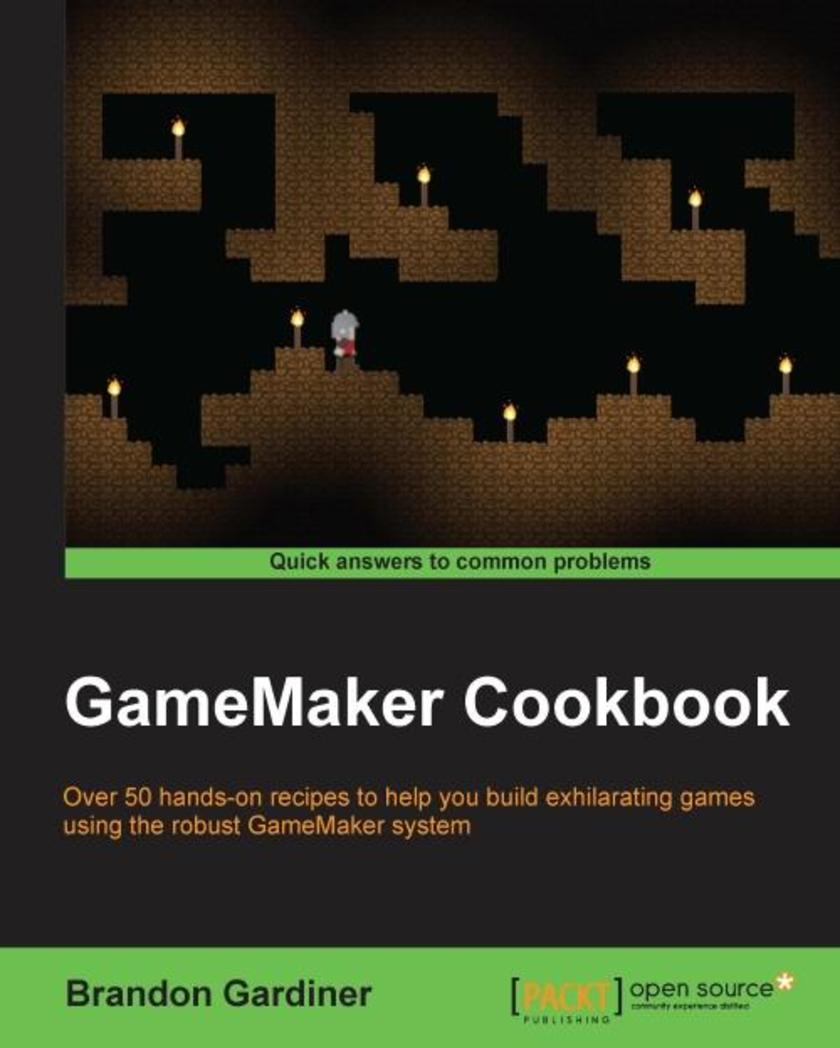
GameMaker Cookbook
¥80.65
Over 50 hands-on recipes to help you build exhilarating games using the robust GameMaker system About This Book Design and develop game elements that can be used alone or stacked to enhance your gaming experience Explore extensions that can unlock GameMaker: Studio’s true potential to create complex games A recipe-based, easy-to-follow guide to take your GameMaker skills to the next level Who This Book Is For This book is intended for GameMaker: Studio enthusiasts who are looking to add more substance and improve their content. If know your way around the program and have some basic GML skills but want to take them further, then this book is for you. What You Will Learn Set up player control schemes of various types, such as touch controls and a gamepad Create your own physics sandbox Get accustomed to advanced player movement Implement music and 3D sound in your games Utilize GameMaker’s GUI layers to create exciting games Generate adjustable game settings and save systems Add depth to your game with lighting and special effects In Detail GameMaker: Studio started off as a tool capable of creating simple games using a drag-and-drop interface. Since then, it has grown to become a powerful instrument to make release-ready games for PC, Mac, mobile devices, and even current-gen consoles. GameMaker is designed to allow its users to develop games without having to learn any of the complex programming languages such as C++ or Java. It also allows redistribution across multiple platforms. This book teaches you to harness GameMaker: Studio’s full potential and take your game development to new heights. It begins by covering the basics and lays a solid foundation for advanced GameMaker concepts. Moving on, it covers topics such as controls, physics, and advanced movement, employing a strategic approach to the learning curve. The book concludes by providing insights into complex concepts such as the GUI, menus, save system, lighting, particles, and VFX. By the end of the book, you will be able to design games using GameMaker: Studio and implement the same techniques in other games you intend to design. Style and approach A problem-solving guide that teaches you the construction of game elements and mechanics to be integrated in games for rapid prototyping. Each overall topic includes several individual recipes taught through step-by-step instructions, and in-depth follow-up with examples.
wxPython Application Development Cookbook
¥80.65
Over 80 step-by-step recipes to get you up to speed with building your own wxPython applications About This Book This book empowers you to create rich cross-platform graphical user interfaces using Python It helps you develop applications that can be deployed on Windows, OSX, and Linux The recipes in the book involve real-world applications, giving you a first-hand experience of the practical scenarios Who This Book Is For For those who are familiar with programming in Python and want to start building applications with graphical user interfaces, this book will get you up and running quickly. A basic understanding of the Python programming language and object-oriented concepts are all that is needed. What You Will Learn Create full featured user interfaces Design and develop custom controls Deploy and distribute wxPython applications to Windows, Macintosh OS X, Linux, and other UNIX-like environments Handle and respond to application events Manage and display data using grids Interact with web services from your GUI Use Paint events to draw custom displays Support the display of user interfaces in multiple languages In Detail wxPython is a GUI toolkit for the Python programming language built on top of the cross-platform wxWidgets GUI libraries. wxPython provides a powerful set of tools that allow you to quickly and efficiently building applications that can run on a variety of different platforms. Since wxWidgets provides a wrapper around each platform’s native GUI toolkit, the applications built with wxPython will have a native look and feel wherever they are deployed. This book will provide you with the skills to build highly functional and native looking user interfaces for Python applications on multiple operating system environments. By working through the recipes, you will gain insights into and exposure to creating applications using wxPython. With a wide range of topics covered in the book, there are recipes to get the most basic of beginners started in GUI programming as well as tips to help experienced users get more out of their applications. The recipes will take you from the most basic application constructs all the way through to the deployment of complete applications. Style and approach This book is a collection of step-by-step recipes that introduce the various components and concepts of wxPython in a conversational and easy-to-follow way. Each recipe contains coded examples along with detailed explanations about the key points of each topic. Each topic is designed to introduce and show you how to use a single feature from the wxPython library.
JavaScript Concurrency
¥80.65
Build better software with concurrent JavaScript programming, and unlock a more efficient and forward thinking approach to web development About This Book Apply the core principles of concurrency to both browser and server side development Explore the latest tools and techniques at the forefront of concurrent programming, including JavaScript promises, web workers, and generators Learn how concurrent and parallel programming can help you tackle the challenges of fast, data heavy web development Who This Book Is For JavaScript Concurrency is written for any JavaScript developer who wants to learn how to write more efficient, powerful, and maintainable applications that utilize the latest developments in the JavaScript language. All aspects of concurrent, asynchronous, and parallel programming are covered from first principles and by the end of the book you’ll be able to create a fully-worked application that leverages all the topics covered in the book. What You Will Learn Understand exactly how JavaScript works in a web browser environment, and how these mechanisms power our event-driven JavaScript code Use promises to turn complex synchronization scenarios into readable and maintainable values Compute values lazily and avoid unnecessary memory allocations using generators. Write concurrent code that doesn’t feel like concurrent code by abstracting away boilerplate chores Leverage true hardware parallelism with web workers to get a better performance Get to grips with the NodeJS model of concurrency and learn why it’s good for I/O-intensive web applications In Detail Concurrent programming may sound abstract and complex, but it helps to deliver a better user experience. With single threaded JavaScript, applications lack dynamism. This means that when JavaScript code is running, nothing else can happen. The DOM can’t update, which means the UI freezes. In a world where users expect speed and responsiveness – in all senses of the word – this is something no developer can afford. Fortunately, JavaScript has evolved to adopt concurrent capabilities – one of the reasons why it is still at the forefront of modern web development. This book helps you dive into concurrent JavaScript, and demonstrates how to apply its core principles and key techniques and tools to a range of complex development challenges. Built around the three core principles of concurrency – parallelism, synchronization, and conservation – you’ll learn everything you need to unlock a more efficient and dynamic JavaScript, to lay the foundations of even better user experiences. Throughout the book you’ll learn how to put these principles into action by using a range of development approaches. Covering everything from JavaScript promises, web workers, generators and functional programming techniques, everything you learn will have a real impact on the performance of your applications. You’ll also learn how to move between client and server, for a more frictionless and fully realized approach to development. With further guidance on concurrent programming with Node.js, JavaScript Concurrency is committed to making you a better web developer. The best developers know that great design is about more than the UI – with concurrency, you can be confident every your project will be expertly designed to guarantee its dynamism and power. Style and approach Beginning with the fundamentals of concurrency and how they apply to JavaScript development, the book then takes you through the relevant constructs that will help you implement concurrent code. You’ll learn how even the most abstract and theoretical aspects of concurrent programming help you solve real world challenges, with clear and practical demonstrations that show you how concurrent JavaScript will make you a better developer.
Learning RabbitMQ
¥80.65
Build and optimize efficient messaging applications with ease About This Book Learn to administer, configure, and manage RabbitMQ instances Discover ways to secure and troubleshoot RabbitMQ instances This book is fully up-to-date with all the latest changes to version 3.5 Who This Book Is For If you are a developer or system administrator with a basic knowledge of messaging who wants to learn RabbitMQ, or if you want to further enhance your knowledge in working with the message broker, then this book is ideal for you. To fully understand some examples in the book, a basic knowledge of the Java programming language is required. What You Will Learn Apply messaging patterns using the message broker Administer RabbitMQ using the command line, management Web console, or management REST services Create a cluster of scalable, and highly-available, RabbitMQ instances Use RabbitMQ with the Spring Framework, MuleESB, WSO2, and Oracle databases Deploy RabbitMQ using Puppet, Vagrant, or Docker Fine-tune the performance of RabbitMQ Monitor RabbitMQ using Nagios, Munin, or Monit Secure, troubleshoot, and extend RabbitMQ In Detail RabbitMQ is Open Source Message Queuing software based on the Advanced Message Queue Protocol Standard written in the Erlang Language. RabbitMQ is an ideal candidate for large-scale projects ranging from e-commerce and finance to Big Data and social networking because of its ease of use and high performance. Managing RabbitMQ in such a dynamic environment can be a challenging task that requires a good understanding not only of how to work properly with the message broker but also of its best practices and pitfalls. Learning RabbitMQ starts with a concise de*ion of messaging solutions and patterns, then moves on to concrete practical scenarios for publishing and subscribing to the broker along with basic administration. This knowledge is further expanded by exploring how to establish clustering and high availability at the level of the message broker and how to integrate RabbitMQ with a number of technologies such as Spring, and enterprise service bus solutions such as MuleESB and WSO2. We will look at advanced topics such as performance tuning, secure messaging, and the internals of RabbitMQ. Finally we will work through case-studies so that we can see RabbitMQ in action and, if something goes wrong, we'll learn to resolve it in the Troubleshooting section. Style and approach Each chapter of the book is an easy-to-follow guide that expands and builds on the knowledge already gained in previous chapters. Throughout the course of the book, a sample system called the CSN (Corporate Social Network) is used to illustrate the core principles described. At the end of each chapter, there is a Q&A session that covers practical questions that may arise in practice when working with RabbitMQ.
OpenLayers Cookbook
¥80.65
This cookbook follows a problem-solution approach to doing important tasks and is packed with examples accompanied by the necessary code and screenshots. If you are a GIS-related professional with some basic knowledge of web technologies and want to start or gain in-depth knowledge of creating web mapping applications, this book is written for you. The recipes are appropriately mixed to suit JavaScript newbies or experts and cover basic to advanced topics on OpenLayers.
Node Cookbook
¥80.65
As part of Packt’s cookbook series, this book is packed with practical recipes that will get you working efficiently with Node from the start. Each chapter focuses on a different aspect of working with Node. If you have some knowledge of JavaScript and want to build fast, efficient, scalable client-server solutions, then Node Cookbook is for you. Experienced users of Node will improve their skills although even if you have not worked with Node before, these practical recipes will make it easy to get started.
Mastering Prezi for Business Presentations
¥80.65
Accompanied by plenty of tips and tricks, this tutorial style book has ample examples and screenshots to ease your learning curve. If you use Prezi in business and want to take your presentations to the next level, or if you want to become the office Prezi guru, this book is for you.
CouchDB and PHP Web Development Beginner's Guide
¥80.65
Each chapter follows the creation of a social networking application with step-by-step instructions. This means that you will have easily created a complete, working application by the end of the book. This book is for beginner and intermediate PHP developers interested in using CouchDB development in their projects. Advanced PHP developers will appreciate the familiarity of the PHP architecture and can easily learn how to incorporate CouchDB into their existing development experiences.
WebGL Beginner's Guide
¥80.65
This book is a step-by-step tutorial that includes complete source code for all of the examples covered. Every chapter builds on top of the previous one thereby giving the reader an immediate feeling of progression. Each block of code is explained, and 3D web development concepts are diagrammed and covered in detail. This book is written for JavaScript developers who are interested in 3D web development. A basic understanding of the DOM object model and the jQuery library is ideal but not required. No prior WebGL knowledge is expected.
Sencha Touch Cookbook
¥80.65
The book is written in a cookbook style, presenting examples in the style of recipes, allowing you to go directly to your topic of interest, or follow topics throughout a chapter to gain in-depth knowledge. This book is ideal for anyone who wants to gain the practical knowledge involved in using Sencha Touch mobile web application framework to make attractive web apps for mobiles. If you have some familiarity with HTML and CSS, then this book is for you. This book will give designers the skills they need to implement their ideas, and provide developers with creative inspiration through practical examples. It is assumed that you know how to use touch screens, touch events, WebKit on mobile systems, Apple iOS, and Google Android for Mobiles.
Liferay Beginner's Guide
¥80.65
Part of Packt’s Beginner’s Guide series, each chapter follows the creation of a fictional neighbourhood site to demonstrate an aspect of Liferay portal with practical examples, screenshots, and step-by-step instructions. All you need in order to benefit from the Liferay Beginner’s Guide is programming experience. No prior knowledge of Liferay is required, although experienced Liferay portal programmers who need to get up to speed with its latest features will also find this book useful.
iPhone User Interface Cookbook
¥80.65
Written in a cookbook style, this book offers solutions using a recipe based approach. Each recipe contains step-by-step instructions followed by an analysis of what was done in each task and other useful information. The cookbook approach means you can dive into whatever recipes you want in no particular order. The iPhone Interface Cookbook is written from the ground up for people who are new to iOS or application interface design in general. Each chapter discusses the reasoning and design strategy behind critical interface components, as well as how to best integrate each into any iPhone or iPad application. Detailed and straight-forward recipes help give guidance and build understanding far beyond what is offered through Apple’s Human Interface Guidelines.
Google SketchUp for Game Design: Beginner's Guide
¥80.65
The book takes a clear, step-by-step approach to building a complete game level using SketchUp with many props and textures. This book is designed for anyone who wants to create entire 3D worlds in freely available game engines such as Unity 3D, CryEngine, Ogre, Panda3D, Unreal Engine, and Blender Game Engine. It also targets all those who wish to create new levels and assets to sell in game asset stores or use in visualization or animation.
Mahara 1.4 Cookbook
¥80.65
Part of Packt's cookbook series, this book offers learning and techniques through recipes. It contains step-by-step instructions for Mahara users of all kinds. It is designed in such a way that you can refer to recipes chapter by chapter, or read them in no particular order. Whether you are a student, an instructor, an administrator, or simply someone who would like to build your own portfolio, this book is for you. The range of recipes is wide, because Mahara's features can support portfolio development and use, regardless of level or purpose. This book requires only a very basic knowledge of Mahara.
jQuery Mobile Cookbook
¥80.65
This book is written in Cookbook style with a lot of practical tips, code, and step-by-step examples, to ease and quicken your learning curve. If you are a beginner with jQuery/JavaScript skills, this book offers you numerous examples to get you started. If you are a seasoned developer, this book lets you explore jQuery Mobile in greater depth.
Getting Started with Talend Open Studio for Data Integration
¥80.65
"Getting Started with Talend Open Studio for Data Integration" takes a step-by-step, hands-on approach to learning with lots of examples and clear instructions. Are you a developer, business analyst, project manager, business intelligence specialist, system architect or a consultant who needs to undertake integration projects, then this book is for you. The book assumes a certain level of familiarity with Relational database management systems with SQL and experience and Java.
LMMS: A Complete Guide to Dance Music Production
¥80.65
Written in a step by step tutorial style, learning comes as a result of creating a complete dance music track, along with the explanations that follow each stage. You have a computer and a love for dance and electronic music. Maybe you’ve been to some clubs, and the energy of electronic dance music has you completely under its spell. You see a DJ spinning, and everyone is dancing. It’s infectious. You want to make music that affects people that way. Today the open source community has offered you LMMS. Read this book, and you’ll be shown a process to creating great dance music. This book is going to connect the dots if you have already started making dance music, and provide a very solid foundation if you are just getting started – no matter what your skill level is.


