


 购物车
购物车 个人中心
个人中心
Appcelerator Titanium Smartphone App Development Cookbook - Second Edition
¥80.65
Over 100 recipes to help you develop cross-platform, native applications in JavaScript About This Book Leverage your JavaScript skills to write mobile applications using Titanium Studio tools with the native advantage Deploy your application on the App Store and Google Play Add your own IOS native modules in objective-C, in an easy-to-follow step-by-step format Who This Book Is For This book is an essential for any developer learning or using JavaScript who wants to write native UI applications for iOS and Android. No knowledge of Objective-C, Swift and Java is required and you’ll quickly be developing native, cross-platform apps, in JavaScript! What You Will Learn Transfer data between applications with URL schemes, and make your application accessible to other mobile applications and services Connect with remote services using JSON Work with Google Maps and Apple Maps, GPS and annotate routes Create animations and special effects Integrate notifications and connect with social media services such as Facebook and Twitter Build applications with Alloy MVC – a rapid application development framework Design native APIs and use local databases In Detail The mobile web has paved the way but many users want to have “native” applications installed. Using Appcelerator as a platform it’s now possible to write iOS, Android, and Windows phone applications in JavaScript! It allows developers to develop fully native UI applications using Appcelerator studio tools without any knowledge of Objective-C, Swift or Java. This book will take you through the process of building cross-platform, native UI applications for the mobile from scratch. You will learn how to develop apps, how to use GPS, cameras and photos and how to build socially connected apps. You will also learn how to package them for submission to the App Store and Google Play. This cookbook takes a pragmatic approach to creating applications in JavaScript from putting together basic UIs, to handling events and implementation of third party services such as Twitter, Facebook and Push notifications. The book shows you how to integrate datasources and server APIs, and how to use local databases. The topics covered will guide you to use Appcelerator Studio tools for all the mobile features such as Geolocation, Accelerometer, animation and more. You’ll also learn about Alloy, the Appcelerator MVC framework for rapid app development, and how to transfer data between applications using URLSchemes, enabling other developers to access and launch specific parts of your app. Finally, you will learn how to register developer accounts and publish your very own applications on the App Store and Google Play. Style and approach This book offers a set of practical recipes with a step-by-step approach for building native applications for both the iOS and Android using JavaScript. This hands-on guide shows you exactly how to use the Appcelerator platform to rapidly develop cross-platform, native apps.
Building a Game with Unity and Blender
¥80.65
Learn how to build a complete 3D game using the industry-leading Unity game development engine and Blender, the graphics software that gives life to your ideas About This Book Learn the fundamentals of two powerful tools and put the concepts into practice Find out how to designand buildall the core elements required for a great game - from characters to environments, to props— Learn how to integrate Artificial Intelligence (AI) into your game for sophisticated and engaging gameplay Who This Book Is For This book has been created for anyone who wants to learn how to develop their own game using Blender and Unity, both of which are freely available, yet very popular and powerful, tools. Not only will you be able to master the tools, but you will also learn the entire process of creating a game from the ground up. What You Will Learn Design and create a game concept that will determine how your game will look and how it will be played Construct 3D models of your game characters and create animations for them before importing them into the game Build the game environment from scratch by constructing the terrain and props, and eventually put it all together to form a scene Import and integrate game assets created in Blender into Unity—for example, setting up textures, materials, animation states, and prefabs Develop game structures including a game flow, user interface diagram, game logic, and a state machine Make the game characters move around and perform certain actions either through player inputs or fully controlled by artificial intelligence Create particles and visual effects to enhance the overall visual aesthetic Deploy the game for various types of platforms In Detail In the wake of the indie game development scene, game development tools are no longer luxury items costing up to millions of dollars but are now affordable by smaller teams or even individual developers. Among these cutting-edge applications, Blender and Unity stand out from the crowd as a powerful combination that allows small-to-no budget indie developers or hobbyists alike to develop games that they have always dreamt of creating. Starting from the beginning, this book will cover designing the game concept, constructing the gameplay, creating the characters and environment, implementing game logic and basic artificial intelligence, and finally deploying the game for others to play. By sequentially working through the steps in each chapter, you will quickly master the skills required to develop your dream game from scratch. Style and approach A step-by-step approach with tons of screenshots and sample code for readers to follow and learn from. Each topic is explained sequentially and placed in context so that readers can get a better understanding of every step in the process of creating a fully functional game.
F# for Quantitative Finance
¥80.65
To develop your confidence in F#, this tutorial will first introduce you to simpler tasks such as curve fitting. You will then advance to more complex tasks such as implementing algorithms for trading semi-automation in a practical scenario-based format.If you are a data analyst or a practitioner in quantitative finance, economics, or mathematics and wish to learn how to use F# as a functional programming language, this book is for you. You should have a basic conceptual understanding of financial concepts and models. Elementary knowledge of the .NET framework would also be helpful.
Talend OpenStudio Cookbook
¥80.65
Primarily designed as a reference book, simple and effective exercises based upon genuine real-world tasks enable the developer to reduce the time to deliver the results. Presentation of the activities in a recipe format will enable the readers to grasp even the complex concepts with consummate ease.Talend Open Studio Cookbook is principally aimed at relative beginners and intermediate Talend Developers who have used the product to perform some simple integration tasks, possibly via a training course or beginner's tutorials.

Learning Bayesian Models with R
¥80.65
Become an expert in Bayesian Machine Learning methods using R and apply them to solve real-world big data problemsAbout This BookUnderstand the principles of Bayesian Inference with less mathematical equationsLearn state-of-the art Machine Learning methodsFamiliarize yourself with the recent advances in Deep Learning and Big Data frameworks with this step-by-step guide Who This Book Is For This book is for statisticians, analysts, and data scientists who want to build a Bayes-based system with R and implement it in their day-to-day models and projects. It is mainly intended for Data Scientists and Software Engineers who are involved in the development of Advanced Analytics applications. To understand this book, it would be useful if you have basic knowledge of probability theory and analytics and some familiarity with the programming language R.What You Will LearnSet up the R environmentCreate a classification model to predict and explore discrete variablesGet acquainted with Probability Theory to analyze random eventsBuild Linear Regression modelsUse Bayesian networks to infer the probability distribution of decision variables in a problemModel a problem using Bayesian Linear Regression approach with the R package BLRUse Bayesian Logistic Regression model to classify numerical dataPerform Bayesian Inference on massively large data sets using the MapReduce programs in R and Cloud computing In Detail Bayesian Inference provides a unified framework to deal with all sorts of uncertainties when learning patterns form data using machine learning models and use it for predicting future observations. However, learning and implementing Bayesian models is not easy for data science practitioners due to the level of mathematical treatment involved. Also, applying Bayesian methods to real-world problems requires high computational resources. With the recent advances in computation and several open sources packages available in R, Bayesian modeling has become more feasible to use for practical applications today. Therefore, it would be advantageous for all data scientists and engineers to understand Bayesian methods and apply them in their projects to achieve better results. Learning Bayesian Models with R starts by giving you a comprehensive coverage of the Bayesian Machine Learning models and the R packages that implement them. It begins with an introduction to the fundamentals of probability theory and R programming for those who are new to the subject. Then the book covers some of the important machine learning methods, both supervised and unsupervised learning, implemented using Bayesian Inference and R. Every chapter begins with a theoretical de*ion of the method explained in a very simple manner. Then, relevant R packages are discussed and some illustrations using data sets from the UCI Machine Learning repository are given. Each chapter ends with some simple exercises for you to get hands-on experience of the concepts and R packages discussed in the chapter. The last chapters are devoted to the latest development in the field, specifically Deep Learning, which uses a class of Neural Network models that are currently at the frontier of Artificial Intelligence. The book concludes with the application of Bayesian methods on Big Data using the Hadoop and Spark frameworks.Style and approach The book first gives you a theoretical de*ion of the Bayesian models in simple language, followed by details of its implementation in the R package. Each chapter has illustrations for the use of Bayesian model and the corresponding R package, using data sets from the UCI Machine Learning repository. Each chapter also contains sufficient exercises for you to get more hands-on practice.
Production Ready OpenStack - Recipes for Successful Environments
¥80.65
Over 90 practical and highly applicable recipes to successfully deploy various OpenStack configurations in productionAbout This BookGet a deep understanding of OpenStack’s internal structure and servicesLearn real-world examples on how to build and configure various production grade use cases for each of OpenStack's servicesUse a step-by-step approach to install and configure OpenStack’s services to provide Compute, Storage, and Networking as a services for cloud workloads Who This Book Is For If you have a basic understanding of Linux and Cloud computing and want to learn about configurations that OpenStack supports, this is the book for you. Knowledge of virtualization and managing Linux environments is expected. Prior knowledge or experience of OpenStack is not required, although beneficial.What You Will LearnPlan an installation of OpenStack with a basic configurationDeploy OpenStack in a highly available configurationConfigure Keystone Identity services with multiple types of identity backendsConfigure Glance Image Store with File, NFS, Swift, or Ceph image backends and use local image cachingDesign Cinder to use a single storage provider such as LVM, Ceph, and NFS backends, or to use multiple storage backends simultaneouslyManage and configure the OpenStack networking backendConfigure OpenStack's compute hypervisor and the instance scheduling mechanismBuild and customize the OpenStack dashboard In Detail OpenStack is the most popular open source cloud platform used by organizations building internal private clouds and by public cloud providers. OpenStack is designed in a fully distributed architecture to provide Infrastructure as a Service, allowing us to maintain a massively scalable cloud infrastructure. OpenStack is developed by a vibrant community of open source developers who come from the largest software companies in the world. The book provides a comprehensive and practical guide to the multiple uses cases and configurations that OpenStack supports. This book simplifies the learning process by guiding you through how to install OpenStack in a single controller configuration. The book goes deeper into deploying OpenStack in a highly available configuration. You’ll then configure Keystone Identity Services using LDAP, Active Directory, or the MySQL identity provider and configure a caching layer and SSL. After that, you will configure storage back-end providers for Glance and Cinder, which will include Ceph, NFS, Swift, and local storage. Then you will configure the Neutron networking service with provider network VLANs, and tenant network VXLAN and GRE. Also, you will configure Nova’s Hypervisor with KVM, and QEMU emulation, and you will configure Nova’s scheduler filters and weights. Finally, you will configure Horizon to use Apache HTTPD and SSL, and you will customize the dashboard’s appearance.Style and approach This book consists of clear, concise instructions coupled with practical and applicable recipes that will enable you to use and implement the latest features of OpenStack.
Learning Node.js for Mobile Application Development
¥80.65
Make use of Node.js to learn the development of a simple yet scalable cross-platform mobile applicationAbout This BookUse Node.js to satisfy the core backend requirements of modern apps, including user management, security, data access, and real-time data communicationBuild practical real-world mobile applications, which will give you the necessary knowledge to build your very own mobile solutionsStep-by-step development of projects using Ionic Framework as the frontend and Node.js for the backend supported by a MongoDB database Who This Book Is For This book is intended for web developers of all levels of expertise who want to deep dive into cross-platform mobile application development without going through the pains of understanding the languages and native frameworks that form an integral part of developing for different mobile platforms. This book is also for you if you are a developer who wants to capitalize on the MobileFirst strategy and so are going to use JavaScript for your complete stack.What You Will LearnDevelop an API from scratchSet up a MongoDB Database as part of your mobile application backendDeploy a cross-platform mobile application from the command lineIncorporate features within your mobile application that use native phone features such as a gyroscope, GPS, and accelerometerImplement mobile applications that use web-enabled APIsBuild a mobile application with real-time chat messaging featuresDevelop a secure mobile application that is capable of functioning with real-time data In Detail Node.js is a massively popular JavaScript library that lets you use JavaScript to easily program scalable network applications and web services. People approaching Node.js for the first time are often attracted by its efficiency, scalability, and the fact that it's based on JavaScript, the language of the Web, which means that developers can use the same language to write backend code. Also, it’s increasingly being seen as a "modern" replacement for PHP in web development, which relies on fast-paced data exchange. The growing community and the large amount of available modules makes Node.js one of the most attractive development environments. This book takes a step-wise and incremental approach toward developing cross-platform mobile technologies using existing web technologies. This will allow you to truly understand and become proficient in developing cross-platform mobile applications with Node.js, Ionic Framework, and MongoDB. The book starts off by introducing all the necessary requirements and knowledge to build a mobile application with a companion web service. It covers the ability to create an API from scratch and implement a comprehensive user database that will give you the opportunity to offer a mobile application with a personalized experience. Midway through the book, you will learn the basic processes to create a successful mobile application. You will also gain higher-level knowledge, allowing you to develop a functional and secure mobile application to ensure a seamless user experience for end users. Finally, the book ends with more advanced projects, which will bring together all the knowledge and expertise developed in the previous chapters to create a practical and functional mobile-application that has useful real-world features.Style and approach This book is an easy-to-follow guide that takes a step-wise approach in giving expertise and knowledge to help you truly understand what is needed to create a memorable user experience for end users. Each topic is placed in the context of the bigger picture, that is, to create cross-platform mobile applications using existing technologies.
Mastering PyCharm
¥80.65
Use PyCharm with fluid efficiency to write idiomatic python codeAbout This BookUnderstand how PyCharm works and how you can leverage its strength to develop applications quicklyMaster PyCharm’s editor to get a fast workflowFull of examples and illustrations that focus on the practical aspects of using PyCharm Who This Book Is For If you know PyCharm but want to understand it better and leverage its more powerful but less obvious tool set, this is the book for you. Serving as a launch pad for those who want to master PyCharm and completely harness its best features, it would be helpful if you were familiar with some of Python’s most prominent tools such as virtualenv and Python’s popular docstring formats such as reStructuredText and EpyType.What You Will LearnUnderstand the internal workings of the IntelliJ PlatformLeverage PyCharm’s powerful search tools, and learn which ones are the best for you and your workflowCustomize PyCharm’s enhanced Python interpreter and its inbuilt terminalDevelop web applications quickly and easily with different frameworks such as Flask and DjangoUnderstand how code completion works in PyCharm for Python and JavaScript In Detail PyCharm is addictive, with powerful and configurable code completion, superb editing tools, top-notch support, diverse plugins, and a vibrant ecosystem to boot. Learning how PyCharm works and maximising the synergy of its powerful tools will help you to rapidly develop applications. From leveraging the power of the editor to understanding PyCharm's internals, this book will give you a comprehensive view of PyCharm and allow you to make your own choices about which workflow and tools are best for you. You will start by getting comfortable with PyCharm and making it look exactly like you want. You can customize the tools and taskbars to suit individual developers' coding styles. You also learn how to assign keyboard shortcuts. You will master debugging by inserting breakpoints, collecting runtime data, and debugging from the console. You will understand how PyCharm works underneath and how plugins such as Codemap, Vim, Bitbucket, Assets compressor, markdown, bash file, shortcut translator, and .gitignore leverage the power of the IntelliJ platform. You will become comfortable using the VCS interface in PyCharm and see the benefits of using it for some simple tasks as well as some more complex tasks such as partial commits using changelists. You will take an in-depth look at the various tools in PyCharm, improving your workflow drastically. Finally, you will deploy powerful PyCharm tools for Django, Flask, GAE, and Pyramid Development, becoming well acquainted with PyCharm’s toolset for web development with popular platforms. Packed with insider tricks, this book will help you boost productivity with PyCharm.Style and approach An easy-to-follow guide with plenty of examples and screenshots. Each topic starts off with the goal of enhancing or changing a part of PyCharm to make it suit your needs.
Creating Mobile Apps with Appcelerator Titanium
¥80.65
Creating Mobile Apps with Appcelerator Titanium provides a hands-on approach and working examples on creating apps and games as well as embedding them onto a social networking website. Developers can then move on from there to develop their own applications based on the ones they have developed throughout the course of this book."Creating Mobile Apps with Appcelerator Titanium" is for developers who have experience with modern languages and development environments. Also, if you are familiar with the concepts of Object-oriented Programming (OOP), reusable components, AJAX closures, and so on, this book will help you leverage that knowledge in mobile development.This book will also cater to Titanium users who wish to know more about Titanium’s broad range of capabilities and will help you to expand Titanium's basic set of features by using extension modules.
Mastering Gephi Network Visualization
¥80.65
This book is intended for anyone interested in advanced network analysis. If you wish to master the skills of analyzing and presenting network graphs effectively, then this is the book for you. No coding experience is required to use this book, although some familiarity with the Gephi user interface will be helpful.
Learning Java by Building Android Games
¥80.65
If you are completely new to either Java, Android, or game programming and are aiming to publish Android games, then this book is for you. This book also acts as a refresher for those who already have experience in Java on another platforms or other object-oriented languages.
ElasticSearch Server
¥80.65
This book is written in friendly, practical style with numerous hands-on examples and tutorials throughout.This book is written for developers who wish to leverage ElasticSearch to create a fast and flexible search solution. If you are looking to learn ElasticSearch or become more proficient then this book is for you. You do not need know anything about ElasticSeach, Java, or Apache Lucene in order to use this book, though basic knowledge about databases and queries is required.
Mastering Spring Application Development
¥80.65
If you are a Java developer with experience in developing applications with Spring, then this book is perfect for you. A good working knowledge of Spring programming conventions and applying dependency injections is recommended to make the most of this book.
Gephi Cookbook
¥80.65
If you want to learn network analysis and visualization along with graph concepts from scratch, then this book is for you. This is ideal for those of you with little or no understanding of Gephi and this domain, but will also be beneficial for those interested in expanding their knowledge and experience.
CRYENGINE Game Development Blueprints
¥80.65
This book is intended for CRYENGINE game developers wanting to develop their skills with the help of industry experts. A good knowledge level and understanding of CRYENGINE is assumed.
Power Up Your PowToon Studio Project
¥80.65
Whether you are a beginner wanting to learn from a professional or a seasoned user looking for a refresher, this is the book for you.
PhoneGap: Beginner's Guide - Third Edition
¥80.65
This book is for web developers who want to be productive in the mobile market quickly. In fact, by using PhoneGap, it's possible to deploy native applications based on web standards. This book assumes a very small knowledge of HTML/CSS/JavaScript and mobile platforms, such as Android, BlackBerry, iOS, and Windows Phone, and takes the reader step-by-step into a deep overview of PhoneGap and its APIs.
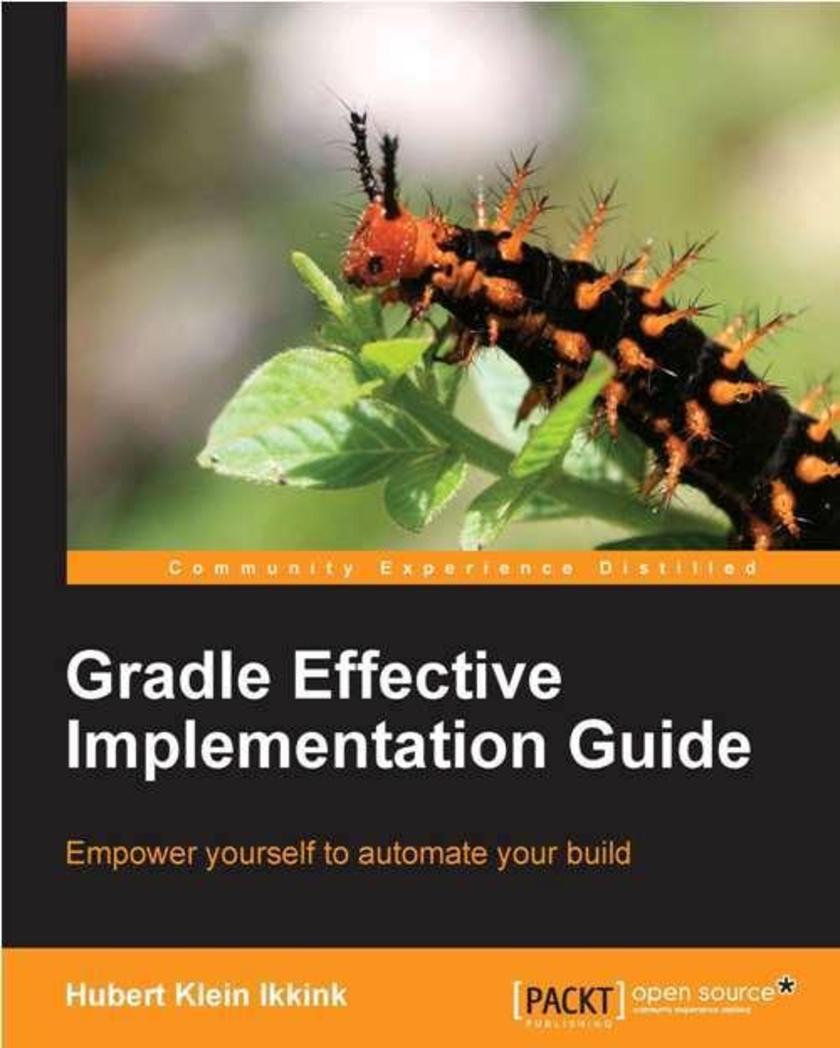
Gradle Effective Implementation Guide
¥80.65
Written in Packt's tutorial format the hands on examples and real life applications that will guide you through Gradle and give you the knowledge to use it every day. If you are a Java developer who wants to automate compiling, packaging and deploying your application this book is for you.
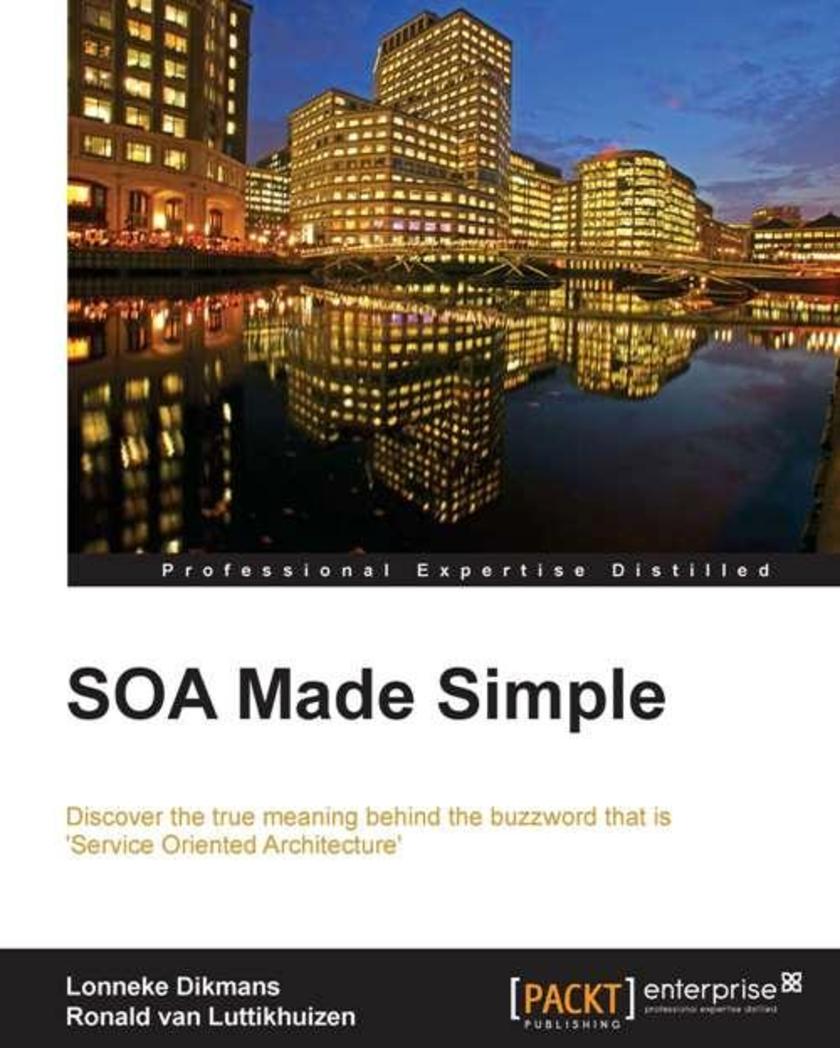
SOA Made Simple
¥80.65
“SOA Made Simple” is a concise and indispensable handbook for finally understanding exactly what Service Oriented Architecture is. Split into three clear sections, in this book you’ll learn from both theory as well as step-by-step implementation examples to aid in your understanding of this often poorly- articulated industry term.If you are an architect who wants to be completely clear in your understanding of what SOA is, then this book is essential. In fact, anyone (designer, developer, administrator or team lead) who is implementing or about to implement an architecture in an IT environment should not miss out on “SOA Made Simple”. Some previous experience with general software architecture is required, but this guide will tell you everything you need to know about SOA in a clear and easy fashion.
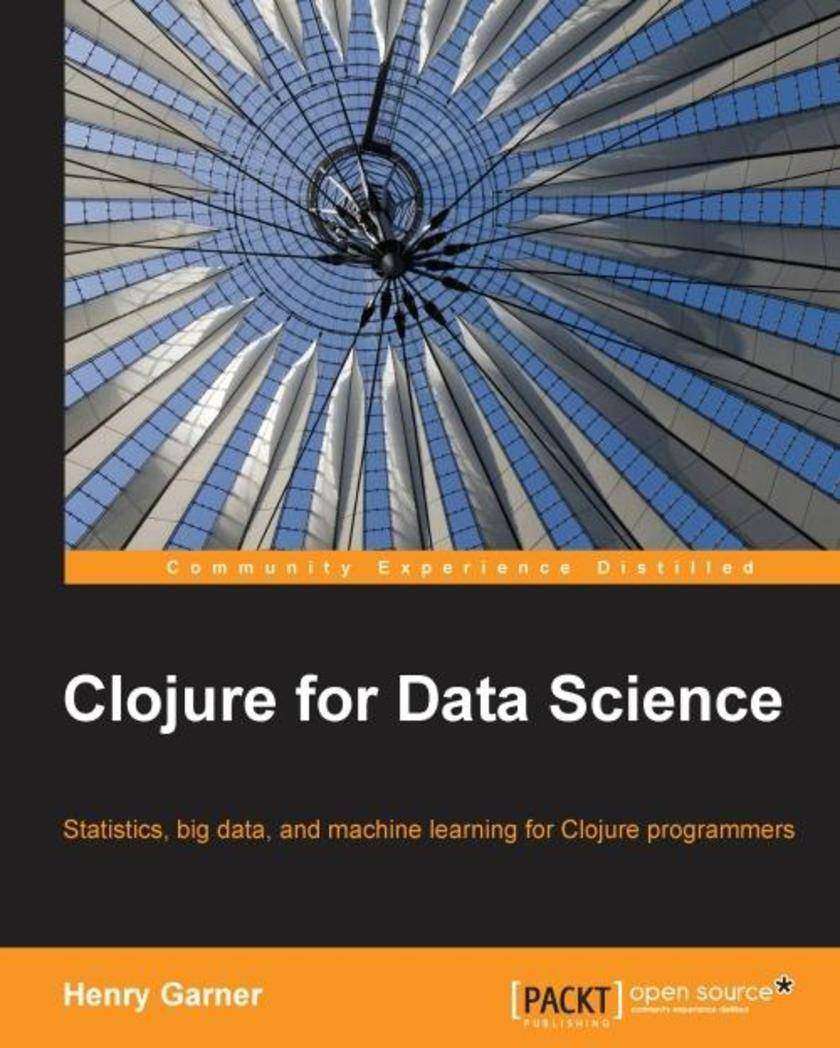
Clojure for Data Science
¥80.65
Statistics, big data, and machine learning for Clojure programmers About This Book Write code using Clojure to harness the power of your data Discover the libraries and frameworks that will help you succeed A practical guide to understanding how the Clojure programming language can be used to derive insights from data Who This Book Is For This book is aimed at developers who are already productive in Clojure but who are overwhelmed by the breadth and depth of understanding required to be effective in the field of data science. Whether you’re tasked with delivering a specific analytics project or simply suspect that you could be deriving more value from your data, this book will inspire you with the opportunities–and inform you of the risks–that exist in data of all shapes and sizes. What You Will Learn Perform hypothesis testing and understand feature selection and statistical significance to interpret your results with confidence Implement the core machine learning techniques of regression, classification, clustering and recommendation Understand the importance of the value of simple statistics and distributions in exploratory data analysis Scale algorithms to web-sized datasets efficiently using distributed programming models on Hadoop and Spark Apply suitable analytic approaches for text, graph, and time series data Interpret the terminology that you will encounter in technical papers Import libraries from other JVM languages such as Java and Scala Communicate your findings clearly and convincingly to nontechnical colleagues In Detail The term “data science” has been widely used to define this new profession that is expected to interpret vast datasets and translate them to improved decision-making and performance. Clojure is a powerful language that combines the interactivity of a *ing language with the speed of a compiled language. Together with its rich ecosystem of native libraries and an extremely simple and consistent functional approach to data manipulation, which maps closely to mathematical formula, it is an ideal, practical, and flexible language to meet a data scientist’s diverse needs. Taking you on a journey from simple summary statistics to sophisticated machine learning algorithms, this book shows how the Clojure programming language can be used to derive insights from data. Data scientists often forge a novel path, and you’ll see how to make use of Clojure’s Java interoperability capabilities to access libraries such as Mahout and Mllib for which Clojure wrappers don’t yet exist. Even seasoned Clojure developers will develop a deeper appreciation for their language’s flexibility! You’ll learn how to apply statistical thinking to your own data and use Clojure to explore, analyze, and visualize it in a technically and statistically robust way. You can also use Incanter for local data processing and ClojureScript to present interactive visualisations and understand how distributed platforms such as Hadoop sand Spark’s MapReduce and GraphX’s BSP solve the challenges of data analysis at scale, and how to explain algorithms using those programming models. Above all, by following the explanations in this book, you’ll learn not just how to be effective using the current state-of-the-art methods in data science, but why such methods work so that you can continue to be productive as the field evolves into the future. Style and approach This is a practical guide to data science that teaches theory by example through the libraries and frameworks accessible from the Clojure programming language.
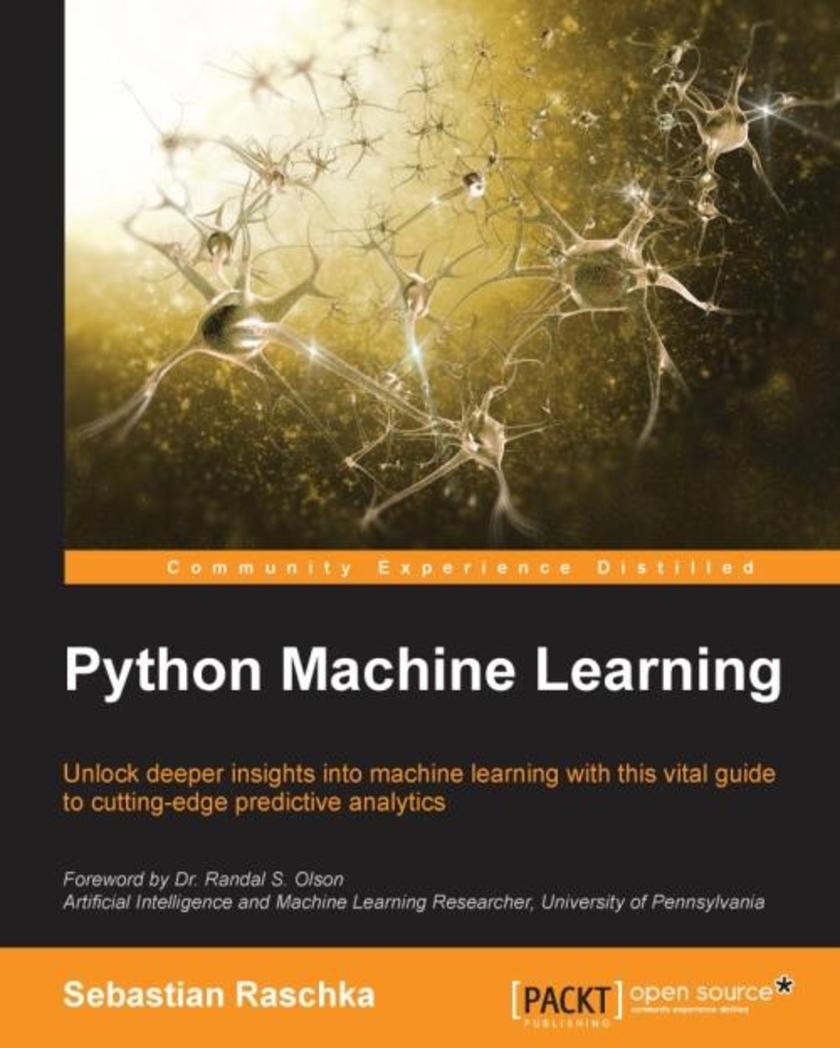
Python Machine Learning
¥80.65
Unlock deeper insights into Machine Leaning with this vital guide to cutting-edge predictive analytics About This Book Leverage Python’s most powerful open-source libraries for deep learning, data wrangling, and data visualization Learn effective strategies and best practices to improve and optimize machine learning systems and algorithms Ask – and answer – tough questions of your data with robust statistical models, built for a range of datasets Who This Book Is For If you want to find out how to use Python to start answering critical questions of your data, pick up Python Machine Learning – whether you want to get started from scratch or want to extend your data science knowledge, this is an essential and unmissable resource. What You Will Learn Explore how to use different machine learning models to ask different questions of your data Learn how to build neural networks using Keras and Theano Find out how to write clean and elegant Python code that will optimize the strength of your algorithms Discover how to embed your machine learning model in a web application for increased accessibility Predict continuous target outcomes using regression analysis Uncover hidden patterns and structures in data with clustering Organize data using effective pre-processing techniques Get to grips with sentiment analysis to delve deeper into textual and social media data In Detail Machine learning and predictive analytics are transforming the way businesses and other organizations operate. Being able to understand trends and patterns in complex data is critical to success, becoming one of the key strategies for unlocking growth in a challenging contemporary marketplace. Python can help you deliver key insights into your data – its unique capabilities as a language let you build sophisticated algorithms and statistical models that can reveal new perspectives and answer key questions that are vital for success. Python Machine Learning gives you access to the world of predictive analytics and demonstrates why Python is one of the world’s leading data science languages. If you want to ask better questions of data, or need to improve and extend the capabilities of your machine learning systems, this practical data science book is invaluable. Covering a wide range of powerful Python libraries, including scikit-learn, Theano, and Keras, and featuring guidance and tips on everything from sentiment analysis to neural networks, you’ll soon be able to answer some of the most important questions facing you and your organization. Style and approach Python Machine Learning connects the fundamental theoretical principles behind machine learning to their practical application in a way that focuses you on asking and answering the right questions. It walks you through the key elements of Python and its powerful machine learning libraries, while demonstrating how to get to grips with a range of statistical models.


