


 购物车
购物车 个人中心
个人中心
Lync Server Cookbook
¥90.46
If you work with Lync on a daily basis or if you have to use a specific feature of Lync for a project, this is the book for you. For solutions architects, technical consultants, and administrators, if you have a Lync deployment and you want to upgrade, integrate, secure, or extend it to the cloud, you can get valuable information from the recipes in this book.
Learning Android Forensics
¥90.46
If you are a forensic analyst or an information security professional wanting to develop your knowledge of Android forensics, then this is the book for you. Some basic knowledge of the Android mobile platform is expected.
Hadoop MapReduce v2 Cookbook - Second Edition
¥90.46
If you are a Big Data enthusiast and wish to use Hadoop v2 to solve your problems, then this book is for you. This book is for Java programmers with little to moderate knowledge of Hadoop MapReduce. This is also a one-stop reference for developers and system admins who want to quickly get up to speed with using Hadoop v2. It would be helpful to have a basic knowledge of software development using Java and a basic working knowledge of Linux.
Python Programming for Arduino
¥90.46
This is the book for you if you are a student, hobbyist, developer, or designer with little or no programming and hardware prototyping experience, and you want to develop IoT applications. If you are a software developer or a hardware designer and want to create connected devices applications, then this book will help you get started.
Mastering jQuery UI
¥90.46
If you are a frontend developer with considerable knowledge of jQuery UI and want to take this expertise to the next level, then this book is for you.
OSWorkflow: A guide for Java developers and architects to integrating…
¥90.46
This book gives step-by-step instructions on how to do things. The basics are explained first and then examples help to clarify and reinforce the principles. The book is aimed at experienced Java developers and system architects who want to develop complex Java applications using the OSWorkflow workflow engine. OSWorkflow is a flexible low-level workflow implementation for developers and architects; it is not a quick "plug-and-play" solution for non-technical end users.
Business Process Management with JBoss jBPM
¥90.46
This is a book for Business Analysts (BAs) who need to develop a process model for implementation in a business process management system. Developers looking at the JBoss jBPM toolset will also find it a useful introduction to the key concepts. This book is a full toolkit for someone who wants to implement BPM in the right way. This toolkit is particularly aimed at Business Analysts, although Project Managers, IT managers, developers, and even business people can expect to find useful tools and techniques in here. We will present the project framework, analysis techniques and templates, BPM technology and example deliverables that you need to successfully bring a BPM solution into your organization.
Learning OpenStack Networking (Neutron) - Second Edition
¥90.46
Wield the power of OpenStack Neutron networking to bring network infrastructure and capabilities to your cloud About This Book This completely up-to-date edition will show you how to deploy a cloud on OpenStack using community-driven processes. It includes rich examples that will help you understand complex networking topics with ease Understand every aspect of designing, creating, customizing, and maintaining the core network foundation of an OpenStack cloud using OpenStack Neutron all in one book Written by best-selling author James Denton, who has more than 15 years of experience in system administration and networking. James has experience of deploying, operating, and maintaining OpenStack clouds and has worked with top enterprises and organizations Who This Book Is For If you are an OpenStack-based cloud operator and administrator who is new to Neutron networking and wants to build your very own OpenStack cloud, then this book is for you. Prior networking experience and a physical server and network infrastructure is recommended to follow along with concepts demonstrated in the book. What You Will Learn Architect and install the latest release of OpenStack on Ubuntu Linux 14.04 LTS Review the components of OpenStack networking, including plugins, agents, and services, and learn how they work together to coordinate network operations Build a virtual switching infrastructure using reference architectures based on ML2 + Open vSwitch or ML2 + LinuxBridge Create networks, subnets, and routers that connect virtual machine instances to the network Deploy highly available routers using DVR or VRRP-based methods Scale your application with haproxy and Load Balancing as-a-Service Implement port and router-level security using Security Groups and Firewall as-a-Service Provide connectivity to tenant networks with Virtual Private Networking as-a-Service (VPNaaS) Find out how to manage OpenStack networking resources using CLI and GUI-driven methods In Detail OpenStack Neutron is an OpenStack component that provides networking as a service for other OpenStack services to architect networks and create virtual machines through its API. This API lets you define network connectivity in order to leverage network capabilities to cloud deployments. Through this practical book, you will build a strong foundational knowledge of Neutron, and will architect and build an OpenStack cloud using advanced networking features. We start with an introduction to OpenStack Neutron and its various components, including virtual switching, routing, FWaaS, VPNaaS, and LBaaS. You’ll also get hands-on by installing OpenStack and Neutron and its components, and use agents and plugins to orchestrate network connectivity and build a virtual switching infrastructure. Moving on, you’ll get to grips with the HA routing capabilities utilizing VRRP and distributed virtual routers in Neutron. You’ll also discover load balancing fundamentals, including the difference between nodes, pools, pool members, and virtual IPs. You’ll discover the purpose of security groups and learn how to apply the security concept to your cloud/tenant/instance. Finally, you'll configure virtual private networks that will allow you to avoid the use of SNAT and floating IPs when connecting to remote networks. Style and approach This easy-to-follow guide on networking in OpenStack follows a step-by-step process to installing OpenStack and configuring the base networking components. Each major networking component has a dedicated chapter that will build on your experience gained from prior chapters.
Xamarin Mobile Development for Android Cookbook
¥90.46
Over 80 hands-on recipes to unleash full potential for Xamarin in development and monetization of feature-packed, real-world Android apps About This Book Create a number of Android applications using the Xamarin Android platform Extensively integrate your Android devices with other Android devices to enhance your app creation experience A comprehensive guide packed with real-world scenarios and pro-level practices and techniques to help you build successful Android apps Who This Book Is For If you are a Xamarin developer who wants to create complete Android applications with Xamarin, then this book is ideal for you. No prior knowledge of Android development is needed, however a basic knowledge of C# and .NET would be useful. What You Will Learn Install and use Xamarin.Android with Xamarin Studio and Visual Studio Design an app’s user interface for multiple device configurations Store and protect data in databases, files, and on the cloud Utilize lists and collections to present data to the user Communicate across the network using NFC or Bluetooth Perform tasks in the background and update the user with notifications Capture and play multimedia, such as video and audio, with the camera Implement In-App Billing and Expansion Files and deploy to the store In Detail Xamarin is used by developers to write native iOS, Android, and Windows apps with native user interfaces and share code across multiple platforms not just on mobile devices, but on Windows, Mac OS X, and Linux. Developing apps with Xamarin.Android allows you to use and re-use your code and your skills on different platforms, making you more productive in any development. Although it’s not a write-once-run-anywhere framework, Xamarin provides native platform integration and optimizations. There is no middleware; Xamarin.Android talks directly to the system, taking your C# and F# code directly to the low levels. This book will provide you with the necessary knowledge and skills to be part of the mobile development era using C#. Covering a wide range of recipes such as creating a simple application and using device features effectively, it will be your companion to the complete application development cycle. Starting with installing the necessary tools, you will be guided on everything you need to develop an application ready to be deployed. You will learn the best practices for interacting with the device hardware, such as GPS, NFC, and Bluetooth. Furthermore, you will be able to manage multimedia resources such as photos and videos captured with the device camera, and so much more! By the end of this book, you will be able to create Android apps as a result of learning and implementing pro-level practices, techniques, and solutions. This book will ascertain a seamless and successful app building experience. Style and approach This book employs a step-by-step approach to Android app creation, explained in a conversational and easy-to-follow style. A wide range of examples are listed to ensure a complete understanding of how to deploy competent apps on the Android market.
Mastering C# Concurrency
¥90.46
Create robust and scalable applications along with responsive UI using concurrency and the multi-threading infrastructure in .NET and C#About This BookLearn to combine your asynchronous operations with Task Parallel LibraryMaster C#’s asynchronous infrastructure and use asynchronous APIs effectively to achieve optimal responsiveness of the applicationAn easy-to-follow, example-based guide that helps you to build scalable applications using concurrency in C# Who This Book Is For If you are a C# developer who wants to develop modern applications in C# and wants to overcome problems by using asynchronous APIs and standard patterns, then this book is ideal for you. Reasonable development knowledge, an understanding of core elements and applications related to the .Net platform, and also the fundamentals of concurrency is assumed.What You Will LearnApply general multithreading concepts to your application’s designLeverage lock-free concurrency and learn about its pros and cons to achieve efficient synchronization between user threadsCombine your asynchronous operations with Task Parallel LibraryMake your code easier with C#’s asynchrony supportUse common concurrent collections and programming patternsWrite scalable and robust server-side asynchronous codeCreate fast and responsible client applicationsAvoid common problems and troubleshoot your multi-threaded and asynchronous applications In Detail Starting with the traditional approach to concurrency, you will learn how to write multithreaded concurrent programs and compose ways that won't require locking. You will explore the concepts of parallelism granularity, and fine-grained and coarse-grained parallel tasks by choosing a concurrent program structure and parallelizing the workload optimally. You will also learn how to use task parallel library, cancellations, timeouts, and how to handle errors. You will know how to choose the appropriate data structure for a specific parallel algorithm to achieve scalability and performance. Further, you'll learn about server scalability, asynchronous I/O, and thread pools, and write responsive traditional Windows and Windows Store applications. By the end of the book, you will be able to diagnose and resolve typical problems that could happen in multithreaded applications.Style and approach An easy-to-follow, example-based guide that will walk you through the core principles of concurrency and multithreading using C#.
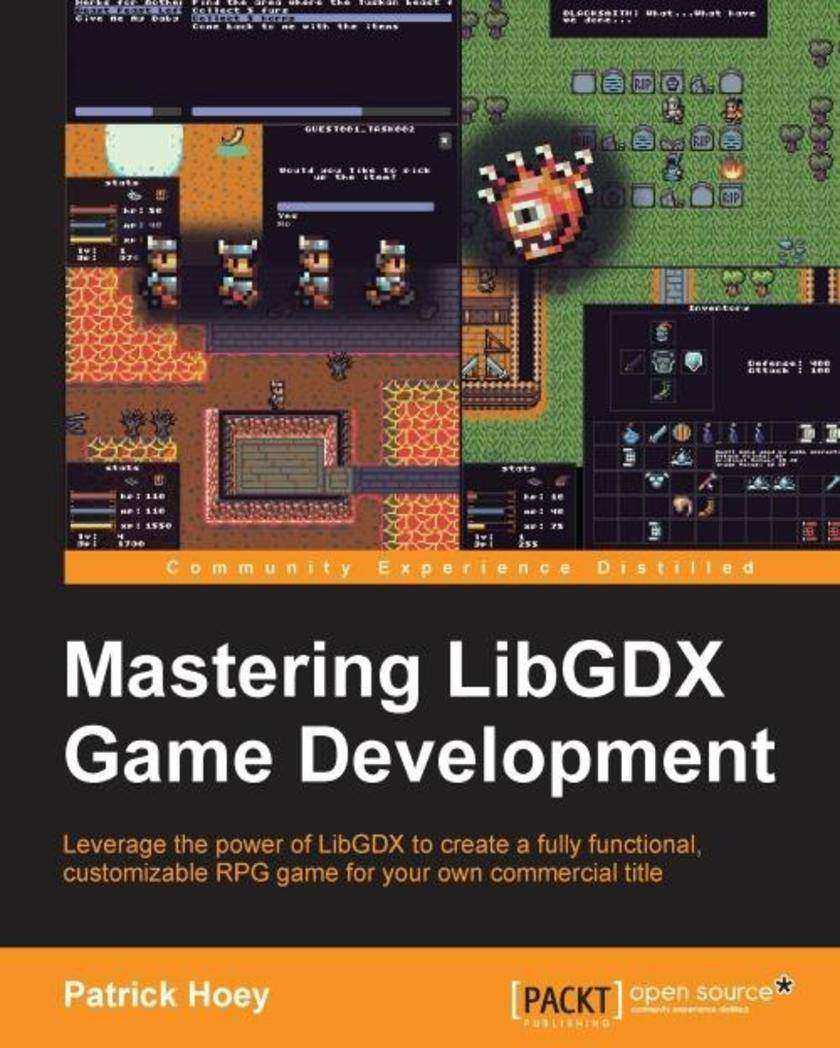
Mastering LibGDX Game Development
¥90.46
Leverage the power of LibGDX to create a fully functional, customizable RPG game for your own commercial title About This Book Learn game architecture and design patterns with concrete examples using proper software engineering principles Save time and money with this handy reference guide for future game development with LibGDX Design and develop a fully functional RPG video game from scratch with a hands on, step-by-step approach using LibGDX Who This Book Is For If you are an intermediate-level game developer who wants to create an RPG video game but found the creation process overwhelming, either by lack of tutorials or by getting lost in a sea of game-related technologies, engines, or frameworks, then this book is for you. This book assumes familiarity with Java and some basic knowledge of LibGDX. What You Will Learn Develop characters with stat attributes, player movement, animation, physics, and collision detection Create interactive NPC characters with speech windows and build immersion via dialog trees Build inventory management system UIs with drag and drop items to sell, buy, and equip Design a quest system to expand out the content of your game Form interesting enemies with battle mechanics and spawn points Devise *ed cutscenes to add an element of story and drama Develop save and load game profiles Create special effects to give the game extra “juiciness” and polish, and help build the atmosphere In Detail LibGDX is a Java-based framework developed with a heavy emphasis on performance, and includes cross-platform support out of the box (Windows, OS X, Linux, iOS, Android, and HTML5) as well as providing all the low-level functionality so that you can focus on developing your game and not battling with the platform. LibGDX also has an engaged and responsive community, active maintenance, and is available for free without a prohibitive license. Starting from the beginning, this book will take you through the entire development process of creating an RPG video game using LibGDX. First, this book will introduce you to the features specific to RPG games, as well as an overview of game architecture. Then, you will create map locations, develop character movement, add animation, integrate collision detection, and develop a portal system. Next, you will learn and develop a HUD and other UI components, as well as an inventory management system. You will then develop NPC interactions including dialog trees, shopkeepers, and quest givers. After this, you will design and create battle features for fighting enemies, as well as event triggers for world events. Finally, you will add the final polish with sound, music, and lighting effects. By the end of this book, you will have learned and applied core components from the LibGDX framework, as well as have a finished game to use as a springboard for customization and story development for your own commercial video game. Style and approach This book walks you through the concepts and implementation of developing a complete RPG game, unfolding chapter by chapter and building upon previous concepts. Each chapter can be used as an individual reference with diagrams to explain core concepts with concrete example code explained in detail.
TypeScript Blueprints
¥90.46
Build exciting end-to-end applications with TypeScript About This Book This book will help you whether you’re a beginner or an expert Complete and complex projects provide codes that are ready and solutions for start-ups and enterprise developers The book will showcase the power and depth of TypeScript when it comes to high performance and scalability Who This Book Is For This book was written for web developers who wish to make the most of TypeScript and build fun projects. You should be familiar with the fundamentals of JavaScript What You Will Learn Build quirky and fun projects from scratch while exploring widely applicable practices and techniques Use TypeScript with a range of different technologies such as Angular 2 and React and write cross-platform applications Migrate JavaScript codebases to TypeScript to improve your workflow Write maintainable and reusable code that is helpful in the world of programming revolving around features and bugs Using System.JS and Webpack to load *s and their dependencies. Developing highly performance server-side applications to run within Node Js. Reviewing high performant Node.js patterns and manage garbage collection. In Detail TypeScript is the future of JavaScript. Having been designed for the development of large applications, it is being widely incorporated in popular projects such as Angular JS 2.0. Adopting TypeScript results in more robust software, while still being deployable in apps where regular JavaScript would run. Scale and performance lie at the heart of the projects built in our book. The lessons learned throughout this book will arm you with everything you need to build amazing projects. During the course of this book, you will learn how to build a complete Single Page Application with Angular 2 and create a popular mobile app using NativeScript. Further on, you will build a classic Pac Man game in TypeScript. We will also help you migrate your legacy codebase project from JavaScript to TypeScript. By the end of the book, you will have created a number of exciting projects and will be competent using TypeScript for your live projects. Style and approach The book focuses on building projects from scratch. These end-to-end projects will give you ready-to-implement solutions for your business scenario, showcasing the depth and robustness of TypeScript.
Extending Docker
¥90.46
Master the art of making Docker more extensible, composable, and modular by leveraging plugins and other supporting tools About This Book Get the first book on the market that shows you how to extend the capabilities of Docker using plugins and third-party tools Master the skills of creating various plugins and integrating great tools in order to enhance the functionalities of Docker A practical and learning guide that ensures your investment in Docker becomes more valuable Who This Book Is For This book is for developers and sys admins who are well versed Docker and have knowledge on basic programming languages. If you can’t wait to extend Docker and customize it to meet your requirements, this is the book for you! What You Will Learn Find out about Docker plugins and the problems they solve Gain insights into creating your own plugin Use Docker tools to extend the basic functionality of the core Docker engine Get to grips with the installation and configuration of third-party tools available to use with Docker plugins Install, configure, and use a scheduling service to manage the containers in your environment Enhance your day-to-day Docker usage through security, troubleshooting, and best practices In Detail With Docker, it is possible to get a lot of apps running on the same old servers, making it very easy to package and ship programs. The ability to extend Docker using plugins and load third-party plugins is incredible, and organizations can massively benefit from it. In this book, you will read about what first and third party tools are available to extend the functionality of your existing Docker installation and how to approach your next Docker infrastructure deployment. We will show you how to work with Docker plugins, install it, and cover its lifecycle. We also cover network and volume plugins, and you will find out how to build your own plugin. You’ll discover how to integrate it with Puppet, Ansible, Jenkins, Flocker, Rancher, Packer, and more with third-party plugins. Then, you’ll see how to use Schedulers such as Kubernetes and Amazon ECS. Finally, we’ll delve into security, troubleshooting, and best practices when extending Docker. By the end of this book, you will learn how to extend Docker and customize it based on your business requirements with the help of various tools and plugins. Style and approach An easy to follow guide with plenty of hands-on practical examples which can be executed both on your local machine or externally hosted services.
ASP.NET Core 1.0 High Performance
¥90.46
Create fast, scalable, and high performance applications with C#, ASP.NET Core 1.0, and MVC 6 About This Book Learn the importance of measuring, profiling, and locating the most impactful problems Discover the common areas you might encounter performance problems and areas you don’t need to worry about Understand the differences between development workstations and production infrastructure and how these can amplify problems Design workflows that run asynchronously and are resilient to transient performance issues Who This Book Is For This book is for ASP.NET and C# developers who have experience with the MVC framework for web application development and are looking to deploy applications that will perform well in live production environments. These could be virtual machines or hosted by a cloud service provider such as AWS or Azure. What You Will Learn Why performance matters and when it should be considered Use different tools to measure performance Spot common performance issues, their root causes, and how to easily mitigate them Improve performance at the network level and I/O level, and how to optimize the application as a whole Work with caching and message queuing tools, including patterns and strategies Discover the dark side of performance improvement and find out how to manage complexity Monitor performance as part of continuous integration and regression testing Assess and solve performance issues with other advanced technologies In Detail ASP.NET Core is the new, open source, and cross-platform, web-application framework from Microsoft. It's a stripped down version of ASP.NET that's lightweight and fast. This book will show you how to make your web apps deliver high performance when using it. We'll address many performance improvement techniques from both a general web standpoint and from a C#, ASP.NET Core, and .NET Core perspective. This includes delving into the latest frameworks and demonstrating software design patterns that improve performance. We will highlight common performance pitfalls, which can often occur unnoticed on developer workstations, along with strategies to detect and resolve these issues early. By understanding and addressing challenges upfront, you can avoid nasty surprises when it comes to deployment time. We will introduce performance improvements along with the trade-offs that they entail. We will strike a balance between premature optimization and inefficient code by taking a scientific- and evidence-based approach. We'll remain pragmatic by focusing on the big problems. By reading this book, you'll learn what problems can occur when web applications are deployed at scale and know how to avoid or mitigate these issues. You'll gain experience of how to write high-performance applications without having to learn about issues the hard way. You'll see what's new in ASP.NET Core, why it's been rebuilt from the ground up, and what this means for performance. You will understand how you can now develop on and deploy to Windows, Mac OS X, and Linux using cross-platform tools, such as Visual Studio Code. Style and approach Starting with a drill down into the nuts and bolts of various performance parameters, you will get an understanding of the ASP.NET MVC 6 framework with the help of rich code-based examples that will equip you to build highly scalable and optimized applications.
Spring Microservices
¥90.46
Build scalable microservices with Spring, Docker, and Mesos About This Book Learn how to efficiently build and implement microservices in Spring, and how to use Docker and Mesos to push the boundaries of what you thought possible Examine a number of real-world use cases and hands-on code examples. Distribute your microservices in a completely new way Who This Book Is For If you are a Spring developers and want to build cloud-ready, internet-scale applications to meet modern business demands, then this book is for you Developers will understand how to build simple Restful services and organically grow them to truly enterprise grade microservices ecosystems. What You Will Learn Get to know the microservices development lifecycle process See how to implement microservices governance Familiarize yourself with the microservices architecture and its benefits Use Spring Boot to develop microservices Find out how to avoid common pitfalls when developing microservices Be introduced to end-to-end microservices written in Spring Framework and Spring Boot In Detail The Spring Framework is an application framework and inversion of the control container for the Java platform. The framework's core features can be used by any Java application, but there are extensions to build web applications on top of the Java EE platform. This book will help you implement the microservice architecture in Spring Framework, Spring Boot, and Spring Cloud. Written to the latest specifications of Spring, you'll be able to build modern, Internet-scale Java applications in no time. We would start off with the guidelines to implement responsive microservices at scale. We will then deep dive into Spring Boot, Spring Cloud, Docker, Mesos, and Marathon. Next you will understand how Spring Boot is used to deploy autonomous services, server-less by removing the need to have a heavy-weight application server. Later you will learn how to go further by deploying your microservices to Docker and manage it with Mesos. By the end of the book, you'll will gain more clarity on how to implement microservices using Spring Framework and use them in Internet-scale deployments through real-world examples. Style and approach The book follows a step by step approach on how to develop microservices using Spring Framework, Spring Boot, and a set of Spring Cloud components that will help you scale your applications.
Mastering Scala Machine Learning
¥90.46
Advance your skills in efficient data analysis and data processing using the powerful tools of Scala, Spark, and Hadoop About This Book This is a primer on functional-programming-style techniques to help you efficiently process and analyze all of your data Get acquainted with the best and newest tools available such as Scala, Spark, Parquet and MLlib for machine learning Learn the best practices to incorporate new Big Data machine learning in your data-driven enterprise to gain future scalability and maintainability Who This Book Is For Mastering Scala Machine Learning is intended for enthusiasts who want to plunge into the new pool of emerging techniques for machine learning. Some familiarity with standard statistical techniques is required. What You Will Learn Sharpen your functional programming skills in Scala using REPL Apply standard and advanced machine learning techniques using Scala Get acquainted with Big Data technologies and grasp why we need a functional approach to Big Data Discover new data structures, algorithms, approaches, and habits that will allow you to work effectively with large amounts of data Understand the principles of supervised and unsupervised learning in machine learning Work with unstructured data and serialize it using Kryo, Protobuf, Avro, and AvroParquet Construct reliable and robust data pipelines and manage data in a data-driven enterprise Implement scalable model monitoring and alerts with Scala In Detail Since the advent of object-oriented programming, new technologies related to Big Data are constantly popping up on the market. One such technology is Scala, which is considered to be a successor to Java in the area of Big Data by many, like Java was to C/C++ in the area of distributed programing. This book aims to take your knowledge to next level and help you impart that knowledge to build advanced applications such as social media mining, intelligent news portals, and more. After a quick refresher on functional programming concepts using REPL, you will see some practical examples of setting up the development environment and tinkering with data. We will then explore working with Spark and MLlib using k-means and decision trees. Most of the data that we produce today is unstructured and raw, and you will learn to tackle this type of data with advanced topics such as regression, classification, integration, and working with graph algorithms. Finally, you will discover at how to use Scala to perform complex concept analysis, to monitor model performance, and to build a model repository. By the end of this book, you will have gained expertise in performing Scala machine learning and will be able to build complex machine learning projects using Scala. Style and approach This hands-on guide dives straight into implementing Scala for machine learning without delving much into mathematical proofs or validations. There are ample code examples and tricks that will help you sail through using the standard techniques and libraries. This book provides practical examples from the field on how to correctly tackle data analysis problems, particularly for modern Big Data datasets.
Mastering Python Data Analysis
¥90.46
Become an expert at using Python for advanced statistical analysis of data using real-world examples About This Book Clean, format, and explore data using graphical and numerical summaries Leverage the IPython environment to efficiently analyze data with Python Packed with easy-to-follow examples to develop advanced computational skills for the analysis of complex data Who This Book Is For If you are a competent Python developer who wants to take your data analysis skills to the next level by solving complex problems, then this advanced guide is for you. Familiarity with the basics of applying Python libraries to data sets is assumed. What You Will Learn Read, sort, and map various data into Python and Pandas Recognise patterns so you can understand and explore data Use statistical models to discover patterns in data Review classical statistical inference using Python, Pandas, and SciPy Detect similarities and differences in data with clustering Clean your data to make it useful Work in Jupyter Notebook to produce publication ready figures to be included in reports In Detail Python, a multi-paradigm programming language, has become the language of choice for data scientists for data analysis, visualization, and machine learning. Ever imagined how to become an expert at effectively approaching data analysis problems, solving them, and extracting all of the available information from your dataWell, look no further, this is the book you want! Through this comprehensive guide, you will explore data and present results and conclusions from statistical analysis in a meaningful way. You’ll be able to quickly and accurately perform the hands-on sorting, reduction, and subsequent analysis, and fully appreciate how data analysis methods can support business decision-making. You’ll start off by learning about the tools available for data analysis in Python and will then explore the statistical models that are used to identify patterns in data. Gradually, you’ll move on to review statistical inference using Python, Pandas, and SciPy. After that, we’ll focus on performing regression using computational tools and you’ll get to understand the problem of identifying clusters in data in an algorithmic way. Finally, we delve into advanced techniques to quantify cause and effect using Bayesian methods and you’ll discover how to use Python’s tools for supervised machine learning. Style and approach This book takes a step-by-step approach to reading, processing, and analyzing data in Python using various methods and tools. Rich in examples, each topic connects to real-world examples and retrieves data directly online where possible. With this book, you are given the knowledge and tools to explore any data on your own, encouraging a curiosity befitting all data scientists.
ROS Robotics By Example
¥90.46
Bring life to your robot using ROS robotic applications About This Book .This book will help you boost your knowledge of ROS and give you advanced practical experience you can apply to your ROS robot platforms.This is the only book that offers you step-by-step instructions to solidify your ROS understanding and gain experience using ROS tools.From eminent authors, this book offers you a plethora of fun-filled examples to make your own quadcopter, turtlebot, and two-armed robots Who This Book Is For If you are a robotics developer, whether a hobbyist, researchers or professional, and are interested in learning about ROS through a hands-on approach, then this book is for you. You are encouraged to have a working knowledge of GNU/Linux systems and Python. What You Will Learn .Get to know the fundamentals of ROS and apply its concepts to real robot examples.Control a mobile robot to navigate autonomously in an environment.Model your robot designs using URDF and Xacro, and operate them in a ROS Gazebo simulation.Control a 7 degree-of-freedom robot arm for visual servoing.Fly a quadcopter to autonomous waypoints.Gain working knowledge of ROS tools such as Gazebo, rviz, rqt, and Move-It.Control robots with mobile devices and controller boards In Detail The visionaries who created ROS developed a framework for robotics centered on the commonality of robotic systems and exploited this commonality in ROS to expedite the development of future robotic systems. From the fundamental concepts to advanced practical experience, this book will provide you with an incremental knowledge of the ROS framework, the backbone of the robotics evolution. ROS standardizes many layers of robotics functionality from low-level device drivers to process control to message passing to software package management. This book provides step-by-step examples of mobile, armed, and flying robots, describing the ROS implementation as the basic model for other robots of these types. By controlling these robots, whether in simulation or in reality, you will use ROS to drive, move, and fly robots using ROS control. Style and approach This is an easy-to-follow guide with hands-on examples of ROS robots, both real and in simulation.
Simulation for Data Science with R
¥90.46
Harness actionable insights from your data with computational statistics and simulations using R About This Book Learn five different simulation techniques (Monte Carlo, Discrete Event Simulation, System Dynamics, Agent-Based Modeling, and Resampling) in-depth using real-world case studies A unique book that teaches you the essential and fundamental concepts in statistical modeling and simulation Who This Book Is For This book is for users who are familiar with computational methods. If you want to learn about the advanced features of R, including the computer-intense Monte-Carlo methods as well as computational tools for statistical simulation, then this book is for you. Good knowledge of R programming is assumed/required. What You Will Learn The book aims to explore advanced R features to simulate data to extract insights from your data. Get to know the advanced features of R including high-performance computing and advanced data manipulation See random number simulation used to simulate distributions, data sets, and populations Simulate close-to-reality populations as the basis for agent-based micro-, model- and design-based simulations Applications to design statistical solutions with R for solving scientific and real world problems Comprehensive coverage of several R statistical packages like boot, simPop, VIM, data.table, dplyr, parallel, StatDA, simecol, simecolModels, deSolve and many more. In Detail Data Science with R aims to teach you how to begin performing data science tasks by taking advantage of Rs powerful ecosystem of packages. R being the most widely used programming language when used with data science can be a powerful combination to solve complexities involved with varied data sets in the real world. The book will provide a computational and methodological framework for statistical simulation to the users. Through this book, you will get in grips with the software environment R. After getting to know the background of popular methods in the area of computational statistics, you will see some applications in R to better understand the methods as well as gaining experience of working with real-world data and real-world problems. This book helps uncover the large-scale patterns in complex systems where interdependencies and variation are critical. An effective simulation is driven by data generating processes that accurately reflect real physical populations. You will learn how to plan and structure a simulation project to aid in the decision-making process as well as the presentation of results. By the end of this book, you reader will get in touch with the software environment R. After getting background on popular methods in the area, you will see applications in R to better understand the methods as well as to gain experience when working on real-world data and real-world problems. Style and approach This book takes a practical, hands-on approach to explain the statistical computing methods, gives advice on the usage of these methods, and provides computational tools to help you solve common problems in statistical simulation and computer-intense methods.
Ubuntu Server Cookbook
¥90.46
Arm yourself to make the most of the versatile, powerful Ubuntu Server with over 100 hands-on recipes About This Book Master the skills to setup secure and scalable web services with popular tools like Apache, Nginx, MySQL and HAProxy Set up your own cloud with Open Stack and quickly deploy applications with Docker or LXD Packed with clear, step-by-step recipes to let you protect you valuable data with your own chat servers, code hosting and collaboration tools. Who This Book Is For Ubuntu Server Cookbook is for system administrators or software developers with a basic understanding of the Linux operating system who want to set up their own servers. You are not required to have in-depth knowledge or hands-on experience with Ubuntu, but you should know the basics commands for directory navigation, file management, and the file editing tool. An understanding of computer networks is advisable What You Will Learn Set up high performance, scalable, and fault-tolerant back ends with web and database servers Facilitate team communication with a real-time chat service and collaboration tools Quickly deploy your applications to their own containers and scale your infrastructure as and when needed Find out how to set up your own cloud infrastructure for your internal use or rent it to the public Ensure quick and easy access for your users while also securing your infrastructure from intruders Set up a high performance private network with a personal VPN server and centralized authentication system Swiftly start a content streaming service Set up network storage for private data and source code and say good bye to costly and unreliable cloud services In Detail Ubuntu is one of the most secure operating systems and defines the highest level of security as compared other operating system. Ubuntu server is a popular Linux distribution and the first choice when deploying a Linux server. It can be used with a $35 Raspberry Pi to top-notch, thousand-dollar-per-month cloud hardware. Built with lists that there are 4 million + websites built using Ubuntu. With its easy-to-use package management tools and availability of well-known packages, we can quickly set up our own services such as web servers and database servers using Ubuntu. This book will help you develop the skills required to set up high performance and secure services with open source tools. Starting from user management and an in-depth look at networking, we then move on to cover the installation and management of web servers and database servers, as well as load balancing various services. You will quickly learn to set up your own cloud and minimize costs and efforts with application containers. Next, you will get to grips with setting up a secure real-time communication system. Finally, we’ll explore source code hosting and various collaboration tools. By the end of this book, you will be able to make the most of Ubuntu’s advanced functionalities. Style and approach This easy-to-follow guide contains a series of step-by-step recipes ranging from simple to complex. Each topic will start with basic introduction to each technology followed by a detailed step-by-step installation guide and then a detailed explanation of the approach taken during installation and the various advanced options available.
VMware vRealize Configuration Manager Cookbook
¥90.46
Over 80 recipes to teach you the power of vRealize Configuration Manager 5.8 to provide automated and continuous configuration management About This Book First book in the market that provides a broad configuration and compliance management solution for your enterprise. Champion the skills of the latest features of VMware vRealize Configuration Manager and implement it in your organization. A recipe based approach book that will enlighten you to configure VCM to collect and manage data from your virtual and physical environment. Who This Book Is For If you are a system administrator who is eager to provide better administration with VCM and are familiar with managing network users and resources along with performing system maintenance, then this book is for you. What You Will Learn Find out how to configure automated patching of your infrastructure for Windows as well Unix machines Maintain and upgrade your vRealize Configuration Manager Integrate with other VMware tools such as vCloud Director, vRealise Operations, vCenter, and vCloud Network and Security Understand what vRealize Configuration Manager is and what its capacities are Explore how vRealize Configuration Manager can be used for patching, compliance management, and software distribution Troubleshoot vRealize Configuration Manager with ease In Detail VMware vRealize Configuration Manager (VCM) helps you to automate IT operations, manage performance, and gain visibility across physical and virtual infrastructure. It is continuously being used by enterprises to audit the configurations of the VMware infrastructure as well as the Windows, Linux, and UNIX operating systems. This book is filled with practical recipes through which you will learn about the latest features of vRealize Configuration Manager 5.8.X, starting with installation of various tiers of VCM followed by configuration management across physical and virtual servers. Throughout this book, you will explore how VCM can perform tasks such as patch management, compliance assessment, and software package distribution along with Machine filters for new platforms such as RHEL 7 and Windows 10. This book will ease your troubles while upgrading from the existing VCM to the latest version by providing you with step-by-step instructions about the process of migration along with upgrade and maintenance support. This book will help you understand how to integrate vRealize Configuration with other applications along with schedule management and also guide you on how to handle security issues. After reading this book, you will have a clear understanding of how VCM fits in the overall picture of the data center design from a patching and compliance perspective. Style and approach This book takes a recipe-based approach that will provide you with an effective and a practical configuration management solution for your enterprise.


