


 购物车
购物车 个人中心
个人中心
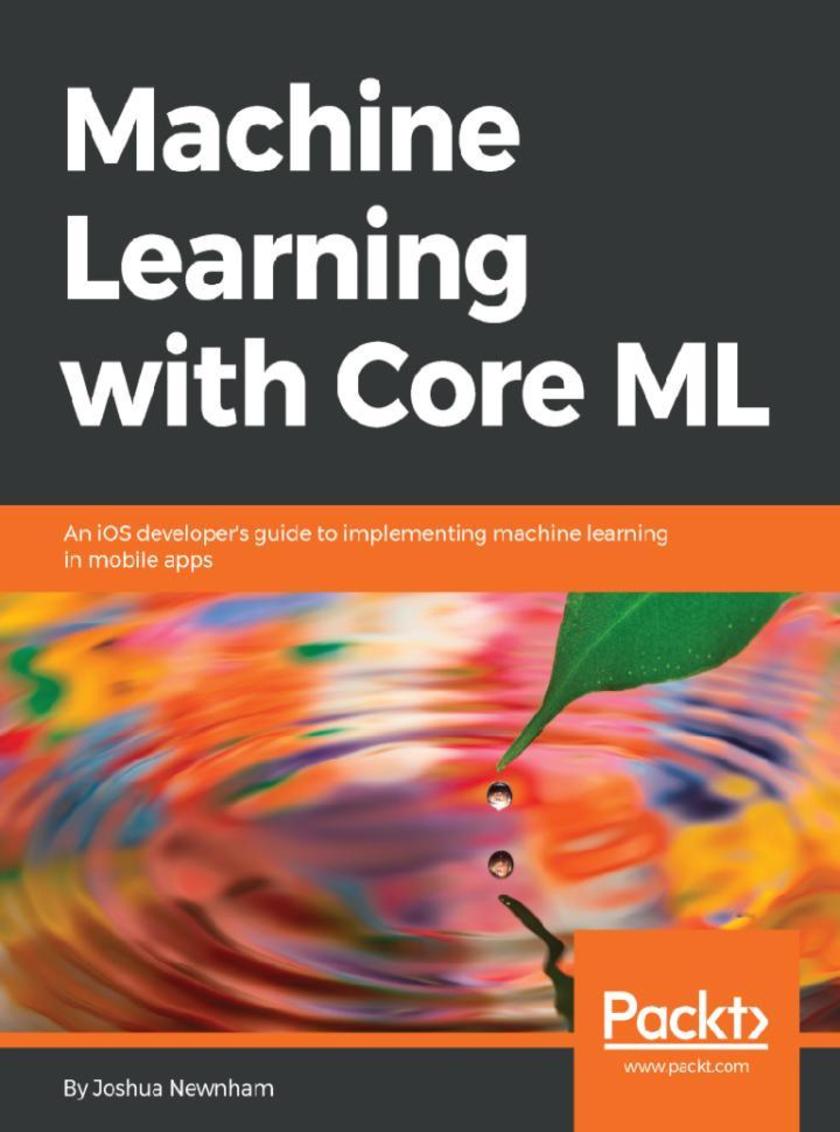
Machine Learning with Core ML
¥90.46
Leverage the power of Apple's Core ML to create smart iOS apps About This Book ? Explore the concepts of machine learning and Apple’s Core ML APIs ? Use Core ML to understand and transform images and videos ? Exploit the power of using CNN and RNN in iOS applications Who This Book Is For Machine Learning with Core ML is for you if you are an intermediate iOS developer interested in applying machine learning to your mobile apps. This book is also for those who are machine learning developers or deep learning practitioners who want to bring the power of neural networks in their iOS apps. Some exposure to machine learning concepts would be beneficial but not essential, as this book acts as a launchpad into the world of machine learning for developers. What You Will Learn ? Understand components of an ML project using algorithms, problems, and data ? Master Core ML by obtaining and importing machine learning model, and generate classes ? Prepare data for machine learning model and interpret results for optimized solutions ? Create and optimize custom layers for unsupported layers ? Apply CoreML to image and video data using CNN ? Learn the qualities of RNN to recognize sketches, and augment drawing ? Use Core ML transfer learning to execute style transfer on images In Detail Core ML is a popular framework by Apple, with APIs designed to support various machine learning tasks. It allows you to train your machine learning models and then integrate them into your iOS apps. Machine Learning with Core ML is a fun and practical guide that not only demystifies Core ML but also sheds light on machine learning. In this book, you’ll walk through realistic and interesting examples of machine learning in the context of mobile platforms (specifically iOS). You’ll learn to implement Core ML for visual-based applications using the principles of transfer learning and neural networks. Having got to grips with the basics, you’ll discover a series of seven examples, each providing a new use-case that uncovers how machine learning can be applied along with the related concepts. By the end of the book, you will have the skills required to put machine learning to work in their own applications, using the Core ML APIs Style and approach An easy-to-follow step by step guide which will help you get to grips with real world application of CoreML
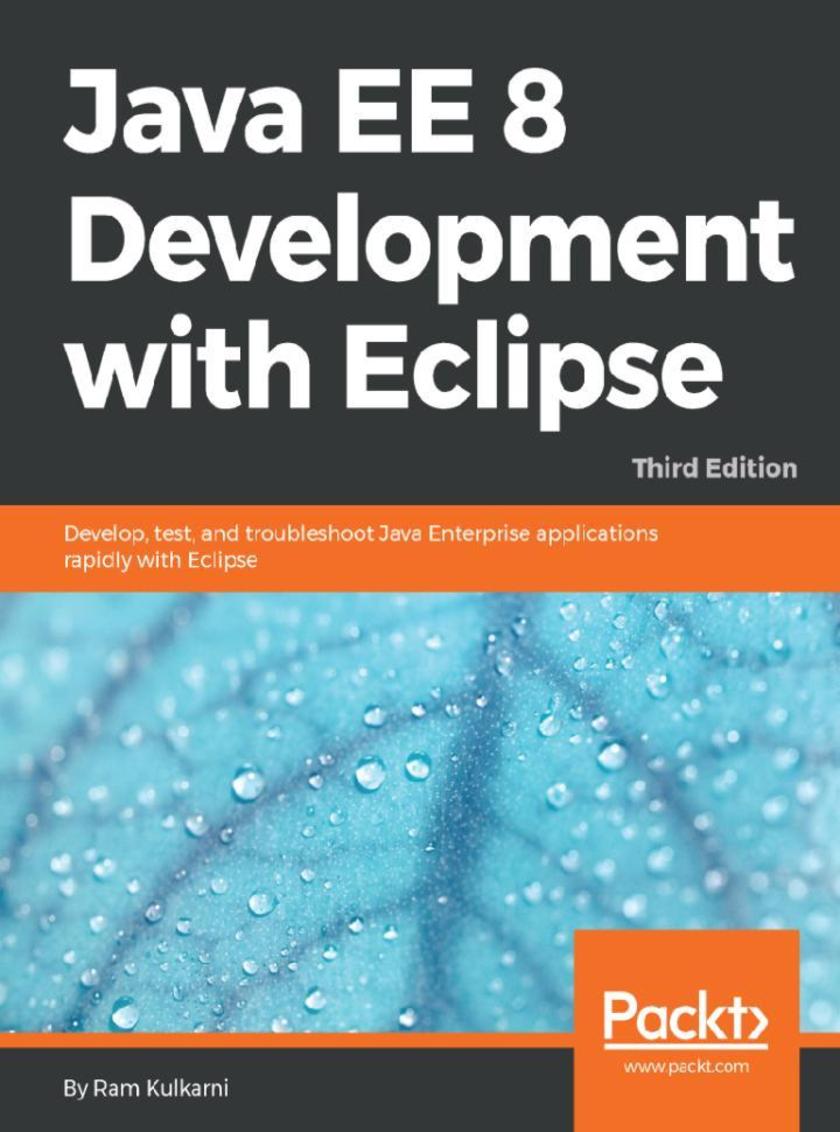
Java EE 8 Development with Eclipse
¥90.46
Develop and deploy fully functional applications and microservices utilising Tomcat, Glassfish servers, Cloud and docker in Java EE 8 About This Book ? Explore the complete workflow of developing enterprise Java applications ? Develop microservices with Docker Container and deploy it in cloud ? Simplify Java EE application development Who This Book Is For If you are a Java developer with little or no experience in Java EE application development, or if you have experience in Java EE technology but are looking for tips to simplify and accelerate your development process, then this book is for you. What You Will Learn ? Set up Eclipse, Tomcat, and Glassfish servers for Java EE application development ? Use JSP, Servlet, JSF, and EJBs to create a user interface and write business logic ? Create Java EE database applications using JDBC and JPA ? Handle asynchronous messages using MDBs for better scalability ? Deploy and debug Java EE applications and create SOAP and REST web services ? Write unit tests and calculate code coverage ? Use Eclipse MAT (Memory Analysis Tool) to debug memory issues ? Create and deploy microservices In Detail Java EE is one of the most popular tools for enterprise application design and development. With recent changes to Java EE 8 specifications, Java EE application development has become a lot simpler with the new specifications, some of which compete with the existing specifications. This guide provides a complete overview of developing highly performant, robust and secure enterprise applications with Java EE with Eclipse. The book begins by exploring different Java EE technologies and how to use them (JSP, JSF, JPA, JDBC, EJB, and more), along with suitable technologies for different scenarios. You will learn how to set up the development environment for Java EE applications and understand Java EE specifications in detail, with an emphasis on examples. The book takes you through deployment of an application in Tomcat, GlassFish Servers, and also in the cloud. It goes beyond the basics and covers topics like debugging, testing, deployment, and securing your Java EE applications. You'll also get to know techniques to develop cloud-ready microservices in Java EE. Style and approach This guide takes a step-by-step approach to developing, testing, debugging, and troubleshooting Java EE applications, complete with examples and tips.
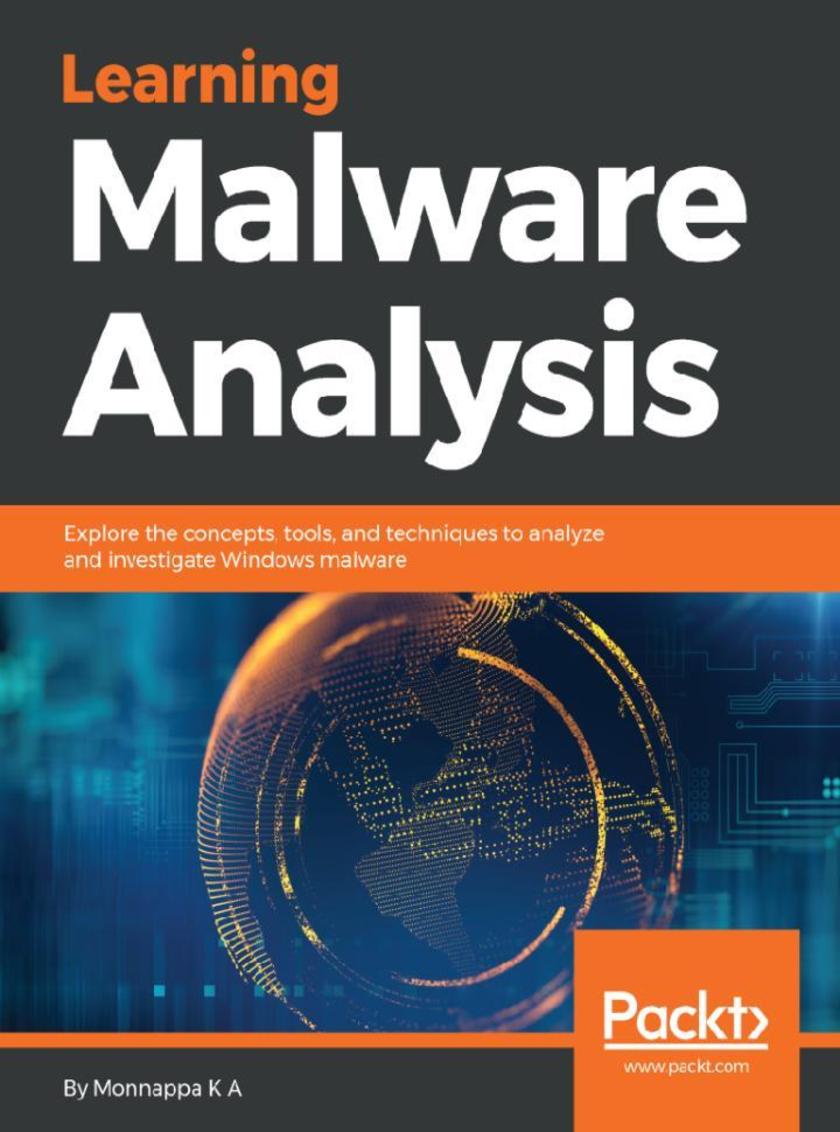
Learning Malware Analysis
¥90.46
Understand malware analysis and its practical implementation About This Book ? Explore the key concepts of malware analysis and memory forensics using real-world examples ? Learn the art of detecting, analyzing, and investigating malware threats ? Understand adversary tactics and techniques Who This Book Is For This book is for incident responders, cyber-security investigators, system administrators, malware analyst, forensic practitioners, student, or curious security professionals interested in learning malware analysis and memory forensics. Knowledge of programming languages such as C and Python is helpful but is not mandatory. If you have written few lines of code and have a basic understanding of programming concepts, you’ll be able to get most out of this book. What You Will Learn ? Create a safe and isolated lab environment for malware analysis ? Extract the metadata associated with malware ? Determine malware's interaction with the system ? Perform code analysis using IDA Pro and x64dbg ? Reverse-engineer various malware functionalities ? Reverse engineer and decode common encoding/encryption algorithms ? Perform different code injection and hooking techniques ? Investigate and hunt malware using memory forensics In Detail Malware analysis and memory forensics are powerful analysis and investigation techniques used in reverse engineering, digital forensics, and incident response. With adversaries becoming sophisticated and carrying out advanced malware attacks on critical infrastructures, data centers, and private and public organizations, detecting, responding to, and investigating such intrusions is critical to information security professionals. Malware analysis and memory forensics have become must-have skills to fight advanced malware, targeted attacks, and security breaches. This book teaches you the concepts, techniques, and tools to understand the behavior and characteristics of malware through malware analysis. It also teaches you techniques to investigate and hunt malware using memory forensics. This book introduces you to the basics of malware analysis, and then gradually progresses into the more advanced concepts of code analysis and memory forensics. It uses real-world malware samples, infected memory images, and visual diagrams to help you gain a better understanding of the subject and to equip you with the skills required to analyze, investigate, and respond to malware-related incidents. Style and approach The book takes the reader through all the concepts, techniques and tools to understand the behavior and characteristics of malware by using malware analysis and it also teaches the techniques to investigate and hunt malware using memory forensics.
Java Deep Learning Projects
¥90.46
Build and deploy powerful neural network models using the latest Java deep learning libraries About This Book ? Understand DL with Java by implementing real-world projects ? Master implementations of various ANN models and build your own DL systems ? Develop applications using NLP, image classification, RL, and GPU processing Who This Book Is For If you are a data scientist, machine learning professional, or deep learning practitioner keen to expand your knowledge by delving into the practical aspects of deep learning with Java, then this book is what you need! Get ready to build advanced deep learning models to carry out complex numerical computations. Some basic understanding of machine learning concepts and a working knowledge of Java are required. What You Will Learn ? Master deep learning and neural network architectures ? Build real-life applications covering image classification, object detection, online trading, transfer learning, and multimedia analytics using DL4J and open-source APIs ? Train ML agents to learn from data using deep reinforcement learning ? Use factorization machines for advanced movie recommendations ? Train DL models on distributed GPUs for faster deep learning with Spark and DL4J ? Ease your learning experience through 69 FAQs In Detail Java is one of the most widely used programming languages. With the rise of deep learning, it has become a popular choice of tool among data scientists and machine learning experts. Java Deep Learning Projects starts with an overview of deep learning concepts and then delves into advanced projects. You will see how to build several projects using different deep neural network architectures such as multilayer perceptrons, Deep Belief Networks, CNN, LSTM, and Factorization Machines. You will get acquainted with popular deep and machine learning libraries for Java such as Deeplearning4j, Spark ML, and RankSys and you’ll be able to use their features to build and deploy projects on distributed computing environments. You will then explore advanced domains such as transfer learning and deep reinforcement learning using the Java ecosystem, covering various real-world domains such as healthcare, NLP, image classification, and multimedia analytics with an easy-to-follow approach. Expert reviews and tips will follow every project to give you insights and hacks. By the end of this book, you will have stepped up your expertise when it comes to deep learning in Java, taking it beyond theory and be able to build your own advanced deep learning systems. Style and approach A unique, learn-as-you-do approach, as the reader builds on his understanding of deep learning with Java progressively with each project. This book is designed in such a way that implementing each project will empower you with a unique skill set, and enable you to implement the next project more confidently.
NetSuite ERP for Administrators
¥90.46
Learn steps and tasks to help a NetSuite administrator perform both his daily and monthly tasks efficiently. Advance his expertise to become NetSuite leader without having to spend time and money on corporate trainings. About This Book ? Understand the business considerations and implementation of the NetSuite ERP ? Gain a deep knowledge of enterprise security, data management, process automation, and analytics ? Learn techniques to sail through system maintenance while ensuring accuracy and to practically troubleshoot issues Who This Book Is For This book is for administrators, consultants, and Project Managers who would like to improve their skills in the areas of configuration and system management. Basic experience implementing NetSuite is assumed. What You Will Learn ? Provide executives with meaningful insights into the business ? A Framework to streamline the implementation of new and existing features ? Leverage built-in tools to optimize your efficiency and effectiveness ? Test configuration to check the implementation of role-specific permissions ? Understand how to optimize the amount of data to be shared with users ? Import data like new leads and employ current data like pricing updates ? Perform on-going maintenance and troubleshoot issues In Detail NetSuite ERP is a complete, scalable cloud ERP solution targeted at fast-growing, mid-sized businesses and large enterprises. It's the smartly executed combination of financial management operations and built-in business intelligence, which enables companies to make data-driven and well-informed decisions. This book will help administrators become expert enough to be seen as the NetSuite leader at their company and to be able to advise department heads on specific processes, and strategic decisions. We start with an overview of ERP and NetSuite ERP, before going on to explain the built-in features to show the breadth of NetSuite ERP's product and its ease of use. We then discuss business aspects, focusing on the most important processes in NetSuite. Then you'll understand the implementation aspects that are generic enough to cover all the features. The focus then shifts to specific skills that you will need to administer for any system, such as roles, permissions, customization, and data imports. Moving on, you'll learn how to centralize the creation of search templates and give users the tools to pivot the data and expose it to the user in useful ways, such as on the dashboard. The book ends with checklists providing actionable steps that you as an administrator can take to do your job and support the application through new releases and troubleshooting problems. Style and approach A slow and steady introduction of topics from reports through searches with aim to enable the administrator to gain a holistic view of the NetSuite product.
PostgreSQL 10 Administration Cookbook
¥90.46
A practical guide to administer, monitor and replicate your PostgreSQL 10 database About This Book ? Get to grips with the capabilities of PostgreSQL 10 to administer your database more efficiently ? Monitor, tune, secure and protect your database for optimal performance ? A step-by-step, recipe-based guide to help you tackle any problem in PostgreSQL 10 administration with ease Who This Book Is For This book is for database administrators, data architects, developers, or anyone with an interest in planning for, or running, live production databases using PostgreSQL. It is most suited to those looking for hands-on solutions to any problem associated with PostgreSQL administration. What You Will Learn ? Get to grips with the newly released PostgreSQL 10 features to improve database performance and reliability ? Manage open source PostgreSQL versions 10 on various platforms. ? Explore best practices for planning and designing live databases ? Select and implement robust backup and recovery techniques in PostgreSQL 10 ? Explore concise and clear guidance on replication and high availability ? Discover advanced technical tips for experienced users In Detail PostgreSQL is a powerful, open source database management system with an enviable reputation for high performance and stability. With many new features in its arsenal, PostgreSQL 10 allows users to scale up their PostgreSQL infrastructure. This book takes a step-by-step, recipe-based approach to effective PostgreSQL administration. Throughout this book, you will be introduced to these new features such as logical replication, native table partitioning, additional query parallelism, and much more. You will learn how to tackle a variety of problems that are basically the pain points for any database administrator - from creating tables to managing views, from improving performance to securing your database. More importantly, the book pays special attention to topics such as monitoring roles, backup, and recovery of your PostgreSQL 10 database, ensuring high availability, concurrency, and replication. By the end of this book, you will know everything you need to know to be the go-to PostgreSQL expert in your organization. Style and approach The book is a step by step guide with example-driven recipes, focused on the new features of the latest PostgreSQL version10. This book will serve as a specific guide to understand and leverage useful PostgreSQL functionalities to create better and more efficient databases.
Moodle 3 E-Learning Course Development
¥90.46
A complete guide on course development and delivery using Moodle 3.x About This Book ? Get the best out of the latest Moodle 3 framework to ensure successful learning ? Gain experience in creating different kinds of courses ? Create your first Moodle VR app using the Moodle VR toolset Who This Book Is For This book is for anyone who wants to get the best out of Moodle. As a beginner, this is a thorough guide for you to understand how the software works, with great ideas for getting off to a good start with your first course. Some experience of working with e-learning systems will be beneficial. Experienced Moodle users will find powerful insights into developing successful and educational courses. What You Will Learn ? Know what Moodle does and how it supports your teaching strategies ? Install Moodle on your computer and navigate your way around it ? Understand all of Moodle's learning features ? Monitor how learners interact with your site using site statistics ? Add multimedia content to your site ? Allow students to enroll themselves or invite other students to join a course In Detail Moodle is a learning platform or Course Management System (CMS) that is easy to install and use, but the real challenge is in developing a learning process that leverages its power and maps the learning objectives to content and assessments for an integrated and effective course. Moodle 3 E-Learning Course Development guides you through meeting that challenge in a practical way. This latest edition will show you how to add static learning material, assessments, and social features such as forum-based instructional strategy, a chat module, and forums to your courses so that students reach their learning potential. Whether you want to support traditional class teaching or lecturing, or provide complete online and distance e-learning courses, this book will prove to be a powerful resource throughout your use of Moodle. You’ll learn how to create and integrate third-party plugins and widgets in your Moodle app, implement site permissions and user accounts, and ensure the security of content and test papers. Further on, you’ll implement PHP scripts that will help you create customized UIs for your app. You’ll also understand how to create your first Moodle VR e-learning app using the latest VR learning experience that Moodle 3 has to offer. By the end of this book, you will have explored the decisions, design considerations, and thought processes that go into developing a successful course. Style and approach Packed with clear step-by-step instructions, plenty of screenshots, and thorough explanations, this book guides you through the many features and options that you have to choose from when using Moodle 3.
Django 2 by Example
¥90.46
Learn Django 2.0 with four end-to-end projects About This Book ? Learn Django by building real-world web applications from scratch ? Develop powerful web applications quickly using the best coding practices ? Integrate other technologies into your application with clear, step-by-step explanations and comprehensive example code Who This Book Is For If you are a web developer who wants to see how to build professional sites with Django, this book is for you. You will need a basic knowledge of Python, HTML, and JavaScript, but you don't need to have worked with Django before. What You Will Learn ? Build practical, real-world web applications with Django ? Use Django with other technologies, such as Redis and Celery ? Develop pluggable Django applications ? Create advanced features, optimize your code, and use the cache framework ? Add internationalization to your Django projects ? Enhance your user experience using JavaScript and AJAX ? Add social features to your projects ? Build RESTful APIs for your applications In Detail If you want to learn about the entire process of developing professional web applications with Django, then this book is for you. This book will walk you through the creation of four professional Django projects, teaching you how to solve common problems and implement best practices. You will learn how to build a blog application, a social image-bookmarking website, an online shop, and an e-learning platform. The book will teach you how to enhance your applications with AJAX, create RESTful APIs, and set up a production environment for your Django projects. The book walks you through the creation of real-world applications, while solving common problems and implementing best practices. By the end of this book, you will have a deep understanding of Django and how to build advanced web applications Style and approach This easy-to-follow guide takes you through the process of building four different production-ready Django projects with a simple step-by-step approach.
Mastering Spring Boot 2.0
¥90.46
Learn to develop, test, and deploy your Spring Boot distributed application and explore various best practices. About This Book ? Build and deploy your microservices architecture in the cloud ? Build event-driven resilient systems using Hystrix and Turbine ? Explore API management tools such as KONG and API documentation tools such as Swagger Who This Book Is For The book is targeted at experienced Spring and Java developers who have a basic knowledge of working with Spring Boot. The reader should be familiar with Spring Boot basics, and aware of its benefits over traditional Spring Framework-based applications. What You Will Learn ? Build logically structured and highly maintainable Spring Boot applications ? Configure RESTful microservices using Spring Boot ? Make the application production and operation-friendly with Spring Actuator ? Build modern, high-performance distributed applications using cloud patterns ? Manage and deploy your Spring Boot application to the cloud (AWS) ? Monitor distributed applications using log aggregation and ELK In Detail Spring is one of the best frameworks on the market for developing web, enterprise, and cloud ready software. Spring Boot simplifies the building of complex software dramatically by reducing the amount of boilerplate code, and by providing production-ready features and a simple deployment model. This book will address the challenges related to power that come with Spring Boot's great configurability and flexibility. You will understand how Spring Boot configuration works under the hood, how to overwrite default configurations, and how to use advanced techniques to prepare Spring Boot applications to work in production. This book will also introduce readers to a relatively new topic in the Spring ecosystem – cloud native patterns, reactive programming, and applications. Get up to speed with microservices with Spring Boot and Spring Cloud. Each chapter aims to solve a specific problem or teach you a useful skillset. By the end of this book, you will be proficient in building and deploying your Spring Boot application. Style and approach The book takes a practical, example-driven approach to teaching you all the advanced features of Spring Boot 2.0
Implementing Oracle API Platform Cloud Service
¥90.46
Work with the newest Oracle API Platform Cloud Service to interface with the increasingly complex array of services your clients want. About This Book ? Understand the architecture and functionality of the new Oracle API Cloud Service Platform ? Understand typical use cases for the new platform and how it can work for you ? Design your own APIs, then deploy and customize your APIs ? Implement Oauth 2.0 policy and custom policies ? Migrate from Oracle 12c solutions to the new Oracle API platform Who This Book Is For This book is for all Oracle developers who are working or plan to work with the Oracle API Platform Cloud Service. What You Will Learn ? Get an overview of the Oracle API Cloud Service Platform ? See typical use cases of the Oracle API Cloud Service Platform ? Design your own APIs using Apiary ? Build and run microservices ? Set up API gateways with the new API platform from Oracle ? Customize developer portals ? Configuration management ? Implement Oauth 2.0 policies ? Implement custom policies ? Get a policy SDK overview ? Transition from Oracle API Management 12c to the new Oracle API platform In Detail Implementing Oracle API Platform Cloud Service moves from theory to practice using the newest Oracle API management platform. This critical new platform for Oracle developers allows you to interface the complex array of services your clients expect in the modern world. First, you'll learn about Oracle’s new platform and get an overview of it, then you'll see a use case showing the functionality and use of this new platform for Oracle customers. Next, you’ll see the power of Apiary and begin designing your own APIs. From there, you’ll build and run microservices and set up the Oracle API gateways. Moving on, you’ll discover how to customize the developer portal and publish your own APIs. You’ll spend time looking at configuration management on the new platform, and implementing the Oauth 2.0 policy, as well as custom policies. The latest finance modules from Oracle will be examined, with some of the third party alternatives in sight as well. This broad-scoped book completes your journey with a clear examination of how to transition APIs from Oracle API Management 12c to the new Oracle API Platform, so that you can step into the future confidently. Style and approach This book provides comprehensive coverage of all aspects of Oracle API development using the new Oracle API Platform Cloud Service. All aspects of the new Oracle API Platform Cloud Service are considered and your practical, working Oracle situations are examined to give you have hands-on experience using the new API platform from Oracle.
The DevOps 2.2 Toolkit
¥90.46
Learn from an expert on how use self-adapting and self-healing systems within Docker. About This Book ? Viktor Farcic shows you all aspects in the creation of self-adapting and self-healing systems in both a practical and hands-on approach. ? Learn how to choose a successful solution for metrics storage and query, including InfluxDB, Nagios and Sensu, Prometheus and Graphite. ? Discover how to integrate Docker Flow Monitor with Docker Flow Proxy. ? How to apply Docker self-healing and self-adaptive to both services and infrastructure. Who This Book Is For This book is for professionals experienced with Docker looking to create both self-adapting and self-healing systems using the software. What You Will Learn ? Let Viktor Farcic show you all aspects in the creation of self-adapting and self-healing systems in both a practical and hands-on approach. ? Learn how to choose a successful solution for metrics storage and query, including InfluxDB, Nagios and Sensu, Prometheus and Graphite. ? Understand how to integrate Docker Flow Monitor with Docker Flow Proxy. ? The creation of cluster-wide alerts by creating alerts based on metrics. ? How to apply self-healing and self-adaptive to both services and infrastructure. In Detail Building on The DevOps 2.0 Toolkit and The DevOps 2.1 Toolkit: Docker Swarm, Viktor Farcic brings his latest exploration of the Docker technology as he records his journey to explore two new programs, self-adaptive and self-healing systems within Docker. The DevOps 2.2 Toolkit: Self-Sufficient Docker Clusters is the latest book in Viktor Farcic’s series that helps you build a full DevOps Toolkit. This book in the series looks at Docker, the tool designed to make it easier in the creation and running of applications using containers. In this latest entry, Viktor combines theory with a hands-on approach to guide you through the process of creating self-adaptive and self-healing systems. Within this book, Viktor will cover a wide-range of emerging topics, including what exactly self-adaptive and self-healing systems are, how to choose a solution for metrics storage and query, the creation of cluster-wide alerts and what a successful self-sufficient system blueprint looks like. Work with Viktor and dive into the creation of self-adaptive and self-healing systems within Docker. Style and approach Readers join Viktor Farcic as he continues his exploration of Docker and begins to explore new opportunities with the platform.
Kali Linux 2: Windows Penetration Testing
¥90.46
Kali Linux: a complete pentesting toolkit facilitating smooth backtracking for working hackers About This Book Conduct network testing, surveillance, pen testing and forensics on MS Windows using Kali Linux Footprint, monitor, and audit your network and investigate any ongoing infestations Customize Kali Linux with this professional guide so it becomes your pen testing toolkit Who This Book Is For If you are a working ethical hacker who is looking to expand the offensive skillset with a thorough understanding of Kali Linux, then this is the book for you. Prior knowledge about Linux operating systems and the BASH terminal emulator along with Windows desktop and command line would be highly beneficial. What You Will Learn Set up Kali Linux for pen testing Map and enumerate your Windows network Exploit several common Windows network vulnerabilities Attack and defeat password schemes on Windows Debug and reverse-engineer Windows programs Recover lost files, investigate successful hacks and discover hidden data in innocent-looking files Catch and hold admin rights on the network, and maintain backdoors on the network after your initial testing is done In Detail Microsoft Windows is one of the two most common OS and managing its security has spawned the discipline of IT security. Kali Linux is the premier platform for testing and maintaining Windows security. Kali is built on the Debian distribution of Linux and shares the legendary stability of that OS. This lets you focus on using the network penetration, password cracking, forensics tools and not the OS. This book has the most advanced tools and techniques to reproduce the methods used by sophisticated hackers to make you an expert in Kali Linux penetration testing. First, you are introduced to Kali's top ten tools and other useful reporting tools. Then, you will find your way around your target network and determine known vulnerabilities to be able to exploit a system remotely. Next, you will prove that the vulnerabilities you have found are real and exploitable. You will learn to use tools in seven categories of exploitation tools. Further, you perform web access exploits using tools like websploit and more. Security is only as strong as the weakest link in the chain. Passwords are often that weak link. Thus, you learn about password attacks that can be used in concert with other approaches to break into and own a network. Moreover, you come to terms with network sniffing, which helps you understand which users are using services you can exploit, and IP spoofing, which can be used to poison a system's DNS cache. Once you gain access to a machine or network, maintaining access is important. Thus, you not only learn penetrating in the machine you also learn Windows privilege’s escalations. With easy to follow step-by-step instructions and support images, you will be able to quickly pen test your system and network. Style and approach This book is a hands-on guide for Kali Linux pen testing. This book will provide all the practical knowledge needed to test your network's security using a proven hacker's methodology. The book uses easy-to-understand yet professional language for explaining concepts.
Practical Windows Forensics
¥90.46
Leverage the power of digital forensics for Windows systems About This Book Build your own lab environment to analyze forensic data and practice techniques. This book offers meticulous coverage with an example-driven approach and helps you build the key skills of performing forensics on Windows-based systems using digital artifacts. It uses specific open source and Linux-based tools so you can become proficient at analyzing forensic data and upgrade your existing knowledge. Who This Book Is For This book targets forensic analysts and professionals who would like to develop skills in digital forensic analysis for the Windows platform. You will acquire proficiency, knowledge, and core skills to undertake forensic analysis of digital data. Prior experience of information security and forensic analysis would be helpful. You will gain knowledge and an understanding of performing forensic analysis with tools especially built for the Windows platform. What You Will Learn Perform live analysis on victim or suspect Windows systems locally or remotely Understand the different natures and acquisition techniques of volatile and non-volatile data. Create a timeline of all the system actions to restore the history of an incident. Recover and analyze data from FAT and NTFS file systems. Make use of various tools to perform registry analysis. Track a system user's browser and e-mail activities to prove or refute some hypotheses. Get to know how to dump and analyze computer memory. In Detail Over the last few years, the wave of the cybercrime has risen rapidly. We have witnessed many major attacks on the governmental, military, financial, and media sectors. Tracking all these attacks and crimes requires a deep understanding of operating system operations, how to extract evident data from digital evidence, and the best usage of the digital forensic tools and techniques. Regardless of your level of experience in the field of information security in general, this book will fully introduce you to digital forensics. It will provide you with the knowledge needed to assemble different types of evidence effectively, and walk you through the various stages of the analysis process. We start by discussing the principles of the digital forensics process and move on to show you the approaches that are used to conduct analysis. We will then study various tools to perform live analysis, and go through different techniques to analyze volatile and non-volatile data. Style and approach This is a step-by-step guide that delivers knowledge about different Windows artifacts. Each topic is explained sequentially, including artifact analysis using different tools and techniques. These techniques make use of the evidence extracted from infected machines, and are accompanied by real-life examples.

3D Game Design with Unreal Engine 4 and Blender
¥90.46
Combine the powerful UE4 with Blender to create visually appealing and comprehensive game environments About This Book The only resource that shows how you can incorporate Blender into your Unreal Engine 4 Game environment Create amazing 3D game environments by leveraging the power of Blender and Unreal Engine 4 Practical step-by-step approach with plenty of illustrative examples to get you started immediately Who This Book Is For This book would be ideal for 3D artists and game designers who want to create amazing 3D game environments and leverage the power of Blender with Unreal Engine 4. 3D design basics would be necessary to get the most out of this book. Some previous experience with Blender would be helpful but not essential What You Will Learn Create a fully functioning game level of your own design using Blender and Unreal Engine 4 Customize your level with detailed 3D assets created with Blender Import assets into Unreal Engine 4 to create an amazing finished product Build a detailed dynamic environment with goals and an ending Explore Blender’s incredible animation tools to animate elements of your game Create great environments using sound effects, particle effects, and class blueprints In Detail Unreal Engine 4 now has support for Blender, which was not available in earlier versions. This has opened up new possibilities and that is where this book comes in. This is the first book in the market combining these two powerful game and graphic engines. Readers will build an amazing high-level game environment with UE4 and will show them how to use the power of Blender 3D to create stunning animations and 3D effects for their game. This book will start with creating levels, 3D assets for the game, game progression, light and environment control, animation, and so on. Then it will teach readers to add amazing visual effects to their game by applying rendering, lighting, rigging, and compositing techniques in Blender. Finally, readers will learn how to smoothly transfer blender files to UE4 and animate the game assets. Each chapter will add complexities to the game environment. Style and approach This will have a clear, step-by-step approach to creating game assets in Blender and then importing them to UE4 to create stunning game environments. All asset creation techniques are explained in detail along with tips on how to use them to create your own game environments. The book offers end-to-end coverage of how to design a game level from scratch.
Mastering Unreal Engine 4.X
¥90.46
Take your game development skills to the next level with one of the best engines on the market About This Book Build an entire AAA game level throughout the book Take your C++ *ing skills to the next level and use them extensively to build the game An advanced practical guide with a tutorial style approach that will help you make the best of Unreal engine 4 Who This Book Is For This book is for game developers who have a basic knowledge of Unreal Engine and C++ *ing knowledge. If you want to take the leap from a casual game developer to a full-fledged professional game developer with Unreal Engine 4, this is the book for you. What You Will Learn Script your player controls in C++ Build a superb and engaging level with advanced design techniques Program AI with C++ Use Cascade to add life to your games Use custom shaders and advanced shading techniques to make things pretty Implement an awesome UI in the game Control gameplay using data tables In Detail Unreal Engine 4 has garnered a lot of attention in the gaming world because of its new and improved graphics and rendering engine, the physics simulator, particle generator, and more. This book is the ideal guide to help you leverage all these features to create state-of-the-art games that capture the eye of your audience. Inside we’ll explain advanced shaders and effects techniques and how you can implement them in your games. You’ll create custom lighting effects, use the physics simulator to add that extra edge to your games, and create customized game environments that look visually stunning using the rendering technique. You’ll find out how to use the new rendering engine efficiently, add amazing post-processing effects, and use data tables to create data-driven gameplay that is engaging and exciting. By the end of this book, you will be able to create professional games with stunning graphics using Unreal Engine 4! Style and approach An advanced guide that will take you to the next level of developing games with Unreal engine with illustrative examples that will make you confident of creating customized professional level games on your won.
Visual Studio 2015 Cookbook - Second Edition
¥90.46
Over 50 new and improved recipes to put Visual Studio 2015 to work in your crucial development projects About This Book Get to grips with all the new Visual Studio 2015 features regardless of your preferred programming language Apply Visual Studio to all areas of development: writing, debugging, and application lifecycle maintenance Straightforward and hands-on advice for building both Windows and Android apps Who This Book Is For If you are a developer excited about the new features introduced in Visual Studio 2015, then no matter what your programming language of choice is, Visual Studio 2015 Cookbook is for you. You should have a good knowledge of working with previous versions of Visual Studio to benefit from the recipes in this book. What You Will Learn Customize the editor's new abilities to fit your development style Create apps for Windows Use Visual Studio to debug parallel and concurrent programs Integrate .NET Framework 4.6 effectively Put TypeScript to work in your web applications Develop modern C++11 with Visual Studio 2015 Protect and manage your source code with Team Foundation Server In Detail Visual Studio 2015 is the premier tool for developers targeting the Microsoft platform. Learning how to effectively use this technology can enhance your productivity while simplifying your most common tasks, allowing you more time to focus on your project. Visual Studio 2015 is packed with improvements that increase productivity, and this book walks you through each one in succession to help you smooth your workflow and get more accomplished. From customization and the interface to code snippets and debugging, the Visual Studio upgrade expands your options — and this book is your fast-track guide to getting on board quickly. Visual Studio 2015 Cookbook will introduce you to all the new areas of Visual Studio and how they can quickly be put to use to improve your everyday development tasks. With this book, you will learn not only what VS2015 offers, but what it takes to put it to work for your projects. Style and approach This book is a practical guide to using Visual Studio 2015 and will help you become familiar with the improvements made in previous versions. Each recipe provides a hands-on approach to the new features with step-by-step instructions on how to increase your productivity.
Android High Performance Programming
¥90.46
Build fast and efficient Android apps that run as reliably as clockwork in a multi-device world About This Book . Wide coverage of various topics that help in developing optimal applications . Explore the concepts of Advanced Native Coding in depth . A must-have for professional-standard Android developers for whom performance failures and the sloppy use of resources are simply unacceptable Who This Book Is For This book is aimed at developers with an advanced knowledge of Android and who want to test their skills and learn new techniques to increase the performance of their applications. We assume they are comfortable working with the entire Android SDK, and have been doing it for a few years. They need to be familiar with frameworks such as NDK to use native code, which is crucial for app performance What You Will Learn . Create Android applications that squeeze the most from the limited resource capacity of devices . Swap code that isn’t performing . Efficient memory management by identifying problems such as leaks . Reap the benefits of multithreaded and asynchronous programming . Maximize the security and encryption mechanisms natively provided by Android . Perform efficient network operations and techniques to retrieve data from servers . Master the NDK to write native code that can perform faster operations In Detail Performant applications are one of the key drivers of success in the mobile world. Users may abandon an app if it runs slowly. Learning how to build applications that balance speed and performance with functionality and UX can be a challenge; however, it's now more important than ever to get that balance right. Android High Performance will start you thinking about how to wring the most from any hardware your app is installed on, so you can increase your reach and engagement. The book begins by providing an introduction to state–of-the-art Android techniques and the importance of performance in an Android application. Then, we will explain the Android SDK tools regularly used to debug and profile Android applications. We will also learn about some advanced topics such as building layouts, multithreading, networking, and security. Battery life is one of the biggest bottlenecks in applications; and this book will show typical examples of code that exhausts battery life, how to prevent this, and how to measure battery consumption from an application in every kind of situation to ensure your apps don’t drain more than they should. This book explains techniques for building optimized and efficient systems that do not drain the battery, cause memory leaks, or slow down with time. Style and approach The book follows a tutorial-based approach to take the reader from the basic fundamentals of debugging to advanced performance-improvement concepts.
Modular Programming with PHP 7
¥90.46
Utilize the power of modular programming to improve code readability, maintainability, and testability About This Book This book demonstrates code reusability and distributed development to get high speed, maintainable, and fast applications It illustrates the development of a complete modular application developed using PHP7 in detail This book provides a high-level overview of the Symfony framework, a set of tools and a development methodology that are needed to build a modular web shop application Who This Book Is For This step-by-step guide is divided into two sections. The first section explores all the fundamentals of modular design technique with respect to PHP 7. The latter section demonstrates the practical development of individual modules of a web shop application. What You Will Learn Discover the new features of PHP 7 that are relevant to modular application development Write manageable code based on the GoF design patterns and SOLID principles Define the application requirements of a working modular application Explore the ins and outs of the Symfony framework Build a set of modules based on the Symfony framework that comprise a simple web shop app Use core modules to set the structure and dependencies for other modules to use Set up entities that are relevant to the module functionality and see how to manage these entities In Detail Modular design techniques help you build readable, manageable, reusable, and more efficient codes. PHP 7, which is a popular open source *ing language, is used to build modular functions for your software. With this book, you will gain a deep insight into the modular programming paradigm and how to achieve modularity in your PHP code. We start with a brief introduction to the new features of PHP 7, some of which open a door to new concepts used in modular development. With design patterns being at the heart of all modular PHP code, you will learn about the GoF design patterns and how to apply them. You will see how to write code that is easy to maintain and extend over time with the help of the SOLID design principles. Throughout the rest of the book, you will build different working modules of a modern web shop application using the Symfony framework, which will give you a deep understanding of modular application development using PHP 7. Style and approach This book is for intermediate-level PHP developers with little to no knowledge of modular programming who want to understand design patterns and principles in order to better utilize the existing frameworks for modular application development.
C++ Windows Programming
¥90.46
Develop real-world applications in Windows. About This Book Create diverse applications featuring the versatility of Small Windows C++ library Learn about object-oriented programming in Windows and how to develop a large object-oriented class library in C++ Understand how to tackle application-specific problems along with acquiring a deep understanding of the workings of Windows architecture Who This Book Is For This book is for application developers who want a head-first approach into Windows programming. It will teach you how to develop an object-oriented class library in C++ and enhanced applications in Windows. Basic knowledge of C++ and the object-oriented framework is assumed to get the most out of this book. What You Will Learn Develop advanced real-world applications in Windows Design and implement a graphical object-oriented class library in C++ Get to grips with the workings of the integral aspects of the Win32 API, such as mouse input, drawing, cut-and-paste, file handling, and drop files Identify general problems when developing graphical applications as well as specific problems regarding drawing, spreadsheet, and word processing applications Implement classes, functions, and macros of the object-oriented class library developed in the book and how we implement its functionality by calling functions and macros in the Win32 API In Detail It is critical that modern developers have the right tools to build practical, user-friendly, and efficient applications in order to compete in today’s market. Through hands-on guidance, this book illustrates and demonstrates C++ best practices and the Small Windows object-oriented class library to ease your development of interactive Windows applications. Begin with a focus on high level application development using Small Windows. Learn how to build four real-world applications which focus on the general problems faced when developing graphical applications. Get essential troubleshooting guidance on drawing, spreadsheet, and word processing applications. Finally finish up with a deep dive into the workings of the Small Windows class library, which will give you all the insights you need to build your own object-oriented class library in C++. Style and approach This book takes a tutorial-style approach that will demonstrate the features of a C++ object-oriented library by developing interactive Windows applications.
SELinux System Administration - Second Edition
¥90.46
Ward off traditional security permissions and effectively secure your Linux systems with SELinux About This Book Leverage SELinux to improve the secure state of your Linux system A clear approach to adopting SELinux within your organization Essential skills and techniques to help further your system administration career Who This Book Is For This book is for Linux administrators who want to control the secure state of their systems. It’s packed with the latest information on SELinux operations and administrative procedures so you’ll be able to further harden your system through mandatory access control (MAC) – a security strategy that has been shaping Linux security for years. What You Will Learn Analyze SELinux events and selectively enable or disable SELinux enforcement Manage Linux users and associate them with the right role and permission set Secure network communications through SELinux access controls Tune the full service flexibility by dynamically assigning resource labels Handle SELinux access patterns enforced through the system Query the SELinux policy in depth In Detail Do you have the crucial job of protecting your private and company systems from malicious attacks and undefined application behaviorAre you looking to secure your Linux systems with improved access controlsLook no further, intrepid administrator! This book will show you how to enhance your system’s secure state across Linux distributions, helping you keep application vulnerabilities at bay. This book covers the core SELinux concepts and shows you how to leverage SELinux to improve the protection measures of a Linux system. You will learn the SELinux fundamentals and all of SELinux’s configuration handles including conditional policies, constraints, policy types, and audit capabilities. These topics are paired with genuine examples of situations and issues you may come across as an administrator. In addition, you will learn how to further harden the virtualization offering of both libvirt (sVirt) and Docker through SELinux. By the end of the book you will know how SELinux works and how you can tune it to meet your needs. Style and approach This book offers a complete overview of SELinux administration and how it integrates with other components on a Linux system. It covers the majority of SELinux features with a mix of real life scenarios, de*ions, and examples. This book contains everything an administrator needs to customize SELinux.
Learning OpenCV 3 Application Development
¥90.46
Build, create, and deploy your own computer vision applications with the power of OpenCV About This Book This book provides hands-on examples that cover the major features that are part of any important Computer Vision application It explores important algorithms that allow you to recognize faces, identify objects, extract features from images, help your system make meaningful predictions from visual data, and much more All the code examples in the book are based on OpenCV 3.1 – the latest version Who This Book Is For This is the perfect book for anyone who wants to dive into the exciting world of image processing and computer vision. This book is aimed at programmers with a working knowledge of C++. Prior knowledge of OpenCV or Computer Vision/Machine Learning is not required. What You Will Learn Explore the steps involved in building a typical computer vision/machine learning application Understand the relevance of OpenCV at every stage of building an application Harness the vast amount of information that lies hidden in images into the apps you build Incorporate visual information in your apps to create more appealing software Get acquainted with how large-scale and popular image editing apps such as Instagram work behind the scenes by getting a glimpse of how the image filters in apps can be recreated using simple operations in OpenCV Appreciate how difficult it is for a computer program to perform tasks that are trivial for human beings Get to know how to develop applications that perform face detection, gender detection from facial images, and handwritten character (digit) recognition In Detail Computer vision and machine learning concepts are frequently used in practical computer vision based projects. If you’re a novice, this book provides the steps to build and deploy an end-to-end application in the domain of computer vision using OpenCV/C++. At the outset, we explain how to install OpenCV and demonstrate how to run some simple programs. You will start with images (the building blocks of image processing applications), and see how they are stored and processed by OpenCV. You’ll get comfortable with OpenCV-specific jargon (Mat Point, Scalar, and more), and get to know how to traverse images and perform basic pixel-wise operations. Building upon this, we introduce slightly more advanced image processing concepts such as filtering, thresholding, and edge detection. In the latter parts, the book touches upon more complex and ubiquitous concepts such as face detection (using Haar cascade classifiers), interest point detection algorithms, and feature de*ors. You will now begin to appreciate the true power of the library in how it reduces mathematically non-trivial algorithms to a single line of code! The concluding sections touch upon OpenCV’s Machine Learning module. You will witness not only how OpenCV helps you pre-process and extract features from images that are relevant to the problems you are trying to solve, but also how to use Machine Learning algorithms that work on these features to make intelligent predictions from visual data! Style and approach This book takes a very hands-on approach to developing an end-to-end application with OpenCV. To avoid being too theoretical, the de*ion of concepts are accompanied simultaneously by the development of applications. Throughout the course of the book, the projects and practical, real-life examples are explained and developed step by step in sync with the theory.


