


 购物车
购物车 个人中心
个人中心
Mastering Qt 5
¥80.65
Master application development by writing succinct, robust, and reusable code with Qt 5 About This Book Unleash the power of Qt 5 with C++14 Integrate useful third-party libraries such as OpenCV Package and deploy your application on multiple platforms Who This Book Is For This book will appeal to developers and programmers who would like to build GUI-based applications. Knowledge of C++ is necessary and the basics of Qt would be helpful. What You Will Learn Create stunning UIs with Qt Widget and Qt Quick Develop powerful, cross-platform applications with the Qt framework Design GUIs with the Qt Designer and build a library in it for UI preview Handle user interaction with the Qt signal/slot mechanism in C++ Prepare a cross-platform project to host a third-party library Build a Qt application using the OpenCV API Use the Qt Animation framework to display stunning effects Deploy mobile apps with Qt and embedded platforms In Detail Qt 5.7 is an application development framework that provides a great user experience and develops full-capability applications with Qt Widgets, QML, and even Qt 3D. This book will address challenges in successfully developing cross-platform applications with the Qt framework. Cross-platform development needs a well-organized project. Using this book, you will have a better understanding of the Qt framework and the tools to resolve serious issues such as linking, debugging, and multithreading. Your journey will start with the new Qt 5 features. Then you will explore different platforms and learn to tame them. Every chapter along the way is a logical step that you must take to master Qt. The journey will end in an application that has been tested and is ready to be shipped. Style and approach This is an easy-to-follow yet comprehensive guide to building applications in Qt. Each chapter covers increasingly advanced topics, with subjects grouped according to their complexity as well as their usefulness. Packed with practical examples and explanations, Mastering Qt contains everything you need to take your applications to the next level.
Mastering RethinkDB
¥80.65
Master the capabilities of RethinkDB and implement them to develop efficient real-time web applications. The way to better database development is here! About This Book Master the powerful ReQL queries to manipulate your JSON data, Learn how to develop scalable, real-time web applications using RethinkDB and Node.js and deploy them for production, A detailed, step-by-step guide to help you master the concepts of RethinkDB programming with ease Who This Book Is For This book caters to all the real-time application developers looking forward to master their skills using RethinkDB. A basic understanding of RethinkDB and Node.js is essential to get the most out of this book. What You Will Learn Master the web-based management console for data-center configuration (sharding, replication, and more), database monitoring, and testing queries. Run queries using the ReQL language Perform Geospatial queries (such as finding all the documents with locations within 5km of a given point). Deal with time series data, especially across various times zones. Extending the functionality of RethinkDB and integrate it with third party libraries such as ElasticSearch to enhance our search In Detail RethinkDB has a lot of cool things to be excited about: ReQL (its readable,highly-functional syntax), cluster management, primitives for 21st century applications, and change-feeds. This book starts with a brief overview of the RethinkDB architecture and data modeling, and coverage of the advanced ReQL queries to work with JSON documents. Then, you will quickly jump to implementing these concepts in real-world scenarios, by building real-time applications on polling, data synchronization, share market, and the geospatial domain using RethinkDB and Node.js. You will also see how to tweak RethinkDB's capabilities to ensure faster data processing by exploring the sharding and replication techniques in depth. Then, we will take you through the more advanced administration tasks as well as show you the various deployment techniques using PaaS, Docker, and Compose. By the time you have finished reading this book, you would have taken your knowledge of RethinkDB to the next level, and will be able to use the concepts in RethinkDB to develop efficient, real-time applications with ease. Style and approach This book is a unique blend of comprehensive theory and real-world examples to help you master RethinkDB.
Native Docker Clustering with Swarm
¥80.65
Deploy, configure, and run clusters of Docker containers with Swarm About This Book Get to grips with Docker Swarm, one of the key components of the Docker ecosystem. Optimize Swarm and SwarmKit features for scaling massive applications through containers. Learn about Docker’s scheduling tricks, high availability, security, and platform scalability. Who This Book Is For If you are a Linux admin or a Docker user who wants to natively manage Docker clusters, then this is the book for you. What You Will Learn Create and manage Swarm Mode clusters of any size Get a backstage view of the biggest Swarms ever built : Swarm2k and Swarm3k, with their 2,300 and 4,700 nodes Discovery mechanisms and Raft Deploy your containerized app on Swarm Administer Swarm clusters on AWS, Azure, and DigitalOcean Integrate Flocker volumes with Swarm Create and manage Swarms on OpenStack Magnum In Detail Docker Swarm serves as one of the crucial components of the Docker ecosystem and offers a native solution for you to orchestrate containers. It’s turning out to be one of the preferred choices for Docker clustering thanks to its recent improvements. This book covers Swarm, Swarm Mode, and SwarmKit. It gives you a guided tour on how Swarm works and how to work with Swarm. It describes how to set up local test installations and then moves to huge distributed infrastructures. You will be shown how Swarm works internally, what’s new in Swarmkit, how to automate big Swarm deployments, and how to configure and operate a Swarm cluster on the public and private cloud. This book will teach you how to meet the challenge of deploying massive production-ready applications and a huge number of containers on Swarm. You'll also cover advanced topics that include volumes, scheduling, a Libnetwork deep dive, security, and platform scalability. Style and approach A comprehensive guide that covers all aspects of Docker Swarm from setup to customization.

Gamification with Unity 5.x
¥80.65
Build exhilarating gaming experiences using a wide range of game elements in Unity 5.x About This Book Achieve your goals in a fun-filled way by creating gamification projects from scratch Leverage the Unity 5.X toolkit to create stunning and appealing projects Make your transition towards a pro project manager/ developer by learning tricks and techniques Who This Book Is For If you are a project manager, game developer, or programmer who wants to create successful end-to-end gamification projects from scratch, then this is the book for you. You do not need any previous experience of working with Unity 5.X. All the details required to make the most of gamifying your projects are provided in the book. What You Will Learn Assess your learners’ abilities by setting up challenges and quests Implement the game elements that relate to the project into Unity Publish your own task management application to better engage readers Improve your design using methods of playtesting and iteration Issue OpenBadges to recognize achievements and set up an online database to store your users achievements. In Detail Are you looking at implementing gamification techniques for your business and wondering where to get a complete rundown of all the tricks and techniquesWell, you have come to the right place! This book will start right from the basics such as gameplay elements and their functionalities before gradually moving onto creating your first gamification project from scratch. You’ll be given the tools and shown how to perform various techniques for creating gamified applications in different contexts. Finally, you will implement various game elements into Unity, publish your own task management application, and get to know the best practices and approaches when designing gamified experiences. Style and approach This book takes a real-world case studies approach, moving ahead in a step-by-step tutorial manner. You will create your own project from scratch, and the practical examples will help you create a successful gamification project.
Odoo 10 Development Essentials
¥80.65
Fast-track your development skills to build powerful Odoo 10 business applications About This Book Get the most up-to-date guide on Odoo 10 and learn how to build excellent business applications with Odoo This example-rich, easy-to-follow guide enables you to build apps appropriate to your business needs Create solid business applications with the help of this precise, to-the-point guide Who This Book Is For This book caters to developers who are familiar with Python and MVC design and now want to build effective business applications using Odoo. What You Will Learn Install Odoo from source code and use all the basic techniques to setup and manage your Odoo server instances Create your first Odoo application Add Odoo's social and messaging features to your own modules Get to know the essentials of Models and Views Understand and use the server API to add business logic Use Qweb to create custom Reports Extend Odoo CMS features to create your own website controllers and pages Leverage Odoo Workflows on your applications Write module automated tests and debugging techniques Deploy your Odoo applications for production use In Detail Odoo is one of the fastest growing open source, business application development software products available. With announcement of Odoo 10, there are many new features added to Odoo and the face of business applications developed with Odoo has changed. This book will not only teach you how to build and customize business applications with Odoo, but it also covers all the new features that Odoo has to offer. This book is the latest resource on developing and customizing Odoo 10 applications. It comes packed with much more and refined content than its predecessor. It will start with building business applications from scratch and will cover topics such as module extensions, inheritance, working with data, user interfaces, and so on. The book also covers the latest features of Odoo 10, in addition to front end development, testing and debugging techniques. The book will also talk about Odoo Community and Odoo Enterprise. Style and approach This book follows a step-by-step practical approach where you will learn new concepts with every progressing chapter and create apps for business development.
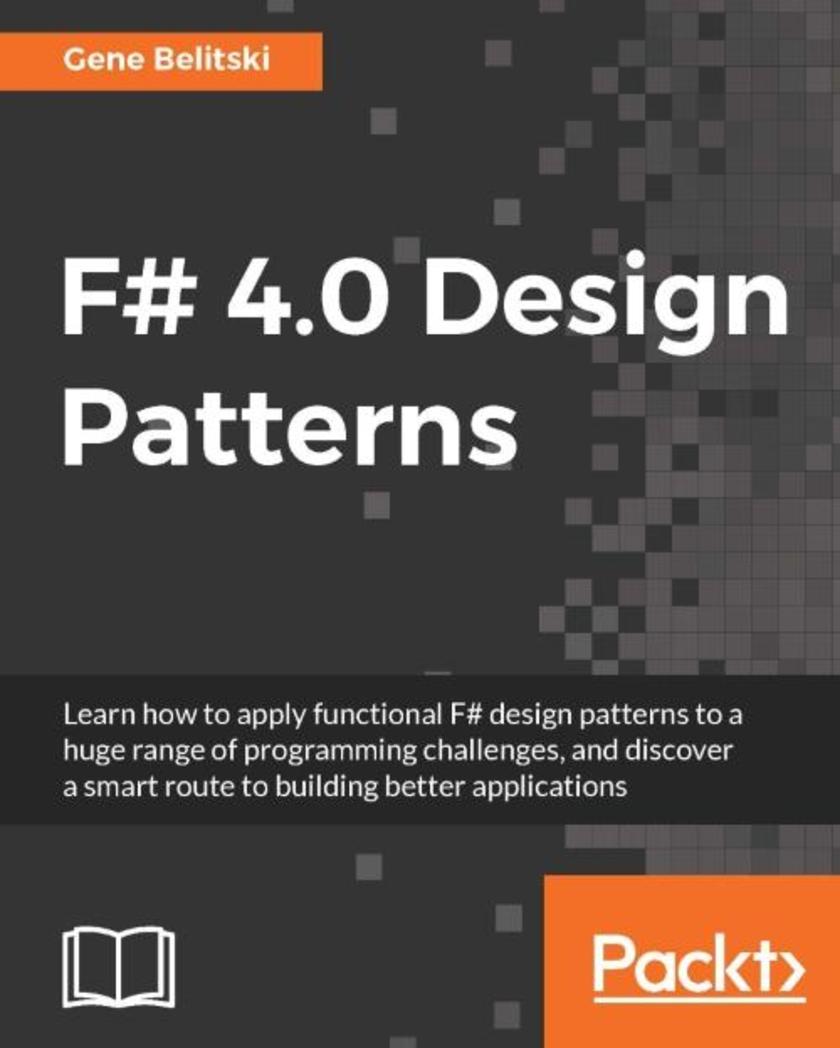
F# 4.0 Design Patterns
¥80.65
Learn how to apply functional F# design patterns to a huge range of programming challenges, and discover a smart route to building better applications About This Book This book provides a path if you are coming from imperative and object-oriented paradigms It will take you to an intermediate level of functional programming in very practical manner to write enterprise-quality idiomatic F# code Tackle complex computing problems with simple code by fully embracing the functional-first F# paradigm Packed full of practical coding examples to help you master F# programming and author optimal code Who This Book Is For This book is for .NET developers, web programmers, C# developers, and F# developers. So, if you have basic experience in F# programming and developing performance-critical applications, then this book is for you. What You Will Learn Acquire the practical knowledge to use the main functional design patterns Realign some imperative and object-oriented principles under the functional approach Develop your confidence in building and combining first-order and higher-order functions Learn to use core language pattern matching effectively Make use of native F# algebraic data types in place of custom-built classes Recognize and measure the difference in resource consumption between sequences and materialized data collections Navigate and use F# Core libraries with ease by seeing patterns behind specific library functions Master writing generic polymorphic code In Detail Following design patterns is a well-known approach to writing better programs that captures and reuses high-level abstractions that are common in many applications. This book will encourage you to develop an idiomatic F# coding skillset by fully embracing the functional-first F# paradigm. It will also help you harness this powerful instrument to write succinct, bug-free, and cross-platform code. F# 4.0 Design Patterns will start off by helping you develop a functional way of thinking. We will show you how beneficial the functional-first paradigm is and how to use it to get the optimum results. The book will help you acquire the practical knowledge of the main functional design patterns, the relationship of which with the traditional Gang of Four set is not straightforward. We will take you through pattern matching, immutable data types, and sequences in F#. We will also uncover advanced functional patterns, look at polymorphic functions, typical data crunching techniques, adjusting code through augmentation, and generalization. Lastly, we will take a look at the advanced techniques to equip you with everything you need to write flawless code. Style and approach This book will teach you how to write F# code in an idiomatic functional-first manner, thereby improving the productivity of F# programmers. This book is ideal for an F# programmer who wants using F# in functional-first way.
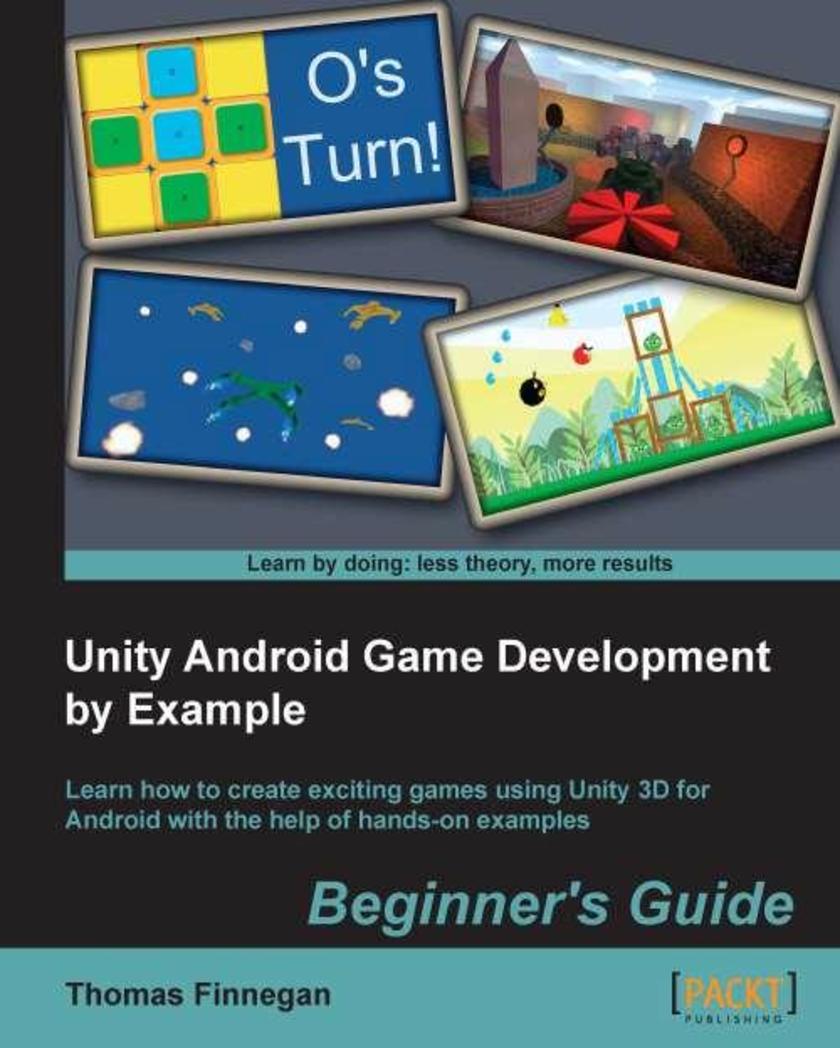
Unity Android Game Development by Example Beginner's Guide
¥80.65
Unity Android Game Development by Example Beginner's Guide consists of different game application examples. No prior experience with programming, Android, or Unity is required. You will learn everything from scratch and will have an organized flow of information specifically designed for complete beginners to Unity.Great for developers new to Unity, Android, or both, this book will walk you through everything you need to know about game development for the Android mobile platform. No experience with programming, Android, or Unity is required. Most of the assets used in each chapter project are provided with the book, but it is assumed that you have some access to basic image and model creation software. You will also need access to an Android powered device.
WordPress 3.5 Complete: Third Edition
¥80.65
WordPress 3.5 Complete: Third Edition is a comprehensive and step-by-step tutorial packed with screenshots and examples to make it easy and quick to pick it up.This WordPress book is a guide to WordPress for online publishers and web developers. If you are new to blogging and want to create your own blog or website from scratch, then "WordPress 3.5 Complete: Third Edition" is for you. No prior knowledge of HTML/CSS or PHP is required.
WordPress Web Application Development
¥80.65
An extensive, practical guide that explains how to adapt WordPress features, both conventional and trending, for web applications.This book is intended for WordPress developers and designers who have the desire to go beyond conventional website development to develop quality web applications within a limited time frame and for maximum profit. Experienced web developers who are looking for a framework for rapid application development will also find this to be a useful resource. Prior knowledge with of WordPress is preferable as the main focus will be on explaining methods for adapting WordPress techniques for web application development rather than explaining basic skills with WordPress.
Laravel Application Development Cookbook
¥80.65
Get to grips with a new technology, understand what it is and what it can do for you, and then get to work with the most important features and tasks.A short and precise guide to get you started with EaselJS , helping you to create some cool applications and games.EaselJS greatly simplifies application development in HTML5 Canvas using a syntax and an architecture very similar to the ActionScript 3.0 language. As a result, Flash / Flex developers will immediately feel at home but it’s very easy to learn even if you've never opened Flash in your life. The book targets Web designers, animators, Digital content producers, and Flash and Flex developers.
Lift Application Development Cookbook
¥80.65
Lift Application Development Cookbook contains practical recipes on everything you will need to create secure web applications using this amazing framework.The book first teaches you basic topics such as starting a new application and gradually moves on to teach you advanced topics to achieve a certain task. Then, it explains every step in detail so that you can build your knowledge about how things work.This book is for developers who have at least some basic knowledge about Scala and who are looking for a functional, secure, and modern web framework. Prior experience with HTML and JavaScript is assumed.

Microsoft SharePoint 2013 Disaster Recovery Guide
¥80.65
The style and approach of the book is an easytoread SharePoint admin guide. This is not a stepbystep instruction book, but rather a guide on how to implement and execute a disaster recovery plan to your SharePoint environment.This book is great for both SharePoint and SQL administrators new to the SharePoint 2013 architecture, and who are looking to get a good grounding in how to use implement a solid disaster recoveryrecovery plan. It's assumed that you have some experience in SharePoint and Windows Server and, as well be familiar with SQL.
Moodle 1.9 for Teaching Special Education Children (5-10): Beginner's Guide
¥80.65
Written with a step-by-step but friendly and engaging approach, this Packt Beginner's Guide is designed to be placed alongside the computer as your guide and mentor. Step-by-step tutorials are boosted by explanations of the reasoning behind what you are doing. You will quickly pick up the necessary skills, tips, and tricks for creating practical exercises using Moodle 1.9 with practical examples and see how the child with special education needs progresses. If you are an SEN teacher or SEN therapist with minimal knowledge of Moodle who is willing to exploit Web 2.0 possibilities using Moodle 1.9 as the background platform, this book is for you.
PrestaShop 1.3 Beginner's Guide
¥80.65
The book is structured so that following the chapters in order leads to building a fully functioning and live trading PrestaShop. Guidance is also given should you wish to learn or practice your skills in an offline, non-trading environment. Every chapter contains clearly structured and illustrated step-by-step explanation to achieve the goals discussed. Nothing is left for readers to work out themselves, but it would be very simple for them to use the information to go beyond the specific tutorials, should they wish to do so. There is optional additional reading, including more than a dozen specifically written downloadable e-books made available on the book's support website just for readers of PrestaShop 1.3 Beginners Guide. This book is for anybody who wants a fully functioning e-commerce store using PrestaShop. You do not have to have any previous knowledge of PrestaShop or any aspect of e-commerce or business in general. If you do, then you will probably find this guide really valuable as well. The book covers all you need to know about starting your own e-commerce business.
Plone 3 Products Development Cookbook
¥80.65
The examples in this book follow a sample project creating a digital newspaper website to meet the requirements of a fictional customer who wants to place commercial advertisements all over the site. The whole book is a comprehensive collection of recipes that elaborate a series of well known use cases. You will find an organized step-by-step procedure to accomplish each task followed by detailed explanations to better understand how and why each topic was undertaken, and many links to online references and other related sections in the book that can supplement the subject in question. You can read the whole book or just pick the recipes that are relevant for you; where necessary, cross references will help you understand the recipes even if you do not read them in sequential order. This book is for programmers who have some knowledge of Python, Plone, and Zope. If you want to develop feature-rich add-on products in Plone, this book is for you. It is aimed at the development of backend features, so you need not have other web-related skills such as HTML, CSS, or JavaScript.
High Availability MySQL Cookbook
¥80.65
This book uses the approach of a cookbook. Each recipe provides the reader with easy step-by-step de*ions of the actions necessary to accomplish a specific task. It is designed to present what often appear as extremely complicated techniques as a series of simple-to-follow recipes, allowing readers to achieve high uptimes on their MySQL servers. This book is targeted at system administrators or database administrators who have basic familiarity with Linux, the shell, and MySQL. The typical user will be able to get MySQL installed and working, but needs practical guidance to make it highly available.
WordPress 2.9 E-Commerce
¥80.65
This book provides an easy to understand, step-by-step approach to installing, configuring, and using WP e-Commerce to run your online store. We will construct an example store in the book with enough information and flexibility to adapt the store to your specific needs. This book is for you, if you are interested in using WordPress as the basis for a store that can sell physical items, downloads, or services. It is ideal for a sole proprietor or small business owner with only basic, in-house technical skills. Some prior knowledge of WordPress will help, but is not required. No knowledge of PHP is expected, but it will also be helpful.
Joomla! 1.5: Beginner's Guide
¥80.65
Written with a fast-paced but friendly and engaging approach, this Packt Beginner's guide is designed to be placed alongside the computer as your guide and mentor to meet real-world web building challenges. Step-by-step tutorials are bolstered by explanations of the reasoning behind what you are doing. You will quickly pick up the necessary skills, tips, and tricks for building a successful Joomla! web site with practical examples that help you to learn by experiment and play. If you want to build and maintain your own web site, the Joomla! Beginner's Guide is perfect for you. It helps you build on the skills and knowledge you may already have on creating web sites—but even if you're new to this subject, you won't have any difficulty understanding the clear and friendly instructions and explanations. You learn how to build and maintain web sites without having to dive deep into HTML and CSS.
GlassFish Administration
¥80.65
This book provides an in-depth tutorial on administering the GlassFish application server. Every chapter starts with a clear discussion of the involved concepts, followed by step-by-step instructions on how to perform the administrative task. Clear illustrations and complete working code examples are used to help you visualize the relevant topics. If you are a Java EE application developer and architect who builds and deploys Java EE, Ruby on Rails, and other supported applications for the GlassFish Application Server, then this book is for you. This book is also very valuable if you are an administrator responsible for maintaining the GlassFish Server runtime. Basic knowledge of Java EE 5 is assumed but you need not have any previous knowledge of GlassFish. Those who already know the basics of GlassFish will still find this book useful as they will gain knowledge of administration tasks.
Blender 3D 2.49 Incredible Machines
¥80.65
This book presents practical tutorials and focuses on fun projects. It contains a lot of serious training material, but is presented in a fun and entertaining way. This book targets game designers/developers, artists, and product designers who want to create realistic images, 3D models, and videos of machines. You are expected to have experience with basic Blender operation, as the book is not a 'getting started' tutorial.
Linux Email
¥80.65
The book takes a practical, step-by-step approach to working with email servers. It starts by establishing the basics and setting up a mail server. Then you move to advanced sections like webmail access, security, backup, and more. You will find many examples and clear explanations that will facilitate learning. This book is aimed at technically confident users and new and part-time system administrators in small businesses, who want to set up a Linux-based email server without spending a lot of time becoming expert in the individual applications. Basic knowledge of Linux is expected.


