


 购物车
购物车 个人中心
个人中心
Unity 5.x By Example
¥90.46
An example-based practical guide to get you up and running with Unity 5.x About This Book The most updated resource on Unity 5.x with comprehensive discussion on all the new features of Unity 5.x Understand the core concepts surrounding Unity5 game development with this power-packed hands-on guide Brush up your existing game development skills and create games that have a brilliant gameplay using the excellent examples from this book Who This Book Is For The ideal target audience for this book would be game developers. They need not have previous experience with Unity since this book will cover all the basics about game development with unity. This would also be a very good resource for Unity developers who want to brush up their basic Unity skills and also get up and running with creating interesting games with Unity 5.x. What You Will Learn Understand core Unity concepts, such as game objects, components, and scenes Learn level design techniques for building immersive and interesting worlds Learn to make functional games with C# *ing Use the toolset creatively to build games of different themes and styles Learn to handle player controls and input functionality Dive into the process of working with terrains and world-creation tools Import custom content into Unity from third-party tools, such as Maya and Blender Get to grips with making both 2D and 3D games In Detail Unity is an exciting and popular engine in the game industry. Throughout this book, you’ll learn how to use Unity by making four fun game projects, from shooters and platformers to exploration and adventure games. Unity 5 By Example is an easy-to-follow guide for quickly learning how to use Unity in practical context, step by step, by making real-world game projects. Even if you have no previous experience of Unity, this book will help you understand the toolset in depth. You'll learn how to create a time-critical collection game, a twin-stick space shooter, a platformer, and an action-fest game with intelligent enemies. In clear and accessible prose, this book will present you with step-by-step tutorials for making four interesting games in Unity 5 and explain all the fundamental concepts along the way. Starting from the ground up and moving toward an intermediate level, this book will help you establish a strong foundation in making games with Unity 5. Style and approach This book would be a very unique resource for any game developer who wants to get up and running with Unity. The unique example based approach will take you through the most basic games towards the more complex ones and will gradually build your skill level.
Mastering Clojure
¥90.46
Understand the philosophy of the Clojure language and dive into its inner workings to unlock its advanced features, methodologies, and constructs About This Book Learn to handle data using sequences, reducers, and transducers in Clojure Explore the lesser known and more advanced features, constructs, and methodologies of the Clojure language and its ecosystem, such as asynchronous channels, actors, logic programming, and reactive programming Sharpen your Clojure skills through illustrative and comprehensive examples Who This Book Is For If you’re looking to learn more about the core libraries and dive deep into the Clojure language, then this book is ideal for you. Prior knowledge of the Clojure language is required. What You Will Learn Maximize the impact of parallelization, functional composition, and process transformation by composing reducers and transducers Process and manipulate data using sequences, reducers, and transducers in Clojure Modify and add features to the Clojure language using macros Explore the features of category theory and custom data sources for logic programming in Clojure Orchestrate parallelism and concurrency using built-in primitives as well as community libraries in Clojure Handle data with asynchronous and reactive programming methodologies and leverage it using the core.async library Test your code with unit tests, specs, and type checks to write testable code Troubleshoot and style your Clojure code to make it more maintainable In Detail Clojure is a general-purpose language from the Lisp family with an emphasis on functional programming. It has some interesting concepts and features such as immutability, gradual typing, thread-safe concurrency primitives, and macro-based metaprogramming, which makes it a great choice to create modern, performant, and scalable applications. Mastering Clojure gives you an insight into the nitty-gritty details and more advanced features of the Clojure programming language to create more scalable, maintainable, and elegant applications. You’ll start off by learning the details of sequences, concurrency primitives, and macros. Packed with a lot of examples, you’ll get a walkthrough on orchestrating concurrency and parallelism, which will help you understand Clojure reducers, and we’ll walk through composing transducers so you know about functional composition and process transformation inside out. We also explain how reducers and transducers can be used to handle data in a more performant manner. Later on, we describe how Clojure also supports other programming paradigms such as pure functional programming and logic programming. Furthermore, you’ll level up your skills by taking advantage of Clojure's powerful macro system. Parallel, asynchronous, and reactive programming techniques are also described in detail. Lastly, we’ll show you how to test and troubleshoot your code to speed up your development cycles and allow you to deploy the code faster. Style and approach This is an easy-to-follow project-based guide that throws you directly into the excitement of Clojure code. Mastering Clojure is for anyone who is interested in expanding their knowledge of language features and advanced functional programming.
Learning PHP 7
¥90.46
Learn the art of PHP programming through this example-rich book filled to the brim with tutorials every PHP developer needs to know About This Book Set up the PHP environment and get started with web programming Leverage the potential of PHP for server-side programming, memory management, and object-oriented programming (OOP) This book is packed with real-life examples to help you implement the concepts as you learn Who This Book Is For If you are a web developer or programmer who wants to create real-life web applications using PHP 7, or a beginner who wants to get started with PHP 7 programming, this book is for you. Prior knowledge of PHP, PHP 7, or programming is not mandatory. What You Will Learn Set up a server on your machine with PHP Use PHP syntax with the built-in server to create apps Apply the OOP paradigm to PHP to write richer code Use MySQL to manage data in your web applications Create a web application from scratch using MVC Add tests to your web application and write testable code Use an existing PHP framework to build and manage your applications Build REST APIs for your PHP applications Test the behavior of web applications with Behat In Detail PHP is a great language for building web applications. It is essentially a server-side *ing language that is also used for general purpose programming. PHP 7 is the latest version with a host of new features, and it provides major backwards-compatibility breaks. This book begins with the fundamentals of PHP programming by covering the basic concepts such as variables, functions, class, and objects. You will set up PHP server on your machine and learn to read and write procedural PHP code. After getting an understanding of OOP as a paradigm, you will execute MySQL queries on your database. Moving on, you will find out how to use MVC to create applications from scratch and add tests. Then, you will build REST APIs and perform behavioral tests on your applications. By the end of the book, you will have the skills required to read and write files, debug, test, and work with MySQL. Style and approach This book begins with the basics that all PHP developers use every day and then dives deep into detailed concepts and tricks to help you speed through development. You will be able to learn the concepts by performing practical tasks and implementing them in your daily activities, all at your own pace.
Learning ArcGIS for Desktop
¥90.46
Create, analyze, and map your spatial data with ArcGIS for Desktop About This Book Learn how to use ArcGIS for Desktop to create and manage geographic data, perform vector and raster analysis, design maps, and share your results Solve real-world problems and share your valuable results using the powerful instruments of ArcGIS for Desktop Step-by-step tutorials cover the main editing, analyzing, and mapping tools in ArcGIS for Desktop Who This Book Is For This book is ideal for those who want to learn how to use the most important component of Esri’s ArcGIS platform, ArcGIS for Desktop. It would be helpful to have a bit of familiarity with the basic concepts of GIS. Even if you have no prior GIS experience, this book will get you up and running quickly. What You Will Learn Understand the functionality of ArcGIS for Desktop applications Explore coordinate reference system concepts and work with different map projections Create, populate, and document a file geodatabase Manage, create, and edit feature shapes and attributes Built automate analysis workfl ows with ModelBuilder Apply basic principles of map design to create good-looking maps Analyze raster and three-dimensional data with the Spatial Analyst and 3D Analyst extensions In Detail ArcGIS for Desktop is one of the main components of the ESRI ArcGIS platform used to support decision making and solve real-world mapping problems. Learning ArcGIS for Desktop is a tutorial-based guide that provides a practical experience for those who are interested in start working with ArcGIS. The first five chapters cover the basic concepts of working with the File Geodatabase, as well as editing and symbolizing geospatial data. Then, the book focuses on planning and performing spatial analysis on vector and raster data using the geoprocessing and modeling tools. Finally, the basic principles of cartography design will be used to create a quality map that presents the information that resulted from the spatial analysis previously performed. To keep you learning throughout the chapters, all exercises have partial and final results stored in the dataset that accompanies the book. Finally, the book offers more than it promises by using the ArcGIS Online component in the tutorials as source of background data and for results sharing Style and approach This easy-to-follow guide is full of hands-on exercises that use open and free geospatial datasets. The basic features of the ArcGIS for Desktop are explained in a step-by-step style.
QGIS 2 Cookbook
¥90.46
Become a QGIS power user and master QGIS data management, visualization, and spatial analysis techniques About This Book Explore and create time-based visualizations and build interactive maps Maximize your use of the QGIS features, plugins and toolbox automation Packed with lots of sample datasets to enable a better understanding of the code Who This Book Is For If you are an intermediate GIS user, with either previous experience in QGIS or any other GIS application, this is the book for you. The recipes can be used to learn more advanced techniques in QGIS or to replicate the functionalities equivalent to other GIS platforms. This book assumes that you already have a working QGIS system in place. What You Will Learn Import and export common tricky spatial data formats Perform classic vector and raster analysis with QGIS Utilize spatial databases and data management tools Use and create geographic web services and maps Explore and create time-based visualizations Perform network building and routing analysis Extend QGIS capabilities with popular plugins and toolbox automation Make beautiful and unique maps with customized cartography In Detail QGIS is a user-friendly, cross-platform desktop geographic information system used to make maps and analyze spatial data. QGIS allows users to understand, question, interpret, and visualize spatial data in many ways that reveal relationships, patterns, and trends in the form of maps. This book is a collection of simple to advanced techniques that are needed in everyday geospatial work, and shows how to accomplish them with QGIS. You will begin by understanding the different types of data management techniques, as well as how data exploration works. You will then learn how to perform classic vector and raster analysis with QGIS, apart from creating time-based visualizations. Finally, you will learn how to create interactive and visually appealing maps with custom cartography. By the end of this book, you will have all the necessary knowledge to handle spatial data management, exploration, and visualization tasks in QGIS. Style and approach This book covers practical examples, with step-by-step instructions on how to use real world data covering common GIS operations and the different analysis techniques. It provides detailed explanations and applications of QGIS concepts that will allow the user to effectively analyze spatial data.

Mastering QlikView Data Visualization
¥90.46
Take your QlikView skills to the next level and master the art of creating visual data analysis for real business needs About This Book Explore how to create your own QlikView data laboratory and how to develop QlikView applications using agile project methods Implement advanced data visualization and analysis for common business requirements from the sales, finance, marketing, inventory, operations, and human resources departments Learn from real-life experience shared in this book that will give you the upper hand in your next QlikView project Who This Book Is For This book is intended for developers who want to go beyond their technical knowledge of QlikView and understand how to create analysis and data visualizations that solve real business needs. You should have a basic understanding of advanced QlikView functions. What You Will Learn Apply advanced QlikView techniques such as set analysis and nested aggregation in order to deliver common business requirements Understand real business requirements for sales, finance, marketing, and human resources departments Discover when to apply more advanced data visualization such as frequency polygons, bullet graphs, and XmR charts Go beyond native QlikView and include geographical analysis, planning, and sentiment analysis in your QlikView application Troubleshoot common errors we discover at the moment we visualize data in QlikView Develop a plan to master Qlik Sense data visualization In Detail Just because you know how to swing a hammer doesn't mean you know how to build a house. Now that you've learned how to use QlikView, it's time to learn how to develop meaningful QlikView applications that deliver what your business users need. You will explore the requirements and the data from several business departments in order to deliver the most amazing analysis and data visualizations. In doing so, you will practice using advanced QlikView functions, chart object property options, and extensions to solve real-world challenges. Style and approach This hands-on guide follows the story of a company implementing QlikView as its enterprise data discovery solution. Each chapter starts with an understanding of the business requirements and the data model, and then helps you create insightful analysis and data visualizations. Each chapter expands on what was done in the previous chapter as we follow this continuously improving iterative process.
Mastering Machine Learning with R - Second Edition
¥90.46
This book will teach you advanced techniques in machine learning with the latest code in R 3.3.2. You will delve into statistical learning theory and supervised learning; design efficient algorithms; learn about creating Recommendation Engines; use multi-class classification and deep learning; and more. You will explore, in depth, topics such as data mining, classification, clustering, regression, predictive modeling, anomaly detection, boosted trees with XGBOOST, and more. More than just knowing the outcome, you'll understand how these concepts work and what they do. With a slow learning curve on topics such as neural networks, you will explore deep learning, and more. By the end of this book, you will be able to perform machine learning with R in the cloud using AWS in various scenarios with different datasets. What you will learn ?Gain deep insights into the application of machine learning tools in the industry ?Manipulate data in R efficiently to prepare it for analysis ?Master the skill of recognizing techniques for effective visualization of data ?Understand why and how to create test and training data sets for analysis ?Master fundamental learning methods such as linear and logistic regression ?Comprehend advanced learning methods such as support vector
Effective Amazon Machine Learning
¥90.46
Predictive analytics is a complex domain requiring coding skills, an understanding of the mathematical concepts underpinning machine learning algorithms, and the ability to create compelling data visualizations. Following AWS simplifying Machine learning, this book will help you bring predictive analytics projects to fruition in three easy steps: data preparation, model tuning, and model selection. This book will introduce you to the Amazon Machine Learning platform and will implement core data science concepts such as classification, regression, regularization, overfitting, model selection, and evaluation. Furthermore, you will learn to leverage the Amazon Web Service (AWS) ecosystem for extended access to data sources, implement realtime predictions, and run Amazon Machine Learning projects via the command line and the Python SDK. Towards the end of the book, you will also learn how to apply these services to other problems, such as text mining, and to more complex datasets. What you will learn ?Learn how to use the Amazon Machine Learning service from scratch for predictive analytics ?Gain hands-on experience of key Data Science concepts ?Solve classic regression and classification problems ?Run projects programmatically via the command line and the Python SDK
Enterprise Application Architecture with .NET Core
¥90.46
If you want to design and develop enterprise applications using .NET Core as the development framework and learn about industry-wide best practices and guidelines, then this book is for you. The book starts with a brief introduction to enterprise architecture, which will help you to understand what enterprise architecture is and what the key components are. It will then teach you about the types of patterns and the principles of software development, and explain the various aspects of distributed computing to keep your applications effective and scalable. These chapters act as a catalyst to start the practical implementation, and design and develop applications using different architectural approaches, such as layered architecture, service oriented architecture, microservices and cloud-specific solutions. Gradually, you will learn about the different approaches and models of the Security framework and explore various authentication models and authorization techniques, such as social media-based authentication and safe storage using app secrets. By the end of the book, you will get to know the concepts and usage of the emerging fields, such as DevOps, BigData, architectural practices, and Artificial Intelligence.
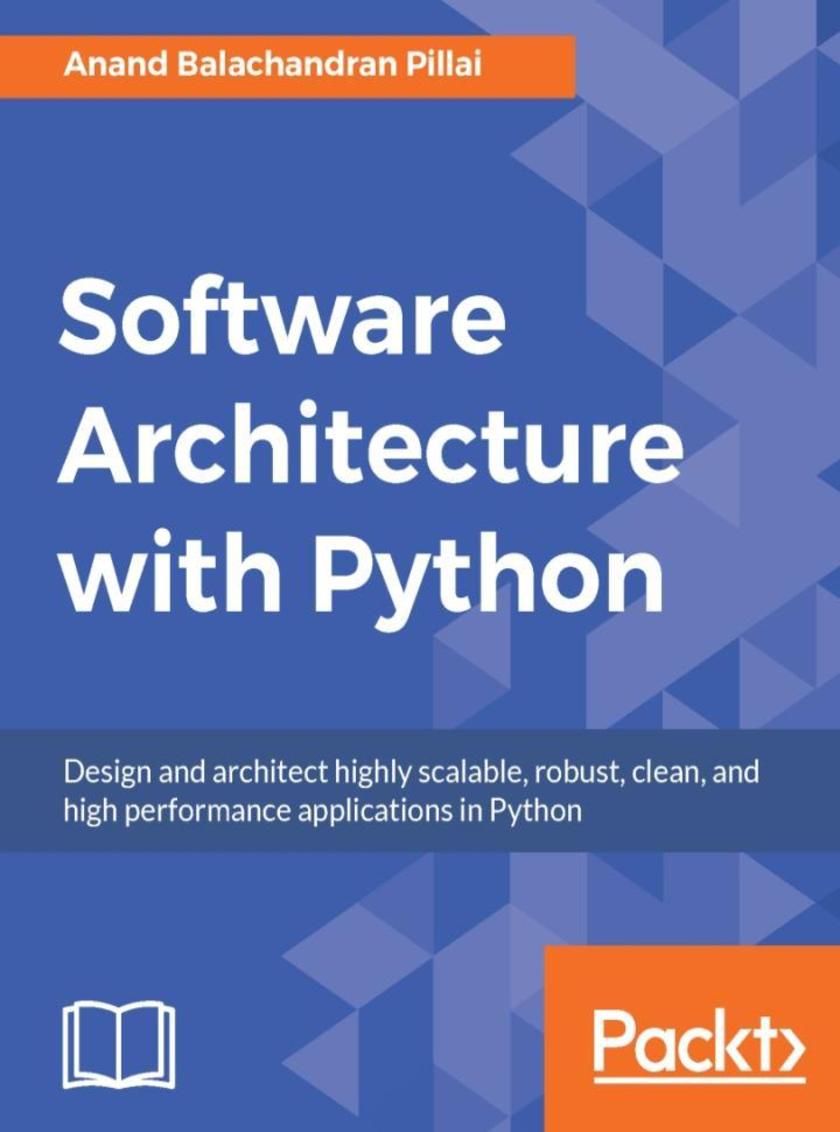
Software Architecture with Python
¥90.46
"Key Features ?Identify design issues and make the necessary adjustments to achieve improved performance ?Understand practical architectural quality attributes from the perspective of a practicing engineer and architect using Python ?Gain knowledge of architectural principles and how they can be used to provide accountability and rationale for architectural decisions Book De*ion This book starts off by explaining how Python fits into an application architecture. As you move along, you will understand the architecturally significant demands and how to determine them. Later, you'll get a complete understanding of the different architectural quality requirements that help an architect to build a product that satisfies business needs, such as maintainability/reusability, testability, scalability, performance, usability, and security. You will use various techniques such as incorporating DevOps, Continuous Integration, and more to make your application robust. You will understand when and when not to use object orientation in your applications. You will be able to think of the future and design applications that can scale proportionally to the growing business. The focus is on building the business logic based on the business process documentation and which frameworks are to be used when. We also cover some important patterns that are to be taken into account while solving design problems as well as those in relatively new domains such as the Cloud. This book will help you understand the ins and outs of Python so that you can make those critical design decisions that not just live up to but also surpass the expectations of your clients. What you will learn ?Build programs with the right architectural attributes ?Use Enterprise Architectural Patterns to solve scalable problems on the Web ?Understand design patterns from a Python perspective ?Optimize the performance testing tools in Python ?Deploy code in remote environments or on the Cloud using Python ?Secure architecture applications in Python About the Author Anand Balachandran Pillai is an Engineering and Technology professional with over 18 years of experience in the software industry in Product Engineering, Software Design & Architecture and Research. He has a Bachelor's degree in Mechanical Engineering from the Indian Institute of Technology, Madras. He has worked at companies such as Yahoo!, McAfee, and Infosys in the roles of Lead Engineer and Architect in product development teams, to build new products. His interests lie in Software Performance Engineering, High Scalability Architectures, Security and Open source communities. He often works with startups in lead technical or consulting role. He is the founder of the Bangalore Python Users Group and a Fellow of the Python Software Foundation (PSF). Anand is currently working as Senior Architect of Yegii Inc. "
Mastering Windows PowerShell Scripting
¥90.46
If you are a system administrator who wants to become an expert in controlling and automating your Windows environment, then this book is for you. Prior knowledge of PowerShell's core elements and applications is required for this book.
TIBCO Spotfire – A Comprehensive Primer
¥90.46
If you are a business user or data professional, this book will give you a solid grounding in the use of TIBCO Spotfire. This book assumes no prior knowledge of Spotfire or even basic data and visualization concepts.
Learning Hadoop 2
¥90.46
If you are a system or application developer interested in learning how to solve practical problems using the Hadoop framework, then this book is ideal for you. You are expected to be familiar with the Unix/Linux command-line interface and have some experience with the Java programming language. Familiarity with Hadoop would be a plus.
CentOS 6 Linux Server Cookbook
¥90.46
Presented in a step by step, easy to read tutorial style, this book presents the reader with real world solutions to every aspect of CentOS 6. "CentOS 6 Linux Server Cookbook" is for those professionals, students and enthusiasts who want a down-to-earth or hands-on approach to installing, configuring and running a Centos 6 server. Where a new user may experience this book as a series of solutions, a more experienced user will find a basis on which you can develop your existing skills. So rest assured, there is something for everyone and regardless of your current level of experience, if you are interested in using CentOS 6, then this is the book that offers the insight you need to move forward and master your server.
Microsoft System Center Virtual Machine Manager 2012 Cookbook
¥90.46
This is a Packt Cookbook, full with over 75 recipes for VMM users to carry out vital tasks quickly and easily. This book is written for solutions architects, technical consultants, administrators, and any other virtualization lover who needs to use Microsoft System Center Virtual Machine Manager in a real world environment.
Microsoft System Center 2012 Configuration Manager: Administration Cookbook
¥90.46
This cookbook is full of immediately useable recipes showing you how to administer System Center 2012 Configuration Manager and understand how to solve particular problems/scenarios. In addition to its cookbook style, which ensures the solutions are presented in a clear step-by-step manner, its explanations go into great detail, which makes it good learning material for everyone who has experience in System Center Configuration Manager and wants to improve. The book is designed in such a way that each recipe is presented as a separate, standalone entity and reading of other, prior recipes is not required. If you are an intermediate to advanced administrator who wants to administer System Center 2012 Configuration Manager and understand how to solve particular problems/scenarios, then this book is for you. You should have a working knowledge of System Center Configuration Manager, however, knowledge of System Center 2012 Configuration Manager is not necessarily required.
Monkey Game Development Beginners Guide
¥90.46
The first two chapters will provide you with grounding in Monkey. In each subsequent chapter you will create a complete game deployable to either iOS, Android, HTML5, FLASH, OSX, Windows and XNA. The last chapter will show you how to monetize the games so you can be commercially successful in the app development world. Do you want to quickly create games deployable to all the major desktop and mobile platforms?, if so look no further. You will learn how to utilize the highly versatile Monkey compiler to create 2d games deployable almost anywhere. No game development or programming experience is required.
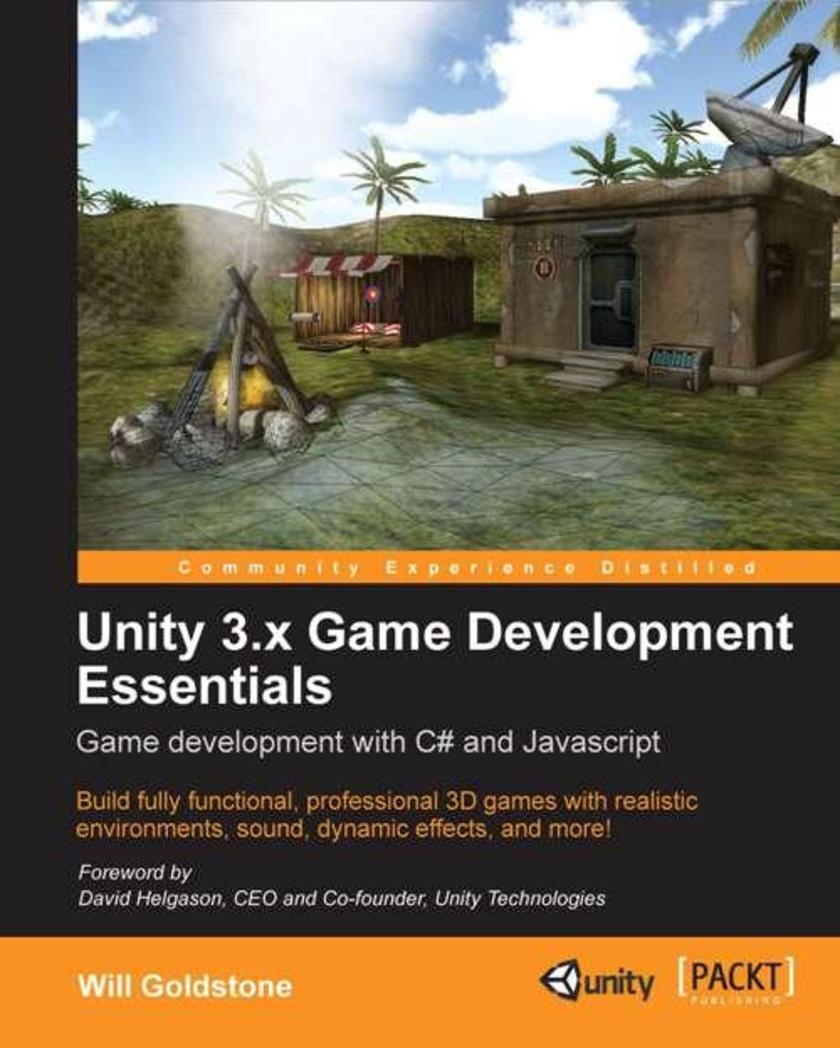
Unity 3.x Game Development Essentials
¥90.46
This book follows an informal, demystifying approach to the world of game development with the Unity game engine. With no prior knowledge of game development or 3D required, you will learn from scratch, taking each concept at a time working up to a full 3D mini-game. You'll learn *ing with C# or JavaScript and master the Unity development environment with easy-to-follow stepwise tasks. If you’re a designer or animator who wishes to take their first steps into game development or prototyping, or if you’ve simply spent many hours sitting in front of video games, with ideas bubbling away in the back of your mind, Unity and this book should be your starting point. No prior knowledge of game production is required, inviting you to simply bring with you a passion for making great games.
Moodle 2.0 Administration
¥90.46
Written in a clear, straightforward way with lots of screenshots and direct instructions, this book will equip you with all the tools you need to set up, optimize, extend, and maintain a Moodle system. A problem-solution approach has been taken when possible to bring the content more in line with your day-to-day operations. This book is written for technicians and systems administrators, as well as academic staff. Essentially anyone who has to administer a Moodle system. Whether you are dealing with a small-scale local Moodle system or a large-scale multi-site Virtual Learning Environment, this book will assist you with any administrative tasks. Some basic Moodle knowledge is helpful, but not essential.
C# Data Structures and Algorithms
¥90.46
A complete guide on using data structures and algorithms to write sophisticated C# code About This Book ? Master array, set and map with trees and graphs, among other fundamental data structures ? Delve into effective design and implementation techniques to meet your software requirements ? Explore illustrations to present data structures and algorithms, as well as their analysis in a clear, visual manner. Who This Book Is For This book is for developers who would like to learn the Data Structures and Algorithms in C#. Basic C# programming knowledge would be an added advantage. What You Will Learn ? How to use arrays and lists to get better results in complex scenarios ? Implement algorithms like the Tower of Hanoi on stacks of C# objects ? Build enhanced applications by using hashtables, dictionaries and sets ? Make a positive impact on efficiency of applications with tree traversal ? Effectively find the shortest path in the graph In Detail Data structures allow organizing data efficiently. They are critical to various problems and their suitable implementation can provide a complete solution that acts like reusable code. In this book, you will learn how to use various data structures while developing in the C# language as well as how to implement some of the most common algorithms used with such data structures. At the beginning, you will get to know arrays, lists, dictionaries, and sets together with real-world examples of your application. Then, you will learn how to create and use stacks and queues. In the following part of the book, the more complex data structures will be introduced, namely trees and graphs, together with some algorithms for searching the shortest path in a graph. We will also discuss how to organize the code in a manageable, consistent, and extendable way. By the end of the book,you will learn how to build components that are easy to understand, debug, and use in different applications. Style and approach Readers will be taken through all the indispensable data structures and algorithms so they can begin their coding journey in C#. At each step, the book will show how to implement these via examples while also discussing the attributes of each algorithm so readers are capable to make an informed choice.
Reinforcement Learning with TensorFlow
¥90.46
Leverage the power of the Reinforcement Learning techniques to develop self-learning systems using Tensorflow About This Book ? Learn reinforcement learning concepts and their implementation using TensorFlow ? Discover different problem-solving methods for Reinforcement Learning ? Apply reinforcement learning for autonomous driving cars, robobrokers, and more Who This Book Is For If you want to get started with reinforcement learning using TensorFlow in the most practical way, this book will be a useful resource. The book assumes prior knowledge of machine learning and neural network programming concepts, as well as some understanding of the TensorFlow framework. No previous experience with Reinforcement Learning is required. What You Will Learn ? Implement state-of-the-art Reinforcement Learning algorithms from the basics ? Discover various techniques of Reinforcement Learning such as MDP, Q Learning and more ? Learn the applications of Reinforcement Learning in advertisement, image processing, and NLP ? Teach a Reinforcement Learning model to play a game using TensorFlow and the OpenAI gym ? Understand how Reinforcement Learning Applications are used in robotics In Detail Reinforcement Learning (RL), allows you to develop smart, quick and self-learning systems in your business surroundings. It is an effective method to train your learning agents and solve a variety of problems in Artificial Intelligence—from games, self-driving cars and robots to enterprise applications that range from datacenter energy saving (cooling data centers) to smart warehousing solutions. The book covers the major advancements and successes achieved in deep reinforcement learning by synergizing deep neural network architectures with reinforcement learning. The book also introduces readers to the concept of Reinforcement Learning, its advantages and why it’s gaining so much popularity. The book also discusses on MDPs, Monte Carlo tree searches, dynamic programming such as policy and value iteration, temporal difference learning such as Q-learning and SARSA. You will use TensorFlow and OpenAI Gym to build simple neural network models that learn from their own actions. You will also see how reinforcement learning algorithms play a role in games, image processing and NLP. By the end of this book, you will have a firm understanding of what reinforcement learning is and how to put your knowledge to practical use by leveraging the power of TensorFlow and OpenAI Gym. Style and approach An Easy-to-follow, step-by-step guide to help you get to grips with real-world applications of Reinforcement Learning with TensorFlow.


