


 购物车
购物车 个人中心
个人中心
Planters, Merchants, and Slaves
¥294.30
As with any enterprise involving violence and lots of money, running a plantation in early British America was a serious and brutal enterprise. Beyond resources and weapons, a plantation required a significant force of cruel and rapacious men-men who, as Trevor Burnard sees it, lacked any better options for making money. In the contentious Planters, Merchants, and Slaves, Burnard argues that white men did not choose to develop and maintain the plantation system out of virulent racism or sadism, but rather out of economic logic because-to speak bluntly-it worked.These economically successful and ethically monstrous plantations required racial divisions to exist, but their successes were always measured in gold, rather than skin or blood. Burnard argues that the best example of plantations functioning as intended is not those found in the fractious and poor North American colonies, but those in their booming and integrated commercial hub, Jamaica. Sure to be controversial, this book is a major intervention in the scholarship on slavery, economic development, and political power in early British America, mounting a powerful and original argument that boldly challenges historical orthodoxy.

Physics Envy
¥294.30
At the close of the Second World War, modernist poets found themselves in an increasingly scientific world, where natural and social sciences claimed exclusive rights to knowledge of both matter and mind. Following the overthrow of the Newtonian worldview and the recent, shocking displays of the power of the atom, physics led the way, with other disciplines often turning to the methods and discoveries of physics for inspiration.?In Physics Envy, Peter Middleton examines the influence of science, particularly physics, on American poetry since World War II. He focuses on such diverse poets as Charles Olson, Muriel Rukeyser, Amiri Baraka, and Rae Armantrout, among others, revealing how the methods and language of contemporary natural and social sciences-and even the discourse of the leading popular science magazine Scientific American-shaped their work. The relationship, at times, extended in the other direction as well: leading physicists such as Robert Oppenheimer, Werner Heisenberg, and Erwin Schrdinger were interested in whether poetry might help them explain the strangeness of the new, quantum world. Physics Envy is a history of science and poetry that shows how ultimately each serves to illuminate the other in its quest for the true nature of things.
Joyce's Ghosts
¥294.30
For decades, James Joyce's modernism has overshadowed his Irishness, as his self-imposed exile and association with the high modernism of Europe's urban centers has led critics to see him almost exclusively as a cosmopolitan figure.In Joyce's Ghosts, Luke Gibbons mounts a powerful argument that this view is mistaken: Joyce's Irishness is intrinsic to his modernism, informing his most distinctive literary experiments. Ireland, Gibbons shows, is not just a source of subject matter or content for Joyce, but of form itself. Joyce's stylistic innovations can be traced at least as much to the tragedies of Irish history as to the shock of European modernity, as he explores the incomplete project of inner life under colonialism. Joyce's language, Gibbons reveals, is haunted by ghosts, less concerned with the stream of consciousness than with a vernacular interior dialogue, the "e;shout in the street,"e; that gives room to outside voices and shadowy presences, the disruptions of a late colonial?culture in crisis.Showing us how memory under modernism breaks free of the nightmare of history, and how in doing so it gives birth to new forms, Gibbons forces us to think anew about Joyce's achievement and its foundations.

Power to Die
¥294.30
The history of slavery in early America is a history of suicide. On ships crossing the Atlantic, enslaved men and women refused to eat or leaped into the ocean. They strangled or hanged themselves. They tore open their own throats. In America, they jumped into rivers or out of windows, or even ran into burning buildings. Faced with the reality of enslavement, countless Africans chose death instead.In The Power to Die, Terri L. Snyder excavates the history of slave suicide, returning it to its central place in early American history. How did people-traders, plantation owners, and, most importantly, enslaved men and women themselves-view and understand these deaths, and how did they affect understandings of the institution of slavery then and nowSnyder draws on ships' logs, surgeons' journals, judicial and legislative records, newspaper accounts, abolitionist propaganda and slave narratives, and many other sources to build a grim picture of slavery's toll and detail the ways in which suicide exposed the contradictions of slavery, serving as a powerful indictment that resonated throughout the Anglo-Atlantic world and continues to speak to historians today.

Worldmakers
¥294.30
In this beautifully conceived book, Ayesha Ramachandran reconstructs the imaginative struggles of early modern artists, philosophers, and writers to make sense of something that we take for granted: the world, imagined as a whole. Once a new, exciting, and frightening concept, "e;the world"e; was transformed in the sixteenth and seventeenth centuries. But how could one envision something that no one had ever seen in its totalityThe Worldmakers moves beyond histories of globalization to explore how "e;the world"e; itself-variously understood as an object of inquiry, a comprehensive category, and a system of order-was self-consciously shaped by human agents. Gathering an international cast of characters, from Dutch cartographers and French philosophers to Portuguese and English poets, Ramachandran describes a history of firsts: the first world atlas, the first global epic, the first modern attempt to develop a systematic natural philosophy-all part of an effort by early modern thinkers to capture "e;the world"e; on the page.
Patterns in Nature
¥294.30
What species occur where, and why, and why some places harbor more species than others are basic questions for ecologists. Some species simply live in different places: fish live underwater; birds do not. Adaptations follow: most fish have gills; birds have lungs. But as Patterns in Nature reveals, not all patterns are so trivial.Travel from island to island and the species change. Travel along any gradient-up a mountain, from forest into desert, from low tide to high tide on a shoreline -and again the species change, sometimes abruptly. What explains the patterns of these distributionsSome patterns might be as random as a coin toss. But as with a coin toss, can ecologists differentiate associations caused by a multiplicity of complex, idiosyncratic factors from those structured by some unidentified but simple mechanismsCan simple mechanisms that structure communities be inferred from observations of which species associations naturally occurFor decades, community ecologists have debated about whether the patterns are random or show the geographically pervasive effect of competition between species. Bringing this vigorous debate up to date, this book undertakes the identification and interpretation of nature's large-scale patterns of species co-occurrence to offer insight into how nature truly works.Patterns in Nature explains the computing and conceptual advances that allow us to explore these issues. It forces us to reexamine assumptions about species distribution patterns and will be of vital importance to ecologists and conservationists alike.
Making the Mission
¥294.30
In the aftermath of the 1906 San Francisco earthquake, residents of the city's iconic Mission District bucked the city-wide development plan, defiantly announcing that in their neighborhood, they would be calling the shots. Ever since, the Mission has become known as a city within a city, and a place where residents have, over the last century, organized and reorganized themselves to make the neighborhood in their own image.In Making the Mission, Ocean Howell tells the story of how residents of the Mission District organized to claim the right to plan their own neighborhood and how they mobilized a politics of place and ethnicity to create a strong, often racialized identity-a pattern that would repeat itself again and again throughout the twentieth century. Surveying the perspectives of formal and informal groups, city officials and district residents, local and federal agencies, Howell articulates how these actors worked with and against one another to establish the very ideas of the public and the public interest, as well as to negotiate and renegotiate what the neighborhood wanted. In the process, he shows that national narratives about how cities grow and change are fundamentally insufficient; everything is always shaped by local actors and concerns.

From Boom to Bubble
¥294.30
During the Great Recession, the housing bubble took much of the blame for bringing the American economy to its knees, but commercial real estate also experienced its own boom-and-bust in the same time period. In Chicago, for example, law firms and corporate headquarters abandoned their historic downtown office buildings for the millions of brand-new square feet that were built elsewhere in the central business district. What causes construction booms like this, and why do they so often leave a glut of vacant space and economic distress in their wake?In From Boom to Bubble, Rachel Weber debunks the idea that booms occur only when cities are growing and innovating. Instead, she argues, even in cities experiencing employment and population decline, developers rush to erect new office towers and apartment buildings when they have financial incentives to do so. Focusing on the main causes of overbuilding during the early 2000s, Weber documents the case of Chicago's "e;Millennial Boom,"e; showing that the Loop's expansion was a response to global and local pressures to produce new assets. An influx of cheap cash, made available through the use of complex financial instruments, helped transform what started as a boom grounded in modest occupant demand into a speculative bubble, where pricing and supply had only tenuous connections to the market. Innovative and compelling, From Boom to Bubble is an unprecedented historical, sociological, and geographic look at how property markets change and fail-and how that affects cities.

Great Transformations in Vertebrate Evolution
¥294.30
How did flying birds evolve from running dinosaurs, terrestrial trotting tetrapods evolve from swimming fish, and whales return to swim in the seaThese are some of the great transformations in the 500-million-year history of vertebrate life. And with the aid of new techniques and approaches across a range of fields-work spanning multiple levels of biological organization from DNA sequences to organs and the physiology and ecology of whole organisms-we are now beginning to unravel the confounding evolutionary mysteries contained in the structure, genes, and fossil record of every living species.This book gathers a diverse team of renowned scientists to capture the excitement of these new discoveries in a collection that is both accessible to students and an important contribution to the future of its field. Marshaling a range of disciplines-from paleobiology to phylogenetics, developmental biology, ecology, and evolutionary biology-the contributors attack particular transformations in the head and neck, trunk, appendages such as fins and limbs, and the whole body, as well as offer synthetic perspectives. Illustrated throughout, Great Transformations in Vertebrate Evolution not only reveals the true origins of whales with legs, fish with elbows, wrists, and necks, and feathered dinosaurs, but also the relevance to our lives today of these extraordinary narratives of change.
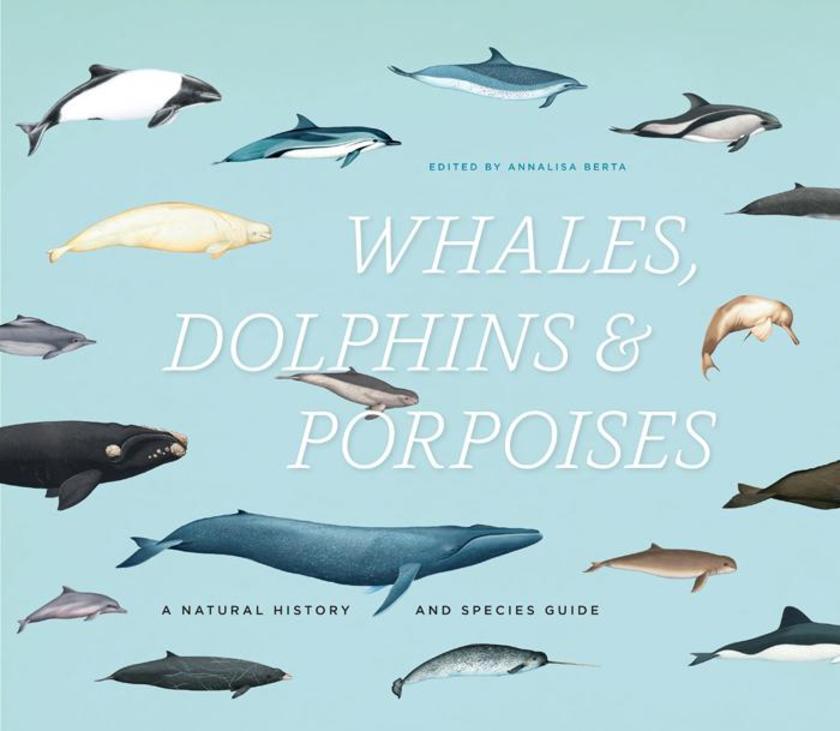
Whales, Dolphins, and Porpoises
¥294.30
The eighty-nine cetacean species that swim our seas and rivers are as diverse as they are intelligent and elusive, from the hundred-foot-long, two-hundred-ton blue whale to the lesser-known tucuxi, ginkgo-toothed beaked whale, and diminutive, critically endangered vaquita. The huge distances these highly migratory creatures cover and the depths they dive mean we catch only the merest glimpses of their lives as they break the surface of the water. But thanks to the marriage of science and technology, we are now beginning to understand their anatomy, complex social structures, extraordinary communication abilities, and behavioral patterns. In this beautifully illustrated guide, renowned marine mammalogist Annalisa Berta draws on the contributions of a pod of fellow whale biologists to present the most comprehensive, authoritative overview ever published of these remarkable aquatic mammals.Opening with an accessible rundown of cetacean biology-including the most recent science on feeding, mating, and communication-Whales, Dolphins, and Porpoises then presents species-specific natural history on a range of topics, from anatomy and diet to distribution and conservation status. Each entry also includes original drawings of the species and its key identifiers, such as fin shape and color, tooth shape, and characteristic markings as they would appear both above and below water-a feature unique to this book.Figures of myth and-as the debate over hunting rages on-figures of conflict since long before the days of Moby-Dick, whales, dolphins, and porpoises are also ecologically important and, in many cases, threatened. Written for general enthusiasts, emergent cetacean fans, and biologists alike, this stunning, urgently needed book will serve as the definitive guide for years to come.

How to Use Community Health Assessment to Reduce the Burden of HIV and AIDS Worl
¥294.22
How to Use Community Health Assessment to Reduce the Burden of HIV and AIDS Worldwide
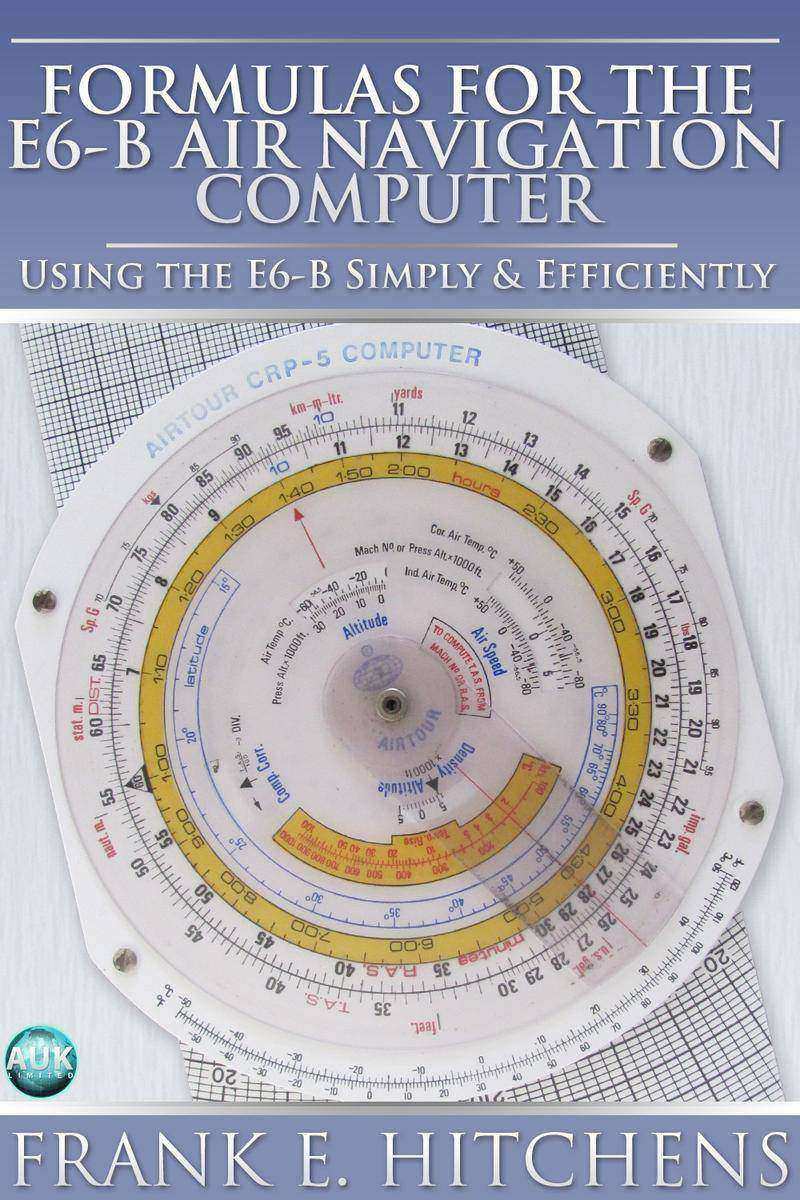
Formulas for the E6-B Air Navigation Computer
¥294.20
Formulas for the Air Navigation Computer is written for pilots and air navigators at all levels of experience from the novice to the professional. The book is self-help on how to use the E6-B Air Navigation Computer. An E6-B Air Navigation Computer is a circular slide rule with a wind slide on the reverse side. It is dedicated to performing all calculations related to pre-flight planning and in-flight air navigation. Every pilot has an E6-B Air Navigation Computer, which is supplied with a very brief instructional booklet when the E6-B is purchased. However, the booklet only covers a few basic formulas, and many more formulas are required for passing the pilot navigation exams at various levels and, of course, for all operational flying. Obtaining all these different formulas from various sources is time consuming, as this author has discovered over the years. They are not readily available in one book. This is the reason for writing Formulas for the Air Navigation Computer; it is a unique collection of air navigation computer formulas. The formulas are written as they appear when set up on the E6-B Air Navigation Computer. A full description on how to solve each formula is included, along with a worked example and also the methods for using the wind slide to calculate wind triangle and other navigational problems associated with the wind slide. The book is easy to follow by the novice pilot and a convenient reference source for the more experienced pilot. The book is complete with all the formulas a pilot of any level should need to know. It is laid out in a simple way with over 122 formulas and methods, covering Time, Speed & Distance, Air Speed, Altitude Navigation, VNAV, One-in-Sixty Rule, Wind triangle Calculations, Wind Finding methods, Fuel Calculations, Pressure Pattern Navigation and more.

Spinoza
¥294.20
Spinoza is among the most pivotal thinkers in the history of philosophy. He has had a deep and enduring influence on a wide range of philosophical subjects, and his work is encountered by all serious students of Western philosophy. His Ethics is one of the seminal works of metaphysical, moral, religious and political thought; his Theological-Political Treatise inaugurated a novel method of biblical exegesis; and both his political works developed the pre-eminence of democracy above all other regimes. Nevertheless, the significance of Spinoza's philosophy is matched by its complexity. His system presents a considerable challenge for the modern student; his language is frequently opaque, while the esoteric themes explored in his work often require elucidation. Spinoza: Basic Concepts intends to overcome most of such difficulties. Each essay in this collection explores a key concept involved in Spinoza's thinking, relating it to his understanding of philosophy, outlining the arguments and explaining the implications of each concept. Together, the chapters cover the full range of Spinoza's interdisciplinary system of philosophy.
Thought Thinking
¥294.20
The Italian author Giovanni Gentile (1875-1944) occupied a radical position among philosophers of the first half of the twentieth century. He tried in earnest to revolutionize idealist theory, developing a doctrine that retained the idealist conception of the thinking subject as the centre and source of any intelligible reality, while eschewing many of the unwarranted abstractions that had pervaded earlier varieties of idealism and led their adherents astray.Given his great prominence during his lifetime, it is perhaps remarkable that Gentile is so little discussed, and even then so poorly understood, in the English-speaking world. Few of his works have ever been translated into English, and these represent only a fraction of his great corpus and the many topics discussed therein. This neglect is partly explained by his close association with the Partito Nazionale Fascista (National Fascist Party), of which he remained a loyal member and supporter between 1923 and his assassination in 1944.The volume comprises eleven essays. Seven of these are new pieces written especially for Thought Thinking, and are intended both to contribute to ongoing debates about Gentile's philosophy and to indicate just a few of its many aspects that continue to draw the attention of philosophers, political theorists and intellectual historians. These are supplemented by new English translations of four of Gentile's shorter works, selected to offer some direct insight into his ideas and style of writing.

Learning Disability Nursing Practice
¥294.20
This text encapsulates not only the origins of nursing in the learning disability field but also contemporary perspectives and areas for specialist nursing practice. The book is divided into four sections: origins, perspectives, practice, and further perspectives. Section one (origins) describes Great Barr Colony and explores the conceptions of practice of actual attendants and nurses who worked there. It gives readers an in-depth focus on aspects of work and practice not accounted for in the literature to date. Section two (perspectives) explores social policy perspectives from the past eras of the workhouse, the colony and the hospital, through to the present age of citizenship. Research in learning disability nursing practice is identifi ed through scoping exercises to identify its current status. The section questions the research and practice developments that have come of age and that constitute a challenge within an evidence-based health and social care world. Section three (practice) identifi es a wide range of specialist areas of nursing practice, including community learning disability nursing, epilepsy, forensics, health facilitation, autism, mental health, challenging behaviour, children s services and working with people with profound and multiple learning disabilities. Section four (further perspectives) addresses areas of contemporary and future concern, namely, educational curricula for nurses and the importance of inter-professional education and practice development.
The Spy Quartet: An Expensive Place to Die, Spy Story, Yesterday’s Spy, Twinkle
¥291.85
Four classic spy novels, four unnamed spies - just like Britain’s uber-cool sixties spy, ‘Harry Palmer’ - together in one e-bundle for the first time. When Len Deighton wrote THE IPCRESS FILE, he not only reinvented spy fiction, he created a style icon and literary legend: ‘Harry Palmer’. The nameless, working-class spy of the books found fame in three films starring Michael Caine, and the smart-talking, anti-establishment spy was suddenly cool. Hollywood would create a host of similarly super-slick spies, such as Napoleon Solo and Illya Kuryakin in The Man from Uncle. But ‘ Harry Palmer’ remains the best, and this quartet showcases the international exploits of someone who looks, sounds and acts like Harry. AN EXPENSIVE PLACE TO DIE – Into the twilight world of Parisian decadence and hidden motives come the agents of four world powers. SPY STORY – An attempted murder, the defection of a senior KGB official, and an explosive nuclear submarine chase beneath the Arctic Ocean are the sparks that ignite a brutal East-West power play. YESTERDAY’S SPY – They thought that Steve Champion, flamboyant hero and leader of an anti-Nazi intelligence group was gone. Then rumours surface of Champion’s sinister Arab connections and weapons-smuggling, forcing his old friend to investigate. TWINKLE, TWINKLE, LITTLE SPY – A Soviet space scientist defector, an English spy and an ex-CIA agent leave a blood-soaked killing trail across three continents, while overhead spy satellites watch all, twinkling like stars.
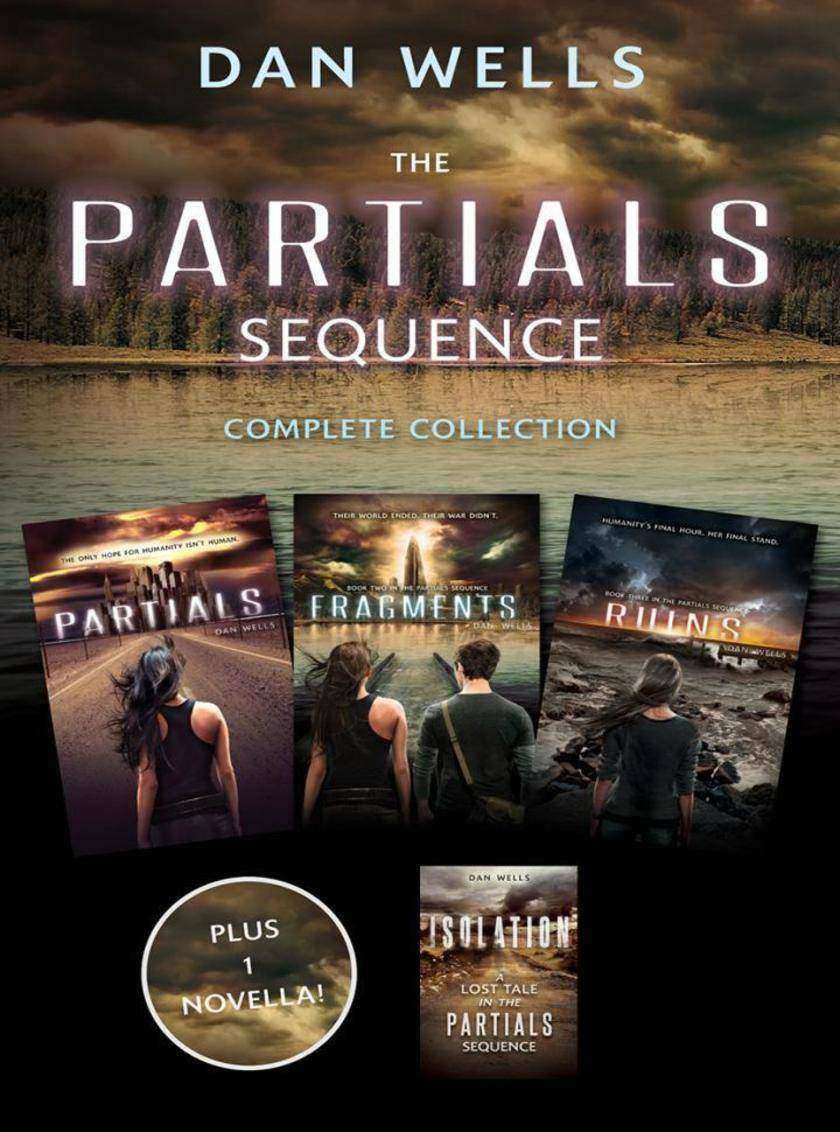
The Partials Sequence Complete Collection
¥291.26
For fans of The Hunger Games, Battlestar Galactica, and Blade Runner comes the Partials Sequence, a fast-paced, action-packed, and riveting sci-fi teen series, by acclaimed author Dan Wells. This collection contains all four books in the series.Partials: Humanity is all but extinguished after a war with Partials—engineered organic beings identical to humans—has decimated the population. Reduced to only tens of thousands by a weaponized virus to which only a fraction of humanity is immune, the survivors in North America have huddled together on Long Island. But sixteen-year-old Kira is determined to find a solution. As she tries desperately to save what is left of her race, she discovers that that the survival of both humans and Partials rests in her attempts to answer questions about the war's origin that she never knew to ask.Isolation: This digital novella takes us back to the front lines of this war, a time when mankind's ambition far outstripped its foresight. Heron, a newly trained Partial soldier who specializes in infiltration, is sent on a mission deep behind enemy lines. What she discovers there has far-reaching implications—not only for the Isolation War, but for Partials and humans alike long after this war is over.Fragments: After discovering the cure for RM, Kira Walker sets off on a terrifying journey into the ruins of postapocalyptic America and the darkest desires of her heart in order to uncover the means—and a reason—for humanity's survival.Ruins: Kira, Samm, and Marcus fight to prevent a final war between Partials and humans in the gripping final installment in the Partials Sequence. There is no avoiding it—the war to decide the fate of both humans and Partials is at hand. Both sides hold in their possession a weapon that could destroy the other, and Kira Walker has precious little time to prevent that from happening. She has one chance to save both species and the world with them, but it will only come at great personal cost.

Rereading the Fossil Record
¥288.41
Rereading the Fossil Record presents the first-ever historical account of the origin, rise, and importance of paleobiology, from the mid-nineteenth century to the late 1980s.?Drawing on a wealth of archival material, David Sepkoski shows how the movement was conceived and promoted by a small but influential group of paleontologists and examines the intellectual, disciplinary, and political dynamics involved in the ascendency of paleobiology. By tracing the role of computer technology, large databases, and quantitative analytical methods in the emergence of paleobiology, this book also offers insight into the growing prominence and centrality of data-driven approaches in recent science.
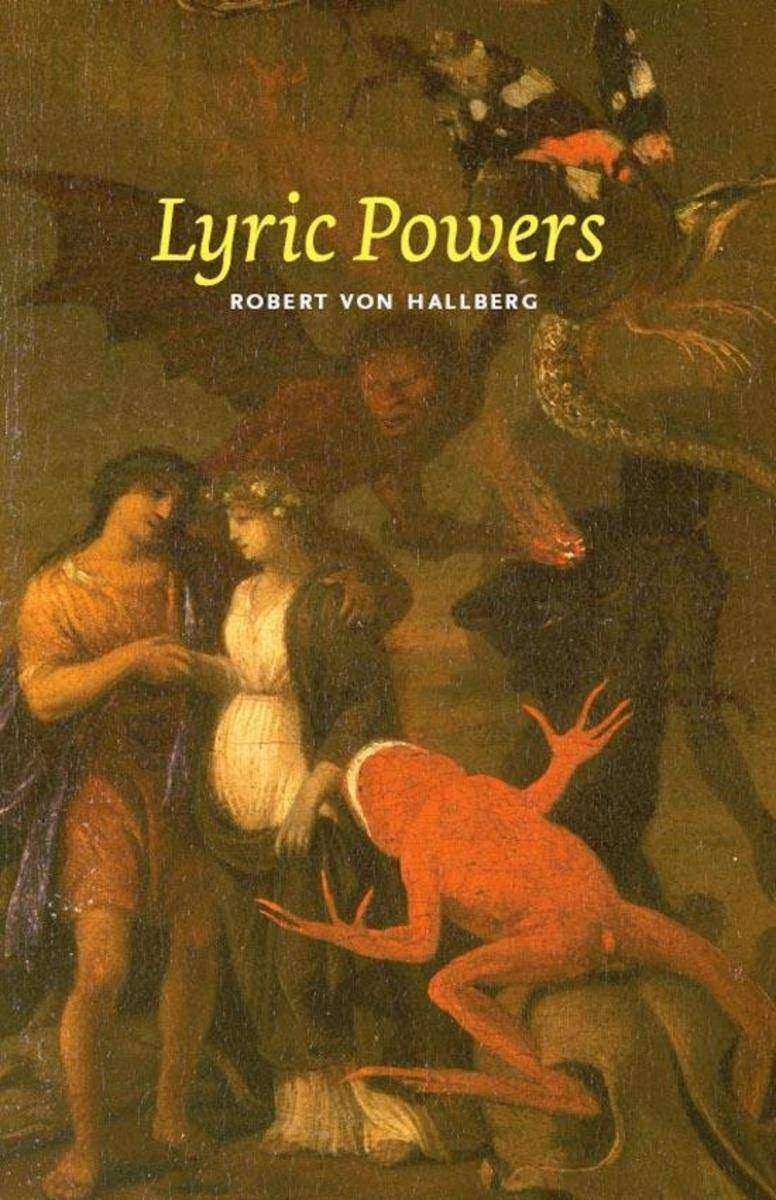
Lyric Powers
¥288.41
The authority of poetry varies from one period to another, from one culture to another. For Robert von Hallberg, the authority of lyric poetry has three sources: religious affirmation, the social institutions of those who speak the idioms from which particular poems are made, and the extraordinary cognition generated by the formal and musical resources of poems. Lyric Powers helps students, poets, and general readers to recognize the pleasures and understand the ambitions of lyric poetry.To explain why a reader might prefer one kind of poem to another, von Hallberg analyzes-beyond the political and intellectual significance of poems-the musicality of both lyric poetry and popular song, including that of Tin Pan Alley and doo-wop. He shows that poets have distinctive intellectual resources-not just rhetorical resources-for examining their subjects, and that the power of poetic language to generalize, not particularize, is what justly deserves a critic's attention.The first book in more than a decade from this respected critic, Lyric Powers will be celebrated as a genuine event by readers of poetry and literary criticism.

Philosophy of Pseudoscience
¥288.41
What sets the practice of rigorously tested, sound science apart from pseudoscienceIn this volume, the contributors seek to answer this question, known to philosophers of science as "e;the demarcation problem."e; This issue has a long history in philosophy, stretching as far back as the early twentieth century and the work of Karl Popper. But by the late 1980s, scholars in the field began to treat the demarcation problem as impossible to solve and futile to ponder. However, the essays that Massimo Pigliucci and Maarten Boudry have assembled in this volume make a rousing case for the unequivocal importance of reflecting on the separation between pseudoscience and sound science. Moreover, the demarcation problem is not a purely theoretical dilemma of mere academic interest: it affects parents' decisions to vaccinate children and governments' willingness to adopt policies that prevent climate change. Pseudoscience often mimics science, using the superficial language and trappings of actual scientific research to seem more respectable. Even a well-informed public can be taken in by such questionable theories dressed up as science. Pseudoscientific beliefs compete with sound science on the health pages of newspapers for media coverage and in laboratories for research funding. Now more than ever the ability to separate genuine scientific findings from spurious ones is vital, and The Philosophy of Pseudoscience provides ground for philosophers, sociologists, historians, and laypeople to make decisions about what science is or isn't.
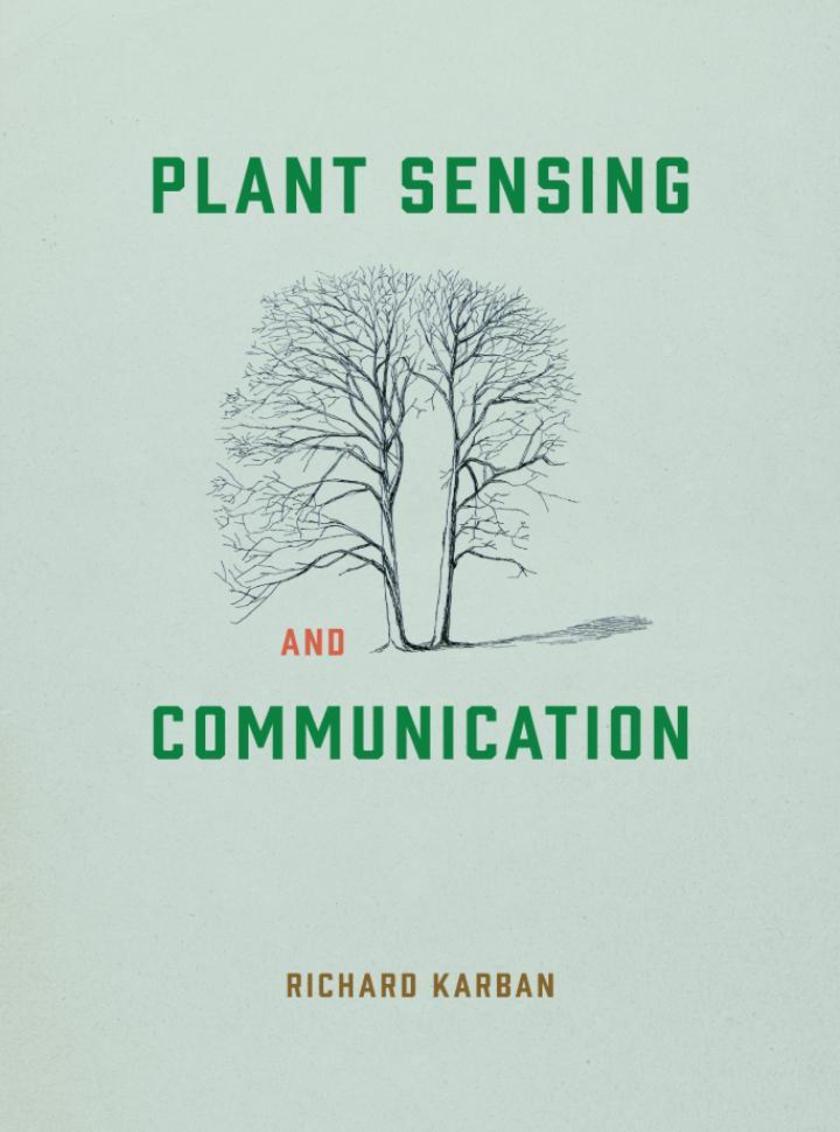
Plant Sensing and Communication
¥288.41
The news that a flowering weed-mousear cress (Arabidopsis thaliana)-can sense the particular chewing noise of its most common caterpillar predator and adjust its chemical defenses in response led to headlines announcing the discovery of the first "e;hearing"e; plant. As plants lack central nervous systems (and, indeed, ears), the mechanisms behind this "e;hearing"e; are unquestionably very different from those of our own acoustic sense, but the misleading headlines point to an overlooked truth: plants do in fact perceive environmental cues and respond rapidly to them by changing their chemical, morphological, and behavioral traits.In Plant Sensing and Communication, Richard Karban provides the first comprehensive overview of what is known about how plants perceive their environments, communicate those perceptions, and learn. Facing many of the same challenges as animals, plants have developed many similar capabilities: they sense light, chemicals, mechanical stimulation, temperature, electricity, and sound. Moreover, prior experiences have lasting impacts on sensitivity and response to cues; plants, in essence, have memory. Nor are their senses limited to the processes of an individual plant: plants eavesdrop on the cues and behaviors of neighbors and-for example, through flowers and fruits-exchange information with other types of organisms. Far from inanimate organisms limited by their stationary existence, plants, this book makes unquestionably clear, are in constant and lively discourse.


