


 购物车
 个人中心

Arduino Electronics Blueprints
¥80.65
This book is intended for those who want to learn about electronics and coding by building amazing devices and gadgets with Arduino. If you are an experienced developer who understands the basics of electronics, then you can quickly learn how to build smart devices using Arduino. The only experience needed is a desire to learn about electronics, circuit breadboarding, and coding.
Zabbix Cookbook
¥80.65
If you have some experience with Zabbix and wish to take your infrastructure to the next level, then this book is for you. Before you start with Zabbix, or monitoring in general, it is best to have some basic Linux knowledge and a good understanding of snmp, virtualization, and *ing.
Ext JS Application Development Blueprints
¥80.65
If you are a developer who has knowledge of Ext JS but would like to expand it to encompass the bigger picture of application development, then this book is ideal for you.
Elixir Cookbook
¥80.65
This book is intended for users with some knowledge of the Elixir language syntax and basic data types/structures. Although this is a cookbook and no sequential reading is required, the book’s structure will allow less advanced users who follow it to be gradually exposed to some of Elixir’s features and concepts specific to functional programming. To get the most out of this book, you need to be well versed with Erlang.
Multimedia Programming with Pure Data
¥80.65
A quick and comprehensive tutorial book for media designers to jump-start interactive multimedia production with computer graphics, digital audio, digital video, and interactivity, using the Pure Data graphical programming environment.An introductory book on multimedia programming for media artists/designers who like to work on interactivity in their projects, digital art/design students who like to learn the first multimedia programming technique, and audio-visual performers who like to customize their performance sets
ChronoForms 1.3 for Joomla! site Cookbook
¥80.65
This book is the missing manual for creating forms on your Joomla! site. Using simple examples that you can easily follow we will show you how you can create forms of almost any kind. Most of the chapters focus on one topic starting with simple recipes for new users and then adding new features that add more to the form but may also require more knowledge and experience to implement.Other chapters look in more detail at adding special features, or creating forms to perform particular tasks. Again the recipes range from those that a new user can easily implement to those that will help more advanced developers.Each recipe is kept as simple as possible and set out so that it can be easily implemented with the code supplied; and the recipes are also a set of building blocks that you can use to create much more complex forms using several recipes to build your form.As far as space allows we have explained how the code works, what features of Joomla or of ChronoForms we are using and we’ve offered suggestions in the ‘There’s more . . .’ sections for ways in which the basic recipe can be extended or adapted.The code examples are complete and can be adapted by new users with the minimum of customization or they can be as a starting point for developers with more coding experience to build on and adapt to create fully customized form applications. This is a practical hands-on book for people who want to add forms to their Joomla! site. Whether you just want to add a simple newsletter sign-up form or a complex multi-page interactive form you’ll find helpful suggestions and recipes that will get your forms working. Many recipes will work ‘out-of-the-box’ using ChronoForms built-in capabilities; other more advanced recipes require some knowledge of Joomla!, HTML, CSS ,PHP, MySQL or JavaScript. There is working code with each recipe that you can adapt to meet your specific needs.
Moodle 1.9 for Teaching Special Education Children (5-10): Beginner's Guide
¥80.65
Written with a step-by-step but friendly and engaging approach, this Packt Beginner's Guide is designed to be placed alongside the computer as your guide and mentor. Step-by-step tutorials are boosted by explanations of the reasoning behind what you are doing. You will quickly pick up the necessary skills, tips, and tricks for creating practical exercises using Moodle 1.9 with practical examples and see how the child with special education needs progresses. If you are an SEN teacher or SEN therapist with minimal knowledge of Moodle who is willing to exploit Web 2.0 possibilities using Moodle 1.9 as the background platform, this book is for you.
PrestaShop 1.3 Beginner's Guide
¥80.65
The book is structured so that following the chapters in order leads to building a fully functioning and live trading PrestaShop. Guidance is also given should you wish to learn or practice your skills in an offline, non-trading environment. Every chapter contains clearly structured and illustrated step-by-step explanation to achieve the goals discussed. Nothing is left for readers to work out themselves, but it would be very simple for them to use the information to go beyond the specific tutorials, should they wish to do so. There is optional additional reading, including more than a dozen specifically written downloadable e-books made available on the book's support website just for readers of PrestaShop 1.3 Beginners Guide. This book is for anybody who wants a fully functioning e-commerce store using PrestaShop. You do not have to have any previous knowledge of PrestaShop or any aspect of e-commerce or business in general. If you do, then you will probably find this guide really valuable as well. The book covers all you need to know about starting your own e-commerce business.
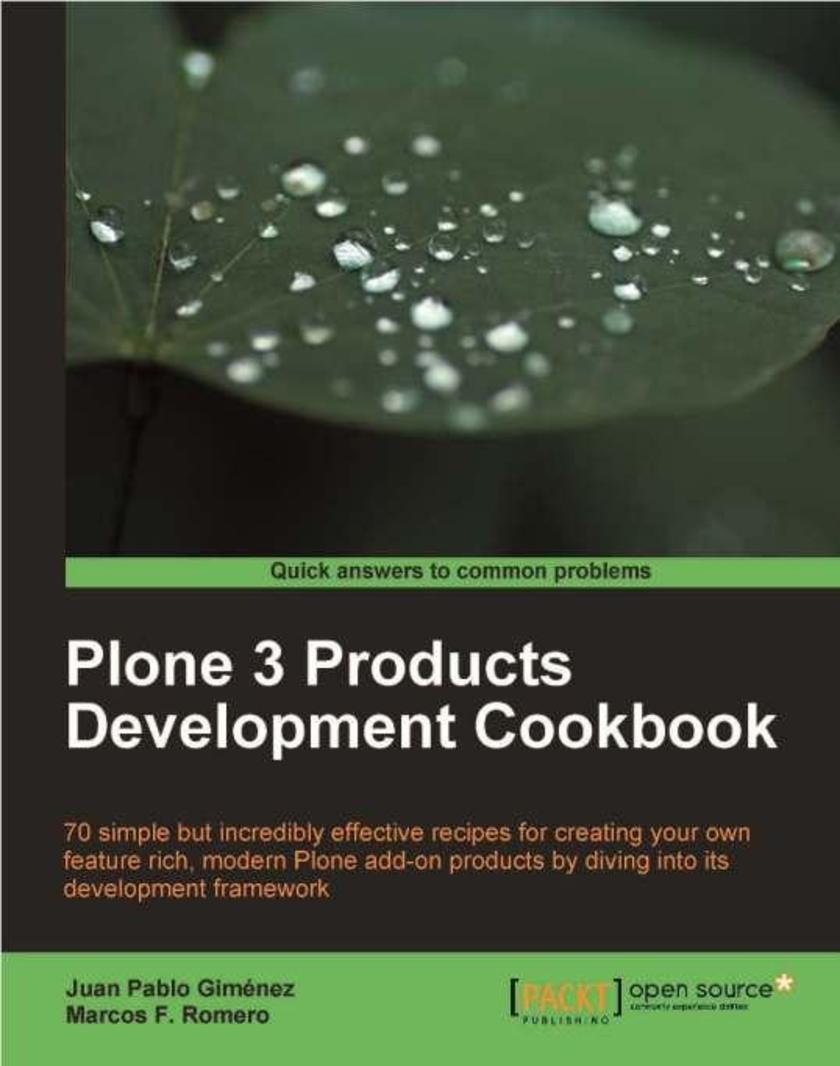
Plone 3 Products Development Cookbook
¥80.65
The examples in this book follow a sample project creating a digital newspaper website to meet the requirements of a fictional customer who wants to place commercial advertisements all over the site. The whole book is a comprehensive collection of recipes that elaborate a series of well known use cases. You will find an organized step-by-step procedure to accomplish each task followed by detailed explanations to better understand how and why each topic was undertaken, and many links to online references and other related sections in the book that can supplement the subject in question. You can read the whole book or just pick the recipes that are relevant for you; where necessary, cross references will help you understand the recipes even if you do not read them in sequential order. This book is for programmers who have some knowledge of Python, Plone, and Zope. If you want to develop feature-rich add-on products in Plone, this book is for you. It is aimed at the development of backend features, so you need not have other web-related skills such as HTML, CSS, or JavaScript.
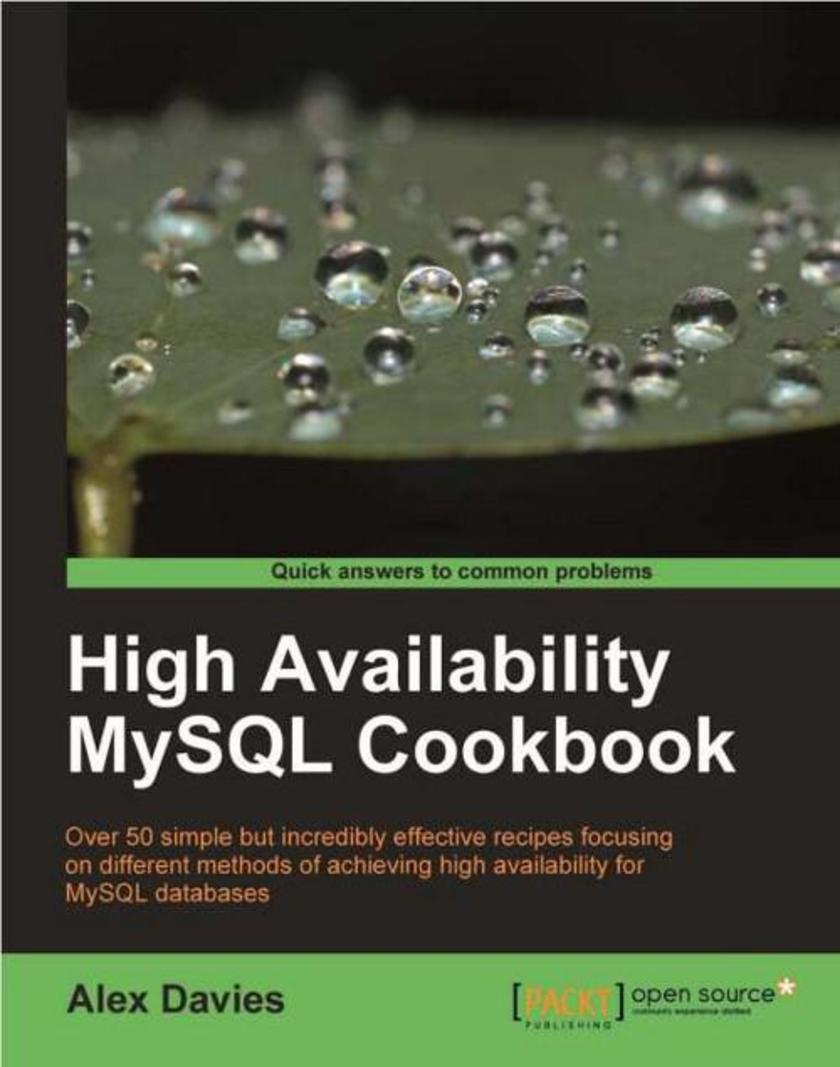
High Availability MySQL Cookbook
¥80.65
This book uses the approach of a cookbook. Each recipe provides the reader with easy step-by-step de*ions of the actions necessary to accomplish a specific task. It is designed to present what often appear as extremely complicated techniques as a series of simple-to-follow recipes, allowing readers to achieve high uptimes on their MySQL servers. This book is targeted at system administrators or database administrators who have basic familiarity with Linux, the shell, and MySQL. The typical user will be able to get MySQL installed and working, but needs practical guidance to make it highly available.
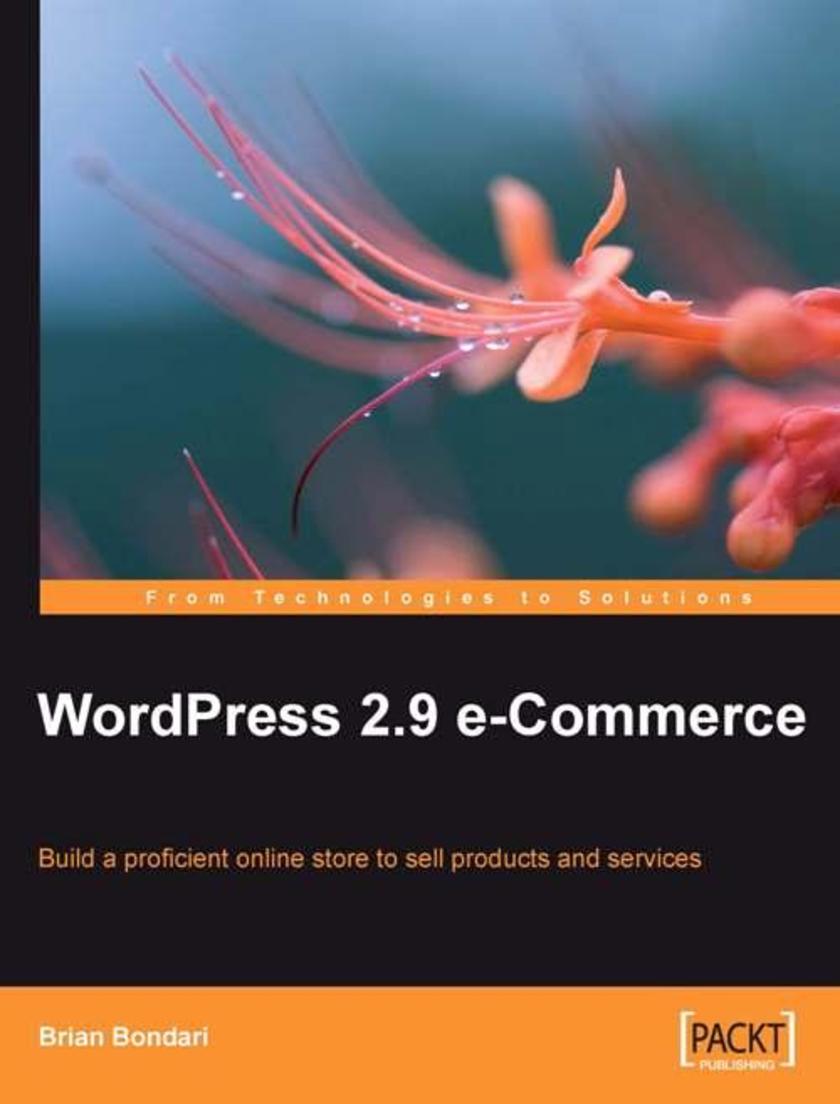
WordPress 2.9 E-Commerce
¥80.65
This book provides an easy to understand, step-by-step approach to installing, configuring, and using WP e-Commerce to run your online store. We will construct an example store in the book with enough information and flexibility to adapt the store to your specific needs. This book is for you, if you are interested in using WordPress as the basis for a store that can sell physical items, downloads, or services. It is ideal for a sole proprietor or small business owner with only basic, in-house technical skills. Some prior knowledge of WordPress will help, but is not required. No knowledge of PHP is expected, but it will also be helpful.
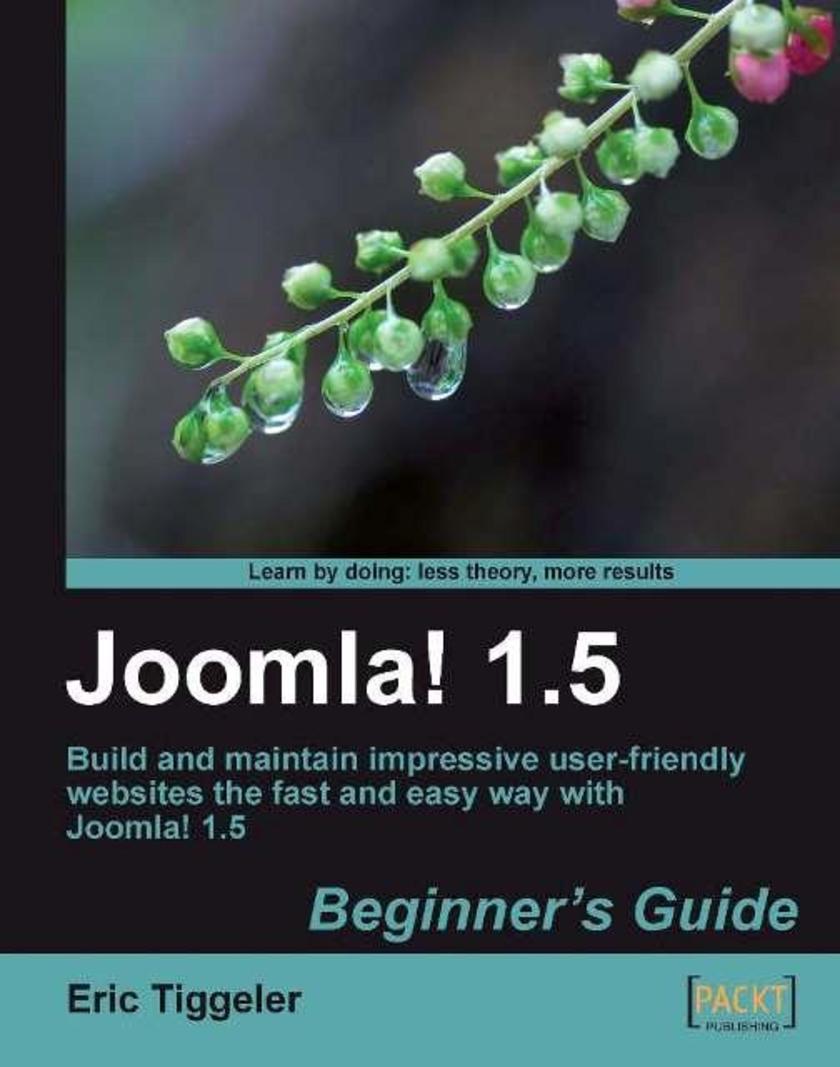
Joomla! 1.5: Beginner's Guide
¥80.65
Written with a fast-paced but friendly and engaging approach, this Packt Beginner's guide is designed to be placed alongside the computer as your guide and mentor to meet real-world web building challenges. Step-by-step tutorials are bolstered by explanations of the reasoning behind what you are doing. You will quickly pick up the necessary skills, tips, and tricks for building a successful Joomla! web site with practical examples that help you to learn by experiment and play. If you want to build and maintain your own web site, the Joomla! Beginner's Guide is perfect for you. It helps you build on the skills and knowledge you may already have on creating web sites—but even if you're new to this subject, you won't have any difficulty understanding the clear and friendly instructions and explanations. You learn how to build and maintain web sites without having to dive deep into HTML and CSS.
Processing 2: Creative Coding Hotshot
¥80.65
Using a project-based approach, you will be able to learn the coolest aspects of working with Processing. Each project contains step-by-step explanations, diagrams, screenshots, and downloadable material to make learning Processing even easier.This book targets Processing developers ,visual artists, creative professionals, and students who want to move to the next level of learning Processing for gaining inspiration, work, or just for fun. The book assumes a basic understanding of programming. However, this book is also recommended to non-artistic readers, looking to expand their graphics and develop their creativity.
Arduino Android Blueprints
¥80.65
This book is for those who want to learn how to build exciting Arduino projects by interfacing it with Android. You will need to have some basic experience in electronics and programming. However, you don't need to have any previous experience with the Arduino or Android platforms.
Learning LEGO MINDSTORMS EV3
¥80.65
This book is for the hobbyists, builders, and programmers who want to build and control their very own robots beyond the capabilities provided with the LEGO EV3 kit. You will need the LEGO MINDSTORMS EV3 kit for this book. The book is compatible with both the Home Edition and the Educational Edition of the kit. You should already have a rudimentary knowledge of general programming concepts and will need to have gone through the basic introductory material provided by the official LEGO EV3 tutorials.
Mastering Python Design Patterns
¥80.65
This book is for Python programmers with an intermediate background and an interest in design patterns implemented in idiomatic Python. Programmers of other languages who are interested in Python can also benefit from this book, but it would be better if they first read some introductory materials that explain how things are done in Python.
VMware vRealize Orchestrator Essentials
¥80.65
Get hands-on experience with vRealize Orchestrator and automate your VMware environment About This Book Gain an in-depth understanding of vRO in the VMware infrastructure Create your own advanced vRO *s using JavaScript A step-by-step tutorial to manage and create workflows with vRO Who This Book Is For This book is for VMware vSphere administrators who have minimal experience with automation tools and want to learn how to effectively automate their environment with VMware vRealize Orchestrator. A basic understanding of the VMware vSphere terms and concepts would be helpful. What You Will Learn Familiarize yourself with the Orchestrator architecture and Explore how plugins can expand Orchestrator's capabilitiesExplore how plug-ins can expand Orchestrator’s capabilities Deploy and configure the vRealize Orchestrator appliance Schedule and run workflows using the vSphere Web Client Create your own workflows with minimal work Use workflow presentations to improve your automation projects Integrate JavaScript to enhance your workflows Debug your workflows for errors and fix them Learn how to create, import, and export packages, to enable easy exchange solutions with others In Detail The automation of virtual environments has become the focus of many endeavors. VMware vRealize Orchestrator is a tool that enables you to automate not only your VMware environments, but also the surrounding hardware and software infrastructure. Orchestrator is also a central tool in the VMware cloud initiative and is extensively used by products such as vRealize Automation. In this book, you will learn how Orchestrator is able to help you automate your complete VMware infrastructure as well as its surrounding hardware and software. After deploying and configuring the vRealize Orchestrator appliance, you will learn how to run the existing workflows that are a part of the Orchestrator library. You will also see how the vSphere Web Client integration of Orchestrator reduces the time you spend on your daily admin tasks. The main aspect here is to learn how to create new workflows from existing ones. You will also look at how you can create completely new workflows. This includes learning about JavaScript and using presentation features to improve the layout and user friendliness of your workflows. Toward the end, you will learn to check for errors in your workflows and debug them. By the time you're done with the book, you'll be proficient in managing your workflows. Style and approach This book follows a sequential approach with ample screenshots in the examples that convey a deeper understanding of all Orchestrator-related tasks.
Learning Flask Framework
¥80.65
Build dynamic, data-driven websites and modern web applications with Flask About This Book Discover the most popular Flask resources on the web with ease Familiarize yourself with third-party libraries commonly used with Flask Create a fast, interactive, and secure web app with this hands-on guide Who This Book Is For This book is for anyone who wants to develop their knowledge of Python into something that can be used on the web. Flask follows the Python design principles and can be easily understood by anyone who knows Python, and even by those who do not. What You Will Learn Create your web pages to add modularity and flexibility to your web app using templates Store and retrieve relational data using SQLAlchemy Develop schema migrations with Alembic Produce an admin section using flask-admin Build RESTful APIs using Flask-Restless Simulate requests and sessions using the Flask test client Make Ajax requests from Jinja2 templates In Detail Flask is a small and powerful web development framework for Python. It does not presume or force a developer to use a particular tool or library. Flask supports extensions that can add application features as if they were implemented in Flask itself. Flask’s main task is to build web applications quickly and with less code. With its lightweight and efficient web development framework, Flask combines rapid development and clean, simple design. This book will take you through the basics of learning how to apply your knowledge of Python to the web. Starting with the creation of a “Hello world” Flask app, you will be introduced to the most common Flask APIs and Flask’s interactive debugger. You will learn how to store and retrieve blog posts from a relational database using an ORM and also to map URLs to views. Furthermore, you will walk through template blocks, inheritance, file uploads, and static assets. You will learn to authenticate users, build log in/log out functionality, and add an administrative dashboard for the blog. Moving on, you will discover how to make Ajax requests from the template and see how the Mock library can simplify testing complex interactions. Finally, you will learn to deploy Flask applications securely and in an automated, repeatable manner, and explore some of the most popular Flask resources on the web. Style and approach A comprehensive guide packed with real-world examples and popular use cases; starting with basic overviews and diving into the practical aspects of Flask Framework.
Mastering ServiceStack
¥80.65
Utilize ServiceStack as the rock solid foundation of your distributed systemAbout This BookTake advantage of the various data providers to access authentication and authorization, sessions, cache, and databaseLeverage asynchronous processing for decoupling components to ease scalingMonitor and tune the performance of your distributed system Who This Book Is For Mastering ServiceStack is targeted at developers who have already implemented web services with ASMX, WCF, or ServiceStack and want to gain more insight into the possibilities ServiceStack has to offer to build distributed systems of all scales.What You Will LearnDesign a prudent and resilient API, following the RESTful designUnderstand the internal processing chain and utilize the provided hooksIncorporate ServiceStack as a full service provider to your existing distributed systemLeverage the power of asynchronous processing and add message queues to your architectureAnalyze and tune the performance of your service In Detail Mastering ServiceStack covers real-life problems that occur over the lifetime of a distributed system and how to solve them by deeply understanding the tools of ServiceStack. Distributed systems is the enterprise solution that provide flexibility, reliability, scaling, and performance. ServiceStack is an outstanding tool belt to create such a system in a frictionless manner, especially sophisticated designed and fun to use. The book starts with an introduction covering the essentials, but assumes you are just refreshing, are a very fast learner, or are an expert in building web services. Then, the book explains ServiceStack's data transfer object patterns and teach you how it differs from other methods of building web services with different protocols, such as SOAP and SOA. It also introduces more low-level details such as how to extend the User Auth, message queues and concepts on how the technology works. By the end of this book, you will understand the concepts, framework, issues, and resolutions related to ServiceStack.Style and approach A step-by-step approach that follows the natural requirements of a distributed system in a conversational style.
Raspberry Pi Robotic Blueprints
¥80.65
Utilize the powerful ingredients of Raspberry Pi to bring to life your amazing robots that can act, draw, and have fun with laser tagsAbout This BookLearn to implement a number of features offered by Raspberry Pi to build your own amazing robotsUnderstand how to add vision and voice to your robots.This fast-paced practical guide comprises a number of creative projects to take your Raspberry Pi knowledge to the next level Who This Book Is For This all-encompassing guide was created for anyone who is interested in expanding their knowledge in applying the peripherals of Raspberry Pi. If you have a fancy for building complex-looking robots with simple, inexpensive, and readily available hardware, then this book is ideal for you. Prior understanding of Raspberry Pi with simple mechanical systems is recommended.What You Will LearnAdd sensors to your robot so that it can sense the world around itKnow everything there is to know about accessing motors and servos to provide movement to the robotic platformExplore the feature of adding vision to your robot so it can “see” the world around itRefine your robot with the skill of speech recognition so that it can receive commandsPolish your robot by adding speech output so it can communicate with the world around itMaximize the use of servos in Raspberry Pi to create a drawing robotStrengthen your robot by adding wireless communication skills so you can see what the robot is seeing and control it from a distanceBuild an unbelievable autonomous hexcopter controlled by Raspberry Pi In Detail The Raspberry Pi is a series of credit card-sized single-board computers developed in the UK by the Raspberry Pi Foundation with the intention of promoting the teaching of basic computer science in schools. The Raspberry Pi is known as a tiny computer built on a single circuit board. It runs a Linux operating system, and has connection ports for various peripherals so that it can be hooked up to sensors, motors, cameras, and more. Raspberry Pi has been hugely popular among hardware hobbyists for various projects, including robotics. This book gives you an insight into implementing several creative projects using the peripherals provided by Raspberry Pi. To start, we’ll walk through the basic robotics concepts that the world of Raspberry Pi offers us, implementing wireless communication to control your robot from a distance. Next, we demonstrate how to build a sensible and a visionary robot, maximizing the use of sensors and step controllers. After that, we focus on building a wheeled robot that can draw and play hockey. To finish with a bang, we’ll build an autonomous hexcopter, that is, a flying robot controlled by Raspberry Pi. By the end of this book, you will be a maestro in applying an array of different technologies to create almost any imaginable robot.Style and approach This book is an easy-to-follow, project-based guide that throws you directly into the action of creating almost any imaginable robot through blueprints. It is full of step by step instructions and screenshots to help you build amazing robots in no time at all.
Python Data Visualization Cookbook - Second Edition
¥80.65
Over 70 recipes to get you started with popular Python libraries based on the principal concepts of data visualization About This Book Learn how to set up an optimal Python environment for data visualization Understand how to import, clean and organize your data Determine different approaches to data visualization and how to choose the most appropriate for your needs Who This Book Is For If you already know about Python programming and want to understand data, data formats, data visualization, and how to use Python to visualize data then this book is for you. What You Will Learn Introduce yourself to the essential tooling to set up your working environment Explore your data using the capabilities of standard Python Data Library and Panda Library Draw your first chart and customize it Use the most popular data visualization Python libraries Make 3D visualizations mainly using mplot3d Create charts with images and maps Understand the most appropriate charts to describe your data Know the matplotlib hidden gems Use plot.ly to share your visualization online In Detail Python Data Visualization Cookbook will progress the reader from the point of installing and setting up a Python environment for data manipulation and visualization all the way to 3D animations using Python libraries. Readers will benefit from over 60 precise and reproducible recipes that will guide the reader towards a better understanding of data concepts and the building blocks for subsequent and sometimes more advanced concepts. Python Data Visualization Cookbook starts by showing how to set up matplotlib and the related libraries that are required for most parts of the book, before moving on to discuss some of the lesser-used diagrams and charts such as Gantt Charts or Sankey diagrams. Initially it uses simple plots and charts to more advanced ones, to make it easy to understand for readers. As the readers will go through the book, they will get to know about the 3D diagrams and animations. Maps are irreplaceable for displaying geo-spatial data, so this book will also show how to build them. In the last chapter, it includes explanation on how to incorporate matplotlib into different environments, such as a writing system, LaTeX, or how to create Gantt charts using Python. Style and approach A step-by-step recipe based approach to data visualization. The topics are explained sequentially as cookbook recipes consisting of a code snippet and the resulting visualization.


