


 购物车
购物车 个人中心
个人中心
Learning Continuous Integration with Jenkins - Second Edition
¥80.65
Speed up the software delivery process and software productivity using the latest features of Jenkins About This Book ? Take advantage of a Continuous Integration and Continuous Delivery solution to speed up productivity and achieve faster software delivery ? See all the new features introduced in Jenkins 2.x, such as Pipeline as code, Multibranch pipeline, Docker Plugin, and more ? Learn to implement Continuous Integration and Continuous Delivery by orchestrating multiple DevOps tools using Jenkins Who This Book Is For The book is for those with little or no previous experience with Agile or CI and CD. It’s a good starting point for anyone new to this field who wants to leverage the benefits of CI and CD to increase productivity and reduce delivery time. It’s ideal for Build and Release engineers, DevOps engineers, SCM (Software Configuration Management) engineers, developers, testers, and project managers. If you’re already using Jenkins for CI, you can take your project to the next level—CD. What You Will Learn ? Get to know some of the most popular ways to set up Jenkins ? See all the new features introduced in the latest Jenkins, such as pipeline as code, Multibranch pipeline, and more ? Manage users, projects, and permissions in Jenkins to ensure better security ? Leverage the power of plugins in Jenkins ? Learn how to create a CI pipeline using Jenkins Blue Ocean ? Create a distributed build farm using Docker and use it with Jenkins ? Implement CI and CD using Jenkins ? See the difference between CD and Continuous Deployment ? Understand the concepts of CI In Detail In past few years, agile software development has seen tremendous growth. There is a huge demand for software delivery solutions that are fast yet flexible to numerous amendments. As a result, Continuous Integration (CI) and Continuous Delivery (CD) methodologies are gaining popularity. This book starts off by explaining the concepts of CI and its significance in the Agile. Next, you'll learn how to configure and set up Jenkins in many different ways. The book exploits the concept of "pipeline as code" and various other features introduced in the Jenkins 2.x release to their full potential. We also talk in detail about the new Jenkins Blue Ocean interface and the features that help to quickly and easily create a CI pipeline. Then we dive into the various features offered by Jenkins one by one, exploiting them for CI and CD. Jenkins' core functionality and flexibility allows it to fit in a variety of environments and can help streamline the development process for all stakeholders. Next, you'll be introduced to CD and will learn how to achieve it using Jenkins. Through this book's wealth of best practices and real-world tips, you'll discover how easy it is to implement CI and CD using Jenkins. Style and approach The book uses a simple Maven project to demonstrate the implementation of CI and CD using Jenkins. This step-by-step guide shows you how to implement CI/CD and can be used as a template to perform CI/CD in your projects.
Full-Stack Vue.js 2 and Laravel 5
¥80.65
Learn to build professional full-stack web apps with Vue.js and Laravel About This Book ? End-to-end guide on full-stack development with Vue.js 2 and Laravel 5 ? Developing modern user interfaces with a reusable component-based architecture ? Use Webpack to improve applications performance and development workflow ? Explore the features of Vuex to build applications that are powerful, consistent, and maintainable Who This Book Is For This book targets developers who are new to Vue.js, Laravel, or both, and are seeking a practical, best-practice approach to development with these technologies. They must have some knowledge of HTML, CSS and Java*. What You Will Learn ? Core features of Vue.js to create sophisticated user interfaces ? Build a secure backend API with Laravel ? Learn a state-of-the-art web development workflow with Webpack ? Full-stack app design principles and best practices ? Learn to deploy a full-stack app to a cloud server and CDN ? Managing complex application state with Vuex ? Securing a web service with Laravel Passport In Detail Vue is a JavaScript framework that can be used for anything from simple data display to sophisticated front-end applications and Laravel is a PHP framework used for developing fast and secure web-sites. This book gives you practical knowledge of building modern full-stack web apps from scratch using Vue with a Laravel back end. In this book, you will build a room-booking website named "Vuebnb". This project will show you the core features of Vue, Laravel and other state-of-the-art web development tools and techniques. The book begins with a thorough introduction to Vue.js and its core concepts like data binding, directives and computed properties, with each concept being explained first, then put into practice in the case-study project. You will then use Laravel to set up a web service and integrate the front end into a full-stack app. You will be shown a best-practice development workflow using tools like Webpack and Laravel Mix. With the basics covered, you will learn how sophisticated UI features can be added using ES+ syntax and a component-based architecture. You will use Vue Router to make the app multi-page and Vuex to manage application state. Finally, you will learn how to use Laravel Passport for authenticated AJAX requests between Vue and the API, completing the full-stack architecture. Vuebnb will then be prepared for production and deployed to a free Heroku cloud server. Style and approach Learn front-end Vue techniques, back-end Laravel skills, and put them together to build a working application
AMP: Building Accelerated Mobile Pages
¥80.65
Engineer naturally lean web pages and leverage the latest web platform features to dramatically boost page speed About This Book ? The first book for web developers that shows how to put AMP to work ? Improve your website's mobile experience and get more traffic ? Practical methods to achieve a step change in performance quickly and easily Who This Book Is For This book is for experienced web developers who are aware of the impact of slow-loading web pages on conversion rates and user engagement, and who are seeking to serve content to their end users in a rich and enticing way using the Accelerated Mobile Pages framework. You should be familiar with HTML5, CSS3, JavaScript, and JSON. What You Will Learn ? Build, validate, and deploy AMP pages ? Create interactive user notifications, navigation menus, accordions, contact pages with forms and maps ? Monetize your traffic with a variety of ad styles and providers ? Analyze your traffic by integrating analytics providers and tracking user-behavior along several dimensions ? Embed social media with amp-youtube, amp-instagram, amp-twitter, and amp-facebook ? Build e-commerce functionality including product pages and shopping carts ? Deliver rich media experiences using AMP custom elements ? Use advanced deployment techniques to extend functionality ? Install ServiceWorkers and build Progressive Web Apps for offline use In Detail Google introduced the Accelerated Mobile Pages (AMP) project to give mobile users lightning-fast response times when accessing web pages on mobile devices. AMP delivers great user experiences by providing a framework for optimizing web pages that otherwise would take much longer to load on a mobile platform. This book shows how to solve page performance issues using the mobile web technologies available today. You will learn how to build instant-loading web pages, and have them featured more prominently on Google searches. If you want your website to succeed on mobile, if you care about SEO, and if you want to stay competitive, then this book is for you! You will go on a mobile web development journey that demonstrates with concrete examples how to build lightning-fast pages that will keep your visitors on-site and happy. This journey begins by showing how to build a simple blog article-style web page using AMP. As new concepts are introduced this page is gradually refined until you will have the skills and confidence to build a variety of rich and interactive mobile web pages. These will include e-commerce product pages, interactive forms and menus, maps and commenting systems, and even Progressive Web Apps. Style and approach Get step-by-step instructions to build web pages of different types, gain expert tricks to brand your pages without bloating them, and see methods to embed advertising.
Modern R Programming Cookbook
¥80.65
Recipes for emerging developers in R programming and data scientists to simplify their R programming capabilities About This Book ? Develop strategies to speed up your R code ? Tackle programming problems and explore both functional and object-oriented programming techniques ? Learn how to address the core problems of programming in R with the most popular R packages for common tasks Who This Book Is For This book is for developers who would like to enhance the R programming skills. Basic knowledge of R programming is assumed. What You Will Learn ? Install R and its various IDE for a given platform along with installing libraries from different repositories and version control ? Learn about basic data structures in R and how to work with them ? Write customized R functions and handle recursions, exceptions in R environments ? Create the data processing task as a step by step computer program and execute using dplyr ? Extract and process unstructured text data ? Interact with database management system to develop statistical applications ? Formulate and implement parallel processing in R In Detail R is a powerful tool for statistics, graphics, and statistical programming. It is used by tens of thousands of people daily to perform serious statistical analyses. It is a free, open source system whose implementation is the collective accomplishment of many intelligent, hard-working people. There are more than 2,000 available add-ons, and R is a serious rival to all commercial statistical packages. The objective of this book is to show how to work with different programming aspects of R. The emerging R developers and data science could have very good programming knowledge but might have limited understanding about R syntax and semantics. Our book will be a platform develop practical solution out of real world problem in scalable fashion and with very good understanding. You will work with various versions of R libraries that are essential for scalable data science solutions. You will learn to work with Input / Output issues when working with relatively larger dataset. At the end of this book readers will also learn how to work with databases from within R and also what and how meta programming helps in developing applications. Style and approach This book will be a companion for R programmer and emerging developers in R programming areas. This book will contain recipes related to advanced R programming which will enable users to solve complex problems efficiently.
Introduction to JVM Languages
¥80.65
Explore the Java Virtual Machine with modern programming languages About This Book ? This guide provides in-depth coverage of the Java Virtual Machine and its features ? Filled with practical examples, this book will help you understand the core concepts of Java, Scala, Clojure, Kotlin, and Groovy ? Work with various programming paradigms and gain knowledge about imperative, object-oriented and functional programming Who This Book Is For This book is meant for programmers who are interested in the Java Virtual Machine (JVM) and want to learn more about the most popular programming languages that can be used for JVM development. Basic practical knowledge of a modern programming language that supports object-oriented programming (JavaScript, Python, C#, VB.NET, and C++) is assumed. What You Will Learn ? Gain practical information about the Java Virtual Machine ? Understand the popular JVM languages and the Java Class Library ? Get to know about various programming paradigms such as imperative, object-oriented, and functional ? Work with common JVM tools such as Eclipse IDE, Gradle, and Maven ? Explore frameworks such as SparkJava, Vert.x, Akka and JavaFX ? Boost your knowledge about dialects of other well-known programming languages that run on the JVM, including JavaScript, Python, and Ruby In Detail Anyone who knows software development knows about the Java Virtual Machine. The Java Virtual Machine is responsible for interpreting Java byte code and translating it into actions. In the beginning, Java was the only programming language used for the JVM. But increasing complexity of the language and the remarkable performance of the JVM created an opening for a new generation of programming languages. If you want to build a strong foundation with the Java Virtual Machine and get started with popular modern programming languages, then this book is for you. The book will begin with a general introduction of the JVM and its features, which are common to the JVM languages, helping you get abreast with its concepts. It will then dive into explaining languages such as Java, Scala, Clojure, Kotlin, and Groovy and will show how to work with each language, their features, use cases, and pros and cons. By writing example projects in those languages and focusing on each language’s strong points, it will help you find the programming language that is most appropriate for your particular needs. By the end of the book, you will have written multiple programs that run on the Java Virtual Machine and know about the differences between the various languages. Style and approach This practical, example-filled guide will help you get started with the JVM and some of its most popular languages.
Game Audio Development with Unity 5.X
¥80.65
Create ‘AAA’ quality game audio with new features and tools built for Unity About This Book ? Explore the basics of audio development in Unity to create spatial sound, mixing, effects, composition, adaptive audio and more. ? Leverage the Audio Mixer of Unity 5.x to create blockbuster sound and music for your game. ? Learn about developing professional audio for games with FMOD Studio and composing original music with Reaper. ? Build amazing audio synchronized graphic visualizations with Unity. ? Understand how real-time character lip syncing can be implemented. Who This Book Is For The ideal target audience for this book will be game developers, both Indie as well as semi pro. No prior knowledge of Unity and audio development is assumed, What You Will Learn ? Develop game audio and other audio effects with Unity ? Getting familiar with the new Audio Mixer introduced in Unity 5 ? Implement dynamic and adaptive audio using various tools and strategies ? Explore interesting ways to incorporate audio into a game with sound visualization ? Use 3rd party professional audio development tools like FMOD ? Compose original music and record vocals ? Understand and troubleshoot audio performance issues In Detail Game Audio is one of the key components in making a game successful and it is quite popular in the gaming industry. So if you are a game developer with an eye on capturing the gamer market then this book is the right solution for you. In this book, we will take you through a step by step journey which will teach you to implement original and engaging soundtracks and SFX with Unity 5.x. You will be firstly introduced to the basics of game audio and sound development in Unity. After going through the core topics of audio development: audio sources, spatial sound, mixing, effects, and more; you will then have the option of delving deeper into more advanced topics like dynamic and adaptive audio. You will also learn to develop dynamic and adaptive audio using the Unity Audio Mixer. Further, you will learn how professional third party tools like FMOD are used for audio development in Unity. You will then go through the creation of sound visualization techniques and creating your own original music using the simple yet powerful audio workstation Reaper. Lastly, you will go through tips, techniques and strategies to help you optimize game audio performance or troubleshoot issues. At the end of the book, you’ll have gained the skills to implement professional sound and music. Along with a good base knowledge audio and music principles you can apply across a range of other game development tools. Style and approach This book will have a step by step practical approach where downloadable free games will be given with the book and readers will be free to work with them.
Enterprise PowerShell Scripting Bootcamp
¥80.65
The quick start guide for an advanced enterprise PowerShell framework About This Book ? Introduces industry-proven techniques that improve * efficiency and reliability ? Example-rich guide based on real-world scenarios ? Facilitates building a * that can fully scan a Windows server and identify components Who This Book Is For This book is for IT professionals and Windows administrators who would like to gain intensive, hands-on knowledge and skills on PowerShell without spending hours and hours in learning. If you have been struggling to find the time to gain proficiency and confidence with PowerShell and everyday *ing tasks What You Will Learn ? Create an advanced PowerShell *ing template that provides repeatable code to jumpstart all of your *ing projects ? Learn how to securely encrypt and store usernames, passwords, and other sensitive data in PowerShell *s and answer files ? Understand how to optimize the performance of *s to help process large datasets quickly and avoid time-consuming mistakes ? Develop a * to scan for non-standard Windows Server configurations and identify service accounts used on Windows Servers ? Gather a large list of data from a Windows server without locally or remotely logging in interactively In Detail Enterprise PowerShell Scripting Bootcamp explains how to create your own repeatable PowerShell *ing framework. This framework contains * logging methodologies, answer file interactions, and string encryption and decryption strategies. This book focuses on evaluating individual components to identify the system’s function, role, and unique characteristics. To do this, you will leverage built-in CMDlets and Windows Management Instrumentation (WMI) to explore Windows services, Windows processes, Windows features, scheduled tasks, and disk statistics. You will also create custom functions to perform a deep search for specific strings in files and evaluate installed software through executable properties. We will then discuss different *ing techniques to improve the efficiency of *s. By leveraging several small changes to your code, you can increase the execution performance by over 130%. By the end of this book, you will be able to tie all of the concepts together in a PowerShell-based Windows server scanning *. This discovery * will be able to scan a Windows server to identify a multitude of components. Style and approach This book is all about fast and intensive learning. This means, we don’t waste time in helping readers get started. The new content is about leveraging highly-effective examples to build new things, help solving problems in newer and unseen ways, and providing an enterprise-ready platform to create PowerShell Scripts.
Learning OpenDaylight
¥80.65
A practical guide to building programmable networks using OpenDaylight About This Book ? Learn and understand how SDN controllers operate and integrate with networks; this book's step-by-step tutorials will give you a strong foundation in SDN, NVF, and OpenDayLight. ? Learn how to map legacy Layer 2/3 networking technologies in the SDN world ? Add new services and capabilities to your infrastructure and quickly adopt SDN and NFV within your organization with OpenDayLight. ? Integrate and manage software-defined networks efficiently in your organization. ? Build innovative network applications with OpenDayLight and save time and resources. Who This Book Is For This book targets network engineers, network programmers and developers, administrators, and anyone with some level of networking experience who'd like to deploy OpenDayLight effectively. Familiarity with the day-to-day operations of computer networks is expected What You Will Learn ? Transition from legacy networking to software-defined networking ? Learn how SDN controllers work and manage a network using southbound and northbound APIs ? Learn how to deploy the OpenDayLight SDN controller and integrate it with virtual switches ? Understand the basic design and operation of the OpenDaylight platform ? Build simple MD-SAL OpenDaylight applications ? Build applications on top of OpenDayLight to trigger network changes based on different events ? Integrate OpenStack with OpenDayLight to build a fully managed network ? Learn how to build a software-defined datacenter using NFV and service-chaining technologies In Detail OpenDaylight is an open source, software-defined network controller based on standard protocols. It aims to accelerate the adoption of Software-Defined Networking (SDN) and create a solid foundation for Network Functions Virtualization (NFV). SDN is a vast subject; many network engineers find it difficult to get started with using and operating different SDN platforms. This book will give you a practical bridge from SDN theory to the practical, real-world use of SDN in datacenters and by cloud providers. The book will help you understand the features and use cases for SDN, NFV, and OpenDaylight. NFV uses virtualization concepts and techniques to create virtual classes for node functions. Used together, SDN and NFV can elevate the standards of your network architecture; generic hardware-saving costs and the advanced and abstracted software will give you the freedom to evolve your network in the future without having to invest more in costly equipment. By the end of this book, you will have learned how to design and deploy OpenDaylight networks and integrate them with physical network switches. You will also have mastered basic network programming over the SDN fabric. Style and approach This is a step-by-step tutorial aimed at getting you up-to-speed with OpenDayLight and ready to adopt it for your SDN (Software-Defined Networking) and NFV (Network Functions Virtualization) ecosystem.
Build Applications with Meteor
¥80.65
Build a variety of cross-platform applications with the world’s most complete full-stack JavaScript framework— Meteor About This Book ? Develop a set of real-world applications each exploring different features of Meteor ? Make your app more appealing by adding reactivity and responsiveness to it ? Work with the most powerful feature of Meteor—the “full stack reactivity”—through building real-time applications with many third party libraries Who This Book Is For If you are a developer who is looking forward to taking your application development skills with Meteor to next level by getting your hands-on different projects, this book is for you. What You Will Learn ? See how Meteor fits in the modern web application development by using its reactive data system ? Make your front-end behave consistently across environments by implementing a predictable state container with Redux ? Get familiar with React and overview of Angular 2 ? Add a map to your application with a real-time geolocation ? Plugin into Meteor social media APIs like Twitter’s streaming and Facebook’s Messenger ? Add search functionality from scratch to your existing app and data ? Add responsiveness with Bootstrap 4 and Google’s Material Design using Less and Sass ? Distribute your data across machines and data centers by adding Apache Cassandra to your existing stack. ? Learn how to scale your microservices with the high performant language neutral framework gRPC. ? Learn how to query multiple data sources using GraphQL. In Detail This book starts with the basic installation and overview of the main components in Meteor. You’ll get hands-on multiple versatile applications covering a wide range of topics from adding a front-end views with the hottest rendering technology React to implementing a microservices oriented architecture.All the code is written with ES6/7 which is the latest significantly improved JavaScript language. We’ll also look at real-time data streaming, server to server data exchange, responsive styles on the front-end, full-text search functionality, and integration of many third-party libraries and APIs using npm. By the end of the book, you’ll have the skills to quickly prototype and even launch your next app idea in a matter of days. Style and Approach This book takes an easy-to-follow project-based approach. Each project starts with the goal of what you will learn and an overview the technologies used.
Python Data Structures and Algorithms
¥80.65
Implement classic and functional data structures and algorithms using Python About This Book ? A step by step guide, which will provide you with a thorough discussion on the analysis and design of fundamental Python data structures. ? Get a better understanding of advanced Python concepts such as big-o notation, dynamic programming, and functional data structures. ? Explore illustrations to present data structures and algorithms, as well as their analysis, in a clear, visual manner. Who This Book Is For The book will appeal to Python developers. A basic knowledge of Python is expected. What You Will Learn ? Gain a solid understanding of Python data structures. ? Build sophisticated data applications. ? Understand the common programming patterns and algorithms used in Python data science. ? Write efficient robust code. In Detail Data structures allow you to organize data in a particular way efficiently. They are critical to any problem, provide a complete solution, and act like reusable code. In this book, you will learn the essential Python data structures and the most common algorithms. With this easy-to-read book, you will be able to understand the power of linked lists, double linked lists, and circular linked lists. You will be able to create complex data structures such as graphs, stacks and queues. We will explore the application of binary searches and binary search trees. You will learn the common techniques and structures used in tasks such as preprocessing, modeling, and transforming data. We will also discuss how to organize your code in a manageable, consistent, and extendable way. The book will explore in detail sorting algorithms such as bubble sort, selection sort, insertion sort, and merge sort. By the end of the book, you will learn how to build components that are easy to understand, debug, and use in different applications. Style and approach The easy-to-read book with its fast-paced nature will improve the productivity of Python programmers and improve the performance of Python applications.
Mastering Ceph
¥80.65
Deep dive into the unified, distributed storage system in order to provide excellent performance About This Book ? Leverage Ceph's advanced features such as erasure coding, tiering, and Bluestore ? Solve large-scale problems with Ceph as a tool by understanding its strengths and weaknesses to develop the best solutions ? A practical guide that covers engaging use cases to help you use advanced features of Ceph effectively Who This Book Is For If you are a developer and an administrator who has deployed a Ceph cluster before and are curious about some of the most advanced features in order to improve performance then this book is for you What You Will Learn ?Know when and how to use some of Ceph's advanced new features ? Set up a test cluster with Ansible and some virtual machines using VirtualBox and Vagrant ?Develop novel solutions to massive problems with librados and shared object classes. ? Choose intelligent parameters for an erasure coded pool and set it up. ? Configure the Bluestore settings and see how they interact with different hardware configurations. ? Keep Ceph running through thick and thin with tuning, monitoring and disaster recovery advice. In Detail Mastering Ceph covers all that you need to know to use Ceph effectively. Starting with design goals and planning steps that should be undertaken to ensure successful deployments, you will be guided through to setting up and deploying the Ceph cluster, with the help of orchestration tools. Key areas of Ceph including Bluestore, Erasure coding and cache tiering will be covered with help of examples. Development of applications which use Librados and Distributed computations with shared object classes are also covered. A section on tuning will take you through the process of optimisizing both Ceph and its supporting infrastructure. Finally, you will learn to troubleshoot issues and handle various scenarios where Ceph is likely not to recover on its own. By the end of the book, you will be able to successfully deploy and operate a resilient high performance Ceph cluster. Style and approach A practical guide which has each chapter explaining the concept, sharing tips and tricks and a use case to implement the most powerful features of Ceph
JBoss: Developer's Guide
¥80.65
Build your own enterprise applications and integration flows with JBoss and its products About This Book ? Build fast, smart, and flexible applications using JBoss ? Couple one or more JBoss products to effectively solve various business problems ? Explore the JBoss product ecosystem for improving the performance of your projects Who This Book Is For If you are a Java developer who wants to have a complete view of the JBoss ecosystem or quickly explore a specific JBoss Product, then this is the book you want. Integrators and consultants, familiar with JBoss, who want integrate several JBoss products within their ongoing project will also find this book useful. What You Will Learn ? Create new applications or integrate existing systems with JBoss products ? Setup and manage a JBoss domain ? Setup and manage a JBoss Fuse cluster with Fabric and Apache Karaf ? Create and deploy OSGi applications on JBoss Fuse containers ? Manage enterprise data with JBoss Datagrid ? Aggregate various data sources with JBoss Data virtualization to offer data as a service ? Optimize your business and workflows with both JBoss Business RulesManagement System and JBoss Business Process Management platforms. In Detail Have you often wondered what is the best JBoss product to solve a specific problem? Do you want to get started with a specific JBoss product and know how to integrate different JBoss products in your IT Systems? Then this is the book for you. Through hands-on examples from the business world, this guide presents details on the major products and how you can build your own Enterprise services around the JBoss ecosystem. Starting with an introduction to the JBoss ecosystem, you will gradually move on to developing and deploying clustered application on JBoss Application Server, and setting up high availability using undertow or HA proxy loadbalancers. As you are moving to a micro service archicture, you will be taught how to package existing Java EE applications as micro service using Swarm or create your new micro services from scratch by coupling most popular Java EE frameworks like JPA, CDI with Undertow handlers. Next, you will install and configure JBoss Data grid in development and production environments, develop cache based applications and aggregate various data source in JBoss data virtualization. You will learn to build, deploy, and monitor integration scenarios using JBoss Fuse and run both producers/consumers applications relying on JBoss AMQ. Finally, you will learn to develop and run business workflows and make better decisions in your applications using Drools and Jboss BPM Suite Platform. Style and Approach The book works through the major JBoss products, with examples and instructions to help you understand each product and how they work together.
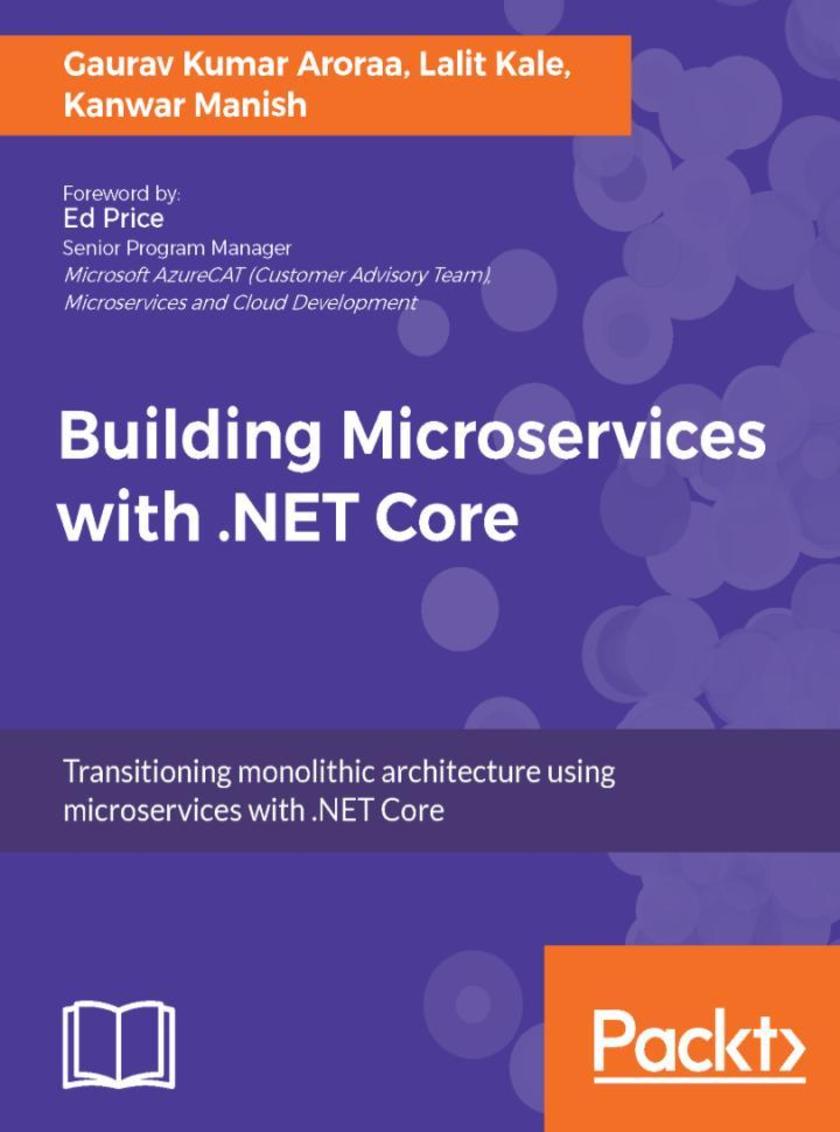
Building Microservices with .NET Core
¥80.65
Architect your .NET applications by breaking them into really small pieces—microservices—using this practical, example-based guide About This Book ? Start your microservices journey and understand a broader perspective of microservices development ? Build, deploy, and test microservices using ASP.Net MVC, Web API, and Microsoft Azure Cloud ? Get started with reactive microservices and understand the fundamentals behind it Who This Book Is For This book is for .NET Core developers who want to learn and understand microservices architecture and implement it in their .NET Core applications. It’s ideal for developers who are completely new to microservices or have just a theoretical understanding of this architectural approach and want to gain a practical perspective in order to better manage application complexity. What You Will Learn ? Compare microservices with monolithic applications and SOA ? Identify the appropriate service boundaries by mapping them to the relevant bounded contexts ? Define the service interface and implement the APIs using ASP.NET Web API ? Integrate the services via synchronous and asynchronous mechanisms ? Implement microservices security using Azure Active Directory, OpenID Connect, and OAuth 2.0 ? Understand the operations and scaling of microservices in .NET Core ? Understand the testing pyramid and implement consumer-driven contract using pact net core ? Understand what the key features of reactive microservices are and implement them using reactive extension In Detail Microservices is an architectural style that promotes the development of complex applications as a suite of small services based on business capabilities. This book will help you identify the appropriate service boundaries within the business. We'll start by looking at what microservices are, and what the main characteristics are. Moving forward, you will be introduced to real-life application scenarios, and after assessing the current issues, we will begin the journey of transforming this application by splitting it into a suite of microservices. You will identify the service boundaries, split the application into multiple microservices, and define the service contracts. You will find out how to configure, deploy, and monitor microservices, and configure scaling to allow the application to quickly adapt to increased demand in the future. With an introduction to the reactive microservices, you strategically gain further value to keep your code base simple, focusing on what is more important rather than the messy asynchronous calls. Style and approach This guide serves as a stepping stone that helps .NET Core developers in their microservices architecture. This book provides just enough theory to understand the concepts and apply the examples.
HoloLens Blueprints
¥80.65
Unveil the world of mixed reality with HoloLens About This Book ? Bring holographic insights to existing line-of-business applications, tools, and workflows ? Focus on developing end-to-end realistic holographic application. ? Build interactive model *s and test them in Unity3D and holographic emulators Who This Book Is For This book is targeted at developers and designers working on mixed-reality developments for complex integrated scenarios using HoloLens. What You Will Learn ? Interact with holograms using different interaction models ? Develop your first holographic app ? Integrate holographic applications with cloud systems ? Visualize data feeds coming from the cloud through holograms ? Manage the application distribution of enterprise-enabled HoloLens ? Integrate HoloLens applications with services deployed on Azure ? Identify and create 3D Assets and Scenes ? Use HoloLens to explore the Internet of Things In Detail Do you want to create stunning applications with HoloLens? Are you a developer who is fascinated with Microsoft HoloLens and its capabilities? If so, this is the book for you. This book introduces and demystifies the HoloLens platform and shows you different ways of interaction with computers (mixed-reality). You will start your mixed-reality journey by understanding different types of digital reality. You will learn to build your first holographic app. Also, you will understand holographic application integration possibilities within Line of Business Applications using Azure. Moving ahead, you will create Integrated Solutions using IoT with HoloLens. Gradually you'll learn how to create and deploy apps on a device. You will learn to publish application to the store; if you are an enterprise developer, you will also manage and distribute applications for enterprise-enabled or domain-joined HoloLens. Finally, you will develop an end-to-end realistic holographic app, ranging from scenario identification to sketching, development, deployment, and, finally, production. Style and approach The book is a project-based guide to help you to create some really astonishing mixed-reality applications. It will provide end-to-end solutions and enable you to build stunning applications for HoloLens.
Squid Proxy Server 3.1: Beginner's Guide
¥80.65
Part of Packt's Beginner's Guide Series, this book has lots of screenshots and step-by-step instructions to help you get to grips with the techniques as quickly as possible. Each chapter is dedicated to a different aspect of the Squid proxy server, so you will have a thorough understanding of how everything works and how it is connected by the end of the book. If you are a Linux or Unix system administrator and you want to enhance the performance of your network or you are a web developer and want to enhance the performance of your website, this book is for you. You are expected to have some basic knowledge of networking concepts, but may not have used caching systems or proxy servers before now.
Moodle Security
¥80.65
Moodle Security is packed with practical examples, which guide you through optimizing the protection of your Moodle site. Each chapter covers a different security threat and how to secure your site against it. You will also find recommendations for what is best for your particular system and usage. If you are in charge of Moodle – whether you are an administrator or lead teacher – then securing it is one of the most important things that you can do. You need to know the basics of working with Moodle, but no previous experience of system administration is required.
Gnucash 2.4 Small Business Accounting: Beginner's Guide
¥80.65
This book is a comprehensive beginner's guide that teaches you to use GnuCash from scratch with jargon-free step-by-step tutorials packed with tips. There are multiple choice questions to make learning more interesting and additional challenges thrown at the more adventurous user for a deep grasp of the topic. This book is written for you – the self-employed, the owner, partner or leader of micro-enterprises, home businesses, Small Office/Home Office (SOHO), and other small businesses – to help you maintain your books of accounts using GnuCash. This book is also for you – office-bearers of non-profits and students who want to learn accounting hands-on. If you are using a spreadsheet to maintain your business books and are wasting time, or you are handing over a shoe box of receipts to your high-priced accountant or are using another accounting application that is overkill for small business, get this book and download GnuCash.
Microsoft SharePoint 2010 Administration Cookbook
¥80.65
Microsoft SharePoint 2010 Administration Cookbook contains step-by-step instructions for SharePoint administrators to gain control of their SharePoint environment. The book is designed so that you can refer to it chapter by chapter, or you can look at the list of recipes and read those that interest you in no particular order. If you are a SharePoint Administrator looking for solutions to the many problems faced while managing SharePoint, then this book is for you. It is written for SharePoint administrators who are either already working on SharePoint, or have recently started working and eager to learn more about SharePoint administration. You need to have some basic knowledge of SharePoint in order to follow the recipes in this book.
Microsoft Azure: Enterprise Application Development
¥80.65
This fast-paced guide enables developers to design and build Enterprise applications for the cloud. You will find it easy to follow this book, as the authors use an actual online portal application for the case study. Throughout the development of the sample application there is discussion of important considerations for moving an application into the cloud. If you provide technological leadership to their enterprise—senior developers, architects, CIO/CTO and you want or need to guide your enterprise's application design to Azure, this is the perfect book for you! Since the examples are in .NET, the book will skew to MS-oriented developers. But a lot of what is discussed will be applicable to anyone wanting to work with Azure. No matter what language you use, you provision the application fabric the same way, and all the underlying concepts will be the same. You will need experience with Visual Studio, and some basic SQL Server knowledge.
OmniGraffle 5 Diagramming Essentials
¥80.65
This is a very visual book with more than 750 illustrations and screenshots, never leaving any intermediate steps out from the tutorials. It contains precise tutorials that explain the various tools, how to use them, and the visual results. The examples used in the book are an excellent starting point for your own diagrams, both as ideas and as true diagrams – all the diagrams in the book can be downloaded for your own use. This book is written for both beginners and seasoned users of OmniGraffle. If you are new to the software, then this book will teach you everything you need to know to make stunning diagrams. For seasoned OmniGraffle users, this book contains a lot of tricks and techniques that will save their work and time.
IBM Lotus Sametime 8 Essentials: A User's Guide
¥80.65
As a user, you will learn, using real-world scenarios and tasks, exactly how to use all the features of Sametime. Beginning with how to install Sametime, we've included step-by-step de*ions and screen prints for each topic area in a clear easy-to-follow format. Each chapter builds on what you learn in earlier chapters and guides you into using the more advanced features of Sametime, but if you only want to develop your skills in one particular area, each chapter acts as a stand-alone module. If you want to learn how to use IBM Lotus Sametime, then this book is for you. No matter if you're new to Sametime or want to become a Sametime power user, this book contains something for you. The focus is on using Sametime as a user and does not include information about development or administration of a Sametime environment; but any user of Sametime in an organization will be able to take this book, sit down at their computer, and learn how to use each feature of Sametime from start to finish.


